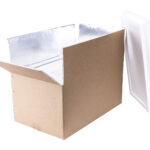
Dry Ice Bag with Valve: How to Choose, Pack, and Comply
If you ship frozen payloads, a dry ice bag with valve keeps gas venting safe while protecting your product. Within the first mile it prevents pressure build-up, supports IATA PI 954 compliance, and helps you pass 2025 carrier checks. Plan 5–10 lb dry ice per 24 h and mark UN1845 with net kg on the outer box so acceptance goes smoothly.
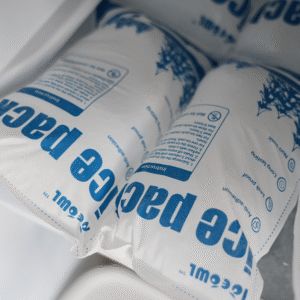
Sizing fast: plan ice mass for 24–72 h using a simple estimator and lane factors.
Safe pack-out: step-by-step setup so your dry ice bag with valve vents freely and passes audits.
Valve choices: one-way valve vs. ePTFE membrane and when each wins on real routes.
Regulatory must-haves: PI 954 venting, UN1845 marks, and “not airtight” rules demystified.
When not to use dry ice: 2–8 °C lanes and safer alternatives.
Which dry ice bag with valve should you choose?
Pick a bag that vents CO₂ by design, tolerates −78.5 °C, and fits your shipper so the valve is never blocked. This aligns your inner packaging with PI 954’s requirement that the package must permit gas release while staying non-airtight. Validate the bag with your specific shipper geometry and lane.
Why it matters to you: the right dry ice bag with valve controls back-diffusion of humid air (fewer clumps), reduces ballooning risk, and supports clean carrier acceptance when paired with a vent-permitted outer box and correct labels.
Valve vs. membrane—what’s best for your route?
One-way mechanical valve gives high CO₂ flow and minimal backflow; orientation matters. ePTFE membrane vents equalize pressure continuously with no moving parts and resist splash—handy in humid legs or multi-ascents. For both, confirm cold-rated materials and airflow capacity at your worst-case sublimation rate.
| Option (vent type) | How it works | Typical strength | What it means for you |
|---|---|---|---|
| One-way valve | Opens at low cracking pressure to pass gas | High CO₂ flow, low O₂/H₂O ingress | Great for high loads; keep the valve path unobstructed |
| ePTFE membrane | Microporous film equalizes pressure | No moving parts; splash resistant | Stable with vibration/altitude; verify low-temp rating |
| Perforated film | Small holes in bag | Simple, low cost | Not moisture-blocking; still requires non-airtight outer box |
Practical tips for buyers
Ask for airflow data at cold: request SCFH at −20 °C or colder.
Check film toughness: low-temp ductility avoids cracks at −80 °C.
Fit before you buy: ensure the valve faces free air volume and won’t be taped over.
Real-world win: A biotech shipping 48 h across two hubs switched to a dry ice bag with valve and increased mass from 20 lb to 24 lb. Excursions dropped to zero in six weeks, and acceptance delays disappeared once UN1845/net-kg marks were standardized.
How do you pack a dry ice bag with valve so carriers accept it?
Short answer: Keep the system vented, label correctly, and document. Mark the outer carton on two sides with “Dry Ice/Carbon dioxide, solid (UN1845)” and net kg, apply Class 9, and never make the package airtight—even with a valve inside.
Pack-out (auditor-friendly):
Pre-stage product at labeled temperature; confirm shipper vents and valve path are open.
Place logger near the payload core (not inside pellets).
Load dry ice into the dry ice bag with valve; close with a non-airtight tie so gas exits via the valve.
Helpful decision tools
Check the details before you choose packaging
These quick tools can help you compare route risk, sizing needs, coolant choices, and packaging details before you request a quote.
01Coolant choiceCoolant & PCM Reference
Compare coolant and PCM options when a route needs added temperature support.
Compare options02Handling riskInsulation Material Drop Resistance
Review drop resistance and handling factors before choosing insulation materials.
Check resistance03Material guideInsulation Material Reference
Compare insulation material choices for different cold chain packaging needs.
Compare materialsLayer per validation with spacers to avoid direct glass/vial contact; keep a standoff.
Close & label: UN1845 + net kg + Class 9; match airway bill; record time, lot, logger ID.
Labeling rules—made simple
Proper shipping name & UN: “Dry Ice” or “Carbon dioxide, solid”, UN1845.
Net quantity: state net kg of dry ice on the box.
Venting: package must permit release of CO₂; do not tape over valves or box vents.
How much dry ice should a dry ice bag with valve hold?
Plan 5–10 lb per 24 h in a well-insulated shipper; use the high end for hot ramps or frequent openings. For aircraft small-load planning, a ~2%/h sublimation basis is a conservative assumption. Add ~20% margin for handoffs.
| Scenario | Planned hours | Start calc (lb/24 h) | Add margin | What to pack |
|---|---|---|---|---|
| Express lane | 24 | 10 | +20% | ~12 lb |
| 48 h, 2 handoffs | 48 | 20 | +20% | ~24 lb |
| Warm tarmac, long route | 72 | 30 | +20–30% | 36–39 lb |
Safety: does a dry ice bag with valve reduce exposure risk?
It helps prevent pressure build-up, but space ventilation is still essential. Follow OSHA PEL 5,000 ppm (8-h TWA) and NIOSH STEL 30,000 ppm; train staff and consider CO₂ monitors in staging areas and vehicles.
When not to use a dry ice bag with valve—and what to use instead
If the label states 2–8 °C (not frozen), do not use dry ice. Use conditioned PCM bricks/ice packs and a validated 2–8 °C shipper per GDP/USP guidance. For vehicles or spaces with poor ventilation, consider −20 °C/−50 °C PCMs instead of dry ice.
2025 trends in dry ice bag with valve technology and practice
What’s new this year: updated small-load sublimation data helps right-size ice and airflow; ePTFE vents are tuned for recovery after liquid contact; shippers are cutting waste with CO₂-recovered sources and loggers + calculators instead of “over-icing.” Expect RFQs to ask for valve airflow at −20 °C, cracking pressure, OTR for the film, and PI 954 SOP proof.
FAQs
Is a dry ice bag with valve mandatory for air shipments?
Not strictly. PI 954 requires packages to permit CO₂ release and avoid pressure build-up; a valved bag is one compliant way when the system isn’t airtight.
How much dry ice per day should I plan?
Start with 5–10 lb per 24 h in a typical insulated shipper, then add ~20% for hot ramps or multiple handoffs.
What labels are required?
Mark “Dry Ice/Carbon dioxide, solid (UN1845)” and the net kg on two opposite sides; include the Class 9 label for air.
Does a valve remove CO₂ exposure risks?
No. It relieves pressure, but you still need ventilation to control airborne CO₂ levels.
Can I use a valved bag for 2–8 °C vaccines?
No—use PCMs and a validated 2–8 °C shipper; dry ice can freeze and damage those products.
Summary & recommendations
Bottom line: A dry ice bag with valve gives controlled venting, cleaner moisture management, and smooth acceptance—if you size ice correctly, keep the system non-airtight, and label UN1845 + net kg. Train teams on OSHA/NIOSH limits and document PI 954 compliance in your SOP.
Next steps (do-now plan):
Audit lanes & handoffs; 2) Validate a valved-bag pack-out with a logger; 3) Standardize pre-printed UN1845/net-kg labels; 4) Train quarterly on CO₂ safety; 5) Optimize mass with route data.
About Tempk
We help pharma, biotech, and food shippers move temperature-sensitive products with audited reliability. Our team designs validated pack-outs, supplies dry ice bag with valve kits rated for cold service, and builds lane-specific SOPs that pass regulatory and carrier checks. Clients cut excursions and acceptance delays while reducing dry ice waste.
CTA: Need a lane-specific pack-out and sizing table? Request a 30-minute consult and get a dry-ice mass plan, label set, and a one-page SOP your team can train in 15 minutes.