Expanded polypropylene (EPP) is redefining how you keep foods and medicines cold. A food grade EPP box combines a closedcell foam structure with clever design to deliver longlasting insulation, high impact resistance and complete recyclability. While a traditional cooler might keep items chilled for a day, the latest EPP containers maintain 2–8 °C for up to 72 hours or even 96 hours when paired with vacuum panels. This guide explains why EPP matters, how it outperforms polystyrene, and what trends to watch in 2025. You’ll discover practical tips, case studies and interactive suggestions to help you choose and use the right container.
Understand EPP fundamentals – learn what makes foodgrade EPP unique and why its closedcell structure excels at thermal insulation and shock absorption.
Compare materials and performance – discover how EPP boxes outperform expanded polystyrene (EPS) in temperature hold time, reuse cycles and sustainability.
Choose the right box for your needs – explore design variations (standard, custom, stackable, cooler) and match them to your product and shipping requirements.
Implement best practices – follow stepbystep packing and monitoring guidance to ensure safe delivery and compliance.
Stay ahead of 2025 trends – see how IoT sensors, hybrid insulation and circular recycling are shaping the future of coldchain logistics.
What makes foodgrade EPP different from other foams?
EPP’s closedcell structure unlocks unique benefits. Expanded polypropylene is manufactured by expanding polymer beads into a rigid foam; each bead fuses into a network of sealed cells. Unlike polystyrene (EPS), which can crack after one use, EPP absorbs repeated impacts and returns to its original shape. That resilience stems from a wide density range (15–100 kg/m³), allowing designers to balance strength and weight.
In simple terms, imagine millions of tiny balloons trapped inside the foam. These pockets of air block conduction, convection and radiation, making the box behave like a mini thermos. When compared with EPS, EPP reduces heat transfer by roughly 30 %, which directly translates into longer hold times. While polystyrene containers might keep refrigerated goods cold for only 24–48 hours, an EPP box maintains temperatures between 2 °C and 8 °C for 72 hours and reaches 96 hours when combined with vacuum panels or phasechange materials (PCMs).
EPP’s properties extend beyond insulation. It resists moisture, oils and chemicals, making it safe for direct food contact and easy to clean. The foam operates across a wide temperature range, from –40 °C to +110 °C, so you can use the same box for frozen seafood or hot catering. Importantly, it is 100 % recyclable, enabling circular logistics programs.
Key characteristics of foodgrade EPP
| Property | FoodGrade EPP Box | What it means for you |
| Insulation | Low thermal conductivity due to closedcell structure | Keeps goods within 2–8 °C or colder for longer periods. |
| Impact resistance | Excellent; absorbs shocks without permanent deformation | Protects delicate items like vaccines or seafood from drops. |
| Weight | Up to 50 % lighter than EPS coolers | Reduces shipping costs and makes handling easier. |
| Reusability | Survives 500 + cycles with cleaning | Lowers packaging costs and landfill waste. |
| Temperature range | Operates from –40 °C to +110 °C | Suitable for chilled, frozen and hot applications. |
| Recyclability | 100 % recyclable and nontoxic | Supports sustainability commitments and closedloop programs. |
Practical implications
More value per shipment: Because EPP boxes are reusable, you amortize the cost over hundreds of trips. A case study showed that a pharmaceutical distributor eliminated vaccine spoilage and saved US $1.2 million in losses within 18 months by switching to EPP.
Lighter loads: With EPP being half the weight of comparable polystyrene containers, each shipment saves fuel and reduces carbon emissions.
Greater temperature control: The closedcell foam holds cold or heat for longer; combined with PCMs, it can maintain subzero temperatures needed for gene therapies or keep hot entrees warm for catering.
Reduced waste: At the end of life, the foam can be ground and remolded into new boxes; many suppliers offer takeback programs.
How does a foodgrade EPP box compare with EPS and EPE containers?
Understanding the differences among common materials helps you choose the right container for your coldchain. EPS (expanded polystyrene) is lightweight and inexpensive but cracks easily after a single use. EPE (expanded polyethylene) offers flexibility but provides less impact protection. EPP combines the best of both: it is strong, lightweight, impactresistant and reusable.
Feature comparison
| Feature | EPP box | EPS box | EPE box | Why it matters |
| Temperature hold time | 72–96 hours with VIP inserts | 24–48 hours | Moderate | Longer hold times reduce refrigerant needs and logistics constraints |
| Reusability | 500 + cycles | Often single use | Limited | Reusing boxes cuts costs and landfill waste |
| Weight | 50 % lighter | Heavier | Moderate | Lower weight reduces fuel consumption and manual handling effort |
| Impact resistance | Excellent | Poor; cracks easily | Good but lower than EPP | Protects fragile goods such as vials or seafood |
| Recyclability | 100 % recyclable | Difficult to recycle | Moderate | Supports circular economy and reduces disposal fees |
| Cost over two years | Saves ~60 % due to reuse | High recurring replacement costs | Moderate | Investing in EPP offers quick payback despite higher upfront cost |
Why the difference matters
A single EPP box can replace hundreds of disposable EPS coolers. For instance, a seafood exporter reduced rejected shipments from 15 % to 0.3 % after adopting reusable EPP containers. While EPP boxes cost more upfront, the savings from lower spoilage, fewer replacements and reduced waste often pay back within a year.
By contrast, EPS containers contribute to landfill waste and require greater refrigerant loads because of their shorter hold times. EPE boxes, though flexible, may not protect fragile items or withstand the heavy cleaning cycles required in pharmaceutical or foodservice operations.
Which foodgrade EPP box type should you choose?
Foodgrade EPP boxes come in various designs to suit different products and logistics challenges. Choosing the right style ensures optimal temperature control, efficient packing and convenient handling.
Standard compact EPP box
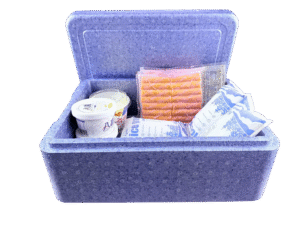
Ideal for everyday perishables. A standard compact EPP box works for most meal kits, mixed groceries or general food shipments. It features thick walls (1.5 inches or more) and a simple lid. Because of its reusable design, you can fold some models flat for easy storage or return shipping.
Benefits: efficient insulation for 72 hours, straightforward cleaning, and compatibility with gel packs or dry ice.
Customshaped box with inserts
Perfect for fragile goods. When shipping cakes, glass jars or bottles, choose a custom EPP box with molded inserts. These compartments hold each item securely, preventing movement and ensuring even temperature distribution. Custom boxes can also include drainage channels for seafood or compartments for separate temperature zones.
Benefits: tailored fit, improved protection, and professional presentation.
Stackable EPP box
Designed for highvolume shipments. Stackable boxes feature interlocking lids and bases, allowing you to build pallets of multiple containers without shifting. This design optimizes warehouse and transport space and maintains consistent temperatures across multiple parcels.
Benefits: space efficiency, improved stability, and easier inventory management.
Cooler box with VIP panels
For extreme hold times. When your products require long transit times (e.g., crosscountry frozen meat or ice cream), choose an EPP cooler with vacuum insulated panels (VIPs). This hybrid design combines the lightweight strength of EPP with the superior insulation of VIPs, extending hold times to 96 hours or even five days. These boxes often include digital temperature monitors and tamperevident seals to comply with regulatory standards.
Benefits: longest temperature stability, high compliance and reduced risk of spoilage.
Best practices for using a foodgrade EPP box
Following proper preparation and packing techniques maximizes the performance of your EPP container.
Precool everything
An insulated box does not create cold; it only maintains temperature. Always precool your products, gel packs or PCM bricks in a refrigerator or freezer before packing. For chilled shipments, keep items between 2 °C and 8 °C; for frozen goods, use dry ice and prefreeze items to –20 °C or below.
Calculate refrigerant quantity
Underestimating the amount of gel packs is a common mistake. Use enough refrigerant to match your payload weight, transit time and expected ambient temperatures. Many manufacturers provide calculators; when in doubt, opt for more packs to ensure the contents stay within safe limits.
Pack tightly and seal properly
Fill any empty space with void filler or additional refrigerant to minimize airflow and temperature gradients. Make sure latches and gaskets are closed; foldable boxes may have hinges that require extra attention.
Monitor and track
Attach a temperature logger or Bluetooth sensor to record conditions during transit. Realtime monitoring helps you intervene before temperature excursions compromise product quality and may be required by regulatory bodies.
Clean and inspect regularly
After each use, wash the box with mild detergent and disinfectant. Inspect for cracks, warping or degraded foam before redeploying to maintain performance and hygiene.
Industry applications of foodgrade EPP boxes
EPP boxes are versatile across sectors. Their ability to maintain stable temperatures, absorb shocks and resist moisture makes them valuable beyond basic food delivery.
Pharmaceuticals and biologics
When transporting vaccines, gene therapies or cell cultures, regulatory guidelines mandate precise temperature control. Compact EPP boxes maintain 2–8 °C for vaccines and can be paired with ultracold PCMs for –70 °C to –80 °C therapies. They also comply with current Good Manufacturing Practice (cGMP) and Good Distribution Practice (GDP) regulations by accommodating IoT sensors for realtime tracking.
Example: A biotech company shipping mRNA vaccines used EPP boxes with specialized PCM packs. Thanks to the foam’s ability to withstand extreme cold (down to –90 °C) and recover from impacts, the vaccines arrived potent and safe. The boxes were reused dozens of times, cutting packaging waste and shipping costs.
Helpful decision tools
Check the details before you choose packaging
These quick tools can help you compare route risk, sizing needs, coolant choices, and packaging details before you request a quote.
Insulation Material Reference
Compare insulation material choices for different cold chain packaging needs.
Compare materialsIce Pack Calculator
Estimate gel ice pack quantity for chilled shipments and practical route planning.
Estimate ice packsCoolant & PCM Reference
Compare coolant and PCM options when a route needs added temperature support.
Compare optionsFood and catering
Meal kit services, restaurants and supermarkets rely on EPP boxes to deliver fresh food without refrigerated trucks. According to food shipping guides, EPP containers keep food safe for up to 72 hours and compress down when empty to save storage space. Foldable designs allow delivery services to stack boxes when full and collapse them for return shipping.
Real case: A catering company switched from disposable containers to reusable EPP boxes. Hot entrées stayed at serving temperature for over two hours, while salads remained crisp. By cleaning and reusing the boxes after each event, the company reduced packaging costs by 60 % over the season.
Ecommerce and groceries
Online grocery deliveries and meal kit subscriptions continue to rise. Consumers expect quality and convenience, and your packaging plays a key role. EPP boxes accommodate custom shapes and sizes, making them efficient for stacking and storing. Many ecommerce companies integrate these boxes into return programs, encouraging customers to send them back for reuse.
Outdoor recreation and leisure
For camping trips and picnics, EPP coolers provide lightweight, durable insulation. Compared with traditional coolers, they maintain cold beverages and snacks for longer and are easy to carry. Their nonporous surfaces resist moisture and bacterial growth, making them hygienic for repeated use.
Industrial logistics
Beyond cold chain, EPP boxes serve as protective transport trays and dunnage for electronics, precision instruments and automotive parts. Shock absorption and dimensional stability protect sensitive equipment during transit. The boxes can be molded to fit irregular shapes and include ergonomic features like handles and straps.
How to choose and customize your EPP box
Selecting the right box requires balancing temperature requirements, payload dimensions and extra features. Here’s a stepbystep approach:
Identify the temperature range. Does your product need chilled (2–8 °C), frozen (–20 °C) or ultracold (–60 °C to –90 °C) conditions? Choose appropriate PCM packs or dry ice accordingly.
Measure your payload. Custom EPP boxes can be manufactured to almost any shape and size; select dimensions that fit snugly without excess void.
Select material density. Higher density foam (40–60 kg/m³) provides better insulation and strength, while lower density reduces weight.
Choose lid and closure style. Flushfitting, stacking or hinged lids influence sealing performance and ease of use.
Consider ergonomics. Handles or straps make boxes easier to carry; folding designs enhance storage efficiency.
Add monitoring. Integrate temperature loggers or IoT sensors for compliance and quality assurance.
Brand your box. EPP foam can be molded in custom colors with logos, turning the box into a marketing tool.
Decision checklist
| Consideration | Options and Recommendations |
| Temperature | 2–8 °C (vaccines/ready meals); –20 °C (frozen foods); –70 °C (gene therapy). |
| Payload size | Custom fit boxes reduce void fill and improve thermal performance. |
| Density | 40–60 kg/m³ for heavy loads or long hold times; 20–30 kg/m³ to reduce weight. |
| Lid type | Flush lids for best seal; hinged lids for convenience; stacking lids for pallets. |
| Extras | Inserts, drainage channels, handles, sensors, branding. |
Latest developments and trends in 2025
Technological advances and market forces are rapidly reshaping coldchain packaging. In 2025, the EPP insulation box market is valued at around US $2 billion and is projected to grow at 7 % CAGR through 2033. Here are the key trends you need to know:
Trend overview
Ecommerce expansion: The surge in online grocery, pharmacy and meal kit services demands reliable homedelivery solutions. Compact EPP boxes meet these needs by offering extended hold times and foldable designs for easy returns.
Regulatory pressure: Stricter food safety and pharmaceutical rules mandate validated packaging and realtime temperature monitoring. EPP boxes support compliance by accommodating IoT sensors and tamperevident features.
Sustainability commitments: Companies are pledging to cut packaging waste. Because EPP is recyclable and reusable, adoption is rising as brands seek to meet environmental targets.
Technological innovation: Hybrid designs combine EPP with VIP panels and PCMs, extending performance to 5 days. Smart sensors provide realtime alerts when temperatures drift outside safe ranges. Some manufacturers even integrate AI route optimization and blockchain traceability to reduce emissions and improve accountability.
Circular logistics programs: Takeback schemes collect used boxes, clean them and recycle them into new products. This “closedloop” approach reduces waste and secures material supply.
Latest progress at a glance
Hybrid insulation systems: Combining vacuum panels with EPP foam achieves up to five days of temperature stability.
Smart sensors: Bluetooth trackers provide realtime temperature and location updates, helping avoid spoilage and enabling audits.
Circular recycling: Companies now offer recycling programs that turn old EPP boxes into new products, closing the loop and reducing environmental impact.
Market insights
The EPP insulation box market is concentrated in North America and Europe, but growth is fastest in AsiaPacific. Food applications account for about 60 % of the market, while pharmaceuticals represent 25 %. Innovation focuses on lighter designs, recycled materials and digital tracking to improve efficiency.
Frequently asked questions
Q1: How long can a foodgrade EPP box keep contents cold?
Most EPP boxes maintain 2–8 °C for 72 hours with gel packs and extend to 96 hours with VIP panels. Precool your products and use sufficient refrigerant to achieve this performance.
Q2: Are EPP boxes recyclable?
Yes. EPP foam is 100 % recyclable, and many manufacturers operate takeback programs. After endoflife, boxes can be ground and remolded into new products, supporting circular economy goals.
Q3: Is EPP safe for food contact?
Expanded polypropylene is foodgrade, resistant to moisture and chemicals and free from harmful substances. It is commonly used to ship produce, meat and seafood.
Q4: What sizes do EPP boxes come in?
Sizes range from lunchboxsized containers for single meals to large pallet boxes capable of holding hundreds of pounds. Custom shapes with inserts are available for fragile or oddly shaped items.
Q5: How do I decide between EPP and VIP insulation?
EPP alone suits short to medium shipments. For long durations or extreme temperatures, hybrid EPP + VIP boxes extend hold times to five days. Assess your product’s sensitivity and transit time before choosing.
Summary and recommendations
Foodgrade EPP boxes have emerged as a gamechanger in coldchain logistics. Their closedcell structure offers superior insulation, impact resistance and lightweight strength compared with traditional foam containers. By maintaining stable temperatures for 72–96 hours, enabling 500 + reuse cycles and being 100 % recyclable, they deliver both economic and environmental benefits. Whether you’re shipping vaccines, seafood or meal kits, EPP boxes help reduce spoilage, cut costs and align with sustainability goals.
To put this technology to work:
Evaluate your shipping needs. Identify temperature requirements, product fragility and transit times.
Select the right box type. Choose standard, custom, stackable or hybrid designs based on your payload.
Implement best practices. Precool items, calculate refrigerant quantity, pack tightly, monitor temperatures and clean boxes after each use.
Explore return and recycling programs. Participate in takeback schemes to close the loop and maximize your investment.
Stay informed. Keep up with 2025 trends such as IoT integration, hybrid insulation and circular logistics to continuously improve your coldchain operations.
About Tempk
Tempk specializes in designing and manufacturing reusable EPP and vacuuminsulated packaging solutions for pharmaceuticals, food and ecommerce. With a focus on research and development and quality assurance, we offer insulated boxes that maintain temperature for 72–96 hours, withstand hundreds of reuse cycles and support sustainability commitments. Our product range includes compact boxes, custom inserts and smart containers with builtin sensors. By partnering with Tempk, you gain reliable coldchain solutions tailored to your needs.
We invite you to get in touch for expert advice, tailored solutions and information on our latest innovations.