Why Are Stackable EPP Boxes the Future of Cold Chain Logistics?
Stackable EPP boxes are gaining attention because they solve multiple coldchain challenges at once. These reusable containers deliver exceptional insulation and durability while being up to 50 % lighter than traditional boxes and maintaining cold temperatures for 72–96 hours. They can be stacked neatly when full or nested when empty, reducing storage space and transportation emissions. As supply chains face increasing sustainability demands and product quality expectations, it’s time to ask why this foambased packaging is becoming the default option for food, pharmaceuticals and ecommerce deliveries.
How does EPP foam provide longlasting thermal insulation and impact resistance?
What makes stackable designs unique compared with other isothermal containers?
Why are EPP boxes being adopted across food, pharma and ecommerce sectors?
What market trends and regulations are shaping coldchain packaging in 2025?
How can you choose, use and maintain stackable EPP boxes for maximum benefit?
How Does EPP Foam Deliver Superior Insulation and Shock Resistance?
EPP’s closedcell structure traps air pockets, creating a thermal barrier that slows heat transfer and cushions impacts. Data show that EPP’s thermal conductivity ranges around 0.25–0.26 W/m·K, enabling boxes to hold cold for 72–96 hours. The foam absorbs less than 5 % water by volume, resists oils and chemicals, and rebounds after compression, surviving over 500 trips.
EPP (expanded polypropylene) is produced by steamexpanding polymer beads and moulding them into a rigid matrix. The resulting microbubbles not only block heat flow but also dissipate kinetic energy during drops or bumps. Studies comparing materials found that EPP foam boxes block heat transfer about 30 % more effectively than disposable expanded polystyrene (EPS) boxes and are roughly 50 % lighter. This combination explains why EPP boxes can maintain 2–8 °C for vaccines or –18 °C for frozen seafood up to 72 hours.
How Do Material Properties Translate to RealWorld Benefits?
EPP’s versatility lets manufacturers customise density, wall thickness and features to different loads. Higher densities (15–100 kg/m³) support heavier payloads while preserving shape. The table below summarises key properties versus other foams:
| Material Property | EPP (Expanded Polypropylene) | EPS (Expanded Polystyrene) | Practical Impact |
| Density (kg/m³) | 15–100 (customisable) | 15–30 (fixed) | Higher densities allow EPP to support heavier cargo without deformation. |
| Thermal conductivity (W/m·K) | 0.25–0.26 | ~0.036 | Lower conductivity means better insulation; EPP’s thicker walls and trapped air improve thermal resistance. |
| Impact resistance | High; rebounds after compression | Low; brittle and cracks | EPP containers survive drops and rough handling, reducing product losses. |
| Water absorption | <5 % volume | 2–4 % volume | Low moisture uptake prevents mould and maintains insulation efficiency. |
Practical Tips and Suggestions
Precondition with coolant: Chill eutectic plates or ice packs overnight and precool the EPP box before loading. This primes the insulation and extends hold time.
Load efficiently: Fill empty space with thermal buffers or dividers to reduce air volume and minimise temperature fluctuations.
Seal tightly: Ensure lids fit snugly; modern designs use recessed grooves and clips that improve insulation by 30 %.
Realworld case: A pharmaceutical distributor implemented compact EPP boxes with IoT sensors and eutectic plates. Over one year, they maintained 72–96 hour temperature stability, reduced vaccine spoilage losses from US$1.2 million to zero and eliminated 15 % seafood rejection. Reusing the same containers more than 500 times cut packaging costs by roughly 60 % compared with singleuse EPS.
What Makes Stackable EPP Boxes Unique?
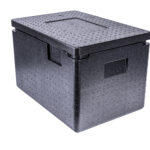
Stackable EPP boxes feature moulded geometries that interlock when full and nest inside one another when empty, maximising space utilisation. The Swedish company behind the alvobox® coldchain system designed a stackable EPP box with a waist (“alvo” in Latin) that allows empty units to fit inside one another. Their high Rvalue and builtin logistics benefits make this design both thermally efficient and easy to handle.
Unlike rigid foam containers that cannot collapse, stackable EPP boxes support vertical compression loads and can be arranged on pallets without deforming. Some designs integrate handles, RFID tags and grooves for pallet straps, allowing safe stacking inside refrigerated trucks or ambient warehouses. When empty, the boxes can be nested to reduce return trip volume by up to 60 %, improving backhaul efficiency and lowering carbon emissions.
How Do Stackable Designs Compare with Traditional Containers?
Stackable EPP boxes offer flexibility beyond thermal performance. They are lighter than insulated metal or rigid plastic containers and more durable than cardboard. Here’s a comparison:
| Feature | Stackable EPP Box | Rigid EPS Container | Foldable Plastic Bin | Meaning for You |
| Stackability | Interlocking lips allow secure vertical stacking; nesting saves up to 60 % space when empty | Typically nonstackable; fragile edges compress under weight | Foldable, but hinges may break after repeated use | Efficient stacking reduces storage footprint and return freight costs. |
| Thermal performance | Holds cold for 72–96 hours | Maintains cold for 24–48 hours | Limited insulation; requires additional liners | Fewer cooling elements and longer hold times mean fewer spoilage losses. |
| Durability & reuse cycles | 500 + reuse cycles | Single use | 50–100 cycles depending on quality | Long service life lowers total cost of ownership and reduces waste. |
| Weight | Up to 50 % lighter than EPS | Heavier relative to strength | Similar weight but weaker insulation | Lightness improves ergonomics for warehouse staff and reduces fuel consumption. |
Practical Tips and Suggestions
Choose the right size: Select a box volume that matches your payload; oversizing increases void space and shortens hold time.
Stack sensibly: Align boxes so that the interlocking lips engage; avoid stacking beyond rated loads to prevent deformation.
Use nestable returns: For backhaul efficiency, invest in nestable EPP designs; empty boxes can be nested to save truck space and lower emissions.
Realworld case: A grocery delivery service adopted a 52 litre stackable EPP box for its clickandcollect solution. The company reported easier packing, improved stacking stability and 20 % reduction in return transport costs because the boxes nested when empty.
Why Are EPP Boxes Being Adopted Across Food, Pharma and ECommerce?
EPP boxes maintain consistent temperatures, protect delicate goods and align with sustainability goals, making them versatile across industries. In food logistics, EPP insulated boxes preserve fruits and vegetables by maintaining stable internal temperatures and reducing reliance on refrigeration. Their lightweight yet durable construction eases loading and handling and cushions contents against bumps. In pharmaceuticals, EPP’s high strengthtoweight ratio and temperature range of –40 °C to +110 °C protect vaccines and biologics.
Ecommerce and mealkit companies choose EPP for its customisable sizes and branding opportunities; it accommodates small orders or bulk shipments and can be sanitised and reused hundreds of times. EPP’s full recyclability aligns with corporate environmental, social and governance (ESG) targets.
Helpful decision tools
Check the details before you choose packaging
These quick tools can help you compare route risk, sizing needs, coolant choices, and packaging details before you request a quote.
Route Risk Checker
Review lane conditions before selecting packaging for real operating requirements.
Check route riskDry Ice Calculator
Estimate dry ice needs for frozen or ultra-cold shipments before packing.
Estimate dry icePackaging Selector
Compare insulated packaging options by product, route, and temperature need.
Find packagingHow Do SectorSpecific Requirements Influence Box Design?
Different industries require tailored features:
| Sector | Key Requirement | EPP Box Customisation | Benefit |
| Food (produce & seafood) | Extended freshness without refrigeration | Integrate eutectic plates; choose moistureresistant coatings | Reduces spoilage; extends shelf life for berries and fish. |
| Pharmaceuticals | Precise temperature control; regulatory compliance | Use IoT sensors for realtime temperature and location monitoring | Ensures drug safety; supports compliance audits. |
| Ecommerce & meal kits | Brand visibility; flexible sizes | Custom moulds with company logos; nestable designs | Enhances customer experience; saves storage space. |
Practical Tips and Suggestions
Implement IoT monitoring: Pair EPP boxes with temperature and humidity sensors; realtime data provides early warnings of excursions.
Prioritise sanitisation: Clean boxes with mild detergent and disinfectant after each use to maintain food safety.
Educate customers: Provide endusers with return instructions; closedloop logistics maximise reuse cycles.
Realworld case: A national mealkit provider switched from cardboard and plastic insulation to EPP boxes and integrated RFID tags. Customer surveys reported improved unboxing experiences, while internal data showed a 25 % reduction in packaging costs after six months thanks to reuse and lower spoilage.
What Market Trends and Regulations Are Shaping ColdChain Packaging in 2025?
Sustainability mandates, market growth and technology adoption are redefining coldchain packaging. The global cold chain packaging market was valued at USD 34.28 billion in 2024 and is projected to reach USD 89.84 billion by 2034, reflecting an annual growth rate of 11.3 %. At the same time, the cold chain logistics market itself is forecast to grow from USD 324.85 billion in 2024 to USD 862.33 billion by 2032, signalling demand for temperaturecontrolled shipping across foods and pharmaceuticals.
Regulatory bodies are also driving change. The European Union has set a requirement that all packaging must be recyclable by 2030. As a result, companies are shifting from singleuse EPS to reusable, recyclable materials like EPP. Sustainability goals are complemented by ESG reporting requirements and consumer pressure for ecofriendly packaging. Geopolitical disruptions and tariffs are adding complexity to logistics networks, emphasising the need for resilient, stackable containers that can handle longer transit times.
Latest Progress at a Glance
Reusable over disposable: Companies are investing in reusable coldchain packaging that withstands hundreds of cycles and supports circular logistics.
Smart packaging and IoT: Sensors that track temperature, humidity and location in real time improve visibility and allow proactive interventions.
Sustainability and regulation: EU directives push for recyclability; EPP meets this requirement and helps brands meet sustainability targets.
Upgraded infrastructure: Cold storage facilities are being modernised with automation and greener refrigeration technologies.
New product categories: Plantbased foods and personalised medicines are driving demand for temperaturecontrolled deliveries.
Market Insights
Growth is uneven across regions: North America currently dominates the coldchain packaging market due to strong pharmaceutical demand, while Asia–Pacific is expected to grow rapidly. By material, EPS held the largest market share in 2024, but EPP and vacuuminsulated panels (VIP) are gaining traction thanks to reuse potential and recyclability. Products like insulated containers and gel packs are leading segments. Emerging trends include circular logistics models, where packaging is rented and returned, and integration of AI for predictive temperature control.
Frequently Asked Questions
What is a stackable EPP box?
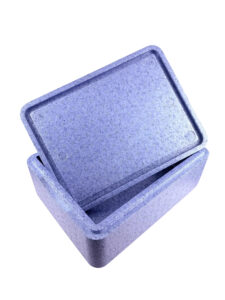
A stackable EPP box is a reusable container moulded from expanded polypropylene foam. Its interlocking rims allow safe vertical stacking while its tapered waist enables empty boxes to nest inside each other for return transport. The closedcell foam provides superior insulation and impact resistance.
How long can EPP boxes keep products cold?
Welldesigned EPP boxes maintain 2–8 °C for vaccines or –18 °C for frozen foods for 72–96 hours. When paired with vacuum panels or eutectic plates, hold times may exceed four days. Proper preconditioning and packing can extend performance.
Are EPP boxes recyclable?
Yes. Expanded polypropylene is 100 % recyclable, and boxes can be reused over 500 times before recycling. At end of life, the material can be reprocessed into new products, supporting circular economy goals.
How do EPP boxes compare to EPS or EPE containers?
EPP boxes block heat transfer roughly 30 % more effectively than EPS and are 50 % lighter. They are more impact resistant than EPS and offer better insulation than EPE foam, which is softer but less thermally efficient. Pur boxes provide excellent insulation but are heavier and harder to recycle.
What maintenance do EPP boxes require?
After each trip, wash the box with mild detergent and disinfectant to remove contaminants. EPP’s chemical resistance allows thorough cleaning without degradation. Inspect the box for cracks or warping; replace units showing wear. Precool boxes and load them properly to maximise hold time.
Can I integrate sensors into EPP boxes?
Yes. EPP foam can be moulded with cavities for RFID tags or IoT sensors, enabling realtime monitoring of temperature, humidity and location. This capability enhances visibility and helps ensure compliance in regulated industries.
Summary and Recommendations
Stackable EPP boxes represent a powerful solution for modern coldchain logistics. They deliver superior thermal insulation, shock resistance and longevity, outperforming traditional EPS or cardboard containers while aligning with sustainability mandates. By holding cold temperatures for 72–96 hours, absorbing shocks and surviving hundreds of trips, they reduce spoilage and total packaging costs. Stackable designs optimise space both when full and empty, improving warehouse efficiency and lowering return freight emissions.
To leverage these benefits, businesses should select the right box size, precondition cooling elements, load efficiently, monitor conditions with sensors and clean boxes after each use. Integrating EPP containers into closedloop logistics will help organisations achieve cost savings, regulatory compliance and carbon footprint reductions. As demand for coldchain delivery grows and regulations favour recyclable materials, stackable EPP boxes are set to become the industry standard.
About Tempk
Tempk is a specialist in coldchain packaging solutions, offering reusable insulated boxes, ice packs and thermal liners. We focus on engineering boxes that maintain temperature stability for up to 96 hours and endure more than 500 reuse cycles, ensuring reliability for food, pharmaceutical and ecommerce applications. Our research and development centre continually tests new materials and designs to meet evolving regulatory and sustainability requirements. By choosing Tempk products, you invest in durable, recyclable packaging that delivers performance and reduces environmental impact.
Call to Action: To discuss how stackable EPP boxes can transform your supply chain, contact our experts for a personalised consultation. We’ll help you choose the right size and configuration, integrate sensors if needed and implement return loops for maximum savings.