Updated: December 2 2025
If you’re responsible for shipping vaccines or biologic drugs, the phrase vacuum insulated panel box for medical cold chain might sound like a mouthful, yet it represents one of the most powerful tools in temperaturecontrolled logistics. These ultrathin containers use evacuated silica panels and phasechange materials to keep medicines within strict ranges for days. With the global pharmaceutical coldchain market expected to grow from about USD 17.5 billion in 2024 to USD 71.6 billion by 2034, you need solutions that protect product integrity, reduce waste and meet stringent regulations. This guide breaks down how VIP boxes work, their advantages and limitations, how to choose the right solution, and the innovations shaping 2025.
What a vacuum insulated panel box is and how it functions – including a breakdown of core components such as the microporous core, barrier film and phasechange materials.
Why VIP boxes matter for pharmaceuticals – exploring holdtime advantages, space savings and protection of highvalue biologics.
How to select the right box – stepbystep guidance covering temperature profiles, transit duration, PCM pairing and regulatory compliance.
Current innovations & trends in 2025 – from hybrid coolers and IoTenabled smart shippers to reusable systems, circular economy and selfrefrigerated boxes.
Market insights and regulations – highlighting 2025 coldchain growth drivers and temperature requirements such as the CDC’s 2–8 °C guidance,.
Frequently asked questions – addressing hold times, reusability, sustainability and selection criteria.
What Is a Vacuum Insulated Panel Box and How Does It Work?
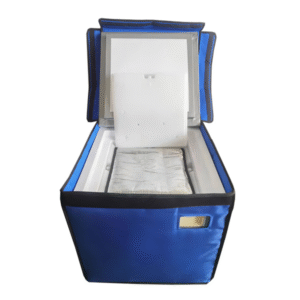
A vacuum insulated panel (VIP) box is a rigid container that uses an evacuated core to drastically slow heat transfer, maintaining stable temperatures for days. Each panel contains a porous core—typically fumed silica or glass fibres—sealed in an airtight barrier film and evacuated to nearvacuum. By removing air, which normally conducts heat, the VIP achieves a thermal conductivity of around 5 mW/m·K, far lower than expanded polystyrene or polyurethane foam. Manufacturers sandwich multiple panels into the box walls; the cavity houses products along with phasechange materials (PCMs) such as gel packs or dry ice. When combined with appropriate PCMs, VIP boxes maintain required temperatures for 7–10 days—two to three times longer than conventional coolers.
How VIP Technology Works – Components and Science
Understanding the science behind VIPs helps you appreciate why they perform so well. The key elements are:
| Component | Description | Why it Matters |
| Core material | A microporous matrix (often fumed silica) evacuated to nearvacuum. | Removes air molecules that normally conduct heat, reducing thermal conductivity to about 5 mW/m·K. |
| Barrier film | Multilayer laminate of aluminium and polymer that prevents gas ingress and reflects radiant heat. | Maintains vacuum over years, ensuring consistent insulation and blocking moisture penetration. |
| Support structure | Spacers or aerogelenhanced cores prevent panel collapse under atmospheric pressure. | Maintains shape and prevents thermal bridges, enabling thin walls without sacrificing strength. |
| Outer shell | Protective casing made from corrugated plastic or fibreboard. | Shields fragile VIP panels from punctures and moisture, improving durability and reusability. |
| PhaseChange Materials (PCMs) | Gel packs, dry ice or proprietary PCMs placed inside the box cavity. | Absorb and release latent heat, maintaining target temperatures for hours or days depending on the melting point. |
Thermal Science in Plain Language
Traditional insulation traps air in small pockets; because air conducts heat, thick walls are needed. VIPs remove most of the air, leaving only a solid matrix that barely conducts heat. Imagine wearing a down jacket versus a spaceage vacuum flask—the flask needs only a thin wall to keep your coffee hot. Similarly, VIP boxes can use 10–15 mm walls and still maintain 7–10day hold times. With thermal conductivity up to seven times lower than polyurethane foam, VIP boxes free up internal volume and reduce the need for bulky gel packs. The result is lighter, smaller packaging with longer temperature stability.
Insulation Materials Comparison
To appreciate VIP performance, compare common coldchain insulation materials:
| Material | Approximate Thermal Conductivity | Typical Wall Thickness (72 h hold) | Hold Time & Practical Significance | Use Case |
| Expanded Polystyrene (EPS) | ~36 mW/m·K (eight times higher than VIP) | 30–40 mm | Lowcost and easy to cut; supports 2–3 days of temperature control; bulky and heavy. | Short trips or lowvalue goods. |
| Polyurethane (PUR) | ~22 mW/m·K | 25–35 mm | Moderate cost and rigidity; hold time 3–5 days. | Mediumdistance shipments with moderate sensitivity. |
| Vacuum Insulated Panel (VIP) | ≈5 mW/m·K | 10–15 mm (50–70 % thinner) | High cost and fragility; hold time 7–10 days; increased internal volume and weight savings. | Highvalue pharmaceuticals, biologics and research samples. |
Practical Tips and Case Study
Prioritize highvalue cargo: Use VIP boxes for vaccines, biologics and precision medicines where the cost of spoilage is unacceptable. VIPs maintain 2–8 °C or frozen conditions for days.
Pair with appropriate PCMs: Match PCM melting points to your required temperature band (e.g., 2–8 °C, –20 °C or –70 °C). Proper PCM selection ensures stable internal conditions.
Protect the panels: Use a rigid outer shell to shield VIPs from punctures or compression.
Plan return logistics: For reusable VIP containers, coordinate reverse logistics and cleaning to maximize lifecycle and sustainability.
Realworld example: A pharmaceutical firm shipping biologics used a reusable smart box with VIP panels and PCMs that maintained 2–8 °C for 72 hours while transmitting live temperature and location data; alerts triggered corrective actions if temperatures drifted.
Why Choose Vacuum Insulated Panel Boxes for Medical Cold Chain?
VIP boxes outperform conventional insulation in several critical ways:
Thermal Performance, Space and Weight Advantages
Extended hold times: With thermal conductivity around 5 mW/m·K, VIP boxes maintain temperatures for 7–10 days—two to three times longer than EPS or PUR coolers. Hybrid designs with thinner PCMs can deliver 72 hours of precise temperature control.
Space efficiency: Thinner walls free up internal volume. A sample calculation shows that replacing a 20 mm EPS cooler with a 10 mm VIP box reduces PCM weight from 4 kg to 1.5 kg, increases usable volume and extends hold time.
Weight reduction: Lower insulation thickness and reduced PCM mass yield lighter shipments, cutting freight costs.
Stable temperature profiles: VIPs paired with PCMs minimise temperature fluctuations. Many designs support 2–8 °C, –18 °C or –70 °C conditions,, making them versatile for vaccines, biologics, cell therapies and frozen samples.
Highvalue protection: Lifesaving vaccines, biologics and specialty foods require strict temperature control. VIP boxes provide reliability and consistent conditions even during customs delays or long transits.
Weighing the Drawbacks and Environmental Considerations
No solution is perfect. VIP packaging also presents challenges:
Fragility: The panels are delicate and need additional protection, which can increase overall thickness.
Cost: VIPs remain more expensive than traditional materials, although costs are decreasing.
Shape constraints: Panels are not easily cut or curved, creating thermal bridges and limiting customization.
Weight: The core density (150–250 kg/m³) adds weight compared with some foams.
Environmental impact: Manufacturing pyrogenic silica requires significant energy, resulting in high embodied carbon. However, recycling the silica core can reduce ecological impact by 95 %. Initiatives by companies such as Peli BioThermal and VakuIsotherm aim to recycle endoflife panels, potentially saving 55 ,704 tons of CO₂e across the global VIP market.
Balancing Cost and Performance
To justify the higher upfront cost, evaluate total cost of ownership. VIP boxes reduce product loss from temperature excursions, lower shipping weight and, when reused, deliver longterm value. Analysts forecast that the reusable coldchain packaging market will grow from USD 4.97 billion in 2025 to USD 9.13 billion by 2034. Selecting a reusable VIP system and establishing reverse logistics can spread costs over multiple shipments while reducing waste.
How to Select the Right Vacuum Insulated Panel Box: A StepByStep Guide
Choosing the optimal VIP container involves assessing your product requirements, transit conditions and regulatory obligations. Use the following framework to make informed decisions:
Helpful decision tools
Check the details before you choose packaging
These quick tools can help you compare route risk, sizing needs, coolant choices, and packaging details before you request a quote.
Dry Ice Calculator
Estimate dry ice needs for frozen or ultra-cold shipments before packing.
Estimate dry iceIce Pack Calculator
Estimate gel ice pack quantity for chilled shipments and practical route planning.
Estimate ice packsPackaging Selector
Compare insulated packaging options by product, route, and temperature need.
Find packagingStep 1: Evaluate Your Product’s Thermal Profile
Identify the required temperature range. Most pharmaceuticals require 2–8 °C, while frozen vaccines may need –20 °C, and ultracold biologics like mRNA therapies require –70 °C. Determine how long the product must stay within this range. VIP boxes provide 7–10 days of autonomy; hybrid designs maintain 72 hours with thinner PCMs,.
Step 2: Estimate Transit Duration and Environment
Consider shipping distance, potential delays and external temperatures. Passive VIP boxes suit moderate durations (up to one week). For long routes or extreme conditions, consider hybrid or active systems with builtin refrigeration.
Step 3: Match PCM and Coolant Type
Select PCMs with melting points aligned to your temperature band. Gel packs or waterbased PCMs work for 2–8 °C; dry ice suits frozen and ultracold shipments; proprietary PCMs hold specific ranges. Using multiple packs or placing PCMs at the top (as research shows) enhances performance.
Step 4: Determine Box Size and Payload Ratio
Thinner VIP walls increase usable space, but oversizing creates extra air that increases thermal load. Calculate internal volume needed for both product and PCMs; avoid empty space..
Step 5: Assess Regulatory and Compliance Requirements
Follow Good Distribution Practice (GDP) and Good Manufacturing Practice (GMP) guidelines. For vaccines, abide by World Health Organization and CDC requirements: refrigerators should maintain 2–8 °C, while frozen vaccines require –50 °C to –15 °C. Regulatory authorities may require validated packaging, data logging and temperature traceability.
Step 6: Balance Cost versus Performance
Compare the cost of VIP containers with the value of the cargo, potential losses from spoilage and shipping costs saved through weight reduction. Reusable VIP systems may offer better longterm economics.
Step 7: Consider Sustainability and EndofLife
Opt for designs with recyclable panels and reusable outer shells. Initiatives like Peli BioThermal’s circular economy project recycle endoflife VIP cores, cutting carbon emissions and raw material use. Plantbased PCMs and biofoam linings reduce environmental footprint.
SelfAssessment Checklist
| Question | Options | Implications |
| Temperature Range Needed? | 2–8 °C, –18 °C, –70 °C | Determines PCM selection and whether passive or hybrid packaging is required. |
| Transit Duration? | <48 h, 48–72 h, >72 h | Standard VIP suits <48 h; hybrid VIP for 48–72 h; active refrigeration for longer. |
| Product Value? | Low/Moderate, High | Highvalue goods justify VIP/hybrid solutions; lowvalue products may use EPS or PUR. |
| Reverse Logistics Available? | Yes, No | Reusable VIP boxes require return systems; otherwise choose singleuse but plan recycling. |
| Applicable Regulations? | Food (FSMA), Pharma (GMP/GDP), Research | Compliance dictates validation, monitoring and documentation. |
2025 Innovations and Trends in Vacuum Insulated Panel Boxes
The coldchain industry is evolving rapidly. Here are the key developments shaping VIP packaging in 2025.
Hybrid Coolers and Optimized PCMs
Hybrid coolers combine VIP insulation with thinner PCMs or active elements to extend hold time while reducing energy use. Recent reports highlight that such designs can maintain precise temperatures for 72 hours or longer and reduce fuel consumption. By optimizing PCM mass and using highperformance insulation, shippers can minimize greenhouse emissions and cost.
IoTEnabled Smart Packaging
Smart packaging integrates sensors, data loggers and connectivity. Reusable containers equipped with VIP panels and PCMs can maintain 2–8 °C for 48–72 hours while transmitting live temperature and location data. Alerts trigger corrective actions when temperatures drift, reducing reliance on dry ice and gel packs.
MultiTemperature and Modular Designs
Advanced containers segment the interior into different temperature zones, allowing mixed loads of frozen and chilled goods. Manufacturers use VIPs and smart monitoring to manage varied thermal requirements concurrently. Modular components enable quick customization with pretested combinations of PCMs and insulation.
Reusable Packaging and Circular Economy
Analysts forecast that reusable coldchain packaging will expand from USD 4.97 billion in 2025 to USD 9.13 billion by 2034. Closedloop systems emphasize return, cleaning and redistribution of containers. Recycling VIP cores reduces ecological impact by up to 95 % and could save tens of thousands of tonnes of CO₂e. Companies are also experimenting with biodegradable PCMs and biobased foams.
SelfRefrigerated and Smart Boxes
Emerging products like the Ember Cube eliminate the need for gel packs or dry ice. The selfrefrigerated container maintains 2–8 °C for at least 72 hours, uses GPS and cellular connectivity for realtime monitoring, and features an eink screen that displays the internal temperature and generates shipping labels,. Users can press a button to schedule pickup and regenerate labels, enabling reuse and reducing waste. The Cube’s design integrates vacuum insulation with onboard refrigeration and IoT sensors.
AI and Blockchain Integration
Artificial intelligence analyses sensor data to predict failures, optimize routes and reduce delays, while blockchain provides tamperproof logs of temperature data and handling events. These technologies support compliance audits and enhance transparency across the supply chain.
Market Growth and Segmentation
Market studies suggest VIP containers will capture a larger share of coldchain packaging. Reusable containers, including VIP shippers, dominate product type share in 2024 and are projected to grow significantly. North America leads adoption, while AsiaPacific shows strong growth potential.
Latest Market Insights and Regulatory Landscape (2025)
The pharmaceutical coldchain packaging market illustrates why VIP technology is gaining traction. In 2024 it was valued at USD 17.5 billion and is projected to reach USD 71.6 billion by 2034, growing at 15.1 % CAGR. Growth drivers include expansion of mRNA and cell/gene therapies that require ultralow temperatures, stringent regulatory requirements, and the rise of biologics and specialty drugs. Passive VIP containers offer costeffective solutions for the majority of shipments, while active and hybrid systems support ultracold therapies..
Temperature Standards and Compliance
Health authorities mandate strict temperature ranges to preserve vaccine potency. The CDC recommends storing most vaccines between 2 °C and 8 °C (36 °F to 46 °F). Frozen vaccines require –50 °C to –15 °C, and some specialized vaccines must be maintained at –70 °C. These requirements underscore the need for validated thermal packaging. Temperature excursions—even brief ones—can degrade biological components; thus packaging must hold stable conditions throughout manufacturing, transport and lastmile delivery.
SupplyChain Complexity and Risks
Vaccine distribution involves multiple stakeholders and transfer points. From manufacturing facilities to regional centers to clinics, each handoff introduces potential temperature risks. Weather, delays and human error can disrupt control. High ambient temperatures and limited infrastructure in remote areas pose challenges. Passive thermal packaging protects against external fluctuations and maintains stable conditions during these transitions.
Market Trends Toward Sustainable Materials
Manufacturers are prioritizing sustainable and multiuse packaging to reduce waste and operational costs. The GMI report notes the rapid adoption of VIPs due to their superior insulation, reduced weight and lower refrigerant requirements. Innovations such as aerogels and nanofoams provide ultrahigh insulation in thin profiles. At the same time, regulatory bodies emphasise documentation and validation, driving adoption of IoT sensors and data logging.
Market Data Snapshot (2025)
| Metric | Value | Source | Implication |
| Pharmaceutical coldchain market size 2024 | USD 17.5 billion | GMI report | Highlights baseline for growth projections. |
| Forecast market size 2034 | USD 71.6 billion (15.1 % CAGR) | GMI report | Indicates strong demand for advanced packaging solutions. |
| Reusable coldchain packaging market 2025–2034 | USD 4.97 billion → USD 9.13 billion | Tempk analysis | Emphasizes shift toward reusable containers and circular economy. |
| Thermal retention of VIP vs conventional PU boxes | VIP box provides ~3× longer insulation; 88 % of fumedsilica VIP performance | 2025 research (OCMPU VIP study) | Shows that vacuum insulation significantly outperforms traditional PU and highlights tradeoff between weight and performance. |
| Maximum hold time of vacuum insulated cold boxes | Up to 109 hours between –30 °C and 25 °C for a 49 L box under optimal conditions | DARQ Industries article | Demonstrates capability of VIP cold boxes to sustain long durations without power. |
Frequently Asked Questions
Q1: How long can a vacuum insulated panel box keep medicines cold?
Most VIP boxes maintain required temperatures for 7–10 days when paired with appropriate PCMs. Hybrid designs with thinner PCMs provide precise temperature control for 72 hours, while selfrefrigerated boxes like the Ember Cube sustain 2–8 °C for at least 72 hours using onboard refrigeration.
Q2: Are vacuum insulated panel boxes reusable?
Many VIP containers are designed for reuse, particularly those with rigid protective shells and durable barrier films. The reusable coldchain packaging market is expected to grow from USD 4.97 billion in 2025 to USD 9.13 billion by 2034, reflecting a shift toward circular economy models and reverse logistics. Proper cleaning and validation are essential to maintain performance.
Q3: How do I decide between VIP packaging and conventional foam?
Assess product value, hold time requirements and transit conditions. For highvalue biologics requiring more than 3–5 days of temperature control or shipments to remote areas with limited infrastructure, VIPs provide the safest option. For short trips or lowvalue goods, less expensive materials like EPS or PUR may suffice.
Q4: What are the environmental impacts of VIP boxes?
Producing pyrogenic silica has high embodied energy and greenhouse potential. However, recycling VIP support cores can cut ecological impact by 95 %, potentially saving 55,704 tons of CO₂e globally. Choosing reusable designs and participating in recycling programmes mitigates environmental harm.
Q5: Can VIP boxes handle ultracold therapies like mRNA vaccines?
Yes. When paired with appropriate PCMs or dry ice, VIP boxes can maintain temperatures as low as –70 °C. For durations beyond a week or for extremely sensitive payloads, hybrid or active systems (e.g., selfrefrigerated boxes) may be necessary.
Summary and Recommendations
Vacuum insulated panel boxes are transforming medical coldchain logistics. Their ultralow thermal conductivity (~5 mW/m·K) and thin walls deliver 7–10day hold times while increasing payload volume and reducing weight. VIP technology offers extended protection for vaccines, biologics and highvalue commodities, enabling compliance with strict temperature requirements. Despite higher cost and fragility, the benefits of improved product safety, lower shipping costs and support for longdistance distribution often outweigh the drawbacks. Innovations such as hybrid coolers, IoTenabled monitoring, reusable systems and selfrefrigerated boxes are shaping the future of medical coldchain packaging.
Actionable Guidance:
Map your coldchain needs: Define product types, required temperature ranges and transit durations. Use the selfassessment checklist to determine whether passive, hybrid or active VIP packaging suits your needs.
Compare available options: Evaluate VIP boxes by insulation thickness, PCM type, hold time, cost and reusability. Consider highperformance systems like the Ember Cube for shipments requiring realtime monitoring.
Implement monitoring: Equip shipments with temperature sensors and, when feasible, use IoTenabled smart boxes to receive alerts and prevent excursions.
Plan for reuse: Choose reusable VIP containers and establish reverse logistics to recover and refurbish them. Participate in recycling programmes to reduce environmental impact.
Consult experts: Work with coldchain specialists to validate your packaging, ensure compliance with GDP/GMP standards and stay abreast of new technologies.
About Tempk
Tempk (Shanghai Huizhou Industrial Co., Ltd.) is a hightech company specializing in coldchain packaging products and temperature control solutions. Founded in 2011, the company operates multiple factories across China and produces phasechange materials, VIP coolers, insulated bags, ice packs and smart sensors. Tempk’s products are trusted by major pharmaceutical groups and fooddelivery companies to safeguard temperaturesensitive goods. With a commitment to innovation, sustainability and quality, Tempk offers 24/7 technical support, realtime tracking and ecofriendly designs to meet the evolving demands of the global coldchain industry.
Next Steps: Contact Tempk’s experts to discuss custom vacuum insulated panel boxes for your medical coldchain needs, explore reusable packaging options or schedule a consultation on coldchain strategy.