How to Monitor Cold Chain Meat Temperature in 2025?
Updated: December 2025
Maintaining meat quality from slaughter to serving isn’t just about logistics—it’s about controlling temperature every step of the way. Cold chain breakdowns cause around 14 % of global food loss before retail and cost billions in recalls and wasted inventory. In 2025, chilled meat must stay between 0–4 °C (32–39 °F) and frozen meat at –18 °C (0 °F) or below to slow microbial growth and avoid the “danger zone.” To help you meet these standards, this guide combines the latest regulations, technologies and practical advice. You’ll learn how IoT sensors, blockchain records and predictive analytics can safeguard your meat operation while improving efficiency.
This article answers:
Why is temperature control crucial? Spoilage risks, pathogen growth and FSMA compliance all depend on keeping meat within safe ranges.
Which technologies lead in 2025? Explore IoT sensors, RFID tags, smart packaging and AI-driven analytics.
How to pack and ship meat safely? Best practices for EPS coolers, gel packs, pre-cooling and monitoring devices.
What regulations apply? FSMA Sanitary Transportation rule, SQF standards and new FSMA 204(d) traceability requirements.
How is the market evolving? Growth data, new trends like the –15 °C coalition and rising demand for sustainable packaging..
Understanding Meat Temperature Control
Why Temperature Matters
Meat is a living product even after slaughter. Microorganisms thrive at warm temperatures; even brief spikes invite pathogens like Listeria and Salmonella. Regulations require chilled meat to remain at 0–4 °C and frozen meat at –18 °C or colder. Deviations shorten shelf life, trigger recalls and erode consumer trust. Temperature control also preserves colour, texture and nutrients; fluctuating conditions cause drip loss, discolouration and rancidity.
Maintaining safe temperatures slows enzymatic reactions and prevents the “danger zone” (5–60 °C / 41–140 °F) where bacteria multiply rapidly. Realtime monitoring via sensors and data loggers provides evidence of compliance and allows operators to intervene before a problem escalates. The Food Safety Modernization Act (FSMA) Sanitary Transportation rule mandates that vehicles must be capable of maintaining safe temperatures and be adequately cleaned.
Temperature Ranges and Shelf Life
The following table summarises typical storage temperatures, approximate shelf life and how it benefits you:
| Meat category | Typical storage temperature | Approx. shelf life* | What it means to you |
| Fresh chilled meat (beef, pork, poultry) | 0–4 °C (32–39 °F) | 2–5 days (shorter for ground meat) | Preserves flavour and minimises bacterial growth. Complies with SQF and FSMA standards. |
| Frozen meat and seafood | ≤ –18 °C (≤ 0 °F) | 6–12 months depending on cut | Halts microbial activity for longdistance export without spoilage. |
| Cured or processed meat | 0–4 °C | 7–14 days | Reduces moisture loss and maintains texture in hams, sausages and cooked products. |
| Drycured shelfstable meats | Ambient (< 25 °C / 77 °F) | Months | High salt and low moisture inhibit bacteria; minimal cold chain requirements. |
*Shelf life values are approximate; always follow manufacturer guidelines.
How Temperature Affects Quality and Safety
Microbial growth: The “danger zone” (5–60 °C) accelerates bacterial multiplication. Keeping meat at 0–4 °C slows growth; freezing at –18 °C or below inhibits most pathogens.
Texture and colour: Temperature fluctuations cause ice crystals to form and melt, damaging muscle fibres and leading to drip loss and discolouration.
Nutrient retention: Consistent cold slows enzymatic breakdown of proteins and lipids, preserving nutritional value.
Foodborne illness prevention: Under-cooked or improperly handled meat can harbour pathogens. Safe minimum internal cooking temperatures—145 °F for steaks, 160 °F for ground meat and 165 °F for poultry—remain critical.
Regulatory Context
FSMA Sanitary Transportation Rule
FSMA’s Sanitary Transportation rule aims to prevent practices that create food safety risks during transport. Shippers, loaders, carriers and receivers must implement sanitary practices, maintain proper refrigeration and document their processes. Vehicles and equipment must be cleanable and able to maintain safe temperatures. Training is required for personnel responsible for transportation, and written procedures and temperature logs must be maintained.
FSMA 204(d) Traceability
By January 2025, FSMA 204(d) requires that businesses electronically log key data elements (KDEs) for critical tracking events (CTEs) and provide them to FDA within 24 hours. Temperature deviations must be documented, and records must be sortable and easy to retrieve. This rule increases transparency and accountability across the food supply chain.
SQF and USDA Standards
The Safe Quality Food (SQF) standard stipulates that chilled foods should be stored between 0–4 °C and frozen foods at –18 °C or colder. USDA and FSIS enforce strict protocols for frozen meat logistics: products must remain at or below –18 °C throughout transit, vehicles must prevent temperature abuse, and detailed logs must verify compliance.
Building a Resilient Meat Cold Chain
Core Components of Frozen Meat Shipping
Frozen meat logistics requires a seamless thermal distribution process. Unlike refrigerated items, which tolerate narrow variances, frozen meat must remain consistently at or below –18 °C (0 °F) throughout transit. Even minor temperature excursions can cause partial thawing, leading to protein denaturation, ice crystal formation and increased microbial risk upon refreezing. Key components include:
Preconditioned packaging: EPS coolers and gel packs must be brought to target temperatures before packing to prevent thermal lag.
Validated packout procedures: Standardised methods ensure even temperature distribution and minimise product exposure during transport.
Temperature monitoring devices: Digital data loggers or RFID sensors continuously record intransit conditions and identify excursion points.
Transport environments: Freezerequipped vehicles and holding facilities must deliver consistent subzero conditions with insulated interiors and rapid loading protocols.
Maintaining thermal consistency from origin to destination protects product quality and ensures adherence to regulatory requirements.
Best Practices for Packing and Handling
Effective packaging functions as a critical thermal barrier. EPS (expanded polystyrene) shipping coolers deliver stable internal temperatures for 24–48hour shipments, resist ambient heat penetration and withstand mechanical shocks. Their lightweight construction reduces dimensional shipping costs and offers custom sizes for different payloads.
Optimising Internal PackOut
A welldesigned packout ensures uniform temperature distribution and prevents localized hot or cold spots. Best practices include:
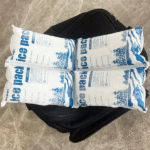
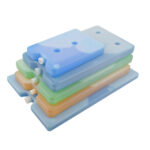
Use prefrozen gel packs: Condition packs to below –18 °C before assembly and store them in commercial freezers long enough to reach full thermal capacity.
Position gel packs evenly: Place them on at least three sides of the product to prevent uneven cooling and minimize directional heat gain.
Eliminate air pockets: Fill empty space with foam inserts, paper or thermal wraps to reduce internal airflow.
Avoid direct contact: Insert a barrier layer between product and coolant to prevent freezing burns.
PreCooling and Loading
Always precool trailers and containers before loading meat to reduce thermal shock and maintain a stable environment. Using dataenabled sensors ensures that temperature remains within safe ranges during loading, transit and unloading.
Documentation and Records
Accurate records of handling conditions are essential during inspections and audits. Logs must verify that temperature thresholds were maintained at every stage and should be readily accessible and validated with automated monitoring tools. FSMA 204(d) requires electronic, sortable records that can be provided to regulators within 24 hours.
Handling Chilled Meat
Chilled meat demands constant monitoring because its shelf life is shorter than frozen meat. Shippers should:
Maintain refrigeration units at 0–4 °C. Even small fluctuations can accelerate microbial growth.
Use humidity control. Maintaining relative humidity around 85–90 % reduces moisture loss and prevents desiccation.
Rotate stock (FIFO). Firstin, firstout procedures minimize the time meat spends in storage, preserving freshness.
Helpful decision tools
Check the details before you choose packaging
These quick tools can help you compare route risk, sizing needs, coolant choices, and packaging details before you request a quote.
Compliance Checklist Generator
Build a practical checklist for packaging review, shipping, and documentation.
Build checklistPackaging Selector
Compare insulated packaging options by product, route, and temperature need.
Find packagingDry Ice Calculator
Estimate dry ice needs for frozen or ultra-cold shipments before packing.
Estimate dry iceSeparate raw and cooked items. Prevent crosscontamination by storing raw meat below readytoeat foods.
Consumer Safe Handling Tips
At the final link—your kitchen—temperature monitoring matters too. Refrigerators must maintain internal temperatures of 41 °F (5 °C) or below, though many experts recommend holding cold foods at 38 °F for added safety. Check refrigerator air temperatures at the beginning of each shift and record them on temperature logs. For cooked foods, follow twostage cooling: cool from 135 °F to 70 °F within 2 hours, then to 41 °F within an additional 4 hours. This reduces the time food spends in the danger zone, preventing bacterial growth.
Technologies Transforming Meat Temperature Monitoring in 2025
The cold chain is undergoing a digital transformation. By 2025, advancements in sensors, automation and cloud platforms have made realtime visibility attainable for businesses of any size. This section explores key technologies and how they enhance meat temperature monitoring.
IoT Sensors and Data Loggers
IoT sensors and data loggers continuously monitor temperature, humidity and location. They transmit data via WiFi, cellular or LoRaWAN networks to cloud dashboards where operators can receive realtime alerts and review historical trends. Predictive analytics can forecast equipment failures or route disruptions. In one case study, a grocery distributor in Ireland equipped delivery vans with LTEM sensors; the system triggered alerts when conditions drifted outside safe ranges, reducing spoilage and enhancing compliance.
RFID and NFC Tags
RFID tags with builtin temperature sensors provide automatic, contactless data collection across the supply chain. They streamline inventory management and reduce manual data entry. During a summer delivery, a logistics provider using RFIDenabled pallets received an alert when a refrigeration unit malfunctioned at 5 °C. Operators rerouted the truck to a cold storage facility and repaired the unit, preventing spoilage and protecting customer trust.
Smart Packaging
Smart packaging integrates sensors, QR codes or timetemperature indicators into the package itself. Consumers can scan a package to see its origin, journey and storage conditions. This transparency builds trust, helps identify counterfeit products and provides differentiation in a crowded marketplace.
GPS and BLE Trackers
GPSbased trackers combine location and temperature monitoring for endtoend visibility. They are ideal for longhaul shipments requiring route optimisation and predictive ETAs. Bluetooth Low Energy (BLE) sensors are costeffective and energy efficient for shortrange monitoring, such as in warehouses and retail displays. Both technologies feed data into cloud platforms for analytics.
Smart Reefers and Containers
Refrigerated containers (reefers) now include builtin sensors and automated temperature control. They maintain stable conditions and provide remote diagnostics but require more power than passive solutions. Cloudconnected reefers allow operators to adjust setpoints in response to realtime data, reducing energy consumption and preventing excursions.
AI, Predictive Analytics and Digital Twins
AI analyses historical and realtime data to optimise routing, forecast demand and plan maintenance. Digital twins—virtual models of processes or supply chains—allow simulation of process changes before implementation. Predictive analytics can forecast equipment failures or route disruptions, allowing proactive maintenance and reducing downtime.
Blockchain and Immutable Records
Blockchain provides a decentralised ledger of temperature and location data, enhancing transparency and preventing fraud. It ensures that records cannot be altered, helping companies demonstrate compliance during audits and recalls. Consumers can verify the journey of their meat products, strengthening brand trust.
Sustainable Cooling and the –15 °C Coalition
Sustainability is a defining trend in 2025. Traditional cold chains operate at –18 °C, but the –15 °C coalition promotes standardising slightly higher frozen storage temperatures to reduce energy consumption while maintaining product integrity. Advancements in insulation and refrigeration technologies enable facilities to achieve optimal preservation at –15 °C. Companies like Daifuku are deploying AIpowered predictive maintenance and adaptive cooling to dynamically adjust compressor cycles based on realtime demand, minimizing power usage.
Market Growth and 2025 Trends
Global Market Expansion
The cold chain market is expanding rapidly due to ecommerce growth, rising consumer demand for fresh and frozen foods, and stringent regulations. In 2025, the global cold chain market was estimated at USD 371.08 billion and is projected to reach USD 1.61 trillion by 2033 (CAGR 20.5 %). The cold chain temperature monitoring market alone was valued at USD 15.89 billion in 2023 and is expected to reach USD 55.75 billion by 2030. Global Market Insights anticipates that the cold chain monitoring market will expand from USD 7.2 billion in 2025 to USD 22.2 billion by 2035 due to increased consumption of perishables, pharmaceutical demand for highprecision tracking and ecommerce growth.
Improved Goods Distribution
Customers demand faster deliveries without sacrificing quality. As a result, industries are perfecting routes between ports and consumers, upscaling facilities and investing in automation to protect product quality. Efficient distribution reduces transit times and lowers the risk of temperature excursions.
Modernised Storage Facilities
Many cold storage facilities built 40–50 years ago struggle to meet today’s demands. Operators are modernising and enlarging these facilities, phasing out synthetic refrigerants like HFCs and HCFCs due to their environmental impact. Upgraded facilities incorporate energyefficient insulation and automated systems.
Rise of PlantBased and Alternative Proteins
Consumer preferences are shifting toward plantbased proteins. Bloomberg projects the plantbased food market to reach $162 billion by 2030. Like conventional proteins, these products require reliable cold chain solutions. Most producers are smallmedium businesses lacking global logistics experience, so cold chain providers must support them with flexible, temperaturecontrolled solutions.
Enhanced Management Visibility
“Knowledge is power” applies more than ever. Supply chain visibility—knowing the status of raw materials, production and delivery—helps limit risk, address disruptions and prevent accidents. Investment in temperature monitoring and location tracking technologies is increasing. Software platforms integrate data from sensors, GPS and ERP systems into unified dashboards.
AI, Robotics and Predictive Analysis
AI use intensifies in 2025. Automated storage and retrieval systems (AS/RS), robotic handling and predictive analysis complement human workers. Predictive analytics anticipates equipment failures and adjusts shipments to prevent delays. Robotics, such as autonomous mobile robots (AMRs) and palletshuttle systems, handle goods at temperatures as low as –25 °C. The –15 °C coalition underscores energyefficient refrigeration goals.
Sustainability Initiatives
Growing environmental awareness prompts adoption of ecofriendly refrigerants, recyclable packaging and phase change materials. The introduction of the European Union’s Ecodesign for Sustainable Products Regulation (ESPR) pushes industries to become more circular and sustainable. Companies invest in renewable energy and carbonneutral operations to meet consumer expectations and regulatory requirements.
Frequently Asked Questions
Q1: What temperature ranges should I maintain for meat during storage and transport?
Fresh chilled meat should be kept between 0–4 °C, while frozen meat must remain at or below –18 °C. Cured meats typically stay at 0–4 °C, and drycured shelfstable products can be stored at ambient temperature.
Q2: How do IoT sensors improve meat temperature monitoring?
IoT sensors continuously track temperature, humidity and sometimes oxygen or light levels. They send data to cloud platforms, triggering alerts when conditions deviate from safe ranges. Case studies show that IoT sensors reduce spoilage and improve compliance through realtime visibility.
Q3: What is FSMA 204(d) and how does it affect me?
FSMA 204(d) requires businesses to document key data elements (including temperature deviations) for critical tracking events. Electronic, sortable records must be available to the FDA within 24 hours. This rule enhances traceability and accountability in the food supply chain.
Q4: How can I pack frozen meat to prevent temperature excursions?
Use EPS coolers with prefrozen gel packs, position them evenly around the product, eliminate air pockets and avoid direct contact. Precool containers and use data loggers to monitor temperature throughout transit.
Q5: What are the benefits of smart packaging?
Smart packaging incorporates sensors, QR codes or timetemperature indicators, allowing consumers and regulators to access product history. It builds trust, helps detect counterfeit products and supports compliance.
Q6: Why is the –15 °C coalition important?
The –15 °C coalition promotes shifting frozen storage from –18 °C to –15 °C to reduce energy consumption. Advances in insulation and refrigeration allow preservation at this temperature without compromising product integrity. AIpowered systems dynamically adjust cooling to maintain stability and save energy.
Summary and Recommendations
Key takeaways:
Strict temperature control is nonnegotiable. Chilled meat must stay at 0–4 °C and frozen meat at –18 °C or lower to prevent spoilage and comply with FSMA and SQF standards.
Adopt realtime monitoring technologies. IoT sensors, RFID tags and smart packaging offer continuous visibility and enable rapid interventions.
Document meticulously. FSMA 204(d) requires electronic, sortable records of temperature data and critical tracking events.
Optimise packout and precooling. Use EPS coolers, gel packs and proper loading to maintain consistent temperatures.
Stay ahead of trends. Embrace AI, predictive analytics, robotics and sustainable practices to improve efficiency and reduce environmental impact.
Action plan:
Assess your current cold chain: Identify weak points where temperature excursions occur. Conduct risk assessments and implement corrective actions.
Implement IoT monitoring: Start with pilot projects, integrating sensors and data loggers on key routes. Choose devices that fit your connectivity needs.
Upgrade packaging: Invest in EPS coolers, smart packaging and gel packs. Standardise packouts and train staff on proper assembly.
Digitalise records: Use cloudbased systems to store temperature logs, training records and cleaning schedules. Ensure data is easily searchable for audits.
Invest in sustainability: Explore energyefficient refrigeration, renewable power and recyclable packaging. Consider joining initiatives like the –15 °C coalition to reduce energy costs and emissions.
About Tempk
Tempk is a leading provider of cold chain packaging and temperature monitoring solutions. We design insulated boxes, gel packs and smart data loggers that meet 2025 regulatory requirements. Our products help food, pharmaceutical and biotech companies maintain precise temperature control during transit. We focus on reusable and recyclable materials and offer custom packout designs to reduce waste and improve efficiency. Our R&D team continuously tests and validates new packaging configurations to ensure consistent performance.
Call to Action
Ready to safeguard your meat operation? Reach out to our experts for a personalised consultation. We’ll help you design an endtoend cold chain solution—from selecting the right insulated containers to integrating IoT sensors and digital record platforms. Contact us to keep your products safe, compliant and fresh in 2025 and beyond.