Collapsible EPP Cooler Box Distributor: 2025 Fit?
You’re not really shopping for “a box.” You’re shopping for repeatable cold-chain outcomes. A collapsible EPP cooler box distributor helps you protect chilled or frozen goods, reduce damage, and keep returns predictable. In many reuse programs, folding containers cut empty-return volume by up to about half, and teams often see 20–40% storage savings after standardizing a foldable system. Treat your collapsible EPP cooler box distributor like an operations partner, not a one-time supplier.
This article will help you:
Choose faster with a how to choose a collapsible EPP cooler box distributor scorecard
Avoid surprise delays by checking collapsible EPP cooler box distributor MOQ and lead time
Pass audits with collapsible EPP cooler box distributor compliance documents you can request upfront
Prove ROI using foldable EPP cooler box space-saving return logistics math you can copy
Reduce risk by testing a collapsible EPP cooler box before bulk order with simple pass/fail checks
What does a collapsible EPP cooler box distributor do?
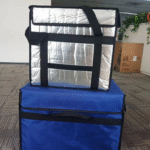
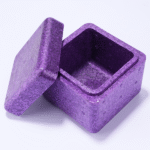
A collapsible EPP cooler box distributor supplies foldable EPP insulated boxes and helps you run them like an operational system. EPP stands for expanded polypropylene, a lightweight foam that insulates well and absorbs impacts. “Collapsible” means the box folds down when empty, so returns and storage take less space.
A capable collapsible EPP cooler box distributor supports more than delivery. They help you standardize sizes, reduce SKUs, plan returns, and keep replacement parts available. That’s why the distributor you pick directly affects daily packing speed, damage rates, and on-time service.
Why EPP matters for reusable cold-chain work
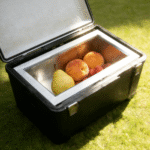
EPP acts like a “springy helmet” around your goods. It cushions bumps, resists moisture, and keeps its shape across repeated trips. When you combine EPP with gel packs or phase change materials, you can hold target temperatures longer with fewer “warm spots.”
| What you compare | Disposable foam box | Collapsible EPP cooler box | What it means for you |
|---|---|---|---|
| Typical lifespan | 1–3 trips | 50+ trips (with care) | Lower cost per trip |
| Damage tolerance | Low | High | Fewer replacements mid-season |
| Storage when empty | Fixed size | Foldable | Less warehouse clutter |
| Reverse logistics | Costly | More efficient | Lower return freight volume |
| Cleaning suitability | Limited | Better (with SOP) | Easier reuse loop |
Practical tips you can use today
If you run returns: ask your collapsible EPP cooler box distributor for the folded height and “stack-stable” folded design.
If your team is small: reduce to 1–2 standard sizes before you chase minor unit-price savings.
If deliveries vary: choose inserts, dividers, or liners instead of adding many box sizes.
Real case: A fresh-food operator moved from fixed boxes to a foldable system and freed staging space by about a third, simply by folding empties immediately after unloading.
Why does a collapsible EPP cooler box distributor beat a standard supplier?
A collapsible EPP cooler box distributor is built for repeatability. A standard supplier often sells “a box” and leaves you to figure out folding life, cleaning, returns, and replacements. In a reusable program, that gap turns into hidden costs.
When you work with a specialized collapsible EPP cooler box distributor, you get an application-based approach: box family design, spare parts, QC checks, and a clear warranty path. That makes your cold-chain packaging behave more like a managed asset than a consumable.
The “distribution advantage” in plain language
Think of boxes like delivery vans. You don’t buy random vans each week. You standardize so drivers, racks, and maintenance all work smoothly. A collapsible EPP cooler box distributor helps you standardize your “box fleet,” so your team stops improvising.
| Topic | Standard supplier | Collapsible EPP cooler box distributor | Your daily benefit |
|---|---|---|---|
| Selection | Generic SKU list | Use-case mapping | Faster packing, fewer errors |
| Quality control | Minimal | Folding + lid-fit checks | Fewer field failures |
| Parts | Rare | Latches/hinges/gaskets | Lower downtime |
| Reuse guidance | Not included | Cleaning + cycle guidance | Longer usable life |
| Scaling | Unpredictable | Stock + replenishment plan | Fewer stockouts |
Practical tips and advice
If they only talk price: ask how they handle failures, replacements, and spare parts.
If they dodge proof: treat it as risk, not “sales style.”
If your routes change often: prioritize a distributor that can help you re-optimize sizes quickly.
Real case: A buyer chose the cheapest supplier, then learned spare parts took eight weeks. The “cheap” option stalled the whole rollout.
How to choose a collapsible EPP cooler box distributor in 30 minutes?
You can shortlist a collapsible EPP cooler box distributor quickly when you score three things: fit, proof, and operations. The goal is not perfection. It’s avoiding the obvious traps.
Interactive decision tool: Distributor Fit Score (0–20)
Score each line 0–2 (0 = no, 2 = strong yes). Total /20.
They explain EPP and collapse mechanics in plain language.
They provide consistent specs (density range, wall thickness tolerance, lid fit).
They have stock or reliable lead times in your region.
They provide compliance documents for your market (food-contact, hygiene, traceability).
They support pilot sampling and test guidance.
They provide spare parts and repair guidance.
They can quantify return-space savings for your lanes.
They offer cleaning compatibility and reuse-cycle guidance.
They support batch/lot traceability (especially for repeat orders).
They can share references in similar use cases (grocery, meal kits, catering, seafood).
Score meaning
0–8: High-risk collapsible EPP cooler box distributor → don’t scale.
9–14: Possible fit → pilot + document checks first.
15–20: Strong candidate → negotiate program terms and scale.
A fast “first call” script (copy/paste)
Real case: One distributor looked perfect until the buyer asked for a folding-cycle target. No answer. That single question prevented a bad contract.
What specs should a collapsible EPP cooler box distributor explain?
A strong collapsible EPP cooler box distributor should treat specs like operational controls, not brochure bullets. You want specs that predict what happens after week 6—when boxes have been folded, stacked, and washed many times.
The five spec buckets that decide real performance
Fit: internal dimensions, payload, insert compatibility
Thermal logic: wall thickness, lid seal, air gaps
Fold system: hinge strength, locks, cycle durability
Stacking: rim strength, anti-slip features, loaded stability
Hygiene: surface finish, drainage, cleaning compatibility
Collapsible EPP cooler box distributor MOQ and lead time—how to read it
MOQ and lead time are not “procurement details.” They decide whether you can scale without service failures. Ask for a lane-based plan: what can ship now, what needs production, and what buffer stock is recommended.
| Commercial detail | What to ask | Risk if you ignore it | What it means for you |
|---|---|---|---|
| MOQ per size | MOQ + price breaks | Too many SKUs | Cash tied up in the wrong sizes |
| Lead time range | min/typical/worst | Peak-season delays | Missed launches and stockouts |
| Safety stock | suggested buffer | “panic orders” | Stable weekly operations |
| Parts lead time | latches/hinges | Box downtime | Higher loss rate |
Foldable EPP cooler box space-saving return logistics—prove it with simple math
Space savings only matter if folding is fast and stable. Test the fold system like your team will use it: gloves, speed, and real stacking.
Pass/fail fold checks
Can one person fold it in under 15 seconds without tools?
Does it lock open with no wobble?
Does it stay closed when folded and stacked?
Can it be folded with gloves?
Helpful decision tools
Check the details before you choose packaging
These quick tools can help you compare route risk, sizing needs, coolant choices, and packaging details before you request a quote.
01Checklist supportCompliance Checklist Generator
Build a practical checklist for packaging review, shipping, and documentation.
Build checklist02Handling riskInsulation Material Drop Resistance
Review drop resistance and handling factors before choosing insulation materials.
Check resistance03Route riskRoute Risk Checker
Review lane conditions before selecting packaging for real operating requirements.
Check route riskAfter 50 cycles, do joints feel as tight as day 1?
Real case: A meal kit team learned the weak point was a latch, not insulation. They switched latch design before scaling.
Practical tips and suggestions
If boxes get tossed: prioritize fold-point reinforcement and rim strength.
If boxes get washed daily: prioritize easy-clean surfaces and odor resistance.
If boxes stack high: demand compression/stacking proof for loaded pallets.
Which compliance documents should your collapsible EPP cooler box distributor provide?
If your box touches food (directly or indirectly), compliance is part of sourcing—not an afterthought. A professional collapsible EPP cooler box distributor should provide a clean evidence packet aligned with your market.
Two common compliance themes show up across regions:
Note: Always confirm local requirements with your compliance team. This is operational guidance, not legal advice.
A disciplined document packet also makes your collapsible EPP cooler box distributor easier to approve internally.
Food-contact safety (materials are suitable for contact and don’t contaminate goods)
Sanitary transport expectations (equipment can be cleaned and can maintain safe conditions)
The document checklist you can paste into your RFQ
| Document | What it proves | When you need it | Practical meaning for you |
|---|---|---|---|
| Declaration of Compliance (DoC) | food-contact statement | EU supply chains | smoother audits and onboarding |
| GMP-style statement | controlled manufacturing | recurring orders | fewer “unknown batch” risks |
| Traceability statement | batch/lot tracking | pooling programs | faster investigations |
| Material spec sheet | density, additives | always | fewer performance surprises |
| Cleaning guidance | safe cleaning & drying | reuse loops | fewer odors and hygiene issues |
| QC checklist | lid-fit + fold checks | collapsible designs | fewer field failures |
Food-grade collapsible EPP cooler box—hygiene that actually works
Reusable packaging only saves money if cleaning is consistent. Your collapsible EPP cooler box distributor should explain what cleaners to avoid, what temperatures are safe, and how long drying usually takes.
Good guidance is specific: “Use a mild detergent, rinse, dry completely.”
Bad guidance is vague: “Clean as needed.”
Real case: A retailer accepted a new container program faster when the distributor provided a one-page cleaning sheet plus a QC checklist.
Practical tips and advice
If your distributor says “no documents”: treat it as a stop sign.
If you sell to retailers: align docs to their vendor onboarding checklist.
If you pool assets: traceability is survival, not an optional “nice-to-have.”
How to test and buy from a collapsible EPP cooler box distributor without surprises?
A collapsible EPP cooler box distributor quote is not a decision. Your pilot data is the decision. You don’t need a lab. You need a simple plan, real routes, and clear pass/fail rules.
Testing a collapsible EPP cooler box before bulk order (7–14 days)
Pilot Test Pack
Choose 1–2 sizes only (keep it controlled).
Use your real coolant and packing method.
Run 10–30 deliveries per size under worst conditions.
Track failures and near-failures (lid gaps, wobble, odors).
Change one variable at a time.
| Test | What you measure | Simple pass/fail | What it means for you |
|---|---|---|---|
| Temperature hold | time in target range | meets route window | fewer spoilage claims |
| Drop/impact | corner damage + lid fit | still seals | fewer replacements |
| Compression | stack stability | no wobble | safer trucks and racks |
| Cleaning | odor + stain retention | meets SOP time | lower labor cost |
| Fold-life | joint tightness | no looseness | stable returns and handling |
Collapsible EPP insulated box bulk order—hidden cost checklist
Unit price is not your real cost. Your real cost is cost per trip. Before you scale, clarify these “quiet costs.”
Replacement parts pricing and availability
Custom tooling fees (one-time vs per-unit)
Inbound packaging and pallet plan (to prevent freight damage)
Seasonal lead-time variability
Warranty terms and acceptable defect rates
Asset ID options (labels, sleeves, QR-ready zones)
Practical tips you can apply immediately
Negotiate a pilot + scale contract: validate first, then lock pricing.
Define defect tolerance: prevent arguments after delivery.
Buy a spare-parts starter kit: reduce downtime in the first month.
Real case: A distributor improved early success rates by bundling spare latches and a simple repair guide with every first order.
2025 latest developments and trends for collapsible EPP cooler box distributor programs
In 2025, two things are changing buyer expectations: reuse pressure and asset-management maturity. More teams now treat packaging as a tracked asset with planned returns, cleaning, and repairs.
Latest developments at a glance
Faster folding mechanisms: less wear, quicker setup on the dock
Modular box families: fewer SKUs, more insert options
Repair-first mindset: swap parts instead of scrapping whole boxes
Data-ready workflows: label zones and IDs designed into the mold
Hygiene SOP upgrades: clearer “clean / hold / reissue” controls
Market insight (plain-language)
If you choose a collapsible EPP cooler box distributor in 2025, you’ll be asked the same questions your customers ask you: “How many trips does it survive?” and “How do we keep it clean?” The distributor who can answer those with proof will win the long game.
Frequently Asked Questions
Q1: How do I choose a collapsible EPP cooler box distributor fast?
Use the Distributor Fit Score, then require specs, documents, spare parts, and a pilot plan before scaling.
Q2: Do collapsible EPP cooler boxes lose insulation performance?
Not when designed well. The bigger risk is lid gaps from worn hinges or latches, which your pilot will reveal.
Q3: What is the biggest hidden cost with a collapsible EPP cooler box distributor?
Reverse logistics. If folding is slow or boxes return damaged, your space savings disappear.
Q4: Which documents should a collapsible EPP cooler box distributor provide for food-contact use?
Request a compliance packet: food-contact statement, traceability, material spec sheet, QC checklist, and cleaning guidance.
Q5: Should I buy one size or multiple sizes?
Start with one “main size” and one optional size. Too many sizes increase errors and inventory cost.
Q6: How many pilot shipments should I run before bulk purchasing?
A practical range is 10–30 deliveries per size under real conditions. Focus on failures, not marketing claims.
Summary and recommendations
A collapsible EPP cooler box distributor can reduce storage pressure, stabilize delivery outcomes, and cut lifecycle cost—if you buy a program, not a SKU. Focus on proof (documents and traceability), operations (fold speed, returns, spares), and real testing (route pilots). Standardize sizes early, track box condition, and contract using cost-per-trip logic.
Your next step is simple: pick two lanes, request pilot samples from one collapsible EPP cooler box distributor, run a 7–14 day test, and scale only after your data looks clean.
About Tempk
At Tempk, we build and support reusable temperature-controlled packaging systems, including foldable EPP solutions designed for real handling. We focus on durability, stable insulation behavior, and practical workflows for cleaning, returns, and redeployment. If you need a distributor-ready rollout, we can help you define standard sizes, set pilot criteria, and reduce risk before you scale.
Next step: Share your product type (grocery, meal kits, catering, seafood), typical route hours, and how empties return. We’ll recommend a pilot plan and a box configuration that fits your operation.