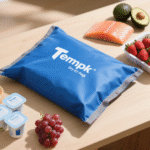
Cooler Bag Insulated: Choose the Right One in 2025?
Last updated: December 15, 2025
A cooler bag insulated setup can keep food cold for hours—or fail fast—depending on the seal, insulation, and how you pack it. In the U.S., FDA/USDA food-safety guidance commonly uses ≤40°F / 4°C as a practical target for cold foods, and a 5–10°C (9–18°F) rise can push sensitive items into a risky range quicker than you expect. In real errands, most cooler bag insulated bags deliver about 2–6 hours of useful cold time when you use enough cold packs and keep openings low.
This article will answer for you:
How a cooler bag insulated design slows heat gain in real life (not marketing claims)
How long a cooler bag insulated bag can stay under 40°F / 4°C in common routines
The best insulation material for cooler bag insulated designs in 2025
Exactly how to pack ice packs in a cooler bag insulated system for even cooling
A grocery and delivery checklist to reduce leaks, odors, and crushed items
A quick self-test + decision tool to choose the right cooler bag insulated tier
What does a cooler bag insulated design really mean?
Direct answer: A cooler bag insulated product is a soft-sided bag built to slow heat transfer with an insulation core, a moisture barrier liner, and a closure that limits warm-air leaks. It does not create cold like a fridge. It protects the cold you pack inside, buying you time.
In plain language, insulation is a “temperature raincoat.” A great cooler bag insulated bag is not only thick. It is also sealed, shaped, and packed tightly. If the zipper leaks, it is like leaving a window open on a hot day.
Cooler bag insulated vs ordinary tote: the simple test
A real cooler bag insulated build usually has three layers: outer shell, insulation core, and wipe-clean liner. A normal tote is mostly fabric and air space, so it warms quickly.
| What you check | Cooler bag insulated | Regular tote | What it means for you |
|---|---|---|---|
| Insulation layer | Foam or multi-layer core | Little to none | Longer cold time |
| Liner | Wipe-clean, leak resistance | Fabric absorbs spills | Less odor + mess |
| Closure | Tight zipper/roll-top | Open top | Fewer heat spikes |
Practical tips you can use today
If you carry perishables: Use a cooler bag insulated bag with a tight closure to reduce warm-air exchange.
If you hate odors: Use a wipe-clean liner and dry it fully after cleaning.
If you want quick wins: Fix the seal and packing before buying a bigger bag.
Real-world example: One meal-prep customer improved results by switching to a tighter zipper track, not thicker walls.
How long does a cooler bag insulated bag stay cold under 40°F?
Direct answer: Most cooler bag insulated designs give about 2–6 hours of useful cold time in typical errands if you start with cold items, add enough cold packs, and avoid repeated opening. In hot weather or frequent “check-ins,” effective time can drop by 30–60%.
Many public food-safety guides also use two simple guardrails: 40–140°F (4–60°C) is often described as a “danger zone” where bacteria can grow faster, and time matters when cold foods warm up. A common rule of thumb is 2 hours max at room temperature, and 1 hour max when it’s above 90°F / 32°C. Use these as training defaults, then follow your local regulations.
This is why “how long does an insulated cooler bag stay cold” has no single answer. Hold time depends on cold supply (your gel packs/ice mass) and heat leaks (sun, warm air, warm surfaces, and openings). If you need a pass/fail line, use a thermometer and check the center of the load.
Hold-time drivers you can control
| Driver | Lower-risk choice | Higher-risk choice | What it means for you |
|---|---|---|---|
| Starting temperature | Pre-chilled items | Warm items loaded | Cold time collapses early |
| Cold mass | 2–4 packs + good placement | One small pack | Warm corners form fast |
| Open frequency | 1–2 opens | 10+ opens | Big temperature swings |
| Sun/heat exposure | Shade + airflow | Hot car, direct sun | Heat spikes even in good bags |
Practical tips you can use today
Use “start cold” as a rule: Put cold food into your cooler bag insulated bag, not room-temp food.
Use two cold sources: Use a bottom pack and a top pack to reduce hot spots.
Use “first-out” staging: Put first-stop items at the top to cut open time.
Real-world example: Many “my bag failed” stories come from warm items, empty space, and repeated opening—not from the bag itself.
Which cooler bag insulated materials work best in 2025?
Direct answer: The best cooler bag insulated performance usually comes from closed-cell foam plus a reflective layer (for sun) and a strong moisture barrier liner. For premium lanes, structured foams (EPP-style builds) or thin high-performance panels (VIP-style builds) can boost results.
You don’t need to memorize acronyms. You need to know what each layer does: the shell protects, the insulation slows heat, the liner stops leaks, and the closure blocks airflow. If one layer is weak, the whole cooler bag insulated system feels unreliable.
Best insulation material for cooler bag insulated designs: simple comparison
| Material/Layer | What it’s good at | Watch-outs | What it means for you |
|---|---|---|---|
| Closed-cell foam | Good thermal hold, resists moisture | Can be bulkier | Better for longer errands |
| Reflective film layer | Reduces radiant heat in sun | Thin films can tear | Helps in hot cars |
| Structured foam (EPP-style) | Holds shape, durable | Often thicker | Fewer crushed corners |
| High-insulation thin panels (VIP-style) | Strong insulation with thin walls | Higher cost, careful handling | More hold time without bulk |
| Liner (barrier grade) | Leak control + wipe-clean | Cheap liners can smell | Hygiene + fast cleanup |
Quick “touch test” for cooler bag insulated build quality
Wall pinch test: springy and uniform beats “collapses to nothing.”
Base test: insulated base beats thin fabric base (warm surfaces matter).
Seam scan: smooth corners beat wrinkled corners (leaks hide here).
Closure check: aligned zipper/roll-top beats gaps and snagging.
Practical tips you can use today
If your bag collapses: Choose a more structured cooler bag insulated build to keep insulation stable.
If you work in sun: Choose reflective coverage plus shade habits.
If you carry raw protein: Prioritize liner quality and seam strength over extra pockets.
Real-world example: A small delivery team reduced odor complaints after switching to a liner that wiped clean easily.
How to pack ice packs in a cooler bag insulated system?
Direct answer: The best cooler bag insulated performance comes from a repeatable “cold sandwich”: cold pack on the bottom + product in the center + cold pack on top, with minimal air gaps. Random placement can cut cold time in half.
Packing is where most systems win or lose. Cold works best by contact and by reducing warm air inside. If you want reliability, use a routine you can repeat every time.
How to pack ice packs in a cooler bag: step-by-step
Start cold: Pre-chill food and drinks before packing.
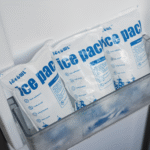
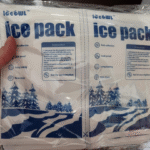
Bottom pack: Put one cold pack flat on the base.
Center load: Place the coldest items (meat, dairy, seafood) in the middle.
Side support: Add slim packs on the walls if you have them.
Top pack: Place a second pack on top before closing.
Fill gaps: Use a towel/filler to reduce empty air space.
Seal + shade: Close fully and keep the bag out of direct sun.
| Packing method | Cold pack placement | Best for | What it means for you |
|---|---|---|---|
| “Sandwich” pack | Bottom + top (+ sides) | Hot days, long errands | Even cooling, fewer hot spots |
| “Side-wall” pack | Sides + top | Bottles, tall loads | Fewer warm corners |
| “Minimal” pack | One top pack | Short trips only | Works in mild conditions |
Practical tips you can use today
Use cold contact: Place items so they touch cold packs, not warm air.
Use a filler to reduce air: Use a small towel to stop “warm-air pockets.”
Separate raw items: Use a sealed bin inside your cooler bag insulated bag for safety.
Real-world example: Two smaller packs placed top and bottom often outperform one large pack tossed in randomly.
Best cooler bag insulated for groceries: what should you prioritize?
Direct answer: The best cooler bag insulated for groceries balances insulation, a wipe-clean liner, a stable base, and comfortable carry. Grocery loads are mixed, so organization matters as much as wall thickness.
Groceries fail when frozen items sit too long, warm items share space with cold, or heavy bottles crush soft foods. Your bag should make sorting easy, so you don’t “pay” cold to protect warm items.
Cooler bag insulated for grocery delivery checklist
| Grocery scenario | Main risk | Bag feature that helps | What it means for you |
|---|---|---|---|
| Frozen + chilled mixed | Softening + drip | Divider or two bags | Better texture, less mess |
| Long checkout line | Time out of cold | Better insulation + more packs | Bigger safe window |
| Heavy bottles | Crushing produce | Structured walls + flat base | Fewer bruises |
| Summer car ride | Heat spike | Reflective shell + tight seal | Less sweating and melt |
Practical tips you can use today
Use two bags: Use one cooler bag insulated bag for frozen and one for chilled.
Load frozen last: Keep frozen items cold until the final moment.
Keep it closed in the trunk: Avoid a sunny back seat when possible.
Helpful decision tools
Check the details before you choose packaging
These quick tools can help you compare route risk, sizing needs, coolant choices, and packaging details before you request a quote.
01Ice pack estimateIce Pack Calculator
Estimate gel ice pack quantity for chilled shipments and practical route planning.
Estimate ice packs02Coolant choiceCoolant & PCM Reference
Compare coolant and PCM options when a route needs added temperature support.
Compare options03Material guideInsulation Material Reference
Compare insulation material choices for different cold chain packaging needs.
Compare materials
Real-world example: Most “my ice cream melted” stories happen because frozen items went in first and sat through the whole trip.
Cooler bag insulated for meal delivery: what changes on multi-drop routes?
Direct answer: A cooler bag insulated delivery setup must handle frequent opening, stacking, and fast handoffs. You need seal strength, structure, and a route workflow that limits open time.
Delivery is like opening your fridge all afternoon. Each stop invites warm air in. The fix is not only thicker insulation. It is also discipline: staged packing, fast access, and strict hot/cold separation.
Insulated cooler bag for meal delivery: route-ready table
| Delivery factor | Best practice | Common mistake | What it means for you |
|---|---|---|---|
| Door openings | Batch stops | Open every drop | Faster warming |
| Bag structure | Rigid walls/base insert | Collapsing bag | Less stable insulation |
| Access strategy | Top-layer sorting | Digging deep | Longer open time |
| Hot/cold split | Two-bag or two-zone | One mixed compartment | Lower food quality |
Practical tips you can use today
Use a two-bag rule: One cooler bag insulated bag for cold, one for hot.
Target “under 20 seconds open”: Plan your order so you unzip once, not three times.
Standardize pack order: Use the same layout every shift for fewer mistakes.
Real-world example: Delivery teams often gain more by reducing open time than by buying thicker insulation.
Leakproof liner for cooler bag insulated bags: how do you clean without odors?
Direct answer: Clean your cooler bag insulated liner after every spill and at least weekly with mild soap, then air-dry fully. Odor usually comes from residue plus trapped moisture in seams.
The inside is your “food environment.” Cleaning only the outside is a common mistake. Drying is the real secret, because moisture left inside becomes smell and hygiene risk.
Leakproof liner maintenance for insulated cooler bags
| Cleaning step | How often | Why it matters | What it means for you |
|---|---|---|---|
| Quick wipe | After each use/spill | Stops residue buildup | Bag stays “ready” |
| Full wash | Weekly or after leaks | Removes film | Fewer stains |
| Dry open | Every time | Prevents trapped moisture | Less odor |
| Inspect seams/zipper | Monthly | Finds early damage | Prevents big leaks |
Practical tips you can use today
Use mild soap + warm water: Strong chemicals are rarely needed for routine use.
Dry with the bag open: Store unzipped so air can circulate.
Fix seam problems early: A cracked liner defeats the point of a leakproof bag.
Real-world example: A delivery operator reduced odor complaints after enforcing a “dry completely” rule.
Interactive decision tool: which cooler bag insulated level do you need?
Direct answer: Choose your cooler bag insulated tier based on trip time, heat exposure, opening frequency, and product sensitivity—not on the biggest capacity you can afford.
Use this fast scoring tool to match the bag to your real behavior.
Step 1: Score your risk (add points)
Trip duration: under 1 hour (1) · 1–3 hours (3) · over 3 hours (5)
Outside heat: mild (1) · warm (3) · hot/direct sun (5)
Open frequency: 0–1 times (1) · 2–4 times (3) · many times (5)
Item sensitivity: drinks/produce (1) · dairy/meals (3) · raw meat/seafood/medicine (5)
Step 2: Pick a tier (with realistic expectations)
| Tier (generic) | Typical routine it fits | What you must do | Your practical win |
|---|---|---|---|
| Basic | Lunch, short errands | 1–2 cold packs, keep closed | Lightweight daily use |
| Workhorse | Groceries, warm-weather runs | Sandwich packing, structured base | Fewer melted items |
| Pro | Multi-drop delivery, high-risk items | More cold mass, strict workflow, optional monitoring | More repeatable results |
Step 3: Run a 60-minute self-test (fast reality check)
Pre-freeze two cold packs overnight.
Put them in your cooler bag insulated bag with a sealed water bottle.
Leave it in a warm room or car trunk for 60 minutes.
Open once at the 60-minute mark and check cold pack firmness.
Interpretation
Packs mostly solid + bottle cold: workable for your current use.
Packs soft + bottle only cool: shorten trip time or upgrade packing.
Packs nearly melted: do not use for high-risk perishables in heat.
Practical tips you can use today
Test your worst day: hot weather and longer routes reveal weaknesses.
Upgrade one variable at a time: change packing, then packs, then bag.
Add a thermometer for sensitive lanes: measure, don’t guess.
Real-world example: Many users gain 1–2 extra hours just by changing pack placement, not buying a new bag.
2025 latest cooler bag insulated developments and trends
In 2025, cooler bag insulated products are becoming more lane-specific. Instead of one bag doing everything, designs are more purpose-built for groceries, delivery, and daily lunches. Buyers are also pushing for easier cleaning, more sustainable materials, and more predictable performance.
Latest progress snapshot
Better seals: smoother zipper tracks and less leakage at corners.
Improved liners: lower-odor, easier wipe-down barriers for daily use.
Sustainability push: more reusable builds, recycled fabrics, and fewer disposable inserts.
Modular organization: removable dividers and two-zone layouts for delivery routines.
Performance transparency: more teams use simple tests and thermometers instead of claims.
Market insight: the “best” cooler bag insulated setup is the one you can repeat every day—same pack-out, same cleaning habit, same results.
Frequently asked questions
Q1: How long does a cooler bag insulated bag stay cold?
With cold starting items, enough cold packs, and minimal opening, many cooler bag insulated setups work for several hours. Hot weather and frequent opening shorten that window.
Q2: What is the biggest mistake with a cooler bag insulated bag?
Leaving too much empty space. Warm air inside heats food quickly. Pack tight and fill gaps.
Q3: How to pack ice packs in a cooler bag insulated setup for best results?
Use a bottom-and-top “sandwich,” put cold items in the center, and open the bag less often.
Q4: Is a leakproof liner necessary for a cooler bag insulated bag?
If you carry meat, seafood, dairy, or melting ice, yes. A leakproof liner reduces mess, odors, and cross-contamination risk.
Q5: What is the best insulation material for cooler bag insulated performance?
There is no single best. Closed-cell foam is a strong baseline. Structured foam improves durability, and thin high-insulation panels can help when space is tight.
Q6: How do you clean an insulated cooler bag safely?
Wipe spills quickly, wash with mild soap, rinse, and air-dry fully. Odor usually comes from trapped moisture in seams.
Q7: Can I use a cooler bag insulated bag for medicine?
Often yes, but validate the target temperature range and test your pack-out. Use monitoring when contents are sensitive.
Summary and recommendations
A cooler bag insulated system works when insulation, seals, and packing strategy work together. Start cold, add enough cold mass, and keep the bag sealed and shaded. Choose a size that fits your typical load with minimal air gaps, then use the cold sandwich packing method every time. If you deliver meals, focus on workflow: fewer openings, better organization, and fast cleaning.
What you should do next
Write down your typical duration, heat exposure, and how often you open the bag.
Choose a cooler bag insulated size that reduces empty air space.
Standardize your ice placement (bottom + top, fill gaps).
Run one realistic test and record the result for repeat use.
Build a simple cleaning routine that ends with full air-drying.
CTA: If you want fewer spoiled groceries and fewer customer complaints, pick one cooler bag insulated setup, test it once, and repeat the same pack-out every time.
About Tempk
At Tempk, we design temperature-control packaging and insulated solutions for real logistics conditions—not just showroom specs. We focus on consistent insulation coverage, easy sanitation, and durable materials that stand up to repeat daily use. If you need a cooler bag insulated setup for lunch, grocery delivery, or last-mile cold chain operations, we help you match the right structure, liner, and pack-out method to your route and risk level.
Next step: Share your route time, ambient temperature range, and what you carry. We’ll help you turn this guide into a one-page packing spec with a simple pass/fail check.