Shock Resistant EPP Foam Box: 2025 Guide?
A shock resistant EPP foam box helps you ship fragile or temperature-sensitive products with fewer “surprise breaks.” It absorbs drops, calms vibration, and resists crushing—while staying light and reusable. In molded EPP parts, thermal conductivity is often reported around 0.036–0.046 W/(m·K), and water absorption is commonly described as very low (often <1 vol-%), which matters when condensation is real.
This article will answer for you:
How a shock resistant EPP foam box prevents damage in real handling
Which EPP foam box density and wall thickness choices matter most
How to run a shock resistant EPP foam box drop test plan you can repeat
When a shock resistant EPP foam box for cold chain delivery makes sense
How to manage reuse cycles without performance drifting
How to estimate total cost per trip (not just box price)
What Is a Shock Resistant EPP Foam Box?
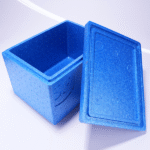
A shock resistant EPP foam box is a molded container made from expanded polypropylene (EPP) that cushions impacts and keeps its shape after repeated hits. If you want the simplest picture, it’s a springy helmet for your product: it compresses on impact, spreads the force, and rebounds.
shock resistant EPP foam box
Your biggest win is not “thicker foam.” Your biggest win is stable fit—the box holds the payload still, so it can’t rattle itself into failure.
Why “Fit First” is the fastest upgrade
If your payload can move, it will move—especially during vibration. A snug cavity plus the right insert often beats adding more thickness.
| Fit decision | What happens in transit | What you see later | What it means for you |
|---|---|---|---|
| Loose cavity | payload “walks” | cracked corners, scuffs | higher return rate |
| Snug cavity | movement stays low | fewer DOA complaints | steadier quality |
| Snug + insert | corners protected | fewer “mystery breaks” | fewer claims |
Practical tips and recommendations
Shake test: if it rattles, your cavity is too loose—add inserts or adjust the design.
shock resistant EPP foam box
Corner focus: corners take the first hit on real routes.
Lid discipline: a great box fails if the lid shifts.
How Does a Shock Resistant EPP Foam Box Prevent Damage?
A shock resistant EPP foam box protects against three everyday hazards: drops, vibration, and compression. Most teams plan for one drop. Real networks deliver many small hits plus occasional big ones.
Think “egg in a helmet.” The helmet spreads the hit so the egg doesn’t crack.
| Impact type | What causes it | How a shock resistant EPP foam box helps | Your practical benefit |
|---|---|---|---|
| Drop | handling, last mile | absorbs peak force | fewer cracks |
| Vibration | long transport | dampens movement | less fatigue damage |
| Compression | stacking loads | holds structure | fewer crushed corners |
Thickness vs density: which matters more?
Thickness helps, but density often decides whether foam bottoms out. Too soft and you hit the “floor.” Too stiff and the shock transmits through.
| Design lever | If it’s too low | If it’s too high | The balance you want |
|---|---|---|---|
| Density | bottoms out on hard drops | transmits shock | firm-but-springy |
| Wall thickness | dents, heat leaks | wasted space/weight | route-matched |
| Corner geometry | corners crack first | heavy/overbuilt | reinforced corners |
Practical scenario guidance
Fragile + light: prioritize softer inserts and snug fit.
Heavy payload: prioritize a stronger base and ribs.
Pallet shipping: prioritize corner reinforcement and stacking stability.
Practical case pattern: Many breakage reductions come from tighter cavity fit plus separators, not thicker walls.
shock resistant EPP foam box
How Do You Choose Shock Resistant EPP Foam Box Density and Wall Thickness?
Choosing a shock resistant EPP foam box is a balancing act between cushioning and support. Density influences stiffness. Thickness adds both impact travel distance and thermal buffer.
The goal is simple: protect the payload without over-designing.
A quick density-and-thickness starting point
Use this as a starting logic, then confirm with testing.
| Payload + lane | Density direction | Wall direction | What it means for you |
|---|---|---|---|
| Light + fragile (electronics) | lower-to-mid | moderate | lower peak shock |
| Heavy + durable (parts) | mid-to-higher | thicker + ribs | prevent sag/crush |
| Cold chain + fragile | mixed (box + insert) | thicker | protect temp + impact |
| High reuse program | mid + reinforced geometry | stable | consistent performance |
A 90-second decision tool (score 0–10)
Give yourself 1 point for each “Yes”:
Your packages go through parcel networks with many transfers.
You already see corner crush or lid pop-offs.
Your product is fragile or calibration-sensitive.
Weight is concentrated in a small area.
You ship in hot weather or long routes.
Multi-stop delivery is common.
Stacking pressure happens during storage or transit.
Your claim cost is high (replacement + labor).
You want to reuse packaging.
You need both insulation and shock control.
Score meaning
0–3: Basic shock resistant EPP foam box may work; focus on fit and closure.
4–7: Add inserts, stronger corners, and validation testing.
8–10: Treat the shock resistant EPP foam box as an engineered system.
How Do You Test a Shock Resistant EPP Foam Box for Shipping?
A shock resistant EPP foam box is only “proven” when you test the full system: box + insert + payload + closure + packing method. That is where most failures hide.
For parcel-style lanes, ISTA 3A is commonly used. For broader distribution simulation, many teams use ASTM D4169 schedules. ISO also provides methods like ISO 2248 for vertical impact (drop) tests. ASTM D4169 also saw a notable update in 2024 (often referenced as D4169-23e1), so align on the current version before validating.
shock resistant EPP foam box
Fast test plan template you can copy
Define the lane: parcel, LTL, air, export, warehouse stacking.
Pick the test family: ISTA 3A (parcel) or ASTM D4169 (broader cycles).
Set pass/fail rules: function, leaks, cosmetic limits, closure integrity.
Test multiple samples: 2–5 units if fragile or high value.
Document “as packed”: photos, insert placement, closure method, logger location.
Helpful decision tools
Check the details before you choose packaging
These quick tools can help you compare route risk, sizing needs, coolant choices, and packaging details before you request a quote.
01Material guideInsulation Material Reference
Compare insulation material choices for different cold chain packaging needs.
Compare materials02Packaging choicePackaging Selector
Compare insulated packaging options by product, route, and temperature need.
Find packaging03Handling riskInsulation Material Drop Resistance
Review drop resistance and handling factors before choosing insulation materials.
Check resistanceshock resistant EPP foam box
| Test | What it reveals | Where a shock resistant EPP foam box fails | What you improve |
|---|---|---|---|
| Drop | corner/edge weakness | cracked corners, lid shift | stronger corners, better closure |
| Vibration | loose fit | payload “walks” | tighter insert, anti-slip |
| Compression | stacking collapse | wall buckling | ribs, stronger base |
Practical tips and recommendations
Test corners first. Corners fail before flat faces.
Repeat drops. One drop can be luck; repeats show durability.
Test after reuse. Dents and wear change performance.
shock resistant EPP foam box
Practical case pattern: It’s common to “pass drops” but fail vibration because the payload migrates.
shock resistant EPP foam box
Can a Shock Resistant EPP Foam Box Support Cold Chain Delivery?
Yes. A shock resistant EPP foam box can work well for cold chain because EPP is insulating and stays stable after impacts. But insulation is not magic. Hold time depends on lid seal quality, air gaps, wall thickness, coolant type (gel packs, PCM, dry ice), ambient conditions, and trip duration.
shock resistant EPP foam box
If your lid fit is loose, seal beats thickness—fix closure before adding material.
shock resistant EPP foam box
Cold chain packing layout that protects impact and temperature
| Payload type | Coolant placement | Insert strategy | What it means for you |
|---|---|---|---|
| Chilled foods | top + sides | corner bumpers | fewer bruises/leaks |
| Frozen items | surround + base | firm base support | less thaw at corners |
| Lab/pharma samples | balanced packs | precision insert | stable temp + shock |
Moisture management rules (simple and effective)
Dry boxes before storage. Trapped moisture becomes odor.
Avoid tape residue on foam surfaces; it traps dirt.
Use removable liners for “leak risk” lanes to cut cleaning time.
shock resistant EPP foam box
How Many Reuse Cycles Can a Shock Resistant EPP Foam Box Handle?
A shock resistant EPP foam box is built for reuse, but real life sets the limit. Reuse cycles depend on handling intensity, cleaning method, and corner impacts.
shock resistant EPP foam box
Treat the box like an asset. Track it, inspect it, and retire it when it fails.
Simple inspection rules for reuse programs
| Check point | What you look for | Pass standard | What it means for you |
|---|---|---|---|
| Corners | crushed, torn foam | rebounds + holds shape | drop protection remains |
| Lid fit | loose engagement | closes tight | fewer spills + heat leaks |
| Interior | deep gouges | wipe-clean surface | easier sanitation |
| Base | warping | flat stability | safe stacking |
A fast “Green / Yellow / Red” grading system
Green: ready for next trip.
Yellow: use for lower-risk lanes; monitor closely.
Red: retire or repair (do not ship).
Operational tip: Add a 10-second corner-and-lid check at receiving to prevent next-trip failures.
Is a Shock Resistant EPP Foam Box Worth the Cost?
A shock resistant EPP foam box often wins on cost per successful delivery, not purchase price. If it reduces damage and lasts many cycles, total cost can drop.
Mini calculator: cost per trip (interactive)
Fill in your numbers:
Box price: ___
Expected trips: ___
Cleaning/repair per trip: ___
Cost per trip = (price ÷ trips) + cleaning/repair = ___
Current damage rate: ___%
Cost per damaged shipment: ___
Expected damage reduction: ___%
Rule of thumb: If avoided damage cost per month is higher than your packaging cost increase, the switch pays back.
| Scenario | Why a shock resistant EPP foam box helps | When it pays back fastest |
|---|---|---|
| Fragile electronics | fewer DOA returns | high claim cost |
| Cold chain foods | fewer leaks + rejects | frequent re-deliveries |
| Heavy parts | less crush damage | rough handling lanes |
How Do You Choose a Shock Resistant EPP Foam Box Supplier?
Your supplier should help you build repeatable performance, not just a good-looking sample. Ask how they control density consistency, dimensional stability, lid fit, and insert precision.
Supplier evaluation checklist
| Capability | What to ask | What “good” looks like | What it means for you |
|---|---|---|---|
| Material control | density tolerances | consistent batches | predictable protection |
| Tooling | insert + lid precision | tight fit, low wobble | fewer failures |
| Testing support | drop/vibration plans | clear reports | faster approval |
| Scale readiness | stable lead times | repeatable output | fewer supply shocks |
Practical buying tips
Test multiple production samples, not one “perfect” prototype.
Specify the insert geometry in writing—insert drift changes results.
Agree on your evidence pack: packing photos + criteria + results.
2025 Latest Trends in Shock Resistant EPP Foam Box Design
In 2025, shock resistant EPP foam box programs are moving toward proof-first packaging and simpler reuse operations. Teams want fewer packaging SKUs that cover more lanes, plus faster validation.
shock resistant EPP foam box
Latest progress you’ll see more often
Modular insert families: one outer box, many payload fits
Better lid interfaces: less shifting under vibration
Stronger evidence packs: photos + test results + lane assumptions
More sensor-backed shipments: shock + temperature logs for root-cause clarity
shock resistant EPP foam box
Market insight (plain language)
Reliability wins. When the shock resistant EPP foam box behaves predictably, you spend less time re-shipping and arguing.
Frequently Asked Questions
Q1: How do I choose a shock resistant EPP foam box for fragile electronics?
Pick a shock resistant EPP foam box with a precision insert that prevents movement. Validate with repeated corner drops and vibration.
Q2: Does thicker foam always mean better protection?
No. If it is too soft, it bottoms out. Balanced density plus good corner geometry protects better.
Q3: Can a shock resistant EPP foam box work for cold chain delivery?
Yes, but you still need a consistent coolant layout and a tight lid seal. Packing design controls hold time.
Q4: How do I know if my payload fit is correct?
If it rattles when you gently shake the packed box, the cavity is too loose. Add inserts or adjust the design.
shock resistant EPP foam box
Q5: How do I increase reuse cycles for a shock resistant EPP foam box?
Inspect corners and lids, dry fully after cleaning, and retire worn boxes early to protect performance.
Summary and Recommendations
A shock resistant EPP foam box works best when you treat it as a system: correct density, stable inserts, tight closure, and repeatable testing. Start with your lane hazards—drops, vibration, stacking, and temperature exposure. Then design for corners, lock down fit, and validate “as packed.” If you reuse, add inspection and cycle tracking so performance stays steady over time.
Your next step: pilot one SKU group on one lane, run a repeatable drop/vibration plan, and compare damage and labor to your baseline.
About Tempk
At Tempk, we design packaging systems that hold up under real logistics pressure. We focus on stable insulation layouts, dependable impact protection, and reuse workflows that stay clean and consistent. If you want a lane-specific recommendation for a shock resistant EPP foam box—size, density direction, insert strategy, and a simple test plan—we can help you build a practical packaging review and proof pack.