Small Insulated Lunch Bag: Best Choice in 2025?
Last updated: December 19, 2025
A small insulated lunch bag is a daily “temperature buffer” that protects taste, texture, and food safety. It doesn’t create cold or heat. It slows temperature change so your lunch stays closer to how you packed it. Many simple holding checklists use ≤4°C / 40°F for cold and ≥60°C / 140°F for hot as easy targets. Your results depend on fit, packing, and how often you open the zipper.
This article will answer:
How to pick the right small insulated lunch bag size for real containers
What “small” really means (and how to avoid wasted air space)
How a small insulated lunch bag with ice pack holds cold longer
What makes a leakproof small insulated lunch bag truly leak-resistant
How to run quick tests like the paper towel test before you commit
How to clean and dry your bag so it stays odor-free in 2025
A decision tool and self-audit checklist you can use in 2 minutes
What counts as “small” for a small insulated lunch bag?
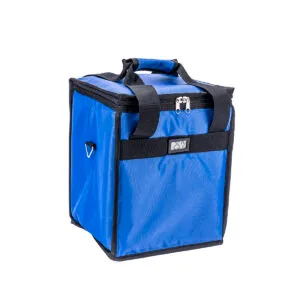
A small insulated lunch bag is the smallest bag that fits your typical meal without crushing lids or forcing the zipper. “Small” is not a single liter number. It’s a fit rule. When the bag fits well, you have less air inside. Less air means steadier temperatures and fewer leaks from tipped containers.
Most “small” setups hold one main container, one snack, and an optional drink.
small insulated lunch bag
That’s the sweet spot for commuters and school lunches. If you regularly pack two meal boxes plus a drink inside, you may need a small-plus or a compact medium.
A 60-second fit test you can do before buying
Put your usual lunch on a table and answer three questions:
Do you pack one container or two most days?
Is your container wide and flat (bento) or tall and round (bowl)?
Do you carry a drink inside the bag or separately?
If you’re mostly “one container + snack,” you’re in true small insulated lunch bag territory.
small insulated lunch bag
If you’re “two containers + drink,” you’re likely sizing up.
| Your daily meal style | Best bag shape | What to avoid | Practical meaning for you |
|---|---|---|---|
| Bento + snack | wide, flat base | tall narrow bag | fewer crushed compartments |
| Salad bowl + snack | taller profile | shallow bag | fewer popped lids |
| Soup + snack | upright + stable base | collapsing base | fewer spill disasters |
| Meal prep rectangle | medium footprint | tight corners | faster pack, less mess |
Why does a small insulated lunch bag matter more than you think?
A small insulated lunch bag is basically a portable “micro-fridge,” especially when you add an ice pack. It matters because temperature changes faster than most people expect in a warm car, sunny window, or backpack.
small insulated lunch bag
If lunch warms too fast, textures change and flavors fade. If it leaks or smells, you stop using it.
Three practical realities shape outcomes:
Food warms faster when there’s extra air space.
small insulated lunch bag
The zipper line is often the weakest insulation point.
small insulated lunch bag
Ice-pack strategy matters as much as the bag itself.
small insulated lunch bag
The “small bag advantage”
Small bags can outperform larger bags because they pack tighter. Tight packing reduces air exchange. Air exchange is what you pay every time you open the zipper.
Think of it like a travel mug. A mug filled to the top stays hot longer than a half-empty thermos.
How does a small insulated lunch bag actually keep food cold or warm?
A small insulated lunch bag slows heat transfer. It reduces how quickly outside heat gets in (for cold lunches) or inside heat gets out (for hot lunches). It works best when the bag is close to full, the zipper closes cleanly, and you limit openings.
Your results depend on five levers:
Starting temperature (cold food starts cold)
Bag fit (less empty air)
Closure quality (zipper + flap design)
Ice pack placement (where the cold mass sits)
Open frequency (one open beats five)
H3: The two-finger gap check (fast performance predictor)
After packing, try this: if you can slide two fingers deep into a big empty air pocket, performance drops. The air warms quickly. A tight pack is a stable pack.
| Packing factor | What to look for | Better outcome | What it means for you |
|---|---|---|---|
| Air gaps | lots of empty space | tight fit | longer cold hold |
| Zipper closure | gaps at corners | smooth seal | less heat leakage |
| Bag fullness | half empty | nearly full | steadier temps |
What insulation performance should you expect in 2025?
A small insulated lunch bag should feel “boringly consistent” when used the same way daily. You should not have to guess. You should be able to pack, close, and trust it. But don’t expect miracles. If you leave it in a hot car for hours, any soft bag will struggle.
Instead of chasing claims, focus on repeatable outcomes:
Lunch still tastes fresh at mealtime
No wet corners, no mystery odors
You can wipe it clean in under a minute
Containers fit without squeezing
H3: A simple hold-time test you can run at home
You don’t need lab gear. You need consistency.
Chill one container of water overnight.
Freeze one flat ice pack overnight.
Pack your bag with the same layout you’ll use daily.
Check temperature feel or use a small thermometer at 2 hours and 4 hours.
Repeat once on a hot day and once on a mild day.
| What you change | Why it matters | What you learn | What to do next |
|---|---|---|---|
| Bag fullness | reduces air exchange | stability improvement | add filler pouch/napkins |
| Ice pack placement | changes cooling pattern | warmer corners vs even cool | move pack to side/top |
| Open frequency | dumps cold air | real-world loss | plan “open once” habit |
| Container shape | affects fit + tipping | spill risk | choose stable base bag |
Which materials matter most in a small insulated lunch bag?
Materials decide daily happiness: cleaning, odor control, and leak resistance. Insulation thickness matters, but liner quality decides whether you’ll keep using the bag after 30 uses.
Focus on three zones:
Outer fabric: scuff resistance + light water resistance
Insulation layer: consistent thickness (especially corners)
Inner liner: smooth, wipeable, low-odor, minimal seams
H3: The liner is the deal-breaker
If the liner is hard to wipe, the bag becomes a “smell storage unit.” A wipeable liner keeps the bag alive. That is the feature that protects long-term value.
| Component | Better choice | Watch-out | Practical meaning for you |
|---|---|---|---|
| Outer fabric | durable, wipe-friendly | fraying corners | longer life in backpacks |
| Insulation | even thickness | thin corners | fewer warm spots |
| Liner | smooth + wipeable | fabric liner stains | faster daily cleanup |
| Seams | reinforced corners | stitch holes | fewer leak paths |
| Base | stable insert | floppy bottom | fewer tipped soups |
How do you choose a leakproof small insulated lunch bag?
“Leakproof” in real life means spill-resistant long enough to wipe clean. Most lunches fail from small leaks: dressing drips, soup lids loosen, or condensation pools. Your bag can’t fix a bad container, but it can prevent small spills from soaking into foam.
Look for:
sealed seams or minimal internal stitching
base that doesn’t fold under weight
zipper design that doesn’t leave open corner gaps
a liner that wipes clean without absorbing smells
H3: The paper towel test (fast and real)
Before you trust a new bag, do this test:
Put a dry paper towel inside
Add a closed water bottle
Shake gently and keep upright for 10 minutes
Then place the bag on its side for 10 minutes
If the towel stays dry, the liner is doing its job. If it absorbs moisture, you’ll likely deal with smells and stains later.
small insulated lunch bag
| Leak risk | Typical cause | What to choose | Your benefit |
|---|---|---|---|
| Corner seepage | stitched corners | reinforced base/liner | less odor build-up |
| Zipper drip | gap at zipper ends | zipper flap/guard | cleaner commute |
| Full spill | container failure | better containers | fewer ruined-bag days |
How to pack a small insulated lunch bag with ice pack for colder food
Packing is your free performance upgrade. The same small insulated lunch bag can perform noticeably better with the right layout and fewer air gaps.
Use this cold packing method:
start cold (chill food first)
use one stable ice pack (flat if possible)
place ice above or beside, not only below
reduce air gaps with a snack pouch or napkin bundle
keep the zipper shut (open once, not five times)
small insulated lunch bag
Helpful decision tools
Check the details before you choose packaging
These quick tools can help you compare route risk, sizing needs, coolant choices, and packaging details before you request a quote.
01Ice pack estimateIce Pack Calculator
Estimate gel ice pack quantity for chilled shipments and practical route planning.
Estimate ice packs02Material guideInsulation Material Reference
Compare insulation material choices for different cold chain packaging needs.
Compare materials03Coolant choiceCoolant & PCM Reference
Compare coolant and PCM options when a route needs added temperature support.
Compare options
H3: Best ice pack placement in a small insulated lunch bag (the top-ice rule)
In hot weather, placing an ice pack near the top can protect against warm air entering when you open the bag.
small insulated lunch bag
Use a flat pack to avoid crushing soft foods.
| Ice pack placement | Best use case | Risk | Your best move |
|---|---|---|---|
| Top | hot commute | presses on soft foods | use a flat pack + rigid lid |
| Side | balanced cooling | uneven if bag is wide | place next to main container |
| Bottom | stable base | top warms faster | add a thin top pack if needed |
Practical tips and suggestions
Wrap ice packs with a thin cloth to reduce condensation drip.
Keep wet items sealed so moisture doesn’t become odor later.
Pack the most temperature-sensitive items closest to the cold wall.
Practical case: A commuter fixed “warm yogurt” by switching to one flat top ice pack and tighter packing.
Can a small insulated lunch bag handle warm meals too?
Yes, but treat it like a short “heat shelter,” not a long heater. Warm meals lose heat quickly when there’s empty space and repeated openings. Steam also creates moisture that can make bread soggy and liners sticky.
Use this warm packing method:
pre-warm the container (hot water, then empty)
pack food hot in a sealed container
fill space to reduce air
close fast and don’t keep opening
H3: Warm meal packing checklist (copy-ready)
| Hot meal type | Better container | Packing tip | Practical meaning for you |
|---|---|---|---|
| Soup | sealed thermos jar | upright + stable base | fewer leaks |
| Rice + curry | tight lid box | keep level | less mess |
| Fried foods | vented container | don’t overpack | less sogginess |
| Pasta | sealed box | moderate headspace | better texture |
Small insulated lunch bag for work vs school: what changes?
Your “best” small insulated lunch bag depends on how it gets treated. Work bags need slim comfort, quiet materials, and fast access. School bags need durability, spill control, and kid-friendly simplicity.
Kids open bags more often and forget to close zippers. That means durability and easy cleaning matter more than fancy features.
small insulated lunch bag
H3: School-focused feature priorities
| School need | Best feature | Why it helps | Practical meaning for you |
|---|---|---|---|
| Easy opening | large zipper pull | less frustration | fewer broken zippers |
| Spill control | leak-resistant liner | fast cleanup | less odor and stains |
| Name label area | dedicated label zone | prevents loss | fewer replacements |
| Durable corners | reinforced seams | survives drops | longer life |
small insulated lunch bag
Work-focused feature priorities (commute-friendly)
stable upright base (prevents desk spills)
wide opening (so you can see everything fast)
strong zipper and smooth pull
outer pocket for utensils and wipes
wipeable liner (fast cleaning between meetings)
Practical tips and suggestions
If you commute on transit: avoid floppy bags that swing and tip.
If you eat at your desk: choose a bag that opens wide, not deep-narrow.
If you carry sauces daily: leak resistance beats extra pockets.
Interactive decision tool: pick the right small insulated lunch bag
Use this tool to choose based on your day, not marketing photos.
Step 1: Your time-to-eat
A) 0–2 hours
B) 2–6 hours
C) 6+ hours
Step 2: Liquids
A) Rarely
B) Sometimes
C) Almost daily
Step 3: Hot food
A) Rarely
B) Often
Step 4: Commute style
A) Car
B) Transit/walking
C) Mixed + lots of movement
Your match (simple recommendation)
Mostly A answers: lightweight small insulated lunch bag + simple wipeable liner
Any C (liquids or long time): prioritize leakproof liner + stable base + room for a flat ice pack
Hot food often: wide opening + strong zipper + optional divider strategy
Mixed movement: structured shape that stays upright and resists tipping
Self-audit checklist: is your lunch setup actually working?
Give yourself 1 point for each “Yes.”
My lunch still tastes fresh at mealtime
My bag does not smell after a week of use
I can wipe the inside clean in under 60 seconds
I don’t see wet corners or stains
My containers fit without squeezing
I can carry it comfortably every day
I don’t rely on extra plastic bags to prevent leaks
My ice pack strategy is consistent and easy
Score meaning
7–8: Strong system. Upgrade only for convenience or style.
5–6: Close. Fix packing method or cleaning habit first.
0–4: Your bag is working against you. Replace or resize.
How to clean a small insulated lunch bag so it stays odor-free
Odor is usually trapped moisture plus residue, not “bad luck.” The fastest fix is a daily wipe and a full dry. Most bags fail when they’re zipped closed while damp.
Daily routine (2–3 minutes)
Empty crumbs and wrappers
Wipe liner with mild soapy water
Wipe again with clean water
Leave unzipped to air-dry fully
Weekly deep clean (10 minutes)
focus on corners and zipper track
inspect liner for cracks and seam lifting
ensure it dries fully before storage
2025 trends for small insulated lunch bags
In 2025, the biggest changes are practical, not flashy:
more structured small formats that stand upright
more removable inserts (dividers and base panels)
more wipe-clean liners designed for frequent cleaning
more compact designs that fit modern work backpacks
more “system thinking”: bag + container + ice pack as one setup
Market reality: the winning small insulated lunch bag is the one you use daily without friction.
Internal link suggestions (no external links)
Frequently asked questions
Q1: How long does a small insulated lunch bag keep food cold?
It depends on starting temperature, bag fullness, ice pack use, and heat exposure. A tight pack with a flat ice pack lasts longer than a half-empty bag.
Q2: What is the most important feature in a small insulated lunch bag?
The liner. A wipeable, low-odor liner keeps the bag usable for months instead of weeks.
Q3: Is a leakproof small insulated lunch bag truly leakproof?
Most are spill-resistant, not magic. Use sealed containers and run the paper towel test to confirm real-world performance.
Q4: Should ice packs go on top or bottom?
Top or side often works better in warm environments because warm air enters from above when you open the zipper. Use a flat pack to avoid crushing.
Q5: Can a small insulated lunch bag keep food hot until lunch?
It helps for short holds. For long hot holds, use a thermos-style container and treat the bag as an extra buffer.
Q6: When should I replace my small insulated lunch bag?
Replace when the liner cracks, seams seep, or odors persist even after full cleaning and drying.
Summary and recommendations
A small insulated lunch bag performs best when it matches your container shape, packs tight with minimal air gaps, and has a wipeable liner that stays clean. Use one consistent ice pack layout, open the bag less often, and dry it fully after cleaning. If you carry liquids often, prioritize leak resistance and a stable base. If you carry hot meals, focus on sealed containers and fast closure.
Action plan (CTA)
Measure your most-used container (bento, bowl, or meal prep box).
Choose the smallest small insulated lunch bag that fits it without squeezing.
Pick one flat ice pack and use the same placement daily for a week.
Run the paper towel test once to confirm spill resistance.
After 7 days, repeat the self-audit and adjust size or layout.
About Tempk
At Tempk, we apply cold chain thinking to everyday carry and professional delivery workflows. We focus on repeatable routines—tight packing, fewer temperature transitions, leak control, and fast cleaning—so your food stays fresher and your daily routine stays simple. If you share your container dimensions, commute time, and whether you carry liquids, we can recommend a small insulated lunch bag setup and packing layout that fits your real day.