Cold chain express shipping cost can feel unpredictable, but it follows repeatable rules. Your invoice is usually driven by billable weight (often DIM), service speed, and stacked surcharges . In 2025, “silent” add-ons can add 20–40% to what you expected to pay . If you learn to measure cost the same way carriers charge it, you can cut spend without raising temperature risk.
In this guide, you’ll learn:
- How billable weight for cold chain parcels drives cold chain express shipping cost
- A simple cold chain express shipping cost calculator you can reuse for every lane
- How to reduce fuel surcharge impact on express shipping with better planning
- How packaging choices lower insulated packaging cost for cold chain without losing hold time
- Which hidden fees inflate cold chain express shipping cost, and how to avoid them
Why does cold chain express shipping cost spike so fast?
Cold chain express shipping cost spikes because you’re paying for speed, space, and temperature protection at once . Express networks price the time certainty, then charge you by actual weight or dimensional weight (DIM), whichever is higher . Cold chain packaging is often “puffy” with insulation and coolant, so DIM climbs quickly and your cost follows .
Cold chain express shipping cost is easiest to understand as a “stack,” not a single number . You start with base transport, then surcharges, then packaging and process cost. In late 2025, fuel add-ons can land around the ~20% range in some programs, and some express guides list an $8 dry ice UN1845 fee per shipment . You don’t need perfect data—just a consistent method.
Billable weight (actual vs DIM): the #1 cost lever
DIM weight is how carriers charge you for space, not just pounds . If your insulated carton is large, DIM can beat actual weight even when the product is light. That’s why right-sizing usually beats rate negotiation as a first move .
| Cost driver | What it changes | What you control | What it means for you |
|---|---|---|---|
| Billable weight (DIM vs actual) | Base rate and many add-ons | Carton size, insulation thickness, void fill | Often the biggest lever on cold chain express shipping cost |
| Service speed | Base rate | Cutoffs, lane choices, receiving windows | Faster usually costs more |
| Fuel and accessorials | Final invoice volatility | Carrier mix, address strategy, packaging geometry | “Silent” fees can dominate totals |
Practical tips you can use today
- If the box looks too big for what’s inside, DIM is likely inflating cold chain express shipping cost
- If you ship to residential or remote areas, expect accessorials to matter as much as base rate
- Treat fuel as a moving input, not a constant
Practical case: A light biotech shipment billed like a heavy parcel because the insulated carton was oversized. After resizing the carton and slimming the coolant set, cold chain express shipping cost dropped without more excursions .
How do you estimate cold chain express shipping cost before you ship?
You estimate cold chain express shipping cost by calculating billable weight first, then layering the surcharges you can predict . The goal is not “perfect pricing.” The goal is a repeatable estimator that reduces surprises and protects margin.
Start with three actions: measure the outer carton, calculate billable weight, then add surcharges and packout cost . Many operations also add labor minutes and a small “risk cost” line for reships. That turns cold chain express shipping cost into something finance and ops can both forecast.
A repeatable 7-step estimator (works for every lane)
- Measure packed carton outer dimensions (L × W × H)
- Estimate DIM weight using your contract divisor (many teams model scenarios if unsure)
- Billable weight = max(actual, DIM) (apply rounding rules)
- Choose service level (overnight vs 2-day)
- Add likely surcharges (fuel, residential, delivery area, handling, oversize)
- Add packout BOM + labor + QA steps
- Add “failure cost” (refunds/reships) as a small budgeting guardrail
A 10-minute six-line worksheet (your cost “truth table”)
A strong estimate of cold chain express shipping cost includes transport, surcharges, packaging, monitoring, labor, and risk . This is the fastest way to stop under-quoting shipping and overpaying for emergencies.
| Line | What to include | Fast way to estimate | Why it matters |
|---|---|---|---|
| 1 | Base express transport | Last 30-day average by lane | Your baseline |
| 2 | Surcharges | Current fuel + handling patterns | Your volatility driver |
| 3 | Packaging + coolant | BOM cost per packout | Your most controllable cost |
| 4 | Monitoring | Use only where needed | Proof + fewer disputes |
| 5 | Labor | Minutes × labor rate | Hidden cost at scale |
| 6 | Risk cost | Reship rate × replacement cost | Penalty for uncertainty |
Simple formula:
cold chain express shipping cost = (Line 1 + Line 2) + Line 3 + Line 4 + Line 5 + Line 6
Practical tips and advice
- Use billed weight, not scale weight, because dimensional rules often dominate
- Add a “rejection cost” line if you ship dry ice, because one rejection can cascade
- Update fuel weekly (or at least monthly) so your model matches reality
Practical case: A frozen dessert seller added a risk-cost line, then improved packouts. Refunds fell, and cold chain express shipping cost dropped more than any base-rate discount .
Which hidden fees inflate cold chain express shipping cost the most?
Fuel and accessorials are the biggest repeat offenders in cold chain express shipping cost, especially when the parcel stops being “standard” . Oversize, overweight, non-conveyable shapes, remote delivery, and residential classification can stack. That’s how “silent” add-ons reach 20–40% of invoices .
The fix is not complicated. You build a surcharge checklist, then design packaging and shipping options that avoid the triggers. This is a packaging-and-process problem more than a carrier-discount problem.
The surcharge checklist you should run before scaling
| Surcharge risk | Common trigger | How to reduce it | What it means for you |
|---|---|---|---|
| Fuel | Index-based add-on | Monitor weekly, diversify lanes | Invoice swings even if volume is flat |
| Additional handling | Long edges, heavy, odd shapes | Use compact rectangles, standard SKUs | One “weird” box can erase margin |
| Delivery area / residential | ZIP and address type | Offer pickup points, ship-to-business | Can rival the base rate |
| Oversize / large package | Threshold rules | Redesign geometry, split shipments | Sudden step-change in total cost |
| Dry ice (UN1845) | Dry ice present | Use only when required; standardize SOP | Adds fees + compliance work |
Large-package and rounding traps you must audit in 2025
In August 2025, some major carrier programs began rounding every fractional inch up to the next whole inch . That means a small design change (even 0.5 inch) can change billable weight. If you are “just over” an inch boundary, you may be paying a tax you never see.
Also watch large-package rules. Some programs define “Large Package” using length + girth > 130 inches or length > 96 inches, and they may apply a minimum billable weight plus a surcharge . Long, cooler-shaped cartons are the most common budget disaster.
| Trap | What happens | Who gets hit | What you do next |
|---|---|---|---|
| Fractional rounding up | Higher DIM weight bracket | Tight-but-not-tight boxes | Redesign dimensions with “rounding slack” |
| Large package thresholds | Minimum billable weight + surcharge | Long narrow shippers | Go shorter/squarer, or split into two boxes |
Practical tips and advice
- Build a “near-threshold” alert for any SKU close to big dimension cutoffs
- Offer a pickup option for high-surcharge ZIP clusters
- Standardize cartons so handling fees don’t appear randomly
Practical case: A seafood shipper avoided Large Package status by switching from one long box to two compact boxes. Cold chain express shipping cost became predictable again .
How can packaging cut cold chain express shipping cost safely?
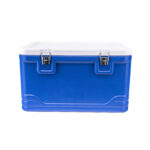
Packaging is the most controllable lever in cold chain express shipping cost, because it drives both DIM and process time . The best win is “same temperature outcome, smaller cube.” That usually means less air, less void fill, and lane-specific packouts.
The risk is over-correcting. If you chase small boxes and lose hold time, you pay later through spoilage and reships. Use a “Goldilocks” rule: enough protection to meet validated hold time, with the smallest reliable outer cube.
Refrigerant strategy: gel vs PCM vs dry ice (cost + risk)
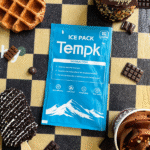
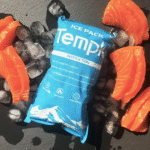
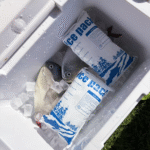
Dry ice can be necessary for frozen needs, but it often increases total cold chain express shipping cost through fees and compliance work . Gel packs are simpler for many chilled lanes. PCM (phase-change material) can improve temperature stability for narrow bands, especially when reused.
| Refrigerant option | Best for | Typical cost pressure | Practical meaning for you |
|---|---|---|---|
| Gel packs | 2–8°C lanes | Moderate weight | Often the lowest-friction option |
| PCM plates | Tight temperature bands | Higher unit cost | Strong consistency on repeat lanes |
| Dry ice (UN1845) | Frozen or ultra-cold | Fee + compliance + weight | Use only when required, then standardize the SOP |
Right-sizing without losing hold time
Right-sizing is not “make it tiny.” It is “remove wasted air while keeping thermal design intact” . When you reduce outer dimensions, you often reduce corrugate, void fill, and labor too.
Helpful decision tools
Check the details before you choose packaging
These quick tools can help you compare route risk, sizing needs, coolant choices, and packaging details before you request a quote.
Box Liner & Pallet Cover Sizing
Check box liner and pallet cover sizing logic for insulated packaging projects.
Estimate sizingInsulation Material Drop Resistance
Review drop resistance and handling factors before choosing insulation materials.
Check resistanceRoute Risk Checker
Review lane conditions before selecting packaging for real operating requirements.
Check route risk| Packout lever | Typical impact | What to test | What it means for you |
|---|---|---|---|
| Smaller carton | Lower DIM | Minimum protective cube | Fastest path to lower cold chain express shipping cost |
| Better-fit insulation liner | Less void space | Fit and repeatability | More stable temps, fewer spikes |
| “Golden packout” SOP | Fewer mispacks | Photos + step list | Lower waste and fewer excursions |
Practical tips and advice
- Do a quarterly carton audit and reduce “random box” usage
- Build two seasonal packouts (mild vs hot/cold) to lower average cost
- Validate the top lanes with loggers, then simplify everything else
Practical case: A dairy shipper removed 15% empty space, lowered DIM, and cut packing time per order. Cold chain express shipping cost fell without weaker temperature performance .
Which service-level and lane choices lower cold chain express shipping cost?
The best rule is: choose the slowest service that still protects your product in that lane and season . Many teams pay overnight everywhere because it feels safe. But if your validated packout holds 48 hours with margin, two-day can be enough on stable lanes.
To make that decision safely, you need a lane scorecard. Track on-time performance, delay patterns, and last-mile exposure. Then spend on speed only where the data says risk is real.
Lane scorecard: when to pay for speed
| Decision point | Choose faster when… | Choose slower when… | What it means for you |
|---|---|---|---|
| Product sensitivity | Excursions are catastrophic | Product is tolerant | Cold chain express shipping cost should follow risk |
| Receiving window | Tight same-day receiving | Broad receiving hours | B2B drops often reduce accessorials |
| Weather + delay risk | Extreme temps + frequent delays | Stable temps + predictable lane | Don’t ship “blind” before weekends |
Consolidation strategy (when it fits)
Consolidation can reduce cold chain express shipping cost by cutting per-package accessorials. But only consolidate if you don’t trigger oversize or handling thresholds. If one consolidated box becomes “Large Package,” you lose the savings fast .
Practical tips and advice
- Segment lanes: overnight only where needed, two-day where validated
- Avoid shipping right before weekends unless you have a clear weekend plan
- Offer business delivery or pickup points to reduce residential fees
Practical case: A diagnostic lab moved from “overnight everywhere” to “overnight only where needed.” After validating two-day on stable lanes, cold chain express shipping cost dropped while service stayed reliable .
Decision tool: What should you optimize first for cold chain express shipping cost?
Use this quick tool to pick the best first move. It’s designed to reduce cold chain express shipping cost without “false savings.”
Step 1 — Pick your shipment risk level
- High risk: biologics, vaccines, high-value reagents
- Medium risk: chilled foods, specialty dairy
- Lower risk: frozen items with strong insulation and thermal mass
Step 2 — Confirm your validated hold time
- 24 hours
- 48 hours
- 72 hours
Step 3 — Follow the match (your #1 focus)
- High risk + 24h: prioritize overnight and DIM reduction
- High risk + 48h: consider two-day where lane data supports it
- Medium risk + 48h: right-size the carton before changing service
- Lower risk + 72h: standardize SKUs and consolidate carefully
Self-assessment: Are you overpaying?
Score 1 point for each “Yes”:
- We use more than 6 carton sizes for one product family
- We see frequent “additional handling” fees
- We ship to residential addresses without a pickup option
- We don’t track billable vs actual weight weekly
- We pack for 72 hours even when lanes run 24–36 hours
- Invoices swing week to week due to surcharges
0–2: You’re controlling cold chain express shipping cost well.
3–4: Clear savings opportunities.
5–6: You’re paying a DIM + surcharge tax.
2025 trends reshaping cold chain express shipping cost
In 2025, the winners are not only negotiating base rates. They’re controlling what changes quietly: DIM measurement, packaging variance, and surcharge triggers . The practical shift is measurement discipline: if you can explain every pound of billable weight, you can fix it.
Latest developments you should account for
- Tighter dimension measurement: fractional rounding up makes “half an inch” matter more
- Greater surcharge awareness: teams monitor fuel and accessorial triggers more frequently
- More lane-based planning: packaging and refrigerant recipes are being standardized by season
Market insight you can use in budgeting
Cold chain express shipping cost becomes predictable when you treat carton cube like a KPI. A small redesign that avoids Large Package thresholds can save more than a large discount. And a six-line worksheet makes savings visible to finance, not just ops .
Frequently Asked Questions
Q1: What drives cold chain express shipping cost the most?
Billable weight (often DIM), service speed, and stacked surcharges drive cold chain express shipping cost most. Start with carton cube and handling triggers .
Q2: What’s the fastest way to reduce cold chain express shipping cost this month?
Audit billable vs actual weight by box SKU, then right-size the biggest “cube offenders.” Packaging geometry usually delivers the quickest win .
Q3: Why did my cold chain express shipping cost rise even when orders stayed the same?
Fuel and accessorials can change while volume stays flat. Also, rounding and measurement rules can push DIM into a higher bracket .
Q4: Does dry ice always increase cold chain express shipping cost?
Often yes, because it can add a per-shipment fee and extra compliance steps. Use dry ice when frozen performance is required, then standardize the process .
Q5: When is two-day safe for cold chain?
Two-day can be safe when your packout is validated for the lane and season, and your hold time has margin. Use lane data, not hope.
Q6: Do I need temperature monitoring on every shipment?
Not always. Many teams use monitoring on high-risk lanes and keep a documented lane risk assessment elsewhere. That balances proof and cost .
Summary and recommendations
Cold chain express shipping cost is controllable when you manage cube, service level, and surcharges together . Start with billable weight, because DIM often decides the base rate and many add-ons. Next, eliminate avoidable surcharge triggers like “Large Package,” additional handling, and residential exposure. Finally, use a six-line worksheet so cost becomes forecastable, not reactive .
Your next steps (simple 7-day plan)
- Export invoices and calculate billable vs actual weight by box size
- Redesign the worst carton to remove wasted air and avoid thresholds
- Build “mild” and “hot” seasonal packouts for top lanes
- Add a lane worksheet: transport + surcharges + packaging + labor + risk
- Offer pickup/business delivery options in high-fee ZIP clusters
CTA: If you share your lane, carton dimensions, temperature band, and weekly volume, you can build a lane-based estimate and a prioritized savings list in one working session.
About Tempk
At Tempk, we help you reduce cold chain express shipping cost by combining practical packaging design with repeatable shipping workflows. We focus on validated packouts that hit your temperature target, then remove waste that inflates DIM and triggers avoidable surcharges . Our team supports lane-based packout recipes, carton right-sizing, and SOPs your operators can follow under express deadlines. If you want predictable cost and fewer temperature exceptions, we can help you build a clear lane plan and a reusable estimator.
Next step: Request a packout review + lane scorecard so you know exactly where to save first.