EPP Foam Box Laboratory Samples: Ship Safely?
Last updated: December 23, 2025
Shipping EPP foam box laboratory samples is simple to describe and easy to get wrong. Your job is to keep samples stable through bumps, delays, and temperature swings. If you ship as UN3373 Category B, the outer mark is often 50 mm wide, and key text is commonly treated as 6 mm minimum. If you use dry ice, you also need UN1845 handling discipline. This guide shows a repeatable packout, clear labels, and a validation plan your team will actually follow.
This guide will help you:
Build EPP foam box laboratory samples packaging that prevents leaks and breakage
Pack EPP foam box laboratory samples with gel packs for 2–8°C without freezing risk
Handle EPP foam box laboratory samples with dry ice (UN1845) safely and consistently
Apply triple packaging in plain English, with a copy-paste checklist
Place temperature loggers where data is reliable, not misleading
Validate one lane in one week, then scale with confidence
Why are EPP foam box laboratory samples shippers a smart default?
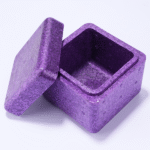
EPP foam box laboratory samples shippers work well because they behave like a thermos and a helmet at the same time. They slow heat flow, and they absorb impacts from drops and vibration. That matters when you have multiple handoffs and last-mile uncertainty.
Consistency is the hidden win. When the shipper holds shape, your lid seals better. When the lid seals better, your cooling plan behaves the same every time.
| Material | Insulation stability | Drop resistance | Reuse potential | What it means for you |
|---|---|---|---|---|
| EPP foam box | High | High | High | Best for repeatable packouts and frequent handling |
| EPS foam box | Medium–High | Low–Medium | Low | Good insulation, but chips and cracks after reuse |
| PU panel box | High | Medium | Medium | Strong insulation, often heavier and higher cost |
Practical tips you can use today
Right-size the box: less empty air usually means steadier temperatures.
Standardize inserts: fixed positions beat loose void fill every time.
Treat lid fit as a quality item: a small gap can erase your “extra coolant.”
Practical example: A clinic-to-lab route reduced redraws after switching to a rigid EPP layout that stopped tubes from rattling.
What temperature profile do EPP foam box laboratory samples really need?
Your EPP foam box laboratory samples plan must match the sample’s stability window, not your packing habit. The most common failure is “stronger cooling than needed.” That mistake can freeze samples that must not freeze.
Think in bands, not in vibes. You are not shipping “blood.” You are shipping “blood that must stay at 2–8°C.”
| Sample category (examples) | Typical temperature intent | Biggest risk | Packaging focus |
|---|---|---|---|
| Serum/plasma (routine) | 2–8°C | Accidental freezing near coolant | Buffers + controlled cold mass |
| Whole blood tubes | Often 2–8°C | Hemolysis from shock + overcooling | Shock control + gentle cooling |
| Tissue biopsy | 2–8°C or frozen | Dehydration + drift | Sealed barrier + lane-based hold time |
| PCR swabs / VTM | 2–8°C | Warm drift in last mile | Strong insulation + receiving speed |
| Enzymes/reagents | 2–8°C or frozen | Potency loss | Validation + monitoring discipline |
| Mixed research payload | Mixed | Cross-contamination of profiles | Separate shipper per profile |
Practical tips you can use today
Build only three SOPs: refrigerated, frozen, dry ice. Most labs need nothing else.
Add a hard rule for refrigerated: no direct contact between frozen coolant and payload.
Separate mixed profiles. One box with mixed ranges creates avoidable risk.
How do you build compliant triple packaging for EPP foam box laboratory samples?
EPP foam box laboratory samples shipments often need a triple packaging system. The idea is simple: one layer stops leaks, one layer contains failures, and one layer protects everything.
The triple packaging build (plain English)
Primary receptacle: leakproof tube or vial, sealed and labeled.
Secondary packaging: leak-resistant bag or rigid canister, plus absorbent for liquids.
Rigid outer packaging: the EPP foam box, with cushioning and movement control.
| Layer | What it must do | What to check before sealing | What it means for you |
|---|---|---|---|
| Primary | Hold specimen without leaking | Cap tight, label readable | Prevents contamination and rework |
| Secondary | Contain leaks + protect IDs | Absorbent present, seal intact | Stops “wet paperwork” failures |
| Outer (EPP) | Resist crush + insulate | Insert fitted, lid closes flat | Protects integrity and temperature |
Practical tips and suggestions
Always add absorbent for liquid specimens. It is cheap insurance.
Immobilize the secondary. Movement causes breakage and thermal spikes.
Keep paperwork out of the leak path in a sealed pouch.
Practical example: Leakage incidents dropped after switching to rigid secondaries plus absorbent inside the EPP shipper.
How do you pack EPP foam box laboratory samples for 2–8°C without freezing them?
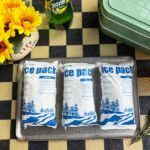
EPP foam box laboratory samples with gel packs succeed when you aim for even cooling, not maximum cold. Overcooling is a silent failure. A “perfectly cold” wall can still freeze a tube.
Step-by-step 2–8°C packout (repeatable SOP)
Start with a dry, room-stable shipper. Avoid sun-heated boxes.
Confirm the band: 2–8°C, and note any “Do Not Freeze” items.
Build a buffer floor: thin foam sheet or corrugate spacer.
Place coolant consistently: same count, same position, every shipment.
Keep coolant outside the secondary: never inside with the specimen.
Immobilize payload: racks, partitions, or cutouts prevent rattling.
Add a top buffer: reduces cold spots and improves lid seal.
Close fully, seal consistently, document the packout ID.
Coolant choice for EPP foam box laboratory samples
| Coolant option | Best for | Strength | Watch-out | Practical meaning |
|---|---|---|---|---|
| Gel packs | Most 2–8°C lanes | Familiar and low cost | Freeze risk near contact | Always use buffer layers |
| PCM packs | Tight 2–8°C control | More stable temperature band | Higher cost, needs correct melt point | Better repeatability on long lanes |
| Frozen bricks | Frozen shipments | Strong cold | Overkill for refrigerated | Keep a separate SOP |
| Dry ice | Ultra-cold | Long hold at very low temps | Venting + safety | Use only with dedicated protocol |
Practical tips and suggestions
Condition gel packs when shipping 2–8°C. Rock-solid frozen packs cause cold spots.
Fill headspace with structured inserts, not loose paper that shifts.
Use a two-person check for high-value samples: pack + verify.
Practical example: “Too cold” failures stopped after switching from fully frozen packs to conditioned packs plus a thin buffer layer.
How do you ship EPP foam box laboratory samples with dry ice safely?
EPP foam box laboratory samples with dry ice is a different system, not a small variation. Dry ice is extremely cold and turns into CO₂ gas. Your packout must prevent direct contact damage and allow safe gas management.
Dry ice layout (simple and repeatable)
Dry ice zone: placed in a dedicated compartment or one side.
Separation layer: rigid barrier between dry ice and payload cavity.
Payload core: samples centered, immobilized, and protected.
Document protection: waterproof pouch, away from condensation.
Receiving card: “Open, verify, move to storage fast.”
| Risk | What causes it | Control | What it means for you |
|---|---|---|---|
| Container cracking | Direct ultra-cold contact | Rigid separator layer | Fewer broken vials |
| Label loss | Frost and condensation | Sleeves + protected label zone | Traceability stays intact |
| Payload overcooling | Too much dry ice too close | Distance + buffer | Prevents unintended damage |
| Paperwork failure | Moisture exposure | Sealed pouch | Fewer documentation gaps |
Practical tips and suggestions
Keep paperwork outside the cold cavity in a sealed pouch.
Standardize dry ice weight by box size for repeatability.
Add a receiving instruction card to cut warm exposure time.
Practical example: Cracked cryovials dropped after moving dry ice into a side compartment plus a rigid separator.
What labels and documents stop rejections for EPP foam box laboratory samples?
Even perfect packaging can fail operationally if labels are wrong. Your goal is fast identification, safe handling, and traceability.
For many Category B shipments, the outside needs the UN3373 mark and the proper shipping name. If dry ice is used, the package also needs dry ice markings and the net weight where required by your transport mode.
Copy-paste label and document checklist
| Item | Refrigerated | Frozen | Dry ice | What it means for you |
|---|---|---|---|---|
| Temperature statement | Yes | Yes | Yes | Reduces mishandling |
| UN3373 marking (if applicable) | Yes | Yes | Yes | Avoids acceptance delays |
| Dry ice mark + net weight (if applicable) | No | No | Yes | Prevents transport rejection |
| Sender/receiver contact | Yes | Yes | Yes | Faster routing |
| Case ID (large + scannable) | Yes | Yes | Yes | Traceability |
| Chain-of-custody form | Yes | Yes | Yes | Investigation readiness |
| “Open protocol” card | Yes | Yes | Yes | Faster receiving |
Practical tips and suggestions
Use moisture-resistant labels or sleeves on condensing routes.
Helpful decision tools
Check the details before you choose packaging
These quick tools can help you compare route risk, sizing needs, coolant choices, and packaging details before you request a quote.
01Route riskRoute Risk Checker
Review lane conditions before selecting packaging for real operating requirements.
Check route risk02Handling riskInsulation Material Drop Resistance
Review drop resistance and handling factors before choosing insulation materials.
Check resistance03Material guideInsulation Material Reference
Compare insulation material choices for different cold chain packaging needs.
Compare materialsKeep tape off critical marks so they stay readable when handled.
If you re-pack, carry the identity forward to avoid “mystery samples.”
Practical example: “Lost specimen” events decreased after adding a large case ID that matched chain-of-custody forms.
Where should you place temperature loggers in EPP foam box laboratory samples?
Logger placement decides whether your data is useful or misleading. The wall can look cold while the core drifts warm. Your default should be: measure where the payload experiences risk.
| Logger placement | What it tells you | What it can hide | Best use |
|---|---|---|---|
| Next to coolant | Best-case cold | Warm corners | Only as a secondary sensor |
| Payload center | Average condition | Edge warming | Baseline verification |
| Near outer wall (buffered) | Worst-case trend | None if standardized | Great for risk detection |
| Under lid zone | Lid leakage and warm air | Center stability | Many handoffs and stops |
Practical tips and suggestions
Place sensors buffered, never touching coolant.
Use one placement photo so teams stay consistent.
Consider lane sampling: 100% logging for exceptions or high-value lanes.
How do you validate EPP foam box laboratory samples performance in one week?
You do not need a perfect lab to start. You need repeatable tests that match your real lane. Validation is how EPP foam box laboratory samples becomes a system, not a guess.
DQ / OQ / PQ in plain English
DQ (Design Qualification): Does the packout match the requirement on paper?
OQ (Operational Qualification): Does it hold range in controlled hot/cold tests?
PQ (Performance Qualification): Does it work on real routes with real handoffs?
| Test | What you do | What you measure | Pass/fail idea | What it means for you |
|---|---|---|---|---|
| Thermal hold | Simulate route duration | Time in target | No sustained drift | Predictable quality |
| Handling | Drop/shake simulation | Breaks, leaks, movement | No damage | Fewer redraws |
| Opening simulation | Open at each stop | Drift per opening | Acceptable change | Route readiness |
| Seasonal snapshot | Summer + winter | Peaks and lows | No freeze/overheat | Fewer surprises |
The “3-run rule” (fast confidence)
Run 3 tests for a new lane:
One normal day
One warm assumption
One delay assumption (longer hold)
If results swing wildly, the problem is usually process variability, not insulation.
Decision tool: Which EPP foam box laboratory samples setup should you use?
Use this tool for every new lane, new season, or new carrier. It prevents expensive “we thought it would be fine” surprises.
Step 1: Score your lane risk (0–20)
Add points:
Transit time risk:
≤12 hours = 0
12–24 hours = 2
24–48 hours = 4
48 hours = 6
Handoffs: 0–1 = 0, 2–3 = 2, 4+ = 4
Ambient exposure: mild = 0, seasonal extremes = 2, extreme heat/cold = 4
Payload fragility/value: low = 0, medium = 2, high = 4
Compliance sensitivity (UN marking / audits): low = 0, medium = 2, high = 2
Step 2: Choose a configuration
| Risk score | Recommended setup | What you standardize |
|---|---|---|
| 0–6 | EPP shipper + insert + clear documents | Pack photo + receiving card |
| 7–13 | EPP shipper + insert + conditioned gel packs | Buffer rules + logger sampling |
| 14–20 | EPP shipper + engineered insert + validated coolant plan | Full DQ/OQ/PQ + change control |
Step 3: Add a delay buffer
Same-city courier: +2 hours
Domestic overnight: +12 hours
Cross-border: +24–48 hours
If that buffer feels “too conservative,” it usually means you have been lucky.
How do you control cost with reusable EPP foam box laboratory samples?
A reusable program saves money only when you control cleaning, inspection, and returns. The best metric is total cost per successful shipment, not box price.
Your per-shipment cost includes box cycles, cleaning labor, return flow, loss rate, and failure cost. A single redraw can erase many “saved” boxes.
| Cost lever | What you change | Risk if done wrong | Safer approach | What it means for you |
|---|---|---|---|---|
| Right-size boxes | Reduce empty volume | Payload compression | Add structured inserts | Lower freight cost |
| Standardize packouts | Fewer variations | Wrong config used | Photo SOP + packout ID | Fewer errors |
| Reuse with inspection | More cycles per box | Hygiene failures | Clean + inspect checklist | Lower TCO |
| Lane-based deployment | Use stronger configs only where needed | Under-protection | Risk scoring tool | Spend where it matters |
Practical tips and suggestions
Set a return rule like “return within X days.” Assets vanish without it.
Add a 30-second inspection gate: lid fit, cracks, odor, residue.
Track loss and damage by lane. Fix the worst lanes first.
2025 latest developments and trends in lab sample shipping
In 2025, the trend is less improvisation and more repeatability. Teams are moving to two or three validated packouts per temperature band. Many programs now use summer and winter versions instead of “one universal pack.”
Operationally, there is also more demand for proof. Customers want packout photos, clearer chain-of-custody notes, and faster deviation decisions. Reuse programs are growing, but only when reverse logistics is simple.
Latest progress snapshot
Better inserts and immobilization: fewer broken tubes and fewer redraws
Smarter monitoring: lane sampling plus exception escalation
Faster receiving protocols: “open, verify, store” cards reduce exposure time
Sustainability reporting: reuse cycles tracked like assets, not disposable items
Frequently Asked Questions
Q1: Can EPP foam box laboratory samples ship without gel packs?
Yes, if samples are ambient-stable and heat risk is low. Use snug inserts and protect paperwork from moisture.
Q2: How do I prevent freezing in EPP foam box laboratory samples 2–8°C shipping?
Condition gel packs and add buffer layers so coolant never touches tubes directly. Standardize placement and avoid “extra packs.”
Q3: Do I always need triple packaging for EPP foam box laboratory samples?
Many clinical specimens require it. When in doubt, follow your biosafety classification process and shipper SOP.
Q4: Where do I place gel packs or dry ice in EPP foam box laboratory samples?
Keep refrigerants outside the secondary packaging. Immobilize the secondary so it stays positioned during melting or sublimation.
Q5: Do I need a temperature logger in every shipment?
Not always. Many labs succeed with lane sampling plus 100% logging for exceptions and high-value lanes.
Q6: What is the biggest packing mistake?
Leaving headspace and allowing movement. Empty air changes temperature quickly, and movement breaks containers.
Q7: How do I keep labels readable when condensation happens?
Use moisture-resistant labels or sleeves. Place critical IDs on flat, protected surfaces, not edges.
Q8: What’s the fastest way to improve success rates this month?
Standardize one lane: one packout photo, one checklist, one coolant conditioning rule, and a short validation pilot.
Summary and recommendations
EPP foam box laboratory samples shipments succeed when you treat packaging as a controlled process. Standardize triple packaging, immobilize the payload, and use gentle cooling for 2–8°C. Keep dry ice shipments separate with rigid separation layers and clear handling instructions. Validate one lane with a simple DQ/OQ/PQ plan, then lock the winning version under change control.
Your next step (clear CTA)
Pick your highest-risk lane and run a 7-day pilot:
Choose one standard packout and assign a packout ID.
Use one consistent coolant placement photo and one checklist.
Sample temperature data on that lane and record receiving checks.
Fix one variable at a time until results are repeatable.
About Tempk
At Tempk, we help teams turn cold chain packaging into repeatable daily habits. We focus on EPP shipper selection, packout photo standards, lane-based validation, and monitoring plans that drive action. Our approach is practical and trainable, so your EPP foam box laboratory samples shipments stay consistent across seasons and handoffs.
Next step: Share your sample type, target temperature range, lane duration, and handoff count. We will outline a packout and validation checklist you can implement immediately.