How Do Cold Chain Regulations and Equipment Keep Fresh Seafood Safe?
Updated December 2025
Maintaining fresh seafood quality isn’t just about icing the fish; it involves a regulated cold chain that keeps temperatures low, prevents contamination and proves compliance. Fresh seafood cold chain regulations and equipment set strict temperature ranges, require traceability records and demand reliable equipment that can be audited. In this guide we explain the key temperature rules, outline the equipment you need and show how to build a datadriven cold chain that meets 2025 regulatory standards.
Temperature rules & regulatory requirements: Understand why fresh fish must be kept near 0–5 °C (32–41 °F) and frozen seafood at or below –18 °C, how EU and U.S. laws enforce these limits and what happens when you deviate.
Essential equipment & monitoring devices: Learn which cold rooms, blast chillers, refrigerated vehicles, insulated boxes, data loggers and IoT sensors are required to meet auditready standards.
Traceability & compliance systems: Discover how Hazard Analysis and Critical Control Points (HACCP), FSMA 204 and EU Regulation 853/2004 mandate recordkeeping, and why the FDA extended compliance to July 20 2028.
Packaging & transport best practices: Explore prechilling, insulated packaging, route planning and vehicle preparation techniques that reduce excursions.
2025 trends & innovations: Get up to speed on IoT sensors, AI route optimisation, blockchain, energyefficient refrigeration and the emerging –15 °C initiative for sustainable frozen storage.
What temperature rules govern fresh seafood cold chain safety?
Fresh fish must remain at 0–5 °C, while frozen fish must stay at or below –18 °C, and these limits are mandated by both U.S. and European regulations. The U.S. FDA Food Code and the Food Safety Modernization Act (FSMA) state that cold foods, including fresh seafood, must be held at 41 °F (≈5 °C) or colder. European hygiene rules go further, requiring fresh fish to be stored at meltingice temperatures (around 0–2 °C), while frozen fish must be kept at –18 °C or below. These temperature ranges slow bacterial growth and enzymatic spoilage; even an 8 °F (≈4 °C) rise can halve shelf life. Under FSMA’s sanitary transportation rule and EU Regulation 853/2004, operators must not only maintain these temperatures but also record and verify them through calibrated instruments.
Why strict temperatures matter for seafood quality
Fish muscle contains high water activity and nutrients that encourage microbial growth. At temperatures above 5 °C, spoilage bacteria multiply rapidly, producing offodors and histamine; at 0–2 °C bacterial activity slows, preserving texture and flavour. Freezing at –18 °C halts microbial activity and preserves cell structure, but repeated thaw–refreeze cycles damage muscle fibres and cause drip loss. Longterm storage of fatty species may require –24 °C to reduce oxidative rancidity. Regulations therefore specify both temperature targets and documentation requirements: you must continuously monitor air temperature with devices certified under standards like EN 12830/13485/13486 and retain records for at least one year. Failure to meet these rules can lead to product recalls, fines and loss of market access.
Equipment needed to meet temperature regulations
| Equipment | Temperature capability | Purpose & compliance impact |
| Cold rooms / blast chillers | Can chill fish to near 0 °C and maintain within 0–5 °C | Provide rapid cooling postcatch and stable storage; required for HACCP plans and EU hygiene compliance |
| Freezers & ultralow freezers | Maintain –18 °C (standard) or –24 °C (longterm) | Preserve frozen fish; EU regulation demands freezer vessels achieve –18 °C core temperature quickly |
| Refrigerated trucks / reefer containers | Keep cargo within set ranges; precool before loading | Maintain cold chain during transport; FSMA requires sanitation and temperature control during transit |
| Insulated boxes & VIP containers | Slow temperature changes for 24+ hours | Provide passive protection during lastmile delivery; VIPs reduce thermal conductivity and increase payload capacity |
| Ice machines & slurry ice | Produce crushed or slurry ice for fresh fish | Rapidly remove field heat and hold fish near 0 °C; ice slurry (2 parts ice to 1 part water) is recommended for immediate chilling |
| Temperature sensors & data loggers | Record and store temperature history | Provide evidence of compliance; required by FSMA/EU regulations; choose ENcertified devices |
| IoT monitors & GPS trackers | Transmit realtime data and location | Enable proactive interventions and proof of location; widely adopted in 2025 for realtime alerts and dispute resolution |
| Handheld thermometers & probes | Spotcheck core temperature | Verify product temperature before acceptance; part of incoming inspection SOPs |
Practical tips:
Precool everything: Refrigeration units maintain temperature; they don’t cool warm products. Always prechill fish, ice slurry, packaging and truck compartments before loading.
Separate compartments: Keep fresh and frozen fish in separate sections to prevent crosscontamination and avoid raising the temperature of frozen goods.
Calibrate and maintain equipment: Regularly calibrate sensors and inspect freezers, reefer units and backup power systems.
Document and verify: Use checklists to record temperatures, equipment inspections and cleaning procedures before every shipment.
Real case: A salmon exporter implemented continuous temperature logging on all shipments. Monitoring fish every 30 minutes and alerting drivers when readings deviated from 0–5 °C reduced spoilage claims by 25 %.
What equipment do you need to comply with seafood cold chain regulations?
Regulators focus on demonstrable performance rather than brand names. Cold chain equipment must hold the required temperature consistently and provide verifiable records. The EU’s Annex III to Regulation 853/2004 mandates that freezer vessels have adequate capacity to freeze fish quickly to –18 °C and maintain storage holds at –18 °C. In brine freezing, tuna intended for canning may be frozen at –9 °C, but such fish cannot be sold as fresh. The U.S. ATP Agreement and FSMA require recording instruments to monitor air temperature, with data retained for at least a year.
Selecting core cold chain equipment
When choosing equipment, consider capacity, insulation quality and monitoring capability.
Blast chillers and cold rooms: These systems rapidly reduce fish temperature postcatch, preventing microbial growth. Look for models that reach 0 °C within hours and can maintain consistent temperatures despite frequent door openings. Many operations combine blast chillers with cold rooms for staging and processing.
Freezers and ultralow freezers: Standard freezers maintain –18 °C; ultralow units reach –24 °C to extend shelf life for fatty fish like mackerel. Freezer vessels must have continuous freezing capability and a short thermal arrest period.
Refrigerated vehicles: Choose trucks or reefer containers with enough cooling power and insulation. Precool the cargo space before loading and monitor dooropen times to minimise thermal spikes. Check that vehicles meet ATP certification for crossborder transport.
Insulated boxes & reusable pallet shippers: For lastmile delivery, insulated boxes with gel packs or vacuum insulated panels (VIPs) provide passive protection. VIP shippers reduce thermal conductivity and increase payload capacity by up to 70 %, cutting shipping costs. Reusable systems lower waste and are projected to grow from US $4.97 billion in 2025 to $9.13 billion by 2034.
Ice makers and slurry systems: Use foodgrade ice machines to produce crushed ice or slurry. Slurry ice (2 parts ice to 1 part water) cools fish quickly and maintains near0 °C conditions.
Monitoring devices: Equip shipments with temperature loggers, IoT sensors and GPS temperature trackers. Loggers provide postdelivery evidence; realtime sensors send alerts; GPS trackers pinpoint where excursions occur. Choose devices certified to EN standards and decide whether you need alerts or just evidence based on your ability to intervene midroute.
Monitoring devices: evidence vs action
You don’t need one perfect gadget; you need a “device ladder” tailored to your operations. The key signals to capture are peak temperature, time above limit and location. Use the table below to choose the right device.
| Device type | Best use | Biggest mistake | Meaning for you |
| Temperature data logger | Evidence after delivery; prove compliance for audits | Failing to review data; logs become “data without action” | Use for shipments where you cannot intervene midroute but need proof |
| Realtime monitor with alerts | Preventing loss now by sending alerts during transport | Too many alerts causing fatigue | Ideal if your team can act immediately; set thresholds to avoid alert overload |
| GPS temperature tracker | Finding where excursions happen; linking events to locations | Not matching tracker ID to specific loads | Use when disputes are common; helps target process improvements |
| Fixed sensors in rooms/trucks | Monitoring facility or vehicle stability | Poor placement creating blind spots | Install at the warmest spots and near doors; calibrate regularly |
| Time–temperature indicators (TTIs) | Simple accountability for handling abuse | Treating TTIs as realtime alerts | Good for verifying whether fish has been temperatureabused; they don’t provide live data |
Placement matters: Put loggers in the centre of fish boxes or at the warmest location, not just near the walls. For containers, mount fixed sensors away from vents to avoid artificially low readings. Attach GPS trackers to shipments and map them to your load numbers to prevent confusion.
Tips to reduce excursions and prove compliance
Standardise device types and SOPs: Using one type of logger and one standard operating procedure across shipments simplifies data review.
Reduce alert noise: Configure alert thresholds so that your team only receives actionable notifications.
Integrate data with traceability systems: Export data in standard formats (e.g., CSV, GS1) and store logs digitally. This makes it easier to share records with auditors and clients.
Actual case: A seafood hub used sensors to monitor the staging area. When data showed repeated warm spikes during peakhour loading, managers adjusted schedules and reduced complaints.
How do you build a traceability and monitoring system for seafood cold chains?
Regulations increasingly demand endtoend traceability. Under FSMA’s Food Traceability Rule, firms that manufacture, process, pack or hold foods on the Food Traceability List (FTL) must maintain records containing Key Data Elements (KDEs) and supply them to the FDA within 24 hours. The rule’s original compliance date of 20 January 2026 was extended to July 20 2028, giving industry more time to implement. EU rules also require identifying the vessel, lot and storage conditions for each batch, while the ATP Agreement governs crossborder refrigerated transport.
Steps to build a compliant traceability system
Map critical tracking events (CTEs): Identify capture, landing, processing, storage, loading, transit and delivery. At each event, record KDEs such as species, batch number, date/time, temperature and handler.
Assign unique identifiers: Use QR codes, barcodes or RFID tags to link each batch to its records. Choose tags that survive moisture and cold.
Standardise data formats: Adopt globally recognised standards like GS1 to ensure interoperability across suppliers and customers.
Deploy sensors for realtime data: Integrate IoT devices with your traceability platform to automatically capture temperature and location. Batteryfree ambient IoT sensors are emerging, reducing maintenance.
Train and collaborate: Educate fishers, processors and drivers on scanning and logging procedures. Collaborate across the supply chain to ensure data continuity.
Automate reporting: Set up dashboards that generate compliance reports and flag deviations. Export data to regulators on demand.
Tip: Keep digital records for at least one year or longer if required by retailers. Use secure cloud storage with audit trails.
Regulatory frameworks you must know
Hazard Analysis and Critical Control Points (HACCP): Mandates identifying hazards and establishing controls at critical points; required by the U.S. FDA and codified in the Fish and Fishery Products Hazards and Controls Guidance.
Good Manufacturing Practices (GMP) & Sanitation Standard Operating Procedures (SSOP): Address hygiene, facility design and sanitation; essential for preventing contamination.
Food Safety Modernization Act (FSMA): Includes the sanitary transportation rule—requiring safe temperatures and clean equipment during transport—and the Foreign Supplier Verification Program (FSVP) for imported seafood.
Food Traceability Rule (Section 204 of FSMA): Requires KDEs and CTEs; compliance date extended to July 20 2028.
EU Regulation 853/2004: Specifies freezing requirements for fishery products and sets hygiene rules. Freezer vessels must achieve –18 °C core temperature quickly and maintain storage holds at –18 °C; fish frozen in brine at –9 °C is only for canning.
ATP Agreement: Governs crossborder transport of perishable foodstuffs; vehicles must meet insulation and refrigeration standards and hold valid certificates.
Certifications (SQF, BRC, FSSC 22000): Retailers increasingly demand thirdparty certifications that verify hygiene, temperature control and traceability.
Practical case: A fish exporter adopted QR codes and realtime sensors on each pallet. By linking sensor data to batch IDs, they traced shipments back to specific vessels and corrected a contamination issue quickly. This improved compliance and cut claim disputes.
What packaging and transport strategies protect seafood during shipment?
Packaging and transport are where cold chains often break. Effective strategies slow temperature rise, prevent mechanical damage and reduce oxygen exposure.
Packaging materials and workflows
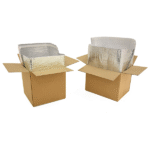
Insulated containers & EPP boxes: Use doublewalled foam boxes, vacuum insulated panels (VIPs) or lightweight Expanded Polypropylene (EPP) boxes. VIPs offer ultralow thermal conductivity and reduce shipping costs by up to 70 %. EPP boxes are reusable, durable and reduce waste.
Refrigerants: Choose gel packs for 0–8 °C shipments, dry ice for subzero transport, or PCM pods that absorb heat at specific temperatures. Condition refrigerants properly; an underfrozen gel pack can cause early excursions.
Highbarrier films & vacuum seal bags: These materials reduce oxygen exposure and dehydration. Vacuum sealing is ideal for long distances but requires strict temperature control.
Moistureproof wrapping: Wrap fillets or whole fish in plastic or foil before placing them on ice to prevent direct water contact.
Helpful decision tools
Check the details before you choose packaging
These quick tools can help you compare route risk, sizing needs, coolant choices, and packaging details before you request a quote.
Route Risk Checker
Review lane conditions before selecting packaging for real operating requirements.
Check route riskCompliance Checklist Generator
Build a practical checklist for packaging review, shipping, and documentation.
Build checklistCoolant & PCM Reference
Compare coolant and PCM options when a route needs added temperature support.
Compare optionsReusable pallet shippers: Equipped with VIPs and PCM pods, these containers support multiple cycles and integrate sensors.
Packaging workflow for fresh fish:
Rinse and clean fish at sea or dock; remove viscera if required.
Prechill in slurry ice for 30 minutes.
Pack on ice or gel packs in insulated containers; avoid leaving fish uncovered.
Seal and label packages; fill voids with padding to minimise air gaps and apply “Perishable” labels.
Transfer to cold storage or transport immediately to the processing facility.
Beware of overpacking: Too much ice can crush delicate fish; ensure proper cushioning.
Transport best practices
Precool vehicles: Precool refrigerated trucks or reefer containers to the target temperature before loading.
Route planning: Choose the fastest route between cold storage points and avoid extreme climates; schedule overnight runs when ambient temperatures drop. For chilled fish, consider air freight for 1–3 day delivery; reefer sea containers for bulk shipments over 2–4 weeks; express couriers for small parcels.
Maintain airflow: Stack boxes to allow cold air circulation and avoid blocking vents.
Continuous monitoring: Use IoT loggers or Bluetooth sensors to monitor temperature and humidity in real time and set alerts for deviations.
Documentation: Carry health certificates, catch certificates, HACCP compliance records and accurate HS codes for customs clearance.
Separate species and states: Don’t mix different seafood species or fresh and frozen products; mixing can cause crosscontamination and compromise quality.
Case study: An oyster farm switched from singleuse Styrofoam to reusable EPP containers with gel packs. The new system maintained temperature longer and reduced packaging costs by 30 %. Another fish distributor used sensors and AI to analyse route delays; after rerouting shipments, transit time decreased by 15 % and product losses fell by 20 %.
What regulations and standards apply to seafood cold chains in 2025?
A web of regulations governs seafood from catch to consumer. Understanding them prevents costly violations.
U.S. regulations
FDA Fish and Fishery Products Hazards and Controls Guidance: Provides stepbystep assistance for developing HACCP plans and identifying hazards.
Food Safety Modernization Act (FSMA): Includes the sanitary transportation rule, requiring clean vehicles and temperature control; the Foreign Supplier Verification Program (FSVP), requiring importers to verify that foreign suppliers meet U.S. standards; and the Food Traceability Rule (Section 204), mandating KDEs and compliance by July 20 2028.
Seafood HACCP regulation (21 CFR 123): Requires processors to conduct hazard analysis and implement controls; recordkeeping is critical.
European regulations
Regulation (EC) No 853/2004: Sets hygiene rules for foods of animal origin. Freezer vessels must freeze fish quickly to –18 °C and maintain holds at –18 °C; brinefrozen fish at –9 °C can only be canned. Operators must maintain temperature records and meet equipment standards.
ATP Agreement: Covers international carriage of perishable foodstuffs; requires certification of refrigerated vehicles and insulated equipment.
General Food Law (Regulation 178/2002) & Hygiene package (Regulations 852/2004 & 854/2004): Provide overarching requirements for food safety, traceability and official controls.
International and private standards
HACCP, GMP, SSOP: Recognised globally; necessary for export markets.
Global Food Safety Initiative (GFSI) standards: Include SQF, BRCGS, FSSC 22000; retailers use these to benchmark suppliers.
ISO 22000: Specifies a food safety management system combining HACCP principles with ISO’s management structure.
Customs and HS code updates
In 2025, classification codes for fish products changed. The U.S. Harmonized Tariff Schedule (HTS) requires 10digit codes from September, while the Gulf Cooperation Council (GCC) adopted 12digit codes from January. Correct classification avoids delays and fines. Seafood falls under HS Chapter 03; for example, frozen shrimp is 0303.61.00. Ensure commercial invoices and catch certificates reflect updated codes and follow WCO HS 2022 guidelines.
Tip: The de minimis threshold in the U.S. ends on August 29 2025, meaning lowvalue seafood parcels must undergo full customs declarations. Air freight can deliver chilled fish in 1–3 days, but reefer sea transport is costeffective for bulk shipments.
2025 trends and innovations in seafood cold chain management
The seafood cold chain is evolving rapidly. Market forecasts and technological breakthroughs reshape how fish is stored, transported and monitored.
Key developments
Market growth: The global cold chain logistics market is expected to grow from US $324.85 billion in 2024 to $862.33 billion by 2032 (≈13 % CAGR). In the seafood sector, demand for frozen products is surging as consumers seek convenience and extended shelf life.
IoT and ambient sensors: Batteryfree sensors and lowcost Bluetooth tags provide continuous data without frequent battery changes. Realtime monitoring reduces spoilage by enabling immediate corrective actions.
Artificial intelligence & route optimisation: AI analyses historical temperature and delay patterns, predicts risk zones and suggests optimal routes. It integrates with dynamic pricing and inventory management to reduce waste.
Blockchain & traceability: Blockchain creates immutable ledgers of temperature data and ownership transfers, enhancing transparency and trust. Combined with QR codes and RFID, it ensures that regulators and consumers can trace seafood from catch to plate.
Energyefficient refrigeration & sustainability: The Move to –15 °C initiative advocates storing frozen foods at –15 °C instead of –18 °C to save energy without compromising safety. Solarpowered refrigeration and ecofriendly refrigerants are gaining adoption. Reusable packaging reduces waste and aligns with circular economy goals.
Regulatory tightening: Retailers increasingly require detailed traceability and GFSIrecognised certifications; FSMA’s delayed compliance gives industry time to implement digital systems.
Resilience & climate adaptation: Investments in robust infrastructure and contingency planning help seafood businesses cope with extreme weather events and geopolitical disruptions.
Latest developments and market insights
HS code updates: 2025 introduces new HS codes for chilled fish; the GCC 12digit extension affects tariffs in Saudi Arabia and the UAE, while the US HTS mandates 10digit codes.
Case study: The EU approved a delegated regulation allowing tuna frozen in brine at –18 °C to be sold as fresh, replacing the previous –9 °C limit; freezer vessels must prove they can achieve –18 °C quickly. This change reflects improved freezing technology and aims to curb fraud.
Traceability extension: The FDA’s Food Traceability Rule compliance date is extended to July 20 2028, giving seafood companies more time to implement datadriven systems.
Market expansion: Cold chain investments in AsiaPacific and Latin America are growing fastest, reflecting rising seafood consumption and export opportunities.
What this means for you: To stay competitive, invest in IoT sensors, AI route planners and blockchainenabled traceability. Adopt energyefficient refrigeration and reusable packaging to meet sustainability targets. Keep abreast of HS code changes and regulatory deadlines to avoid delays and fines.
Frequently Asked Questions
Q1: What is the ideal temperature range for transporting fresh seafood?
Fresh seafood should be kept between 0 °C and 5 °C (32–41 °F), with the EU recommending 0–2 °C. Frozen seafood must remain at –18 °C or colder.
Q2: How can I ensure HACCP compliance for my seafood business?
Develop a HACCP plan that identifies hazards (e.g., time/temperature abuse) and establishes critical control points. Monitor temperatures continuously, document corrective actions and conduct regular audits.
Q3: What packaging is best for longdistance seafood shipments?
Use insulated containers with gel packs or dry ice and highbarrier films; vacuumsealed packaging can extend shelf life, but strict temperature control is essential.
Q4: When is the deadline for FSMA’s Food Traceability Rule?
The FDA extended the compliance date from January 20 2026 to July 20 2028.
Q5: Why shouldn’t I mix different seafood species in one box?
Different species have different fat contents and storage requirements; mixing them can cause crosscontamination and compromise quality.
Q6: How quickly should I chill fish after catch?
Immediately. Place fish into ice or a chilled slurry within minutes to remove field heat and slow bacterial growth.
Suggestion
Key takeaways:
Maintaining cold chain integrity for fresh seafood requires strict adherence to temperature rules (0–5 °C for fresh, –18 °C for frozen), reliable equipment (blast chillers, freezers, refrigerated vehicles, insulated boxes, ice machines, sensors) and robust traceability systems built around HACCP and FSMA 204 requirements. Prechill products and containers, use appropriate packaging materials, monitor temperature continuously and keep digital records for at least one year. Adopt modern technologies like IoT sensors, AI route optimisation and blockchain to gain realtime visibility and satisfy increasingly strict regulations.
Actionable next steps:
Audit your current cold chain: Identify weak points where temperature control or traceability could fail. Use data loggers to validate actual temperatures.
Upgrade equipment & packaging: Invest in compliant freezers, blast chillers, insulated containers and realtime monitoring devices. Replace singleuse foam boxes with reusable VIP/EPP containers.
Implement a digital traceability system: Map critical tracking events, assign unique identifiers (QR/RFID), standardise data formats and integrate sensors for realtime monitoring.
Train your team: Ensure everyone—from fishers to drivers—understands proper icing, packaging, cleaning and recordkeeping procedures. Offer refreshers on HACCP and FSMA/EU requirements.
Plan for 2025–2028 changes: Update HS codes, prepare for the FSMA 204 compliance deadline and adopt energyefficient technologies. Engage with certified logistics providers to maintain compliance across borders.
About Tempk
Who we are:
Tempk specialises in cold chain packaging and logistics for seafood, pharmaceuticals and other temperaturesensitive products. We provide insulated containers, gel packs, PCM pods, vacuum insulated panels and integrated monitoring systems that help clients meet stringent temperature requirements and regulatory standards. Our solutions emphasise sustainability with reusable materials and ecofriendly refrigerants.
Call to action:
Ready to optimise your seafood cold chain? Contact Tempk’s cold chain experts for a customised evaluation and discover how our packaging and monitoring solutions can safeguard your fresh seafood while meeting 2025–2028 regulations.