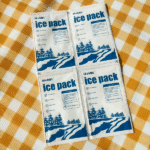
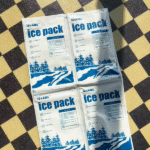
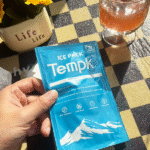
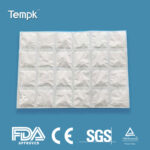
If you’re planning insulated box export, you’re really planning for delays, handoffs, and heat spikes. Your shipment might sit on a hot airport ramp or wait in customs. That’s why insulated box export packaging must perform, not just “look insulated.” Most lanes target 2–8°C for chilled and below -18°C for frozen, so your solution must match your temperature band and duration.
This article will help you:
- Build an insulated box export packout recipe that survives real delays
- Choose insulated box export materials without paying for unnecessary performance
- Prepare insulated box export documentation that clears customs with fewer questions
- Prove results using insulated box export testing buyers recognize
- Quote confidently with insulated box export pricing that protects your margin
What makes insulated box export different from local shipping?
Insulated box export is harder because “unknown time” is normal. You lose control during handoffs between truck, airline, and broker. Your packaging must hold temperature even when nobody is watching.
Export adds more ambient zones than most teams expect. Think of it like ice cream on a spring day. It melts fastest during the “unplanned moments,” not the planned ones. Designing insulated box export for the worst handoff reduces claims fast.
Where do temperature excursions happen in insulated box export lanes?
Most excursions happen at the edges: pickup windows, ramps, and customs holds. Design insulated box export for those weak points, not the best-case truck.
| Lane step | What can go wrong | What you can do | What it means for you |
|---|---|---|---|
| Pickup & consolidation | Waiting time grows | Add buffer hours | Fewer surprise “warm starts” |
| Airport handoff | Sun + tarmac heat | Use a reflective cover | Less heat spike during loading |
| Customs clearance | Unplanned storage | Use longer-duration packout | More time to fix paperwork |
Practical tips and advice
- Multi-handoff lanes: plan insulated box export duration as shipping time + 24 hours.
- Weekly export lanes: track delay patterns and update your packout each quarter.
- No control at storage points: use a data logger to learn where heat enters.
Real example: A seafood exporter added a reflective cover and improved gel-pack conditioning. Claims dropped after a long customs delay.
Which temperature range should your insulated box export protect?
Your insulated box export design starts with one decision: your allowed temperature range. Most exports fall into three practical bands—chilled (2–8°C), controlled room temperature (15–25°C), and frozen (below -18°C)—and the right band comes from your product label and customer agreement.
Imagine your product is a person with a comfort zone. Some “feel sick” if it gets warm. Others get damaged if it gets too cold. Your insulated box export job is to keep that comfort zone stable during waiting time.
A quick temperature map for insulated box export
| Product type | Common target band | Hidden risk | What it means for you |
|---|---|---|---|
| Chilled pharma | 2–8°C | Warm starts | Pre-condition everything |
| Fresh food | 0–4°C | Partial freezing | Avoid “too cold” coolants |
| Frozen goods | < -18°C | Thaw–refreeze cycles | Add duration buffer |
Practical tips and advice
- Chilled shipments: don’t place frozen gel packs directly against product.
- 15–25°C shipments: protect against heat spikes, not just the average.
- Frozen shipments: treat door-to-door delays as normal, not rare.
Real example: A diagnostics exporter switched to a ~5°C phase change material and reduced “too cold” complaints.
How do you choose materials for insulated box export packaging?
Insulated box export insulation is a system, not a single material. You balance heat flow, weight, space, cost, and sustainability goals. Common choices include EPS, EPP, PU, and VIP.
Think of insulation like a winter coat. Thick can work, but it may be bulky. High-tech can be thin and warm, but costs more. In insulated box export, the “best” choice is the coat that fits your route.
EPS vs EPP vs PU vs VIP for insulated box export
| Material | Typical hold time | Strength feel | What it means for you |
|---|---|---|---|
| EPS foam | 24–48 hours | Light, can crack | Low cost, short routes |
| EPP foam | 48–72 hours | Springy, tough | Reusable and durable |
| PU foam | Lane-dependent | Rigid, strong | Longer duration, heavier build |
| VIP panels | 72–120 hours | Thin, needs care | Smaller box, fewer coolants |
Practical tips and advice
- Air freight pricing by size: test a VIP-based insulated box export design to cut volume.
- Crush risk: choose tougher EPP or add corner protection.
- Simpler disposal: consider fiber liners when performance needs are moderate.
Real example: A nutraceutical brand lowered total export cost by reducing dimensional weight with a thinner liner system.
How do you build an insulated box export packout that survives delays?
A good insulated box export packout buys you time. Coolant does the “work,” and insulation slows outside heat. Most failures come from small process gaps: warm product loads, unconditioned coolant, or poor placement.
Helpful decision tools
Check the details before you choose packaging
These quick tools can help you compare route risk, sizing needs, coolant choices, and packaging details before you request a quote.
Compliance Checklist Generator
Build a practical checklist for packaging review, shipping, and documentation.
Build checklistBox Liner & Pallet Cover Sizing
Check box liner and pallet cover sizing logic for insulated packaging projects.
Estimate sizingPackaging Selector
Compare insulated packaging options by product, route, and temperature need.
Find packagingThink of it like packing a lunchbox for a long day. If the ice pack only touches one side, you get hot spots. Even coverage makes insulated box export more stable.
Packout recipe for insulated box export: placement that keeps you in range
Start with three inputs: product start temperature, outside temperature profile, and required duration. Then choose coolant: gel packs, PCM, or dry ice. Place coolant around the payload, and avoid direct contact if freezing risk exists.
| Packout element | Best practice | Common mistake | What it means for you |
|---|---|---|---|
| Product | Load at target temp | Loading warm | Shorter hold time |
| Coolant | Condition to spec | “Any freezer is fine” | Big performance drift |
| Placement | Even coverage | One-side stacking | Hot spots & cold spots |
2026 insulated box export developments and trends
In 2026, insulated box export buyers expect reliability and responsibility at the same time. Reliability means lane-based qualification and shareable temperature data. Responsibility means less waste and clearer materials handling.
Latest developments you should watch
- EU packaging compliance pressure: The EU Packaging and Packaging Waste Regulation (PPWR) entered into force on 11 Feb 2025, with a general application date 18 months later (mid-Aug 2026).
- Proof culture is stronger: buyers increasingly ask “show me the test,” making thermal validation more valuable.
- Right-sized cartons win: smaller cartons reduce dimensional weight and emissions.
- Reuse-ready systems grow: return loops are expanding where reverse logistics is stable.
Common questions about insulated box export
Q1: How long can insulated box export packaging hold temperature?
Many designs hold temperature from about 24 to 120 hours, depending on insulation and packout.
Q2: What is the best insulated box export option for 2–8°C?
Start with a qualified shipper using conditioned gel packs or a ~5°C PCM. Choose based on lane duration and heat risk.
Q3: Do I need a data logger for insulated box export?
If your product is sensitive or high value, yes. A basic logger helps prove conditions and reduce disputes.
Q4: What is the most overlooked step in insulated box export?
Conditioning and staging. A warm product load can cut hold time fast.
Q5: What’s the fastest way to reduce delays in insulated box export documentation?
Use a one-page PCS and keep SKU/HS code/quantities consistent across every file.
Summary and practical recommendations
Insulated box export works when you design for real life, not ideal schedules. Pick the right temperature band, match insulation and coolant to your lane, and standardize packout steps. Most failures come from process variation, not materials. Use simple documentation and temperature data to cut customs friction and claims. Review results quarterly to stay aligned with lane and season changes.
Your next steps (simple 4-step plan)
- Score your lane risk (use the tool above).
- Choose a target duration (transit time + buffer).
- Run one controlled test with a realistic payload.
- Ship with a logger on your next 10 exports, then update packouts from what you learn.
About Tempk
We focus on temperature-controlled packaging that your team can run consistently. We support insulated box export with configurable sizes, clear packout instructions, and testing support built for real export lanes. We also help you prepare the labeling and documentation inputs that customers and carriers commonly expect—so you ship with fewer surprises and less waste.
CTA: If you’re planning a new insulated box export lane, gather your temperature band, lane duration, and summer/winter destinations. Then contact our team for a packout recommendation and a simple qualification roadmap.