If you’re buying in bulk, the right ice chest manufacturer can protect your product quality and reduce customer complaints. You’ll get better results when you start with a clear cold target—like ≤4°C / 40°F for food or 2–8°C for many vaccine lanes—and then demand proof with test graphs. In 2026, the best wins come from predictable sealing, consistent insulation, and disciplined QC, not a “nice-looking sample.”
What you’ll get in this guide
How to define a cold target using ice chest manufacturer for food shipping requirements
How to compare a rotomolded ice chest manufacturer vs an injection molded ice chest manufacturer
How to judge insulation options (PU, EPS, EPP, VIP) with practical meaning
What documents a FDA/EU food-contact compliant ice chest manufacturer should provide
A buyer-friendly decision tool, QC checklist, and a simple ice/gel estimate method
How do you pick an ice chest manufacturer that won’t fail in transit?
Core answer: Pick an ice chest manufacturer by starting from your “cold goal,” not the catalog size. Your cold goal is your temperature band, hold time, ambient extremes, and how often the lid opens. When you can say your requirement in one sentence, you can quickly eliminate factories that only sell marketing claims.
A simple cold goal example sounds like this: “Keep payload at 2–8°C for 48 hours in summer lane conditions.” Or for food shipping: “Keep seafood at or below 4°C / 40°F for 24 hours with frequent access.” Your ice chest manufacturer should respond with a test plan and data, not just thicker walls.
Ice chest manufacturer “Fit Score” (90-second self-check)
Give yourself 1 point for each “Yes.”7–9: ready to shortlist. 0–6: tighten specs before you request quotes.
Do you know your target temperature band and duration?
Do you know worst-case ambient temperature for your shipping lanes?
Do you know payload mass and starting temperature?
Do you know expected lid openings during handling?
Have you chosen rotomolded vs injection molded (or a mix)?
Do you need food-contact or medical documentation for your markets?
Do you require thermal test evidence with logger graphs?
Do you have a landed-cost target and MOQ range?
Do you need customization (logo, accessories, packaging) with a clear freeze date?
| Fit Score Area | What to prepare | What to ask the ice chest manufacturer | What it means for you |
|---|---|---|---|
| Temperature spec | band + duration + ambient | “Show test curves at my lane temps.” | Fewer surprises after launch |
| Compliance | destination markets | “Provide a document pack for my region.” | Lower regulatory and customer risk |
| Performance proof | acceptance criteria | “Provide logger graphs + protocol.” | Fewer claims and returns |
Practical tips you can use today
If your spec is vague: create one “summer” and one “winter” profile.
If your payload starts warm: pre-chill product first—insulation can’t “create cold.”
If your lid opens a lot: split high-access items into a separate container.
Example scenario (illustrative): A meal-kit team changed its spec from “stays cold” to “≤4°C for 36 hours,” then removed two suppliers that couldn’t show logger graphs.
What does an ice chest manufacturer really control?
Core answer: An ice chest manufacturer controls the whole thermal system, not just a plastic box. Small variations in foam fill, lid flatness, gasket compression, and latch alignment can turn a “48-hour promise” into “arrived lukewarm.”
Think of an ice chest like a powerless fridge. The insulation is your “compressor,” and the gasket is your “door seal.” If either is weak, cold leaks out like air from a balloon.
Why manufacturing precision matters in an ice chest manufacturer
A reliable ice chest manufacturer designs for repeatability—so every unit performs like the last one. Without process control, you get corner thin spots, foam voids, and lid micro-gaps that show up as temperature spikes.
| Manufacturing Factor | Low-Control Factory | Professional Manufacturer | What it means for you |
|---|---|---|---|
| Insulation density | inconsistent | controlled tolerance | More predictable hold time |
| Lid fit accuracy | manual trimming | controlled fixtures/CNC | Fewer temperature leaks |
| Seal compression | unverified | tested/standardized | Better cold retention |
| Batch consistency | variable | traceable lots | Lower quality risk |
Practical tips and suggestions
Ask for variance (results across multiple units), not one “golden sample.”
Request a cutaway photo of foam fill; voids are easier to spot than explain.
Ask how they detect foam underfill and how they contain defects by batch.
Example scenario (illustrative): Two suppliers used similar foam thickness. The one with better lid alignment delivered more stable temperatures in long transit.
Rotomolded or injection molded—what should your ice chest manufacturer build?
Core answer: Neither process is “always better.” A rotomolded ice chest manufacturer often wins on rugged, seamless shells. An injection molded ice chest manufacturer often wins on high-volume consistency and detailed features. Your lane, handling risk, and volume decide.
If your product faces drops, heavy stacking, and field abuse, rotomolding often fits. If your priority is scale, appearance, and tight tolerances at volume, injection molding can be a strong choice.
What the process choice changes for you
| Build approach | Typical strengths | Typical tradeoffs | What to ask the ice chest manufacturer |
|---|---|---|---|
| Rotomolded shell | seamless, rugged body | slower cycles, heavier shells | “Show wall thickness control + QC plan.” |
| Injection molded shell | precise, scalable | tooling complexity, seams | “Show seam design + leak testing.” |
| Panel assembly | fast custom sizing | more joints | “Show joint sealing method + durability tests.” |
Practical tips and suggestions
If you expect rough handling, prioritize impact resistance and hardware durability.
If you need fast scale, ask about cycle time, mold cavitation, and capacity planning.
If you need differentiation, use modular customization first (logo, color, accessories).
Example scenario (illustrative): A jobsite distributor started with rotomolded shells for durability, then added molded-in tie-down points for repeat orders.
Which insulation should an insulated ice chest manufacturer offer in 2026?
Core answer: Insulation buys you time. Lower thermal conductivity usually means longer hold time at the same thickness. But uniform foam fill and seal quality often matter as much as the material choice.
Most commercial insulated designs use PU foam, EPS, EPP, or VIP zones. VIP can be powerful but requires careful protection and design discipline.
PU foam vs EPS vs EPP vs VIP (plain-language comparison)
| Insulation option | Typical thermal conductivity (range) | Strengths | What it means for you |
|---|---|---|---|
| PU foam | ~0.02–0.03 W/m·K | strong insulation per thickness | smaller box for same hold time |
| EPS | ~0.032–0.038 W/m·K | cost-effective | often needs more thickness |
| EPP | ~0.038–0.040 W/m·K | tough, reusable-friendly | good for reuse cycles and abuse |
| VIP zones | ~0.004–0.008 W/m·K (when new) | premium performance | longer holds, higher handling care |
Practical tips for insulation decisions
If you ship 48–72+ hours, ask whether your ice chest manufacturer can add VIP zones safely.
If you run reuse programs, prioritize low water absorption and easy cleaning surfaces.
If cost is tight, EPS can work—but demand thicker walls and better sealing.
Example scenario (illustrative): A seafood shipper upgraded from thin-wall EPS to PU-foamed walls and reduced gel-pack weight while holding the same temperature band.
Helpful decision tools
Check the details before you choose packaging
These quick tools can help you compare route risk, sizing needs, coolant choices, and packaging details before you request a quote.
Route Risk Checker
Review lane conditions before selecting packaging for real operating requirements.
Check route riskPackaging Selector
Compare insulated packaging options by product, route, and temperature need.
Find packagingCoolant & PCM Reference
Compare coolant and PCM options when a route needs added temperature support.
Compare optionsWhat compliance documents should an ice chest manufacturer provide?
Core answer: Compliance documents prove your ice chest manufacturer meets food-contact, material safety, and regulatory requirements for your destination markets. In 2026, buyers increasingly ask for document packs before placing orders.
A professional ice chest manufacturer should provide: material specifications, food-contact declarations (FDA/EU as applicable), restricted substance controls, QC plans, and batch traceability records.
Compliance document checklist for ice chest manufacturer sourcing
| Document type | What it covers | Why it matters | What to ask |
|---|---|---|---|
| Material spec sheet | resin type, additives | confirms material suitability | “Provide material data sheets.” |
| Food-contact declaration | FDA/EU compliance | regulatory requirement | “Provide food-contact certificates.” |
| Restricted substance control | heavy metals, phthalates | safety assurance | “Provide RoHS/REACH declarations.” |
| QC plan | inspection points, criteria | quality consistency | “Share your QC process document.” |
| Batch traceability | lot numbers, dates | recall capability | “How do you track batches?” |
Practical tips for compliance
Request document packs before you finalize supplier selection.
Verify certificates are current and specific to your product type.
Ask how the ice chest manufacturer handles document updates and renewals.
Example scenario (illustrative): A food distributor avoided a recall by requiring batch traceability from their ice chest manufacturer before launch.
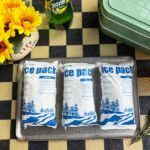
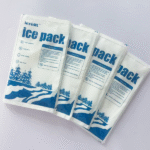
How to estimate ice or gel pack needs for your ice chest
Core answer: Ice or gel pack quantity depends on your temperature target, hold time, ambient conditions, and payload characteristics. A professional ice chest manufacturer can help you calculate requirements based on thermal testing data.
Simple estimation approach
Start with your cold goal (temperature band + duration + ambient).
Calculate payload thermal mass (weight × specific heat).
Estimate heat gain through insulation (surface area × conductivity × temperature difference).
Add safety margin for lid openings and handling.
Ice/gel pack estimation reference
| Factor | Impact on ice/gel needs | What to consider | What it means for you |
|---|---|---|---|
| Hold time | longer = more ice | duration requirements | plan for worst-case scenarios |
| Ambient temperature | hotter = more ice | seasonal variations | summer vs winter profiles |
| Payload mass | heavier = more thermal mass | product weight | pre-chilled payload helps |
| Lid openings | more = more ice | access frequency | separate high-access items |
Practical tips for ice/gel estimation
Ask your ice chest manufacturer for thermal test data with different ice/gel configurations.
Run pilot tests with your actual payload and handling conditions.
Build in safety margin for unexpected delays or temperature spikes.
Example scenario (illustrative): A meal-kit company reduced gel pack costs by pre-chilling products and optimizing pack placement based on thermal test data.
10-point QC checklist for ice chest manufacturer evaluation
Use this checklist when evaluating any ice chest manufacturer. Score each point and compare suppliers objectively.
| QC Point | What to check | Why it matters | What to ask |
|---|---|---|---|
| 1. Thermal test data | logger graphs, protocols | performance proof | “Show test curves for my profile.” |
| 2. Batch consistency | variance across units | predictable quality | “Show results from multiple batches.” |
| 3. Foam fill quality | density, voids | insulation integrity | “Show cutaway photos.” |
| 4. Lid seal | gasket compression | cold retention | “How do you test seal quality?” |
| 5. Hardware durability | latches, hinges | long-term reliability | “Show cycle testing results.” |
| 6. Material compliance | food-contact, safety | regulatory requirement | “Provide compliance documents.” |
| 7. Traceability | lot numbers, dates | recall capability | “How do you track production?” |
| 8. Defect handling | containment, correction | quality control | “How do you handle defects?” |
| 9. Packaging protection | transit damage prevention | arrival condition | “Show packaging specs.” |
| 10. Communication | responsiveness, clarity | partnership quality | “What’s your response time?” |
How to use this checklist
Score each point 0–2 (0 = not provided, 1 = partial, 2 = complete).
Total score: 16–20 = strong candidate, 10–15 = needs improvement, below 10 = reconsider.
Compare suppliers using the same criteria for objective evaluation.
How to improve ice chest performance without changing the box
Core answer: You can often extend hold time and reduce temperature spikes through operational changes, without buying a new ice chest. Pre-chilling, barrier placement, and access management are low-cost improvements.
Quick performance improvements
| Improvement | What to do | Why it works | What it means for you |
|---|---|---|---|
| Pre-chill | cool before loading | slower warm-up | longer hold time |
| Add barriers | liners/dividers | less convection | steadier temps |
| Reduce openings | separate access items | less heat gain | fewer spikes |
Example scenario (illustrative): A catering team split drinks from food and reduced warm spikes during service.
2026 ice chest manufacturer trends you should plan for
Trend overview: In 2026, buyers reward predictable performance and verifiable documentation. Your ice chest manufacturer is increasingly judged like a quality-critical supply partner, not a commodity vendor.
Latest developments at a glance
Verification over claims: repeatable test curves across batches are becoming standard.
Material transparency: more RFQs require traceable lots and controlled declarations.
Design for logistics: nesting, stack strength, and packaging optimization are part of scorecards.
Repairability: modular parts (gaskets, latches) reduce lifecycle cost in reuse programs.
Market insight: Customers don’t reward “technical brilliance” if shipments arrive damaged or warm. Predictability reduces support tickets, returns, and negative reviews.
Frequently Asked Questions
Q1: What should I ask an ice chest manufacturer to prove ice retention? Ask for temperature logger graphs from a defined profile, plus photos of pack layout and sensor placement across multiple units and batches.
Q2: Is thicker insulation always better with an ice chest manufacturer? No. Uniform density and a tight lid seal often matter more than thickness alone. Poor foam fill can erase thickness gains.
Q3: Rotomolded or injection molded—what should I choose? Choose based on handling risk and volume. Rotomolding often favors ruggedness; injection molding often favors high-volume consistency.
Q4: What should a FDA/EU food-contact compliant ice chest manufacturer provide? A document pack: material specs, food-contact declarations, restricted substance controls (when relevant), QC plan, and batch traceability.
Q5: What’s the safest way to start custom ice chest manufacturing? Start from a proven platform, freeze specs early, validate with a pilot batch, and use phase gates (design freeze → sample → pilot → scale).
Q6: How can I reduce returns when sourcing from an ice chest manufacturer? Prioritize seal quality, repeatable testing, and packaging protection. Small gasket and carton upgrades can cut complaints fast.
Summary and Recommendations
Choosing an ice chest manufacturer in 2026 is about predictable performance, not a perfect-looking sample. Start with a clear cold goal, then demand repeatable proof: logger graphs, defined test profiles, and batch consistency controls. Compare suppliers using the same scope, and treat QC like a process, not a final inspection.
Your next step (simple plan)
Write a one-page requirement sheet (temperature band, duration, ambient extremes, payload, lid openings).
Send the 10-point QC checklist to every ice chest manufacturer you shortlist.
Request repeatable thermal results across multiple units and batches.
Run a pilot batch before you scale volume.
About Tempk
At Tempk, we design and manufacture insulated cold-chain packaging, including ice chests and reusable thermal solutions. We focus on repeatable insulation performance, seal consistency, and documentation discipline you can use across markets. If you share your target temperature band, hold time, lane conditions, and expected order volume, we can recommend a verification plan and a practical specification checklist.
Next step: Share your cold goal and shipping lane details, and we’ll help you map the right ice chest configuration and qualification steps.