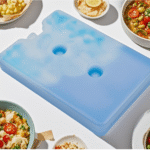
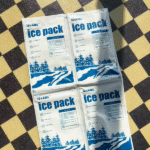
If you’re choosing a cold gel compress UK manufacturer, you’re buying fewer complaints and smoother compliance. The NHS advises icing sprains and strains for up to 20 minutes every 2 to 3 hours, with a tea towel barrier, which quickly exposes stiff packs and weak seals. In 2026, you also need clarity on Great Britain’s CE timelines, which include dates like 30 June 2028 and 30 June 2030 depending on device type. This guide turns those realities into a practical supplier checklist, based on your uploaded drafts.
This guide will help you:
Shortlist a cold gel compress UK manufacturer using a low-risk checklist
Choose between medical-grade cold gel compress UK and consumer-grade builds
Set acceptance tests for a reusable cold gel compress bulk order
Plan GB/NI compliance without re-labelling surprises
Use 2026 sustainability expectations to win procurement confidence
What makes a cold gel compress UK manufacturer reliable in 2026?
A reliable cold gel compress UK manufacturer controls materials, gel formulation, sealing, and documentation—then proves it with repeatable checks. Your drafts highlight that buyers increasingly prioritise traceable raw materials and consistent QC in 2026.
That reliability shows up as fewer leaks, stable cooling, and fewer returns.
From your perspective, “reliable” means you can reorder in six months and the product behaves the same. It also means the supplier can explain decisions in plain English, not factory jargon. If they can’t explain it, they likely can’t control it.
How is UK manufacturing different for a cold gel compress UK manufacturer?
UK-focused manufacturing is often chosen for documentation discipline and consistency. Your draft compares UK manufacturing to low-cost imports using practical factors like in-house gel control, audits, and batch traceability.
| Manufacturing factor | UK-focused approach | Low-cost import risk | What it means for you |
|---|---|---|---|
| Gel formulation control | Often in-house | Often outsourced | More consistent cooling |
| Compliance records | Usually documented | Sometimes missing | Lower market risk |
| Quality audits | Routine cadence | Inconsistent cadence | Predictable batches |
| Batch traceability | Standardised | Rare | Faster issue resolution |
Practical tips you can act on today
Request a sample lot code and ask how long records are retained.
Ask for a one-page QC summary: what’s checked, how often, and who signs off.
Confirm whether the supplier can provide a UKCA or CE declaration for your intended market.
Medical-grade cold gel compress UK vs consumer-grade: what’s the real difference?
Your draft explains that “medical-grade” often means registered as a medical device, with QMS controls, documented risk management, and IFU requirements. Consumer-grade products may skip these steps.
| Attribute | Medical-grade cold gel compress UK | Consumer-grade |
|---|---|---|
| Regulatory status | Registered as medical device | General product safety only |
| QMS expectation | ISO 13485 common | ISO 9001 or none |
| Risk management | Documented per ISO 14971 | Often informal |
| Instructions for use | Required, regulated | Optional, variable |
| Post-market surveillance | Required | Rarely formalised |
When to choose medical-grade
You’re selling to NHS trusts or clinical buyers.
Your product claims therapeutic benefit (e.g., “reduces swelling”).
You need audit-ready documentation for procurement compliance.
When consumer-grade may be enough
You’re selling comfort-only products (e.g., “cooling relief”).
Your channel is retail or e-commerce with no clinical claims.
You accept higher risk of returns and complaints.
How to set acceptance tests for a reusable cold gel compress bulk order
Your draft recommends defining acceptance tests before any bulk PO. This section turns that into a repeatable checklist.
| Test | What it checks | Pass criteria (example) |
|---|---|---|
| Leak test | Seal integrity | 0 leaks in 50-unit sample |
| Weight tolerance | Gel fill consistency | ±5% of declared weight |
| Flexibility after freezing | Usability on joints | Bends 90° without cracking |
| Packaging integrity | Transit damage risk | No punctures after drop test |
How to run these tests
Agree on sample size (e.g., 50 units per batch).
Define pass/fail thresholds in writing.
Document results and retain for 12 months.
Your draft notes that “if you can’t test it, you can’t control it.”
GB/NI compliance: what a cold gel compress UK manufacturer should explain
Your draft highlights that GB and NI have different regulatory routes. A reliable cold gel compress UK manufacturer should be able to explain which route applies to your product.
| Market | Marking | Regulatory body | Key deadline (example) |
|---|---|---|---|
| Great Britain | UKCA (or CE to defined timelines) | MHRA | 30 June 2028 / 30 June 2030 |
| Northern Ireland | CE (under EU MDR) | EU Notified Body | Ongoing EU MDR compliance |
Questions to ask your supplier
Which marking applies to my product?
Can you provide a declaration of conformity?
What happens if I want to sell in both GB and NI?
Your draft notes that “compliance is not a one-time event—it’s a supply chain discipline.”
2026 sustainability expectations: what buyers now ask
Your draft notes that NHS Supply Chain says 62% of NHS England’s carbon footprint comes from procured goods and services. This is driving new questions in tenders.
| Sustainability factor | What buyers ask | What suppliers should show |
|---|---|---|
| Carbon Reduction Plan | Do you have one? | Published plan with targets |
| Net Zero Commitment | What’s your timeline? | Stated commitment and milestones |
| Packaging recyclability | Is it recyclable? | Material breakdown and recycling codes |
| Product durability | How many cycles? | Tested freeze-thaw cycle count |
How to use this in supplier selection
Ask for a one-page sustainability summary.
Check if the supplier is registered on NHS Supply Chain’s sustainability portal.
Your draft notes that “sustainability is now a procurement filter, not just a nice-to-have.”
Private label cold gel compress UK: what to expect from a manufacturer
Your draft outlines a typical private label workflow. Here’s a summary.
| Stage | What happens | Typical timeline |
|---|---|---|
| Spec agreement | Size, gel type, packaging | 1–2 weeks |
| Artwork approval | Label/carton design | 1–2 weeks |
| Sample production | Pre-production samples | 2–4 weeks |
| Bulk production | Full order | 4–8 weeks |
What to confirm before starting
MOQ (minimum order quantity) and lead time.
Who owns the artwork and tooling?
What’s the reorder process?
Your draft notes that “private label is a partnership, not a transaction.”
Supplier audit checklist: what to verify before placing a bulk order
Your draft recommends a pre-order audit. Here’s a checklist.
| Audit area | What to check | Red flag |
|---|---|---|
| QMS certification | ISO 13485 or ISO 9001 | No certificate or expired |
| Batch records | Traceability and retention | No lot coding |
| Complaint handling | Documented process | No written procedure |
| Regulatory knowledge | UKCA/CE understanding | Can’t explain market route |
How to run a remote audit
Request a video call walkthrough of the production line.
Ask for sample batch records (redacted if needed).
Confirm who handles complaints and how they’re tracked.
Your draft notes that “an audit is cheaper than a recall.”
What’s changing in 2026 for cold gel compress UK manufacturers?
Your draft identifies several regulatory and market shifts. Here’s a summary.
Regulatory: GB is moving toward UKCA-only marking, with defined CE timelines. MHRA guidance on PMS is becoming clearer.
Procurement: NHS buyers are asking more sustainability questions. Carbon Reduction Plans are becoming table stakes.
Quality: Buyers are setting tighter acceptance tests. Leak rates and flexibility are under more scrutiny.
Your draft summarises this as “the bar is rising, but the rules are clearer.”
How to compare cold gel compress UK manufacturers: a scoring framework
Your draft suggests a weighted scoring model. Here’s an example.
| Criterion | Weight | Supplier A | Supplier B |
|---|---|---|---|
| QMS certification | 20% | ISO 13485 | ISO 9001 |
| Batch traceability | 15% | Full lot coding | Partial |
| Regulatory knowledge | 15% | Strong | Basic |
| Sustainability | 10% | Published CRP | None |
| Lead time | 10% | 4 weeks | 8 weeks |
| Price | 30% | Higher | Lower |
How to use this
Score each supplier on each criterion (e.g., 1–5).
Multiply by weight and sum.
Use the result to guide (not replace) your decision.
Your draft notes that “the cheapest supplier is rarely the cheapest in the long run.”
What to expect from a cold gel compress UK manufacturer in 2026
Your draft outlines a set of baseline expectations. Here’s a summary.
Documentation: Batch records, declarations of conformity, and IFUs should be available on request.
Communication: The supplier should be able to explain their QMS, regulatory status, and sustainability position in plain English.
Flexibility: The supplier should offer stock, make-to-order, or hybrid supply models.
Support: The supplier should help you navigate GB/NI compliance and private label workflows.
Your draft summarises this as “a good supplier makes your job easier, not harder.”
Regulatory snapshot: what’s live and what’s coming
Your draft tracks regulatory changes. Here’s a snapshot.
GB: UKCA marking is the long-term route. CE marking is accepted to defined timelines (e.g., 30 June 2028, 30 June 2030). MHRA guidance on PMS is being updated.
NI: CE marking under EU MDR continues. No UKCA requirement for NI-only sales.
Sustainability: NHS England’s guidance on Carbon Reduction Plans and Net Zero Commitments is shaping procurement.
Your draft notes that “regulatory change is a constant—build flexibility into your supply chain.”
What buyers are asking in 2026
Your draft identifies common buyer questions. Here’s a summary.
Compliance: Can you provide a declaration of conformity? What marking applies?
Quality: What’s your leak rate? How do you test flexibility?
Sustainability: Do you have a Carbon Reduction Plan? What’s your Net Zero timeline?
Supply: What’s your lead time? Do you offer stock programs?
Your draft notes that “buyers are more informed than ever—be ready to answer.”
How MHRA guidance is shaping cold gel compress UK sourcing
Your draft references MHRA guidance on medical devices. Here’s what matters.
PMS requirements: The 2024 PMS regulations are now in force. Suppliers should have documented post-market surveillance processes.
CE timelines: MHRA has published specific timelines for CE acceptance on the GB market.
Vigilance: Suppliers should have a process for reporting serious incidents.
Your draft notes that “MHRA guidance is your compliance baseline—read it.”
How NHS procurement is evolving
Your draft tracks NHS procurement trends. Here’s a summary.
Sustainability: NHS Supply Chain says 62% of NHS England’s carbon footprint comes from procured goods and services. Carbon Reduction Plans are now expected.
Quality: Tenders are asking for documented QMS, batch traceability, and acceptance test results.
Value: Price is still important, but total cost of ownership (including returns and complaints) is gaining weight.
Your draft notes that “NHS procurement is moving from lowest price to best value.”
Helpful decision tools
Check the details before you choose packaging
These quick tools can help you compare route risk, sizing needs, coolant choices, and packaging details before you request a quote.
Insulation Material Drop Resistance
Review drop resistance and handling factors before choosing insulation materials.
Check resistanceDry Ice Calculator
Estimate dry ice needs for frozen or ultra-cold shipments before packing.
Estimate dry icePackaging Selector
Compare insulated packaging options by product, route, and temperature need.
Find packagingWhat’s next for cold gel compress UK manufacturers?
Your draft identifies several trends. Here’s a summary.
Regulatory: Expect continued movement toward UKCA-only marking, with clearer PMS expectations.
Sustainability: Expect more questions on carbon, packaging, and product durability.
Quality: Expect tighter acceptance tests and more scrutiny on leak rates and flexibility.
Supply chain: Expect more demand for hybrid supply models (stock + make-to-order).
Your draft summarises this as “the market is professionalising—suppliers who adapt will win.”
How to use this guide
Your draft suggests a practical workflow. Here’s a summary.
Step 1: Define your use case (sports, clinic, retail, workplace).
Step 2: Choose your regulatory route (GB, NI, or both).
Step 3: Set your acceptance tests (leak, weight, flexibility, packaging).
Step 4: Score potential suppliers using a weighted framework.
Step 5: Run a pre-order audit (remote or on-site).
Step 6: Place a staged order (samples → pilot → bulk).
Your draft notes that “a structured process reduces risk and speeds up decisions.”
Summary: what to look for in a cold gel compress UK manufacturer
Your draft identifies the key attributes. Here’s a checklist.
QMS: ISO 13485 or ISO 9001, depending on your market.
Traceability: Lot coding on every unit or inner pack.
Regulatory: Clear understanding of UKCA/CE routes and timelines.
Sustainability: Published Carbon Reduction Plan and Net Zero Commitment.
Communication: Able to explain decisions in plain English.
Flexibility: Stock, make-to-order, or hybrid supply models.
Your draft summarises this as “a good supplier is a partner, not just a vendor.”
Appendix: regulatory and sourcing references
Your draft includes several references. Here’s a summary.
NHS advice on sprains and strains: The NHS advises using an ice pack for up to 20 minutes every 2 to 3 hours, with a tea towel barrier.
GOV.UK guidance on medical devices: GOV.UK lists specific CE timelines for the GB market, including 30 June 2028 and 30 June 2030 for different device categories.
MHRA guidance on PMS: MHRA guidance links to the 2024 PMS regulations and reflects coming into force updates in June 2025.
NHS England sustainability guidance: NHS England’s guidance details Carbon Reduction Plan and Net Zero Commitment requirements in procurement.
NHS Supply Chain carbon footprint: NHS Supply Chain says 62% of NHS England’s carbon footprint comes from procured goods and services.
ISO 13485: ISO 13485 is a recognised medical device QMS standard.
Your draft notes that “references are your compliance evidence—keep them current.”
Appendix: glossary of key terms
| Term | Definition |
|---|---|
| UKCA | UK Conformity Assessed marking for the GB market |
| CE | Conformité Européenne marking for the EU/NI market |
| ISO 13485 | QMS standard for medical device manufacturers |
| PMS | Post-market surveillance |
| IFU | Instructions for use |
| MOQ | Minimum order quantity |
| CRP | Carbon Reduction Plan |
Your draft notes that “clear definitions reduce misunderstandings.”
Appendix: what’s changed since your last sourcing review
Your draft tracks changes. Here’s a summary.
Regulatory: CE timelines are now defined. PMS expectations are clearer. UKCA is the long-term route.
Procurement: Sustainability questions are now standard. Carbon Reduction Plans are expected.
Quality: Acceptance tests are tighter. Leak rates and flexibility are under more scrutiny.
Your draft summarises this as “if you haven’t reviewed your sourcing in 12 months, you’re behind.”
Appendix: what to do if your current supplier can’t meet 2026 expectations
Your draft offers guidance. Here’s a summary.
Step 1: Document the gap (regulatory, quality, sustainability).
Step 2: Give the supplier a chance to close it (with a timeline).
Step 3: If they can’t, start a parallel sourcing process.
Step 4: Run a staged transition (pilot → bulk) to reduce risk.
Your draft notes that “switching suppliers is a project, not a panic.”
Final thought
Your draft ends with a practical reminder: “A cold gel compress UK manufacturer is the right partner when they can build your spec, prove it with repeatable tests, and support your market route with clear documentation.”
In 2026, that means defined CE timelines, stronger post-market thinking, and sustainability-driven procurement. Your draft summarises this as “fewer surprises,” with more traceability and clearer complaint handling.
Latest progress snapshot (what to watch)
CE timelines remain defined: GOV.UK lists specific timelines such as 30 June 2028 and 30 June 2030 for different device categories.
PMS expectations are clearer: MHRA guidance links to the 2024 PMS regulations and reflects coming into force updates in June 2025.
Supplier carbon expectations are rising: NHS England’s guidance details Carbon Reduction Plan and Net Zero Commitment requirements in procurement.
Durability expectations are increasing: your draft notes 150+ freeze cycles becoming a stronger benchmark in some programs.
Decision tool: pick the right cold gel compress UK manufacturer in 3 minutes
This is your fast shortcut when you need to brief a team. Your draft’s 8-question self-test is a strong base.
Step 1: choose your primary use case
Sports first aid
Clinic / physio
Retail / home
Workplace kits
Step 2: answer these 8 questions (score 1 for each “yes”)
I need flexibility straight from a freezer.
It must wrap curved joints (knee, ankle, elbow).
I need a documented cooling curve, not a claim.
I need lot coding on every unit or inner pack.
I need a private label launch within 90 days.
I need a supplier-managed stock program.
I will sell in Great Britain and Northern Ireland.
I need stable repeat orders for 12 months.
Score meaning
0–2: start with a standard SKU and basic QC gates.
3–5: use a hybrid plan: standard pack + custom packaging + acceptance tests.
6–8: run a controlled project: sampling plan, audit call, and release rules.
Step 3: copy/paste RFQ template (internal use)
Product: reusable cold gel compress
Target market: GB / NI / both
Claims: comfort-only / therapeutic wording / to be confirmed
Size/weight: [insert]
Flexibility after freezing: yes/no
Branding: none / label / carton / printed film
Acceptance tests: leak + weight tolerance + flex + packaging
Supply model: stock / make-to-order / hybrid
Internal link suggestions (no outbound links)
medical-grade cold gel compress UK guide
reusable cold gel compress bulk order checklist
private label cold gel compress UK workflow
how to use a cold gel compress safely
UKCA and CE sourcing guide
Frequently Asked Questions
Q1: How long should a cold pack be applied for sprains and strains?
The NHS advises using an ice pack for up to 20 minutes every 2 to 3 hours, with a tea towel barrier.
Q2: What’s the fastest way to vet a cold gel compress UK manufacturer?
Request lot-coded samples, define two acceptance tests, and run them in your own workflow.
Q3: Can CE-marked medical devices still be placed on the GB market in 2026?
Yes, to defined timelines. GOV.UK lists timelines including 30 June 2028 and 30 June 2030 for different categories.
Q4: What is the biggest quality risk in bulk orders?
Seal integrity. Small leak rates scale into high returns and brand damage.
Q5: Do I always need ISO 13485 for a cold gel compress UK manufacturer?
Not always. But ISO 13485 is a recognised medical device QMS standard and can help in clinical procurement.
Q6: Why is sustainability showing up in more tenders?
Because NHS Supply Chain says 62% of NHS England’s carbon footprint comes from procured goods and services.
Summary and recommendations
A cold gel compress UK manufacturer is the right partner when they can build your spec, prove it with repeatable tests, and support your market route with clear documentation. Your drafts emphasise the same winners: in-house control, measurable acceptance criteria, and clear safe-use communication.
In 2026, add two more filters: defined CE timelines and rising carbon-readiness expectations.
Next step (CTA): Write a one-page RFQ, request staged samples, and lock acceptance tests before any bulk PO.
About Tempk
At Tempk, we support temperature-control buyers with practical specifications, measurable acceptance criteria, and scalable quality planning. Your drafts position Tempk as a partner focused on consistent performance, verified materials, and production controls that scale from samples to bulk.