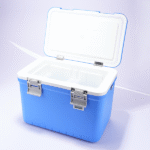
Water Injection Ice Pack Distributor Guide
Last updated: February 11, 2026 (America/Los_Angeles). Freshness note: Updated in 2026 using 2024–2026 guidance and standards where available; older foundational standards are cited when they remain in force.
What a water injection ice pack distributor delivers
A water injection ice pack distributor is not just a “box mover.” At scale, your water injection ice pack distributor becomes part of your pack-out engineering team.
Why? Because passive cold chain works only when coolant packs are prepared and loaded correctly. Global guidance for passive containers repeatedly emphasizes following manufacturer instructions for how to arrange conditioned coolant packs inside insulated containers.
A strong water injection ice pack distributor typically delivers four types of value:
Pack format matching
They help you choose the right geometry (sheet, brick, linked packs) and fill volume range for your shipper size, payload, and lane.
Activation workflow design
They provide practical guidance for filling through the injection opening/port, freezing time, staging, and pack-out placement—so your “cold chain” is a repeatable shift process, not tribal knowledge.
Validation support
They can support thermal trials against standardized or widely recognized protocols. For example, International Safe Transit Association describes Procedure 7D as a development temperature test for external temperature exposures and Standard 7E as a newer thermal transport testing standard with profiles built from real-world parcel transport data.
Documentation + change control
They support lot traceability, material declarations, and a “no surprises” policy when films, ports, or internal thickener systems change, because small changes can shift melt curves and leak rates.
How to qualify a water injection ice pack distributor for compliance
Compliance is not one thing. It depends on what you ship and where you ship it. Your water injection ice pack distributor should be able to “map” their product and documents to your reality.
Food shipping in the United States
The U.S. Food and Drug Administration Sanitary Transportation rule under FSMA requires sanitary practices during transportation and addresses temperature control for foods requiring it. The regulatory text and FDA materials emphasize preventing practices that may render food unsafe, including failures to properly refrigerate and to provide adequate temperature control.
A practical data point for food programs: U.S. Department of Agriculture Food Safety and Inspection Service consumer guidance references freezer temperature at 0°F (−18°C) for safe freezing, and its mail-order guidance emphasizes keeping perishable foods out of the “danger zone” too long. Those aren’t pack-out recipes, but they help explain why temperature abuse is treated as a safety issue, not just a taste issue.
Vaccine and healthcare shipping
The Centers for Disease Control and Prevention vaccine storage and handling guidance includes explicit cautions around coolants. For refrigerated vaccines, it warns against using frozen gel packs/coolant packs from original vaccine shipments and notes that PCMs around 4–5°C can be used to reduce freezing risk. This is a classic example of why your water injection ice pack distributor must understand “too cold” risk, not just “stay cold.”
International vaccine air shipment
The World Health Organization 2025 guidelines (7th edition) position the document as technical guidance to help ensure vaccine quality during all stages of international air transportation, across the ecosystem from manufacturer to recipient country. If your lane touches international air, your water injection ice pack distributor should be familiar with this kind of requirement language and how it translates into packaging discipline.
Air cargo labeling and handling
If you ship time- and temperature-sensitive healthcare cargo by air, International Air Transport Association publishes Temperature Control Regulations resources and a pharma handling page that describes the Time & Temperature Sensitive Label as mandatory for shipments booked as time and temperature sensitive cargo, and links it to acceptance checklists. Even when you use passive shippers, the operational language matters: label + booking + SOP alignment.
The compliance packet you should demand from a water injection ice pack distributor
Ask your water injection ice pack distributor for a “one-binder” packet that includes:
Product spec sheet (dimensions, empty weight, recommended fill range, case pack)
Material declaration for outer film and internal thickener/PCM system
Lot/batch traceability and retention policy
Change control policy (how you’ll be notified before substitutions)
Handling SOP: fill, freeze time, staging, and placement guidance
Leak and burst test approach and sampling frequency
If your distributor cannot provide this, you’re not buying a cold-chain component. You’re buying uncertainty.
Water injection ice pack distributor performance and validation
You can’t “SEO” your way out of poor thermal performance. You validate.
Why validation is the line between a supplier and a solution
Real shipments see temperature swings and dwell times you don’t control. That is why thermal standards exist. ISTA’s Standard 7E describes profiles developed from real-world transport lane data, designed to represent seasonal maxima and minima. ISTA’s Procedure 7D is positioned as a development test for external temperature exposures. Your water injection ice pack distributor should be able to translate your lane into a test plan.
Validation does not have to be complicated, but it must be explicit:
Define your lane (origin→destination, mode, service level, worst-case dwell)
Define your target band (e.g., “keep product 2–8°C,” or “keep frozen,” or “avoid sub-zero”)
Build a pack-out recipe (coolant count, placement, insulation)
Run summer + winter profiles
Helpful decision tools
Check the details before you choose packaging
These quick tools can help you compare route risk, sizing needs, coolant choices, and packaging details before you request a quote.
Packaging Selector
Compare insulated packaging options by product, route, and temperature need.
Find packagingIce Pack Calculator
Estimate gel ice pack quantity for chilled shipments and practical route planning.
Estimate ice packsInsulation Material Drop Resistance
Review drop resistance and handling factors before choosing insulation materials.
Check resistanceDocument results and lock the configuration
A sanity-check on claims: the physics behind water-based cooling
Water is a common phase change material. When ice melts at 0°C, it absorbs a large amount of energy without quickly warming above 0°C. Reference physics texts commonly cite ~334 kJ/kg as the latent heat of fusion for ice. This is why “how much ice mass” and “how well it is placed” can be more important than marketing.
Now add the “injection” part. Many water injection designs rely on internal thickeners (or absorbents) so the filled water behaves like a stable gel matrix rather than a sloshing liquid. That matters for leak containment and consistent surface contact. Technical references describe two major thickener families used in flexible gel pack applications: superabsorbent polymers and cellulose ethers (such as carboxymethyl cellulose).
A related data point you can use in meetings: SAP materials are widely described as absorbing water many hundreds of times their own weight, which helps explain why a small mass of polymer can stabilize a large mass of water in a pack.
Table: coolant options and how a water injection ice pack distributor fits
| Option | What you run day-to-day | Where it shines | Main operational risk | Best fit for a water injection ice pack distributor |
|---|---|---|---|---|
| Water injection ice packs | Fill on-site → freeze → pack-out | Lower inbound freight/cube; flexible sizing; private label friendly | Fill variability and port leakage; requires freezer/staging discipline | High-volume e-commerce food, meal kits, multi-DC networks, export programs activating locally |
| Pre-filled gel packs | Store frozen → pack-out | Simple operations; consistent unit weight | Paying to ship water; storage cube; condensation handling | Low complexity operations; small teams; tight labor constraints |
| PCMs tuned to +2 to +8°C | Condition per SOP → pack-out | Better protection for freeze-sensitive healthcare items | Higher cost; needs careful conditioning | Diagnostics, biologics, vaccines, regulated healthcare lanes |
| Dry ice | Handle as DG where required | Ultra-cold frozen requirements | Safety, sublimation, and air restrictions | Ultra-cold special lanes with DG-trained staff |
Mermaid chart suggestion for your SOP page
Lane definition & risk
Select pack format
Select water injection ice pack distributor
Fill & freeze SOP
Validator: ISTA profile test
Document pack-out recipe
Monitor excursions & improve
Operating with a water injection ice pack distributor
A water injection ice pack distributor can reduce your inbound freight, but only if you can run the activation workflow reliably. Think of it as swapping “shipping cost” for “process control.”
Scenario: you ship 10,000 orders per week
Let’s say your program uses a 400 mL cold pack equivalent. If you ship that pack pre-filled, you’re effectively shipping ~0.4 kg of water per unit (plus film). Over 10,000 packs, that is roughly 4,000 kg of water moved inbound before you even touch the product. With a water injection ice pack distributor model, most of that mass is added locally, so your inbound is lighter and you can often store more “empty” packs per pallet position. This is one of the core economic arguments distributors make.
But now ask the operational question: can your site freeze and stage 10,000 packs per week without shortcuts? If not, your water injection ice pack distributor will not “save money.” It will add variance.
Scenario: you ship products that must not freeze
In healthcare and some specialty foods, freezing can be as damaging as warming. CDC vaccine guidance is a strong example of this. It warns that even conditioned gel packs from vaccine shipments can still freeze refrigerated vaccines, and it points to PCMs near 4–5°C for safer transport. If your lane has freeze-sensitive product, your water injection ice pack distributor must offer a solution engineered for that band, not a generic water-ice pack.
Table: failure modes your water injection ice pack distributor should help you prevent
| Failure mode | What you see | Root cause | What to ask of your water injection ice pack distributor |
|---|---|---|---|
| Under-filled packs | Short hold time; warm arrivals | Fill variability; rushed shifts | Fill-range spec + quick weight-check SOP + training aids |
| Over-filled packs | Port stress; seal burst | Water expansion + seals over-stressed | Max fill guidance + port integrity testing + sampling plan |
| “Too cold” internal temps | Product damage; frost | Coolant too cold; wrong conditioning | Conditioning SOP + PCM options + validation for “no-freeze” lanes |
| Lot-to-lot drift | Random failures | Substitutions without change control | Written change-control notice + lot traceability + incoming QC checks |
| Not fully frozen | Early melt; unstable temps | Insufficient freezer time/space | Freeze-time guidance + freezer capacity model + staged racking plan |
Procurement scorecard for a water injection ice pack distributor
If you only compare unit price, you pick the wrong water injection ice pack distributor. Use a scorecard that blends thermal performance, compliance, and operations.
Use this scorecard in every water injection ice pack distributor RFQ so your team compares apples to apples.
Table: 100-point distributor scorecard you can copy
| Category | Weight | What “good” looks like |
|---|---|---|
| Validated thermal performance | 30 | Supports ISTA-style profiles or lane testing; provides test plan templates and logger placement guidance |
| Port + seal integrity | 15 | Leak-rate sampling; burst testing; clear fill max; documented corrective actions |
| Documentation + traceability | 15 | Lot traceability, material declarations, retention policy, change control policy |
| Operational enablement | 15 | Fill tooling guidance; freeze/stage SOP; training materials; seasonal pack-out recipes |
| Supply resilience | 10 | Dual sourcing plans; consistent film/port materials; realistic lead times |
| Commercial fit | 10 | Transparent MOQ; private label options; predictable pricing bands |
| Sustainability + end-of-life | 5 | Clear disposal guidance; options for lower-waste formats; reduced inbound freight mass where relevant |
How to use it: score each candidate water injection ice pack distributor on a 0–5 scale per line item. Multiply by weight. Only negotiate price after the technical and compliance minimums are met.
FAQ for choosing a water injection ice pack distributor
Q: What is a water injection ice pack distributor?
A: A water injection ice pack distributor supplies packs designed to be filled with water at your facility through an injection port, then frozen before pack-out. Many suppliers position this as a way to reduce inbound freight weight and warehouse space compared with shipping fully filled packs.
Q: Are water injection ice packs reusable?
A: Many water injection ice pack distributor programs treat them as reusable within an intended service life, but “reusable” depends on your handling SOP, freeze/thaw cycles, and seal integrity. Require leak sampling and change control from your water injection ice pack distributor.
Q: How do you fill water injection ice packs correctly?
A: Use the distributor’s recommended fill range and tooling, then standardize a weight-check step on the line. Fill variability is one of the fastest ways to lose hold time consistency.
Q: Are water injection ice packs safe for food and medicine shipping?
A: They can be, but safety is conditional. For food shipped in the U.S., you still need sanitary transport practices and adequate temperature control where required. For healthcare, you need procedures that protect against both warming and freezing. Your water injection ice pack distributor should support the documentation and SOP discipline required by your category.
Q: Can a water injection ice pack distributor support 2–8°C shipping without freezing risk?
A: Not always. Ice melts at ~0°C, which can be too cold for freeze-sensitive products unless buffered. CDC guidance highlights freezing risk when using inappropriate coolants for refrigerated vaccines and mentions PCMs around 4–5°C as an option to reduce that risk.
Q: What testing should I ask a water injection ice pack distributor to support?
A tip: ask your water injection ice pack distributor to ship you a small pilot lot for a controlled lane test, not just a sample carton.
A: Ask for a lane validation approach that references recognized thermal test profiles. ISTA’s Procedure 7D and Standard 7E descriptions are useful starting points for structuring a test plan around real-world exposures.
Q: What are the most common causes of leaks?
A: Overfill, weak port sealing, and repeated freeze/thaw stress are frequent contributors. Your water injection ice pack distributor should provide fill max guidance and quality sampling steps.
Q: What is the biggest hidden cost when switching to a water injection ice pack distributor model?
A: Internal labor and freezer capacity. If packs are not fully frozen or are staged poorly, your hold time collapses and your spoilage/claim costs rise—even if inbound freight is cheaper.
Q: Does structured data help this page rank in 2026?
A: Structured data helps search engines understand a page and can enable rich results, but Google states there is no guarantee those features will appear. Use structured data to clarify meaning and improve machine readability, not as a substitute for helpful content.