Thermal Bag Industrial Solutions: How Do They Revolutionize Cold Chain in 2026?
Introduction (Updated February 2026). In 2026 the coldchain packaging market is forecast to grow from about USD 34 billion in 2026 as demand for biologics, meal kits and perishable foods accelerates. Thermal bag industrial solutions — rugged insulated bags designed for commercial logistics — provide a practical way to keep products at the right temperature from warehouse to doorstep. These bags combine multilayer insulation, durable exteriors and smart options such as realtime sensors, helping you maintain product quality while reducing waste and operational costs. This guide shows you how industrial thermal bags fit into modern coldchain strategies, what to look for when choosing one and the trends shaping the industry in 2026.
This article will answer:
Why are industrial thermal bags essential in cold chain logistics? We’ll explore insulation, materials and realworld performance tests.
How can you choose the right thermal bag for your business? We’ll discuss capacity, insulation time, durability and sustainability options.
Which trends shape the 2026 coldchain market? Learn about ecofriendly materials, readytouse kits and smart monitoring.
What practical tips can improve user experience? See how to maximize insulation using gel packs, correct loading methods and proper maintenance.
Frequently asked questions about using industrial thermal bags for food, pharmaceutical and other applications.
Why Are Industrial Thermal Bags Essential for Cold Chain Logistics?
Industrial thermal bags protect temperaturesensitive goods by providing a barrier against ambient heat or cold. They are more than simple grocery coolers; these heavyduty bags integrate reflective outer layers, insulating cores and foodgrade liners to maintain temperature stability. In lastmile delivery, their role becomes critical because products often sit on a doorstep for hours. The CooLiner® delivery bag offers up to 24 hours of temperature protection and features a convenient handle for easy carrying, while the CelluLiner® paperbased bag is curbsiderecyclable. These options illustrate how industrial thermal bags balance performance with sustainability.
Expanded Explanation: How Thermal Bags Work
Imagine placing a hot beverage in a thermos; the doublewalled insulation slows down heat transfer, keeping the drink warm. Industrial thermal bags use a similar principle on a larger scale. Multilayer designs combine a reflective outer foil that bounces external heat, an insulation core such as EPE foam or bubble material to trap air, and a foodgrade inner liner. This construction helps keep contents within a safe temperature range for hours. Some bags also incorporate paperbased insulation (CelluLiner), which relies on layered paper pockets to trap air and is fully recyclable. Others use foil–bubble composites that provide both thermal and physical protection. Modern industrial bags may feature integrated sensors or pockets for data loggers so you can monitor temperatures during transit, offering transparency and compliance with regulations.
Comparing Materials and Performance of Industrial Thermal Bags
| Material Type | Typical Insulation Time | Best Use Cases | Practical Benefit |
| Foilbubble composite (e.g., CooLiner®) | Up to 24 hours | Food delivery, groceries, pharmaceuticals | Reflective foil reduces radiant heat; bubble core adds cushioning and resists punctures. Durable and weatherresistant. |
| Paperbased multilayer (CelluLiner®) | 2–24 hours | Sustainabilityfocused businesses, meal kits | Curbside recyclable; multilayer paper traps insulating air. Custom branding surfaces available. |
| Foil–EPE hybrid (aluminium foil bags) | 2–3 hours | Shortdistance supermarket runs, takeout | Reflective outer layer, EPE foam core and foodgrade inner lining provide lightweight insulation and foldability. Ideal for quick grocery trips or picnic use. |
Practical Tips and Suggestions
Plan for the journey: For deliveries longer than three hours, choose a bag rated for at least 24 hours and pair it with gel packs or ice bricks.
Match bag size to cargo: A properly packed bag reduces empty space, limiting air circulation and improving insulation. Select a bag that fits the product snugly without crushing it.
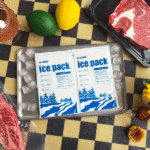
Add refrigerant packs: Use gel packs or dry ice when shipping frozen or chilled goods; they extend the insulation time and maintain target temperatures.
Seal properly: Use bags with peelandseal closures, zippers or hookandloop flaps to prevent warm air infiltration.
Maintain and reuse: Wipe down the interior and exterior with a damp cloth after each use, store the bag dry and folded, and inspect closures for wear.
Realworld case: A curbsiderecyclable thermal bag (12″×7″×17″) was tested by placing chicken, sausage, milk, yogurt and cheese inside at 36 °F. After 3 hours in temperatures up to 100 °F, all items remained under 60 °F, demonstrating that the bag maintained cold chain conditions without additional refrigerant. This shows how industrial thermal bags preserve freshness even in extreme heat.
How to Choose the Right Industrial Thermal Bag for Your Business?
Selecting the right thermal bag depends on the product, delivery time and sustainability goals. A fooddelivery startup may need compact foilbubble bags for short local deliveries, whereas a pharmaceutical distributor requires heavyduty bags rated for 24 hours or more with integrated sensor pockets for temperature loggers. The following guidelines will help you make an informed choice.
Key Selection Factors
Insulation Duration: Estimate how long your goods will be in transit. Foilbubble bags offer the longest protection (up to 24 hours), while paperbased options provide 224 hours and aluminium foil bags are suitable for 23 hours.
Capacity & Dimensions: Consider bag size and shape. Some products, like meal kits or pharmaceuticals, need extra height or compartments. Bags with foldable designs make storage easier.
Materials & Sustainability: Choose materials that align with your environmental goals. Paperbased bags are fully recyclable, while reusable foilbubble bags offer durability and long lifespan.
Durability & Ease of Handling: Look for puncture resistance, water resistance and strong handles. Industrial delivery drivers benefit from reinforced hand holes and secure closures.
Regulatory Compliance: For pharmaceutical or clinical supplies, ensure the bag meets regulatory requirements (e.g., FDA, GDP). Some bags accommodate temperature data loggers or integrate with smart monitoring systems.
Branding & Customization: A branded thermal bag enhances customer experience and reinforces your image. Many suppliers offer fullcolor printing, messaging or QR codes for marketing.
StepbyStep Bag Selection Guide
Define the product profile: List the item’s temperature requirements (e.g., chilled 2–8 °C, frozen ≤–18 °C) and sensitivity to heat or vibration. For pharmaceuticals or biologics, refer to guidelines like the twostage cooling process that cools from 135 °F to 70 °F within two hours and then to 41 °F within four hours.
Map the transit timeline: Determine the time from pickup to final delivery, including potential delays. If the bag will sit on a doorstep for an unpredictable period, choose a 24hour bag and add gel packs.
Evaluate environmental impact: Decide whether to prioritise reusability (foiled bags) or recyclability (paperbased). Many businesses now choose ecofriendly materials because sustainability influences purchasing decisions.
Consider cost vs. performance: Balance insulation performance with budget. Paperbased bags may cost slightly more but offer environmental benefits and curbside recyclability.
Check supplier credentials: Look for quality certifications (e.g., Sedex, ISO) and ask for performance data or case studies. Some providers test their bags under high temperature conditions and publish results.
Helpful decision tools
Check the details before you choose packaging
These quick tools can help you compare route risk, sizing needs, coolant choices, and packaging details before you request a quote.
Compliance Checklist Generator
Build a practical checklist for packaging review, shipping, and documentation.
Build checklistInsulation Material Drop Resistance
Review drop resistance and handling factors before choosing insulation materials.
Check resistanceRoute Risk Checker
Review lane conditions before selecting packaging for real operating requirements.
Check route riskPractical Examples
Meal kit services: Use customsized foilbubble liners inside cardboard boxes to keep ingredients chilled; combine with ice packs for 24hour protection. Brand the bags with your logo for customer recognition.
Pharmaceutical shipments: Choose heavyduty foilbubble bags that accommodate temperature loggers. Use extra insulation for biologics that require 2–8 °C shipping and ensure compliance with Good Distribution Practices.
Grocery deliveries: For short local deliveries, paperbased or aluminium foil bags may suffice. Encourage customers to return or recycle the bags.
Integrating Industrial Thermal Bags into Modern Cold Chain Logistics
Coldchain logistics extends from production to consumer, encompassing storage, transport and distribution. Industrial thermal bags are one component of this ecosystem, but their effectiveness increases when integrated with broader systems.
Digital Monitoring & IoT Integration. Realtime visibility reduces the risk of product loss and improves regulatory compliance. Companies increasingly use temperature sensors, Bluetooth loggers and IoTenabled packaging to track conditions throughout transit. These sensors provide immediate alerts if temperatures exceed safe ranges, allow regulatory documentation and enable datadriven decisions. In pilot programmes, realtime sensors reduced spoilage by 35 %. Integrating sensors into thermal bags is an emerging practice.
EcoFriendly Materials & ReadytoUse Kits. Sustainability is now a critical purchasing factor. Traditional expanded polystyrene foam creates waste, so the industry has developed recyclable paperbased insulation and repulpable materials. Readytouse kits simplify logistics: preassembled thermal shippers fit snugly inside boxes, reducing training and inventory complexity.
Branded Packaging & DTC Optimization. Customprinted thermal bags strengthen brand identity and improve customer experience. As directtoconsumer (DTC) meal kit services and grocery delivery grow, smaller and lighter thermal bags are needed. These bags must handle longer delivery windows, nonspecialised handlers and environmental concerns.
DataDriven Planning. Analytics help refine shipping routes, select packaging, and adjust for seasonality. Predictive modelling can optimise cold shipments based on weather patterns and transit times. Using data to choose the right bag and route can reduce temperature excursions and operational costs.
2026 ColdChain Developments and Trends
Trend Overview. The coldchain packaging market remains on a strong growth trajectory. According to Fortune Business Insights, the market was USD 30.88 billion in 2025 and will rise to USD 34.00 billion in 2026, with a CAGR of 11.46 % through 2034. Europe captured 33.68 % of the market in 2025, driven by demand for biologics and temperaturesensitive pharmaceuticals. The prepared meals market also booms, expected to grow from US$190.71 billion in 2025 to US$291.27 billion by 2032, while meal kit delivery may reach US$50.3 billion by 2032. These data illustrate why efficient thermal bags are essential in 2026.
Latest Advances at a Glance
Smart Monitoring Adoption: Realtime sensors and cloud platforms are projected to grow the coldchain monitoring segment from US$7.2 billion in 2025 to US$22.2 billion by 2035. Industrial thermal bags will integrate sensor pockets and IoT chips to support compliance and transparency.
Sustainable Materials: Paperbased insulation and recyclable materials are replacing polystyrene, reducing disposal costs and environmental impact. Suppliers like CelluLiner offer curbsiderecyclable bags.
ReadytoUse Packaging Kits: Preassembled thermal kits simplify warehousing and reduce human error. Standardized sizes streamline packing and provide consistent thermal performance across shipments.
DTC and LastMile Focus: Meal kit and grocery delivery services need compact, lightweight thermal bags tailored for residential delivery. These bags must balance protection with cost and ease of disposal, reflecting the rise of sameday delivery.
DataDriven Decisions: Predictive modelling and analytics guide packaging choices, route planning and seasonal adjustments. Companies adopting these strategies reduce waste, improve reliability and strengthen customer trust.
Market Insights. Growth in pharmaceuticals and biologics drives demand for coldchain solutions, while strict regulations necessitate reliable temperature control. The coldchain monitoring segment’s expansion underscores the importance of integrating sensors into thermal bags. At the same time, sustainability pressures push businesses to adopt recyclable insulation and reuse programmes. The convergence of these trends means that industrial thermal bags are no longer simple containers; they are intelligent, brandable, sustainable components of a complex logistics network.
Frequently Asked Questions
Q1: How long do industrial thermal bags keep products at the desired temperature?
Industrial thermal bags vary in insulation time. Foilbubble bags like CooLiner® can maintain temperature for up to 24 hours, while paperbased bags (CelluLiner®) offer 2–24 hours. Aluminium foil bags provide 2–3 hours and are suitable for short trips. For longer journeys, add gel packs or ice bricks to extend protection.
Q2: Are industrial thermal bags ecofriendly?
Yes—many modern thermal bags use recyclable or reusable materials. Paperbased bags have a multilayer structure that is curbsiderecyclable. Aluminium foil bags are reusable and can be wiped clean and folded for storage. Choosing sustainable bags reduces waste and can enhance your brand perception.
Q3: Can thermal bags be used for pharmaceutical and biologic shipments?
Absolutely. Industrial thermal bags are widely used for transporting vaccines, biologics and other temperaturesensitive pharmaceuticals. The reflective foil and insulating layers help maintain 2–8 °C or lower during transit. Many bags offer secure seals and accommodate data loggers to ensure compliance with Good Distribution Practices.
Q4: What is the difference between a thermal bag and a standard insulated bag?
Both thermal and insulated bags aim to maintain temperature, but thermal bags typically include heatreflecting materials like metalized foil and provide longer insulation times. Standard insulated bags may rely only on foam or fabric insulation and are designed for shorter durations.
Q5: How do I clean and maintain industrial thermal bags?
Wipe the interior and exterior with a damp cloth after use and let the bag dry completely. Avoid using harsh chemicals that could degrade the insulation. Fold and store the bag in a cool, dry place. Regularly inspect closures, handles and seams for wear.
Summary & Recommendations
Key takeaways. Industrial thermal bags provide reliable temperature control for food, pharmaceuticals and groceries. They incorporate multilayer insulation with reflective foil, foam or paper to protect contents for 2–24 hours. Ecofriendly materials and readytouse kits are reshaping the market, while smart monitoring and analytics improve reliability and regulatory compliance. The coldchain packaging market is growing rapidly, reaching USD 34 billion in 2026 and driving innovation. Your choice of thermal bag should balance insulation time, sustainability, capacity and regulatory needs.
Action plan.
Assess your needs: Determine product sensitivity, transit time and environmental objectives.
Select appropriate materials: Use paperbased bags for sustainability and foilbubble bags for long journeys.
Use refrigerants and sensors: Add gel packs or dry ice and integrate data loggers to monitor temperatures.
Train staff and customers: Standardise packing procedures and educate customers about returning or recycling bags.
Stay informed: Follow industry trends like ecofriendly materials and IoT integration to keep your coldchain operations competitive.
About Tempk
Tempk is a manufacturer and innovator in coldchain packaging solutions. We design and produce insulated bags, box liners, pallet covers and ice packs for food, pharmaceutical and industrial logistics. Our products combine advanced thermal insulation with ecofriendly materials and reusable designs, helping clients reduce waste and ensure regulatory compliance. With an inhouse research and development center and a commitment to quality assurance, we continuously refine our technologies to meet the evolving needs of mealkit delivery services, pharmaceutical companies and grocery chains. Tempk’s solutions include paperbased recyclable bags, durable foilbubble coolers and integrated temperature monitoring options, allowing businesses to keep products safe while aligning with sustainability goals.
Call to action. To learn more about how Tempk can support your coldchain operations with customized industrial thermal bags, contact our team for a consultation and product samples.