


AI and Interoperability Transform the Future of Pharmaceutical Cold Chains
AI and Interoperability Transform the Future of Pharmaceutical Cold Chains
Digital Transformation Pushes Pharmaceutical Cold Chains Beyond Temperature Monitoring
What Happened
Pharmaceutical cold chain operations are entering a new stage of digital transformation as manufacturers and logistics providers adopt continuous monitoring, automation and interoperable technology platforms.
Historically, pharmaceutical cold chain management focused primarily on proving that products remained within approved temperature ranges.
The next generation of systems focuses on preventing failures before they occur.
Industry analysis highlights several emerging technology directions:
- continuous monitoring
- automation
- digital interoperability
- predictive analytics
These technologies aim to reduce temperature excursions, improve shipment visibility and create stronger connections between manufacturing, logistics and healthcare delivery.
How It Works
Traditional pharmaceutical cold chain systems usually include:
- temperature data loggers
- refrigerated storage
- validated packaging
- GDP transportation
These systems provide important evidence but often operate separately.
Modern digital cold chains combine multiple information sources:
Continuous Monitoring
Instead of reviewing temperature history after delivery, continuous monitoring provides:
- real-time temperature data
- location information
- shipment status
- alarm notifications
This allows teams to respond while the shipment is still in transit.
Automation
Automation is increasingly applied across:
- pharmaceutical warehouses
- fulfillment centers
- distribution hubs
Examples include:
- automated storage systems
- robotic handling
- automated inventory tracking
Automation reduces:
- manual handling errors
- unnecessary product exposure
- inventory inaccuracies
Data Interoperability
One of the biggest challenges in pharmaceutical logistics is fragmented information.
A shipment may involve:
- manufacturer systems
- 3PL platforms
- airline systems
- warehouse software
- customer systems
Interoperability allows these systems to exchange information.
The objective is to create a single view of:
- product identity
- shipment status
- temperature history
- custody events
Why It Matters
Pharmaceutical products are becoming more complex.
Growth areas include:
- biologics
- vaccines
- cell therapies
- specialty medicines
These products often have:
- higher value
- narrower stability windows
- greater patient impact
A cold chain failure can result in:
- product loss
- treatment delays
- regulatory investigation
As products become more specialized, logistics systems must become more intelligent.
Temperature control alone is no longer sufficient.
Companies need to know:
- where the product is
- what condition it is in
- whether intervention is required
B2B Impact
For pharmaceutical manufacturers:
Future cold chain strategies should include:
- digital visibility
- predictive risk management
- automated exception handling
For 3PL providers:
Competitive advantages will increasingly depend on:
- GDP capability
- connected platforms
- proactive response
For cold storage operators:
Demand will increase for:
- smart warehouses
- automated handling
- connected monitoring
For packaging suppliers:
Digital cold chains create demand for:
- smart shippers
- integrated sensors
- reusable temperature-controlled systems
For technology providers:
Future platforms will combine:
- IoT
- AI analytics
- automation
- digital documentation
Final Insight
The pharmaceutical cold chain is moving from:
“recording temperature history”
toward:
“predicting and controlling product risk.”
The future cold chain will not only keep products cold.
It will understand product condition, predict problems and automatically support better decisions.
Frozen Food Growth Strengthens Canada’s Cold Chain Investment Case
Source: Farm Credit Canada
https://www.fcc-fac.ca/en/knowledge/economics/frozen-food-canada
Frozen Food Growth Is Reshaping Canada’s Cold Chain Investment Case
What Happened
Frozen food is becoming a larger part of Canada’s food system, creating new demand for processing, refrigerated warehousing, transportation and automation.
A new analysis from Farm Credit Canada shows that Canadian retail sales of frozen food increased by 63% between 2019 and 2025. Over the same period, fresh food sales increased by 39%.
The difference suggests that frozen food is moving beyond its traditional role as a lower-convenience alternative to fresh products. Consumers are buying a wider range of frozen fruit, vegetables, seafood, bakery items, prepared ingredients and ready-to-cook meals.
Export demand is also increasing.
Between 2020 and 2025, Canadian frozen fruit exports increased by 14% in volume, while frozen vegetable exports increased by 38%.
This shift is creating a stronger commercial case for investment in freezing technology, cold storage, refrigerated distribution and value-added processing.
FCC also identified expansion in refrigerated infrastructure.
Reported refrigerated capacity among three major Canadian cold-storage operators increased from approximately 145 million cubic feet in 2018 to 187 million cubic feet in 2025, an increase of about 29%.
Nearly two-thirds of that expansion occurred after 2023.
The trend shows that frozen-food growth is already affecting physical cold-chain capacity, rather than remaining only a change in consumer purchasing behaviour.
How It Works
Freezing changes the economics of perishable agricultural products by extending the period during which they can be stored, transported and sold.
Fresh produce is highly time-sensitive.
Once harvested, fruits and vegetables continue to lose quality through respiration, moisture loss and microbial activity. Even when refrigeration slows these processes, commercial shelf life remains limited.
Freezing moves the product into a much longer preservation window.
Technologies such as individually quick frozen, or IQF, processing rapidly freeze individual product pieces rather than creating one large frozen block.
For products such as berries, peas, corn, seafood and prepared ingredients, IQF can help preserve texture, portionability and product quality while giving processors greater flexibility in packaging and distribution.
However, freezing capacity alone is not enough.
The complete supply chain requires several connected stages:
- Raw product receiving
- Washing, grading or processing
- Rapid freezing
- Frozen storage
- Inventory management
- Refrigerated transportation
- Retail or foodservice distribution
If one part of the chain lacks capacity, the commercial benefit of the freezing operation can be reduced.
For example, a processor may install additional IQF equipment but still face a bottleneck if frozen warehouse space is unavailable during peak harvest.
Likewise, a cold store may have sufficient pallet positions but lack enough reefer transport capacity to move products during seasonal demand peaks.
Modern cold chain investment therefore increasingly combines physical storage with automation, robotics and digital inventory control.
FCC notes that refrigerated facilities are adopting automated handling, digital inventory systems and more energy-efficient refrigeration technologies to improve productivity and manage rising operating costs.
For frozen warehouses, storage density is particularly important.
Every cubic metre of refrigerated air requires energy to maintain. High-density pallet storage, automated retrieval and well-designed airflow can reduce the amount of freezer volume required per unit of inventory.
The result is a cold chain that is not only larger, but more productive.
Why It Matters
Canada has a relatively short domestic growing season for many fruits and vegetables, while consumer demand exists throughout the year.
Historically, this gap has been addressed partly through imports.
Additional freezing capacity provides another option: preserve more domestic production during peak harvest periods and distribute it gradually throughout the year.
FCC used Environment and Climate Change Canada’s estimate that approximately 13% of Canadian fruits and vegetables are left unharvested or discarded after harvest and applied that percentage to selected crop production.
The resulting comparison is significant.
Estimated losses were equivalent to approximately:
- 66% of Canadian pea imports
- 55% of corn imports
- 24% of blueberry imports
- 6% of broccoli imports
- 5% of strawberry imports
These figures do not mean that all lost crops can simply be frozen and substituted for imports.
Some products may be unsuitable for processing. Harvest timing, quality, economics and consumer demand also matter.
But the numbers illustrate the scale of value that may be available if more domestic agricultural output can be captured through processing and cold-chain infrastructure.
For food processors, freezing also creates opportunities beyond waste reduction.
A raw agricultural commodity may have relatively low margins during peak harvest. Once it is cleaned, portioned, seasoned, frozen and packaged, it can become a higher-value food product with a longer selling season.
This creates additional economic activity in:
- processing
- packaging
- cold storage
- transportation
- retail distribution
The growing frozen category can therefore strengthen both food manufacturing and cold-chain logistics.
B2B Impact
For agricultural producers, stronger freezing infrastructure can create additional outlets during peak harvest periods.
Growers may be able to sell products into processing channels that would otherwise have limited value because fresh-market demand has already been filled.
However, processors need predictable quality and volume.
Growers should coordinate harvest timing, product specifications and transport arrangements with processors rather than assuming that surplus produce can automatically enter frozen production.
For food processors, the market creates opportunities for investment in:
- IQF systems
- blast freezers
- spiral freezers
- sorting and grading
- portioning
- automated packaging
Processing capacity should be matched with downstream cold-storage capacity.
Installing a faster freezing line without enough frozen pallet positions can simply move the bottleneck from production into warehousing.
For cold storage developers, Canada’s growing frozen-food category supports continued demand for refrigerated real estate.
Future facilities should be evaluated on more than pallet count.
Important variables include:
- Energy consumption
- Storage density
- Automation capability
- Dock throughput
- Refrigeration redundancy
- Power availability
- Transport connectivity
For refrigeration suppliers, frozen-food growth supports demand for efficient low-temperature systems.
Operators are increasingly interested in refrigeration technologies that reduce energy consumption and long-term refrigerant risk while maintaining reliable frozen conditions.
Heat recovery can also improve facility economics where rejected refrigeration heat can be used for hot water, space heating or processing applications.
For warehouse automation providers, frozen environments create a strong business case for robotics.
Automation can reduce labour exposure to very low temperatures while increasing storage density and inventory accuracy.
Equipment must be engineered specifically for cold environments, including suitable sensors, lubricants, cables, batteries and controls.
For packaging suppliers, the growth of frozen foods increases demand for materials that maintain strength under low-temperature and humid conditions.
Cartons, films, labels and adhesives must tolerate freezing, storage and thawing without losing structural or identification performance.
For refrigerated carriers, larger frozen inventories mean greater demand for dependable reefer capacity.
Transport providers need reliable TRUs, pre-trip inspection, fuel management, telematics and documented temperature procedures.
For retailers, frozen products offer a different inventory model from fresh food.
Longer shelf life can reduce spoilage and provide more flexibility during seasonal disruptions, but freezer merchandising and backroom storage capacity must keep pace with category growth.
For policymakers, the analysis suggests that food security infrastructure includes more than agricultural production.
A country can grow significant quantities of food and still rely heavily on imports if domestic processing and preservation capacity cannot bridge seasonal production and year-round demand.
The broader lesson is that frozen food is becoming an infrastructure story.
Canada’s 63% frozen-retail growth and expanding refrigerated warehouse capacity show how consumer behaviour, agricultural processing and cold chain investment are becoming increasingly connected.
Future opportunities will come from integrating production, freezing, storage, transportation and packaging into a more efficient domestic food system.
USDA Opens $7.5M Cold Chain Grant Program for Food Assistance
Source: U.S. Department of Agriculture – Agricultural Marketing Service
USDA Opens $7.5 Million Cold Chain Grant Program for Emergency Food Assistance
What Happened
The U.S. Department of Agriculture’s Agricultural Marketing Service has opened applications for the new 2026 Cold Chain Grants for Emergency Food Assistance Program, or CCG.
Approximately $7.5 million is available through the program. USDA will competitively select one or more eligible nonprofit organizations that can administer subawards for cold storage and distribution equipment used by food banks, food pantries and other emergency food assistance operations. Applications for the prime awards are due October 1, 2026.
The program is specifically intended to improve the ability of food assistance organizations to receive and distribute higher-quality perishable foods, including meat, eggs, seafood, dairy products and fresh or minimally processed fruits and vegetables.
The Global Cold Chain Alliance publicly welcomed the funding on August 19, saying that better cold storage and distribution infrastructure can help more food reach families rather than being limited by insufficient refrigerated capacity.
The program is different from a direct federal purchase of refrigerators or refrigerated vehicles for individual food banks. USDA will first fund one or more nonprofit prime recipients capable of running a competitive subaward program. Information for organizations seeking the later cold-storage subawards will be released separately.
How It Works
The CCG program uses a two-level funding structure.
At the first level, eligible nonprofit organizations apply directly to USDA. These applicants must demonstrate that they can manage a competitive subaward program, including soliciting applications, evaluating projects, issuing awards, monitoring recipients and reporting results. USDA states that at least one eligible nonprofit corporation will be competitively funded.
The selected prime recipient or recipients will then fund cold chain projects carried out by food banks, food pantries and other qualifying emergency food assistance organizations.
The objective is to strengthen the physical infrastructure required to handle perishable foods rather than limiting emergency food distribution primarily to shelf-stable products.
Depending on the eventual subaward rules and approved project scopes, this type of infrastructure can include refrigerated or frozen storage equipment and distribution assets needed to preserve product condition between donation, receiving, warehousing and final distribution.
A food bank receiving fresh protein or dairy products needs a very different operating system from one handling only canned or dry goods.
Refrigerated inventory requires controlled receiving, rapid transfer into the correct temperature zone, continuous monitoring, inventory rotation and sufficient distribution capacity to prevent products from remaining outside refrigeration while orders are assembled.
Frozen products introduce additional requirements involving low-temperature storage, door discipline, defrost management and freezer-compatible handling equipment.
Fresh produce creates another operating profile. Many fruits and vegetables benefit from temperature control but can also be sensitive to excessive cold, humidity conditions and airflow. A single cold room therefore may not be the right solution for every commodity.
The grant program can help address the equipment barrier, but cold chain effectiveness will still depend on how the funded equipment is selected, installed and operated.
A new walk-in cooler, freezer or refrigerated vehicle should be sized according to expected throughput rather than only available floor space. Undersized equipment can create congestion during donation peaks, while oversized equipment can impose unnecessary capital and energy costs.
Monitoring should also be included in project planning. Operators need calibrated temperature sensors, alarm procedures and records showing that products remained within their required conditions.
Why It Matters
Emergency food assistance increasingly includes products that are nutritionally valuable but operationally difficult to distribute.
Meat, seafood, dairy, eggs and fresh produce can improve the quality and diversity of available food, but they cannot move safely through a network designed only for ambient storage.
Without sufficient refrigerated infrastructure, a food bank may be unable to accept a donation even when the food itself is available.
This creates a structural mismatch: producers, processors, retailers or distributors may have safe surplus food available, while nonprofit organizations lack the cold rooms, freezers or refrigerated transport required to receive it.
The result can be lost donation opportunities and avoidable food waste.
Cold chain capacity can therefore change what food assistance organizations are able to offer.
A facility with adequate refrigerated space may accept fresh dairy or meat that previously had to be declined. A freezer can allow organizations to hold frozen protein until the appropriate distribution date rather than forcing immediate movement. Refrigerated vehicles can extend the service area beyond locations reachable within a short ambient transport window.
The funding also matters because food assistance networks experience demand volatility.
A warehouse may operate normally for weeks and then receive a large donation, emergency allocation or seasonal influx of agricultural products. Flexible cold-storage capacity provides an operational buffer during those peaks.
However, equipment alone does not guarantee a successful program.
Cold storage adds electricity costs, maintenance requirements, cleaning procedures, food-safety obligations and technical dependence on refrigeration contractors. Organizations need enough operating funding to keep the new assets functional after the grant-supported purchase is complete.
The same applies to refrigerated vehicles. Acquisition is only the first cost. Fuel or electricity, preventive maintenance, refrigeration-unit servicing, insurance, drivers and temperature monitoring continue throughout the vehicle’s life.
For this reason, project evaluation should consider total lifecycle capability rather than simply counting how many refrigerators, freezers or trucks are purchased.
B2B Impact
For cold storage equipment manufacturers, the program could create demand for walk-in coolers, freezers, modular refrigerated rooms, condensing units, evaporators, insulated panels and related controls.
Suppliers serving nonprofit customers should prioritize maintainability. Equipment should use components that can be serviced locally and should include clear preventive-maintenance instructions.
Energy efficiency is also important because food banks operate under tight budgets. Lower refrigeration energy consumption can make the difference between a grant-funded facility remaining sustainable and becoming expensive to operate.
For refrigerated vehicle and transport-refrigeration suppliers, future subawards may create opportunities for vans, trucks, insulated bodies and transport refrigeration systems designed for local and regional food distribution.
Vehicle selection should reflect actual route length, payload, delivery frequency and temperature profile rather than assuming that every food bank needs the same type of reefer truck.
For temperature-monitoring providers, funded infrastructure should include practical monitoring from the beginning.
Food assistance organizations may need simple systems that provide continuous temperature records, high/low alarms and remote notifications without creating excessive software complexity or subscription expense.
For packaging suppliers, the program may increase demand for reusable insulated totes, gel packs, PCM systems, pallet covers and liners used between fixed cold rooms and distribution sites.
Passive packaging can be especially useful when the final distribution point does not have dedicated refrigerated vehicles or when products move through temporary community events.
For 3PLs and commercial cold-storage operators, the funding creates partnership opportunities.
Some food banks may benefit more from purchasing dedicated equipment, while others may achieve better utilization by contracting qualified commercial refrigerated capacity or using shared regional hubs.
A hybrid model could allow nonprofit organizations to maintain smaller onsite cold rooms while using commercial facilities for overflow inventory and seasonal peaks.
For food manufacturers and retailers, improved nonprofit cold chain capacity can make donation programs easier to scale.
Companies should still provide accurate lot information, allergen details, date coding, product-storage requirements and chain-of-custody documentation. Donated products require the same food-safety discipline as products moving through commercial channels.
For software providers, inventory systems used by food banks may need to connect expiration dates, lot records, temperature zones and distribution destinations.
Better digital control can help organizations rotate products using FEFO principles and reduce spoilage inside the very infrastructure intended to prevent waste.
For refrigeration contractors, grant-funded equipment will create a long-term service requirement.
Emergency support agreements, spare-parts availability and preventive-maintenance schedules should be considered during procurement rather than after the first system failure.
The broader lesson is that access to food depends partly on logistics capability.
USDA’s new $7.5 million CCG program recognizes that food assistance organizations cannot expand access to fresh and frozen products without the infrastructure to protect those products.
The most successful projects will combine refrigeration equipment, transportation, monitoring, packaging, trained staff and sustainable operating budgets into one practical cold chain system.
Puerto Bolívar Nears Completion of $30M Cold Storag
Source: El Universo
Puerto Bolívar Nears Completion of $30 Million Automated Cold Storage Hub

What Happened
A new automated refrigerated warehouse at Puerto Bolívar in Ecuador has reached 93% completion and entered the technical testing stage.
The facility is being developed by YilportEcu S.A. under the port’s delegated-management agreement. It covers approximately 17,000 square meters and will provide more than 15,000 pallet positions for bananas and other temperature-sensitive export products.
The investment dedicated to the refrigerated warehouse is approximately US$30 million. Technicians are currently testing the industrial refrigeration plant, fire-detection and suppression equipment, automated material-handling systems and the software that will manage internal cargo movements.
The physical structure is largely complete, with final work focused on systems integration, equipment qualification and operational readiness. Completion is expected between October and November 2026.
The project is intended to change how exporters coordinate harvesting, port delivery and vessel schedules. Banana producers currently need to align cutting and inland transportation closely with vessel arrival times. Once the new cold store begins operating, cargo will be able to enter a controlled environment several days before loading without interrupting cold chain integrity.
This could give exporters more flexibility to manage production, port congestion and changing vessel schedules while protecting product quality.
How It Works
The warehouse is being designed as an automated port-side cold chain control point rather than a conventional manual storage building.
Pallets will be placed into high-density racking through robotic handling systems controlled by specialized warehouse software. The digital platform will assign each load to a storage position based on cargo identity, exporter, brand, shipping line and vessel schedule.
This automated allocation model is intended to reduce manual pallet movement, improve storage density and make it easier to retrieve the correct cargo when a vessel is ready for loading.
The system should also allow the warehouse to serve multiple exporters, banana brands and shipping lines without relying on fixed customer zones. Cargo administration will be digitalized, allowing pallet locations and outbound priorities to change according to shipping schedules.
A typical export flow could begin with fruit arriving from farms or packing facilities under controlled transport conditions. The cargo would be received, identified and assigned to a qualified storage location. The warehouse management system would then connect the pallet record with the relevant vessel, booking and dispatch schedule.
When loading approaches, the automated system would retrieve the required pallets and move them toward the outbound staging area. This can reduce the time products spend waiting near the dock and limit unnecessary forklift traffic inside refrigerated zones.
The facility will have its own electrical substation, industrial refrigeration equipment, fire detection and suppression systems and backup infrastructure intended to support operational continuity.
The dedicated substation is particularly important because a facility of this size creates a substantial continuous electrical load. Refrigeration, automation, controls, lighting, fire protection and communications all depend on stable power.
Backup equipment can reduce the risk that a short electrical interruption becomes a product-temperature incident. However, full cold chain resilience will also require tested generator or alternative-power procedures, alarm escalation, refrigeration redundancy and access to qualified technicians.
The warehouse software will be equally important. Automated racking provides limited value if product identity, vessel instructions or customer records are incomplete. The operator must maintain reliable links between physical pallets and digital information throughout receiving, storage and dispatch.
Temperature control should also be verified at more than one point.
A room display may show an acceptable average condition while individual pallets near doors, walls, ceilings or evaporators experience different temperatures. Loaded temperature mapping, calibrated sensors and alarm-response procedures will therefore be necessary before the facility handles commercial cargo at full scale.
For banana exports, temperature management also involves more than keeping the room cold.
Bananas remain biologically active after harvest and require commodity-specific control of temperature, airflow and handling time. Excessive heat accelerates ripening, while temperatures that are too low can cause chilling injury. The correct operating range must therefore be matched to product maturity, variety, packaging and destination requirements.
Why It Matters
Puerto Bolívar is a major export gateway for Ecuadorian perishable products, particularly bananas and shrimp.
Fresh produce exports are highly dependent on synchronization. Farms, packing facilities, inland carriers, port terminals and vessels must operate within a limited commercial shelf-life window.
When storage capacity is insufficient, producers may be forced to schedule harvesting around vessel arrivals. This creates a rigid operating model in which weather, road congestion, port delays or vessel changes can disrupt the entire export plan.
The new refrigerated warehouse introduces a buffer between production and vessel loading.
Producers can prepare cargo earlier, place it under controlled conditions and wait for the confirmed shipping window. This separates part of the agricultural schedule from the vessel schedule and may help reduce last-minute congestion at the port.
The project may also improve vessel utilization.
If cargo is already stored, identified and digitally assigned before the ship arrives, loading teams can retrieve pallets in the required sequence. Better staging can reduce vessel waiting time and make port operations more predictable.
Automation can strengthen this benefit by reducing the time needed to locate and move individual pallet groups. For mixed-exporter or mixed-brand shipments, software-directed retrieval can support more accurate loading and reduce the risk of sending the wrong cargo to the wrong vessel or destination.
The cold store also adds resilience to Ecuador’s perishable export network.
A port that depends only on direct truck-to-vessel transfer has limited flexibility when inspections, vessel berthing or documentation are delayed. Controlled storage gives operators more options for protecting cargo while the issue is resolved.
However, the facility will not eliminate every cold chain risk.
Product quality still depends on correct harvesting, pre-cooling, packaging, inland transportation and receiving temperature. A modern warehouse cannot fully recover quality already lost before the cargo reaches the port.
The final result will also depend on operational utilization. A 15,000-pallet facility must attract sufficient year-round volume to support its refrigeration, automation, maintenance, labor and financing costs.
The project’s commercial significance will therefore be measured not only by capacity, but by pallet turnover, loading performance, energy use, temperature compliance and the number of exporters that adopt the service.
B2B Impact
For banana growers and exporters, the new facility could provide more flexibility in harvest and vessel planning.
Exporters may be able to move fruit into controlled storage before the final loading date, reducing dependence on a narrow truck-to-vessel window. This could be especially valuable during seasonal volume peaks, road disruption or changes in vessel schedules.
To benefit from the facility, exporters will still need disciplined upstream processes. Fruit should arrive at the correct temperature and maturity, with packaging designed for airflow, humidity and long-distance maritime transport.
For shrimp and frozen-food exporters, the facility may offer additional staging capacity near the port. Users should verify the available temperature zones, freezing or holding capability, receiving limits and procedures for handling products that arrive outside specification.
For shipping lines, the warehouse may support more predictable cargo preparation and faster loading. Carriers should coordinate booking data, container availability, vessel schedules and cargo-release instructions with the warehouse’s digital platform.
For freight forwarders and 3PLs, the project creates an opportunity to offer integrated services combining inland transport, refrigerated storage, export documentation, container coordination and shipment visibility.
The most valuable service model will connect the warehouse record with the wider shipment journey instead of treating port storage as an isolated activity.
For cold chain packaging suppliers, increased port-side storage may change how exporters design packaging.
Banana cartons and produce packaging must retain structural strength in humid refrigerated environments while allowing appropriate ventilation. Shrimp and frozen products may require freezer-compatible cartons, liners, pallet stabilization and moisture-resistant labels.
For automation providers, the project demonstrates increasing demand for high-density robotic storage in port cold chains.
Equipment must be suitable for refrigerated operation, including motors, sensors, cables, lubricants, controls and maintenance procedures. Access for emergency pallet retrieval should remain available if the automated system becomes unavailable.
For refrigeration suppliers, the final commissioning phase will be critical. The facility must demonstrate stable temperature performance under representative pallet loads, door activity and Ecuador’s ambient climate.
Relevant tests should include pull-down, loaded mapping, recovery after door openings, alarm verification, power interruption and backup-system response.
For monitoring and software companies, the project creates an opportunity to combine product identity, pallet location, room conditions and vessel schedules in one operational record.
A temperature alarm becomes more useful when the operator can immediately identify which pallets were affected, which exporter owns them and which vessel or customer is waiting for the cargo.
For insurers and risk managers, the warehouse creates a large concentration of high-value perishable inventory. Risk assessments should examine refrigeration redundancy, power continuity, fire protection, cyber resilience, emergency access and alternative storage arrangements.
For port and public-sector planners, the warehouse must be supported by reliable landside access. Increased storage capacity can attract more cargo, but road congestion may limit the benefit if trucks cannot enter and leave efficiently.
Puerto Bolívar is already working on a North Access project intended to improve heavy-vehicle movement and reduce port entry and exit times. The performance of the warehouse and the road network will therefore be closely connected.
The broader lesson is that port cold chain performance depends on more than adding refrigerated space.
The strongest model connects farms, packing operations, inland transport, automated storage, vessel schedules and digital records into one controlled export system.
Puerto Bolívar’s new warehouse is a major infrastructure addition. Its long-term value will depend on whether that physical capacity translates into faster cargo flow, lower product loss and more flexible access to international markets.
Maersk Adds Reefer Capacity as Rotterdam Imports Surge
Source: Maersk Europe Market Update
Maersk Adds Reefer Capacity as Rotterdam Faces Heat and Import Pressure
What Happened
Maersk has reported a significant increase in refrigerated import volumes at the Port of Rotterdam, adding pressure to reefer handling, food inspection and onward distribution operations.
The carrier’s August 14 Europe Market Update said Rotterdam’s Maasvlakte II terminal had also experienced operational disruption during periods when temperatures exceeded 30°C. Extremely high temperatures led to temporary terminal gate closures, requiring customers to monitor operational updates and add more buffer time to transportation plans.
At the same time, refrigerated imports increased ahead of an EU restriction on certain meat imports from Brazil that Maersk said would take effect on September 3. The concentrated arrival of refrigerated cargo increased demand for reefer handling and inspection services, with longer waiting times reported for the Dutch authorities responsible for food and consumer-product controls.
To support the additional volume, Maersk secured extra refrigerated-container plug capacity at Maasvlakte II throughout August. The carrier advised customers using Europe–South America services to prepare for possible delays during inspection and onward handling and to arrange documentation and inland transportation before cargo arrives.
The development is important because it combines three different cold chain pressures at one gateway: elevated ambient temperatures, a short-term surge in refrigerated imports and a limited inspection system that must process regulated food cargo before it can continue into the European market.
How It Works
A refrigerated ocean shipment remains dependent on several connected control points after the vessel reaches port.
Once a reefer container is discharged, it normally needs to be connected to terminal electrical power. It may then wait for customs clearance, veterinary or food-safety inspection, document review, release instructions and collection by an inland carrier.
Additional reefer plug capacity helps preserve electrical power during this waiting period. It reduces the risk that a container remains disconnected because terminal plug positions are unavailable. However, additional plugs do not automatically remove inspection, documentation or trucking bottlenecks.
A container may remain powered and maintain its programmed setpoint while still accumulating several days of port dwell. For frozen meat, that may increase storage, demurrage and equipment costs. For chilled and fresh products, additional time can reduce remaining commercial shelf life even when no formal temperature excursion occurs.
High ambient temperatures make the operating environment more demanding. More heat enters the container through its walls and doors, and the refrigeration unit must remove a greater thermal load to maintain the setpoint. Terminal employees and gate operations may also be affected by heat-related safety procedures, as demonstrated by the reported Maasvlakte II gate closures.
Inspection introduces another critical handoff.
Regulated food shipments may need seal checks, document verification, sampling or physical examination before release. If the inspection area, staffing or appointment system cannot absorb a rapid increase in volume, reefer containers can accumulate inside the terminal even when vessel and plug capacity remain available.
Cold chain planning must therefore connect several systems that are often managed separately: the vessel schedule, terminal plug allocation, customs and veterinary documentation, inspection appointments, inland trucking and receiving capacity at the destination cold store.
A container-visibility platform can show location, temperature-related equipment data and port milestones, but the data must lead to an operational decision. If a container is approaching a costly or quality-critical dwell period, the importer may need to prioritize documentation, secure an inspection slot, reschedule the receiving warehouse or arrange alternative inland transportation.
Why It Matters
The Rotterdam situation shows why cold chain integrity cannot be measured only by whether the reefer unit maintained its setpoint.
Time is also a product-quality variable.
Frozen goods may tolerate longer transit than fresh products, but extended port dwell can still affect inventory availability, customer delivery commitments and working capital. Chilled products may arrive within their temperature range but with less remaining shelf life available for processing, retail display or redistribution.
The event also demonstrates how regulatory changes can create concentrated cold chain demand before a formal policy takes effect.
Importers may accelerate shipments to arrive before a new restriction or approval condition begins. This can create a short-term surge that affects vessel space, reefer-container availability, terminal plugs, inspection services and cold-storage capacity at the same time.
A port may have sufficient annual cold chain capacity but still face operational congestion when many refrigerated loads arrive within a narrow period.
Extreme weather adds another layer of uncertainty. Heat can increase refrigeration load, affect terminal labor and reduce the operating margin available when equipment or power infrastructure is already under pressure. This means that historical port dwell assumptions may no longer be sufficient for summer lane qualification.
The event is particularly relevant for Europe–South America food routes. Meat, fruit, seafood and other temperature-sensitive products often move over long ocean distances before entering tightly scheduled European distribution networks. A disruption at the import gateway can affect cold stores, processors, wholesalers, retailers and foodservice operators far beyond the port itself.
B2B Impact
For food importers, the immediate priority is pre-arrival readiness.
Customs declarations, veterinary certificates, health documents, product records and inspection requirements should be reviewed before vessel arrival. A document discrepancy discovered after discharge can extend port dwell while the container continues using terminal power and accumulating charges.
Importers should also arrange inland transportation and destination cold-storage appointments early. A container that receives regulatory release but has no available truck or warehouse slot remains exposed to further delay.
For exporters in South America, origin documentation must be treated as part of cold chain performance. Correct product identification, certification, seal information and shipment instructions can reduce the risk that cargo enters an avoidable hold after reaching Europe.
For freight forwarders and 3PLs, the event highlights the need for exception-based port management. Teams should monitor vessel arrival, discharge status, plug connection, inspection scheduling, release milestones and truck availability as one workflow rather than as separate service updates.
For refrigerated carriers, booking flexibility and equipment availability become important when many containers are released within a short period. Trucking companies may need additional chassis, gensets or refrigerated equipment for loads moving beyond the immediate port region.
For cold storage operators, import surges can create concentrated inbound demand. Facilities should compare expected arrivals with available dock appointments, pallet positions, labor and refrigeration capacity. Overflow agreements with alternative warehouses may prevent containers from remaining at the terminal because the primary facility is full.
For reefer-container and terminal operators, extra plug capacity is a valuable contingency measure, but power availability must be supported by monitoring, maintenance and emergency procedures. Operators need to know whether every connected container is receiving power and whether alarms are being reviewed.
For monitoring providers, independent cargo data remains valuable even when carrier reefer telemetry is available. Reefer equipment data describes the container’s operating environment, while shipment-level loggers can provide additional evidence about conditions experienced at representative locations within the load.
For packaging suppliers, prolonged and unpredictable handoffs may justify secondary thermal protection for selected cargo. Pallet covers, insulated liners and other systems can reduce short exposure during inspections or transfers, although they cannot compensate indefinitely for extended uncontrolled handling.
For risk and insurance teams, port congestion should be incorporated into lane qualification and business-continuity planning. The worst-case profile should include heat, inspection delay, limited trucking and constrained cold-storage availability occurring together rather than treating each risk independently.
The broader lesson is that reefer plug capacity is only one component of port cold chain resilience.
Maersk’s Rotterdam update shows that product integrity depends on power, inspection, documentation, transport and receiving capacity remaining coordinated. When refrigerated imports surge during extreme heat, the strongest cold chains are those that prepare every downstream handoff before the container reaches the port.
CSafe Launches Mobile App for Real-Time Pharma Cold Chain Control
ource: CSafe official release
https://csafeglobal.com/csafe-launches-mobile-app-for-csafe-connect-bringing-real-time-shipment-visibility-and-control-to-the-field/
CSafe Connect Mobile App Brings Pharma Cold Chain Decisions to the Warehouse Floor and Tarmac
What Happened
CSafe has launched the CSafe Connect Mobile App, extending its cloud-based pharmaceutical cold chain platform from desktop systems to mobile devices.
The app gives pharmaceutical manufacturers, freight forwarders and airlines access to shipment information, container-condition data, GPS location and lease-management functions while working in warehouses, airports and other operational environments.
CSafe Connect already supports the management of active and passive temperature-controlled container shipments. Before the mobile release, users primarily accessed those capabilities through desktop systems. The new app is intended to place the same operational information closer to the personnel handling containers and responding to shipment exceptions.
The available functions include placing new lease orders, viewing lease and shipment data, monitoring container conditions and GPS location in real time, and retrieving shipment information on demand. The application is available for iOS and Android and is included for existing CSafe Connect customers, while new users receive access after onboarding.
CSafe describes the application as the first mobile solution of its kind specifically designed for pharmaceutical cold chain operations. That statement is a company claim, but the operational change is clear: critical shipment information is no longer restricted to a control-tower desk or office workstation.
How It Works
CSafe Connect operates as a digital layer around temperature-controlled shipping assets.
The wider platform brings together product ordering, shipment tracking, condition monitoring, alerts, reporting, customer support and lease management under one login. CSafe also says the platform can support automated alerts, historical analysis, predictive data and integration through APIs.
In a typical pharmaceutical airfreight workflow, several teams may interact with the same container.
A pharmaceutical manufacturer may prepare and release the shipment. A freight forwarder may arrange the lease and coordinate airport delivery. Ground handlers may receive the container, airlines may load it, and destination teams may manage unloading, customs clearance and onward distribution.
Each handoff creates a potential information delay.
An operations employee may observe a handling problem at the airport but lack immediate access to container data. A control-tower team may see an irregularity but need additional time to contact the person physically closest to the shipment.
Mobile access can shorten that information gap. Personnel on the warehouse floor or tarmac can review container status and shipment information without returning to a desktop terminal or requesting screenshots from another department.
The app can also support equipment coordination.
Active pharmaceutical containers are frequently leased rather than permanently owned by the shipper. Lease status, equipment availability, return requirements and order history therefore affect whether the correct container is available for the next qualified lane.
Allowing operational teams to place and review lease orders from a mobile device may reduce delays caused by incomplete asset information or fragmented communication between procurement, logistics and warehouse teams.
However, digital visibility does not directly control every physical risk.
A mobile application can show that a container is delayed, disconnected or experiencing abnormal conditions, but it cannot perform the intervention itself. The organization still needs trained personnel, defined escalation procedures and authority to act.
Possible interventions may include transferring the shipment to controlled storage, checking container power, arranging coolant replenishment, contacting the airline, changing the delivery sequence or initiating a formal quality review.
Why It Matters
Pharmaceutical cold chain failures frequently occur at operational handoffs rather than during stable long-haul transportation.
A qualified active container may maintain the correct temperature during flight but face risk while waiting at a cargo terminal, during customs inspection or before final-mile pickup. A passive shipper may still be within its validated thermal duration, but an unexpected delay can rapidly consume its remaining protection margin.
The ability to access shipment data at the point of handling can improve response speed.
This does not guarantee that every temperature excursion will be prevented. It does, however, reduce the time between identifying a potential problem and giving the relevant employee enough information to respond.
That difference can be commercially important for biologics, vaccines, clinical trial materials and cell and gene therapy products.
These shipments may have high financial value, limited replacement inventory or patient-specific delivery windows. For some advanced therapies, a delayed or unusable shipment cannot simply be replaced from ordinary warehouse stock.
The app also illustrates a broader change in digital cold chain design.
Earlier visibility systems were often used mainly for post-shipment review. Quality teams downloaded records after delivery and investigated whether the cargo had remained within specification.
Modern systems increasingly support intervention during transit. The objective is moving from evidence collection after an event toward risk management while the product may still be recoverable.
Mobile access is a practical part of that shift because cold chain work does not happen only inside control towers. It happens at loading docks, inside warehouses, beside aircraft and during final delivery.
B2B Impact
For pharmaceutical manufacturers, the app may improve access to shipment status, but successful use depends on governance.
Manufacturers should define which temperature, location or container alarms require action, who owns each response, how quickly the event must be reviewed and which interventions are permitted without additional quality approval.
A real-time alert without an assigned decision owner can still remain unresolved.
Quality agreements with freight forwarders and airlines should therefore specify responsibility for monitoring, escalation, physical intervention, deviation documentation and final product-disposition decisions.
For freight forwarders, the mobile interface may make it easier to coordinate leased containers across multiple customers and airport stations. Forwarders should connect lease-management data with booking status, airline acceptance, customs requirements and container return schedules.
For airlines and ground handlers, mobile access can support faster verification during cargo acceptance, transfer and loading. It may also reduce dependence on manual communication between ramp teams and office-based shipment coordinators.
For control-tower teams, the value is not simply adding another screen. The platform should create a shared operational record so that mobile users, customer-service teams and quality personnel are reviewing the same shipment identity and condition data.
For pharmaceutical quality teams, mobile data should be treated as part of a controlled digital workflow.
Organizations should assess user permissions, authentication, device security, timestamp consistency, data retention, auditability and procedures for lost or compromised mobile devices. A convenient interface should not weaken access control or create uncontrolled copies of regulated shipment information.
The application also does not replace packaging qualification or lane qualification.
A validated active container, passive shipper, data logger and qualified transport route remain necessary according to the product’s approved stability profile. Mobile visibility helps users manage the system, but it does not create thermal performance by itself.
For cold chain packaging and monitoring suppliers, the development raises expectations for interoperability. Customers increasingly want container data, logger records, GPS milestones, shipment status and intervention history to remain connected rather than stored in separate portals.
The broader lesson is that real-time cold chain visibility must be usable where decisions are made.
CSafe’s mobile launch moves shipment intelligence closer to physical operations. Its long-term value will depend on whether companies connect that visibility to clear SOPs, trained responders and documented intervention processes.
Extreme Weather Forces Food Cold Chains to Rethink Climate Resilience
Climate Pressure Is Changing How Food Cold Chains Are Designed
What Happened
Extreme summer temperatures are creating new challenges for food supply chains, increasing pressure on refrigeration systems, cold storage facilities and fresh food distribution networks.
Recent analysis highlights that climate volatility is no longer only an agricultural problem.
It is becoming a cold chain infrastructure challenge.
Food retailers and logistics operators are facing increasing pressure from:
- higher ambient temperatures
- refrigeration demand spikes
- product availability uncertainty
- transportation complexity
How It Works
Cold chain systems are designed around expected environmental conditions.
However, extreme heat changes the operating environment.
Higher temperatures increase:
Refrigeration Load
Cold rooms and freezers must remove more heat from:
- buildings
- products
- incoming air
Transportation Pressure
Refrigerated vehicles face:
- longer cooling recovery times
- higher fuel or energy demand
- greater risk during loading
Retail Cooling Challenges
Supermarket refrigeration systems experience:
- longer operating cycles
- higher compressor workload
- increased failure risk
The cold chain therefore depends not only on refrigeration equipment capacity but also on:
- building insulation
- backup systems
- energy availability
- operational planning
Why It Matters
Traditional cold chain design often relies on historical climate conditions.
However, more frequent extreme weather events challenge these assumptions.
A warehouse designed for previous temperature patterns may experience:
- reduced refrigeration margin
- higher operating costs
- greater failure probability
Fresh produce is especially sensitive.
Even when products remain technically refrigerated, delays and temperature stress can reduce:
- shelf life
- appearance
- quality
- retail value
B2B Impact
For cold storage operators:
Future facilities may require:
- higher refrigeration margins
- improved insulation
- backup power
- climate-adaptive designs
For food retailers:
Supply chain planning should include:
- alternative sourcing
- additional inventory flexibility
- stronger refrigeration monitoring
For logistics providers:
Refrigerated transport planning must consider:
- extreme weather routes
- vehicle cooling capability
- delivery timing
For refrigeration suppliers:
Demand may increase for:
- high-efficiency systems
- smart controls
- predictive maintenance
For technology providers:
Future platforms will integrate:
- weather data
- refrigeration data
- inventory information
to predict cold chain risks.
Final Insight
Climate change is transforming cold chain design.
The future cold chain must not only maintain temperature under normal conditions.
It must remain reliable during:
- heatwaves
- power pressure
- supply disruptions
Cold chain resilience is becoming a core requirement of global food security.
Pharma Cold Chain Evolves Toward AI-Driven Visibility and Predictive Risk Management
Pharmaceutical Cold Chain Moves from Temperature Monitoring Toward Predictive Supply Chain Control

What Happened
The pharmaceutical cold chain industry is entering a new stage of digital transformation as demand increases for biologics, GLP-1 therapies, vaccines and advanced medicines.
Industry analysis highlights that cold chain providers are expanding beyond traditional temperature monitoring toward integrated systems combining:
- real-time visibility
- predictive analytics
- automated alerts
- supply chain intelligence
The change reflects increasing complexity in pharmaceutical distribution.
Modern healthcare products often require:
- narrow temperature ranges
- strict handling procedures
- validated logistics processes
As a result, maintaining temperature alone is no longer enough.
How It Works
Traditional pharmaceutical cold chains rely on:
- insulated packaging
- refrigerated transport
- temperature data loggers
- GDP warehouses
These systems confirm whether products remained within specification.
However, future cold chains increasingly focus on prevention.
Digital platforms combine:
Real-Time Monitoring
Including:
- temperature
- location
- shipment status
- equipment condition
Predictive Analytics
Used to identify:
- delay risks
- temperature excursion probability
- route problems
Automated Intervention
Systems can recommend:
- rerouting
- priority handling
- additional cooling support
- warehouse transfer
Why It Matters
Advanced therapies create new cold chain challenges.
Examples:
- cell therapies
- gene therapies
- biologics
- injectable medicines
These products often have:
- higher value
- shorter stability windows
- greater patient impact
A logistics failure may result in:
- product loss
- treatment delays
- regulatory investigation
At the same time, global pharmaceutical networks involve:
- multiple countries
- multiple carriers
- complex regulatory environments
This makes manual management increasingly difficult.
B2B Impact
For pharmaceutical manufacturers:
Future supply chains require:
- broader visibility
- predictive risk management
- stronger contingency planning
For logistics providers:
Competitive advantages will include:
- digital monitoring
- GDP capability
- proactive intervention
For cold storage operators:
Demand will increase for:
- pharma-grade facilities
- automated warehouses
- connected monitoring
For packaging suppliers:
Growth opportunities include:
- smart shippers
- PCM systems
- reusable packaging
For technology companies:
Future solutions will integrate:
- AI
- IoT
- digital twins
- automated decision systems
Final Insight
The pharmaceutical cold chain is shifting from:
“recording temperature history”
to:
“predicting and preventing product risk.”
The next generation of healthcare logistics will combine physical cold chain infrastructure with digital intelligence.
AI-Driven Refrigeration Control Creates Smarter Cold Storage Operations
Applied Thermal Engineering / Elsevier
AI-Driven Refrigeration Optimization Links Warehouse Operations with Cold Chain Energy Efficiency

What Happened
Researchers have proposed a new approach for industrial cold storage optimization by connecting warehouse logistics activities with refrigeration control strategies.
The study introduces a logistics-aware supervisory temperature scheduling framework designed to improve energy efficiency while maintaining required storage conditions.
Traditional cold warehouses typically operate refrigeration systems using fixed temperature strategies.
However, actual thermal demand changes throughout the day depending on:
- pallet movement
- door openings
- loading activity
- unloading schedules
- warehouse operations
The research explores whether refrigeration can become more intelligent by responding to logistics activity rather than operating independently.
How It Works
Industrial cold storage systems normally maintain temperature continuously.
However, not every moment requires the same cooling intensity.
For example:
During periods of high warehouse activity:
- doors open more frequently
- warm air enters storage areas
- product movement increases
During inactive periods:
- thermal load decreases
- cooling demand becomes lower
The proposed system combines:
Logistics Information
Including:
- warehouse schedules
- material movement
- operational timing
Refrigeration Control
Adjusting:
- temperature setpoints
- cooling demand
- energy consumption
Optimization Algorithms
Balancing:
- energy savings
- temperature stability
- operational requirements
Simulation results showed:
- energy reduction of approximately 5.78%–6.23%
- peak power reduction of approximately 8.75%–9.45%
- no temperature violations
Why It Matters
Cold storage is one of the largest energy consumers in food and pharmaceutical logistics.
Operators face increasing pressure from:
- electricity costs
- sustainability targets
- carbon reduction requirements
Traditional efficiency improvements focus on:
- insulation
- compressors
- refrigeration equipment
AI optimization introduces another pathway:
using operational intelligence to reduce unnecessary cooling demand.
This is important because cold warehouses are dynamic environments.
A facility handling hundreds of pallet movements per day has very different thermal behavior from a low-activity storage warehouse.
B2B Impact
For cold storage operators:
Future facilities may integrate:
- WMS data
- refrigeration controls
- energy management systems
For refrigeration suppliers:
Growth opportunities include:
- smart controllers
- AI optimization modules
- predictive maintenance systems
For warehouse automation providers:
Integration between:
- robots
- inventory movement
- refrigeration
may become a new competitive advantage.
For sustainability teams:
AI refrigeration optimization can support:
- energy reduction
- carbon reporting
- operational efficiency
For cold chain technology companies:
Future intelligent warehouses may operate as connected systems where:
- logistics data controls refrigeration
- refrigeration data improves logistics decisions
Final Insight
The future cold warehouse will not simply maintain temperature.
It will dynamically coordinate:
- product movement
- cooling demand
- energy consumption
- operational schedules
AI-driven refrigeration control represents a shift from passive temperature maintenance toward intelligent cold chain management.
Pharmaceutical Cold Chain Growth Creates New Demand for Visibility and Resilience
Pharmaceutical Cold Chain Moves Beyond Temperature Control Toward Supply Chain Resilience
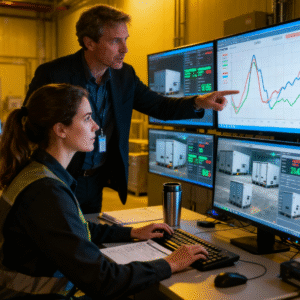
What Happened
The pharmaceutical cold chain market continues expanding as demand increases for biologics, specialty medicines, vaccines and advanced therapies.
However, industry analysis highlights that growth is occurring alongside increasing supply chain complexity.
Modern pharmaceutical logistics networks now face challenges including:
- geopolitical disruptions
- transportation instability
- regulatory changes
- limited shipment visibility
The industry is shifting from a traditional focus on maintaining temperature toward a broader objective:
protecting product integrity across the entire supply network.
How It Works
A modern pharmaceutical cold chain involves multiple connected stages:
- manufacturing facilities
- packaging operations
- GDP warehouses
- airports
- transportation providers
- hospitals and healthcare facilities
Each transition creates potential risk.
Traditional cold chain management focused mainly on:
- maintaining temperature range
- recording shipment history
New-generation systems increasingly combine:
Real-Time Monitoring
Including:
- temperature sensors
- location tracking
- shipment status
Predictive Analytics
Used to identify:
- delay risks
- temperature excursion probability
- route problems
Supply Chain Visibility
Extending beyond direct suppliers to include:
- subcontractors
- airports
- ports
- logistics hubs
Why It Matters
Pharmaceutical products are becoming increasingly sensitive.
Examples include:
- monoclonal antibodies
- vaccines
- cell therapies
- gene therapies
These products often require:
- strict temperature ranges
- validated packaging
- controlled handling procedures
A shipment failure may result in:
- product loss
- regulatory investigation
- delayed patient treatment
At the same time, global logistics networks are becoming more vulnerable.
A product may remain within temperature limits but still face risk from:
- transportation delays
- customs issues
- route disruptions
Therefore, temperature control alone is no longer enough.
B2B Impact
For pharmaceutical manufacturers:
Future supply chains will require:
- broader supplier visibility
- alternative logistics routes
- stronger contingency planning
For logistics providers:
Healthcare customers increasingly require:
- GDP compliance
- digital monitoring
- proactive intervention
For cold storage operators:
Demand continues increasing for:
- pharmaceutical-grade warehouses
- multi-temperature storage
- digital monitoring
For packaging suppliers:
Growth opportunities include:
- PCM shippers
- reusable containers
- smart temperature indicators
For technology companies:
Future pharma cold chains will depend on:
- AI prediction
- digital twins
- connected monitoring systems
Final Insight
The pharmaceutical cold chain is evolving.
The industry is moving from:
“maintaining temperature”
toward:
“managing risk across the entire supply chain.”
Future cold chain leaders will combine:
- thermal protection
- digital visibility
- predictive analytics
- operational resilience
into one integrated healthcare logistics ecosystem.