


Peli BioThermal Unveils New Cold Chain Packaging Innovations at LogiPharma Europe 2026
Peli BioThermal Unveils New Cold Chain Packaging Innovations at LogiPharma Europe 2026
Peli BioThermal Showcases Next-Generation Cold Chain Packaging
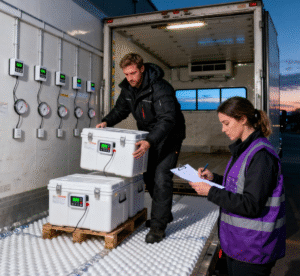
Peli BioThermal has unveiled a series of new cold chain packaging innovations at LogiPharma Europe 2026, highlighting advances in temperature-controlled shipping for pharmaceutical and life sciences applications.
The company confirmed it will present multiple solutions designed to improve reliability, sustainability, and visibility across increasingly complex global supply chains.
New Packaging Solutions Focus on Performance and Sustainability
Among the key products introduced are:
- Vēro One recyclable dry ice shipper, designed for curb-side recyclability
- Crēdo Vault bulk shipper, targeting large-volume pharmaceutical transport
- Expanded dry vapor shipper (DV10) portfolio
These solutions are intended to provide flexible and reliable temperature control across different shipping scenarios, from bulk distribution to last-mile delivery.
Smart Monitoring Enhances Cold Chain Visibility
A major highlight is the introduction of the SmartCap system for DV10 dewars, which enhances:
- Real-time shipment visibility
- At-a-glance status monitoring
- Traceability across transport stages
According to the company, the system can improve performance stability by over 12% in certain configurations and maintain effective cooling performance for more than eight days in some use cases.
Addressing Increasing Complexity in Pharma Cold Chain
The launch reflects growing challenges in the pharmaceutical cold chain, including:
- Rising demand for biologics and advanced therapies
- More complex global logistics networks
- Higher expectations for reliability and compliance
Peli BioThermal emphasized that its product development is focused on reducing risk and ensuring temperature integrity throughout the supply chain.
Implications for Cold Chain Packaging Suppliers
For B2B stakeholders, this development highlights several key trends:
- Increasing demand for recyclable and sustainable packaging solutions
- Growing importance of integrated monitoring and packaging systems
- Shift toward long-duration and high-performance thermal solutions
As pharmaceutical logistics continue to evolve, packaging systems are becoming more critical in ensuring safe and compliant delivery of temperature-sensitive products.
Biopharma Cold Chain Logistics Market Growth Driven by Regulation and Advanced Therapies
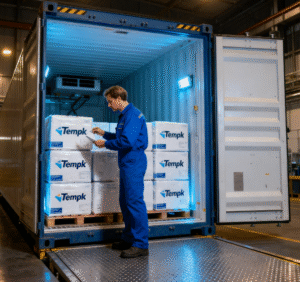
Biopharma Cold Chain Logistics Market Expands Rapidly
A newly released market report highlights strong growth in the biopharmaceutical cold chain logistics sector, driven by new therapies, stricter regulations, and technological innovation.
The report projects the market to grow significantly from USD 140 billion in 2025 to over USD 384 billion by 2032, reflecting increasing demand for reliable temperature-controlled logistics.
New Therapies and Regulations Drive Demand
The analysis identifies several key growth drivers:
- Expansion of biologics and advanced therapies
- Increasing regulatory requirements for temperature control
- Rising demand for secure global pharmaceutical distribution
These factors are reshaping expectations for cold chain performance and compliance.
Digital Tracking and Cold Chain Integrity
The report also emphasizes the role of digital tracking and monitoring technologies in improving cold chain integrity.
Real-time data, visibility tools, and predictive analytics are becoming critical for managing complex global supply chains and ensuring product safety.
Implications for Packaging and Solution Providers
For packaging manufacturers and cold chain solution providers, the findings indicate:
- Growing need for integrated packaging + logistics solutions
- Increased demand for validated temperature-controlled systems
- Greater reliance on data-driven cold chain management
This reinforces the importance of combining packaging performance with monitoring and compliance capabilities.
Cold Chain Technologies Announces Net Zero Strategy for Sustainable Thermal Packaging

Cold Chain Technologies Targets Net Zero Emissions by 2050
Cold Chain Technologies (CCT) has announced a commitment to achieve net-zero emissions by 2050, signaling a major shift toward sustainability in cold chain packaging and logistics.
The company, a global provider of temperature-controlled packaging solutions for the life sciences sector, highlighted its role in transporting millions of temperature-sensitive shipments, including pharmaceuticals and vaccines.
Focus on Recyclable and Reusable Thermal Packaging
As part of its strategy, CCT is increasing investment in:
- Recyclable parcel shippers
- Reusable pallet systems
- Packaging designed for volumetric efficiency
The company stated that its solutions aim to reduce landfill waste and improve environmental performance without compromising thermal protection.
Sustainability Becomes a Core Cold Chain Requirement
CCT emphasized that sustainability is no longer optional in cold chain operations. Instead, it is becoming a key requirement for pharmaceutical and life sciences companies seeking to reduce carbon emissions across global supply chains.
The company also plans to align its targets with Science Based Targets initiative (SBTi) standards, reinforcing the industry’s move toward measurable environmental accountability.
Industry Implications
For cold chain packaging suppliers and buyers, this announcement highlights several trends:
- Growing demand for reusable and recyclable packaging systems
- Increasing importance of sustainability in procurement decisions
- Shift toward integrated packaging + environmental strategy
This development positions sustainability as a major competitive factor in the cold chain packaging market.
Global Biopharmaceutical Cold Chain Packaging Market Forecast to Nearly Double by 2033
Biopharmaceutical Cold Chain Packaging Set for Strong Growth Through 2033

A newly released market study from DataM Intelligence shows the global biopharmaceutical cold chain packaging market is on track for robust expansion over the next decade. The research indicates the market’s value, estimated at USD 4.81 Billion in 2025, is expected to reach approximately USD 9.11 Billion by 2033, representing a compound annual growth rate (CAGR) of around 7.4%.
The forecast emphasizes that rising demand for temperature-controlled solutions—spanning biologics, vaccines, cell and gene therapies—is a major driver of growth. As novel therapies proliferate globally, maintaining strict temperature integrity from manufacturing to patient delivery has become a strategic priority for pharmaceutical companies and logistics providers alike.
Key Drivers Shaping Cold Chain Packaging Demand
Several factors are cited as shaping the future trajectory of the biopharmaceutical cold chain packaging sector:
- Biologics and Advanced Therapies — Accelerating global demand for mRNA, gene therapies, and other biologics increases the need for ultra‑cold and precision‑controlled packaging infrastructure.
- Regulatory Requirements — Stricter temperature validation and traceability standards, including alignment with WHO and FDA guidelines, are prompting broader use of compliant thermal packaging systems.
- Smart & Sustainable Packaging Innovations — Adoption of IoT‑enabled monitoring, phase change materials (PCM), and recyclable packaging formats improves real‑time visibility and reduces environmental impact.
- Geographic Expansion — Growth in Asia‑Pacific and other emerging markets is expanding distribution networks for cold chain medicines and vaccines.
The report highlights that North America currently leads the market with around 42.6% share, underpinned by advanced healthcare infrastructure and stringent regulatory frameworks, while Asia‑Pacific shows the fastest expansion potential.
What This Means for Packaging Suppliers and Logistics Providers
For manufacturers and suppliers of cold chain packaging solutions, the projected growth underscores the importance of innovation in thermal protection and end‑to‑end temperature control.
Key implications include:
- Rising demand for engineered, performance‑tested packaging systems
- Integration of real‑time monitoring and data logging technologies
- Greater adoption of reusable and sustainable solutions
This trend is notable not just for pharmaceutical logistics but also for broader temperature‑sensitive supply chains, including biologics, specialty drugs, and high‑value food distribution.
Study Finds EPS Cold Chain Packaging Performance Changes in Aircraft Cargo Conditions
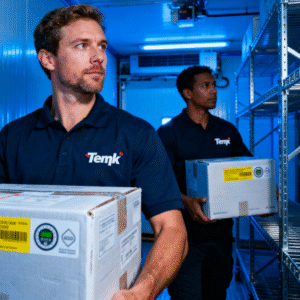
New Research Examines Cold Chain Packaging Behavior in Air Transport
A newly published scientific study is drawing attention to how EPS foam cold chain packaging performs under aircraft cargo conditions, highlighting potential risks for temperature-sensitive shipments.
The research, published in March 2026, investigates how foam boxes combined with ice-based cooling systems behave in low-pressure environments typical of aircraft cargo holds.
Aircraft Conditions Alter Thermal Performance
According to the study, the reduced air pressure and environmental changes during flight significantly influence heat transfer inside packaging systems.
Using simulation models and temperature field analysis, researchers found that:
- Thermal behavior differs between ground and flight environments
- Cooling efficiency may decrease under low-pressure conditions
- Temperature distribution inside packaging becomes less predictable
These findings suggest that standard ground-based validation may not fully reflect real transport conditions.
Implications for Pharma and Food Cold Chain Logistics
The results are particularly relevant for:
- Pharmaceutical shipments (biologics, vaccines)
- Temperature-sensitive food logistics
- Long-haul air freight operations
Even small deviations in thermal performance can increase the risk of temperature excursions, potentially affecting product quality and regulatory compliance.
Need for Route-Specific Packaging Validation
The study highlights a growing industry requirement:
👉 Cold chain packaging must be validated for specific transport conditions, not just standard test environments
This includes:
- Air transport simulation
- Environmental modeling
- Real-world performance testing
As cold chain logistics become more complex, packaging validation is moving toward scenario-based testing rather than generalized standards.
Industry Impact
For cold chain packaging manufacturers and solution providers, the study reinforces several key trends:
- Increased demand for high-performance insulation systems
- Greater focus on scientifically validated packaging design
- Need for packaging that performs consistently across air, ground, and last-mile transport
SOCO Launches ICEBANK™ Gel Ice Pack Series for Sustainable Cold Chain Cooling Solutions
SOCO Introduces New Gel Ice Pack Technology at ISTA Forum
SOCO Group has unveiled its latest ICEBANK™ series gel ice packs at the ISTA Forum USA, presenting a new generation of cooling solutions designed for cold chain logistics across food, pharmaceutical, and medical applications.
The product lineup includes multiple gel ice pack variants with different performance characteristics, addressing a wide range of temperature-controlled shipping requirements.
High-Performance Cooling with Sustainable Materials
According to the announcement, the ICEBANK™ series is built around advanced polymer formulations capable of:
- Absorbing up to 430 times their weight in water
- Forming stable gel structures for 48–72 hours of cooling duration
- Maintaining integrity during storage and transport without leakage
In addition, several variants are designed with biodegradable materials, aligning with increasing regulatory and environmental pressures on cold chain packaging.
Expansion into PCM and Sub-Zero Applications
The new portfolio also includes specialized solutions such as:
- -10°C phase change ice packs for deep-freeze logistics
- Reusable and leak-proof designs for vaccine transport
- Water-soluble cooling materials that simplify disposal and wastewater handling
These developments highlight ongoing innovation in PCM-based cold chain packaging, particularly for pharmaceutical and ultra-low-temperature logistics.
Integrated Manufacturing Solutions for B2B Clients
Beyond the cooling materials themselves, SOCO also introduced a complete gel ice pack production solution, including:
- Laminated film materials
- Automated filling and sealing equipment
- Polymer formulations and technical support
This approach enables customers to build or scale their own manufacturing lines, reflecting a shift toward end-to-end cold chain packaging solutions rather than standalone products.
Market Implications
For cold chain packaging suppliers and buyers, this launch signals several important trends:
- Increasing demand for high-performance gel ice packs and PCM solutions
- Strong push toward sustainable and biodegradable materials
- Growing interest in integrated production and supply chain solutions
As cold chain logistics continues to expand across food, healthcare, and e-commerce sectors, advanced cooling media like ICEBANK™ are becoming a key component of reliable temperature-controlled shipping systems.
Cold Chain Packaging Must Withstand Extreme Conditions in Food and Pharma Logistics, Study Finds
Cold Chain Packaging Faces Harsh Real-World Conditions
A recent industry analysis highlights how cold chain packaging is being pushed to perform under increasingly demanding real-world conditions, particularly in food and pharmaceutical logistics.
According to newly published content, packaging used in cold chain environments must withstand exposure to moisture, low temperatures, and heavy handling during transport. Systems that are not specifically designed for these conditions can degrade quickly, increasing the risk of spoilage and product loss.
Performance and Durability Becoming Critical Design Factors
The analysis points out that cold chain packaging is no longer just about insulation. It must also deliver:
- Structural durability under wet and cold conditions
- Consistent thermal performance during transport
- Resistance to mechanical stress during handling
For products such as seafood, poultry, and temperature-sensitive pharmaceuticals, packaging failure can directly impact product safety and supply chain efficiency.
Increasing Demand for Cold-Chain-Specific Packaging Solutions
As logistics environments become more complex, the industry is moving away from general-purpose packaging toward cold-chain-specific design.
This includes:
- Specialized insulated packaging systems
- Improved material selection for thermal stability
- Packaging engineered for real-world transport scenarios
For suppliers, this reflects growing demand for packaging solutions that are both performance-driven and application-specific, rather than standardized across all use cases.
Implications for B2B Buyers
For manufacturers, distributors, and cold chain solution providers, the key takeaway is:
- Packaging must be designed for actual transport conditions, not just lab performance
- Durability and thermal reliability are becoming core purchasing criteria
- Demand will increase for packaging systems that can handle moisture, stress, and long transport durations
Cold Chain Technologies Secures New Patent for Advanced Thermal Packaging System

New Patent Strengthens Cold Chain Packaging Design Capabilities
Cold Chain Technologies has secured a newly granted U.S. patent covering an advanced system for transporting temperature-sensitive materials, marking a significant development in cold chain packaging design.
The patent, granted in early 2026, describes a modular insulated shipping system built around a structured inner support and layered insulation materials designed to maintain stable temperature conditions for extended durations.
Multi-Layer Insulation and PCM Integration
According to the patent description, the system combines:
- Multi-layer insulation structures
- Integrated temperature-control materials
- Modular packaging components
This design enables more precise thermal management across a range of shipping conditions. The system is also adaptable for different payload sizes and temperature requirements, including pharmaceutical and biologics transport.
Focus on Extended Duration and Stability
One of the key objectives of the patented system is to maintain products within a defined temperature range for longer periods, especially in environments where external conditions fluctuate.
The configuration includes top and bottom insulation layers, as well as internal placement of temperature-control media, allowing for improved thermal stability compared to conventional packaging solutions.
Industry Implications
For cold chain packaging manufacturers and solution providers, this patent reflects ongoing innovation in:
- Passive thermal packaging systems
- PCM-integrated shipping solutions
- Modular insulated container design
It also highlights increasing demand for packaging that can support long-duration shipments and complex logistics environments, particularly in pharmaceutical cold chain applications.
New Study Reveals Temperature Performance Risks of Foam Cold Chain Packaging in Air Transport

A newly published scientific study has provided fresh insight into the performance of foam-based cold chain packaging systems under aircraft cargo conditions, highlighting potential risks in temperature control during air transport.
The research focuses on EPS foam boxes combined with ice-based cooling systems and analyzes how reduced air pressure and in-flight environmental conditions affect thermal performance. Using simulation models and temperature field analysis, the study demonstrates that packaging behavior can differ significantly between ground conditions and flight environments.
This finding is particularly relevant for pharmaceutical and food cold chain logistics, where air transport is widely used for time-sensitive shipments. Variations in thermal performance can increase the risk of temperature excursions, especially during long-haul transport.
For packaging manufacturers and cold chain solution providers, the study reinforces the importance of route-specific packaging validation. Standard test conditions may not fully reflect real-world shipping environments, especially for air cargo.
From a commercial perspective, this highlights a growing need for more advanced packaging design, simulation tools, and validation methods that account for different transport conditions. Companies that can provide scientifically validated packaging solutions will have a stronger advantage in ensuring product safety and regulatory compliance.
Predictive Cold Chain Packaging Technology Improves Thermal Performance and Cost Efficiency
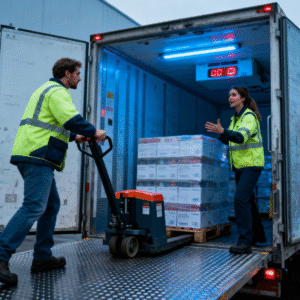
Recent industry analysis highlights a growing shift toward predictive cold chain packaging technology, where thermal protection strategies are tailored to specific shipment conditions rather than using standardized packaging approaches.
This model focuses on optimizing key variables such as insulation configuration, dry ice quantity, and transit duration based on real-world factors like weather conditions, shipping routes, and delivery timelines. Instead of relying on fixed packaging setups, companies are beginning to use data-driven methods to improve both performance and cost efficiency.
One of the main benefits of this approach is the ability to reduce overpacking while maintaining product safety. Excess insulation and coolant materials increase shipping costs, while insufficient protection creates a risk of temperature excursions. Predictive packaging helps balance these factors by aligning packaging design with actual shipment requirements.
From a commercial perspective, this trend is particularly relevant for food delivery, frozen goods, and pharmaceutical logistics, where cost control and product integrity are both critical. As cold chain networks become more complex, packaging is increasingly seen as an active component of logistics optimization rather than just a passive protective layer.
For suppliers, this signals rising demand for higher-performance insulation materials, smarter packaging systems, and solutions that can integrate with data and logistics platforms. Companies that can support customized, route-specific packaging strategies will likely gain a competitive advantage in the evolving cold chain market.