


Erfrierungsgefahr im Gesicht
Gefrorene Gel-Kühlelemente können lokal einen Kältepunkt erzeugen, auch wenn der mittige Temperaturschreiber im erwarteten Bereich bleibt.
Monoklonale Antikörper are often shipped as refrigerated biologische Arzneimittel, wo das Hauptproblem der Verpackung nicht einfach darin besteht, kalt zu bleiben. Der Verpackungsaufbau muss eine Hitzeeinwirkung verhindern, Gefrieren an der Kühlmittelfläche, Karton-Crush, Kondensation, und vibrationsbedingte Beanspruchung bei Übergabe.
Das Produktetikett und die Sponsor-SOP bestimmen das endgültige Sortiment. Für die Verpackungsplanung, Die folgenden allgemeinen Risiken müssen vor der Routenvalidierung entfernt werden.
Gefrorene Gel-Kühlelemente können lokal einen Kältepunkt erzeugen, auch wenn der mittige Temperaturschreiber im erwarteten Bereich bleibt.
Abholen, Flugzeugtransfer, Lagerhaus wohnen, und Empfangsverzögerung erzeugen oft den wärmsten Punkt in der Nähe der Ober- oder Außenwand.
Feuchtigkeit, enge Trennwände, oder starkes Kühlmittel kann Sekundärkartons beschädigen, Etikette, und serialisierte Unterlagen.
| Routenbedingung | Temperaturziel | Verpackungsaufbau | Planung von Kühlelementen oder Trockenshipper | Empfangskontrolle |
|---|---|---|---|---|
| Kontrollierte Kurier- oder Klinikzustellung, 0-8 H | Pflegen 2-8 C-Planung unter Vermeidung von Frostkontakten. | Vorkonditionierter Versandkarton aus EPP oder isoliertem Karton, Nutzlast sleeve, Feuchtigkeitsbarriere, and one Temperaturschreiber near Nutzlast. | Für einen 3-8 L Versender, Versuch 0.8-1.5 kg konditioniert 2-8 C PCM oder gekühlte Gel-Kühlelemente hinter einer Trennwand. | Keine Kältespuren, Trocken etikettieren, Karton intakt, Temperaturaufzeichnung, and Übergabe time. |
| Paket- oder Spezialkurier, 8-24 H | Kühlbereich bis zur Abholung aufbewahren, Sortierung, und Empfangsverzögerung. | Höhere Isolierung, obere und seitliche Pufferpolster, getrennte PCM-Schicht, Zwei Temperaturschreiber-Positionen für warme Kante und kalte Seite. | Starten Sie Probefahrten auf kleinen Fahrspuren 1.5-3.5 kg 2-8 C PCM. Kühlmittel erst nach Überprüfung der Kaltstelle erhöhen. | Warme Kante, kaltes Gesicht, Karton-Crush, Kondensation, und Empfängerverzögerung. |
| Heiße Jahreszeit oder internationale Route, 24-48 H | Vermeiden Sie Hitzeeinwirkung, ohne dass während der Vorkonditionierung oder des Flugtransfers die Gefahr eines Einfrierens besteht. | Validierter Versender, Saisonales Spurprofil, Nutzlast spacer, absorbierende oder feuchtigkeitsregulierende Schicht, and receiver-ready Übergabe plan. | Möglicherweise sind längere Fahrspuren erforderlich 3-6 kg PCM in einem größeren Verlader. Führen Sie Routentests vor kommerziellen Live-Sendungen durch. | Vollständige Kurvenüberprüfung, Restzustand des Kühlmittels, kein nasser Papierkram, und Empfängerabmeldung. |
Verwenden Sie diese Werte als Ausgangspunkt für die Bemusterung und Angebotserstellung. Letztes Kühlmittel, PCM, Trockeneis, Isolierung, Trockenverlader, Temperaturschreiber, and handling choices must be validiert with the real Nutzlast, Fahrbahn, Trägerprozess, Jahreszeit, und Empfangsverfahren.
Load the Antikörper Kartons into a stable Verpackungsaufbau. Benutzen Sie den Transporter nicht zum Kühlen eines warmen Nutzlasts.
Halten Sie PCM- oder Gel-Kühlelemente hinter dem Schaum, gewellt, oder geformte Abstände, damit Kartons keine gefrorene oder überkalte Oberfläche berühren können.
Verwenden Sie Trennwände, die den Karton ohne Kompression halten und den Papierkram von Kondensationszonen fernhalten.
Beim Testen, Platzieren Sie Sensoren an der wahrscheinlich warmen Kante und dem Risikopunkt auf der Kühlmittelseite, nicht nur in der Mitte.
Dies sind die sichtbaren und betrieblichen Probleme, die der Verpackungsaufbau reduzieren sollte, bevor die Sendung den Empfänger erreicht.
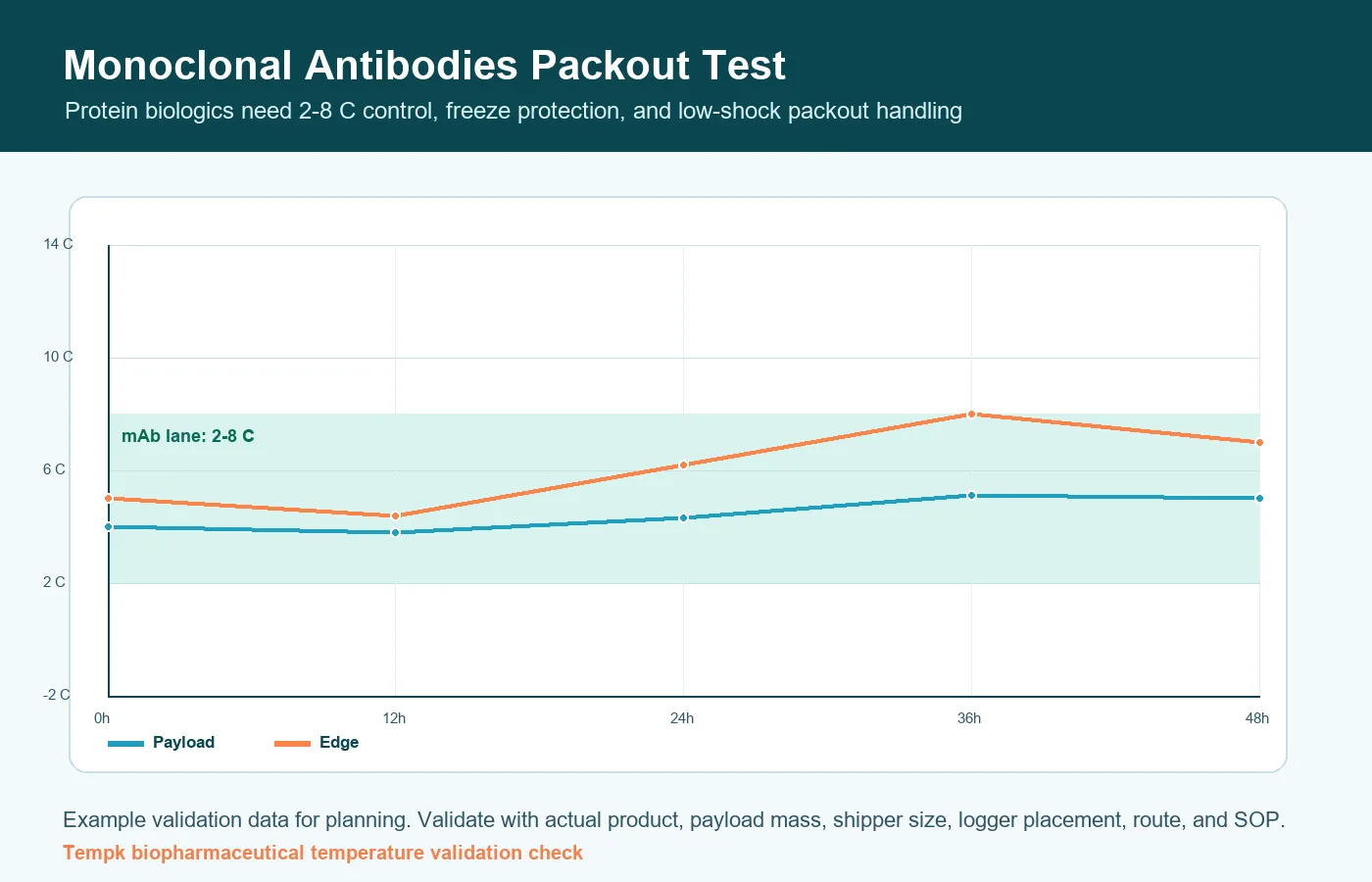
Nutzen Sie die Testkurve als Arbeitsvergleich, dann mit der tatsächlichen Nutzlast validieren, Absender, Kühlmittel- oder Trockenshipper-Konfiguration, Spurdauer, Umgebungsprofil, und Empfangsprozess.
Nutzen Sie diese Seiten, um nahegelegene biologische Arzneimittelrouten zu vergleichen, Kühlmittelauswahl, Isolierungsmöglichkeiten, und Routenrisikofragen vor der Probenahme.
Monoklonale Antikörper are commonly refrigerated biologische Arzneimittel where freeze exposure and vibration can threaten product quality. Die Verpackung sollte die Temperatur halten und Fläschchen oder vorgefüllte Einheiten schützen.
Hauptrisiken sind Frostkontakt, Fläschchen-Bruch, Kartonquetschung, falsche Platzierung des Temperaturschreibers und verzögerter Krankenhausempfang.
Verwenden Sie einen qualifizierten Nutzlast-Hohlraum mit Fläschchenteilern oder Kartonträgern. Lassen Sie das Kühlmittel hinter den Abstandshaltern und sorgen Sie dort für Dämpfung, wo die Fahrspur eine hohe Fahrintensität aufweist.
Verwenden 2 Zu 8 C PCM oder konditionierte Gel-Kühlelemente für validierte Kühlbahnen. Vermeiden Sie Trockeneis, es sei denn, das Produkt ist für den Tiefkühltransport gekennzeichnet.
Check Temperaturschreiber data, Zustand des Fläschchens, Kartonintegrität, und Empfangszeit. Bauen Sie eine vibrationsempfindliche Fahrspur ein, wenn eine Expressabfertigung per Flugzeug erwartet wird.
Monoklonale Antikörper benötigen einen stabilen Kühltransport und Schutz vor Frost. Der Verpackungsaufbau sollte Fläschchen oder Kartons sicher halten, damit Vibrationen und Stöße nicht zu einem versteckten Risiko werden.
Verwenden 2 Zu 8 C PCM oder konditionierte Gel-Kühlelemente hinter Abstandshaltern. Fügen Sie Fläschchenteiler hinzu, ein geschützter Nutzlasthohlraum, und ein Temperaturschreiber, der zusammen mit dem Medikament und nicht neben dem Kühlmittel platziert wird.
Die Tempk-Validierung sollte die Anzahl der Fläschchen umfassen, Karton zu Ihnen, Streckendauer, Luftexpressabfertigung, und Empfangsverzögerung. Überprüfen Sie die Mindesttemperatur, vibrationsempfindliche Schäden, Kartonintegrität, and Temperaturschreiber data.
Custom Verpackungsaufbau support
Für feste Kartongrößen, Nutzlast limits, Branding-Anforderungen, Saisonspuren, oder Validierungsziele, Tempk kann diese Lösung in einen maßgeschneiderten Kühlketten-Verpackungsaufbau umwandeln.
Share the Antikörper presentation, Kartonanzahl, Zielbereich, Versendergröße, Streckendauer, Umgebungsprofil, Übergabe points, und Temperaturschreiber-Anforderung. Tempk kann dabei helfen, die PCM-Masse zu vergleichen, Isolierung, Trennstruktur, und Validierungslayout.
Request a Verpackungsaufbau review