


Congelación del tubo o exposición al calor
Frozen acumuladores de gel, paredes frías, summer handoff, and long receiving dwell can all create local temperature risk.
Blood muestra shipments should be planned from the test requirement and tubo format. The configuración de embalaje has to protect the temperature range, tubo caps, etiquetas, absorbente layer, and receiving record at the same time.
Una muestra de sangre puede llegar con buena temperatura media y aun así ser rechazada si un tubo se congeló junto al refrigerante, filtró dentro de la bolsa o perdió su registro de custodia.
Frozen acumuladores de gel, paredes frías, summer handoff, and long receiving dwell can all create local temperature risk.
Loose tubos, refrigerante pesado, or no rack support can press caps, crack glass, or wet the paperwork.
Labs need clear records: muestra list, curva de temperatura, tiempo de transferencia, and container condition.
| Condición de ruta | Objetivo de temperatura | Configuración de embalaje | Planificación de refrigerante o hielo seco | Verificación de recepción |
|---|---|---|---|---|
| Same-day local courier, 0-8 h | Sigue el protocolo del laboratorio.. For refrigerated tests, planificar alrededor 2-8 C without freezing the tubos. | Small EPP or insulated carton shipper, upright tubo rack, bolsa secundaria sellada, absorbente layer, divisor de refrigerante, and one registrador near the warm edge. | Ensayo 0.6-1.5 kg conditioned acumuladores de gel or 2-8 C PCM para un 3-8 L remitente. Reduce coolant if winter freeze risk is high. | Sin fugas, cap tightness, tubo support, no freeze marks, legibilidad de la etiqueta, and pickup-to-receipt time. |
| Regional courier or parcel, 8-24 h | Hold the required temperature through sorting, estancia del vehículo, y retraso en la recepción del laboratorio. | Mayor aislamiento, stronger tubo dividers, absorbente embalaje secundario, top and side coolant separated from tubos, and two registrador positions. | Empezar 1.5-3 kg acondicionados 2-8 C coolant for small shippers; test warm edge and cold face before live use. | Registro de temperatura, cold-side tubo condition, documentos secos, receiving notes, and chain handoff. |
| Frozen blood fraction or protocol-specific frozen test | Use the requested frozen range and avoid thaw-refreeze during handoff. | Transportista congelado, protected muestra rack, hielo seco separation layer, embalaje exterior ventilado, contención secundaria absorbente, and document sleeve away from frost. | Use hielo seco only when protocol and carrier rules allow. Small trial lanes often begin around 2-6 kg hielo seco for 0-24 h, luego validar. | Remaining hielo seco, no hay evidencia de deshielo, rack stability, etiquetas legibles, y transferencia inmediata al congelador. |
Utilice estos valores como puntos de partida para el muestreo y la cotización.. refrigerante final, PCM, hielo seco, aislamiento, embalaje secundario, registrador, y las opciones de manipulación deben validarse con el contenedor real de la muestra., ruta, proceso de transporte, estación, clasificación, y procedimiento de recepción.
Do not choose coolant until the lab requirement, tubo type, tiempo máximo de transporte, and receiving window are clear.
Use racks or sleeves so tubos cannot collide, tip over, or press directly against coolant.
Use a sealed secondary bag and enough absorbente material for the tubo volume and route risk.
During validation, check the warm edge and the cold-side position close to coolant, no solo el centro.
Estos son los problemas visibles y operativos que la configuración de embalaje debe reducir antes de que el envío llegue al receptor.
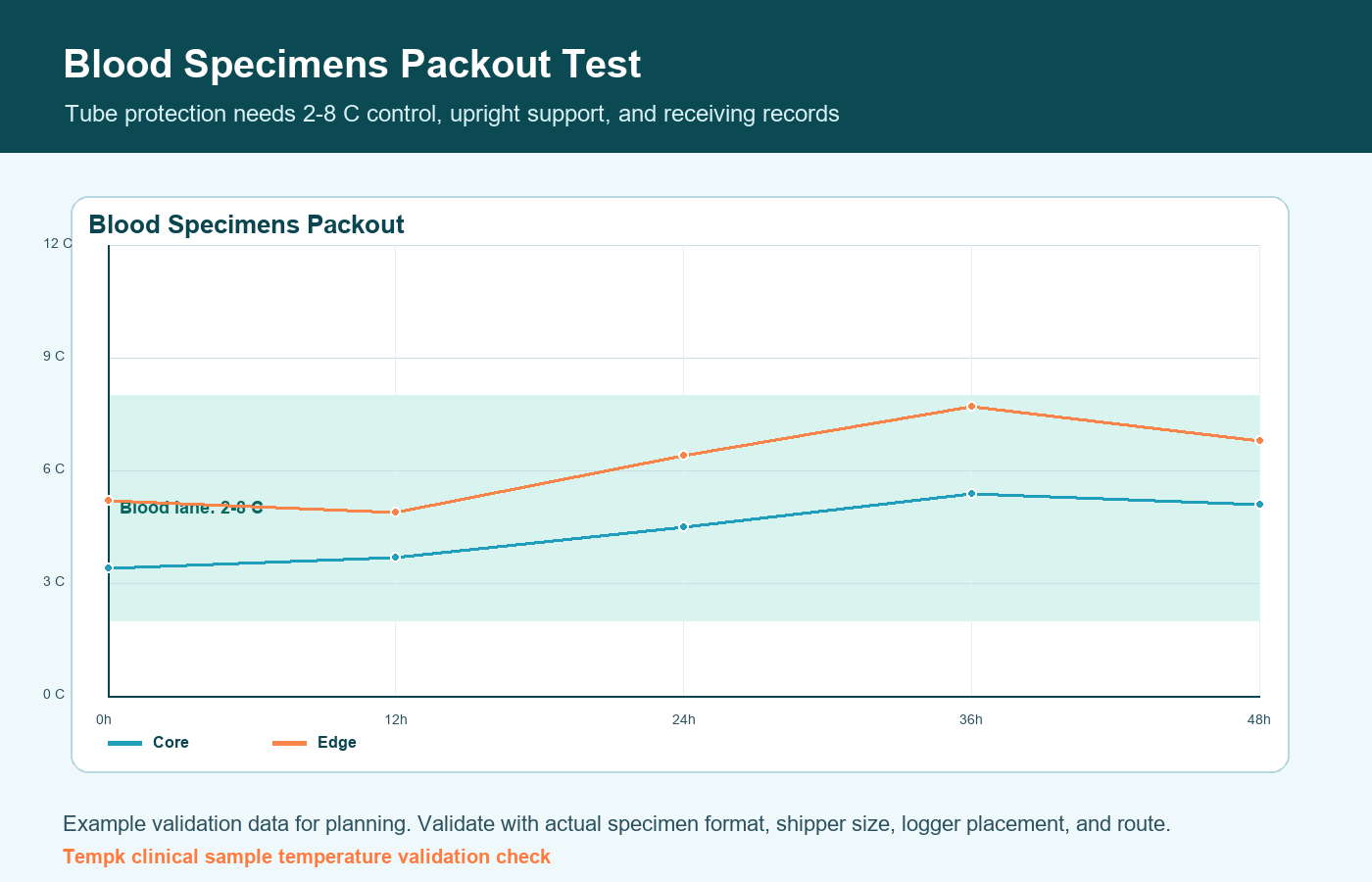
Utilice la curva de prueba como comparación de trabajo, luego validar con el contenedor de muestra real, expedidor, configuración de refrigerante o hielo seco, duración del carril, perfil ambiental, y proceso de recepción.
Utilice estas páginas para comparar rutas clínicas y médicas cercanas, opciones de refrigerante, opciones de aislamiento, y preguntas sobre riesgos de ruta antes del muestreo.
Blood muestras need temperature control that matches the test while preventing tubo breakage and hemolysis. The configuración de embalaje must also keep paperwork and labels readable.
Common problems are hemolysis from rough handling, tubos con fuga, delayed lab receipt, and coolant touching tubos that should not freeze.
Use tubo racks or sleeves, absorbente embalaje secundario, y un cargador exterior rígido. Keep requisition forms outside the wet or cold zone.
Use chilled acumuladores de gel only when the assay requires 2 a 8 do. For ambient tests, use protective packaging without unnecessary cold packs.
Check tubo integrity, legibilidad de la etiqueta, fuga, temperatura, and lab acceptance after the trial route.
Custom configuración de embalaje support
Para tamaños de cartón fijos, límites de carga útil, requisitos de marca, carriles estacionales, o objetivos de validación, Tempk can adapt this solution into a custom cold-chain configuración de embalaje.
Share the tubo type, muestra count, protocol temperature, duración de la ruta, perfil ambiental, pasos de mensajería, clasificación, y verificación de recibos. Tempk puede ayudar a comparar el transportista, masa refrigerante, tubo support, absorbente layer, registrador position, y plan de validación.
Request a configuración de embalaje review