


Modo de temperatura incorrecto
Fresco, fijado, y las rutas de tejido congelado pueden necesitar un manejo diferente; asumir una ruta fría puede crear problemas de recepción.
El empaque de muestra de biopsia y tejido depende de si la muestra está fresca., fijado, o congelado. Una misma caja no puede cubrir con seguridad las tres rutas sin consultar el protocolo de recogida, recipiente, riesgo de fuga, y fecha límite de recepción.
Las muestras de tejido son sensibles a errores de temperatura y manipulación. La configuración debe evitar fugas, aplastamiento, errores de congelación-descongelación y daño documental.
Fresco, fijado, y las rutas de tejido congelado pueden necesitar un manejo diferente; asumir una ruta fría puede crear problemas de recepción.
Los contenedores de líquidos necesitan un soporte vertical, absorbente embalaje secundario, y documentos protegidos lejos de zonas húmedas.
Los contenedores de tejido pequeños pueden moverse dentro de un transportador grande a menos que el acolchado y los divisores tengan el tamaño adecuado para la carga útil..
| Condición de ruta | Objetivo de temperatura | Configuración de embalaje | Planificación de refrigerante o hielo seco | Verificación de recepción |
|---|---|---|---|---|
| Fresh tejido, ruta de diagnóstico corta | Sigue el protocolo del laboratorio.. Muchas rutas de tejido fresco utilizan 2-8 C y ventanas de transferencia cortas. | Contenedor primario rígido resistente a fugas, absorbente embalaje secundario, amortiguación, divisor de refrigerante, y registrarse cerca de la carga útil. | Por un 3-8 L remitente, ensayo 0.8-2 kg acondicionados 2-8 C Acumuladores PCM o gel para rutas locales. Evite el contacto directo con el refrigerante. | Sin fugas, tejido container stable, sin congelación, formulario de solicitud seca, y tiempo de recepción. |
| Ruta de protocolo de tejido fijo o ambiente. | Utilice el protocolo de recogida. Es posible que algunas muestras fijas no necesiten refrigerante refrigerado, pero aún necesita protección contra fugas y documentos. | Cargador exterior rígido, soporte vertical, capa secundaria absorbente, amortiguación, y funda para documentos separada. | Se puede utilizar aislamiento para amortiguar la temperatura.. Evite agregar compresas frías a menos que el protocolo del laboratorio las solicite.. | Contenedor intacto, tapa sellada, no hay líquido en la bolsa exterior, etiquetas legibles, y récord en cadena. |
| Ruta de prueba de tejido congelado o molecular. | Mantenga la condición de congelado cuando sea necesario y evite descongelar y volver a congelar durante la transferencia.. | Hielo seco shipper, estante muestra congelados, hielo seco barrier, envasado ventilado, contención secundaria absorbente, y documentos protegidos contra heladas. | Pequeños carriles de tejido congelado pueden comenzar alrededor 2-6 kg hielo seco for 0-24 mano 6-12 kg para rutas más largas o calurosas, luego validar. | Remaining hielo seco, no hay evidencia de deshielo, muestra rack stable, papeleo seco, y transferencia al congelador en la recepción. |
Utilice estos valores como puntos de partida para el muestreo y la cotización.. refrigerante final, PCM, hielo seco, aislamiento, embalaje secundario, registrador, y las opciones de manipulación deben validarse con el contenedor real de la muestra., ruta, proceso de transporte, estación, clasificación, y procedimiento de recepción.
Confirme el estado de la muestra antes de elegir el refrigerante refrigerado., buffer ambiental, or hielo seco.
Utilice amortiguación y soporte vertical para que los contenedores pequeños no golpeen la pared del transportista o el bloque de refrigerante..
Combine el contenedor primario con el embalaje absorbente secundario y mantenga los formularios de solicitud fuera de zonas húmedas o heladas..
Las pruebas de ruta deben incluir el retraso en la recogida, transferencia de laboratorio, tiempo de recepción, e inspección de contenedores.
Estos son los problemas visibles y operativos que la configuración de embalaje debe reducir antes de que el envío llegue al receptor.
Utilice la curva de prueba como comparación de trabajo, luego validar con el contenedor de muestra real, expedidor, configuración de refrigerante o hielo seco, duración del carril, perfil ambiental, y proceso de recepción.
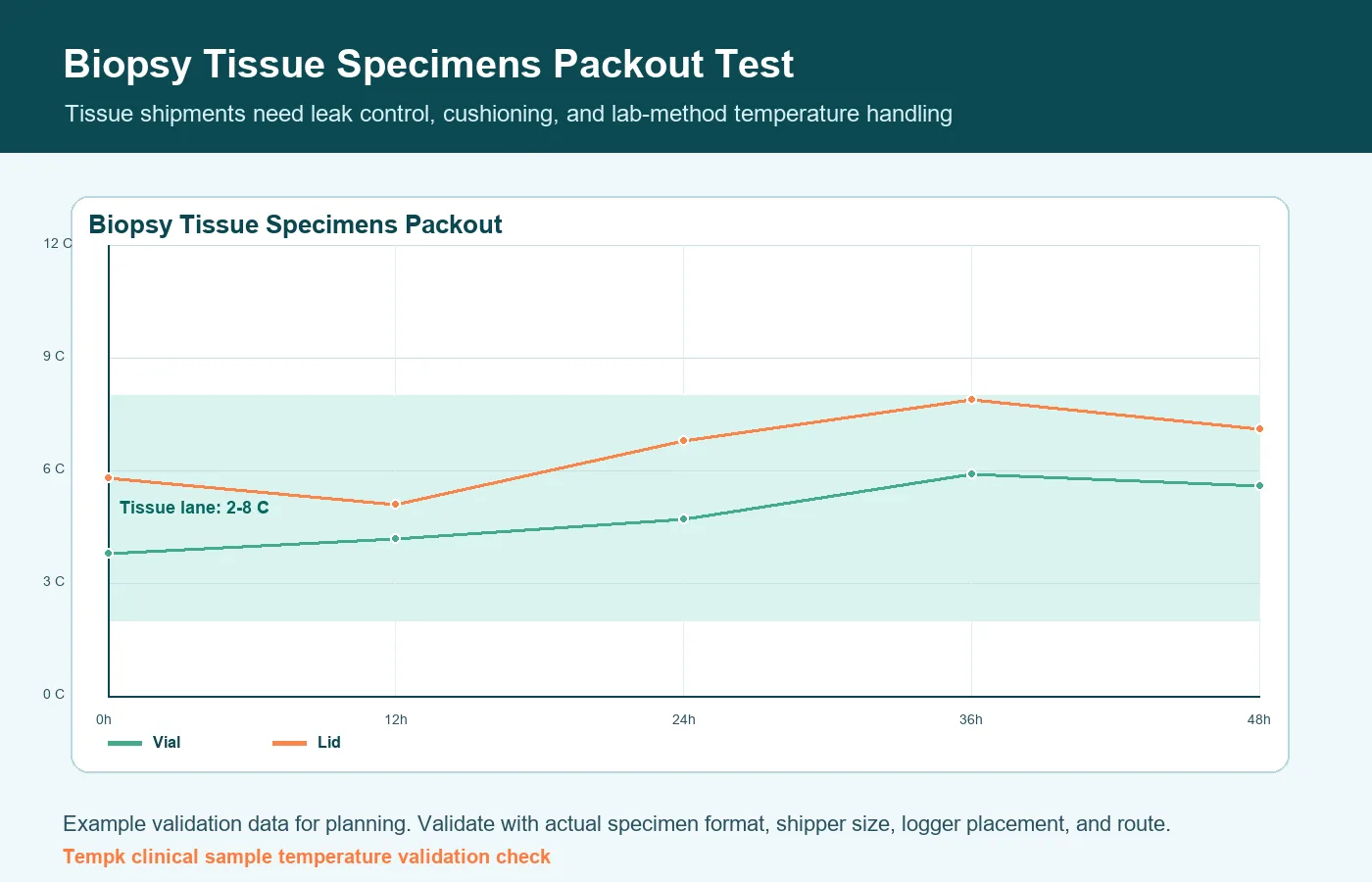
Utilice estas páginas para comparar rutas clínicas y médicas cercanas, opciones de refrigerante, opciones de aislamiento, y preguntas sobre riesgos de ruta antes del muestreo.
Biopsia and muestras de tejido are not a single temperature category. Fresh tejido, preserved tejido, and frozen tejido can require different configuración de embalajes for the same route.
Las pérdidas incluyen tejido congelado descongelado., tejido seco, contenedores con fugas, daño del contenedor de formalina, y ventanas de recepción de laboratorio perdidas.
Utilice contención secundaria rígida, absorbente material, y un bolsillo para documentos. Proteja los frascos de muestra del refrigerante duro y del impacto contra la pared exterior..
Usa gel frío, hielo seco, o sin refrigerante según el método de conservación y las instrucciones de laboratorio. El tejido congelado debe validarse por separado de las muestras fijadas..
Confirmar conservante, muestra temperature, integridad del contenedor, papeleo, y criterios de aceptación del laboratorio antes de liberar el carril.
Custom configuración de embalaje support
Para tamaños de cartón fijos, límites de carga útil, requisitos de marca, carriles estacionales, o objetivos de validación, Tempk can adapt this solution into a custom cold-chain configuración de embalaje.
Comparte si el tejido está fresco., fijado, o congelado, más el tamaño del contenedor, temperatura objetivo, duración de la ruta, perfil ambiental, hielo seco allowance, y fecha límite de recepción. Tempk puede ayudar a comparar el transportista, refrigerante, hielo seco, amortiguación, absorbente layer, y diseño de validación.
Request a configuración de embalaje review