


Fuga del tubo o presión de tapa
Los tubos sueltos y los transportistas demasiado llenos pueden presionar las tapas contra los divisores o los paquetes de refrigerante..
Los envíos de hisopo PCR muestra generalmente se juzgan por la temperatura., integridad del tubo, muestra identification, y transferencia de diagnóstico rápida. The configuración de embalaje should prevent leakage, presión de la tapa, mezcla de tubos, y evite descongelar y volver a congelar si se requiere manipulación congelada.
Las rutas de hisopo PCR a menudo parecen simples porque la carga útil es pequeña. El riesgo es que los tubos pequeños se muevan, Las tapas presionan contra el refrigerante o los divisores., los registros se mezclan, o muestras calientes durante el retraso de recepción.
Los tubos sueltos y los transportistas demasiado llenos pueden presionar las tapas contra los divisores o los paquetes de refrigerante..
Algunos protocolos aceptan transporte refrigerado a corto plazo, mientras que otros requieren manipulación congelada en caso de retrasos..
Las rutas hisopo de gran volumen necesitan un etiquetado limpio, listas de muestra, y registros de transferencia para que el laboratorio pueda recibir rápidamente.
| Condición de ruta | Objetivo de temperatura | Configuración de embalaje | Planificación de refrigerante o hielo seco | Verificación de recepción |
|---|---|---|---|---|
| Ruta de diagnóstico refrigerado el mismo día, 0-12 h | Sigue el protocolo de recogida. Se planean muchas rutas cortas de hisopo alrededor 2-8 do. | Pequeño cargador aislado, divisor de tubo vertical, bolsa secundaria sellada, absorbente layer, barrera de refrigerante, y lista muestra simple. | Ensayo 0.5-1.5 kg de gel acondicionado o 2-8 C PCM para pequeños transportistas. Mantenga el refrigerante alejado del contacto directo con el tubo.. | Sin fugas, tapas de tubo seguras, muestra list matches, sin congelación, y transferencia rápida del laboratorio. |
| Ruta regional o de riesgo de fin de semana, 12-48 h | Mantenga el alcance requerido durante la permanencia del vehículo, clasificación, y retraso en la recepción del laboratorio. | Mayor aislamiento, refrigerante superior con divisores, bandeja de tubo más fuerte, dos posiciones de registrador, y papeles protegidos. | Empezar 1.5-3 kg de refrigerante acondicionado para transportistas pequeños y medianos, luego ajustar por ruta prueba y temporada. | Temperatura de borde cálido, marcas de presión del tubo, legibilidad de la etiqueta, conteo recibido, y tiempo de entrega. |
| Ruta de hisopo congelada o prueba retrasada | Utilizar manipulación de congelados sólo cuando el protocolo lo requiera y evitar descongelar-recongelar. | Hielo seco shipper or frozen configuración de embalaje, soporte para bastidor de tubos, hielo seco separation, embalaje exterior ventilado, y documentos protegidos contra heladas. | Si se permite hielo seco, Los carriles pequeños pueden comenzar alrededor 2-5 kilos para 0-24 h y más para rutas retrasadas. Validar con el proceso real del transportista. | Remaining hielo seco, sin signos de deshielo, estable de bastidor de tubos, papeleo seco, y transferencia inmediata al congelador. |
Utilice estos valores como puntos de partida para el muestreo y la cotización.. refrigerante final, PCM, hielo seco, aislamiento, embalaje secundario, registrador, y las opciones de manipulación deben validarse con el contenedor real de la muestra., ruta, proceso de transporte, estación, clasificación, y procedimiento de recepción.
VTM, UTM, hisopo seco, y los kits específicos del estudio pueden tener diferentes ventanas de transporte.
Utilice divisores de tubos o bandejas para que los tubos permanezcan separados., las tapas no están comprimidas, y las identificaciones de muestra siguen siendo legibles.
Colocar acumuladores de gel., PCM, o hielo seco detrás de barreras para que los tubos no toquen una superficie fría.
Los programas hisopo de alto volumen deberían hacer que muestra cuente, papeleo, acceso registrador, y transferencia de laboratorio fácil.
Estos son los problemas visibles y operativos que la configuración de embalaje debe reducir antes de que el envío llegue al receptor.
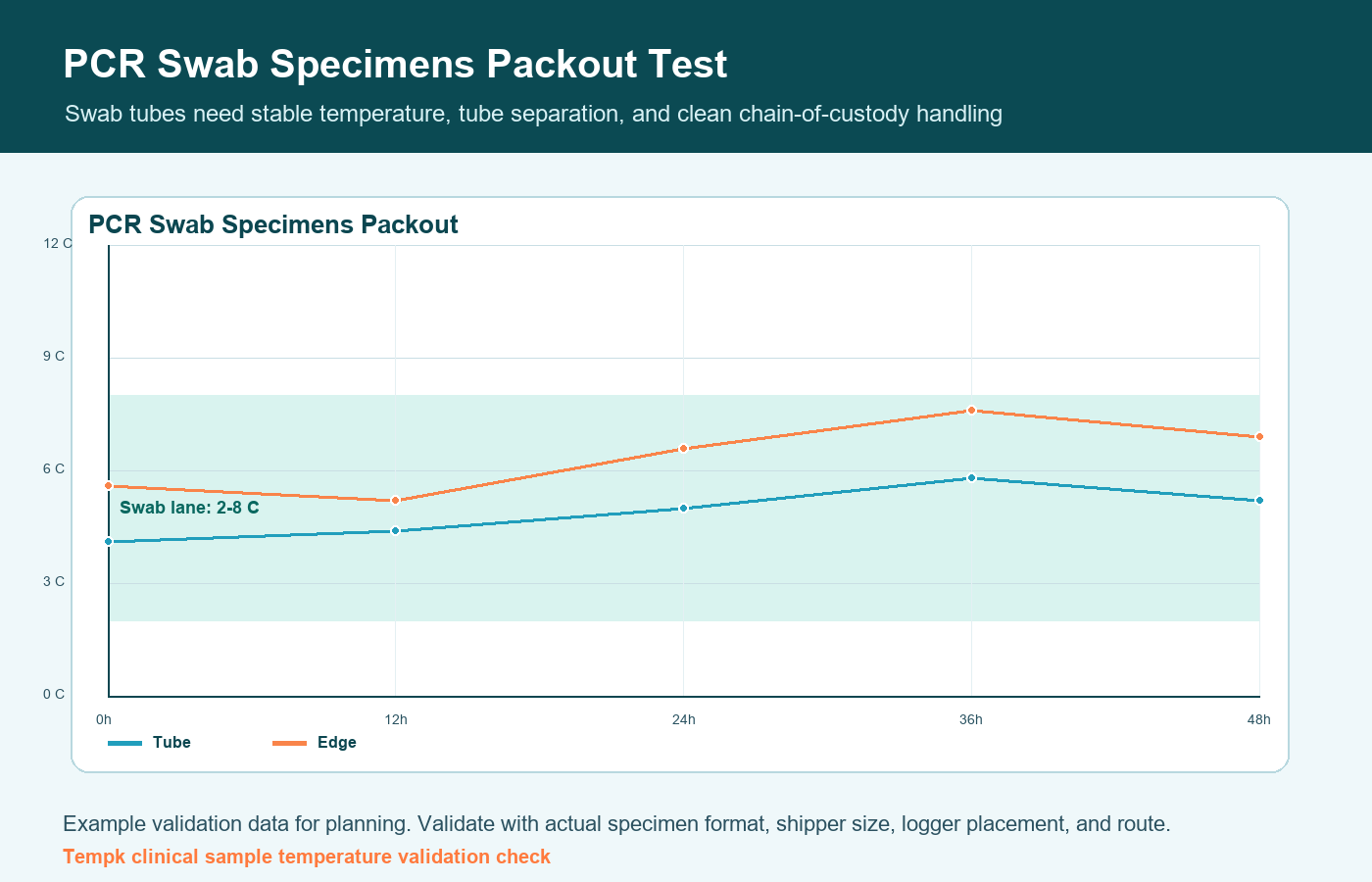
Utilice la curva de prueba como comparación de trabajo, luego validar con el contenedor de muestra real, expedidor, configuración de refrigerante o hielo seco, duración del carril, perfil ambiental, y proceso de recepción.
Utilice estas páginas para comparar rutas clínicas y médicas cercanas, opciones de refrigerante, opciones de aislamiento, y preguntas sobre riesgos de ruta antes del muestreo.
Los hisopos PCR suelen ser urgentes y de gran volumen.. The configuración de embalaje should prevent tubo leakage, mantener las etiquetas legibles, y cumplir con la temperatura requerida del laboratorio.
Las fallas incluyen fugas de medios de transporte., etiquetas ilegibles, excursiones cálidas, tubos congelados cuando no está permitido, y entrega tardía más allá de la ventana de prueba.
Utilice manguitos de tubo, absorbente embalaje secundario, y un cargador rígido. Mantenga las bolsas de muestras organizadas para que el laboratorio pueda procesarlas sin tener que buscar entre los envases húmedos..
Utilice acumuladores de gel frío para pantalones cortos 2 a 8 Rutas C cuando sea necesario. No utilice hielo seco a menos que el laboratorio especifique el transporte congelado..
Verifique la integridad del sello del tubo, legibilidad de la etiqueta, registro de temperatura, y tiempo de entrega al laboratorio de pruebas.
Custom configuración de embalaje support
Para tamaños de cartón fijos, límites de carga útil, requisitos de marca, carriles estacionales, o objetivos de validación, Tempk can adapt this solution into a custom cold-chain configuración de embalaje.
Comparte el medio hisopo, recuento de ganancias, temperatura objetivo, ventana de transporte, perfil ambiental, pasos de mensajería, hielo seco allowance, y proceso de recepción. Tempk puede ayudar a comparar el transportista, disposición del refrigerante, tubo tray, absorbente layer, registrador position, y plan de validación.
Request a configuración de embalaje review