Pengiriman daging giling memerlukan rencana pengemasan yang melindungi suhu dan kondisi fisik kemasan. Untuk pengiriman daging dan unggas, rencana rantai dingin yang paling berguna dibangun berdasarkan bentuk produk sebenarnya, kemasan primer, panjang rute, dan aturan penerimaan.
Daging giling memiliki luas permukaan yang lebih terbuka dibandingkan steak utuh, jadi suhu produk dan integritas paket utama penting pada saat yang bersamaan.
Kemasannya harus menjaga daging sapi dingin mendekati suhu penerimaan yang didinginkan tanpa membekukan permukaan ritel atau memaksa pembersihan melalui segel..
Untuk daging giling beku, jalur yang sama harus dirancang secara terpisah dengan logika pendingin beku dan es kering hanya jika peraturan pengangkut dan tujuan mengizinkannya.
Data perencanaan rantai dingin
| Jendela suhu | 0-4 C dingin; -18 C atau lebih rendah untuk daging giling beku |
|---|---|
| Kelembapan atau kelembapan | Jaga agar rongga pengiriman tetap kering; kontrol pembersihan dengan kemasan utama yang disegel dan bahan penyerap. |
| Pra-pendinginan | Produk yang sudah didinginkan sebelumnya, nampan, dan pengirim terisolasi sebelum memuat; jangan gunakan karton hangat sebagai beban pendinginan pertama. |
| Tekanan kemasan | Hindari penumpukan yang rapat sehingga dapat merusak bentuk baki, chubs, atau paket vakum; gunakan pembagi bila dicampur dengan kemasan protein yang lebih berat. |
| Penempatan cairan pendingin | Tempatkan paket gel di sekeliling dan di atas beban dengan liner atau pembagi; jangan letakkan kemasan beku yang keras langsung pada lapisan tipis ritel. |
| Durasi transit | 24-48 h jalur parsel adalah tipikal; 48-72 h jalur memerlukan pengujian rute dengan berat paket aktual dan musim. |
| Kerugian umum | Kenaikan suhu, kebocoran pembersihan, nampan yang dihancurkan, label basah, perpindahan bau, dan penolakan saat menerima. |
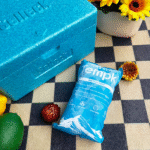
| Paket Tempk yang cocok | Tempk EPS atau kotak berinsulasi dengan lapisan anti bocor, bantalan penyerap, paket gel terpisah, dan logger validasi rute. |
Pendekatan paket yang direkomendasikan
Mulailah dengan produk yang sudah berada dalam kisaran suhu pengiriman. Sebuah pengirim terisolasi tidak diharapkan untuk menurunkan daging hangat ke suhu target selama transit. Gunakan liner anti bocor, bahan penyerap, dan peta cairan pendingin yang menjaga massa dingin cukup dekat untuk mengontrol perolehan panas sekaligus mencegah tekanan langsung atau kontak beku pada kemasan ritel.
Alat pengambilan keputusan yang berguna
Periksa detailnya sebelum Anda memilih kemasan
Alat cepat ini dapat membantu Anda membandingkan risiko rute, kebutuhan ukuran, pilihan pendingin, dan detail kemasan sebelum Anda meminta penawaran.
Kalkulator Paket Es
Perkirakan jumlah paket es gel untuk pengiriman dingin dan perencanaan rute yang praktis.
Perkirakan kantong esPemeriksa Risiko Rute
Tinjau kondisi jalur sebelum memilih kemasan untuk mengetahui kebutuhan pengoperasian sebenarnya.
Periksa risiko ruteReferensi Bahan Isolasi
Bandingkan pilihan bahan insulasi untuk kebutuhan pengemasan rantai dingin yang berbeda.
Bandingkan bahanUntuk rute dingin, Paket gel biasanya diposisikan di sekitar dinding samping dan penutup karena panel atas dan dinding luar mengalami beban panas terbesar selama penanganan parsel. Untuk program yang dibekukan, jalur tersebut harus divalidasi secara terpisah karena es kering, paket gel beku, pelabelan, ventilasi, dan aturan penerimaan operator mengubah paket. Jangan mencampurkan asumsi dingin dan beku dalam uji kualifikasi yang sama.
Pemeriksaan kualitas sebelum dirilis
Sebelum menggunakan paket secara komersial, menjalankan validasi rute dengan ukuran pengirim yang sama, berat produk, massa pendingin, musim, dan layanan kurir. Periksa suhu produk pada saat kedatangan, kekeringan karton, integritas paket utama, bau, kondisi label, dan apakah cairan pendingin berpindah ke kontak langsung dengan produk.
Untuk pemilihan kemasan Tempk, titik awal yang biasa adalah EPS atau kinerja tinggi kotak terisolasi, kapal yang tersegel, dasar penyerap, dan paket gel yang sudah dikondisikan sebelumnya. Massa cairan pendingin akhir harus disesuaikan setelah uji jalur, bukan hanya dipilih dari volume karton. This helps the receiving team see a practical difference between a stable rantai dingin and a package that is merely cold when it leaves the warehouse.
Dasar referensi
Asumsi suhu selaras dengan panduan makanan berpendingin yang banyak digunakan untuk menjaga makanan mudah rusak 40 F / 4 C atau lebih rendah dan program dibekukan di 0 F / -18 C atau lebih rendah. Untuk daging dan unggas, selalu memvalidasi terhadap spesifikasi produk pengirim sendiri, jalur pembawa, dan persyaratan penerimaan tujuan.