


Antibodi Monoklonal
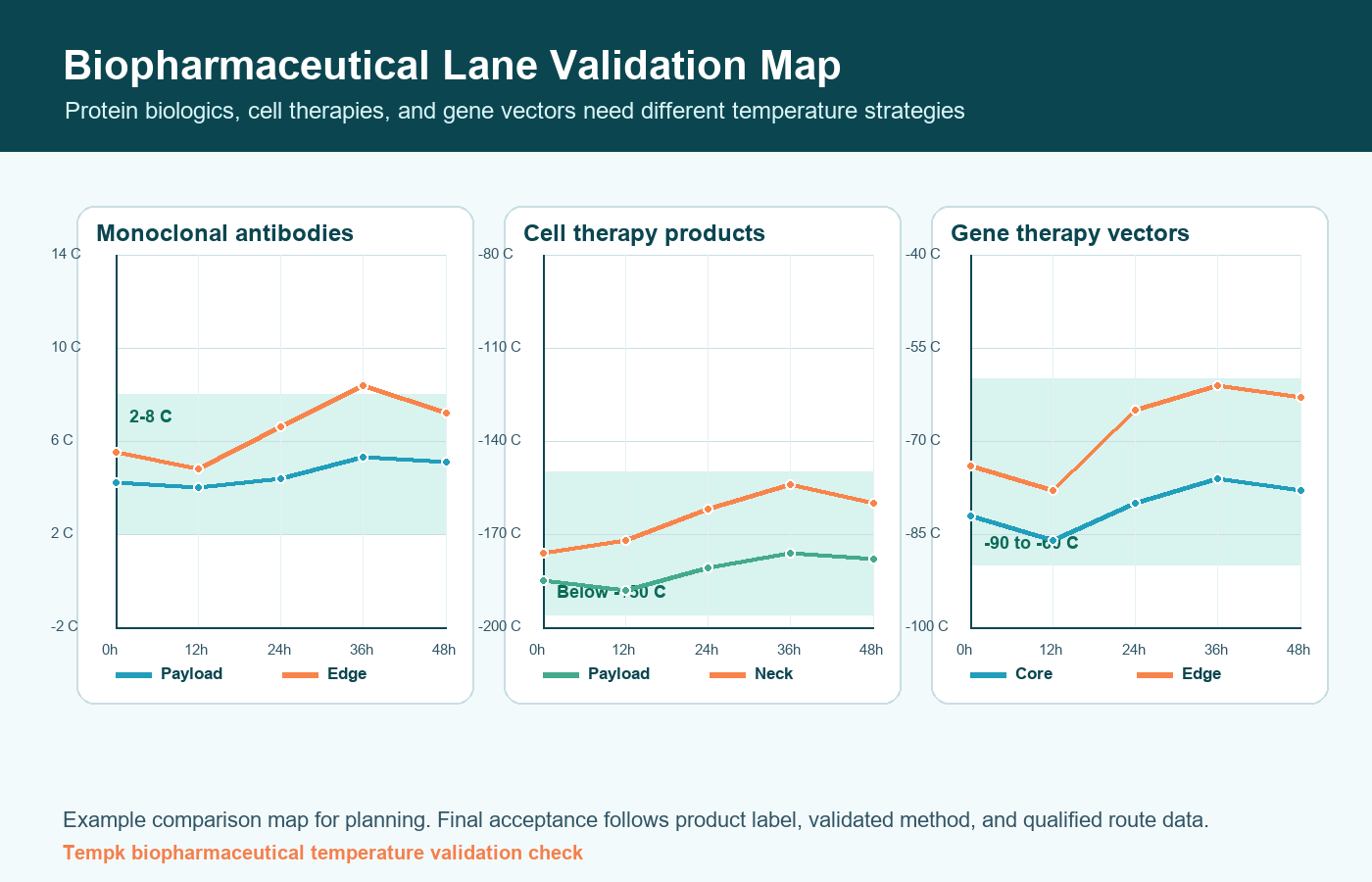
Rencanakan rute 2-8 °C dengan perlindungan bebas embun beku, dukungan karton, kontak PCM terkendali, dan penempatan pencatat data di titik risiko hangat dan dingin.
Pengiriman produk biologiceutical harus direncanakan dari bentuk produknya terlebih dahulu: antibodi yang didinginkan, terapi sel kriogenik, dan vektor terapi gen beku tidak gagal dengan cara yang sama. Tempk membantu memetakan kisaran suhu, struktur pengirim, pilihan pengirim pendingin atau kering, posisi pemantauan, and pemeriksaan penerimaans before validasi rute.
Satu pengaturan paket medis bisa jadi terlalu hangat untuk satu produk dan terlalu dingin untuk produk lainnya. Langkah pertama yang berguna adalah memisahkan muatan berdasarkan risiko: freeze-sensitive refrigerated produk biologis, produk sel hidup yang mungkin memerlukan nitrogen cair fase uap, and vektor that often need frozen or beku suhu sangat rendah control.
Rencanakan rute 2-8 °C dengan perlindungan bebas embun beku, dukungan karton, kontak PCM terkendali, dan penempatan pencatat data di titik risiko hangat dan dingin.
Gunakan SOP produk untuk menentukan apakah dry shipper nitrogen cair fase uap diperlukan, lalu lindungi rantai identitas, orientasi, dan margin waktu tahan.
Pilih es kering atau dry shipper hanya setelah rentang penyimpanan pada label jelas. Cegah pencairan, pembekuan ulang, tekanan vial, kerusakan karena frost, dan kehilangan dokumen.
| Rute produk | Tujuan suhu | Pengaturan kemasan | Perencanaan media pendingin atau dry shipper | Pemeriksaan penerimaan |
|---|---|---|---|---|
| Antibodi monoklonal, sampel atau komersial 2-8 jalur C | Pegang wadah berpendingin yang diberi label dan cegah pembekuan pada permukaan cairan pendingin. | Pengirim terisolasi yang memenuhi syarat, muatan karton support, busa atau pembagi bergelombang, kontrol kondensasi, dan data pencatat di dekat kemungkinan posisi hangat dan dingin. | Gunakan yang dikondisikan 2-8 C PCM atau pak gel pendingin berpendingin di belakang pembatas. Untuk yang kecil 3-8 L pengirim, banyak cobaan dimulai 0.8-2.5 kg pendingin, lalu sesuaikan berdasarkan musim dan jalur. | Kurva suhu, kondisi karton, tidak ada bekas cairan pendingin yang membeku, keterbacaan label, dan menerima waktu. |
| Produk terapi sel, rumah sakit kriogenik atau jalur produksi | Ikuti SOP produk. Ketika pengendalian kriogenik diperlukan, keep the muatan in a tervalidasi nitrogen cair fase uap dry shipper. | Pengirim kering yang sudah diisi sebelumnya, pemeriksaan kecocokan kaset atau kanister, penahanan sekunder, segel tamper, orientasi control, rantai identitas and rantai kustodi paperwork. | Plan by tervalidasi hold time, bukan massa kantong es. Waktu rute harus menyisakan margin cadangan untuk pengambilan, Penundaan Penerbangan, bea cukai, dan menerima kesiapan. | Kondisi pengirim kering, kustodi record, orientasi or guncangan indicator, rekor waktu tunggu yang tersisa, dan penandatanganan penerima. |
| Gen terapi vektor, frozen or beku suhu sangat rendah lane | Gunakan rentang berlabel, often frozen or beku suhu sangat rendah. Avoid pencairan and pembekuan ulang during konfigurasi kemasan or serah terima. | Es kering pengirim atau pengirim kering sesuai kebutuhan, dukungan rak botol, es kering separation, paket luar berventilasi, selongsong dokumen terlindung dari embun beku dan kelembapan. | Jika es kering diperbolehkan, parsel kecil sering kali memulai uji coba 3-7 kg untuk 0-24 h jalur dan 8-15 kg untuk 24-48 jam jalur. Gunakan dry shipper yang tervalidasi bila produk memerlukan kondisi LN2. | Pencatat data record, sisa es kering atau margin penahan pengirim, tidak ada gerakan botol, tidak ada dokumen yang rusak karena beku, dan transfer freezer segera. |
Kisaran ini adalah contoh perencanaan untuk diskusi pengemasan. Final konfigurasi kemasan acceptance must follow the product label, SOP sponsor, kualifikasi jalur, Aturan operator, dan persyaratan peraturan setempat.
Gunakan kurva untuk membandingkan didinginkan, kriogenik, dan perilaku beku sebelum Anda mengulangi rute tersebut. Tinjauan yang bermanfaat menggabungkan kurva data pencatat dengan kondisi muatan, penundaan penjemputan, langkah-langkah pemindahan, dan menerima catatan.
Protein rekombinan dan terapi penggantian enzim juga memerlukan penanganan produk yang spesifik, terutama untuk sensitivitas pembekuan, agregasi control, dukungan botol, dan catatan.
2-8 Kemasan C dengan perlindungan tanpa beku, agregasi-aware handling, dukungan karton, pemantauan, dan menerima catatan.
Kemasan terapi berpendingin dengan pelindung botol, tidak ada kontak langsung dengan cairan pendingin beku, controlled serah terima, dan pemeriksaan rute.
Gunakan halaman ini untuk membandingkan perilaku cairan pendingin, risiko rute, struktur pengirim, dan kasus rantai dingin medis terdekat sebelum meminta sampel atau uji jalur.
Pengiriman produk biologiceutical sangat bervariasi. Antibodi monoklonal mungkin diperlukan 2 ke 8 perlindungan C, terapi sel may require kriogenik control, dan vektor terapi gen mungkin memerlukan penanganan yang sangat beku.
Risiko paling serius adalah pembekuan produk biologi yang didinginkan, penipisan es kering di jalur yang sangat beku, kejutan paparan, and incomplete rantai kustodi records.
Gunakan rongga muatan seukuran botol, tas, atau kaset dan lindungi dari pergerakan. Dokumentasi dan pencatatan suhu harus direncanakan sebagai bagian dari konfigurasi kemasan.
Memilih 2 ke 8 C PCM, es kering, atau peralatan kriogenik sesuai dengan label produk dan persyaratan validasi. Sistem-sistem ini tidak boleh dipertukarkan begitu saja.
Validasi jalur, lamanya, handling orientasi, and serah terima documentation. Pemeriksaan penerimaans should include muatan condition and pencatat data review.
Custom konfigurasi kemasan support
Untuk ukuran karton tetap, batasan muatan, persyaratan merek, jalur musiman, atau target validasi, Tempk can adapt this solution into a custom cold-chain konfigurasi kemasan.
Bagikan jenis produk, kisaran suhu berlabel, ukuran muatan, durasi rute, suhu jalur, serah terima limits, persyaratan pemantauan, dan proses penerimaan. Tempk dapat membantu membandingkan pengirim yang terisolasi, PCM, es kering, pengirim kering, sisipan dukungan, dan rencana validasi.
Request a konfigurasi kemasan review