


Mode suhu salah
Segar, tetap, and frozen jaringan routes may need different handling; assuming one cold route can create receiving problems.
Biopsi and jaringan spesimen packaging depends on whether the sampel is fresh, tetap, atau dibekukan. The same box cannot safely cover all three routes without checking the collection protocol, wadah, risiko kebocoran, and receiving deadline.
Spesimen jaringan sensitif terhadap ketidaksesuaian suhu dan penanganan fisik. Konfigurasi harus mencegah kebocoran, jaringan tertekan, kesalahan beku-cair, dan kerusakan dokumen.
Segar, tetap, and frozen jaringan routes may need different handling; assuming one cold route can create receiving problems.
Liquid containers need upright support, penyerap kemasan sekunder, and paperwork protected away from wet zones.
Small jaringan containers can move inside a large shipper unless cushioning and dividers are sized to the muatan.
| Kondisi rute | Tujuan suhu | Pengaturan kemasan | Perencanaan pendingin atau es kering | Pemeriksaan penerimaan |
|---|---|---|---|---|
| Fresh jaringan, short diagnostic route | Ikuti protokol laboratorium. Many fresh jaringan routes use 2-8 C and short handoff windows. | Rigid leak-resistant primary container, penyerap kemasan sekunder, Bantalan, pembagi pendingin, and pencatat near the muatan. | Untuk a 3-8 L pengirim, uji coba 0.8-2 kg dikondisikan 2-8 C PCM or pak gel for local routes. Hindari kontak langsung dengan cairan pendingin. | Tidak ada kebocoran, jaringan container stable, tidak ada pembekuan, dry request form, dan menerima waktu. |
| Fixed jaringan or ambient protocol route | Use the collection protocol. Some fixed sampel may not need refrigerated coolant, but still need leak and document protection. | Rigid outer shipper, dukungan tegak, penyerap secondary layer, Bantalan, and separate document sleeve. | Insulation may be used for temperature buffering. Avoid adding cold packs unless the lab protocol asks for them. | Container intact, cap sealed, no liquid in outer bag, label yang dapat dibaca, and chain record. |
| Frozen jaringan or molecular testing route | Maintain frozen condition when required and avoid thaw-refreeze during transfer. | Es kering shipper, frozen sampel rack, es kering barrier, kemasan ventilasi, penyerap secondary containment, dan dokumen yang dilindungi dari embun beku. | Small frozen jaringan lanes may start around 2-6 kg adalah kering untuk 0-24 tangan 6-12 kg for longer or hot routes, lalu validasi. | Remaining es kering, tidak ada bukti pencairan, sampel rack stable, dokumen kering, and freezer transfer at receiving. |
Gunakan nilai-nilai ini sebagai titik awal untuk pengambilan sampel dan kutipan. Pendingin terakhir, PCM, es kering, isolasi, kemasan sekunder, pencatat, dan pilihan penanganan harus divalidasi dengan wadah sampel sebenarnya, rute, proses pembawa, musim, klasifikasi, dan prosedur penerimaan.
Confirm spesimen condition before choosing refrigerated coolant, ambient buffer, or es kering.
Use cushioning and upright support so small containers do not strike the shipper wall or coolant block.
Pair the primary container with penyerap kemasan sekunder and keep requisition forms outside wet or frost zones.
Route testing should include pickup delay, lab handoff, menerima waktu, and container inspection.
Ini adalah masalah yang terlihat dan operasional yang harus dikurangi oleh konfigurasi kemasan sebelum kiriman mencapai penerima.
Gunakan kurva tes sebagai perbandingan kerja, kemudian validasi dengan wadah sampel sebenarnya, pengirim, konfigurasi pendingin atau es kering, durasi jalur, profil lingkungan, dan proses penerimaan.
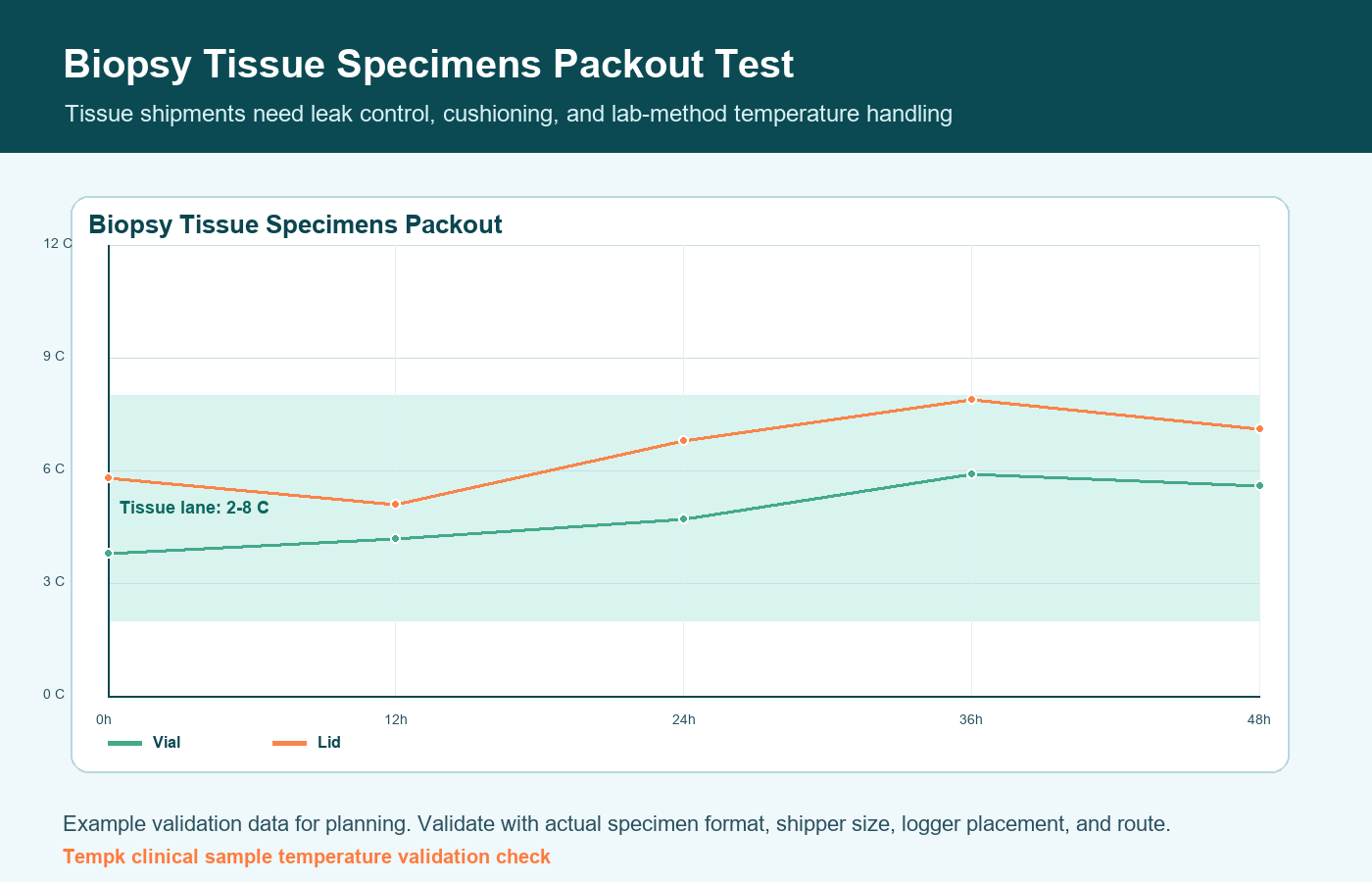
Gunakan halaman ini untuk membandingkan rute klinis dan medis terdekat, pilihan pendingin, pilihan isolasi, dan pertanyaan risiko rute sebelum pengambilan sampel.
Biopsi and spesimen jaringan are not a single temperature category. Fresh jaringan, preserved jaringan, and frozen jaringan can require different konfigurasi kemasans for the same route.
Losses include thawed frozen jaringan, dry jaringan, leaking containers, formalin-container damage, and missed lab receiving windows.
Use rigid secondary containment, penyerap material, and a document pocket. Protect spesimen jars from hard coolant and from impact against the outer wall.
Gunakan gel dingin, es kering, or no coolant according to the preservation method and lab instruction. Frozen jaringan should be validated separately from fixed spesimen.
Confirm preservative, spesimen temperature, integritas kontainer, dokumen, and lab acceptance criteria before releasing the lane.
Custom konfigurasi kemasan support
Untuk ukuran karton tetap, batasan muatan, persyaratan merek, jalur musiman, atau target validasi, Tempk can adapt this solution into a custom cold-chain konfigurasi kemasan.
Share whether the jaringan is fresh, tetap, atau dibekukan, plus the container size, suhu target, durasi rute, profil lingkungan, es kering allowance, and receiving deadline. Tempk can help compare shipper, pendingin, es kering, Bantalan, penyerap layer, dan tata letak validasi.
Request a konfigurasi kemasan review