Best Cooling Gel Pack Wine Wholesale Guide for 2026
Cooling gel pack wine wholesale is no longer a simple packaging purchase. If you ship wine in warm weather, across long parcel lanes, or through mixed fulfillment networks, your gel pack choice directly affects product quality, labor speed, return rate, and customer trust. The right solution helps you keep bottles in a safer thermal zone, reduce avoidable damage, and build a repeatable shipping process that works from the warehouse floor to the customer doorstep.
This article will help you decide:
Which cooling gel pack wine wholesale format fits different bottle counts and lane risks
How to compare gel packs, dry ice, and other wine temperature-control methods
What product specifications matter most when buying in bulk
How to validate performance without overbuilding your packaging cost
What 2026 trends should change your wine shipping strategy now
Why should you treat wine gel packs as a system component?
A wine gel pack does not succeed on its own. It succeeds as part of a complete shipping system. That system includes bottle count, box size, insulation, void fill, pack placement, freezer conditioning, pickup timing, and destination climate. When one part is weak, the shipment can fail even if the pack itself is good.
This is why experienced buyers stop asking, “What is your strongest gel pack?” and start asking, “What layout will protect this bottle count on this lane with this service level?” That question leads to better spending and better results. It also reduces the common habit of overpacking, which often raises cost without solving the real heat problem.
How wine heat damage happens
Wine usually does not fail because it sat briefly in a warm room. It fails because heat accumulates over time and pushes the bottle outside its comfort zone. That can flatten aroma, disturb balance, stress closures, and make premium bottles feel compromised when the buyer opens them.
Current beverage logistics guidance emphasizes keeping wine in a broad transport band around +10°C to +20°C to support quality during long-distance shipment. For wholesale buyers, that means your packaging job is to slow temperature rise and reduce harmful fluctuation, not to freeze the product like ice cream.
What type of cooling gel pack wine wholesale product should you buy?
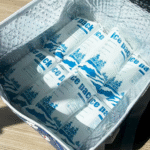
The best format depends on your shipping geometry and your team’s packing reality. Flat panels are easy to understand and work well when you need broad side contact. Narrow packs fit tight channels and neck spaces. Multi-cell sheets speed up placement and can fold around bottle zones. Brick-style packs hold more cold, but they add mass, freight cost, and handling pressure.
If your program is growing, start by simplifying. Most wholesalers do not need ten pack shapes. They need two or three approved formats that cover most orders cleanly. A common structure is one format for small orders, one for standard 6-bottle cartons, and one for long or hot lanes.
A simple buying framework
List your top three bottle-count cartons.
Group your lanes by low, medium, and high heat exposure.
Match one tested pack format to each main carton.
Create a simple freezer and pack-out SOP.
Train staff to use only approved combinations.
What specifications matter most?
Buyers often focus on net gel weight first, but that is only one piece of the puzzle. Frozen flexibility, film strength, seal integrity, conditioning time, and placement guidance often matter just as much. A slightly lighter pack with better flexibility and better carton fit can outperform a heavier pack in real operations.
How do you compare gel packs with other wine cooling options?
For most wine parcel programs, gel packs are the most practical balance between protection, ease of use, and compliance simplicity. Dry ice is much colder and can be useful for some frozen products, but wine normally does not need that level of temperature suppression. Dry ice can also introduce additional handling and transport considerations. Loose ice is messy and inconsistent. Refrigerated transport may be excellent, but it is not always practical for every parcel shipment.
That leaves gel packs as the most scalable passive choice for many wholesalers. They are easier to stage, easier to place, and easier to standardize across mixed order volumes.
Quick comparison
What should your wholesale validation process look like?
Validation should imitate the real shipment, not a perfect warehouse shelf. Use the actual carton, the actual bottle load, the actual insulation, and a realistic ambient profile. Modern thermal testing practice in parcel distribution increasingly relies on real-world profile logic, and ISTA’s 7E approach reflects that shift by using heat and cold profiles derived from real transport data.
For wine programs, the ideal output is simple: define the internal bottle-zone temperature band you want to protect, then compare pack layouts against that goal. You do not need academic complexity. You need a practical answer to which design works best on your main lanes.
Validation checklist
Test full bottle loads, not empty cartons
Include the actual insulation and void-fill setup
Compare at least two pack placements
Run a realistic warm-lane profile
Log internal temperatures over time
Document pass criteria before testing begins
Practical case: A wine shipper may assume one heavy top pack is safest for a 6-bottle carton. A test often shows that two side packs outperform it because they slow overall temperature rise more evenly across the bottle body.
What should you put in a bulk purchase RFQ?
Your RFQ should ask for packaging logic, production quality, and service support. Include bottle count, carton dimensions, insulation type, shipping window, pickup schedule, and target lanes. Then ask the supplier to recommend pack size, placement, and conditioning method. That changes the conversation from quoting a commodity to solving a thermal task.
Also request production and logistics details: minimum order quantity, lead time, master case quantity, pallet pattern, warehouse storage guidance, and lot traceability. If you are planning a branded program, add private-label requirements and carton marking approval.
RFQ essentials
Approved carton sizes and bottle counts
Destination climate or lane categories
Required hold time or service level
Freezer capacity and staging method
QC expectations for film, fill, and seals
Thermal validation request
Claims or sustainability information needed by your team
2026 trends shaping cooling gel pack wine wholesale
Wine packaging buyers in 2026 are working in a broader cold chain world that is becoming more data-driven and more cost-sensitive. U.S. cold chain packaging demand continues to grow alongside e-commerce and temperature-sensitive delivery, and that wider market pressure is pushing suppliers to improve design efficiency, validation quality, and operational simplicity. At the same time, wine logistics guidance is placing more emphasis on controlled temperature stability rather than brute-force cold.
Sustainability is also influencing decisions earlier in the buying process. Packaging teams are under more pressure to reduce waste, avoid unnecessary mass, and design more intelligently. That does not always mean reusable loops are the answer, but it does mean right-sizing, system redesign, and lower-waste formats have stronger business value than before.
2026 developments to watch
Lane-based design is replacing one-size-fits-all pack buying
Pack formats that speed up labor are becoming more valuable
Right-sized systems are winning on both cost and sustainability
More teams want evidence from logged tests before peak season
Monitoring practices from healthcare logistics are influencing broader cold chain packaging culture
Common questions from buyers
What is the best cooling gel pack wine wholesale format for a standard 6-bottle carton?
A flat side pack or foldable multi-cell sheet often works well because it provides broader bottle-body coverage and is easy to standardize.
Should I always choose the heaviest gel pack for hot weather?
No. A heavier pack may add cost and handling problems without improving performance if placement or insulation is wrong.
How many pack formats should a wholesaler use?
Most programs work well with two or three approved formats tied to specific carton sizes and lane profiles.
What is the most overlooked risk in wine shipping?
Packing inconsistency. Even a good gel pack fails when teams place it differently from one order to the next.
Is sustainability only about material choice?
No. It also includes right-sizing, lower freight burden, less product loss, and more efficient fulfillment.
Summary and next steps
Cooling gel pack wine wholesale works best when you buy with the full shipping system in mind. Focus on pack flexibility, carton fit, seal reliability, lane validation, and simple SOPs. Those factors do more for wine quality than blindly adding cold mass.
A strong next step is to build a three-part matrix: your main carton sizes, your main lane risks, and your approved gel pack layouts. Once that matrix is tested and trained, your program becomes easier to scale, easier to control, and more profitable in hot weather.
About Tempk
Tempk provides temperature-control packaging solutions built for real cold chain use, from food and beverage shipments to more demanding temperature-sensitive applications. We focus on practical engineering, stable production quality, and packaging systems that are easier for teams to use consistently.
If you want better wine shipping performance, start with the shipment profile, then choose the gel pack that fits the whole operation rather than the product catalog alone.