Cold Chain Creamery Services Europe 2025 Checklist?
Last updated: December 17, 2025.
If you ship butter, fresh cream, yogurt, gelato, or ice cream across borders, cold chain creamery services Europe is what protects taste, texture, and safety. Most chilled dairy targets 0–4°C, while frozen dairy usually needs -18°C or colder to avoid melt-refreeze damage.
One weak handoff can turn a “great product” into a refund.
EU dairy volumes stay huge—EU farms produced 161.8 million tonnes of raw milk in 2024—so the winners are the teams who ship with fewer surprises and better proof.
This guide will help you:
-
Build chilled vs frozen lanes for cold chain creamery services Europe (with simple limits you can enforce)
-
Choose packaging that survives hubs and delays in EU dairy cold chain logistics
-
Demand monitoring aligned with EN 12830 temperature recorders
-
Write an SLA that prevents disputes in cold chain creamery services Europe
-
Use a scorecard and calculator to reduce claims without overpaying
What makes cold chain creamery services Europe different?
Cold chain creamery services Europe is different because dairy “fails quietly.” It can look fine at delivery while flavor drifts, fat separates, or texture degrades.
cold chain creamery services Eu…
That usually happens during handoffs: pickup, cross-dock, hub staging, and last mile.
Think of gelato on a warm spoon. It does not collapse instantly. The edges soften first. Those “edge moments” are where most losses happen.
The two temperature worlds you must separate
You will make better decisions if you treat your portfolio as two families: chilled and frozen.
cold chain creamery services Eu…
| Dairy group | Typical target | Main risk | Practical meaning for you |
|---|---|---|---|
| Chilled milk & cream | 0–4°C | Faster microbial growth | You need fast lanes and strict handoff rules |
| Yogurt & cultured dairy | 0–6°C | Over-acidification, texture change | You need stability, not just “cold enough” |
| Butter | Spec-dependent | Softening, leakage | You need heat-soak resistance and better staging discipline |
| Ice cream & gelato | ≤ -18°C | Melt-refreeze, icy texture | You need stronger insulation + frozen coolant strategy |
Practical tips you can use today
-
Split SOPs: Create one SOP for chilled and one for frozen. Mixing them creates failures.
-
Engineer for delays: Build pack-outs for “one extra day,” not best-case transit.
-
Own each handoff: If nobody owns a step, you own the loss.
cold chain creamery services Eu…
Realistic case: A gelato brand reduced “icy texture” complaints after switching to frozen PCM and banning Friday economy dispatches.
cold chain creamery services Eu…
How do cold chain creamery services Europe set chilled vs frozen lanes?
In cold chain creamery services Europe, lanes beat guesswork. A “lane” is a repeatable rule set: target temperature, allowed excursions, packaging, monitoring, and dispatch days.
Start with the parts you can measure:
-
Target band (your “safe zone”)
-
Maximum time outside band (your “damage clock”)
-
Proof format (your “evidence”)
A quick decision tool: chilled or frozen?
Answer in order:
-
Does quality drop fast when it warms slightly?
-
If yes (gelato, premium ice cream) → treat as frozen-critical.
-
-
Is it cross-border or multi-stop?
-
If yes → build for extra handoffs and longer exposure.
-
-
Is it legally or contractually “quick-frozen”?
-
If yes → expect stricter monitoring requirements. EUR-Lex
-
Don’t ignore raw milk cooling checkpoints
EU hygiene rules in Regulation (EC) No 853/2004 state that raw milk must be cooled immediately to not more than 8°C for daily collection or not more than 6°C if collection is not daily, and the cold chain must be maintained. EUR-Lex
Use that as contract language: who cools, how fast, how verified.
Which packaging strategy works best for cold chain creamery services Europe?
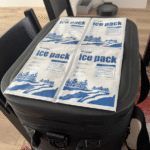
Packaging is the insurance policy of cold chain creamery services Europe—especially when you ship through hubs. A refrigerated truck is like a fridge you ride in. Passive packaging is like a thermos you mail.
A practical pack-out is simply:
-
Insulation (slows heat entering)
-
Coolant (absorbs heat)
-
Placement (where coolant sits matters)
Packaging comparison (simple, procurement-friendly)
| Packaging option | Strength | Watch-out | Practical meaning for you |
|---|---|---|---|
| EPP insulated box | Durable, reusable | Needs returns plan | Great for repeat B2B lanes
cold chain creamery services Eu… |
| EPS foam shipper | Low cost | Fragile, waste pressure | Works for stable one-way lanes |
| VIP-enhanced shipper | High performance | Higher unit cost | Helps when routes are unpredictable |
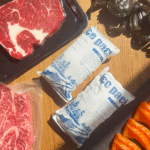
| Chilled PCM packs | Stable around setpoint | Must match target band | Best for 0–4°C control |
| Dry ice / frozen PCM | Very cold, strong buffer | Handling, venting rules | Powerful for frozen desserts |
PCM = phase change material (coolant engineered to “hold” near a temperature).
Practical tips and suggestions
-
Short routes (same/next day): Use chilled PCM + moderate insulation and reduce handoffs.
-
Uncertain 2–4 day routes: Upgrade insulation or add VIP panels; build for holds.
-
Frozen desserts: Avoid economy services that can sit over weekends.
Realistic case: A brand fixed repeated depot-wait warm spikes by changing pickup cutoff time, not by changing carriers.
cold chain creamery services Eu…
How do you reduce last-mile excursions in cold chain creamery services Europe?
The last mile is often the hottest mile in cold chain creamery services Europe. Even if linehaul is cold, doorsteps, missed deliveries, and multi-drop vans create exposure.
Your goal is not “never warm.” Your goal is short, predictable exposure.
Last-mile controls that actually work
-
No-safe-place rules for chilled/frozen parcels (reduce doorstep dwell time)
-
Delivery windows for B2B (avoid random receiving delays)
-
Clear customer instructions (“call on arrival,” “deliver to cold room”)
-
Micro-fulfillment in dense cities (shorten the final leg)
Heat-risk self-assessment (interactive)
Score each statement 0 (no), 1 (sometimes), 2 (yes):
-
My lane includes 2+ hubs.
-
Deliveries include apartments with no reception.
-
I ship Thursday/Friday with weekend risk.
-
My product is texture-sensitive (gelato, premium cream).
-
I do not have temperature evidence per shipment.
Score guide:
-
0–3: Standard controls may be enough
-
4–6: Upgrade packaging and lane rules
-
7–10: Use a higher-control plan (hybrid or dedicated)
What monitoring should cold chain creamery services Europe include in 2025?
Monitoring in cold chain creamery services Europe is not about graphs. It is about faster decisions. The best setups run a loop: measure → detect → decide → improve.
cold chain creamery services Eu…
Monitoring options (plain comparison)
| Monitoring option | Cost level | Best use | Practical meaning for you |
|---|---|---|---|
| Single-use indicator | Low | Basic compliance | Simple pass/fail check
cold chain creamery services Eu… |
| USB data logger | Medium | Lane validation | Strong proof for audits and disputes
cold chain creamery services Eu… |
| Real-time smart tag | Higher | High-value lanes | Lets you intervene mid-route
cold chain creamery services Eu… |
If you need a standard reference for recorders, EN 12830 specifies technical and functional characteristics for temperature recorders used in transport, storage, and distribution. webstore.ansi.org
Practical tips and suggestions
-
Premium gelato: Use real-time tags on a sample to find weak hubs.
cold chain creamery services Eu…
-
Chilled cream B2B: Use USB loggers for lane validation and quarterly checks.
cold chain creamery services Eu…
-
Scaling fast: If an excursion happens twice on a lane, upgrade service or pack-out.
cold chain creamery services Eu…
How do you choose providers for cold chain creamery services Europe?
The best provider for cold chain creamery services Europe is the one that matches your product, lane, and promise—then proves it. Do not start with “Who is famous?” Start with “What failure am I preventing?”
A strong partner should ask for your product spec and shelf-life goal, then recommend pack-out standards, lane options, and monitoring with a clear exception process.
cold chain creamery services Eu…
10-minute provider scorecard (interactive)
Score each provider out of 100. Below 75 is a risk unless you can fix gaps fast.
| Score area | Points | What you ask for | “Good” looks like |
|---|---|---|---|
| Temperature proof | 25 | 60–90 days logs + alarms | Exportable data, few gaps |
| Handoff discipline | 20 | Site SOPs + dwell limits | Short staging, clear ownership |
| Chilled lane performance | 15 | 0–4°C capability evidence | Repeatable pack-out + rules |
| Frozen lane performance | 15 | ≤ -18°C lane readiness | Strong insulation + frozen coolant |
| Monitoring quality | 15 | Recorder approach + retention | EN 12830-aligned practice |
| Service recovery | 10 | Incident playbook | Fast escalation + RCA |
Practical tips and suggestions
-
Ask for 10 recent trip reports, not the best two.
-
Require a monthly exception summary (alarms, root causes, fixes).
-
Run a pilot on one lane for two weeks, then decide.
What should an SLA for cold chain creamery services Europe cover?
Your SLA is the contract version of cold chain creamery services Europe quality. Without it, “cold chain” becomes a vague promise.
cold chain creamery services Eu…
SLA clauses that prevent surprises
| SLA clause | What to specify | Practical meaning for you |
|---|---|---|
| Temperature limits | Lane limits + excursion definition | Stops arguments later
cold chain creamery services Eu… |
| Data access | Export format + retention period | Protects you in disputes
cold chain creamery services Eu… |
| Incident response | Who responds, how fast, escalation | Reduces damage from delays
cold chain creamery services Eu… |
| Corrective action | RCA required within set days | Prevents repeat failures
cold chain creamery services Eu… |
| Traceability support | Time to deliver lot-route history | Faster recalls
cold chain creamery services Eu… |
Practical tips and suggestions
-
Add a test-shipment clause so you validate before scaling.
cold chain creamery services Eu…
-
Keep penalties simple (service credits work best).
cold chain creamery services Eu…
-
Require a monthly KPI pack: excursions, alarms, recovery time.
cold chain creamery services Eu…
How do EU rules affect cold chain creamery services Europe compliance?
Compliance in cold chain creamery services Europe usually fails on “boring basics”: handoffs, records, and ownership.
cold chain creamery services Eu…
You can keep it simple and still be audit-ready.
The EU rule set (in plain language)
-
HACCP-based procedures: Food businesses must implement procedures based on HACCP principles under Regulation (EC) No 852/2004.
-
Milk handling requirements: Regulation (EC) No 853/2004 sets cooling expectations for raw milk (8°C daily / 6°C not daily).
-
Quick-frozen monitoring: Commission Regulation (EC) No 37/2005 addresses monitoring temperatures in transport, warehousing, and storage of quick-frozen foodstuffs.
-
Cross-border refrigerated carriage: ATP is a UNECE agreement covering international carriage of perishable foodstuffs and the special equipment used. unece.org
Responsibility mapping (the overlooked control)
Write down who owns risk at each stage: pickup, hubs, cross-border handling, last mile, receiving. If nobody owns a step, you own the loss.
cold chain creamery services Eu…
How do you price cold chain creamery services Europe without overpaying?
Price is not cost per box. It is cost per successful delivery.
cold chain creamery services Eu…
A cheaper lane that causes refunds is expensive.
Cost-per-success calculator (interactive)
Fill your own numbers:
-
Shipments per month: A
-
Average order value: B
-
Failure rate (refund/reship): C%
-
Extra cost for upgraded service per shipment: D
Now compare:
-
Monthly loss from failures: A × B × C%
cold chain creamery services Eu…
-
Monthly cost to upgrade: A × D
cold chain creamery services Eu…
If upgrading meaningfully cuts failures, you win—even if the label price is higher.
2025 developments and trends in cold chain creamery services Europe
In 2025, cold chain creamery services Europe is shifting to “proof-first” operations: better monitoring, clearer SLAs, and packaging designed for real network delays.
cold chain creamery services Eu…
Sustainability is also changing refrigeration decisions.
Latest progress snapshot
-
More temperature evidence by default: Exportable logs are becoming baseline, not premium.
cold chain creamery services Eu…
-
Higher-performance passive packaging: VIP-enhanced designs appear more often on uncertain lanes.
cold chain creamery services Eu…
-
Refrigeration transition pressure: The EU F-gas Regulation (EU) 2024/573 started to apply on 11 March 2024, shaping equipment planning and maintenance culture.
What this means for you
Buy services that reduce surprises. Then buy services that prove it fast. When you do both, growth gets easier.
Frequently Asked Questions
Q1: What temperature should chilled dairy target in cold chain creamery services Europe?
Most chilled dairy targets 0–4°C, but stability matters more than perfection. Start with your shelf-life goal.
cold chain creamery services Eu…
Q2: What does EU law say about cooling raw milk?
Regulation (EC) No 853/2004 states cooling to ≤8°C for daily collection or ≤6°C if not daily, then maintaining the cold chain. EUR-Lex
Q3: How can I ship gelato cross-border without texture damage?
Use a frozen-focused lane (often ≤ -18°C), avoid weekend holds, and add temperature proof so you can fix weak hubs.
cold chain creamery services Eu…
Q4: Do I need real-time tracking for every shipment?
Not always. Start by sampling high-risk lanes, then scale monitoring where alarms repeat.
cold chain creamery services Eu…
Q5: What should I require in a quick-frozen monitoring program?
Commission Regulation (EC) No 37/2005 covers monitoring temperatures in transport, warehousing, and storage for quick-frozen foods. EUR-Lex+1
Q6: What is ATP and why does it matter for cross-border dairy?
ATP is a UNECE agreement that sets conditions and equipment expectations for international carriage of perishable foodstuffs.
Summary and recommendations
Cold chain creamery services Europe works when you match product needs to lane reality. Split operations into chilled and frozen lanes, design pack-outs for delays, and reduce risk at handoffs. Then demand exportable monitoring and write an SLA that guarantees data access and fast corrective action. When you price by “successful delivery,” you stop overpaying for failures and start buying predictability.
Your next step (CTA)
Run a two-week pilot on one lane: lock a pack-out, add temperature evidence, and track excursions and claims. If the lane fails twice, upgrade the service tier or the packaging. That single habit will cut more losses than chasing the cheapest quote.
About Tempk
At Tempk, we help teams make cold chain creamery services Europe predictable with practical packaging and lane design. We focus on what your operation can control: pack-out standards, monitoring proof, and simple SOPs that reduce handoff risk. Our goal is to help your chilled and frozen dairy arrive the way you made it—safe, stable, and consistent—without adding unnecessary complexity.
CTA: Share your product mix (chilled vs frozen), origin, destination, and promised delivery time. We will outline a lane-ready pack-out and an RFQ checklist you can use immediately.