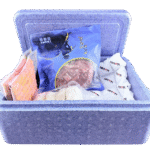
cold gel compress seafood supplier matters because seafood buyers no longer want a generic cold pouch that only looks good on a quote sheet. They want a system that matches product moisture, box layout, route length, receiving expectations, and total logistics cost. For seafood processors, fish exporters, shellfish distributors, meal-kit brands, and fresh-market logistics teams, the smartest choice is usually the supplier that proves fit with real testing and explains trade-offs clearly.
If you want a page that ranks and converts for this keyword in 2026, it needs to act like a buying guide. It should answer the questions seafood buyers actually ask: how strong is the pouch, how does it behave in a wet lane, how should it be validated, and how can the layout reduce complaints without adding unnecessary mass?
This article will help you answer:
how to choose a cold gel compress seafood supplier based on leak control, route fit, and documentation
which related search intents matter most, including seafood cold pack supplier, fish shipping gel pack, and shellfish transport cooling packs
how to compare film strength, geometry, validation, and service support
what seafood buyers now expect from supplier pages in 2026
What should a seafood supplier prove first?
The first thing a supplier should prove is fit. Not the coldest number, not the thickest pouch, and not the cheapest quote. Fit means the pouch works in your real seafood box, against your real payload, through your real route, and under your actual loading flow. That is the foundation of both delivery quality and buyer trust.
A supplier that cannot explain fit usually pushes risk back onto the seafood brand. A strong supplier starts by asking about fish type, box design, liner use, staging time, and where failures normally happen. That is how a pouch becomes part of a system instead of a commodity.
Optimization checkpoint 1: how to improve performance without waste
The strongest choice is rarely the heaviest one. In most seafood programs, a better-sized pack, clearer loading guidance, and smarter placement create more value than simply adding more gel.
Practical tips and actions
Ask for route-specific recommendations: This reveals whether the supplier understands seafood reality.
Request a simple performance summary: Clear answers beat long brochures.
Check how the supplier handles change: Good partners support redesign, not just first purchase.
Example: A seafood shipper improved both cost and appearance after replacing a bulky generic pouch with a flatter sidewall design that used space better and reduced leakage.
How should you compare validation, HACCP support, and usability?
Validation should be practical. Define the real box, the real product mass, the route profile, the loading delay, and the acceptable arrival condition. Then ask each supplier to respond to the same method. FDA’s seafood HACCP materials remain the key guide for hazard analysis and control strategies, and FDA’s sanitary transportation rule makes clear that sanitary practices, suitable equipment, and temperature-capable transport matter throughout the food chain.
Usability matters because seafood quality depends on operators, not just laboratory conditions. If the pouch is slippery, awkward, or too rigid, the system becomes harder to control. The best suppliers therefore talk about floor use as well as thermal behavior.
Optimization checkpoint 2: how to improve performance without waste
The best suppliers reduce risk by making the pouch easier to validate and easier to use. That often lowers waste too, because better placement reduces the need for “safety” overpacking.
Practical tips and actions
- Define acceptable arrival clearly: Include drip, odor, box appearance, and temperature.
- Test the real system: Seafood boxes behave differently than clean lab cartons.
- Add a dock-delay step: Many seafood failures happen outside the chamber.
Example: One seafood team found that improving the loading sequence solved more problems than changing to a larger pouch.
Which design choices create the biggest gains?
In many seafood programs, the biggest gains come from simple design changes. A flatter compress pack may improve contact. A tougher film may cut claims. A better sidewall layout may reduce soggy-box complaints without adding weight. These are not just technical decisions. They affect labor, box appearance, and landed cost.
That is why supplier pages should explain design logic in plain English. Buyers want to know what changes performance and why. When a supplier connects geometry, film, and wet-lane handling into one clear answer, trust grows faster.
Optimization checkpoint 3: how to improve performance without waste
Look for layout and contact gains first. Better fit often produces the strongest result with the least extra material. Oversizing is easy, but it often hides poor design.
Practical tips and actions
- Match geometry to the payload: Sheets, wraps, and bricks solve different seafood problems.
- Review receiving appearance: The box should still look controlled when opened.
- Ask about lot consistency: Good design still needs disciplined production.
Example: A shellfish shipper improved repeatability by switching to a flatter pouch that nested around the load instead of pressing unevenly against it.
What makes a supplier page convert better in 2026?
A high-performing supplier page now works like a decision guide. It helps the reader compare shapes, understand leak-control logic, and decide whether the supplier fits the lane. That is better for search because the content is genuinely useful, and better for conversion because the buyer arrives with a clearer brief.
For cold gel compress seafood supplier content, the winning formula is simple: answer the real route and handling questions first, then support those answers with enough detail to prove expertise. That creates a page that ranks for a specific commercial query and still sounds like it was written by someone who understands seafood logistics.
Optimization checkpoint 4: how to improve performance without waste
The best-performing seafood programs in 2026 combine three things: a pack format that matches the product, a test method that matches the route, and a message that matches what the buyer actually needs to know.
Practical tips and actions
- Use a decision checklist: This improves usefulness and inquiry quality.
- Write for mixed audiences: Procurement, QA, and operations should all understand the page.
- Offer one clear next step: Invite a route review, validation plan, or pack comparison.
Example: A supplier improved lead quality after restructuring its page around fish-box layout, leak control, and receiving condition instead of broad product claims.
2026 developments and trends for cold gel compress seafood supplier
In 2026, seafood buyers are prioritizing documented control, transport hygiene, and pack layouts that handle wet, irregular loads more effectively. FDA’s seafood HACCP framework remains central to processor control plans, while FDA’s sanitary transportation rule continues to require sanitary practices and transport equipment capable of maintaining safe conditions for food transport.
Latest developments at a glance
Leak resistance now matters more in sourcing: Buyers increasingly treat visible pack failure as a trust problem.
Route-based testing is replacing generic claims: One broad hold-time number feels less persuasive.
Detailed content performs better: Buyer guides now outperform thin seafood packaging pages.
The best-performing programs in 2026 combine pack geometry, wet-lane durability, and practical documentation. That combination improves search value on the page and operational value after the sale.
Frequently asked questions
What should you ask a cold gel compress seafood supplier before ordering?
Ask about film structure, fill tolerance, seal width, conditioning method, wet-lane validation, and failure-response support.
How many packs do you need in a seafood shipment?
There is no standard number. It depends on payload size, box insulation, route duration, and layout.
Is the cheapest seafood cold-pack supplier usually the best option?
Usually not. Low price can hide leakage, labor loss, wasted space, and more claims.
How often should you revalidate a seafood packout?
Revalidate when the payload changes, the box changes, the lane changes, or summer exposure risk rises.
Summary and recommendations
If you want one practical rule, make the supplier prove fit in your real seafood system. The strongest cold gel compress seafood supplier program usually combines the right geometry, a realistic validation method, clean documentation, and a delivered box that still looks controlled at arrival.
Build a short supplier scorecard with four columns: leak control, documentation, operational fit, and total landed cost. Then run one controlled lane test before scaling the order.
About Tempk
We design temperature-control packaging systems for demanding cold-chain uses, including fresh fish boxes, shellfish shipments, frozen seafood export loads, and insulated e-commerce seafood orders. Our team focuses on practical pack sizing, repeatable production, and straightforward communication so you can choose packaging based on evidence.