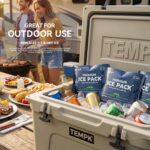
Cooler Bag Insulated: Keep Items Cold Longer (2025)
A cooler bag insulated setup helps you protect groceries, seafood, and temperature-sensitive items during travel or delivery. Your goal is simple: keep cold items in a safe range, and reduce time in warm conditions. When you get it right, you see fewer leaks, fewer “arrived warm” complaints, and better product quality.
Last updated: December 15, 2025
This article will help you:
-
Understand how a cooler bag insulated design slows heat gain (without jargon)
-
Hit practical temperature targets for food and sensitive items
-
Choose the best insulation material for cooler bags (and avoid common traps)
-
Learn how to pack an insulated cooler bag with ice packs for longer hold time
-
Use quick decision tools for groceries, food delivery, and medicine transport
-
Prevent leaks, odors, and condensation that shorten bag life
Why does a cooler bag insulated design work at all?
A cooler bag insulated product does not “make cold.” It slows warming. That is the whole game. If you expect a thin bag to perform like a freezer, you’ll be disappointed.
Think of your bag like a winter jacket. A thicker jacket helps you longer. But if you keep unzipping it, warm air rushes in and your advantage disappears.
The 3 heat paths you can control
| Heat path | What usually causes the problem | What to do now | What it means for you |
|---|---|---|---|
| Through the walls | Thin foam or crushed insulation | Choose consistent thickness + avoid collapse | Longer cold time |
| Through the opening | Weak zipper path, corner gaps | Use tight zipper + flap + “close fast” habit | Fewer temperature spikes |
| Through frequent access | You open it “just to check” | Stage items by stop order | More stable delivery window |
Practical tips you can use today
-
Close it like a refrigerator door: open, grab, close—no browsing.
-
Keep it full: a packed cooler bag insulated load warms slower than a half-empty one.
-
Pre-chill the liner: even 10–15 minutes helps when conditions are hot.
Real-world example: One delivery operator cut “arrived warm” complaints after upgrading insulation and fixing loading order.
What temperature should your cooler bag insulated setup hit?
For most perishable foods, aim for 40°F (4°C) or below. Some processes use 41°F (5°C) as a cold-holding limit, but 40°F gives you a buffer.
The big risk is time spent in the “danger zone.” The longer food sits warm, the faster quality drops—and safety risk rises. Hot weather shrinks your safe window even more.
A simple thermometer habit (no guessing)
If you carry perishables often, add a small thermometer inside the load. It turns “it felt cold” into proof.
| Checkpoint | What to look for | What to do if you miss it | Your benefit |
|---|---|---|---|
| Start of trip | Load is cold before packing | Chill items first | Less early heat load |
| Midway (long trips) | Temp is stable | Reduce openings + add top cooling | Fewer spikes |
| End / handoff | Temp stayed in range | Shorten exposure time next route | Fewer claims/refunds |
Practical tips you can use today
-
Cool items first. The bag slows warming; it does not “create cold.”
-
Use the “alarm clock” rule: don’t let cold items sit warm for long.
-
Separate warm items. A warm rotisserie chicken can push everything warmer fast.
Which materials make a cooler bag insulated bag perform better?
A cooler bag insulated system is a stack of choices, not one magic layer. Foam thickness matters. But so do seams, corners, liner quality, and the zipper line.
Here’s the simple model:
-
Inner liner: controls spills and moisture
-
Insulation layer: slows heat movement
-
Outer shell: handles damage and sun exposure
Best insulation material for cooler bags (in plain terms)
-
Basic foam: light and affordable, best for short trips
-
Closed-cell foam: holds shape better, more reliable for delivery work
-
Reflective layer: helps in sun, but it’s not enough by itself
-
Panel inserts / structured walls: better stability and fewer “warm corners”
Buyer checklist: what matters vs. what’s mostly marketing
| Feature | Good sign | Bad sign | What it means for you |
|---|---|---|---|
| Insulation thickness | Even, firm panels | Thin sheet that collapses | Predictable hold time |
| Closure | Tight zipper + flap | Gaps at corners | Fewer heat leaks |
| Liner | Waterproof, easy wipe | Absorbs moisture | Easier cleaning, less odor |
| Shape | Boxy, stable | Slumps when carried | Better packing control |
| Structure | Semi-rigid walls | Crushed corners | Fewer “warm spots” |
Practical tips you can use today
-
Test the zipper path: if it “waves and gapes,” performance drops.
-
Check corners: corners are where liners fail and heat enters.
-
Size to your load: oversized bags create dead air space that warms quickly.
How long does a cooler bag insulated stay cold in real life?
“How long” depends on five variables you can control:
-
Insulation quality
-
Ice / gel pack mass
-
How full the bag is
-
How often you open it
-
Outdoor temperature
Here’s the key idea: every opening is a heat injection. Even a short open can erase the benefit of an extra pack.
60-second cold-time decision tool
Answer these three questions:
-
Trip time: under 2 hours, 2–6 hours, or 6–12 hours?
-
Outside air: mild, warm, or extreme heat?
-
Openings: one time, a few times, or many stops?
Quick recommendation
-
Under 2 hours + few openings: a standard cooler bag insulated bag + basic gel packs often works.
-
2–6 hours + many stops: upgrade closure + add side/top cooling + reduce “open time.”
-
6–12 hours + heat: treat it like a system: pack plan, staging, and checks.
| Scenario | Typical risk | Best packing focus | What it means for you |
|---|---|---|---|
| Grocery run | Warm car + short drive | Full bag + top/bottom packs | Easy wins |
| Meal delivery | Many openings | Speed + tight closure | Stops matter more than distance |
| Beach/picnic | Sun exposure | Shade + reflective layer + top control | Sun can beat weak zippers fast |
| Medicine carry | Overcooling risk | Stability + separation layer | Too cold can be as bad as too warm |
How do you pack a cooler bag insulated with ice packs for longer hold time?
Packing is where a cooler bag insulated plan is won or lost. Two identical bags can perform very differently based on your routine.
Think of cold packs as ice batteries. You want them close to heat entry points and close to the most sensitive items.
A simple packing method you can repeat
-
Pre-chill the bag (10–15 minutes if possible).
-
Put a cold pack on the bottom (bases warm faster than you think).
-
Load the most sensitive items in the center.
-
Add side packs if you need more time.
-
Add a top pack last to protect the zipper zone.
-
Fill dead space (towel or dunnage) so air cannot churn.
-
Close fast and fully. Treat this as a performance feature.
Packing layouts by use case
| Packing goal | Cold pack placement | Space strategy | What it means for you |
|---|---|---|---|
| Short trip | Bottom + top | Keep it full | Simple and reliable |
| Delivery route | Bottom + sides | Reduce air gaps | Longer stability |
| Premium seafood | Bottom + sides + top | Use dividers | Better texture protection |
| Mixed orders | Separate raw + ready-to-eat | Use inner bins | Cleaner + safer handoffs |
Practical tips and advice
-
Groceries: seal raw meats and keep them separate from ready-to-eat foods.
-
Delivery routes: pack by stop order so you don’t “hunt” inside the bag.
-
Hot weather: keep the bag out of direct sun, even inside a car.
Practical example: Teams have reduced warm arrivals by changing loading order and adding top cooling—without changing the route.
Cooler bag insulated for food delivery vs medicine transport: what changes?
A cooler bag insulated setup for food is mostly about staying cold enough. For medicine transport, stability becomes the priority.
Many medical cold-chain products target 2–8°C. Going too cold can damage sensitive items. That means you must avoid direct contact between frozen packs and the product.
Coolant options (simple and useful)
| Coolant type | Behavior | Main risk | Best use |
|---|---|---|---|
| Frozen gel packs | Strong cold early | Overcooling/freezing | Long food routes, not direct-contact medicine |
| Conditioned gel packs | Gentler cooling | Shorter duration | Short medicine trips |
| PCM packs | Holds a stable band | Higher cost | Best for controlled medicine transport |
| No coolant | Only insulation | Very short duration | Mild conditions only |
Practical tips you can use today
-
Never place medicine directly on a frozen pack. Use a barrier layer or pouch.
-
Minimize openings and keep the bag in shade.
-
If your workflow needs proof, add a simple temperature indicator.
Real-world example: A caregiver prevented accidental freezing by adding a barrier sleeve between medicine and frozen packs.
How do you prevent leaks, odors, and condensation in a cooler bag insulated bag?
Leaks and smells are why people stop using their cooler bag insulated bag. The good news: these problems are preventable.
Condensation happens when warm air meets cold surfaces. Water pools, odor builds, and liners degrade.
Fast prevention rules
-
Use sealed containers for liquids and raw items.
-
Add absorbent pads for meat or seafood transport.
-
Dry the bag fully after every use (storage while wet is the #1 odor trigger).
| Problem | Most likely cause | Fix | Benefit to you |
|---|---|---|---|
| Leaks | Poor liner or spills | Waterproof liner + tray/bin | Cleaner transport |
| Odor | Moisture + residue | Wipe + wash + dry open | Longer bag life |
| Condensation | Warm air enters | Reduce opening time | Better quality retention |
A cleaning routine you can actually stick to
-
After each use: wipe liner, remove standing liquid, air dry fully.
-
Weekly (heavy use): mild soap wipe + rinse cloth wipe + dry open.
-
Monthly: inspect seams, zipper teeth, and corners.
2025 cooler bag insulated trends you should know
In 2025, cooler bag insulated designs are moving from “picnic accessory” to real last-mile tool. The market is pushing for predictable performance, easier cleaning, and better structure.
Latest developments (practical, not hype)
-
Rigid hybrid designs: soft outside, structured inside for stability
-
Improved liners: more durable, faster cleaning, better odor resistance
-
Smarter pack compatibility: bags designed around common gel pack sizes
-
More proof tools: indicators that help teams spot risk early
-
Sustainability upgrades: longer-life components and more reusable systems
Market insight: The winning design is not the thickest foam. It’s the best system for your opening pattern.
Frequently Asked Questions
Q1: How long does an insulated cooler bag stay cold?
It depends on insulation quality, how full the bag is, pack size, and how often you open it. Fewer openings can extend cold time more than one extra pack.
Q2: What is the best insulation material for cooler bags?
Closed-cell foam with consistent thickness performs well in real use. Seal quality and corners often matter as much as foam type.
Q3: How do I pack an insulated cooler bag with ice packs?
Use a bottom pack, add side packs for longer trips, and finish with a top pack to protect the zipper zone. Fill air gaps and close fast.
Q4: Is a cooler bag insulated option safe for meat and seafood?
Yes, if you seal raw items, prevent leaks, and separate them from ready-to-eat foods. Add absorbent pads and clean the liner after.
Q5: Can I use dry ice in a cooler bag insulated bag?
Dry ice can be too cold and may create safety and freezing risks. Avoid direct contact with food or medicine, and use careful handling.
Q6: What changes for cooler bag insulated for medicine transport?
Stability matters most. Avoid direct frozen-pack contact, use a barrier layer, and consider stable-temperature coolants for sensitive items.
Summary and recommendations
A cooler bag insulated system works when you treat it like a simple temperature tool: strong insulation, tight closure, smart pack placement, and fewer openings. Focus on wall consistency, zipper discipline, leak control, and a repeatable loading order. When you do that, quality stays predictable and complaints drop.
Your next-step action plan (simple)
-
Pick one cooler bag insulated size that matches your typical load.
-
Standardize a pack layout: bottom + sides + top.
-
Add a “close fast” rule and pack by stop order.
-
Clean and dry the bag open after use.
-
Upgrade structure only when your data shows repeated warm spots.
About Tempk
Tempk develops practical cold chain packaging and temperature-control solutions for last-mile delivery and daily transport. We focus on stable performance, easy handling, and real-world reliability—so your insulated workflows stay consistent across seasons.
Next step: If you share your use case (groceries, meal delivery, seafood, or medicine), your trip time, and your hottest-season conditions, we can recommend a cooler bag insulated configuration and packing layout that fits your lane.