Last Updated: January 29, 2026
A cooling gel pack pharmaceutical supplier can make or break your cold-chain outcomes. If your shipments face heat, delays, or rough handling, you need stable temperature control you can prove. Most teams aim for 2–8°C performance for many medicines, but “cold” is not enough. This guide shows you how to qualify the right supplier, validate pack-outs, and reduce temperature excursions without adding daily complexity.
This article will help you answer:
How a cooling gel pack pharmaceutical supplier protects 2–8°C shipping gel packs in real lanes
What a validated pack-out design means for audits and daily operations
How to compare phase change gel packs for pharmaceuticals vs frozen gels
Which QC signals reveal a reliable cooling gel pack pharmaceutical supplier fast
How to lower total landed cost with fewer exceptions and simpler SOPs
How to manage changes and prevent re-validation surprises in 2026
What Makes a Cooling Gel Pack Pharmaceutical Supplier “Pharma-Grade”?
Direct answer: A pharma-grade cooling gel pack pharmaceutical supplier delivers consistent thermal behavior, repeatable batch quality, and documentation that supports your quality system. You should see controlled formulation, traceable lots, and clear change management. You also need practical guidance your team can follow every day.
Expanded explanation: Think of gel packs like a car’s brakes. You do not judge brakes by shine or marketing claims. You judge them by how reliably they stop the car in rain and traffic. A cooling gel pack pharmaceutical supplier should prove performance under stress: warm ambients, route delays, and imperfect handling.
In medicine shipping, “too cold” can be as risky as “too warm.” Freeze shock can damage sensitive products near pack surfaces. That is why the best cooling gel pack pharmaceutical supplier focuses on control, not just power.
What you should see in a strong supplier relationship
| What to check | What “good” looks like | What it prevents | What it means for you |
|---|---|---|---|
| Batch consistency | Tight fill-weight and gel ratio control | Random hot spots | Fewer surprise excursions |
| Material safety | Stable films and clean gels | Leaks and odors | Cleaner receiving and storage |
| Repeatable evidence | Multiple test runs, not one | “Best-case” claims | Easier qualification planning |
Practical tips and suggestions
If you ship vaccines: demand repeatable 2–8°C shipping gel packs performance across seasons.
If you ship insulin: ask how they reduce freeze risk at the shipper walls.
If you ship globally: ask how they design for long holds and customs delays.
Practical case: A regional distributor reduced temperature review workload after switching to a cooling gel pack pharmaceutical supplier that standardized conditioning steps across shifts.
How Do You Verify Cooling Gel Pack Pharmaceutical Supplier Compliance Fast?
Direct answer: You verify a cooling gel pack pharmaceutical supplier by checking traceability, controlled manufacturing behavior, and change-control discipline. You do not need perfect paperwork. You need reliable controls that match your product risk.
Expanded explanation: Compliance can feel like a maze because people ask for “everything.” Your shortcut is to focus on what protects patients and protects you in audits: traceability, repeatability, and documented decision-making. If a supplier cannot tell you what changed, when it changed, and which lots were affected, you inherit the risk.
A modern cooling gel pack pharmaceutical supplier should also support your packaging validation approach. That means explaining test conditions in plain language, not only sharing charts.
The “one-email document pack” you can request
| Document | What it should include | Why it matters | What it means for you |
|---|---|---|---|
| Product specification | Dimensions, fill weight, tolerances | Defines acceptance criteria | Faster incoming QC |
| Lot traceability | Lot codes + mapping | Links to root cause | Cleaner investigations |
| Thermal test summary | Method, ambient profile, repeats | Shows repeatability | Better lane planning |
| Change notice process | Triggers, timelines, approvals | Avoids surprises | Lower re-validation risk |
Practical tips and suggestions
Ask for a change-notification template before onboarding.
Define your acceptance criteria for weight, seal integrity, and appearance.
Confirm escalation steps for temperature excursion investigation support.
Practical case: A shipper avoided a costly re-qualification after catching a film change early through a clear change-notice process.
Which Gel Technology Should a Cooling Gel Pack Pharmaceutical Supplier Offer?
Direct answer: Your cooling gel pack pharmaceutical supplier should offer both frozen gel packs and phase change gel packs for pharmaceuticals, then recommend based on lane duration and freeze sensitivity. Phase change options often reduce freeze risk for 2–8°C shipments.
Expanded explanation: Imagine cooling like pouring into a glass. Frozen gel packs can feel like dropping ice cubes fast. Phase change gel packs for pharmaceuticals feel like adding cool water slowly. Both can cool, but the second approach is easier to control.
A capable cooling gel pack pharmaceutical supplier explains trade-offs using your lane and payload. They also simplify conditioning steps so your team can repeat results across shifts.
Quick comparison: frozen vs phase change
| Option | Best fit | Typical risk | Best mitigation | What it means for you |
|---|---|---|---|---|
| Frozen gel packs | Robust products, short lanes | Freeze shock | Separation + placement | More SOP discipline |
| Phase change gel packs for pharmaceuticals | Freeze-sensitive 2–8°C | Under-cooling if undersized | Lane tuning | More stable profile |
| Hybrid pack-outs | Highly variable seasons | Complexity | Clear work instructions | Better year-round control |
Practical tips and suggestions
Freeze-sensitive products: avoid direct contact with cold sources.
Lanes beyond 48 hours: ask about long-duration configurations and insulation pairing.
High staff turnover: choose simpler conditioning to reduce human error.
Practical case: A clinic supply chain reduced “arrived too cold” events after adopting phase change gel packs for pharmaceuticals and improving wall separation.
How Do You Build a Validated Pack-Out Design With a Cooling Gel Pack Pharmaceutical Supplier?
Direct answer: Validated pack-out design means you test the full system—gel packs, insulation, payload mass, and real lane conditions—until results are repeatable. A reliable cooling gel pack pharmaceutical supplier supports you with repeat thermal profiles and practical pack-out guidance.
Expanded explanation: Pack-out is like cooking. Ingredients matter, but the recipe matters just as much. Even the best gel pack fails if conditioning is inconsistent or the shipper is under-insulated. Validation is not a single perfect run. Validation is a repeatable method you can defend.
Your cooling gel pack pharmaceutical supplier should talk about system design, not only gel pack size. They should help you choose pack placement patterns and explain why they work.
A practical HowTo you can follow
Define your target range (example: 2–8°C) and minimum duration.
Define worst-case ambient assumptions for your lane and season.
Condition gel packs with a repeatable time and temperature method.
Test with payload simulants and multiple data logger locations.
Repeat runs until variability is controlled across shifts.
| Validation element | What to document | Why it matters | What it means for you |
|---|---|---|---|
| Ambient profile | Chamber or lane temps | Defines test severity | Clearer lane mapping |
| Conditioning method | Time + temp + equipment | Reduces variability | Simpler SOPs |
| Logger placement | Positions + rationale | Shows coverage | Stronger audit defense |
| Repeat runs | Number + variability | Proves consistency | Lower risk of surprises |
Practical tips and suggestions
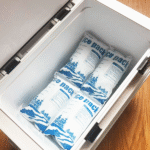
Use photos in your SOP to show exact gel pack placement.
Define a “go/no-go” checklist before each pack-out.
Track variability across shifts, not only across test runs.
Practical case: A hospital pharmacy reduced pack-out errors after adding photos and a pre-ship checklist to their SOP.
How Do You Lower Total Landed Cost With a Cooling Gel Pack Pharmaceutical Supplier?
Direct answer: Lower total landed cost by reducing exceptions, simplifying conditioning, and choosing pack-out designs that work across seasons. A strong cooling gel pack pharmaceutical supplier helps you avoid hidden costs like re-validation, investigation time, and product loss.
Expanded explanation: Unit price is only part of the story. If a cheaper gel pack causes more excursions, you pay in investigation hours, product loss, and audit risk. A cooling gel pack pharmaceutical supplier should help you see the full cost picture.
The best suppliers also help you simplify operations. Fewer conditioning steps, clearer SOPs, and better pack-out guidance all reduce labor cost and human error.
Cost drivers you should track
| Cost driver | What to measure | Why it matters | What it means for you |
|---|---|---|---|
| Exception rate | Excursions per 100 shipments | Drives investigation workload | Lower QA burden |
| Conditioning time | Hours per batch | Drives labor cost | Simpler shifts |
| Re-validation frequency | Events per year | Drives project cost | More predictable budgets |
| Product loss | Units lost per quarter | Drives direct cost | Better margins |
Practical tips and suggestions
Ask your supplier for a total cost model, not just a price list.
Track exception rates before and after supplier changes.
Include investigation hours in your cost-per-shipment calculation.
Practical case: A distributor cut total landed cost by 12% after switching to a cooling gel pack pharmaceutical supplier with simpler conditioning and fewer excursions.
How Do You Manage Changes and Prevent Re-Validation Surprises?
Direct answer: Manage changes by requiring written pre-notification from your cooling gel pack pharmaceutical supplier for any change affecting form, fit, or function. Define triggers, timelines, and approval steps in advance.
Expanded explanation: Supplier changes can trigger re-validation, which costs time and money. The best cooling gel pack pharmaceutical supplier programs include clear change-control agreements. You should know about changes before they reach your dock.
Change control is not about blocking progress. It is about managing risk. A good supplier will explain why a change is happening and help you assess impact.
Change control checklist
| Change type | Example | Typical impact | What it means for you |
|---|---|---|---|
| Material change | New film or gel formula | May affect thermal behavior | Re-test may be needed |
| Process change | New sealing equipment | May affect seal integrity | Incoming QC review |
| Site change | New manufacturing location | May affect batch consistency | Audit or pilot run |
| Specification change | New fill weight tolerance | May affect pack-out design | Re-validation review |
Practical tips and suggestions
Require written pre-notification for any change affecting form, fit, or function.
Maintain an “approved configuration sheet” with photos and tolerances.
Add an emergency plan for shortages and substitutions.
Practical case: A manufacturer prevented a field defect spike by pausing shipments until a sealing change was assessed in a pilot run.
2026 Latest Developments and Trends
Trend overview: In 2026, the cooling gel pack pharmaceutical supplier market is shifting toward control, proof, and simpler execution. Buyers want documented performance and fewer operational steps. They also want predictable change management and support for validation workflows.
Teams are also designing around real-world friction: hub holds, last-mile delays, and seasonal ambient swings. The suppliers gaining share are the ones who act like technical partners.
Latest progress at a glance
More phase change adoption: better stability for 2–8°C shipping gel packs.
More system thinking: suppliers support pack-out design, not just components.
More operational simplification: clearer conditioning and placement SOPs.
More sustainability pressure: durability and waste reduction are rising priorities.
Market insight: Procurement teams increasingly track exception rates and investigation workload, not only unit price. That pushes the best cooling gel pack pharmaceutical supplier programs toward measurable outcomes.
Frequently Asked Questions
Question 1: How long can a cooling gel pack pharmaceutical supplier system hold temperature?
Most systems target 24–72 hours, depending on insulation, ambient, and pack-out. Always test in your real lanes.
Question 2: Are phase change gel packs for pharmaceuticals always better than frozen gel packs?
Not always. Phase change options reduce freeze risk for 2–8°C products. Frozen gels can work for robust products and short lanes.
Question 3: How do you prevent medicines from freezing near gel packs?
Use separation layers, avoid direct contact, and standardize conditioning time. Pack placement discipline matters.
Question 4: What should you demand first from a cooling gel pack pharmaceutical supplier?
Start with repeatable thermal evidence, lot traceability, and a clear change-notice process. Then run a one-lane pilot.
Question 5: How do you test a new supplier without disrupting operations?
Run a controlled pilot on one lane with pass/fail rules. Compare baseline and trial results across repeat runs.
Question 6: What is the fastest red flag in a supplier discussion?
If they cannot explain batch variability, change control, and excursion support clearly, risk usually lands on you.
Summary and Recommendations
A cooling gel pack pharmaceutical supplier should be selected like a quality partner, not a commodity vendor. Focus on repeatable thermal behavior, strong traceability, and practical support for validated pack-out design. Use a one-lane pilot, a supplier scorecard, and simple SOPs with photos. These steps reduce excursions, lower investigation workload, and stabilize outcomes across shifts.
Action plan you can use this week:
Choose one lane and define worst-case duration and ambient assumptions.
Run a 10-shipment pilot with clear pass/fail criteria.
Lock conditioning steps and pack placement into a one-page SOP.
Score suppliers and set quarterly reviews tied to exception reduction.
CTA: If you want fewer temperature reviews this quarter, start with one lane pilot and a scoring tool you can defend.
About Tempk
At Tempk, we support pharmaceutical shippers with gel pack solutions designed for real transit conditions. We focus on consistent manufacturing controls, practical pack-out guidance, and repeatable conditioning steps that help teams reduce exceptions. We work with you to match gel technology, insulation choices, and operational workflows to your lanes.
Next step: Share your lane duration, target range, shipper size, and seasonality, and we will suggest a pilot-ready pack-out plan.