Customizable Expanded Polypropylene Box Price?
Last updated: December 22, 2025
If you’re comparing customizable expanded polypropylene box price, you’re really buying three things: protection, insulation, and predictability. In 2025, most buyers see the biggest price swings from size, wall thickness, customization, and order quantity. Bulk volume can often reduce unit pricing by about 10–40%, while small-batch custom features can push per-unit cost into double digits.
This guide will help you:
-
Understand the biggest customizable expanded polypropylene box price drivers
-
Choose customization that improves performance—not just looks
-
Use MOQ strategies to lower custom EPP cooler box cost
-
Estimate total landed cost for EPP packaging (not just factory price)
-
Apply a simple decision tool to match price to your cold chain route
What Drives Customizable Expanded Polypropylene Box Price?
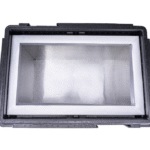
The fastest way to predict customizable expanded polypropylene box price is to check four levers: size, wall thickness, customization complexity, and MOQ. When any one of these jumps, pricing usually jumps with it. The key is to match performance to your route time, temperature target, and handling risk.
A helpful mental model is this: you pay for material, tooling, and repeatability. Material is the foam used in the box. Tooling is the mold and setup required for your exact design. Repeatability is the supplier’s ability to produce the same quality at scale.
Cost drivers you can control (and what they mean)
| Cost driver | What changes the price | Typical impact | What it means for you |
|---|---|---|---|
| Box size | More material + longer molding cycle | Medium–High | Choose the smallest size that still packs safely |
| Wall thickness | More EPP + higher insulation performance | Medium–High | Don’t “max thickness” unless your route needs it |
| Custom mold/tooling | New mold or complex geometry | High (one-time + risk) | Standardize sizes to avoid repeat tooling fees |
| Inserts/dividers | More parts + more labor | Medium | Worth it when damage/temperature risk is high |
| MOQ/volume | Economies of scale | High (unit price drops) | Plan ordering cadence to unlock better tiers |
How Does Customization Change Customizable Expanded Polypropylene Box Price?
Customization raises customizable expanded polypropylene box price mainly because it increases tooling and production complexity. Custom dimensions and molded inserts are the most common cost adders, because they often require unique molds. Branding and color can add cost too, but usually less than structural changes.
The smart move is to customize in layers. Start with performance needs (fit, insulation, durability). Add usability next (handles, closures). Add branding last (color, embossing) if your ROI is real.
Customization options that actually move the needle
| Custom feature | Why it adds cost | When it’s worth it | Your real benefit |
|---|---|---|---|
| Custom dimensions | New mold + validation | Mixed product sizes, tight packout | Less void space, better thermal stability |
| Molded inserts | Extra tooling + parts | Fragile or high-value products | Fewer breaks, fewer returns |
| Reinforced edges | More material + design | Rough handling lanes | Less damage from drops/impacts |
| Closures/locks | More components | Reuse programs, tamper control | Faster operations, fewer leaks |
| Sensor/access port | Extra steps + fit risk | Monitoring-required shipments | Cleaner data collection and compliance |
Practical tips you can use right away
-
Standardize first: Use 1–3 box sizes for 80% of SKUs.
-
Customize only for risk: Pay for inserts when damage is expensive.
-
Brand with restraint: Embossing can be cleaner than multi-color printing.
-
Validate early: A bad fit can cost more than the box itself.
Practical example: One shipper reduced per-unit packaging spend by focusing on standard sizes and only upgrading insulation where route time demanded it—saving roughly a quarter per unit while keeping performance stable.
customizable expanded polypropy…
MOQ and Volume: How to Get Better Customizable Expanded Polypropylene Box Price?
MOQ is often the biggest lever for lowering customizable expanded polypropylene box price. When you move from small batches to planned volume, suppliers can run longer production cycles and reduce setup waste. Many buyers see about 10–40% unit cost improvement as volume increases, depending on design complexity and how “standard” the tooling becomes.
customizable expanded polypropy…
The trick is not “buy more forever.” It’s “buy smarter on a schedule.” Quarterly ordering, seasonal forecasting, and long-term supply agreements can stabilize both price and lead time.
A simple volume framework (use it for quote comparisons)
-
Low volume (1–100 units): Expect higher unit price + possible tooling fees
-
Mid volume (100–1,000 units): Best balance of flexibility and savings
-
High volume (1,000+ units): Best unit price, strongest leverage for specs
Mini “MOQ Cost Planner” (quick self-check)
Fill in these values:
-
Monthly shipments: ____
-
Reuse cycles per box: ____ (e.g., 10–30)
-
Boxes needed in rotation: monthly shipments ÷ reuse cycles = ____
-
Add buffer (10–20%): rotation × 1.1–1.2 = ____
-
Target order size: enough for 2–3 months = ____
If your target order size lands in the mid-volume tier, you’re usually positioned for a stronger customizable expanded polypropylene box price.
Insulation Performance vs Price: How Thick Should Your EPP Box Be?
Wall thickness is where customizable expanded polypropylene box price and cold chain performance meet. Thicker walls slow heat transfer, like adding more “winter coat layers” around your product. But extra thickness also adds material cost and sometimes changes mold design.
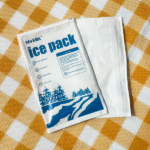
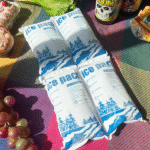
A better strategy is to match thickness to your route, then use coolants (gel packs, PCM, or dry ice where appropriate) to extend hold time without overbuilding the box.
Thickness choices, simplified
| Wall approach | Best for | Price impact | What you’ll notice |
|---|---|---|---|
| Thin–medium | Short routes, mild climates | Low | Lowest cost, but less hold time buffer |
| Medium | Typical food delivery lanes | Medium | “Good enough” for many chilled workflows |
| Thick | Long routes, hot climates, strict SOPs | High | Better hold time, higher cost and bulk |
Practical tips and suggestions
-
Short deliveries (same-day / next-day): Start with medium insulation, validate packout.
-
48+ hour lanes: Consider thicker walls or better coolant strategy first.
-
Hot weather lanes: Add buffer through coolant placement and tighter void control.
-
Avoid “max insulation by default”: It can inflate customizable expanded polypropylene box price without adding real value.
Practical case: For shipments over 48 hours, some teams improve outcomes by pairing EPP boxes with stronger coolant plans (like dry ice or PCM where allowed), instead of only increasing wall thickness.
customizable expanded polypropy…
Total Landed Cost: The Price You Actually Pay
Factory quotes are not your true customizable expanded polypropylene box price. Your real cost includes shipping, duties (if applicable), handling, storage, returns, and—most importantly—how many times you can reuse the box.
If you run a reuse program, your best metric is cost per trip, not cost per unit.
A simple cost-per-trip formula
Cost per trip = (Unit price + inbound logistics + handling) ÷ expected reuse cycles + cleaning/return costs
This is where EPP often wins: it’s lightweight, tough, and built for reuse—so cost per trip can drop sharply when reuse is managed well.
Hidden cost checklist (use it before you sign)
-
Tooling/setup fees: one-time or amortized
-
Freight mode and packaging volume: air vs ocean vs ground
-
Warehouse footprint: thick boxes take space
-
Damage and claims: insert cost vs breakage cost
-
Reverse logistics: returns, cleaning, relabeling
Decision Tool: Choose the Right EPP Box Pricing Strategy in 5 Steps
This tool helps you align customizable expanded polypropylene box price with real operational risk. It’s designed so you don’t overbuy features that don’t reduce failures.
Step 1: Define your temperature job
-
Chilled: ____ °C target, ____ hours
-
Frozen: ____ °C target, ____ hours
-
Mixed load: separate compartments? (Yes/No)
Step 2: Score route difficulty (0–10)
-
Transit time: 0–3 short, 4–6 medium, 7–10 long
-
Ambient heat exposure: 0–3 mild, 4–6 warm, 7–10 hot
-
Handling risk: 0–3 gentle, 4–6 normal, 7–10 rough
Total score (0–30): ____
Step 3: Pick a build level (based on score)
-
0–10: Standard size, medium insulation, minimal custom parts
-
11–20: Add fit improvements (inserts), tighten void space, validate packout
-
21–30: Consider thicker walls + reinforced edges + monitoring options
Step 4: Choose an MOQ play
-
If you reorder monthly, negotiate quarterly volume pricing.
-
If demand is seasonal, order early to stabilize lead time and cost.
Step 5: Compare quotes the right way
When comparing customizable expanded polypropylene box price, require each quote to list:
-
Unit price, MOQ, lead time
-
Tooling/setup fees
-
Material density and wall thickness
-
Insert/closure specs
-
Packaging and shipping assumptions
2025 Trends Affecting Customizable Expanded Polypropylene Box Price
In 2025, customizable expanded polypropylene box price is being shaped by three forces: sustainability pressure, faster delivery expectations, and better design-to-quote workflows. Buyers are also pushing for clearer performance proof, not just “thicker is better.”
Latest progress snapshot (what you’ll see more often)
-
More reuse programs: Cost-per-trip thinking is replacing unit-price thinking.
-
Faster customization cycles: Digital design and quoting tools reduce iteration time.
-
Smarter packouts: More teams pair EPP with PCM/gel strategy to avoid overbuilding.
-
More compliance-friendly documentation: Clear specs help validation and audits.
Market insight you can act on
If you want a stable customizable expanded polypropylene box price, push for:
-
Standardized sizes across SKUs
-
Clear validation targets (hours, temperature band, ambient profile)
-
Long-term ordering cadence to lock production planning
Frequently Asked Questions
Q1: What most affects customizable expanded polypropylene box price?
Size, wall thickness, customization (molds/inserts), and MOQ have the biggest impact on customizable expanded polypropylene box price.
Q2: Are custom EPP cooler box costs always higher than stock boxes?
Usually yes, because custom molds and setup add costs. But higher volume can reduce custom EPP cooler box cost.
Q3: Can I order small quantities at a reasonable customizable expanded polypropylene box price?
You can, but unit pricing is often higher. Ask about shared tooling or semi-standard sizes to reduce setup fees.
Q4: Is thicker insulation always better for customizable expanded polypropylene box price value?
Not always. Match thickness to route time. You can often improve outcomes with better coolant strategy instead.
Q5: How do I estimate total landed cost for EPP packaging?
Add unit price, inbound freight, handling, and return/cleaning costs, then divide by reuse cycles to get cost per trip.
Q6: What should I request in a quote to avoid surprises?
Ask for unit price, MOQ, tooling fees, material density, wall thickness, lead time, and shipping assumptions—every time.
Summary and Recommendations
The best customizable expanded polypropylene box price is the one that meets your route requirements without buying unnecessary features. Focus on four levers: size, wall thickness, customization complexity, and MOQ. Use cost-per-trip thinking if you reuse boxes, and compare quotes using identical spec assumptions. If you align insulation and packout design to your real transit time, you’ll protect product quality and keep spending controlled.
Next step (CTA): Write down your temperature target, transit hours, and monthly volume, then request at least three quotes using the same spec sheet. Use the decision tool above to choose the option with the lowest risk per dollar.
About Tempk
At Tempk, we help cold chain teams choose EPP packaging that protects product quality without overspending. We support practical decisions across box design, insulation strategy, packout validation, and total cost modeling. Our focus is simple: predictable temperature control, durable reuse, and pricing that makes sense for your real routes.
CTA: Share your product type, target temperature band, route hours, and monthly volume. We’ll help you estimate a customizable expanded polypropylene box price that fits your performance needs.