Foldable EPP Foam Box: How to Choose in 2025?
A foldable EPP foam box helps you protect temperature-sensitive goods while cutting the space you waste on empty returns. If your foldable EPP foam box collapses to about one-quarter to one-third of its height, you can often reduce empty return “cube” by roughly 65–75% in the same truck footprint.
That’s real money, because you stop paying to ship air. In this guide, you’ll learn how to pick the right foldable EPP foam box, validate performance, and run a return loop your team will follow.
This article will answer for you
-
How a foldable EPP foam box works (and when it does not make sense)
-
A quick decision tool to estimate return savings and ROI
-
What to check in hinges, latches, seams, and lid seals
-
How to choose foldable EPP foam box size without creating temperature drift
-
A practical foldable EPP foam box return logistics checklist
-
A simple foldable EPP foam box cleaning SOP that prevents odor and downtime
-
2025 trends pushing reusable packaging to scale faster
What Is a Foldable EPP Foam Box Used For?
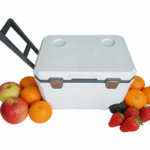
Direct answer: A foldable EPP foam box is a reusable insulated container made from expanded polypropylene that collapses for compact storage and cheaper returns.
foldable EPP foam box
It’s built for cold-chain delivery where you want insulation and durability, but you also want fewer bulky empties in your warehouse.
Think of it like a strong cooler that can “pack flat” after delivery. A rigid box stays big even when empty. A foldable EPP foam box gives you a second mode: it becomes a compact asset for backhaul and storage. That’s why it shows up in meal delivery, grocery routes, pharma distribution loops, and internal facility transfers.
Foldable EPP foam box vs rigid EPP: the real trade-offs
| Comparison point | Foldable EPP foam box | Rigid EPP container | What it means for you |
|---|---|---|---|
| Empty return volume | Low when collapsed | High (fixed volume) | Less backhaul space waste |
| Training need | Medium | Low | SOP matters more for foldable |
| Failure mode | Hinge/latch wear | Corner damage | Different inspection checklist |
| Best fit | Closed-loop routes | One-way or low-return | Match to your network |
Practical tips you can apply now
-
If you control returns weekly, a foldable EPP foam box usually earns a pilot.
-
If you ship one-way with no returns, foldability is often “nice” but not ROI.
-
If your staff are new, prioritize obvious “locked” indicators and simple assembly.
Real-world example: A subscription delivery program reduced backhaul clutter after switching to a foldable return routine and stack rules.
foldable EPP foam box
When Does a Foldable EPP Foam Box Pay Off?
Direct answer: A foldable EPP foam box pays off when you have frequent returns, limited storage, or expensive backhaul space. It is an economics feature, not just a packaging feature.
foldable EPP foam box
You can deliver perfectly and still lose money on the empty trip home. That’s the hidden cost center many teams ignore. When you fold, you reclaim truck capacity, rack space, and handling time.
90-second decision tool: is a foldable EPP foam box worth piloting?
Answer Yes/No:
-
Do your insulated containers return at least weekly?
-
Is warehouse space tight or expensive?
-
Do you pay for backhaul volume or vehicle space?
-
Do you handle large quantities of empty containers daily?
-
Do you want to standardize reusable packaging in 2025?
If you answered “Yes” to 3 or more, pilot a foldable EPP foam box.
| Your reality | Folding benefit | Why it happens | What it means for you |
|---|---|---|---|
| Tight warehouse space | High | Less empty volume | More usable capacity |
| Backhaul is expensive | High | More units per return trip | Lower cost per return |
| Low return rate | Low | Boxes don’t come back | Weak ROI |
Mini ROI calculator (simple and usable)
Use this before you buy a full fleet.
-
Cost per trip = (Box cost ÷ expected trips) + cleaning + return handling + loss allowance
-
Savings per trip = avoided single-use cost + fewer damage refunds + return-space savings
-
ROI signal = savings per trip − cost per trip
Tip: ROI depends on cost per successful trip, not purchase price.
foldable EPP foam box
Does a Foldable EPP Foam Box Hold Temperature Like a Rigid Box?
Direct answer: A foldable EPP foam box can insulate very well, but seams, joints, and lid seal quality decide real performance.
foldable EPP foam box
A tight lock can outperform a thicker box with a weak seal.
Here’s a simple way to picture it. Your box is the “thermos shell.” Your coolant is the “battery.” A leaky shell drains the battery fast, even if the foam is good.
What usually drives temperature drift in a foldable EPP foam box?
-
Air gaps caused by loose corners or uneven lid compression
-
Void space inside (too much empty air warms up quickly)
-
Inconsistent closure when teams rush
-
Dwell time during pickup or receiving
What to check in fold seams and closures (fast inspection)
| Design detail | Good sign | Bad sign | What it means for you |
|---|---|---|---|
| Panel locking | Firm, repeatable “click” | Loose fit | More temperature drift |
| Corner joints | Tight corners | Visible gaps | Heat leak risk |
| Lid closure | Even compression | Warped lid | Less stability |
| After many folds | Holds shape | Soft edges | Shorter lifespan |
Practical tips you can apply now
-
Fix void space before you add more coolant. Dense packing stabilizes temperature.
-
If the top warms first, improve lid seal and add a top buffer pack.
-
If corners drift, your lock design or closure sequence needs attention.
Real-world example: A route stabilized after the team stopped over-stuffing the foldable EPP foam box and standardized closure steps.
foldable EPP foam box
How Do You Choose the Right Foldable EPP Foam Box Size?
Direct answer: Choose foldable EPP foam box size based on your typical load profile, handling ergonomics, and required hold time. Avoid “maximum volume thinking.” A box that is too large creates air space, which increases temperature drift and product movement.
foldable EPP foam box
In cold chain packing, “fuller is better.” Air is where temperature swings live. A right-sized foldable EPP foam box also stacks better and reduces crushing.
Fast sizing method: three measurements + one margin
Measure:
-
Payload footprint (length × width of your typical load)
-
Payload height (including inner packaging)
-
Coolant zone (space you need for packs or buffers)
-
Add a 10–15 mm margin per side for easy loading
If you have to force the lid, you are under-sized. Forced lids destroy seals fast.
Table: picking the right foldable EPP foam box size
| Decision factor | What to check | “Good” sign | What it means for you |
|---|---|---|---|
| Footprint | Fits trays/crates | No bending or wedging | Faster pack-out |
| Height | Lid closes easily | No forced pressure | Better seal life |
| Collapsed height | Stacks flat on return | Stable folded stacks | Lower return cube |
| Weight rating | Handles heaviest lane | No deformation | Less damage risk |
Practical tips you can apply now
-
Standardize 2–3 sizes max to reduce packing and folding errors.
-
Use inserts for mixed loads to reduce shifting.
-
Avoid “one huge box for everything” unless your loads are always dense.
Real-world example: A team reduced drift by switching from one large box to two medium foldable EPP foam box units with denser packing.
foldable EPP foam box
Which Hinge, Latch, and Seal Details Matter Most?
Direct answer: The hinge and latch are the make-or-break parts of a foldable EPP foam box. You need smooth folding, obvious locking, and consistent seal compression. If “locked” feels optional, field failures become normal.
foldable EPP foam box
Your goal is a design that makes mistakes hard to make. The best foldable EPP foam box guides hands into the right motion.
What to inspect before you buy (the buyer checklist)
-
Lock indicator: clear click, visible marker, or flush-fit alignment
-
Hinge reinforcement: thicker fold points that tolerate repeated cycles
-
Latch protection: placement that avoids impact damage
-
Corner geometry: corners carry stack stress; weak corners crush first
-
Lid alignment: lid should seat the same way every time
| Component | Good design sign | Bad design sign | What it means for you |
|---|---|---|---|
| Hinge | Folds smoothly, no tearing | Early cracking/whitening | Shorter box life |
| Latch | Positive lock feedback | “Maybe locked” feel | Higher failure rate |
| Corners | Reinforced and square | Soft collapse | More crush damage |
| Lid | Self-aligning | Needs pushing to fit | Seal inconsistency |
Practical tips you can apply now
-
If drivers stack, prioritize corner strength and latch protection.
-
If packers rush, prioritize obvious lock feedback.
-
If sanitation is frequent, avoid latch areas that trap residue.
Real-world example: “Open-on-arrival” incidents dropped after switching to a foldable EPP foam box with a visible lock indicator.
foldable EPP foam box
How Do You Run Return Logistics for a Foldable EPP Foam Box Fleet?
Direct answer: A foldable EPP foam box only wins if you run a real closed loop: deliver → collect → consolidate → reset. If returns are random, you will lose inventory and lose ROI.
foldable EPP foam box
The folding feature is not magic. The process is what creates payback.
Foldable EPP foam box return logistics checklist
Use this to keep returns boring and reliable:
-
Assign a unique ID per foldable EPP foam box (QR or printed code)
-
Define who owns the return at the customer site
-
Set a return schedule (daily, weekly, or per pickup)
-
Standardize one fold method (photos help)
-
Define “dirty box” handling rules
-
Track loss rate and set a threshold for action
60-second “Return Loop Readiness” self-test
Give yourself 1 point for each “yes.”
-
We deliver to repeat customers or fixed sites.
-
We can schedule pickups or backhauls.
-
We have space to store collapsed units.
-
We have a cleaning and drying routine.
-
We can track asset IDs.
-
We can train staff with a one-page SOP.
-
We quarantine damaged boxes fast.
-
We measure loss rate monthly.
Score guide:
-
0–3: pilot small
-
4–6: workable with tracking
-
7–8: scale-ready
| Return step | What to standardize | Common failure | What it means for you |
|---|---|---|---|
| Collapse | One method for all | Wrong folding damages hinges | Shorter life |
| Consolidate | Stack height rules | Unstable stacks | Damage in transit |
| Reset | Clean + inspect | Dirty returns re-enter fleet | Odor complaints |
Practical tips you can apply now
-
If boxes go missing, add deposits, incentives, or scan-at-handoff rules.
-
Collapse at the customer site if return trucks fill too fast.
-
Keep scanning to two events: pickup and return.
Real-world example: Return rate improved after adding a simple “scan on pickup” rule for each foldable EPP foam box.
foldable EPP foam box
What Is a Simple Foldable EPP Foam Box Cleaning SOP?
Direct answer: The best foldable EPP foam box cleaning SOP is short, repeatable, and strict about drying. Drying is what prevents odor, mold, and sticky residue. If you fold while damp, smell returns fast.
foldable EPP foam box
Make the SOP designed for speed. If it’s complicated, it won’t happen consistently.
7-step foldable EPP foam box cleaning SOP (copy/paste)
-
Pre-check: remove liners, labels, and debris
-
Pre-rinse: quick rinse for visible soil
-
Wash: detergent scrub on folds, seams, and latch areas
-
Rinse: remove detergent residue
-
Sanitize: approved sanitizer with correct contact time
-
Dry: air dry fully open (do not collapse yet)
-
Inspect: latch function, hinge wear, odor, deformation
3-zone cleaning map (makes cleaning faster)
-
Zone A (touch + spill): interior base and corners
-
Zone B (seal area): lid lip, closure points, hinge edges
-
Zone C (handling): exterior handles and fold joints
| SOP step | What gets missed | Strong habit | What it means for you |
|---|---|---|---|
| Wash | Latch recess | Brush corners and folds | Prevents buildup |
| Sanitize | Contact time | Use a simple timer | Better audit confidence |
| Dry | Wet stacking | Dry fully before fold | Stops odor recurrence |
| Inspect | “Looks fine” | Quick lock check | Fewer field failures |
Reuse readiness self-test (score 0–2 each)
-
Cleaning checklist exists
-
Drying is controlled (no wet stacking)
-
Lock points inspected daily
-
Damaged units removed quickly
-
Storage zone stays clean
8–10: ready to scale reuse
5–7: pilot and refine
0–4: fix basics first
Real-world example: Odor complaints dropped after one change: drying boxes fully open before collapsing.
foldable EPP foam box
How Do You Validate a Foldable EPP Foam Box Lane in 2025?
Direct answer: Validate a foldable EPP foam box with lane-based testing that reflects real delivery behavior. Test hot days, typical days, and cold days. Use the same packout recipe every time, or your results won’t mean anything.
foldable EPP foam box
If you want a recognized approach, many cold-chain teams align lane tests with modern thermal shipping test profiles (for example, ISTA-style thinking) while keeping the execution simple.
A practical lane test plan (10 runs)
-
3 shipments on a cool day
-
4 shipments on a typical day
-
3 shipments on a hot day
-
Use the same foldable EPP foam box packout recipe each time
Record: packout time, pickup time, delivery time, and internal temperature on arrival. If possible, use a data logger for the temperature curve.
| Test element | What you’re proving | What “pass” looks like | What it means for you |
|---|---|---|---|
| Seal stability | Lid/folds stay tight | No visible gaps | Predictable hold time |
| Packout repeatability | Staff can follow recipe | Same layout every time | Fewer exceptions |
| Worst-case dwell | Delays don’t break system | Acceptable arrival temp | Confidence to scale |
| Wash + fold cycle | Reuse doesn’t degrade fit | Lock stays consistent | Long cycle life |
Practical tips you can apply now
-
If results swing, reduce void space before adding more coolant.
-
If drift follows washing, inspect seals and fold edges for wear.
-
If hinge fatigue appears, your fold method may be forcing the wrong angle.
User Engagement: The “Buy or Pass” Checklist for a Foldable EPP Foam Box
Before you commit, confirm these are true:
-
The foldable EPP foam box locks firmly every time
-
The lid seal compresses evenly with no visible gaps
-
One person can assemble it fast under pressure
-
It stacks securely when open and when folded
-
Cleaning is easy around seams and corners
-
You can standardize sizes across your operation
-
You can track returns (even with simple scan events)
If you can’t say “yes” confidently, run a pilot first.
2025 Trends Shaping Foldable Reusable Cold-Chain Packaging
Trend overview: In 2025, reusable cold-chain packaging is moving from “nice idea” to “operational advantage.” Teams are under pressure to reduce waste, control costs, and prove consistent outcomes. That’s why foldable EPP foam box programs are growing: they support reuse while reducing return volume.
foldable EPP foam box
Latest progress snapshot
-
More closed-loop programs: fixed routes make returns reliable
-
More asset tracking: QR-based scans replace manual counting
-
More standardization: fewer box sizes and simpler assembly to reduce errors
-
More modular inserts: one box can serve multiple SKUs with internal kits
-
More “collapse-at-customer” SOPs: return cube drops before the truck moves
Market insight you can use
The best foldable EPP foam box programs win by being boring.
Boring means repeatable: one folding method, one cleaning SOP, and clear pass/fail inspection rules.
foldable EPP foam box
Frequently Asked Questions
Q1: When is a foldable EPP foam box worth it?
When you have reliable returns, tight storage, or expensive backhaul space. Without returns, ROI is weak.
Q2: Does a foldable EPP foam box insulate as well as rigid boxes?
It can. In real operations, seam tightness and lid fit often matter more than thickness alone.
Q3: What fold ratio should I target?
Use collapsed height ÷ expanded height. Roughly one-quarter to one-third height often delivers meaningful return savings.
foldable EPP foam box
Q4: What’s the biggest operational mistake?
Folding while damp and using multiple fold methods. Both increase odor complaints and hinge fatigue.
Q5: Do I need tracking for a foldable EPP foam box fleet?
If you want reliable ROI, yes. Even simple scan-on-pickup and scan-on-return reduces loss rate.
Q6: How do I stop odor problems?
Dry fully while the box is open, then fold. Odor is usually trapped moisture, not “lack of sanitizer.”
foldable EPP foam box
Summary and Recommendations
A foldable EPP foam box is most valuable when your pain is empty returns, depot space, and handling time. Choose a design with tight seams, obvious locking, and repeatable closure. Then win with process: standard packout, standard folding, standard cleaning, and standard inspection. If you run a 14-day pilot and track return savings, loss rate, cleaning minutes, and hinge failures, you will know whether to scale with confidence.
foldable EPP foam box
Action plan you can start this week
-
Pick one stable route and one foldable EPP foam box size.
-
Post a 10-second fold + lock SOP with photos.
-
Enforce a strict dry-before-fold rule.
-
Track four KPIs: return cube saved, loss rate, cleaning minutes, hinge/seal failures.
-
Scale only after performance is repeatable with normal staff.
About Tempk
At Tempk, we help teams build reusable cold-chain packaging systems that work under daily delivery pressure. We focus on practical outcomes: stable temperature control, lower damage risk, and smoother return workflows. For foldable programs, we support lane-based pilots, packing layouts, inspection routines, and cleaning SOPs that keep performance consistent over many reuse cycles.
Call to Action: Share your route time, ambient range, return method, and typical payload size. We’ll help you map a foldable EPP foam box pilot plan and the key KPIs to track before you scale.