Updated 2026-02-10: When you search “gel cooling accumulator Germany manufacturer”, you are usually trying to stabilize temperature-sensitive shipments with a passive refrigerant that is easy to source, safe to handle, and repeatable at scale. This analytical report explains how you can evaluate German suppliers, what compliance evidence matters, and how you can specify and validate pack-outs for chilled, controlled room temperature, and frozen lanes.
Unspecified (as provided): target audience, funnel stage, brand voice/tone, internal URL structure, and your exact lane details (payload type, temperature band, ship time, ambient profile).
What is a gel cooling accumulator Germany manufacturer in cold chain terms?
A gel cooling accumulator is a sealed cold pack (flexible pouch or rigid brick) that absorbs heat as it warms, extending the time your insulated shipper stays inside a required temperature band. In a cold chain context, a gel cooling accumulator Germany manufacturer is best thought of as a component supplier for a passive shipping system, not a “standalone fix.”
Why the “system view” matters: the World Health Organization defines passive shipping systems as combinations of insulated material and temperature-stabilizing media that can keep internal contents within a specified temperature range for a predefined transport period without mechanical assistance. That is exactly how a gel cooling accumulator Germany manufacturer product creates value: it becomes the controllable heat sink inside an engineered pack-out.
Why conditioning discipline matters: WHO also warns that extended exposure to refrigerated conditions can freeze package contents. This is why “more ice” is not automatically safer for 2–8°C lanes, and why a gel cooling accumulator Germany manufacturer needs to support freeze-risk mitigation through validated pack-outs.
Here is a buyer-oriented view of what you will encounter in Germany when you compare a gel cooling accumulator Germany manufacturer list:
| What suppliers sell (common term) | What it is | Best fit lanes | Operational watch-out |
|---|---|---|---|
| Water coolpacks | Clear water, intended to freeze/melt around 0°C | Chilled food where brief sub-zero exposure is acceptable | Freezing risk for 2–8°C payloads if not engineered |
| Water-based gel coolpacks | Polymer-thickened water gel, often more stable in handling | Food and general cold chain where “wet ice” is undesirable | Chemistry varies; conditioning control still required |
| Reusable hard-shell accumulators | Rigid packs for longer service life and return loops | Reuse/pooling setups, foodservice, frequent dispatch | Reverse logistics and cleaning SOPs become part of cost |
| Negative-range / eutectic packs | Refrigerant formulated for sub-zero targets (e.g., around -21°C) | Frozen shipments without dry ice | Requires disciplined conditioning and lane validation |
The category signals behind that table are visible in German supplier portfolios (water packs, water-based gel packs, hard-shell reusables, and negative-range options).
How do you vet a gel cooling accumulator Germany manufacturer for compliance and risk?
If you want a gel cooling accumulator Germany manufacturer you can defend internally, you have to separate performance claims from control evidence.
Evidence for pharmaceutical lanes (GDP): EU GDP guidance expects procedures and equipment to check the storage environment and explicitly discusses temperature mapping, monitoring placement based on mapping results, calibration traceability, and alarm systems for excursions. In practice, this matters because gel cooling accumulators are often staged, stored, or delivered pre-frozen, and those steps can become critical control points.
Evidence for passive packaging design: WHO states that passive systems should only be used after the route and container has been qualified, and that passive systems have a predefined transport life. If your gel cooling accumulator Germany manufacturer cannot provide lane-relevant assumptions or validation support, you will end up rebuilding the engineering knowledge yourself.
Evidence for air interfaces: International Air Transport Association’s time- and temperature-sensitive label FAQ clarifies that the temperature range relates to the external (ambient) temperature around the package and that correct label use does not guarantee compliance. This is why gel cooling accumulator Germany manufacturer selection should be tied to worst-case ambient exposure and handling variability, not only to “nice” conditions.
Evidence for food-contact safety: the European Commission explains that Regulation (EC) No 1935/2004 sets general principles for safety and inertness for food contact materials. If your gel cooling accumulator Germany manufacturer claims food-contact approval, you should request a relevant conformity declaration aligned to your actual contact scenario.
Evidence for chemical safety and formulation control: the European Commission describes REACH as the main EU law to protect human health and the environment from risks posed by chemicals, including restricting substances of very high concern. For a gel cooling accumulator Germany manufacturer, the practical procurement equivalent is: SDS availability (where relevant), traceable formulation changes, and controlled additives.
Use this checklist as a supplier qualification template for any gel cooling accumulator Germany manufacturer:
| Checkpoint | Ask for | What it prevents |
|---|---|---|
| Product definition | Dimensions, fill weight, outer film/casing, phase-change target | “Same SKU, different behavior” across lots |
| Seal integrity | Leak/burst test description; seam design; incoming QC | Leaks, wet cartons, and rejected consignments |
| Conditioning SOP | Conditioning temp/time; stacking rules; staging limits | Under-conditioning and over-conditioning in peaks |
| Compliance documentation | Food-contact declaration (if needed); SDS; traceability | Audit gaps and customer claim disputes |
| Validation support | Thermal test conditions, pack-out recipes, profile assumptions | Buying a part that cannot be engineered into a system |
| Sustainability & disposal | Reuse capability; return-loop support; end-of-life guidance | Hidden waste cost and customer dissatisfaction |
To talk credibly about thermal testing in a gel cooling accumulator Germany manufacturer article, reference standards accurately: International Safe Transit Association (ISTA) describes Procedure 7D as a temperature test for transport packaging (a development test for external temperature exposures). Independent test-lab descriptions also emphasize that ISTA 7D focuses on thermal exposure rather than mechanical hazards such as shock or vibration.
Which gel cooling accumulator Germany manufacturer options are visible in Germany today?
Germany’s market includes manufacturers, brands, and B2B suppliers. When you research gel cooling accumulator Germany manufacturer, it helps to group suppliers by the buyer problem they solve:
- System + component suppliers (publish cooling element families and often mention testing/qualification)
- Foodservice brands (optimize for “fresh/cold/frozen” delivery use and rugged handling)
- B2B packaging suppliers (optimize for availability, samples, and documentation on request)
Below are three Germany-based options with publicly available, cold-pack-relevant details. This is not an exhaustive list; it is meant to help you start with evidence and then expand.
| Supplier visible in Germany | Public Germany reference | What they publish that is relevant | What that tells you as a buyer |
|---|---|---|---|
| ECOCOOL GmbH | Bremerhaven address published | Cooling element families (water, water-based gel, hard shell, foam bricks with water/PCM, absorber) and standard sizes/weights; publishes negative-range elements and customization options | Strong signal of range and engineering maturity |
| Barth GmbH – THERMO FUTURE BOX | Supplier identification in Germany published | Gel-filled cold packs positioned in multiple temperature versions; emphasizes professional handling features and use-case framing | Strong fit for foodservice and last-mile meal distribution |
| RAUSCH Packaging (MEDEWO GmbH area) | B2B shop imprint lists Augsburg, Germany | “Kühlakku” (leak-proof, non-toxic fill, reusable, food-safe docs on request) plus “Kühlkissen” (water-based, reusable) | Strong for fast B2B sourcing + documentation support |
Those are not abstract claims; they show up explicitly on the relevant pages.
The supplier signals that matter more than marketing (and that you can copy into a “selection criteria” block for SEO):
- Pre-conditioning as a service: Ecocool describes providing pre-frozen cooling elements (saving customer time, energy, and storage capacity). For high-volume shippers, this reduces variability and removes freezer capacity from the critical path.
- Deep-freeze operational maturity: an industry publication reports that Ecocool operates a deep-freeze warehouse to freeze and store cold packs from its own production and deliver them frozen. This is a real reliability lever for gel cooling accumulator Germany manufacturer sourcing.
- Negative-range solutions without dry ice: Ecocool describes deep-freeze cooling elements with melt points down to around -21°C (saltwater mixture) and states that melt points can be customized (e.g., -5°C or -10°C) for customer constraints.
- Food-safe documentation and reuse positioning: RAUSCH Packaging states that food-contact conformity declarations can be requested for its cooling accumulator products and positions them for reuse and deposit-style systems.
- Use-case-first temperature segmentation: Thermo Future Box sells gel-filled cold packs framed as multiple temperature versions aligned to “fresh/cold/frozen” use.
How do you specify gel cooling accumulator Germany manufacturer packs for your route?
This is where a gel cooling accumulator Germany manufacturer article becomes genuinely useful: specification is how you prove you understand lane reality.
A tight framing is: you are not specifying a gel pack, you are specifying a controlled outcome—X–Y°C for Z hours, under a worst-case ambient profile. WHO’s passive shipping guidance explicitly ties passive systems to predefined transport life and to route/container qualification, which reinforces why lane definition comes first.
A specification workflow you can follow (and reuse in your SOPs):
- Write the promise: “X–Y°C for Z hours under worst-case ambient.”
- Decide the failure you can’t tolerate: freezing, warming, condensation, leakage.
- Choose refrigerant family: water (0°C), water-based gel, or negative-range eutectic/PCM/salt solutions.
- Choose form factor: flexible vs rigid; consider reuse and damage risk.
- Define conditioning you can execute (your freezer capability limits your design space).
- Validate, then lock SOPs (conditioning, staging, placement, monitoring).
A diagram you can embed to improve user comprehension:
Lane: band + hours + ambient
Failure mode to avoid
Refrigerant family
Form factor + mass
Conditioning SOP
Pack-out + pilot with loggers
Lock SOP + change control
Before full thermal modeling, do a first-pass “refrigerant mass sanity check.” Published weights help: Ecocool publishes standard dimensions and weights for both water packs and water-based gel packs, which makes early sizing and pack-out iteration faster.
Practical tips that save money and reduce excursions:
- Build two pack-outs (standard vs heatwave) instead of overbuilding every shipment. This is often the highest ROI action when your gel cooling accumulator Germany manufacturer page targets e-commerce shippers.
- Respect freezing risk in 2–8°C lanes; WHO’s freezing caution is a real design constraint.
- Don’t outsource compliance to labels; IATA explicitly says labels do not guarantee temperature compliance.
- Use monitoring in pilots; an industry publication notes monitoring and data loggers as part of holistic packaging solutions and describes value in detecting routing/handling issues early enough to intervene.
Long-tail phrases you can integrate naturally (without keyword stuffing beyond the required density):
- reusable gel cooling accumulator Germany manufacturer for pharma 2–8°C
- food-grade gel cooling accumulator Germany manufacturer for meal kits
- custom eutectic gel cooling accumulator Germany manufacturer for frozen lanes (e.g., -21°C)
- GDP-ready gel cooling accumulator Germany manufacturer with validation support
- leak-proof water-based gel cooling accumulator Germany manufacturer for last-mile delivery
What trends this year are shaping gel cooling accumulator Germany manufacturer demand?
If you are publishing for 2026, your gel cooling accumulator Germany manufacturer page needs current forces, not generic cold chain phrases. Three trends are particularly visible through German supplier behavior and EU policy timelines.
Regulation-driven sustainability is becoming procurement criteria. The European Commission’s packaging waste overview describes the move to the Packaging and Packaging Waste Regulation (PPWR) and provides a timeline that includes a general application date in August 2026. Even if you “only” sell a gel cooling accumulator, buyers increasingly evaluate waste, reuse potential, and disposal friction across the full shipper system.
Water-based and simplified end-of-life designs are expanding. Ecocool positions clear-water packs as additive-free and easy to handle after use, and its blog describes customer-driven motivation to move from gel-based packs to water-based alternatives for sustainability—while acknowledging gel can be more viscous/stable in transport. The net takeaway: gel cooling accumulator Germany manufacturer competition increasingly happens on disposal friction and customer experience, not only on hold time.
Pre-conditioning and monitoring are becoming the premium baseline. Ecocool’s pre-frozen cooling-element service positions freezing as a bottleneck shippers want to outsource, and industry reporting links deep-freeze warehousing to service reliability. In parallel, an industry publication describes cargo monitoring and data loggers offered alongside packaging as part of “holistic” solutions and emphasizes monitoring’s role in detecting issues early enough to intervene.
What case study, CTA, and action plan fit a gel cooling accumulator Germany manufacturer page?
This section is meant to convert high-intent readers without hype (and it gives you a reusable structure for both Article and FAQPage schema).
Case study template (composite Germany lane): your lane details were unspecified, so treat this as a practical template. A common pattern in the German market is chilled food e-commerce shipping with a “below 8°C to delivery” promise and seasonality-driven complaint spikes. Ecocool’s own press-release framing links growth in food e-commerce with increased need for cooling packaging, and supplier publications show repeatable pack-out logic is central to success.
- Situation: you ship chilled products nationwide, summer peaks drive excursions.
- Decision: you move from “generic cold packs” to a gel cooling accumulator Germany manufacturer that can support a defined refrigerant strategy and pack-out recipe.
- Execution: you create two pack-outs (standard vs heatwave), run a pilot with loggers, then lock SOPs under change control. (The “labels don’t guarantee compliance” warning is why the pilot matters.)
Action plan:
- Days 1–3: write the lane promise and shortlist 2–3 gel cooling accumulator Germany manufacturer candidates using the checklist above.
- Days 4–7: request documentation and run a small thermal exposure test; ensure conditioning SOP feasibility.
- Days 8–14: pilot on your carrier network with loggers, then convert the winning pack-out into a one-page SOP and lock it under change control. If you are GDP-driven, keep your documentation aligned to EU GDP expectations around mapping, calibration, and procedural control.
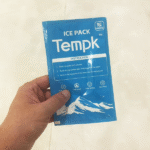
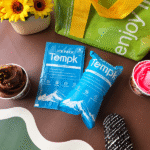
Can Tempk support a gel cooling accumulator Germany manufacturer strategy?
If your requirement is strictly “made in Germany,” Tempk is not a gel cooling accumulator Germany manufacturer: its “About” page states it is headquartered in Shanghai and has multiple factories in China.
However, Tempk publishes gel ice pack product positioning for cold chain use, so it can be used as a global benchmark or dual-source option when your sourcing strategy is “Germany-first, global-backup.”
What are the top gel cooling accumulator Germany manufacturer FAQs?
What is the fastest way to compare gel cooling accumulator Germany manufacturer suppliers?
Compare evidence packs first: phase-change target + conditioning SOP + seal integrity + documentation (food contact, SDS where relevant). Then validate a pack-out on a realistic profile.
Can a gel cooling accumulator Germany manufacturer prevent freezing in 2–8°C shipments?
Only through qualified pack-outs. WHO explicitly warns about freezing risk under extended refrigerated exposure, so validation and placement rules matter more than gel marketing.
Do I need testing to talk credibly about gel cooling accumulator Germany manufacturer performance?
Yes. You can reference ISTA 7D as a thermal exposure framework, but you still need lane-specific validation because ISTA 7D is not a mechanical hazard test and real networks vary.
How do I make gel cooling accumulator Germany manufacturer sourcing more sustainable?
Prioritize reuse loops where feasible, and consider water-based alternatives and recyclable insulation concepts; EU policy timelines and German supplier messaging both point in this direction.
What CTA converts without reducing trust?
Offer a “lane fit” assessment: payload type, required band, duration, and summer/winter ambient. Then ask the reader to request a proposed pack-out and evidence pack from their gel cooling accumulator Germany manufacturer shortlist.
Internal link anchor text suggestions only (no URLs):
- How passive packaging works: insulation + refrigerant
- Prevent freezing risk in 2–8°C shipments
- Water vs gel vs eutectic refrigerants: selection guide
- ISTA thermal testing explained for cold chain packaging
- Reusable cold packs and deposit-return loops
Interactive element suggestions:
- Pack-out estimator (inputs: band, hours, ambient, payload mass; output: refrigerant mass band + validation steps)
- Supplier score calculator for gel cooling accumulator Germany manufacturer selection (weights + scoring)
- Lane risk quiz that suggests validation depth and monitoring intensity
Recommended Schema types:
- Article
- FAQPage
Summary: A gel cooling accumulator Germany manufacturer is valuable when you buy the repeatable lane outcome, not just a cold pack. Use GDP-aligned evidence (mapping, calibration, alarms), WHO-aligned lane qualification logic, and an ISTA-style thermal validation story, then lock a conditioning and pack-out SOP under change control.
CTA: If you want fewer excursions, don’t start with “which gel pack is best.” Start with “which gel cooling accumulator Germany manufacturer can prove a controlled outcome on my lane.” Collect evidence, run a pilot with loggers, lock the SOP, and only then scale.