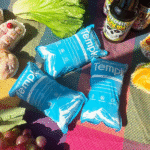
You choose a gel cooling accumulator Germany manufacturer by prioritizing repeatable cooling behavior, reliable sealing, and documented change control. The goal is not “cold.” The goal is predictable temperature control across batches, seasons, and shifts.
A gel cooling accumulator behaves like a thermal buffer. If it releases cold too fast, your payload warms early. If it releases cold too aggressively, you can trigger freeze risk on sensitive products. Choosing a gel cooling accumulator Germany manufacturer is about matching the coolant profile to your lane and your packaging system, not chasing the lowest unit price.
| What you evaluate | Strong gel cooling accumulator Germany manufacturer signal | Weak supplier signal | What it means for you |
|---|---|---|---|
| Batch repeatability | Tight tolerance and traceable lots | Mixed lots, unclear control | Fewer temperature surprises |
| Sealing performance | Cold-state seam validation | Room-temp-only checks | Lower leak and claim rate |
| Test evidence | Thermal curves with conditions | “Up to X hours” marketing | Faster qualification |
| Change control | Written notification rules | “We rarely change” | Less re-validation risk |
Practical tips before you ask for pricing
Start your RFQ with your lane reality: delays, weekend holds, hot exposure windows.
Ask your gel cooling accumulator Germany manufacturer for proof early, not after ordering.
Define the cost of failure in your business, then compare total risk—not invoices.
Which target lane profile should you discuss with a gel cooling accumulator Germany manufacturer?
A gel can be tuned for different temperature targets and lane profiles. Some gels sit closer to 0°C, others support 2–8°C, and some cover controlled ambient ranges.
When you brief a gel cooling accumulator Germany manufacturer, share your lane type and your required buffer time, then ask for the matching gel format and conditioning rule.
| Lane type | Typical target range | Practical protection goal | What it means for you |
|---|---|---|---|
| Short domestic | 2–8°C | 24–36 hours | Faster handling, fewer packs |
| Cross-border road | 2–8°C | 36–60 hours | More buffer for inspections |
| Air + last mile | 2–8°C | 48–72 hours | Protection against warm ramps |
This lane framing helps your gel cooling accumulator Germany manufacturer recommend a safer pack-out without overspending on gel mass.
Practical example: A clear spec plus a documented thermal profile reduces back-and-forth during validation and onboarding.
What performance tests should a gel cooling accumulator Germany manufacturer provide?
A gel cooling accumulator Germany manufacturer should provide test evidence that predicts real handling, not ideal lab conditions. Packs are stacked, squeezed, dropped, and frozen hard. Your supplier’s tests should reflect that reality.
Your minimum set of proof should cover three areas: thermal curves, seal integrity, and freeze–thaw durability. These three together explain most temperature excursions and most leak events.
Thermal curve verification from a gel cooling accumulator Germany manufacturer
Thermal curves only help when the setup is transparent. Ask your gel cooling accumulator Germany manufacturer to state the shipper type, payload mass, ambient profile, pre-conditioning method, and sensor placement. Small differences in airflow and pre-conditioning can shift results.
| Test item | What “good” looks like | What to avoid | Your operational benefit |
|---|---|---|---|
| Thermal curve report | Clear conditions + acceptance band | No test method | Predictable qualification |
| Multi-batch thermal check | 3+ batches within a narrow band | One-off sample | Lower batch drift risk |
| Conditioning guidance | Time/temperature rules | “Freeze overnight” | Easier SOP standardization |
Seal integrity and compression resistance
Ask your gel cooling accumulator Germany manufacturer how seams are tested after freezing and under compression. Seam failures often appear only after cold exposure and pressure.
You want pass/fail criteria, not phrases like “leak-proof.”
Freeze–thaw durability
Freeze–thaw durability matters even for single-use programs. Packs may partially thaw, refreeze, and get handled again in staging workflows.
Durability testing helps you avoid micro-cracks and seam fatigue that show up late.
| Durability focus | Simple buyer test | Common failure sign | What you gain |
|---|---|---|---|
| Seam strength | Compression after freezing | Corner seepage | Fewer claims |
| Shell toughness | Cold drop test | Hairline cracks | Safer winter handling |
| Gel stability | Repeat freeze cycles | Clumping/separation | More consistent curves |
Air shipments: when a gel cooling accumulator Germany manufacturer simplifies operations
If your lane can stay refrigerated with gel packs, documentation and handling are often simpler than dry ice.
Dry ice may still be required for deep-frozen profiles, but it usually adds stricter handling expectations.
When you discuss air lanes with a gel cooling accumulator Germany manufacturer, ask for pack-out options that reduce training errors and keep conditioning steps realistic.
Practical tips you can apply this week
Weigh samples at receiving to detect fill variation early.
Inspect corners first, because seams often fail there first.
Track one pilot lot across real shipments before you scale.
How do you qualify a gel cooling accumulator Germany manufacturer for regulated shipments?
You qualify a gel cooling accumulator Germany manufacturer by validating documentation discipline, change control, and proof that matches your use case. If you ship pharma, biotech, or high-value goods, your supplier must support audits without confusion.
Qualification is the process of removing unknowns. Unknowns become risk during peak season, a product launch, or an inspection. A capable gel cooling accumulator Germany manufacturer can explain what it controls, what it measures, and what it does when something drifts.
Three audit questions that expose real capability
What triggers a formulation or shell change, and how do you notify customers?
What is your most common failure mode, and what did you change to reduce it?
What happens if volume doubles for three months, and how do you protect consistency?
What “audit-ready” looks like
Lot traceability that maps raw inputs to finished packs
A stable test method for thermal and sealing checks
Written notification rules for any material or process change
A clear escalation path when a batch fails acceptance criteria
| Audit focus | Evidence to request | Why it matters to you |
|---|---|---|
| Traceability | Lot map and retention rules | Faster root cause analysis |
| Testing method | Documented procedure and acceptance criteria | Reproducible results |
| Change control | Notification SOP and examples | Fewer surprises mid-contract |
| Escalation | Batch rejection workflow | Clear accountability |
Summary and recommendations
A gel cooling accumulator Germany manufacturer is a strong choice when you need predictable temperature control, stable batches, and audit-ready documentation. Your best results come from clear specs, real-world validation, and SOP-driven pack-out repeatability. If you follow the spec template and the pack-out self-test, you reduce excursions and speed up scaling.
About Tempk
At Tempk, we help cold chain teams turn packaging choices into repeatable operating systems. We support gel cooling accumulator selection, pack-out design, and SOP standardization for real shipping conditions. Our focus is stable evidence, practical validation plans, and scalable workflows that reduce rework. If you share your lane time, temperature band, and shipper size, we can outline a pilot plan you can run immediately.