Introduction
Imagine treating your shipping pallet like a miniature cold room. Eco-friendly insulated box pallet shipping does exactly that: it turns a standard pallet into a tightly sealed, temperature-controlled environment while slashing packaging waste. Rising demand for chilled and frozen deliveries, from vaccines to fresh meal kits, has pushed the insulated packaging market to USD 17.65 billion in 2026 and a forecast value of USD 23.22 billion by 2031. At the same time, nearly half of consumers say they will pay more for sustainable packaging. This guide shows you how to ship at pallet scale without drowning in plastic, meet sustainability goals and protect product integrity.
This article will help you
Understand what eco-friendly insulated pallet shipping is and why it matters: Learn the fundamentals of turning a pallet into a micro-environment and how it differs from single-use approaches.
Choose materials and technologies: Compare fibre-based liners, bio-foam, vacuum-insulated panels (VIP) and phase-change materials (PCM) to select the right mix for your shipments.
Improve product quality and customer loyalty: See how better temperature control reduces spoilage, protects brand reputation and meets regulatory expectations.
Keep pace with 2026 trends: Understand market drivers like e-commerce, healthcare logistics, sustainable materials and smart packaging innovations.
What Is Eco-Friendly Insulated Box Pallet Shipping?
Eco-friendly insulated box pallet shipping refers to palletizing insulated cases—also called pallet shippers—to create a sealed, temperature-controlled load while cutting single-use waste. According to cold-chain specialists, you should treat the pallet “like a mini cold room” and standardise a repeatable recipe. Instead of simply swapping materials, eco-friendly shipping combines right-sized insulation, tight wrapping and careful staging to stabilise temperature and reduce empty space. When executed well, gel packs, PCM or dry ice have more time to work because airflow is controlled and warm corners are eliminated.
Eco-friendly vs “green-looking” choices
Not all “green” claims improve sustainability. Choosing a recyclable insulation that your receivers cannot actually recycle leaves them with disposal headaches. Compostable materials sound attractive, yet many customers lack access to industrial composting facilities. Reusable pallets cut waste only when you have a return program and tracking in place. The table below summarises trade-offs:
| Choice | Potential pitfalls | What to do instead | What it means for you |
|---|---|---|---|
| “Recyclable” foam liners | Receivers may not have curb-side recycling | Select fibre-based materials that are widely recyclable | Fewer disposal complaints and stronger sustainability message |
| Compostable packaging | Lack of compost access leads to landfill waste | Use simple, separable parts made from plant fibres or moulded pulp | Higher real-world compliance and better end-of-life outcomes |
| Reusable pallet shipper | Difficult to retrieve units from single-drop lanes | Start with repeat lanes and implement tracking & cleaning programs | Lower cost per trip over time and reduced environmental impact |
Practical tips you can apply this week
Start with your worst lane: Identify a route with frequent temperature excursions and pilot eco-friendly pallet builds before expanding.
Monitor staging time: Dock delays can raise internal temperatures faster than outside weather. Keep a log of warm staging periods and adjust protocols accordingly.
Standardise one build: A single “recipe” for pallet pack-outs—insulation thickness, coolant quantity, wrapping method—ensures repeatable performance and reduces training time.
Pilot quickly, then scale: Use temperature loggers to validate your design, then expand once data shows consistent results.
Real-world example: A regional meal-kit company replaced expanded polystyrene (EPS) packaging with reusable pallet shippers and cut temperature excursions by 18% while nearly eliminating disposal complaints. By standardising one build and tracking staging time, they saw payback within four months.
Why Choose Eco-Friendly Insulated Pallet Shipping for Your Cold Chain?
Protecting product integrity and brand reputation
Packaging failures directly compromise the product. As noted by industry experts, poor temperature control risks spoilage, safety concerns and damage to brand image. When packaging holds temperature effectively, products stay fresh and safe, and the customer experience is consistent. Market research shows that around 80% of customers would not return to a brand if the packaging is poor. Effective pallet shippers prevent these losses by maintaining a stable micro-environment, reducing melt or freeze events and preserving product quality during multi-stop transport.
Sustainability, compliance and customer expectations
Eco-friendly pallet shipping aligns with broader sustainability goals. Nearly 49% of consumers would pay more for sustainable packaging and delivery, and 75% prefer brands offering sustainable packaging. Government mandates such as Extended Producer Responsibility (EPR) legislation and corporate ESG initiatives push companies to prioritise recyclable, reusable and renewable materials. Failing to do so invites regulatory risks and damages public trust. Reusable systems like the EcoFlex 3 have diverted 55 million pounds of material from landfill and are explicitly designed to minimise waste and CO₂ emissions.
Operational efficiency and cost savings
Eco-friendly pallet solutions improve loading efficiency and reduce freight costs. Space-saving, flat-packed designs simplify storage and allow more units per shipment. Reusable pallet shippers spread capital costs over many trips; for example, the CCT Tower Elite offers market-leading weight efficiency and real-time visibility, reducing total cost of ownership. Fibre-based pallet shippers like Veritiv’s PalletShield integrate seamlessly with standard pallet processes and offer more than five days of validated thermal protection, reducing the need for extra cooling and handling. These improvements translate to fewer claims, lower shipping fees and better margins.
Summary of benefits
| Benefit | Evidence | Practical meaning |
|---|---|---|
| Quality preservation | Poor temperature control leads to spoilage and brand damage | Maintain stable temperatures to protect high-value products and customer trust |
| Regulatory compliance | EPR and sustainability mandates require recyclable or reusable materials | Avoid fines and meet customer expectations |
| Reduced waste | Reusable systems have diverted millions of pounds of material from landfill | Lower disposal costs and carbon footprint |
| Operational efficiency | Flat-packed designs and lightweight shippers reduce freight costs and handling time | Ship more goods per load and simplify workflows |
Practical tips and suggestions
Quantify the cost of spoilage and returns: Compare the cost of a single ruined pallet to the investment in quality insulation—it often justifies the upgrade.
Train your team on pack-out SOPs: Consistency in building pallets (coolant placement, wrapping, labelling) prevents human error.
Audit your returns logistics: Determine whether your supply chain can support reusable pallet shippers. If not, choose recyclable materials and partner with waste processors.
Leverage temperature data: Use IoT sensors or data loggers to monitor performance and drive continuous improvement.
Real-world example: A pharmaceutical distributor adopted the EcoFlex 3 reusable shipper and used its AirShield technology to optimise dry-ice sublimation. They reduced super-cooling events, simplified loading (since dry ice can be added without moving the payload) and lowered CO₂ emissions.
Materials and Technologies Driving Eco-Friendly Pallet Solutions
Modern pallet shippers combine advanced materials with smart technologies to deliver long-lasting thermal protection while meeting sustainability goals.
Recyclable fibre-based and bio-based materials
The push for recyclable and curb-side-friendly materials has accelerated. Market reports note that bio-based aerogels and wood-fiber composites are gaining market share, challenging conventional plastics. Press releases highlight a rapid adoption of fibre films and recyclable insulated boxes in Asia-Pacific. Veritiv’s TempSafe PalletShield is a kerbside-recyclable pallet shipper offering more than five days of thermal protection and integrating into standard pallet-handling processes. By avoiding expanded polystyrene (EPS) and polyurethane (PUR), fibre-based shippers reduce waste and simplify disposal. Beyond pallets, moulded pulp, plant-based foams and natural fibre boards offer compostable or biodegradable alternatives for smaller boxes.
Vacuum-insulated panels (VIP) and phase-change materials (PCMs)
Technological innovations extend transit windows without increasing weight. Research forecasts emphasise that advanced PCMs and VIPs extend transit windows for temperature-sensitive goods, reducing spoilage risk. PCMs absorb or release latent heat as they change phase, maintaining a target temperature longer than gel packs. VIPs achieve high thermal resistance in thinner panels; they enable lighter, compact designs. The combination is standard in modern pallet shippers—Veritiv’s PalletShield integrates VIP and PCM options, while the CCT Tower Elite maintains stable temperatures across four ranges, including ultra-cold (<-60 °C), for over 120 hours without external power. Upgrades such as AirShield technology precisely control gas flow in dry-ice shippers to prevent super-cooling and maximise duration.
Smart sensors, RFID and IoT integration
Monitoring is the backbone of a reliable cold chain. Wireless sensors and smart labels now continuously record humidity, temperature and other factors in real time. These sensors enable live tracking and automatic alerts when temperature excursions occur, creating a traceable audit trail. QR-coded and RFID-tagged packages allow multiple items to be scanned simultaneously without line of sight, making inventory management faster and more accurate. The CCT Tower Elite comes with IoT-enabled data loggers for temperature monitoring and digital asset management. Such integration supports digital twins of shipments, feeding data into warehouse management systems (WMS) and enabling predictive analytics. According to experts, “even with the best specialised packaging, temperature monitoring is non-negotiable”.
Comparative materials table
| Material / Technology | Thermal performance | Sustainability | Best use case |
|---|---|---|---|
| Fibre-based liners | Moderate insulation (up to 5 days with proper wrapping) | Kerbside recyclable or compostable | Fresh produce, short-haul e-commerce, vaccine pallets |
| Bio-foam & aerogels | High insulation with low weight; extended duration | Derived from starch or plant fibres; biodegradable | Frozen food, pharmaceuticals needing < −20 °C |
| VIP + PCM combination | Very high insulation; maintains temperature for 5–7 days | Panels may be reusable; PCMs can be bio-based | High-value biologics, long haul shipments, ultra-cold transport |
| Smart sensors & RFID | Monitoring rather than insulation; ensures compliance | Electronics must be reused or recycled responsibly | All pallet types; essential for audits, IoT integration |
Practical tips for selecting materials and technologies
Match insulation to your route duration: Short routes may not need VIP; fibre-based liners combined with gel packs can suffice. For over five days, use VIP and PCM combinations.
Assess end-of-life processes: Choose materials your consignee can recycle or return. Consider your ability to retrieve reusable shippers.
Plan for data integration: Adopt sensors and IoT devices that integrate with your existing WMS or TMS to avoid silos.
Consider regulatory certifications: Ensure materials meet ISTA or ASTM standards and are qualified for your temperature range (e.g., −20 °C, 2–8 °C or ambient control).
Real-world example: Veritiv’s fibre-based PalletShield, pre-qualified for life-science shipments, delivers over five days of validated thermal protection and holds more than 300 lb of dry ice. Its patent-pending panel-locking mechanism preserves structural strength during multi-stop transport, making it suitable for vaccines and clinical trial materials.
Choosing and Implementing Eco-Friendly Pallet Shipping Solutions
Evaluating lane requirements and payload
Start by mapping your shipping lanes: origin, destination, transit time, handling frequency and climate variability. Determine the thermal profile your payload needs (e.g., 2–8 °C for biologics or −20 °C for frozen goods). For long durations or variable climates, consider solutions like the CCT Tower Elite, which can maintain ultra-cold temperatures for over 120 hours. For dry-ice shipments, check whether advanced features like AirShield technology (which slows sublimation) are necessary.
Calculating ROI: reusable vs. recyclable
Reusable pallet shippers typically cost more upfront but deliver savings over multiple trips. Evaluate your return logistics: do you ship on closed loops with repeat customers? How much will it cost to clean, refurbish and reposition units? Reusable systems like EcoFlex 3 have diverted 55 million pounds of waste and simplified packing by allowing dry ice to be added without moving the payload. If you cannot guarantee returns, opt for kerbside-recyclable or biodegradable pallet shippers.
Training, standardisation and monitoring
Develop a Standard Operating Procedure (SOP): Document each step—coolant preconditioning, pack-out sequence, wrapping and labelling. Train staff to follow the SOP consistently.
Use data to continuously improve: Deploy sensors or IoT loggers to track temperature throughout the journey. Analyse excursions to fine-tune coolant ratios, insulation thickness and wrapping technique.
Coordinate with carriers: Communicate handling requirements to carriers and request temperature data at hand-off points. Use coloured labels or icons to indicate orientation and stacking instructions.
Plan returns and refurbishment: For reusable shippers, implement a return tracking system and cleaning schedule. Many providers offer refurbishment programs or take-back services.
Comparative pallet solutions table
| Solution | Capacity & temperature range | Key features | Best suited for | Considerations |
|---|---|---|---|---|
| Veritiv TempSafe PalletShield | 558–596 L; supports dry ice loads >300 lb | Kerbside-recyclable fibre construction; panel-locking mechanism; pre-qualified for five-day protection | Life-science and high-value goods needing 2–8 °C or frozen ranges | Single-use design; requires recycling infrastructure |
| CCT Tower Elite | 1600 L universal format; four temperature ranges including < −60 °C | Real-time IoT data loggers; dual-access doors; lightweight and PMC-compatible | Global pharma logistics, cell and gene therapies, long routes | Requires closed-loop return for reusability; higher upfront cost |
| EcoFlex 3 Reusable Shipper | Multiple sizes and four temperature ranges | AirShield technology controls dry-ice sublimation; redesigned lid for easier loading; part of a reuse program | Dry-ice shipments requiring extended protection; operations with return logistics | Must manage returns and refurbishments; weight may be heavier than fibre solutions |
Practical tips for implementation
Conduct a pilot study: Test the chosen pallet solution on a small scale. Use data loggers to verify temperature compliance and evaluate handling ease.
Engage stakeholders early: Include carriers, warehouse staff and recipients in planning to ensure everyone understands new processes.
Plan the reverse logistics: Coordinate with your partners or supplier to collect reusable shippers; factor cleaning and refurbishment times into your inventory.
Monitor performance metrics: Track on-time delivery, temperature excursions, return rates and total cost of ownership to justify scaling up.
Actual case: After switching to kerbside-recyclable pallet shippers, a biotech firm reduced waste disposal fees by 30% and improved customer satisfaction scores. However, they also had to build partnerships with recycling providers to handle fibre-based materials.
2026 Trends in Eco-Friendly Cold Chain & Pallet Shipping
Trend overview
The insulated packaging market is surging: valued at USD 16.71 billion in 2025, it is expected to reach USD 17.65 billion in 2026 and USD 23.22 billion by 2031, a 5.63% CAGR. Growth is driven by e-commerce fulfilment, cold-chain modernisation and sustainability requirements. Asia-Pacific leads adoption of fibre-based, recyclable materials, while Europe focuses on regulatory compliance and circular economy packaging. North America’s mature e-commerce and healthcare sectors maintain a revenue lead.
Latest innovations at a glance
Rapid adoption of PCM & VIP technologies: Advanced PCMs and VIPs extend transit windows, enabling longer journeys without spoilage. Innovations like AirShield slow dry-ice sublimation for more efficient cooling.
Rise of fibre-based & recyclable materials: Bio-based aerogels, wood-fibre composites and fibre films are replacing plastics due to disposal costs and compliance risks.
Smart packaging & IoT integration: Wireless sensors, RFID tags and IoT data loggers create real-time visibility and automated alerts. QR-coded sensors monitor thermal abuse, reinforcing quality assurance.
Consumer-driven sustainability: Data suggests consumers are willing to pay more for sustainable packaging, and companies are investing accordingly. Fibre-based pallet wraps, holographic labels and tamper-proof seals improve both sustainability and brand security.
Reusable systems gaining momentum: Reusable pallet shippers like EcoFlex and CCT Tower Elite reduce waste and deliver cost savings over time, but require robust return logistics.
Market insights
Pharmaceuticals, biologics and meal-kit deliveries fuel investment in distribution nodes equipped with PCM charging and validated packaging fleets. Packaging suppliers are diversifying feedstocks and adopting closed-loop models to stabilise margins amid polymer price volatility. Plastic maintains a large share today, yet the shift to fibre-based and bio-polymer insulators is accelerating. Regional differences are stark: Asia-Pacific’s government initiatives and innovation hubs drive adoption, Europe juggles sustainability mandates with healthcare needs, and North America leverages its e-commerce networks. Emerging markets in the Middle East invest heavily in pharmaceutical exports, creating new opportunities.
Frequently Asked Questions
Q1: How long can an eco-friendly insulated pallet shipper maintain temperature?
High-performance pallet shippers using VIP and PCM technology can maintain temperature for more than five days. Premium reusable units like the CCT Tower Elite deliver over 120 hours of protection across multiple temperature ranges. Fibre-based single-use designs generally provide up to five days when properly wrapped.
Q2: Are recyclable or biodegradable materials as effective as foam insulation?
New fibre-based materials, bio-foams and aerogels offer competitive insulation while being recyclable or biodegradable. Pre-qualified fibre pallet shippers protect loads for five days or more, while biodegradable foams can match the performance of EPS with reduced environmental impact. However, they may require thicker walls or additional wrapping to achieve the same duration as VIP-based systems.
Q3: How do I decide between reusable and single-use pallet shippers?
Consider your shipping lanes and return logistics. Reusable shippers like EcoFlex 3 provide long-term savings but only if you can retrieve and refurbish units; they have diverted millions of pounds of waste. Single-use fibre-based shippers are ideal when return loops are impractical—just ensure your receiver has curb-side recycling or composting options.
Q4: What role do smart sensors play in pallet shipping?
Smart sensors and RFID tags continuously monitor temperature, humidity and location, providing an audit trail and real-time alerts. They help detect thermal abuse early, automate quality control and simplify regulatory compliance. IoT-enabled pallet shippers integrate these sensors, offering digital asset management and reducing manual checks.
Summary and Recommendations
Key takeaways
Eco-friendly insulated box pallet shipping transforms standard pallets into reusable or recyclable micro-environments that maintain temperature and reduce waste. Market growth and consumer demand for sustainability are accelerating adoption. Fibre-based and bio-based materials offer curb-side recyclability, while VIP and PCM technologies extend protection to over five days. Smart sensors, RFID and IoT integration provide real-time visibility and compliance. Choosing the right solution requires balancing insulation performance, sustainability goals, return logistics and cost.
Actionable next steps
Assess your lanes: Map out transit times, temperatures and handling steps. Use this data to choose between fibre-based, VIP-based or reusable pallet shippers.
Develop a pilot: Select one lane to test your chosen solution. Standardise the pack-out recipe and deploy temperature loggers to validate performance.
Involve stakeholders: Train your team on SOPs, coordinate with carriers and engage receivers about recycling or return expectations.
Integrate monitoring: Invest in smart sensors and IoT platforms that link to your WMS or TMS, providing real-time alerts and historical data.
Review and iterate: After the pilot, evaluate temperature compliance, handling ease and cost per shipment. Refine your approach before scaling across other lanes.
About Tempk
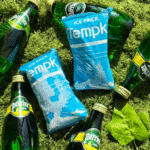
Tempk is a cold-chain packaging company specialising in insulated boxes, pallet shippers, gel packs and thermal covers. We focus on durability, temperature stability and repeatable pack-outs tailored to real freight handling. Our range includes recyclable and reusable solutions that fit standard pallets, and we offer guidance on choosing the right insulation and coolant for each lane. Through practical pilots and temperature logging, we help customers optimise their cold-chain operations while meeting sustainability goals.
Call to action: Contact our experts to discuss your shipping challenges and explore eco-friendly pallet solutions that balance performance, cost and sustainability.