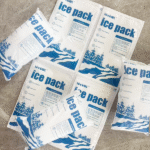
If you are searching for a refrigerant gel pack pharmaceutical manufacturer, you are not buying “cold packs.” You are buying temperature reliability for medicines, clinical samples, and high-value biologics. In 2026, teams must reduce excursions, prove repeatability across lots, and keep documentation audit-ready. This guide turns supplier selection into a simple, trainable process.
This guide will help you:
Choose a GDP-ready refrigerant gel pack pharmaceutical manufacturer using evidence, not claims
Build a one-page RFQ that any refrigerant gel pack pharmaceutical manufacturer can quote consistently
Match gel pack formats with your refrigerant gel pack pharmaceutical manufacturer for 2-8°C, CRT (15-25°C), and frozen lanes
Run a pre-pilot QC test plan that catches leaks and variability early
Lock traceability and change control so reorders behave like your qualified pack-out
Refrigerant gel pack pharmaceutical manufacturer: what does “pharma-ready” mean?
A pharma-ready refrigerant gel pack pharmaceutical manufacturer proves control, not just capacity. You should be able to trace each batch to materials, QC checks, and change management. That matters because gel packs are part of your temperature-control system. If gel packs drift, your lane performance drifts.
Think in outcomes first. You want predictable cooling, reliable sealing, and repeatable conditioning behavior. “Pharmaceutical” is not a label you buy. It is a discipline you verify.
Quick clarity: gel packs vs PCM packs
Gel packs are usually water-based mixtures with additives for flexibility and cooling. PCM packs (phase change materials) are engineered to hold a tighter temperature range longer. Both can work in pharmaceutical shipping, but they solve different problems.
| Pack type | Best use | Typical strength | Typical risk | What it means for you |
|---|---|---|---|---|
| Refrigerant gel pack | Short to medium 2-8°C lanes | Simple, flexible | Overcooling if misused | Needs pack-out discipline |
| PCM pack (2-8°C) | Longer controlled lanes | Stable range hold | Higher unit cost | Better lane stability |
| Frozen pack | -20°C or lower lanes | Strong cooling | Freeze damage risk | Needs spacing and insulation |
Practical tips you can use today
If your payload is freeze-sensitive: prioritize controlled cooling over maximum cold output.
If lanes vary by season: qualify a warm profile and a cold profile, not one “average” pack-out.
If you outsource packing: require a simple conditioning SOP and short training visuals.
Real-world note: Many excursions happen because packs are “too cold,” not because they are “not cold enough.”
Refrigerant gel pack pharmaceutical manufacturer RFQ: what should you send?
A one-page RFQ makes every refrigerant gel pack pharmaceutical manufacturer aim at the same target. When your RFQ is vague, suppliers fill gaps with assumptions. Assumptions create mismatched samples, confusing pricing, and painful re-qualification.
Start with your lane reality. Define transit time, ambient exposure, and payload sensitivity. Then define pack geometry, conditioning, and acceptance rules in plain language.
One-page RFQ template (copy and fill)
- Temperature band: 2-8°C / 15-25°C (CRT) / frozen
- Payload type: vaccine / biologic / tablets / API / clinical samples
- Lane profile: origin → destination, typical hours, worst-case hours
- Ambient exposure: summer / winter / mixed; expected peaks
- Shipper type: EPS / EPP / VIP or other; internal volume ___ L
- Pack format: brick / sheet / slim / custom
- Size + fill weight: ___ mm × ___ mm; ___ g
- Conditioning method: setpoint + time + release check (define clearly)
- Leak requirement: zero leakage in sampled inspection units
- Labeling: SKU + batch code on carton and inner pack
- Documentation: MSDS, QC record summary, batch traceability, change notice rules
- Pilot plan: sample qty, pilot order qty, 3-6 month forecast
RFQ fields that prevent disputes
| RFQ field | Your value | What the supplier must confirm | Why it matters to you |
|---|---|---|---|
| Target band | 2-8°C | Pack type + conditioning guidance | Controls excursion risk |
| Lane duration | ___ hours | Recommended pack-out layout | Predictable holds |
| Acceptance | “Zero leak” | Test method + record format | Faster release decisions |
| Traceability | Batch codes visible | Code logic + retention | Faster investigations |
Refrigerant gel pack pharmaceutical manufacturer formats: which one fits your lane?
The right format from a refrigerant gel pack pharmaceutical manufacturer depends on geometry, not marketing. Thickness changes cooling speed. Surface area changes heat transfer. Placement changes cold spots.
If your payload is sensitive, you want controlled cooling, not aggressive freezing. That means spacing and barriers matter as much as the gel pack itself.
Format selection table
| Format | Best for | Why it works | What to watch |
|---|---|---|---|
| Flat sheet | Small parcels | Even coverage | Avoid direct contact cold spots |
| Brick | Longer holds | More thermal mass | Heavier, slower conditioning |
| Slim packs | Tight shipper space | Flexible placement | May warm too quickly |
| Custom form | Designed shippers | Fits layout | Needs stronger validation |
Pack format decision tool
Answer these and pick a format:
- Need even surface coverage? Choose sheets.
- Need long holds and stable mass? Choose bricks.
- Space is limited? Choose slim packs.
- Shipper is custom-engineered? Consider custom forms.
Safety rule: If the payload is freeze-sensitive, avoid direct pack-to-payload contact. Use a barrier layer and spacing.
Refrigerant gel pack pharmaceutical manufacturer conditioning: how do you avoid “too-cold” risk?
Conditioning is where many refrigerant gel pack pharmaceutical manufacturer programs fail. Freeze too hard and you create overcooling risk. Condition too little and you lose duration.
You need a conditioning recipe that is simple, repeatable, and trainable, and your refrigerant gel pack pharmaceutical manufacturer should support it. Add a “release check” so operators confirm packs are in the right state.
Conditioning checklist you can train quickly
- Set freezer or conditioning chamber to the defined setpoint.
- Condition packs for the defined time window.
- Confirm pack state with a simple release check (timing discipline or surface temp check).
- Pack out immediately using a standardized layout.
- Record batch codes for packs used on the shipment.
Conditioning approaches (choose one per lane)
| Conditioning approach | Simple description | Strength | Risk |
|---|---|---|---|
| Fully frozen | Maximum cold output | Long hold potential | Higher freeze risk |
| Pre-conditioned | Controlled cold output | Lower cold-spot risk | Needs process discipline |
| Mixed | Different zones | More control options | Training complexity |
Practical tips to reduce operator error
- Use one approved conditioning recipe per lane.
- Label conditioning racks with lane name and time window.
- Ask the refrigerant gel pack pharmaceutical manufacturer for “feel” guidance and warnings.
Practical example: Conditioning discipline can reduce deviations more than changing materials.
Refrigerant gel pack pharmaceutical manufacturer QC tests: the pre-pilot 9-test plan
You can screen a refrigerant gel pack pharmaceutical manufacturer with repeatable stress tests. You do not need advanced lab equipment to catch most failures. You need consistent methods and clear pass/fail targets.
Your goal is to catch leak risks, durability issues, and variability before you scale. Use two samples per option so you learn about repeatability.
Pre-pilot 9-test plan (practical and fast)
| Test | What you do | What you learn |
|---|---|---|
| Visual inspection | Check seals, edges, fill uniformity | Manufacturing consistency |
| Weight check | Weigh 5 packs, compare to spec | Fill accuracy |
| Freeze-thaw cycle | Freeze, thaw, repeat 3× | Seal durability |
| Drop test | Drop from 1m onto hard surface | Impact resistance |
| Squeeze test | Apply firm pressure to seams | Seal strength |
| Conditioning time | Time to reach target temp | Process fit |
| Hold duration | Monitor temp over time in shipper | Lane fit |
| Leak check | Place on paper, check for wet spots | Seal integrity |
| Label check | Verify batch code, SKU, date | Traceability readiness |
Refrigerant gel pack pharmaceutical manufacturer traceability and change control
Traceability is not paperwork. It is your ability to investigate, recall, and reorder with confidence. A good refrigerant gel pack pharmaceutical manufacturer gives you batch codes, material records, and change notices without extra effort.
Traceability checklist
- Batch code on every carton and inner pack
- Material lot linkage available on request
- QC summary per batch (leak rate, weight variance)
- Change notice policy (advance warning before spec changes)
Change control questions to ask
- How much notice do you give before changing gel formula?
- How much notice do you give before changing film supplier?
- Can you hold a “golden sample” for comparison?
Practical tip: Lock your spec in writing. If the refrigerant gel pack pharmaceutical manufacturer changes materials without notice, your lane validation may no longer apply.
Refrigerant gel pack pharmaceutical manufacturer selection: final checklist
Use this checklist before placing your first pilot order:
| Checkpoint | Pass? | Notes |
|---|---|---|
| RFQ sent with lane details | ☐ | |
| Samples received and tested | ☐ | |
| QC records reviewed | ☐ | |
| Conditioning SOP confirmed | ☐ | |
| Traceability format agreed | ☐ | |
| Change notice policy documented | ☐ | |
| Pilot order placed | ☐ |
Conclusion
Choosing a refrigerant gel pack pharmaceutical manufacturer is not about finding the cheapest supplier. It is about finding a partner who can prove control, support your lanes, and keep your shipments audit-ready. Use this guide to build a simple, repeatable selection process that protects your products and your reputation.