How to Choose the Right Insulated Plastic Box in 2026
Insulated Plastic Box selection should start with your real shipping lane, not a catalog page. In 2026, the best insulated plastic box is the one that protects fresh food, seafood, meal kits, reagents, biologics, and specialty products, fits your workflow, and stays cost-effective over repeated use. That means comparing materials, compliance, temperature performance where relevant, and total operating cost in one view. This optimized guide combines buyer advice, technical depth, and current market direction so you can make a better decision faster.
What this article will answer
- How to choose the right insulated plastic box for cold chain, food, pharma, or industrial workflows
- What material, thermal, and compliance details separate a strong supplier from a risky one
- How to reduce total cost while improving reuse cycles, temperature stability, and operational fit
Quick Buyer Self-Check
- Does your insulated plastic box spec state the real payload, route length, ambient exposure, and handling method?
- Have you separated must-have requirements from optional features so the design stays practical?
- Can the supplier show documented proof that matches your real application rather than a generic claim?
- Will the package still make sense after reuse, cleaning, return logistics, and first-month operating data are reviewed?
What is the best insulated plastic box fit for your application?
The right insulated plastic box is the one that matches your exact lane, payload, and handling pattern. That sounds obvious, yet many teams still buy from a catalog category first and define the use case later. A better process works in reverse: start with the product, route, temperature needs where relevant, stack pattern, cleaning method, and return loop. Once those conditions are clear, weak options disappear quickly.
This matters because the same insulated plastic box can be used in very different ways. One buyer may care most about washdown and food-contact confidence, while another cares about thermal hold time, pallet efficiency, or barcode readability. If you try to solve all applications with one vague spec, you often end up with a package that is expensive and still not ideal. A sharper application definition almost always leads to a better sourcing result.
How do insulated cold chain box use cases change the best spec?
Use-case fit changes the importance of every feature. A long cold-chain route may prioritize holdover and logger position, while a warehouse loop may care more about stack stability and empty-return efficiency. That is why the best insulated plastic box decision usually comes from ranking needs, not listing every possible feature. Once priorities are ranked, the right design becomes easier to defend internally.
| Application | Primary Need | Best-Fit Design Lens | What It Means for You |
|---|---|---|---|
| Meal Kits, Seafood, And Fresh Foods | insulated shell + PCM or gel system | holdover time | You get a closer fit between packaging design and real operating conditions. |
| Diagnostics, Reagents, And Biologics | reusable cold chain box with logger pocket | payload protection | You get a closer fit between packaging design and real operating conditions. |
| Cross-Border Cold Chain Distribution | pack-out optimized thermal container | repeatable pack-out | You get a closer fit between packaging design and real operating conditions. |
Practical Tips for Buyers
- Write a one-page use profile before requesting quotes for any insulated plastic box project.
- Separate must-have requirements from optional features so the spec stays practical.
- Pilot the design in the lane where failure would be most expensive or visible.
Case snapshot: A distributor first wrote a short operating profile for its new insulated plastic box program and removed several unnecessary features. The final spec cost less than expected and still improved handling consistency because it was built around the actual lane.
Which materials and construction choices matter in insulated plastic box?
Materials and construction choices decide whether the container keeps working after the first few trips. PP, HDPE, corrugated PP, insulated assemblies, and phase change systems can all be effective when they are matched to the job. What matters is how the material behaves under your temperature range, handling intensity, wash routine, and expected cycle life. A strong design uses material where it creates value, not where it only adds weight.
In practical terms, you are comparing system behavior, not just resin names. Base stiffness, corners, lid fit, seal compression, drainage, hinge design, and print or label surfaces all change real-world performance. Insulated shells, lid seals, and phase change media that work as one thermal system may be ideal for one route and wrong for another. The right technical review connects material choice to failure mode, cleaning effort, and total cost over time.
Why do temperature controlled packaging construction details decide daily performance?
Containers fail in the details first. A corner cracks, a latch loosens, a seal compresses unevenly, or a label panel becomes unreadable after cleaning. When buyers study those details early, they reduce the chance that a good-looking sample becomes a frustrating production item. That is one reason experienced buyers ask about geometry and repeatability, not only about raw material.
| Construction Point | Basic Choice | Stronger Choice | What It Means for You |
|---|---|---|---|
| Holdover Time | single generic claim | lane-specific validation result | It prevents avoidable mismatch between brochure claims and real use. |
| Lid Seal Quality | flat lid, loose fit | repeatable compression seal | It influences speed, safety, and repeatability on the floor. |
| Pack-Out Repeatability | operator memory only | documented pack-out SOP | It affects lifespan, cleaning effort, and replacement frequency. |
Practical Tips for Buyers
- Review how the insulated plastic box behaves under stacking, washing, and minor impact before final approval.
- Ask which design zones are reinforced and which trade-offs were made to balance weight and strength.
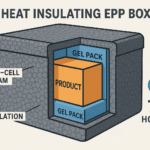
- Treat insulation, PCM, lid seal, and layout as one system when the project includes temperature control.
Case snapshot: A buyer comparing two similar-looking options selected the design with stronger stack shoulders and cleaner seal compression. The higher-quality geometry prevented service issues that would have been hard to see in a basic desk review.
What compliance and performance proof should you ask for with insulated plastic box?
Performance proof matters as much as product design. For food programs, buyers should understand the material status of the components that could contact food or migrate under intended use. For pharmaceutical and vaccine projects, packaging decisions should align with route qualification, pack-out discipline, and temperature visibility. Across all sectors, the safest decision comes from documented evidence that matches the job.
WHO and CDC still anchor most standard vaccine and refrigerated pharmaceutical programs around carefully controlled cold-chain ranges, typically 2°C to 8°C for standard refrigerated products. WHO PQS performance language keeps pushing buyers toward independence and holdover thinking, especially for hot-zone or unreliable-power conditions. The practical takeaway is simple: ask for proof in the same language your operation uses. That means route-relevant thermal data, load data tied to method, sanitation guidance that staff can follow, and documentation that explains assumptions instead of hiding them.
What should phase change insulated box proof actually look like?
Useful proof is specific. It states the material basis, test setup, payload assumptions, environmental conditions, and pass criteria. When a supplier can explain those points clearly, you gain confidence not only in the sample but also in future production consistency. When they cannot, risk usually stays hidden until rollout.
| Proof Area | Weak Evidence | Strong Evidence | What It Means for You |
|---|---|---|---|
| Thermal qualification | Profile, payload, and pass/fail rules are defined | Ask for lane-relevant mapping data | You know whether the system matches your shipment reality. |
| Pack-out control | Conditioning and pack placement are standardized | Review diagrams, SOPs, and training points | Good performance becomes easier to repeat across teams. |
| Temperature visibility | Logger position and alarm logic are planned | Check how data is captured and reviewed | You can find problems before they become product loss. |
Practical Tips for Buyers
- Ask suppliers to connect every major claim to a method, condition, or documented operating instruction.
- Review whether the evidence still applies after reuse, washing, or normal wear, not only when the unit is new.
- Keep compliance review practical; documentation must be usable by operations, quality, and procurement teams alike.
Case snapshot: A buyer improved approval quality by requiring test conditions and assumptions alongside every claim. This small discipline made it easier to reject vague offers and move faster with suppliers that could prove fit to use.
How do cost, reuse, and sustainability change insulated plastic box ROI?
Cost, reuse, and sustainability only create value when they work together. A low-price container that breaks early or creates more waste is rarely a strong long-term choice. At the same time, a reusable system that cannot be recovered, cleaned, or tracked may disappoint despite good intentions. The best 2026 decisions compare cost per successful trip, not cost per unit purchased.
Packaging strategy is changing because customers, regulators, and internal teams all ask harder questions about durability, unnecessary waste, and recoverability. In Europe, the post-2025 packaging framework is reinforcing that direction. FAO also keeps highlighting the scale of food loss linked to weak refrigeration and cold-chain gaps, which reminds buyers that better packaging can support both quality and sustainability. The real win comes when the same design reduces waste, damage, and labor friction at once.
How does reusable cold chain container thinking improve ROI?
Once you track trip life, replacement rate, damage reduction, and empty-return efficiency, the cost story becomes clearer. Many teams discover that a slightly better spec pays back through fewer exceptions rather than through dramatic unit-price savings. That is especially true when the packaging touches quality-sensitive product or labor-intensive handling. Sustainability and ROI become stronger when they are measured through operational data instead of slogans.
| ROI Lens | Shallow Review | Better 2026 Review | What It Means for You |
|---|---|---|---|
| Temperature pressure | Tighter service windows | Lane-based validation and logger use | It helps protect time-sensitive or temperature-sensitive payloads. |
| Sustainability pressure | Less tolerance for waste-heavy systems | Measured reuse and cleaner materials strategy | It supports bids, audits, and customer reviews. |
| Procurement pressure | Price-only comparison | Total-cost and risk-based comparison | You make better long-term decisions with fewer hidden costs. |
Practical Tips for Buyers
- Calculate cost per successful trip and include labor, replacement, and product-loss exposure in the model.
- Measure actual reuse cycles during the first months so you can adjust the business case with real numbers.
- Treat sustainability claims as operational claims that should be backed by trip data, breakage data, and end-of-life planning.
Case snapshot: A company expecting only a sustainability gain from its reusable insulated plastic box rollout found that the bigger win was lower handling friction. Once trips were tracked, the economic case became easier to prove than the original team expected.
How do you qualify a insulated plastic box supplier?
A strong supplier qualification process saves more time than a fast quote comparison. You want a partner that can make the right product repeatedly, explain documentation clearly, and support changes without confusion. That is true whether you need a manufacturer, supplier, or wholesale partner. Good qualification turns packaging from a purchasing event into a stable operating resource.
The best partners usually stand out in predictable ways. They ask better questions, send clearer samples, explain limits honestly, and support pilots without drama. They also help you think about rollout, replacement, and future growth instead of pushing only the first order. That combination is often more valuable than a modest difference in unit price.
Which questions separate strong and weak insulated plastic box partners?
Focus on repeatability, not promises. Ask how quality is controlled, how changes are managed, how service issues are handled, and whether the supplier can support future scale or multi-site use. If their answers are specific and calm, qualification gets easier. If the answers stay vague, your risk is probably higher than the quote suggests.
| Qualification Check | Weak Signal | Strong Signal | What It Means for You |
|---|---|---|---|
| Sample Availability | unclear | documented and measurable | You get fewer surprises after sampling and first shipment. |
| Manufacturing Consistency | reactive | fast and consistent | You solve quality or delivery issues faster when operations get busy. |
| Service Response Time | generic | matched to your program | You improve scale-up without restarting packaging decisions. |
Practical Tips for Buyers
- Score partners on product fit, documentation quality, and support response before you finalize price discussions.
- Use a pilot or sample review to check whether the real production item matches the approved concept.
- Keep a second qualified option when the packaging format becomes critical to your operation.
Case snapshot: A team avoided a difficult rollout by choosing the supplier that offered clearer process control and faster sample follow-up. The selected partner was not the cheapest, but it reduced launch friction and made scaling the program easier.
2026 Developments and Trends
The 2026 direction is clear: buyers want insulated plastic box programs that are easier to qualify, easier to reuse, and easier to explain to customers and auditors. More buyers are asking for lane-based thermal validation instead of generic brochure claims. Reusable insulated systems are gaining attention where reverse logistics and cleaning can be controlled. As procurement matures, proof, practicality, and total cost are becoming more persuasive than generic marketing claims.
Latest Highlights
- More buyers are asking for lane-based thermal validation instead of generic brochure claims.
- Reusable insulated systems are gaining attention where reverse logistics and cleaning can be controlled.
- Digital loggers and simple data dashboards are becoming a standard part of pack-out reviews.
Market insight in simple terms: your next insulated plastic box project is more likely to win approval if it improves process discipline and measurable outcomes at the same time. That could mean lower product loss, better temperature consistency, faster handling, clearer sanitation practice, or stronger reuse economics. In 2026, buyers increasingly reward packaging decisions that solve two or three operating problems together instead of optimizing only one metric.
Frequently Asked Questions
How long should a insulated plastic box hold temperature?
A good insulated plastic box is chosen against your lane, payload mass, ambient range, and service window, not against a generic hold-time claim. Ask for pack-out instructions, logger positions, and test results that match your real shipping profile.
Do you need phase change packs or gel packs with a insulated plastic box?
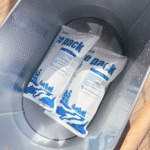
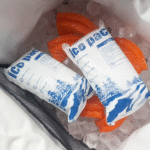
Use phase change packs when you need a tighter target band and more repeatable control. Gel packs can work for simpler lanes, but they are easier to over-pack or under-pack if conditioning discipline is weak.
What validation data should a insulated plastic box supplier provide?
Ask for thermal mapping, conditioning instructions, payload assumptions, and pass/fail criteria. You also want evidence that the container still performs after cleaning, reuse, and normal handling damage.
Can a reusable insulated plastic box reduce excursion risk and cost?
Yes, a reusable system can lower excursion risk when the pack-out is simple and staff follow a repeatable process. It also becomes easier to standardize labels, scans, and logger placement over time.
What 2026 trend matters most for insulated plastic box buyers?
The biggest 2026 shift is the move from generic insulation claims to lane-specific validation, simple digital visibility, and procurement pressure for reusable or lower-waste systems.
Summary and Recommendations
The main lesson from this guide is simple: the best insulated plastic box choice comes from matching packaging design to real operating conditions. You should compare application fit, material and construction logic, documented proof, supplier capability, and the true cost of repeated use. When those pieces line up, the container protects product better, supports smoother workflows, and becomes easier to scale.
Your next step should be a short qualification plan. List the route, payload, cleaning or temperature requirements, and service window, then request samples and proof against those conditions. If the packaging will become important to daily operations, run a pilot before full rollout and measure the first weeks closely. A more disciplined start usually gives you a better insulated plastic box program and a faster long-term payoff.