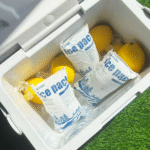
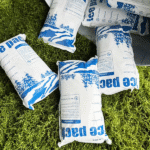
The right insulated box insert suppliers help you control what happens inside the shipper. That may sound simple, but it is one of the most important parts of a reliable cold-chain pack-out. An insert influences cavity shape, coolant position, assembly speed, and how consistently the product experiences temperature during transport. In 2026, that matters more because the cold chain market is growing quickly, climate variability is making routes less predictable, and buyers are under more pressure to simplify packaging without increasing risk. (Grand View Research)
Why do inserts matter so much?
An insert does more than add insulation. It creates structure. That structure helps:
keep coolant in the right place
- reduce product shifting
- improve pack-out repeatability
- make the box easier to load correctly
- create a cleaner customer presentation
That is why many teams choose inserts when they have a standard payload layout. Meal kits, diagnostic kits, specialty foods, and some healthcare shipments can all benefit from a more controlled internal geometry.
How should you compare insulated box insert suppliers?
Start with assembled fit, not flat dimensions. A supplier may quote a size that looks correct on paper, but the assembled insert may reduce usable volume, interfere with coolant position, or slow installation. The best insulated box insert suppliers will provide clear drawings, assembled samples, and honest guidance about what box sizes and lane conditions the insert is meant for.
A useful comparison framework includes:
- Assembled cavity size
- Installation speed
- Material behavior in moisture
- Coolant compatibility
- MOQ and repeat-order lead time
- Change-control discipline
- Seasonal capacity planning
- Supplier scorecard
What technical issues should you review?
Technically, insert success comes from the interaction between geometry and material. Fiber-based designs may work well for chilled routes, but cellulose insulation becomes less effective as moisture rises. Reflective structures can be effective, but only when the design preserves an air space and orientation. DOE and ENERGY STAR guidance both emphasize that reflective insulation depends on air gaps and loses performance when condensation or dust interferes. PCM can improve thermal buffering but adds complexity to the full system. (ScienceDirect)
That means the right insert is not always the thickest insert. It is the one that creates the most stable thermal geometry for your actual payload.
How should you validate an insert program?
Validation should cover fit, operation, and temperature. For parcel environments, ISTA 7E is a useful testing reference. In more sensitive applications, WHO’s DQ/OQ/PQ framework is a smart way to think about packaging qualification. Food-related applications should also be considered inside the broader discipline of FDA sanitary transportation controls. (国际安全运输协会)
A practical validation plan should include:
- assembled-dimension verification
- operator installation testing
- payload and coolant layout confirmation
- thermal exposure in more than one seasonal profile
- complaint and substitution control once production begins
What is changing in 2026?
The market backdrop is pushing buyers toward smarter sourcing. The global cold chain packaging market is growing fast. Healthcare cold-chain demand is rising. The EU PPWR applies from 12 August 2026. And in the U.S., paper packaging keeps a strong recovery narrative in both EPA and AF&PA data. Together, those trends are pushing more buyers to look for inserts that are easier to source, easier to justify, and easier to run. (Grand View Research)
At the same time, buyers are less tolerant of weak sustainability claims. The strongest suppliers now explain tradeoffs directly: what is recyclable, what is hybrid, what is best for chilled short lanes, and what should not be used for harder routes.
2026 trends to watch
- More paper-forward insert programs
- More focus on route-specific design
- More demand for lower-SKU complexity
- More need for technical sales support
- FAQ
- Are inserts best for fixed product layouts?
- Yes. Inserts are strongest when your payload arrangement does not change much.
Should I choose inserts over full liners for faster packing?
Sometimes. Inserts can improve repeatability, but only if the design is easy to assemble.
Do insulated box insert suppliers need thermal-test knowledge?
Absolutely. Even if they do not run every test themselves, they should understand how insert geometry affects system performance.
Is a paper insert always more sustainable?
Not automatically. The best answer depends on route fit, spoilage prevention, material structure, and local disposal reality.
Summary and recommendation
The best insulated box insert suppliers help you control the inside of the box with better geometry, better repeatability, and better sourcing discipline. Evaluate them on fit, installation speed, material behavior, and capacity, not on quote price alone.
Your next step should be to test two insert concepts with the same box and payload and measure install time as well as thermal outcome. That gives you a decision based on operations, not assumptions.
About Tempk
We design passive cold-chain packaging systems around real pack-out conditions. Our solutions include inserts, liners, reflective structures, paper-based options, and integrated shippers for temperature-sensitive logistics.
If you are comparing insulated box insert suppliers, begin with the product layout and the route. That is where the right insert decision becomes clear.