Insulated Grocery Bags: Which Ones Work in 2025?
Insulated grocery bags work when you treat them like a mini cold chain from checkout to fridge. Your goal is simple: keep cold food cold, prevent leaks, and avoid cross-contamination. Public guidance warns that food can become risky in the 40°F–140°F “Danger Zone,” and perishables should not sit out longer than 2 hours (or 1 hour if it’s above 90°F).
This article will answer for you:
-
How insulated grocery bags improve safety and quality (without “magic”)
insulated grocery bags
-
A fast insulated grocery bag temperature retention checklist you can follow every trip
insulated grocery bags
-
Which features matter most in insulated grocery bags with zipper and rigid base
insulated grocery bags
-
A packing method that reduces leaks and cross-contamination (especially for raw meat) U.S. Food and Drug Administration+1
-
How to clean insulated grocery bags so odors and bacteria don’t build up
-
2025–2026 trends (delivery platforms + bag laws) that change what “good” looks like
insulated grocery bags
Do insulated grocery bags really keep groceries safer?
Yes—when you use insulated grocery bags correctly, they buy you time, not immunity. They slow temperature change and help contain mess, but safety still depends on trip length and habits. Keep your refrigerator at 40°F or below and freezer at 0°F or below, and refrigerate perishables quickly.
Insulated grocery bags help most when your trip gets longer than you planned. Traffic, extra errands, and a hot trunk create “warm minutes” that quietly damage frozen texture and dairy quality. Your best win is reducing warm minutes and sealing the bag consistently.
insulated grocery bags
Insulated grocery bags don’t create cold—how do they work?
Insulated grocery bags work through insulation + sealing + packing discipline. Insulation slows heat flow. Sealing reduces warm air exchange. Packing discipline reduces air gaps that speed warming.
insulated grocery bags
| What you carry | Main risk | What insulated grocery bags improve | What you still must do |
|---|---|---|---|
| Frozen foods | Partial thaw + refreeze texture | Slower warming | Get home fast; add ice packs on long trips |
| Raw meat/seafood | Leaks + cross-contamination | Leak containment with liners | Separate from ready-to-eat foods |
| Dairy | Warm drift + off taste | Temperature buffer | Do not leave in the car “for a minute” |
| Hot prepared foods | Cooling into unsafe range | Heat retention | Keep hot items separate from cold items |
Practical tips you can use today
-
Close the bag every time: a zipper seal is often the biggest performance jump.
insulated grocery bags
-
Group frozen together: a bigger “cold mass” stays cold longer.
insulated grocery bags
-
Unload cold items first: treat it as the last step of your mini cold chain. U.S. Food and Drug Administration
Real scenario: One driver cut “warm dairy” complaints by using zipper insulated grocery bags and keeping them closed between stops.
insulated grocery bags
How do you choose insulated grocery bags by trip time?
Choose insulated grocery bags based on your “time-to-fridge,” not marketing words. If your total out-of-fridge time approaches the 2-hour safety window, you need better sealing, tighter packing, and usually ice packs.
A simple mindset helps: track warm minutes. Warm minutes are the time cold food spends outside a controlled cold space. Less warm minutes means better safety margin and better taste.
insulated grocery bags
Quick decision tool (60 seconds)
-
Under 20 minutes: basic insulated grocery bags can work if you seal them.
-
20–45 minutes: prioritize a zipper seal and thicker insulation.
-
45+ minutes or multiple stops: use zipper insulated grocery bags + ice packs + fewer bag openings.
| Trip pattern | Bag setup | Ice pack plan | What it means for you |
|---|---|---|---|
| Short errand | 1–2 insulated grocery bags | Optional | Less stress, fewer leaks |
| Multiple stores | Zipper insulated grocery bags | 1–2 packs | More stable temps |
| Long drive / traffic | Zipper + structured insulated grocery bags | 2–4 packs | Better safety margin and texture |
A mini “warm minutes” calculator (interactive)
-
Warm minutes = checkout wait + car time + extra stops + unloading delay
-
If warm minutes rise every week, quality complaints usually rise next.
Your target: keep warm minutes low enough that you can refrigerate quickly and consistently. U.S. Food and Drug Administration
Which insulated grocery bag features matter most in 2025?
In 2025, good insulated grocery bags are defined by sealing, structure, and cleanability. A thick bag with a leaky top performs like an open window. A strong seal with weak seams fails when leaks happen.
insulated grocery bags
Use a simple checklist instead of product claims.
The 5 must-have features checklist
-
Insulation that feels padded (not thin fabric)
-
A closure that seals (zipper is often best for temperature hold)
insulated grocery bags
-
A wipe-clean liner (spills will happen)
insulated grocery bags
-
A stable base (rigid base prevents tipping and crushing)
insulated grocery bags
-
Reinforced handles (heavy loads cut hands fast)
insulated grocery bags
Zipper vs open-top: what actually changes?
| Feature | Option A | Option B | What it means for you |
|---|---|---|---|
| Closure | Open top / flap | Zipper closure
insulated grocery bags |
Better seal = steadier cold |
| Structure | Soft base | Rigid base
insulated grocery bags |
Less tipping, fewer spills |
| Handling | Light but unstable | Slightly heavier but stable | Faster packing and fewer crushed items |
Practical tips you can use today
-
Check zipper corners: gaps often form there.
insulated grocery bags
-
Avoid “too tall, too narrow” bags: they tip and crush produce.
-
Pick fewer, better insulated grocery bags: one strong bag beats three weak ones.
Practical case: A shopper upgraded to insulated grocery bags with rigid bases. Eggs broke less and frozen items stayed firmer.
insulated grocery bags
What size insulated grocery bags do you actually need?
The right insulated grocery bags size matches your usual load and your temperature “groups.” Too small leads to overstuffing and poor sealing. Too large leads to shifting and crushing.
A simple rule from your drafts: one standard insulated grocery bag often fits about 1–1.5 paper-bag equivalents, and you should plan one bag per temperature group.
insulated grocery bags
Mini-calculator: how many insulated grocery bags?
-
Count your temperature groups: frozen, dairy/ready-to-eat, raw proteins, produce/bread.
insulated grocery bags
-
Add 1 bag per group.
-
Add +1 extra if it’s hot outside or you shop multiple stores.
insulated grocery bags
| Shopping pattern | Recommended bag set | Why it works | What it means for you |
|---|---|---|---|
| Quick top-up | 1–2 medium insulated grocery bags | Fast carry | Less hassle |
| Weekly household run | 2–3 medium + 1 large | Better separation | Cleaner, faster unloading |
| Frozen-heavy shopping | 1 dedicated frozen bag + ice packs | Cold mass stays cold | Better ice cream texture
insulated grocery bags |
| Bulk club run | Large wide-mouth + rigid base | Fits bulky items | Fewer torn handles |
Practical tips you can use today
-
Measure your biggest frozen box first. Match the base width to it.
-
Dedicate one insulated grocery bag for frozen items. Consistency beats perfection.
insulated grocery bags
-
Use reinforced handles for heavy bottles.
insulated grocery bags
How should you pack insulated grocery bags for frozen food?
Best insulated grocery bags for frozen food work when you pack frozen together, reduce air gaps, and seal tight. A half-empty bag warms faster than a full one. Think “snowball effect”: bigger cold mass melts slower.
Also, raw meat should be separated from other foods during shopping and bagging to reduce cross-contamination.
The “3-bag method” for insulated grocery bags
| Bag zone | What goes inside | Add-ons | What it means for you |
|---|---|---|---|
| Clean cold zone | Dairy, deli, ready-to-eat | Ice pack | Keeps clean foods clean |
| Raw protein zone | Meat, poultry, seafood (double-contained) | Extra barrier | Less leak spread |
| Dry/crush zone | Produce, bread, chips | None | Less bruising and crushing |
Practical tips you can use today
-
Pack frozen items together in one insulated grocery bag. Then zip it shut.
-
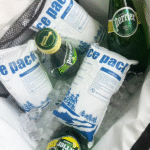
Place ice packs on top when you expect frequent openings (multi-stop errands).
-
Never mix hot and cold items in one bag. Separate by temperature lane.
Real scenario: A commuter stopped buying “soft ice cream” by switching to zipper insulated grocery bags plus slim ice packs for long drives.
insulated grocery bags
How do you clean insulated grocery bags and prevent odors?
Cleaning is part of insulated grocery bags performance. If you skip it, moisture and residue build up in seams, and odors stick. A well-known study on reusable bags found large numbers of bacteria in many bags, and washing reduced bacteria by more than 99.9%.
Storage also matters. California public health guidance warns that storing reusable bags in a car trunk is not recommended, especially in warmer months.
A simple cleaning routine you will actually follow
| Frequency | What to do | Time | What it means for you |
|---|---|---|---|
| After each trip | Wipe liner + zipper | 1–2 min | Stops buildup
insulated grocery bags |
| Weekly | Mild wash + full dry | 10–15 min | Prevents odor
insulated grocery bags |
| Monthly | Inspect seams + base | 5 min | Extends life
insulated grocery bags |
Practical tips you can use today
-
Dry the bag open overnight. Drying matters more than soap.
insulated grocery bags
-
Clean after any raw meat trip—no exceptions.
-
Store indoors, not in your trunk.
Real-world example: A delivery driver eliminated “fish smell” by wiping insulated grocery bags after every shift and line-drying overnight.
insulated grocery bags
Insulated grocery bags for delivery drivers: what changes?
For delivery work, insulated grocery bags become equipment, not accessories. Your priorities shift to speed, separation, and repeatable temperature control. More stops means more door openings, which increases warm minutes.
insulated grocery bags
Many platforms also check for minimum insulated bag dimensions and basic condition standards. For example, Uber lists minimum bag dimensions for standard, pizza, and large insulated bags. Uber+1
A 2-minute driver packing SOP (interactive)
Answer these and follow the action:
-
More than 2 stops?
-
Yes → use zipper insulated grocery bags and keep them closed between stops.
insulated grocery bags
-
-
Hot or sunny outside?
-
Yes → add ice packs to the highest-risk orders.
insulated grocery bags
-
-
Mixed hot and cold items?
-
Yes → separate insulated grocery bags by temperature lane.
insulated grocery bags
-
| Delivery risk | What to measure | Quick fix | What it means for you |
|---|---|---|---|
| Too many openings | Door-open minutes | Load by stop order | Fewer warm spikes
insulated grocery bags |
| Order mixing | Mis-deliveries | Color tags | Fewer refunds
insulated grocery bags |
| Slow staging | Warm minutes | Cold staging zone | Better freshness
insulated grocery bags |
Practical tips you can use today
-
Label bags by order. Simple tags beat memory.
insulated grocery bags
-
Use a rigid base to prevent tip-overs and crushed items.
insulated grocery bags
-
Treat the bag like a food-contact surface. Wipe daily, deep-clean weekly.
insulated grocery bags
2025–2026 trends: what’s changing for insulated grocery bags?
In late 2025, insulated grocery bags are being shaped by policy, proof, and professional delivery expectations.
insulated grocery bags
Two changes matter most:
-
More pressure to bring your own reusable bags. California’s law bans plastic shopping bags starting in 2026.
-
Higher standards for what counts as “reusable.” CalRecycle lists durability and cleanability requirements, including design for at least 125 uses and 15 liters capacity, plus certification rules.
What “good” looks like now
-
You will see more structured bases and better zipper seals (less tipping, more temperature stability).
insulated grocery bags
-
You will see stronger hygiene messaging, especially about cleaning and avoiding trunk storage.
-
Delivery drivers will keep using larger insulated bags that meet minimum dimensions and inspection checks. Uber
Frequently Asked Questions
Q1: Do insulated grocery bags replace a cooler?
No. Insulated grocery bags slow temperature change, but you still need quick refrigeration and ice packs for long trips.
Q2: Are insulated grocery bags better with zippers?
Often yes. A zipper reduces air exchange, which usually improves temperature retention.
insulated grocery bags
Q3: How do I pack insulated grocery bags to avoid cross-contamination?
Separate raw meat, poultry, and seafood from ready-to-eat foods, and assume raw packaging can leak.
Q4: How do I clean insulated grocery bags after meat leaks?
Wash or wipe the liner and seams, then fully dry the bag open. Washing can reduce bacteria dramatically when done consistently.
Q5: Is it risky to store insulated grocery bags in my trunk?
Yes. Public health guidance discourages trunk storage in warm months because heat can promote bacterial growth.
Q6: What insulated grocery bags do delivery drivers need?
Look for thermal insulation, cleanable interiors, stable structure, and platform minimum size requirements where applicable.
Summary and recommendations
Insulated grocery bags help you protect food quality by reducing warm minutes, sealing cold air in, and containing leaks. In 2025, prioritize zipper seals, wipe-clean liners, rigid bases, and reinforced handles. Pack by temperature lanes, separate raw proteins, and unload cold items first. Clean and dry insulated grocery bags consistently, and store them indoors to prevent odor and bacterial buildup.
Your next step (simple plan)
-
Buy one strong insulated grocery bag and test it on your normal route.
-
Create a frozen-only insulated grocery bag plus one raw-protein bag.
insulated grocery bags
-
Add ice packs if your trip often exceeds 20–45 minutes.
-
Start a wipe-and-dry habit after every trip (it takes 2 minutes).
insulated grocery bags
About Tempk
At Tempk, we apply real cold-chain thinking to everyday and last-mile temperature protection. We focus on stable temperature control, practical handling routines, and packaging designs that are easy to clean and reliable in daily use. If you are building a delivery program or retail packaging offer, we can help you define bag performance requirements, packing SOPs, and hygiene workflows that reduce complaints and waste.
CTA: If you want a practical bag spec and packing checklist tailored to your routes and product mix, talk with our team.