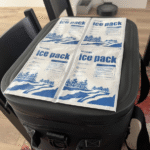
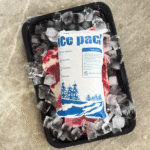
Insulated ice box distributor cost is not just factory price plus a margin. It is the cost of local availability, stock risk, order flexibility, domestic service, and the convenience of a simpler buying process. That means distributor pricing can look high on paper and still be good value in practice.
The real job is to understand what the distributor is doing for you. If they are reducing stockouts, supporting smaller order sizes, solving damaged-delivery problems, and making product selection easier, the channel can be efficient. If they are only passing on a catalog, then you may be paying more without getting much back.
In this article, you will learn:
* What creates insulated ice box distributor cost
* When distributor pricing is worth the extra money
* How to compare distributor and factory-direct value
* Why 2026 trends are changing channel expectations
* What a strong distributor should be able to do for you
What creates insulated ice box distributor cost?
**Distributor cost is built from inventory, service, speed, and channel risk.** The distributor often commits capital before you place an order, stores products locally, supports small lots, and handles local freight and communication. Those are not free functions.
That is why the right comparison is not distributor price versus factory price. It is distributor value versus self-managed sourcing burden. A higher price can still be efficient if it saves you time, cash, storage, and operational trouble.
When is distributor cost worth paying?
**Distributor cost is worth paying when it removes more friction than it adds in price.** This often happens when buyers need fast replenishment, mixed models, small orders, or easier local communication. It also helps when internal teams do not want to manage factory details, freight timing, and accessory matching directly.
The mistake is assuming that every markup is waste. Sometimes the margin is paying for speed, simplicity, and lower business interruption. Those benefits become especially visible when demand is uneven.
Situations where distributor cost often makes sense
* You buy irregularly
* You need short lead times
* You cannot hold much stock
* You need bundled accessories
* You want simpler after-sales support
How should you compare distributor and direct-sourcing value?
**Compare them by total operating cost, not unit price.** Factory direct may look cheaper, but it can bring larger minimums, longer lead times, more internal coordination, and more inventory pressure. Distributor supply may cost more per unit and still lower overall cost.
A good comparison looks at:
1. Unit price
2. Lead time
3. Inventory burden
4. Order flexibility
5. Internal workload
6. Service response
Why do 2026 trends matter to distributors?
**2026 trends matter because buyers expect more channel intelligence and more packaging-system support.** EU GDP guidance continues to emphasize route risk, temperature control discipline, records, and qualified handling logic in sensitive supply chains. At the same time, EU transport-packaging policy keeps reuse and system performance in focus. These trends raise the value of distributors who can support better model selection, cleaner stock logic, and stronger packaging guidance. ([EUR-Lex][1])
That means a modern distributor should know more than price. They should know application fit, which SKUs move reliably, and which models are easier to standardize.
What should a strong distributor do for you?
**A strong distributor should reduce confusion, reduce waiting time, and reduce supply risk.** They should help you buy the right model, not just any model. They should explain what is in stock, what is special-order, and what accessories belong together.
That support becomes more important as your packaging program grows. Once multiple teams and multiple locations are involved, channel clarity becomes a real cost-control tool.
Distributor checklist
* Local stock visibility
* Clear product differentiation
* Accessory bundling
* Fast issue response
* Forecast communication
* Practical application advice
Frequently asked questions
Is distributor cost always bad for margins?
No. It depends on whether the service reduces stockouts, overbuying, and internal workload.
What is the first thing to ask a distributor?
Ask what they stock locally and how often it turns. That tells you a lot about real channel strength.
Can I use both distributor and factory direct?
Yes. Many buyers use distributors for core urgent SKUs and factory direct for predictable volume.
How do I reduce channel cost quickly?
Standardize models and improve forecast discipline.
Summary and recommendation
Insulated ice box distributor cost makes sense when it buys speed, flexibility, and less internal complexity. It makes less sense when it adds price without solving problems. The smartest buying approach is often hybrid: use the channel where it adds value and simplify or move direct where it does not.
Your best next step is to separate your SKUs into urgent, standard, and strategic categories. That will show where distributor cost is worth paying and where it is not.
About Tempk
We focus on packaging supply that is easy to understand and easy to run. That means clearer product logic, simpler bundling, and better alignment between application needs and supply structure. Good packaging programs are not just well designed. They are also well sourced.
For the next step, review your top distributor-supplied SKUs and identify which ones are service-dependent and which ones are ready for a more direct model.