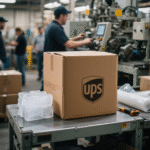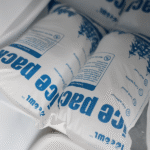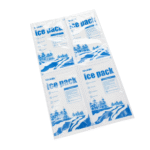
If you buy cold-chain packaging often, an insulated box factory e-commerce company can turn sourcing into a repeatable system. Done right, this factory-direct model can reduce packaging costs by 25–40% while improving temperature stability.
It matters because the cold chain market is scaling fast, and one estimate puts it at USD 28.14B (2024) with a projection to USD 64.49B (2032).
This article will help you answer:
- How an insulated box factory e-commerce company works behind the storefront
- How to buy custom insulated shipping boxes for online stores without guessing
- How to match EPP, EPS, liners, and VIP to your shipping lane
- How to hit 2–8°C (and frozen) targets using PCM gel packs
- What to request, including ISTA 7E thermal testing for parcel shipments
- How to compare total landed cost, not just unit price
- How to reorder faster with fewer mistakes using “saved specs”
What is an insulated box factory e-commerce company?
An insulated box factory e-commerce company sells insulated shippers directly from its own production facility through an online ordering system. You skip distributor markups and get direct access to materials, performance data, and factory-level customization.
Think of it like buying a winter coat. The “best” coat depends on weather, how long you stay outside, and what you wear underneath. A strong insulated box factory e-commerce company does the same thing for shipping: it matches insulation, coolant, and packing steps to your delivery map.
Factory-direct vs distributor vs trading model: what changes?
| Comparison topic | Factory-direct e-commerce | Distributor/trading model | What it means for you |
|---|---|---|---|
| Price | Fewer layers | More markups | Lower unit cost + fewer surprises |
| Custom sizes | Easy to tool + adjust | Often limited | Better fit, less wasted space |
| Lead time | Direct scheduling | Depends on stock/suppliers | More reliable “ship date” planning |
| Quality docs | Faster access | Can be slower | Less waiting when audits happen |
| Accountability | Clear root cause | Can be layered | Faster fixes when problems hit |
Practical tips you can use this week
- If you ship weekly: Use a portal that supports recurring orders and saved specs.
- If temperatures vary: Ask for two insulation thickness options for the same SKU.
- If volume is growing: Confirm production capacity and version control early.
How does an insulated box factory e-commerce company reduce cost and risk?
A good insulated box factory e-commerce company reduces cost by removing markups, right-sizing the shipper, and lowering failure rates. The risk drops because specs are locked, repeatable, and backed by test evidence.
The cheapest box is often the most expensive shipment. A small temperature failure rate can erase months of “unit price” savings. That’s why you should compare cost per successful delivery, not cost per box.
Total landed cost: the quick calculator you can run today
Use this simple equation: Total landed cost per order = packaging cost + carrier cost + (failure rate × reship cost)
| Cost input | Packout A | Packout B | What it means for you |
|---|---|---|---|
| Packaging cost | Your value | Your value | Your unit economics |
| Carrier cost | Your value | Your value | Weight + size impact |
| Failure rate | Your value | Your value | Spoilage + complaints |
| Reship cost | Your value | Your value | Hidden profit leak |
Practical tips to cut cost without cutting performance
- Right-size first: Smaller outer dimensions often reduce courier fees.
- Reduce packing steps: Fewer parts can lower labor minutes and errors.
- Improve fit tolerance: Better closure can reduce “extra coolant” habits.
How do you choose insulation materials with an insulated box factory e-commerce company?
The best insulation is the one that matches your lane. A capable insulated box factory e-commerce company explains trade-offs in plain language and backs them with samples and tests.
If you only compare “wall thickness,” you will overpay or under-protect. Insulation works like a thermos: lid fit, gaps, and packout steps matter as much as the material.
EPS vs EPP vs panels: choose by lane, not hype
| Option | Best fit | Trade-off | What it means for you |
|---|---|---|---|
| EPS foam shipper | Cost-sensitive lanes | Can dent/crumble | Low unit cost for stable lanes |
| EPP insulated box | Reuse loops, rough handling | Higher upfront cost | Fewer damages, better repeatability |
| Liner-based shipper | Many SKUs | Needs clean process | Flexible scaling across box sizes |
| High-performance panels / VIP | Tight size limits, high value | Higher material cost | Smaller outer box for same hold time |
Simple metaphor: EPS is like a disposable cup. EPP is like a reusable travel mug. VIP is a high-performance thermos that must not be punctured.
Practical tips for material selection
- If dimensional weight hurts you: Ask for “same hold time, smaller outer carton” prototypes.
- If breakage is common: Prioritize corner strength and drop resistance, not only thermal claims.
- If you ship mixed SKUs: Standardize fewer shipper sizes and control variation with inserts.
Can an insulated box factory e-commerce company hit 2–8°C (or frozen) targets?
Yes—but only if you define your target range and your worst-case journey. Refrigerated handling is commonly defined as 2°C to 8°C, which leaves little room for error.
Most failures come from three gaps: wrong coolant, wrong conditioning, or wrong packout. Coolant is like a rechargeable battery. If you “charge” it wrong, it will not last.
PCM gel packs: why they reduce “do not freeze” mistakes
PCM (phase change material) gel packs melt and freeze at a set point, so they help “hold the line” around your target range.
| Target range | Typical coolant approach | Conditioning step | What it means for you |
|---|---|---|---|
| 2–8°C | PCM set for 2–8°C | Condition to spec | Less risk of freezing sensitive items |
| 15–25°C | PCM set for 15–25°C | Avoid over-chilling | Fewer heat spikes in hot weather |
| Frozen | Dry ice or frozen PCM | Vent + label | Strong frozen performance for long lanes |
What thermal testing should an insulated box factory e-commerce company provide?
A credible insulated box factory e-commerce company should offer or support ISTA 7E testing for parcel shipments. This standard simulates real-world temperature exposure during parcel delivery.
Without test evidence, you are guessing. A test report should include ambient profile, payload assumptions, and pass/fail criteria.
ISTA 7E: what it tests and why it matters
| Test element | What it checks | What it means for you |
|---|---|---|
| Ambient profile | Hot, cold, or cycling | Matches your lane risk |
| Payload assumptions | Weight, start temp | Realistic test conditions |
| Pass/fail criteria | Temperature band | Clear acceptance rules |
How do you reorder faster with an insulated box factory e-commerce company?
A good insulated box factory e-commerce company offers “saved specs” and order history. This means you can reorder the same packout without re-entering details or risking version drift.
Features that speed up reordering
- Saved specs: Lock in dimensions, materials, and coolant config.
- Order history: See past orders and repeat with one click.
- Version control: Track changes and avoid “surprise updates.”
Common questions about insulated box factory e-commerce companies
Q1: What is the minimum order quantity?
It varies by factory. Some offer low MOQs for standard sizes; custom tooling may require higher volumes.
Q2: How long does production take?
Standard items often ship in 1–2 weeks. Custom sizes may take 3–4 weeks depending on tooling.
Q3: Can I get samples before ordering?
Yes. Most factory e-commerce companies offer sample kits for evaluation.
Q4: What certifications should I look for?
ISO 9001 for quality management, ISTA 7E for thermal testing, and food-safe certifications if needed.
Q5: How do I compare two suppliers?
Use total landed cost, not just unit price. Include carrier cost, failure rate, and reship cost.
Summary and practical recommendations
An insulated box factory e-commerce company can reduce cost and risk if you choose the right partner. Start with your lane requirements, compare total landed cost, and request test evidence. Use saved specs to reorder faster and avoid version drift.
Your next steps (simple 4-step plan)
- Define your temperature target and worst-case journey.
- Request samples and test reports from 2–3 suppliers.
- Compare total landed cost, not just unit price.
- Lock in specs and set up recurring orders.
About Tempk
We focus on temperature-controlled packaging that your team can run consistently. We support insulated box factory e-commerce needs with configurable sizes, clear packout instructions, and testing support built for real shipping lanes. We also help you prepare the labeling and documentation inputs that customers and carriers commonly expect—so you ship with fewer surprises and less waste.
CTA: If you’re sourcing insulated shipping boxes for your e-commerce operation, gather your temperature target, lane duration, and volume estimate. Then contact our team for a packout recommendation and a simple qualification roadmap.