


Supplier Dry Ice Pack for Flowers Delivery: Seven Control Gates
Supplier Dry Ice Pack for Flowers Delivery: Seven Control Gates

A Flower-First Plan for a Supplier Dry Ice Pack for Flowers Delivery
Choosing a supplier dry ice pack for flowers delivery should produce an operating plan, not just a purchase order. The "dry ice pack" in this discussion is a hydration coolant sheet: it arrives dry, absorbs water, and is frozen before use. It is not solid carbon dioxide. Its value depends on what happens around it. Flowers must leave in suitable condition, coolant must be prepared consistently, insulation and separation must manage heat without freezing tissue, and the last-mile handoff must be controlled. The following framework moves from product identity to route evidence and then to daily execution.
Gate One: Define What Must Arrive
Start at the receiving end. Describe acceptable flowers in terms that operations can observe. Temperature may be part of the specification, but arrival quality also includes hydration, petal appearance, stem strength, opening behavior, cleanliness, moisture, odor, and freedom from crushing.
Build the requirement around the actual assortment. A standard rose bouquet, a mixed seasonal arrangement, and a tropical design can require different handling. Even within one flower type, cultivar, maturity, pretreatment, prior storage, and route duration influence tolerance. The quality team should identify the most vulnerable elements of a mixed arrangement and decide whether they can travel together.
This is where universal coolant recommendations break down. A seller can describe a sheet and provide handling guidance, but cannot infer the safe conditions for an unnamed flower mix. Give suppliers a structured requirement:
- flower species or commercial assortment;
- wet or dry handling method;
- departure condition and precooling process;
- packaging orientation and physical protection;
- expected route and delay conditions;
- acceptable arrival-quality criteria;
- temperature or monitoring expectations defined by your specialists;
- recipient handling and recovery process.
If those inputs are unknown, resolve them before asking how many sheets to order.
Gate Two: Confirm the Coolant You Are Buying
Procurement documents should use an unambiguous product description. A hydration sheet contains an absorbent structure and requires water activation and freezing. A gel pack is supplied with a contained coolant. A phase-change pack uses a selected formulation. Solid carbon dioxide is a different material with distinct hazards and transport controls.
The word "dry" may describe the hydration sheet's supplied state, not its use temperature or chemical identity. Request a specification that explains the construction and work sequence. It should support training without relying on marketing terminology.
At minimum, confirm:
- dry dimensions and cell layout;
- activation method and acceptable water source;
- drainage and handling instructions;
- freezer orientation and storage guidance;
- permitted trimming locations, if any;
- signs of damage or incomplete preparation;
- lot identification;
- intended disposal or controlled-reuse instructions;
- change-notification process.
Keep this product definition consistent across purchasing, receiving, warehouse work instructions, packing records, and recipient information. Correct identity prevents solid-dry-ice procedures from being applied to a water-based sheet and prevents the sheet from being misrepresented to carriers or customers.
Gate Three: Map Heat, Time, and Handling
A route is a sequence of exposures, not a line between two addresses. Walk through a normal order.
Flowers leave cold storage and enter assembly. They wait for quality release. A worker packs the arrangement and adds a frozen sheet. The closed parcel queues for dispatch. A driver loads it into a vehicle that may already contain warm returns or other cargo. Doors open repeatedly. The package is carried to a building, perhaps through sun or rain, and handed to reception. The recipient opens it later.
For each step, note duration, environmental control, package orientation, and responsible person. Mark the points where the parcel is open, where cooling can be lost, and where a delay is plausible. Also identify nearby ethylene sources such as ripening produce or combustion. A coolant sheet cannot offset ethylene exposure.
Then group routes with similar patterns. A direct refrigerated run may need a different solution from a third-party parcel lane. Route grouping lets you validate a manageable set of packouts without pretending every delivery is identical.
| Route question | Why it changes the packout | Evidence to collect |
|---|---|---|
| Are flowers fully precooled? | Warm payload consumes coolant capacity early | Departure condition and pack-close observation |
| How long is uncontrolled staging? | Heat enters before vehicle movement begins | Time stamps and staging-location review |
| Does vehicle air reach the parcel? | Carton position and door openings create different exposure | Load map and route observation |
| Can the sheet move? | Shift can cause cold contact or crushing | Post-route position and package inspection |
| Is unattended delivery allowed? | Doorstep exposure may dominate the route | Delivery event and recipient timing |
| Are flowers mixed with ethylene sources? | Cooling does not prevent gas-related injury | Storage and vehicle segregation review |
The table directs testing toward operational unknowns. It also helps separate packaging failures from scheduling or handoff failures, so corrective action addresses the real cause.
Gate Four: Design Around Both Hot and Cold Failure
Thermal packaging for flowers has two edges. Too little cooling can accelerate deterioration and water loss. Too much local cooling can injure petals or stems. The objective is a suitable distribution, not the lowest reading.
Place the sheet where it can absorb incoming heat without resting on delicate tissue. Use a separator, sleeve, retention feature, or controlled air space as needed. Remember that a thicker barrier may reduce cold contact but also reduce cooling. Test the trade-off.
Review the packout in three dimensions. Long flower cartons can develop a warm end away from the coolant. A sheet placed on top may shift when a driver carries the box vertically. A tightly filled arrangement may block airflow and transmit sheet weight to flower heads. An underfilled carton may allow the bouquet and coolant to collide.
Moisture needs its own path. Condensation or thaw water should not collect on blooms, weaken corrugated material, detach labels, or make unpacking messy. Liners and absorbent elements can help in some designs, but they may also trap moisture or change heat flow.
Monitor likely extremes during development. A sensor beside the coolant is a cold-point check, not proof for the rest of the flowers. Include plausible warm zones near closures or distant ends. Pair temperature with flower inspection after an appropriate recovery period, because some injuries are easier to see after unpacking.
Gate Five: Prove the Workflow, Not Just the Prototype
Early prototypes are often prepared carefully by a small technical team. Daily orders are prepared under schedule pressure by different shifts. The trial should eventually include normal operators and normal equipment.
Hydration
Translate supplier guidance into a local method. Define the clean preparation area, water handling, sheet loading, drainage, activation acceptance, and reject criteria. Observe variation across operators and batches. If the procedure depends on personal judgment, create a clear visual standard or another appropriate check.
Freezing
Determine how sheets will be arranged so freezer airflow is not blocked. Review the heat load created by batch activation, especially during peaks. Establish a release rule based on your equipment and process evidence. Do not equate freezer residence with readiness without confirmation.
Packing
Use a controlled bill of materials and a packout image. Verify separator, sheet location, bouquet orientation, insulation closure, and label. Record the coolant lot and packout version where traceability is needed.
Dispatch and delivery
Protect closed parcels from unnecessary staging. Give drivers loading, orientation, and unattended-delivery rules. Capture delays or substitutions. A driver should not improvise sheet quantity or placement unless a reviewed procedure authorizes it.
Receiving
Tell recipients to unpack promptly and remove the sheet carefully. Define what condition feedback is useful and where an exception should be reported. For business deliveries, identify who owns the handoff after reception signs.
A packout is ready to scale only when this end-to-end workflow is repeatable.
Gate Six: Evaluate the Supplier Behind the Sample
The sample answers, "Can this item be considered?" The supplier review asks, "Can this specification remain controlled?"
Compare suppliers on evidence and communication, not adjectives. Ask for the conditions behind any duration or performance statement. The complete test description should identify the insulation, payload, sheet preparation, quantity, placement, ambient exposure, sensor locations, and acceptance criteria. If those conditions differ from your delivery, treat the report as background rather than route approval.
Review sample-to-production consistency. Agree on critical characteristics such as dimensions, cell layout, seam integrity, activation behavior, and outer construction. Ask how lots are identified and how changes will be communicated. Establish incoming inspection appropriate to the risk.
Discuss problem investigation before a problem occurs. Determine what records, photographs, samples, and timeline the supplier would need. Clarify response ownership. A disciplined complaint process is more useful than a broad promise of "quality assurance."
Commercial comparison should include operating effects:
- warehouse space for dry and frozen sheets;
- hydration labor and water handling;
- freezer capacity and peak loading;
- separators, liners, and insulation;
- rejects and damaged-sheet handling;
- parcel weight and pack time;
- flower damage and replacement delivery;
- return, cleaning, or disposal if applicable.
This view can change which quotation is genuinely economical.
Gate Seven: Control Changes and Learn from Deliveries
Once released, the packout needs ownership. Define who may change the flower mix, sheet, quantity, separator, insulation, carton, route family, or receiving instruction. Small substitutions can change temperature distribution or mechanical behavior.
Ownership should extend to temporary changes. Peak demand, freezer maintenance, replacement vehicles, and supplier shortages can tempt teams to improvise. Create a deviation path that identifies who evaluates the risk, what temporary controls are required, and whether representative confirmation is needed before the substitute is used broadly. Record the start and end of the deviation so the temporary method does not become an undocumented standard. This keeps operational flexibility without losing the evidence behind the released packout.
Also define the conditions for withdrawing a packout. Repeated direct-contact injury, inability to prepare sheets consistently, unexplained supplier variation, or a route change outside the assessed profile may justify a temporary stop rather than another informal adjustment. Identify who can pause use and what evidence is needed for release. A controlled stop protects flowers and gives the investigation a clean boundary. When the packout returns, record whether the remedy changed the component, preparation, placement, vehicle process, or receiving instruction so future reviews understand why the current version differs.
Track a limited set of indicators that lead to action. Examples include hydration rejects, freezer release issues, packout deviations, warm staging, missed recipients, sheet movement, condensation, petal injury, wilting, and replacement delivery. Link trends to flower type, route, season, packout version, and supplier lot when possible.
When a problem appears, resist the urge to add coolant immediately. Use the symptom to form a cause hypothesis:
- warm far-side flowers may indicate insufficient distribution, insulation weakness, or delay;
- cold marks near the sheet may indicate contact or excessive local cooling;
- wilt with acceptable temperature may point to poor hydration or humidity management;
- wet petals may indicate condensation control failure;
- crushing may come from sheet movement or poor structural support;
- petal or leaf drop may require an ethylene review.
Corrective action can then be targeted and retested. This learning loop is how a delivery packout stays useful as routes and assortments evolve.
Frequently Asked Questions
What should a supplier know before recommending a sheet?
Provide flower species or assortment, departure condition, package and insulation, route sequence, likely ambient exposure, delivery exceptions, physical protection, and receiving expectations. The supplier also needs to know whether flowers are shipped wet or dry and where frozen material can be safely retained.
Can a water-activated sheet replace a refrigerated vehicle?
It should not be treated as an automatic replacement. A passive insulated packout and a conditioned vehicle manage different parts of the thermal problem. Any change in transport method requires route-specific evaluation with representative flowers and handling.
How should sheet performance be compared between suppliers?
Compare equivalent constructions and test conditions. Review hydration method, frozen mass or activation consistency, complete packout, ambient profile, payload, placement, monitoring points, and acceptance criteria. A headline duration without those conditions is not a fair comparison.
What is the safest way to prevent freezing contact?
There is no universal separator. Use a designed layer or gap that retains the sheet and protects flowers, then test both the closest cold location and the remote warm location. Mechanical protection and condensation behavior should be reviewed at the same time.
When does a packout need reevaluation?
Review it when flower assortment, supplier material, sheet dimensions, coolant quantity, carton, insulation, separator, route, vehicle, staging, season, or receiving process changes in a way that could affect performance. Your quality process should define which changes trigger documentation review or retesting.
Conclusion
A reliable floral delivery plan passes seven gates: arrival requirement, coolant identity, route map, balanced packout, repeatable workflow, supplier control, and change management. None can be replaced by a generic "long-lasting" claim. Confirm that the product is a water-activated frozen sheet, protect flowers from direct cold and moisture, challenge the actual last mile, and keep the tested configuration stable. That is the practical foundation for choosing and using a supplier dry ice pack for flowers delivery.
About Tempk
For flower-delivery inquiries, Tempk discusses water-activated coolant sheets with cold-chain packaging buyers in the context of a defined route and packout. We can help clarify the product format, preparation workflow, sheet placement, and supplier information needed for a representative floral trial. We keep the discussion tied to the buyer's flower assortment, insulation, delivery pattern, and receiving criteria because those conditions determine whether a configuration is appropriate. Final acceptance should come from the buyer's own quality and operational review.
Send Tempk your route map, flower mix, carton and insulation details, and current pain points to plan a focused sample-to-delivery assessment.
Manufacturer Dry Ice Pack for Pharmaceutical Delivery: Lifecycle

Manufacturer Dry Ice Pack for Pharmaceutical Delivery: From Requirement to Controlled Supply
Selecting a manufacturer dry ice pack for pharmaceutical delivery is a lifecycle decision. The product considered here is a dry cellular sheet that is hydrated with water and frozen before use. It is not solid carbon dioxide. It provides stored cooling only when integrated into an insulated shipper with a defined payload, separator, preparation method, route, and operating instruction.
The exact pharmaceutical requirement governs the design. A common refrigerated range cannot be extended to every medicine, and a frozen pack is not automatically suitable for a freeze-sensitive product. Start with approved product information and end with evidence for the complete system.
Set the Evidence Boundary Before Sourcing
Procurement teams can avoid most claim confusion by assigning each party a clear role.
The product owner defines required conditions, stability information, excursion decisions, and quality approval. Packaging engineering designs and qualifies the complete packout. Operations prepares and assembles it. Logistics manages the route and handovers. The manufacturer controls the hydration-sheet specification and supplies relevant component information.
No component alone is "pharma compliant." A sheet can meet an agreed specification. A packout can be qualified for defined conditions. A route can be monitored and controlled. Compliance depends on the applicable product, activity, organization, and market requirements.
WHO's time- and temperature-sensitive pharmaceutical framework supports this risk-based view. Product quality is protected through defined storage and transport conditions, suitable systems, procedures, monitoring, qualification, and review.
Define the Product and Movement
Prepare a concise technical brief:
- Exact medicine, dosage form, and presentation
- Approved storage and transport condition
- Freeze, heat, light, humidity, or handling sensitivity where relevant
- Excursion-assessment authority
- Minimum and maximum payloads
- Insulated shipper under consideration
- Origin, destination, and intermediate storage
- Route stages, handovers, seasons, and delay
- Monitoring and data workflow
- Receiving and quarantine
- Expected purchase and preparation model
For portfolio operations, group products only when the product owner justifies shared conditions and packout assumptions. Similar carton size does not prove thermal or stability equivalence.
State clearly whether "dry ice pack" means a water-activated sheet. Actual solid CO2 is a different refrigerant with gas, safety, and transport controls. It belongs only in product-specific systems designed for it.
Keep the two refrigerant categories distinct in master data and storage. Supplier names, item descriptions, safety documents, packout instructions, and warehouse locations should not allow a hydration sheet to be picked as CO2 or vice versa. Staff who handle actual solid CO2 need the applicable safety and transport process; staff preparing hydration sheets need water, freezing, and packout controls. Shared commercial wording should never collapse those training paths.
Screen the Manufacturer in Two States
The buyer receives a dry component but uses a hydrated, frozen component. Both states belong in the supplier review.
| Review area | Dry-state question | Prepared-state question | Evidence boundary |
|---|---|---|---|
| Identity | Is the product labeled as a hydration sheet? | Is frozen water the working coolant? | Does not establish pharmaceutical suitability |
| Geometry | What are dimensions and cell layout? | What are hydrated fit, thickness, and flexibility? | Fit must be checked in the final packout |
| Integrity | How are film and seals inspected? | How do they tolerate freezing and handling? | No universal reuse life should be assumed |
| Preparation | What activation and storage instructions apply? | How are freezing and conditioning controlled? | Customer process must be verified |
| Thermal data | What component information is available? | What full assembly was tested? | Results apply only to disclosed conditions |
| Production | How are lots and changes controlled? | Does commercial material match the sample? | Customer approves changes through risk review |
The matrix helps distinguish a controlled component from a qualified system. It also exposes gaps early, before commercial negotiation creates pressure to approve a sample.
Design the Heat-Flow Path
Frozen water absorbs incoming heat as it warms and melts. Insulation slows heat entering from outside. Payload mass, internal air, separators, and contact determine where that heat moves.
For a freeze-sensitive medicine, a sheet touching a carton can create a local cold condition. A central air sensor may not detect it. Control options include a specified separator, fixed sheet position, coolant conditioning, alternative phase-change material, and separate configurations for payload extremes.
The separator is part of the thermal design. Its material, thickness, moisture, compression, and coverage matter. The same is true of void fill, outer carton, closure, and logger holder. Preserve them in the bill of materials and drawing.
Warm-side protection needs equal attention. Heat can enter through lids, seams, and openings, and a payload loaded too warm can consume available capacity. The design must balance both boundaries for the defined route.
Do not choose one worst case by intuition
Minimum load may be severe for freezing. Maximum load may be severe for warming or airflow. Summer may drive heat ingress; winter may combine cold ambient and frozen coolant. Development should investigate these possibilities, and the protocol should test the cases justified by risk.
Make Preparation a Controlled Production Step
Hydration turns the dry sheet into its working form. That means the shipping site influences the coolant's mass, thickness, and freezing behavior.
Write a process that controls:
1. Released component lot
2. Hydration container and batch arrangement
3. Water access and handling
4. Drainage
5. Freezer rack and loading pattern
6. Batch identity and prepared inventory status
7. Verification of the required state
8. Conditioning where applicable
9. Maximum uncontrolled handling before pack closure
10. Damaged-sheet segregation
Verify the process at peak volume. Crowded hydration tanks or freezers can change preparation. A backup site may use different racks, equipment, or staffing and needs a controlled transfer.
Hygiene and moisture management matter. Define cleaning, spill response, wet-material handling, and protection of labels and corrugated components. If an additional containment bag is introduced, treat it as a packout change because it may alter heat transfer.
Develop, Qualify, and Transfer the Complete System
Development trials compare components and expose risks. Use them to refine separators, coolant placement, payload variants, and sensor locations. They are not final evidence.
Formal qualification begins with approved acceptance criteria. The protocol identifies the exact bill of materials, payload or justified simulant, starting condition, coolant preparation, ambient profile, duration, sensor map, repetitions, and deviations. Instrumentation should be suitable and supported by the organization's calibration process.
Sensors test hypotheses. Place them near predicted cold-contact zones, likely warm ingress paths, and representative payload regions. Identify whether each point measures air, surface, or simulant response.
Route information informs the challenge. Map the pack room, dock, vehicles, hubs, cross-border dwell where relevant, last mile, and receiving. Consider credible delays and custody changes. Historical profiles are useful evidence but not promises.
Operational qualification or a controlled shipping trial confirms that routine staff can reproduce the method and that carrier and receiving interfaces work. The final report should point to the approved packing instruction. Unwritten engineering adjustments must not become hidden requirements.
Transfer the Qualified Design Into Master Data and Training
A qualification report does not control routine work by itself. Convert the approved design into information that purchasing, inventory, the warehouse, transport, and receiving systems can use.
Give every configuration a unique identifier. Maintain an approved bill of materials with the hydration sheet, insulation, separator, void fill, outer carton, logger holder, and closure. A controlled drawing or visual instruction should show orientation and areas where sheets may not overlap or contact the payload.
Packout selection rules need to address product, payload, season, route, and service level as applicable. If an order does not fit a defined case, the system should stop or route it for review rather than encourage the packer to improvise. Component staging and line clearance can prevent materials from adjacent configurations entering the box.
Training should combine the task with its thermal reason. Staff who understand that a different separator changes heat flow or that extra coolant may create a cold spot are less likely to make informal substitutions. Competency checks can use sample orders, damaged components, a missed collection, and a wrong logger to test decisions.
The shipment record should capture enough information to reconstruct the packout under the customer's quality plan. Depending on risk, that may include configuration, payload case, component lot, preparation batch, packer verification, monitor identity, and close time. Avoid collecting fields that no one reviews; every record should serve traceability, release, or investigation.
Observe routine packing after launch. Workarounds often signal that the official method is slow, unclear, or physically difficult. Correct the underlying process and update controlled documents through change management rather than allowing a shadow procedure to develop.
Connect Shipment Monitoring to Disposition
Qualification shows expected system behavior; monitoring provides journey evidence. Define device, calibration status, configuration, sampling, placement, start and stop, shipment association, retrieval, alarm review, and record handling.
The destination needs the reader, access, training, and authority required by the procedure. If review is not immediate, define how the medicine is stored and segregated. Preserve the full record and packout observations after an event.
A logger alarm does not decide product fitness. The authorized owner reviews product-specific stability information, exposure magnitude and duration, sensor location, package condition, and deviations. The coolant manufacturer does not release or reject the medicine.
Release Wholesale Production Through Gates
Commercial volume should follow technical approval.
Gate 1: specification
Approve product identity, dry attributes, preparation instructions, lot coding, packaging, inspection, nonconformance, and change-notification expectations.
Gate 2: sample equivalence
Record the evaluated sample and compare commercial material in dry, hydrated, frozen, and handled states. Resolve differences before use.
Gate 3: site readiness
Verify hydration space, freezer capacity, released-material control, training, records, monitoring devices, and contingency. Include peak dispatch.
Gate 4: controlled launch
Observe early packouts and receiving. Review preparation variation, damage, deviations, route performance, and data retrieval.
Gate 5: ongoing review
Trend complaints, leakage, incomplete hydration, packer workarounds, excursions, route change, and supplier notifications. Decide whether corrective action or requalification is needed.
These gates align purchasing with the quality lifecycle and prevent a large order from outrunning the evidence.
Manage Changes and Alternatives Before They Are Needed
A change in cell pattern, film, seams, absorbent structure, dimensions, manufacturing process, or instructions may affect hydration and heat transfer. Require appropriate notification and assess the impact.
Changes to insulation, separator, payload, logger, site equipment, route, carrier, and destination also matter. Use a risk-based process to decide whether document review, sample testing, engineering study, or requalification is required.
Supply resilience comes from qualified alternatives. A second manufacturer or packout should be evaluated before disruption. Keep components and instructions identifiable so staff do not mix them.
Contingency procedures should cover freezer outage, missed collection, damaged sheet, wrong payload configuration, monitor failure, and destination closure. State who can stop, re-pack, dispatch, quarantine, or escalate.
Compare Cost and Sustainability at the Delivery-System Level
The dry sheet's price is only one line. Add hydration labor, water, freezer use, racks, separators, insulation, monitoring, training, inspection, records, damaged material, reverse logistics, and deviation handling.
Dry transport and storage can reduce inbound water mass. Reuse can reduce material consumption on suitable closed loops. Neither benefit is automatic. Assess freezer energy, return rate, cleaning, inspection, rehydration, loss, damage, and retirement.
Track actual indicators:
- Sheets prepared but unused
- Hydration or integrity rejects
- Damage by handling stage
- Repack events
- Return and retirement where reuse applies
- Monitor recovery
- Excursions associated with packing deviations
Protecting the pharmaceutical product remains the first sustainability gate. Process improvements should stay inside the qualified boundary.
Frequently Asked Questions
What must appear in a manufacturer quotation?
Request clear product identity, dry specification, activation and freezing instructions, prepared-state information, integrity controls, lot coding, change notice, packaging, and commercial terms. Ask for full test context behind any performance claim.
Can a hydration sheet be called a qualified pharmaceutical shipper?
No. It is a coolant component. Qualification applies to a defined complete system under stated conditions. The sheet, insulation, payload, separator, preparation, ambient profile, and procedure work together.
When is direct contact acceptable?
Only when the specific qualified design and product requirements support it. Do not assume direct contact for a freeze-sensitive medicine. Evaluate cold spots and preserve the tested placement and separator.
How should a custom cell pattern be introduced?
Treat it as a new component. Review drawings and samples, evaluate hydration, freezing, fit, integrity, and heat-transfer implications, then determine the necessary packout testing and approval before scale-up.
Does WHO guidance approve individual coolant products?
WHO guidance provides risk-based principles and technical expectations for storage and transport. It does not make a hydration sheet universally approved. Product owners must apply relevant guidance and local requirements to their specific system.
Conclusion: Buy a Controlled State, Not a Product Name
A hydration dry ice pack becomes useful only after the manufacturer's component and the customer's preparation process produce a consistent frozen sheet. That sheet must then sit inside a defined, qualified packout for an exact pharmaceutical requirement and route.
Keep solid CO2 separate, design for warm and cold risk, transfer the method into routine operations, and govern production and changes through evidence. The result is not a universally compliant component; it is a controlled delivery system with a clear scope.
About Tempk
Tempk supplies hydration coolant sheets and insulated cold-chain packaging options for business customers. We can review component format, activation, freezing, intended placement, insulation, payload arrangement, route assumptions, and volume preparation as part of a focused manufacturer discussion. Customers retain responsibility for product requirements, complete-system qualification, monitoring, and quality approval.
CTA: Provide Tempk with your product condition, payload range, packout design, lane outline, and site-preparation limits to plan a controlled sample-to-production review.
Bulk Dry Ice Pack for Fruit Logistics: Route Validation
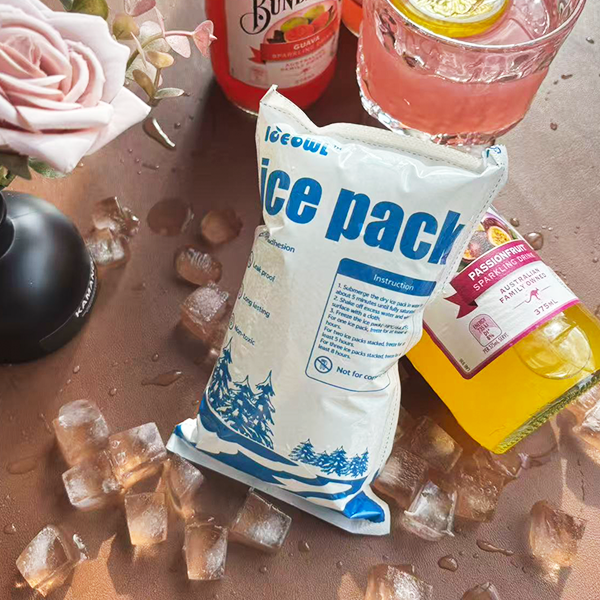
A Route-Ready Framework for Bulk Dry Ice Pack for Fruit Logistics
The right bulk dry ice pack for fruit logistics is not the one with the strongest cold claim. It is the one that fits a defined fruit, package, route, and operating process without creating freezing injury, blocked airflow, condensation, or inconsistent preparation. In this framework, the product is a water-activated coolant sheet that is hydrated and frozen before packing. It is not solid carbon dioxide dry ice. Buyers should state that identity explicitly because the two products have different temperatures, hazards, handling requirements, and transport implications. From there, sourcing becomes a disciplined sequence: define the fruit, map heat exposure, design the packout, test it, and scale it under change control.
Gate 1: Establish the Product and Route Boundaries
Start with an internal shipment requirement, not a supplier catalog. The requirement should answer:
- Which fruit, variety, maturity, and grade will be shipped?
- Is the shipment intended to maintain condition, continue ripening, or arrive at a defined ripeness?
- What primary and secondary packages are used?
- What is the approved product temperature at pack assembly?
- What minimum and maximum conditions apply, including short-exposure concerns?
- How long is the route, and where can uncontrolled dwell occur?
- Is transport refrigerated, ambient, or mixed?
- What does the receiver do immediately after delivery?
If these answers vary across products, create separate requirement sets. "Fresh fruit" is not a thermal specification.
Clarify the meaning of dry ice pack
Procurement language must distinguish a hydration sheet from carbon dioxide dry ice. Put the material identity in the item description, specification, purchase order, work instruction, and warehouse label. Confirm that the sheet is soaked, drained, frozen, and used as a passive coolant.
This prevents several failures: a carrier applying irrelevant dangerous-goods assumptions, an operator expecting sublimation, a buyer comparing unlike products, or a technical team designing around the temperature of solid carbon dioxide. If the operation actually requires solid dry ice, it needs a separate safety, packaging, ventilation, and compliance assessment.
Gate 2: Decide Whether Passive Sheets Fit the Job
Hydration sheets make sense where broad, flexible coolant placement complements an insulated package and the route challenge remains within a tested design. They can be useful in parcel boxes, liners, cooler bags, or totes, especially when dry inbound storage and adaptable placement matter.
They are not automatically appropriate when:
- Fruit arrives warm from harvest and needs rapid, uniform precooling.
- The commodity is highly sensitive to chilling or contact freezing.
- Ventilation is central to product quality and the sheet would obstruct it.
- The route has routinely uncontrolled delays beyond the design.
- The payload requires active control or refrigerated transport.
- The facility cannot hydrate, drain, freeze, and segregate sheets consistently.
- Moisture exposure would compromise the carton, label, or primary package.
This fit decision should occur before a bulk price negotiation. A low unit cost cannot rescue a mismatched operating model.
Gate 3: Convert Fruit Physiology Into Packout Rules
Fruit keeps respiring after harvest, which means it continues to generate heat and moisture. Cooling generally slows biological activity, but too much cold damages susceptible tissue. Ethylene production and sensitivity can further limit mixed loading. These characteristics translate into practical design rules.
| Biological or physical characteristic | Packout implication | Required buyer decision |
|---|---|---|
| Chilling sensitivity | Avoid overly cold local exposure | Define commodity-specific minimum condition |
| Freezing susceptibility | Manage direct coolant contact | Select and test buffer or spacing |
| High respiration | Preserve heat-removal paths | Confirm precooling and ventilation |
| Ethylene production | Avoid incompatible consolidation | Set mixed-load rules |
| Ethylene sensitivity | Control neighboring commodities and dwell | Define segregation and ventilation |
| High moisture loss | Balance humidity retention and condensation | Choose package and liner deliberately |
| Delicate structure | Avoid pressure from expanded cells | Check hydrated fit and cushioning |
The table is a translation tool, not a produce handbook. Your postharvest specification remains the source of commodity limits.
Precooling is a release condition
Treat fruit temperature at packing as an incoming quality attribute. Coolant inside a shipping box is primarily intended to help maintain a defined condition against heat gain. If it is used to remove substantial field heat, peripheral fruit may become cold while inner fruit remains warm, and the coolant may be depleted early.
Define where and how product temperature is checked, acceptable variation across the load, hold rules for warm product, and who can release it. The most sophisticated coolant specification will fail if warm fruit routinely enters the box.
Preserve airflow on purpose
Vent holes, aligned channels, pallet gaps, and headspace are functional elements. A flexible sheet can conform so well that it seals a vent or closes a vertical channel. Packout drawings should show both sheet placement and airflow paths.
During trials, photograph the loaded geometry before closure and after the test. Fruit settles, hydrated cells change shape, corrugated softens, and void fill shifts. The final geometry may explain temperature variation better than the initial drawing.
Gate 4: Control the Activation Process
The buyer receives a dry component but uses a hydrated, frozen one. The transformation must be part of the quality plan.
A practical activation flow
Receive and identify. Match item code, cell layout, lot, dimensions, quantity, and condition to the approved specification.
Hydrate. Use the supplier's instructions and a clean, defined water source. Control immersion, handling, and acceptance of expanded cells.
Drain. Remove excess surface water by a repeatable method. Dripping sheets add moisture that was not necessarily present in the test.
Freeze. Load racks or freezers with adequate air access and within validated operating capacity. Control status so partially frozen sheets cannot be confused with ready stock.
Inspect and stage. Reject leaks, open seams, contamination, lost identification, or abnormal expansion. Limit staging conditions before assembly.
Place and close. Follow the approved layer sequence, orientation, buffer, monitor location, closure, and label instructions.
Every step should have an owner, release criterion, and exception response. Avoid universal activation numbers unless they appear in the approved product instructions and have been confirmed under site conditions.
Gate 5: Develop Evidence in Layers
A supplier sample can answer fit and usability questions. It cannot prove a commercial route.
Begin with component characterization: hydrated dimensions, handling, seam condition, leakage, foldability, and compatibility with the intended packaging. Then conduct packout development using the actual box and representative payload. Challenge contact points, corners, closure, and likely heat-entry paths.
Move to route-relevant performance testing. Document:
1. Exact bill of materials.
2. Fruit load and starting condition.
3. Sheet preparation, condition, count, and orientation.
4. Insulated container and closure.
5. Ambient challenge and rationale.
6. Sensor identity, calibration status, interval, and location.
7. Temperature and package-condition acceptance criteria.
8. Deviations and test observations.
Run enough builds to evaluate repeatability. A single favorable result should be treated as development information, not broad proof.
Use sensor placement to search for failure
Place sensors where the design may fail: near a coolant interface, in a central load, at a corner or lid, and at vertical extremes. If fruit core behavior matters, use an appropriate method rather than assuming air temperature represents pulp temperature.
Review traces with photographs and physical observations. A cold spike at one wall may indicate contact; slow center cooling may indicate warm loading or blocked airflow; rapid top warming may reveal closure leakage. The corrective action should target the mechanism.
Gate 6: Qualify the Supplier and the Production Item
Bulk orders introduce lot-to-lot and sample-to-production risk. A supplier review should cover more than nominal dimensions and price.
Specification controls
Agree on product name, construction, dry and hydrated dimensions, cell geometry, identification, packaging, storage, preparation instructions, defect criteria, and change notification. If custom printing or cell layouts are used, control the approved artwork and drawing revision.
Evidence controls
Request material declarations relevant to intended use, component test descriptions, lot information, and quality documents appropriate to the buyer's risk assessment. Avoid asking for a generic certificate that supposedly proves all fruit logistics. Compliance obligations differ by contact condition, product, market, and role.
Commercial and continuity controls
Confirm minimum order, lead time, forecast windows, peak-season capacity planning, shipping configuration, safety stock, nonconformance handling, and replacement process. Seasonal fruit programs often have compressed windows, so a clear escalation path matters.
Production confirmation
On receipt, verify identity and visible quality. Periodically compare hydration behavior and fit with the approved state. Trend defects by lot. If dimensions, materials, seams, absorbent core, site, or instructions change, assess impact before normal use.
Gate 7: Build the Route Around Human Behavior
Even an excellent design can fail at a dock or doorstep. Translate the packout into simple operational controls.
Create a visual instruction showing correct layers, orientation, sheet count, buffer, logger, closure, and labels. Train operators on the reason for each element. Use line clearance when switching fruit or box formats. Segregate sheet status physically.
At handovers, define responsibility. The carrier should receive necessary temperature-control and handling instructions. Customer service should know how to manage delays without authorizing packout improvisation. Receivers should inspect promptly and move fruit to the required environment.
For example, suppose a parcel is held overnight at a hub. The approved response may be to continue, return, or assess the shipment using monitoring and product criteria. It should not be "add two sheets" unless that recovery configuration has been designed and approved. Opening the box and inserting coolant changes both temperature and contamination risk.
Gate 8: Manage Moisture, Sanitation, and Food-Safety Responsibilities
Hydration operations introduce water into a food-packing environment. Include tanks, hoses, racks, drains, gloves, surfaces, and freezers in sanitation procedures. Prevent wet sheets from touching floors or uncontrolled surfaces. Define disposal for damaged units and clean separation between unused and returned sheets.
In the United States, sanitary transportation requirements may apply to parties involved in covered food movements. Adequate temperature control where needed for safety, sanitary equipment, communication, training where applicable, and records can all be relevant. Requirements and exemptions depend on the operation. A hydration sheet is not a certificate of compliance and packaging is not a substitute for a safe food process.
If the fruit is in a primary package, record whether the coolant contacts that package, an inner liner, or food directly. Ask for material information specific to the actual contact scenario and destination market. Avoid turning a limited declaration into a universal "food grade" claim.
Gate 9: Improve With Data Without Chasing Every Variation
After launch, review data at a useful cadence. Group observations by fruit, route, season, carrier, box, and packout revision. Track both temperature and physical outcomes such as wet cartons, leakage, crushed packages, ripening inconsistency, and delivery complaints.
Not every variation requires redesign. Set investigation triggers. A single misplaced sensor may explain an anomaly; a repeated wall-side cold pattern likely deserves action. When a change is made, document the rationale, approve the new revision, train users, and prevent old and new configurations from mixing.
Sustainability improvements should follow the same discipline. A thinner sheet, lighter box, or reuse program should preserve fruit protection and sanitation. Compare material, freight, water, freezing energy, return logistics, cleaning, and product loss within the same system boundary. Make claims only from data the program can support.
Frequently Asked Questions
What is the first specification to confirm when buying these sheets?
Confirm the product identity: a water-activated hydration coolant sheet frozen before use, not solid carbon dioxide. Then confirm exact dry and hydrated geometry, because expanded fit can affect payload compression and airflow. Commercial terms should follow, not precede, these technical boundaries.
Should every fruit packout include a buffer between sheet and payload?
Not necessarily, but direct-contact risk must be assessed. Commodity sensitivity, primary packaging, coolant condition, and route determine the need. A buffer can reduce local cold exposure while also reducing heat transfer, so its material and thickness should be tested as part of the exact packout.
How is a supplier hold-time statement evaluated?
Ask for the container, insulation, payload, starting temperatures, coolant preparation and count, ambient profile, sensor positions, and pass criterion. If those conditions differ from your program, the result is reference information only. Establish duration for the intended route through your own controlled evaluation.
Can a hydration sheet be cut?
Only where the product design and instructions allow it. Cutting through a cell can release the hydrated medium and compromise containment. If flexibility or size is important, request a cell layout with defined seams and obtain written preparation and folding guidance.
What if one fruit program has many box sizes?
Create a configuration matrix rather than one flexible instruction. Link each box and payload to an approved sheet item, count, orientation, buffer, monitor position, and closure. Limit the number of operational variants where possible and use item-level visual controls to prevent substitutions.
Who approves the final packout?
The buyer should assign approval through its technical, postharvest, quality, and food-safety governance. A component supplier can provide product information and samples, but does not know every commodity condition, route, carrier, facility, or regulatory duty. Responsibilities should be explicit in the project plan.
Conclusion
A route-ready fruit program follows gates: define the commodity, confirm the coolant identity, decide whether passive sheets fit, control activation, develop packout evidence, qualify production supply, train operations, manage sanitation, and review route data. This process prevents a bulk dry ice pack for fruit logistics from becoming an uncontrolled "extra cold" component. It also makes procurement clearer because price, volume, and lead time are evaluated against one approved specification and packout rather than a vague freshness promise.
About Tempk
The Tempk brand belongs to Shanghai Tempk Industrial Co., Ltd. and includes hydration coolant sheets and insulated packaging for temperature-sensitive distribution. Tempk can discuss sheet formats when a buyer shares fruit type, packout geometry, route conditions, daily volume, and preparation capability. Those inputs help narrow samples for evaluation. Commodity limits, test protocols, food-safety controls, qualification decisions, and shipment disposition should be owned by the buyer's responsible teams.
CTA: Provide Tempk with one complete fruit-lane requirement and packout drawing to begin a controlled sample-to-route evaluation.
Bulk Dry Ice Pack for Food Transport: Evidence-Led Buying
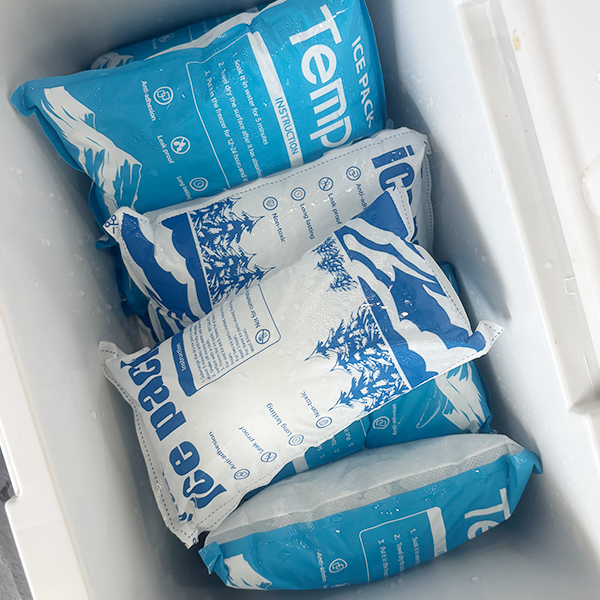
How to Source a Bulk Dry Ice Pack for Food Transport With Evidence
Sourcing a bulk dry ice pack for food transport should produce more than a pallet of coolant. It should produce a controlled item, an approved packout, a repeatable preparation process, and a route decision backed by evidence. The "dry ice pack" in this article is a water-activated sheet that is hydrated and frozen before use. It is not solid carbon dioxide. That boundary prevents incorrect safety assumptions and forces a useful commercial question: under what exact food, box, route, and handling conditions does this hydration sheet perform its assigned role? The following plan moves from requirement to supplier approval without turning a component into an unsupported compliance or duration claim.
Write the Shipment Requirement Before the Request for Quotation
A strong sourcing project begins with a one-page design input. It should state:
- Food identity, formulation category, and physical state.
- Safety- or quality-related temperature criteria defined by the responsible team.
- Product and primary-package dimensions and mass.
- Product condition at release and packing.
- Order configurations and allowable substitutions.
- Insulated container and closure.
- Route, service, handovers, and expected ambient challenge.
- Delivery and receiving process.
- Monitoring and documentation needs.
- Daily, weekly, and peak forecast.
If a facility ships several food families, make a configuration matrix. Do not use "cold food" as one row. Chilled ready-to-eat meals, frozen meat, and produce have different hazards and sensitivities.
Define what the component must do
The sheet may be assigned to absorb heat during an ambient handover, protect a parcel for the complete route, supplement an insulated tote in refrigerated distribution, or provide flexible wall coverage. Each role produces different tests.
Also state what it is not expected to do. It should not cool improperly handled food into compliance, replace necessary refrigeration, prevent contamination, or determine whether an excursion is acceptable.
Use a Product-Identity Gate
Require the supplier to confirm that the item is a water-activated hydration coolant sheet. Obtain its activation method, construction description, dry and hydrated geometry, cell layout, storage, freezing instructions, and identification.
Why be so explicit? Solid carbon dioxide dry ice is much colder, sublimates to gas, and requires different handling and transport considerations. Gel packs and specialized phase-change coolants can also behave differently. Similar commercial names do not make these products technically interchangeable.
The purchase description could include the functional identity and approved item code rather than the ambiguous phrase alone. Warehouse locations should also distinguish dry unactivated stock from frozen ready stock.
Choose the Packout Architecture
The design needs to control both heat entry and coolant contact.
| Design variable | Question to answer | Evidence needed |
|---|---|---|
| Insulated container | Does it limit route heat gain when closed and handled? | Complete-packout testing |
| Coolant format | Does hydrated geometry fit without damaging payload? | Fit trial and drawing |
| Sheet placement | Are hot surfaces covered without creating cold contact? | Multi-location temperature data |
| Buffer or spacer | Does it reduce freezing while allowing adequate cooling? | Comparative packout test |
| Payload density | Does every order size behave acceptably? | Configuration-specific assessment |
| Moisture control | Do condensation and drainage weaken packaging? | Physical inspection under challenge |
| Closure | Can operators reproduce the sealed state? | Line trial and operational check |
| Monitoring | Does the sensor plan detect relevant hot and cold risks? | Written measurement rationale |
This architecture becomes the bill of materials. Every item and position should have a reason. Removing a divider or changing a liner is a design change, not a purchasing convenience.
Make starting condition non-negotiable
Product starting temperature and state strongly affect thermal demand. Define release checks upstream and staging time at packing. When food arrives warm, follow a hold and escalation process. Do not instruct packers to compensate with extra coolant.
Design around physical food packages
Hydrated cells expand. Check whether they push against tray lids, sharp pouch corners, bottle caps, or seals. Examine how the parcel behaves after vibration and orientation changes. A sheet that fits an open box may shift once the carrier turns it on its side.
Prove the Activation Process at Operating Scale
The sheet supplied is not the component used. Water and freezing transform it. That transformation requires process evidence.
Hydration
Follow controlled instructions using an appropriate clean water source. Define equipment, batch size, inspection, and sanitation. Determine whether cells hydrate evenly under peak throughput. Do not establish generic time or thickness values without item-specific evidence.
Drainage
Define how surface water is removed and how long sheets can wait before freezing. Observe dripping, surface contamination, and operator handling.
Freezing
Map rack arrangement, batch load, airflow, freezer recovery, and release. The display set point does not establish that every cell is fully frozen. Challenge the process with the largest normal load.
Staging
Set a status system and maximum exposure between freezer removal and box closure. If ready sheets soften during line delays, the starting condition no longer matches the tested packout.
Assembly
Run at normal line speed. Observe incorrect orientation, skipped buffers, damaged cells, wet floors, ergonomic problems, and closure consistency. Redesign instructions or component geometry where repeated errors occur.
Use an Evidence Ladder Instead of a Single "Hold Time"
Supplier data can support component selection. Buyer testing supports intended use.
Step 1: Documentation review. Confirm identity, construction, dimensions, instructions, declarations, lot controls, and change notification.
Step 2: Fit and preparation trial. Verify hydration, freezing, sheet handling, placement, and payload fit.
Step 3: Thermal development. Compare counts, positions, buffers, and box options with representative food.
Step 4: Route-relevant qualification. Challenge the final bill of materials with justified ambient conditions, starting states, sensor locations, repetitions, and acceptance criteria.
Step 5: Operational verification. Demonstrate that real staff, equipment, and schedules reproduce the configuration.
Step 6: Ongoing review. Monitor routes and investigate deviations, complaints, defects, and changes.
A supplier's duration claim is useful only after its conditions are known. Ask what temperature was measured, in which box, with what payload, at which ambient condition, and at which sensor location. If the answer is incomplete, treat the figure as a screening statement.
Practical example: a frozen order-size change
A frozen dessert company qualifies a full six-unit box. Sales later adds a two-unit order in the same carton. The smaller payload has less thermal mass and more void, and sheets can shift during parcel handling. Rather than assuming the smaller order is easier, the company performs a focused assessment and finds that a right-sized carton gives more stable geometry with fewer components.
The information gain is operational: packout performance does not scale only with product count. Geometry, surface area, void, and movement matter.
Integrate Sanitation and Regulatory Responsibilities
Hydration uses water near food packaging. Bring the activation station into sanitation planning. Control tanks, racks, hoses, drains, gloves, carts, freezers, and segregation from raw or dirty return areas. Define actions for leaks and damaged sheets.
United States sanitary transportation provisions may apply to covered food movements and responsible parties. The relevant concepts include suitable and sanitary transportation equipment, adequate temperature control where needed for safety, communication, training in applicable circumstances, and records. Other jurisdictions have their own requirements. The buyer should determine applicability with qualified guidance.
No coolant establishes compliance. The overall food process must control hazards. Raw and ready-to-eat food separation, allergen controls, cooking and cooling, vehicle sanitation, receiving, and disposition remain independent responsibilities.
For material review, describe the actual contact condition. Does the sheet touch food, a sealed pouch, a carton, or an inner liner? Request evidence for the supplied construction and market. Avoid broad claims that one sheet is approved for all foods worldwide.
Approve the Supplier, Not Only the Sample
The sample should become a controlled reference. Before the bulk order, agree on:
- Item name and revision.
- Dry and hydrated dimensions and measurement methods.
- Cell and seam layout.
- Construction and relevant declarations.
- Lot and carton identification.
- Packaging and storage.
- Preparation and handling instructions.
- Defect and nonconformance criteria.
- Change-notification expectations.
- Complaint investigation and replacement.
Review supply continuity separately. Confirm lead time, minimum order, pallet quantity, forecast requirements, surge capacity, and safety stock. If a backup item is needed, assess it before an emergency. Visual similarity is not technical equivalence.
Incoming controls can include identity, count, visible integrity, lot marking, dimensions, and periodic hydration or fit checks. The frequency should reflect risk and supplier performance.
Design Receiving and Excursion Decisions
The cold chain ends only when the food is accepted and placed into proper storage. Give receivers a procedure:
1. Record delivery time and condition.
2. Check seal, carton, wetting, and damage.
3. Retrieve monitor data or measure product as specified.
4. Segregate questionable shipments.
5. Escalate to the authorized quality or food-safety role.
6. Transfer accepted product promptly.
Do not use surface feel as the sole disposition criterion. Do not let a driver's statement replace evidence. The authorized team should interpret time-temperature information against product-specific criteria.
Customer deliveries need equally careful wording. Instructions should say what to do, not promise that "ice packs keep everything safe." Failed-delivery and return policies should be part of route design.
Control Cost and Environmental Impact With Real Data
Compare total cost per approved shipment:
- Sheet purchase and inbound freight.
- Hydration water and labor.
- Freezer energy, racks, and space.
- Rejects and damaged units.
- Insulation and other packaging.
- Pack assembly time.
- Monitoring and investigation.
- Return collection, cleaning, and losses if reusable.
- Food spoilage, credits, and reshipment.
The same boundary supports sustainability decisions. Dry storage can reduce inbound volume, while activation and freezing add impacts. Reuse can reduce new components but requires reliable return, sanitation, and inspection. A lighter packout is not an improvement if food losses increase.
Run controlled pilots and publish only claims supported by the program's data. Avoid universal savings or reuse-cycle numbers.
Failure Review: Fix the Mechanism
When a route fails, resist the automatic instruction to add coolant.
Warm center, cold walls: Check precooling, density, airflow, and contact.
Early top warming: Inspect lid, closure, headspace, and top sheet.
Wet carton: Review drainage, condensation, liner, humidity exposure, and board strength.
Leaking cells: Examine lot, sharp edges, folding, compression, and handling.
Variable results between days: Compare hydration batch, freezer loading, staging, starting product, and operator.
Doorstep warming: Review delivery policy and service design, not only box contents.
Corrective action should link evidence to a cause, update the controlled configuration where needed, and verify effectiveness.
Frequently Asked Questions
What makes a hydration sheet appropriate for bulk food operations?
It should have a controlled specification, consistent preparation, geometry that fits the packout, suitable material documentation, production traceability, and evidence from the complete shipment design. Bulk suitability also requires enough hydration, freezer, sanitation, and assembly capacity at peak demand.
Is colder always better for frozen food?
Not as a general procurement rule. Frozen foods, components, and packages have product-specific requirements. Excessively cold local conditions can affect packaging or create unnecessary handling risk. Define the required state and use a packout designed for it rather than selecting the coldest named coolant.
How should an alternate supplier be qualified?
Compare construction, dry and hydrated geometry, water uptake, preparation, seams, material evidence, and production controls. Then assess fit and thermal performance in the approved packout. An alternate should receive a documented risk-based decision before use, not an emergency visual substitution.
What is the most important operational audit point?
Verify that the sheet used on the line matches the item and preparation state in the approved packout. Wrong formats, partial freezing, unauthorized extra sheets, and omitted buffers can invalidate otherwise strong design work. Observe the process at normal and peak workload.
Can monitoring replace repeated packout testing?
Monitoring supports ongoing verification and can reveal route drift, but it does not replace sound development and qualification. Routine data also need a response process. A recorded excursion without defined review and corrective action is evidence collected without control.
Conclusion
An evidence-based sourcing plan connects the bulk dry ice pack for food transport to a defined product, box, route, activation process, supplier specification, and receiving decision. Confirm that the item is a water-activated frozen sheet rather than solid carbon dioxide. Prove preparation at operating scale, qualify the complete packout, integrate sanitation and food-safety duties, and control changes. The result is not a universal claim. It is a repeatable shipment configuration with known boundaries.
About Tempk
As the cold-chain packaging brand of Shanghai Tempk Industrial Co., Ltd., Tempk covers coolant packs and insulated packaging. A useful sourcing discussion with Tempk begins with the food category, required condition, payload, box, route, peak volume, and activation process. Tempk can discuss component formats and samples against those inputs. The buyer's qualified functions should approve food criteria, material use, test design, route performance, sanitation, and final shipment decisions.
CTA: Give Tempk your complete food transport design input – not just a requested sheet size – to start a sample and packout review.
Bulk Dry Ice Pack for Flowers Packaging: Release Gates
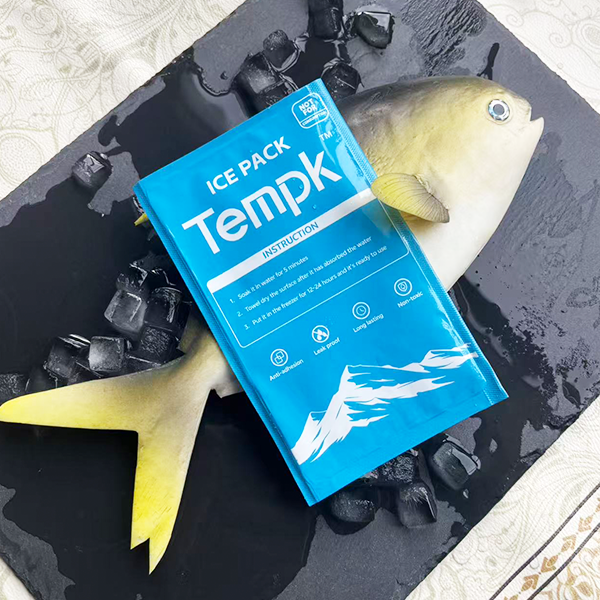
A Scale-Up Framework for Bulk Dry Ice Pack for Flowers Packaging
The decision to buy bulk dry ice pack for flowers packaging should come after a packout can be explained, prepared, tested, and reproduced. Here, the term describes a dry-supplied hydration sheet that absorbs water and is frozen before packing. It is not solid carbon dioxide. Bulk volume magnifies every unresolved detail: an unclear product name, variable hydration, crowded freezer, shifting sheet, mixed flower tolerance, wet carton, or undocumented material change. This framework uses staged gates so procurement, packaging, quality, and operations approve the same system before quantity creates momentum.
Stage One: Write a Requirement Dossier
A useful requirement dossier is short enough to use and specific enough to prevent assumptions.
Begin with the flowers. List species or commercial groups, identify chilling-sensitive and ethylene-sensitive items, describe maturity and hydration state, and define mixed-load restrictions. Record whether stems travel wet or dry, how they are precooled, and how long they are exposed during assembly.
Define the arrival outcome. Include acceptable flower appearance, firmness, opening behavior, moisture condition, carton strength, and freedom from crushing. Add the temperature conditions approved by your postharvest or quality team, but do not let one air-temperature value stand in for flower quality.
Describe the route as a sequence: packing, staging, transport, transfers, inspection, delivery, and receiving. Note orientation changes, likely warm exposure, unattended periods, and nearby ethylene sources. Include normal and justified delay conditions.
Finally, describe the packaging platform: carton, insulation, closures, liners, supports, usable internal space, flower orientation, and removal method. These inputs form the design boundary for the coolant sheet.
Stage Two: Lock the Product Definition
The sourcing specification should say what the product is and what it is not. A water-activated sheet differs from solid carbon dioxide, a prefilled gel pack, and a formulated phase-change pack.
Request a controlled description of:
- dry dimensions, cell count, and seam geometry;
- outer and absorbent construction at a functional level;
- hydration method, drainage, and safe handling;
- dimensional change and expected condition after activation;
- freezer orientation and separation;
- permitted cutting or folding;
- defect and rejection signs;
- packaging, lot identification, and storage;
- disposal or controlled-reuse instructions;
- supplier change-notification requirements.
Identify critical-to-function characteristics. A sheet's color may be irrelevant, while cell placement may determine whether it fits a retention pocket. Cosmetic wrinkles may be harmless, while a weak seam can release absorbent material or change water distribution. The specification should direct attention to functional risk.
Keep an approved reference linked to the written specification. Do not rely on a photograph alone because thickness, wetting behavior, seam strength, and materials cannot be confirmed visually.
Stage Three: Screen the Packout for Opposing Risks
Every candidate configuration should be examined for both warming and excess local cold.
Place the sheet outside a protected flower bundle or behind a designed separator. Retain it so normal handling cannot move it onto petals. Evaluate the sheet in the orientations the carton may experience. A long box carried upright presents a different movement pattern from a pallet kept horizontal.
Map likely thermal extremes. A point beside the sheet may be the coldest; a far corner or closure may be warmest. Dense stems can block airflow. A wet pack may conduct heat differently from a dry one. Monitor points that answer these design questions rather than placing sensors symmetrically for appearance.
Inspect moisture paths. The hydrated sheet, cold surfaces, flower respiration, and external humidity can create condensation. Determine whether water reaches petals, sleeves, labels, tapes, or corrugated walls. Check the carton after exposure and handling, not immediately after packing.
Include mechanical outcomes. Look for bent stems, bruised heads, compressed bunches, shifted inserts, and difficult unpacking. A thermally acceptable design that damages flowers is not acceptable.
Choose Representative Loads
Do not screen only the easiest carton. Select meaningful extremes: low and high flower density, vulnerable cultivars, different stem lengths, and wet or dry handling where applicable. The goal is not to test every possible bouquet. It is to cover the variables most likely to change heat flow and damage risk.
Stage Four: Turn Preparation into a Production Process
The sheet's cooling mass is created at your facility, so hydration and freezing belong in the production plan.
Map material flow from dry receiving to frozen release. Protect dry sheets from water, contamination, compression, and mix-ups. At hydration, define water source, batch size, contact method, drain method, operator acceptance, and lot segregation. Avoid forceful handling that can damage cells or seams.
Study normal process variation. Have different trained operators prepare sheets from representative lots. Observe cell expansion, surface water, dimensions, handling, and defects. Select an appropriate release check based on the product and risk. Any internal target should be documented as local process evidence, not marketed as a universal specification.
Freezer readiness needs its own study. Review starting condition, rack pattern, airflow, batch heat load, door openings, concurrent inventory, and recovery. A large volume of hydrated sheets can overwhelm a process that worked for samples. Release frozen sheets only through a demonstrated rule.
Line-side control completes the flow. Limit exposure, identify sheet format and lot, and prevent uncontrolled refreezing or return. An unused sheet requires a defined disposition rather than being placed wherever space is available.
Stage Five: Test the Complete System
A staged test program can move from comparison to confidence.
First, compare layouts under controlled conditions. Use the real carton, insulation, flowers, barriers, and preparation method. Remove designs that show obvious gradients, cold damage, moisture problems, or movement.
Next, challenge the preferred layout with a route-relevant ambient sequence. Include staging and handoff conditions that materially influence risk. Document the payload, sheet preparation, quantity, placement, sensor positions, ambient exposure, and acceptance criteria.
Then run an operational pilot. Normal staff prepare, freeze, pack, release, transport, and receive the system. Record deviations and workload. This stage tests whether the written process survives reality.
Finally, conduct controlled route confirmation. Compare observed exposures and flower arrival with the assumptions. A successful result supports the stated configuration and lane family; it does not approve all flowers, seasons, or routes.
| Release question | Minimum decision evidence | Owner |
|---|---|---|
| Is the flower requirement clear? | Assortment, sensitivity, departure, and arrival criteria | Postharvest or quality |
| Is the sheet controlled? | Specification, instructions, approved reference, and lot identity | Procurement and quality |
| Is the packout balanced? | Hot/cold mapping, moisture, movement, and flower inspection | Packaging |
| Can the site prepare bulk volume? | Hydration, freezer, staging, labor, and reject pilot | Operations |
| Does route evidence apply? | Documented profile, representative payload, and exceptions | Logistics and quality |
| Can production stay equivalent? | Incoming checks, supplier change control, and trend review | Supplier quality |
The table makes ownership explicit. Bulk release should not depend on packaging engineering alone while operations has not tested the freezer, or on procurement alone while flower criteria remain undefined.
Stage Six: Release the Supplier, Not Only the Product
Supplier capability is demonstrated through consistent production and transparent communication.
Review how the supplier controls materials, seams, dimensions, cell layout, contamination, packaging, and lot identity. Ask what characteristics are checked and how nonconforming production is handled. Confirm that samples used in trials represent the proposed bulk construction.
Examine performance evidence carefully. A duration statement has limited value without the complete package, payload, preparation, ambient profile, sensor locations, and success criteria. Another customer's test or a different commodity cannot approve your flowers.
Agree on change control. Functional changes to outer layers, absorbent material, cell fill, seam process, perforation, size, or transport packaging should be notified and assessed. Define the complaint process and information exchange. Retained samples and lot records can shorten investigations.
If dual sourcing is important, qualify alternate products through the same framework. Similar appearance is not equivalence.
Stage Seven: Scale Economically and Responsibly
The unit price of a dry sheet is one line in a broader cost.
Include inbound storage, hydration labor, water handling, freezer capacity, racks, line-side containers, separators, insulation, pack time, rejects, shipment weight, flower loss, replacement delivery, disposal, and any return process. Use your own observed data rather than a supplier's generic savings claim.
Sustainability should use the same system boundary. Dry inbound format may reduce transported water mass. Local activation and freezing add resources. Reuse can help in a controlled loop but adds collection, cleaning, inspection, loss, and return transport. Open consumer routes may require a clear single-trip disposal plan.
Right-sizing is often the strongest improvement. Assign packouts by flower and lane risk instead of using the maximum coolant and insulation everywhere. Reduce material only after confirming that temperature distribution, moisture, and structural protection remain acceptable. Preventing flower loss and avoiding needless packaging are complementary when the packout matrix is evidence-based.
Stage Eight: Keep the Released System from Drifting
Create a controlled bill of materials and packout image for every approved family. Define who can change the flower group, sheet, count, separator, carton, insulation, hydration method, freezer pattern, route, or receiving instruction.
Before the first full production wave, audit one lot from receiving through hydration, freezing, line staging, packing, dispatch, and receipt. Compare actual behavior with the approved instructions. Check that identifiers survive wet and frozen handling, that workers cannot confuse similar sheet sizes, that freezer status is visible, and that held material has a defined location. Observe shift handoffs and the last cartons in a batch, not only the first carefully prepared units. Practical gaps often appear as inaccessible labels, ambiguous release markers, unsuitable wet-work containers, or unclear authority to stop the line.
Include receiving in that audit. Confirm that the package opens without pulling the sheet across flower heads, moisture remains managed, and arrival condition can be scored consistently. Follow used sheets and other packaging into their actual return or disposal route. A process that is controlled only up to dispatch is incomplete, and bulk volume makes downstream design mistakes more difficult to correct.
Monitor a small set of useful indicators: incoming defects, hydration rejects, freezer holds, pack deviations, temperature exceptions, condensation, sheet movement, carton damage, flower-quality issues, and complaints. Link them to supplier lot, preparation batch, packout version, flower group, and route when feasible.
Investigate mechanisms rather than symptoms. Warm arrival may result from precooling, staging, insulation, route delay, or incomplete sheet preparation. Cold marks may result from contact or a shifted separator. Wilt may involve water status rather than coolant. Petal drop can signal ethylene exposure. Correct the identified cause and confirm the change before broad release.
Periodic review should also consider forecast and capacity. A packout that remains technically suitable can become operationally unstable when volume exceeds hydration or freezer capability.
Set a deliberate review point after major seasonal peaks. Compare the forecast with actual material use, frozen-sheet availability, operator deviations, flower mix, and route exceptions. Ask whether the approved packout family still covers the orders being shipped or whether informal variants have appeared. Review open supplier complaints and confirm that temporary substitutions were closed. This post-peak review converts unusual operating pressure into useful evidence and prevents emergency practices from becoming the unexamined method for the next season.
Frequently Asked Questions
When is a bulk order ready to place?
Place the production order when product identity is controlled, representative packouts have been screened, bulk preparation capacity has been piloted, supplier characteristics are agreed, and release responsibilities are clear. Commercial timing should not substitute for unresolved evidence.
Can the supplier specify how many sheets every carton needs?
The supplier can propose a starting layout based on information you provide. Final quantity and placement depend on flower sensitivity, payload, insulation, ambient exposure, route, and acceptance criteria. The buyer should confirm the complete packout.
What is the difference between a component test and a packout test?
A component test examines sheet characteristics under defined conditions. A packout test evaluates the sheet with flowers, insulation, barriers, closures, and ambient exposure. Only the latter addresses the intended packaging system, and its conclusions remain limited to tested conditions.
How should bulk production be compared with the sample?
Use the agreed specification and functional characteristics: dimensions, cell layout, seams, construction, activation behavior, handling, and packaging. Include lot-linked production samples and incoming checks. Appearance alone is insufficient.
Can the sheet be reused in flower packaging?
Only if the specific product instructions and your route support safe collection, cleanliness, inspection, traceability, water retention, refreezing, and rejection. Open-loop consumer delivery may make controlled reuse impractical. Evaluate the whole return system.
Conclusion
Scaling a flower coolant sheet is a sequence of controlled decisions. Define the living payload, lock the water-activated product identity, design against both warm and cold damage, prove hydration and freezer capacity, test the whole route, release the supplier, and keep changes visible. Bulk buying is justified when the production process and flower-quality evidence are ready to grow together.
About Tempk
Bulk flower-packaging conversations with Tempk begin with the buyer's coolant-sheet format, operating process, and route. Within that scope, we can help structure questions around preparation flow, carton geometry, representative sampling, and production-scale review. We do not assume one configuration fits every species, density, or lane. Buyers should provide their flower requirements, insulation, equipment constraints, and acceptance process so a proposed starting point can be evaluated conservatively.
Share your requirement dossier and planned bulk workflow with Tempk to discuss samples and a controlled scale-up review.
Wholesale Dry Ice Pack for Pharmaceutical Shipping Checklist
Wholesale Dry Ice Pack for Pharmaceutical Shipping: A Requirements-Led Sourcing Framework
Buying a wholesale dry ice pack for pharmaceutical shipping is defensible only after the item is named correctly and its role is limited correctly. Tempk's hydration dry ice pack is a water-activated sheet that is frozen and used as a coolant. It is not solid carbon dioxide, is not UN1845 dry ice, and cannot inherit the temperature capability of that ultra-cold refrigerant. It also is not a complete shipping system. A strong sourcing program links the exact sheet to a medicine's approved conditions, a tested insulated packout, a reproducible preparation process, and controlled supply.
The first deliverable is a decision statement
Before samples arrive, the cross-functional team should be able to complete this sentence:
We are evaluating this hydration coolant sheet as one component of a passive packout for a defined payload, distribution route, and temperature acceptance requirement.
Every phrase matters. "One component" prevents the sheet from being treated as an already qualified shipper. "Defined payload" forces the team to address mass, dimensions, presentation, and freeze sensitivity. "Distribution route" brings staging, handovers, delay, and seasonal exposure into scope. "Acceptance requirement" ties the study back to authorized product information and quality-approved criteria.
If the team instead starts with "We need packs that stay cold for three days," the requirement is incomplete. Cold can mean several different conditions; three days may exclude packing and receiving dwell; and no ambient challenge, insulation, or payload has been named. A vendor cannot responsibly turn that sentence into a guaranteed sheet count.
The decision statement also makes it easier to stop an unsuitable evaluation. A water-based frozen sheet may be a candidate for some chilled or cool applications when engineered into the right packout. It should not be presented as a substitute for solid carbon dioxide where the payload requires an ultra-cold or deeply frozen environment. For a product that must not freeze, frozen-sheet contact and initial conditioning deserve particular attention. Those boundaries can save more time than another round of quotations.
Create three records before approving volume
A scalable program can be organized around three living records rather than a pile of disconnected datasheets.
Record 1: the shipment requirement
This record belongs to the pharmaceutical shipper. It states the product's authorized transport limits, relevant stability or excursion pathway, payload configurations, route modes, seasons, total process time, delay assumptions, monitoring expectations, and receiving method. Quality should approve the acceptance criteria; packaging and logistics should translate them into testable operating conditions.
Use realistic boundaries. Include the smallest and largest routine payloads if both will use the packout. Describe whether product starts at a controlled condition, whether a parcel can wait before pickup, and when receiving staff are available. Identify cold exposure as well as heat exposure. A winter delivery van or aircraft apron can challenge a packout differently from summer heat.
Record 2: the component dossier
This record identifies the exact hydration sheet. It can include the supplier and model, revision, cell layout, dry dimensions, product-specific activation method, construction information appropriate to the application, packaging state, lot coding, intended reuse status, inspection guidance, and relevant supporting documents.
The dossier should distinguish characteristics from claims. "Water-activated cell sheet" is a component description. "Maintains medicines for a stated duration" is a system performance claim that needs a complete test context. "Not solid carbon dioxide" is a material distinction. "No transport requirements apply" would be too broad because other contents and routes may be regulated.
The dossier should also define change notification. Dimensions, outer layer, absorbent material, seam design, manufacturing method, and labeling can influence preparation or use. A change is not automatically harmful, but it should not arrive unnoticed after the sheet is embedded in an approved packout.
Record 3: the qualified operating configuration
This record connects the requirement to the component. It fixes the insulated shipper, sheet quantity and position, conditioning, barriers and dunnage, payload arrangement, monitor placement, closure, labeling, and test profile. It contains the thermal study and the warehouse-ready packing instruction. Approved alternates should be named; everything else is a change.
Relevant references may help structure the evidence. WHO guidance for time- and temperature-sensitive pharmaceutical products addresses shipping-container qualification, route profiling, and transport monitoring. EU GDP guidance expects required product conditions to be maintained during transportation. ISTA 7E provides thermal profiles for parcel-delivery package testing, and ASTM D3103 provides a method for evaluating thermal insulation performance. None of these references turns a generic sheet into a universally compliant product. The configuration and its intended use remain specific.
What the supplier proves and what the shipper proves
Confusion over responsibility is a major source of weak claims. The supplier is best placed to control component identity and manufacture. The shipper is best placed to define the pharmaceutical product, route, packout, and quality decision. Some evidence requires collaboration.
| Question | Supplier contribution | Pharmaceutical shipper contribution | Joint output |
|---|---|---|---|
| Is this the approved sheet? | Model, revision, specification, lot identity | Receiving and release controls | Traceable component identity |
| Can staff prepare it consistently? | Exact activation and handling instructions | Site equipment, work method, training, checks | Reproducible prepared condition |
| Does it fit the package? | Dry and prepared format information | Insulation, payload, barriers, closure | Defined physical packout |
| Does the system protect the product? | Samples and relevant component data | Acceptance criteria, protocol, testing, quality approval | Qualified configuration |
| Can supply scale without drift? | Production controls and change notification | Supplier oversight and incoming inspection | Controlled wholesale supply |
| Is reuse or disposal appropriate? | Model-specific intended use and material information | Hygiene, return loop, local waste rules | Approved lifecycle instruction |
The right-hand column cannot be outsourced through a purchase order. Likewise, the shipper should not try to infer supplier material or process controls from appearance. A good commercial relationship makes the boundary explicit and shares the information needed at the interface.
Evaluate the sheet in the order operators will touch it
Laboratory qualification can fail in routine use if development ignores preparation. Walk through the component from receiving to disposal.
Receive it dry. Verify the model, lot, quantity, packaging condition, and protection from unwanted moisture. Compare critical visible or dimensional attributes with the approved specification. Place unexplained substitutions or damaged cartons on hold.
Hydrate it deliberately. Follow the exact model's instructions. Define the activation container, water exposure, handling, fully hydrated appearance, exterior-water handling, and inspection for incomplete cells or leakage. During development, prepared mass may be recorded to understand consistency, but acceptance criteria should be technically justified rather than copied from another sheet.
Freeze it as a load, not as an individual sample. Demonstrate the actual rack, tote, spacing, batch size, and freezer recovery conditions. A large stack can hide incomplete conditioning. Identify prepared inventory by status, and prevent sheets from freezing together in a way that invites damaging handling.
Stage it within a controlled window. The thermal process does not wait for the courier clock. Set rules for removal, assembly, quality checks, dispatch, and what happens when collection is late. If a frozen sheet is returned to the freezer after staging, define whether and how it may be released again.
Place it exactly. Flexible cells can cover surfaces efficiently, but that freedom can create variation. Illustrations should show orientation, folds, barriers, payload gaps, and monitor location. A frozen coolant surface directly against a freeze-sensitive secondary package can create a local risk even when a central air sensor looks acceptable.
Inspect at receipt. The consignee should know the delivery window, required checks, data retrieval process, and quarantine route. Remaining ice is a useful observation but not proof of product acceptability. Disposition should follow the approved temperature and stability process.
Design the test to challenge a decision
A chamber run is useful when it answers a preapproved question. "See how long it stays cold" is not specific enough. A stronger protocol asks whether the proposed configuration maintains defined criteria for stated payload extremes under a justified ambient profile, including an appropriate delay allowance.
Document at least the following:
exact sheet model and production lot;
activation and conditioning procedure;
prepared sheet arrangement and count;
insulated package model and closure;
representative payload or approved simulant;
minimum or maximum payload case being challenged;
all starting conditions;
ambient profile and its route rationale;
sensor type, calibration status, interval, and map;
predefined acceptance criteria;
deviations from the protocol;
raw data, analysis, and conclusion.
The study should look for both warm and cold extremes. Sensors near coolant-facing surfaces, likely thermal bridges, corners, and the payload center answer different questions. If the product is freeze sensitive, merely showing an average internal temperature can conceal local damage risk.
Standard profiles can improve comparability. Lane data can improve relevance. Field shipments can verify execution. These evidence types complement one another; none should be described as a guarantee against every future event. The quality team should decide how much evidence is proportionate to product risk, route variability, and the organization's governing requirements.
Practical example: the quotation that cannot be compared
Imagine procurement receives three wholesale offers. Supplier A quotes a low price per dry sheet. Supplier B offers a thicker prepared sheet and states a long cooling duration. Supplier C provides a clear model specification and activation method but makes no general duration claim.
At first, Supplier B appears strongest. The team asks for the test basis and learns that the duration came from a different insulated box with an unspecified payload and a constant ambient condition. Supplier A cannot confirm whether the production film and cell pattern will match the sample. Supplier C provides lots for evaluation, component documents, and a change-notification proposal, but the shipper must perform its own packout study.
The team does not select solely on marketing language. It creates the same test configuration for technically suitable samples and compares preparation consistency, seam integrity, fit, local cold risk, and thermal results. It also estimates hydration labor, freezer capacity, receiving inspection, and potential custom-version controls.
This hypothetical exercise may still lead to any of the three suppliers after missing evidence is resolved. The important result is that procurement converts unlike claims into comparable evidence and total process cost. A cautious supplier is not necessarily less capable; sometimes it is simply stating the correct component boundary.
Scale-up is a controlled transfer
Moving from sample cartons to wholesale supply changes the operating environment. More sheets are hydrated at once. Freezer loads become dense. Multiple lots are stored together. More operators pack under time pressure. A second site may use different equipment. The approval plan should challenge these scale effects rather than assume that the laboratory method expands linearly.
Conduct a production-representative pilot. Observe preparation throughput, water handling, sheet separation, freezer loading, staging, assembly time, error modes, and waste. Confirm that routine staff can execute the instruction without verbal coaching from the development engineer. Verify that labels and status controls remain legible when materials are cold or wet.
Then connect supply controls to the qualified state:
Purchase by exact approved item and revision.
Require lot-level identity and agreed documents.
Inspect incoming material using risk-based attributes.
Segregate old and new revisions during transitions.
Assess supplier, packout, payload, route, or site changes before use.
Trend component complaints and temperature deviations for signals.
Review the system periodically and after significant operational events.
This lifecycle does not need to be bureaucratic. Its purpose is to prevent quiet drift between the configuration that passed and the one being packed months later.
Make sustainability a design question
The hydration format provides a specific logistical feature: sheets can be held dry and flat before activation. Whether that reduces environmental impact depends on the reference system and the rest of the lifecycle. Activation requires water and freezing. More coolant can increase shipping weight or outer size. Reuse may require return transport, inspection, cleaning, and loss replacement. Product loss from thermal failure can dominate small packaging differences.
Define a comparison per successful, accepted delivery. Include the coolant, insulation, outer packaging, inbound freight, preparation, freezer energy, outbound dimensions and weight, recovery loop, damage, and end of life. Use product-specific material information and destination waste rules. Do not label the entire system recyclable because one layer might be recyclable, and do not label it reusable unless the exact sheet and operating loop support repeated controlled use.
Sustainability and quality are not opposing goals. Reducing avoidable overpacking, selecting an efficient configuration, preventing product loss, and managing a viable return loop can serve both. The evidence should remain as disciplined as the thermal claim.
FAQs
What wording should appear on the purchase specification?
Use "water-activated frozen coolant sheet" along with the exact Tempk product model, revision, cell layout, and other approved attributes. Avoid relying on "dry ice pack" alone because it can be confused with solid carbon dioxide. Include preparation-document references, packaging and lot-identification needs, and change-notification expectations as appropriate.
Can a hydration sheet be used for products labeled for refrigerated transport?
It can be evaluated as a coolant component, but suitability is not established by the label "refrigerated" or by the sheet alone. The complete insulated packout must be designed and tested for the product's exact authorized limits, freeze sensitivity, payload, duration, ambient profile, and operating process.
Does the sheet need dangerous-goods dry ice labeling?
The hydration sheet is not solid carbon dioxide or UN1845 dry ice, so those particular dry-ice requirements do not describe the sheet. The classification and transport requirements of the complete consignment still need review because the pharmaceutical or biological contents, mode, and destination may introduce other obligations.
Which supplier document proves pharmaceutical compliance?
No single component document proves that a finished shipment complies with every pharmaceutical distribution requirement. Supplier specifications, material information, lot records, and change controls support component assurance. Qualification of the complete packout, operating procedures, monitoring, records, and quality oversight support the intended pharmaceutical use.
How should a stated hold time be assessed?
Request the insulated package, coolant count and conditioning, payload, starting conditions, ambient profile, sensor locations, acceptance range, and test report. The duration is meaningful only within that context. If your route or configuration differs, use the information as background rather than as a transferable guarantee.
Conclusion: approve a chain of evidence
The strongest wholesale decision is not approval of a sheet in isolation. It is approval of a chain: correct product requirement, exact coolant identity, reproducible conditioning, defined packout, justified thermal evidence, trained execution, traceable supply, and managed change.
Tempk's hydration dry ice pack can contribute flexible frozen-water cooling within that chain. Its name should never blur the distinction from carbon-dioxide dry ice or imply universal pharmaceutical performance. When each party proves the part it controls and the joint packout is tested as used, wholesale purchasing can support both efficiency and quality.
About Tempk
Tempk supplies water-activated hydration coolant sheets for integration into insulated cold-chain packouts. We help buyers identify the exact sheet format, understand product-specific activation, and obtain component information for engineering and procurement review. We do not treat a loose coolant sheet as a qualified pharmaceutical shipping system or equate it with solid carbon-dioxide dry ice. Your product limits, payload, route, insulation, and operating controls remain essential inputs to selection and testing.
Send Tempk your proposed packout requirements and request matching samples before approving volume. We can discuss component fit and documentation while your packaging and quality teams establish system performance.
Supplier Dry Ice Pack for Pharmaceutical Logistics: Approval
Five Gates for a Supplier Dry Ice Pack for Pharmaceutical Logistics
Before approving a supplier dry ice pack for pharmaceutical logistics, pass the proposed component through five gates: identity, product requirement, packout evidence, operational reproducibility, and lifecycle control. The first gate prevents a dangerous naming error. Tempk's hydration dry ice pack is a water-activated frozen coolant sheet; it is not solid carbon dioxide or UN1845 dry ice. The other gates prevent an equally important technical error: treating a coolant component as though it were a complete, universally qualified shipping system. Approval should attach to an exact configuration and controlled process for a defined medicine and route.
Gate One: Establish the Exact Coolant Identity
Names such as dry ice pack, ice blanket, gel sheet, and phase-change pack are used inconsistently across the market. A procurement record needs more precision. Identify the product by code, revision, construction, cell layout, dimensions, activation method, intended conditioning state, and supplier-approved handling method.
For a Tempk hydration sheet, water is added before freezing. That distinguishes it from a prefilled gel pack, a rigid PCM plate, and carbon dioxide. Each alternative places different demands on storage, preparation, packaging geometry, and staff. Carbon dioxide also introduces hazards and transport controls that should not be transferred to a non-CO2 sheet simply because of a similar name.
The reverse is just as important. A non-CO2 coolant should not be assumed to replicate the temperature or sublimation behavior of solid dry ice. It does not acquire deep-frozen performance from the trade term. Any required temperature range and duration must be shown in the proposed insulated packout.
Write the identity into the specification and training materials. If a carrier, packer, quality reviewer, or receiver could reasonably mistake the component for carbon dioxide, improve the wording. Clear identity supports correct handling, accurate declarations, useful risk assessment, and meaningful comparison between suppliers.
Gate Two: Convert the Medicine and Lane Into a Testable Brief
The coolant cannot define the target. Start with approved product information and the organization's quality requirements. Document the acceptable temperature limits, product presentation, sensitivity to freezing or other environmental conditions, payload range, and any justified excursion process.
Then map the lane. A route is more than the scheduled transit time. Include warehouse staging, loading, local collection, hubs, airport or border handling, customs, final delivery, and receipt. Consider both warm and cold seasons where relevant. Identify credible disruptions and the maximum delay the packaging design is expected to cover. Unlimited contingency is not a test condition; it is a sign that operational controls also need work.
The result should be a shipping requirement that engineers and suppliers can interpret in the same way. At a minimum, it should answer:
Which exact product limits govern the shipment?
What are the minimum and maximum payload presentations?
Which outer carton and insulation are fixed, and which are still candidates?
What starting conditions apply to the medicine, coolant, and shipper?
Which ambient exposures represent the intended distribution environment?
Where are the likely hot and cold spots?
How will temperatures be monitored and excursions assessed?
Which steps must be feasible at every packing location?
Avoid defaulting to a familiar pharmaceutical temperature band. Many medicines use common labeled conditions, but no single band applies to all products. Good distribution practice centers on maintaining the conditions authorized for the specific medicine.
Gate Three: Demand Evidence for the Full System
A hydration sheet absorbs heat as its frozen water warms and melts. Insulation slows heat transfer. The payload adds thermal mass. Gaps, seams, contact points, and headspace shape temperature gradients. None of those elements works independently in a real parcel.
This system behavior creates two failure directions. Too little cooling or excessive heat ingress can raise product temperature. Direct contact, overpacked coolant, or an unsuitable conditioning state can drive a local product position below its lower limit. The strongest coolant loading is not necessarily the safest.
Ask for enough context to interpret any thermal claim:
exact coolant product and quantity;
hydration and conditioning method;
insulation material and complete container construction;
payload type, mass, arrangement, and starting temperature;
ambient temperature profile and duration;
probe type, calibration, placement, and attachment;
product or air temperature measured;
predefined acceptance criteria;
deviations and complete results, not only a summary graph.
WHO guidance treats a passive shipping system as a combination of insulated material and temperature-stabilizing media and emphasizes qualification of both shipping container and route. EU good distribution practice similarly expects the defined product conditions to be maintained in transport and uses route risk assessment to determine appropriate controls. ISTA thermal profiles and ASTM package-test methods can provide legitimate frameworks, but their names should never replace a review of the actual test.
Use a decision ledger
| Decision gate | Green signal | Caution signal | Stop signal |
|---|---|---|---|
| Identity | Exact product and revision are controlled | Generic family name used in early discussion | Carbon dioxide and hydration sheet are confused |
| Product and lane | Approved limits and credible route profile are documented | Some handover or payload data remain open | Generic temperature target is assumed |
| Thermal evidence | Exact packout passes an approved, relevant protocol | Supplier report supports development only | Hold time is claimed without test context |
| Operations | Sites can reproduce activation, conditioning, packing, and monitoring | Pilot reveals manageable training gaps | Required freezer or process capability is absent |
| Lifecycle | Lot traceability, change review, continuity, and deviations are controlled | Agreements are still being completed | Silent substitution or untraceable stock is accepted |
The ledger makes uncertainty visible. A caution signal is not automatically a rejection; it is a prompt for development or additional evidence. A stop signal identifies a misconception or control failure that should be corrected before price, volume, or schedule drives the project forward.
Gate Four: Prove That Operations Can Reproduce the Packout
Laboratory success can be undermined at the packing bench. Hydration sheets create specific process steps: dry storage, activation with water, drainage, freezer conditioning, prepared-inventory management, inspection, placement, and disposal or controlled reuse. Every step should be feasible under normal throughput.
Run a production-representative pilot before scale-up. Use intended operators, freezers, racks, hydration stations, work instructions, product cartons, loggers, and staging areas. Watch what actually happens. Do sheets stick together in the freezer? Do cells expand into space reserved for the payload? Can staff see when hydration is uneven? Is there a controlled place for draining? How long are conditioned sheets exposed while a packout waits for a missing item?
The pilot should challenge the written instruction. If trained staff interpret an orientation photograph differently, improve it. If a folded sheet moves during simulated distribution, add a controlled restraint or revisit the geometry. If minimum and maximum payloads require different coolant layouts, make the variants unmistakable rather than asking operators to exercise informal judgment.
Instrumentation also has to work operationally. A temperature data logger records conditions; it does not protect the medicine. Confirm its range, accuracy, calibration, interval, start logic, placement, and data-retrieval process. Decide who reviews the data, what constitutes an alert or excursion, and how product is held pending quality assessment. A receiver should not release or reject medicine simply because a coolant sheet feels frozen or thawed.
Practical example: the packout that passed but could not scale
Imagine a development engineer prepares hydration sheets individually, freezes them flat with ample separation, and assembles a successful thermal study. The program then moves to a busy regional depot. Operators hydrate multiple sheets together, stack them while wet, and load a crowded freezer. Some cells condition unevenly and several sheets adhere to one another. To keep dispatch on schedule, staff separate them by bending the frozen seams and place whatever remains intact into the shipper.
The test report has not become false; the routine process has become different. The organization responds by pausing scale-up, mapping freezer capacity, defining rack spacing, clarifying hydration batches, establishing readiness and damage criteria, and repeating a representative pilot. Qualification may need to be supplemented if the controlled routine method differs from the original study.
The lesson is wider than hydration sheets. A qualified design is useful only when the operating network can reproduce it.
Gate Five: Control Supply From First Lot to Final Use
Bulk purchasing introduces variation over time. The commercial description and the qualified component specification should point to the same item. Product code, revision, cell pattern, permitted tolerances, materials, seam configuration, packaging, labeling, and intended use status need appropriate control.
Lot traceability supports investigations. Incoming inspection can verify identity, visible integrity, dryness or other storage condition, labeling, dimensions, and documentation according to risk. Sampling plans and acceptance criteria should be established by the buyer's quality system rather than invented during receipt.
Change notification is a critical supplier question. Altering film, absorbent media, cell geometry, seam process, manufacturing location, or packing method may affect water uptake, expansion, strength, or thermal behavior. The buyer needs enough advance information to assess impact and determine whether document updates, trials, or requalification are warranted.
Continuity planning should avoid uncontrolled substitution. A backup coolant sheet may look similar but differ in mass distribution or geometry. Preassess alternatives where supply risk justifies it, and document what comparability testing would be required. Expediency does not make two components technically equivalent.
Finally, manage the component after delivery. Dry sheets need protected storage. Prepared sheets need controlled conditioning and inventory status. Reuse, if proposed and supported for the chosen format, needs defined return, cleaning, inspection, rehydration, performance, and retirement rules. Without that system, "reusable" is an aspiration rather than an operational claim.
Procurement Economics Beyond Unit Price
Flat dry supply can be attractive because unactivated sheets occupy less volume than some prefilled coolant formats. That advantage should be evaluated alongside the work transferred to the packing site. Total operational fit includes water handling, drainage space, freezer energy and capacity, racks, labor, prepared-inventory buffers, quality controls, training, and rejected components.
Price comparisons should use the approved packout, not one sheet versus one rigid pack. The configurations may require different quantities, insulation, preparation, or shipping mass. They may also create different risks of delay or process error. A procurement decision becomes more defensible when cost is linked to a configuration that has met thermal and operational requirements.
Ask commercial questions as variables unless the supplier has provided verified answers: minimum order quantity, production lead time, packaging quantities, custom-print implications, forecast commitments, sample terms, and contingency support. Do not let an attractive custom feature enter the qualified system without a technical reason and a controlled specification.
Receiving, Excursions, and Periodic Review
The cold chain does not end when the courier marks a parcel delivered. Receiving instructions should cover inspection for damage or leakage, prompt transfer to approved storage, logger handling, record retention, and escalation. If the parcel arrives late or the monitor alarms, the product should be managed under the organization's excursion procedure.
An excursion is a quality decision informed by product-specific stability data, exposure history, instrument information, and approved procedures. The coolant's appearance cannot settle it. Neither can an unqualified assumption that a brief deviation is harmless.
After launch, review actual performance. Look for recurring delay points, packing deviations, damaged sheets, hydration variability, monitoring alarms, seasonal differences, complaints, and supplier changes. Lane verification and trend review can show whether the original risk assessment remains representative. Major changes to product, payload, coolant, insulation, packing site, route, or equipment should trigger a documented impact assessment.
Frequently Asked Questions
What is the first document to request from the supplier?
Start with a controlled product specification or equivalent technical description for the exact sample offered. It should distinguish the hydration sheet from carbon dioxide and identify the configuration, materials, dimensions, cell layout, activation, conditioning, inspection, and revision. Thermal reports are useful only after you can confirm that they apply to that exact component.
Can one qualification cover different medicines?
Only if the organization has a scientifically and procedurally justified bracketing or platform approach that covers each medicine's limits, presentation, payload, and risk. A packout that protects one product does not automatically protect another, even when both are called refrigerated. Quality approval should define the permitted product and configuration scope.
Should coolant sheets be conditioned at the same temperature for every packout?
No universal conditioning instruction should be assumed. Conditioning affects the coolant's starting state and cold-side risk. Follow the supplier's technical information during development and the exact method established by the qualified packout. If the method changes, assess the impact before routine use.
What supplier changes deserve notification?
Changes to material composition, absorbent structure, cell size or count, seam design, dimensions, manufacturing process or site, product code, labeling, packing, and handling instructions may be relevant. The quality agreement or purchasing controls should define notification expectations and allow the buyer to assess impact before changed product enters a qualified process.
How do we know whether reuse is worthwhile?
Evaluate achieved return rate, cleaning and inspection feasibility, rehydration behavior, physical integrity, thermal consistency, traceability, reverse logistics, and disposal. Reuse must preserve the qualified configuration and be controlled by procedure. A sheet's ability to refreeze is not, by itself, a sufficient lifecycle assessment.
Conclusion: Approval Is a Chain of Evidence
The five gates create a practical approval chain. Identify the coolant correctly. Define the medicine and lane. Test the complete packout. Prove the packing sites can reproduce it. Then control lots, changes, continuity, receiving, and review.
This approach lets a hydration sheet be judged on its real strengths, such as flat dry storage and flexible cell geometry, without turning those features into unsupported pharmaceutical claims. The best supplier relationship is one in which assumptions are exposed early and evidence remains attached to the exact system that will be used.
About Tempk
Tempk supplies cell-based hydration coolant sheets that are activated with water and frozen before use in insulated cold-chain packouts. We can help pharmaceutical logistics buyers compare layouts, clarify handling steps, and prepare component samples for system-level development. Our contribution should sit inside the customer's approved product, route, qualification, and quality framework. Tempk does not treat the phrase "dry ice pack" as proof of UN1845 identity, a universal temperature range, or route performance; those points must be defined and demonstrated for the exact application.
Share your medicine's approved limits, payload range, shipper design, lane profile, and packing-site capabilities with Tempk. Use those inputs to request a focused sample plan and the technical information needed for qualification review.
Supplier Dry Ice Pack for Fruit Shipping: Approval Plan
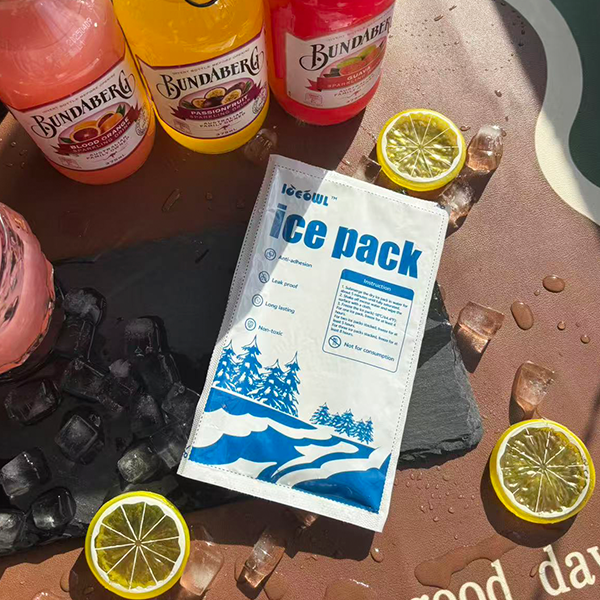
Supplier Dry Ice Pack for Fruit Shipping: From Requirement to Approved Packout
Before approving a supplier dry ice pack for fruit shipping, write down what the receiver must be able to accept. That simple reversal prevents a coolant feature from becoming the design brief. Tempk's hydration dry ice pack is a flat, water-activated coolant sheet that is frozen before packing. It is not solid carbon dioxide and is not Dry Ice, UN1845. Its value depends on the complete insulated assembly and the operating process around it. A sound approval route works backward from fruit condition at receipt through route exposure, package design, preparation, supplier evidence, and production controls. The output is a controlled packout, not a promise attached to one component.
Define a Shipment That Can Be Accepted Without Guesswork
Start at the receiving door. What will the receiver inspect, measure, record, and do next? If the answer is unclear, neither the thermal engineer nor the supplier knows what success means.
An acceptance definition may include fruit identity, variety or maturity where relevant, package condition, visible moisture or leakage, pulp-temperature method, logger review where used, appearance, firmness, and the time allowed before transfer to the next controlled environment. It may also include a later quality observation when chilling injury or ripening behavior cannot be judged immediately.
Do not borrow a temperature range from another fruit. USDA postharvest guidance organizes storage and handling information by commodity because cold tolerance is not uniform. Some fruits risk freezing injury near a frozen surface; chilling-sensitive fruit can be damaged without actually freezing. The approved range and quality criteria should come from the responsible postharvest, food-safety, customer, or quality authority for the specific product.
The acceptance rule needs a decision owner. A driver should not invent a disposition after seeing a logger alarm, and a receiver should not discard fruit solely because a coolant sheet has thawed. A thawed sheet can coexist with an acceptable payload, while a sheet that still feels frozen does not prove that all fruit locations stayed within limits. Define who reviews the evidence and what happens to conforming, questionable, and rejected shipments.
This receiving contract exposes hidden requirements. If a consignee cannot retrieve a logger, the monitoring plan must change. If fruit will ripen for several days after arrival, delayed injury may matter. If cartons are opened outdoors, that event belongs in the distribution cycle rather than outside the model.
Use Decision Gates Before Requesting a Bulk Quote
A bulk order should pass a sequence of gates. The gates keep teams from spending time on detailed price negotiation while product identity, fruit fit, or pack-line feasibility remains unresolved.
| Approval gate | Question that must be answered | Minimum decision record | Reason to stop or redesign |
|---|---|---|---|
| Intended outcome | What condition must this specific fruit meet at receipt and afterward? | Commodity profile and acceptance criteria approved by the owner | No agreed cold and warm limits, or no receiving method |
| Product identity | What is inside the proposed sheet, and how is it activated and transported? | Construction description, safety information, and confirmation of the actual coolant type | Product confused with solid carbon dioxide or formulation unclear |
| System fit | Can the activated sheet fit without crushing fruit, blocking needed ventilation, or making uncontrolled contact? | Packout drawing with internal dimensions, barriers, payload bands, and sheet locations | Sheet moves, covers critical openings, or contacts fruit outside the design |
| Intended food use | Does documentation cover the exact contact scenario and destination market? | Reviewed supplier declaration and supporting scope | Generic "food grade" language with no material or use conditions |
| Performance evidence | Does the complete assembly meet the defined criteria under representative challenges? | Controlled thermal report and justified route trial | Only stand-alone coolant data or unrelated package results |
| Operational control | Can normal shifts hydrate, freeze, inspect, pack, trace, and stage it consistently? | Line trial, work instruction, training, freezer-capacity check, and deviation process | Process depends on improvisation or cannot support peak volume |
| Supply continuity | Will production match the approved sample, with traceability and notice of critical change? | Purchase specification, inspection plan, lot controls, and change agreement | Tolerances, lot identity, or change notification remain undefined |
The table is deliberately ordered. Excellent thermal results cannot cure an unresolved food-contact scope, and a strong laboratory packout cannot cure a preparation process that fails during peak production. A stop signal does not necessarily reject the sheet; it tells the project team which assumption must be resolved before moving forward.
Design for Opposing Failures, Not One Worst Case
Cold-chain discussions often describe a single "worst case," usually a hot ambient route and long delay. Fruit packages usually have at least two opposing worst cases.
The warm-risk case may combine a high ambient challenge, long dwell, warm starting components, maximum heat leakage, and a payload arrangement that leaves exposed surfaces. The cold-risk case may combine fully frozen sheets, a low ambient period, minimum fruit load, large coolant-to-product ratio, and direct or near-direct contact. One packout can pass the first and fail the second.
Payload bracketing is therefore essential. A maximum load may contain more product heat and reduce internal airflow. A minimum load may warm rapidly because it has less mass, yet fruit next to a coolant face may cool too far. If orders have multiple sizes, define which configurations are distinct and which can be represented by justified boundaries.
Starting condition belongs in both cases. A shipment design intended to maintain precooled fruit should not quietly become the process for warm fruit from the packing floor. Removing field heat and holding a product through distribution are different duties. If the coolant has to perform both, test that scenario explicitly rather than assuming spare capacity.
Mechanical events should be connected to thermal risk. Drop and vibration can move a flexible sheet, open a gap at an insulation joint, collapse a spacer, or redistribute fruit. Compression and moisture can weaken a carton. Use physical-distribution tests suited to the transport mode, then assess whether the conditioned package still preserves the intended coolant separation and closure.
ISTA Standard 7E can provide thermal parcel profiles, and ASTM D3103 can support evaluation of thermal insulation performance under controlled external exposure. They help create repeatable tests; they do not supply the fruit limits or turn a component into a qualified system. Write the test question first, then select the method and profile that answer it.
Treat sensor placement as a search for disagreement
Do not place every sensor near the center and expect to understand the package. Select positions that are likely to disagree:
fruit nearest a coolant face;
fruit farthest from coolant;
a corner or closure region;
the geometric core;
top and bottom locations when orientation or convection matters;
ambient exposure outside the package.
Air temperature and fruit pulp temperature answer different questions. Surface and core fruit can also respond at different rates. The test plan should state what each sensor represents, its calibrated accuracy, sampling interval, attachment method, and how missing or implausible readings are handled.
Turn the Supplier Sample Into a Controlled Material
The approved sample must become a specification that production can reproduce. A photograph and a product name are not sufficient. Multi-cell sheets can vary in dry dimensions, cell geometry, seam position, permeable construction, absorbent content, film, printing, and packaging. After activation, those differences can influence fit, hydration, freezing, flexibility, and leak risk.
Create a critical-attribute list based on actual failure modes. If the sheet must fold across a particular seam, seam location and cell dimensions are critical. If it is separated from fruit by a narrow divider, activated thickness and tolerance may be critical. If each unit must be associated with a shipment, lot-code legibility after hydration and freezing may be critical.
The incoming-inspection plan should distinguish attributes the buyer can check from those controlled by the supplier. Packers can inspect punctures, open seams, contamination, gross dimension, cell layout, and lot marking. Composition and manufacturing-process controls require supplier records and agreements. Sampling frequency should follow risk, lot history, and the buyer's quality system rather than an arbitrary universal rule.
Ask for safety and intended-use documents for the exact order code, not a related family. In the United States, FDA food-contact authorizations and limitations are tied to the substance and intended conditions; some notifications are also specific to the named manufacturer or supplier. In the European Union, Regulation (EC) No 1935/2004 provides the general food-contact framework, and plastic materials may have additional requirements under Regulation (EU) No 10/2011. The relevant review depends on whether the sheet can touch fruit, touches only a closed primary package, or remains behind a functional barrier.
Transport classification requires a separate document check. Solid carbon dioxide is Dry Ice, UN1845 and can trigger dangerous-goods provisions, particularly by air. A hydrated water-based sheet is not converted into carbon dioxide by freezing. Still, the shipper should review the exact formulation, safety data, carrier policy, mode, and destination rather than declare status from a common product label.
Finally, define change control. Film source, absorbent system, cell layout, seal process, manufacturing site, or declared intended use may change an approved assumption. The supplier should notify the buyer of agreed critical changes before shipment so the buyer can assess documentation, fit, safety, and the need for retesting.
Make the Pack-Line Trial a Qualification Stage
Preparation is manufacturing performed at the fruit packer's site. The dry sheet becomes a hydrated, frozen coolant through local work, so the local process deserves formal evaluation.
Hydration must have a visible endpoint
An instruction such as "soak until ready" invites shift-to-shift variation. Identify the water source, vessel, loading pattern, observable cell condition, drain step, temporary storage, and action for cells that do not activate normally. Keep prepared material protected from contamination.
Freezing must be demonstrated at production density
A few sheets laid flat in an empty freezer do not represent a peak dispatch. A large batch can restrict airflow, lengthen preparation, and produce uneven states. Trial the normal rack, spacing, batch size, door activity, and release method. Establish how operators distinguish ready material from material still in process.
Assembly must be hard to misread
Use a visual work instruction that names the exact enclosure, fruit load, tray or primary pack, divider, sheet orientation, void control, closure, and optional logger position. If sheets may be cut, identify the permitted seam and prohibit cutting through cells. If several approved configurations exist, make them visibly distinct.
Deviations need a route
Operators need a decision for a torn sheet, uneven hydration, questionable freeze state, missing divider, late carrier, warm incoming fruit, or wrong order size. "Ask a supervisor" can be part of the escalation, but the supervisor also needs approved choices. Quarantine, rework, alternative packout, delayed dispatch, and rejection should be defined where relevant.
The line trial should measure labor and capacity as well as temperature. Record hydration space, freezer occupancy, sheet handling, condensation, packing time, error opportunities, cleaning, and material waste. These results affect cost and continuity. A lower sheet price can be offset by a process that needs more freezer expansion, labor, or rework.
Build Evidence in Layers
The strongest approval file does not rely on one spectacular test. It uses different evidence for different decisions.
Component evidence identifies construction, activation behavior, dimensions, seals, safety information, and intended-use scope. It helps determine whether a sample is worth system testing.
Bench fit work confirms that hydrated and frozen sheets fit the enclosure and preserve fruit space, barriers, closure, and ventilation. It is inexpensive and should happen before a thermal chamber study.
Controlled thermal studies test defined warm and cold challenges with representative minimum and maximum loads. The report should identify every component, starting condition, sensor, ambient profile, deviation, raw trace, and acceptance criterion.
Physical-distribution work evaluates whether handling alters the protective arrangement. It may include tests appropriate to parcel, pallet, or other transport hazards.
Monitored route trials add actual handovers, dwell, orientation, vehicle conditions, and receiver actions. They should use predetermined acceptance rules and capture ambient or event context needed to explain the result.
Ongoing verification checks whether the approved state persists. Periodic monitored shipments, seasonal review, complaint investigation, incoming trends, and post-change testing can be selected according to risk.
This layering also clarifies a supplier's test report. Supplier evidence can reduce development uncertainty if it describes a relevant system. It cannot replace the buyer's approval when the buyer uses different fruit, load, insulation, route, barrier, preparation, or criteria.
Practical Example: Approving a Citrus Gift Carton
Imagine a packing company wants a flexible hydration sheet for premium citrus gift cartons. The commercial team wants one packout for several carton sizes and year-round delivery. Instead of asking suppliers for a fixed duration, the project team starts with the receiving outcome.
The fruit specialist defines appropriate commodity and quality limits for the relevant citrus varieties and notes that cold injury may depend on product history and exposure. The operations team maps the time from sheet release through carrier pickup, network handling, residential delivery, and expected unpacking. Procurement sends candidate suppliers the internal carton dimensions, minimum and maximum loads, current insulated liner, barrier concept, and destination markets.
Bench work reveals that one sheet geometry folds neatly in the full carton but buckles into the fruit space in the smaller carton. The team does not force standardization. It revises the small-carton layout and creates a separate visual instruction.
Controlled studies cover warm exposure and a cold-risk case with the smaller payload. Sensors are placed beside the barrier, in the core, near the closure, and in representative fruit. The review includes carton strength after condensation and a later fruit-quality check. Monitored route trials then challenge normal and delayed receiving.
At the same time, a production batch is hydrated and frozen during a peak simulation. The freezer can support the full-carton plan, but the line needs different racks for the smaller folded sheet. Procurement includes activated fit, cell layout, seam location, lot marking, incoming inspection, and change notification in the purchase specification.
No universal coolant duration emerges from this hypothetical project. What emerges is more useful: two defined packouts, an evidence file, a pack-line method, receiving criteria, and a rule for reviewing future changes.
Keep the Approved State Alive
Approval is a starting point for routine control. Link fruit lot, packaging configuration, sheet lot, preparation batch or status, pack date, route, and monitoring record where required by the program. The amount of detail should fit the risk and any applicable traceability duties, but it must be sufficient to investigate a failure.
Trend outcomes by failure mechanism rather than putting every complaint under "temperature." Warm fruit at receipt may come from high starting temperature, incomplete closure, missing coolant, long dwell, or insufficient insulation. Local cold injury may come from a shifted sheet, missing spacer, minimum payload, or an unapproved configuration. Leakage may originate in incoming seals, cutting, puncture, packing pressure, or reuse damage.
Define requalification triggers. A new fruit variety, maturity profile, carton, liner, sheet construction, payload band, carrier network, route duration, packing site, freezer process, or acceptance criterion can affect applicability. Not every change needs a full program, but every material change needs a documented assessment.
Cost review should use delivered performance, not sheet price alone. Include inbound component freight, dry storage, activation labor, water, freezer capacity, pack-line space, insulation, barriers, monitoring, loss, deviations, and disposal or return handling. Avoided fruit loss can be included only when supported by program data.
Environmental review needs the same system boundary. Flat dry storage can reduce inbound volume and weight before hydration, but freezing energy, material use, fruit loss, reuse logistics, return rate, and local end-of-life routes also matter. For European-market packaging, assess the applicable requirements and timing of the Packaging and Packaging Waste Regulation with qualified advisers. Do not translate one material attribute into a broad sustainability claim.
Frequently Asked Questions
What should an RFQ for hydration coolant sheets include?
Include fruit type and condition, approved acceptance criteria, primary package, internal insulated-package dimensions, payload bands, route and season, expected handovers, sheet placement concept, direct or indirect contact, destination markets, activation and freezer capabilities, monitoring plan, intended reuse model, projected ordering needs, and the evidence you want reviewed. Frame unknowns as questions rather than invented specifications.
How does a hydration sheet compare with a pre-filled gel pack or rigid ice brick?
A hydration sheet stores flat before activation and can provide flexible multi-cell coverage. A pre-filled gel pack reduces the buyer's activation work, while a rigid brick can offer stable geometry and simple placement. None is universally superior. Compare usable payload space, preparation, freezer process, contact risk, leakage controls, reuse, fit, and complete-packout test results for the intended fruit and route.
Can a supplier's thermal report eliminate buyer testing?
It can be valuable when the tested enclosure, coolant, preparation, payload, starting condition, sensor map, ambient profile, and acceptance criteria closely represent the intended shipment. Differences must be assessed. Most buyers still need fit work and route-relevant verification because their fruit, operating process, carrier handling, and receiving conditions are not identical to a supplier's demonstration.
Does putting fruit in a bag remove food-contact concerns?
It can change the contact scenario, but the actual barrier must be defined and maintained. Consider whether the sheet can shift, leak, or contact the bag exterior and whether contents could reach food if damaged. Review material documentation for the intended configuration and market. The primary package itself also needs to be suitable for its food-contact use.
When should an approved packout be reviewed again?
Review it when fruit characteristics, payload, enclosure, sheet, barrier, assembly, preparation, freezer operation, carrier, lane, season, receiving process, regulatory scope, or acceptance criteria change. Also review adverse trends and unexplained excursions. A documented risk assessment can determine whether the response is a paper review, focused verification, or broader requalification.
Conclusion: Approve the Packout, Then Control It
A reliable supplier dry ice pack for fruit shipping begins with accurate product identity and ends with a controlled operating state. The Tempk hydration format is a water-activated frozen sheet, not solid carbon dioxide. It can offer flexible coverage and efficient dry storage before activation, but those attributes do not establish fruit safety, a temperature range, or a duration.
Work backward from receiving criteria. Challenge both warm and cold failures, bracket payloads, review intended food use and transport status, and test the complete insulated assembly. Convert the successful sample into a purchase specification and a pack-line process, then preserve it with lot control, change assessment, route verification, and meaningful deviation data. That is how procurement, operations, and quality turn a coolant component into an approved fruit-shipping solution.
About Tempk
Tempk provides water-activated hydration coolant sheets in flexible multi-cell formats for integration into insulated shipping arrangements. The dry sheets are prepared with water, frozen, and positioned around or alongside a payload according to the packout design. For fruit projects, we can review proposed cell layout, package fit, preparation workflow, and sourcing requirements using the commodity, payload, route, and enclosure information you provide. Thermal performance and fruit suitability should be established for the complete configuration through representative testing and controlled operating instructions.
Send Tempk your receiving criteria, fruit profile, packout dimensions, route map, and expected order range. We can help you select a candidate sheet format and organize the questions your team should close before approval.
Manufacturer Dry Ice Pack for Vegetable Transport Framework

Manufacturer Dry Ice Pack for Vegetable Transport: From Commodity Brief to Factory Release
A manufacturer dry ice pack for vegetable transport is worth sourcing only when the component fits a defined postharvest system. Tempk's hydration dry ice pack is a water-activated frozen sheet, not solid carbon dioxide and not UN1845 dry ice. The sheet can distribute frozen-water cooling across an insulated packout, yet it cannot choose a safe condition for cucumbers, leafy greens, peppers, sweet potatoes, or a mixed basket. A publishable specification must connect commodity tolerance, starting pulp temperature, route heat, airflow, moisture, food-safety status, sheet preparation, and manufacturing consistency.
Write a commodity brief before a coolant specification
The commodity brief is the buyer's most important technical input. It prevents the sheet manufacturer from being asked to solve questions that belong to postharvest biology, the shipper's food-safety plan, or the distribution route.
Name the vegetable precisely. Cultivar and maturity may matter when they influence chilling or market life. State whether it is intact, washed, trimmed, cut, bagged, or otherwise processed. Processing can change both heat transfer and food-safety requirements. A cut leafy product should not be treated as if it were an intact head simply because both are vegetables.
Describe the starting condition. Include the intended pulp temperature at packing, the precooling method, time between harvest and cooling, and the way that condition will be verified. A hydration sheet should not be given the unplanned job of pulling field heat from warm produce while also protecting the parcel against external heat.
Then define the acceptable outcome. Temperature is one part. Appearance, texture, water loss, pitting, discoloration, decay, carton strength, and remaining marketability may also be relevant. Chilling injury can appear after the product returns to warmer conditions, so an immediate arrival inspection may be insufficient.
The brief should state the route from packing to receipt, including:
order-picking and dispatch dwell;
vehicle or parcel mode;
cross-docks and transfers;
seasonal hot and cold exposure;
possible delay and failed delivery;
customer receiving hours;
storage or display after arrival.
These facts determine whether frozen sheets are a reasonable candidate. They also show when vehicle refrigeration, stronger insulation, a different phase-change material, or another logistics control deserves comparison.
Use a compatibility gate before requesting samples
The first technical decision is not sheet size. It is whether ice-based cooling can coexist with the commodity's cold tolerance.
Fresh vegetables remain living tissue. They respire, release heat, lose moisture, and respond to temperature history. Some tolerate conditions near their freezing point; others suffer chilling injury at warmer, nonfreezing conditions. USDA, FAO, and commodity-specific postharvest guidance document that chilling may cause pitting, discoloration, water-soaked areas, abnormal ripening, off-flavors, physiological deterioration, and increased decay. Risk depends on crop, cultivar, temperature, duration, and prior exposure.
A frozen sheet can start below 0°C at its surface. As its retained water melts, ice phase change provides substantial thermal capacity, but the package does not become uniformly fixed at one temperature. Direct contact, a folded double layer, a thin carton wall, or a compressed corner can create a local cold spot. A center air sensor may not see that boundary.
Pass the compatibility gate only when the design has a credible way to manage:
direct-contact risk;
chilling risk over the complete exposure time;
airflow around respiring produce;
condensation and free water;
the intended starting pulp condition;
food-contact and hygiene requirements.
The output can be "evaluate with a defined barrier," "use only in a separated chilled compartment," or "do not use frozen-water coolant for this route." A no-go decision is valuable engineering, not a failed sales process.
Separate the jobs of precooling, insulation, and coolant
Three functions are often collapsed into the word "cold chain."
Precooling removes field heat or process heat before distribution. The correct method depends on the commodity and may use forced air, water, vacuum, room cooling, or another controlled process. It establishes a suitable starting condition.
Insulation slows heat exchange with the environment. It cannot create cooling, and its weak points may include seams, lids, corners, liner overlaps, and compressed areas.
Coolant stores finite cooling capacity. In a hydration sheet, the retained water warms and melts as it absorbs heat. The measured heat of fusion of pure ice is about 333.5 joules per gram, which helps explain the role of frozen mass. It does not predict package duration without actual prepared mass, starting conditions, insulation heat leak, produce heat, respiration, ambient exposure, and acceptance limits.
Assigning each job correctly improves both design and troubleshooting. If the core of a carton is warm at the beginning, adding wall sheets may overcool the outside before correcting the center. If a lid is the dominant thermal bridge, more coolant on the base may not solve the late warm spot. If winter ambient exposure causes chilling, frozen coolant may be counterproductive even when the same packout works in summer.
Turn the hydration sheet into a controlled item
Once compatibility is plausible, the manufacturer specification can be built. Use the exact Tempk model or custom drawing rather than the family term "dry ice pack." Identify the cell pattern, dry dimensions, revision, packaging configuration, lot coding, activation instruction, and component documentation required by the buyer's quality and food-safety systems.
The specification should resolve several interfaces:
Activation interface
Which surface or construction allows water uptake? What procedure applies to this exact model? How is full activation recognized? How are partially hydrated cells, exterior water, contamination, or visible leakage handled? If prepared weight is used as a process check, its range needs product-specific justification.
Freezer interface
How are sheets arranged so that a production batch freezes consistently? What prevents them from sticking together or being damaged during separation? How is status shown? What equipment performance and staging rules are needed at each packing site?
Packout interface
Where does the sheet sit, fold, or wrap? Which vents must remain open? Is a barrier mandatory? Does hydrated thickness reduce payload space or compress produce? How is the sheet retained during vibration and inversion?
Supply interface
Which attributes are inspected by the manufacturer and the buyer? How are nonconformities handled? How will a film, absorbent material, seam, drawing, process, label, or production-site change be communicated? Does a custom item require a preproduction sample before each relevant revision?
These interfaces are more useful than a generic promise of long cooling. They convert a flexible material into a reproducible input.
Compare factory offers with a claim-boundary review
Use the same questions for every candidate so attractive but incomplete claims do not dominate.
| Supplier statement | Boundary to clarify | Decision-quality evidence |
|---|---|---|
| "Food grade" | Exact model, materials covered, intended contact and conditions | Applicable product-specific declaration or test documentation |
| "Reusable" | Intended number is not assumed; hygiene and integrity conditions matter | Exact-model instructions plus buyer's return and inspection process |
| "Leakproof" | Conditioning, test method, sample, and defect criteria | Relevant integrity report and production inspection control |
| "Long lasting" | Insulation, payload, sheet count, ambient profile, start conditions, acceptance band | Complete test report for a defined configuration |
| "Customizable" | Dimensions, cell pattern, layers, printing, tolerances, revision | Controlled drawing and approved production sample |
| "Suitable for vegetables" | Which commodity, package, route, and quality criteria | Buyer-led packout trial with representative produce |
| "Eco-friendly" | Materials, functional comparison, lifecycle stages, local end of life | Narrow documented claim supported by system data |
The purpose is not to demand a certificate for every commercial phrase. It is to stop a component fact from expanding into a system guarantee. A material test can support one row; route thermal performance belongs to a different evidence set.
At this stage, compare total operating fit as well as unit price. Dry sheets use little prepared storage space before activation, but the site needs water, labor, drying or draining, freezer racks, energy, frozen storage, and status control. A custom format may improve carton coverage while creating a supplier lock-in or more complex change management. A reusable design may have no economic value on a one-way route.
Build one trial around likely failure modes
A useful trial does more than demonstrate that the inside becomes cold. It challenges the ways the proposed system could damage or fail to protect the vegetable.
Start with representative produce, packaging, mass, and starting pulp condition. Use minimum and maximum payloads if both are routine. Include the exact inner bags, vents, pads, carton, liner, sheet, barriers, and closures. Document the freezer preparation and time from sheet removal to package closure.
Select an ambient challenge with a route rationale. ISTA 7E can be relevant to parcel-delivery thermal packaging, and ASTM D3103 can support evaluation of thermal insulation performance. Refrigerated truck or pallet distribution requires appropriate airflow, loading, and lane considerations. Codex guidance for fresh fruit and vegetable transport emphasizes avoiding chilling and freezing injury through proper equipment and loading.
Place sensors to locate gradients. Include positions near frozen cells, at likely insulation weaknesses, and in the thermal center. Sensor model, calibration, recording interval, attachment, and data processing should be suitable for the question. An air trace and a produce-pulp trace are not interchangeable.
After the challenge, evaluate:
hot and cold time-temperature exposure;
condensation and any sheet leakage;
vent obstruction and internal arrangement;
carton wet strength and deformation;
bruising or abrasion;
weight loss where relevant;
commodity-specific chilling or freezing symptoms;
decay, color, texture, and marketability over an appropriate observation period.
Run enough replicates and seasonal or configuration challenges to support the risk decision; the required program depends on product value, variation, route, and governing system. Do not convert a screening run into a universal duration claim.
Practical example: bell peppers through a parcel network
Imagine a grower-packer wants to deliver bell peppers to specialty retailers by parcel during warm months. The peppers arrive at the packing line after an approved precooling process. The buyer is considering a 12-cell hydration sheet because its geometry fits the carton wall, but it has not established direct-contact suitability or duration.
The commodity brief identifies two competing risks: warm exposure can increase water loss and shriveling, while excessive cold can produce chilling injury depending on time and temperature. The first prototype places frozen sheets against two carton walls. Mapping shows cold boundary locations beside the sheets and a warmer area near the lid. Immediate peppers look acceptable, but the team retains samples for later quality observation.
A second prototype uses a controlled spacer, moves part of the coolant toward the lid bridge, and preserves carton vents. The team repeats the same starting conditions and route profile. It compares temperature gradients, condensation, pitting, decay, color, texture, and carton integrity. It may then select the buffered design, adjust the insulation, or reject the frozen sheet for that lane.
This hypothetical project does not prove a universal pepper packout. It demonstrates a disciplined decision: define the biological trade-off, find thermal gradients, and verify quality after the event. Manufacturer samples become useful evidence only inside that method.
Transfer the approved packout to production
The best prototype can fail when preparation scales. Conduct a production-representative run before the bulk release. Use the normal crew, water station, freezer load, order schedule, and staging area. Observe whether workers interpret hydration readiness consistently, whether sheets freeze as arranged, whether barriers and vents remain correct, and whether the carton closes without force.
Convert the result into visual instructions. Show the exact item, activation, acceptable and rejected appearance, freezer arrangement, staging status, fold or orientation, barrier, sensor or indicator location where used, closure, and exception route. Keep revision control visible.
Multi-site operations need a transfer assessment. An upright freezer at a depot may not reproduce a packhouse walk-in freezer process. Water handling and batch size may differ. Verify prepared condition and assembly at each site rather than treating identical written instructions as identical execution.
Receiving also belongs to the transfer:
schedule delivery when trained staff are available;
check closure, crushing, moisture, and visible condition;
measure or retrieve temperature information according to the plan;
keep remaining ice as an observation, not an acceptance proof;
quarantine uncertain product;
route decisions to authorized food-safety or quality personnel;
record recurring deviations by route and configuration.
Once released, protect the configuration through incoming inspection, lot traceability, complaint review, and change assessment. The tested system should not drift quietly because a new sheet "looks close enough."
Evaluate reuse and environmental impact honestly
The dry-flat format may reduce inbound storage volume compared with prepared coolant. That is a concrete logistical attribute. Environmental superiority, recyclability, and reuse benefit are broader conclusions that need evidence.
Define the comparison as one accepted delivery of a stated vegetable payload. Include the sheet and other packaging, inbound transport, hydration, freezer energy, outbound package dimensions and weight, return logistics, cleaning, loss and damage, product waste, and destination disposal. A lower-material packout that causes more rejected produce is not an improvement.
Confirm that the exact sheet is intended for reuse. Then design identification, recovery, inspection, hygiene, storage, and retirement. A restaurant-return tote loop may support those controls; a consumer parcel may not. Local recycling and waste options matter because multilayer constructions and absorbent contents may not enter standard film streams.
Use cautious claims that match measured boundaries. "Stored dry and flat before activation" is more defensible than "green packaging." "Recovered and reused in our controlled local loop" is better than an unsupported lifetime promise.
FAQs
What information should a vegetable buyer send the manufacturer?
Provide the exact commodity and presentation, starting pulp condition, precooling process, carton and liner dimensions, vents, insulation, payload range, route timeline, seasonal exposure, cold and warm limits, moisture concerns, contact restrictions, and intended reuse. This lets the manufacturer discuss physical sheet fit without guessing the postharvest requirement.
Is solid carbon-dioxide dry ice involved?
No. Tempk's hydration dry ice pack is activated with water and frozen. It does not consist of solid carbon dioxide, does not sublime into carbon dioxide gas, and should not be expected to create the ultra-cold conditions associated with UN1845 dry ice. Use exact terminology in specifications and training.
How many hydration sheets should be placed in a carton?
There is no universal count. It depends on retained water, conditioning, insulation, payload heat, respiration, starting temperature, package geometry, route exposure, duration, and the commodity's cold tolerance. Engineering calculations can screen options, but representative packout testing must establish the approved number and position.
Can a manufacturer's food-contact document replace a transport trial?
No. Material or food-contact documentation addresses defined composition or intended-contact questions. It does not show that vegetables remain within quality or safety criteria during a route. Thermal, moisture, physical-handling, and produce-quality performance require evidence from the complete configuration.
Why should quality be checked after the package warms?
Chilling injury can remain hidden during cold storage and become visible after produce returns to warmer conditions. Depending on the commodity, symptoms may include pitting, discoloration, water-soaked tissue, abnormal ripening, or increased decay. A planned observation period can reveal damage that immediate arrival inspection misses.
Conclusion: release the system and the component together
Manufacturer selection should follow a sequence: define the vegetable, screen ice-based compatibility, separate precooling from transport cooling, control the hydration sheet, challenge likely failure modes, and prove production execution. The exact Tempk sheet can then be released as one controlled part of a commodity- and route-specific packout.
That approach protects against two costly errors: assuming all vegetables want the same cold condition and assuming a flexible frozen sheet carries its own hold time. Good sourcing preserves the physical component, the biological requirement, and the operational method as one evidence-backed decision.
About Tempk
Tempk produces water-activated hydration coolant sheets in multiple cell formats for use with insulated packaging. We can provide exact-model preparation information, discuss custom physical fit, and support component identification during manufacturer evaluation. These products are not solid carbon-dioxide dry ice, and their suitability depends on the vegetable, precooling, route, barriers, insulation, and finished packout. Tempk encourages representative testing before a custom or volume release so buyer and factory specifications describe the same item.
Send Tempk your commodity brief and packout drawing to identify a sample format for evaluation. Confirm production consistency and route performance before converting the trial into a manufacturer order.
Framework for manufacturer dry ice pack for vaccine delivery
A sourcing framework for manufacturer dry ice pack for vaccine delivery
Procurement should treat manufacturer dry ice pack for vaccine delivery as a high-risk terminology check, not a ready-made product category. Tempk's hydration sheet is activated with water and frozen. It is not solid carbon dioxide, is not UN1845 dry ice, and is not automatically a conditioned vaccine pack. That distinction is essential because vaccine requirements are product-specific, and many refrigerated vaccines can be damaged by freezing. The sourcing framework below begins with the approved vaccine label and governing program, then moves through system qualification, supplier evidence, implementation, and ongoing release. If a component cannot pass one stage, price and availability should not advance it to the next.
Stage 1: establish the governing requirement
Create a requirement file for the exact vaccine presentation and movement. It should include:
current product label and manufacturer instructions;
origin and destination storage conditions;
refrigerated, frozen, ultra-cold, or controlled-temperature state;
permitted transport duration and any approved excursion process;
diluent and ancillary-component instructions;
national immunization-program or health-authority requirements;
organizational SOP and quality ownership;
route, mode, handoffs, and receiving conditions.
Do not use a range borrowed from another vaccine. Many US vaccines are routinely refrigerated at 2°C to 8°C, but others are not, and product conditions may change after thawing or preparation. The requirement file should have a review date and accountable approver.
This stage also determines whether passive packaging is permitted. A powered portable vaccine refrigerator or freezer may be preferred. For planned non-emergency US facility transport, CDC's July 2026 toolkit recommends portable vaccine units, with qualified containers and packouts as an alternative when a portable unit is unavailable.
Stage 2: select the technology family
Only after Stage 1 can procurement classify the refrigerant.
Water-activated hydration sheet. A flexible, frozen-water component. It may be evaluated in a formal design but does not have inherent vaccine-system status.
Conditioned ice pack. A frozen water pack brought to a defined conditioned state for specified standard vaccine carriers and procedures.
Cool water pack. An unfrozen cool pack used in particular WHO/UNICEF settings to prevent freezing, with shorter cold life than a frozen pack.
Temperature-specific PCM. A phase-change component engineered and conditioned around a defined transition range. CDC notes commercially available PCMs between 4°C and 5°C for refrigerated vaccine transport, used according to manufacturer instructions within the required system.
Solid CO2. Actual dry ice for product-specific frozen or ultra-cold systems. It sublimates, requires vented packaging, and invokes applicable IATA dangerous-goods controls in air transport.
Reject equivalence by appearance. A flat water sheet is not the same as a rigid water pack listed for a WHO-prequalified carrier, and a product called "dry ice pack" is not carbon dioxide.
Stage 3: screen the applicable official guidance
For US providers, CDC's July 2026 toolkit says frozen gel packs and coolant packs from original vaccine shipments should not be used to pack refrigerated vaccines. Even conditioned or sweating packs can freeze vaccine. It also rejects food or beverage coolers and routine reuse of the manufacturer's original shipping container for planned non-emergency transport.
For WHO/UNICEF immunization programs, coolant selection depends on carrier design. Standard carriers use properly conditioned ice packs or cool water packs for freeze-sensitive vaccines according to program instructions. Freeze-preventive carriers use an internal barrier and are designed for frozen packs; conditioned or cool packs can reduce their cold life.
For air transport using solid CO2, IATA requirements include a package designed to release gas, correct UN1845 marking, proper shipping name, net dry-ice quantity, and Class 9 labeling under the applicable instruction. Carrier and state variations should be checked.
These rules cannot be blended into one global checklist. Record which guidance applies and why.
Stage 4: demand a complete evidence dossier
| Dossier section | Required content | Approval question |
|---|---|---|
| Component identity | Technical name, construction, dimensions, materials, activation, and intended state | Is this the permitted technology? |
| Quality controls | Lot coding, inspection, nonconformance, traceability, and change notification | Can production remain equivalent to the evaluated item? |
| System definition | Container, insulation, barriers, coolant quantity and placement, payload range, and closure | Is the configuration reproducible? |
| Thermal study | Warm and cold profiles, duration, sensors, raw data, deviations, and acceptance criteria | Does it protect against heat and freezing? |
| Operational procedure | Packing, conditioning, staging, monitoring, transport, receipt, and excursion response | Can sites execute the tested process? |
| Qualification status | Design, operational, and performance evidence with approvals | Does evidence cover this vaccine and lane? |
| Lifecycle controls | Verification frequency, complaints, changes, and retirement criteria | Will the approved state be maintained? |
The dossier makes missing evidence visible. A manufacturer is responsible for component information and controls. The system owner is responsible for qualification and approval. In some procurements, a packaging supplier may support both, but the accountability should still be explicit.
ISTA Standard 20 and ISTA 7E can structure insulated-shipping-container qualification and parcel thermal challenges. ASTM D3103 offers a method for testing thermal performance under variable ambient exposure. ISTA Pharma Committee guidance discusses operational qualification and performance qualification or verification. Use the method appropriate to the distribution system and document the rationale.
Stage 5: challenge the worst credible configurations
Qualification should test what is most likely to fail, not only the average shipment. Consider:
minimum payload, which may have less thermal mass;
maximum payload, which may restrict circulation or alter placement;
positions next to coolant and at warm corners;
approved delay and door-opening assumptions;
warm-season and cold-season exposures;
realistic component tolerances and conditioning;
transport orientation and handling where relevant;
receiving delay before controlled storage.
A sensor map should detect local cold and warm zones. The vaccine owner defines acceptance criteria based on approved instructions and stability information. If a low excursion occurs, do not average it with compliant sensors unless the protocol and product science explicitly justify that treatment.
System qualification should include process observation. A packout that passes only when one engineer prepares it slowly may fail at a clinic during a real transfer. Instructions, components, and checks should make correct execution practical.
Practical example: a refrigerated-shipper sourcing decision
Imagine a procurement team comparing two coolant proposals for a qualified refrigerated shipper. Proposal A is the currently approved temperature-specific PCM. Proposal B is a lower-cost water-activated sheet promoted as a "vaccine dry ice pack."
Proposal B provides material documents and a food-shipping demonstration but no vaccine-system thermal report. Its geometry also places frozen cells closer to the vial cartons. The team does not score it as an equivalent substitute. It records the evidence gap and keeps Proposal A for operational supply.
If engineering wishes to develop Proposal B, it creates a separate project: verify permitted technology under current guidance, define barriers, run warm and cold profiles with sensor mapping, evaluate minimum and maximum loads, qualify the operating process, and obtain quality approval. Commercial savings are considered only after technical feasibility. This fictional case illustrates disciplined sequencing.
Stage 6: qualify the manufacturer as a change partner
Manufacturing controls matter because a coolant is not static. Film, absorbent, seal parameters, cell dimensions, suppliers, and sites can change. The agreement should define notification timelines and which changes require buyer approval.
Audit or assess:
incoming-material control;
process instructions and training;
seal and dimensional checks;
activation or functional sampling;
equipment maintenance and calibration where relevant;
lot release and identification;
deviation, complaint, and corrective-action systems;
document control;
business continuity and alternate-supply governance.
Sample-to-production consistency should be demonstrated. A sales sample made on a development line cannot represent volume supply without appropriate evidence.
Customization deserves special control. Printing can obscure cut lines or lot marks; dimensional changes can alter fit; a new film can change handling. Treat customized variants as new configurations until the quality team documents equivalence or verification.
Stage 7: implement without weakening the qualified design
Training should cover the reason behind critical steps. Staff are more likely to follow conditioning and barriers when they understand freeze risk.
At packing:
Verify vaccine, quantity, container, coolant item, and procedure version.
Confirm component conditioning through the approved check.
Load coolant and barriers in the specified orientation.
Position the temperature-monitoring device as qualified.
Minimize storage-unit door opening and protect vaccine from light as required.
Close, identify, and secure the container.
Record the handoff and start monitoring as instructed.
During movement, protect the container from direct sunlight and unapproved vehicle locations. CDC advises using the passenger cabin rather than a trunk or truck bed for applicable vehicle transport because those areas may become too hot or cold.
At receipt, review the monitor, inspect the container, and transfer vaccine immediately to approved storage. Follow the excursion procedure before use if results are missing, alarming, or outside limits.
Stage 8: control changes, deviations, and sustainability
Create a change matrix covering vaccine presentation, payload, coolant, insulation, barrier, container, sensor, route, carrier, and procedure. Each change receives a documented impact assessment. The decision may be no action, focused verification, partial requalification, or full requalification.
Trend deviations by configuration and cause. Conditioning errors may call for training or a simpler system. Warm excursions on one lane may require service changes. Repeated leakage from a lot requires supplier investigation. Do not modify pack quantity informally while a root-cause review is open.
Sustainability comes after product protection but should be included in design. Compare material, inbound volume, activation water, freezing energy, outbound mass, reuse and refurbishment, return transport, disposal, and vaccine-loss risk. A hydration sheet's compact dry storage may be advantageous, but that attribute alone does not prove lower lifecycle impact.
Reusable systems need qualification across their intended life, inspection, cleaning or refurbishment where appropriate, traceability, and retirement criteria. A manufacturer's general "reusable" statement is insufficient for vaccine service.
Periodic review should connect supplier and shipment evidence. Confirm that recent lots match the qualified component, conditioning records remain acceptable, monitoring devices are managed under the quality system, and route assumptions still reflect operations. Review near misses as well as excursions: a pack prepared incorrectly but caught before use reveals a process weakness worth correcting. If performance drifts, pause informal adjustments and use change control to decide whether training, verification, or requalification is required.
The review should also reconcile physical inventory with approved documents. Retire superseded coolant revisions, quarantine unidentified packs, and verify that emergency kits contain the same components named in the current procedure. Practice the escalation path with a simulated delayed receipt so staff know who evaluates monitoring data and who contacts the vaccine manufacturer or immunization program. Readiness is demonstrated by correct decisions under pressure, not by the number of spare components on a shelf.
Frequently Asked Questions
Can procurement approve a coolant from a component data sheet?
No. The data sheet can establish identity and handling, but vaccine use requires the permitted technology, a defined complete system, thermal qualification, operational procedures, monitoring, and quality approval. Procurement should maintain the component document as one section of the evidence dossier.
Does a sweating frozen pack mean it is safely conditioned?
No. CDC's July 2026 toolkit warns that frozen gel or coolant packs may still freeze refrigerated vaccines even if conditioned or sweating. Use only the approved coolant and conditioning check from the qualified procedure.
Can original manufacturer shipping materials be reused?
CDC advises against using original distributor or manufacturer shipping containers for planned non-emergency transport. Their components were conditioned and placed for the original validated shipment, and that state may not be reproducible. Use a portable unit or qualified transport packout as applicable.
What is the role of a temperature logger?
It documents temperature during a movement and supports receiving and deviation decisions. It does not cool the vaccine or compensate for an unqualified packout. Device type, placement, limits, calibration support, and data review should be defined in the system procedure.
What should a manufacturer say about vaccine suitability?
It should describe only verified component facts and exact tested configurations. It should identify limitations and avoid claims of universal approval, compliance, or duration. Final suitability is determined by the vaccine owner under the current label, governing guidance, qualified system, and quality process.
Conclusion: sourcing follows qualification
The correct sourcing sequence is vaccine requirement, permitted technology, applicable guidance, complete evidence, thermal challenge, manufacturer control, implementation, and lifecycle review. Reversing that sequence creates pressure to make an available component fit a system it was never designed to serve.
Keep the names precise. A water-activated hydration sheet is not a conditioned vaccine pack by default and is not UN1845 dry ice. Product-specific qualification and disciplined operations – not a catalog phrase – protect vaccine potency.
About Tempk
Tempk supplies water-activated hydration coolant sheets and insulated packaging components for temperature-sensitive logistics. We can provide current component information and samples for formal evaluation, but we do not claim that a hydration sheet fits every vaccine or replaces a qualified packout. Vaccine owners must define the approved range and governing procedure, evaluate freeze and heat risk, qualify the complete system, and control monitoring and changes.
Bring Tempk a quality-approved component requirement rather than a generic vaccine request. We can then discuss whether a sample is appropriate for a controlled engineering review.