


Distributor Dry Ice Pack for Vegetable Packaging: Crop Plan
Distributor Dry Ice Pack for Vegetable Packaging: Crop Plan

A Crop-First Blueprint for a Distributor Dry Ice Pack for Vegetable Packaging
Treating all vegetables as one refrigerated payload is the fastest way to design the wrong package. A distributor dry ice pack for vegetable packaging should enter the process only after the crop, route, and carton are defined. Tempk's hydration dry ice pack is a water-activated frozen coolant sheet, not carbon dioxide or UN1845 dry ice. It can add flexible cooling surface inside an insulated packout, but it cannot choose a safe set point, remove unlimited field heat, regulate humidity, or prove food compliance. This blueprint connects produce physiology, carton zones, supplier evidence, and daily execution.
Step One: Write a Crop-and-Route Passport
Before requesting a sheet sample, prepare one page of facts for the shipment. The passport should name the vegetable, variety or commercial type where relevant, maturity, whole or fresh-cut state, primary packaging, starting condition, payload range, and required arrival quality. It should also identify chilling and freezing sensitivity, ventilation and humidity needs, and known incompatibilities within mixed loads.
Use commodity-specific postharvest information and the business's own quality specifications. USDA references make clear that chilling injury varies by commodity and can occur above the freezing point. Symptoms may emerge later, after the crop returns to warmer conditions. A package that looks cold at receipt can still shorten shelf life.
Add the route. Record each period outside controlled storage: staging, loading, carrier collection, hub transfer, border or airport dwell, final-mile vehicle, unloading, and receiving delay. Include relevant warm- and cold-season conditions and a credible disruption allowance. "Next day" is a service promise, not an ambient profile.
Finally, state the packing-site capability. Can staff hydrate and drain sheets hygienically? Is there enough freezer capacity at peak volume? Can prepared sheets be segregated by status? Does the line have room for a barrier or spacer? A product that fits the thermal theory but not the origin operation is not a scalable choice.
Step Two: Map the Carton as Thermal Zones
An insulated carton rarely has one uniform temperature. Lid joints, corners, walls, vents, and coolant interfaces behave differently. Vegetables near a broad frozen sheet may face a cold-side risk, while product near a seam or opening may warm first. Headspace and internal air paths can magnify the difference.
Sketch the packed carton from the top and side. Mark:
likely heat-entry paths;
vents that must remain open;
direct and indirect coolant contact;
delicate or chilling-sensitive produce;
high- and low-payload geometry;
potential sheet movement;
condensation collection points;
sensor locations for development trials.
The sketch turns sheet placement into an engineering decision. A flexible cell sheet can wrap or cover an area, but more coverage is not automatically better. Folding can create double coolant mass. Hydrated cells can expand into vent channels. A top layer can reduce radiant and convective heat entry while also overcooling the upper produce layer.
Use a defined barrier when development shows one is needed. The barrier's material, thickness, position, and moisture behavior become part of the controlled packout. A loose piece of cardboard inserted by an operator is not equivalent to a specified thermal buffer.
Step Three: Decide What the Sheet Must Prove
Distributor literature can establish what the component is and how it is intended to be prepared. It cannot establish your crop's quality after your route. Create an evidence plan that separates component questions from system questions.
| Evidence question | Best source or study | Acceptance decision |
|---|---|---|
| What exact sheet is offered? | Controlled product specification and drawing | Identity and sample-to-production control |
| How is it activated and conditioned? | Supplier instruction plus site trial | Repeatable preparation method |
| Is the contact boundary acceptable? | Exact material documentation reviewed for the intended market | Direct or indirect use approved by responsible specialists |
| Does it fit after hydration? | Bench check in the real carton | No crushing, blocked vents, or closure interference |
| Does the packout manage hot and cold locations? | Instrumented full-system thermal test | Product temperatures meet crop-specific criteria |
| Does produce retain acceptable quality? | Representative crop assessment, including delayed effects where relevant | Commercial quality criteria are met |
| Does the arrangement survive distribution? | Relevant vibration, shock, compression, and orientation testing | Coolant stays intact and in position |
| Can the line reproduce it? | Production-representative pilot | Process capability, training, and capacity are adequate |
This sequence prevents a common shortcut: asking a material document to answer a thermal question or asking a chamber graph to answer a food-contact question. Each claim needs the right kind of evidence.
When a distributor provides a hold-time statement, request the complete context. Sheet quantity, water activation, conditioning, insulation, payload, starting conditions, ambient profile, sensor map, duration, and acceptance limits all matter. If those conditions do not match the intended system, use the result to guide development rather than approve routine use.
Step Four: Protect Both Temperature Limits
Passive cooling is a balance, not a race toward the lowest temperature. The frozen water in a hydration sheet absorbs heat as it warms and melts. That thermal capacity can slow warming, while close contact can make nearby product colder than the carton average.
Design tests to find both extremes. Warm-side risks may occur near the lid, corners, or vent openings late in the route. Cold-side risks may occur beside a sheet, under a folded cell, or in a lightly loaded carton. Product temperature and air temperature should be distinguished because vegetable tissue changes more slowly than air.
Minimum and maximum payloads deserve deliberate study. A full carton has more thermal mass but may restrict airflow and leave less room for coolant. A small order can have more headspace and less buffering, increasing response to both frozen surfaces and ambient conditions. If the same packout cannot cover the range, create clear recipes rather than an informal rule such as "add another sheet when it is hot."
Warm-weather testing alone is insufficient where winter exposure can occur. Frozen coolant, a cold truck, and a sensitive commodity may combine into a cold-side failure. Seasonal packouts can be legitimate, but transition dates, weather triggers, component identities, and work instructions must be controlled so the correct recipe is used.
Step Five: Treat Water and Air as Design Inputs
Hydration adds water to the sheet, and vegetables release moisture through transpiration and respiration. Cold surfaces can collect condensation. The carton may therefore contain several interacting water sources.
Drain activated sheets as instructed and inspect seams before freezing. Keep prepared sheets off unsuitable surfaces. Design an indirect contact boundary when required, and prevent condensate from pooling against produce cartons or weakening the outer package. Labels and barcodes must remain readable through expected humidity.
Ventilation requires equal care. Vents can help remove heat during pre-cooling and support gas exchange, but they can also admit ambient heat. Covering them with a coolant sheet changes the packout. Sealing them to stop moisture may create an atmosphere or airflow problem for some crops. Test the actual vent pattern, liner, primary packaging, and sheet position.
Pre-cooling remains distinct from route buffering. Packing warm vegetables increases the thermal load and creates uneven cooling. Standardize the crop's starting condition using the appropriate commodity process. A passive coolant sheet should protect an established state, not be asked to rescue inconsistent upstream handling.
Practical Example: One Carton, Two Failure Directions
Imagine a vegetable distributor ships cucumbers in an insulated carton during a warm season. A hydration sheet is placed on top and another along one side. The first trial shows that central product remains in the intended band, but the carton corner near the lid warms late in the profile. The team adds a folded sheet at that corner.
A second trial solves the warm location but creates a new problem: product beside the folded cells becomes too cold for the commodity specification. The team recognizes that coolant quantity and placement have altered the gradient. It replaces the fold with a single-layer sheet held in position, improves the lid joint, and evaluates a defined spacer near the sensitive product.
The revised test maps several product locations across low and high payloads. The team also observes produce quality after an appropriate period, because chilling effects may not be immediate. The final configuration is not simply "two sheets." It is an exact arrangement of sheets, barrier, insulation, vents, payload, conditioning, and closure.
This hypothetical example shows why a single average temperature and a coolant count are incomplete specifications. The packout must control the spatial pattern of heat.
Step Six: Qualify the Packing Floor, Not Just the Box
Run the proposed process at normal speed with normal staff. Observe the complete path from dry sheet storage to dispatch. Hydration, drainage, freezer loading, prepared-sheet status, inspection, staging, sheet placement, vegetable loading, closure, labeling, and handoff should all be represented.
Turn successful practice into concise, controlled instructions. Photographs should show the hydrated sheet, permitted folds if any, barriers, vent alignment, product layers, sheet orientation, and closure. State what operators should do with unevenly hydrated, damaged, contaminated, or insufficiently conditioned sheets. Define how to respond when a component is missing or the carrier is late.
Food-safety controls remain active throughout. FDA transport guidance highlights temperature control, sanitary transport, appropriate packing, loading and unloading sanitation, and communication. Fresh-cut vegetables may carry requirements different from intact commodities. The company's hazard analysis and applicable rules should define controls; the coolant format does not create or remove them by itself.
Receiving staff need an equally clear process. Inspect damage, leakage, wet packaging, produce condition, and temperature information as required. Do not approve a load merely because coolant remains frozen, and do not reject it merely because the sheet has thawed. Product disposition should follow authorized quality or food-safety procedures.
Step Seven: Scale Through Controlled Distribution
The purchase specification should lock the exact product code, revision, cell layout, materials or approved construction, dimensions, packaging, preparation instructions, and relevant tolerances. Incoming inspection and lot traceability should be proportionate to risk.
Require notice before relevant changes to film, absorbent media, cell pattern, seams, manufacturing process or site, labeling, or instructions. A change may require only a document update, or it may justify fit checks and thermal retesting. The buyer decides through documented impact assessment.
Scale the operation as carefully as the component. Forecast sheet consumption, hydration stations, water handling, freezer racks, conditioning cycles, prepared-stock buffers, labor, and rejection rates. Dry flat storage can improve inbound efficiency, but it shifts preparation work to the user.
For reuse, verify that the exact format is intended for it and build a real loop. Return, segregation, cleaning, inspection, rehydration, refreezing, traceability, and retirement all need controls. Assess achieved reuse and reverse-logistics burden rather than using the word reusable as a sustainability conclusion.
Frequently Asked Questions
Can a distributor recommend sheet quantity from carton size alone?
Carton size is only one input. The recommendation should also consider the vegetable, payload, starting condition, insulation, vents, barriers, ambient profile, duration, and acceptance limits. Use distributor input to design trials, then establish quantity and placement through evidence for the complete packout.
What is the most important temperature to measure?
There is no single universal measurement point. The study should investigate likely warm and cold product positions, distinguish air from product temperature, and use calibrated sensors suitable for the task. The crop specification and study objective determine whether surface, pulp, package air, or several measurements are needed.
Does a non-CO2 hydration sheet require no carrier review?
No. It is important not to misclassify the sheet as UN1845 carbon dioxide, but the shipper should still confirm carrier and destination rules for the actual coolant and food shipment. Accurate composition information, leak prevention, packaging, and documentation may still be relevant.
How should mixed vegetables be qualified?
Identify the condition limits and sensitivities of every commodity, then test the locations most likely to be harmed. If one packout cannot protect the combination, separate products, create zones with controlled barriers, or use different recipes. Do not select a compromise temperature without produce-quality and food-safety justification.
What supports a credible packaging sustainability claim?
Use a defined comparison and system boundary. Consider material, dry inbound efficiency, water, freezer energy, packout quantity, product loss, return transport, achieved reuse, cleaning, and local end-of-life. Report the specific improvement supported by evidence instead of assigning a broad environmental label.
Conclusion: Make the Packout Specific Enough to Repeat
A crop-first packout starts with a commodity and route passport, maps thermal zones, chooses the correct evidence for each decision, and controls both warm- and cold-side risk. Moisture, ventilation, pre-cooling, physical handling, and food-safety controls remain part of the same system.
The hydration sheet's flexible geometry and dry storage format can be valuable, but only an exact, tested configuration can establish fit. Keep that configuration connected to supplier change control, packing-site capability, receiving, and field review as volume grows.
About Tempk
Tempk provides water-activated hydration coolant sheets for use in insulated cold-chain packouts. We can discuss cell patterns, sheet fit, conditioning workflow, and sample arrangements for defined vegetable cartons and routes. Buyers should supply the commodity, payload, ventilation, starting condition, insulation, and ambient assumptions so development has a clear boundary. Tempk does not equate its hydration sheet with UN1845 carbon dioxide or claim one temperature and duration for every vegetable; performance must be established in the intended system.
Send Tempk your crop-and-route passport and carton layout to begin a focused sample review. Use the resulting component data inside your own food-safety, quality, and packout-validation process.
Distributor Dry Ice Pack for Food Delivery Framework
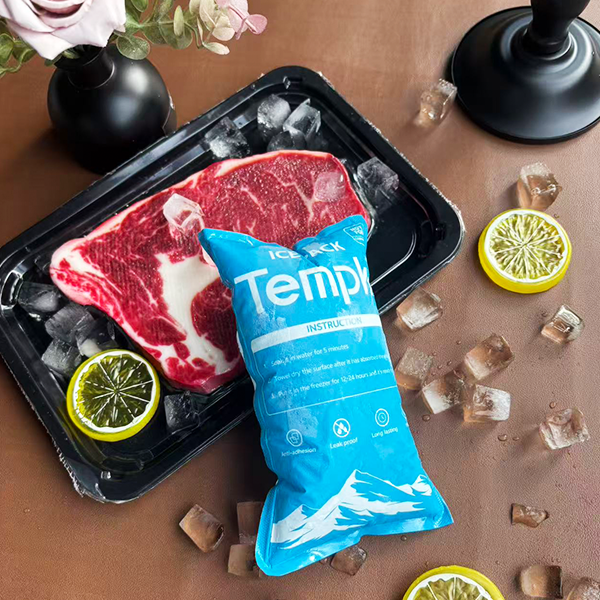
Distributor Dry Ice Pack for Food Delivery: A Route-to-Receipt Sourcing Framework
A distributor dry ice pack for food delivery should be approved through the route, not from a catalog claim. Tempk's hydration pack is a water-activated frozen coolant sheet. It is not solid carbon-dioxide dry ice, is not UN1845 refrigerant, and should not be expected to create an ultra-cold environment. Used in a defined insulated packout, the sheet can absorb incoming heat. Whether food remains safe and acceptable still depends on menu classification, starting temperature, separation, sheet preparation, package geometry, elapsed time, sanitation, monitoring, and customer receipt.
Set the food decision before the packaging decision
The buyer's first document should be a food-and-route brief, not a coolant order.
List every product category that can enter the delivery container. Identify cold time/temperature control for safety food, frozen items, foods held hot, shelf-stable goods, and products cooled mainly for quality. Whole produce, cut produce, raw protein, cooked meals, dairy, bakery items, sauces, and confectionery may have different needs even when they appear in one customer order.
The food-safety team should define the governing criterion for each safety-relevant product. In the United States, the FDA Food Code is a model for retail and foodservice adoption and commonly uses 5°C or 41°F for cold holding of TCS food. Federal consumer advice commonly tells recipients that delivered perishable food should be 4°C or 40°F or below. Those values come from different contexts. The applicable jurisdiction, hazard analysis, product formulation, validated process, and customer instructions should determine the business rule.
For quality-sensitive products, define a useful window and failure signs. Partial freezing may damage salads, emulsions, fresh produce, or some sauces. Condensation may soften baked products or paperboard. Chocolate may need heat protection without a refrigerated TCS packout. The coldest configuration is not necessarily the best configuration.
Finally, document the intended starting condition. Passive coolant is designed to protect appropriately conditioned food, not replace controlled cooling of warm cooked meals or correct a broken cold-storage process.
Replace "delivery time" with total exposure
The customer sees a dispatch notification and an arrival. The packout experiences a longer chain:
food leaves controlled storage;
workers pick and consolidate order lines;
the order waits for missing items;
coolant and barriers are assembled;
packed orders queue for drivers;
bags or boxes are loaded;
vehicles make one or multiple stops;
a handoff succeeds or fails;
food waits at a door, desk, or reception;
the recipient refrigerates, freezes, reheats, or serves it.
Assign normal and credible delayed time to each stage. Mark which spaces are controlled and which may be hot or cold. Note bag openings, vehicle-floor contact, direct sun, transfer between couriers, and unattended receipt. This map produces a defensible test duration and ambient profile.
It also separates design margin from operational negligence. A packout can include a justified delay allowance. It should not be used to normalize unlimited staging or repeated failed delivery attempts. Define a point at which the order must be recovered, quarantined, replaced, or discarded according to the food-safety process.
Data should support this map. Packing timestamps, driver scans, location events, logger records, and customer contact can identify where exposure occurred. Synchronize clocks and predefine who reviews exceptions. A notification without an authorized action is only an observation.
Understand what hydration coolant can and cannot do
The sheet contains cells that absorb and retain water. After freezing, that water stores sensible and latent cooling capacity. Pure ice absorbs about 333.5 joules per gram during melting, a verified physical property that explains the energy value of frozen water. It does not state how much water an exact sheet retains or how long a delivery stays within a food limit.
Package performance depends on two sides of a thermal balance.
Available cooling is influenced by prepared sheet mass, freezing condition, number and location of sheets, food and package starting temperatures, and other cold mass.
Heat demand is influenced by ambient exposure, insulation, seams and closures, openings, payload temperature, air gaps, container geometry, vehicle surfaces, sunlight, and total time.
Direct contact adds another issue. A sheet can create a cold boundary at one tray while a remote corner warms. Folding the sheet doubles coolant locally. A thin sauce pouch reacts differently from a dense meal tray. Mapping hot and cold locations is therefore more useful than measuring one point in open air.
The sheet also has clear technology limits. It is not carbon-dioxide dry ice and should not inherit solid dry ice's ultra-cold capability. It does not refrigerate indefinitely, cool warm food safely by itself, prevent cross-contamination, or prove that a delivered item met applicable rules.
Build a distributor-controlled component file
Once the technology fits the concept, create a controlled item file. It should identify:
Tempk manufacturer name and exact model;
distributor code;
cell pattern and controlled dimensions;
revision and lot format;
exact activation and handling document;
dry packaging and storage conditions;
intended use and reuse status for that model;
material or food-contact information required for review;
visible defect and damage criteria;
change-notification expectations;
approved packouts that use the item.
Do not approve "or equivalent" without a technical route. An equivalent item needs comparison of construction, activation, retained prepared mass where relevant, dimensions, cell geometry, frozen handling, integrity, intended contact, and packout performance. The level of confirmation should match food and route risk.
The distributor should pass through current manufacturer documents, retain lot traceability, protect dry inventory from moisture and damage, and notify the buyer of relevant changes. The buyer should inspect receipts, control warehouse status, and connect complaints or leaks to lots.
Ask claims to show their boundaries
Marketing terms become useful only when the evidence scope is explicit.
| Common claim | Questions that define the boundary | What remains for the food business |
|---|---|---|
| Food grade | Which exact model and layers? What contact type and conditions? Which document supports it? | Approve contact or barrier use in the food-safety system |
| Long lasting | Which insulated package, sheet count, payload, start state, ambient profile, sensors, and acceptance band? | Test the actual order and route |
| Reusable | Is the model intended for reuse? What inspection or handling guidance applies? | Create hygiene, recovery, identification, and retirement controls |
| Leak resistant | What conditioning, handling, method, and defect threshold were used? | Prevent damage and inspect before packing |
| Custom fit | Which drawing, tolerances, material, printing, and revision apply? | Approve samples and assess changes |
| Tested for delivery | Was a component or complete packout tested, and under what conditions? | Judge relevance to the menu and distribution process |
| Sustainable | What functional comparison, lifecycle boundary, and data support the term? | Measure the real system, including food loss and return |
This review does not require the distributor to qualify the buyer's operation. It identifies which claims are component facts and which need system proof. A precise limitation is more trustworthy than a universal promise.
Qualify a family of packouts, not an average order
Delivery payloads vary. A small order has more air and may let sheets move. A large order has more thermal mass but can compress insulation or prevent closure. A mixed order can put a cold-sensitive product next to the sheet and a TCS item in a warm corner.
Create configurations that staff can select without calculation. Examples may include:
small chilled-only order;
large chilled-only order;
mixed chilled and ambient order with separated zones;
frozen-and-chilled order in distinct compartments;
multi-drop reusable tote;
carrier parcel with doorstep allowance.
Each approved configuration should fix the insulated container, sheet model, activation and conditioning, count, position, barriers, food zones, payload range, closure, monitor placement where used, and maximum operating timeline. If one configuration cannot cover the range, use another; do not stretch a test conclusion through convenience.
Design the trial around failure modes
Use representative foods or technically justified simulants, actual primary packages, normal packing staff, and the intended vehicle, tote, or carrier box. Challenge likely warm spots, cold contact, delayed dispatch, bag opening, orientation changes, and delivery dwell. Select calibrated instruments with suitable accuracy and recording interval.
Measure multiple locations during development. A sensor against a frozen cell, in central food mass, near a lid bridge, and in upper air can reveal different behavior. Ambient data help explain the challenge. Predetermine the criterion and analysis rather than choosing a favorable sensor after the run.
Check nonthermal outcomes too:
raw and ready-to-eat separation;
seal integrity and leakage;
condensation and wet labels;
tray damage or food movement;
partial freezing and texture;
wilt, separation, or presentation;
bag or carton closure;
cleanability and handling.
Repeat the final design at production pace and across justified route or seasonal conditions. The result is a bounded operating configuration, not a universal claim for the sheet.
Practical example: a grocery order that crosses categories
Imagine a grocer delivers an order containing sealed raw fish, milk, cut melon, intact tomatoes, frozen dessert, bread, and canned goods. A distributor suggests a large hydration sheet wrapped around the entire basket.
The food-and-route brief reveals incompatible needs. Raw fish, milk, and cut melon require cold control under the business's applicable plan. Frozen dessert must remain in a frozen condition that the hydration sheet may not support. Intact tomatoes can be damaged by excessive cold, while bread and paper labels can suffer from condensation. Canned goods do not need coolant.
The packaging team creates three zones: a chilled, separated compartment for safety-relevant cold foods; a frozen compartment using a system proven for that requirement; and an ambient section protected from moisture. Tomatoes are placed to avoid direct frozen contact while remaining in an appropriate delivery environment. The hydration sheets occupy controlled pockets around the chilled zone.
Trials cover minimum and maximum fills, picking dwell, multiple delivery stops, a warm vehicle condition, and customer handoff. Sensors map the chilled foods and likely warm and cold locations. Reviewers inspect condensation, raw-food containment, tomato quality, bread condition, and frozen-product state.
This hypothetical example may result in a more complex bag than the original wrap. It is also much easier to defend because each zone has a purpose. One flexible sheet cannot reconcile all food categories simply by touching them.
Transfer the method across sites
Distributor availability may be centralized while fulfillment is local. A sheet approved at one warehouse can be prepared differently at a store, kitchen, or dark-fulfillment site.
Verify each site's:
clean hydration work area and water handling;
batch size and activation method;
freezer type, airflow, loading, and recovery;
frozen-status identification;
staging time and dispatch queue;
staff packout execution;
reusable-bag sanitation;
receiving or failed-delivery process.
An upright freezer shared with food inventory may not condition a dense sheet load like a walk-in rack. A busy restaurant may skip a barrier that a warehouse line always uses. Site transfer should observe execution and compare prepared condition, not just distribute a PDF.
Train around decisions as well as steps. Staff should know why solid carbon-dioxide dry ice is different, why direct contact can matter, why raw and ready-to-eat separation is nonnegotiable, and why extra sheets are not an approved repair. The easiest compliant action should be built into kits and compartments.
Receiving closes the control loop
The recipient is the final operational control. Give clear instructions for prompt receipt, condition checks, refrigeration or freezing, and what to do when food arrives warm, damaged, leaking, or late. For consumer deliveries, instructions should be simple and align with authoritative food-safety advice. Appearance or smell is not a reliable safety test.
Business receivers may use:
delivery timestamp;
seal and package condition;
food temperature measurement under a defined method;
logger or indicator review;
separation and leakage check;
acceptance, quarantine, or rejection record.
Remaining frozen material can be noted but should not decide acceptance by itself. A sheet may thaw while food remains acceptable, or ice may remain while a remote product warms. Use the verified process and product criteria.
Trend complaints and deviations. Warm events tied to one route can lead to staging or carrier changes. Cold damage at one wall can lead to a barrier or placement revision. Leaks concentrated in one lot should trigger distributor investigation. Data become valuable when they improve the controlled configuration.
Calculate cost and sustainability per accepted delivery
Unit price misses activation labor, freezer energy, packaging, training, monitoring, damage, and failed delivery. Compare complete systems for an accepted order. Include:
component and inbound freight;
dry and frozen storage;
hydration water, sanitation, and labor;
freezer capacity and energy;
insulation, dividers, and barriers;
outbound size and weight;
pack time and error controls;
reverse logistics and washing;
sheet loss and rejection;
spoiled food, refund, and redelivery.
Apply the same functional unit to environmental assessment. Dry, flat inbound supply may improve storage and freight cube, but freezing shifts energy to the packing site. Reuse may help in a dense closed route, but it requires model suitability, recovery, hygiene, inspection, and retirement. Multilayer sheets may not be accepted in ordinary local recycling.
Avoid a sustainability claim based only on being non-CO₂ dry ice. The absence of sublimating carbon dioxide describes the coolant technology, not the lifecycle footprint. Use measured boundaries and include food waste, which can be a significant system consequence.
FAQs
What is the most important fact to tell the distributor?
Provide the food categories and their safety or quality requirements together with starting condition, order range, insulated container, total route time, openings, seasonal exposure, receiving process, and intended reuse. These details let the distributor identify a physical sheet candidate without inventing a universal performance promise.
Can hydration sheets be used for frozen food delivery?
Do not assume so. A frozen water-based sheet has different thermal behavior from solid carbon-dioxide dry ice or a mechanically frozen system. The frozen product's required state, route, package, starting condition, and delay must be tested. Use a system proven for the exact frozen-food criterion.
Who is responsible for food-delivery compliance?
Responsibilities vary by role, jurisdiction, and operation. The distributor supplies a controlled component and supporting information. The food business generally must identify hazards, maintain sanitary handling, establish temperature and separation controls, verify the delivery process, keep required records, and meet applicable local or national rules. Obtain qualified regulatory advice for the specific operation.
How should an alternate sheet be approved?
Compare exact model identity, construction, activation, prepared dimensions and mass where relevant, cell pattern, integrity, handling, material-document scope, and packout fit. Then perform the level of thermal and operational confirmation justified by risk. Do not release it because the distributor calls it equivalent.
Is a reusable sheet suitable for consumer delivery?
Only if the exact model is intended for reuse and the business has a realistic recovery system. Consumer routes often have low return certainty and unknown contamination history. Closed tote loops are easier to control, but still require identification, inspection, hygiene, storage, and retirement procedures.
Conclusion: approve one route-to-receipt system
Food category, total exposure, coolant preparation, insulation, zoning, distributor control, and receipt form one system. Approving only the sheet leaves the most important risks outside the decision.
Tempk's hydration coolant sheet can be a useful cold source when it is clearly distinguished from solid dry ice and integrated into a tested configuration. Use exact component identity, a family of practical packouts, production-site verification, and receiving action to preserve the result at scale. Cost and sustainability comparisons should count accepted delivery, not packs purchased.
About Tempk
Tempk provides water-activated hydration coolant sheets for integration into insulated food-delivery packaging. We can support exact product identification, activation guidance, cell-format comparison, and component documentation for distributor and buyer evaluation. The sheets are not solid carbon-dioxide dry ice and do not make a food, route, or packout automatically safe. Tempk encourages buyers to define menu categories, route exposure, zones, and operating sites before choosing samples for verification. This keeps product selection tied to the packout the operation will actually use.
Send Tempk and your distributor a route-to-receipt brief, then request the exact sheets and documents needed for a representative trial. Approve volume only after the complete packout and operating method meet your criteria.
Playbook for distributor dry ice pack for candy transport
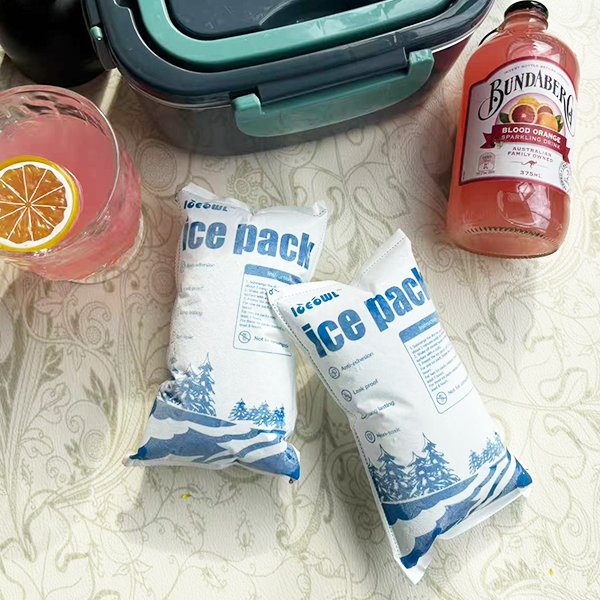
The distributor dry ice pack for candy transport playbook
A profitable distributor dry ice pack for candy transport offer is built on controlled application support, not on selling the maximum number of coolant sheets. Tempk's item is a water-activated sheet that is soaked and frozen. It is not solid carbon dioxide, so it should not be confused with UN1845 dry ice or its gas-venting and dangerous-goods procedures. The sheet can add thermal capacity to an insulated package, but the distributor must connect it to the right candy, packout, route, and customer workflow. This playbook organizes that work from portfolio approval through after-sales review.
Portfolio rule: sell a defined component
Start with a technical identity that survives translation across purchasing, sales, warehouse, and customer teams:
Water-activated hydration coolant sheet, supplied dry, intended to be hydrated and frozen for use in a tested insulated packout; not carbon dioxide, solid.
That sentence prevents a surprising number of errors. Warehouse staff know the item does not need the ventilation controls of actual dry ice. Customers know it will not deliver ultra-cold performance merely because of its name. Sales teams have a boundary for claims.
Approve each size or cell pattern as a distinct item. Maintain the current specification, activation instructions, relevant material documents, carton configuration, lot-marking method, and change-notification record. If sheets can be cut, include the approved cut boundaries in the controlled documentation.
Decide what the distributor sells:
sealed manufacturer cartons of dry sheets;
repacked dry quantities with preserved traceability;
customer-specific insulated kits;
activated and frozen packs for a local territory;
technical samples for packout development.
Each option has different quality and operational requirements. Do not add ready-frozen service until the business can control hydration, freezing, storage, and delivery.
Customer qualification: find the real failure mode
Train sales staff to delay quotation until they understand the application. Candy category is the first branch, but not the last.
Chocolate usually needs protection from excessive warmth and unfavorable moisture or temperature cycling. The product owner should supply the approved limits. Manufacturer storage guidance can provide context, yet formulations and primary packages differ.
Gummies and chewy sweets may soften or clump, with heat and humidity interacting with the formulation and barrier. A cold pack does not repair an inadequate seal. Filled confectionery combines shell, center, and inclusions and may have tighter shelf-life and texture controls. Stable hard candy may need only moisture and impact protection.
Ask what an unacceptable arrival looks like. "Melted" is too vague. Capture deformation, bloom, filling leakage, gummy tack, wrapper damage, odor, breakage, or a food-safety concern. Then ask about payload range, insulation, route, dispatch days, delays, and recipient handling.
If the customer lacks product limits, refer the question to its quality or product-development team. A distributor should not create a temperature specification for someone else's confection.
Solution design: choose the control, not just the sheet
Some accounts need coolant. Others need a faster carrier, improved insulation, a different carton, delivery appointments, or a seasonal product restriction.
Use a simple hierarchy:
Avoid the most severe exposure where practical.
Shorten or stabilize the route.
Slow heat entry with appropriate insulation.
Add a qualified amount and placement of coolant.
Control opening and receipt to reduce condensation.
Monitor where data will drive a decision.
This hierarchy does not mean coolant is unimportant. It places the sheet where it works best: inside a system that has reduced avoidable heat load.
For e-commerce, consider minimum and maximum order sizes. For regional wholesale, determine whether case-level sheets can meaningfully address the exposure or whether controlled transport is required. For events, schedule reliability may matter as much as temperature. For hard-candy accounts, document why no coolant is the approved solution when that is the outcome.
Evidence package: make every claim traceable
| Claim area | Minimum distributor record | What it does not prove |
|---|---|---|
| Product identity | Current specification and item photograph | Thermal duration |
| Material suitability | Relevant declarations for intended market and use | Complete candy packout performance |
| Activation | Approved hydration, draining, and freezing instructions | Customer freezer equivalence without verification |
| Quality consistency | Lot code, receiving criteria, and supplier controls | Zero defects |
| Thermal behavior | Report naming packout, payload, profile, sensors, and criteria | Performance on all routes or loads |
| Reuse | Manufacturer instruction and distributor/customer inspection process | Unlimited cycles or universal hygiene |
| Environmental attributes | Defined material or logistics evidence | Whole-system carbon reduction |
The last column is as important as the record. It stops sales teams from using a correct document to support an unrelated promise. Keep the evidence package linked to the catalog item and remove outdated versions promptly.
Recognized thermal methods can strengthen the evaluation. ASTM D3103 addresses thermal performance of insulated distribution packages under variable ambient conditions. ISTA 7E provides parcel thermal profiles, and ISTA Standard 20 outlines an insulated-shipper qualification process. Cite an exact method only when the report actually used it.
For food transport, applicable FDA and local requirements should be reviewed based on product and activity. FDA's sanitary transportation framework focuses on practices that can render food unsafe or adulterated; it does not define one candy temperature. A distributor must avoid turning a customer quality target into a universal legal requirement.
Sample-to-catalog workflow
Before listing a product, inspect samples from a traceable source. Activate them using the written method. Observe hydration uniformity, dimensional change, surface water, flexibility, seals, odor, and freeze-thaw handling. Make sure the proposed warehouse and customer processes can reproduce the preparation.
Then select one or more representative application trials. The purpose is not to build a huge library of shallow demonstrations. A few transparent, well-defined studies are more useful.
A trial record should include:
customer or anonymized product definition;
actual primary and secondary packaging;
minimum or maximum payload as relevant;
exact insulated components and closure;
sheet item, lot, hydration, conditioning, and placement;
ambient profile and delay assumption;
sensor locations and product inspection;
acceptance decision and approved instruction.
Do not publish the result outside its boundaries. If a test used a full chocolate payload, it may not cover a two-piece gift order. If it used one liner, it does not validate a lower-cost replacement.
Practical example: launching a summer candy kit
Consider a distributor planning a new "summer candy" kit. Initial marketing combines one box, one liner, and two frozen sheets for any confectionery order.
During qualification, a solid chocolate payload performs acceptably under the defined warm profile, but a half-filled carton develops a warm zone. Gummies remain shaped yet show wrapper condensation. Hard-candy tins gain no measurable quality benefit. The universal kit is abandoned.
The distributor launches two controlled chocolate configurations, retains hydration sheets as standalone components for engineering-led accounts, and offers moisture-resistant standard packaging for hard candy. Gummies remain a customer-specific review. The narrower catalog is easier to train, less likely to be misapplied, and more honest about evidence.
Before release, the team asks a new warehouse employee to assemble both chocolate configurations from the written guide. The exercise reveals that the two liners look nearly identical and can be confused at the picking shelf. Operations assigns separate item codes, adds a scan check, and stores them in different locations. That small control is included in the launch record because a correct coolant paired with the wrong insulation would not reproduce the thermal trial. The example shows how catalog design, warehouse controls, and technical qualification converge in a distributor offer.
Operational readiness: control the product through the channel
Receiving should verify item, lot, count, carton condition, dimensions or other quick characteristics, and visible seal defects under an approved sampling plan. Dry inventory needs protection from damage, uncontrolled moisture, and odors. Keep manufacturer labels attached or preserve all traceability during repacking.
For local activation service, define water source and container, hydration endpoint, draining, freezer loading, conditioning check, frozen-stock rotation, staging, and delivery. Measure capacity at peak load. A freezer that handles a small trial may not condition tightly stacked production batches the same way.
Customer instructions should use photographs or diagrams where helpful, but they must remain versioned. Sales demonstrations should follow the same method as production. If a representative casually skips draining or changes placement, the customer learns an unapproved process.
Substitutions require technical review. Similar-looking sheets can differ. Maintain a decision path for shortages so operations do not swap items at the carrier cutoff.
Channel training: teach limits as a selling skill
A short certification or competency check for customer-facing staff can cover:
hydration sheet versus solid CO2;
candy product segmentation;
why insulation and route matter;
which documents support which claims;
when a technical referral is mandatory;
how to collect complaint facts.
Role-play difficult inquiries. If a customer asks, "Will this keep my chocolate safe for three days?" the correct response is to ask about product limits, carton, payload, route, and existing evidence. If a customer needs solid CO2 for a frozen specification, the salesperson should not substitute a water sheet.
This approach may feel slower than an instant answer, but it reduces returns and creates a more valuable conversation. Technical restraint is a channel differentiator.
After-sales review: learn without overgeneralizing
Create a complaint form that records product, defect, shipper, packout version, sheet lot, activation, ship date, service, carrier scans, destination conditions, and opening behavior. Photographs and temperature data can help, but neither replaces a complete fact pattern.
Review trends by defined configuration. A problem isolated to minimum-payload orders may require void control. A route with repeated weekend dwell may need dispatch restrictions. Condensation complaints may call for barriers or customer equilibration instructions. Sheet leakage may require lot investigation.
Use corrective actions proportionate to evidence. One successful pilot does not prove all routes; one failed doorstep delivery does not prove a component defect. Document decisions and feed them back into the catalog and training.
Sustainability review should be equally disciplined. Compact dry storage can reduce space before activation, but assess water, freezing energy, outbound weight, insulation, returns, disposal, and avoided candy waste. Use comparative claims only when the boundary and data support them.
The catalog itself should be reviewed at least before each major warm-weather selling period and after any notified component change. Confirm that item photographs, cut diagrams, material statements, and activation instructions all refer to the same revision. Retire old sales presentations and prepacked sample kits; a sample sitting in a representative's car may no longer demonstrate the current product.
Price governance benefits from the same discipline. Quote the dry component separately from activation service, frozen delivery, insulation, testing support, and custom packaging. That lets customers compare the applied solution and prevents technical services from disappearing into an unrealistically low unit price. It also reveals when a prefilled pack or a service upgrade is more economical than local hydration.
Frequently Asked Questions
What should appear in the catalog name?
Include "water-activated" or "hydration coolant sheet" near the commercial phrase and state that it is not solid carbon dioxide. This makes search language usable without creating a technical misunderstanding. Keep the exact item code and current instruction accessible.
Can the distributor create its own duration claim?
Only from a documented test of a defined system, and the statement must retain the payload, insulation, conditioning, ambient profile, duration, and acceptance criteria. A sheet-only duration is generally not meaningful for candy transport.
What is the strongest reason to stock the dry format?
Compact storage and activation near use may be operationally attractive. The trade-off is that the distributor or customer must manage water, draining, freezer capacity, and conditioning. Compare those costs with prefilled packs and the customer's actual workflow.
How should customer changes be handled?
Ask customers to notify the distributor when they change candy formulation, primary packaging, payload, carton, liner, route, service, or pack placement. Assess whether the current evidence still applies. Changes can require focused verification or broader retesting.
Does "food-contact documentation" validate the shipping kit?
No. It may support a material review for a stated intended use and market. Thermal performance, product quality, process repeatability, and regulatory obligations are separate questions. Keep each evidence stream attached to its actual scope.
Conclusion: a narrower promise builds a stronger channel
The distributor playbook is straightforward: define the water-based product accurately, qualify customers by candy and route, offer the appropriate control, maintain a traceable evidence package, and protect the approved configuration through operations and training. This creates a channel offer that can scale without turning a component into an unsupported guarantee.
The best outcome is not always a hydration sheet. Sometimes it is a better service level, a different pack, or no coolant. A distributor that can make that judgment earns trust beyond the unit sale.
About Tempk
Tempk offers water-activated hydration coolant sheets and insulated packaging options for temperature-sensitive food distribution. We can support distributors with product samples, current documentation, and discussion of activation and packout fit. The sheet is a frozen-water coolant component, not UN1845 solid carbon dioxide. Final candy-transport suitability should be established for the actual confection, payload, insulation, route, and operating process, with claims kept within the tested evidence.
Send Tempk your target channel, candy categories, and service model to plan an initial product review. Request the samples and documents needed to build a controlled distributor offer.
Bulk Dry Ice Pack for Medical Packaging: Approval File
Build an Approval File for a Bulk Dry Ice Pack for Medical Packaging
The safest way to source a bulk dry ice pack for medical packaging is to create an approval file that follows the component from definition through routine use. Start by correcting the name: Tempk's hydration dry ice pack is a water-activated frozen coolant sheet, not solid carbon dioxide or UN1845 dry ice. Then document what medical content is being shipped, what conditions it requires, how the full insulated package was tested, whether each origin can prepare the sheet, and how lots and changes will be controlled. The file turns an attractive sample into a defensible bulk process.
Record One: The Intended-Use Statement
Write one sentence that is specific enough to prove or disprove. For example: "This component is proposed as frozen coolant in the defined insulated parcel for the listed reagent-kit configurations on the approved domestic routes." Avoid statements such as "for medical cold chain" because they hide the content, temperature, payload, package, and lane.
The intended-use record should identify:
the exact medical, diagnostic, laboratory, or device-related content;
the source of its approved storage and transport conditions;
minimum and maximum payload presentations;
origin and receiver types;
transit modes, handovers, and credible delays;
intended insulation and external package;
whether the sheet is single use or part of a planned return loop;
separate containment, sterility, physical-protection, and monitoring functions.
This scope prevents transfer errors. A packout used for a reagent cannot be copied automatically to a vaccine, patient specimen, medicine, calibrator, or electronic service part. Even two items with similar labeled conditions can differ in thermal mass, freeze sensitivity, primary packaging, or handling rules.
The record should also state exclusions. If the system is not designed for deep-frozen content, direct coolant contact, international routes, unattended delivery, or a particular payload, say so. Clear exclusions reduce the chance that a familiar box is reused outside its evidence.
Record Two: The Component Identity Sheet
Component identity needs more than a supplier name and a photograph. Capture the product code, revision, cell pattern, dry and hydrated dimensions, outer-layer and absorbent-material descriptions, permitted folds or cuts, activation instructions, conditioning guidance, inspection criteria, intended lifecycle, and packaging label.
Use the precise phrase water-activated frozen coolant sheet in internal records. The term dry ice pack may remain in the commercial name, but the description should stop staff or carriers from confusing it with carbon dioxide. It should also stop the opposite assumption: a hydration sheet does not inherit the very low temperature behavior of solid dry ice.
Ask the supplier to explain any variation among standard and custom formats. A different print, film, seam, cell count, or absorbent structure may affect more than appearance. The buyer's controlled specification should match the sample that enters development and the production component later received.
Material evidence belongs here, with its scope visible. A declaration may support review of an outer material for defined conditions. It does not establish packout duration, payload compatibility, sterility, biological containment, or worldwide medical compliance. If direct contact is not necessary, an indirect configuration can simplify several risks, but it still needs documented design.
Record Three: The Packout Evidence Map
The hydration sheet is a finite heat sink. Its frozen water absorbs heat while warming and melting; insulation slows transfer; payload and geometry distribute the effect. The result can include both warm and cold locations. Qualification must investigate the complete configuration.
Create an evidence map before testing:
| Decision | Evidence to place in the file | Critical boundary |
|---|---|---|
| Component fits after activation | Hydrated dimensional and bench-fit review | No crushing, vent blockage, closure interference, or uncontrolled contact |
| Configuration manages temperature | Approved thermal protocol, raw data, and report | Exact coolant, insulation, payload, profile, conditioning, and limits |
| Packout survives distribution | Relevant vibration, shock, compression, and orientation assessment | Components remain intact and in their intended positions |
| Routine monitoring is meaningful | Logger selection and placement rationale | Device records conditions but does not cool |
| Content-specific rules are addressed | Quality, regulatory, biosafety, or dangerous-goods review as applicable | Coolant evidence does not classify the payload |
| Variants remain within scope | Bracketing or comparison rationale | Minimum/maximum loads and seasonal recipes are explicit |
This map makes gaps visible. A test report from a distributor can be valuable development evidence when it identifies the complete configuration. It should not be represented as qualification for a different payload or lane.
Use route-relevant ambient exposure. ISTA Standard 7E can support parcel thermal testing, and ASTM D3103 can support evaluation of thermal insulation performance in distribution packages. WHO guidance emphasizes qualified passive systems and route considerations for time- and temperature-sensitive medical products. Select methods because they answer the intended question, not because a standard name looks persuasive on a sales page.
Sensors should investigate predicted extremes. A probe at the center of the air space cannot reveal every product location. Include coolant interfaces, lid or corner heat paths, and representative product positions. Document probe calibration, attachment, measurement type, start conditions, and acceptance criteria before execution.
Record Four: The Operating-Capability Review
Dry flat inventory can be easy to store, but preparation is a manufacturing-like process performed at the shipping site. Activation adds water and changes sheet mass and dimensions. Conditioning uses freezer capacity. Staging changes the coolant's initial state. Each step can introduce variation.
Observe the process at forecast throughput. The review should include:
dry receipt and storage;
activation containers and permitted water;
drainage, spills, cleanliness, and protection;
freezer type, rack layout, loading, and recovery;
separation and status of prepared sheets;
readiness and damage checks;
transfer to the packing bench;
exact placement, barriers, and closure;
interrupted packs, late carrier collection, and rejected coolant;
records and component traceability.
Do this at every type of origin. A central laboratory and a small clinic may not share freezer capability or staffing. A process should not be approved at a site simply because it worked at headquarters.
Practical example: the satellite-site reality check
Imagine a company approves a packout at its central facility, where hydrated sheets are frozen flat on open racks. It plans to distribute dry sheets to satellite collection sites. During a pilot, one satellite loads wet sheets in stacks inside a small crowded freezer. The next morning, several cells remain pliable and sheets are frozen together.
The company does not train staff to force the stacks apart and continue. It compares options: install suitable racks and capacity, ship conditioned coolant under control, use a different approved coolant at satellites, or centralize dispatch. Thermal qualification is aligned with the chosen operating model, and local instructions define status and exception handling.
The example is hypothetical, but the principle is fundamental. Bulk purchasing must scale a reproducible process, not merely the appearance of the lab-tested component.
Record Five: The Bulk Supply Control Plan
The supply plan links procurement to the qualified specification. Purchase orders and supplier agreements should identify the exact version and prohibit unreviewed substitution. Relevant tolerances, lot marking, packaging, documentation, sample-to-production consistency, and nonconformance handling should be defined at the appropriate level.
Change notification deserves explicit treatment. Outer film, absorbent media, cell dimensions, seams, manufacturing method or site, product label, and activation instructions can affect fit or performance. The supplier should provide enough advance information for the buyer to assess impact before changed stock enters routine use.
Continuity planning should distinguish commercial availability from technical interchangeability. An alternate hydration sheet with the same outer dimensions may absorb water differently or distribute coolant mass through another cell geometry. Prequalify alternatives where risk warrants, or define the comparison and testing required during a disruption.
Bulk economics also belong in the control plan. Compare approved packouts rather than single components. Include hydration labor, water handling, freezer capacity and energy, prepared-stock management, rejection, shipping mass, insulation, monitoring, return logistics, and product-loss risk. Keep order quantity, lead time, and customization as supplier-confirmed variables rather than assumed figures.
Record Six: Receiving, Excursion, and Review Rules
The shipment's control process continues after dispatch. Receiving instructions should state how to inspect physical damage, leakage, wet packaging, seal condition, labels, content, and logger status where used. The receiver should promptly move the content to approved storage and report exceptions through a defined channel.
Coolant phase is not a disposition tool. A sheet can be thawed while the payload remains acceptable, or remain frozen while another product location warmed or overcooled. Authorized personnel should assess excursions using product-specific information, temperature records, route history, instrument status, and approved procedures.
Routine data should feed periodic review. Look for:
alarms or excursions by route and season;
uneven hydration or conditioning deviations;
sheet leakage or seam damage;
missing barriers or incorrect layouts;
freezer-capacity and staging problems;
delivery delays and receiving failures;
supplier lots associated with recurring issues;
changes to payload, carrier, origin, or insulation.
Review the approval file after meaningful change. Some changes may require only a documented rationale; others may require fit checks, engineering trials, or requalification. The decision should be risk based and recorded.
Red Lines for Medical-Packaging Claims
Several statements should stop an approval review until they are corrected.
"This dry ice pack is UN1845" is wrong for Tempk's hydration sheet. "This sheet replaces dry ice everywhere" is also wrong because the thermal requirements may be fundamentally different. "Medical grade" is too vague unless its meaning and evidence are defined. "Compliant with all medical shipping rules" ignores content, jurisdiction, mode, records, and process. "Keeps products cold for a fixed time" is incomplete without the exact packout and test conditions.
Replace broad claims with bounded ones:
supplied dry and activated with water before freezing;
evaluated in the listed insulated system;
tested with the stated payload and ambient profile;
direct contact not assumed;
route and content requirements require buyer review;
reuse subject to the approved lifecycle process.
Bounded language is not weak marketing. It gives quality, packaging, and procurement teams information they can use.
Rehearse the First Production Lot
Before normal release, treat the first bulk lot as a controlled rehearsal. Confirm that the cartons contain the expected product code, revision, quantity, instructions, and lot markings. Select samples according to the approved incoming plan and compare the attributes that matter to the qualified system. The purpose is not to invent new acceptance criteria at the dock; it is to verify that production supply corresponds to the approved component.
Run the material through the ordinary workflow. Use the normal hydration station, freezer racks, staff, staging area, packout instruction, and dispatch schedule. Observe whether production packaging makes sheets harder to separate, whether lot labels survive the conditioning environment, and whether operators can maintain status without relying on memory.
The rehearsal should include an exception. Ask staff to demonstrate how they handle a damaged cell, incomplete hydration, a freezer alarm, an interrupted pack, and a late carrier. The response path should protect the payload and preserve records without inviting an improvised coolant arrangement.
Close the rehearsal with a cross-functional review. Procurement confirms supply identity and commercial communication. Operations confirms capacity and workability. Packaging reviews configuration. Quality reviews records, deviations, and release readiness. This short exercise often reveals gaps that neither a supplier audit nor a chamber test can show, and it does so before a high-volume dispatch depends on the process.
Frequently Asked Questions
Who should approve the hydration sheet for medical use?
Approval normally involves the content owner and the organization's packaging, quality, logistics, regulatory, biosafety, or dangerous-goods specialists as applicable. The supplier can provide component information and test support. It cannot decide the payload's requirements or confer universal medical compliance.
Can supplier thermal data be included in the approval file?
Yes. Record the exact configuration, ambient profile, duration, sensors, payload, conditioning, acceptance limits, deviations, and results. Use relevant data for development or qualification according to your quality system. Do not extend the conclusion to a different box, load, route, or product without justification.
What is the main cold-side risk?
Frozen cells can locally overcool content through close contact, especially with small payloads, thin barriers, or folded sheets. Map likely cold locations and test minimum loads. The approved configuration may use controlled separation, placement, or another coolant strategy.
How can a buyer verify sample-to-production consistency?
Lock the specification and drawing, identify lots and revisions, define incoming checks, request relevant production controls, and establish change notification. Compare initial production lots with the approved sample under a risk-based plan. Avoid accepting an "equivalent" version without assessment.
Does flat dry storage make the system sustainable?
It may improve inbound storage efficiency, but system impact also includes materials, activation water, freezer energy, outbound shipment, product protection, disposal, and actual reuse or return. Make only claims supported by a defined comparison and evidence.
Conclusion: An Approval File Keeps Evidence Attached to Use
The approval file connects six records: intended use, component identity, packout evidence, operating capability, bulk supply control, and post-shipment review. Together they prevent a coolant nickname, attractive sample, or isolated thermal graph from becoming an unsupported medical-packaging claim.
A hydration sheet can be a practical component when its flexible form and dry storage fit the operation. Its value becomes defensible only when the exact configuration, site process, payload, route, and lifecycle remain controlled after the bulk order arrives.
About Tempk
Tempk offers cell-based hydration coolant sheets that are activated with water and frozen for use in insulated packouts. We can support a medical-packaging project with component details, sample configurations, placement discussion, and preparation guidance. Buyers should connect those inputs to their own content requirements, thermal qualification, containment, monitoring, site procedures, and regulatory review. Tempk does not describe its hydration sheet as UN1845 carbon dioxide or as a universally compliant, fixed-duration medical shipping system.
Bring Tempk a defined payload, route, insulation, load range, and origin workflow. We can help you assemble the component information needed for an evidence-based approval file before bulk scale-up.
Scale-up plan for bulk dry ice pack for candy shipping

A scale-up plan for bulk dry ice pack for candy shipping
A bulk dry ice pack for candy shipping should enter your operation through a series of evidence gates, not through a price-only purchase order. In Tempk terminology, the product is a water-activated sheet that is soaked and frozen. It is not solid carbon dioxide, does not sublimate into CO2 gas, and is not UN1845 dry ice. The sheet can add cooling capacity inside an insulated parcel, but it cannot define the correct temperature for candy or guarantee a delivery time. Scale-up starts by approving the confection, route, complete packout, activation process, and supplier controls as one operating system.
Gate 1: decide whether cooling solves the product problem
Begin with the defect you are trying to prevent. If the complaint is melted chocolate, heat control is relevant. If hard candy arrives chipped, a coolant sheet will not fix poor cushioning. If gummies clump because the inner bag has inadequate moisture protection, cooling may help with heat but leave the primary cause untouched.
Create separate product families:
solid and enrobed chocolate;
filled chocolate, truffles, and bonbons;
gummies, jellies, and chewy confectionery;
caramel, marshmallow, and other heat-sensitive sweets;
shelf-stable hard candy, brittle, and pressed mints.
For each family, document supported storage and transport limits, known quality defects, primary-packaging barrier, and arrival inspection. Chocolate guidance from established manufacturers consistently emphasizes cool, dry, odor-free storage, while published recommended ranges vary. That variation is exactly why a confectioner should approve product-specific limits.
Filled confectionery requires extra care. A ganache center, fruit layer, crisp wafer, or nut filling can change water activity, texture, migration, and shelf life. Cooling is not a food-safety validation and does not extend an approved shelf life by assumption.
At the end of Gate 1, every in-scope product should have a clear statement: coolant trial justified, coolant not needed, or more product data required.
Gate 2: convert a carrier route into a thermal challenge
A parcel's advertised service time is not its exposure profile. Heat can enter during pickup, sorting, linehaul, final-mile delivery, and doorstep dwell. Cold weather can also matter because a frozen pack may overcool a sensitive product.
Map the lane with operations and the carrier. Identify cutoff time, likely hubs, non-operating periods, regional climate, vehicle type where known, and receiving arrangements. Add a delay condition that reflects the business risk. A premium gift shipment with a fixed event date may justify a different service than replenishment stock.
Do not rely only on the high temperature at the destination. The hottest point may be a hub or vehicle elsewhere. Likewise, a recipient's porch can turn a successful carrier movement into a failed delivery.
Define a shipping decision tree. It might route heat-sensitive products to an approved insulated packout, upgrade service above a weather threshold established by testing, hold orders that would cross a weekend, or split stable candy from sensitive items. The thresholds must come from product and packout evidence, not an arbitrary internet rule.
Gate 3: make the complete packout testable
The approved configuration should be specific enough that another shift can reproduce it. Record the shipper, liner or insulation, product arrangement, void fill, dividers, hydration sheet identity, activation method, freezing condition, placement, closure, and customer instructions.
Use instrumented trials to explore warm and cold zones. Sensors can be placed in representative product and at justified risk locations, but their placement should be documented. Air temperature alone may respond faster than the candy. Product inspection remains essential.
ASTM D3103 provides an established approach for testing thermal insulation performance of distribution packages under variable ambient conditions. ISTA 7E supplies parcel thermal profiles, while ISTA Standard 20 defines a broader insulated-shipper qualification process. These references help create disciplined evidence. They do not eliminate the need to set your own candy limits and route assumptions.
Test both minimum and maximum payloads if both will ship. A full carton can have greater thermal mass; a low-count order can have more air and altered coolant-to-product ratio. If one configuration cannot safely cover the range, create separate packouts or consolidate the carton family.
Inspect quality after equilibration
When a cold chocolate package enters warm, humid air, opening it immediately can promote condensation. Keep test samples packaged while they equilibrate according to the handling plan, then inspect:
shape, gloss, bloom, and snap;
filling leakage or migration;
gummy tack, clumping, and deformation;
wrapper adhesion and print condition;
odor transfer and moisture marks;
breakage and presentation.
Passing a temperature criterion but failing appearance is still a failed candy packout.
Gate 4: prove the activation process at peak volume
A flat dry sheet is compact in storage. After hydration, it becomes heavier and occupies freezer space. Scale calculations must use the activated product and the approved production process.
Run a capacity exercise on the actual shift:
Receive and identify dry sheets by lot.
Hydrate them with the approved water, container, and endpoint.
Drain or prepare the surface as specified.
Arrange sheets in the production freezer without blocking required airflow.
Confirm acceptable conditioning using the validated method.
Move frozen stock to a controlled staging location.
Pack within the approved staging window.
segregate damaged or questionable units.
Avoid publishing an unverified freeze time. Freezer design, starting temperature, sheet spacing, batch size, and door opening can all change it. Establish a method using representative peak loading.
Labor is another capacity limit. If activation and draining create a queue shortly before pickup, workers may shorten the process. A slower, standardized preparation cycle scheduled ahead of packout can be more reliable than last-minute soaking.
Gate 5: write a purchase specification that survives change
A bulk purchase should lock the characteristics that matter and define what happens if they change.
| Control point | Purchase specification should state | Scale-up reason |
|---|---|---|
| Product identity | Hydration coolant sheet, explicitly not solid CO2 | Prevents terminology, safety, and freight confusion |
| Format | Sheet and cell dimensions, approved cut pattern, unhydrated condition | Protects fit and placement |
| Activation | Current supplier instructions and buyer-approved method | Controls hydrated mass and handling |
| Construction | Declared film, absorbent, and seal characteristics at an appropriate level | Supports material and risk review |
| Quality | Lot identification, visual criteria, leakage controls, documentation | Enables incoming inspection and investigations |
| Change control | Advance notice for material, dimension, cell, seal, site, or process changes | Triggers assessment before production use |
| Performance | No standalone duration promise; reference only the buyer-approved system | Keeps claims tied to the tested packout |
The table turns a sample into a controlled supply item. It also helps procurement compare quotations that may use the same market name for different constructions. Price breaks matter only after the configuration and evidence are comparable.
Ask how production samples are selected, which defects are checked, how lots are traced, and what documentation accompanies shipment. If customization is requested, treat printed film, sheet pattern, or construction changes as a new item until their effect is assessed.
Gate 6: pilot the operating system
A chamber test controls ambient exposure, but a pilot shipment tests people and handoffs. Select representative lanes and order sizes. Train packers, photograph or checklist the packout, include monitoring where justified, and arrange structured receiving inspection.
Practical example: chocolate and gummies on warm parcel lanes
Suppose a fictional brand plans to ship chocolate bars and gummy pouches from Chicago to several warm destinations. Screening shows the bars need insulated protection, while the tested gummy formulation performs acceptably in its barrier pouch under most routes. The company creates a chocolate packout and a mixed-order variant instead of adding frozen sheets to every parcel.
During pilots, one route shows acceptable transit temperatures but frequent warm doorstep dwell. The corrective action is an attended-delivery notice and a service change, not more coolant. Another route shows a consistent warm corner; the divider and sheet placement are revised and retested. These hypothetical results illustrate why monitoring should lead to decisions.
The pilot also includes a minimum chocolate order because its low thermal mass may behave differently from a full gift box. Receivers keep the sealed product packaged while it moves toward room conditions, then score gloss, shape, wrapper condition, and bloom using the same checklist. The team records the exact coolant lot and packout revision. That detail allows a later complaint to be separated into route exposure, packing deviation, component issue, or recipient delay instead of being labeled simply "summer damage."
Before bulk release, close training gaps, set incoming inspection, confirm freezer contingency, and approve customer-service language. Define who can authorize a substitution during a shortage. An unreviewed pack, liner, or carton change can invalidate the configuration.
Gate 7: review performance without chasing anecdotes
Track complaints by product, defect, lane, ship date, packout version, and coolant lot. "Melted" can mean a genuinely softened bar, filling leakage, bloom noticed later, or a package left in direct sun. Better classification improves corrective action.
Review temperature data in context. A single logger trace can identify an event, but it does not establish a broad failure rate. Compare shipment condition, sensor placement, weather, carrier scans, and receiving delay before changing the system.
Seasonal review should ask:
Are approved weather and dispatch rules being followed?
Did payload mix shift beyond the tested range?
Were any components or suppliers changed?
Is activation capacity sufficient at the busiest cutoff?
Are recipients following opening and equilibration instructions?
Do stable candy classes still avoid unnecessary cooling?
This review also supports cautious sustainability. The flat unhydrated format may reduce inbound storage volume compared with a prefilled alternative, but a credible assessment includes activation water, freezing energy, outbound weight, insulation, waste, reuse logistics, and avoided product loss. Do not make a lifecycle claim without a defined comparison.
Treat peak-season readiness as a formal release, not a calendar reminder. Before the first hot-weather order, verify that the approved sheet and insulation are in stock, current work instructions are posted, freezers have been checked under representative loading, and backup carrier rules are active. Run a short line audit in which an operator builds each approved payload class without coaching. If the build differs from the qualification drawing, correct the process before volume rises.
Customer-service and purchasing teams should join that release. Customer service needs defect categories and a receiving script; purchasing needs the current manufacturer lot and change status. The packaging owner should confirm that no primary wrapper, divider, carton, or product formulation changed during the cooler season. This cross-functional review is inexpensive compared with discovering in July that the physical packout no longer matches the tested version.
Frequently Asked Questions
What is the first document needed for scale-up?
Start with an approved product-and-route requirement, not a coolant specification. It should identify the candy family, failure modes, acceptance limits, payload range, transit assumptions, and receiving conditions. That document tells engineering what the packout must protect and gives procurement a meaningful basis for supplier review.
Can a hydration sheet replace expedited delivery?
Not automatically. Coolant can absorb heat, but a longer or more variable route may exceed the tested system. Compare a better service level, insulation change, packout revision, weather hold, or split shipment. The most economical control depends on failure cost and route evidence.
Is the product regulated as UN1845 dry ice?
No, not when it is the water-activated frozen sheet described here. UN1845 identifies solid carbon dioxide. Actual dry ice requires gas-venting packaging and applicable marking, labeling, handling, and air-carrier procedures. Use precise names in specifications and shipping systems.
When should a packout be retested?
Assess retesting when product formulation, payload range, insulation, carton, coolant, placement, conditioning, route, service, or acceptance limits change. The scope may be a focused verification or a fuller qualification depending on risk. Document the decision rather than assuming equivalence.
What is a reasonable incoming inspection for bulk sheets?
It may include lot and count verification, packaging condition, dimensions, seal and cell appearance, damage, and periodic activation checks. Tailor sampling and acceptance criteria to supplier history and risk. The inspection should detect changes that could affect fit, leakage, or the approved activation process.
Conclusion: approve the system before the volume
The safest path to bulk purchasing is a gated release. Confirm that cooling addresses a real confectionery failure mode, define the route challenge, qualify the full packout, prove activation at peak volume, control the supplier item, and pilot the operation. Keep chocolate, gummies, filled confectionery, and hard candy in separate decision classes.
Most importantly, preserve the terminology boundary. A water-activated coolant sheet is not solid CO2, and neither product is automatically suitable for every candy. Evidence should follow the actual product, payload, package, and lane.
About Tempk
Tempk offers hydration coolant sheets that absorb water and are frozen before packout, plus insulated packaging options for food transport. We can work with buyers on sample format, activation considerations, placement concepts, and the documentation needed for supplier review. We do not treat the sheet as a standalone guarantee: candy condition depends on the approved product limits, complete shipper, payload, route, and operating discipline. A controlled trial is the appropriate bridge between a sample and a bulk order.
Share your product families, parcel sizes, seasonal lanes, and current failure modes with Tempk. Request samples and plan a packout evaluation before setting production volume.
Wholesale Dry Ice Pack for Candy Transport Specification
How to Specify a Wholesale Dry Ice Pack for Candy Transport
A melted bar is an obvious failure. A glossy assortment that arrives cold but develops sugar bloom the next day is harder to diagnose. Both outcomes can begin with the wrong wholesale dry ice pack for candy transport specification. The phrase itself is the first risk: it may mean solid carbon dioxide, a hydrated cooling sheet, a gel pack, or a phase-change pack. These materials do not share the same temperature, hazards, conditioning, or transport status. A professional specification therefore starts with the candy’s acceptable condition and ends with a controlled shipping system. The pack is one component between those two points.
Write a Product Condition Statement
Before choosing insulation or coolant, write a one-page condition statement for each candy family. It should say what must be protected and how success will be judged. This prevents procurement from turning “keep cool” into an arbitrary low temperature.
For a plain chocolate bar, the concern may be shape, gloss, bloom, snap, odor, and wrapper release. A filled bonbon may add center stability and a shorter handling window. A gummy assortment can be sensitive to tackiness and deformation. A hard-candy product may tolerate normal ambient temperatures but need strong moisture protection. A cream-filled or otherwise perishable confection can have safety controls established by the producer’s food-safety plan.
Include these elements:
- Product name and formulation family.
- Primary and secondary packaging.
- Approved dispatch condition.
- Acceptable temperature or product-condition limits.
- Visual, texture, and food-safety failure criteria.
- Maximum planned time from packing to controlled receipt.
- Any acclimation or receiving instruction.
- Quality authority responsible for excursion disposition.
Do not copy a temperature from a generic chocolate article into this statement. Pure chocolate guidance can inform development, but the exact formulation, filling, geometry, and shelf-life evidence govern the commercial product. If the team cannot define the acceptable condition, it cannot determine whether a test passes.
Resolve the Coolant Identity Before Comparing Prices
Solid carbon dioxide is true dry ice. It is about minus 78.5 degrees Celsius at atmospheric pressure and sublimates into gas. It can create severe local cold exposure and requires a package that releases gas. Depending on transport mode and jurisdiction, dangerous-goods marking, quantity information, documentation, training, and carrier acceptance can apply. It should not be placed in direct contact with candy or enclosed in an airtight container.
A hydrate sheet is commonly supplied dry, absorbs water, and is then frozen. A gel pack contains a sealed water-based or formulated filling. A PCM pack contains a material selected for a defined phase transition. These reusable or potentially reusable products are not solid carbon dioxide. Their commercial names should not drive classification or performance assumptions.
For most heat-sensitive candy, begin by evaluating an appropriately conditioned water-based or PCM coolant in an insulated shipper. Actual dry ice is a specialized option for a payload genuinely approved for frozen transport, not an upgrade for ordinary chocolate. If a sales quotation simply says “dry ice pack,” require the supplier to state composition, activation, conditioning, transport classification, and safety instructions in plain terms.
This identity check also prevents an operational error. Workers who believe a frozen gel sheet is dry ice may use unnecessary hazardous-material procedures; workers who mistake solid carbon dioxide for a reusable pack may seal it dangerously or handle it without protection.
Convert the Route Into a Thermal Challenge
Route duration is only one input. Record where the package waits, whether it is consolidated, how often it changes hands, and what happens at delivery. The challenge should include realistic hot and cold exposure, assembly delay, payload variation, and receiving conditions.
Consider a premium chocolate parcel shipped from a controlled warehouse. It waits near an open dock, travels in a line-haul trailer, passes through a hub, enters a local van, and may remain on a doorstep. The doorstep is visually dramatic, but the dock or van may be the dominant heat event. On arrival, a cold product is opened in humid air and develops condensation. A test that stops when the carrier scan says “delivered” misses the final quality risk.
Create a route worksheet with:
| Route element | Evidence to collect | Design implication |
|---|---|---|
| Origin staging | Time, temperature, sun exposure, pallet configuration | Assembly limit and outbound insulation |
| Carrier network | Mode, dwell, sortation, orientation, seasonal extremes | External profile and pack restraint |
| Payload variation | Minimum and maximum order family | Coolant mass and air-space control |
| Destination | Delivery timing, shade, receiving capacity, humidity | Last-mile margin and acclimation instruction |
| Exceptions | Weekends, customs, missed delivery, refrigeration loss | Contingency duration and monitoring decision |
The worksheet turns vague “summer shipping” into testable conditions. It also reveals when a carrier or process change needs review, even though the box and coolant have not changed.
Design Against Both Hot Spots and Cold Spots
Insulation slows environmental heat. Coolant absorbs it. Product and packaging add thermal mass. Their arrangement creates gradients, so average air temperature can conceal both a hot corner and an overcooled contact face.
Place cooling components to intercept likely heat paths, but keep them from pressing on delicate display cartons. Use defined dividers or sleeves when direct contact can cause cold damage, abrasion, or wetting. Control headspace because free air can circulate and because different order fills alter thermal capacity. Restrain packs so vibration does not change the evaluated geometry.
Conditioning must be a production process. Specify the equipment setting, loading pattern, minimum time, transfer limit, and any controlled tempering step. For hydrate sheets, define water quality if relevant, soak method, drainage, target hydrated condition, and inspection. For PCM, identify the correct formulation and how workers verify conditioning state. For gel packs, specify rejection of leaks, swelling, delamination, or contaminated surfaces.
Moisture control crosses every layer. Use suitable primary wrappers, protect presentation cartons from pack condensation, and maintain closure integrity. If the product owner approves acclimation in the sealed wrapper, include it in receiving instructions. Never use warm holding as a casual remedy for a confection that requires refrigeration for safety.
Qualify the Configuration, Not the Component
A supplier’s “hours of cooling” claim cannot be transferred to a different box. Qualification should identify the complete bill of materials, payload, packout, conditioning, external challenge, logger method, and acceptance criteria.
Use representative commercial product or a justified surrogate. Include the correct primary and secondary cartons because they influence heat flow and moisture. Test low and high payload configurations when both will be shipped. Place sensors at risk-based locations: near suspected hot corners, near coolant contact faces, and at representative product positions. Document probe attachment because a sensor in air reports a different event from one coupled to the product.
Review the trace rather than only the pass/fail label. An initially low reading may reveal insufficient tempering. A late rapid rise can show that the coolant is exhausted. Repeated spikes may correspond to chamber cycling or door events. Compare repeats to understand packout and material variability.
Standard thermal profiles can support development and cross-design comparison. Lane qualification adds route-specific evidence. Neither means the candy will remain saleable after any delay, nor does it excuse the quality team from setting disposition rules. A data logger records conditions; it does not protect the product.
The approved report should be connected to drawings, photographs, work instructions, training, and a change-control list. A test is valuable only if production can reproduce the tested system.
Make the Wholesale Contract Protect Consistency
Price negotiations should happen after functional requirements are explicit. A robust purchase specification covers:
- Flat, filled, hydrated, and frozen dimensions as applicable.
- Coolant or absorbent fill tolerance.
- Film, barrier structure, and seal construction.
- Cell pattern, valve, closure, and printing.
- Lot coding and production records.
- Leak and visual inspection methods.
- Packaging and storage before use.
- Conditioning and activation instructions.
- Material declarations for the intended contact scenario.
- Change notification for formula, film, dimensions, process, or site.
- Nonconformance, complaint, and corrective-action process.
Request samples from normal production and compare them with later lots. Conduct an incoming inspection that focuses on functional risk instead of cosmetic measurements alone. For example, seam placement and frozen thickness may matter more to a divider fit than minor print variation.
If reuse is planned, assign responsibility for cleaning, inspection, quarantine, and retirement. The supplier may design a durable pack, but only the operator controls what happens after the first trip. Avoid putting an unverified cycle count in the contract. Define condition-based acceptance and collect operational data during the program.
Bulk purchasing also affects freezer and labor capacity. Calculate the space needed for conditioned packs, the time to rotate inventory, and the effect of peak orders. A compact hydration sheet may reduce storage before activation but shifts work to soaking, draining, freezing, and inspection. A filled brick consumes more inbound volume yet may be simpler to condition consistently. Total operating cost is more useful than unit cost.
Put Sustainability and Customer Experience on the Same Scorecard
An oversized box with excessive coolant can prevent some heat exposure, but it increases material, freight, conditioning energy, and disposal burden. An underbuilt packout increases damaged product and reshipment. The goal is a right-sized system that delivers saleable candy reliably.
Compare options per successful delivery. Count the insulated shipper, coolant, outer carton, conditioning energy, return movement, washing, loss, and damaged candy. For a closed local route, durable reusable packs and containers may perform well because returns are predictable. For scattered one-way ecommerce deliveries, return logistics can be impractical, and a compact or locally manageable component may be preferable.
Customer experience belongs in the assessment. The package should identify reusable frozen coolant accurately, contain any moisture, avoid strong odors, and provide clear handling or disposal instructions. Solid carbon dioxide requires specific warnings and must not be presented as an ordinary reusable accessory.
Continuous improvement should use claims, temperature records, receiving photographs, and pack recovery data. Do not react to one melted parcel by adding coolant everywhere. Determine whether the cause was warm product, a late collection, wrong pack conditioning, a closure error, extreme exposure, or an unsuitable design. The corrective action should address the actual failure.
FAQ
What is the best first sample for a wholesale candy program?
Choose a sample that fits the planned carton and represents a feasible conditioning process. Ask for material identity, dimensions in the used state, fill tolerance, activation instructions, seal information, and a production-origin sample. Then build a representative packout rather than testing the pack alone. One sample cannot establish seasonal performance, but it can quickly reveal fit, handling, condensation, and quality concerns.
Can I specify a fixed number of packs per kilogram of candy?
Not safely as a universal rule. Surface area, insulation, empty space, starting temperature, pack geometry, ambient exposure, and acceptance limits all matter. A ratio may be derived for one qualified family of boxes, but it should stay within that family’s approved payload and route conditions. Retest before applying it to a new shipper or assortment.
Should the coolant touch the candy carton?
Only if the evaluated configuration allows it. Direct contact increases heat transfer and may create a cold spot, condensation, abrasion, or crushing. A controlled divider or air gap is often useful for delicate chocolate. The correct arrangement depends on the coolant temperature, wrapper, product sensitivity, and thermal test results.
What happens if a supplier changes the gel formulation?
The change may alter phase behavior, viscosity, leakage response, weight, and thermal performance. Your agreement should require notification and technical assessment before implementation. Depending on the significance and existing evidence, dimensional checks, material review, or repeat thermal testing may be appropriate. Document the decision before accepting production lots.
Is actual dry ice prohibited for candy?
Not categorically. It can be used when the candy or related frozen dessert product is approved for that condition and the package meets safety and transport requirements. It is usually an unnecessarily extreme choice for ordinary chocolate and sugar confectionery. Product compatibility and a qualified, vented packout must drive the decision.
Conclusion
A dependable specification links seven things: product condition, coolant identity, route challenge, packout geometry, test evidence, production control, and receiving practice. Miss any one and a cold pack can still deliver poor candy. Treat solid carbon dioxide as a distinct hazardous refrigerant, not as a synonym for reusable frozen packs. Buy components by their documented composition and repeatability, then approve them only in a shipping configuration that protects heat-sensitive confectionery without causing cold or moisture damage.
About Tempk
Tempk supplies several cooling and insulated-packaging component formats that can be considered for confectionery distribution, including water-activated cellular sheets, gel packs, ice bricks, insulated bags, and boxes. A useful supplier discussion begins with the candy family, shipper dimensions, conditioning capacity, route, and quality limits. Tempk can help narrow component choices and prepare samples for evaluation, while qualification and release decisions remain tied to the buyer’s complete packout and product evidence.
Send Tempk your draft condition statement and route worksheet to discuss a sample-to-production review for a wholesale candy cooling program.
Supplier Dry Ice Pack for Vegetable Logistics Plan
A Procurement Plan for Supplier Dry Ice Pack for Vegetable Logistics
The purchasing brief “keep vegetables cold” is incomplete and sometimes dangerous. It ignores the crop’s lower temperature limit, humidity need, respiration, ethylene response, precooling history, and carton ventilation. It also leaves a supplier dry ice pack for vegetable logistics undefined. The product could be actual solid carbon dioxide, a water-activated cooling sheet, a gel pouch, an ice brick, or a PCM. A publish-ready commercial specification must resolve those uncertainties and connect the crop’s operating envelope to a reproducible supplier component, packout, and route. The objective is not the most cooling. It is the least complicated system that reliably delivers saleable, safe produce within defined boundaries.
Create a Crop-and-Route Dossier
Build the dossier before requesting samples. It should identify the crop, cultivar or commercial type, maturity, harvest conditions, intact or fresh-cut status, primary packaging, case dimensions, vent pattern, payload range, precooling method, and approved dispatch condition.
Add the physiological boundaries:
- Recommended temperature range and maximum duration.
- Freezing and chilling sensitivity.
- Relative-humidity need and free-water intolerance.
- Respiration behavior.
- Ethylene production and sensitivity.
- Ventilation or atmosphere requirements.
- Bruising, compression, and vibration sensitivity.
- Quality defects and food-safety controls.
Use crop-specific postharvest guidance. Near-freezing management may be appropriate for broccoli, while cucumbers can suffer chilling damage and winter squash is handled warmer with a different humidity approach. Do not average incompatible crops into one target.
Map the route from harvest through receiving. Include time before precooling, cooling completion, cold-store dwell, packing, dock staging, carrier handoffs, opening events, border or airport delays, last mile, and destination capability. Record hot and cold seasons and low or high payload.
State the decision owner. A cooling-pack supplier can support component selection and testing; the grower, processor, packer, or distributor’s qualified team defines product acceptance and excursion disposition. If temperature control is required for food safety, connect the dossier to the food-safety plan and applicable sanitary transportation responsibilities.
The dossier prevents a common category error: treating a passive parcel pack as a substitute for harvest shade, precooling, active refrigeration, sanitation, or receiving discipline.
It should also define compatibility rules for mixed orders. A shared target temperature is not enough if one crop produces ethylene, another is highly sensitive to it, and a third needs a drier atmosphere. Record which products may share a box, which need separate primary packaging, and which require a different route family. This turns assortment planning into a controlled input rather than a last-minute packing decision.
Add a responsibility map for handovers. The farm may own field heat removal, a consolidator may verify precooled condition, a fulfillment center may condition packs, the carrier may control vehicle practices, and the receiver may assess arrival. When ownership is vague, the passive pack is often blamed for a gap it could never correct. Named responsibilities also make deviation investigations faster.
Establish Both a Warm Limit and a Cold Limit
An effective system holds produce between two failure regions. Above the warm limit, respiration, water loss, senescence, softening, yellowing, and microbial processes can accelerate. Below the cold limit, freezing or chilling injury can occur. The lower limit varies far more across vegetables than generic cold-chain language suggests.
Actual dry ice is solid carbon dioxide around minus 78.5 degrees Celsius. It should not be placed near ordinary fresh vegetables. It can freeze tissues rapidly, releases gas, must not be sealed airtight, and adds worker and transport obligations. It is relevant only to products intentionally specified as frozen and protected in a suitable system.
Water-based gel or hydration packs are not actual dry ice, but they can start below a crop’s safe range. Refrigerated-range PCM may reduce the temperature difference when properly selected and conditioned. A divider or controlled air space can limit direct conduction. Insulation reduces environmental heat. The design should use these elements to maintain both margins.
| Boundary risk | Likely cause | Preventive control | Evidence |
|---|---|---|---|
| Warm produce at center | Inadequate precooling or high respiration | Confirm pulp condition before packing | Dispatch record and representative product probe |
| Chilling at sidewall | Frozen coolant contact or wrong grade | PCM selection, tempering, and defined separator | Cold-location thermal test and quality observation |
| Warm corner | Insulation joint, void, or shifted pack | Controlled geometry and restraint | Hot-location probe and handling challenge |
| Wilted leaves | Low humidity or excessive ventilation | Suitable primary pack and humidity strategy | Mass loss and quality evaluation |
| Wet or decayed surface | Condensation, leakage, or trapped water | Drainage, barrier, leak control, and vent design | Moisture inspection after route simulation |
| Harmful atmosphere | Blocked vents or uncontrolled CO2 | Preserve gas exchange and avoid dry-ice assumptions | Package-atmosphere assessment when relevant |
The table helps procurement understand that performance has several dimensions. A supplier’s lowest temperature or longest-duration claim addresses none of them without context.
Preserve ventilation deliberately. Carton holes, bag perforations, pallet channels, and tote openings may support forced-air cooling or gas exchange. A flexible sheet that folds over those openings can change both temperature uniformity and atmosphere. Document the allowable coolant footprint and orientation so the evaluated airflow path survives production packing.
Qualify the Component Inside the Commercial Packout
Ask suppliers for exact material identity, conditioning instructions, dimensions, fill tolerances, phase data for PCM, film and seal construction, food-contact documentation, lot traceability, and change controls. Then test normal-production samples in the planned system.
Write a protocol before the chamber run or lane pilot. Specify:
- Crop, package, maturity, and starting condition.
- Outer carton, insulation, vents, divider, and closure.
- Coolant product code, lot, count, conditioning, placement, and restraint.
- Minimum and maximum payload.
- Ambient temperature and handling profile.
- Sensor range, accuracy, calibration, interval, and locations.
- Product temperature and quality acceptance criteria.
- Repeat strategy and deviation handling.
Use representative produce. A water bottle can help compare early concepts but does not reproduce respiration, transpiration, gas exchange, geometry, or delayed chilling injury. If a surrogate is used, justify which properties it represents and what subsequent product testing is required.
Place development probes near suspected warm walls, lids, cold contacts, and representative product centers. State whether each measures air, packaging surface, or tissue. Review full traces rather than only start and finish.
After exposure, assess crop-relevant quality. Include firmness, wilting, mass loss, yellowing, pitting, discoloration, water, decay, odor, bruising, and package condition as appropriate. Chilling-sensitive vegetables may need observation after rewarming. Fresh-cut products may require additional shelf-life or microbiological evaluation under the processor’s program.
Standard thermal profiles can provide consistent comparison for parcel packaging. Route trials incorporate actual operations. Neither authorizes substitution or unlimited delay. The report should define the evaluated boundaries and connect them to a bill of materials, photographs, conditioning, and packing instruction.
Convert Qualification Into a Supplier Contract and Work System
The purchasing specification should protect every attribute that the approved design uses. Depending on format, define dry, activated, and frozen dimensions; coolant or absorbed-water mass; cell pattern; film; seal; valve; phase formulation; label; cleanliness; odor; and storage.
The supplier agreement should address:
- Lot release and traceability.
- Critical inspection methods and tolerances.
- Documents supplied with each lot.
- Nonconformance and quarantine.
- Complaint investigation and corrective action.
- Advance notice for material, formula, dimensions, tooling, site, process, or sub-supplier changes.
- Reference or retention samples when justified.
- Business continuity and approved alternatives.
Ask for normal-production samples, not only prototypes. Inspect them after activation and conditioning. A swollen hydration sheet may cover vents; a rigid brick may no longer fit the divider; a seam can become brittle when frozen.
Commercial evaluation should include minimum order, lead time, case quantity, inbound storage, water and labor for activation, freezer space, staging, line speed, custom identification, and return handling. Unknown figures remain supplier questions. Compare total controlled cost per commercial packout.
Translate the approved design into an unambiguous work system. Use component codes, status labels, photographs, pack kits, and segregated areas for dry, conditioning, ready, returned, quarantined, and rejected material. Similar PCMs should not rely on color alone.
Define the maximum time from precooling release to pack closure and from coolant removal to use. Map conditioning equipment under representative loading if required by the operation. Do not use a pack to cool down warm vegetables or add coolant outside the approved matrix.
Receiving completes the system. Inspect temperature or indicator status where used, cartons, vents, moisture, leaks, odor, physical damage, and crop-specific defects. Maintain shipment and produce-lot traceability. Hold uncertain product and follow the approved disposition process.
Create a short receiving decision tree before launch. It should distinguish obvious physical rejection, an acceptable monitored shipment, missing or unreadable data, and a temperature event requiring technical review. For chilling-sensitive crops, the procedure may place representative units under observation because damage can appear after rewarming. For fresh-cut products, the processor’s food-safety program may require a more immediate and conservative response. The receiver should never improvise a universal rule from how cold the carton feels.
Training should include why each step exists. Packers are more likely to preserve a divider when they understand that it prevents a cold contact point, and receivers are more likely to protect vented cartons when they understand their role in airflow. Record training and retrain after meaningful changes. A visually simple packout can still fail when a small unrecognized substitution changes the thermal circuit.
Improve Cost and Sustainability Without Losing Margin
The correct comparison is cost per saleable delivery, not cost per pack. Include product loss, packaging, coolant, labor, precooling, conditioning energy, freight, returns, washing, inspection, and waste handling.
A dry hydrate sheet may reduce inbound volume but adds activation water and process steps. A rigid reusable PCM can offer many rotations on a closed lane but adds mass and tracking. A one-way insulated parcel can be practical for dispersed customers but may face limited material recovery. Actual dry ice cannot be reused and brings hazards that are hard to justify for fresh produce.
Measure sustainability with the same functional boundary. Produce loss has a footprint, but that fact should not excuse an oversized system. Use data to reduce unnecessary material while protecting the same crop and route requirement.
Start improvements with operations:
- Shorten time from harvest to precooling.
- Keep product shaded.
- Improve precooling completion checks.
- Align carton and pallet vents.
- Coordinate carrier pickup.
- Reduce dock dwell.
- Group compatible crops.
- Select among approved seasonal configurations.
Then test packaging changes one at a time. A thinner liner, smaller pack, different film, or revised divider can change both warm and cold margins. Enter changes through risk assessment and qualification.
For reusable programs, calculate actual rotations. Track loss, damage, cleaning, return distance, and thermal performance. Use condition-based retirement for leaks, delamination, contamination, deformation, or identification loss. A reusable claim without a return system is only a material characteristic.
Continuous improvement requires integrated data. Combine temperature traces, receiving inspections, claims, crop waste, conditioning records, carrier dwell, and supplier deviations. Investigate cause before changing coolant count. Warm arrivals may start in the field; cold injury may start at the sidewall; condensation may start in the packing room.
FAQ
What should a supplier proposal include before pricing?
It should identify coolant composition, activation and conditioning, dimensions and mass tolerances, film and seals, phase data where relevant, intended contact documentation, lot controls, available test context, change notification, case pack, and commercial assumptions. A proposed packout should state the crop, payload, insulation, placement, and route boundaries.
Can a hydrate sheet be cut to fit a vented carton?
Only if the product design and supplier instructions allow cutting at defined seams without damaging cells or seals. Cutting can change mass, coverage, leakage risk, and airflow. Standardize the final shape and count, then test that commercial arrangement rather than letting each operator improvise. Train operators on the approved cut pattern.
Is the vegetable pulp temperature the same as package air?
No. Product tissue changes more slowly and can differ by position, size, and contact. Air sensors respond quickly to door openings and coolants. Development testing may use both air and product-coupled probes. Routine measurement should follow the evidence and the operation’s receiving procedure. Use the measurement method defined by the protocol.
How should chilling injury be included in acceptance?
Use crop-specific symptoms and an appropriate observation period. Some injury appears after the vegetable returns to warmer conditions. Temperature limits should be supported by postharvest guidance and the product program. Inspect representative produce, not only the logger trace. Record recovery conditions and delayed symptoms during qualification.
Does food-contact documentation qualify the thermal system?
No. Material documentation addresses suitability for an intended exposure. Thermal qualification evaluates temperature and quality performance. Sanitation, dangerous-goods classification, and route compliance are separate. A complete program maintains evidence for each relevant function. The buyer must approve each evidence stream separately for its intended purpose and market.
Conclusion
A robust vegetable-cooling purchase connects a crop-and-route dossier to two thermal boundaries, a qualified commercial packout, a controlled supplier, and reproducible daily work. It identifies solid carbon dioxide separately from reusable frozen packs and never uses passive coolant as a substitute for precooling. Cost and sustainability improvements then proceed from real delivery data, with crop compatibility, airflow, humidity, and delayed chilling injury kept inside the decision.
About Tempk
Tempk supplies water-activated hydrate cooling sheets, gel packs, ice bricks, PCM formats, insulated bags, and insulated boxes. These components can be evaluated against crop physiology, carton vents, route exposure, packout geometry, conditioning capacity, and recovery model. Tempk can provide product information and production samples for testing, while the grower, processor, or distributor establishes postharvest and food-safety requirements and approves commercial use.
Send Tempk your crop-and-route dossier and draft packout to plan a sample review that covers fit, conditioning, separation, and supplier controls.
Supplier Dry Ice Pack for Seafood Delivery: Specification

How to Specify a Supplier Dry Ice Pack for Seafood Delivery
Write the receiving decision before writing the coolant specification. That single step keeps a supplier dry ice pack for seafood delivery connected to the seafood rather than to a generic duration claim. The buyer should know what condition is acceptable at arrival, how it will be checked, and what happens after a deviation. Only then can the team choose among a hydrated frozen sheet, gel pack, PCM, wet ice, active refrigeration, or actual solid carbon dioxide. These cold sources are not interchangeable, and none replaces the complete packaging and food-safety system.
Design Backward from Receiving
A receiver cannot evaluate “cold enough.” The delivery agreement should define the product, required state, inspection, records, and authority for disposition.
Begin with species, product form, processing state, and primary package. State whether the seafood is chilled, frozen, cooked, ready to eat, reduced-oxygen packaged, or live. The HACCP plan and applicable requirements determine relevant hazards and controls. FDA seafood guidance, for example, addresses time-temperature abuse in relation to pathogen growth and histamine formation for susceptible products. Codex guidance distinguishes chilled seafood near melting-ice conditions from frozen products.
Define the product temperature and condition at dispatch. Passive packaging designed to maintain an established state should not be asked to remove uncontrolled field or process heat. Record how long product may spend at the packing bench and staging area.
At receipt, checks may include shipment identity, security, package integrity, leakage, arrival time, temperature according to the approved method, logger status where used, and evidence of freezing or thawing. Quality attributes such as texture, drip, glaze, odor, and package appearance may also matter. The exact criteria should be product-specific.
Disposition must follow a documented process. A single sensor reading, remaining frozen pack, or driver observation is not a universal safety decision. Authorized food-safety or quality personnel should evaluate the time-temperature history, product, packaging, HACCP plan, and other evidence.
Once the receiver’s needs are clear, map backward through doorstep dwell, last-mile van, depot, air or road transfer, customs, line haul, pickup, and staging. This reveals where the passive packout needs margin and where an operational fix may be better.
Make the Coolant Decision Explicit
The phrase “dry ice pack” must be replaced by a technical identity in the specification.
A hydrate sheet is activated with water and frozen. It can conform around a payload and may reduce inbound storage mass before hydration. Its finished mass, dimensions, and cooling behavior depend on the activation and conditioning process.
A prefilled gel pack arrives ready for conditioning and offers a controlled fill, but it occupies inbound storage and adds transport mass. Its phase behavior depends on formulation.
An engineered PCM pack uses a formulated phase-change medium. It can be selected to support a defined thermal design, but its transition point does not equal payload temperature and it must be conditioned as specified.
Solid carbon dioxide is actual dry ice. At atmospheric pressure it sublimes at about −78.5°C and releases gas. It may suit some frozen systems, but it can freeze chilled seafood, damage materials, injure workers, and create hazardous carbon dioxide accumulation. Packages must vent, and air cargo may be regulated under UN 1845.
Wet ice or active refrigeration may remain appropriate in some seafood chains. Procurement should not force every route into a frozen-pack solution merely because that is the category being sourced.
| Decision question | If the answer is unclear | Required next action |
|---|---|---|
| Is the seafood chilled, frozen, live, or otherwise controlled? | Coolant cannot be selected responsibly | Return to product specification and HACCP owner |
| Is “dry ice pack” solid carbon dioxide? | Safety and transport scope is unknown | Obtain composition and classification information |
| Can the pack contact the primary food package? | Cold, abrasion, and material risk is unknown | Define a barrier and review contact documentation |
| Can operations reproduce conditioning? | Test results may not transfer to production | Develop and verify the freezer and pack-station process |
| Does the route include open-loop parcel delivery? | Reuse and delay assumptions may be unrealistic | Model failed receipt and end-of-life handling |
| Does evidence match the proposed box and payload? | Hold-time claim is not applicable | Run representative system testing |
This decision table turns uncertainty into work rather than allowing it to become an unsupported claim in the purchase order.
Lock the Package Architecture and Prove It
The complete package needs structural, moisture, thermal, and communication functions. Assign each one deliberately.
Primary seafood packaging should contain the product and expected liquid under handling. Secondary containment and absorbents can protect insulation and outer cartons from drip, condensation, ice melt, or a coolant leak. Insulation slows heat flow. Coolant absorbs heat. Spacers control cold contact and abrasion. Void treatment limits movement and unintended air circulation. The outer package provides strength, closure, labels, and handling information.
Every layer changes thermal behavior. A thick separator reduces direct cold but also slows heat movement toward the coolant. A waterproof liner can contain liquid but may trap air or obstruct intended drainage. An absorbent pad can shift during transport. These details belong in the packout drawing and test.
Development trials should use multiple sensors to find warm and cold extremes. Test near the lid, walls, corners, coolant interfaces, and payload center based on geometry. Observe condensation, carton strength, leakage, movement, label condition, and seafood quality along with temperature.
Formal testing should identify the exact insulated container, coolant model and count, conditioning, payload or justified simulant, product starting state, minimum and maximum fill, pack sequence, closure, ambient profile, duration, sensor map, and acceptance criteria. A standard parcel profile such as ISTA 7E can support structured evaluation, but route risk may justify additional seasonal or lane challenges.
For actual dry ice, qualification should establish quantity and placement without relying on a universal sublimation rate. Form, insulation, ambient exposure, package leakage, voids, and opening all affect consumption. The package must release gas and remain structurally stable as refrigerant disappears.
Bracketing deserves careful reasoning. A minimum order may warm faster because it has less thermal mass. A maximum order may restrict coolant placement. Different seafood packages can have different contact area even at the same mass. Document why selected test loads represent the operating range.
Approve the Supplier for Production, Not Just Samples
An excellent hand-made sample does not prove bulk consistency. Supplier approval should connect the evaluated item to controlled production.
Request a specification or drawing with product code, coolant category, dimensions, mass and tolerances, cell pattern where relevant, film or shell construction, seal design, conditioning, storage, and handling. Obtain material and food-contact information appropriate to the intended market and contact scenario. Broad “food-safe” wording should not substitute for a document review.
For hydrate sheets, the file should explain activation, drainage, finished condition, and whether cutting is allowed. For reusable packs, it should address inspection, cleaning compatibility, storage, and retirement. For solid dry ice, it should provide safety and classification information while leaving shipment preparation to competent parties.
Assess manufacturing controls relevant to risk: material identity, fill or absorbent dosing, sealing, in-process inspection, leak criteria, lot coding, release, nonconformance, and traceability. The buyer may not need every proprietary process detail, but it needs confidence that production units remain comparable to tested units.
Create a sample-to-production check. Retain a reference, drawing, photographs, key dimensions, and conditioned mass or other critical measurements. Compare initial bulk lots and set incoming inspection. Complaints should be traceable to both supplier and shipment lots.
The supply agreement should address change notification. Film, formulation, absorbent, seal pattern, dimensions, tooling, process, test method, or manufacturing location can affect the qualified design. The buyer’s own changes to box, liner, payload, route, or pack placement need the same discipline.
Commercial topics—MOQ, lead time, forecast, palletization, custom print, supply continuity, and alternate sources—should be resolved after technical identity. An alternate must enter documented equivalence review rather than automatic substitution.
Operate the System and Improve It with Evidence
The packout must survive a busy shift. Convert the qualified design into a visual work instruction showing exact pack count, orientation, separators, seafood placement, void control, closure, and labels. Use separate instructions for materially different box sizes or payloads.
Conditioning is a controlled step. Define hydration where applicable, freezer rack arrangement, batch load, orientation, readiness, exposure time during assembly, and rejection. A freezer air display does not prove a dense stack of packs is uniformly frozen. Monitor or verify the process at a level justified by risk.
Train staff to recognize the few errors that matter most: using the wrong pack, folding cells, omitting a separator, placing a leaking pack, loading warm seafood, and substituting an unapproved carton. Give them a clear quarantine path so rejected material does not return to stock.
For reusable loops, separate returned and released assets. Clean or sanitize as appropriate, dry, inspect, recondition, and record retirement. Check odor, stains, punctures, seam damage, distorted bricks, and container closure. Measure actual return and loss.
Routine data should improve the route. Link shipment outcomes to packout version, product, payload, component lot where useful, carrier, and season. Investigate recurring warm locations, condensation, cold damage, and packing errors before increasing coolant. A stronger closure, shorter dock dwell, or better freezer load may solve the problem with less material.
Sustainability should be assessed on complete delivery performance. Hydrate sheets trade inbound mass for local water, freezing, and labor. Reusable packs trade single-use supply for returns, cleaning, and loss. Dry ice avoids meltwater but requires production, sublimates, and adds safety controls. Compare systems that meet the same product requirement and report actual, not theoretical, reuse and waste.
Applicable compliance remains broader than packaging. In the United States, seafood HACCP and sanitary transportation requirements may govern parts of the operation depending on role and product. Other markets have their own food, transport, worker-safety, material, and waste rules. The supplier provides a component; the food business controls the system.
Frequently Asked Questions
What should be included in the first supplier inquiry?
Include seafood species or category, product state, primary package, dispatch condition, payload range, insulated box, route and handovers, credible delay, receiving criteria, conditioning equipment, contact arrangement, and intended single-use or returnable model. Ask for an exact product code and document list. Also identify expected order volume, lead time, and change-notification needs.
Can a hydrated sheet replace wet ice in a chilled fish box?
Possibly, but the systems behave differently in contact, moisture, heat transfer, and handling. The HACCP and product requirements, drainage, package materials, coolant placement, and route must be assessed. Test the intended replacement rather than assuming equal mass provides equal protection. The comparison should also consider receiver handling and disposal procedures.
How can cold damage be detected during qualification?
Place sensors near likely coolant interfaces as well as warm points, then inspect representative seafood for freezing, texture change, drip, discoloration, or package damage under an approved method. Some quality effects may become clearer after a defined recovery period. Document the assessment criteria before testing so results are interpreted consistently.
When is actual dry ice the wrong choice?
It is inappropriate when the product or packaging cannot tolerate its cold, when gas cannot vent safely, when workers or receivers cannot manage it, when carrier rules cannot be met, or when a less demanding system can satisfy the verified requirement. The decision should be documented.
Does supplier test data eliminate the need for a buyer trial?
Not unless it covers the buyer’s exact approved configuration and is accepted under the buyer’s quality process. Supplier data are valuable for screening and design. Differences in box, payload, conditioning, route, sensor placement, or criteria usually require representative confirmation. The buyer should record the rationale for any accepted equivalence claim.
Conclusion
The best seafood packout begins at receipt and works backward. Define the acceptable product condition, identify the coolant without ambiguous names, design for heat and moisture, and prove the complete architecture. Then preserve it through supplier controls, conditioning, work instructions, monitoring, and change management.
This method avoids two common errors: treating every seafood product as frozen cargo and treating every frozen sheet as dry ice. It also creates a practical basis for cost and sustainability decisions because all candidates must perform the same defined delivery job.
About Tempk
Tempk publicly supplies hydrate dry ice packs, gel packs, ice bricks, and insulated packaging formats used in seafood logistics. That range gives buyers several geometries and operating models to assess while maintaining a clear distinction between reusable or hydrated coolants and solid carbon dioxide. Tempk can support product identification, samples, and bulk-format discussion; packout approval remains tied to the seafood business’s HACCP, route, and test program.
Send Tempk the receiving-led specification, including seafood state, payload, box, route, conditioning, moisture controls, and acceptance method. Request the exact product documents and a traceable sample lot before setting the production purchase order.
Supplier Dry Ice Pack for Cheese Packaging Plan
A Procurement Plan for Supplier Dry Ice Pack for Cheese Packaging
The best cooling pack is not the one that stays frozen longest. It is the one your team can identify, condition, place, document, and reproduce inside a packout that protects the specific cheese. A procurement search for a supplier dry ice pack for cheese packaging should therefore begin with a short technical brief, not a price request. The brief must also remove a naming trap: solid carbon dioxide dry ice is an extreme refrigerant that releases gas, while hydration sheets, gel packs, and PCMs are reusable or reusable-capable coolants with different behavior. Once that boundary is clear, procurement can compare suppliers on evidence, production control, operational fit, and total delivered quality.
Build the Technical Brief
Prepare a Cheese and Route Brief
Create one brief for each meaningful product family. It should be concise enough for a supplier to understand but detailed enough to prevent a generic quotation.
Identify the cheese type, moisture and ripening category, retail format, primary packaging, case dimensions, payload mass range, dispatch condition, approved transport requirement, expected route, maximum evaluated time, and receiving process. Add the defects that matter: unsafe temperature exposure, freezing, crumbling, purge, oiling, rind damage, package leakage, label failure, odor transfer, condensation, or crushed presentation.
Use the producer’s food-safety plan, label, and shelf-life evidence. General transport guidance often places cheese in a chilled range and warns against both heat and freezing, but varieties differ. Properly ripened hard cheese may have a different safety and quality profile from fresh or soft cheese. The product owner must classify each SKU.
Map the route beyond line-haul time. Include cold-room picking, assembly, dock staging, carrier collection, cross-dock, vehicle or aircraft transitions, customs if relevant, delivery, and recipient handling. Identify low and high payloads. A small order in a large box can be a more difficult thermal case than a full one.
The brief should state who approves excursions. A packaging supplier can support thermal development, but it should not decide whether a temperature-exposed cheese is safe or saleable.
Make Coolant Identity a Pass-or-Fail Question
If the supplier calls a product a dry ice pack, require a plain-language identity.
Actual dry ice is solid carbon dioxide around minus 78.5 degrees Celsius at atmospheric pressure. It sublimates into gas and cannot be enclosed in an airtight package. It can freeze chilled cheese, alter texture, embrittle materials, and create carbon dioxide hazards. Air transport may require UN 1845 marking, quantity information, documentation, training, and carrier acceptance under current rules.
A hydrate sheet is activated with water and frozen. A gel pack contains a sealed coolant. A PCM pack contains a formulation with a defined phase-transition region. These products are not automatically dangerous goods and are not actual dry ice, though their composition must still be reviewed. They can nevertheless cause local freezing if used directly from a freezer without the separation or tempering required by the tested design.
Ask for:
- Material and coolant identity.
- Safety and intended-use information.
- Phase-transition data for PCM.
- Activation and conditioning procedure.
- Dimensions and mass in the used state.
- Film, seams, valves, and closures.
- Intended contact scenario and relevant declarations.
- Transport classification based on composition.
- Supported reuse and inspection instructions.
Reject phrases such as “food grade,” “long lasting,” or “pharma quality” when they appear without defined evidence. None establishes performance in a cheese shipper.
Engineer a Packout With Two Margins
A useful packout has a margin against warming and a margin against freezing. The margins are not visible from coolant count alone.
Insulation resists environmental heat. The coolant absorbs energy. Cheese and packaging add thermal mass. Dividers slow local cold conduction. Air space allows movement and convection. Lid seams and corners can become warm bridges. Direct contact between a frozen brick and a thin vacuum pouch can become the cold extreme.
Lay out the system on a controlled drawing. Identify every layer from outer carton to cheese. Fix coolant location and restraint. Prevent heavy packs from pressing on tubs or gift boxes. Use a defined divider or buffer when direct contact is not supported. Control voids for low payloads with a qualified insert rather than random paper.
Conditioning needs a written recipe. State equipment, load pattern, temperature range, minimum time, tempering if applicable, ready-state check, and staging limit. For hydration sheets, define water addition, soak, drainage, expanded weight or condition, freezing, and inspection. A compact dry sheet can be efficient in storage but only if activation is repeatable.
Moisture and odor should be design inputs. Keep pack condensation away from labels, paper dividers, and exposed surfaces. Use primary packaging suitable for the product’s intended gas and moisture exchange. Evaluate insulation, inks, gel, films, adhesives, and cleaning agents for off-odor. In mixed gift boxes, separate crackers, chocolate, or fruit when their humidity needs differ.
Ask Test Reports the Questions Marketing Leaves Out
“Keeps cold for two days” has little value without a test method. Ask which outer box, insulation, coolant quantity, conditioning, payload, ambient profile, sensors, and acceptance range produced the result. Confirm whether the components came from normal production and whether the test was repeated.
For your approval test, predefine:
| Protocol element | Why it matters |
|---|---|
| Product acceptance criteria | Determines whether the trace and product condition pass |
| Minimum and maximum payload | Captures different mass, void, and contact conditions |
| Hot and cold external profiles | Challenges warming and freezing risks |
| Sensor locations and attachment | Finds local extremes rather than a misleading average |
| Component lots and conditioning | Connects performance to controlled materials and process |
| Quality inspection after exposure | Captures texture, purge, oiling, condensation, seal, and odor |
Use representative cheese and packaging or justify a surrogate. A bottle of water may match mass but not geometry, fat, contact, or package behavior. Place sensors near suspected hot corners and coolant contact points, as well as representative product positions. State whether each measurement represents air, package surface, or product.
Standard parcel profiles can support development and comparison. A lane-specific program should incorporate actual handovers and exceptions. Test results establish performance within defined boundaries; they do not guarantee an unlimited journey or every cheese variety.
Approve a report connected to a bill of materials, drawings, photographs, conditioning instructions, and deviations. If a component changes, assess whether the evidence still applies.
Score the Supplier on What Protects Production
After technical fit is established, compare suppliers with a weighted scorecard. Avoid allowing a low unit price to hide weak lot control or high activation labor.
Evaluate five areas:
- Material control: formulation, film, fill, dimensions, seals, and phase data.
- Quality process: lot release, traceability, nonconformance, complaint response, and corrective action.
- Change discipline: advance notice for formula, site, tooling, material, process, and sub-supplier changes.
- Operational fit: storage, activation, conditioning, labeling, pack speed, and freezer capacity.
- Commercial continuity: minimum order, lead time, case quantity, samples, customization, and backup supply.
Treat unknown commercial figures as supplier questions, not assumptions. Ask for normal-production samples. Compare flat, hydrated, and frozen dimensions. Inspect seams and odor. Run a packing-line trial before full launch, because a component that fits slowly on a bench may create mistakes at seasonal volume.
Define incoming inspection around risk. Verify identity and lot, packaging condition, critical dimensions or mass, leakage, cleanliness, and documents. Establish quarantine and escalation for unexplained variation. Retain reference samples where the quality system finds value.
Change notification is not administrative detail. A film change can alter seal strength or cold flexibility. A gel change can alter phase behavior. A new cell pattern can change coverage and pack fit. The buyer should decide whether review, inspection, confirmation testing, or requalification is required.
Design Routine Work Before the Launch Date
Make the qualified configuration easy to execute. Use unmistakable product codes, photographs, component kits, and status zones. Similar-looking coolants should be segregated. Define how packers verify conditioning and what happens to a pack that has warmed too long.
The work instruction should include cheese starting condition, payload range, coolant count and position, divider, logger placement, closure, labels, and maximum assembly time. Record pack completion and shipment identity according to the food-safety and quality program. Coordinate collection so packed cheese does not wait unnecessarily.
Receiving instructions should cover outer damage, insulation, leakage, cheese package condition, temperature or indicator status, and movement into approved storage. Where the food requires temperature control for safety, applicable sanitary transport responsibilities may include specified operating conditions and assessment at receipt. Confirm the rules for the market and roles.
Quarantine uncertainty. A cold pack remaining in the box does not prove the cheese stayed acceptable. A single air logger does not show every contact location. Follow the producer’s process for time-temperature excursions and physical damage.
For customer parcels, explain coolant handling in plain language. A reusable frozen sheet should not be described as hazardous solid dry ice. Actual dry ice needs appropriate warnings. Give a simple contact path so the recipient does not rely on odor or taste to assess safety.
Calculate Cost and Sustainability Per Successful Delivery
Unit price excludes activation labor, freezer energy, storage, freight, returns, cleaning, leakage, and cheese loss. Compare total cost per successful delivery for the same product and route requirement.
A water-activated sheet can reduce inbound volume but adds water and line steps. A filled brick can be simple to place but heavy. PCM may reduce temperature swings in a designed system but can cost more and demand tighter grade control. Reusable containers work best when return routes are dense and assets complete enough rotations.
Sustainability uses the same system boundary. Include material, manufacturing, conditioning, washing, return travel, component loss, recycling reality, and rejected cheese. Actual dry ice disappears as gas but is not impact-free and cannot be reused as coolant. A reusable pack is not automatically preferable if it is shipped back long distances or lost after one use.
Pilot returnable systems. Track recovery, damage, cleaning time, and thermal performance after cycling. Use condition-based retirement criteria for leaks, delamination, contamination, deformation, or label loss. Do not publish an unsupported reuse count.
Right-size carefully through controlled tests. Removing one pack may reduce weight but expose a warm corner. Replacing foam may change moisture resistance. Each modification should enter the same change and qualification process that protected the original design.
FAQ
What is the first document to send a cooling-pack supplier?
Send a product-and-route brief stating cheese category, approved condition, primary package, payload range, shipper dimensions, journey, exceptions, and quality failures. It gives the supplier a basis for proposing samples. Do not disclose sensitive formulation details beyond what is needed, but provide enough thermal and handling information to avoid a generic recommendation.
Is a dry ice replacement pack always safer than dry ice?
It avoids the specific gas and extreme-temperature behavior of solid carbon dioxide if it is truly a water-based or PCM pack. It can still leak, create condensation, or freeze cheese through direct contact. Verify identity and evaluate it inside the complete packout. Qualification is still required for the chosen use.
Should hard and soft cheese share one shipper?
They can only if the producer confirms compatible conditions and the qualified arrangement protects both. Soft cheese may drive refrigeration requirements, while hard cheese can be damaged by direct frozen contact. Mixed packs also require moisture, odor, and physical separation. Test the exact assortment or a justified family.
What does “food grade gel pack” prove?
The phrase alone proves little. Ask for material documentation relevant to the intended contact scenario, jurisdiction, temperature, and duration. Review the film, gel, printing, and closures as applicable. Material suitability still does not demonstrate thermal duration or sanitary handling. Ask which materials and exposure conditions the documentation covers.
When should the packout be retested?
Retest or perform an appropriate technical assessment after changes that may affect heat flow, capacity, geometry, hygiene, or reproduction. Examples include coolant formula, mass, film, dimensions, insulation, divider, payload, route, conditioning equipment, or work instructions. The quality system should define the scope based on risk.
Conclusion
Successful cheese cooling procurement follows a deliberate sequence: define product and route, identify the coolant, design warm and freeze margins, demand contextual test evidence, select a repeatable supplier, and control routine work. Solid carbon dioxide should be treated as a separate hazardous refrigerant, not a synonym for reusable cooling packs. Total cost and sustainability should be measured per saleable delivery, with cheese loss, labor, conditioning, freight, and recovery included.
About Tempk
Tempk supplies reusable and water-activated cooling-pack formats, gel packs, ice bricks, and insulated food-shipping products. These components give cheese businesses several geometries and conditioning workflows to evaluate. Tempk can discuss the product-and-route brief, provide component information, and prepare samples for packout trials. The cheese producer or distributor remains responsible for defining safety and quality limits, approving test criteria, and releasing the finished shipment.
Share your brief and proposed packout drawing with Tempk to plan a supplier sample review before commercial scale-up.
Choose a Manufacturer Dry Ice Pack for Fruit Shipping
How to Choose a Manufacturer Dry Ice Pack for Fruit Shipping
Fruit-shipping damage often begins with a reasonable but incomplete instruction: “add more ice.” More refrigerant can extend cooling, yet it can also freeze outer fruit, trigger chilling injury, create condensation, occupy airflow space, and add handling cost. Choosing a manufacturer dry ice pack for fruit shipping requires a more disciplined sequence. Define the commodity and route, identify whether the product is true solid-carbon-dioxide dry ice or a water-activated hydrate sheet, design the entire packout, and prove it with both temperature and fruit-quality evidence. Then lock the result to factory and packing-site controls so harvest-season volume behaves like the approved sample.
Establish the Commodity’s Safe Operating Window
Use the fruit owner’s specification and authoritative postharvest guidance to define the shipment condition. USDA Agriculture Handbook 66 provides individual commodity summaries because fruits vary in optimal temperature, humidity, chilling sensitivity, ethylene behavior, respiration, maturity, and storage potential. Cultivar, harvest maturity, growing conditions, and destination can refine that guidance.
Describe the fruit in commercial terms as well as thermal ones. Record commodity and cultivar where relevant, whole or fresh-cut state, maturity, pre-cooling method, pulp condition at dispatch, packaging, case vents, payload mass, and intended sale window. Identify unacceptable outcomes: freezing, pitting, failure to ripen, shrivel, decay, bruising, color change, wet cartons, or crushed retail packs.
Separate chilling from freezing. Some tropical and subtropical commodities suffer physiological injury at nonfreezing temperatures below their tolerance. Symptoms may not appear at receipt; they can emerge during ripening or warmer display. A qualification plan may therefore need a post-shipment holding assessment instead of judging fruit immediately.
Keep pre-cooling distinct from shipment maintenance. Commodity-appropriate pre-cooling removes field heat before the parcel is assembled. A passive shipper should generally begin with fruit at its approved dispatch condition. Using frozen packs to cool warm fruit can produce a cold exterior, warm center, condensation, and reduced endurance against the route.
Make the Supplier Name the Coolant
Actual dry ice is carbon dioxide, solid. It is extremely cold and passes directly into gas as it warms. That combination can be inappropriate for fresh fruit unless a product-specific process justifies it. Direct contact can freeze tissue, and the gas must escape from the package. Handling requires cold protection and ventilation. Air transport can invoke UN 1845 marks, labels, quantity declarations, documentation, training, and carrier checks.
A hydrate “dry ice pack” is not carbon dioxide. It is a flat sheet containing an absorbent structure, activated with water and conditioned in a freezer. The cells spread thermal mass and allow flexible placement. It does not create CO2 or inherit solid-dry-ice transport rules. It does introduce process needs: controlled hydration, drainage, freezing, clean storage, and seam inspection.
Other candidates include pre-filled gel packs, rigid water packs, and formulated PCMs. Their fill, transition behavior, conditioning, geometry, and film construction differ. Ask the manufacturer for technical identity and instructions instead of inferring performance from words such as ice, PCM, food grade, or long-lasting.
| Decision question | Strong supplier answer | Weak answer |
|---|---|---|
| What is the refrigerant? | Names solid CO2, water-based hydrate, gel, or defined PCM | “Advanced dry ice technology” |
| What determines duration? | Identifies coolant mass, insulation, payload, ambient profile, and range | Gives one number for all boxes |
| Is it suitable for fruit? | Requests commodity limits and packout testing | Claims universal produce suitability |
| Is it food appropriate? | Provides documents for materials and intended contact scenario | Uses “food grade” without scope |
| Can it be reused? | Describes inspection, cleaning, and retirement boundaries | Promises unlimited refreezing |
| Is it qualified? | Identifies the exact system, protocol, load, and criteria | Transfers a test logo to the component |
This early clarification protects both engineering and logistics. It avoids exposing chilling-sensitive fruit to unnecessarily cold CO2 and prevents teams from placing dangerous-goods labels on ordinary hydrate sheets.
Design the Thermal, Moisture, and Airflow Interfaces
The passive package is a connected assembly. The outer carton handles distribution loads. Insulation slows outside heat. Coolant absorbs energy. Fruit cases, vents, liners, pads, and dunnage manage airflow, moisture, movement, and contact. A change to one layer can alter the rest.
Map likely thermal bridges at lid joints, corners, and compressed insulation. Distribute coolant to manage warm regions without placing a deeply conditioned surface against fruit. If a buffer is needed, define its material, thickness, and location. Ensure it cannot collapse, shift, or become saturated during handling.
Preserve intended produce ventilation. Blocking clamshell holes or case vents may change cooling, gas exchange, and condensation. Conversely, excessive open headspace can permit packs and fruit to move. Use fitted inserts that restrain the load while retaining the airflow path assumed in testing.
Plan water vapor. Cold packs can cause condensation when exposed to humid air. A liner may protect insulation and carton, while absorbent material can collect liquid. These layers can also trap moisture or alter heat flow. Test them with actual labels, trays, bags, and fruit rather than treating moisture control as a cosmetic add-on.
Mechanical and thermal effects should be challenged together. A rigid brick can bruise fruit or crush a clamshell. A thawed flexible sheet can slide after inversion. A damaged corner can create a heat leak. Distribution testing and route trials should confirm that the refrigerant remains in its mapped position.
Qualify for the Route, Not the Brochure
Write the route as a sequence of custody events: removal from cold storage, assembly, closed-carton staging, pickup, vehicle, sorting hub, line haul, final mile, doorstep, and receiving. Add credible delays, seasonal conditions, dispatch-day risks, and any customs or inspection dwell.
Choose external challenges that represent this risk. ISTA 7E provides recognized temperature profiles for parcel-delivery thermal packaging and can support standardized comparison. Route profiling adds local information. One successful profile does not guarantee every climate, service, or commodity.
Build a controlled test packout with the production carton, insulation, fruit package, coolant model and count, buffer, liner, dunnage, closure, and logger locations. Record fruit and coolant starting conditions. Limit packing time. Include minimum and maximum payload configurations that will actually be sold.
Map both warm and cold points with calibrated instruments. A probe in free air, a surface-attached sensor, and a pulp probe measure different things. State which one drives acceptance. Review individual sensor traces; an acceptable average cannot cancel a frozen edge or warm corner.
Add fruit-quality assessment. Score the producer’s relevant attributes at receipt and, where needed, after a defined holding or ripening period. Note condensation, package damage, movement, and refrigerant leakage. A technically “cold” package that causes delayed pitting, bruising, or poor ripening is not qualified for the commercial purpose.
Use trial shipments to confirm real handling after controlled testing. Record route events and deviations. A trial without delay is evidence for that trip, not proof of contingency. Adjust the design or narrow its intended use when results do not meet criteria.
Convert the Approved Prototype Into Factory Supply
The purchase specification should identify model and revision, materials, dimensions and tolerances, cell pattern, fill or absorbent attributes, dry and activated criteria where relevant, seam and leak standards, preparation instructions, storage, lot coding, and carton packing. Link the qualification report to this version.
Ask how the manufacturer controls attributes that influence performance. Seal settings affect seam integrity. Absorbent or fill dosing affects thermal mass. Cutting affects fit. Film changes may alter strength, permeability, or flexibility at low temperature. The manufacturer should be able to explain relevant inspection and traceability without making unsupported performance promises.
Connect sample approval to production. Request representative samples, inspect them using the intended plan, and activate hydrate sheets at the packing site. Verify that the production item fits the qualified arrangement. Agree on advance notice for changes in raw material, formulation, dimensions, seam pattern, process, site, or instructions.
Seasonal supply planning reduces risky substitutions. Discuss forecast, order quantities, packing format, lead-time planning, lot release, and continuity before peak harvest. Qualify an alternate intentionally if one is needed. Matching external dimensions do not establish equivalent water uptake, thermal mass, or contact behavior.
Incoming inspection should be risk-based. Confirm identity, revision, lot, carton condition, cleanliness, selected dimensions or mass, seam appearance, and documents. Quarantine mixed models, contamination, or leakage. Trend issues by lot and share activation records and photos with the manufacturer.
Control Activation and Packing at Harvest Volume
Hydrate sheets shift inventory volume into site operations. Define clean water source, activation method, drainage, batch size, freezer arrangement, conditioning readiness, conditioned storage, and maximum holding conditions. Measure process variation during a full-scale pilot, not only with a few sheets in an empty freezer.
Freezer airflow and recovery can change when racks are crowded. Packs may freeze together if not drained or separated. Different workers may interpret readiness differently. Use a measurable or clearly observable criterion established by the process, and segregate product by model and status.
At the packing bench, pre-stage components and keep fruit out of storage for a controlled period. Use visual layer instructions showing coolant count, orientation, buffer, case vents, dunnage, logger, and closure. Prevent cold packs from resting on delicate retail packaging. Hold completed cartons under the condition assumed by route qualification while waiting for pickup.
Actual dry ice belongs in a separate trained process with cold-contact protection, ventilation, a package that releases gas, and verified transport documents. Do not let the similarity of product names mix solid CO2 with hydrate inventory or work instructions.
At receipt, inspect time, damage, wetness, pack leakage, fruit condition, and the approved temperature measure. Move fruit to the correct environment quickly. An alarm or quality defect should trigger segregation and authorized review. A frozen or thawed pack alone does not determine disposition.
Reduce Environmental Impact Without Moving Risk
First prevent fruit loss. Then examine each packaging function and remove excess with evidence. Right-sized cartons can reduce insulation, refrigerant, freight cube, and empty space, but they must preserve commodity ventilation and buffer geometry. Develop controlled modules for common order sizes instead of an oversized universal box.
Hydrate sheets store flat before activation, which can reduce inbound and warehouse volume compared with a pre-filled pack of similar active size. The total environmental result also includes material, water, freezing energy, outbound mass, product protection, reuse, returns, and disposal. Limit claims to the boundary supported by data.
Reuse is a route property as much as a product property. A closed grocery loop may recover most packs; an open consumer network may not. Returned units need quarantine, cleaning, inspection for puncture and contamination, reconditioning, tracking, and retirement. Count actual successful uses. If return transport and losses are high, a right-sized single-use solution may perform better overall.
Ask the manufacturer for material identification and disposal instructions. Local recycling systems may not accept multilayer films or absorbent contents. Do not print a broad recyclable, compostable, or biodegradable claim without evidence for the full item and destination.
Measure site waste. Track damaged dry sheets, failed activation, unused conditioned packs, freezer space, packaging rejects, and fruit claims. These observations reveal improvements that a unit-level material comparison misses.
Frequently Asked Questions
What is the first sample a fruit shipper should request?
Request the exact construction proposed for production in dimensions that fit the planned carton. Ask for its specification, activation instructions, material documents, and lot identity. Use it first for fit and preparation trials, then evaluate it in the complete packout under defined thermal and quality criteria.
Is solid dry ice appropriate for berries or tropical fruit?
Do not decide by category alone, but true dry ice creates an extremely cold boundary and a substantial local freezing risk for fresh fruit. Tropical fruit may also suffer nonfreezing chilling injury. Use product-specific postharvest requirements and testing; a milder coolant is often a more logical candidate for refrigerated fresh produce.
Can one ambient test cover the entire year?
Only if the selected profile and configuration are justified for both relevant heat and cold exposure. Many lanes need separate seasonal challenges or conditioning approaches. Route data, service changes, and delivery patterns should be reviewed over time, and changes may require reassessment. Review this decision annually.
What does “food grade” mean for a coolant sheet?
It should refer to defined materials and an intended contact scenario supported by relevant documentation. The sheet normally remains outside intact fruit packaging. Buyers should review outer materials, leaks, printing, cleanliness, and destination requirements rather than treating the phrase as universal permission for direct food contact.
How should a buyer compare total cost?
Measure unit price, inbound and storage volume, activation labor and water, freezer capacity and energy, rejects, packing time, outbound weight and box size, return handling, disposal, and fruit claims. Use a pilot with the actual workflow rather than a supplier’s unverified savings percentage. Include quality-loss costs as well.
Conclusion
A manufacturer dry ice pack for fruit shipping is suitable only when its material, geometry, and preparation align with a specific commodity and route. Protect the fruit’s lower and upper limits, maintain ventilation and moisture balance, and include physical quality in qualification. Bind the approved design to factory specifications, change control, peak-volume conditioning, and receiving evidence. Finally, improve environmental performance through right-sizing, measured reuse, efficient activation, and accurate end-of-life information. The objective is not maximum cold; it is maximum arrival quality within a controlled process.
About Tempk
Tempk’s published hydrate-pack range consists of water-activated flexible coolant sheets supplied flat before preparation and frozen for use with insulated packouts. We can help a fruit shipper discuss cell layout, custom dimensions, activation workflow, sample-to-order definition, and volume packing. Commodity temperature limits, route evidence, fruit-quality acceptance, and final qualification remain the responsibility of the producer and its quality partners.
Share the commodity brief, case and vent design, load matrix, route profile, conditioning capacity, and sustainability boundary with Tempk to request a targeted sample configuration.