


Manufacturer Dry Ice Pack for Flowers Transport Plan
Manufacturer Dry Ice Pack for Flowers Transport Plan
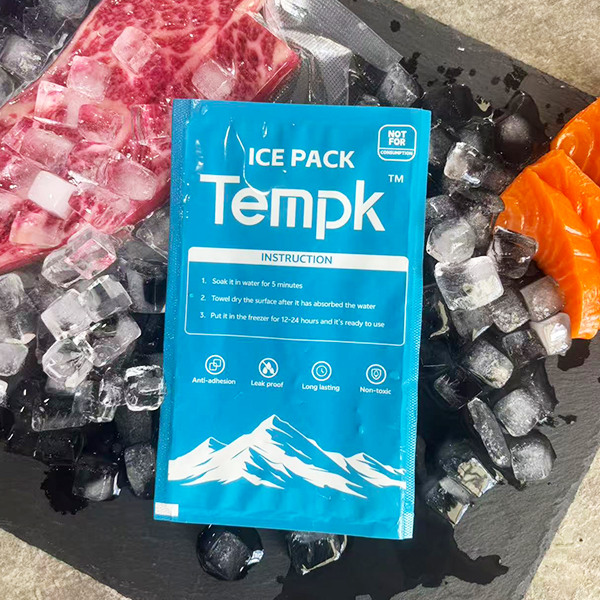
How to Source a Manufacturer Dry Ice Pack for Flowers Transport
The most useful manufacturer dry ice pack for flowers transport is rarely a standalone pack. It is one controlled component in a flower-transport recipe: species and maturity, precooling, humidity strategy, carton and vents, coolant identity, barriers, payload arrangement, route timing, monitoring, and receiving. Ordinary dry ice may be unnecessary or harmful. A hydrated sheet, gel, or PCM may fit, but only inside a tested arrangement. The sourcing goal is not to prove that one pack “keeps flowers fresh.” It is to create a repeatable route that protects a defined flower load from heat, chilling, freezing, water loss, condensation, ethylene, and physical damage.
Write a flower passport before a packaging specification
A product passport condenses the biological requirements that packaging must serve. It should be brief enough for procurement and operations to use, but precise enough to prevent a universal temperature assumption.
Record:
Species, cultivar where material, source, and harvest maturity
Stem, bunch, sleeve, and flower-head geometry
Dry, hydrated, or water-based shipment format
Verified precooling and transport condition
Chilling and freezing sensitivity
Water-loss and free-moisture concerns
Ethylene sensitivity and incompatible products
Orientation, curvature, and friction risks
Observable acceptance defects at receipt and after conditioning
USDA storage guidance reports that many conventional cut flowers are commonly handled around 0°C to 1°C with high relative humidity. Roses are a well-documented example in UC Davis guidance. That same USDA source identifies anthurium, bird of paradise, ginger, some orchids, and many tropical foliage plants as chilling sensitive below about 10°C. UC Davis recommends a substantially warmer condition for anthurium and warns against precooling it with ordinary flower loads.
These are not two ends of one “flower range.” They are different biological recipes. A mixed bouquet containing a tropical stem cannot automatically follow the rose setting. The product owner should decide whether all components share a compatible window, whether the route must be shortened, or whether the items need separate packaging.
The passport should also identify when quality will be judged. Chilling injury and disease may become visible only after flowers warm or sit at retail. A dock inspection alone can miss the defect that matters commercially.
Build a lane clock rather than using scheduled transit time
Carrier transit is only part of flower exposure. Build a lane clock from the moment flowers leave their postharvest condition until the responsible recipient restores it.
Include:
Time between harvest and precooling
Grading, bunching, sleeving, and treatment
Cooling after packing
Pack station staging
Vehicle or forwarder pickup wait
Airport or depot handling
Security, phytosanitary, and customs inspection
Transfer hubs and missed connections
Importer staging and wholesale handling
Final-mile vehicle and doorstep exposure
Time before unpacking and rehydration
For each stage, record expected and adverse ambient conditions, orientation, access to refrigeration, and who controls the parcel. Add a delay allowance based on the service and route rather than a marketing preference.
The lane clock often reveals that the main fix is operational. Earlier pickup, a refrigerated dock, aligned precooling vents, a different flight, or shorter doorstep time may reduce risk more effectively than additional coolant. Packaging should not be used to hide avoidable process gaps.
Monitoring plans belong on the same clock. Decide where the logger is activated, how it is linked to the carton, who reads it, and when data become available. A monitor is evidence, not cooling. Its location should come from thermal mapping rather than convenience.
Choose a thermal architecture with the coolant name removed
Before requesting samples, compare architectures without brand or category language.
| Route and product condition | Architecture worth evaluating | Why it may fit | Important limitation |
|---|---|---|---|
| Precooled temperate flowers in a continuously refrigerated lane | Ventilated protective carton or insulated shipper with little or no supplemental coolant | Maintains airflow and reduces unnecessary weight or wetting | Refrigeration and handovers must be reliable |
| Precooled temperate flowers with warm uncontrolled gaps | Conditioned gel, PCM, or hydrate packs in a qualified passive arrangement | Adds stored cooling through staging and last mile | Direct contact, cold spots, hydration, and movement must be controlled |
| Chilling-sensitive tropical flowers | Insulation or warmer controlled transport, often without frozen coolant | Protects against cold rooms or cold airstreams as well as external heat | Species limits and mixed-load exposure must be defined |
| Mixed frozen and flower order | Separate qualified zones or separate packages | Prevents a frozen refrigerant zone from dictating the flower condition | Multi-zone systems add complexity and usable-volume loss |
| Actual dry ice justified by another payload | Vented dry-ice system with independently proven flower isolation | May support a specialized multi-temperature shipment | Extreme cold, gas release, dangerous-goods rules, and material brittleness increase risk |
The table does not select a product. It narrows what should be tested. A manufacturer should be able to explain why its proposed architecture fits one row and where it does not fit.
Ordinary dry ice is solid carbon dioxide at about -78.5°C at atmospheric pressure. It is not a normal refrigerated flower setpoint. Solid carbon dioxide can freeze tissue, cause cold burns, and release gas that must escape the package. A low-temperature-compatible insert can manage position or separation, but it does not convert dry ice into a safe flower coolant.
A hydrate sheet begins dry or compact, absorbs water, and is frozen. It is not solid carbon dioxide. Its control variables are water uptake, drainage, hydrated mass, freezing, film or seam integrity, and restraint. A gel or PCM pack has different composition and phase behavior. Require an exact material identity for every sample.
Treat precooling as a release step
Prompt, appropriate precooling is one of the strongest flower-quality controls. USDA and FAO guidance explains that removing field heat reduces respiration and other deterioration processes. Forced-air cooling is frequently used for flower cartons because it can pull cold air through the packaged bunches.
Turn precooling into a release step with defined records:
Cooling method approved for the species
Carton vent and stack arrangement
Product temperature sampling location
Target and tolerance
Time of completion
Maximum staging time before final closure
Action when product misses the target
Do not use the temperature of the cooler as a substitute for flower temperature. Dense bunches, sleeves, paper, and carton geometry can delay the center. A passive shipper loaded with warm flowers may show a mixed condition for hours.
The tropical exception must remain visible. A process built for roses may injure anthurium or ginger flowers. In a multi-product packhouse, color coding, separate storage zones, and line-clearance checks can prevent the wrong recipe from being used.
Cooling vents create a technical trade-off. They speed forced-air cooling but can admit ambient heat later and remove structural material from the carton. A design may place the ventilated flower carton inside an insulated overpack, use closable flaps, or rely on a refrigerated carrier. The chosen state during each lane stage should be explicit.
Make humidity, condensation, and ventilation separate controls
High relative humidity helps limit flower water loss. Free water on petals or in fiberboard can damage quality and packaging. Ventilation can remove respiration heat and ethylene but may also increase moisture loss or heat entry. One material feature cannot optimize all three automatically.
Create a moisture map:
Where does water enter the system?
Are stems shipped in water, gel, wrap, or dry?
Is the hydrate sheet fully drained?
Where could coolant leak or meltwater collect?
Which surfaces become cold enough for condensation?
Can liquid reach flower heads, carton seams, labels, or adhesives?
How does the package dry, drain, or absorb incidental water?
For roses and other Botrytis-sensitive flowers, stable temperature and dry petals are especially important. Perforated film, absorbent paper, and liners may manage water loss or condensation, but they also influence airflow and cooling rate. Trial the complete combination.
Ventilation has a fourth meaning if solid carbon dioxide is present. Dry-ice venting releases carbon dioxide gas to prevent pressure buildup. Flower ventilation manages the plant environment. The design must satisfy both functions without confusing them.
Ethylene review should identify product sensitivity and route sources. Sensitive flowers should not share uncontrolled storage with ripening produce or contaminated plant waste. Low temperature can reduce ethylene production and sensitivity for many flowers, but it cannot justify chilling a tropical species.
Engineer contact barriers and movement restraints
Cold injury often begins at a contact point. A frozen pack touching a sleeve can cool one group of petals or stems far below the carton average. A loose pack may move after the package passes the pack station.
A reliable barrier has:
Full coverage of the possible contact area
Known material and thickness
Fixed position after shock and vibration
Enough mechanical strength when cold and wet
No sharp edge that bruises flowers
Compatibility with airflow and usable payload
Do not specify a universal separation distance. Performance depends on coolant state and mass, barrier conductivity, flower load, duration, ambient exposure, and geometry. Establish the arrangement through mapping and testing.
Flower movement also deserves product-specific control. Long stems can slide lengthwise. Heads can strike the carton end. Spadices can puncture neighboring anthurium spathes. Upright spikes can curve if held horizontally under certain conditions. The shipper should restrain the product without compressing petals or blocking precooling.
Coolant changes the mechanical load. A rigid pack can act like an impactor. Hydrated sheets can become heavy and flexible. A PCM panel may consume sidewall space and push bunches inward. Use final commercial components during distribution testing.
Ask the manufacturer for a claim-to-evidence file
Instead of collecting disconnected certificates, create a claim register. Each claim should name its scope, evidence, and limitation.
Examples:
Claim: the pack is leak resistant. Evidence should identify the formulation, film, seal, preparation, test method, conditioning, and acceptance criteria. A room-temperature seal test may not represent a frozen, vibrated pack.
Claim: the shipper holds temperature. Evidence should identify the range, ambient profile, duration definition, initial product temperature, payload, coolant, sensor locations, and complete traces.
Claim: the box protects flowers. Evidence should define physical damage criteria, load, orientation, compression, shock, vibration, humidity condition, and post-test inspection.
Claim: the product is reusable. Evidence should define cleaning, drying, inspection, repeated conditioning, retirement criteria, and the number of cycles actually evaluated. Do not infer indefinite reuse.
Claim: the design is sustainable. Evidence may include verified material mass, content, reuse results, cube, recyclability context, or measured reduction in flower damage. Avoid broad claims that have no system boundary.
The file should also contain drawings, bill of materials, safety information, transport classification, preparation instructions, critical production characteristics, lot traceability, and change-control contacts.
Qualify temperature and physical protection together
A strong qualification program uses the intended commercial configuration and predetermined acceptance criteria.
Thermal challenges should include representative warm and cold ambient profiles, minimum and maximum flower loads, specified product temperature at loading, coolant preparation, full sensor maps, and justified duration. ISTA 7E can provide parcel thermal profiles; lane data may support additional or different challenges.
Physical tests should reflect the distribution mode. ISTA 3A is designed for individual parcel shipments and evaluates packaged-product response to general parcel hazards. ASTM D4169 offers a structured approach for shipping-unit performance. Pallet, air-cargo, truck, and local-delivery systems may require other procedures. Standards provide methods, not flower-quality limits.
Sequence matters. A compression or vibration event can move the coolant before the thermal exposure. High humidity can weaken fiberboard before stacking. Conversely, deeply conditioned components can become brittle before a drop. Choose a sequence that represents the route or explicitly assess interactions.
Define both immediate and delayed flower checks:
Temperature at each mapped location
Broken, bent, or displaced stems
Petal and bract bruising
Puncture, friction, and sleeve damage
Wetting, condensation, and carton softening
Chilling or freezing symptoms after flowers return to display condition
Opening and hydration behavior under the buyer's approved quality method
Do not invent a universal vase-life promise. If vase performance is part of acceptance, use a controlled, species-appropriate protocol and state its limitations.
Practical example: scaling three export recipes
Imagine an exporter sells roses, tropical anthuriums, and mixed event boxes. Procurement wants one custom coolant to simplify ordering.
The flower passports show that one thermal recipe would not be safe. Roses are assigned a near-freezing process with rapid forced-air precooling. Anthuriums receive a warmer condition, insulation from cold mixed-load air, and individual protection against puncture. Mixed event boxes are reviewed composition by composition; incompatible bouquets are redesigned or shipped under a shorter service.
The manufacturer proposes a hydrate sheet for roses and an insulated liner without frozen coolant for anthuriums. The sheet's product name contains “dry ice,” but its specification confirms it is water activated and does not contain solid carbon dioxide. The exporter defines hydration mass, drain time, freezer arrangement, and a restrained side channel.
Qualification finds that the rose carton passes a warm profile when full but becomes too cold beside the sheet at minimum load. A barrier and lower coolant configuration are evaluated, followed by repeat thermal and vibration testing. For anthuriums, tests focus on cold external exposure, friction, and puncture. The mixed-event recipe is released only for approved flower combinations.
At the line trial, workers confuse two similar liners. The exporter adds part identification, separate staging, and a scan against the recipe. Production specifications and change notification are added to the purchase agreement.
The example is hypothetical. It shows that standardization can come from a shared control system even when the physical packouts differ.
Turn the successful sample into a manufacturing agreement
Approve drawings and specifications for performance-critical features. Depending on the system, these may include:
Coolant formulation or material grade
Dry and prepared mass
Film, seams, cap, or closure
Phase behavior and conditioning method
Insulation material and geometry
Barrier thickness and coverage
Carton board and moisture performance
Vent dimensions and location
Outer and usable internal dimensions
Print, label, and lot-code location
Define sample-to-production checks. A hand-made sample can differ from a die-cut, heat-sealed, or molded commercial part. Review first production units against approved measurements and functional criteria.
Change control should cover raw material, formulation, supplier, equipment, tooling, process settings, dimensions, production site, and test-method changes that may affect performance. The manufacturer should give notice before implementation where the agreement requires it. The buyer then documents whether no action, limited verification, or requalification is appropriate.
Use complaint and monitoring data as feedback. Trend excursions by route, season, packer, component lot, payload, and failure location. A rising warm-side trend may point to staging or insulation; a localized cold trend may point to conditioning or barrier movement; crush may point to humidity, stacking, or board variation.
Air transport requirements when the coolant is actual dry ice
Solid carbon dioxide requires separate dangerous-goods review. Current IATA acceptance criteria use the identification UN 1845 and the shipping names “Carbon dioxide, solid” or “Dry ice.” The package must release gas. Applicable net-quantity information, marks, labels, documentation, carrier acceptance, aircraft limits, operator variations, and national requirements must be checked for the shipment.
Personnel also need safe storage and handling procedures. Carbon dioxide can accumulate in poorly ventilated spaces, and dry ice can cause frostbite. A flower-quality qualification does not replace dangerous-goods or workplace-safety controls.
If the proposed pack is a hydrated polymer sheet, do not apply dry-ice rules solely because of its marketing name. Obtain the actual safety and transport classification. If the system contains ordinary dry ice, do not hide it behind the generic term “cooling pack.”
Frequently asked questions
What is the first document to send a flower packaging manufacturer?
Send a species and route brief: flower names and maturity, approved precooling and transport condition, chilling and ethylene sensitivity, dry or wet shipping style, box and payload dimensions, minimum and maximum load, handovers, planned duration plus delay, monitoring, and damage criteria. Ask the supplier to identify the coolant and propose a complete configuration.
Can a long hold time compensate for poor precooling?
Not reliably. A passive shipper usually slows heat transfer; it may not remove field heat uniformly from dense, warm flowers. Extra frozen coolant can create local freezing while the center remains warm. Treat precooling as a controlled release step and test the packout from its specified initial product temperature.
Should flower packaging maximize relative humidity?
High relative humidity often reduces water loss, but uncontrolled free water and condensation can promote disease and weaken packaging. The correct design balances humidity retention, ventilation, and liquid management for the species and route. Inspect actual petal, sleeve, liner, and carton wetting during qualification.
Is solid carbon dioxide suitable for tropical flowers?
It is difficult to justify because tropical flowers may be injured below about 10°C while dry ice is vastly colder. A specialized isolated system would need strong evidence that the flower zone never approaches the chilling threshold and that all gas-release and transport controls are met. Insulation without frozen coolant may be more appropriate for some cold mixed-load risks.
How should minimum payload be tested?
Use the smallest permitted commercial flower load, with its actual void control, sleeves, barrier, coolant, and logger position. A light load may cool faster, move more, or leave the coolant closer to flowers. Compare it with the maximum load under relevant warm and cold profiles and physical handling sequences.
What changes should trigger packaging review?
Review changes to coolant formulation, film, hydration, fill mass, PCM grade, insulation, divider, carton board, vent pattern, dimensions, closure, production process or site, payload, route, precooling, and monitoring. Use a documented risk assessment to decide whether specification checks, limited testing, or full requalification is needed.
Can a manufacturer guarantee vase life?
A universal guarantee would be inappropriate. Vase performance depends on species, cultivar, maturity, preharvest conditions, treatments, temperature history, water quality, handling, and retail care. A manufacturer can support a defined package test; the flower owner should set and verify any vase-life method and claim.
Source the control system, then select the components
Reliable flower transport comes from a chain of aligned controls: a species passport, lane clock, precooling release, identified coolant, moisture and ventilation plan, restrained packout, route-relevant qualification, trained operators, monitoring, receiving, and manufacturer change control.
That control system may use a hydrate sheet, gel, PCM, ordinary dry ice in a rare justified architecture, or no supplemental coolant. It becomes defensible only when the final configuration protects the actual flower and can be reproduced at production scale.
About Tempk
Tempk provides hydrate dry ice packs, gel ice packs, insulated bags and boxes, and custom temperature-control packaging. We can review a buyer's stated flower, route, coolant format, usable payload, and sample requirements to frame a packaging discussion. Because flower species and distribution conditions differ, final suitability should remain tied to the buyer's handling brief, representative testing, line controls, and change-management process. We avoid treating a loose coolant as proof of complete flower protection.
Send Tempk your flower passports, lane clock, load configurations, and required test evidence to compare practical packout samples before production sourcing.
Buy a manufacturer dry ice pack for candy logistics
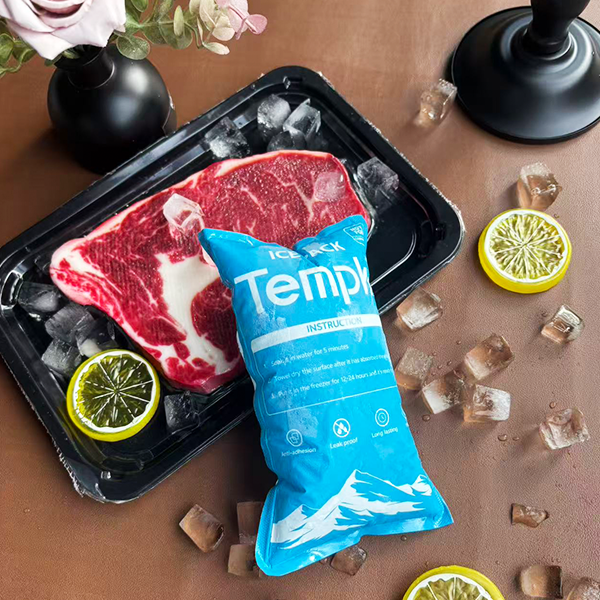
A Six-Gate Plan for Buying Candy Cold Packs
A manufacturer dry ice pack for candy logistics should pass a sequence of evidence gates before a buyer approves bulk supply. The process begins by identifying what the product actually contains, then defines the candy and lane, designs the complete packout, verifies the manufacturer and packing operation, and releases only the tested configuration. This prevents a common procurement error: comparing unit prices while the material identity, summer exposure, food separation, conditioning work, dimensional weight, and acceptance criteria remain undefined.
Start with a stop-or-release rule
The procurement team should agree that a promising sample is not a released shipping system. Each gate needs an owner, required evidence, decision, and documented exception process.
| Gate | Decision | Minimum evidence | Stop condition |
|---|---|---|---|
| 1. Identity | Do we understand the cooling component? | Medium, construction, mass, dimensions, conditioning, safety and transport status | “Dry ice pack” remains the only material description |
| 2. Product envelope | Do we know what the candy can tolerate? | Product-family limits, failure modes, starting condition, primary-package requirements | A universal candy temperature is copied from a brochure |
| 3. Lane and economics | Is the commercial route defined? | Seasonal profile, duration, delay, service, handling, final dimensions and cost model | The request specifies only “two days” and candy weight |
| 4. Packout design | Is there a reproducible complete system? | Drawing, bill of materials, coolant placement, moisture barrier, closure, sensor plan | Coolant count is stated without position or condition |
| 5. Qualification and scale | Does evidence represent production and distribution? | Thermal and physical tests, pilots, full-batch operations trial, food separation | Only an empty-box or bench-top demonstration is available |
| 6. Release and control | Can both parties hold the approved state? | Specification, acceptance plan, traceability, change notice, capacity and nonconformance process | Supplier changes can occur without review |
The gate record should distinguish a conditional pass from a full pass. For example, a prototype may pass a summer thermal screen but remain conditional until vibration and destination warm-up are assessed. Procurement should not convert that conditional result into an unrestricted purchase specification.
Assign cross-functional owners. Product quality defines candy limits and investigates bloom. Packaging engineering owns system design. Operations proves conditioning and pack-line execution. Regulatory or food-safety personnel review sanitary responsibilities, contact status, and market requirements. Logistics defines actual lanes and carrier constraints. Procurement evaluates capacity, commercial terms, and change control. The manufacturer provides controlled components and declared assumptions.
Gates 1 and 2: identify coolant and candy limits
Gate 1: establish exact identity and intended function
The keyword “dry ice pack” can point to two fundamentally different categories.
True dry ice is solid carbon dioxide. It changes directly from solid to gas at about −78°C under atmospheric conditions. The gas expansion means the package must vent; a hermetically sealed enclosure is unsafe. Workers need controls for cold contact and carbon-dioxide accumulation. Materials and candy close to the dry ice can experience extremely low local temperatures. Current transport and carrier rules must be checked, especially for air service, where the program may need UN1845 identification, proper shipping name, net dry-ice mass, package marks, and operator-specific acceptance.
A hydrate dry ice pack is a water-activated cold sheet. It is supplied dry, absorbs water into internal cells, and is frozen before use. It contains no solid carbon dioxide merely because “dry ice” appears in its commercial name. It does not inherit UN1845 requirements on that name alone. Its operational risks are different: variable activation, insufficient draining, freezer load, local ice-temperature contact, leakage, and wetting of corrugated or gift packaging.
Other candidates should remain in the decision:
prefilled gel packs, which remove hydration work but use more inbound and freezer space;
rigid ice bricks, which provide fixed geometry but can add pressure and reverse-logistics needs;
formulated phase-change packs, which may buffer a candy-specific range;
insulation-only packouts for short controlled lanes;
logistics changes such as faster service, shipment-day restrictions, or controlled pickup.
Require the manufacturer to complete an identity sheet. It should state product name and code, actual medium category, film or shell construction, absorbent or fill category, dimensions and tolerances, dry and ready-to-pack mass, seal or cell pattern, storage, activation and conditioning method, intended contact status, lot marking, case count, and rejection criteria.
For solid carbon dioxide, the sheet becomes a route and safety dossier rather than an ordinary reusable component specification. Define supplier location, received form, expected handling loss, storage method, ventilation, weighing, protective equipment, packing time, vent design, marks, documentation, carrier approval, and emergency procedure.
At the end of Gate 1, everyone should be able to answer, in plain language, “What absorbs the heat, what phase change occurs, how cold can the interface become, and what must the packer do before shipment?” If the answer depends on a trade name, stop.
Gate 2: approve the candy and moisture envelope
Create product families only when their risks are genuinely similar. A grouping based on retail department or box size is not enough.
For each family, record formulation category, chocolate type, coating, center, inclusions, primary wrap, retail carton, geometry, mass, headspace, and pack orientation. Define the approved starting condition and limits for product temperature, moisture exposure, pressure, vibration, and recovery. List observable release criteria.
A practical defect register may include:
| Defect | Questions for the product owner | Logistics control to evaluate |
|---|---|---|
| Melting or deformation | Which component softens first: shell, center, inclusion, or adhesive? | Heat exposure, starting product condition, insulation, service, coolant buffering |
| Fat bloom | Was temper stable? Can fats migrate from nuts or fillings? What cycling matters? | Reduce qualified temperature cycling; inspect after recovery; preserve production records |
| Sugar bloom | Can the primary pack admit moisture? How is cold product opened at destination? | Moisture barrier, coolant drainage, dew-point-aware warm-up, receiver instruction |
| Sticky or set gummies | Is the product sensitive to heat, humidity, cold, or pressure? | Product-specific buffering, separator design, mixed-assortment rules |
| Cracks and scuffs | Are shells brittle when cold? Can packs or dividers move? | Fixed coolant pocket, cushioning, distribution testing, controlled headspace |
| Wet or distorted gift box | Can condensation or leakage reach paperboard? | Sealed liner, physical separation, drain standard, recovery procedure |
| Odor or taint | Which films, fills, cargoes, or cleaning chemicals are relevant? | Material review, sealed primary pack, vehicle and packing-area sanitation |
Chocolate bloom deserves two lines because the corrective action differs. Sugar bloom can follow when water condenses on chocolate, dissolves surface sugar, and then evaporates. Fat bloom involves fat crystal behavior and may relate to temper, temperature history, or migration of fats from a filling or inclusion. A white surface is not a complete diagnosis.
Use dew point as an operational concept. When cold product or packaging is below the dew point of surrounding air, water can condense. The system may need an intact primary wrap, sealed inner liner, fixed separation from coolant, controlled warm-up while the liner stays closed, and instructions about when to open. More coolant is not automatically safer; it can increase the temperature difference that drives condensation.
Food safety and commercial quality should be labeled correctly. In the United States, sanitary-transport requirements apply to covered activities and address suitable equipment, sanitary operations, records, and certain training responsibilities. Adequate temperature control is required where safety depends on it. Many candy-cooling specifications are intended to protect quality rather than meet one universal food-safety temperature. Filled or specially handled products can have different assessments. The responsible regulatory and quality teams should determine coverage and controls.
Gate 2 passes only when the buyer owns a product-specific envelope and inspection method. The cold-pack manufacturer may help design to those limits, but it should not invent them.
Gate 3: define the lane and total delivered economics
Turn the route into an engineering and purchasing brief:
origin, destination group, and service level;
order cutoff, packing time, pickup, and promised delivery;
actual transit distribution, not only the nominal service;
weekends, holidays, missed connections, and reship rules;
seasonal origin and destination conditions;
hot hub, vehicle, loading-dock, locker, or porch exposure;
external cold exposure in winter;
orientation, drops, vibration, compression, and stacking;
receiver availability and warm-up practice;
mode and carrier restrictions for solid carbon dioxide.
An applicable recognized parcel thermal profile can create a consistent laboratory challenge. ISTA 7E, for example, provides heat and cold exposure profiles for parcel thermal packaging. The team should still justify the chosen profile against its lanes and perform real shipments. A standard profile is a reference, not a universal promise.
Build at least a base summer profile, a justified delay profile, and a winter or cold-transition assessment where relevant. If the company ships to a wide geography, segment lanes into a small number of validated bands. Define who assigns the band and what happens when conditions fall outside it.
Procurement should compare total delivered cost at this gate, even before the final design:
Materials: coolant, insulation, outer box, moisture liner, separators, void fill, tape, labels, printing, tooling, and sensors.
Preparation: hydration water, soak and drain labor, freezer energy, racks, staging, tempering, dry-ice loss, protective equipment, inspection, and rejected units.
Fulfillment: picking, assembly, line space, training, cycle time, pack errors, and seasonal overtime.
Freight: actual weight, dimensional weight, service level, special handling, oversize conditions, dry-ice acceptance, and destination surcharges under current tariffs.
Failure: product loss, replacements, refund, second freight movement, customer service, disposal, and brand harm.
Recovery: return shipment, cleaning, drying, inspection, lost assets, refreezing, and retirement where reuse is intended.
Dimensional weight must use the final external carton and the carrier’s current rule for the selected service. Do not freeze a historic divisor into a multiyear business case. A thick liner can reduce coolant demand but increase billed volume. A faster service may support a smaller carton. A low-cost cold pack may require more freezer labor. Gate 3 should preserve these interactions rather than rank components on unit price alone.
Sustainability uses the same system boundary. Compare a successful delivery of acceptable candy. Include packaging, activation, cold energy, outbound volume, damage, replacement, reverse logistics, and actual end-of-life options. A dry hydration sheet may save inbound space; a gel pack may reduce activation errors; a brick may work in a closed return loop. None earns a universal environmental claim without evidence and a declared boundary.
Gate 4: design a reproducible packout
A complete packout specification names every layer and position. It should contain:
outer carton code and closure;
insulation material, thickness, joints, and lid fit;
inner moisture liner and seal method;
coolant code, quantity, condition, orientation, and pocket;
physical separators and minimum clearance from candy;
candy family, retail-case pattern, and starting condition;
void fill, dividers, and movement control;
labels, marks, sensor positions, and gross dimensions.
Prototype more than one architecture. Compare top-only, side, or distributed pack placement when relevant. Include buffered contact and no-direct-contact versions. A coolant that performs well above a dense chocolate load may create a cold zone when wrapped around a light gift assortment. Design around heat entry and product risk, not symmetry.
Moisture barriers need their own verification. Check primary-wrap seals, secondary-liner closure, cold flexibility, puncture, odor, ink transfer, and water-vapor protection. Keep water-based packs outside the primary food package and in a fixed compartment. Test foreseeable leakage and pack movement. “Non-toxic” fill is not permission for uncontrolled direct food contact.
Food-contact statements should identify the exact material and intended use. Packaging substances can include films, coatings, adhesives, colorants, and other components. If a coolant or separator might directly or incidentally contact candy, the buyer needs documentation relevant to that contact type, food, temperature, duration, and market. The safest ordinary arrangement is intact primary food packaging plus maintained separation.
Conditioning is part of the architecture. For hydrate sheets, define water quality as appropriate, activation method, acceptable ready mass or fill, drain time, rack pattern, freezer loading, phase-state check, allowed tempering, staging time, and rejection. For gel and phase-change packs, define freezer arrangement, endpoint, surface condition, cycling or age limits where supported, and staging. For solid carbon dioxide, define received form, packed net mass, loss allowance, placement, gas vent, and pack-line controls.
The visual instruction should show the final sequence and common errors. Barriers cannot be optional, and packers should not improvise when a product case is shorter or an assortment changes. The order-management or warehouse system should map each qualified candy and lane group to an exact packout code.
Gate 5: qualify the system and prove scale
Qualification should answer three different questions: Does the component meet its specification? Does the packout protect the candy? Can normal operations reproduce it?
Begin with incoming component checks for identity, dimensions, mass, seal, leakage, odor, activation, freeze response, print, lot code, and carton count. Then instrument the complete packout. Place calibrated sensors at likely warm locations, the payload center, and cold interfaces near coolant. Document accuracy, interval, attachment, and any product simulant.
Use actual candy or a justified equivalent for screening, followed by representative saleable product for release. An empty box does not reproduce payload heat capacity, airflow, geometry, package pressure, or moisture behavior.
Thermal exposure should include the lane profile and delay. Physical testing should address distribution hazards because drops, vibration, compression, and inversion can move coolant, puncture a pack, open an insulation joint, or scuff candy. Inspect:
product temperatures against the approved envelope;
melted, deformed, cracked, scuffed, sticky, or set pieces;
shell and center condition for filled candy;
sugar and fat bloom indicators after recovery;
primary seal and retail-carton integrity;
wetting, condensation, leakage, and odor;
separator position, insulation joints, and outer closure.
Then conduct instrumented lane pilots through the intended service. Include challenging destinations and realistic receivers. A parcel that passes when collected immediately may fail after a porch dwell. A cold arrival may appear acceptable before condensation develops. Use a defined warm-up and delayed inspection.
Scale testing is mandatory for hydrate and frozen components. Load the freezer as it will be loaded during peak production. Check center and edge racks. Time soaking, draining, freezing, staging, picking, and packing. Measure water on the floor, wet corrugated, operator reach, errors, and throughput. Confirm that temporary staff can follow the work instruction.
Manufacturer capability is part of Gate 5. Review forecast process, sample and production lead times, normal and peak capacity, raw-material controls, lot traceability, inspection, nonconformance response, business continuity, storage, packaging count, and pallet configuration. Treat order minimum and customization as supplier-specific commercial facts to confirm, not generic claims.
Hypothetical filled-chocolate release
A candy company wants to ship dark-chocolate shells with a soft nut filling on a two- to three-day summer parcel lane. The current large shipper uses gel packs against two retail-box faces. Complaints include edge cracking, pale surfaces, and high freight cost.
Gate 1 confirms that a proposed “dry ice sheet” is a water-activated hydrate pack, not carbon dioxide. The company retains a phase-change pack and the current gel as comparison candidates.
Gate 2 separates shell cracking, sugar bloom, and fat bloom. Quality confirms the filling can contribute to fat migration and defines product-specific limits. Packaging finds that cold packs sometimes press against the gift box. Receiving tests show condensation when the inner liner is opened immediately in humid air.
Gate 3 maps a severe summer lane and a one-day delay. Finance finds that the current carton often bills by dimensional weight. Faster service on selected zones becomes a candidate because it may allow a smaller packout.
Gate 4 creates three systems with fixed coolant channels, dry separators, a sealed inner liner, and no direct pack-to-retail-box contact. The packout drawing sets product orientation and sensor positions.
Gate 5 tests heat exposure, delay, vibration, drop, and warm-up. One design is thermally acceptable but makes the shell brittle at a side position. Another uses a smaller carton and buffered phase-change pack; it passes the defined conditions and lowers billed volume on modeled routes. A hydrate version also passes but needs more drain and freezer capacity than the facility can supply during the promotion.
The team selects the smaller phase-change configuration for the launch and retains the hydrate design as a possible future lane option after operations investment. The decision is based on candy condition, scale, and delivered cost—not a claim that one coolant is always superior.
Gate 6: release, monitor, and control change
The release package should contain:
approved manufacturer and component code;
controlled specification and reference sample where useful;
packout drawing and bill of materials;
candy and lane applicability matrix;
conditioning and packing instruction;
qualification and pilot reports;
product and package acceptance criteria;
incoming and in-process inspection plan;
lot traceability and record-retention rules;
nonconformance, complaint, and corrective-action process;
manufacturer change-notification agreement;
requalification decision tree;
capacity and approved-substitution plan.
Define critical changes broadly enough to protect system evidence: fill or absorbent, film resin or gauge, shell, ink, adhesive, seal pattern, dimensions, mass, equipment, process parameter, raw-material source, manufacturing site, insulation, barrier, carton, candy formulation, primary pack, service, or route. Not every change requires a full test, but every critical change requires documented assessment.
Monitor operational leading indicators such as ready-to-pack mass, freezer endpoint, staging time, pack placement errors, wet cartons, and component leakage. Track outcome indicators by product, lane, and packout code: melt or deformation, crack, scuff, stickiness, bloom classification, condensation, delivery time, replacement, actual and dimensional weight, and cost.
Use complaint photos cautiously. A pale chocolate surface cannot by itself distinguish sugar bloom from fat bloom. Retrieve lot, temper, formulation, logger, route, humidity, and receiving evidence. Correct the mechanism rather than simply adding another frozen pack.
Define a seasonal review before the hottest and coldest shipping periods. Confirm carrier rules, rate logic, pack materials, manufacturer capacity, freezer or hydration throughput, work instructions, sensors, approved alternatives, and customer guidance. Solid-carbon-dioxide requirements should be rechecked against current mode and carrier acceptance.
The final release statement should be narrow: the named packout protects the named candy family under the tested conditions and acceptance criteria. It should not promise a universal duration, quantity, or temperature for all candy shipments.
Frequently asked questions
What is the first document to request from a manufacturer?
Request a controlled product specification that identifies the actual medium and construction, dimensions, ready mass, conditioning, intended contact status, lot marking, storage, and acceptance criteria. Then request system evidence relevant to your application, not just a component claim.
Can a hydrate cold sheet replace solid dry ice one for one?
No. Water ice and solid carbon dioxide have different phase behavior, interface temperatures, gas production, mass change, safety controls, and transport status. Redesign and qualify the whole packout.
What should stop a bulk purchase?
Stop if material identity is vague, candy limits are missing, performance is based on an empty box, coolant touches retail packaging without control, production conditioning has not been demonstrated, critical changes require no notice, or cost ignores final freight dimensions.
How can buyers prevent sugar bloom after delivery?
Use effective primary and secondary moisture barriers, isolate wet or frozen components, avoid unnecessarily cold product surfaces, and validate a closed-liner warm-up procedure for the destination humidity. Investigate actual bloom rather than treating every pale surface the same.
Does a food-contact statement eliminate the need for separation?
No. Documentation must match the material and intended contact condition. Physical separation also protects against liquid, pressure, odor, and package damage. An intact primary package and fixed coolant pocket remain prudent controls.
When is requalification needed?
Use a documented risk assessment. Changes to thermal medium, mass, dimensions, film, seal, conditioning, insulation, box, barrier, candy, primary pack, lane, service, or facility can affect performance. Significant changes usually require testing proportionate to their impact.
About Tempk
Tempk supplies water-activated hydrate cold sheets, gel packs, ice bricks, insulated boxes, and related temperature-control packaging components. Tempk’s hydrate pack absorbs water and is frozen before use; it is not solid carbon dioxide. Buyers can bring product limits, lane data, packout dimensions, operations capacity, and volume forecasts to discuss appropriate sample formats and qualification inputs.
The procurement objective is a controlled system that protects the candy, stays dry and sanitary, can be built at peak volume, and has defensible delivered economics. The six-gate record makes that objective auditable from sample through change control.
CTA: Send Tempk your candy-family matrix, primary packaging, lane and delay profile, carton drawing, quality limits, pack-line capacity, forecast, and current claims data to begin a gated cold-pack evaluation.
Manufacturer Dry Ice Pack for Biologic Packaging: Production

Manufacturer Dry Ice Pack for Biologic Packaging: Approval Gates
A manufacturer dry ice pack for biologic packaging is ready for purchase only after six approval gates are closed. The gates begin with product labeling and stability, not a coolant sample. They distinguish solid carbon dioxide from a water-activated hydration sheet, connect the component to a complete insulated shipping system, verify dangerous-goods and containment duties, qualify minimum and maximum payloads under warm and cold profiles, and control production changes. The final gate proves that operators can pack, monitor, receive, and investigate excursions consistently. This approach prevents commercial scale from getting ahead of scientific and quality evidence.
Gate 1: Establish Product Truth
Create a controlled product profile before contacting manufacturers.
FDA defines biologics broadly, including vaccines, blood products, recombinant proteins, cells, tissues, and gene therapies. That list explains why one cold-chain template cannot represent the whole class. The approved label or authorization, stability program, clinical protocol where relevant, and quality procedures identify the actual storage and transport requirements.
The profile should state the required condition, supported transport exposure, excursion basis, freeze sensitivity, freeze-thaw limit, humidity or light protection, orientation, agitation constraints, primary container, secondary assembly, and disposition authority. Use exact product language. If a proposed shipping condition is not supported, route the gap to product stability and regulatory experts rather than asking a packaging supplier to decide it.
Define the payload as a bracket, not a nominal number. Include minimum and maximum units, mass, dimensions, presentation, dunnage, and allowed void strategy. State dispatch condition and receiving condition. A minimum load may be the cold-side worst case; a maximum load may create warm regions or reduce coolant space.
Finish the profile with route facts: origin, destination, handovers, modes, planned duration, delay allowance, seasons, customs, replenishment, and receiving hours. Record whether contents are a finished biologic, an intermediate, a noninfectious material, or a specimen requiring dangerous-goods classification.
Gate 1 closes when product and route owners approve a testable user requirement.
Gate 2: Define the System Architecture
Identify every function and assign it to a component.
The primary container-closure system holds and protects the biologic. A secondary package adds containment, orientation, or physical protection. Coolant or refrigerant provides thermal capacity. Insulation controls heat flow. A structural outer protects the assembly and carries marks. Supports and separators prevent movement and direct cold contact. A temperature monitor records conditions. The qualified shipping system is the complete controlled configuration and operating process.
The term “dry ice pack” must be resolved at this gate.
Solid dry ice is carbon dioxide, solid. It sublimates, creates an extremely cold environment, can injure handlers, and requires a gas-release path. It may support a frozen biologic when stability, materials, qualification, and transport allow.
A hydrate dry ice pack is a supplier product term for a water-activated sheet. Tempk’s official instruction identifies its sheet as not being dry ice, directs hydration, and calls for freezing before use. It is therefore assessed as a frozen aqueous coolant. It does not produce carbon dioxide gas or inherit UN 1845 status.
Gel packs and purpose-formulated PCM packs have their own conditioning and phase behavior. A PCM can help shape a temperature profile, but no pack creates a controlled range without the insulation, payload, placement, and evidence.
Approval Evidence by Component
| System element | Approval evidence | Stop condition |
|---|---|---|
| Biologic and primary package | Label and stability requirements, container-closure and material compatibility | Unresolved storage, freezing, excursion, or closure requirement |
| Coolant or refrigerant | Identity, formulation or material reference, conditioning, dimensions, lot control, safety information | Ambiguous “dry ice pack” identity or unsupported universal performance claim |
| Insulation and outer | Controlled drawing, materials, dimensions, closure, physical performance, vent design where needed | Unknown construction, blocked gas path, or inadequate structural evidence |
| Payload bracket | Minimum and maximum configurations, starting state, separators, void control | Only nominal load tested or uncontrolled product contact |
| Thermal evidence | Justified hot and cold profiles, mapped sensors, raw data, criteria, instrument status | Duration claim lacks payload, profile, or pass context |
| Monitor | Intended decision, mapped position, range, accuracy evidence, interval, calibration status, data workflow | Device selected without placement or disposition process |
| Operations | Packout SOP, conditioning capacity, training, staging, receiving, damaged-package response | Laboratory configuration cannot be reproduced |
| Manufacturer control | Approved specification, production samples, lot traceability, inspection, change notification | Sales sample cannot be linked to routine production |
An evidence gap can remain open during development, but it cannot be hidden behind a certificate title or marketing adjective. Assign each gap an owner and acceptance criterion.
Gate 3: Resolve Safety, Classification, and Transport
Classify the contents and refrigerant separately.
Solid dry ice is UN 1845, Class 9 for relevant air transport. United States requirements for aircraft and vessel movements require packaging that releases carbon dioxide gas and prevents pressure rupture. Air shipment provisions include operator arrangements, net-mass marking, and specified information. The 2026 IATA dry-ice checklist adds an operational acceptance check under the current edition, and airlines can impose variations.
Warehouses and pack stations also need controls. Carbon dioxide can accumulate in confined or poorly ventilated spaces, and cold contact can cause injury. Use a site-specific ventilation and occupational safety assessment, appropriate protective equipment and tools, safe storage, and trained procedures. Never seal solid dry ice in an airtight volume.
Next classify the biologic contents. A finished therapeutic biologic is not automatically an infectious substance. If a specimen meets the definition of Biological Substance, Category B, then UN 3373 requirements apply.
United States Category B rules require triple packaging with primary receptacle, secondary packaging, and rigid outer packaging, plus leakproof, siftproof, absorbent, cushioning, and marking provisions as applicable to the contents. Under 2026 IATA Packing Instruction 650, dry ice used for refrigerated or frozen specimens is outside the secondary packaging or in the outer or overpack; supports keep secondary packages in position after dry ice dissipates; the dry-ice package vents; and primary and secondary integrity must be maintained at the refrigerant temperature.
These specimen provisions should be applied when classification requires them, not copied onto every biologic. Carrier, origin, transit, destination, mode, quantity, package, documents, and employee training all need current review.
Gate 3 closes with a documented classification and lane acceptance assessment.
Gate 4: Qualify Warm, Cold, and Physical Performance
Write and approve the protocol before formal testing. The protocol identifies the exact configuration, production-equivalent components, payload brackets, starting conditions, profiles, sensors, instruments, duration, physical challenges, and pass criteria.
Select justified ambient challenges
Use route data, recognized standards, or documented risk analysis. ISTA 7E provides thermal profiles for parcel delivery systems, and Standard 20 provides a design and qualification process for insulated shipping containers. WHO guidance includes shipping-container qualification and route profiling for time- and temperature-sensitive pharmaceutical products. USP General Chapter 1079 contributes a risk-based finished-product storage and transport framework. Select the method that fits the distribution system; a standard profile is not automatically a lane profile.
Challenge both hot and cold conditions when relevant. Warm profiles assess heat entry and coolant exhaustion. Cold profiles examine unwanted freezing or excessive cooling. Seasonal controls may differ.
Map sensors to risk
Place calibrated sensors at credible warm and cold positions identified through development. Include product-adjacent locations where coolant contact may matter, wall or lid interfaces, and internal areas that could warm. State whether each sensor represents air, a product simulant, a primary package surface, or another measurement.
The monitor used in routine shipping does not need to duplicate every qualification sensor, but its location should be justified by the map. Instrument range, accuracy, interval, response, and calibration evidence must fit the decision.
Challenge minimum and maximum payloads
Test justified brackets. Minimum payload can have less thermal mass and a high coolant-to-product ratio. Maximum payload can change geometry, reduce coolant room, or create warm zones. If a family strategy is used, explain why the chosen products and loads represent the extremes.
Inspect materials after distribution stress
Combine or sequence thermal and physical testing as the risk assessment justifies. Examine primary container protection, secondary containment, coolant seals, low-temperature brittleness, label adhesion, condensation, insulation, outer compression, venting, and component movement. Passing a temperature graph does not excuse a cracked pack or compromised label.
Confirm operational margin
Deliberately evaluate credible variation in conditioning, packout time, staging, operator technique, and component tolerance. Do not introduce arbitrary abuse; challenge the actual process limits. Establish which deviations require rework or rejection.
Gate 4 closes with approved reports, resolved deviations, raw data, and a defined operating envelope.
Gate 5: Approve the Manufacturer and Production Baseline
Manufacturer approval should connect the qualified sample to routine supply.
Create a component specification that controls attributes capable of affecting safety, fit, thermal behavior, or compliance. For a hydration sheet, this may include cell geometry, dry and conditioned dimensions, absorbent construction, film or fabric, seal pattern, hydration instructions, visual defects, and lot identification. For gel or PCM packs, control formulation reference, fill, container, seal, dimensions, conditioning, and identification. For insulation, control materials, density or construction where relevant, internal geometry, lid interface, and outer.
Review production-equivalent or pre-production samples. Incoming inspection can include identity, dimensions, mass when meaningful, seals, leakage, print, conditioned fit, and documentation. Sampling and acceptance criteria should follow risk and quality procedures.
Traceability should link supplier lot to receipt, conditioning, packout, shipment, and excursion investigation. If one lot is later found defective, the organization must identify affected systems without relying on memory.
Change control covers raw material, formulation, film, seal equipment or settings, dimensions, printing, manufacturing location, subcontractor, and supplied packaging when those changes can affect the baseline. The manufacturer provides advance notice; the buyer assesses documentation, inspection, comparison testing, or requalification.
Commercial terms belong after technical definition. Confirm minimum order, lead time, storage, supplied-unit packaging, palletization, custom identification, and continuity as questions. Do not invent them or assume that a custom print means a custom thermal solution.
Gate 5 closes when supplier approval, specification, quality terms, incoming controls, and change process are active.
Gate 6: Prove Deployment and Excursion Control
Run a pilot with actual roles and systems. Operators condition components, assemble minimum and maximum packouts, activate monitors, apply marks, tender packages, receive them, retrieve data, and follow disposition procedures. Observe whether instructions remain clear under routine time pressure.
Verify conditioning capacity. A protocol based on fully conditioned packs fails when an overloaded freezer cannot reproduce that state. Hydration operations need controlled water uptake and handling. Solid dry ice needs safe receipt, ventilated staging, protected weighing, and accurate net quantity at tender.
Verify data integrity. Link monitor ID and data to the shipment and component lots. Control clocks and time zones, original files, access, review, and retention. Define who responds to a real-time alert and what intervention is actually available.
Hypothetical Approval-Gate Deviation
Imagine a frozen biologic intermediate whose supported shipping condition permits a qualified solid-dry-ice system. Gate 4 testing passes, but the operational pilot shows that the secondary trays shift downward as dry ice dissipates. The movement does not yet break containers, but it changes sensor location and could increase mechanical risk.
The project does not waive the observation because temperatures passed. Engineers add a low-temperature-compatible support that maintains tray position after refrigerant loss. They confirm that the support does not block venting or create a new thermal bridge, repeat relevant physical and thermal challenges, update the drawing, and retrain operators.
During a later pilot, a logger alarm occurs. The shipment is quarantined. Quality reviews mapped sensor location, exposure, stability, packout record, component lot, and device status. Disposition follows approved product evidence. The packaging deviation and product decision are documented separately but connected.
This hypothetical example shows the purpose of Gate 6: discover system and workflow failures before broad release.
Gate 6 closes when operations, monitoring, receiving, and excursion procedures are demonstrated and approved.
Frequently Asked Questions
Can approval gates be shortened for an off-the-shelf box?
The depth can be risk based, but an off-the-shelf product does not remove product-specific responsibilities. You still need approved conditions, payload fit, thermal relevance, material compatibility, transport classification, operating instructions, monitoring, and supplier control. Existing qualification data may support the review when its configuration and criteria are comparable.
Which group owns the final packaging approval?
Ownership varies by organization, but approval normally involves product stability or technical experts, packaging engineering, quality, logistics, safety, regulatory or dangerous-goods specialists, procurement, and operations. Define one accountable final release authority for routine use. A supplier recommendation should not replace the product owner’s quality decision.
Is a water-activated sheet safer than solid dry ice?
It avoids carbon dioxide sublimation and the associated gas-release hazard because it is not solid dry ice. It can still leak, create cold spots, damage a freeze-sensitive product, or fail if underconditioned. Safety and suitability depend on material documentation, controlled handling, packout, qualification, and evidence.
When should the system be requalified?
Use documented risk assessment after changes to product, payload, component, manufacturer, process, route, service, profile, facility, conditioning equipment, or acceptance criteria. Significant deviations or adverse trends can also trigger review. Not every change requires the same testing, but every relevant change requires formal documented assessment.
Who decides whether an excursion affects the biologic?
The authorized product quality function decides using approved stability information and procedures, with input from relevant experts. Packaging staff supply configuration and thermal evidence; logistics supplies route records; the monitor supplies data. The carrier, coolant manufacturer, or logger alone cannot release or reject the product.
Close Every Gate Before Commercial Scale
The approval path keeps the product requirement ahead of the purchase order. Confirm label and stability conditions, define the complete system, classify contents and dry ice, qualify warm and cold profiles with payload brackets, control the manufacturer, and prove operational reproducibility. Solid dry ice may support a compatible frozen biologic but can harm freeze-sensitive products and must vent. A hydration sheet is a frozen water-based coolant, not carbon dioxide. Monitoring, insulation, coolant, containment, and qualification remain separate functions that work only as a controlled system.
About Tempk
Tempk describes water-activated hydrate sheets, gel packs, and insulated packaging. Evaluate the exact component through current specifications, instructions, production-equivalent samples, and relevant documents. The biologic owner still defines product conditions and qualifies the finished packout; no range, payload, duration, certification, or compliance follows from the coolant name. Send the controlled user requirement and evidence matrix to request the information needed for manufacturer approval.
Distributor Dry Ice Pack for Biologic Logistics: CAPA
Distributor Dry Ice Pack for Biologic Logistics: Approval Gates
A distributor dry ice pack for biologic logistics should enter routine use only after the product, material, lane, qualification, inventory, monitoring, and quality gates are closed. This protects the distributor from treating solid carbon dioxide, water-activated hydration sheets, gel packs, and PCM packs as interchangeable cold sources. It also keeps approved biologic conditions ahead of warehouse convenience. The final program must identify which payloads and routes each packout code covers, how components are conditioned and traced, what monitoring data mean, who decides excursions, and how supplier changes, CAPA, reverse logistics, and sustainability remain controlled after launch.
Gate 1: Approve the Product and Material Identity
Start with a controlled biologic distribution profile. Record approved or supported storage and transport conditions, freeze sensitivity, excursion basis, primary container, secondary assembly, orientation, light or agitation concerns, minimum and maximum payload, and the authorized disposition process.
Biologics are diverse; FDA’s category includes vaccines, blood products, proteins, cells, tissues, and gene therapies. No universal setpoint should be applied to all of them. Packaging and distribution criteria come from the exact product label and stability program.
Then resolve the coolant term.
Solid dry ice is carbon dioxide, solid. It sublimates, creates extreme cold, loses mass before and during shipment, can damage freeze-sensitive product or brittle materials, and requires carbon dioxide gas release.
A hydrate dry ice pack can be a water-activated sheet rather than carbon dioxide. Tempk’s official instruction identifies its hydration sheet as not being dry ice and directs users to add water and freeze it. It is therefore treated as a frozen aqueous coolant with hydration, expansion, conditioning, seal, and leakage controls.
Gel and PCM packs receive separate identities based on their actual formulation, container, phase behavior, and instructions. A distributor material code should map only to approved packout codes; physical resemblance cannot authorize substitution.
Gate 1 closes when quality approves the product requirement and material master.
Gate 2: Build the Distributor Packout Catalog
A controlled catalog links each biologic and lane group to a specific shipping-system revision.
The catalog entry identifies:
primary and secondary package;
coolant or refrigerant item, quantity, condition, and position;
insulated container and structural outer;
separators, supports, absorbent, and dunnage;
minimum and maximum payload;
monitor and mapped placement;
closure, venting, marks, and labels;
packout and receiving SOP;
qualified warm and cold profiles;
permitted lanes, services, seasons, and contingency.
Separate functions remain visible. Coolant absorbs heat; insulation slows heat entry; containment protects contents; the outer survives distribution; the monitor records conditions; qualification supports the system. No component alone makes the shipment temperature controlled or compliant.
Lane grouping needs a written rationale. A direct regional service, international air lane, weekend route, and remote location may require different operating envelopes. Use order-management rules or barcode checks so operators cannot select a packout solely by box size.
Payload grouping also needs limits. A minimum load can be a cold-side or warm-side challenge. A maximum load can crowd coolant or create an internal warm area. If dummy load or dunnage is used, catalog it as an approved item and specify placement.
Gate 2 closes with controlled drawings, bills of materials, eligibility rules, and revisions.
Gate 3: Review Evidence Before Qualification
| Evidence gate | Approval question | Evidence required |
|---|---|---|
| Product | What condition and excursions are supported? | Label, stability basis, container information, quality procedure |
| Coolant | What is the actual material and conditioned state? | Technical specification, safety information, instructions, production sample |
| Manufacturer | Can routine lots match the development sample? | Lot controls, inspection, traceability, quality agreement, change notification |
| Payload | Which minimum and maximum orders are covered? | Load drawings, geometry, dunnage, bracket rationale |
| Lane | What exposure and delay are credible? | Route map, service, handovers, seasonal data, contingency |
| Thermal test | Were warm and cold risks mapped? | Protocol, profiles, sensor map, instruments, raw data, pass criteria |
| Physical test | Do materials, seals, labels, and supports survive? | Conditioned distribution tests and post-test inspection |
| Operations | Can warehouses reproduce the packout? | Conditioning study, SOP, training, pilot, error controls |
| Monitoring | Does the device support a defined decision? | Placement rationale, configuration, calibration or accuracy evidence, data workflow |
| Sustainability | Does the comparison use successful deliveries? | Defined boundary, packaging, energy, returns, damage, excursions, product loss |
Do not close evidence gaps with generic certificates or supplier assurances. Mark them for testing, documentation, or quality decision. A manufacturer’s report can support approval when its configuration is comparable, but the distributor must assess applicability.
Gate 3 closes when the qualification protocol can be written without guessing critical inputs.
Gate 4: Qualify the System and Lane Envelope
The approved protocol specifies the exact production-equivalent components, payload brackets, starting conditions, conditioning, profiles, duration, sensor positions, instruments, physical challenges, and acceptance criteria.
Use justified hot and cold profiles. ISTA 7E provides parcel thermal profiles, and Standard 20 provides an insulated-container design and qualification process. WHO guidance addresses shipping-container qualification and route profiling for time-and-temperature-sensitive products. USP General Chapter 1079 supports a risk-based storage and transport framework. The chosen test must match the distribution question.
Map sensors at credible warm and cold locations. State what each measurement represents. A sensor beside dry ice is not a complete payload measurement. Instrument range, interval, accuracy evidence, response, calibration status, and data capacity should fit the test.
Test or justify minimum and maximum payloads and product families. Challenge component and operating tolerances that can reasonably occur. Do not add arbitrary abuse, but do not test only the ideal assembly.
Assess physical and thermal performance together. At low temperatures, plastics, films, labels, adhesives, and seals can change. Vibration and drops can move a coolant or damage containment. Condensation can weaken an outer or obscure identification. Confirm venting remains functional after closure and physical stress when solid dry ice is present.
Run an operational pilot. Warehouse personnel condition, pick, scan, assemble, monitor, mark, tender, and receive packages using the intended systems and timing.
Gate 4 closes with approved reports, resolved deviations, and a defined lane and payload envelope.
Gate 5: Release Inventory, Monitoring, and Traceability
Incoming controls verify item, revision, lot, quantity, condition, and required documents. Quarantine unexplained changes or damage.
Solid dry ice requires ventilated storage, protected handling, safe tools, trained staff, and a method to determine net quantity at tender. Inventory loss through sublimation should be planned and measured.
Hydration sheets need status control from dry through hydrated and conditioned states. Conditioning records should identify method, equipment, time or acceptance, batch, release, and storage. Gel and PCM packs need equivalent conditioning controls. A pack that feels cold is not automatically in the approved state.
Traceability links supplier lot, receipt, release, conditioning, packout revision, product, payload, operator, monitor, shipment, lane, and disposition as required by risk. This supports targeted holds and supplier investigations.
Monitoring data need integrity and ownership. Link device ID, configuration, mapped position, clock, start and stop, original file, reviewer, and decision. Define real-time alert coverage and interventions. At receipt, protect product, inspect the system, retrieve data, and escalate deviations.
Inventory continuity should be planned without authorizing silent substitution. Define approved alternate suppliers or components only after comparability assessment and required testing. During a shortage, the warehouse should place the affected packout code on controlled hold rather than replacing a coolant with a similar-looking item. Procurement, packaging, quality, and operations decide whether another approved configuration can serve the order. Forecasting should include conditioning lead time, freezer throughput, dry-ice availability, component shelf life where supported, seasonal volume, and quarantine stock. This prevents a supply interruption from becoming an undocumented change to a qualified shipping system.
Gate 5 closes when a routine shipment can be reconstructed from controlled records.
Gate 6: Operate Deviation, CAPA, Supplier, and Return Loops
A deviation begins when an approved requirement or process is not met: temperature alarm, underconditioned coolant, wrong packout code, blocked vent, damaged outer, component leak, missing data, carrier delay, or unapproved substitution.
Protect product and preserve evidence. Product-quality disposition uses approved stability information and procedure. The investigation reconstructs device, location, trace, payload, component lots, conditioning, assembly, route, and receipt.
Root cause may be product, package, process, equipment, person, supplier, carrier, data, or a combination. Correction addresses the immediate event. CAPA addresses systemic risk with actions, owners, due dates, effectiveness checks, and trend review.
Supplier quality agreements support complaints and investigations. Changes to material, formulation, fill, seal, dimensions, process, site, subcontractor, insulation, or labels are assessed before use. Risk determines whether documentation, inspection, comparison testing, or requalification is needed.
Reverse logistics is another controlled loop. Returned systems remain quarantined until cleaning, inspection, reconditioning, and release. Track loss, damage, history, repair if allowed, and retirement. Use measured return and performance data for sustainability claims.
Hypothetical Gate-6 Investigation
A distributor receives repeated warm alerts on one international lane using a qualified solid-dry-ice packout. Product is held under procedure and reviewed against stability data.
Trend analysis shows alerts occur after a specific carrier hub. However, packout records also show lower net dry-ice quantity at tender on late-afternoon shipments because refrigerant was weighed early and staged too long.
The investigation identifies two contributors: staging loss inside the distributor’s process and hub delay outside it. CAPA moves final weighing closer to tender, adds a maximum controlled staging time, revises data capture, and works with the carrier on service and contingency. The packout is re-evaluated under the revised worst-case exposure. Effectiveness monitoring tracks dry-ice quantity, alert rate, and lane duration.
This hypothetical example avoids blaming a coolant or carrier before evidence is connected.
Gate 6 remains active throughout the program lifecycle.
Frequently Asked Questions
Can a distributor approve a new coolant by dimensional fit alone?
No. Fit is only one attribute. Coolant identity, phase behavior, conditioning, thermal capacity, cold-side effect, seal integrity, material documentation, payload interaction, physical performance, and supplier control can change the qualified system. Perform a documented change assessment and appropriate testing. Update the baseline after approval. Do not substitute silently.
Who owns lane qualification when a third party packs the product?
Responsibilities can be allocated by agreement, but accountability must be explicit. Product owners define stability requirements; distributors or packers control execution; carriers control transport segments; quality approves evidence and disposition. A contract should define qualification, records, deviations, changes, audits, and communication. Document every operational interface.
Is solid dry ice required for frozen biologic logistics?
Not universally. Use it only when product stability, package materials, qualified performance, safety, and transport rules support it. Other passive or active solutions may be considered. The correct choice depends on the product and lane, not the word “frozen” alone. Review alternatives with quality. Document the selection rationale.
What data should be included in a distributor trend review?
Review temperatures, alerts, payloads, lanes, durations, carrier events, damage, coolant condition, conditioning deviations, component lots, packout revisions, complaints, product disposition, returns, and reshipments. Normalize results where useful so growth in shipment volume does not hide rates. Review both rates and counts. Investigate recurring adverse patterns.
Can sustainable packaging goals override the qualified bill of materials?
No. Sustainability changes should follow controlled redesign, risk review, and qualification. Reduce excess where evidence supports it, but protect the biologic’s approved conditions and containment. Compare candidates on equivalent successful-delivery criteria and include product loss, energy, returns, and end of life. Approve changes before use.
Approve a Living Distribution Program
Distributor approval is not a one-time box test. It begins with product and material identity, builds controlled packout and lane codes, qualifies warm, cold, and physical risks, and releases inventory and data systems. Monitoring, deviations, CAPA, supplier changes, reverse logistics, and sustainability keep the baseline effective. Solid dry ice and hydration sheets remain distinct, and no coolant, insulation, logger, or certificate replaces the qualified system and product-quality decision.
About Tempk
Tempk’s official catalog includes hydration coolant sheets described as hydrate dry ice packs, gel packs, and insulated packaging categories. Its hydration-sheet instruction differentiates the product from solid dry ice and directs water activation followed by freezing. A distributor can assess Tempk through exact item specifications, instructions, production-equivalent samples, lot information, and relevant documentation. Tempk components should then enter the distributor’s qualification, inventory, traceability, and change-control system. Product-specific biologic ranges, payloads, durations, certifications, and compliance must not be assumed without applicable evidence.
Provide Tempk with the controlled component requirement and distributor evidence table. Ask for the sample and documentation needed to qualify an approved packout code rather than a general cooling promise.
Bulk Dry Ice Pack for Flowers Shipping Procurement
Bulk Dry Ice Pack for Flowers Shipping: A Six-Gate Procurement System
A bulk dry ice pack for flowers shipping should be released only after six questions have clear owners and evidence. What refrigerant is it? What does the flower tolerate? Can the packing station condition it consistently? Does the complete carton control both warm and cold points? Can volume production match the sample? Do the route outcome and total cost justify the system? This sequence prevents two costly substitutions: treating solid carbon dioxide and a water-activated hydrate sheet as the same product, and treating all flowers as one refrigerated commodity. Living blooms can freeze in direct contact with a cold source, while tropical flowers may be injured at nonfreezing temperatures.
The six procurement gates
The gates can be used for a new supplier, a new pack format, or a change to an existing route.
| Gate | Decision | Required evidence | Stop condition |
|---|---|---|---|
| 0. Product identity | What is the refrigerant and construction? | Technical name, material description, safety information, drawing, and lot code | “Dry ice pack” remains ambiguous |
| 1. Flower envelope | What temperature, moisture, ethylene, and quality limits apply? | Approved species and cultivar specification with starting condition | One generic floral range covers incompatible species |
| 2. Facility readiness | Can the origin prepare the component at full rate? | Hydration, freezer, tempering, inspection, labor, and safety capacity trial | Sample process cannot be repeated at peak volume |
| 3. Packout architecture | How will carton, insulation, coolant, barriers, flowers, and airflow work together? | Fixed drawing, bill of materials, loading instruction, and physical trial | Coolant can move onto blooms or block vents |
| 4. Qualification | Does the exact system survive seasonal and delay profiles? | Repeated hot- and cold-point data, physical checks, and flower-quality results | Average-only data or delayed injury is not assessed |
| 5. Scale and control | Will production, route, and receiving remain equivalent? | First-production comparison, traceability, training, change control, and trend review | Materials or work methods can change without approval |
No gate is a paperwork exercise. Gate 0 protects safety and regulatory classification. Gate 1 protects the flowers. Gate 2 protects repeatability. Gate 3 converts a component into a configuration. Gate 4 provides evidence. Gate 5 preserves that evidence after purchasing volume increases.
Gate 0: name the refrigerant
True dry ice is solid carbon dioxide, normally identified as carbon dioxide, solid, UN1845 in applicable transport contexts. It sublimes at about −78.3°C. The package must permit gas release, carbon dioxide can accumulate in confined areas, and direct skin contact can cause cold injury. The same extreme temperature can freeze petals, foliage, stems, sleeves, and wet-pack components.
A hydrate cold sheet uses a water-absorbing structure that is activated and frozen. Tempk’s official hydrate dry ice pack description identifies a permeable membrane, polymer absorbent, and composite film. It is not solid carbon dioxide and does not create a dry-ice gas stream. Its starting surface may still be below 0°C after freezer conditioning, so it needs a flower-specific barrier and layout.
Prefilled gel packs, rigid bricks, and PCM packs form other categories. Record the technical category in the approved bill of materials. Do not let a supplier or buyer substitute a product because the dimensions or marketing label look similar.
If true dry ice is being considered, involve the transport-compliance and safety teams at this gate. Under U.S. rules for aircraft or water, 49 CFR 173.217 addresses packaging that releases carbon-dioxide gas to prevent pressure buildup. Air provisions include operator arrangements, net-mass marking, and written information under specified conditions. Current IATA acceptance materials refer to Packing Instruction 954, venting, UN1845, the proper shipping name, party and package information, and net dry-ice quantity, subject to current operator and state variations.
Those requirements do not apply to a water sheet merely because a website calls it “dry ice pack.” Accurate naming avoids both under-compliance with solid carbon dioxide and unnecessary carrier confusion over ordinary cold packs.
Gate 1: approve the flower envelope
Create one specification per species group and route, not a generic flower sheet.
The envelope should identify species, cultivar where relevant, harvest maturity, dry or wet packing, target product temperature, upper and lower action limits, approved excursion logic, relative humidity or moisture approach, ethylene sensitivity, pretreatments owned by the flower team, carton arrangement, and required quality at receipt and after display.
Use authoritative postharvest references as inputs. UC Davis recommends roses and carnations near 0°C to 1°C under specified storage practices. It describes anthuriums as strongly chilling-sensitive below 10°C and gives a much warmer storage region. Heliconias should not be held below about 10°C to 12.5°C. USDA export compatibility groups similarly span near-freezing temperate flowers through warm tropical flowers.
These references illustrate the spread; they do not replace the grower’s cultivar data, customer requirement, or route validation. Some rose cultivars respond to ethylene differently. Harvest maturity changes carnation behavior. Wet versus dry packing changes the thermal load and moisture risk.
The lower limit should be treated as seriously as the upper limit. When a packout test is designed only to prevent warming, the team may add enough frozen mass to injure the flowers at the wall or lid. Gate 1 should define the symptoms that count as cold-side failure: water-soaked tissue, discoloration, wilting, bract or petal injury, failure to open, or loss of vase performance as applicable.
Gate 2: prove packing-station readiness
Bulk performance can fail before a carton closes.
For hydration sheets, map the workflow from dry case to line-side pack. Specify water quality if material, soak time, drain method, sheet orientation, acceptable hydrated condition, rack layout, freezer batch size, spacing, conditioning endpoint, tempering, inspection, lot identification, and maximum prepared storage time. Measure throughput at the planned peak, not an average week.
For prefilled packs, confirm freezer loading, air circulation, storage footprint, rotation, pack separation, and condition after repeated handling. A dense pallet of room-temperature gel packs can overload a freezer that handles a small trial easily.
True dry ice needs a separate receiving and storage process. Include local supply reliability, loss before packing, ventilation, gas monitoring where required by the safety assessment, insulated tools, protective equipment, controlled weighing, disposal, and trained personnel. The net mass and package information used for transport must reflect the applicable rules and actual operation.
Temporary labor should participate in the capacity trial. Instructions need clear images and measurable endpoints. If two trained engineers are the only people who can hydrate sheets uniformly or place the barrier correctly, the system is not ready for a holiday flower program.
Establish line-side controls for packs that are too warm, too cold, damaged, stuck together, incompletely hydrated, leaking, contaminated, or outside the approved mass. The disposition should be documented rather than decided by adding another pack.
Gate 3: freeze the packout architecture
The drawing should show the exact carton and internal structure. Include outer dimensions, usable internal dimensions, vent holes, insulation joints, liners, sleeves, stem reservoirs, head protection, spacers, coolant pockets, barriers, void fill, closure, labels, and pack orientation.
Flower geometry makes this important. Long stems have relatively low thermal mass compared with dense food payloads, and bloom heads can cluster at one end. A central air logger may miss a frozen petal interface. Flexible sheets can move around sleeves or sag into headspace. Rigid packs can damage stems under compression.
Protect carton strength. USDA export guidance notes the combined challenges of rough handling, vibration, compression, and high humidity. Vent patterns and handholds should not weaken the box beyond the pallet load. Wet liners, condensation, or leaking stem pouches can reduce corrugated strength. Test the carton after the thermal cycle, not only when it is dry and new.
Protect airflow. Forced-air precooling depends on aligned openings and a path through the load. During vehicle transport, stacking and bracing should maintain circulation and prevent movement. A sheet taped over the vent may improve one local cold reading while leaving the carton center warm.
Control moisture by design. Roses may be dry-packed in lined cartons, yet free water on petals can support Botrytis. Tropical blooms may use moist shredded material. Hydration sheets may have a damp surface after activation. Define what moisture is intended, where it may travel, and how it is contained.
Before testing, conduct vibration, handling, and inversion trials sufficient to reveal movement. Open the carton and confirm that packs, barriers, stems, and heads remain in their assigned zones. Update the drawing before thermal qualification.
Gate 4: qualify the route, including delayed quality
Write the protocol before seeing the data.
Define the approved starting flower temperature and hydration state, payload and arrangement, exact materials, pack condition and mass, ambient profiles, duration, handling events, sensor models and calibration, sampling interval, sensor map, flower-quality criteria, repeats, and deviation rules.
Use a summer profile to challenge heat entry and a winter profile to challenge overcooling. Add a justified delay or dock event. For air export, account for origin handling, ramp, flight, transfers, customs, and destination. A route profile should be conservative enough to support the business decision but should not be presented as universal.
Sensors should cover predicted hot and cold positions: near the lid, at outer walls, beside coolant barriers, among bloom heads, along stems, and in the center. Where practical, distinguish air from tissue or surface temperature. Secure probes so they do not move into an artificial contact point.
Evaluate the packaging after the run. Check pack leakage, barrier displacement, carton wetness, crush, vent blockage, label adhesion, and stem-reservoir integrity.
Then evaluate the flowers. Species-specific checks may include petal or spathe discoloration, water-soaked areas, wilting, leaf or petal drop, bent neck, crushed heads, Botrytis, odor, failure to open, and vase performance. Chilling injury can appear after rewarming, so define a post-arrival observation point.
Hypothetical tropical-flower trial
Imagine an exporter of anthuriums and heliconias receives a proposal for the same frozen sheet used in a rose parcel. The quote promises long cooling and uses a thick insulated carton.
At Gate 0, the exporter confirms that the sheet is hydrated polymer, not solid carbon dioxide. At Gate 1, the quality team documents the warm storage needs and chilling limits of both tropical flowers. At Gate 2, it confirms that the station can condition a PCM alternative at the intended starting state.
At Gate 3, two prototypes are created: a PCM in fixed side channels and an insulation-only design for a tightly controlled air route. Neither places frozen water against the flowers. Moist shredded packing used for the species is included because it changes mass, heat transfer, and carton humidity.
Gate 4 applies hot-origin, cold-ramp, and delay exposures. Sensors map the side channels and central flowers. Quality inspections look for anthurium purpling or browning, heliconia injury, bruising, stem blockage, and post-arrival display. The decision can then compare two supported systems rather than asking whether a generic sheet “keeps flowers cold.”
The example does not assume a winner or invent a result. It shows how the flower envelope controls the experiment.
Gate 5: preserve equivalence at scale
After approval, release an exact master configuration. Supplier controls should cover dimensions, mass, film or shell, absorbent or fill, seals, cell pattern, printing, lot traceability, inspection, nonconformance, and change notification.
Compare first production with approved samples. Check dimensional fit, conditioned mass, physical integrity, hydration uniformity, low-temperature flexibility, and packout performance as risk requires. A bulk lot is not accepted because one preproduction sheet passed.
The origin site should audit hydration, freezing, tempering, pack count, placement, flower starting condition, and carton closure. The receiver should record damage, wetness, pack position, selected temperatures, flower defects, and missing logger data. Trend the results by supplier lot, shift, route, season, and species.
Define requalification triggers. They may include a new cultivar, altered harvest maturity, wet-to-dry pack change, new sleeve, carton or vent change, insulation substitution, refrigerant reformulation, film or seal change, different manufacturing site, freezer upgrade, route or airline change, new season, or longer duration.
Change control should be bilateral. The supplier notifies the buyer about critical component changes, and the buyer notifies the supplier when it changes payload or operating conditions. Otherwise, both parties can believe the old evidence still applies while the system has become different.
Assemble the bulk acceptance file
A practical acceptance file should be short enough to use and complete enough to reproduce:
approved flower and route specification;
product technical name, material description, safety information, and drawing;
supplier manufacturing specification, tolerances, inspection, and lot traceability;
pack activation, conditioning, storage, and rejection instructions;
final carton bill of materials and packout drawing;
controlled test protocol, raw data, deviations, photos, and quality observations;
lane-pilot summary and receiving feedback;
applicable transport and carrier acceptance documents for solid carbon dioxide;
packing-station capacity trial and training record;
first-production comparison;
change-notification agreement and requalification triggers;
total-cost assumptions and review date.
Avoid a file made entirely of certificates. A quality-management certificate may support supplier confidence, a material statement may support intended contact, and a thermal report may support one configuration. None substitutes for the flower envelope or the site’s ability to reproduce the packout.
Document ownership matters. Product quality owns biological limits. Packaging engineering owns the configuration and protocol. Operations owns conditioning and packing. Procurement owns commercial terms and supplier coordination. Safety and compliance own true-dry-ice handling and transport rules. Receiving supplies outcome data. Assign names before launch.
Price the program and its failure modes
Compare acquisition, preparation, distribution, recovery, and failure costs.
Acquisition includes sheets or packs, insulated cartons, barriers, liners, printing, tooling, samples, inbound freight, inspection, and inventory. Preparation includes hydration, water, racks, drainage, freezer and cold-room energy, labor, tempering, storage, dry-ice loss, protective equipment, and training.
Distribution includes outbound weight and volume, carrier charges, documentation, monitoring, pallet space, and service level. Recovery includes return transport, sorting, cleaning, drying, inspection, repair, refreezing, asset loss, and disposal.
Failure includes downgraded stems, rejected cartons, event replacements, claims, rework, shorter vase life, delayed chilling symptoms, investigations, and emergency freight. Model cost per accepted stem or successful carton rather than per cold pack.
| Failure mode | Early evidence | Likely mechanism to investigate | Controlled response |
|---|---|---|---|
| Discoloration next to coolant | Cold sensor or contact pattern | Pack too cold, missing barrier, or sheet movement | Hold product, restore approved layout, and requalify the change |
| Warm center with cold walls | Divergent sensor traces | Blocked airflow, excessive void, or poor distribution | Review vents, load density, insulation, and pack position |
| Wet petals and carton | Condensation or leakage | Temperature cycling, hydrate-sheet surface water, stem reservoir, or liner | Identify moisture source and redesign containment or handling |
| Petal drop or sleepiness | Species-specific quality decline | Ethylene exposure, maturity, or treatment gap | Investigate route source; do not add coolant as the default |
| Crushed heads | Carton deformation or shifted rigid pack | Wet-strength loss, stacking, or poor restraint | Review box specification, bracing, pack pocket, and pallet pattern |
| Bulk lot differs from sample | Mass, seal, size, or conditioning variation | Supplier or process change | Quarantine lot and use agreed nonconformance and change-control process |
| Air shipment rejected | Acceptance checklist failure | Incorrect dry-ice marking, documentation, venting, or operator arrangement | Correct with trained compliance personnel before tender |
The risk table keeps corrective actions tied to mechanisms. A warm center does not always require more refrigerant, and petal drop does not necessarily indicate a thermal failure. Root-cause work protects both flower quality and material efficiency.
Frequently asked questions
Can the same hydrate sheet be approved for several flower species?
The physical component may be common, but conditioning, quantity, placement, barrier, and carton can differ. Approval should be by defined species group and route. Commonality is useful only where thermal and quality evidence supports it.
Does bulk purchasing require a supplier audit?
The level depends on risk and volume. Buyers should at least review how critical materials, dimensions, mass, seals, hydration behavior, inspection, traceability, nonconformance, and changes are controlled. Higher-risk programs may justify a remote or on-site audit under the buyer’s quality process.
What makes a route test representative?
It uses the approved flowers, starting condition, carton, insulation, coolant, barriers, pack sequence, seasonal exposure, duration, handovers, and receiving method. It also records deviations. One successful shipment can support a pilot but rarely establishes broad seasonal repeatability alone.
Should a supplier guarantee a universal hold time?
No. Hold time depends on the full system, payload, starting temperatures, conditioning, ambient profile, sensor and acceptance criteria, and handling. Ask for a tested configuration and conditions. A universal duration detached from those inputs is not a reliable purchasing specification.
When should a bulk packout be requalified?
Revisit it after changes to species, cultivar, harvest stage, product temperature, moisture method, payload, carton, vents, insulation, coolant, barrier, conditioning equipment, supplier material, route, carrier, season, or duration. Recurrent excursions or quality complaints are also triggers.
The release rule
Approve volume only when the organization can reproduce why the system is safe for the named flowers on the named route. The answer should identify the refrigerant, biological envelope, conditioning capacity, fixed geometry, hot- and cold-point evidence, delayed quality outcome, supplier controls, transport requirements, and total cost.
That rule often steers fresh flowers away from true dry ice. It may support hydrate sheets, gel packs, PCM, refrigerated transport, or insulation-only control in different applications. The method remains the same: qualify the route, not the product name.
About Tempk
Tempk offers water-activated hydrate cold sheets, gel packs, ice bricks, insulated boxes, and related cold-chain packaging components. Its hydrate dry ice pack is frozen after absorbing water and is distinct from solid carbon dioxide. We can work from a flower envelope, carton drawing, route, peak throughput, and reuse plan to discuss candidate formats and trial inputs. Final release should rely on the buyer’s approved configuration, evidence, and operating controls.
CTA: Bring Tempk your current carton, species matrix, route profile, peak-rate assumptions, and quality criteria to identify the next procurement gate and suitable samples.
Wholesale dry ice pack for milk delivery: Route-Ready Sourcing Framework

Wholesale dry ice pack for milk delivery: A Route-Ready Sourcing Framework
The right wholesale dry ice pack for milk delivery is not the sheet with the boldest duration claim. It is the component that fits a defined payload, insulated package, route, operating process, and acceptance decision, with evidence that remains valid at production scale. Buyers should separate hydration sheets from solid carbon dioxide, protect against both warming and overcooling, and approve the complete system rather than the coolant in isolation.
This framework is designed for a packaging distributor, dairy wholesaler, route-service company, reseller, or procurement manager that needs to move from search term to controlled purchase. It combines product fit, thermal design, material quality, supplier governance, qualification, operations, and total delivered cost. The outcome is a specification and packout that can be defended, taught, repeated, and improved.
Define the Customer Segments the SKU Will Serve
A sound sourcing decision separates three questions that are often mixed together: what condition the payload requires, what cooling medium can support that condition, and what evidence proves the assembled packout on the intended route. Starting with a product name reverses that logic. Starting with the payload and decision criteria makes the supplier comparison useful.
A hydration dry ice pack is a water-activated cell sheet that is frozen before use. It can provide broad, flexible cooling around wholesale milk delivery, but it remains one component of the shipping system. It should not be treated as solid carbon dioxide, as a qualified shipper by itself, or as evidence of a universal duration. The goal is to standardize a sellable and supportable coolant SKU while preserving milk safety, freeze protection, inventory economics, and customer-specific route fit.
The final selection must connect composition, thermal behavior, material integrity, insulation, payload geometry, conditioning, route exposure, monitoring, and operating control. When actual solid carbon dioxide is proposed, its separate safety and transport requirements enter the plan. When a water-based sheet is proposed, classify and approve that product from its own documentation.
A wholesaler is not simply buying a large carton of coolant sheets. It is taking responsibility for SKU selection, inventory, customer education, complaints, lot traceability, and the gap between a factory sample and a dairy customer's real route. Milk delivery customers may use bottles, pouches, crates, totes, parcel boxes, or refrigerated vehicles. A wholesale program needs clear boundaries so one easy-to-stock product is not presented as a universal validated solution.
Write a one-page shipment requirement before contacting suppliers. Include product identity and condition, primary package, payload dimensions and mass, dispatch temperature, upper and lower acceptance limits, route and handovers, seasonal exposure, insulation, receiving process, monitoring decision, planned volume, and applicable quality or market requirements. Mark unknowns for the pilot.
Separate product-safety limits from quality preferences and packaging-damage limits. They may lead to different sensor positions and actions. The receiver should know which observation or data set triggers acceptance, hold, investigation, or disposition. A thermal design cannot be optimized until the decision rule is clear.
Write a Clear Product and Claim Boundary
Compare technologies against the requirement. Hydration sheets offer flat pre-activation storage, broad surface coverage, and flexible cell geometry. Gel packs can be easier to deploy in some chilled parcels. PCM can be selected around a narrower phase-change condition. Solid carbon dioxide supports appropriate deep-frozen uses but has distinct handling and transport controls. Active equipment may be justified on high-risk complex lanes.
Within wholesale milk delivery, product and route cases still need segmentation. The table shows why a single catalog SKU cannot be assumed to serve every case.
| Product or route case | Main exposure or failure | Useful design response | Assumption to avoid |
|---|---|---|---|
| Local dairy route | Repeated stops, door openings, and return handling | Sell with a route-assessment and tote guidance | Do not displace vehicle control without evidence |
| Doorstep milk service | Unattended dwell and variable collection time | Define an insulated kit and receiving instruction | Customer behavior is part of the exposure |
| Parcel milk shipment | Sort hubs, vibration, and high surface area | Offer a mapped packout rather than a loose sheet | Protect bottles from direct frozen contact |
| Institutional account | Larger volume, dock delay, and documentation | Provide lot records and a controlled pack specification | Service support may matter more than SKU breadth |
Choose the simplest technology that creates an adequate, demonstrated margin without introducing a larger cold-side, moisture, handling, or compliance risk. If two options appear viable, compare them through the same payload, profile, acceptance rule, and total-cost boundary.
Build Factory and Incoming Quality Controls
Build the architecture from outside to inside: outer carton or reusable container, insulation, liner or vapor control where needed, coolant location, buffer, payload holder, product packages, headspace management, sensor positions, closure, and labels. Every layer should have a job. Removing or moving a layer after qualification is a design change, not a harmless packing preference.
Route analysis should explicitly challenge listing one wholesale sheet as suitable for all milk delivery, quoting component hold time without the tested packout, losing factory lot identity during repacking, giving customers vague soak-and-freeze instructions, and holding inventory through an undocumented material change. Use alternatives such as refrigerated route equipment for dense recurring delivery, gel packs supplied as a simpler chilled option, PCM plates for controlled reusable kits, and insulation-only packages for approved shelf-stable products where they solve the exposure more directly. For example, better vehicle control may be more effective on a dense route, while a parcel network may need stronger passive protection at walls and handovers.
Application-specific technical considerations include Wholesale specifications should distinguish dry dimensions, activated condition, sheet mass after the approved process, cell layout, and intended packaging use., Milk packouts require warm-side and freeze-side evaluation because bottle contact can differ sharply from case-center conditions., A reseller should understand which performance statements belong to a component and which belong to a tested system., Carton and pallet configuration affect landed cost, warehouse density, and damage before the sheet is activated., and Customer support should include route inputs and qualification boundaries rather than a universal pack-count chart. Convert each material consideration into a drawing feature, supplier control, operating step, inspection, or protocol variable. Otherwise it remains an observation that cannot protect routine shipments.
Support Milk Packout Qualification
Use decision gates to compare manufacturers. This keeps procurement from awarding on unit price before composition, evidence, production control, and scale have been reviewed.
| Decision gate | Pass condition | Warning sign |
|---|---|---|
| Application fit | The supplier asks about wholesale milk delivery, payload, route, insulation, and acceptance limits | A pack count is offered from keyword or carton size alone |
| Specification | Dimensions, materials, activation, tolerances, and intended use are written | The sample is treated as the entire specification |
| Evidence | Test conditions and system boundaries are disclosed | Component claims are presented as universal packout performance |
| Quality control | Lot traceability, inspection, nonconformance, and change notification are defined | Substitution is allowed without buyer review |
| Scale | Capacity, carton packing, lead-time assumptions, and peak planning are discussed | Only nominal monthly output is discussed |
| Support | Production-representative samples and a route trial plan are available | The buyer is urged to skip the pilot |
After the initial screen, request production-representative samples and a written specification. Review the manufacturer's proposed tolerances, test methods, lot identification, nonconformance handling, retained samples, complaint response, and notice period for change. Define who owns tooling, artwork, and approval of custom cell patterns or packaging.
Commercial terms should make assumptions visible. Confirm quotation unit, dry or activated condition, carton quantity, palletization, minimum order, lead-time basis, sample status, freight term, documentation, and peak capacity without turning any unverified figure into a performance promise. Compare landed and operating cost under the same scope.
Protect Traceability From Pallet to Route
Qualification starts with an approved protocol and ends with a controlled report, drawing, specification, and work instruction. Test the intended payload or a justified surrogate, real insulation and coolant, defined conditioning, assembly variation, a representative or risk-based ambient profile, appropriate duration, and pre-agreed acceptance criteria. Include physical inspection and receiving behavior.
Place loggers at expected warm and cold risk locations. A center-only map can miss wall heat and frozen contact. Define accuracy, calibration status, interval, synchronization, start and stop logic, data ownership, and treatment of anomalies. Repeat the test sufficiently to understand system variation rather than selecting one favorable run.
Operationalize these controls: Maintain inventory by lot and prevent damaged cartons from entering customer orders., Provide one approved hydration and freezing instruction with clear exceptions., Train sales staff to collect milk type, package, route, insulation, volume, and receiving information., Offer production-representative samples for customer trials and preserve their lot identity., and Route complaints through a technical review that separates product defects from packout or process issues. Training should include wrong-component prevention, freeze-status checks, damaged-sheet rejection, route-variant selection, and deviation escalation. Observe actual operators during launch; ambiguity often appears only at production speed.
Apply the relevant claim boundaries as well. Milk must follow the applicable product specification and dairy or sanitary-transport rules in the customer's market., A U.S. Grade A reference of 7 degrees Celsius or 45 degrees Fahrenheit or below can inform relevant shipments, but it is not a worldwide specification for every dairy product., and The wholesaler should communicate the actual coolant composition. Solid carbon dioxide rules do not arise merely because a water-activated product is marketed with dry ice wording. When product, payload, coolant, insulation, conditioning, route, carrier, season, site, logger, or supplier material changes, let the quality team determine whether document review, confirmation testing, or requalification is needed.
Manage Landed Cost and Service Risk
Calculate cost per successful shipment, not price per dry sheet. Include inbound freight and cube, storage, hydration water, labor, drainage, freezer energy and capacity, racks, buffers, insulation, assembly time, monitoring, rejects, leakage, product damage, customer service, disposal, returns, and the cost of a failed or delayed delivery. State which items are measured and which are assumptions.
Wholesale consolidation may reduce small inbound shipments, but repacking waste, pallet damage, inventory loss, freezer energy at customer sites, and product outcomes remain relevant.
Flat dry sheets can improve warehouse density before activation.
Returnable systems should be offered only where a customer can control cleaning, inspection, return, and loss.
Optimize in controlled steps. Remove excess headspace, improve insulation fit, adjust coolant placement, create qualified seasonal variants, simplify operator motions, or improve receiving timing before reducing thermal margin without evidence. Track product acceptance, excursions, damage, complaints, pack loss, labor, and energy by route family.
A stable program does not mean a frozen design. It means changes are proposed with a reason, evaluated against the system boundary, tested when necessary, approved, documented, trained, and traced. That discipline allows cost and sustainability improvement without turning the live distribution network into an uncontrolled experiment.
Frequently Asked Questions
What is different about wholesale buying versus a direct factory order?
A wholesaler must manage inventory, customer fit, lot traceability, instructions, complaints, and claims across several accounts. The product specification therefore needs both factory controls and a clear customer-support boundary.
Can a wholesaler publish one hold time?
Only when the statement is tied to a defined and supported packout, payload, conditioning method, ambient profile, and acceptance criteria. A component duration should not be presented as universal performance for every milk route.
What information should sales staff collect from a dairy customer?
Collect milk type and required condition, bottle or pouch format, payload, case or tote dimensions, route duration, stops, vehicle control, ambient exposure, insulation, dispatch condition, receiver timing, desired volume, and documentation expectations.
How should private-label products be controlled?
Approve artwork, product identity, lot coding, carton count, instructions, and change-control responsibilities in writing. Private labeling should not obscure the factory source or make broader performance and compliance claims than the supporting evidence allows.
When is a hydration sheet not the best option?
It may not be the best fit when vehicle refrigeration already controls a dense route, the milk is shelf stable, the product cannot tolerate local freezing, the customer lacks hydration or freezer capacity, or a different PCM system better matches the required condition.
Approve a Controlled System, Not an Isolated Claim
The best sourcing outcome links six decisions: the payload requirement, cooling technology, pack architecture, manufacturer controls, qualification evidence, and operating process. If any link is missing, the buyer is relying on an assumption that may fail at scale or on a different route.
For wholesale milk delivery, the practical next step is to document the product, route, payload, insulation, dispatch and receiving conditions, seasonal exposure, and evidence needs. Use that brief to compare production samples and design a trial. Only then freeze the commercial specification and rollout plan.
About Tempk
Tempk provides water-activated cell sheets and related cold-chain packaging support for food, seafood, medical samples, and other temperature-sensitive shipments. For wholesale milk delivery, Tempk can review payload and route inputs, propose sheet and cell formats, discuss material and print options, and prepare samples for packout trials. The final shipping configuration should be approved from the customer's product requirements and evidence on the complete insulated system, with production and change controls aligned before scale-up.
Send Tempk your wholesale milk delivery shipment brief and expected order scale to discuss coolant-sheet options, custom cell geometry, production samples, and a route-based packout review.
Wholesale dry ice pack for fruit logistics: Route-Ready Sourcing Framework
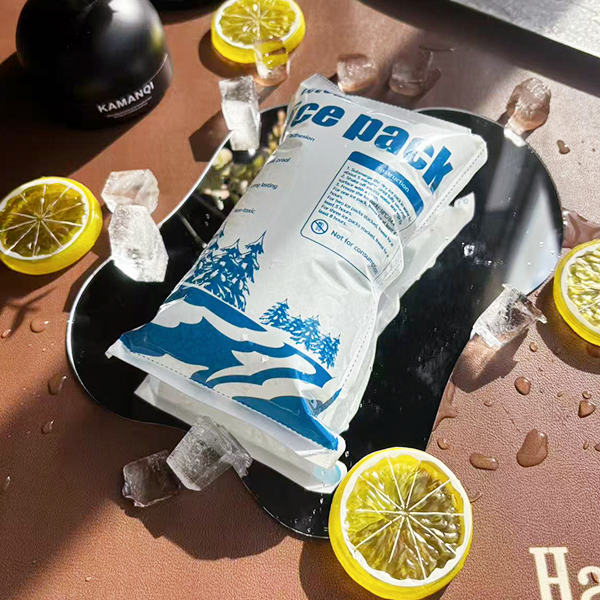
Wholesale dry ice pack for fruit logistics: A Route-Ready Sourcing Framework
The right wholesale dry ice pack for fruit logistics is not the sheet with the boldest duration claim. It is the component that fits a defined payload, insulated package, route, operating process, and acceptance decision, with evidence that remains valid at production scale. Buyers should separate hydration sheets from solid carbon dioxide, protect against both warming and overcooling, and approve the complete system rather than the coolant in isolation.
This framework is designed for a produce exporter, wholesaler, packhouse, distributor, or cold-chain procurement team that needs to move from search term to controlled purchase. It combines product fit, thermal design, material quality, supplier governance, qualification, operations, and total delivered cost. The outcome is a specification and packout that can be defended, taught, repeated, and improved.
Name the Commodity, Maturity, and Acceptable Condition
A sound sourcing decision separates three questions that are often mixed together: what condition the payload requires, what cooling medium can support that condition, and what evidence proves the assembled packout on the intended route. Starting with a product name reverses that logic. Starting with the payload and decision criteria makes the supplier comparison useful.
A hydration dry ice pack is a water-activated cell sheet that is frozen before use. It can provide broad, flexible cooling around fruit logistics, but it remains one component of the shipping system. It should not be treated as solid carbon dioxide, as a qualified shipper by itself, or as evidence of a universal duration. The goal is to remove or intercept heat without causing commodity-specific chilling injury, condensation, dehydration, blocked airflow, or pressure damage.
The final selection must connect composition, thermal behavior, material integrity, insulation, payload geometry, conditioning, route exposure, monitoring, and operating control. When actual solid carbon dioxide is proposed, its separate safety and transport requirements enter the plan. When a water-based sheet is proposed, classify and approve that product from its own documentation.
Fruit is alive after harvest. It continues to respire, exchange moisture, and respond to temperature, gas composition, handling, and time. Some commodities benefit from low temperatures, while others can suffer chilling injury even above the freezing point of water. That is why a wholesale dry ice pack for fruit logistics should never be selected from a generic fresh-produce label. The buyer must connect the exact commodity, maturity, packaging, pre-cooling status, route, and receiver process.
Write a one-page shipment requirement before contacting suppliers. Include product identity and condition, primary package, payload dimensions and mass, dispatch temperature, upper and lower acceptance limits, route and handovers, seasonal exposure, insulation, receiving process, monitoring decision, planned volume, and applicable quality or market requirements. Mark unknowns for the pilot.
Separate product-safety limits from quality preferences and packaging-damage limits. They may lead to different sensor positions and actions. The receiver should know which observation or data set triggers acceptance, hold, investigation, or disposition. A thermal design cannot be optimized until the decision rule is clear.
Choose Pre-Cooling, Transport Control, and Coolant Roles
Compare technologies against the requirement. Hydration sheets offer flat pre-activation storage, broad surface coverage, and flexible cell geometry. Gel packs can be easier to deploy in some chilled parcels. PCM can be selected around a narrower phase-change condition. Solid carbon dioxide supports appropriate deep-frozen uses but has distinct handling and transport controls. Active equipment may be justified on high-risk complex lanes.
Within fruit logistics, product and route cases still need segmentation. The table shows why a single catalog SKU cannot be assumed to serve every case.
| Product or route case | Main exposure or failure | Useful design response | Assumption to avoid |
|---|---|---|---|
| Temperate fruit | Heat gain, moisture loss, decay, and bruising | Use commodity and variety guidance with adequate airflow | The correct condition varies by fruit and route |
| Tropical and subtropical fruit | Chilling injury, skin damage, uneven ripening, and flavor loss | Set a lower-temperature boundary before adding frozen coolant | Colder is not automatically better |
| Berries and delicate fruit | High respiration, leakage, mold, and compression | Prioritize rapid pre-cooling, ventilation, and gentle pack geometry | A coolant sheet cannot correct poor harvest or pre-cooling practice |
| Mixed produce cartons | Different sensitivities and ethylene responses | Separate incompatible commodities or design to the most restrictive condition | An average carton temperature can hide product-specific damage |
Choose the simplest technology that creates an adequate, demonstrated margin without introducing a larger cold-side, moisture, handling, or compliance risk. If two options appear viable, compare them through the same payload, profile, acceptance rule, and total-cost boundary.
Place Sheets Without Blocking the Package
Build the architecture from outside to inside: outer carton or reusable container, insulation, liner or vapor control where needed, coolant location, buffer, payload holder, product packages, headspace management, sensor positions, closure, and labels. Every layer should have a job. Removing or moving a layer after qualification is a design change, not a harmless packing preference.
Route analysis should explicitly challenge using frozen coolant as a substitute for commodity pre-cooling, blocking ventilation holes with a broad sheet, placing a frozen pack against chilling-sensitive fruit, ignoring respiration heat and moisture accumulation, and purchasing one wholesale SKU for fruit with incompatible requirements. Use alternatives such as forced-air or hydro-cooling at the packhouse where appropriate, refrigerated transport with controlled airflow, conditioned gel or phase change media for parcel formats, and insulation alone for short mild routes and tolerant commodities where they solve the exposure more directly. For example, better vehicle control may be more effective on a dense route, while a parcel network may need stronger passive protection at walls and handovers.
Application-specific technical considerations include Respiration generates heat after harvest, so the payload is not always thermally passive., Time and temperature interact in chilling injury; USDA guidance notes that some fruits and vegetables can be injured at temperatures above 0 degrees Celsius., A broad cell sheet can intercept wall heat but may also block airflow or create a local cold boundary if placement is not planned., Perforated films, vents, trays, liners, and headspace influence humidity and gas exchange as well as heat transfer., and Condensation at unpacking or during temperature swings can encourage surface defects and weaken corrugated packaging. Convert each material consideration into a drawing feature, supplier control, operating step, inspection, or protocol variable. Otherwise it remains an observation that cannot protect routine shipments.
Evaluate the Wholesaler's Evidence and Change Control
Use decision gates to compare manufacturers. This keeps procurement from awarding on unit price before composition, evidence, production control, and scale have been reviewed.
| Decision gate | Pass condition | Warning sign |
|---|---|---|
| Application fit | The supplier asks about fruit logistics, payload, route, insulation, and acceptance limits | A pack count is offered from keyword or carton size alone |
| Specification | Dimensions, materials, activation, tolerances, and intended use are written | The sample is treated as the entire specification |
| Evidence | Test conditions and system boundaries are disclosed | Component claims are presented as universal packout performance |
| Quality control | Lot traceability, inspection, nonconformance, and change notification are defined | Substitution is allowed without buyer review |
| Scale | Capacity, carton packing, lead-time assumptions, and peak planning are discussed | Only nominal monthly output is discussed |
| Support | Production-representative samples and a route trial plan are available | The buyer is urged to skip the pilot |
After the initial screen, request production-representative samples and a written specification. Review the manufacturer's proposed tolerances, test methods, lot identification, nonconformance handling, retained samples, complaint response, and notice period for change. Define who owns tooling, artwork, and approval of custom cell patterns or packaging.
Commercial terms should make assumptions visible. Confirm quotation unit, dry or activated condition, carton quantity, palletization, minimum order, lead-time basis, sample status, freight term, documentation, and peak capacity without turning any unverified figure into a performance promise. Compare landed and operating cost under the same scope.
Qualify the Route With Representative Fruit
Qualification starts with an approved protocol and ends with a controlled report, drawing, specification, and work instruction. Test the intended payload or a justified surrogate, real insulation and coolant, defined conditioning, assembly variation, a representative or risk-based ambient profile, appropriate duration, and pre-agreed acceptance criteria. Include physical inspection and receiving behavior.
Place loggers at expected warm and cold risk locations. A center-only map can miss wall heat and frozen contact. Define accuracy, calibration status, interval, synchronization, start and stop logic, data ownership, and treatment of anomalies. Repeat the test sufficiently to understand system variation rather than selecting one favorable run.
Operationalize these controls: Pre-cool fruit using the approved commodity process before final pack assembly., Hydrate, drain, and freeze sheets without introducing dirty water or uncontrolled surface moisture., Keep vents and airflow paths open unless the validated design intentionally redirects air., Use spacers or trays to prevent frozen contact and crushing., and At receiving, inspect pulp or product condition, condensation, packaging, and ripening response under the agreed plan. Training should include wrong-component prevention, freeze-status checks, damaged-sheet rejection, route-variant selection, and deviation escalation. Observe actual operators during launch; ambiguity often appears only at production speed.
Apply the relevant claim boundaries as well. Food sanitary-transport rules may require suitable, cleanable equipment and adequate temperature control where food safety depends on it., Commodity quality guidance is not interchangeable with a legal limit, and the shipper should confirm destination phytosanitary, food-safety, and labeling requirements separately., and A water-activated sheet should be classified from its actual composition. Solid carbon dioxide transport rules should not be assumed from a marketing name alone. When product, payload, coolant, insulation, conditioning, route, carrier, season, site, logger, or supplier material changes, let the quality team determine whether document review, confirmation testing, or requalification is needed.
Optimize Landed Cost and Marketable Yield
Calculate cost per successful shipment, not price per dry sheet. Include inbound freight and cube, storage, hydration water, labor, drainage, freezer energy and capacity, racks, buffers, insulation, assembly time, monitoring, rejects, leakage, product damage, customer service, disposal, returns, and the cost of a failed or delayed delivery. State which items are measured and which are assumptions.
Avoided fruit loss is often the largest environmental and economic lever, especially for high-value or resource-intensive produce.
Flat dry inventory may lower inbound cube, but hydration water, freezer energy, liners, films, pallets, and damaged-fruit outcomes must be included.
Mixed-load efficiency can look attractive while increasing shrink if commodity incompatibility is ignored.
Optimize in controlled steps. Remove excess headspace, improve insulation fit, adjust coolant placement, create qualified seasonal variants, simplify operator motions, or improve receiving timing before reducing thermal margin without evidence. Track product acceptance, excursions, damage, complaints, pack loss, labor, and energy by route family.
A stable program does not mean a frozen design. It means changes are proposed with a reason, evaluated against the system boundary, tested when necessary, approved, documented, trained, and traced. That discipline allows cost and sustainability improvement without turning the live distribution network into an uncontrolled experiment.
Frequently Asked Questions
Can one frozen sheet work for all fruits?
No. Fruits differ in chilling sensitivity, respiration, moisture behavior, maturity, packaging, and route needs. A packout appropriate for berries may injure a tropical fruit or obstruct the ventilation needed by another commodity. Group only products with compatible requirements.
Why is pre-cooling important before shipping?
A passive coolant is most reliable when it maintains a prepared payload rather than removing uncontrolled field heat. Effective pre-cooling, where appropriate for the commodity, reduces the initial load and makes route performance more repeatable.
Should the sheet cover the carton vents?
Not unless the tested design deliberately uses that arrangement. Blocking vents can restrict airflow and change humidity or gas exchange. Map the sheet around the tray and vent geometry, then evaluate product condition as well as temperature.
How should chilling injury be considered?
Use commodity- and variety-specific guidance, maturity information, exposure time, and the product quality plan. USDA references show that some produce can suffer chilling injury above the freezing point of water, so a generic near-freezing target is unsafe.
What should a fruit-logistics buyer request from a wholesaler?
Request composition and intended-use information, dimensions, activation instructions, quality controls, traceability, change notification, carton packing, customization limits, and production-representative samples. Then qualify the assembled packout with the actual commodity and route.
Approve a Controlled System, Not an Isolated Claim
The best sourcing outcome links six decisions: the payload requirement, cooling technology, pack architecture, manufacturer controls, qualification evidence, and operating process. If any link is missing, the buyer is relying on an assumption that may fail at scale or on a different route.
For fruit logistics, the practical next step is to document the product, route, payload, insulation, dispatch and receiving conditions, seasonal exposure, and evidence needs. Use that brief to compare production samples and design a trial. Only then freeze the commercial specification and rollout plan.
About Tempk
Tempk provides water-activated cell sheets and related cold-chain packaging support for food, seafood, medical samples, and other temperature-sensitive shipments. For fruit logistics, Tempk can review payload and route inputs, propose sheet and cell formats, discuss material and print options, and prepare samples for packout trials. The final shipping configuration should be approved from the customer's product requirements and evidence on the complete insulated system, with production and change controls aligned before scale-up.
Send Tempk your fruit logistics shipment brief and expected order scale to discuss coolant-sheet options, custom cell geometry, production samples, and a route-based packout review.
Supplier dry ice pack for dairy logistics: Route-Ready Sourcing Framework

Supplier dry ice pack for dairy logistics: A Route-Ready Sourcing Framework
The right supplier dry ice pack for dairy logistics is not the sheet with the boldest duration claim. It is the component that fits a defined payload, insulated package, route, operating process, and acceptance decision, with evidence that remains valid at production scale. Buyers should separate hydration sheets from solid carbon dioxide, protect against both warming and overcooling, and approve the complete system rather than the coolant in isolation.
This framework is designed for a dairy manufacturer, distributor, third-party logistics provider, quality manager, or sourcing team that needs to move from search term to controlled purchase. It combines product fit, thermal design, material quality, supplier governance, qualification, operations, and total delivered cost. The outcome is a specification and packout that can be defended, taught, repeated, and improved.
Map Products, Packages, and Routes
A sound sourcing decision separates three questions that are often mixed together: what condition the payload requires, what cooling medium can support that condition, and what evidence proves the assembled packout on the intended route. Starting with a product name reverses that logic. Starting with the payload and decision criteria makes the supplier comparison useful.
A hydration dry ice pack is a water-activated cell sheet that is frozen before use. It can provide broad, flexible cooling around dairy logistics, but it remains one component of the shipping system. It should not be treated as solid carbon dioxide, as a qualified shipper by itself, or as evidence of a universal duration. The goal is to support different dairy products and routes without treating milk, yogurt, cream, cultured products, butter, cheese, and frozen dairy as one thermal category.
The final selection must connect composition, thermal behavior, material integrity, insulation, payload geometry, conditioning, route exposure, monitoring, and operating control. When actual solid carbon dioxide is proposed, its separate safety and transport requirements enter the plan. When a water-based sheet is proposed, classify and approve that product from its own documentation.
Dairy logistics spans products with very different recipes, structures, package formats, and approved conditions. A tub of cultured product, a bottle of cream, a block of cheese, and a frozen dessert can share a brand but not necessarily a packout. A useful supplier starts by mapping product families and route families. The dry ice pack is then specified as a coolant component inside an insulated and tested system, not as a shortcut around product knowledge.
Write a one-page shipment requirement before contacting suppliers. Include product identity and condition, primary package, payload dimensions and mass, dispatch temperature, upper and lower acceptance limits, route and handovers, seasonal exposure, insulation, receiving process, monitoring decision, planned volume, and applicable quality or market requirements. Mark unknowns for the pilot.
Separate product-safety limits from quality preferences and packaging-damage limits. They may lead to different sensor positions and actions. The receiver should know which observation or data set triggers acceptance, hold, investigation, or disposition. A thermal design cannot be optimized until the decision rule is clear.
Assign the Right Cooling Technology to Each Family
Compare technologies against the requirement. Hydration sheets offer flat pre-activation storage, broad surface coverage, and flexible cell geometry. Gel packs can be easier to deploy in some chilled parcels. PCM can be selected around a narrower phase-change condition. Solid carbon dioxide supports appropriate deep-frozen uses but has distinct handling and transport controls. Active equipment may be justified on high-risk complex lanes.
Within dairy logistics, product and route cases still need segmentation. The table shows why a single catalog SKU cannot be assumed to serve every case.
| Product or route case | Main exposure or failure | Useful design response | Assumption to avoid |
|---|---|---|---|
| Fluid milk and cream | Warming, local freezing, leakage, and cap stress | Use buffered cooling and product-specific distribution limits | High water content does not remove contact risk |
| Yogurt and cultured dairy | Temperature abuse, cup damage, whey separation, and seal defects | Protect cups from pressure and monitor the approved condition | Product quality can change without obvious package damage |
| Cheese and butter | Wide variation by style, moisture, fat, and packaging | Use SKU-specific quality limits and route needs | Do not inherit a fluid-milk packout |
| Frozen dairy | Thawing, texture damage, and long dwell | Evaluate a frozen system and compliant carrier options | Water-based sheets and solid carbon dioxide are not interchangeable |
Choose the simplest technology that creates an adequate, demonstrated margin without introducing a larger cold-side, moisture, handling, or compliance risk. If two options appear viable, compare them through the same payload, profile, acceptance rule, and total-cost boundary.
Write a Supplier Specification With Clear Boundaries
Build the architecture from outside to inside: outer carton or reusable container, insulation, liner or vapor control where needed, coolant location, buffer, payload holder, product packages, headspace management, sensor positions, closure, and labels. Every layer should have a job. Removing or moving a layer after qualification is a design change, not a harmless packing preference.
Route analysis should explicitly challenge standardizing on one dairy packout before segmenting SKUs, accepting a broad food-grade statement without intended-use documentation, allowing substitutions in film or absorbent media without change review, mapping only a full load and ignoring partial distribution cases, and treating temperature evidence as proof that hygiene and package integrity were controlled. Use alternatives such as refrigerated distribution for pallet and dense route movement, gel packs for freeze-sensitive chilled parcels, PCM plates for reusable dairy totes, and solid carbon dioxide or active systems for approved frozen applications where they solve the exposure more directly. For example, better vehicle control may be more effective on a dense route, while a parcel network may need stronger passive protection at walls and handovers.
Application-specific technical considerations include Dairy products vary in water, fat, protein, salt, fermentation, structure, and package headspace, all of which affect thermal and quality response., A flexible cell sheet can conform to cases and totes, while buffers and dividers protect fragile cups and bottles., Payload thermal mass, dispatch condition, insulation, route openings, and return handling determine the useful cooling demand., The required sensor map changes between a bottle case, a yogurt tray, a cheese carton, and a frozen dessert shipper., and Material cleanliness, odor, leakage, and traceability matter because a coolant defect can contaminate secondary packaging and disrupt receiving. Convert each material consideration into a drawing feature, supplier control, operating step, inspection, or protocol variable. Otherwise it remains an observation that cannot protect routine shipments.
Qualify Representative and Worst-Case Packouts
Use decision gates to compare manufacturers. This keeps procurement from awarding on unit price before composition, evidence, production control, and scale have been reviewed.
| Decision gate | Pass condition | Warning sign |
|---|---|---|
| Application fit | The supplier asks about dairy logistics, payload, route, insulation, and acceptance limits | A pack count is offered from keyword or carton size alone |
| Specification | Dimensions, materials, activation, tolerances, and intended use are written | The sample is treated as the entire specification |
| Evidence | Test conditions and system boundaries are disclosed | Component claims are presented as universal packout performance |
| Quality control | Lot traceability, inspection, nonconformance, and change notification are defined | Substitution is allowed without buyer review |
| Scale | Capacity, carton packing, lead-time assumptions, and peak planning are discussed | Only nominal monthly output is discussed |
| Support | Production-representative samples and a route trial plan are available | The buyer is urged to skip the pilot |
After the initial screen, request production-representative samples and a written specification. Review the manufacturer's proposed tolerances, test methods, lot identification, nonconformance handling, retained samples, complaint response, and notice period for change. Define who owns tooling, artwork, and approval of custom cell patterns or packaging.
Commercial terms should make assumptions visible. Confirm quotation unit, dry or activated condition, carton quantity, palletization, minimum order, lead-time basis, sample status, freight term, documentation, and peak capacity without turning any unverified figure into a performance promise. Compare landed and operating cost under the same scope.
Deploy With Traceability and Site Discipline
Qualification starts with an approved protocol and ends with a controlled report, drawing, specification, and work instruction. Test the intended payload or a justified surrogate, real insulation and coolant, defined conditioning, assembly variation, a representative or risk-based ambient profile, appropriate duration, and pre-agreed acceptance criteria. Include physical inspection and receiving behavior.
Place loggers at expected warm and cold risk locations. A center-only map can miss wall heat and frozen contact. Define accuracy, calibration status, interval, synchronization, start and stop logic, data ownership, and treatment of anomalies. Repeat the test sufficiently to understand system variation rather than selecting one favorable run.
Operationalize these controls: Create approved packout families by dairy SKU, package, route, and season., Control hydration, draining, freezing, staging, and release at each distribution site., Protect cups, seals, caps, and labels from direct contact and free water., Train operators to recognize wrong sheet count, partial freezing, damage, and route mismatch., and Use receiving data and deviation review to maintain the system after launch. Training should include wrong-component prevention, freeze-status checks, damaged-sheet rejection, route-variant selection, and deviation escalation. Observe actual operators during launch; ambiguity often appears only at production speed.
Apply the relevant claim boundaries as well. Applicable dairy and sanitary-transport requirements depend on the product and market, while the product specification remains the central shipping condition., U.S. Grade A pasteurized milk references use 7 degrees Celsius or 45 degrees Fahrenheit or below, but this figure should not be generalized to all dairy categories or countries., and Actual solid carbon dioxide has distinct handling and transport requirements. A water-activated coolant should be described and classified from its composition. When product, payload, coolant, insulation, conditioning, route, carrier, season, site, logger, or supplier material changes, let the quality team determine whether document review, confirmation testing, or requalification is needed.
Optimize the Portfolio on Delivered Outcomes
Calculate cost per successful shipment, not price per dry sheet. Include inbound freight and cube, storage, hydration water, labor, drainage, freezer energy and capacity, racks, buffers, insulation, assembly time, monitoring, rejects, leakage, product damage, customer service, disposal, returns, and the cost of a failed or delayed delivery. State which items are measured and which are assumptions.
A portfolio approach can reduce overpacking by matching protection to product families instead of using the most conservative configuration everywhere.
Flat storage can reduce inbound cube, while local freezer energy, water, labor, film, returns, and dairy loss determine the wider result.
Reusable assets need sanitation and performance controls that suit dairy operations.
Optimize in controlled steps. Remove excess headspace, improve insulation fit, adjust coolant placement, create qualified seasonal variants, simplify operator motions, or improve receiving timing before reducing thermal margin without evidence. Track product acceptance, excursions, damage, complaints, pack loss, labor, and energy by route family.
A stable program does not mean a frozen design. It means changes are proposed with a reason, evaluated against the system boundary, tested when necessary, approved, documented, trained, and traced. That discipline allows cost and sustainability improvement without turning the live distribution network into an uncontrolled experiment.
Frequently Asked Questions
Can one dry ice pack serve all dairy products?
It may serve several compatible packouts, but it should not be assumed. Fluid milk, yogurt, cheese, butter, cream, and frozen dairy differ in product condition, package strength, thermal mass, and freeze sensitivity. Segment first, then test representative systems.
What is the supplier's role in qualification?
A supplier can provide component information, samples, production controls, and packout input. The shipper and its quality team remain responsible for approving the complete system against the product, route, insulation, conditioning, monitoring, and applicable requirements.
Why test partial loads?
As cases are removed or orders vary, air space, coolant-to-product ratio, and the location of warm zones can change. A full load may not represent a small order or the end of a delivery route.
Which documents should be requested?
Depending on the intended use, request product description, composition or safety information, material declarations, activation instructions, specification, quality controls, traceability, change-control process, and relevant test support. Ask your quality team to define the exact list.
How can a dairy program avoid overpacking?
Create controlled packout families using product requirements, seasonal route data, package geometry, and qualification results. Review performance and deviations before reducing coolant. Do not optimize from one successful delivery or from component claims alone.
Approve a Controlled System, Not an Isolated Claim
The best sourcing outcome links six decisions: the payload requirement, cooling technology, pack architecture, manufacturer controls, qualification evidence, and operating process. If any link is missing, the buyer is relying on an assumption that may fail at scale or on a different route.
For dairy logistics, the practical next step is to document the product, route, payload, insulation, dispatch and receiving conditions, seasonal exposure, and evidence needs. Use that brief to compare production samples and design a trial. Only then freeze the commercial specification and rollout plan.
About Tempk
Tempk provides water-activated cell sheets and related cold-chain packaging support for food, seafood, medical samples, and other temperature-sensitive shipments. For dairy logistics, Tempk can review payload and route inputs, propose sheet and cell formats, discuss material and print options, and prepare samples for packout trials. The final shipping configuration should be approved from the customer's product requirements and evidence on the complete insulated system, with production and change controls aligned before scale-up.
Send Tempk your dairy logistics shipment brief and expected order scale to discuss coolant-sheet options, custom cell geometry, production samples, and a route-based packout review.
Manufacturer dry ice pack for milk shipping: Route-Ready Sourcing Framework
Manufacturer dry ice pack for milk shipping: A Route-Ready Sourcing Framework
The right manufacturer dry ice pack for milk shipping is not the sheet with the boldest duration claim. It is the component that fits a defined payload, insulated package, route, operating process, and acceptance decision, with evidence that remains valid at production scale. Buyers should separate hydration sheets from solid carbon dioxide, protect against both warming and overcooling, and approve the complete system rather than the coolant in isolation.
This framework is designed for a dairy processor, milk brand, laboratory program, distributor, or packaging buyer that needs to move from search term to controlled purchase. It combines product fit, thermal design, material quality, supplier governance, qualification, operations, and total delivered cost. The outcome is a specification and packout that can be defended, taught, repeated, and improved.
Define the Milk Condition and the Receiver's Decision
A sound sourcing decision separates three questions that are often mixed together: what condition the payload requires, what cooling medium can support that condition, and what evidence proves the assembled packout on the intended route. Starting with a product name reverses that logic. Starting with the payload and decision criteria makes the supplier comparison useful.
A hydration dry ice pack is a water-activated cell sheet that is frozen before use. It can provide broad, flexible cooling around milk, but it remains one component of the shipping system. It should not be treated as solid carbon dioxide, as a qualified shipper by itself, or as evidence of a universal duration. The goal is to keep milk cold enough for its approved condition while preventing local freezing, bottle damage, leakage, and weak temperature evidence.
The final selection must connect composition, thermal behavior, material integrity, insulation, payload geometry, conditioning, route exposure, monitoring, and operating control. When actual solid carbon dioxide is proposed, its separate safety and transport requirements enter the plan. When a water-based sheet is proposed, classify and approve that product from its own documentation.
Milk carries substantial thermal mass, yet a bottle wall next to a frozen sheet can cool much faster than the liquid at the center of the case. That mismatch creates a two-sided design problem: protect the warmest location without freezing the coldest contact point. A capable manufacturer should therefore discuss milk type, package size, case pattern, dispatch temperature, delivery window, and receiver practice before recommending sheet count or placement.
Write a one-page shipment requirement before contacting suppliers. Include product identity and condition, primary package, payload dimensions and mass, dispatch temperature, upper and lower acceptance limits, route and handovers, seasonal exposure, insulation, receiving process, monitoring decision, planned volume, and applicable quality or market requirements. Mark unknowns for the pilot.
Separate product-safety limits from quality preferences and packaging-damage limits. They may lead to different sensor positions and actions. The receiver should know which observation or data set triggers acceptance, hold, investigation, or disposition. A thermal design cannot be optimized until the decision rule is clear.
Select Coolant and Insulation as One Architecture
Compare technologies against the requirement. Hydration sheets offer flat pre-activation storage, broad surface coverage, and flexible cell geometry. Gel packs can be easier to deploy in some chilled parcels. PCM can be selected around a narrower phase-change condition. Solid carbon dioxide supports appropriate deep-frozen uses but has distinct handling and transport controls. Active equipment may be justified on high-risk complex lanes.
Within milk, product and route cases still need segmentation. The table shows why a single catalog SKU cannot be assumed to serve every case.
| Product or route case | Main exposure or failure | Useful design response | Assumption to avoid |
|---|---|---|---|
| Pasteurized retail milk | Warm exposure, local freezing, cap leakage, and short shelf life | Use the labeled or approved distribution condition and buffer frozen sheets | A U.S. Grade A reference is not a universal global specification |
| Flavored or fortified milk | Formula-specific stability and package sensitivity | Use the finished-product specification, not ordinary milk assumptions | Ingredients can change viscosity, freezing behavior, and quality response |
| Milk samples | Small thermal mass and documentation needs | Use a compact mapped packout with clear chain of custody | Do not infer specimen rules from retail delivery practice |
| Shelf-stable milk before opening | Often different from refrigerated milk | Confirm whether active cooling is needed at all | Unnecessary cooling adds condensation and cost |
Choose the simplest technology that creates an adequate, demonstrated margin without introducing a larger cold-side, moisture, handling, or compliance risk. If two options appear viable, compare them through the same payload, profile, acceptance rule, and total-cost boundary.
Protect Bottles From Both Heat and Frozen Contact
Build the architecture from outside to inside: outer carton or reusable container, insulation, liner or vapor control where needed, coolant location, buffer, payload holder, product packages, headspace management, sensor positions, closure, and labels. Every layer should have a job. Removing or moving a layer after qualification is a design change, not a harmless packing preference.
Route analysis should explicitly challenge allowing a frozen sheet to rest against a bottle for the full route, packing milk that has not reached the intended dispatch condition, using a center sensor only and missing case-edge freezing, failing to account for heat stored in crates, dividers, and secondary cartons, and mixing shelf-stable and refrigerated assumptions in the same purchasing specification. Use alternatives such as refrigerated vehicle control for dense scheduled routes, conditioned gel packs for parcels where freeze protection is critical, phase change media selected around an approved milk range, and no coolant for shelf-stable milk when the product and route allow it where they solve the exposure more directly. For example, better vehicle control may be more effective on a dense route, while a parcel network may need stronger passive protection at walls and handovers.
Application-specific technical considerations include Milk's water-rich composition gives it meaningful thermal mass, so product pull-down and maintenance are different engineering tasks., A hydrate sheet spreads cooling over a broad area, but surface contact resistance and buffer materials control how quickly that cooling reaches a bottle wall., During a trial, sensors should capture expected warm zones and likely cold-contact zones rather than only the geometric center., Frozen sheets should be conditioned consistently because incomplete freezing changes the available phase-change capacity., and Caps, labels, cartons, and bottle materials should be observed after the full cycle, including receiving and warm-up. Convert each material consideration into a drawing feature, supplier control, operating step, inspection, or protocol variable. Otherwise it remains an observation that cannot protect routine shipments.
Evaluate the Manufacturer's Control System
Use decision gates to compare manufacturers. This keeps procurement from awarding on unit price before composition, evidence, production control, and scale have been reviewed.
| Decision gate | Pass condition | Warning sign |
|---|---|---|
| Application fit | The supplier asks about milk, payload, route, insulation, and acceptance limits | A pack count is offered from keyword or carton size alone |
| Specification | Dimensions, materials, activation, tolerances, and intended use are written | The sample is treated as the entire specification |
| Evidence | Test conditions and system boundaries are disclosed | Component claims are presented as universal packout performance |
| Quality control | Lot traceability, inspection, nonconformance, and change notification are defined | Substitution is allowed without buyer review |
| Scale | Capacity, carton packing, lead-time assumptions, and peak planning are discussed | Only nominal monthly output is discussed |
| Support | Production-representative samples and a route trial plan are available | The buyer is urged to skip the pilot |
After the initial screen, request production-representative samples and a written specification. Review the manufacturer's proposed tolerances, test methods, lot identification, nonconformance handling, retained samples, complaint response, and notice period for change. Define who owns tooling, artwork, and approval of custom cell patterns or packaging.
Commercial terms should make assumptions visible. Confirm quotation unit, dry or activated condition, carton quantity, palletization, minimum order, lead-time basis, sample status, freight term, documentation, and peak capacity without turning any unverified figure into a performance promise. Compare landed and operating cost under the same scope.
Qualify the Case With Product, Not Water Bottles Alone
Qualification starts with an approved protocol and ends with a controlled report, drawing, specification, and work instruction. Test the intended payload or a justified surrogate, real insulation and coolant, defined conditioning, assembly variation, a representative or risk-based ambient profile, appropriate duration, and pre-agreed acceptance criteria. Include physical inspection and receiving behavior.
Place loggers at expected warm and cold risk locations. A center-only map can miss wall heat and frozen contact. Define accuracy, calibration status, interval, synchronization, start and stop logic, data ownership, and treatment of anomalies. Repeat the test sufficiently to understand system variation rather than selecting one favorable run.
Operationalize these controls: Pre-cool milk to the defined dispatch condition rather than asking the pack to remove uncontrolled process heat., Stage hydrated sheets so they are fully frozen and protected from contamination., Use dividers or sleeves to prevent direct contact where local freezing is possible., Verify case count, coolant count, assembly pattern, dispatch time, and vehicle or parcel condition., and Define receiving checks for temperature evidence, leakage, swelling, broken seals, and product disposition. Training should include wrong-component prevention, freeze-status checks, damaged-sheet rejection, route-variant selection, and deviation escalation. Observe actual operators during launch; ambiguity often appears only at production speed.
Apply the relevant claim boundaries as well. FDA references for U.S. Grade A pasteurized milk use 7 degrees Celsius or 45 degrees Fahrenheit or below, but the applicable product specification and jurisdiction must govern the actual shipment., Sanitary transportation also concerns cleanable equipment, contamination prevention, and agreed responsibilities, not temperature alone., and A water-activated coolant sheet is not automatically solid carbon dioxide. Verify composition and transport classification rather than relying on the phrase dry ice pack. When product, payload, coolant, insulation, conditioning, route, carrier, season, site, logger, or supplier material changes, let the quality team determine whether document review, confirmation testing, or requalification is needed.
Optimize Labor, Damage, and Thermal Margin Together
Calculate cost per successful shipment, not price per dry sheet. Include inbound freight and cube, storage, hydration water, labor, drainage, freezer energy and capacity, racks, buffers, insulation, assembly time, monitoring, rejects, leakage, product damage, customer service, disposal, returns, and the cost of a failed or delayed delivery. State which items are measured and which are assumptions.
Flat sheet inventory can reduce pre-activation storage cube, which is useful at a processor with constrained cold rooms.
Freezer energy, water use, damaged milk, bottle leakage, secondary packaging, and route returns must remain inside the boundary.
A reusable loop may be practical on controlled milk routes, but only if inspection, hygiene, drying, return timing, and performance are managed.
Optimize in controlled steps. Remove excess headspace, improve insulation fit, adjust coolant placement, create qualified seasonal variants, simplify operator motions, or improve receiving timing before reducing thermal margin without evidence. Track product acceptance, excursions, damage, complaints, pack loss, labor, and energy by route family.
A stable program does not mean a frozen design. It means changes are proposed with a reason, evaluated against the system boundary, tested when necessary, approved, documented, trained, and traced. That discipline allows cost and sustainability improvement without turning the live distribution network into an uncontrolled experiment.
Frequently Asked Questions
Can frozen sheets be placed directly against milk bottles?
Direct placement can create a colder bottle-wall zone than the center of the case. Whether that is acceptable depends on the milk, bottle, route, and conditioning. Test a buffer or divider and monitor both the likely cold point and the expected warm point.
What temperature should milk be shipped at?
Use the product's approved storage and distribution condition and the rules that apply in the destination market. U.S. Grade A references commonly use 7 degrees Celsius or 45 degrees Fahrenheit or below for pasteurized milk, but this is not a universal specification for every milk product or jurisdiction.
Is a hydration dry ice pack the same as solid dry ice?
No assumption should be made from the name. A hydration sheet is typically water activated and frozen, whereas solid dry ice is carbon dioxide. Ask for composition and safety documentation, then confirm how the planned carrier treats the material.
How should a milk packout be temperature mapped?
Place sensors at expected warm locations, near likely cold-contact areas, and within representative product positions. Use the proposed milk load, bottle arrangement, insulation, coolant conditioning, and ambient profile. Define acceptance criteria before reviewing the data.
What changes require a new review?
Changes to bottle size, case count, sheet dimensions, absorbent media, film, hydration method, freezer process, insulation, route, carrier, seasonal profile, or receiver timing can affect performance. A quality team should decide whether document review, confirmation testing, or requalification is appropriate.
Approve a Controlled System, Not an Isolated Claim
The best sourcing outcome links six decisions: the payload requirement, cooling technology, pack architecture, manufacturer controls, qualification evidence, and operating process. If any link is missing, the buyer is relying on an assumption that may fail at scale or on a different route.
For milk, the practical next step is to document the product, route, payload, insulation, dispatch and receiving conditions, seasonal exposure, and evidence needs. Use that brief to compare production samples and design a trial. Only then freeze the commercial specification and rollout plan.
About Tempk
Tempk provides water-activated cell sheets and related cold-chain packaging support for food, seafood, medical samples, and other temperature-sensitive shipments. For milk, Tempk can review payload and route inputs, propose sheet and cell formats, discuss material and print options, and prepare samples for packout trials. The final shipping configuration should be approved from the customer's product requirements and evidence on the complete insulated system, with production and change controls aligned before scale-up.
Send Tempk your milk shipment brief and expected order scale to discuss coolant-sheet options, custom cell geometry, production samples, and a route-based packout review.
Manufacturer dry ice pack for medical shipping: Route-Ready Sourcing Framework
Manufacturer dry ice pack for medical shipping: A Route-Ready Sourcing Framework
The right manufacturer dry ice pack for medical shipping is not the sheet with the boldest duration claim. It is the component that fits a defined payload, insulated package, route, operating process, and acceptance decision, with evidence that remains valid at production scale. Buyers should separate hydration sheets from solid carbon dioxide, protect against both warming and overcooling, and approve the complete system rather than the coolant in isolation.
This framework is designed for a pharmaceutical logistics team, diagnostic laboratory, clinical-supply group, healthcare distributor, or packaging engineer that needs to move from search term to controlled purchase. It combines product fit, thermal design, material quality, supplier governance, qualification, operations, and total delivered cost. The outcome is a specification and packout that can be defended, taught, repeated, and improved.
Define the Product, Decision, and Route
A sound sourcing decision separates three questions that are often mixed together: what condition the payload requires, what cooling medium can support that condition, and what evidence proves the assembled packout on the intended route. Starting with a product name reverses that logic. Starting with the payload and decision criteria makes the supplier comparison useful.
A hydration dry ice pack is a water-activated cell sheet that is frozen before use. It can provide broad, flexible cooling around medical shipping, but it remains one component of the shipping system. It should not be treated as solid carbon dioxide, as a qualified shipper by itself, or as evidence of a universal duration. The goal is to protect the labeled or protocol-defined condition without freezing a chilled product, confusing water-based coolant with solid carbon dioxide, or treating a component as a qualified shipping system.
The final selection must connect composition, thermal behavior, material integrity, insulation, payload geometry, conditioning, route exposure, monitoring, and operating control. When actual solid carbon dioxide is proposed, its separate safety and transport requirements enter the plan. When a water-based sheet is proposed, classify and approve that product from its own documentation.
Medical shipping begins with the product or specimen requirement. Some materials must remain chilled, some must remain frozen, some can tolerate controlled room temperature, and some require actual solid carbon dioxide. A water-activated hydrate sheet can support selected packouts, but its trade name does not determine suitability. The manufacturer must work inside a qualification plan that defines payload, route, insulation, conditioning, monitoring, documentation, and acceptance criteria.
Write a one-page shipment requirement before contacting suppliers. Include product identity and condition, primary package, payload dimensions and mass, dispatch temperature, upper and lower acceptance limits, route and handovers, seasonal exposure, insulation, receiving process, monitoring decision, planned volume, and applicable quality or market requirements. Mark unknowns for the pilot.
Separate product-safety limits from quality preferences and packaging-damage limits. They may lead to different sensor positions and actions. The receiver should know which observation or data set triggers acceptance, hold, investigation, or disposition. A thermal design cannot be optimized until the decision rule is clear.
Choose the Correct Temperature-Stabilizing Medium
Compare technologies against the requirement. Hydration sheets offer flat pre-activation storage, broad surface coverage, and flexible cell geometry. Gel packs can be easier to deploy in some chilled parcels. PCM can be selected around a narrower phase-change condition. Solid carbon dioxide supports appropriate deep-frozen uses but has distinct handling and transport controls. Active equipment may be justified on high-risk complex lanes.
Within medical shipping, product and route cases still need segmentation. The table shows why a single catalog SKU cannot be assumed to serve every case.
| Product or route case | Main exposure or failure | Useful design response | Assumption to avoid |
|---|---|---|---|
| Chilled medicine or biologic | Warm excursion and accidental freezing | Follow labeled storage conditions and use a freeze-protective qualified packout | Never infer suitability from a generic medical claim |
| Diagnostic specimen | Protocol, stability, leakage, and chain-of-custody requirements | Use the laboratory or authority instruction for that specimen | Specimen classification and packaging may add separate requirements |
| Frozen research material | Thawing, uncertain endpoint, and long handovers | Confirm whether water-based coolant, PCM, or solid carbon dioxide is appropriate | The three technologies are not interchangeable |
| Clinical-supply kit | Mixed components, small thermal mass, and documentation | Map each component and use a controlled assembly | A center sensor may miss edge freezing |
Choose the simplest technology that creates an adequate, demonstrated margin without introducing a larger cold-side, moisture, handling, or compliance risk. If two options appear viable, compare them through the same payload, profile, acceptance rule, and total-cost boundary.
Engineer Freeze Protection and Thermal Margin
Build the architecture from outside to inside: outer carton or reusable container, insulation, liner or vapor control where needed, coolant location, buffer, payload holder, product packages, headspace management, sensor positions, closure, and labels. Every layer should have a job. Removing or moving a layer after qualification is a design change, not a harmless packing preference.
Route analysis should explicitly challenge assuming every medical product uses a common chilled range, placing frozen coolant against freeze-sensitive vials or devices, using an unqualified box because the coolant has a medical label, copying a component hold time into a route procedure, and overlooking dangerous-goods rules for specimens or actual solid carbon dioxide. Use alternatives such as conditioned gel packs for freeze-sensitive chilled shipments, phase change materials selected around a defined product range, solid carbon dioxide for appropriate deep-frozen materials and compliant transport, and active temperature-controlled containers for high-risk or long complex lanes where they solve the exposure more directly. For example, better vehicle control may be more effective on a dense route, while a parcel network may need stronger passive protection at walls and handovers.
Application-specific technical considerations include WHO guidance treats coolant, insulation, payload arrangement, and ancillary packaging as parts of the passive container that should be qualified together., A hydrate sheet uses frozen water held in an absorbent cell structure; its thermal behavior differs fundamentally from solid carbon dioxide at roughly minus 79 degrees Celsius., Surface area can improve heat interception but also increases freeze-side risk near small vials, syringes, reagents, or devices., Logger accuracy, placement, interval, calibration status, and data retrieval should match the risk and decision process, not merely the available device., and ISTA 7E can provide parcel thermal profiles, while lane-specific qualification and product acceptance criteria remain necessary. Convert each material consideration into a drawing feature, supplier control, operating step, inspection, or protocol variable. Otherwise it remains an observation that cannot protect routine shipments.
Approve the Manufacturer on Evidence
Use decision gates to compare manufacturers. This keeps procurement from awarding on unit price before composition, evidence, production control, and scale have been reviewed.
| Decision gate | Pass condition | Warning sign |
|---|---|---|
| Application fit | The supplier asks about medical shipping, payload, route, insulation, and acceptance limits | A pack count is offered from keyword or carton size alone |
| Specification | Dimensions, materials, activation, tolerances, and intended use are written | The sample is treated as the entire specification |
| Evidence | Test conditions and system boundaries are disclosed | Component claims are presented as universal packout performance |
| Quality control | Lot traceability, inspection, nonconformance, and change notification are defined | Substitution is allowed without buyer review |
| Scale | Capacity, carton packing, lead-time assumptions, and peak planning are discussed | Only nominal monthly output is discussed |
| Support | Production-representative samples and a route trial plan are available | The buyer is urged to skip the pilot |
After the initial screen, request production-representative samples and a written specification. Review the manufacturer's proposed tolerances, test methods, lot identification, nonconformance handling, retained samples, complaint response, and notice period for change. Define who owns tooling, artwork, and approval of custom cell patterns or packaging.
Commercial terms should make assumptions visible. Confirm quotation unit, dry or activated condition, carton quantity, palletization, minimum order, lead-time basis, sample status, freight term, documentation, and peak capacity without turning any unverified figure into a performance promise. Compare landed and operating cost under the same scope.
Qualify, Monitor, and Document the System
Qualification starts with an approved protocol and ends with a controlled report, drawing, specification, and work instruction. Test the intended payload or a justified surrogate, real insulation and coolant, defined conditioning, assembly variation, a representative or risk-based ambient profile, appropriate duration, and pre-agreed acceptance criteria. Include physical inspection and receiving behavior.
Place loggers at expected warm and cold risk locations. A center-only map can miss wall heat and frozen contact. Define accuracy, calibration status, interval, synchronization, start and stop logic, data ownership, and treatment of anomalies. Repeat the test sufficiently to understand system variation rather than selecting one favorable run.
Operationalize these controls: Write conditioning instructions with defined hydration, draining, freezing, staging, and release checks., Use barriers and payload holders that prevent direct contact where freezing is unacceptable., Control assembly through diagrams, counts, orientation, logger location, closure, labels, and dispatch timing., Define handover, receiving, data review, excursion assessment, and product disposition responsibilities., and Apply change control when coolant, insulation, payload, logger, route, carrier, or operating site changes. Training should include wrong-component prevention, freeze-status checks, damaged-sheet rejection, route-variant selection, and deviation escalation. Observe actual operators during launch; ambiguity often appears only at production speed.
Apply the relevant claim boundaries as well. EU GDP guidance expects medicinal products to be transported within the storage conditions described on the packaging information., WHO guidance recommends qualification of passive containers with all ancillary packaging, including the selected temperature-stabilizing media., and For air transport, actual solid carbon dioxide is UN1845 and current IATA rules address venting, marking, labeling, net mass, and documentation; a water-based sheet requires classification from its own composition. When product, payload, coolant, insulation, conditioning, route, carrier, season, site, logger, or supplier material changes, let the quality team determine whether document review, confirmation testing, or requalification is needed.
Optimize Only Through Controlled Change
Calculate cost per successful shipment, not price per dry sheet. Include inbound freight and cube, storage, hydration water, labor, drainage, freezer energy and capacity, racks, buffers, insulation, assembly time, monitoring, rejects, leakage, product damage, customer service, disposal, returns, and the cost of a failed or delayed delivery. State which items are measured and which are assumptions.
A smaller or lighter packout is not preferable if it reduces thermal margin or increases product disposition risk.
Flat pre-activation storage may reduce inbound cube, while freezer energy, water, single-use film, reverse logistics, monitoring, and rejected medical product must be counted.
Reuse requires controlled cleaning, inspection, traceability, cycle limits supported by evidence, and a quality-approved return process.
Optimize in controlled steps. Remove excess headspace, improve insulation fit, adjust coolant placement, create qualified seasonal variants, simplify operator motions, or improve receiving timing before reducing thermal margin without evidence. Track product acceptance, excursions, damage, complaints, pack loss, labor, and energy by route family.
A stable program does not mean a frozen design. It means changes are proposed with a reason, evaluated against the system boundary, tested when necessary, approved, documented, trained, and traced. That discipline allows cost and sustainability improvement without turning the live distribution network into an uncontrolled experiment.
Frequently Asked Questions
Can a hydration dry ice pack ship every medical product?
No. Suitability depends on the product or specimen requirement, freeze sensitivity, payload, route, insulation, conditioning, and qualification evidence. Some shipments need gel packs, a specific PCM, actual solid carbon dioxide, or an active container.
Is a dry ice pack name enough to apply UN1845 rules?
No. UN1845 refers to carbon dioxide, solid. Confirm the coolant's composition. If actual solid carbon dioxide is used for air transport, current carrier and IATA requirements for venting, marks, labels, mass, and documentation must be followed.
What does it mean to qualify the complete system?
Qualification evaluates the assembled shipper, insulation, coolant, payload, arrangement, conditioning, closure, sensors, ambient profile, duration, and acceptance criteria. A component test or generic duration does not prove the medical shipment will remain within its required condition.
Where should temperature loggers be placed?
Placement should be justified by a thermal map and the decision the data will support. Include expected warm and cold risk locations where appropriate. Logger accuracy, calibration, recording interval, start method, download, and excursion review should be defined in the protocol.
When should a packout be requalified?
A quality team should assess changes to product, payload, coolant, insulation, dimensions, conditioning, logger, route, carrier, season, operating site, supplier material, or manufacturing process. The outcome may be document review, confirmation testing, or full requalification.
Approve a Controlled System, Not an Isolated Claim
The best sourcing outcome links six decisions: the payload requirement, cooling technology, pack architecture, manufacturer controls, qualification evidence, and operating process. If any link is missing, the buyer is relying on an assumption that may fail at scale or on a different route.
For medical shipping, the practical next step is to document the product, route, payload, insulation, dispatch and receiving conditions, seasonal exposure, and evidence needs. Use that brief to compare production samples and design a trial. Only then freeze the commercial specification and rollout plan.
About Tempk
Tempk provides water-activated cell sheets and related cold-chain packaging support for food, seafood, medical samples, and other temperature-sensitive shipments. For medical shipping, Tempk can review payload and route inputs, propose sheet and cell formats, discuss material and print options, and prepare samples for packout trials. The final shipping configuration should be approved from the customer's product requirements and evidence on the complete insulated system, with production and change controls aligned before scale-up.
Send Tempk your medical shipping shipment brief and expected order scale to discuss coolant-sheet options, custom cell geometry, production samples, and a route-based packout review.