


Ice Gel Brick Factory: Optimized Guide for Selection, Pack-Out, and Supplier Evaluation
Ice Gel Brick Factory: Optimized Guide for Selection, Pack-Out, and Supplier Evaluation

Ice Gel Brick Factory: A Practical Guide to Selection, Pack-Out, and Supplier Evaluation
Choosing an ice gel brick factory is less about finding the lowest unit price and more about confirming stable materials, reliable filling, leak control, and repeatable bulk quality. The best choice is the brick that fits the product, route, container, and operating process together. A gel brick that performs well in one box or climate may not perform the same way in another route, so selection should be based on the full pack-out rather than on weight, color, or quoted cooling hours alone.
An ice gel brick is a reusable cold source used inside an insulated shipper, cooler box, EPP container, or other passive temperature-controlled packaging. The brick is normally a rigid or semi-rigid pack filled with water-based gel or a phase-change formulation. It does not create a compliant cold chain by itself. It becomes useful when it is conditioned correctly, placed in a tested pack-out, and matched to the required temperature range, transit time, payload volume, and ambient exposure.
For buyers comparing factories for recurring supply of reusable gel bricks and related cold chain packaging components, the decision should answer four questions. What temperature range must the product stay within? How long will the shipment be exposed to uncontrolled conditions? How much usable payload space remains after refrigerant and separators are loaded? Can the supplier reproduce the approved brick in bulk without uncontrolled material or process changes?
Start With the Product Requirement
Every cold chain packaging decision begins with the product. Fresh food, medicines, vaccines, blood components, clinical samples, organ-related materials, and biotech reagents do not all tolerate the same conditions. Some products simply need chilled delivery. Some require 2 to 8 C control. Some must stay frozen. Some must avoid both heat and freezing. A cold brick should never be selected before the required temperature range is clear.
A factory that can produce a good sample may still fail on production consistency if it lacks controlled filling, sealed packaging checks, batch records, or clear change control. This is why buyers should involve quality, logistics, or clinical stakeholders when the shipment has regulatory or patient-impact implications. The packaging team may choose the brick, but the product owner defines what temperature outcome is acceptable.
Understand What the Gel Brick Can and Cannot Do
A gel brick can absorb heat and help slow temperature change inside an insulated shipper. It cannot correct a warm payload, repair a poorly sealed box, or guarantee compliance on an untested route. It also cannot replace an active refrigerated vehicle or a qualified thermal shipper when the product risk or route duration requires one.
The brick's performance depends on conditioning. A fully frozen brick may provide strong cooling, but it can create freezing risk near the product surface. A partially conditioned or pre-cooled brick may reduce that risk in some pack-outs but may also offer less reserve cooling. The correct condition is the one defined by the tested configuration, not a guess made during packing.
Match the Brick to the Container
The insulated container controls how quickly outside heat enters the package. The brick controls how much heat can be absorbed before the payload moves out of range. A thin box with a heavy brick may still perform poorly in summer exposure. A high-performance insulated shipper with too little refrigerant may also fail. The two components must be designed together.
Buyers should check external brick dimensions, internal box dimensions, usable payload volume, lid closure, separator placement, and whether the brick blocks airflow or presses against product cartons. A brick that is too large may reduce sellable volume. A brick that is too small may require too many units, slowing packing and increasing SKU complexity.
Choose the Right Cooling Method
Rigid ice gel bricks are practical when buyers need reusable, stackable, easy-to-handle refrigerants. Flexible gel packs are useful when the payload shape is irregular or when the pack must fit around small voids. PCM bricks may be preferable when a more specific phase-change point is needed. Dry ice is used for some frozen or ultra-cold applications, but it is a different coolant with ventilation and transport safety requirements.
For ice gel brick factory, do not assume colder is better. A colder refrigerant can damage freeze-sensitive products. A warmer refrigerant may not protect frozen goods. A higher-cost PCM may be justified when temperature control is narrow, while a standard gel brick may be enough for lower-risk chilled shipments. The best choice is based on product stability and route testing.
Build the Pack-Out Around Real Route Conditions
A route profile should include pickup time, warehouse dwell, vehicle temperature, air or road transfer, depot exposure, weekend risk, customs or receiving delay, and final handover. Passive systems are time-limited; their performance reserve is consumed during every warm exposure. If the route changes, the pack-out may need to be reviewed.
Testing should use a realistic payload and the intended number of bricks. It should also evaluate the warmest and coldest likely product locations. For critical shipments, a single temperature reading in the center of the box may not be enough. Local freezing near a brick or warming near a corner can occur even when the average temperature looks acceptable.
Control Freezing Risk
Freeze risk is one of the most common mistakes in refrigerated shipping. The shipment may arrive cold, but a freeze-sensitive product can be damaged if it touched a hard-frozen brick or sat too close to one without a barrier. Vaccines, biologics, blood products, and some reagents deserve particular care because their sensitivity may not be visible after receipt.
Controls can include conditioned bricks, separators, product cartons, buffer materials, freeze-preventive containers, PCM with an appropriate phase point, or a different transport method. The right control depends on the product and route. Buyers should ask suppliers whether their instructions address freeze-sensitive payloads or only general cooling.
A Practical Supplier Evaluation Module
For factory capability, inspection process, batch consistency, MOQ, lead time, packaging method, export packing, and after-sales quality response, supplier evaluation should combine technical fit, production consistency, and operating support. Use the following questions before approving a bulk order.
- What are the external dimensions, internal fit assumptions, fill weight, and usable contact surface of the brick?
- What resin, shell thickness, cap or seal design, and gel formulation are used, and what changes require buyer approval?
- How should the brick be conditioned before loading, and how long should the freezer recover after a large batch is added?
- Does the brick fit the intended insulated box without reducing usable payload space or pressing directly against freeze-sensitive goods?
- What inspections are performed for leakage, weight tolerance, visual defects, carton damage, and batch traceability?
- Can the supplier provide repeat samples from normal production, not only hand-prepared prototypes?
- What are the expected MOQ, lead time, packaging format, custom options, and process for controlling formulation or tooling changes?
A strong supplier should be comfortable discussing these points. A weak supplier may offer only weight, size, price, and a broad promise about cooling time. That is not enough for repeat cold chain work, especially when the goods are high value or sensitive.
Sample-to-Production Consistency
Sampling is useful only if it represents production. Buyers should compare sample weight, shell dimensions, seal quality, freezing behavior, and carton packing with later production batches. If the supplier uses a different resin, changes a cap, changes gel viscosity, or modifies fill weight, the approved pack-out may no longer behave the same way.
For OEM, ODM, factory, and custom projects, the specification should define what is locked and what can be changed. For healthcare, pharmaceutical, vaccine, blood, organ-related, or biotech projects, change notification may need to be part of the quality process. For food and general logistics, the same discipline still reduces complaints, leakage, and shipment inconsistency.
Operating SOPs Make the Difference
A good gel brick can fail if the daily process is weak. Bricks should be frozen or conditioned according to a defined method, stored separately by readiness, inspected before use, and loaded according to a clear diagram. The payload should be preconditioned when required. The package should be closed promptly. Receivers should inspect and store the goods according to instructions.
Warehouse teams also need simple reject rules. A brick that leaks, bulges, fails to freeze, has a cracked cap, or loses label identification should not remain in circulation. For reusable programs, returned bricks should be cleaned, dried, inspected, and refrozen through a controlled loop. Without these habits, performance will vary from shipment to shipment.
Documentation by Risk Level
Not every shipment needs the same documentation. A local chilled food delivery may need practical packing instructions, sanitary handling, and receiver guidance. A pharmaceutical or vaccine shipment may need approved pack-out documentation, temperature monitoring, deviation handling, and lane qualification. Blood and organ-related logistics should follow the responsible clinical or blood service procedure and validated containers.
The buyer should decide what evidence is needed before ordering at scale. Useful documents may include product specification, packing diagram, conditioning instruction, batch identification, inspection criteria, and change-control agreement. For higher-risk shipments, qualification records and monitoring data may also be required.
Cost Should Be Measured Per Successful Shipment
The cheapest brick may not be the lowest-cost option. A low-cost brick that leaks, occupies too much payload space, requires too many units per box, or has inconsistent fill weight can increase labor and product loss. A more durable brick may cost more upfront but reduce replacement, complaints, and waste when used in a returnable system.
Measure cost by shipment outcome: product protected, packing time, chargeable weight, usable volume, damage rate, return rate, freezer capacity, and supplier reliability. This approach is especially important for ice gel brick factory, where the buyer often has a recurring operational need rather than a one-time purchase.
Sustainability and Reuse
Reusable gel bricks can reduce single-use waste when the return loop is practical. They work best when the same network can recover, inspect, clean, and refreeze them. If bricks are routinely lost or shipped back inefficiently, the sustainability benefit becomes weaker. The correct question is not simply whether the brick is reusable; it is whether the operating model allows reuse.
Sustainability also includes preventing product loss. A rejected shipment of medicine, food, or biotech material can carry a much larger environmental and financial cost than the packaging. Better pack-out design, reliable supplier quality, and clear receiver instructions can therefore support both product protection and waste reduction.
Final Selection Checklist
Before approving ice gel brick factory, confirm the product temperature range, route duration, worst-case ambient exposure, insulated container, payload volume, brick quantity, brick conditioning, placement pattern, freeze-risk control, monitoring plan, supplier specification, and production change process. If any of these points is unclear, the order may be premature.
The strongest cold chain programs are not built on one product claim. They are built on a disciplined match between material, packaging, route, and operating behavior. A gel brick is valuable when it supports that system; it is risky when it is treated as a shortcut.
Practical Notes for Scaling a Ice Gel Brick Factory Program
Scaling a ice gel brick factory program usually reveals issues that are not visible in a single desk review. Freezer space can become the bottleneck because bricks must be frozen flat and given enough time to reach their intended state. Warehouse teams also need a rotation method so fully conditioned bricks are separated from newly returned or partially frozen units. When the same brick style is used across several routes, labels or color coding can help prevent workers from loading the wrong refrigerant into a sensitive shipment.
A second scaling issue is box packing speed. A pack-out that works perfectly in a small validation trial may be too slow for daily operations if workers must choose between too many brick sizes or place each brick in a complicated pattern. For recurring shipments, the best design is usually the one that provides enough thermal protection while remaining easy to teach, repeat, inspect, and document. That is why buyers should ask for loading diagrams, carton packing details, and clear reject criteria before approving bulk orders.
About Tempk
At Tempk, we support cold chain packaging projects with gel ice packs designed for cold chain transportation and short-term storage. Our gel pack range uses phase-change gel, leak-resistant film, and reusable formats that can work with insulated boxes, EPP containers, and medical cold chain packaging systems. We help buyers compare refrigerant format, pack-out arrangement, conditioning practice, and bulk customization needs before scaling a shipment program.
Share the required temperature range, payload volume, shipment duration, and order scale to request a practical pack-out recommendation or bulk customization plan.
Ice Gel Brick Custom: Optimized Guide for Selection, Pack-Out, and Supplier Evaluation
Ice Gel Brick Custom: A Practical Guide to Selection, Pack-Out, and Supplier Evaluation
A custom ice gel brick should be designed around the shipment problem first: temperature range, duration, payload, box geometry, handling conditions, and reuse plan. The best choice is the brick that fits the product, route, container, and operating process together. A gel brick that performs well in one box or climate may not perform the same way in another route, so selection should be based on the full pack-out rather than on weight, color, or quoted cooling hours alone.
An ice gel brick is a reusable cold source used inside an insulated shipper, cooler box, EPP container, or other passive temperature-controlled packaging. The brick is normally a rigid or semi-rigid pack filled with water-based gel or a phase-change formulation. It does not create a compliant cold chain by itself. It becomes useful when it is conditioned correctly, placed in a tested pack-out, and matched to the required temperature range, transit time, payload volume, and ambient exposure.
For buyers who need a gel brick adapted to a specific box, payload, brand, route, or reusable packaging operation, the decision should answer four questions. What temperature range must the product stay within? How long will the shipment be exposed to uncontrolled conditions? How much usable payload space remains after refrigerant and separators are loaded? Can the supplier reproduce the approved brick in bulk without uncontrolled material or process changes?
Start With the Product Requirement
Every cold chain packaging decision begins with the product. Fresh food, medicines, vaccines, blood components, clinical samples, organ-related materials, and biotech reagents do not all tolerate the same conditions. Some products simply need chilled delivery. Some require 2 to 8 C control. Some must stay frozen. Some must avoid both heat and freezing. A cold brick should never be selected before the required temperature range is clear.
The main custom risk is changing dimensions or materials without rechecking pack-out performance. A slightly taller brick can reduce usable payload space or push product into direct contact with frozen surfaces. This is why buyers should involve quality, logistics, or clinical stakeholders when the shipment has regulatory or patient-impact implications. The packaging team may choose the brick, but the product owner defines what temperature outcome is acceptable.
Understand What the Gel Brick Can and Cannot Do
A gel brick can absorb heat and help slow temperature change inside an insulated shipper. It cannot correct a warm payload, repair a poorly sealed box, or guarantee compliance on an untested route. It also cannot replace an active refrigerated vehicle or a qualified thermal shipper when the product risk or route duration requires one.
The brick's performance depends on conditioning. A fully frozen brick may provide strong cooling, but it can create freezing risk near the product surface. A partially conditioned or pre-cooled brick may reduce that risk in some pack-outs but may also offer less reserve cooling. The correct condition is the one defined by the tested configuration, not a guess made during packing.
Match the Brick to the Container
The insulated container controls how quickly outside heat enters the package. The brick controls how much heat can be absorbed before the payload moves out of range. A thin box with a heavy brick may still perform poorly in summer exposure. A high-performance insulated shipper with too little refrigerant may also fail. The two components must be designed together.
Buyers should check external brick dimensions, internal box dimensions, usable payload volume, lid closure, separator placement, and whether the brick blocks airflow or presses against product cartons. A brick that is too large may reduce sellable volume. A brick that is too small may require too many units, slowing packing and increasing SKU complexity.
Choose the Right Cooling Method
Rigid ice gel bricks are practical when buyers need reusable, stackable, easy-to-handle refrigerants. Flexible gel packs are useful when the payload shape is irregular or when the pack must fit around small voids. PCM bricks may be preferable when a more specific phase-change point is needed. Dry ice is used for some frozen or ultra-cold applications, but it is a different coolant with ventilation and transport safety requirements.
For ice gel brick custom, do not assume colder is better. A colder refrigerant can damage freeze-sensitive products. A warmer refrigerant may not protect frozen goods. A higher-cost PCM may be justified when temperature control is narrow, while a standard gel brick may be enough for lower-risk chilled shipments. The best choice is based on product stability and route testing.
Build the Pack-Out Around Real Route Conditions
A route profile should include pickup time, warehouse dwell, vehicle temperature, air or road transfer, depot exposure, weekend risk, customs or receiving delay, and final handover. Passive systems are time-limited; their performance reserve is consumed during every warm exposure. If the route changes, the pack-out may need to be reviewed.
Testing should use a realistic payload and the intended number of bricks. It should also evaluate the warmest and coldest likely product locations. For critical shipments, a single temperature reading in the center of the box may not be enough. Local freezing near a brick or warming near a corner can occur even when the average temperature looks acceptable.
Control Freezing Risk
Freeze risk is one of the most common mistakes in refrigerated shipping. The shipment may arrive cold, but a freeze-sensitive product can be damaged if it touched a hard-frozen brick or sat too close to one without a barrier. Vaccines, biologics, blood products, and some reagents deserve particular care because their sensitivity may not be visible after receipt.
Controls can include conditioned bricks, separators, product cartons, buffer materials, freeze-preventive containers, PCM with an appropriate phase point, or a different transport method. The right control depends on the product and route. Buyers should ask suppliers whether their instructions address freeze-sensitive payloads or only general cooling.
A Practical Supplier Evaluation Module
For custom size, shell shape, fill weight, color, label, carton packing, molded features, nesting, and compatibility with the existing shipper, supplier evaluation should combine technical fit, production consistency, and operating support. Use the following questions before approving a bulk order.
- What are the external dimensions, internal fit assumptions, fill weight, and usable contact surface of the brick?
- What resin, shell thickness, cap or seal design, and gel formulation are used, and what changes require buyer approval?
- How should the brick be conditioned before loading, and how long should the freezer recover after a large batch is added?
- Does the brick fit the intended insulated box without reducing usable payload space or pressing directly against freeze-sensitive goods?
- What inspections are performed for leakage, weight tolerance, visual defects, carton damage, and batch traceability?
- Can the supplier provide repeat samples from normal production, not only hand-prepared prototypes?
- What are the expected MOQ, lead time, packaging format, custom options, and process for controlling formulation or tooling changes?
A strong supplier should be comfortable discussing these points. A weak supplier may offer only weight, size, price, and a broad promise about cooling time. That is not enough for repeat cold chain work, especially when the goods are high value or sensitive.
Sample-to-Production Consistency
Sampling is useful only if it represents production. Buyers should compare sample weight, shell dimensions, seal quality, freezing behavior, and carton packing with later production batches. If the supplier uses a different resin, changes a cap, changes gel viscosity, or modifies fill weight, the approved pack-out may no longer behave the same way.
For OEM, ODM, factory, and custom projects, the specification should define what is locked and what can be changed. For healthcare, pharmaceutical, vaccine, blood, organ-related, or biotech projects, change notification may need to be part of the quality process. For food and general logistics, the same discipline still reduces complaints, leakage, and shipment inconsistency.
Operating SOPs Make the Difference
A good gel brick can fail if the daily process is weak. Bricks should be frozen or conditioned according to a defined method, stored separately by readiness, inspected before use, and loaded according to a clear diagram. The payload should be preconditioned when required. The package should be closed promptly. Receivers should inspect and store the goods according to instructions.
Warehouse teams also need simple reject rules. A brick that leaks, bulges, fails to freeze, has a cracked cap, or loses label identification should not remain in circulation. For reusable programs, returned bricks should be cleaned, dried, inspected, and refrozen through a controlled loop. Without these habits, performance will vary from shipment to shipment.
Documentation by Risk Level
Not every shipment needs the same documentation. A local chilled food delivery may need practical packing instructions, sanitary handling, and receiver guidance. A pharmaceutical or vaccine shipment may need approved pack-out documentation, temperature monitoring, deviation handling, and lane qualification. Blood and organ-related logistics should follow the responsible clinical or blood service procedure and validated containers.
The buyer should decide what evidence is needed before ordering at scale. Useful documents may include product specification, packing diagram, conditioning instruction, batch identification, inspection criteria, and change-control agreement. For higher-risk shipments, qualification records and monitoring data may also be required.
Cost Should Be Measured Per Successful Shipment
The cheapest brick may not be the lowest-cost option. A low-cost brick that leaks, occupies too much payload space, requires too many units per box, or has inconsistent fill weight can increase labor and product loss. A more durable brick may cost more upfront but reduce replacement, complaints, and waste when used in a returnable system.
Measure cost by shipment outcome: product protected, packing time, chargeable weight, usable volume, damage rate, return rate, freezer capacity, and supplier reliability. This approach is especially important for ice gel brick custom, where the buyer often has a recurring operational need rather than a one-time purchase.
Sustainability and Reuse
Reusable gel bricks can reduce single-use waste when the return loop is practical. They work best when the same network can recover, inspect, clean, and refreeze them. If bricks are routinely lost or shipped back inefficiently, the sustainability benefit becomes weaker. The correct question is not simply whether the brick is reusable; it is whether the operating model allows reuse.
Sustainability also includes preventing product loss. A rejected shipment of medicine, food, or biotech material can carry a much larger environmental and financial cost than the packaging. Better pack-out design, reliable supplier quality, and clear receiver instructions can therefore support both product protection and waste reduction.
Final Selection Checklist
Before approving ice gel brick custom, confirm the product temperature range, route duration, worst-case ambient exposure, insulated container, payload volume, brick quantity, brick conditioning, placement pattern, freeze-risk control, monitoring plan, supplier specification, and production change process. If any of these points is unclear, the order may be premature.
The strongest cold chain programs are not built on one product claim. They are built on a disciplined match between material, packaging, route, and operating behavior. A gel brick is valuable when it supports that system; it is risky when it is treated as a shortcut.
Practical Notes for Scaling a Ice Gel Brick Custom Program
Scaling a ice gel brick custom program usually reveals issues that are not visible in a single desk review. Freezer space can become the bottleneck because bricks must be frozen flat and given enough time to reach their intended state. Warehouse teams also need a rotation method so fully conditioned bricks are separated from newly returned or partially frozen units. When the same brick style is used across several routes, labels or color coding can help prevent workers from loading the wrong refrigerant into a sensitive shipment.
A second scaling issue is box packing speed. A pack-out that works perfectly in a small validation trial may be too slow for daily operations if workers must choose between too many brick sizes or place each brick in a complicated pattern. For recurring shipments, the best design is usually the one that provides enough thermal protection while remaining easy to teach, repeat, inspect, and document. That is why buyers should ask for loading diagrams, carton packing details, and clear reject criteria before approving bulk orders.
About Tempk
At Tempk, we support cold chain packaging projects with gel ice packs designed for cold chain transportation and short-term storage. Our gel pack range uses phase-change gel, leak-resistant film, and reusable formats that can work with insulated boxes, EPP containers, and medical cold chain packaging systems. We help buyers compare refrigerant format, pack-out arrangement, conditioning practice, and bulk customization needs before scaling a shipment program.
Share the required temperature range, payload volume, shipment duration, and order scale to request a practical pack-out recommendation or bulk customization plan.
Ice Gel Brick for Gel Formulation: Practical Selection Guide
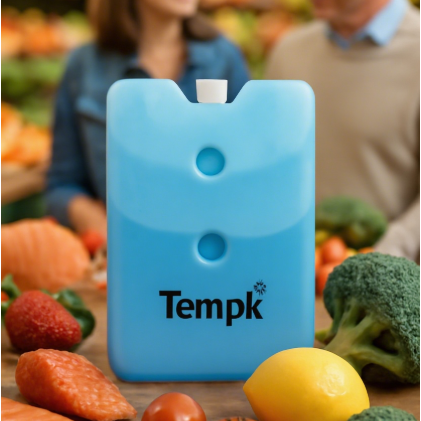
Ice Gel Brick for Gel Formulation: Practical Selection Guide
An ice gel brick for gel formulation is best understood as a reusable passive refrigerant used with an insulated packaging system. It can help maintain chilled or selected frozen conditions by absorbing heat during transport, but it does not create a complete cold chain by itself. For gel-based cold packs and rigid bricks, the right brick depends on the required temperature range, route duration, product sensitivity, insulation, conditioning process, and the buyer's ability to repeat the pack-out.
The practical decision is to match the refrigerant to the route. A brick that works well for chilled foods, frozen goods, medicines, samples, cosmetics, and delivery packs that need a reusable gel-based cold source in one container may be unsuitable in another container or ambient profile. Gel composition, freeze behavior, viscosity, and shell quality affect performance and leakage risk. Two bricks that look similar can behave differently in the same route. Buyers should therefore evaluate the full system rather than relying on a generic claim such as long-lasting, reusable, or non-toxic.
Start With the Temperature Requirement
The first question is not the brick size. It is the product temperature requirement. Some shipments need refrigerated protection, some need frozen protection, and some must avoid freezing. Gel helps reduce free-flowing liquid movement inside the brick and can improve handling compared with simple water-filled blocks. A buyer should write the target range, maximum shipment duration, expected ambient exposure, and receiving acceptance rule before choosing the brick. Without these details, the supplier can only recommend a general product.
For regulated or high-value products, the temperature requirement should come from the product owner, quality team, or established logistics SOP. For food, it should align with the product's safety and quality program. For healthcare products, it should align with labeled storage conditions and any qualification requirement. The brick is a tool used to support that requirement; it is not the requirement itself.
Define the Role of the Brick in the System
An ice gel brick is only one component in a cold chain system. The brick stores cold energy, the insulated box slows heat gain, the packing configuration controls contact, and the operation controls timing. Gel helps reduce free-flowing liquid movement inside the brick and can improve handling compared with simple water-filled blocks. The final result depends on the payload starting temperature, route duration, ambient exposure, loading discipline, receiving inspection, and any temperature monitoring used for the shipment.
In a passive package, each part has a job. The product starts cold. The ice gel brick absorbs heat. The insulation slows heat entry. The pack-out controls where cold energy is placed. The operator limits staging time. The receiver checks condition. If one part is weak, the entire shipment is at risk. This is why a buyer should not evaluate ice gel bricks separately from the cooler box, foam liner, pallet cover, or insulated bag.
Placement is especially important. A top brick can protect against lid exposure and warm air pooling near the upper layer. Side bricks can reduce wall heat gain. Bottom placement may help some dense loads but can also create pressure or freezing risk. Corners can become warm spots if they are not protected. A good pack-out balances cooling, usable volume, product protection, and worker speed.
Choose the Right Fill and Shell
The fill may be water-based gel, PCM, or another refrigerant formulation. A gel fill is often chosen for practical handling and reduced free-flowing liquid movement. A PCM fill may be chosen when the shipment needs a more defined phase-change behavior. A simple water-based brick may be suitable for many general cold applications. For gel-based cold packs and rigid bricks, the selection should be based on product temperature, freeze sensitivity, and route length rather than product name alone.
The shell protects the fill and determines much of the operational durability. Buyers should look at plastic type, wall thickness, cap or weld design, corner strength, and surface cleanability. In reusable operations, the brick will be frozen, handled, stacked, washed, returned, and frozen again. It must fit the shipper after freezing and should not swell, crack, or leak during normal cycles. Samples should be tested after repeated use, not only when new.
A heavier brick may store more cooling energy, but it may also increase freight weight and reduce payload volume. A thinner brick may fit the wall neatly, but it may not support longer routes. A large brick may be efficient for bulk containers and awkward for small parcels. The best choice is the one that meets the temperature requirement with the least operational friction.
Application Guidance for Gel Formulation
For chilled foods, frozen goods, medicines, samples, cosmetics, and delivery packs that need a reusable gel-based cold source, the pack-out should protect the product without creating new risks. Review gel ingredients, non-toxic handling statements, freeze-thaw stability, viscosity, shell sealing, and whether the gel separates or swells under repeated use.. In practice, this means testing the brick with the real payload, not with an empty box. Product density, carton shape, air gaps, and primary packaging all change the temperature curve. A brick placed against a dense frozen carton behaves differently from a brick placed next to a thin bag, bottle, or tray.
Do not buy gel bricks only by price if the route depends on consistent gel behavior and leak resistance. An ice gel brick can improve a route, but it cannot replace pre-chilling, sanitation, receiving discipline, or product-specific handling rules. If the operation changes payload weight, carrier, insulation, or season, the pack-out should be reviewed again. Small route changes can create large temperature changes when passive cooling is near its limit.
Compare Bricks With Other Refrigerants
Loose ice is simple and inexpensive in some operations, but it creates meltwater and can damage packaging. Flexible gel packs fit irregular spaces, but may be less durable in heavy reuse. Dry ice is useful for very cold requirements, but it requires careful handling, venting, and carrier acceptance because it releases carbon dioxide gas. Mechanical refrigeration offers active control but is not practical for every small parcel or short route. Ice gel bricks sit in the middle: cleaner than loose ice, often more durable than flexible packs, and simpler than many active systems.
This comparison should be made against the route. If the product must remain ultra-cold, an ice gel brick is not a direct dry ice replacement. If the product is freeze-sensitive, an ordinary frozen brick may be too aggressive without a spacer or a warmer PCM. If the package is not recovered, a reusable brick may not deliver its sustainability benefit. If the insulated box is weak, adding more bricks may not solve the problem.
A Practical Selection Framework
A buyer can use a simple framework. First, define the product temperature range and the acceptable receiving condition. Second, define the route, including staging, transit, and receiving delay. Third, choose the insulated container and estimate usable payload volume after refrigerants are placed. Fourth, select the brick size, fill, and count. Fifth, test the pack-out under the highest-risk conditions. Sixth, write a clear SOP for conditioning, packing, return, cleaning, and inspection.
This framework prevents common mistakes. It avoids buying bricks that are too large for the box, too cold for the product, too slow to freeze, too heavy for workers, or too fragile for reuse. It also helps suppliers give more useful recommendations because they can respond to route conditions instead of guessing from a product name or broad category.
Supplier Questions Before Bulk Ordering
Bulk ordering should include technical, operational, and quality questions. Ask for external dimensions, filled weight, shell material, fill type, conditioning instructions, packaging quantity, cleaning guidance, and damaged-unit disposal instructions. Ask whether the brick can be customized by size, color, label area, or fill temperature if needed. Ask whether production lots match samples and whether material or mold changes are communicated.
For gel-based cold packs and rigid bricks, buyers should also ask about gel formulation and phase behavior, freeze-thaw stability, seal integrity, shell compatibility with gel expansion, and cleanability after leakage or condensation. These questions reveal whether the supplier understands the application. A reliable supplier does not need to promise that one brick works for every route. Instead, the supplier should explain intended use, limitations, and what the buyer needs to test.
Documentation may include SDS, product specification, material statement, non-toxic handling information, food-related declarations where relevant, pack-out instructions, and change-control support. For healthcare or strict quality environments, additional route qualification and internal approval may be needed. Do not assume that a product page or sample is enough for compliance-sensitive shipments.
Operating the Brick Day to Day
Daily success depends on conditioning and inventory flow. Frozen bricks should be separated from returned bricks. Freezer racks should allow air circulation. Packing teams should know the minimum freeze time and the correct number of bricks per box. Returned bricks should be cleaned, inspected, and refrozen before reuse. Damaged bricks should be removed from service immediately.
Receiving also matters. The receiving team should know whether to return the brick, dispose of it, inspect it, or record shipment condition. In a closed-loop program, every lost brick reduces sustainability and raises cost. In a high-volume program, simple route labels or color coding can prevent mixing different brick types. In a regulated program, receiving checks may be part of the quality record.
Sustainability Without Greenwashing
Reusable ice gel bricks can support lower-waste cold chain logistics, but only when reuse is real. The sustainability case improves when the shipper can recover bricks, clean them efficiently, keep loss rates low, and use them for many cycles. It weakens when bricks are shipped one way, discarded, or replaced frequently because of damage. The product also has to protect the payload; avoiding product spoilage is one of the most important environmental and economic benefits of good cold chain packaging.
Buyers should define sustainability claims in operational terms. Reusable means the brick is expected to return. Recyclable means end-of-life material can enter an appropriate recycling stream where available. Non-toxic means the fill is intended for safer handling under stated conditions, not that it is edible or suitable for every use. Eco-friendly should be supported by a specific explanation, not a vague label.
When to Reconsider the Design
The main limitation is that a frozen brick does not create unlimited cooling. It absorbs heat until its stored cooling capacity is spent. It is not enough to compare only volume or weight; buyers should ask how the gel freezes, melts, and repeats after multiple cycles. It also cannot correct warm product, open lids, delayed handoffs, missing insulation, or an untrained packing team. For regulated or high-value products, the full shipper configuration should be reviewed by the quality, logistics, or packaging team before routine use.
Reconsider the design if shipments arrive warm, if products show freeze damage, if workers change the pack-out to save time, if bricks are not fully conditioned, or if returns are too low for reuse economics. Also review the design when seasons change, carriers change, payload weight changes, or the business adds a new product category. Passive packaging is sensitive to operational details.
Final Buyer Takeaway
The right ice gel brick for gel formulation is the one that fits the full cold chain process. It should have the right fill, mass, shell strength, conditioning requirement, and shape for the payload and route. It should be supported by practical supplier information and verified in the actual pack-out. When these pieces align, the brick can be a reliable, reusable, and manageable cold source for gel-based cold packs and rigid bricks.
FAQ
Is the gel inside an ice gel brick toxic?
Many commercial products are designed to be non-toxic, but buyers should request the safety data sheet and intended-use statement.
Does gel stay cold longer than water?
Performance depends on formulation, mass, conditioning, and the shipper; do not assume without testing.
Why use a rigid gel brick?
Rigid bricks are easier to stack, clean, and reuse in operations that handle many shipments.
How should buyers validate a new ice gel brick pack-out?
Start with the intended payload, route duration, ambient profile, and insulated container. Pack the brick exactly as workers will use it, place temperature monitors in meaningful locations, and test the highest-risk lane before scaling the configuration.
About Tempk
Tempk, operated by Shanghai Tempk Industrial Co., Ltd., focuses on cold chain packaging for temperature-controlled transport. We provide gel ice packs, freezer ice bricks, dry ice-style packs, insulated bags, EPP and cold shipping boxes, insulated box liners, pallet covers, and related packaging materials for food, pharmaceutical, and temperature-sensitive shipments. For ice gel brick projects, our support centers on matching refrigerant format, insulation, packing method, and bulk-order requirements to the route and payload.
Get Packaging Advice
Share your required temperature range, shipment duration, payload size, and handling route to get practical packaging advice or a bulk ice brick recommendation.
Ice Gel Brick for Foam Cooler Systems: Practical Selection Guide

Ice Gel Brick for Foam Cooler Systems: Practical Selection Guide
An ice gel brick for foam cooler systems is best understood as a reusable passive refrigerant used with an insulated packaging system. It can help maintain chilled or selected frozen conditions by absorbing heat during transport, but it does not create a complete cold chain by itself. For foam insulated packaging, the right brick depends on the required temperature range, route duration, product sensitivity, insulation, conditioning process, and the buyer's ability to repeat the pack-out.
The practical decision is to match the refrigerant to the route. A brick that works well for chilled meal kits, seafood, meat, dairy, laboratory materials, medicines, and frozen or refrigerated retail shipments packed in foam-based shippers in one container may be unsuitable in another container or ambient profile. Foam insulation and gel bricks must be matched. A strong brick in a weak or poorly fitted foam shipper can still fail because heat enters through seams, lids, voids, and handling exposure. Buyers should therefore evaluate the full system rather than relying on a generic claim such as long-lasting, reusable, or non-toxic.
Start With the Temperature Requirement
The first question is not the brick size. It is the product temperature requirement. Some shipments need refrigerated protection, some need frozen protection, and some must avoid freezing. Foam, EPP, EPS, PU, and VIP structures slow heat transfer; the ice gel brick supplies the cold energy. Both parts are needed for a passive system. A buyer should write the target range, maximum shipment duration, expected ambient exposure, and receiving acceptance rule before choosing the brick. Without these details, the supplier can only recommend a general product.
For regulated or high-value products, the temperature requirement should come from the product owner, quality team, or established logistics SOP. For food, it should align with the product's safety and quality program. For healthcare products, it should align with labeled storage conditions and any qualification requirement. The brick is a tool used to support that requirement; it is not the requirement itself.
Define the Role of the Brick in the System
An ice gel brick is only one component in a cold chain system. The brick stores cold energy, the insulated box slows heat gain, the packing configuration controls contact, and the operation controls timing. Foam, EPP, EPS, PU, and VIP structures slow heat transfer; the ice gel brick supplies the cold energy. Both parts are needed for a passive system. The final result depends on the payload starting temperature, route duration, ambient exposure, loading discipline, receiving inspection, and any temperature monitoring used for the shipment.
In a passive package, each part has a job. The product starts cold. The ice gel brick absorbs heat. The insulation slows heat entry. The pack-out controls where cold energy is placed. The operator limits staging time. The receiver checks condition. If one part is weak, the entire shipment is at risk. This is why a buyer should not evaluate ice gel bricks separately from the cooler box, foam liner, pallet cover, or insulated bag.
Placement is especially important. A top brick can protect against lid exposure and warm air pooling near the upper layer. Side bricks can reduce wall heat gain. Bottom placement may help some dense loads but can also create pressure or freezing risk. Corners can become warm spots if they are not protected. A good pack-out balances cooling, usable volume, product protection, and worker speed.
Choose the Right Fill and Shell
The fill may be water-based gel, PCM, or another refrigerant formulation. A gel fill is often chosen for practical handling and reduced free-flowing liquid movement. A PCM fill may be chosen when the shipment needs a more defined phase-change behavior. A simple water-based brick may be suitable for many general cold applications. For foam insulated packaging, the selection should be based on product temperature, freeze sensitivity, and route length rather than product name alone.
The shell protects the fill and determines much of the operational durability. Buyers should look at plastic type, wall thickness, cap or weld design, corner strength, and surface cleanability. In reusable operations, the brick will be frozen, handled, stacked, washed, returned, and frozen again. It must fit the shipper after freezing and should not swell, crack, or leak during normal cycles. Samples should be tested after repeated use, not only when new.
A heavier brick may store more cooling energy, but it may also increase freight weight and reduce payload volume. A thinner brick may fit the wall neatly, but it may not support longer routes. A large brick may be efficient for bulk containers and awkward for small parcels. The best choice is the one that meets the temperature requirement with the least operational friction.
Application Guidance for Foam Cooler Systems
For chilled meal kits, seafood, meat, dairy, laboratory materials, medicines, and frozen or refrigerated retail shipments packed in foam-based shippers, the pack-out should protect the product without creating new risks. Look at foam type, wall thickness, usable volume, brick placement, lid seal, carton fit, and whether the package survives rough carrier handling.. In practice, this means testing the brick with the real payload, not with an empty box. Product density, carton shape, air gaps, and primary packaging all change the temperature curve. A brick placed against a dense frozen carton behaves differently from a brick placed next to a thin bag, bottle, or tray.
Do not assume that any foam box plus any frozen brick creates a qualified cold chain package. An ice gel brick can improve a route, but it cannot replace pre-chilling, sanitation, receiving discipline, or product-specific handling rules. If the operation changes payload weight, carrier, insulation, or season, the pack-out should be reviewed again. Small route changes can create large temperature changes when passive cooling is near its limit.
Compare Bricks With Other Refrigerants
Loose ice is simple and inexpensive in some operations, but it creates meltwater and can damage packaging. Flexible gel packs fit irregular spaces, but may be less durable in heavy reuse. Dry ice is useful for very cold requirements, but it requires careful handling, venting, and carrier acceptance because it releases carbon dioxide gas. Mechanical refrigeration offers active control but is not practical for every small parcel or short route. Ice gel bricks sit in the middle: cleaner than loose ice, often more durable than flexible packs, and simpler than many active systems.
This comparison should be made against the route. If the product must remain ultra-cold, an ice gel brick is not a direct dry ice replacement. If the product is freeze-sensitive, an ordinary frozen brick may be too aggressive without a spacer or a warmer PCM. If the package is not recovered, a reusable brick may not deliver its sustainability benefit. If the insulated box is weak, adding more bricks may not solve the problem.
A Practical Selection Framework
A buyer can use a simple framework. First, define the product temperature range and the acceptable receiving condition. Second, define the route, including staging, transit, and receiving delay. Third, choose the insulated container and estimate usable payload volume after refrigerants are placed. Fourth, select the brick size, fill, and count. Fifth, test the pack-out under the highest-risk conditions. Sixth, write a clear SOP for conditioning, packing, return, cleaning, and inspection.
This framework prevents common mistakes. It avoids buying bricks that are too large for the box, too cold for the product, too slow to freeze, too heavy for workers, or too fragile for reuse. It also helps suppliers give more useful recommendations because they can respond to route conditions instead of guessing from a product name or broad category.
Supplier Questions Before Bulk Ordering
Bulk ordering should include technical, operational, and quality questions. Ask for external dimensions, filled weight, shell material, fill type, conditioning instructions, packaging quantity, cleaning guidance, and damaged-unit disposal instructions. Ask whether the brick can be customized by size, color, label area, or fill temperature if needed. Ask whether production lots match samples and whether material or mold changes are communicated.
For foam insulated packaging, buyers should also ask about foam wall thickness and lid fit, usable payload volume, brick recess or placement space, resistance to crushing, and thermal testing under expected ambient exposure. These questions reveal whether the supplier understands the application. A reliable supplier does not need to promise that one brick works for every route. Instead, the supplier should explain intended use, limitations, and what the buyer needs to test.
Documentation may include SDS, product specification, material statement, non-toxic handling information, food-related declarations where relevant, pack-out instructions, and change-control support. For healthcare or strict quality environments, additional route qualification and internal approval may be needed. Do not assume that a product page or sample is enough for compliance-sensitive shipments.
Operating the Brick Day to Day
Daily success depends on conditioning and inventory flow. Frozen bricks should be separated from returned bricks. Freezer racks should allow air circulation. Packing teams should know the minimum freeze time and the correct number of bricks per box. Returned bricks should be cleaned, inspected, and refrozen before reuse. Damaged bricks should be removed from service immediately.
Receiving also matters. The receiving team should know whether to return the brick, dispose of it, inspect it, or record shipment condition. In a closed-loop program, every lost brick reduces sustainability and raises cost. In a high-volume program, simple route labels or color coding can prevent mixing different brick types. In a regulated program, receiving checks may be part of the quality record.
Sustainability Without Greenwashing
Reusable ice gel bricks can support lower-waste cold chain logistics, but only when reuse is real. The sustainability case improves when the shipper can recover bricks, clean them efficiently, keep loss rates low, and use them for many cycles. It weakens when bricks are shipped one way, discarded, or replaced frequently because of damage. The product also has to protect the payload; avoiding product spoilage is one of the most important environmental and economic benefits of good cold chain packaging.
Buyers should define sustainability claims in operational terms. Reusable means the brick is expected to return. Recyclable means end-of-life material can enter an appropriate recycling stream where available. Non-toxic means the fill is intended for safer handling under stated conditions, not that it is edible or suitable for every use. Eco-friendly should be supported by a specific explanation, not a vague label.
When to Reconsider the Design
The main limitation is that a frozen brick does not create unlimited cooling. It absorbs heat until its stored cooling capacity is spent. It is not enough when the foam container has poor lid fit, crushed corners, large void space, or no tested pack-out. It also cannot correct warm product, open lids, delayed handoffs, missing insulation, or an untrained packing team. For regulated or high-value products, the full shipper configuration should be reviewed by the quality, logistics, or packaging team before routine use.
Reconsider the design if shipments arrive warm, if products show freeze damage, if workers change the pack-out to save time, if bricks are not fully conditioned, or if returns are too low for reuse economics. Also review the design when seasons change, carriers change, payload weight changes, or the business adds a new product category. Passive packaging is sensitive to operational details.
Final Buyer Takeaway
The right ice gel brick for foam cooler systems is the one that fits the full cold chain process. It should have the right fill, mass, shell strength, conditioning requirement, and shape for the payload and route. It should be supported by practical supplier information and verified in the actual pack-out. When these pieces align, the brick can be a reliable, reusable, and manageable cold source for foam insulated packaging.
FAQ
Does foam insulation create temperature control by itself?
No. Foam slows heat transfer; the brick provides stored cold energy.
Which is more important, foam or brick?
Both matter. Insulation slows heat gain, while brick mass and conditioning determine available cooling.
Can bricks be placed anywhere in the foam box?
No. Placement affects top, side, corner, and payload temperatures, so a defined pack-out is needed.
How should buyers validate a new ice gel brick pack-out?
Start with the intended payload, route duration, ambient profile, and insulated container. Pack the brick exactly as workers will use it, place temperature monitors in meaningful locations, and test the highest-risk lane before scaling the configuration.
About Tempk
Tempk, operated by Shanghai Tempk Industrial Co., Ltd., focuses on cold chain packaging for temperature-controlled transport. We provide gel ice packs, freezer ice bricks, dry ice-style packs, insulated bags, EPP and cold shipping boxes, insulated box liners, pallet covers, and related packaging materials for food, pharmaceutical, and temperature-sensitive shipments. For ice gel brick projects, our support centers on matching refrigerant format, insulation, packing method, and bulk-order requirements to the route and payload.
Get Packaging Advice
Share your required temperature range, shipment duration, payload size, and handling route to get practical packaging advice or a bulk ice brick recommendation.
Ice Gel Brick for Eco-Friendly Cold Chain Packaging: Practical Selection Guide
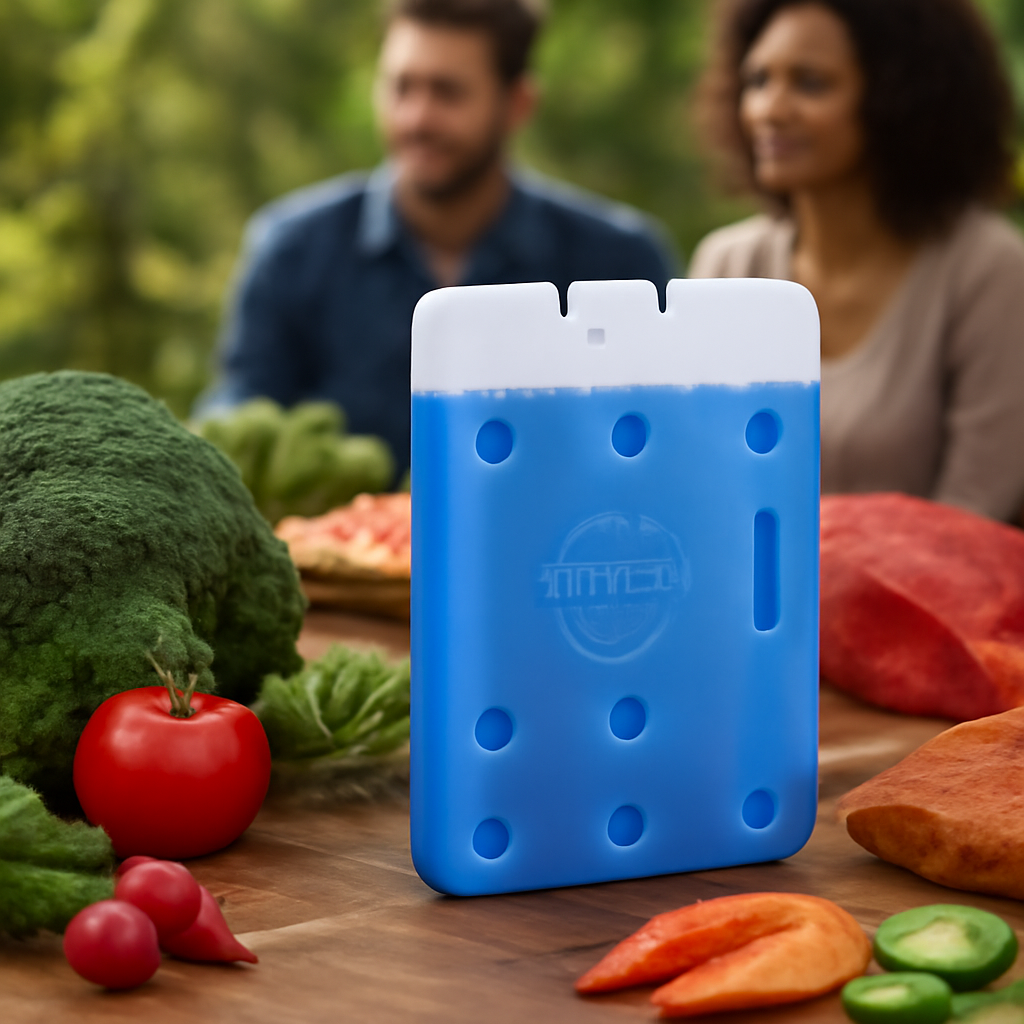
Ice Gel Brick for Eco-Friendly Cold Chain Packaging: Practical Selection Guide
An ice gel brick for eco-friendly cold chain packaging is best understood as a reusable passive refrigerant used with an insulated packaging system. It can help maintain chilled or selected frozen conditions by absorbing heat during transport, but it does not create a complete cold chain by itself. For eco-friendly cold chain packaging, the right brick depends on the required temperature range, route duration, product sensitivity, insulation, conditioning process, and the buyer's ability to repeat the pack-out.
The practical decision is to match the refrigerant to the route. A brick that works well for perishable foods, meal kits, medicines, cosmetics, lab materials, and direct-to-consumer chilled products in one container may be unsuitable in another container or ambient profile. Eco-friendly is a claim that should be defined. Buyers need to know whether it means reusable, recyclable, non-toxic, lower waste, lower leakage, or compatible with a recovery program. Buyers should therefore evaluate the full system rather than relying on a generic claim such as long-lasting, reusable, or non-toxic.
Start With the Temperature Requirement
The first question is not the brick size. It is the product temperature requirement. Some shipments need refrigerated protection, some need frozen protection, and some must avoid freezing. Eco-friendly packaging still has to protect the payload. Failed shipments create product waste, customer replacements, and extra transport emissions. A buyer should write the target range, maximum shipment duration, expected ambient exposure, and receiving acceptance rule before choosing the brick. Without these details, the supplier can only recommend a general product.
For regulated or high-value products, the temperature requirement should come from the product owner, quality team, or established logistics SOP. For food, it should align with the product's safety and quality program. For healthcare products, it should align with labeled storage conditions and any qualification requirement. The brick is a tool used to support that requirement; it is not the requirement itself.
Define the Role of the Brick in the System
An ice gel brick is only one component in a cold chain system. The brick stores cold energy, the insulated box slows heat gain, the packing configuration controls contact, and the operation controls timing. Eco-friendly packaging still has to protect the payload. Failed shipments create product waste, customer replacements, and extra transport emissions. The final result depends on the payload starting temperature, route duration, ambient exposure, loading discipline, receiving inspection, and any temperature monitoring used for the shipment.
In a passive package, each part has a job. The product starts cold. The ice gel brick absorbs heat. The insulation slows heat entry. The pack-out controls where cold energy is placed. The operator limits staging time. The receiver checks condition. If one part is weak, the entire shipment is at risk. This is why a buyer should not evaluate ice gel bricks separately from the cooler box, foam liner, pallet cover, or insulated bag.
Placement is especially important. A top brick can protect against lid exposure and warm air pooling near the upper layer. Side bricks can reduce wall heat gain. Bottom placement may help some dense loads but can also create pressure or freezing risk. Corners can become warm spots if they are not protected. A good pack-out balances cooling, usable volume, product protection, and worker speed.
Choose the Right Fill and Shell
The fill may be water-based gel, PCM, or another refrigerant formulation. A gel fill is often chosen for practical handling and reduced free-flowing liquid movement. A PCM fill may be chosen when the shipment needs a more defined phase-change behavior. A simple water-based brick may be suitable for many general cold applications. For eco-friendly cold chain packaging, the selection should be based on product temperature, freeze sensitivity, and route length rather than product name alone.
The shell protects the fill and determines much of the operational durability. Buyers should look at plastic type, wall thickness, cap or weld design, corner strength, and surface cleanability. In reusable operations, the brick will be frozen, handled, stacked, washed, returned, and frozen again. It must fit the shipper after freezing and should not swell, crack, or leak during normal cycles. Samples should be tested after repeated use, not only when new.
A heavier brick may store more cooling energy, but it may also increase freight weight and reduce payload volume. A thinner brick may fit the wall neatly, but it may not support longer routes. A large brick may be efficient for bulk containers and awkward for small parcels. The best choice is the one that meets the temperature requirement with the least operational friction.
Application Guidance for Eco-Friendly Cold Chain Packaging
For perishable foods, meal kits, medicines, cosmetics, lab materials, and direct-to-consumer chilled products, the pack-out should protect the product without creating new risks. Ask suppliers to define the environmental claim, provide material information, explain reuse expectations, and avoid vague green marketing language.. In practice, this means testing the brick with the real payload, not with an empty box. Product density, carton shape, air gaps, and primary packaging all change the temperature curve. A brick placed against a dense frozen carton behaves differently from a brick placed next to a thin bag, bottle, or tray.
Do not choose a weak refrigerant just because it has green language in the brochure. An ice gel brick can improve a route, but it cannot replace pre-chilling, sanitation, receiving discipline, or product-specific handling rules. If the operation changes payload weight, carrier, insulation, or season, the pack-out should be reviewed again. Small route changes can create large temperature changes when passive cooling is near its limit.
Compare Bricks With Other Refrigerants
Loose ice is simple and inexpensive in some operations, but it creates meltwater and can damage packaging. Flexible gel packs fit irregular spaces, but may be less durable in heavy reuse. Dry ice is useful for very cold requirements, but it requires careful handling, venting, and carrier acceptance because it releases carbon dioxide gas. Mechanical refrigeration offers active control but is not practical for every small parcel or short route. Ice gel bricks sit in the middle: cleaner than loose ice, often more durable than flexible packs, and simpler than many active systems.
This comparison should be made against the route. If the product must remain ultra-cold, an ice gel brick is not a direct dry ice replacement. If the product is freeze-sensitive, an ordinary frozen brick may be too aggressive without a spacer or a warmer PCM. If the package is not recovered, a reusable brick may not deliver its sustainability benefit. If the insulated box is weak, adding more bricks may not solve the problem.
A Practical Selection Framework
A buyer can use a simple framework. First, define the product temperature range and the acceptable receiving condition. Second, define the route, including staging, transit, and receiving delay. Third, choose the insulated container and estimate usable payload volume after refrigerants are placed. Fourth, select the brick size, fill, and count. Fifth, test the pack-out under the highest-risk conditions. Sixth, write a clear SOP for conditioning, packing, return, cleaning, and inspection.
This framework prevents common mistakes. It avoids buying bricks that are too large for the box, too cold for the product, too slow to freeze, too heavy for workers, or too fragile for reuse. It also helps suppliers give more useful recommendations because they can respond to route conditions instead of guessing from a product name or broad category.
Supplier Questions Before Bulk Ordering
Bulk ordering should include technical, operational, and quality questions. Ask for external dimensions, filled weight, shell material, fill type, conditioning instructions, packaging quantity, cleaning guidance, and damaged-unit disposal instructions. Ask whether the brick can be customized by size, color, label area, or fill temperature if needed. Ask whether production lots match samples and whether material or mold changes are communicated.
For eco-friendly cold chain packaging, buyers should also ask about reusability evidence, material transparency, recyclability guidance, non-toxic handling statement, and return and cleaning workflow. These questions reveal whether the supplier understands the application. A reliable supplier does not need to promise that one brick works for every route. Instead, the supplier should explain intended use, limitations, and what the buyer needs to test.
Documentation may include SDS, product specification, material statement, non-toxic handling information, food-related declarations where relevant, pack-out instructions, and change-control support. For healthcare or strict quality environments, additional route qualification and internal approval may be needed. Do not assume that a product page or sample is enough for compliance-sensitive shipments.
Operating the Brick Day to Day
Daily success depends on conditioning and inventory flow. Frozen bricks should be separated from returned bricks. Freezer racks should allow air circulation. Packing teams should know the minimum freeze time and the correct number of bricks per box. Returned bricks should be cleaned, inspected, and refrozen before reuse. Damaged bricks should be removed from service immediately.
Receiving also matters. The receiving team should know whether to return the brick, dispose of it, inspect it, or record shipment condition. In a closed-loop program, every lost brick reduces sustainability and raises cost. In a high-volume program, simple route labels or color coding can prevent mixing different brick types. In a regulated program, receiving checks may be part of the quality record.
Sustainability Without Greenwashing
Reusable ice gel bricks can support lower-waste cold chain logistics, but only when reuse is real. The sustainability case improves when the shipper can recover bricks, clean them efficiently, keep loss rates low, and use them for many cycles. It weakens when bricks are shipped one way, discarded, or replaced frequently because of damage. The product also has to protect the payload; avoiding product spoilage is one of the most important environmental and economic benefits of good cold chain packaging.
Buyers should define sustainability claims in operational terms. Reusable means the brick is expected to return. Recyclable means end-of-life material can enter an appropriate recycling stream where available. Non-toxic means the fill is intended for safer handling under stated conditions, not that it is edible or suitable for every use. Eco-friendly should be supported by a specific explanation, not a vague label.
When to Reconsider the Design
The main limitation is that a frozen brick does not create unlimited cooling. It absorbs heat until its stored cooling capacity is spent. It is not enough to call a brick eco-friendly without verifying materials, reuse cycle, wash process, and end-of-life guidance. It also cannot correct warm product, open lids, delayed handoffs, missing insulation, or an untrained packing team. For regulated or high-value products, the full shipper configuration should be reviewed by the quality, logistics, or packaging team before routine use.
Reconsider the design if shipments arrive warm, if products show freeze damage, if workers change the pack-out to save time, if bricks are not fully conditioned, or if returns are too low for reuse economics. Also review the design when seasons change, carriers change, payload weight changes, or the business adds a new product category. Passive packaging is sensitive to operational details.
Final Buyer Takeaway
The right ice gel brick for eco-friendly cold chain packaging is the one that fits the full cold chain process. It should have the right fill, mass, shell strength, conditioning requirement, and shape for the payload and route. It should be supported by practical supplier information and verified in the actual pack-out. When these pieces align, the brick can be a reliable, reusable, and manageable cold source for eco-friendly cold chain packaging.
FAQ
What makes an ice gel brick eco-friendly?
Usually reuse, recovery, material transparency, and reduced leakage or waste make the claim more credible.
Is recyclable the same as eco-friendly?
No. Recyclability matters, but actual recovery and reuse often matter more in B2B cold chain programs.
Can eco-friendly bricks be used for pharma?
Only if the full packaging system meets product and quality requirements; environmental benefits do not replace qualification.
How should buyers validate a new ice gel brick pack-out?
Start with the intended payload, route duration, ambient profile, and insulated container. Pack the brick exactly as workers will use it, place temperature monitors in meaningful locations, and test the highest-risk lane before scaling the configuration.
About Tempk
Tempk, operated by Shanghai Tempk Industrial Co., Ltd., focuses on cold chain packaging for temperature-controlled transport. We provide gel ice packs, freezer ice bricks, dry ice-style packs, insulated bags, EPP and cold shipping boxes, insulated box liners, pallet covers, and related packaging materials for food, pharmaceutical, and temperature-sensitive shipments. For ice gel brick projects, our support centers on matching refrigerant format, insulation, packing method, and bulk-order requirements to the route and payload.
Get Packaging Advice
Share your required temperature range, shipment duration, payload size, and handling route to get practical packaging advice or a bulk ice brick recommendation.
Ice Gel Brick for Dry Ice Alternative: Practical Selection Guide
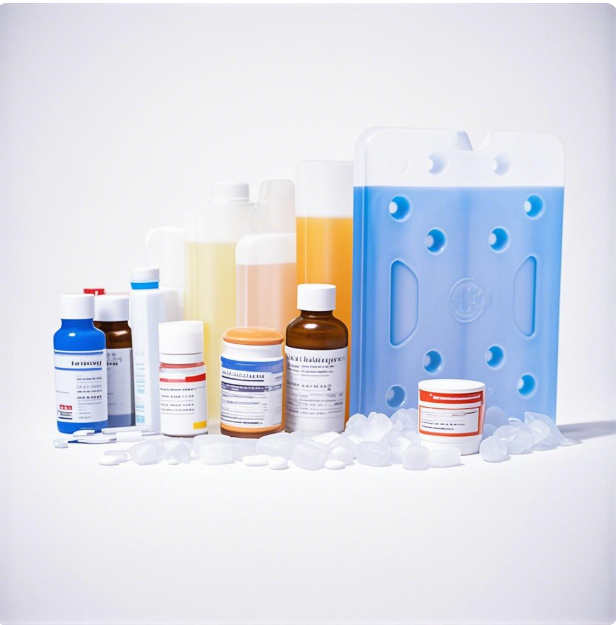
Ice Gel Brick for Dry Ice Alternative: Practical Selection Guide
An ice gel brick for dry ice alternative is best understood as a reusable passive refrigerant used with an insulated packaging system. It can help maintain chilled or selected frozen conditions by absorbing heat during transport, but it does not create a complete cold chain by itself. For shipping as a dry ice alternative, the right brick depends on the required temperature range, route duration, product sensitivity, insulation, conditioning process, and the buyer's ability to repeat the pack-out.
The practical decision is to match the refrigerant to the route. A brick that works well for chilled perishables, frozen foods, meal kits, specialty foods, some laboratory shipments, and temperature-sensitive products that do not require ultra-low dry ice conditions in one container may be unsuitable in another container or ambient profile. Dry ice can support very cold conditions, but it introduces venting, handling, labeling, and carrier restrictions. Ice gel bricks are safer for many chilled lanes but are not a direct replacement for every frozen or ultra-cold requirement. Buyers should therefore evaluate the full system rather than relying on a generic claim such as long-lasting, reusable, or non-toxic.
Start With the Temperature Requirement
The first question is not the brick size. It is the product temperature requirement. Some shipments need refrigerated protection, some need frozen protection, and some must avoid freezing. Dry ice is solid carbon dioxide and is treated differently from reusable gel bricks in air transport because it releases carbon dioxide gas as it sublimates. A buyer should write the target range, maximum shipment duration, expected ambient exposure, and receiving acceptance rule before choosing the brick. Without these details, the supplier can only recommend a general product.
For regulated or high-value products, the temperature requirement should come from the product owner, quality team, or established logistics SOP. For food, it should align with the product's safety and quality program. For healthcare products, it should align with labeled storage conditions and any qualification requirement. The brick is a tool used to support that requirement; it is not the requirement itself.
Define the Role of the Brick in the System
An ice gel brick is only one component in a cold chain system. The brick stores cold energy, the insulated box slows heat gain, the packing configuration controls contact, and the operation controls timing. Dry ice is solid carbon dioxide and is treated differently from reusable gel bricks in air transport because it releases carbon dioxide gas as it sublimates. The final result depends on the payload starting temperature, route duration, ambient exposure, loading discipline, receiving inspection, and any temperature monitoring used for the shipment.
In a passive package, each part has a job. The product starts cold. The ice gel brick absorbs heat. The insulation slows heat entry. The pack-out controls where cold energy is placed. The operator limits staging time. The receiver checks condition. If one part is weak, the entire shipment is at risk. This is why a buyer should not evaluate ice gel bricks separately from the cooler box, foam liner, pallet cover, or insulated bag.
Placement is especially important. A top brick can protect against lid exposure and warm air pooling near the upper layer. Side bricks can reduce wall heat gain. Bottom placement may help some dense loads but can also create pressure or freezing risk. Corners can become warm spots if they are not protected. A good pack-out balances cooling, usable volume, product protection, and worker speed.
Choose the Right Fill and Shell
The fill may be water-based gel, PCM, or another refrigerant formulation. A gel fill is often chosen for practical handling and reduced free-flowing liquid movement. A PCM fill may be chosen when the shipment needs a more defined phase-change behavior. A simple water-based brick may be suitable for many general cold applications. For shipping as a dry ice alternative, the selection should be based on product temperature, freeze sensitivity, and route length rather than product name alone.
The shell protects the fill and determines much of the operational durability. Buyers should look at plastic type, wall thickness, cap or weld design, corner strength, and surface cleanability. In reusable operations, the brick will be frozen, handled, stacked, washed, returned, and frozen again. It must fit the shipper after freezing and should not swell, crack, or leak during normal cycles. Samples should be tested after repeated use, not only when new.
A heavier brick may store more cooling energy, but it may also increase freight weight and reduce payload volume. A thinner brick may fit the wall neatly, but it may not support longer routes. A large brick may be efficient for bulk containers and awkward for small parcels. The best choice is the one that meets the temperature requirement with the least operational friction.
Application Guidance for Dry Ice Alternative
For chilled perishables, frozen foods, meal kits, specialty foods, some laboratory shipments, and temperature-sensitive products that do not require ultra-low dry ice conditions, the pack-out should protect the product without creating new risks. Compare required temperature, carrier restrictions, venting needs, payload protection, return logistics, and whether the gel brick can meet the hold time without overcooling the product.. In practice, this means testing the brick with the real payload, not with an empty box. Product density, carton shape, air gaps, and primary packaging all change the temperature curve. A brick placed against a dense frozen carton behaves differently from a brick placed next to a thin bag, bottle, or tray.
Do not replace dry ice with ice gel bricks until the required product temperature, lane duration, and acceptance criteria are confirmed. An ice gel brick can improve a route, but it cannot replace pre-chilling, sanitation, receiving discipline, or product-specific handling rules. If the operation changes payload weight, carrier, insulation, or season, the pack-out should be reviewed again. Small route changes can create large temperature changes when passive cooling is near its limit.
Compare Bricks With Other Refrigerants
Loose ice is simple and inexpensive in some operations, but it creates meltwater and can damage packaging. Flexible gel packs fit irregular spaces, but may be less durable in heavy reuse. Dry ice is useful for very cold requirements, but it requires careful handling, venting, and carrier acceptance because it releases carbon dioxide gas. Mechanical refrigeration offers active control but is not practical for every small parcel or short route. Ice gel bricks sit in the middle: cleaner than loose ice, often more durable than flexible packs, and simpler than many active systems.
This comparison should be made against the route. If the product must remain ultra-cold, an ice gel brick is not a direct dry ice replacement. If the product is freeze-sensitive, an ordinary frozen brick may be too aggressive without a spacer or a warmer PCM. If the package is not recovered, a reusable brick may not deliver its sustainability benefit. If the insulated box is weak, adding more bricks may not solve the problem.
A Practical Selection Framework
A buyer can use a simple framework. First, define the product temperature range and the acceptable receiving condition. Second, define the route, including staging, transit, and receiving delay. Third, choose the insulated container and estimate usable payload volume after refrigerants are placed. Fourth, select the brick size, fill, and count. Fifth, test the pack-out under the highest-risk conditions. Sixth, write a clear SOP for conditioning, packing, return, cleaning, and inspection.
This framework prevents common mistakes. It avoids buying bricks that are too large for the box, too cold for the product, too slow to freeze, too heavy for workers, or too fragile for reuse. It also helps suppliers give more useful recommendations because they can respond to route conditions instead of guessing from a product name or broad category.
Supplier Questions Before Bulk Ordering
Bulk ordering should include technical, operational, and quality questions. Ask for external dimensions, filled weight, shell material, fill type, conditioning instructions, packaging quantity, cleaning guidance, and damaged-unit disposal instructions. Ask whether the brick can be customized by size, color, label area, or fill temperature if needed. Ask whether production lots match samples and whether material or mold changes are communicated.
For shipping as a dry ice alternative, buyers should also ask about temperature target compared with dry ice, non-vented packaging suitability, gel brick conditioning time, frozen versus chilled payload requirements, and carrier acceptance and return loop feasibility. These questions reveal whether the supplier understands the application. A reliable supplier does not need to promise that one brick works for every route. Instead, the supplier should explain intended use, limitations, and what the buyer needs to test.
Documentation may include SDS, product specification, material statement, non-toxic handling information, food-related declarations where relevant, pack-out instructions, and change-control support. For healthcare or strict quality environments, additional route qualification and internal approval may be needed. Do not assume that a product page or sample is enough for compliance-sensitive shipments.
Operating the Brick Day to Day
Daily success depends on conditioning and inventory flow. Frozen bricks should be separated from returned bricks. Freezer racks should allow air circulation. Packing teams should know the minimum freeze time and the correct number of bricks per box. Returned bricks should be cleaned, inspected, and refrozen before reuse. Damaged bricks should be removed from service immediately.
Receiving also matters. The receiving team should know whether to return the brick, dispose of it, inspect it, or record shipment condition. In a closed-loop program, every lost brick reduces sustainability and raises cost. In a high-volume program, simple route labels or color coding can prevent mixing different brick types. In a regulated program, receiving checks may be part of the quality record.
Sustainability Without Greenwashing
Reusable ice gel bricks can support lower-waste cold chain logistics, but only when reuse is real. The sustainability case improves when the shipper can recover bricks, clean them efficiently, keep loss rates low, and use them for many cycles. It weakens when bricks are shipped one way, discarded, or replaced frequently because of damage. The product also has to protect the payload; avoiding product spoilage is one of the most important environmental and economic benefits of good cold chain packaging.
Buyers should define sustainability claims in operational terms. Reusable means the brick is expected to return. Recyclable means end-of-life material can enter an appropriate recycling stream where available. Non-toxic means the fill is intended for safer handling under stated conditions, not that it is edible or suitable for every use. Eco-friendly should be supported by a specific explanation, not a vague label.
When to Reconsider the Design
The main limitation is that a frozen brick does not create unlimited cooling. It absorbs heat until its stored cooling capacity is spent. It is not enough for shipments that depend on dry ice temperatures, very long frozen lanes, or validated ultra-low storage conditions. It also cannot correct warm product, open lids, delayed handoffs, missing insulation, or an untrained packing team. For regulated or high-value products, the full shipper configuration should be reviewed by the quality, logistics, or packaging team before routine use.
Reconsider the design if shipments arrive warm, if products show freeze damage, if workers change the pack-out to save time, if bricks are not fully conditioned, or if returns are too low for reuse economics. Also review the design when seasons change, carriers change, payload weight changes, or the business adds a new product category. Passive packaging is sensitive to operational details.
Final Buyer Takeaway
The right ice gel brick for dry ice alternative is the one that fits the full cold chain process. It should have the right fill, mass, shell strength, conditioning requirement, and shape for the payload and route. It should be supported by practical supplier information and verified in the actual pack-out. When these pieces align, the brick can be a reliable, reusable, and manageable cold source for shipping as a dry ice alternative.
FAQ
Is an ice gel brick as cold as dry ice?
No. Dry ice is much colder and suitable for different requirements. A gel brick is a passive refrigerant for chilled or selected frozen lanes.
Why use a gel brick instead of dry ice?
Shippers may want easier handling, no carbon dioxide sublimation, reusable inventory, and fewer dry-ice-specific carrier issues.
Can gel bricks fly by air?
They are generally easier than dry ice from a CO2 venting perspective, but product, airline, and carrier rules must still be checked.
How should buyers validate a new ice gel brick pack-out?
Start with the intended payload, route duration, ambient profile, and insulated container. Pack the brick exactly as workers will use it, place temperature monitors in meaningful locations, and test the highest-risk lane before scaling the configuration.
About Tempk
Tempk, operated by Shanghai Tempk Industrial Co., Ltd., focuses on cold chain packaging for temperature-controlled transport. We provide gel ice packs, freezer ice bricks, dry ice-style packs, insulated bags, EPP and cold shipping boxes, insulated box liners, pallet covers, and related packaging materials for food, pharmaceutical, and temperature-sensitive shipments. For ice gel brick projects, our support centers on matching refrigerant format, insulation, packing method, and bulk-order requirements to the route and payload.
Get Packaging Advice
Share your required temperature range, shipment duration, payload size, and handling route to get practical packaging advice or a bulk ice brick recommendation.
Ice Gel Brick for Dairy: Practical Selection Guide
Ice Gel Brick for Dairy: Practical Selection Guide
An ice gel brick for dairy is best understood as a reusable passive refrigerant used with an insulated packaging system. It can help maintain chilled or selected frozen conditions by absorbing heat during transport, but it does not create a complete cold chain by itself. For dairy shipping, the right brick depends on the required temperature range, route duration, product sensitivity, insulation, conditioning process, and the buyer's ability to repeat the pack-out.
The practical decision is to match the refrigerant to the route. A brick that works well for milk, yogurt, cheese, butter, cultured products, dairy meal kits, and temperature-sensitive retail packs in one container may be unsuitable in another container or ambient profile. Dairy products can be sensitive to both warming and accidental freezing. A brick that is too cold or placed directly against thin packaging may create localized freeze spots. Buyers should therefore evaluate the full system rather than relying on a generic claim such as long-lasting, reusable, or non-toxic.
Start With the Temperature Requirement
The first question is not the brick size. It is the product temperature requirement. Some shipments need refrigerated protection, some need frozen protection, and some must avoid freezing. Many dairy products are managed as chilled perishables, so the goal is often stable refrigeration rather than maximum cold output. A buyer should write the target range, maximum shipment duration, expected ambient exposure, and receiving acceptance rule before choosing the brick. Without these details, the supplier can only recommend a general product.
For regulated or high-value products, the temperature requirement should come from the product owner, quality team, or established logistics SOP. For food, it should align with the product's safety and quality program. For healthcare products, it should align with labeled storage conditions and any qualification requirement. The brick is a tool used to support that requirement; it is not the requirement itself.
Define the Role of the Brick in the System
An ice gel brick is only one component in a cold chain system. The brick stores cold energy, the insulated box slows heat gain, the packing configuration controls contact, and the operation controls timing. Many dairy products are managed as chilled perishables, so the goal is often stable refrigeration rather than maximum cold output. The final result depends on the payload starting temperature, route duration, ambient exposure, loading discipline, receiving inspection, and any temperature monitoring used for the shipment.
In a passive package, each part has a job. The product starts cold. The ice gel brick absorbs heat. The insulation slows heat entry. The pack-out controls where cold energy is placed. The operator limits staging time. The receiver checks condition. If one part is weak, the entire shipment is at risk. This is why a buyer should not evaluate ice gel bricks separately from the cooler box, foam liner, pallet cover, or insulated bag.
Placement is especially important. A top brick can protect against lid exposure and warm air pooling near the upper layer. Side bricks can reduce wall heat gain. Bottom placement may help some dense loads but can also create pressure or freezing risk. Corners can become warm spots if they are not protected. A good pack-out balances cooling, usable volume, product protection, and worker speed.
Choose the Right Fill and Shell
The fill may be water-based gel, PCM, or another refrigerant formulation. A gel fill is often chosen for practical handling and reduced free-flowing liquid movement. A PCM fill may be chosen when the shipment needs a more defined phase-change behavior. A simple water-based brick may be suitable for many general cold applications. For dairy shipping, the selection should be based on product temperature, freeze sensitivity, and route length rather than product name alone.
The shell protects the fill and determines much of the operational durability. Buyers should look at plastic type, wall thickness, cap or weld design, corner strength, and surface cleanability. In reusable operations, the brick will be frozen, handled, stacked, washed, returned, and frozen again. It must fit the shipper after freezing and should not swell, crack, or leak during normal cycles. Samples should be tested after repeated use, not only when new.
A heavier brick may store more cooling energy, but it may also increase freight weight and reduce payload volume. A thinner brick may fit the wall neatly, but it may not support longer routes. A large brick may be efficient for bulk containers and awkward for small parcels. The best choice is the one that meets the temperature requirement with the least operational friction.
Application Guidance for Dairy
For milk, yogurt, cheese, butter, cultured products, dairy meal kits, and temperature-sensitive retail packs, the pack-out should protect the product without creating new risks. Evaluate freeze sensitivity, condensation control, carton compatibility, separator needs, and how the brick layout protects bottles, cups, and cheese blocks differently.. In practice, this means testing the brick with the real payload, not with an empty box. Product density, carton shape, air gaps, and primary packaging all change the temperature curve. A brick placed against a dense frozen carton behaves differently from a brick placed next to a thin bag, bottle, or tray.
Do not place a fully frozen brick directly on thin dairy packaging without assessing freeze sensitivity and contact pressure. An ice gel brick can improve a route, but it cannot replace pre-chilling, sanitation, receiving discipline, or product-specific handling rules. If the operation changes payload weight, carrier, insulation, or season, the pack-out should be reviewed again. Small route changes can create large temperature changes when passive cooling is near its limit.
Compare Bricks With Other Refrigerants
Loose ice is simple and inexpensive in some operations, but it creates meltwater and can damage packaging. Flexible gel packs fit irregular spaces, but may be less durable in heavy reuse. Dry ice is useful for very cold requirements, but it requires careful handling, venting, and carrier acceptance because it releases carbon dioxide gas. Mechanical refrigeration offers active control but is not practical for every small parcel or short route. Ice gel bricks sit in the middle: cleaner than loose ice, often more durable than flexible packs, and simpler than many active systems.
This comparison should be made against the route. If the product must remain ultra-cold, an ice gel brick is not a direct dry ice replacement. If the product is freeze-sensitive, an ordinary frozen brick may be too aggressive without a spacer or a warmer PCM. If the package is not recovered, a reusable brick may not deliver its sustainability benefit. If the insulated box is weak, adding more bricks may not solve the problem.
A Practical Selection Framework
A buyer can use a simple framework. First, define the product temperature range and the acceptable receiving condition. Second, define the route, including staging, transit, and receiving delay. Third, choose the insulated container and estimate usable payload volume after refrigerants are placed. Fourth, select the brick size, fill, and count. Fifth, test the pack-out under the highest-risk conditions. Sixth, write a clear SOP for conditioning, packing, return, cleaning, and inspection.
This framework prevents common mistakes. It avoids buying bricks that are too large for the box, too cold for the product, too slow to freeze, too heavy for workers, or too fragile for reuse. It also helps suppliers give more useful recommendations because they can respond to route conditions instead of guessing from a product name or broad category.
Supplier Questions Before Bulk Ordering
Bulk ordering should include technical, operational, and quality questions. Ask for external dimensions, filled weight, shell material, fill type, conditioning instructions, packaging quantity, cleaning guidance, and damaged-unit disposal instructions. Ask whether the brick can be customized by size, color, label area, or fill temperature if needed. Ask whether production lots match samples and whether material or mold changes are communicated.
For dairy shipping, buyers should also ask about controlled contact with freeze-sensitive payloads, condensation management, shape that fits dairy cartons, washable and odor-neutral shell, and clear conditioning instructions for operations staff. These questions reveal whether the supplier understands the application. A reliable supplier does not need to promise that one brick works for every route. Instead, the supplier should explain intended use, limitations, and what the buyer needs to test.
Documentation may include SDS, product specification, material statement, non-toxic handling information, food-related declarations where relevant, pack-out instructions, and change-control support. For healthcare or strict quality environments, additional route qualification and internal approval may be needed. Do not assume that a product page or sample is enough for compliance-sensitive shipments.
Operating the Brick Day to Day
Daily success depends on conditioning and inventory flow. Frozen bricks should be separated from returned bricks. Freezer racks should allow air circulation. Packing teams should know the minimum freeze time and the correct number of bricks per box. Returned bricks should be cleaned, inspected, and refrozen before reuse. Damaged bricks should be removed from service immediately.
Receiving also matters. The receiving team should know whether to return the brick, dispose of it, inspect it, or record shipment condition. In a closed-loop program, every lost brick reduces sustainability and raises cost. In a high-volume program, simple route labels or color coding can prevent mixing different brick types. In a regulated program, receiving checks may be part of the quality record.
Sustainability Without Greenwashing
Reusable ice gel bricks can support lower-waste cold chain logistics, but only when reuse is real. The sustainability case improves when the shipper can recover bricks, clean them efficiently, keep loss rates low, and use them for many cycles. It weakens when bricks are shipped one way, discarded, or replaced frequently because of damage. The product also has to protect the payload; avoiding product spoilage is one of the most important environmental and economic benefits of good cold chain packaging.
Buyers should define sustainability claims in operational terms. Reusable means the brick is expected to return. Recyclable means end-of-life material can enter an appropriate recycling stream where available. Non-toxic means the fill is intended for safer handling under stated conditions, not that it is edible or suitable for every use. Eco-friendly should be supported by a specific explanation, not a vague label.
When to Reconsider the Design
The main limitation is that a frozen brick does not create unlimited cooling. It absorbs heat until its stored cooling capacity is spent. It is not enough for dairy routes with untested ambient exposure, weak insulation, or products that cannot tolerate contact with a frozen refrigerant. It also cannot correct warm product, open lids, delayed handoffs, missing insulation, or an untrained packing team. For regulated or high-value products, the full shipper configuration should be reviewed by the quality, logistics, or packaging team before routine use.
Reconsider the design if shipments arrive warm, if products show freeze damage, if workers change the pack-out to save time, if bricks are not fully conditioned, or if returns are too low for reuse economics. Also review the design when seasons change, carriers change, payload weight changes, or the business adds a new product category. Passive packaging is sensitive to operational details.
Final Buyer Takeaway
The right ice gel brick for dairy is the one that fits the full cold chain process. It should have the right fill, mass, shell strength, conditioning requirement, and shape for the payload and route. It should be supported by practical supplier information and verified in the actual pack-out. When these pieces align, the brick can be a reliable, reusable, and manageable cold source for dairy shipping.
FAQ
Can an ice gel brick freeze milk or yogurt?
It can if the brick is too cold and touches thin packaging for too long. Use spacing, buffering, or a warmer PCM when needed.
Is a rigid brick useful for cheese?
Yes, especially for dense cartons, but cheese type, route duration, and temperature target still matter.
What is the main dairy packing mistake?
The common mistake is maximizing cold mass without checking freeze risk at contact points.
How should buyers validate a new ice gel brick pack-out?
Start with the intended payload, route duration, ambient profile, and insulated container. Pack the brick exactly as workers will use it, place temperature monitors in meaningful locations, and test the highest-risk lane before scaling the configuration.
About Tempk
Tempk, operated by Shanghai Tempk Industrial Co., Ltd., focuses on cold chain packaging for temperature-controlled transport. We provide gel ice packs, freezer ice bricks, dry ice-style packs, insulated bags, EPP and cold shipping boxes, insulated box liners, pallet covers, and related packaging materials for food, pharmaceutical, and temperature-sensitive shipments. For ice gel brick projects, our support centers on matching refrigerant format, insulation, packing method, and bulk-order requirements to the route and payload.
Get Packaging Advice
Share your required temperature range, shipment duration, payload size, and handling route to get practical packaging advice or a bulk ice brick recommendation.
Ice Gel Brick for Temperature-Sensitive Products: Practical Selection Guide
Ice Gel Brick for Temperature-Sensitive Products: Practical Selection Guide
An ice gel brick for temperature-sensitive products is best understood as a reusable passive refrigerant used with an insulated packaging system. It can help maintain chilled or selected frozen conditions by absorbing heat during transport, but it does not create a complete cold chain by itself. For temperature-sensitive shipping, the right brick depends on the required temperature range, route duration, product sensitivity, insulation, conditioning process, and the buyer's ability to repeat the pack-out.
The practical decision is to match the refrigerant to the route. A brick that works well for pharmaceuticals, vaccines, biologics, diagnostic samples, specialty foods, cosmetics, and other temperature-sensitive products in one container may be unsuitable in another container or ambient profile. Temperature-sensitive products are not all the same. Some require 2-8 C, some need frozen conditions, and some must avoid freezing entirely. Buyers should therefore evaluate the full system rather than relying on a generic claim such as long-lasting, reusable, or non-toxic.
Start With the Temperature Requirement
The first question is not the brick size. It is the product temperature requirement. Some shipments need refrigerated protection, some need frozen protection, and some must avoid freezing. Vaccine and pharmaceutical examples often use narrow ranges such as 2-8 C for refrigerated products, but every product must follow its own labeled storage conditions. A buyer should write the target range, maximum shipment duration, expected ambient exposure, and receiving acceptance rule before choosing the brick. Without these details, the supplier can only recommend a general product.
For regulated or high-value products, the temperature requirement should come from the product owner, quality team, or established logistics SOP. For food, it should align with the product's safety and quality program. For healthcare products, it should align with labeled storage conditions and any qualification requirement. The brick is a tool used to support that requirement; it is not the requirement itself.
Define the Role of the Brick in the System
An ice gel brick is only one component in a cold chain system. The brick stores cold energy, the insulated box slows heat gain, the packing configuration controls contact, and the operation controls timing. Vaccine and pharmaceutical examples often use narrow ranges such as 2-8 C for refrigerated products, but every product must follow its own labeled storage conditions. The final result depends on the payload starting temperature, route duration, ambient exposure, loading discipline, receiving inspection, and any temperature monitoring used for the shipment.
In a passive package, each part has a job. The product starts cold. The ice gel brick absorbs heat. The insulation slows heat entry. The pack-out controls where cold energy is placed. The operator limits staging time. The receiver checks condition. If one part is weak, the entire shipment is at risk. This is why a buyer should not evaluate ice gel bricks separately from the cooler box, foam liner, pallet cover, or insulated bag.
Placement is especially important. A top brick can protect against lid exposure and warm air pooling near the upper layer. Side bricks can reduce wall heat gain. Bottom placement may help some dense loads but can also create pressure or freezing risk. Corners can become warm spots if they are not protected. A good pack-out balances cooling, usable volume, product protection, and worker speed.
Choose the Right Fill and Shell
The fill may be water-based gel, PCM, or another refrigerant formulation. A gel fill is often chosen for practical handling and reduced free-flowing liquid movement. A PCM fill may be chosen when the shipment needs a more defined phase-change behavior. A simple water-based brick may be suitable for many general cold applications. For temperature-sensitive shipping, the selection should be based on product temperature, freeze sensitivity, and route length rather than product name alone.
The shell protects the fill and determines much of the operational durability. Buyers should look at plastic type, wall thickness, cap or weld design, corner strength, and surface cleanability. In reusable operations, the brick will be frozen, handled, stacked, washed, returned, and frozen again. It must fit the shipper after freezing and should not swell, crack, or leak during normal cycles. Samples should be tested after repeated use, not only when new.
A heavier brick may store more cooling energy, but it may also increase freight weight and reduce payload volume. A thinner brick may fit the wall neatly, but it may not support longer routes. A large brick may be efficient for bulk containers and awkward for small parcels. The best choice is the one that meets the temperature requirement with the least operational friction.
Application Guidance for Temperature-Sensitive Products
For pharmaceuticals, vaccines, biologics, diagnostic samples, specialty foods, cosmetics, and other temperature-sensitive products, the pack-out should protect the product without creating new risks. Confirm the required temperature range, lane duration, pack-out diagram, logger location, payload volume, and documentation before approving a bulk order.. In practice, this means testing the brick with the real payload, not with an empty box. Product density, carton shape, air gaps, and primary packaging all change the temperature curve. A brick placed against a dense frozen carton behaves differently from a brick placed next to a thin bag, bottle, or tray.
Do not assume that a reusable brick, insulated box, or waterproof container is automatically temperature-controlled for every product. An ice gel brick can improve a route, but it cannot replace pre-chilling, sanitation, receiving discipline, or product-specific handling rules. If the operation changes payload weight, carrier, insulation, or season, the pack-out should be reviewed again. Small route changes can create large temperature changes when passive cooling is near its limit.
Compare Bricks With Other Refrigerants
Loose ice is simple and inexpensive in some operations, but it creates meltwater and can damage packaging. Flexible gel packs fit irregular spaces, but may be less durable in heavy reuse. Dry ice is useful for very cold requirements, but it requires careful handling, venting, and carrier acceptance because it releases carbon dioxide gas. Mechanical refrigeration offers active control but is not practical for every small parcel or short route. Ice gel bricks sit in the middle: cleaner than loose ice, often more durable than flexible packs, and simpler than many active systems.
This comparison should be made against the route. If the product must remain ultra-cold, an ice gel brick is not a direct dry ice replacement. If the product is freeze-sensitive, an ordinary frozen brick may be too aggressive without a spacer or a warmer PCM. If the package is not recovered, a reusable brick may not deliver its sustainability benefit. If the insulated box is weak, adding more bricks may not solve the problem.
A Practical Selection Framework
A buyer can use a simple framework. First, define the product temperature range and the acceptable receiving condition. Second, define the route, including staging, transit, and receiving delay. Third, choose the insulated container and estimate usable payload volume after refrigerants are placed. Fourth, select the brick size, fill, and count. Fifth, test the pack-out under the highest-risk conditions. Sixth, write a clear SOP for conditioning, packing, return, cleaning, and inspection.
This framework prevents common mistakes. It avoids buying bricks that are too large for the box, too cold for the product, too slow to freeze, too heavy for workers, or too fragile for reuse. It also helps suppliers give more useful recommendations because they can respond to route conditions instead of guessing from a product name or broad category.
Supplier Questions Before Bulk Ordering
Bulk ordering should include technical, operational, and quality questions. Ask for external dimensions, filled weight, shell material, fill type, conditioning instructions, packaging quantity, cleaning guidance, and damaged-unit disposal instructions. Ask whether the brick can be customized by size, color, label area, or fill temperature if needed. Ask whether production lots match samples and whether material or mold changes are communicated.
For temperature-sensitive shipping, buyers should also ask about defined phase-change point or freezing behavior, qualified shipper compatibility, payload volume after refrigerant loading, temperature monitor placement, and documentation and change-control support. These questions reveal whether the supplier understands the application. A reliable supplier does not need to promise that one brick works for every route. Instead, the supplier should explain intended use, limitations, and what the buyer needs to test.
Documentation may include SDS, product specification, material statement, non-toxic handling information, food-related declarations where relevant, pack-out instructions, and change-control support. For healthcare or strict quality environments, additional route qualification and internal approval may be needed. Do not assume that a product page or sample is enough for compliance-sensitive shipments.
Operating the Brick Day to Day
Daily success depends on conditioning and inventory flow. Frozen bricks should be separated from returned bricks. Freezer racks should allow air circulation. Packing teams should know the minimum freeze time and the correct number of bricks per box. Returned bricks should be cleaned, inspected, and refrozen before reuse. Damaged bricks should be removed from service immediately.
Receiving also matters. The receiving team should know whether to return the brick, dispose of it, inspect it, or record shipment condition. In a closed-loop program, every lost brick reduces sustainability and raises cost. In a high-volume program, simple route labels or color coding can prevent mixing different brick types. In a regulated program, receiving checks may be part of the quality record.
Sustainability Without Greenwashing
Reusable ice gel bricks can support lower-waste cold chain logistics, but only when reuse is real. The sustainability case improves when the shipper can recover bricks, clean them efficiently, keep loss rates low, and use them for many cycles. It weakens when bricks are shipped one way, discarded, or replaced frequently because of damage. The product also has to protect the payload; avoiding product spoilage is one of the most important environmental and economic benefits of good cold chain packaging.
Buyers should define sustainability claims in operational terms. Reusable means the brick is expected to return. Recyclable means end-of-life material can enter an appropriate recycling stream where available. Non-toxic means the fill is intended for safer handling under stated conditions, not that it is edible or suitable for every use. Eco-friendly should be supported by a specific explanation, not a vague label.
When to Reconsider the Design
The main limitation is that a frozen brick does not create unlimited cooling. It absorbs heat until its stored cooling capacity is spent. It is not enough for regulated shipments unless the full shipper configuration, refrigerant conditioning, payload, route, and monitoring plan are qualified or otherwise approved by the quality team. It also cannot correct warm product, open lids, delayed handoffs, missing insulation, or an untrained packing team. For regulated or high-value products, the full shipper configuration should be reviewed by the quality, logistics, or packaging team before routine use.
Reconsider the design if shipments arrive warm, if products show freeze damage, if workers change the pack-out to save time, if bricks are not fully conditioned, or if returns are too low for reuse economics. Also review the design when seasons change, carriers change, payload weight changes, or the business adds a new product category. Passive packaging is sensitive to operational details.
Final Buyer Takeaway
The right ice gel brick for temperature-sensitive products is the one that fits the full cold chain process. It should have the right fill, mass, shell strength, conditioning requirement, and shape for the payload and route. It should be supported by practical supplier information and verified in the actual pack-out. When these pieces align, the brick can be a reliable, reusable, and manageable cold source for temperature-sensitive shipping.
FAQ
Can ice gel bricks be used for pharmaceuticals?
They may be used in some passive systems, but the full configuration needs review against product and quality requirements.
Does a brick make a box temperature-controlled?
No. Temperature control depends on insulation, refrigerant mass, conditioning, payload, duration, and route.
What should be documented?
Document conditioning, pack-out, logger placement, receiving inspection, and any deviations.
How should buyers validate a new ice gel brick pack-out?
Start with the intended payload, route duration, ambient profile, and insulated container. Pack the brick exactly as workers will use it, place temperature monitors in meaningful locations, and test the highest-risk lane before scaling the configuration.
About Tempk
Tempk, operated by Shanghai Tempk Industrial Co., Ltd., focuses on cold chain packaging for temperature-controlled transport. We provide gel ice packs, freezer ice bricks, dry ice-style packs, insulated bags, EPP and cold shipping boxes, insulated box liners, pallet covers, and related packaging materials for food, pharmaceutical, and temperature-sensitive shipments. For ice gel brick projects, our support centers on matching refrigerant format, insulation, packing method, and bulk-order requirements to the route and payload.
Get Packaging Advice
Share your required temperature range, shipment duration, payload size, and handling route to get practical packaging advice or a bulk ice brick recommendation.
Ice Gel Brick for Sustainable Shipping: Practical Selection Guide
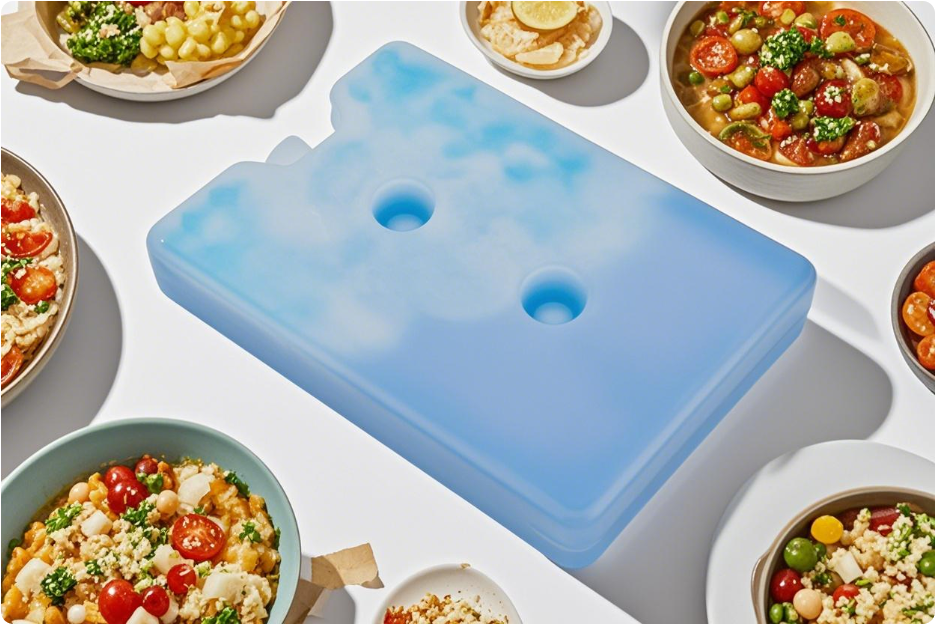
Ice Gel Brick for Sustainable Shipping: Practical Selection Guide
An ice gel brick for sustainable shipping is best understood as a reusable passive refrigerant used with an insulated packaging system. It can help maintain chilled or selected frozen conditions by absorbing heat during transport, but it does not create a complete cold chain by itself. For sustainable cold chain packaging, the right brick depends on the required temperature range, route duration, product sensitivity, insulation, conditioning process, and the buyer's ability to repeat the pack-out.
The practical decision is to match the refrigerant to the route. A brick that works well for food, pharmaceuticals, groceries, meal kits, seafood, meat, dairy, and other cold chain shipments where reusable cooling inventory is being evaluated in one container may be unsuitable in another container or ambient profile. Sustainability claims depend on actual reuse, reverse logistics, washing, loss rates, and material recovery. A reusable brick is not automatically sustainable if it is discarded after one shipment. Buyers should therefore evaluate the full system rather than relying on a generic claim such as long-lasting, reusable, or non-toxic.
Start With the Temperature Requirement
The first question is not the brick size. It is the product temperature requirement. Some shipments need refrigerated protection, some need frozen protection, and some must avoid freezing. In cold chain packaging, sustainability should be evaluated alongside temperature performance because a greener-looking package that fails product protection can create far greater waste. A buyer should write the target range, maximum shipment duration, expected ambient exposure, and receiving acceptance rule before choosing the brick. Without these details, the supplier can only recommend a general product.
For regulated or high-value products, the temperature requirement should come from the product owner, quality team, or established logistics SOP. For food, it should align with the product's safety and quality program. For healthcare products, it should align with labeled storage conditions and any qualification requirement. The brick is a tool used to support that requirement; it is not the requirement itself.
Define the Role of the Brick in the System
An ice gel brick is only one component in a cold chain system. The brick stores cold energy, the insulated box slows heat gain, the packing configuration controls contact, and the operation controls timing. In cold chain packaging, sustainability should be evaluated alongside temperature performance because a greener-looking package that fails product protection can create far greater waste. The final result depends on the payload starting temperature, route duration, ambient exposure, loading discipline, receiving inspection, and any temperature monitoring used for the shipment.
In a passive package, each part has a job. The product starts cold. The ice gel brick absorbs heat. The insulation slows heat entry. The pack-out controls where cold energy is placed. The operator limits staging time. The receiver checks condition. If one part is weak, the entire shipment is at risk. This is why a buyer should not evaluate ice gel bricks separately from the cooler box, foam liner, pallet cover, or insulated bag.
Placement is especially important. A top brick can protect against lid exposure and warm air pooling near the upper layer. Side bricks can reduce wall heat gain. Bottom placement may help some dense loads but can also create pressure or freezing risk. Corners can become warm spots if they are not protected. A good pack-out balances cooling, usable volume, product protection, and worker speed.
Choose the Right Fill and Shell
The fill may be water-based gel, PCM, or another refrigerant formulation. A gel fill is often chosen for practical handling and reduced free-flowing liquid movement. A PCM fill may be chosen when the shipment needs a more defined phase-change behavior. A simple water-based brick may be suitable for many general cold applications. For sustainable cold chain packaging, the selection should be based on product temperature, freeze sensitivity, and route length rather than product name alone.
The shell protects the fill and determines much of the operational durability. Buyers should look at plastic type, wall thickness, cap or weld design, corner strength, and surface cleanability. In reusable operations, the brick will be frozen, handled, stacked, washed, returned, and frozen again. It must fit the shipper after freezing and should not swell, crack, or leak during normal cycles. Samples should be tested after repeated use, not only when new.
A heavier brick may store more cooling energy, but it may also increase freight weight and reduce payload volume. A thinner brick may fit the wall neatly, but it may not support longer routes. A large brick may be efficient for bulk containers and awkward for small parcels. The best choice is the one that meets the temperature requirement with the least operational friction.
Application Guidance for Sustainable Shipping
For food, pharmaceuticals, groceries, meal kits, seafood, meat, dairy, and other cold chain shipments where reusable cooling inventory is being evaluated, the pack-out should protect the product without creating new risks. Evaluate reuse cycles, shell durability, recyclability, cleaning resources, freight weight, reverse logistics, and whether the program reduces total waste in practice.. In practice, this means testing the brick with the real payload, not with an empty box. Product density, carton shape, air gaps, and primary packaging all change the temperature curve. A brick placed against a dense frozen carton behaves differently from a brick placed next to a thin bag, bottle, or tray.
Do not make broad eco claims without evidence of reuse, recovery, and performance. An ice gel brick can improve a route, but it cannot replace pre-chilling, sanitation, receiving discipline, or product-specific handling rules. If the operation changes payload weight, carrier, insulation, or season, the pack-out should be reviewed again. Small route changes can create large temperature changes when passive cooling is near its limit.
Compare Bricks With Other Refrigerants
Loose ice is simple and inexpensive in some operations, but it creates meltwater and can damage packaging. Flexible gel packs fit irregular spaces, but may be less durable in heavy reuse. Dry ice is useful for very cold requirements, but it requires careful handling, venting, and carrier acceptance because it releases carbon dioxide gas. Mechanical refrigeration offers active control but is not practical for every small parcel or short route. Ice gel bricks sit in the middle: cleaner than loose ice, often more durable than flexible packs, and simpler than many active systems.
This comparison should be made against the route. If the product must remain ultra-cold, an ice gel brick is not a direct dry ice replacement. If the product is freeze-sensitive, an ordinary frozen brick may be too aggressive without a spacer or a warmer PCM. If the package is not recovered, a reusable brick may not deliver its sustainability benefit. If the insulated box is weak, adding more bricks may not solve the problem.
A Practical Selection Framework
A buyer can use a simple framework. First, define the product temperature range and the acceptable receiving condition. Second, define the route, including staging, transit, and receiving delay. Third, choose the insulated container and estimate usable payload volume after refrigerants are placed. Fourth, select the brick size, fill, and count. Fifth, test the pack-out under the highest-risk conditions. Sixth, write a clear SOP for conditioning, packing, return, cleaning, and inspection.
This framework prevents common mistakes. It avoids buying bricks that are too large for the box, too cold for the product, too slow to freeze, too heavy for workers, or too fragile for reuse. It also helps suppliers give more useful recommendations because they can respond to route conditions instead of guessing from a product name or broad category.
Supplier Questions Before Bulk Ordering
Bulk ordering should include technical, operational, and quality questions. Ask for external dimensions, filled weight, shell material, fill type, conditioning instructions, packaging quantity, cleaning guidance, and damaged-unit disposal instructions. Ask whether the brick can be customized by size, color, label area, or fill temperature if needed. Ask whether production lots match samples and whether material or mold changes are communicated.
For sustainable cold chain packaging, buyers should also ask about reusable shell durability, cleaning procedure, reverse logistics plan, loss-rate tracking, and end-of-life recycling or disposal guidance. These questions reveal whether the supplier understands the application. A reliable supplier does not need to promise that one brick works for every route. Instead, the supplier should explain intended use, limitations, and what the buyer needs to test.
Documentation may include SDS, product specification, material statement, non-toxic handling information, food-related declarations where relevant, pack-out instructions, and change-control support. For healthcare or strict quality environments, additional route qualification and internal approval may be needed. Do not assume that a product page or sample is enough for compliance-sensitive shipments.
Operating the Brick Day to Day
Daily success depends on conditioning and inventory flow. Frozen bricks should be separated from returned bricks. Freezer racks should allow air circulation. Packing teams should know the minimum freeze time and the correct number of bricks per box. Returned bricks should be cleaned, inspected, and refrozen before reuse. Damaged bricks should be removed from service immediately.
Receiving also matters. The receiving team should know whether to return the brick, dispose of it, inspect it, or record shipment condition. In a closed-loop program, every lost brick reduces sustainability and raises cost. In a high-volume program, simple route labels or color coding can prevent mixing different brick types. In a regulated program, receiving checks may be part of the quality record.
Sustainability Without Greenwashing
Reusable ice gel bricks can support lower-waste cold chain logistics, but only when reuse is real. The sustainability case improves when the shipper can recover bricks, clean them efficiently, keep loss rates low, and use them for many cycles. It weakens when bricks are shipped one way, discarded, or replaced frequently because of damage. The product also has to protect the payload; avoiding product spoilage is one of the most important environmental and economic benefits of good cold chain packaging.
Buyers should define sustainability claims in operational terms. Reusable means the brick is expected to return. Recyclable means end-of-life material can enter an appropriate recycling stream where available. Non-toxic means the fill is intended for safer handling under stated conditions, not that it is edible or suitable for every use. Eco-friendly should be supported by a specific explanation, not a vague label.
When to Reconsider the Design
The main limitation is that a frozen brick does not create unlimited cooling. It absorbs heat until its stored cooling capacity is spent. It is not enough without a return plan, cleaning process, inventory tracking, and realistic loss-rate control. It also cannot correct warm product, open lids, delayed handoffs, missing insulation, or an untrained packing team. For regulated or high-value products, the full shipper configuration should be reviewed by the quality, logistics, or packaging team before routine use.
Reconsider the design if shipments arrive warm, if products show freeze damage, if workers change the pack-out to save time, if bricks are not fully conditioned, or if returns are too low for reuse economics. Also review the design when seasons change, carriers change, payload weight changes, or the business adds a new product category. Passive packaging is sensitive to operational details.
Final Buyer Takeaway
The right ice gel brick for sustainable shipping is the one that fits the full cold chain process. It should have the right fill, mass, shell strength, conditioning requirement, and shape for the payload and route. It should be supported by practical supplier information and verified in the actual pack-out. When these pieces align, the brick can be a reliable, reusable, and manageable cold source for sustainable cold chain packaging.
FAQ
Is a reusable ice gel brick sustainable?
It can be, especially in a closed-loop system, but the benefit depends on reuse rate, cleaning, transport, and recovery.
What is the biggest sustainability risk?
The biggest risk is treating reusable packaging as single-use because return logistics were not planned.
Should buyers choose lighter bricks?
Only if the lighter brick still meets the thermal requirement; product spoilage undermines sustainability.
How should buyers validate a new ice gel brick pack-out?
Start with the intended payload, route duration, ambient profile, and insulated container. Pack the brick exactly as workers will use it, place temperature monitors in meaningful locations, and test the highest-risk lane before scaling the configuration.
About Tempk
Tempk, operated by Shanghai Tempk Industrial Co., Ltd., focuses on cold chain packaging for temperature-controlled transport. We provide gel ice packs, freezer ice bricks, dry ice-style packs, insulated bags, EPP and cold shipping boxes, insulated box liners, pallet covers, and related packaging materials for food, pharmaceutical, and temperature-sensitive shipments. For ice gel brick projects, our support centers on matching refrigerant format, insulation, packing method, and bulk-order requirements to the route and payload.
Get Packaging Advice
Share your required temperature range, shipment duration, payload size, and handling route to get practical packaging advice or a bulk ice brick recommendation.
Ice Gel Brick for Seafood: Practical Selection Guide
Ice Gel Brick for Seafood: Practical Selection Guide
An ice gel brick for seafood is best understood as a reusable passive refrigerant used with an insulated packaging system. It can help maintain chilled or selected frozen conditions by absorbing heat during transport, but it does not create a complete cold chain by itself. For seafood shipping, the right brick depends on the required temperature range, route duration, product sensitivity, insulation, conditioning process, and the buyer's ability to repeat the pack-out.
The practical decision is to match the refrigerant to the route. A brick that works well for fish fillets, shellfish, chilled seafood boxes, frozen seafood cartons, seafood meal kits, and dock-to-door replenishment shipments in one container may be unsuitable in another container or ambient profile. Seafood is often wet, odor-sensitive, and handled across docks, vehicles, staging rooms, and receiving areas. The pack-out must avoid warm exposure, cross-contamination, and direct pressure on delicate products. Buyers should therefore evaluate the full system rather than relying on a generic claim such as long-lasting, reusable, or non-toxic.
Start With the Temperature Requirement
The first question is not the brick size. It is the product temperature requirement. Some shipments need refrigerated protection, some need frozen protection, and some must avoid freezing. For many food operations, refrigerated products are managed around cold-holding expectations such as 40 F or below, while frozen products require a different pack-out and often a lower-temperature refrigerant strategy. A buyer should write the target range, maximum shipment duration, expected ambient exposure, and receiving acceptance rule before choosing the brick. Without these details, the supplier can only recommend a general product.
For regulated or high-value products, the temperature requirement should come from the product owner, quality team, or established logistics SOP. For food, it should align with the product's safety and quality program. For healthcare products, it should align with labeled storage conditions and any qualification requirement. The brick is a tool used to support that requirement; it is not the requirement itself.
Define the Role of the Brick in the System
An ice gel brick is only one component in a cold chain system. The brick stores cold energy, the insulated box slows heat gain, the packing configuration controls contact, and the operation controls timing. For many food operations, refrigerated products are managed around cold-holding expectations such as 40 F or below, while frozen products require a different pack-out and often a lower-temperature refrigerant strategy. The final result depends on the payload starting temperature, route duration, ambient exposure, loading discipline, receiving inspection, and any temperature monitoring used for the shipment.
In a passive package, each part has a job. The product starts cold. The ice gel brick absorbs heat. The insulation slows heat entry. The pack-out controls where cold energy is placed. The operator limits staging time. The receiver checks condition. If one part is weak, the entire shipment is at risk. This is why a buyer should not evaluate ice gel bricks separately from the cooler box, foam liner, pallet cover, or insulated bag.
Placement is especially important. A top brick can protect against lid exposure and warm air pooling near the upper layer. Side bricks can reduce wall heat gain. Bottom placement may help some dense loads but can also create pressure or freezing risk. Corners can become warm spots if they are not protected. A good pack-out balances cooling, usable volume, product protection, and worker speed.
Choose the Right Fill and Shell
The fill may be water-based gel, PCM, or another refrigerant formulation. A gel fill is often chosen for practical handling and reduced free-flowing liquid movement. A PCM fill may be chosen when the shipment needs a more defined phase-change behavior. A simple water-based brick may be suitable for many general cold applications. For seafood shipping, the selection should be based on product temperature, freeze sensitivity, and route length rather than product name alone.
The shell protects the fill and determines much of the operational durability. Buyers should look at plastic type, wall thickness, cap or weld design, corner strength, and surface cleanability. In reusable operations, the brick will be frozen, handled, stacked, washed, returned, and frozen again. It must fit the shipper after freezing and should not swell, crack, or leak during normal cycles. Samples should be tested after repeated use, not only when new.
A heavier brick may store more cooling energy, but it may also increase freight weight and reduce payload volume. A thinner brick may fit the wall neatly, but it may not support longer routes. A large brick may be efficient for bulk containers and awkward for small parcels. The best choice is the one that meets the temperature requirement with the least operational friction.
Application Guidance for Seafood
For fish fillets, shellfish, chilled seafood boxes, frozen seafood cartons, seafood meal kits, and dock-to-door replenishment shipments, the pack-out should protect the product without creating new risks. Check shell cleanability, resistance to fish odor, drainage-free pack-out, exact payload-to-brick ratio, and whether the brick layout protects both top layers and corner zones.. In practice, this means testing the brick with the real payload, not with an empty box. Product density, carton shape, air gaps, and primary packaging all change the temperature curve. A brick placed against a dense frozen carton behaves differently from a brick placed next to a thin bag, bottle, or tray.
Do not treat an ice gel brick as a substitute for hygienic handling, product pre-chilling, seafood haccp controls, or route temperature records. An ice gel brick can improve a route, but it cannot replace pre-chilling, sanitation, receiving discipline, or product-specific handling rules. If the operation changes payload weight, carrier, insulation, or season, the pack-out should be reviewed again. Small route changes can create large temperature changes when passive cooling is near its limit.
Compare Bricks With Other Refrigerants
Loose ice is simple and inexpensive in some operations, but it creates meltwater and can damage packaging. Flexible gel packs fit irregular spaces, but may be less durable in heavy reuse. Dry ice is useful for very cold requirements, but it requires careful handling, venting, and carrier acceptance because it releases carbon dioxide gas. Mechanical refrigeration offers active control but is not practical for every small parcel or short route. Ice gel bricks sit in the middle: cleaner than loose ice, often more durable than flexible packs, and simpler than many active systems.
This comparison should be made against the route. If the product must remain ultra-cold, an ice gel brick is not a direct dry ice replacement. If the product is freeze-sensitive, an ordinary frozen brick may be too aggressive without a spacer or a warmer PCM. If the package is not recovered, a reusable brick may not deliver its sustainability benefit. If the insulated box is weak, adding more bricks may not solve the problem.
A Practical Selection Framework
A buyer can use a simple framework. First, define the product temperature range and the acceptable receiving condition. Second, define the route, including staging, transit, and receiving delay. Third, choose the insulated container and estimate usable payload volume after refrigerants are placed. Fourth, select the brick size, fill, and count. Fifth, test the pack-out under the highest-risk conditions. Sixth, write a clear SOP for conditioning, packing, return, cleaning, and inspection.
This framework prevents common mistakes. It avoids buying bricks that are too large for the box, too cold for the product, too slow to freeze, too heavy for workers, or too fragile for reuse. It also helps suppliers give more useful recommendations because they can respond to route conditions instead of guessing from a product name or broad category.
Supplier Questions Before Bulk Ordering
Bulk ordering should include technical, operational, and quality questions. Ask for external dimensions, filled weight, shell material, fill type, conditioning instructions, packaging quantity, cleaning guidance, and damaged-unit disposal instructions. Ask whether the brick can be customized by size, color, label area, or fill temperature if needed. Ask whether production lots match samples and whether material or mold changes are communicated.
For seafood shipping, buyers should also ask about flat contact with cartons and trays, odor-resistant and washable shell, high cooling mass without damaging seafood, configuration for top, side, and corner protection, and compatibility with liners, EPP boxes, or insulated cartons. These questions reveal whether the supplier understands the application. A reliable supplier does not need to promise that one brick works for every route. Instead, the supplier should explain intended use, limitations, and what the buyer needs to test.
Documentation may include SDS, product specification, material statement, non-toxic handling information, food-related declarations where relevant, pack-out instructions, and change-control support. For healthcare or strict quality environments, additional route qualification and internal approval may be needed. Do not assume that a product page or sample is enough for compliance-sensitive shipments.
Operating the Brick Day to Day
Daily success depends on conditioning and inventory flow. Frozen bricks should be separated from returned bricks. Freezer racks should allow air circulation. Packing teams should know the minimum freeze time and the correct number of bricks per box. Returned bricks should be cleaned, inspected, and refrozen before reuse. Damaged bricks should be removed from service immediately.
Receiving also matters. The receiving team should know whether to return the brick, dispose of it, inspect it, or record shipment condition. In a closed-loop program, every lost brick reduces sustainability and raises cost. In a high-volume program, simple route labels or color coding can prevent mixing different brick types. In a regulated program, receiving checks may be part of the quality record.
Sustainability Without Greenwashing
Reusable ice gel bricks can support lower-waste cold chain logistics, but only when reuse is real. The sustainability case improves when the shipper can recover bricks, clean them efficiently, keep loss rates low, and use them for many cycles. It weakens when bricks are shipped one way, discarded, or replaced frequently because of damage. The product also has to protect the payload; avoiding product spoilage is one of the most important environmental and economic benefits of good cold chain packaging.
Buyers should define sustainability claims in operational terms. Reusable means the brick is expected to return. Recyclable means end-of-life material can enter an appropriate recycling stream where available. Non-toxic means the fill is intended for safer handling under stated conditions, not that it is edible or suitable for every use. Eco-friendly should be supported by a specific explanation, not a vague label.
When to Reconsider the Design
The main limitation is that a frozen brick does not create unlimited cooling. It absorbs heat until its stored cooling capacity is spent. It is not enough for long unrefrigerated routes, poorly insulated cartons, or frozen seafood programs that require hard frozen conditions without qualification. It also cannot correct warm product, open lids, delayed handoffs, missing insulation, or an untrained packing team. For regulated or high-value products, the full shipper configuration should be reviewed by the quality, logistics, or packaging team before routine use.
Reconsider the design if shipments arrive warm, if products show freeze damage, if workers change the pack-out to save time, if bricks are not fully conditioned, or if returns are too low for reuse economics. Also review the design when seasons change, carriers change, payload weight changes, or the business adds a new product category. Passive packaging is sensitive to operational details.
Final Buyer Takeaway
The right ice gel brick for seafood is the one that fits the full cold chain process. It should have the right fill, mass, shell strength, conditioning requirement, and shape for the payload and route. It should be supported by practical supplier information and verified in the actual pack-out. When these pieces align, the brick can be a reliable, reusable, and manageable cold source for seafood shipping.
FAQ
Can ice gel bricks replace loose ice for seafood?
They can reduce meltwater and simplify handling, but the pack-out must still be matched to product temperature, route duration, and insulation.
Should seafood touch the brick directly?
Direct contact may be acceptable for some packaging formats, but delicate or freeze-sensitive seafood usually needs a liner, spacer, or carton layer.
How many bricks are needed for seafood boxes?
The number depends on product mass, pre-chill temperature, insulation, ambient exposure, and transit time. A tested packing configuration is safer than a guess.
How should buyers validate a new ice gel brick pack-out?
Start with the intended payload, route duration, ambient profile, and insulated container. Pack the brick exactly as workers will use it, place temperature monitors in meaningful locations, and test the highest-risk lane before scaling the configuration.
About Tempk
Tempk, operated by Shanghai Tempk Industrial Co., Ltd., focuses on cold chain packaging for temperature-controlled transport. We provide gel ice packs, freezer ice bricks, dry ice-style packs, insulated bags, EPP and cold shipping boxes, insulated box liners, pallet covers, and related packaging materials for food, pharmaceutical, and temperature-sensitive shipments. For ice gel brick projects, our support centers on matching refrigerant format, insulation, packing method, and bulk-order requirements to the route and payload.
Get Packaging Advice
Share your required temperature range, shipment duration, payload size, and handling route to get practical packaging advice or a bulk ice brick recommendation.