


Dry Ice Pack Supplier Europe: Pro Optimized Guide
Dry Ice Pack Supplier Europe: Pro Optimized Guide

Dry Ice Pack Supplier Europe: Pro Optimized Guide
If you are evaluating dry ice pack supplier Europe, you probably want more than a list of vendors. You want to know which pack format fits your temperature target, which documents speed up approval, and which sourcing model keeps service stable when demand swings. In 2026, the best buying decisions come from joining buyer guidance, technical evidence, regional compliance, and real operating economics in one framework. That is exactly how you turn a broad search into a low-risk purchasing decision.
What this article answers
How to separate true dry ice, dry-ice-style sheet packs, gel packs, and PCM options for europe sourcing
What technical details matter most when you review a supplier quote, a validation file, or a pilot order
Which documents and market signals should shape your shortlist before you commit to a production program
How to balance storage footprint, route risk, sustainability pressure, and total landed cost
Why is Dry Ice Pack Supplier Europe still a high-intent search in 2026?
The search term dry ice pack supplier Europe still attracts serious buyers because it sits at the intersection of product safety, packaging efficiency, and supply continuity. But the phrase itself is broad. One supplier may mean a water-activated dry-ice-style sheet, another may mean a reusable PCM brick, and another may mean true solid CO2 for vented shippers. If you compare those offers as if they were identical, you risk buying the wrong temperature system, the wrong operating model, or both.
The smarter way to start is to treat dry ice pack supplier Europe as a sourcing question, not a product answer. You first define the payload range, the real transit window, the destination climate, and the tolerance for excursion. Then you screen vendors against your internal limits on storage, labor, documentation, and replenishment speed. That process works whether you buy for meal kits, seafood, diagnostics, pharmaceuticals, or export parcels in Europe.
A practical four-step decision tool
The most reliable buyers use a simple screen before they request samples. They ask what temperature the product really needs, what the route really looks like, what the warehouse can prepare every day, and what evidence quality will require before launch. Those four questions instantly narrow the field and make each sourcing partner quote much easier to compare. They also reduce the common habit of choosing the coldest-looking option rather than the most suitable option.
| Decision factor | What to define | Why it matters | What it means for you |
|---|---|---|---|
| Payload target | 2°C to 8°C, 15°C to 25°C, frozen, or ultra-frozen | Stops buyers from choosing a colder pack than the product actually needs | Better product protection with less wasted coolant |
| Transit profile | Courier parcel, air export, linehaul, or closed-loop return | Matches hold time, handling risk, and replenishment logic | More accurate pack-out and fewer emergency reships |
| Warehouse reality | Flat storage, freezer space, hydration labor, and conditioning windows | Avoids buying a format your site cannot prepare at scale | Smoother daily operations |
| Approval burden | Food-contact file, GDP support, test data, and change control | Prevents delays after procurement says yes | Faster launch and easier audits |
Practical tips and recommendations
Write down the allowed product temperature range before you speak to sales teams.
Ask for route-specific recommendations instead of one generic brochure pack-out.
Separate one-way parcel programs from closed-loop reusable programs at the start.
Field example: a buyer searching for dry ice pack supplier Europe expected to choose the heaviest pack for safety. After mapping lanes and storage limits, the team selected a lighter format for most routes and reserved the heavy build for summer outliers. That reduced storage pressure and still protected product quality.
How do you choose the right coolant format for dry ice pack supplier Europe?
The correct coolant format depends on the product, the route, and the site that prepares orders. Hydrated sheet packs shine when you need flat storage and flexible placement. Gel or PCM bricks fit programs that prefer defined geometry and repeat conditioning. True dry ice belongs in programs that genuinely need extreme low temperature or already manage dangerous-goods procedures confidently.
In other words, the question is not whether one pack is universally better. It is whether the format matches your reality. For a supplier search, that means you should ask how the pack is stored, prepared, loaded, and disposed of after delivery. A pack that looks economical on paper may become expensive if it consumes freezer space, slows pick speed, or increases exception handling.
Where technical fit beats headline coldness
Buyers often overvalue the lowest nominal temperature and undervalue control. What protects your shipment is not just how cold the pack can be at one moment, but how evenly it holds temperature around the payload and how predictably it behaves in the carton. A slightly warmer but better-matched system can outperform an extreme coolant that creates freeze risk, condensation, or needless handling complexity.
| Format | Typical advantage | Watch-out point | What it means for you |
|---|---|---|---|
| Hydrated sheet pack | Stores flat and activates quickly | Needs good hydration discipline | Ideal when warehouse space is tight and order count swings fast |
| Gel pack | Simple conditioning and familiar handling | Can waste carton space if size match is poor | Useful for standard chilled parcel programs |
| PCM brick | Tighter temperature band when correctly selected | Needs disciplined pre-conditioning | Strong option when you need more precise control |
| True dry ice | Deepest low-temperature capability | Requires ventilation, labeling, and careful transport rules | Best only when your product or route truly justifies it |
Practical tips and recommendations
Request one recommendation for your normal lane and one for your hottest-risk lane in Europe.
Ask how many usable packs fit per carton and per pallet before you compare unit pricing.
Treat every thermal recommendation as incomplete until the vendor explains conditioning time and handling steps.
Field example: a diagnostic-shipments team tested both PCM bricks and dry-ice-style sheets. The sheets won on storage density and pick speed, while the PCM option won on narrow temperature control. The final decision split by route type rather than forcing one solution across every shipment.
What technical details separate a reliable supplier offer from a risky one?
A dependable dry ice pack supplier Europe program is built on small technical details that buyers can easily miss. Film strength affects puncture resistance and leakage. Absorbent structure or PCM formulation affects how evenly the pack charges and releases energy. Seal quality determines whether the pack survives hydration, freezing, stacking, and courier abuse. When those details drift, failures usually appear as mess, temperature loss, or both.
This is why serious sourcing conversations go beyond a brochure. You want dimensional tolerances, fill-weight consistency, burst or seal testing, and clear instructions for conditioning and storage. If you are working with a manufacturer, you also want change-control discipline so a film, resin, or filling update does not quietly alter performance. If you are working with a distributor or supplier, you still want traceability back to the original production standard.
The material-science checks that matter in everyday operations
Think of a cold pack like a battery inside a protective skin. The outer film is the shell, the internal medium is the stored energy, and the seal is the point that keeps the system intact under pressure. If any one of those three elements is weak, the pack may still look acceptable in a sample box but fail during scale-up, longer transit, or hotter weather. That is why technical screening saves money long before the first complaint appears.
| Technical element | What to check | Why buyers care | What it means for you |
|---|---|---|---|
| Outer film | Film thickness, puncture resistance, and seal behavior | Protects against leaks, abrasion, and rough parcel handling | Fewer damaged cartons and cleaner pack-out lines |
| Absorbent or PCM core | Water uptake, phase point, and mass consistency | Controls how evenly the pack cools and how long it lasts | More predictable thermal hold |
| Geometry | Cell size, sheet layout, or brick dimensions | Determines fit around the payload and carton dead space | Better cubic efficiency |
| Seal system | Burst resistance and corner integrity | Weak seals usually fail during hydration, freezing, or compression | Lower loss and complaint rates |
Practical tips and recommendations
Ask for the vendor's standard tolerances on pack dimensions and fill weight.
Request evidence that seal quality is checked by batch, not only during initial product development.
Pilot the pack in your real carton with your real payload before approving national or export volume.
Field example: a food exporter liked a low-cost sample because it looked identical to the incumbent. During a stress test, the cheaper pack showed corner seepage after compression and thaw-refreeze handling. The visual similarity hid a seal-quality gap that would have created costly field failures.
What documents should you demand before approving dry ice pack supplier Europe in Europe?
Documentation is the quiet force that separates quick launches from painful delays. Before approval, you should know exactly what the pack is made from, how it is conditioned, how performance was tested, and which declarations apply to your market. Europe is attractive because many core rules are harmonized, but that does not mean buying is simple. Food-contact materials sit under shared EU rules, and pharmaceutical buyers often work with GDP expectations around documentation, traceability, and excursion management. In parallel, the PPWR is reshaping packaging decisions by turning recyclability, recycled content, and waste reduction into board-level sourcing issues. A supplier that understands multi-country labeling, pooled inventory, and cross-border lead times often beats a cheaper pack maker that only understands factory output.
Many teams wait until after commercial agreement to request quality files. That is backwards. In 2026, procurement, quality, operations, and sustainability often review the same pack from different angles, so document readiness is part of supplier readiness. If a vendor cannot assemble a clean, market-appropriate file set early, the relationship will probably stay slow and reactive.
A minimum approval file for serious buyers
A strong approval file should connect specification, evidence, and commercial continuity. It should tell you what the pack is, how it performs, and how supply stays stable when weather or demand changes. When that file is ready before first order, cross-functional approval gets faster and pilot timelines become much easier to manage.
| Document block | What it should contain | Why it matters | What it means for you |
|---|---|---|---|
| Product specification | Dimensions, fill weight, conditioning method, and tolerances | Makes quotes truly comparable | Less confusion during approval |
| Compliance file | Food-contact basis, test reports, declaration letters, and change control | Shows whether the pack fits your market and product class | Faster quality review |
| Transit evidence | Route test, summer and winter profiles, and acceptance criteria | Proves real performance instead of marketing claims | More confident launches |
| Supply plan | MOQ, lead time, safety stock, and peak-season plan | Prevents shortages during promotions or hot weather | Better continuity |
Practical tips and recommendations
For in Europe, ask the vendor to explain market-specific declarations in plain English, not just send certificates without context.
Require route-test summaries that match the actual carton, payload, and coolant mass you plan to buy.
Confirm what happens if raw materials or dimensions change after approval, including notification timing.
Field example: a buyer nearly approved a new source on price alone. The project paused when quality discovered that transit data used a different box and payload from the launch design. One week spent aligning documents early would have saved a month of rework.
How do storage, service, and price change the real value of dry ice pack supplier Europe?
The best commercial choice is rarely the lowest unit price. Real value comes from the full system: warehouse footprint, conditioning labor, pick speed, damaged-shipment rate, replenishment speed, and emergency backup when demand spikes. For dry ice pack supplier Europe, you should compare landed performance, not just invoice price.
Role matters here. A supplier model tends to emphasize balanced sourcing, quality consistency, documentation, and the ability to match the right pack to the right lane. That can be excellent when it matches your buying pattern. But it can also create friction if your internal reality is different. The word supplier sounds broad, so your first job is to clarify whether you are buying capacity, stock, engineering support, or all three.
A 20-point buyer scorecard for final comparison
One practical method is to score every shortlisted supplier on four dimensions: thermal fit, operational fit, documentation fit, and commercial fit. Each category gets five points. A vendor with a slightly higher price but a much better score usually creates lower total cost over a full season because failures, reships, and internal delays shrink.
| Score area | Question to ask | Score | What it means for you |
|---|---|---|---|
| Thermal fit | Does the vendor show lane-specific hold data rather than generic brochure claims? | 0-5 | Higher score means lower spoilage risk |
| Operational fit | Can your site store, hydrate, freeze, and pick the pack at the needed speed? | 0-5 | Higher score means smoother daily execution |
| Documentation fit | Are the compliance papers ready before launch, not after? | 0-5 | Higher score means faster approval |
| Commercial fit | Do MOQ, call-off rules, and emergency backup support your real demand curve? | 0-5 | Higher score means lower disruption risk |
Practical tips and recommendations
Do not compare factory-direct and local-stock models without adjusting for lead time and approval burden.
Ask what emergency plan applies if a heatwave or promotion doubles weekly demand.
Review packaging dimensions because smaller cartons can lower freight and storage cost even when pack price is unchanged.
Field example: two offers for dry ice pack supplier Europe looked close on price. The lower quote required a larger MOQ, longer lead time, and no heatwave backup stock. The higher quote came from a local partner with shorter replenishment and better documentation. Over the season, the second option delivered lower total operating cost.
How are sustainability and market trends reshaping dry ice pack supplier Europe in 2026?
In 2026, sustainability is no longer a separate conversation held after thermal approval. It is part of sourcing from day one. Across Europe, buyers increasingly prefer modular packaging platforms: one insulation family, two or three coolant options, and validated pack-outs for different lanes. That approach reduces SKU sprawl while still respecting different transit times and summer-winter risk. It also makes ESG reporting easier because material data, waste assumptions, and pack weights stay comparable across countries. European sourcing teams now look beyond unit price. They want to know how much plastic you use, whether the pack is easy to separate from insulation, whether recycled content creates any new food-safety or migration questions, and how the whole configuration affects transport emissions. This is why simple, well-documented pack architectures are winning share.
The strongest market trend is not a single material switch. It is better fit. Buyers increasingly want lane-specific pack-outs, lighter cartons, clearer recyclability claims, and evidence that a supplier can reduce damage and waste without shifting risk to the product. Across Europe, the major signal is packaging convergence under policy pressure. The PPWR is pushing companies to rethink material choice, waste, and transport efficiency, while EU food-contact and GDP expectations keep technical documentation central to approval.
Three trend signals buyers should watch
If you want a future-proof supply program, watch where policy, operations, and customer expectation overlap. That overlap is where supplier advantage now appears. Firms that document materials clearly, right-size packs, and support route-based validation are usually better positioned than those that only compete on price or buzzwords.
| Trend | What is happening | Why it matters | What it means for you |
|---|---|---|---|
| Lane-specific pack-outs | More buyers are approving different summer, winter, and regional builds | Cuts overpacking on easy routes while protecting high-risk lanes | Stronger cost-to-performance balance |
| Documentation-first sourcing | Quality teams want files early, especially in regulated sectors | Moves decisions from marketing claims toward evidence | Faster cross-functional approval |
| Waste-aware design | Packaging policy and disposal costs are shaping choices in every region | Rewards right-sized formats and honest material claims | Better ESG conversations without losing performance |
Practical tips and recommendations
Ask suppliers to explain the waste story of the whole pack-out, not just one component.
Request a right-sizing review before you commit to annual volume.
When sustainability claims are made, ask whether they are based on actual local recovery pathways or only theoretical recyclability.
Field example: a premium-food shipper improved both cost and sustainability by switching from one oversized national carton to two route-specific carton sizes with adjusted coolant mass. Damage fell, dimensional freight dropped, and customer disposal complaints decreased at the same time.
2026 latest developments and buyer signals
The 2026 market for dry ice pack supplier Europe rewards evidence, fit, and waste awareness more than generic product claims. Across regulated sectors and mainstream parcel programs alike, buyers are moving toward shorter approval cycles built on better files, more route testing, and clearer material decisions. That means the strongest suppliers are the ones that can explain not only what the pack is, but why it is the right answer for your exact lane.
Growth is shifting toward route-specific pack-outs instead of one universal national formula.
Quality and procurement teams increasingly want document packets before pilot approval, not after the commercial discussion.
Sustainability pressure is pushing buyers to review carton size, coolant mass, and disposal realism as part of the same sourcing decision.
In practice, the winners in Europe are not always the loudest marketers. They are the partners that combine operational honesty, test evidence, and responsive service. If a supplier can translate technical details into day-to-day value for your team, approval tends to move faster and long-term performance tends to improve.
Frequently asked questions
Can dry ice pack supplier Europe mean true dry ice and not only a dry-ice-style pack?
Yes. Buyers use the phrase both ways. That is why you should ask every vendor to define the coolant type, temperature range, and handling method before you compare quotes.
What is the fastest way to shortlist dry ice pack supplier Europe suppliers?
Use four filters: payload temperature, transit window, warehouse readiness, and document readiness. Suppliers that fit all four usually deserve sampling first.
How important is documentation for dry ice pack supplier Europe in regulated sectors?
It is critical. Even a good-performing pack can be delayed if the quality file, market declarations, or route-test evidence are incomplete or mismatched to your launch design.
Should you choose the coldest pack available for safety?
Not automatically. The safest pack is the one that holds the right temperature band for the real route without creating freeze risk, leakage, or unnecessary handling complexity.
When does a local sourcing partner beat a factory-direct model?
Usually when lead time, emergency replenishment, mixed-case orders, or approval speed matter more than absolute factory pricing. Total operating risk often matters more than nominal unit cost.
Summary and recommendations
The best dry ice pack supplier Europe decision in 2026 comes from combining four views at once. You need buyer-fit analysis, technical evidence, market-appropriate documents, and an honest cost model. When you define the lane clearly, test the pack in your real shipper, and score suppliers on more than price, you usually get better product protection and smoother operations. That is the difference between buying a cold pack and building a dependable cold-chain program.
Your next step is simple. List your target temperature, normal and worst-case transit times, current carton sizes, and approval documents. Then ask shortlisted vendors to respond to the same brief so their offers stay comparable. That single step saves time, reduces internal debate, and helps you choose the right pack faster.
About Tempk
About Tempk: we focus on practical cold-chain packaging decisions, from dry-ice-style sheet packs to reusable temperature-control formats and export-ready pack-out support. We work from the view that buyers need clear product definitions, dependable quality, and documents that help operations and quality teams approve faster. Our advantage is not hype. It is helping teams match the right coolant system to the real shipping lane.
Talk with Tempk about your route profile, pack format options, and validation needs so you can build a lower-risk sourcing plan.
Dry Ice Pack Supplier Australia: Pro Optimized Guide
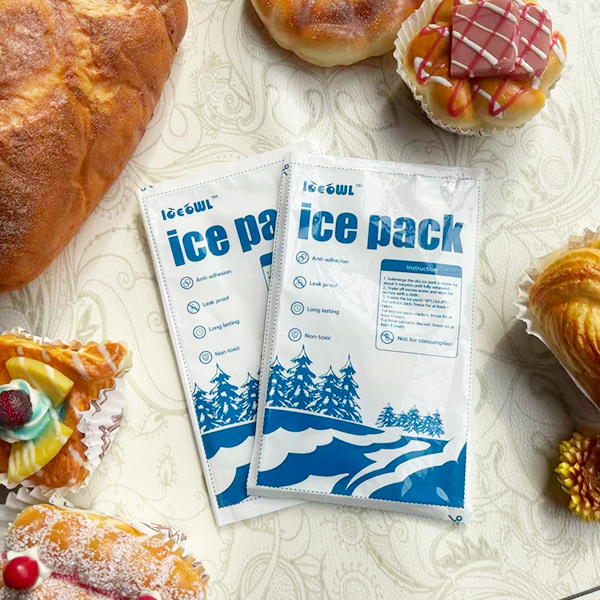
Dry Ice Pack Supplier Australia: Pro Optimized Guide
If you are evaluating dry ice pack supplier Australia, you probably want more than a list of vendors. You want to know which pack format fits your temperature target, which documents speed up approval, and which sourcing model keeps service stable when demand swings. In 2026, the best buying decisions come from joining buyer guidance, technical evidence, regional compliance, and real operating economics in one framework. That is exactly how you turn a broad search into a low-risk purchasing decision.
What this article answers
How to separate true dry ice, dry-ice-style sheet packs, gel packs, and PCM options for australia sourcing
What technical details matter most when you review a supplier quote, a validation file, or a pilot order
Which documents and market signals should shape your shortlist before you commit to a production program
How to balance storage footprint, route risk, sustainability pressure, and total landed cost
Why is Dry Ice Pack Supplier Australia still a high-intent search in 2026?
The search term dry ice pack supplier Australia still attracts serious buyers because it sits at the intersection of product safety, packaging efficiency, and supply continuity. But the phrase itself is broad. One supplier may mean a water-activated dry-ice-style sheet, another may mean a reusable PCM brick, and another may mean true solid CO2 for vented shippers. If you compare those offers as if they were identical, you risk buying the wrong temperature system, the wrong operating model, or both.
The smarter way to start is to treat dry ice pack supplier Australia as a sourcing question, not a product answer. You first define the payload range, the real transit window, the destination climate, and the tolerance for excursion. Then you screen vendors against your internal limits on storage, labor, documentation, and replenishment speed. That process works whether you buy for meal kits, seafood, diagnostics, pharmaceuticals, or export parcels in Australia.
A practical four-step decision tool
The most reliable buyers use a simple screen before they request samples. They ask what temperature the product really needs, what the route really looks like, what the warehouse can prepare every day, and what evidence quality will require before launch. Those four questions instantly narrow the field and make each sourcing partner quote much easier to compare. They also reduce the common habit of choosing the coldest-looking option rather than the most suitable option.
| Decision factor | What to define | Why it matters | What it means for you |
|---|---|---|---|
| Payload target | 2°C to 8°C, 15°C to 25°C, frozen, or ultra-frozen | Stops buyers from choosing a colder pack than the product actually needs | Better product protection with less wasted coolant |
| Transit profile | Courier parcel, air export, linehaul, or closed-loop return | Matches hold time, handling risk, and replenishment logic | More accurate pack-out and fewer emergency reships |
| Warehouse reality | Flat storage, freezer space, hydration labor, and conditioning windows | Avoids buying a format your site cannot prepare at scale | Smoother daily operations |
| Approval burden | Food-contact file, GDP support, test data, and change control | Prevents delays after procurement says yes | Faster launch and easier audits |
Practical tips and recommendations
Write down the allowed product temperature range before you speak to sales teams.
Ask for route-specific recommendations instead of one generic brochure pack-out.
Separate one-way parcel programs from closed-loop reusable programs at the start.
Field example: a buyer searching for dry ice pack supplier Australia expected to choose the heaviest pack for safety. After mapping lanes and storage limits, the team selected a lighter format for most routes and reserved the heavy build for summer outliers. That reduced storage pressure and still protected product quality.
How do you choose the right coolant format for dry ice pack supplier Australia?
The correct coolant format depends on the product, the route, and the site that prepares orders. Hydrated sheet packs shine when you need flat storage and flexible placement. Gel or PCM bricks fit programs that prefer defined geometry and repeat conditioning. True dry ice belongs in programs that genuinely need extreme low temperature or already manage dangerous-goods procedures confidently.
In other words, the question is not whether one pack is universally better. It is whether the format matches your reality. For a supplier search, that means you should ask how the pack is stored, prepared, loaded, and disposed of after delivery. A pack that looks economical on paper may become expensive if it consumes freezer space, slows pick speed, or increases exception handling.
Where technical fit beats headline coldness
Buyers often overvalue the lowest nominal temperature and undervalue control. What protects your shipment is not just how cold the pack can be at one moment, but how evenly it holds temperature around the payload and how predictably it behaves in the carton. A slightly warmer but better-matched system can outperform an extreme coolant that creates freeze risk, condensation, or needless handling complexity.
| Format | Typical advantage | Watch-out point | What it means for you |
|---|---|---|---|
| Hydrated sheet pack | Stores flat and activates quickly | Needs good hydration discipline | Ideal when warehouse space is tight and order count swings fast |
| Gel pack | Simple conditioning and familiar handling | Can waste carton space if size match is poor | Useful for standard chilled parcel programs |
| PCM brick | Tighter temperature band when correctly selected | Needs disciplined pre-conditioning | Strong option when you need more precise control |
| True dry ice | Deepest low-temperature capability | Requires ventilation, labeling, and careful transport rules | Best only when your product or route truly justifies it |
Practical tips and recommendations
Request one recommendation for your normal lane and one for your hottest-risk lane in Australia.
Ask how many usable packs fit per carton and per pallet before you compare unit pricing.
Treat every thermal recommendation as incomplete until the vendor explains conditioning time and handling steps.
Field example: a diagnostic-shipments team tested both PCM bricks and dry-ice-style sheets. The sheets won on storage density and pick speed, while the PCM option won on narrow temperature control. The final decision split by route type rather than forcing one solution across every shipment.
What technical details separate a reliable supplier offer from a risky one?
A dependable dry ice pack supplier Australia program is built on small technical details that buyers can easily miss. Film strength affects puncture resistance and leakage. Absorbent structure or PCM formulation affects how evenly the pack charges and releases energy. Seal quality determines whether the pack survives hydration, freezing, stacking, and courier abuse. When those details drift, failures usually appear as mess, temperature loss, or both.
This is why serious sourcing conversations go beyond a brochure. You want dimensional tolerances, fill-weight consistency, burst or seal testing, and clear instructions for conditioning and storage. If you are working with a manufacturer, you also want change-control discipline so a film, resin, or filling update does not quietly alter performance. If you are working with a distributor or supplier, you still want traceability back to the original production standard.
The material-science checks that matter in everyday operations
Think of a cold pack like a battery inside a protective skin. The outer film is the shell, the internal medium is the stored energy, and the seal is the point that keeps the system intact under pressure. If any one of those three elements is weak, the pack may still look acceptable in a sample box but fail during scale-up, longer transit, or hotter weather. That is why technical screening saves money long before the first complaint appears.
| Technical element | What to check | Why buyers care | What it means for you |
|---|---|---|---|
| Outer film | Film thickness, puncture resistance, and seal behavior | Protects against leaks, abrasion, and rough parcel handling | Fewer damaged cartons and cleaner pack-out lines |
| Absorbent or PCM core | Water uptake, phase point, and mass consistency | Controls how evenly the pack cools and how long it lasts | More predictable thermal hold |
| Geometry | Cell size, sheet layout, or brick dimensions | Determines fit around the payload and carton dead space | Better cubic efficiency |
| Seal system | Burst resistance and corner integrity | Weak seals usually fail during hydration, freezing, or compression | Lower loss and complaint rates |
Practical tips and recommendations
Ask for the vendor's standard tolerances on pack dimensions and fill weight.
Request evidence that seal quality is checked by batch, not only during initial product development.
Pilot the pack in your real carton with your real payload before approving national or export volume.
Field example: a food exporter liked a low-cost sample because it looked identical to the incumbent. During a stress test, the cheaper pack showed corner seepage after compression and thaw-refreeze handling. The visual similarity hid a seal-quality gap that would have created costly field failures.
What documents should you demand before approving dry ice pack supplier Australia in Australia?
Documentation is the quiet force that separates quick launches from painful delays. Before approval, you should know exactly what the pack is made from, how it is conditioned, how performance was tested, and which declarations apply to your market. Australia is one of the clearest markets where packaging must reflect geography. Transit lanes can be long, ambient peaks can be severe, and remote addresses add real risk. For medicines, TGA wholesaling guidance is very practical: cold-chain medicines should be packaged and transported under procedures established for unfavourable environments, and labels such as 'Refrigerate – do not freeze' or 'Keep frozen' should match the intended condition. On the packaging policy side, APCO data show the system is still short of national targets, so buyers increasingly prefer designs that reduce unnecessary plastic, improve recyclability, or use recycled content without hurting performance.
Many teams wait until after commercial agreement to request quality files. That is backwards. In 2026, procurement, quality, operations, and sustainability often review the same pack from different angles, so document readiness is part of supplier readiness. If a vendor cannot assemble a clean, market-appropriate file set early, the relationship will probably stay slow and reactive.
A minimum approval file for serious buyers
A strong approval file should connect specification, evidence, and commercial continuity. It should tell you what the pack is, how it performs, and how supply stays stable when weather or demand changes. When that file is ready before first order, cross-functional approval gets faster and pilot timelines become much easier to manage.
| Document block | What it should contain | Why it matters | What it means for you |
|---|---|---|---|
| Product specification | Dimensions, fill weight, conditioning method, and tolerances | Makes quotes truly comparable | Less confusion during approval |
| Compliance file | Food-contact basis, test reports, declaration letters, and change control | Shows whether the pack fits your market and product class | Faster quality review |
| Transit evidence | Route test, summer and winter profiles, and acceptance criteria | Proves real performance instead of marketing claims | More confident launches |
| Supply plan | MOQ, lead time, safety stock, and peak-season plan | Prevents shortages during promotions or hot weather | Better continuity |
Practical tips and recommendations
For in Australia, ask the vendor to explain market-specific declarations in plain English, not just send certificates without context.
Require route-test summaries that match the actual carton, payload, and coolant mass you plan to buy.
Confirm what happens if raw materials or dimensions change after approval, including notification timing.
Field example: a buyer nearly approved a new source on price alone. The project paused when quality discovered that transit data used a different box and payload from the launch design. One week spent aligning documents early would have saved a month of rework.
How do storage, service, and price change the real value of dry ice pack supplier Australia?
The best commercial choice is rarely the lowest unit price. Real value comes from the full system: warehouse footprint, conditioning labor, pick speed, damaged-shipment rate, replenishment speed, and emergency backup when demand spikes. For dry ice pack supplier Australia, you should compare landed performance, not just invoice price.
Role matters here. A supplier model tends to emphasize balanced sourcing, quality consistency, documentation, and the ability to match the right pack to the right lane. That can be excellent when it matches your buying pattern. But it can also create friction if your internal reality is different. The word supplier sounds broad, so your first job is to clarify whether you are buying capacity, stock, engineering support, or all three.
A 20-point buyer scorecard for final comparison
One practical method is to score every shortlisted supplier on four dimensions: thermal fit, operational fit, documentation fit, and commercial fit. Each category gets five points. A vendor with a slightly higher price but a much better score usually creates lower total cost over a full season because failures, reships, and internal delays shrink.
| Score area | Question to ask | Score | What it means for you |
|---|---|---|---|
| Thermal fit | Does the vendor show lane-specific hold data rather than generic brochure claims? | 0-5 | Higher score means lower spoilage risk |
| Operational fit | Can your site store, hydrate, freeze, and pick the pack at the needed speed? | 0-5 | Higher score means smoother daily execution |
| Documentation fit | Are the compliance papers ready before launch, not after? | 0-5 | Higher score means faster approval |
| Commercial fit | Do MOQ, call-off rules, and emergency backup support your real demand curve? | 0-5 | Higher score means lower disruption risk |
Practical tips and recommendations
Do not compare factory-direct and local-stock models without adjusting for lead time and approval burden.
Ask what emergency plan applies if a heatwave or promotion doubles weekly demand.
Review packaging dimensions because smaller cartons can lower freight and storage cost even when pack price is unchanged.
Field example: two offers for dry ice pack supplier Australia looked close on price. The lower quote required a larger MOQ, longer lead time, and no heatwave backup stock. The higher quote came from a local partner with shorter replenishment and better documentation. Over the season, the second option delivered lower total operating cost.
How are sustainability and market trends reshaping dry ice pack supplier Australia in 2026?
In 2026, sustainability is no longer a separate conversation held after thermal approval. It is part of sourcing from day one. The practical trend in Australia is hybrid sourcing. You keep one or two locally available pack formats for urgent national replenishment, and you source specialized or branded formats through longer-lead manufacturing. That reduces the risk of stockouts during hot months while still keeping annual packaging cost under control. Australian buyers tend to be very practical about sustainability. A pack wins if it stores flat, hydrates quickly, survives rough handling, and reduces waste in real delivery conditions. Because backhauls are not always easy, reusable packs work best in controlled loops such as healthcare campuses, DC-to-store transfers, or internal catering networks.
The strongest market trend is not a single material switch. It is better fit. Buyers increasingly want lane-specific pack-outs, lighter cartons, clearer recyclability claims, and evidence that a supplier can reduce damage and waste without shifting risk to the product. APCO's latest public data show that 86% of packaging is reusable, recyclable, or compostable, but only 20% of plastic packaging is recycled or composted, while average post-consumer recycled content is 44%. That gap explains why Australian buyers increasingly ask suppliers to justify pack format, material intensity, and waste outcomes, not just cold performance.
Three trend signals buyers should watch
If you want a future-proof supply program, watch where policy, operations, and customer expectation overlap. That overlap is where supplier advantage now appears. Firms that document materials clearly, right-size packs, and support route-based validation are usually better positioned than those that only compete on price or buzzwords.
| Trend | What is happening | Why it matters | What it means for you |
|---|---|---|---|
| Lane-specific pack-outs | More buyers are approving different summer, winter, and regional builds | Cuts overpacking on easy routes while protecting high-risk lanes | Stronger cost-to-performance balance |
| Documentation-first sourcing | Quality teams want files early, especially in regulated sectors | Moves decisions from marketing claims toward evidence | Faster cross-functional approval |
| Waste-aware design | Packaging policy and disposal costs are shaping choices in every region | Rewards right-sized formats and honest material claims | Better ESG conversations without losing performance |
Practical tips and recommendations
Ask suppliers to explain the waste story of the whole pack-out, not just one component.
Request a right-sizing review before you commit to annual volume.
When sustainability claims are made, ask whether they are based on actual local recovery pathways or only theoretical recyclability.
Field example: a premium-food shipper improved both cost and sustainability by switching from one oversized national carton to two route-specific carton sizes with adjusted coolant mass. Damage fell, dimensional freight dropped, and customer disposal complaints decreased at the same time.
2026 latest developments and buyer signals
The 2026 market for dry ice pack supplier Australia rewards evidence, fit, and waste awareness more than generic product claims. Across regulated sectors and mainstream parcel programs alike, buyers are moving toward shorter approval cycles built on better files, more route testing, and clearer material decisions. That means the strongest suppliers are the ones that can explain not only what the pack is, but why it is the right answer for your exact lane.
Growth is shifting toward route-specific pack-outs instead of one universal national formula.
Quality and procurement teams increasingly want document packets before pilot approval, not after the commercial discussion.
Sustainability pressure is pushing buyers to review carton size, coolant mass, and disposal realism as part of the same sourcing decision.
In practice, the winners in Australia are not always the loudest marketers. They are the partners that combine operational honesty, test evidence, and responsive service. If a supplier can translate technical details into day-to-day value for your team, approval tends to move faster and long-term performance tends to improve.
Frequently asked questions
Can dry ice pack supplier Australia mean true dry ice and not only a dry-ice-style pack?
Yes. Buyers use the phrase both ways. That is why you should ask every vendor to define the coolant type, temperature range, and handling method before you compare quotes.
What is the fastest way to shortlist dry ice pack supplier Australia suppliers?
Use four filters: payload temperature, transit window, warehouse readiness, and document readiness. Suppliers that fit all four usually deserve sampling first.
How important is documentation for dry ice pack supplier Australia in regulated sectors?
It is critical. Even a good-performing pack can be delayed if the quality file, market declarations, or route-test evidence are incomplete or mismatched to your launch design.
Should you choose the coldest pack available for safety?
Not automatically. The safest pack is the one that holds the right temperature band for the real route without creating freeze risk, leakage, or unnecessary handling complexity.
When does a local sourcing partner beat a factory-direct model?
Usually when lead time, emergency replenishment, mixed-case orders, or approval speed matter more than absolute factory pricing. Total operating risk often matters more than nominal unit cost.
Summary and recommendations
The best dry ice pack supplier Australia decision in 2026 comes from combining four views at once. You need buyer-fit analysis, technical evidence, market-appropriate documents, and an honest cost model. When you define the lane clearly, test the pack in your real shipper, and score suppliers on more than price, you usually get better product protection and smoother operations. That is the difference between buying a cold pack and building a dependable cold-chain program.
Your next step is simple. List your target temperature, normal and worst-case transit times, current carton sizes, and approval documents. Then ask shortlisted vendors to respond to the same brief so their offers stay comparable. That single step saves time, reduces internal debate, and helps you choose the right pack faster.
About Tempk
About Tempk: we focus on practical cold-chain packaging decisions, from dry-ice-style sheet packs to reusable temperature-control formats and export-ready pack-out support. We work from the view that buyers need clear product definitions, dependable quality, and documents that help operations and quality teams approve faster. Our advantage is not hype. It is helping teams match the right coolant system to the real shipping lane.
Talk with Tempk about your route profile, pack format options, and validation needs so you can build a lower-risk sourcing plan.
Dry Ice Pack Manufacturer Germany: Pro Optimized Guide
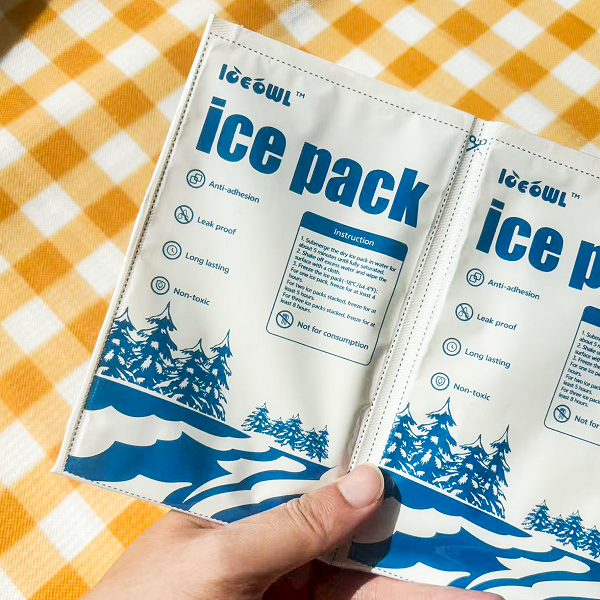
Dry Ice Pack Manufacturer Germany: Pro Optimized Guide
If you are evaluating dry ice pack manufacturer Germany, you probably want more than a list of vendors. You want to know which pack format fits your temperature target, which documents speed up approval, and which sourcing model keeps service stable when demand swings. In 2026, the best buying decisions come from joining buyer guidance, technical evidence, regional compliance, and real operating economics in one framework. That is exactly how you turn a broad search into a low-risk purchasing decision.
What this article answers
How to separate true dry ice, dry-ice-style sheet packs, gel packs, and PCM options for germany sourcing
What technical details matter most when you review a manufacturer quote, a validation file, or a pilot order
Which documents and market signals should shape your shortlist before you commit to a production program
How to balance storage footprint, route risk, sustainability pressure, and total landed cost
Why is Dry Ice Pack Manufacturer Germany still a high-intent search in 2026?
The search term dry ice pack manufacturer Germany still attracts serious buyers because it sits at the intersection of product safety, packaging efficiency, and supply continuity. But the phrase itself is broad. One supplier may mean a water-activated dry-ice-style sheet, another may mean a reusable PCM brick, and another may mean true solid CO2 for vented shippers. If you compare those offers as if they were identical, you risk buying the wrong temperature system, the wrong operating model, or both.
The smarter way to start is to treat dry ice pack manufacturer Germany as a sourcing question, not a product answer. You first define the payload range, the real transit window, the destination climate, and the tolerance for excursion. Then you screen vendors against your internal limits on storage, labor, documentation, and replenishment speed. That process works whether you buy for meal kits, seafood, diagnostics, pharmaceuticals, or export parcels in Germany.
A practical four-step decision tool
The most reliable buyers use a simple screen before they request samples. They ask what temperature the product really needs, what the route really looks like, what the warehouse can prepare every day, and what evidence quality will require before launch. Those four questions instantly narrow the field and make each factory partner quote much easier to compare. They also reduce the common habit of choosing the coldest-looking option rather than the most suitable option.
| Decision factor | What to define | Why it matters | What it means for you |
|---|---|---|---|
| Payload target | 2°C to 8°C, 15°C to 25°C, frozen, or ultra-frozen | Stops buyers from choosing a colder pack than the product actually needs | Better product protection with less wasted coolant |
| Transit profile | Courier parcel, air export, linehaul, or closed-loop return | Matches hold time, handling risk, and replenishment logic | More accurate pack-out and fewer emergency reships |
| Warehouse reality | Flat storage, freezer space, hydration labor, and conditioning windows | Avoids buying a format your site cannot prepare at scale | Smoother daily operations |
| Approval burden | Food-contact file, GDP support, test data, and change control | Prevents delays after procurement says yes | Faster launch and easier audits |
Practical tips and recommendations
Write down the allowed product temperature range before you speak to sales teams.
Ask for route-specific recommendations instead of one generic brochure pack-out.
Separate one-way parcel programs from closed-loop reusable programs at the start.
Field example: a buyer searching for dry ice pack manufacturer Germany expected to choose the heaviest pack for safety. After mapping lanes and storage limits, the team selected a lighter format for most routes and reserved the heavy build for summer outliers. That reduced storage pressure and still protected product quality.
How do you choose the right coolant format for dry ice pack manufacturer Germany?
The correct coolant format depends on the product, the route, and the site that prepares orders. Hydrated sheet packs shine when you need flat storage and flexible placement. Gel or PCM bricks fit programs that prefer defined geometry and repeat conditioning. True dry ice belongs in programs that genuinely need extreme low temperature or already manage dangerous-goods procedures confidently.
In other words, the question is not whether one pack is universally better. It is whether the format matches your reality. For a manufacturer search, that means you should ask how the pack is stored, prepared, loaded, and disposed of after delivery. A pack that looks economical on paper may become expensive if it consumes freezer space, slows pick speed, or increases exception handling.
Where technical fit beats headline coldness
Buyers often overvalue the lowest nominal temperature and undervalue control. What protects your shipment is not just how cold the pack can be at one moment, but how evenly it holds temperature around the payload and how predictably it behaves in the carton. A slightly warmer but better-matched system can outperform an extreme coolant that creates freeze risk, condensation, or needless handling complexity.
| Format | Typical advantage | Watch-out point | What it means for you |
|---|---|---|---|
| Hydrated sheet pack | Stores flat and activates quickly | Needs good hydration discipline | Ideal when warehouse space is tight and order count swings fast |
| Gel pack | Simple conditioning and familiar handling | Can waste carton space if size match is poor | Useful for standard chilled parcel programs |
| PCM brick | Tighter temperature band when correctly selected | Needs disciplined pre-conditioning | Strong option when you need more precise control |
| True dry ice | Deepest low-temperature capability | Requires ventilation, labeling, and careful transport rules | Best only when your product or route truly justifies it |
Practical tips and recommendations
Request one recommendation for your normal lane and one for your hottest-risk lane in Germany.
Ask how many usable packs fit per carton and per pallet before you compare unit pricing.
Treat every thermal recommendation as incomplete until the vendor explains conditioning time and handling steps.
Field example: a diagnostic-shipments team tested both PCM bricks and dry-ice-style sheets. The sheets won on storage density and pick speed, while the PCM option won on narrow temperature control. The final decision split by route type rather than forcing one solution across every shipment.
What technical details separate a reliable manufacturer offer from a risky one?
A dependable dry ice pack manufacturer Germany program is built on small technical details that buyers can easily miss. Film strength affects puncture resistance and leakage. Absorbent structure or PCM formulation affects how evenly the pack charges and releases energy. Seal quality determines whether the pack survives hydration, freezing, stacking, and courier abuse. When those details drift, failures usually appear as mess, temperature loss, or both.
This is why serious sourcing conversations go beyond a brochure. You want dimensional tolerances, fill-weight consistency, burst or seal testing, and clear instructions for conditioning and storage. If you are working with a manufacturer, you also want change-control discipline so a film, resin, or filling update does not quietly alter performance. If you are working with a distributor or supplier, you still want traceability back to the original production standard.
The material-science checks that matter in everyday operations
Think of a cold pack like a battery inside a protective skin. The outer film is the shell, the internal medium is the stored energy, and the seal is the point that keeps the system intact under pressure. If any one of those three elements is weak, the pack may still look acceptable in a sample box but fail during scale-up, longer transit, or hotter weather. That is why technical screening saves money long before the first complaint appears.
| Technical element | What to check | Why buyers care | What it means for you |
|---|---|---|---|
| Outer film | Film thickness, puncture resistance, and seal behavior | Protects against leaks, abrasion, and rough parcel handling | Fewer damaged cartons and cleaner pack-out lines |
| Absorbent or PCM core | Water uptake, phase point, and mass consistency | Controls how evenly the pack cools and how long it lasts | More predictable thermal hold |
| Geometry | Cell size, sheet layout, or brick dimensions | Determines fit around the payload and carton dead space | Better cubic efficiency |
| Seal system | Burst resistance and corner integrity | Weak seals usually fail during hydration, freezing, or compression | Lower loss and complaint rates |
Practical tips and recommendations
Ask for the vendor's standard tolerances on pack dimensions and fill weight.
Request evidence that seal quality is checked by batch, not only during initial product development.
Pilot the pack in your real carton with your real payload before approving national or export volume.
Field example: a food exporter liked a low-cost sample because it looked identical to the incumbent. During a stress test, the cheaper pack showed corner seepage after compression and thaw-refreeze handling. The visual similarity hid a seal-quality gap that would have created costly field failures.
What documents should you demand before approving dry ice pack manufacturer Germany in Germany?
Documentation is the quiet force that separates quick launches from painful delays. Before approval, you should know exactly what the pack is made from, how it is conditioned, how performance was tested, and which declarations apply to your market. For Germany, the practical rule set is usually European first and German market expectations second. If your dry ice pack is used around food, you should align packaging materials with EU food-contact rules and be ready with traceability documents. For medical and pharmaceutical flows, buyers often expect GDP-style thinking: documented control, trained handling, deviation management, and validated temperature performance. From a sustainability angle, the Packaging and Packaging Waste Regulation becomes a major design signal for 2026, pushing the whole market toward better recyclability, smarter material choices, and less wasteful pack configurations.
Many teams wait until after commercial agreement to request quality files. That is backwards. In 2026, procurement, quality, operations, and sustainability often review the same pack from different angles, so document readiness is part of supplier readiness. If a vendor cannot assemble a clean, market-appropriate file set early, the relationship will probably stay slow and reactive.
A minimum approval file for serious buyers
A strong approval file should connect specification, evidence, and commercial continuity. It should tell you what the pack is, how it performs, and how supply stays stable when weather or demand changes. When that file is ready before first order, cross-functional approval gets faster and pilot timelines become much easier to manage.
| Document block | What it should contain | Why it matters | What it means for you |
|---|---|---|---|
| Product specification | Dimensions, fill weight, conditioning method, and tolerances | Makes quotes truly comparable | Less confusion during approval |
| Compliance file | Food-contact basis, test reports, declaration letters, and change control | Shows whether the pack fits your market and product class | Faster quality review |
| Transit evidence | Route test, summer and winter profiles, and acceptance criteria | Proves real performance instead of marketing claims | More confident launches |
| Supply plan | MOQ, lead time, safety stock, and peak-season plan | Prevents shortages during promotions or hot weather | Better continuity |
Practical tips and recommendations
For in Germany, ask the vendor to explain market-specific declarations in plain English, not just send certificates without context.
Require route-test summaries that match the actual carton, payload, and coolant mass you plan to buy.
Confirm what happens if raw materials or dimensions change after approval, including notification timing.
Field example: a buyer nearly approved a new source on price alone. The project paused when quality discovered that transit data used a different box and payload from the launch design. One week spent aligning documents early would have saved a month of rework.
How do storage, service, and price change the real value of dry ice pack manufacturer Germany?
The best commercial choice is rarely the lowest unit price. Real value comes from the full system: warehouse footprint, conditioning labor, pick speed, damaged-shipment rate, replenishment speed, and emergency backup when demand spikes. For dry ice pack manufacturer Germany, you should compare landed performance, not just invoice price.
Role matters here. A manufacturer model tends to emphasize factory control, formulation, sealing quality, pilot runs, and OEM or ODM capability. That can be excellent when it matches your buying pattern. But it can also create friction if your internal reality is different. A manufacturer can unlock custom sizes, graphics, and optimized pack chemistry, but you should expect longer approval cycles than you would from a simple stock distributor.
A 20-point buyer scorecard for final comparison
One practical method is to score every shortlisted supplier on four dimensions: thermal fit, operational fit, documentation fit, and commercial fit. Each category gets five points. A vendor with a slightly higher price but a much better score usually creates lower total cost over a full season because failures, reships, and internal delays shrink.
| Score area | Question to ask | Score | What it means for you |
|---|---|---|---|
| Thermal fit | Does the vendor show lane-specific hold data rather than generic brochure claims? | 0-5 | Higher score means lower spoilage risk |
| Operational fit | Can your site store, hydrate, freeze, and pick the pack at the needed speed? | 0-5 | Higher score means smoother daily execution |
| Documentation fit | Are the compliance papers ready before launch, not after? | 0-5 | Higher score means faster approval |
| Commercial fit | Do MOQ, call-off rules, and emergency backup support your real demand curve? | 0-5 | Higher score means lower disruption risk |
Practical tips and recommendations
Do not compare factory-direct and local-stock models without adjusting for lead time and approval burden.
Ask what emergency plan applies if a heatwave or promotion doubles weekly demand.
Review packaging dimensions because smaller cartons can lower freight and storage cost even when pack price is unchanged.
Field example: two offers for dry ice pack manufacturer Germany looked close on price. The lower quote required a larger MOQ, longer lead time, and no heatwave backup stock. The higher quote came from a local partner with shorter replenishment and better documentation. Over the season, the second option delivered lower total operating cost.
How are sustainability and market trends reshaping dry ice pack manufacturer Germany in 2026?
In 2026, sustainability is no longer a separate conversation held after thermal approval. It is part of sourcing from day one. In 2026, German buyers are not only asking whether a pack keeps temperature. They are also asking whether the same pack supports consistent fill quality, low leakage, good pallet density, and a credible waste story. That means a supplier with test data, carton optimization, and a realistic recycling or disposal plan is often chosen ahead of a cheaper but poorly documented alternative. Germany remains one of the markets where sustainability claims are checked rather than simply accepted. You should ask for actual component breakdowns, recycled content where appropriate, and honest statements about whether a pack is reusable, recyclable, or only conditionally recyclable within a local stream. Right-sized cartons and fewer damaged shipments are still the fastest sustainability wins because they lower both material waste and replacement freight.
The strongest market trend is not a single material switch. It is better fit. Buyers increasingly want lane-specific pack-outs, lighter cartons, clearer recyclability claims, and evidence that a supplier can reduce damage and waste without shifting risk to the product. For Germany, the most important market signal is not a single price index but the regulatory and procurement shift around packaging quality. With the PPWR now in force and applying from August 2026, buyers are testing suppliers on recyclability, traceability, and waste intensity much earlier in the sourcing cycle.
Three trend signals buyers should watch
If you want a future-proof supply program, watch where policy, operations, and customer expectation overlap. That overlap is where supplier advantage now appears. Firms that document materials clearly, right-size packs, and support route-based validation are usually better positioned than those that only compete on price or buzzwords.
| Trend | What is happening | Why it matters | What it means for you |
|---|---|---|---|
| Lane-specific pack-outs | More buyers are approving different summer, winter, and regional builds | Cuts overpacking on easy routes while protecting high-risk lanes | Stronger cost-to-performance balance |
| Documentation-first sourcing | Quality teams want files early, especially in regulated sectors | Moves decisions from marketing claims toward evidence | Faster cross-functional approval |
| Waste-aware design | Packaging policy and disposal costs are shaping choices in every region | Rewards right-sized formats and honest material claims | Better ESG conversations without losing performance |
Practical tips and recommendations
Ask suppliers to explain the waste story of the whole pack-out, not just one component.
Request a right-sizing review before you commit to annual volume.
When sustainability claims are made, ask whether they are based on actual local recovery pathways or only theoretical recyclability.
Field example: a premium-food shipper improved both cost and sustainability by switching from one oversized national carton to two route-specific carton sizes with adjusted coolant mass. Damage fell, dimensional freight dropped, and customer disposal complaints decreased at the same time.
2026 latest developments and buyer signals
The 2026 market for dry ice pack manufacturer Germany rewards evidence, fit, and waste awareness more than generic product claims. Across regulated sectors and mainstream parcel programs alike, buyers are moving toward shorter approval cycles built on better files, more route testing, and clearer material decisions. That means the strongest suppliers are the ones that can explain not only what the pack is, but why it is the right answer for your exact lane.
Growth is shifting toward route-specific pack-outs instead of one universal national formula.
Quality and procurement teams increasingly want document packets before pilot approval, not after the commercial discussion.
Sustainability pressure is pushing buyers to review carton size, coolant mass, and disposal realism as part of the same sourcing decision.
In practice, the winners in Germany are not always the loudest marketers. They are the partners that combine operational honesty, test evidence, and responsive service. If a supplier can translate technical details into day-to-day value for your team, approval tends to move faster and long-term performance tends to improve.
Frequently asked questions
Can dry ice pack manufacturer Germany mean true dry ice and not only a dry-ice-style pack?
Yes. Buyers use the phrase both ways. That is why you should ask every vendor to define the coolant type, temperature range, and handling method before you compare quotes.
What is the fastest way to shortlist dry ice pack manufacturer Germany suppliers?
Use four filters: payload temperature, transit window, warehouse readiness, and document readiness. Suppliers that fit all four usually deserve sampling first.
How important is documentation for dry ice pack manufacturer Germany in regulated sectors?
It is critical. Even a good-performing pack can be delayed if the quality file, market declarations, or route-test evidence are incomplete or mismatched to your launch design.
Should you choose the coldest pack available for safety?
Not automatically. The safest pack is the one that holds the right temperature band for the real route without creating freeze risk, leakage, or unnecessary handling complexity.
When does a local factory partner beat a factory-direct model?
Usually when lead time, emergency replenishment, mixed-case orders, or approval speed matter more than absolute factory pricing. Total operating risk often matters more than nominal unit cost.
Summary and recommendations
The best dry ice pack manufacturer Germany decision in 2026 comes from combining four views at once. You need buyer-fit analysis, technical evidence, market-appropriate documents, and an honest cost model. When you define the lane clearly, test the pack in your real shipper, and score suppliers on more than price, you usually get better product protection and smoother operations. That is the difference between buying a cold pack and building a dependable cold-chain program.
Your next step is simple. List your target temperature, normal and worst-case transit times, current carton sizes, and approval documents. Then ask shortlisted vendors to respond to the same brief so their offers stay comparable. That single step saves time, reduces internal debate, and helps you choose the right pack faster.
About Tempk
About Tempk: we focus on practical cold-chain packaging decisions, from dry-ice-style sheet packs to reusable temperature-control formats and export-ready pack-out support. We work from the view that buyers need clear product definitions, dependable quality, and documents that help operations and quality teams approve faster. Our advantage is not hype. It is helping teams match the right coolant system to the real shipping lane.
Talk with Tempk about your route profile, pack format options, and validation needs so you can build a lower-risk sourcing plan.
Dry Ice Pack Manufacturer China: Pro Optimized Guide
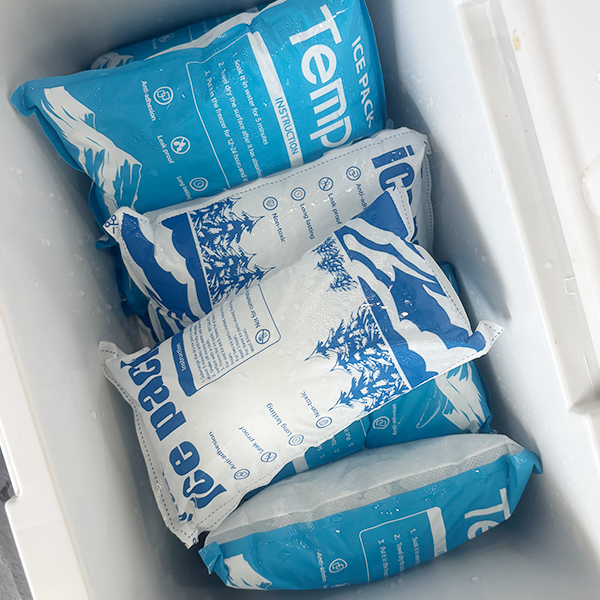
Dry Ice Pack Manufacturer China: Pro Optimized Guide
If you are evaluating dry ice pack manufacturer China, you probably want more than a list of vendors. You want to know which pack format fits your temperature target, which documents speed up approval, and which sourcing model keeps service stable when demand swings. In 2026, the best buying decisions come from joining buyer guidance, technical evidence, regional compliance, and real operating economics in one framework. That is exactly how you turn a broad search into a low-risk purchasing decision.
What this article answers
How to separate true dry ice, dry-ice-style sheet packs, gel packs, and PCM options for china sourcing
What technical details matter most when you review a manufacturer quote, a validation file, or a pilot order
Which documents and market signals should shape your shortlist before you commit to a production program
How to balance storage footprint, route risk, sustainability pressure, and total landed cost
Why is Dry Ice Pack Manufacturer China still a high-intent search in 2026?
The search term dry ice pack manufacturer China still attracts serious buyers because it sits at the intersection of product safety, packaging efficiency, and supply continuity. But the phrase itself is broad. One supplier may mean a water-activated dry-ice-style sheet, another may mean a reusable PCM brick, and another may mean true solid CO2 for vented shippers. If you compare those offers as if they were identical, you risk buying the wrong temperature system, the wrong operating model, or both.
The smarter way to start is to treat dry ice pack manufacturer China as a sourcing question, not a product answer. You first define the payload range, the real transit window, the destination climate, and the tolerance for excursion. Then you screen vendors against your internal limits on storage, labor, documentation, and replenishment speed. That process works whether you buy for meal kits, seafood, diagnostics, pharmaceuticals, or export parcels in China.
A practical four-step decision tool
The most reliable buyers use a simple screen before they request samples. They ask what temperature the product really needs, what the route really looks like, what the warehouse can prepare every day, and what evidence quality will require before launch. Those four questions instantly narrow the field and make each factory partner quote much easier to compare. They also reduce the common habit of choosing the coldest-looking option rather than the most suitable option.
| Decision factor | What to define | Why it matters | What it means for you |
|---|---|---|---|
| Payload target | 2°C to 8°C, 15°C to 25°C, frozen, or ultra-frozen | Stops buyers from choosing a colder pack than the product actually needs | Better product protection with less wasted coolant |
| Transit profile | Courier parcel, air export, linehaul, or closed-loop return | Matches hold time, handling risk, and replenishment logic | More accurate pack-out and fewer emergency reships |
| Warehouse reality | Flat storage, freezer space, hydration labor, and conditioning windows | Avoids buying a format your site cannot prepare at scale | Smoother daily operations |
| Approval burden | Food-contact file, GDP support, test data, and change control | Prevents delays after procurement says yes | Faster launch and easier audits |
Practical tips and recommendations
Write down the allowed product temperature range before you speak to sales teams.
Ask for route-specific recommendations instead of one generic brochure pack-out.
Separate one-way parcel programs from closed-loop reusable programs at the start.
Field example: a buyer searching for dry ice pack manufacturer China expected to choose the heaviest pack for safety. After mapping lanes and storage limits, the team selected a lighter format for most routes and reserved the heavy build for summer outliers. That reduced storage pressure and still protected product quality.
How do you choose the right coolant format for dry ice pack manufacturer China?
The correct coolant format depends on the product, the route, and the site that prepares orders. Hydrated sheet packs shine when you need flat storage and flexible placement. Gel or PCM bricks fit programs that prefer defined geometry and repeat conditioning. True dry ice belongs in programs that genuinely need extreme low temperature or already manage dangerous-goods procedures confidently.
In other words, the question is not whether one pack is universally better. It is whether the format matches your reality. For a manufacturer search, that means you should ask how the pack is stored, prepared, loaded, and disposed of after delivery. A pack that looks economical on paper may become expensive if it consumes freezer space, slows pick speed, or increases exception handling.
Where technical fit beats headline coldness
Buyers often overvalue the lowest nominal temperature and undervalue control. What protects your shipment is not just how cold the pack can be at one moment, but how evenly it holds temperature around the payload and how predictably it behaves in the carton. A slightly warmer but better-matched system can outperform an extreme coolant that creates freeze risk, condensation, or needless handling complexity.
| Format | Typical advantage | Watch-out point | What it means for you |
|---|---|---|---|
| Hydrated sheet pack | Stores flat and activates quickly | Needs good hydration discipline | Ideal when warehouse space is tight and order count swings fast |
| Gel pack | Simple conditioning and familiar handling | Can waste carton space if size match is poor | Useful for standard chilled parcel programs |
| PCM brick | Tighter temperature band when correctly selected | Needs disciplined pre-conditioning | Strong option when you need more precise control |
| True dry ice | Deepest low-temperature capability | Requires ventilation, labeling, and careful transport rules | Best only when your product or route truly justifies it |
Practical tips and recommendations
Request one recommendation for your normal lane and one for your hottest-risk lane in China.
Ask how many usable packs fit per carton and per pallet before you compare unit pricing.
Treat every thermal recommendation as incomplete until the vendor explains conditioning time and handling steps.
Field example: a diagnostic-shipments team tested both PCM bricks and dry-ice-style sheets. The sheets won on storage density and pick speed, while the PCM option won on narrow temperature control. The final decision split by route type rather than forcing one solution across every shipment.
What technical details separate a reliable manufacturer offer from a risky one?
A dependable dry ice pack manufacturer China program is built on small technical details that buyers can easily miss. Film strength affects puncture resistance and leakage. Absorbent structure or PCM formulation affects how evenly the pack charges and releases energy. Seal quality determines whether the pack survives hydration, freezing, stacking, and courier abuse. When those details drift, failures usually appear as mess, temperature loss, or both.
This is why serious sourcing conversations go beyond a brochure. You want dimensional tolerances, fill-weight consistency, burst or seal testing, and clear instructions for conditioning and storage. If you are working with a manufacturer, you also want change-control discipline so a film, resin, or filling update does not quietly alter performance. If you are working with a distributor or supplier, you still want traceability back to the original production standard.
The material-science checks that matter in everyday operations
Think of a cold pack like a battery inside a protective skin. The outer film is the shell, the internal medium is the stored energy, and the seal is the point that keeps the system intact under pressure. If any one of those three elements is weak, the pack may still look acceptable in a sample box but fail during scale-up, longer transit, or hotter weather. That is why technical screening saves money long before the first complaint appears.
| Technical element | What to check | Why buyers care | What it means for you |
|---|---|---|---|
| Outer film | Film thickness, puncture resistance, and seal behavior | Protects against leaks, abrasion, and rough parcel handling | Fewer damaged cartons and cleaner pack-out lines |
| Absorbent or PCM core | Water uptake, phase point, and mass consistency | Controls how evenly the pack cools and how long it lasts | More predictable thermal hold |
| Geometry | Cell size, sheet layout, or brick dimensions | Determines fit around the payload and carton dead space | Better cubic efficiency |
| Seal system | Burst resistance and corner integrity | Weak seals usually fail during hydration, freezing, or compression | Lower loss and complaint rates |
Practical tips and recommendations
Ask for the vendor's standard tolerances on pack dimensions and fill weight.
Request evidence that seal quality is checked by batch, not only during initial product development.
Pilot the pack in your real carton with your real payload before approving national or export volume.
Field example: a food exporter liked a low-cost sample because it looked identical to the incumbent. During a stress test, the cheaper pack showed corner seepage after compression and thaw-refreeze handling. The visual similarity hid a seal-quality gap that would have created costly field failures.
What documents should you demand before approving dry ice pack manufacturer China in China?
Documentation is the quiet force that separates quick launches from painful delays. Before approval, you should know exactly what the pack is made from, how it is conditioned, how performance was tested, and which declarations apply to your market. China gives buyers access to broad manufacturing capacity, but the best results come when you screen for system strength rather than chasing the lowest quote. For drug and vaccine programs, NMPA rules make cold storage, low-temperature transport, and regular temperature monitoring critical. More broadly, Chinese policy has continued to support cold-chain logistics expansion because demand is growing across agriculture, frozen food, and pharmaceuticals. So when you evaluate a Chinese partner, ask whether they can support both domestic use and export documentation, including batch records, test reports, food-contact statements where relevant, and stable shipping cartons.
Many teams wait until after commercial agreement to request quality files. That is backwards. In 2026, procurement, quality, operations, and sustainability often review the same pack from different angles, so document readiness is part of supplier readiness. If a vendor cannot assemble a clean, market-appropriate file set early, the relationship will probably stay slow and reactive.
A minimum approval file for serious buyers
A strong approval file should connect specification, evidence, and commercial continuity. It should tell you what the pack is, how it performs, and how supply stays stable when weather or demand changes. When that file is ready before first order, cross-functional approval gets faster and pilot timelines become much easier to manage.
| Document block | What it should contain | Why it matters | What it means for you |
|---|---|---|---|
| Product specification | Dimensions, fill weight, conditioning method, and tolerances | Makes quotes truly comparable | Less confusion during approval |
| Compliance file | Food-contact basis, test reports, declaration letters, and change control | Shows whether the pack fits your market and product class | Faster quality review |
| Transit evidence | Route test, summer and winter profiles, and acceptance criteria | Proves real performance instead of marketing claims | More confident launches |
| Supply plan | MOQ, lead time, safety stock, and peak-season plan | Prevents shortages during promotions or hot weather | Better continuity |
Practical tips and recommendations
For in China, ask the vendor to explain market-specific declarations in plain English, not just send certificates without context.
Require route-test summaries that match the actual carton, payload, and coolant mass you plan to buy.
Confirm what happens if raw materials or dimensions change after approval, including notification timing.
Field example: a buyer nearly approved a new source on price alone. The project paused when quality discovered that transit data used a different box and payload from the launch design. One week spent aligning documents early would have saved a month of rework.
How do storage, service, and price change the real value of dry ice pack manufacturer China?
The best commercial choice is rarely the lowest unit price. Real value comes from the full system: warehouse footprint, conditioning labor, pick speed, damaged-shipment rate, replenishment speed, and emergency backup when demand spikes. For dry ice pack manufacturer China, you should compare landed performance, not just invoice price.
Role matters here. A manufacturer model tends to emphasize factory control, formulation, sealing quality, pilot runs, and OEM or ODM capability. That can be excellent when it matches your buying pattern. But it can also create friction if your internal reality is different. A manufacturer can unlock custom sizes, graphics, and optimized pack chemistry, but you should expect longer approval cycles than you would from a simple stock distributor.
A 20-point buyer scorecard for final comparison
One practical method is to score every shortlisted supplier on four dimensions: thermal fit, operational fit, documentation fit, and commercial fit. Each category gets five points. A vendor with a slightly higher price but a much better score usually creates lower total cost over a full season because failures, reships, and internal delays shrink.
| Score area | Question to ask | Score | What it means for you |
|---|---|---|---|
| Thermal fit | Does the vendor show lane-specific hold data rather than generic brochure claims? | 0-5 | Higher score means lower spoilage risk |
| Operational fit | Can your site store, hydrate, freeze, and pick the pack at the needed speed? | 0-5 | Higher score means smoother daily execution |
| Documentation fit | Are the compliance papers ready before launch, not after? | 0-5 | Higher score means faster approval |
| Commercial fit | Do MOQ, call-off rules, and emergency backup support your real demand curve? | 0-5 | Higher score means lower disruption risk |
Practical tips and recommendations
Do not compare factory-direct and local-stock models without adjusting for lead time and approval burden.
Ask what emergency plan applies if a heatwave or promotion doubles weekly demand.
Review packaging dimensions because smaller cartons can lower freight and storage cost even when pack price is unchanged.
Field example: two offers for dry ice pack manufacturer China looked close on price. The lower quote required a larger MOQ, longer lead time, and no heatwave backup stock. The higher quote came from a local partner with shorter replenishment and better documentation. Over the season, the second option delivered lower total operating cost.
How are sustainability and market trends reshaping dry ice pack manufacturer China in 2026?
In 2026, sustainability is no longer a separate conversation held after thermal approval. It is part of sourcing from day one. In 2026, the strongest Chinese suppliers are differentiating through quality systems, not only capacity. Buyers now ask for cleaner leak testing, better seal consistency, more stable carton counts, and stronger responsiveness during pilot validation. This is especially important when the same pack is sold into North America, Europe, Australia, and Japan, where documentation expectations differ. Sustainability is no longer only a Western buyer request. Chinese factories increasingly get asked about downgauging, recycled content where safe and appropriate, carton efficiency, and how quickly a new design can remove unnecessary materials without reducing performance. The best partner will talk about defect reduction and freight efficiency, not just marketing claims.
The strongest market trend is not a single material switch. It is better fit. Buyers increasingly want lane-specific pack-outs, lighter cartons, clearer recyclability claims, and evidence that a supplier can reduce damage and waste without shifting risk to the product. China's policy direction has been clear for several years: national planning has pushed cold-chain logistics capacity because demand is rising across agricultural produce, frozen food, and pharmaceuticals. That helps explain why Chinese supply is broad, but also why buyers now see larger differences between basic commodity factories and system-oriented export suppliers.
Three trend signals buyers should watch
If you want a future-proof supply program, watch where policy, operations, and customer expectation overlap. That overlap is where supplier advantage now appears. Firms that document materials clearly, right-size packs, and support route-based validation are usually better positioned than those that only compete on price or buzzwords.
| Trend | What is happening | Why it matters | What it means for you |
|---|---|---|---|
| Lane-specific pack-outs | More buyers are approving different summer, winter, and regional builds | Cuts overpacking on easy routes while protecting high-risk lanes | Stronger cost-to-performance balance |
| Documentation-first sourcing | Quality teams want files early, especially in regulated sectors | Moves decisions from marketing claims toward evidence | Faster cross-functional approval |
| Waste-aware design | Packaging policy and disposal costs are shaping choices in every region | Rewards right-sized formats and honest material claims | Better ESG conversations without losing performance |
Practical tips and recommendations
Ask suppliers to explain the waste story of the whole pack-out, not just one component.
Request a right-sizing review before you commit to annual volume.
When sustainability claims are made, ask whether they are based on actual local recovery pathways or only theoretical recyclability.
Field example: a premium-food shipper improved both cost and sustainability by switching from one oversized national carton to two route-specific carton sizes with adjusted coolant mass. Damage fell, dimensional freight dropped, and customer disposal complaints decreased at the same time.
2026 latest developments and buyer signals
The 2026 market for dry ice pack manufacturer China rewards evidence, fit, and waste awareness more than generic product claims. Across regulated sectors and mainstream parcel programs alike, buyers are moving toward shorter approval cycles built on better files, more route testing, and clearer material decisions. That means the strongest suppliers are the ones that can explain not only what the pack is, but why it is the right answer for your exact lane.
Growth is shifting toward route-specific pack-outs instead of one universal national formula.
Quality and procurement teams increasingly want document packets before pilot approval, not after the commercial discussion.
Sustainability pressure is pushing buyers to review carton size, coolant mass, and disposal realism as part of the same sourcing decision.
In practice, the winners in China are not always the loudest marketers. They are the partners that combine operational honesty, test evidence, and responsive service. If a supplier can translate technical details into day-to-day value for your team, approval tends to move faster and long-term performance tends to improve.
Frequently asked questions
Can dry ice pack manufacturer China mean true dry ice and not only a dry-ice-style pack?
Yes. Buyers use the phrase both ways. That is why you should ask every vendor to define the coolant type, temperature range, and handling method before you compare quotes.
What is the fastest way to shortlist dry ice pack manufacturer China suppliers?
Use four filters: payload temperature, transit window, warehouse readiness, and document readiness. Suppliers that fit all four usually deserve sampling first.
How important is documentation for dry ice pack manufacturer China in regulated sectors?
It is critical. Even a good-performing pack can be delayed if the quality file, market declarations, or route-test evidence are incomplete or mismatched to your launch design.
Should you choose the coldest pack available for safety?
Not automatically. The safest pack is the one that holds the right temperature band for the real route without creating freeze risk, leakage, or unnecessary handling complexity.
When does a local factory partner beat a factory-direct model?
Usually when lead time, emergency replenishment, mixed-case orders, or approval speed matter more than absolute factory pricing. Total operating risk often matters more than nominal unit cost.
Summary and recommendations
The best dry ice pack manufacturer China decision in 2026 comes from combining four views at once. You need buyer-fit analysis, technical evidence, market-appropriate documents, and an honest cost model. When you define the lane clearly, test the pack in your real shipper, and score suppliers on more than price, you usually get better product protection and smoother operations. That is the difference between buying a cold pack and building a dependable cold-chain program.
Your next step is simple. List your target temperature, normal and worst-case transit times, current carton sizes, and approval documents. Then ask shortlisted vendors to respond to the same brief so their offers stay comparable. That single step saves time, reduces internal debate, and helps you choose the right pack faster.
About Tempk
About Tempk: we focus on practical cold-chain packaging decisions, from dry-ice-style sheet packs to reusable temperature-control formats and export-ready pack-out support. We work from the view that buyers need clear product definitions, dependable quality, and documents that help operations and quality teams approve faster. Our advantage is not hype. It is helping teams match the right coolant system to the real shipping lane.
Talk with Tempk about your route profile, pack format options, and validation needs so you can build a lower-risk sourcing plan.
Dry Ice Pack Manufacturer Canada: Pro Optimized Guide

Dry Ice Pack Manufacturer Canada: Pro Optimized Guide
If you are evaluating dry ice pack manufacturer Canada, you probably want more than a list of vendors. You want to know which pack format fits your temperature target, which documents speed up approval, and which sourcing model keeps service stable when demand swings. In 2026, the best buying decisions come from joining buyer guidance, technical evidence, regional compliance, and real operating economics in one framework. That is exactly how you turn a broad search into a low-risk purchasing decision.
What this article answers
How to separate true dry ice, dry-ice-style sheet packs, gel packs, and PCM options for canada sourcing
What technical details matter most when you review a manufacturer quote, a validation file, or a pilot order
Which documents and market signals should shape your shortlist before you commit to a production program
How to balance storage footprint, route risk, sustainability pressure, and total landed cost
Why is Dry Ice Pack Manufacturer Canada still a high-intent search in 2026?
The search term dry ice pack manufacturer Canada still attracts serious buyers because it sits at the intersection of product safety, packaging efficiency, and supply continuity. But the phrase itself is broad. One supplier may mean a water-activated dry-ice-style sheet, another may mean a reusable PCM brick, and another may mean true solid CO2 for vented shippers. If you compare those offers as if they were identical, you risk buying the wrong temperature system, the wrong operating model, or both.
The smarter way to start is to treat dry ice pack manufacturer Canada as a sourcing question, not a product answer. You first define the payload range, the real transit window, the destination climate, and the tolerance for excursion. Then you screen vendors against your internal limits on storage, labor, documentation, and replenishment speed. That process works whether you buy for meal kits, seafood, diagnostics, pharmaceuticals, or export parcels in Canada.
A practical four-step decision tool
The most reliable buyers use a simple screen before they request samples. They ask what temperature the product really needs, what the route really looks like, what the warehouse can prepare every day, and what evidence quality will require before launch. Those four questions instantly narrow the field and make each factory partner quote much easier to compare. They also reduce the common habit of choosing the coldest-looking option rather than the most suitable option.
| Decision factor | What to define | Why it matters | What it means for you |
|---|---|---|---|
| Payload target | 2°C to 8°C, 15°C to 25°C, frozen, or ultra-frozen | Stops buyers from choosing a colder pack than the product actually needs | Better product protection with less wasted coolant |
| Transit profile | Courier parcel, air export, linehaul, or closed-loop return | Matches hold time, handling risk, and replenishment logic | More accurate pack-out and fewer emergency reships |
| Warehouse reality | Flat storage, freezer space, hydration labor, and conditioning windows | Avoids buying a format your site cannot prepare at scale | Smoother daily operations |
| Approval burden | Food-contact file, GDP support, test data, and change control | Prevents delays after procurement says yes | Faster launch and easier audits |
Practical tips and recommendations
Write down the allowed product temperature range before you speak to sales teams.
Ask for route-specific recommendations instead of one generic brochure pack-out.
Separate one-way parcel programs from closed-loop reusable programs at the start.
Field example: a buyer searching for dry ice pack manufacturer Canada expected to choose the heaviest pack for safety. After mapping lanes and storage limits, the team selected a lighter format for most routes and reserved the heavy build for summer outliers. That reduced storage pressure and still protected product quality.
How do you choose the right coolant format for dry ice pack manufacturer Canada?
The correct coolant format depends on the product, the route, and the site that prepares orders. Hydrated sheet packs shine when you need flat storage and flexible placement. Gel or PCM bricks fit programs that prefer defined geometry and repeat conditioning. True dry ice belongs in programs that genuinely need extreme low temperature or already manage dangerous-goods procedures confidently.
In other words, the question is not whether one pack is universally better. It is whether the format matches your reality. For a manufacturer search, that means you should ask how the pack is stored, prepared, loaded, and disposed of after delivery. A pack that looks economical on paper may become expensive if it consumes freezer space, slows pick speed, or increases exception handling.
Where technical fit beats headline coldness
Buyers often overvalue the lowest nominal temperature and undervalue control. What protects your shipment is not just how cold the pack can be at one moment, but how evenly it holds temperature around the payload and how predictably it behaves in the carton. A slightly warmer but better-matched system can outperform an extreme coolant that creates freeze risk, condensation, or needless handling complexity.
| Format | Typical advantage | Watch-out point | What it means for you |
|---|---|---|---|
| Hydrated sheet pack | Stores flat and activates quickly | Needs good hydration discipline | Ideal when warehouse space is tight and order count swings fast |
| Gel pack | Simple conditioning and familiar handling | Can waste carton space if size match is poor | Useful for standard chilled parcel programs |
| PCM brick | Tighter temperature band when correctly selected | Needs disciplined pre-conditioning | Strong option when you need more precise control |
| True dry ice | Deepest low-temperature capability | Requires ventilation, labeling, and careful transport rules | Best only when your product or route truly justifies it |
Practical tips and recommendations
Request one recommendation for your normal lane and one for your hottest-risk lane in Canada.
Ask how many usable packs fit per carton and per pallet before you compare unit pricing.
Treat every thermal recommendation as incomplete until the vendor explains conditioning time and handling steps.
Field example: a diagnostic-shipments team tested both PCM bricks and dry-ice-style sheets. The sheets won on storage density and pick speed, while the PCM option won on narrow temperature control. The final decision split by route type rather than forcing one solution across every shipment.
What technical details separate a reliable manufacturer offer from a risky one?
A dependable dry ice pack manufacturer Canada program is built on small technical details that buyers can easily miss. Film strength affects puncture resistance and leakage. Absorbent structure or PCM formulation affects how evenly the pack charges and releases energy. Seal quality determines whether the pack survives hydration, freezing, stacking, and courier abuse. When those details drift, failures usually appear as mess, temperature loss, or both.
This is why serious sourcing conversations go beyond a brochure. You want dimensional tolerances, fill-weight consistency, burst or seal testing, and clear instructions for conditioning and storage. If you are working with a manufacturer, you also want change-control discipline so a film, resin, or filling update does not quietly alter performance. If you are working with a distributor or supplier, you still want traceability back to the original production standard.
The material-science checks that matter in everyday operations
Think of a cold pack like a battery inside a protective skin. The outer film is the shell, the internal medium is the stored energy, and the seal is the point that keeps the system intact under pressure. If any one of those three elements is weak, the pack may still look acceptable in a sample box but fail during scale-up, longer transit, or hotter weather. That is why technical screening saves money long before the first complaint appears.
| Technical element | What to check | Why buyers care | What it means for you |
|---|---|---|---|
| Outer film | Film thickness, puncture resistance, and seal behavior | Protects against leaks, abrasion, and rough parcel handling | Fewer damaged cartons and cleaner pack-out lines |
| Absorbent or PCM core | Water uptake, phase point, and mass consistency | Controls how evenly the pack cools and how long it lasts | More predictable thermal hold |
| Geometry | Cell size, sheet layout, or brick dimensions | Determines fit around the payload and carton dead space | Better cubic efficiency |
| Seal system | Burst resistance and corner integrity | Weak seals usually fail during hydration, freezing, or compression | Lower loss and complaint rates |
Practical tips and recommendations
Ask for the vendor's standard tolerances on pack dimensions and fill weight.
Request evidence that seal quality is checked by batch, not only during initial product development.
Pilot the pack in your real carton with your real payload before approving national or export volume.
Field example: a food exporter liked a low-cost sample because it looked identical to the incumbent. During a stress test, the cheaper pack showed corner seepage after compression and thaw-refreeze handling. The visual similarity hid a seal-quality gap that would have created costly field failures.
What documents should you demand before approving dry ice pack manufacturer Canada in Canada?
Documentation is the quiet force that separates quick launches from painful delays. Before approval, you should know exactly what the pack is made from, how it is conditioned, how performance was tested, and which declarations apply to your market. Canada rewards packaging programs that are both safe and seasonally intelligent. For food, Health Canada requires packaging materials not to impart harmful substances, and it offers assessment pathways for food packaging submissions. For drug products, GUI-0069 is explicit that drugs must be stored and transported according to labeled or data-supported conditions, and that temperature excursions must be controlled. Sustainability is also gaining procurement weight: Canada prioritizes reduced plastic waste, and recycled plastics in food packaging come with clear safety considerations rather than blanket approval.
Many teams wait until after commercial agreement to request quality files. That is backwards. In 2026, procurement, quality, operations, and sustainability often review the same pack from different angles, so document readiness is part of supplier readiness. If a vendor cannot assemble a clean, market-appropriate file set early, the relationship will probably stay slow and reactive.
A minimum approval file for serious buyers
A strong approval file should connect specification, evidence, and commercial continuity. It should tell you what the pack is, how it performs, and how supply stays stable when weather or demand changes. When that file is ready before first order, cross-functional approval gets faster and pilot timelines become much easier to manage.
| Document block | What it should contain | Why it matters | What it means for you |
|---|---|---|---|
| Product specification | Dimensions, fill weight, conditioning method, and tolerances | Makes quotes truly comparable | Less confusion during approval |
| Compliance file | Food-contact basis, test reports, declaration letters, and change control | Shows whether the pack fits your market and product class | Faster quality review |
| Transit evidence | Route test, summer and winter profiles, and acceptance criteria | Proves real performance instead of marketing claims | More confident launches |
| Supply plan | MOQ, lead time, safety stock, and peak-season plan | Prevents shortages during promotions or hot weather | Better continuity |
Practical tips and recommendations
For in Canada, ask the vendor to explain market-specific declarations in plain English, not just send certificates without context.
Require route-test summaries that match the actual carton, payload, and coolant mass you plan to buy.
Confirm what happens if raw materials or dimensions change after approval, including notification timing.
Field example: a buyer nearly approved a new source on price alone. The project paused when quality discovered that transit data used a different box and payload from the launch design. One week spent aligning documents early would have saved a month of rework.
How do storage, service, and price change the real value of dry ice pack manufacturer Canada?
The best commercial choice is rarely the lowest unit price. Real value comes from the full system: warehouse footprint, conditioning labor, pick speed, damaged-shipment rate, replenishment speed, and emergency backup when demand spikes. For dry ice pack manufacturer Canada, you should compare landed performance, not just invoice price.
Role matters here. A manufacturer model tends to emphasize factory control, formulation, sealing quality, pilot runs, and OEM or ODM capability. That can be excellent when it matches your buying pattern. But it can also create friction if your internal reality is different. A manufacturer can unlock custom sizes, graphics, and optimized pack chemistry, but you should expect longer approval cycles than you would from a simple stock distributor.
A 20-point buyer scorecard for final comparison
One practical method is to score every shortlisted supplier on four dimensions: thermal fit, operational fit, documentation fit, and commercial fit. Each category gets five points. A vendor with a slightly higher price but a much better score usually creates lower total cost over a full season because failures, reships, and internal delays shrink.
| Score area | Question to ask | Score | What it means for you |
|---|---|---|---|
| Thermal fit | Does the vendor show lane-specific hold data rather than generic brochure claims? | 0-5 | Higher score means lower spoilage risk |
| Operational fit | Can your site store, hydrate, freeze, and pick the pack at the needed speed? | 0-5 | Higher score means smoother daily execution |
| Documentation fit | Are the compliance papers ready before launch, not after? | 0-5 | Higher score means faster approval |
| Commercial fit | Do MOQ, call-off rules, and emergency backup support your real demand curve? | 0-5 | Higher score means lower disruption risk |
Practical tips and recommendations
Do not compare factory-direct and local-stock models without adjusting for lead time and approval burden.
Ask what emergency plan applies if a heatwave or promotion doubles weekly demand.
Review packaging dimensions because smaller cartons can lower freight and storage cost even when pack price is unchanged.
Field example: two offers for dry ice pack manufacturer Canada looked close on price. The lower quote required a larger MOQ, longer lead time, and no heatwave backup stock. The higher quote came from a local partner with shorter replenishment and better documentation. Over the season, the second option delivered lower total operating cost.
How are sustainability and market trends reshaping dry ice pack manufacturer Canada in 2026?
In 2026, sustainability is no longer a separate conversation held after thermal approval. It is part of sourcing from day one. In 2026, Canadian buyers are paying close attention to lane-specific thermal risk. Winter freeze damage is just as real as summer heat exposure, especially for products labeled 'refrigerate – do not freeze'. That is why the best dry ice pack or ultra-cold pack program is not the coldest program. It is the one that protects the target range across both extremes. Canadian sourcing teams increasingly ask whether a package uses recycled content safely, whether it can be right-sized for postal and courier thresholds, and whether material choices hold up in both winter and summer. The strongest answer usually combines a simple pack architecture with real validation data.
The strongest market trend is not a single material switch. It is better fit. Buyers increasingly want lane-specific pack-outs, lighter cartons, clearer recyclability claims, and evidence that a supplier can reduce damage and waste without shifting risk to the product. Global Affairs Canada reported that consumer goods exports rose by CAD 5.5 billion in 2024, or 6.3%, with food, beverage, and pharmaceutical and medicinal products among the largest contributors. That matters because higher movement of sensitive goods increases demand for predictable cold-chain packaging and better route validation.
Three trend signals buyers should watch
If you want a future-proof supply program, watch where policy, operations, and customer expectation overlap. That overlap is where supplier advantage now appears. Firms that document materials clearly, right-size packs, and support route-based validation are usually better positioned than those that only compete on price or buzzwords.
| Trend | What is happening | Why it matters | What it means for you |
|---|---|---|---|
| Lane-specific pack-outs | More buyers are approving different summer, winter, and regional builds | Cuts overpacking on easy routes while protecting high-risk lanes | Stronger cost-to-performance balance |
| Documentation-first sourcing | Quality teams want files early, especially in regulated sectors | Moves decisions from marketing claims toward evidence | Faster cross-functional approval |
| Waste-aware design | Packaging policy and disposal costs are shaping choices in every region | Rewards right-sized formats and honest material claims | Better ESG conversations without losing performance |
Practical tips and recommendations
Ask suppliers to explain the waste story of the whole pack-out, not just one component.
Request a right-sizing review before you commit to annual volume.
When sustainability claims are made, ask whether they are based on actual local recovery pathways or only theoretical recyclability.
Field example: a premium-food shipper improved both cost and sustainability by switching from one oversized national carton to two route-specific carton sizes with adjusted coolant mass. Damage fell, dimensional freight dropped, and customer disposal complaints decreased at the same time.
2026 latest developments and buyer signals
The 2026 market for dry ice pack manufacturer Canada rewards evidence, fit, and waste awareness more than generic product claims. Across regulated sectors and mainstream parcel programs alike, buyers are moving toward shorter approval cycles built on better files, more route testing, and clearer material decisions. That means the strongest suppliers are the ones that can explain not only what the pack is, but why it is the right answer for your exact lane.
Growth is shifting toward route-specific pack-outs instead of one universal national formula.
Quality and procurement teams increasingly want document packets before pilot approval, not after the commercial discussion.
Sustainability pressure is pushing buyers to review carton size, coolant mass, and disposal realism as part of the same sourcing decision.
In practice, the winners in Canada are not always the loudest marketers. They are the partners that combine operational honesty, test evidence, and responsive service. If a supplier can translate technical details into day-to-day value for your team, approval tends to move faster and long-term performance tends to improve.
Frequently asked questions
Can dry ice pack manufacturer Canada mean true dry ice and not only a dry-ice-style pack?
Yes. Buyers use the phrase both ways. That is why you should ask every vendor to define the coolant type, temperature range, and handling method before you compare quotes.
What is the fastest way to shortlist dry ice pack manufacturer Canada suppliers?
Use four filters: payload temperature, transit window, warehouse readiness, and document readiness. Suppliers that fit all four usually deserve sampling first.
How important is documentation for dry ice pack manufacturer Canada in regulated sectors?
It is critical. Even a good-performing pack can be delayed if the quality file, market declarations, or route-test evidence are incomplete or mismatched to your launch design.
Should you choose the coldest pack available for safety?
Not automatically. The safest pack is the one that holds the right temperature band for the real route without creating freeze risk, leakage, or unnecessary handling complexity.
When does a local factory partner beat a factory-direct model?
Usually when lead time, emergency replenishment, mixed-case orders, or approval speed matter more than absolute factory pricing. Total operating risk often matters more than nominal unit cost.
Summary and recommendations
The best dry ice pack manufacturer Canada decision in 2026 comes from combining four views at once. You need buyer-fit analysis, technical evidence, market-appropriate documents, and an honest cost model. When you define the lane clearly, test the pack in your real shipper, and score suppliers on more than price, you usually get better product protection and smoother operations. That is the difference between buying a cold pack and building a dependable cold-chain program.
Your next step is simple. List your target temperature, normal and worst-case transit times, current carton sizes, and approval documents. Then ask shortlisted vendors to respond to the same brief so their offers stay comparable. That single step saves time, reduces internal debate, and helps you choose the right pack faster.
About Tempk
About Tempk: we focus on practical cold-chain packaging decisions, from dry-ice-style sheet packs to reusable temperature-control formats and export-ready pack-out support. We work from the view that buyers need clear product definitions, dependable quality, and documents that help operations and quality teams approve faster. Our advantage is not hype. It is helping teams match the right coolant system to the real shipping lane.
Talk with Tempk about your route profile, pack format options, and validation needs so you can build a lower-risk sourcing plan.
Dry Ice Pack Distributor USA: Pro Optimized Guide
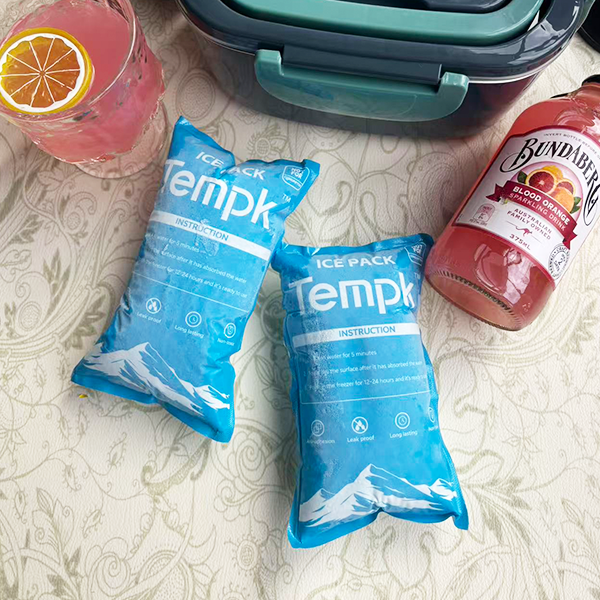
Dry Ice Pack Distributor USA: Pro Optimized Guide
If you are evaluating dry ice pack distributor USA, you probably want more than a list of vendors. You want to know which pack format fits your temperature target, which documents speed up approval, and which sourcing model keeps service stable when demand swings. In 2026, the best buying decisions come from joining buyer guidance, technical evidence, regional compliance, and real operating economics in one framework. That is exactly how you turn a broad search into a low-risk purchasing decision.
What this article answers
How to separate true dry ice, dry-ice-style sheet packs, gel packs, and PCM options for usa sourcing
What technical details matter most when you review a distributor quote, a validation file, or a pilot order
Which documents and market signals should shape your shortlist before you commit to a production program
How to balance storage footprint, route risk, sustainability pressure, and total landed cost
Why is Dry Ice Pack Distributor USA still a high-intent search in 2026?
The search term dry ice pack distributor USA still attracts serious buyers because it sits at the intersection of product safety, packaging efficiency, and supply continuity. But the phrase itself is broad. One supplier may mean a water-activated dry-ice-style sheet, another may mean a reusable PCM brick, and another may mean true solid CO2 for vented shippers. If you compare those offers as if they were identical, you risk buying the wrong temperature system, the wrong operating model, or both.
The smarter way to start is to treat dry ice pack distributor USA as a sourcing question, not a product answer. You first define the payload range, the real transit window, the destination climate, and the tolerance for excursion. Then you screen vendors against your internal limits on storage, labor, documentation, and replenishment speed. That process works whether you buy for meal kits, seafood, diagnostics, pharmaceuticals, or export parcels in the USA.
A practical four-step decision tool
The most reliable buyers use a simple screen before they request samples. They ask what temperature the product really needs, what the route really looks like, what the warehouse can prepare every day, and what evidence quality will require before launch. Those four questions instantly narrow the field and make each stocking distributor quote much easier to compare. They also reduce the common habit of choosing the coldest-looking option rather than the most suitable option.
| Decision factor | What to define | Why it matters | What it means for you |
|---|---|---|---|
| Payload target | 2°C to 8°C, 15°C to 25°C, frozen, or ultra-frozen | Stops buyers from choosing a colder pack than the product actually needs | Better product protection with less wasted coolant |
| Transit profile | Courier parcel, air export, linehaul, or closed-loop return | Matches hold time, handling risk, and replenishment logic | More accurate pack-out and fewer emergency reships |
| Warehouse reality | Flat storage, freezer space, hydration labor, and conditioning windows | Avoids buying a format your site cannot prepare at scale | Smoother daily operations |
| Approval burden | Food-contact file, GDP support, test data, and change control | Prevents delays after procurement says yes | Faster launch and easier audits |
Practical tips and recommendations
Write down the allowed product temperature range before you speak to sales teams.
Ask for route-specific recommendations instead of one generic brochure pack-out.
Separate one-way parcel programs from closed-loop reusable programs at the start.
Field example: a buyer searching for dry ice pack distributor USA expected to choose the heaviest pack for safety. After mapping lanes and storage limits, the team selected a lighter format for most routes and reserved the heavy build for summer outliers. That reduced storage pressure and still protected product quality.
How do you choose the right coolant format for dry ice pack distributor USA?
The correct coolant format depends on the product, the route, and the site that prepares orders. Hydrated sheet packs shine when you need flat storage and flexible placement. Gel or PCM bricks fit programs that prefer defined geometry and repeat conditioning. True dry ice belongs in programs that genuinely need extreme low temperature or already manage dangerous-goods procedures confidently.
In other words, the question is not whether one pack is universally better. It is whether the format matches your reality. For a distributor search, that means you should ask how the pack is stored, prepared, loaded, and disposed of after delivery. A pack that looks economical on paper may become expensive if it consumes freezer space, slows pick speed, or increases exception handling.
Where technical fit beats headline coldness
Buyers often overvalue the lowest nominal temperature and undervalue control. What protects your shipment is not just how cold the pack can be at one moment, but how evenly it holds temperature around the payload and how predictably it behaves in the carton. A slightly warmer but better-matched system can outperform an extreme coolant that creates freeze risk, condensation, or needless handling complexity.
| Format | Typical advantage | Watch-out point | What it means for you |
|---|---|---|---|
| Hydrated sheet pack | Stores flat and activates quickly | Needs good hydration discipline | Ideal when warehouse space is tight and order count swings fast |
| Gel pack | Simple conditioning and familiar handling | Can waste carton space if size match is poor | Useful for standard chilled parcel programs |
| PCM brick | Tighter temperature band when correctly selected | Needs disciplined pre-conditioning | Strong option when you need more precise control |
| True dry ice | Deepest low-temperature capability | Requires ventilation, labeling, and careful transport rules | Best only when your product or route truly justifies it |
Practical tips and recommendations
Request one recommendation for your normal lane and one for your hottest-risk lane in the USA.
Ask how many usable packs fit per carton and per pallet before you compare unit pricing.
Treat every thermal recommendation as incomplete until the vendor explains conditioning time and handling steps.
Field example: a diagnostic-shipments team tested both PCM bricks and dry-ice-style sheets. The sheets won on storage density and pick speed, while the PCM option won on narrow temperature control. The final decision split by route type rather than forcing one solution across every shipment.
What technical details separate a reliable distributor offer from a risky one?
A dependable dry ice pack distributor USA program is built on small technical details that buyers can easily miss. Film strength affects puncture resistance and leakage. Absorbent structure or PCM formulation affects how evenly the pack charges and releases energy. Seal quality determines whether the pack survives hydration, freezing, stacking, and courier abuse. When those details drift, failures usually appear as mess, temperature loss, or both.
This is why serious sourcing conversations go beyond a brochure. You want dimensional tolerances, fill-weight consistency, burst or seal testing, and clear instructions for conditioning and storage. If you are working with a manufacturer, you also want change-control discipline so a film, resin, or filling update does not quietly alter performance. If you are working with a distributor or supplier, you still want traceability back to the original production standard.
The material-science checks that matter in everyday operations
Think of a cold pack like a battery inside a protective skin. The outer film is the shell, the internal medium is the stored energy, and the seal is the point that keeps the system intact under pressure. If any one of those three elements is weak, the pack may still look acceptable in a sample box but fail during scale-up, longer transit, or hotter weather. That is why technical screening saves money long before the first complaint appears.
| Technical element | What to check | Why buyers care | What it means for you |
|---|---|---|---|
| Outer film | Film thickness, puncture resistance, and seal behavior | Protects against leaks, abrasion, and rough parcel handling | Fewer damaged cartons and cleaner pack-out lines |
| Absorbent or PCM core | Water uptake, phase point, and mass consistency | Controls how evenly the pack cools and how long it lasts | More predictable thermal hold |
| Geometry | Cell size, sheet layout, or brick dimensions | Determines fit around the payload and carton dead space | Better cubic efficiency |
| Seal system | Burst resistance and corner integrity | Weak seals usually fail during hydration, freezing, or compression | Lower loss and complaint rates |
Practical tips and recommendations
Ask for the vendor's standard tolerances on pack dimensions and fill weight.
Request evidence that seal quality is checked by batch, not only during initial product development.
Pilot the pack in your real carton with your real payload before approving national or export volume.
Field example: a food exporter liked a low-cost sample because it looked identical to the incumbent. During a stress test, the cheaper pack showed corner seepage after compression and thaw-refreeze handling. The visual similarity hid a seal-quality gap that would have created costly field failures.
What documents should you demand before approving dry ice pack distributor USA in the USA?
Documentation is the quiet force that separates quick launches from painful delays. Before approval, you should know exactly what the pack is made from, how it is conditioned, how performance was tested, and which declarations apply to your market. In the U.S., you should separate three topics: packaging materials, food transport practice, and air transport rules. Food-contact materials are regulated through the FDA framework for food contact substances. If your pack or film touches food directly or can reasonably migrate, your supplier should explain the authorization basis, resin choice, and intended conditions of use. For food distribution, the FSMA Sanitary Transportation rule focuses on suitable vehicles and equipment, documented temperature control, records, and training when the carrier is responsible for sanitary conditions. If your program uses true dry ice for airfreight, IATA rules add a second layer: venting, net weight marking, and air-waybill notation.
Many teams wait until after commercial agreement to request quality files. That is backwards. In 2026, procurement, quality, operations, and sustainability often review the same pack from different angles, so document readiness is part of supplier readiness. If a vendor cannot assemble a clean, market-appropriate file set early, the relationship will probably stay slow and reactive.
A minimum approval file for serious buyers
A strong approval file should connect specification, evidence, and commercial continuity. It should tell you what the pack is, how it performs, and how supply stays stable when weather or demand changes. When that file is ready before first order, cross-functional approval gets faster and pilot timelines become much easier to manage.
| Document block | What it should contain | Why it matters | What it means for you |
|---|---|---|---|
| Product specification | Dimensions, fill weight, conditioning method, and tolerances | Makes quotes truly comparable | Less confusion during approval |
| Compliance file | Food-contact basis, test reports, declaration letters, and change control | Shows whether the pack fits your market and product class | Faster quality review |
| Transit evidence | Route test, summer and winter profiles, and acceptance criteria | Proves real performance instead of marketing claims | More confident launches |
| Supply plan | MOQ, lead time, safety stock, and peak-season plan | Prevents shortages during promotions or hot weather | Better continuity |
Practical tips and recommendations
For in the USA, ask the vendor to explain market-specific declarations in plain English, not just send certificates without context.
Require route-test summaries that match the actual carton, payload, and coolant mass you plan to buy.
Confirm what happens if raw materials or dimensions change after approval, including notification timing.
Field example: a buyer nearly approved a new source on price alone. The project paused when quality discovered that transit data used a different box and payload from the launch design. One week spent aligning documents early would have saved a month of rework.
How do storage, service, and price change the real value of dry ice pack distributor USA?
The best commercial choice is rarely the lowest unit price. Real value comes from the full system: warehouse footprint, conditioning labor, pick speed, damaged-shipment rate, replenishment speed, and emergency backup when demand spikes. For dry ice pack distributor USA, you should compare landed performance, not just invoice price.
Role matters here. A distributor model tends to emphasize local inventory, fast replenishment, mixed-SKU support, and practical service during urgent demand spikes. That can be excellent when it matches your buying pattern. But it can also create friction if your internal reality is different. A distributor lowers lead time risk and can simplify monthly buying, but the trade-off is usually less freedom on custom format and chemistry.
A 20-point buyer scorecard for final comparison
One practical method is to score every shortlisted supplier on four dimensions: thermal fit, operational fit, documentation fit, and commercial fit. Each category gets five points. A vendor with a slightly higher price but a much better score usually creates lower total cost over a full season because failures, reships, and internal delays shrink.
| Score area | Question to ask | Score | What it means for you |
|---|---|---|---|
| Thermal fit | Does the vendor show lane-specific hold data rather than generic brochure claims? | 0-5 | Higher score means lower spoilage risk |
| Operational fit | Can your site store, hydrate, freeze, and pick the pack at the needed speed? | 0-5 | Higher score means smoother daily execution |
| Documentation fit | Are the compliance papers ready before launch, not after? | 0-5 | Higher score means faster approval |
| Commercial fit | Do MOQ, call-off rules, and emergency backup support your real demand curve? | 0-5 | Higher score means lower disruption risk |
Practical tips and recommendations
Do not compare factory-direct and local-stock models without adjusting for lead time and approval burden.
Ask what emergency plan applies if a heatwave or promotion doubles weekly demand.
Review packaging dimensions because smaller cartons can lower freight and storage cost even when pack price is unchanged.
Field example: two offers for dry ice pack distributor USA looked close on price. The lower quote required a larger MOQ, longer lead time, and no heatwave backup stock. The higher quote came from a local partner with shorter replenishment and better documentation. Over the season, the second option delivered lower total operating cost.
How are sustainability and market trends reshaping dry ice pack distributor USA in 2026?
In 2026, sustainability is no longer a separate conversation held after thermal approval. It is part of sourcing from day one. In 2026, buyers in the USA are pushing for lane-specific pack outs rather than one national pack formula. A two-day Northeast parcel and a summer Southwest parcel do not need the same coolant load, carton size, or safety margin. You also see stronger demand for smaller storage footprints, reusable formats for closed loops, and clearer documentation that lets procurement, quality, and operations approve one solution faster. Sustainability conversations in the USA are practical rather than abstract. You win approval when you can show lower dimensional weight, less unused coolant, fewer damaged shipments, and a realistic end-of-life path for film, absorbent fill, and insulation. For high-repeat urban routes, reusable bricks or returnable liners can work. For wide one-way parcel networks, right-sized disposable packs often remain the better operational answer.
The strongest market trend is not a single material switch. It is better fit. Buyers increasingly want lane-specific pack-outs, lighter cartons, clearer recyclability claims, and evidence that a supplier can reduce damage and waste without shifting risk to the product. In the USA, the strongest signal is operational segmentation. Large national programs are moving away from one generic pack-out toward route-specific designs because food safety controls, air-shipment rules for true dry ice, and parcel economics all punish overbuilt or underbuilt solutions.
Three trend signals buyers should watch
If you want a future-proof supply program, watch where policy, operations, and customer expectation overlap. That overlap is where supplier advantage now appears. Firms that document materials clearly, right-size packs, and support route-based validation are usually better positioned than those that only compete on price or buzzwords.
| Trend | What is happening | Why it matters | What it means for you |
|---|---|---|---|
| Lane-specific pack-outs | More buyers are approving different summer, winter, and regional builds | Cuts overpacking on easy routes while protecting high-risk lanes | Stronger cost-to-performance balance |
| Documentation-first sourcing | Quality teams want files early, especially in regulated sectors | Moves decisions from marketing claims toward evidence | Faster cross-functional approval |
| Waste-aware design | Packaging policy and disposal costs are shaping choices in every region | Rewards right-sized formats and honest material claims | Better ESG conversations without losing performance |
Practical tips and recommendations
Ask suppliers to explain the waste story of the whole pack-out, not just one component.
Request a right-sizing review before you commit to annual volume.
When sustainability claims are made, ask whether they are based on actual local recovery pathways or only theoretical recyclability.
Field example: a premium-food shipper improved both cost and sustainability by switching from one oversized national carton to two route-specific carton sizes with adjusted coolant mass. Damage fell, dimensional freight dropped, and customer disposal complaints decreased at the same time.
2026 latest developments and buyer signals
The 2026 market for dry ice pack distributor USA rewards evidence, fit, and waste awareness more than generic product claims. Across regulated sectors and mainstream parcel programs alike, buyers are moving toward shorter approval cycles built on better files, more route testing, and clearer material decisions. That means the strongest suppliers are the ones that can explain not only what the pack is, but why it is the right answer for your exact lane.
Growth is shifting toward route-specific pack-outs instead of one universal national formula.
Quality and procurement teams increasingly want document packets before pilot approval, not after the commercial discussion.
Sustainability pressure is pushing buyers to review carton size, coolant mass, and disposal realism as part of the same sourcing decision.
In practice, the winners in the USA are not always the loudest marketers. They are the partners that combine operational honesty, test evidence, and responsive service. If a supplier can translate technical details into day-to-day value for your team, approval tends to move faster and long-term performance tends to improve.
Frequently asked questions
Can dry ice pack distributor USA mean true dry ice and not only a dry-ice-style pack?
Yes. Buyers use the phrase both ways. That is why you should ask every vendor to define the coolant type, temperature range, and handling method before you compare quotes.
What is the fastest way to shortlist dry ice pack distributor USA suppliers?
Use four filters: payload temperature, transit window, warehouse readiness, and document readiness. Suppliers that fit all four usually deserve sampling first.
How important is documentation for dry ice pack distributor USA in regulated sectors?
It is critical. Even a good-performing pack can be delayed if the quality file, market declarations, or route-test evidence are incomplete or mismatched to your launch design.
Should you choose the coldest pack available for safety?
Not automatically. The safest pack is the one that holds the right temperature band for the real route without creating freeze risk, leakage, or unnecessary handling complexity.
When does a local stocking distributor beat a factory-direct model?
Usually when lead time, emergency replenishment, mixed-case orders, or approval speed matter more than absolute factory pricing. Total operating risk often matters more than nominal unit cost.
Summary and recommendations
The best dry ice pack distributor USA decision in 2026 comes from combining four views at once. You need buyer-fit analysis, technical evidence, market-appropriate documents, and an honest cost model. When you define the lane clearly, test the pack in your real shipper, and score suppliers on more than price, you usually get better product protection and smoother operations. That is the difference between buying a cold pack and building a dependable cold-chain program.
Your next step is simple. List your target temperature, normal and worst-case transit times, current carton sizes, and approval documents. Then ask shortlisted vendors to respond to the same brief so their offers stay comparable. That single step saves time, reduces internal debate, and helps you choose the right pack faster.
About Tempk
About Tempk: we focus on practical cold-chain packaging decisions, from dry-ice-style sheet packs to reusable temperature-control formats and export-ready pack-out support. We work from the view that buyers need clear product definitions, dependable quality, and documents that help operations and quality teams approve faster. Our advantage is not hype. It is helping teams match the right coolant system to the real shipping lane.
Talk with Tempk about your route profile, pack format options, and validation needs so you can build a lower-risk sourcing plan.
Dry Ice Pack Distributor UK: Pro Optimized Guide
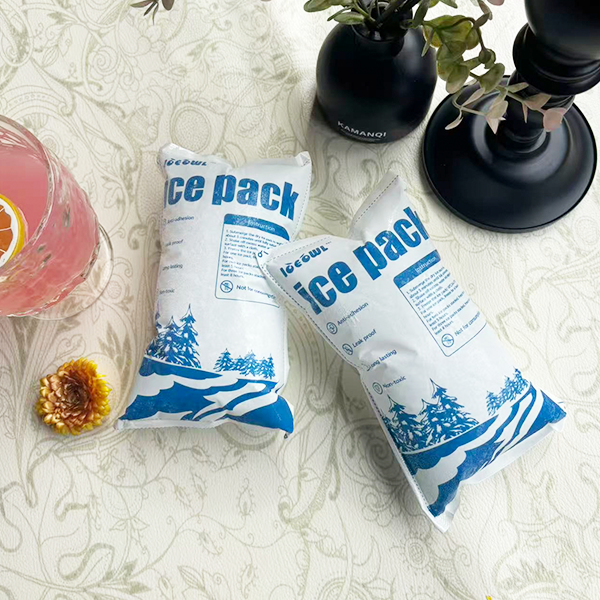
Dry Ice Pack Distributor UK: Pro Optimized Guide
If you are evaluating dry ice pack distributor UK, you probably want more than a list of vendors. You want to know which pack format fits your temperature target, which documents speed up approval, and which sourcing model keeps service stable when demand swings. In 2026, the best buying decisions come from joining buyer guidance, technical evidence, regional compliance, and real operating economics in one framework. That is exactly how you turn a broad search into a low-risk purchasing decision.
What this article answers
How to separate true dry ice, dry-ice-style sheet packs, gel packs, and PCM options for uk sourcing
What technical details matter most when you review a distributor quote, a validation file, or a pilot order
Which documents and market signals should shape your shortlist before you commit to a production program
How to balance storage footprint, route risk, sustainability pressure, and total landed cost
Why is Dry Ice Pack Distributor UK still a high-intent search in 2026?
The search term dry ice pack distributor UK still attracts serious buyers because it sits at the intersection of product safety, packaging efficiency, and supply continuity. But the phrase itself is broad. One supplier may mean a water-activated dry-ice-style sheet, another may mean a reusable PCM brick, and another may mean true solid CO2 for vented shippers. If you compare those offers as if they were identical, you risk buying the wrong temperature system, the wrong operating model, or both.
The smarter way to start is to treat dry ice pack distributor UK as a sourcing question, not a product answer. You first define the payload range, the real transit window, the destination climate, and the tolerance for excursion. Then you screen vendors against your internal limits on storage, labor, documentation, and replenishment speed. That process works whether you buy for meal kits, seafood, diagnostics, pharmaceuticals, or export parcels in the UK.
A practical four-step decision tool
The most reliable buyers use a simple screen before they request samples. They ask what temperature the product really needs, what the route really looks like, what the warehouse can prepare every day, and what evidence quality will require before launch. Those four questions instantly narrow the field and make each stocking distributor quote much easier to compare. They also reduce the common habit of choosing the coldest-looking option rather than the most suitable option.
| Decision factor | What to define | Why it matters | What it means for you |
|---|---|---|---|
| Payload target | 2°C to 8°C, 15°C to 25°C, frozen, or ultra-frozen | Stops buyers from choosing a colder pack than the product actually needs | Better product protection with less wasted coolant |
| Transit profile | Courier parcel, air export, linehaul, or closed-loop return | Matches hold time, handling risk, and replenishment logic | More accurate pack-out and fewer emergency reships |
| Warehouse reality | Flat storage, freezer space, hydration labor, and conditioning windows | Avoids buying a format your site cannot prepare at scale | Smoother daily operations |
| Approval burden | Food-contact file, GDP support, test data, and change control | Prevents delays after procurement says yes | Faster launch and easier audits |
Practical tips and recommendations
Write down the allowed product temperature range before you speak to sales teams.
Ask for route-specific recommendations instead of one generic brochure pack-out.
Separate one-way parcel programs from closed-loop reusable programs at the start.
Field example: a buyer searching for dry ice pack distributor UK expected to choose the heaviest pack for safety. After mapping lanes and storage limits, the team selected a lighter format for most routes and reserved the heavy build for summer outliers. That reduced storage pressure and still protected product quality.
How do you choose the right coolant format for dry ice pack distributor UK?
The correct coolant format depends on the product, the route, and the site that prepares orders. Hydrated sheet packs shine when you need flat storage and flexible placement. Gel or PCM bricks fit programs that prefer defined geometry and repeat conditioning. True dry ice belongs in programs that genuinely need extreme low temperature or already manage dangerous-goods procedures confidently.
In other words, the question is not whether one pack is universally better. It is whether the format matches your reality. For a distributor search, that means you should ask how the pack is stored, prepared, loaded, and disposed of after delivery. A pack that looks economical on paper may become expensive if it consumes freezer space, slows pick speed, or increases exception handling.
Where technical fit beats headline coldness
Buyers often overvalue the lowest nominal temperature and undervalue control. What protects your shipment is not just how cold the pack can be at one moment, but how evenly it holds temperature around the payload and how predictably it behaves in the carton. A slightly warmer but better-matched system can outperform an extreme coolant that creates freeze risk, condensation, or needless handling complexity.
| Format | Typical advantage | Watch-out point | What it means for you |
|---|---|---|---|
| Hydrated sheet pack | Stores flat and activates quickly | Needs good hydration discipline | Ideal when warehouse space is tight and order count swings fast |
| Gel pack | Simple conditioning and familiar handling | Can waste carton space if size match is poor | Useful for standard chilled parcel programs |
| PCM brick | Tighter temperature band when correctly selected | Needs disciplined pre-conditioning | Strong option when you need more precise control |
| True dry ice | Deepest low-temperature capability | Requires ventilation, labeling, and careful transport rules | Best only when your product or route truly justifies it |
Practical tips and recommendations
Request one recommendation for your normal lane and one for your hottest-risk lane in the UK.
Ask how many usable packs fit per carton and per pallet before you compare unit pricing.
Treat every thermal recommendation as incomplete until the vendor explains conditioning time and handling steps.
Field example: a diagnostic-shipments team tested both PCM bricks and dry-ice-style sheets. The sheets won on storage density and pick speed, while the PCM option won on narrow temperature control. The final decision split by route type rather than forcing one solution across every shipment.
What technical details separate a reliable distributor offer from a risky one?
A dependable dry ice pack distributor UK program is built on small technical details that buyers can easily miss. Film strength affects puncture resistance and leakage. Absorbent structure or PCM formulation affects how evenly the pack charges and releases energy. Seal quality determines whether the pack survives hydration, freezing, stacking, and courier abuse. When those details drift, failures usually appear as mess, temperature loss, or both.
This is why serious sourcing conversations go beyond a brochure. You want dimensional tolerances, fill-weight consistency, burst or seal testing, and clear instructions for conditioning and storage. If you are working with a manufacturer, you also want change-control discipline so a film, resin, or filling update does not quietly alter performance. If you are working with a distributor or supplier, you still want traceability back to the original production standard.
The material-science checks that matter in everyday operations
Think of a cold pack like a battery inside a protective skin. The outer film is the shell, the internal medium is the stored energy, and the seal is the point that keeps the system intact under pressure. If any one of those three elements is weak, the pack may still look acceptable in a sample box but fail during scale-up, longer transit, or hotter weather. That is why technical screening saves money long before the first complaint appears.
| Technical element | What to check | Why buyers care | What it means for you |
|---|---|---|---|
| Outer film | Film thickness, puncture resistance, and seal behavior | Protects against leaks, abrasion, and rough parcel handling | Fewer damaged cartons and cleaner pack-out lines |
| Absorbent or PCM core | Water uptake, phase point, and mass consistency | Controls how evenly the pack cools and how long it lasts | More predictable thermal hold |
| Geometry | Cell size, sheet layout, or brick dimensions | Determines fit around the payload and carton dead space | Better cubic efficiency |
| Seal system | Burst resistance and corner integrity | Weak seals usually fail during hydration, freezing, or compression | Lower loss and complaint rates |
Practical tips and recommendations
Ask for the vendor's standard tolerances on pack dimensions and fill weight.
Request evidence that seal quality is checked by batch, not only during initial product development.
Pilot the pack in your real carton with your real payload before approving national or export volume.
Field example: a food exporter liked a low-cost sample because it looked identical to the incumbent. During a stress test, the cheaper pack showed corner seepage after compression and thaw-refreeze handling. The visual similarity hid a seal-quality gap that would have created costly field failures.
What documents should you demand before approving dry ice pack distributor UK in the UK?
Documentation is the quiet force that separates quick launches from painful delays. Before approval, you should know exactly what the pack is made from, how it is conditioned, how performance was tested, and which declarations apply to your market. In the UK, cold-chain buyers usually look at two layers at the same time. First, there is product-quality control: for medicines and healthcare goods, MHRA inspections and GDP expectations make documentation, trained handling, and controlled storage non-negotiable. Second, there is the packaging policy layer: extended producer responsibility rules now affect many organizations that import or supply packaging, including those bringing packaged goods into the UK market. So the right dry ice pack partner is not only a coolant vendor. It is a documentation partner, a packaging-data partner, and sometimes a customs-minded partner as well.
Many teams wait until after commercial agreement to request quality files. That is backwards. In 2026, procurement, quality, operations, and sustainability often review the same pack from different angles, so document readiness is part of supplier readiness. If a vendor cannot assemble a clean, market-appropriate file set early, the relationship will probably stay slow and reactive.
A minimum approval file for serious buyers
A strong approval file should connect specification, evidence, and commercial continuity. It should tell you what the pack is, how it performs, and how supply stays stable when weather or demand changes. When that file is ready before first order, cross-functional approval gets faster and pilot timelines become much easier to manage.
| Document block | What it should contain | Why it matters | What it means for you |
|---|---|---|---|
| Product specification | Dimensions, fill weight, conditioning method, and tolerances | Makes quotes truly comparable | Less confusion during approval |
| Compliance file | Food-contact basis, test reports, declaration letters, and change control | Shows whether the pack fits your market and product class | Faster quality review |
| Transit evidence | Route test, summer and winter profiles, and acceptance criteria | Proves real performance instead of marketing claims | More confident launches |
| Supply plan | MOQ, lead time, safety stock, and peak-season plan | Prevents shortages during promotions or hot weather | Better continuity |
Practical tips and recommendations
For in the UK, ask the vendor to explain market-specific declarations in plain English, not just send certificates without context.
Require route-test summaries that match the actual carton, payload, and coolant mass you plan to buy.
Confirm what happens if raw materials or dimensions change after approval, including notification timing.
Field example: a buyer nearly approved a new source on price alone. The project paused when quality discovered that transit data used a different box and payload from the launch design. One week spent aligning documents early would have saved a month of rework.
How do storage, service, and price change the real value of dry ice pack distributor UK?
The best commercial choice is rarely the lowest unit price. Real value comes from the full system: warehouse footprint, conditioning labor, pick speed, damaged-shipment rate, replenishment speed, and emergency backup when demand spikes. For dry ice pack distributor UK, you should compare landed performance, not just invoice price.
Role matters here. A distributor model tends to emphasize local inventory, fast replenishment, mixed-SKU support, and practical service during urgent demand spikes. That can be excellent when it matches your buying pattern. But it can also create friction if your internal reality is different. A distributor lowers lead time risk and can simplify monthly buying, but the trade-off is usually less freedom on custom format and chemistry.
A 20-point buyer scorecard for final comparison
One practical method is to score every shortlisted supplier on four dimensions: thermal fit, operational fit, documentation fit, and commercial fit. Each category gets five points. A vendor with a slightly higher price but a much better score usually creates lower total cost over a full season because failures, reships, and internal delays shrink.
| Score area | Question to ask | Score | What it means for you |
|---|---|---|---|
| Thermal fit | Does the vendor show lane-specific hold data rather than generic brochure claims? | 0-5 | Higher score means lower spoilage risk |
| Operational fit | Can your site store, hydrate, freeze, and pick the pack at the needed speed? | 0-5 | Higher score means smoother daily execution |
| Documentation fit | Are the compliance papers ready before launch, not after? | 0-5 | Higher score means faster approval |
| Commercial fit | Do MOQ, call-off rules, and emergency backup support your real demand curve? | 0-5 | Higher score means lower disruption risk |
Practical tips and recommendations
Do not compare factory-direct and local-stock models without adjusting for lead time and approval burden.
Ask what emergency plan applies if a heatwave or promotion doubles weekly demand.
Review packaging dimensions because smaller cartons can lower freight and storage cost even when pack price is unchanged.
Field example: two offers for dry ice pack distributor UK looked close on price. The lower quote required a larger MOQ, longer lead time, and no heatwave backup stock. The higher quote came from a local partner with shorter replenishment and better documentation. Over the season, the second option delivered lower total operating cost.
How are sustainability and market trends reshaping dry ice pack distributor UK in 2026?
In 2026, sustainability is no longer a separate conversation held after thermal approval. It is part of sourcing from day one. The 2026 UK market rewards partners that can serve both speed and governance. You may need next-day parcel performance for food or samples, but procurement still wants clear material specs, traceable batches, and packaging data that support EPR reporting. This is why local stockholding, short replenishment cycles, and concise technical files matter so much. In the UK, sustainability pressure is now tied to real cost signals. Packaging data, household versus non-household classification, and disposal fees all push buyers to ask whether a pack is oversized, overbuilt, or hard to recover. That does not mean every program should shift to reusable coolant, but it does mean every pack-out needs a reason.
The strongest market trend is not a single material switch. It is better fit. Buyers increasingly want lane-specific pack-outs, lighter cartons, clearer recyclability claims, and evidence that a supplier can reduce damage and waste without shifting risk to the product. In the UK, packaging decisions now sit inside both product-quality and packaging-data conversations. Extended producer responsibility rules changed what many importers and suppliers need to report and pay for, so procurement teams are under pressure to justify packaging choices more carefully.
Three trend signals buyers should watch
If you want a future-proof supply program, watch where policy, operations, and customer expectation overlap. That overlap is where supplier advantage now appears. Firms that document materials clearly, right-size packs, and support route-based validation are usually better positioned than those that only compete on price or buzzwords.
| Trend | What is happening | Why it matters | What it means for you |
|---|---|---|---|
| Lane-specific pack-outs | More buyers are approving different summer, winter, and regional builds | Cuts overpacking on easy routes while protecting high-risk lanes | Stronger cost-to-performance balance |
| Documentation-first sourcing | Quality teams want files early, especially in regulated sectors | Moves decisions from marketing claims toward evidence | Faster cross-functional approval |
| Waste-aware design | Packaging policy and disposal costs are shaping choices in every region | Rewards right-sized formats and honest material claims | Better ESG conversations without losing performance |
Practical tips and recommendations
Ask suppliers to explain the waste story of the whole pack-out, not just one component.
Request a right-sizing review before you commit to annual volume.
When sustainability claims are made, ask whether they are based on actual local recovery pathways or only theoretical recyclability.
Field example: a premium-food shipper improved both cost and sustainability by switching from one oversized national carton to two route-specific carton sizes with adjusted coolant mass. Damage fell, dimensional freight dropped, and customer disposal complaints decreased at the same time.
2026 latest developments and buyer signals
The 2026 market for dry ice pack distributor UK rewards evidence, fit, and waste awareness more than generic product claims. Across regulated sectors and mainstream parcel programs alike, buyers are moving toward shorter approval cycles built on better files, more route testing, and clearer material decisions. That means the strongest suppliers are the ones that can explain not only what the pack is, but why it is the right answer for your exact lane.
Growth is shifting toward route-specific pack-outs instead of one universal national formula.
Quality and procurement teams increasingly want document packets before pilot approval, not after the commercial discussion.
Sustainability pressure is pushing buyers to review carton size, coolant mass, and disposal realism as part of the same sourcing decision.
In practice, the winners in the UK are not always the loudest marketers. They are the partners that combine operational honesty, test evidence, and responsive service. If a supplier can translate technical details into day-to-day value for your team, approval tends to move faster and long-term performance tends to improve.
Frequently asked questions
Can dry ice pack distributor UK mean true dry ice and not only a dry-ice-style pack?
Yes. Buyers use the phrase both ways. That is why you should ask every vendor to define the coolant type, temperature range, and handling method before you compare quotes.
What is the fastest way to shortlist dry ice pack distributor UK suppliers?
Use four filters: payload temperature, transit window, warehouse readiness, and document readiness. Suppliers that fit all four usually deserve sampling first.
How important is documentation for dry ice pack distributor UK in regulated sectors?
It is critical. Even a good-performing pack can be delayed if the quality file, market declarations, or route-test evidence are incomplete or mismatched to your launch design.
Should you choose the coldest pack available for safety?
Not automatically. The safest pack is the one that holds the right temperature band for the real route without creating freeze risk, leakage, or unnecessary handling complexity.
When does a local stocking distributor beat a factory-direct model?
Usually when lead time, emergency replenishment, mixed-case orders, or approval speed matter more than absolute factory pricing. Total operating risk often matters more than nominal unit cost.
Summary and recommendations
The best dry ice pack distributor UK decision in 2026 comes from combining four views at once. You need buyer-fit analysis, technical evidence, market-appropriate documents, and an honest cost model. When you define the lane clearly, test the pack in your real shipper, and score suppliers on more than price, you usually get better product protection and smoother operations. That is the difference between buying a cold pack and building a dependable cold-chain program.
Your next step is simple. List your target temperature, normal and worst-case transit times, current carton sizes, and approval documents. Then ask shortlisted vendors to respond to the same brief so their offers stay comparable. That single step saves time, reduces internal debate, and helps you choose the right pack faster.
About Tempk
About Tempk: we focus on practical cold-chain packaging decisions, from dry-ice-style sheet packs to reusable temperature-control formats and export-ready pack-out support. We work from the view that buyers need clear product definitions, dependable quality, and documents that help operations and quality teams approve faster. Our advantage is not hype. It is helping teams match the right coolant system to the real shipping lane.
Talk with Tempk about your route profile, pack format options, and validation needs so you can build a lower-risk sourcing plan.
Best Dry Ice Pack Bulk Japan Guide 2026

Best Guide to Dry Ice Pack Bulk in Japan
Dry ice pack bulk Japan only looks simple if you reduce the decision to price. The better way to see it is as a combined sourcing problem: you need the right cooling format, the right partner model, the right operating routine, and the right document set. In Japan, METI reported that Japan's domestic B-to-C e-commerce market reached 26.1 trillion yen in 2024, up 5.1% year on year. PMDA and Japanese GDP materials emphasize that every party in the distribution chain should protect product quality and maintain chain integrity during procurement, storage, distribution, and returns. Those pressures make dry ice pack buying a strategic decision for both food and healthcare supply chains.
This optimized guide brings together the best parts of product education, technical review, market insight, and a reader-friendly structure. You will get a clear framework for choosing the pack, validating the lane, managing cost, and preparing for 2026 expectations around reliability and sustainability. The aim is not to give you more noise. It is to help you reach a stronger decision faster and with fewer blind spots.
This guide will help you decide
What defines a strong dry ice pack bulk Japan strategy in 2026
Which specs, materials, and performance tests matter before you commit volume
How local market conditions in Japan affect format, stock planning, and partner choice
How to handle compliance and sustainability without turning the project into paperwork overload
How to use a final supplier scorecard that balances price, risk, and growth readiness
What defines the right strategy for dry ice pack bulk Japan before you compare prices?
The best strategy starts with a simple truth: you are not buying cold in the abstract. You are buying a repeatable shipping outcome. That outcome depends on the route, the payload, the outer packaging, the operator routine, and the supplier behind the pack. If one of those pieces is weak, the cold source alone will not save the system. This is why the smartest buyers define the use case first and the supplier list second.
For dry ice pack bulk Japan, strategy usually comes down to four questions. What temperature range must the shipment stay in? How variable is the real transit window? How complex can the warehouse routine be before error rises? And what kind of partner support do you need after sampling? Once those four questions are clear, you can choose between sheet packs, rigid reusable packs, true dry ice support, or hybrid builds with much better confidence.
Start with route reality, not product marketing
Route reality means actual transit, not only promised service. It means real summer exposure, not average weather. It means box dimensions after the payload is loaded, not the outer carton measured empty on a desk. And it means the real capabilities of your team. Your best supplier is the one that keeps the line moving in July, not the one that only wins a spreadsheet in January. That is why strong sourcing teams ask for a route-specific recommendation before they ask for a discount ladder.
| Strategic Question | What You Should Clarify | Weak Approach | Better Decision |
|---|---|---|---|
| Temperature target | Chilled, frozen, or subzero support | Buy the coldest option | Match the pack to the payload |
| Transit reality | Normal and stress duration | Use service promise only | Plan for delay risk |
| Process complexity | What operators can do repeatedly | Assume perfect execution | Choose a workable SOP |
| Support need | Sample, docs, scale, and change control | Compare price only | Select a growth-ready partner |
A quick self-check
If your route changes by season, you need at least two recommended pack rules.
If your box fill varies a lot, you need more than one generic pack count.
If your customers ask for documents before onboarding, supplier organization matters almost as much as product quality.
Example scenario: a buyer thought the project was about finding a cheaper cold source. After a short review, the team realized the real issue was inconsistent box fill and weak route segmentation. Once those issues were fixed, the pack choice became easier and the cost discussion became more meaningful.
Which specs, materials, and tests truly matter?
Good dry ice pack buying combines product education with technical discipline. At the product level, you need to understand the format: sheet pack, reusable pack, true dry ice support, or a hybrid system. At the technical level, you need to understand construction detail, activation routine, and pack-out logic. Reliable packs usually have stable cell distribution, controlled sealing, clear dimensions, and an operating method that can be repeated by warehouse staff without constant supervision.
Testing should be practical, not theatrical. A useful test asks whether the full system protects the shipment under realistic conditions. That means the right insulation, the real payload mass, realistic pre-freezing, and data logger placement at risk points. When buyers skip that discipline, they often end up arguing about the pack when the real problem is process drift, box mismatch, or unrealistic lane assumptions.
The short list of technical proof
Ask for seven things: product dimensions, material description, hydrated or frozen behavior guidance, activation routine, recommended pack layout, document pack, and a clear explanation of the intended use case. Then validate the setup under normal and stress conditions. This is enough to separate strong suppliers from sellers who only repeat generic claims. The goal is not to run a research program. It is to remove obvious technical ambiguity before scale.
| Proof Item | What Good Looks Like | Common Weakness | Why It Matters |
|---|---|---|---|
| Construction detail | Clear size, cell, and material information | Vague product description | Protects technical comparison |
| Activation guidance | Specific soak and freeze routine | Freeze as needed | Reduces launch error |
| Pack layout | Recommended count and placement | Use your judgment | Improves repeatability |
| Validation file | Normal and stress results | Single success story | Supports scale-up confidence |
Practical testing advice
Treat the box, insulation, product, and pack as one system in every trial.
Use one test to check warm risk and another to check accidental over-freezing when the payload is sensitive.
Document the freezer condition and preconditioning time, because these often explain field variation.
Example scenario: two packs looked identical after freezing, but one required a much tighter preparation routine. The easier-to-run pack won because it delivered more stable results with normal warehouse behavior, not because it looked colder in a photo.
How do market conditions in Japan affect cost, format, and stock planning?
Market conditions shape the correct answer more than many buyers expect. In Japan, METI reported that Japan's domestic B-to-C e-commerce market reached 26.1 trillion yen in 2024, up 5.1% year on year. JETRO describes Japan's pharmaceutical sector as one of the world's largest and expects life-science demand to keep growing with an aging population and higher healthcare spending. That means the pack you choose has to work commercially as well as thermally. It has to support the dominant channels in your market, respond to seasonal pressure, and stay available when demand rises. A technically perfect pack with unstable supply can still be the wrong choice.
Stock planning is especially important because cold-chain demand often spikes during the same periods that thermal risk is highest. Summer validation and holiday-season stock planning matter because both heat and demand can peak quickly. If you buy too late, you may be forced into substitutions or rushed logistics. If you buy too early without clarity, you can overstock the wrong format. The better approach is to lock a core validated configuration, then use route segmentation and seasonal planning to decide how much buffer you really need.
Where market context changes the packaging answer
Growing e-commerce raises the value of neat, easy-to-pack, right-sized formats. Strong healthcare demand raises the value of documentation and validation. Regulatory or packaging-accountability pressure raises the value of traceable specifications and better material disclosure. Climate exposure raises the value of stress testing. When you line these forces up, it becomes obvious that one universal buying rule is too blunt for a modern dry ice pack program.
| Market Condition | Packaging Effect | Supply Effect | Best Response |
|---|---|---|---|
| High parcel exposure | Needs better box fit and SOP simplicity | More frequent replenishment | Standardize a few proven setups |
| Healthcare scrutiny | Needs stronger documentation | Slower approval if files are weak | Prepare the document pack early |
| Seasonal heat | Needs stress-ready design | Higher safety-stock need | Plan summer inventory before peak |
| Sustainability pressure | Needs right-sizing and waste logic | More supplier questions | Choose evidence-backed configurations |
Market-aware buying advice
Use the main demand segments in Japan to decide which pack formats deserve priority stock.
Qualify at least one backup configuration before peak season if lead times are long or imported supply is involved.
Do not let route segmentation become too complex; a few clear market-based rules outperform a large confusing matrix.
Example scenario: a business kept adding new SKUs to satisfy different customer requests. Inventory complexity rose, but service did not improve. After mapping the market by route type and account type, the team reduced the range and improved both fill rate and packing accuracy.
How do you manage compliance and sustainability together for dry ice pack bulk Japan?
Compliance and sustainability often look like separate workstreams, but the strongest programs manage them together. A well-documented, stable specification reduces waste because it cuts errors and rework. A right-sized pack reduces waste because it avoids excess material and failed shipments. A supplier with clear declarations and change control reduces compliance risk because nothing important is left vague. In other words, better control often improves both regulatory confidence and environmental performance.
The specific rules vary by market, but the underlying logic is consistent. PMDA and Japanese GDP materials emphasize that every party in the distribution chain should protect product quality and maintain chain integrity during procurement, storage, distribution, and returns. Japanese buyers increasingly prefer pack formats that store flat, reduce mess, and limit overpacking without adding process complexity. When you ask suppliers to connect pack recommendation, document readiness, and waste reduction into one story, weak offers tend to fall apart quickly. Strong offers become easier to spot because they show how the system performs, not just what the product is made of.
A balanced way to ask the right questions
Ask your supplier to explain four things in one meeting: why the pack fits the route, what documents support that choice, which part of the system reduces waste, and what changes would trigger re-approval. This single conversation often replaces several disconnected email chains. It also helps procurement, operations, and QA align earlier. That alignment matters because late-stage disagreement is one of the quietest but most expensive causes of project delay.
| Control Area | What to Ask | Weak Reply | Stronger Outcome |
|---|---|---|---|
| Use-case fit | Why this pack for this lane? | It is our best seller | Route-specific logic |
| Document fit | What files are available now? | We can send later | Faster account approval |
| Waste logic | How does the system avoid excess? | It is eco-friendly | Practical right-sizing |
| Change control | What changes need approval? | Minor updates happen | Stable specification |
Practical combined-control advice
Keep your validated pack-out file together with the key supplier declarations and the approved specification.
Measure waste in operational terms: spoilage, repack, customer complaints, and excess box cube.
Review both compliance updates and sustainability targets before peak season, not during it.
Example scenario: once a company moved its packaging documents, validation notes, and approved spec into one controlled file, both audits and buying decisions became faster. The same change also reduced waste because teams stopped ordering substitute packs when they could not find the approved information.
What final supplier scorecard should you use for dry ice pack bulk Japan?
The final scorecard should be simple enough to use and strong enough to expose hidden risk. Use five categories: product fit, process fit, document fit, commercial fit, and growth fit. Product fit asks whether the pack matches the lane. Process fit asks whether the team can run it reliably. Document fit asks whether the files support the market. Commercial fit asks whether the cost is sensible. Growth fit asks whether the supplier can support you after the pilot stage.
Weight the scorecard according to your business model. If you run healthcare lanes, document fit may matter more. If you run fast parcel food, process fit may matter more. If you are building private label or OEM supply, growth fit and change control matter more. The exact weighting can change, but the structure should stay visible. That visibility protects you from choosing a low quote that only works for one sample shipment and falls apart when the account grows.
A practical scoring approach
Score each category from one to five and require a minimum threshold for the most critical category. For example, healthcare buyers may refuse any supplier that scores below four on documents and change control. Food e-commerce buyers may set the minimum threshold on process simplicity and route fit. The point is not bureaucracy. The point is discipline. Once a scorecard exists, internal discussions become faster and more objective.
| Scorecard Area | What to Measure | Why It Matters | Typical Red Flag |
|---|---|---|---|
| Product fit | Route match and pack layout | Protects temperature performance | Generic recommendation |
| Process fit | Ease of activation and packing | Protects daily execution | Complex SOP |
| Document fit | Technical and compliance file quality | Protects onboarding speed | Late or vague files |
| Commercial fit | True landed cost | Protects margin | Cheap unit, high failure cost |
| Growth fit | Stock, customization, change control | Protects scale-up | Pilot-only capability |
How to use the scorecard well
Score the sample stage and the volume stage separately if your support needs change after launch.
Let QA, operations, and procurement each comment on the category they know best.
Review the scorecard after the first real season to see whether the supplier still deserves the same rating.
Example scenario: two suppliers looked similar on price, but one scored far better on document speed and growth fit. That supplier won the business and later handled a volume increase without changing the approved specification, which confirmed the value of the scorecard.
2026 outlook for dry ice pack bulk Japan
The 2026 direction is clear. Buyers want route-specific packaging, stronger documentation, and leaner systems with less waste. METI reported that Japan's domestic B-to-C e-commerce market reached 26.1 trillion yen in 2024, up 5.1% year on year. JETRO describes Japan's pharmaceutical sector as one of the world's largest and expects life-science demand to keep growing with an aging population and higher healthcare spending. As these forces build, dry ice pack decisions will keep moving closer to procurement strategy, QA planning, and customer experience management. The winners will be buyers and suppliers who can connect cold performance, operational simplicity, and market readiness in one clear recommendation.
What to watch next
More businesses will separate normal and hot-season pack rules instead of relying on one universal configuration.
Document quality and change control will become stronger buying filters as packaging responsibility grows.
Sustainability discussions will increasingly focus on right-sizing and failure prevention rather than slogans alone.
Market insight: the strongest packaging programs now look less like product catalogs and more like operating systems. They define route types, pack rules, validation files, supplier responsibilities, and change triggers. That is the direction serious dry ice pack sourcing is taking in 2026.
Frequently asked questions
What is the first thing to decide before requesting quotes?
Define the route, temperature target, and operating routine. Without that context, pack comparisons are mostly guesswork.
Do you need both technical review and market review?
Yes. A pack can be technically good and still be the wrong commercial choice if it does not fit your channel, timing, or document needs.
What is the best way to control hidden cost?
Use total landed cost. Include labor, freight cube, spoilage risk, complaints, and stock stability, not just the unit price.
How do you keep sustainability practical?
Focus on right-sizing, lower failure rates, and stable specifications. Those changes usually create more value than broad environmental claims.
What makes a supplier strong for dry ice pack bulk Japan?
Strong suppliers connect product fit, process fit, document fit, and growth fit. They do not sell only the sample; they support the system.
Summary and recommendations
The best dry ice pack bulk Japan strategy combines four things: route-first planning, technical proof, market awareness, and controlled supplier selection. When those pieces line up, you gain better temperature protection, faster onboarding, stronger cost control, and a packaging system that can scale with less waste.
Recommended next step: build a short sourcing brief, run a route-based trial, and score suppliers on product, process, documents, cost, and growth fit. That one framework is enough to turn a confusing search into a clear commercial decision.
About Tempk
Tempk provides cold-chain packaging solutions for temperature-sensitive logistics, including dry ice packs, gel packs, ice bricks, insulated bags, EPP boxes, liners, and related packaging materials. We focus on helping customers match the cold source to the real route, box, and operating process.
If you are evaluating dry ice pack bulk Japan, we can help you compare formats, review trial logic, and turn your route data into a practical packaging recommendation that is ready for real operations.
Best Dry Ice Pack Bulk Germany Guide 2026
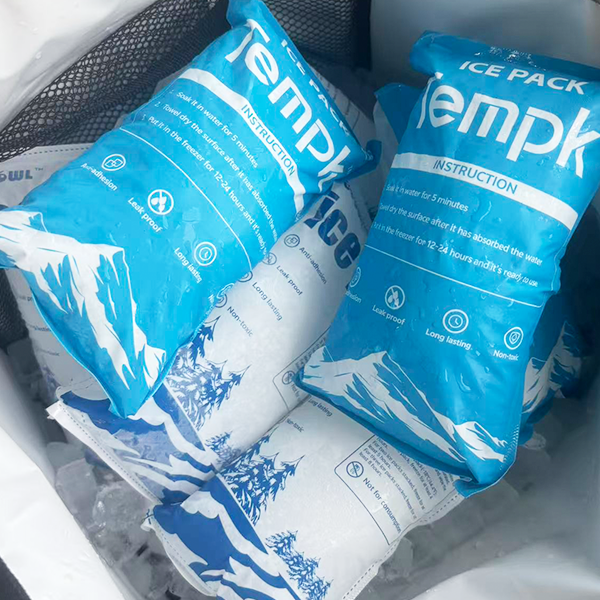
Best Guide to Dry Ice Pack Bulk in Germany
Dry ice pack bulk Germany only looks simple if you reduce the decision to price. The better way to see it is as a combined sourcing problem: you need the right cooling format, the right partner model, the right operating routine, and the right document set. In Germany, Destatis reported that wholesale prices in Germany were 1.1% higher in october 2025 than a year earlier, while wholesale food, beverages, and tobacco prices were up 3.5%. Germany's LUCID register says that if you commercially distribute packaged goods in Germany, you need to register, and the producer concept can include manufacturers, distributors, importers, online retailers, and mail-order companies. Those pressures make dry ice pack buying a strategic decision for both food and healthcare supply chains.
This optimized guide brings together the best parts of product education, technical review, market insight, and a reader-friendly structure. You will get a clear framework for choosing the pack, validating the lane, managing cost, and preparing for 2026 expectations around reliability and sustainability. The aim is not to give you more noise. It is to help you reach a stronger decision faster and with fewer blind spots.
This guide will help you decide
What defines a strong dry ice pack bulk Germany strategy in 2026
Which specs, materials, and performance tests matter before you commit volume
How local market conditions in Germany affect format, stock planning, and partner choice
How to handle compliance and sustainability without turning the project into paperwork overload
How to use a final supplier scorecard that balances price, risk, and growth readiness
What defines the right strategy for dry ice pack bulk Germany before you compare prices?
The best strategy starts with a simple truth: you are not buying cold in the abstract. You are buying a repeatable shipping outcome. That outcome depends on the route, the payload, the outer packaging, the operator routine, and the supplier behind the pack. If one of those pieces is weak, the cold source alone will not save the system. This is why the smartest buyers define the use case first and the supplier list second.
For dry ice pack bulk Germany, strategy usually comes down to four questions. What temperature range must the shipment stay in? How variable is the real transit window? How complex can the warehouse routine be before error rises? And what kind of partner support do you need after sampling? Once those four questions are clear, you can choose between sheet packs, rigid reusable packs, true dry ice support, or hybrid builds with much better confidence.
Start with route reality, not product marketing
Route reality means actual transit, not only promised service. It means real summer exposure, not average weather. It means box dimensions after the payload is loaded, not the outer carton measured empty on a desk. And it means the real capabilities of your team. Your best supplier is the one that keeps the line moving in July, not the one that only wins a spreadsheet in January. That is why strong sourcing teams ask for a route-specific recommendation before they ask for a discount ladder.
| Strategic Question | What You Should Clarify | Weak Approach | Better Decision |
|---|---|---|---|
| Temperature target | Chilled, frozen, or subzero support | Buy the coldest option | Match the pack to the payload |
| Transit reality | Normal and stress duration | Use service promise only | Plan for delay risk |
| Process complexity | What operators can do repeatedly | Assume perfect execution | Choose a workable SOP |
| Support need | Sample, docs, scale, and change control | Compare price only | Select a growth-ready partner |
A quick self-check
If your route changes by season, you need at least two recommended pack rules.
If your box fill varies a lot, you need more than one generic pack count.
If your customers ask for documents before onboarding, supplier organization matters almost as much as product quality.
Example scenario: a buyer thought the project was about finding a cheaper cold source. After a short review, the team realized the real issue was inconsistent box fill and weak route segmentation. Once those issues were fixed, the pack choice became easier and the cost discussion became more meaningful.
Which specs, materials, and tests truly matter?
Good dry ice pack buying combines product education with technical discipline. At the product level, you need to understand the format: sheet pack, reusable pack, true dry ice support, or a hybrid system. At the technical level, you need to understand construction detail, activation routine, and pack-out logic. Reliable packs usually have stable cell distribution, controlled sealing, clear dimensions, and an operating method that can be repeated by warehouse staff without constant supervision.
Testing should be practical, not theatrical. A useful test asks whether the full system protects the shipment under realistic conditions. That means the right insulation, the real payload mass, realistic pre-freezing, and data logger placement at risk points. When buyers skip that discipline, they often end up arguing about the pack when the real problem is process drift, box mismatch, or unrealistic lane assumptions.
The short list of technical proof
Ask for seven things: product dimensions, material description, hydrated or frozen behavior guidance, activation routine, recommended pack layout, document pack, and a clear explanation of the intended use case. Then validate the setup under normal and stress conditions. This is enough to separate strong suppliers from sellers who only repeat generic claims. The goal is not to run a research program. It is to remove obvious technical ambiguity before scale.
| Proof Item | What Good Looks Like | Common Weakness | Why It Matters |
|---|---|---|---|
| Construction detail | Clear size, cell, and material information | Vague product description | Protects technical comparison |
| Activation guidance | Specific soak and freeze routine | Freeze as needed | Reduces launch error |
| Pack layout | Recommended count and placement | Use your judgment | Improves repeatability |
| Validation file | Normal and stress results | Single success story | Supports scale-up confidence |
Practical testing advice
Treat the box, insulation, product, and pack as one system in every trial.
Use one test to check warm risk and another to check accidental over-freezing when the payload is sensitive.
Document the freezer condition and preconditioning time, because these often explain field variation.
Example scenario: two packs looked identical after freezing, but one required a much tighter preparation routine. The easier-to-run pack won because it delivered more stable results with normal warehouse behavior, not because it looked colder in a photo.
How do market conditions in Germany affect cost, format, and stock planning?
Market conditions shape the correct answer more than many buyers expect. In Germany, Destatis reported that wholesale prices in Germany were 1.1% higher in October 2025 than a year earlier, while wholesale food, beverages, and tobacco prices were up 3.5%. Germany remains a central hub for European distribution, industrial buyers, and compliance-heavy packaging decisions. That means the pack you choose has to work commercially as well as thermally. It has to support the dominant channels in your market, respond to seasonal pressure, and stay available when demand rises. A technically perfect pack with unstable supply can still be the wrong choice.
Stock planning is especially important because cold-chain demand often spikes during the same periods that thermal risk is highest. German sourcing teams often reward suppliers who answer precisely, provide documents quickly, and keep specifications stable over time. If you buy too late, you may be forced into substitutions or rushed logistics. If you buy too early without clarity, you can overstock the wrong format. The better approach is to lock a core validated configuration, then use route segmentation and seasonal planning to decide how much buffer you really need.
Where market context changes the packaging answer
Growing e-commerce raises the value of neat, easy-to-pack, right-sized formats. Strong healthcare demand raises the value of documentation and validation. Regulatory or packaging-accountability pressure raises the value of traceable specifications and better material disclosure. Climate exposure raises the value of stress testing. When you line these forces up, it becomes obvious that one universal buying rule is too blunt for a modern dry ice pack program.
| Market Condition | Packaging Effect | Supply Effect | Best Response |
|---|---|---|---|
| High parcel exposure | Needs better box fit and SOP simplicity | More frequent replenishment | Standardize a few proven setups |
| Healthcare scrutiny | Needs stronger documentation | Slower approval if files are weak | Prepare the document pack early |
| Seasonal heat | Needs stress-ready design | Higher safety-stock need | Plan summer inventory before peak |
| Sustainability pressure | Needs right-sizing and waste logic | More supplier questions | Choose evidence-backed configurations |
Market-aware buying advice
Use the main demand segments in Germany to decide which pack formats deserve priority stock.
Qualify at least one backup configuration before peak season if lead times are long or imported supply is involved.
Do not let route segmentation become too complex; a few clear market-based rules outperform a large confusing matrix.
Example scenario: a business kept adding new SKUs to satisfy different customer requests. Inventory complexity rose, but service did not improve. After mapping the market by route type and account type, the team reduced the range and improved both fill rate and packing accuracy.
How do you manage compliance and sustainability together for dry ice pack bulk Germany?
Compliance and sustainability often look like separate workstreams, but the strongest programs manage them together. A well-documented, stable specification reduces waste because it cuts errors and rework. A right-sized pack reduces waste because it avoids excess material and failed shipments. A supplier with clear declarations and change control reduces compliance risk because nothing important is left vague. In other words, better control often improves both regulatory confidence and environmental performance.
The specific rules vary by market, but the underlying logic is consistent. Germany's LUCID register says that if you commercially distribute packaged goods in Germany, you need to register, and the producer concept can include manufacturers, distributors, importers, online retailers, and mail-order companies. German buyers usually want sustainability claims backed by packaging data, clear responsibilities, and practical recovery or recycling logic. When you ask suppliers to connect pack recommendation, document readiness, and waste reduction into one story, weak offers tend to fall apart quickly. Strong offers become easier to spot because they show how the system performs, not just what the product is made of.
A balanced way to ask the right questions
Ask your supplier to explain four things in one meeting: why the pack fits the route, what documents support that choice, which part of the system reduces waste, and what changes would trigger re-approval. This single conversation often replaces several disconnected email chains. It also helps procurement, operations, and QA align earlier. That alignment matters because late-stage disagreement is one of the quietest but most expensive causes of project delay.
| Control Area | What to Ask | Weak Reply | Stronger Outcome |
|---|---|---|---|
| Use-case fit | Why this pack for this lane? | It is our best seller | Route-specific logic |
| Document fit | What files are available now? | We can send later | Faster account approval |
| Waste logic | How does the system avoid excess? | It is eco-friendly | Practical right-sizing |
| Change control | What changes need approval? | Minor updates happen | Stable specification |
Practical combined-control advice
Keep your validated pack-out file together with the key supplier declarations and the approved specification.
Measure waste in operational terms: spoilage, repack, customer complaints, and excess box cube.
Review both compliance updates and sustainability targets before peak season, not during it.
Example scenario: once a company moved its packaging documents, validation notes, and approved spec into one controlled file, both audits and buying decisions became faster. The same change also reduced waste because teams stopped ordering substitute packs when they could not find the approved information.
What final supplier scorecard should you use for dry ice pack bulk Germany?
The final scorecard should be simple enough to use and strong enough to expose hidden risk. Use five categories: product fit, process fit, document fit, commercial fit, and growth fit. Product fit asks whether the pack matches the lane. Process fit asks whether the team can run it reliably. Document fit asks whether the files support the market. Commercial fit asks whether the cost is sensible. Growth fit asks whether the supplier can support you after the pilot stage.
Weight the scorecard according to your business model. If you run healthcare lanes, document fit may matter more. If you run fast parcel food, process fit may matter more. If you are building private label or OEM supply, growth fit and change control matter more. The exact weighting can change, but the structure should stay visible. That visibility protects you from choosing a low quote that only works for one sample shipment and falls apart when the account grows.
A practical scoring approach
Score each category from one to five and require a minimum threshold for the most critical category. For example, healthcare buyers may refuse any supplier that scores below four on documents and change control. Food e-commerce buyers may set the minimum threshold on process simplicity and route fit. The point is not bureaucracy. The point is discipline. Once a scorecard exists, internal discussions become faster and more objective.
| Scorecard Area | What to Measure | Why It Matters | Typical Red Flag |
|---|---|---|---|
| Product fit | Route match and pack layout | Protects temperature performance | Generic recommendation |
| Process fit | Ease of activation and packing | Protects daily execution | Complex SOP |
| Document fit | Technical and compliance file quality | Protects onboarding speed | Late or vague files |
| Commercial fit | True landed cost | Protects margin | Cheap unit, high failure cost |
| Growth fit | Stock, customization, change control | Protects scale-up | Pilot-only capability |
How to use the scorecard well
Score the sample stage and the volume stage separately if your support needs change after launch.
Let QA, operations, and procurement each comment on the category they know best.
Review the scorecard after the first real season to see whether the supplier still deserves the same rating.
Example scenario: two suppliers looked similar on price, but one scored far better on document speed and growth fit. That supplier won the business and later handled a volume increase without changing the approved specification, which confirmed the value of the scorecard.
2026 outlook for dry ice pack bulk Germany
The 2026 direction is clear. Buyers want route-specific packaging, stronger documentation, and leaner systems with less waste. Destatis reported that wholesale prices in Germany were 1.1% higher in October 2025 than a year earlier, while wholesale food, beverages, and tobacco prices were up 3.5%. Germany remains a central hub for European distribution, industrial buyers, and compliance-heavy packaging decisions. As these forces build, dry ice pack decisions will keep moving closer to procurement strategy, QA planning, and customer experience management. The winners will be buyers and suppliers who can connect cold performance, operational simplicity, and market readiness in one clear recommendation.
What to watch next
More businesses will separate normal and hot-season pack rules instead of relying on one universal configuration.
Document quality and change control will become stronger buying filters as packaging responsibility grows.
Sustainability discussions will increasingly focus on right-sizing and failure prevention rather than slogans alone.
Market insight: the strongest packaging programs now look less like product catalogs and more like operating systems. They define route types, pack rules, validation files, supplier responsibilities, and change triggers. That is the direction serious dry ice pack sourcing is taking in 2026.
Frequently asked questions
What is the first thing to decide before requesting quotes?
Define the route, temperature target, and operating routine. Without that context, pack comparisons are mostly guesswork.
Do you need both technical review and market review?
Yes. A pack can be technically good and still be the wrong commercial choice if it does not fit your channel, timing, or document needs.
What is the best way to control hidden cost?
Use total landed cost. Include labor, freight cube, spoilage risk, complaints, and stock stability, not just the unit price.
How do you keep sustainability practical?
Focus on right-sizing, lower failure rates, and stable specifications. Those changes usually create more value than broad environmental claims.
What makes a supplier strong for dry ice pack bulk Germany?
Strong suppliers connect product fit, process fit, document fit, and growth fit. They do not sell only the sample; they support the system.
Summary and recommendations
The best dry ice pack bulk Germany strategy combines four things: route-first planning, technical proof, market awareness, and controlled supplier selection. When those pieces line up, you gain better temperature protection, faster onboarding, stronger cost control, and a packaging system that can scale with less waste.
Recommended next step: build a short sourcing brief, run a route-based trial, and score suppliers on product, process, documents, cost, and growth fit. That one framework is enough to turn a confusing search into a clear commercial decision.
About Tempk
Tempk provides cold-chain packaging solutions for temperature-sensitive logistics, including dry ice packs, gel packs, ice bricks, insulated bags, EPP boxes, liners, and related packaging materials. We focus on helping customers match the cold source to the real route, box, and operating process.
If you are evaluating dry ice pack bulk Germany, we can help you compare formats, review trial logic, and turn your route data into a practical packaging recommendation that is ready for real operations.
Best Dry Ice Pack Wholesale Japan Guide 2026
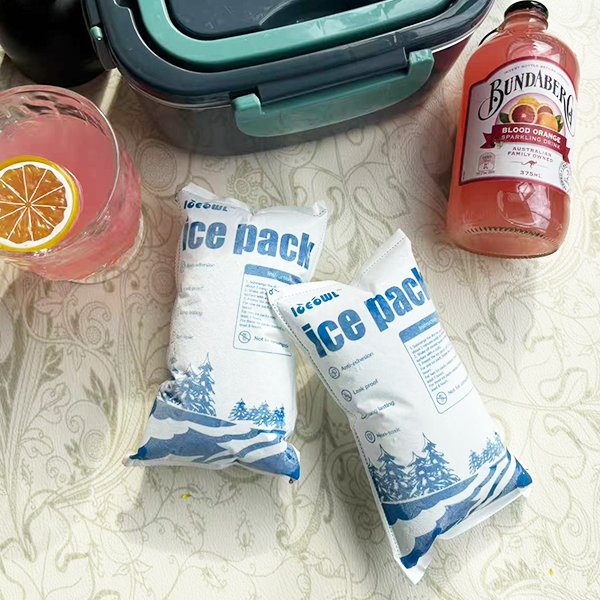
Best Guide to Dry Ice Pack Wholesale in Japan
Dry ice pack wholesale Japan only looks simple if you reduce the decision to price. The better way to see it is as a combined sourcing problem: you need the right cooling format, the right partner model, the right operating routine, and the right document set. In Japan, METI reported that Japan's domestic B-to-C e-commerce market reached 26.1 trillion yen in 2024, up 5.1% year on year. PMDA and Japanese GDP materials emphasize that every party in the distribution chain should protect product quality and maintain chain integrity during procurement, storage, distribution, and returns. Those pressures make dry ice pack buying a strategic decision for both food and healthcare supply chains.
This optimized guide brings together the best parts of product education, technical review, market insight, and a reader-friendly structure. You will get a clear framework for choosing the pack, validating the lane, managing cost, and preparing for 2026 expectations around reliability and sustainability. The aim is not to give you more noise. It is to help you reach a stronger decision faster and with fewer blind spots.
This guide will help you decide
What defines a strong dry ice pack wholesale Japan strategy in 2026
Which specs, materials, and performance tests matter before you commit volume
How local market conditions in Japan affect format, stock planning, and partner choice
How to handle compliance and sustainability without turning the project into paperwork overload
How to use a final supplier scorecard that balances price, risk, and growth readiness
What defines the right strategy for dry ice pack wholesale Japan before you compare prices?
The best strategy starts with a simple truth: you are not buying cold in the abstract. You are buying a repeatable shipping outcome. That outcome depends on the route, the payload, the outer packaging, the operator routine, and the supplier behind the pack. If one of those pieces is weak, the cold source alone will not save the system. This is why the smartest buyers define the use case first and the supplier list second.
For dry ice pack wholesale Japan, strategy usually comes down to four questions. What temperature range must the shipment stay in? How variable is the real transit window? How complex can the warehouse routine be before error rises? And what kind of partner support do you need after sampling? Once those four questions are clear, you can choose between sheet packs, rigid reusable packs, true dry ice support, or hybrid builds with much better confidence.
Start with route reality, not product marketing
Route reality means actual transit, not only promised service. It means real summer exposure, not average weather. It means box dimensions after the payload is loaded, not the outer carton measured empty on a desk. And it means the real capabilities of your team. Your assortment should cover short-lane chilled needs, longer frozen lanes, and a few custom opportunities without becoming chaotic. That is why strong sourcing teams ask for a route-specific recommendation before they ask for a discount ladder.
| Strategic Question | What You Should Clarify | Weak Approach | Better Decision |
|---|---|---|---|
| Temperature target | Chilled, frozen, or subzero support | Buy the coldest option | Match the pack to the payload |
| Transit reality | Normal and stress duration | Use service promise only | Plan for delay risk |
| Process complexity | What operators can do repeatedly | Assume perfect execution | Choose a workable SOP |
| Support need | Sample, docs, scale, and change control | Compare price only | Select a growth-ready partner |
A quick self-check
If your route changes by season, you need at least two recommended pack rules.
If your box fill varies a lot, you need more than one generic pack count.
If your customers ask for documents before onboarding, supplier organization matters almost as much as product quality.
Example scenario: a buyer thought the project was about finding a cheaper cold source. After a short review, the team realized the real issue was inconsistent box fill and weak route segmentation. Once those issues were fixed, the pack choice became easier and the cost discussion became more meaningful.
Which specs, materials, and tests truly matter?
Good dry ice pack buying combines product education with technical discipline. At the product level, you need to understand the format: sheet pack, reusable pack, true dry ice support, or a hybrid system. At the technical level, you need to understand construction detail, activation routine, and pack-out logic. Reliable packs usually have stable cell distribution, controlled sealing, clear dimensions, and an operating method that can be repeated by warehouse staff without constant supervision.
Testing should be practical, not theatrical. A useful test asks whether the full system protects the shipment under realistic conditions. That means the right insulation, the real payload mass, realistic pre-freezing, and data logger placement at risk points. When buyers skip that discipline, they often end up arguing about the pack when the real problem is process drift, box mismatch, or unrealistic lane assumptions.
The short list of technical proof
Ask for seven things: product dimensions, material description, hydrated or frozen behavior guidance, activation routine, recommended pack layout, document pack, and a clear explanation of the intended use case. Then validate the setup under normal and stress conditions. This is enough to separate strong suppliers from sellers who only repeat generic claims. The goal is not to run a research program. It is to remove obvious technical ambiguity before scale.
| Proof Item | What Good Looks Like | Common Weakness | Why It Matters |
|---|---|---|---|
| Construction detail | Clear size, cell, and material information | Vague product description | Protects technical comparison |
| Activation guidance | Specific soak and freeze routine | Freeze as needed | Reduces launch error |
| Pack layout | Recommended count and placement | Use your judgment | Improves repeatability |
| Validation file | Normal and stress results | Single success story | Supports scale-up confidence |
Practical testing advice
Treat the box, insulation, product, and pack as one system in every trial.
Use one test to check warm risk and another to check accidental over-freezing when the payload is sensitive.
Document the freezer condition and preconditioning time, because these often explain field variation.
Example scenario: two packs looked identical after freezing, but one required a much tighter preparation routine. The easier-to-run pack won because it delivered more stable results with normal warehouse behavior, not because it looked colder in a photo.
How do market conditions in Japan affect cost, format, and stock planning?
Market conditions shape the correct answer more than many buyers expect. In Japan, METI reported that Japan's domestic B-to-C e-commerce market reached 26.1 trillion yen in 2024, up 5.1% year on year. JETRO describes Japan's pharmaceutical sector as one of the world's largest and expects life-science demand to keep growing with an aging population and higher healthcare spending. That means the pack you choose has to work commercially as well as thermally. It has to support the dominant channels in your market, respond to seasonal pressure, and stay available when demand rises. A technically perfect pack with unstable supply can still be the wrong choice.
Stock planning is especially important because cold-chain demand often spikes during the same periods that thermal risk is highest. Summer validation and holiday-season stock planning matter because both heat and demand can peak quickly. If you buy too late, you may be forced into substitutions or rushed logistics. If you buy too early without clarity, you can overstock the wrong format. The better approach is to lock a core validated configuration, then use route segmentation and seasonal planning to decide how much buffer you really need.
Where market context changes the packaging answer
Growing e-commerce raises the value of neat, easy-to-pack, right-sized formats. Strong healthcare demand raises the value of documentation and validation. Regulatory or packaging-accountability pressure raises the value of traceable specifications and better material disclosure. Climate exposure raises the value of stress testing. When you line these forces up, it becomes obvious that one universal buying rule is too blunt for a modern dry ice pack program.
| Market Condition | Packaging Effect | Supply Effect | Best Response |
|---|---|---|---|
| High parcel exposure | Needs better box fit and SOP simplicity | More frequent replenishment | Standardize a few proven setups |
| Healthcare scrutiny | Needs stronger documentation | Slower approval if files are weak | Prepare the document pack early |
| Seasonal heat | Needs stress-ready design | Higher safety-stock need | Plan summer inventory before peak |
| Sustainability pressure | Needs right-sizing and waste logic | More supplier questions | Choose evidence-backed configurations |
Market-aware buying advice
Use the main demand segments in Japan to decide which pack formats deserve priority stock.
Qualify at least one backup configuration before peak season if lead times are long or imported supply is involved.
Do not let route segmentation become too complex; a few clear market-based rules outperform a large confusing matrix.
Example scenario: a business kept adding new SKUs to satisfy different customer requests. Inventory complexity rose, but service did not improve. After mapping the market by route type and account type, the team reduced the range and improved both fill rate and packing accuracy.
How do you manage compliance and sustainability together for dry ice pack wholesale Japan?
Compliance and sustainability often look like separate workstreams, but the strongest programs manage them together. A well-documented, stable specification reduces waste because it cuts errors and rework. A right-sized pack reduces waste because it avoids excess material and failed shipments. A supplier with clear declarations and change control reduces compliance risk because nothing important is left vague. In other words, better control often improves both regulatory confidence and environmental performance.
The specific rules vary by market, but the underlying logic is consistent. PMDA and Japanese GDP materials emphasize that every party in the distribution chain should protect product quality and maintain chain integrity during procurement, storage, distribution, and returns. Japanese buyers increasingly prefer pack formats that store flat, reduce mess, and limit overpacking without adding process complexity. When you ask suppliers to connect pack recommendation, document readiness, and waste reduction into one story, weak offers tend to fall apart quickly. Strong offers become easier to spot because they show how the system performs, not just what the product is made of.
A balanced way to ask the right questions
Ask your supplier to explain four things in one meeting: why the pack fits the route, what documents support that choice, which part of the system reduces waste, and what changes would trigger re-approval. This single conversation often replaces several disconnected email chains. It also helps procurement, operations, and QA align earlier. That alignment matters because late-stage disagreement is one of the quietest but most expensive causes of project delay.
| Control Area | What to Ask | Weak Reply | Stronger Outcome |
|---|---|---|---|
| Use-case fit | Why this pack for this lane? | It is our best seller | Route-specific logic |
| Document fit | What files are available now? | We can send later | Faster account approval |
| Waste logic | How does the system avoid excess? | It is eco-friendly | Practical right-sizing |
| Change control | What changes need approval? | Minor updates happen | Stable specification |
Practical combined-control advice
Keep your validated pack-out file together with the key supplier declarations and the approved specification.
Measure waste in operational terms: spoilage, repack, customer complaints, and excess box cube.
Review both compliance updates and sustainability targets before peak season, not during it.
Example scenario: once a company moved its packaging documents, validation notes, and approved spec into one controlled file, both audits and buying decisions became faster. The same change also reduced waste because teams stopped ordering substitute packs when they could not find the approved information.
What final supplier scorecard should you use for dry ice pack wholesale Japan?
The final scorecard should be simple enough to use and strong enough to expose hidden risk. Use five categories: product fit, process fit, document fit, commercial fit, and growth fit. Product fit asks whether the pack matches the lane. Process fit asks whether the team can run it reliably. Document fit asks whether the files support the market. Commercial fit asks whether the cost is sensible. Growth fit asks whether the supplier can support you after the pilot stage.
Weight the scorecard according to your business model. If you run healthcare lanes, document fit may matter more. If you run fast parcel food, process fit may matter more. If you are building private label or OEM supply, growth fit and change control matter more. The exact weighting can change, but the structure should stay visible. That visibility protects you from choosing a low quote that only works for one sample shipment and falls apart when the account grows.
A practical scoring approach
Score each category from one to five and require a minimum threshold for the most critical category. For example, healthcare buyers may refuse any supplier that scores below four on documents and change control. Food e-commerce buyers may set the minimum threshold on process simplicity and route fit. The point is not bureaucracy. The point is discipline. Once a scorecard exists, internal discussions become faster and more objective.
| Scorecard Area | What to Measure | Why It Matters | Typical Red Flag |
|---|---|---|---|
| Product fit | Route match and pack layout | Protects temperature performance | Generic recommendation |
| Process fit | Ease of activation and packing | Protects daily execution | Complex SOP |
| Document fit | Technical and compliance file quality | Protects onboarding speed | Late or vague files |
| Commercial fit | True landed cost | Protects margin | Cheap unit, high failure cost |
| Growth fit | Stock, customization, change control | Protects scale-up | Pilot-only capability |
How to use the scorecard well
Score the sample stage and the volume stage separately if your support needs change after launch.
Let QA, operations, and procurement each comment on the category they know best.
Review the scorecard after the first real season to see whether the supplier still deserves the same rating.
Example scenario: two suppliers looked similar on price, but one scored far better on document speed and growth fit. That supplier won the business and later handled a volume increase without changing the approved specification, which confirmed the value of the scorecard.
2026 outlook for dry ice pack wholesale Japan
The 2026 direction is clear. Buyers want route-specific packaging, stronger documentation, and leaner systems with less waste. METI reported that Japan's domestic B-to-C e-commerce market reached 26.1 trillion yen in 2024, up 5.1% year on year. JETRO describes Japan's pharmaceutical sector as one of the world's largest and expects life-science demand to keep growing with an aging population and higher healthcare spending. As these forces build, dry ice pack decisions will keep moving closer to procurement strategy, QA planning, and customer experience management. The winners will be buyers and suppliers who can connect cold performance, operational simplicity, and market readiness in one clear recommendation.
What to watch next
More businesses will separate normal and hot-season pack rules instead of relying on one universal configuration.
Document quality and change control will become stronger buying filters as packaging responsibility grows.
Sustainability discussions will increasingly focus on right-sizing and failure prevention rather than slogans alone.
Market insight: the strongest packaging programs now look less like product catalogs and more like operating systems. They define route types, pack rules, validation files, supplier responsibilities, and change triggers. That is the direction serious dry ice pack sourcing is taking in 2026.
Frequently asked questions
What is the first thing to decide before requesting quotes?
Define the route, temperature target, and operating routine. Without that context, pack comparisons are mostly guesswork.
Do you need both technical review and market review?
Yes. A pack can be technically good and still be the wrong commercial choice if it does not fit your channel, timing, or document needs.
What is the best way to control hidden cost?
Use total landed cost. Include labor, freight cube, spoilage risk, complaints, and stock stability, not just the unit price.
How do you keep sustainability practical?
Focus on right-sizing, lower failure rates, and stable specifications. Those changes usually create more value than broad environmental claims.
What makes a supplier strong for dry ice pack wholesale Japan?
Strong suppliers connect product fit, process fit, document fit, and growth fit. They do not sell only the sample; they support the system.
Summary and recommendations
The best dry ice pack wholesale Japan strategy combines four things: route-first planning, technical proof, market awareness, and controlled supplier selection. When those pieces line up, you gain better temperature protection, faster onboarding, stronger cost control, and a packaging system that can scale with less waste.
Recommended next step: build a short sourcing brief, run a route-based trial, and score suppliers on product, process, documents, cost, and growth fit. That one framework is enough to turn a confusing search into a clear commercial decision.
About Tempk
Tempk provides cold-chain packaging solutions for temperature-sensitive logistics, including dry ice packs, gel packs, ice bricks, insulated bags, EPP boxes, liners, and related packaging materials. We focus on helping customers match the cold source to the real route, box, and operating process.
If you are evaluating dry ice pack wholesale Japan, we can help you compare formats, review trial logic, and turn your route data into a practical packaging recommendation that is ready for real operations.