


How to Select a Gel Ice Insert supplier for Laboratory Shipping
How to Select a Gel Ice Insert supplier for Laboratory Shipping

Selecting a Gel Ice Insert Supplier for Laboratory Shipping Without Guesswork
A good gel ice insert supplier should help you solve a route problem, not just quote a unit price. For laboratory shipping, that means matching the pack format to temperature exposure, loading pattern, operator workflow, and the level of documentation your procurement process actually requires.
Many buyers start with the right instinct and the wrong shortcut. They focus on nominal pack size, or on whether a pouch feels soft or rigid, before they check the things that usually decide outcomes: conditioning practice, pack count, box geometry, seal integrity, change control, and fit with the actual route.
The better approach is to separate three questions. First, what job is the pack doing in the system? Second, what technical details control that job? Third, which supplier can reproduce those details consistently at commercial scale? That is the framework this article uses.
What this product solves and what it does not
A shaped or structured gel insert designed to fit a lab shipper, tray, or cooler more repeatably than loose packs is typically chosen because buyers want dimensional repeatability and reduced pack shift. In laboratory sample, reagent, and diagnostic kit logistics, that can make the pack easier to place, easier to count, or easier to integrate with an insulated shipper.
Insert formats prioritize repeatable placement. A shaped insert can reduce pack shift, make training easier, and support a more controlled loading pattern. That benefit is strongest when the shipper, tray, or payload layout is fairly standardized.
The important boundary is this: the pack is only one part of the system. Lab operations often value standardized pack-out procedures as much as raw cold duration. If the route is long, hot, highly variable, or regulated, buyers still need to review insulation, product load, conditioning, handling, and receiver expectations.
- Use the pack name as a starting point, not as proof of route suitability.
- Match the format to the box layout and operator workflow, not only to the product category.
- Ask what the pack is designed to do after conditioning, partial thaw, and receipt.
Match the format to the route, product, and handling pattern
Route fit matters more than a catalog label. Start with the job the pack has to do across bench-to-lab transfers, kit shipments, clinical trial logistics, and routine laboratory courier lanes: hold a target temperature band, buffer short spikes, separate product layers, or keep the load stable until receipt.
Laboratory logistics value repeatability. A pack that reduces operator variation can be as valuable as a pack with slightly higher thermal mass, because SOP compliance, consistent placement, and tidy receipt condition reduce risk across many shipments. That is one reason inserts and defined geometries often appeal to lab teams. Buyers should map not only line-haul time, but also pre-pack storage, carton dwell time on the dock, carrier handoffs, delivery windows, and how quickly the receiver checks the shipment. A pack can look adequate in the freezer room and still underperform once those extra exposures are added.
The same pack may work well in one lane and poorly in another. A short urban delivery with fast handoff may reward compact pack geometry and faster packing. A longer route with hotter exposure may reward more thermal mass, more insulation, or a different refrigerant strategy altogether.
- Diagnostic kit shipments where a standard insert reduces operator variability.
- Small laboratory couriers where pack shift can damage vials or trays.
- Clinical or research programs that require repeatable training across multiple packing sites.
Technical details that separate one supplier from another
Cold packs that look similar at first glance can differ in ways that matter. Film thickness, seal width, fill ratio, pouch shape, corner design, and the internal gel system all influence how the pack freezes, thaws, flexes, and survives impact.
Most buyers benefit from asking simple but revealing questions. Does the pack stay dimensionally stable after conditioning? Does the surface become brittle at low temperature? Do seals stay intact after drops, compression, and routine warehouse handling? How much cold mass is actually available in the chosen format?
In this category, the most useful sample is not the prettiest sample. It is the one that behaves consistently after freeze-thaw cycles, hand packing, stacking, and receipt inspection. That is where differences in manufacturing control become visible.
- Check actual fill weight, not only nominal size.
- Review film and seal quality after low-temperature conditioning.
- Confirm how the pack is meant to be placed inside the insulated system.
- Ask whether the sample spec is locked before scale-up.
Keep compliance language precise
A gel ice insert can support laboratory cold chain operations, but the full shipping system still depends on sample type, route duration, and any applicable packaging rules for the material being sent. Buyers should ask the supplier to be precise about what the pack is intended to do, what supporting documents are available, and what still has to be proven in the complete shipper system. That distinction prevents an ordinary cold pack from being oversold as a fully qualified shipping solution.
This is one of the most common buying errors in cold chain packaging: a team finds a pack that seems to hold cold, and then assumes that the pack itself carries the whole compliance story. In reality, regulated or quality-sensitive shipments usually depend on the complete packaging configuration, handling instruction, and route qualification.
For procurement, the practical question is not whether the supplier can say the right words. It is whether the supplier can provide clear intended-use information, stable specifications, and the technical detail needed for your own internal review, testing, or approval workflow.
- Request intended-use language that matches the real shipment.
- Separate cold-pack capability from full shipper qualification.
- Decide in advance which declarations or technical documents are mandatory.
A practical supplier checklist
The supplier conversation should become more specific as soon as the format looks promising. A useful gel ice insert supplier discussion moves from broad claims to measurable details, sample review, complaint handling, and scale-up control.
A useful supplier discussion should cover more than MOQ and lead time. Buyers should compare how the supplier defines the pack, how it controls production, how it handles complaints, and whether a pilot sample is likely to match the full commercial run.
Consistency is especially important when pack-outs are repeated daily. Small changes in gel fill, film gauge, dimensions, or sealing can change how the pack freezes, how it fits in the box, and how the receiver experiences the shipment.
- Insert geometry, tray fit, and usable payload clearance.
- Conditioning instructions for refrigerated or frozen applications.
- Pack stability and seal integrity after repeated reuse if applicable.
- Dimensional tolerances and sample consistency.
- Traceability, lot coding, and documentation for lab QA files.
- Ability to support a validated SOP or packing work instruction.
How to review samples without missing hidden risk
A sample review should imitate the real operation as closely as possible. Condition the pack the way the supplier recommends, load the actual product or a realistic surrogate, and use the same insulation, carton, and packing order expected in production.
Then watch what happens at the points where failures usually appear: before pack-out, after the last pack is loaded, after a realistic dwell period, after routine transport handling, and when the receiver opens the shipment. For many buyers, those checks reveal more than any headline hold-time claim.
Sample review should also cover the commercial side. Does the supplier label lots clearly? Can operators identify the pack quickly? Does the approved sample become a locked specification? Is there a documented process if the supplier needs to change film, gel, weight, or manufacturing site?
- Freeze or chill the sample exactly as instructed.
- Use the real box, liner, and pack count whenever possible.
- Record how the pack looks and feels at receipt, not just the payload temperature.
- Ask how sample approval is translated into production control.
Operational details that decide whether the program scales
Small operational details often decide whether a bulk program feels efficient or frustrating. How are the packs cased? How much freezer space do they need? Do operators place them the same way every time? Does the receiver see a clean, organized pack-out or a messy box that triggers doubt?
Those questions sound practical rather than technical, but they influence total cost and complaint rates. In many cases, the winning pack is not the one with the boldest performance claim. It is the one that the warehouse can store, condition, place, and receive with fewer exceptions.
That is especially relevant for laboratory shipping, where the packaging decision touches more than temperature. It affects handling quality, perception at receipt, and whether the process can be repeated smoothly at scale.
- Review freezer space, staging time, and operator workflow before buying in bulk.
- Make sure the pack count and placement can be taught consistently.
- Evaluate the arrival condition of the pack as part of the decision.
Cost, sustainability, and operational fit
Laboratory buyers increasingly favor inserts that simplify SOPs and reduce pack-out variation between operators and locations. That usually shifts the conversation from nominal pack price to total pack-out cost: labor time, carton utilization, freezer space, complaint rate, replacement shipments, and whether the chosen format simplifies receiving.
Sustainability also needs a practical lens. A lighter pack is not automatically greener if it increases spoilage or forces overpacking. A reusable pack is not automatically better if the return loop is unrealistic. The strongest sustainability decision usually comes from fitting the pack to the route well enough to avoid waste, while keeping materials and reverse logistics realistic.
For teams buying in bulk, operational fit is often where value is won or lost. A pack that stores cleanly, conditions consistently, loads quickly, and creates fewer exceptions can outperform a nominally cheaper pack that causes receiving complaints or labor drag.
- Review freezer space, storage density, and operator handling time.
- Consider the effect of pack geometry on carton fill and payload space.
- Treat waste reduction and route performance as part of the same decision.
Common errors that make a good sample fail in production
Most problems with gel ice insert sourcing come from mismatch rather than from obvious defects. The pack may be well made, but wrong for the route, wrong for the carton layout, or wrong for the procurement assumptions behind the project.
Typical failure patterns include pack shift inside small lab shippers, using a generic pouch where a shaped insert would stabilize the load, and unclear conditioning guidance for different payload classes. These issues usually appear when the team approves a sample too quickly, ignores conditioning detail, or assumes that a product category automatically predicts pack performance.
The simplest way to avoid these problems is to anchor decisions to the real shipment: intended temperature band, route duration, ambient profile, operator workflow, receiving condition, and the supporting documents your internal team actually needs.
- Do not assume the same pack count works in every season.
- Do not approve a sample without locking the commercial specification.
- Do not confuse a useful refrigerant component with a complete validated shipper.
- Do not ignore how the receiver will see the pack on arrival.
Final takeaway
The best gel ice insert supplier is the one that matches the job the pack actually needs to do. For laboratory shipping, that means connecting format, conditioning, box design, route conditions, and supplier consistency instead of treating the cold pack as a generic commodity.
Once that frame is clear, the shortlist usually becomes smaller and more useful. Suppliers who can discuss route fit, documentation, repeatability, and sample-to-production control tend to be safer partners than those who only compete on label language or price.
About Tempk
At Tempk, we focus on gel ice packs, insulated shippers, and temperature-control support for laboratory and pharmaceutical logistics. Based on our public product range, we work across temperature-controlled packaging categories that include gel packs, insulated shippers, EPP cooler solutions, pallet covers, and temperature-monitoring support. We try to keep the conversation practical: match the packaging to the route, the product, and the handling conditions, rather than treating one pack style as the answer to every cold chain problem.
Next step
If you are comparing suppliers, start with your target temperature band, route duration, and box format. Ask for a sample plan and a route-based recommendation before you place a bulk order.
How to Select a Gel Ice Brick wholesaler for Seafood Shipping

Selecting a Gel Ice Brick Wholesaler for Seafood Shipping Without Guesswork
A good gel ice brick supplier should help you solve a route problem, not just quote a unit price. For seafood shipping, that means matching the pack format to temperature exposure, loading pattern, operator workflow, and the level of documentation your procurement process actually requires.
Many buyers start with the right instinct and the wrong shortcut. They focus on nominal pack size, or on whether a pouch feels soft or rigid, before they check the things that usually decide outcomes: conditioning practice, pack count, box geometry, seal integrity, change control, and fit with the actual route.
The better approach is to separate three questions. First, what job is the pack doing in the system? Second, what technical details control that job? Third, which supplier can reproduce those details consistently at commercial scale? That is the framework this article uses.
What this product solves and what it does not
A rectangular gel refrigerant brick with stable geometry for predictable seafood pack-outs is typically chosen because buyers want stackability, repeatable placement, and higher thermal mass per piece than a thin pouch. In seafood wholesale, processing, and insulated export handling, that can make the pack easier to place, easier to count, or easier to integrate with an insulated shipper.
Brick formats are chosen for geometry. They stack neatly, fit repeatably against box walls or layers, and are easier to count and standardize in SOPs. They are less forgiving than soft pouches when the payload shape changes from one order to the next.
The important boundary is this: the pack is only one part of the system. Seafood pack-outs often benefit from rigid geometry because box layouts, stacking, and drainage matter. If the route is long, hot, highly variable, or regulated, buyers still need to review insulation, product load, conditioning, handling, and receiver expectations.
- Use the pack name as a starting point, not as proof of route suitability.
- Match the format to the box layout and operator workflow, not only to the product category.
- Ask what the pack is designed to do after conditioning, partial thaw, and receipt.
Match the format to the route, product, and handling pattern
Route fit matters more than a catalog label. Start with the job the pack has to do across fish box pack-outs, palletized seafood shipments, and clean chilled distribution: hold a target temperature band, buffer short spikes, separate product layers, or keep the load stable until receipt.
Seafood routes are highly sensitive to product state and handling condition. Fresh seafood is often managed close to the melting point of ice, while frozen seafood needs a genuinely frozen distribution path. That makes hygiene, melt management, odor control, and receipt presentation almost as important as headline cold duration. Buyers should map not only line-haul time, but also pre-pack storage, carton dwell time on the dock, carrier handoffs, delivery windows, and how quickly the receiver checks the shipment. A pack can look adequate in the freezer room and still underperform once those extra exposures are added.
The same pack may work well in one lane and poorly in another. A short urban delivery with fast handoff may reward compact pack geometry and faster packing. A longer route with hotter exposure may reward more thermal mass, more insulation, or a different refrigerant strategy altogether.
- Fresh seafood shipments that need neat, stable pack placement.
- Frozen seafood routes where bricks act as buffering refrigerant inside a larger thermal system.
- Reusable seafood tote programs that depend on uniform pack shape for easier handling.
Technical details that separate one supplier from another
Cold packs that look similar at first glance can differ in ways that matter. Film thickness, seal width, fill ratio, pouch shape, corner design, and the internal gel system all influence how the pack freezes, thaws, flexes, and survives impact.
Most buyers benefit from asking simple but revealing questions. Does the pack stay dimensionally stable after conditioning? Does the surface become brittle at low temperature? Do seals stay intact after drops, compression, and routine warehouse handling? How much cold mass is actually available in the chosen format?
In this category, the most useful sample is not the prettiest sample. It is the one that behaves consistently after freeze-thaw cycles, hand packing, stacking, and receipt inspection. That is where differences in manufacturing control become visible.
- Check actual fill weight, not only nominal size.
- Review film and seal quality after low-temperature conditioning.
- Confirm how the pack is meant to be placed inside the insulated system.
- Ask whether the sample spec is locked before scale-up.
Keep compliance language precise
A gel ice brick can be a strong format for seafood, but the route design still needs to reflect product state, insulation, handling time, and receiving conditions. Buyers should ask the supplier to be precise about what the pack is intended to do, what supporting documents are available, and what still has to be proven in the complete shipper system. That distinction prevents an ordinary cold pack from being oversold as a fully qualified shipping solution.
This is one of the most common buying errors in cold chain packaging: a team finds a pack that seems to hold cold, and then assumes that the pack itself carries the whole compliance story. In reality, regulated or quality-sensitive shipments usually depend on the complete packaging configuration, handling instruction, and route qualification.
For procurement, the practical question is not whether the supplier can say the right words. It is whether the supplier can provide clear intended-use information, stable specifications, and the technical detail needed for your own internal review, testing, or approval workflow.
- Request intended-use language that matches the real shipment.
- Separate cold-pack capability from full shipper qualification.
- Decide in advance which declarations or technical documents are mandatory.
A practical supplier checklist
The supplier conversation should become more specific as soon as the format looks promising. A useful gel ice brick wholesaler discussion moves from broad claims to measurable details, sample review, complaint handling, and scale-up control.
A useful supplier discussion should cover more than MOQ and lead time. Buyers should compare how the supplier defines the pack, how it controls production, how it handles complaints, and whether a pilot sample is likely to match the full commercial run.
Consistency is especially important when pack-outs are repeated daily. Small changes in gel fill, film gauge, dimensions, or sealing can change how the pack freezes, how it fits in the box, and how the receiver experiences the shipment.
- Brick dimensions, weight tolerance, and repeatable corner shape.
- Seal and shell durability under low-temperature handling.
- Performance when stacked or placed on carton walls.
- Compatibility with standard seafood carton footprints.
- Production uniformity across large seasonal buys.
- Support for trial pack-outs and receiving feedback.
How to review samples without missing hidden risk
A sample review should imitate the real operation as closely as possible. Condition the pack the way the supplier recommends, load the actual product or a realistic surrogate, and use the same insulation, carton, and packing order expected in production.
Then watch what happens at the points where failures usually appear: before pack-out, after the last pack is loaded, after a realistic dwell period, after routine transport handling, and when the receiver opens the shipment. For many buyers, those checks reveal more than any headline hold-time claim.
Sample review should also cover the commercial side. Does the supplier label lots clearly? Can operators identify the pack quickly? Does the approved sample become a locked specification? Is there a documented process if the supplier needs to change film, gel, weight, or manufacturing site?
- Freeze or chill the sample exactly as instructed.
- Use the real box, liner, and pack count whenever possible.
- Record how the pack looks and feels at receipt, not just the payload temperature.
- Ask how sample approval is translated into production control.
Operational details that decide whether the program scales
Small operational details often decide whether a bulk program feels efficient or frustrating. How are the packs cased? How much freezer space do they need? Do operators place them the same way every time? Does the receiver see a clean, organized pack-out or a messy box that triggers doubt?
Those questions sound practical rather than technical, but they influence total cost and complaint rates. In many cases, the winning pack is not the one with the boldest performance claim. It is the one that the warehouse can store, condition, place, and receive with fewer exceptions.
That is especially relevant for seafood shipping, where the packaging decision touches more than temperature. It affects handling quality, perception at receipt, and whether the process can be repeated smoothly at scale.
- Review freezer space, staging time, and operator workflow before buying in bulk.
- Make sure the pack count and placement can be taught consistently.
- Evaluate the arrival condition of the pack as part of the decision.
Cost, sustainability, and operational fit
Seafood wholesalers often prefer bricks when repeatable box geometry and cleaner receiving matter more than maximum flexibility. That usually shifts the conversation from nominal pack price to total pack-out cost: labor time, carton utilization, freezer space, complaint rate, replacement shipments, and whether the chosen format simplifies receiving.
Sustainability also needs a practical lens. A lighter pack is not automatically greener if it increases spoilage or forces overpacking. A reusable pack is not automatically better if the return loop is unrealistic. The strongest sustainability decision usually comes from fitting the pack to the route well enough to avoid waste, while keeping materials and reverse logistics realistic.
For teams buying in bulk, operational fit is often where value is won or lost. A pack that stores cleanly, conditions consistently, loads quickly, and creates fewer exceptions can outperform a nominally cheaper pack that causes receiving complaints or labor drag.
- Review freezer space, storage density, and operator handling time.
- Consider the effect of pack geometry on carton fill and payload space.
- Treat waste reduction and route performance as part of the same decision.
Common errors that make a good sample fail in production
Most problems with gel ice brick sourcing come from mismatch rather than from obvious defects. The pack may be well made, but wrong for the route, wrong for the carton layout, or wrong for the procurement assumptions behind the project.
Typical failure patterns include using rigid bricks in a box that actually needs flexible side coverage, overbuilding the pack-out and wasting payload space, and not checking how bricks behave in wet pallets or return loops. These issues usually appear when the team approves a sample too quickly, ignores conditioning detail, or assumes that a product category automatically predicts pack performance.
The simplest way to avoid these problems is to anchor decisions to the real shipment: intended temperature band, route duration, ambient profile, operator workflow, receiving condition, and the supporting documents your internal team actually needs.
- Do not assume the same pack count works in every season.
- Do not approve a sample without locking the commercial specification.
- Do not confuse a useful refrigerant component with a complete validated shipper.
- Do not ignore how the receiver will see the pack on arrival.
Final takeaway
The best gel ice brick wholesaler is the one that matches the job the pack actually needs to do. For seafood shipping, that means connecting format, conditioning, box design, route conditions, and supplier consistency instead of treating the cold pack as a generic commodity.
Once that frame is clear, the shortlist usually becomes smaller and more useful. Suppliers who can discuss route fit, documentation, repeatability, and sample-to-production control tend to be safer partners than those who only compete on label language or price.
About Tempk
At Tempk, we focus on gel ice packs, insulated bags, EPP boxes, and other practical cold chain packaging for food and temperature-sensitive distribution. Based on our public product range, we work across temperature-controlled packaging categories that include gel packs, insulated shippers, EPP cooler solutions, pallet covers, and temperature-monitoring support. We try to keep the conversation practical: match the packaging to the route, the product, and the handling conditions, rather than treating one pack style as the answer to every cold chain problem.
Next step
If you are comparing suppliers, start with your target temperature band, route duration, and box format. Ask for a sample plan and a route-based recommendation before you place a bulk order.
How to Select a Gel Ice Bag wholesaler for Ice Cream Distribution

Selecting a Gel Ice Bag Wholesaler for Ice Cream Distribution Without Guesswork
A good gel ice bag supplier should help you solve a route problem, not just quote a unit price. For ice cream distribution, that means matching the pack format to temperature exposure, loading pattern, operator workflow, and the level of documentation your procurement process actually requires.
Many buyers start with the right instinct and the wrong shortcut. They focus on nominal pack size, or on whether a pouch feels soft or rigid, before they check the things that usually decide outcomes: conditioning practice, pack count, box geometry, seal integrity, change control, and fit with the actual route.
The better approach is to separate three questions. First, what job is the pack doing in the system? Second, what technical details control that job? Third, which supplier can reproduce those details consistently at commercial scale? That is the framework this article uses.
What this product solves and what it does not
A flexible pouch-style refrigerant pack that can wrap around pints, tubs, and insulated liners is typically chosen because buyers want conformability and fast packing around irregular shapes. In frozen dessert distribution, retail replenishment, and direct-to-consumer frozen shipping, that can make the pack easier to place, easier to count, or easier to integrate with an insulated shipper.
Bag-style packs are flexible and easy to place around irregular payloads. They can speed up hand packing, especially when the box contains different shapes. The downside is lower geometric stability, which can create gaps or uneven contact if the operator places them inconsistently.
The important boundary is this: the pack is only one part of the system. Ice cream needs a frozen distribution mindset, not just generic chilled packaging. If the route is long, hot, highly variable, or regulated, buyers still need to review insulation, product load, conditioning, handling, and receiver expectations.
- Use the pack name as a starting point, not as proof of route suitability.
- Match the format to the box layout and operator workflow, not only to the product category.
- Ask what the pack is designed to do after conditioning, partial thaw, and receipt.
Match the format to the route, product, and handling pattern
Route fit matters more than a catalog label. Start with the job the pack has to do across freezer-to-store transfers, insulated parcel shipments, and local last-mile frozen deliveries: hold a target temperature band, buffer short spikes, separate product layers, or keep the load stable until receipt.
Ice cream is less forgiving than ordinary chilled food. The route has to preserve a hard-frozen state, not merely keep the box cool. In short local lanes, gel packs may play a useful role inside a good insulated system. For longer or hotter routes, buyers may need more aggressive thermal design, different refrigerants, or additional insulation. Buyers should map not only line-haul time, but also pre-pack storage, carton dwell time on the dock, carrier handoffs, delivery windows, and how quickly the receiver checks the shipment. A pack can look adequate in the freezer room and still underperform once those extra exposures are added.
The same pack may work well in one lane and poorly in another. A short urban delivery with fast handoff may reward compact pack geometry and faster packing. A longer route with hotter exposure may reward more thermal mass, more insulation, or a different refrigerant strategy altogether.
- Short-haul wholesale drops from a local freezer warehouse.
- E-commerce packs where the bag needs to fill gaps around multiple SKU shapes.
- Promotional ice cream bundles that need quick hand packing rather than molded inserts.
Technical details that separate one supplier from another
Cold packs that look similar at first glance can differ in ways that matter. Film thickness, seal width, fill ratio, pouch shape, corner design, and the internal gel system all influence how the pack freezes, thaws, flexes, and survives impact.
Most buyers benefit from asking simple but revealing questions. Does the pack stay dimensionally stable after conditioning? Does the surface become brittle at low temperature? Do seals stay intact after drops, compression, and routine warehouse handling? How much cold mass is actually available in the chosen format?
In this category, the most useful sample is not the prettiest sample. It is the one that behaves consistently after freeze-thaw cycles, hand packing, stacking, and receipt inspection. That is where differences in manufacturing control become visible.
- Check actual fill weight, not only nominal size.
- Review film and seal quality after low-temperature conditioning.
- Confirm how the pack is meant to be placed inside the insulated system.
- Ask whether the sample spec is locked before scale-up.
Keep compliance language precise
A gel ice bag can support an insulated frozen pack-out, but frozen dessert routes often need a full thermal design review. The right answer may involve gel packs, thicker insulation, or another refrigerant depending on duration and ambient exposure. Buyers should ask the supplier to be precise about what the pack is intended to do, what supporting documents are available, and what still has to be proven in the complete shipper system. That distinction prevents an ordinary cold pack from being oversold as a fully qualified shipping solution.
This is one of the most common buying errors in cold chain packaging: a team finds a pack that seems to hold cold, and then assumes that the pack itself carries the whole compliance story. In reality, regulated or quality-sensitive shipments usually depend on the complete packaging configuration, handling instruction, and route qualification.
For procurement, the practical question is not whether the supplier can say the right words. It is whether the supplier can provide clear intended-use information, stable specifications, and the technical detail needed for your own internal review, testing, or approval workflow.
- Request intended-use language that matches the real shipment.
- Separate cold-pack capability from full shipper qualification.
- Decide in advance which declarations or technical documents are mandatory.
A practical supplier checklist
The supplier conversation should become more specific as soon as the format looks promising. A useful gel ice bag wholesaler discussion moves from broad claims to measurable details, sample review, complaint handling, and scale-up control.
A useful supplier discussion should cover more than MOQ and lead time. Buyers should compare how the supplier defines the pack, how it controls production, how it handles complaints, and whether a pilot sample is likely to match the full commercial run.
Consistency is especially important when pack-outs are repeated daily. Small changes in gel fill, film gauge, dimensions, or sealing can change how the pack freezes, how it fits in the box, and how the receiver experiences the shipment.
- Pack mass, fill consistency, and frozen conditioning instructions.
- Seal strength after low-temperature storage and drop handling.
- Bag shape and flexibility at the target freezer temperature.
- Carton fit with common pint, quart, and bulk dessert formats.
- Sample-to-production consistency for gel weight and film gauge.
- Case count, pallet pattern, and volume supply for seasonal peaks.
How to review samples without missing hidden risk
A sample review should imitate the real operation as closely as possible. Condition the pack the way the supplier recommends, load the actual product or a realistic surrogate, and use the same insulation, carton, and packing order expected in production.
Then watch what happens at the points where failures usually appear: before pack-out, after the last pack is loaded, after a realistic dwell period, after routine transport handling, and when the receiver opens the shipment. For many buyers, those checks reveal more than any headline hold-time claim.
Sample review should also cover the commercial side. Does the supplier label lots clearly? Can operators identify the pack quickly? Does the approved sample become a locked specification? Is there a documented process if the supplier needs to change film, gel, weight, or manufacturing site?
- Freeze or chill the sample exactly as instructed.
- Use the real box, liner, and pack count whenever possible.
- Record how the pack looks and feels at receipt, not just the payload temperature.
- Ask how sample approval is translated into production control.
Operational details that decide whether the program scales
Small operational details often decide whether a bulk program feels efficient or frustrating. How are the packs cased? How much freezer space do they need? Do operators place them the same way every time? Does the receiver see a clean, organized pack-out or a messy box that triggers doubt?
Those questions sound practical rather than technical, but they influence total cost and complaint rates. In many cases, the winning pack is not the one with the boldest performance claim. It is the one that the warehouse can store, condition, place, and receive with fewer exceptions.
That is especially relevant for ice cream distribution, where the packaging decision touches more than temperature. It affects handling quality, perception at receipt, and whether the process can be repeated smoothly at scale.
- Review freezer space, staging time, and operator workflow before buying in bulk.
- Make sure the pack count and placement can be taught consistently.
- Evaluate the arrival condition of the pack as part of the decision.
Cost, sustainability, and operational fit
Frozen food buyers increasingly look for packs that reduce labor without making the carton bulky or hard to recycle. That usually shifts the conversation from nominal pack price to total pack-out cost: labor time, carton utilization, freezer space, complaint rate, replacement shipments, and whether the chosen format simplifies receiving.
Sustainability also needs a practical lens. A lighter pack is not automatically greener if it increases spoilage or forces overpacking. A reusable pack is not automatically better if the return loop is unrealistic. The strongest sustainability decision usually comes from fitting the pack to the route well enough to avoid waste, while keeping materials and reverse logistics realistic.
For teams buying in bulk, operational fit is often where value is won or lost. A pack that stores cleanly, conditions consistently, loads quickly, and creates fewer exceptions can outperform a nominally cheaper pack that causes receiving complaints or labor drag.
- Review freezer space, storage density, and operator handling time.
- Consider the effect of pack geometry on carton fill and payload space.
- Treat waste reduction and route performance as part of the same decision.
Common errors that make a good sample fail in production
Most problems with gel ice bag sourcing come from mismatch rather than from obvious defects. The pack may be well made, but wrong for the route, wrong for the carton layout, or wrong for the procurement assumptions behind the project.
Typical failure patterns include softening during handoff delays, uneven pack placement around tubs, and leakage or burst seals after repeated freeze-thaw abuse. These issues usually appear when the team approves a sample too quickly, ignores conditioning detail, or assumes that a product category automatically predicts pack performance.
The simplest way to avoid these problems is to anchor decisions to the real shipment: intended temperature band, route duration, ambient profile, operator workflow, receiving condition, and the supporting documents your internal team actually needs.
- Do not assume the same pack count works in every season.
- Do not approve a sample without locking the commercial specification.
- Do not confuse a useful refrigerant component with a complete validated shipper.
- Do not ignore how the receiver will see the pack on arrival.
Final takeaway
The best gel ice bag wholesaler is the one that matches the job the pack actually needs to do. For ice cream distribution, that means connecting format, conditioning, box design, route conditions, and supplier consistency instead of treating the cold pack as a generic commodity.
Once that frame is clear, the shortlist usually becomes smaller and more useful. Suppliers who can discuss route fit, documentation, repeatability, and sample-to-production control tend to be safer partners than those who only compete on label language or price.
About Tempk
At Tempk, we focus on gel ice packs, insulated bags, EPP boxes, and other practical cold chain packaging for food and temperature-sensitive distribution. Based on our public product range, we work across temperature-controlled packaging categories that include gel packs, insulated shippers, EPP cooler solutions, pallet covers, and temperature-monitoring support. We try to keep the conversation practical: match the packaging to the route, the product, and the handling conditions, rather than treating one pack style as the answer to every cold chain problem.
Next step
If you are comparing suppliers, start with your target temperature band, route duration, and box format. Ask for a sample plan and a route-based recommendation before you place a bulk order.
How to Select a Gel Freezer Pack manufacturer for Floral Shipping

Selecting a Gel Freezer Pack Manufacturer for Floral Shipping Without Guesswork
A good gel freezer pack supplier should help you solve a route problem, not just quote a unit price. For floral shipping, that means matching the pack format to temperature exposure, loading pattern, operator workflow, and the level of documentation your procurement process actually requires.
Many buyers start with the right instinct and the wrong shortcut. They focus on nominal pack size, or on whether a pouch feels soft or rigid, before they check the things that usually decide outcomes: conditioning practice, pack count, box geometry, seal integrity, change control, and fit with the actual route.
The better approach is to separate three questions. First, what job is the pack doing in the system? Second, what technical details control that job? Third, which supplier can reproduce those details consistently at commercial scale? That is the framework this article uses.
What this product solves and what it does not
A freezer-conditioned gel pack used to buffer heat inside floral cartons and totes is typically chosen because buyers want controlled cool support with cleaner handling than loose ice. In cut flower logistics, floral wholesale, bouquet assembly, and temperature-sensitive horticulture transport, that can make the pack easier to place, easier to count, or easier to integrate with an insulated shipper.
General gel-pack formats cover a wide range of fill ratios, pouch films, seal patterns, and panel shapes. Two products can look similar on paper and behave very differently in the field. That is why buyers should compare full specifications, not only the pack name.
The important boundary is this: the pack is only one part of the system. Floral shipping is sensitive to both heat stress and accidental freeze damage. If the route is long, hot, highly variable, or regulated, buyers still need to review insulation, product load, conditioning, handling, and receiver expectations.
- Use the pack name as a starting point, not as proof of route suitability.
- Match the format to the box layout and operator workflow, not only to the product category.
- Ask what the pack is designed to do after conditioning, partial thaw, and receipt.
Match the format to the route, product, and handling pattern
Route fit matters more than a catalog label. Start with the job the pack has to do across farm-to-hub, bouquet assembly, and florist delivery lanes: hold a target temperature band, buffer short spikes, separate product layers, or keep the load stable until receipt.
Floral logistics are unusual because the product dislikes both heat and excessive cold. A pack that is too warm fails to protect blooms, but a pack that is too cold or placed too close can create freeze injury, condensation, or cosmetic damage. Floral pack selection therefore depends heavily on moderated cooling and careful placement. Buyers should map not only line-haul time, but also pre-pack storage, carton dwell time on the dock, carrier handoffs, delivery windows, and how quickly the receiver checks the shipment. A pack can look adequate in the freezer room and still underperform once those extra exposures are added.
The same pack may work well in one lane and poorly in another. A short urban delivery with fast handoff may reward compact pack geometry and faster packing. A longer route with hotter exposure may reward more thermal mass, more insulation, or a different refrigerant strategy altogether.
- Short florist delivery routes that need gentle cooling rather than aggressive freezing.
- Bouquet shipment programs that use liners and airflow space inside corrugated cartons.
- Premium flower deliveries where clean unpacking and appearance at receipt are critical.
Technical details that separate one supplier from another
Cold packs that look similar at first glance can differ in ways that matter. Film thickness, seal width, fill ratio, pouch shape, corner design, and the internal gel system all influence how the pack freezes, thaws, flexes, and survives impact.
Most buyers benefit from asking simple but revealing questions. Does the pack stay dimensionally stable after conditioning? Does the surface become brittle at low temperature? Do seals stay intact after drops, compression, and routine warehouse handling? How much cold mass is actually available in the chosen format?
In this category, the most useful sample is not the prettiest sample. It is the one that behaves consistently after freeze-thaw cycles, hand packing, stacking, and receipt inspection. That is where differences in manufacturing control become visible.
- Check actual fill weight, not only nominal size.
- Review film and seal quality after low-temperature conditioning.
- Confirm how the pack is meant to be placed inside the insulated system.
- Ask whether the sample spec is locked before scale-up.
Keep compliance language precise
A freezer pack can help protect flowers, but floral routes usually need careful pack placement and moderated surface contact. More cold is not always better for horticulture products. Buyers should ask the supplier to be precise about what the pack is intended to do, what supporting documents are available, and what still has to be proven in the complete shipper system. That distinction prevents an ordinary cold pack from being oversold as a fully qualified shipping solution.
This is one of the most common buying errors in cold chain packaging: a team finds a pack that seems to hold cold, and then assumes that the pack itself carries the whole compliance story. In reality, regulated or quality-sensitive shipments usually depend on the complete packaging configuration, handling instruction, and route qualification.
For procurement, the practical question is not whether the supplier can say the right words. It is whether the supplier can provide clear intended-use information, stable specifications, and the technical detail needed for your own internal review, testing, or approval workflow.
- Request intended-use language that matches the real shipment.
- Separate cold-pack capability from full shipper qualification.
- Decide in advance which declarations or technical documents are mandatory.
A practical supplier checklist
The supplier conversation should become more specific as soon as the format looks promising. A useful gel freezer pack manufacturer discussion moves from broad claims to measurable details, sample review, complaint handling, and scale-up control.
A useful supplier discussion should cover more than MOQ and lead time. Buyers should compare how the supplier defines the pack, how it controls production, how it handles complaints, and whether a pilot sample is likely to match the full commercial run.
Consistency is especially important when pack-outs are repeated daily. Small changes in gel fill, film gauge, dimensions, or sealing can change how the pack freezes, how it fits in the box, and how the receiver experiences the shipment.
- Recommended conditioning range for floral use.
- Surface temperature moderation and pack wrap options.
- Pack shape that avoids crushing stems or bouquet sleeves.
- Clean appearance, leak control, and repeated-use durability if relevant.
- Consistency from sample to full production runs.
- Support for custom sizes that match floral box formats.
How to review samples without missing hidden risk
A sample review should imitate the real operation as closely as possible. Condition the pack the way the supplier recommends, load the actual product or a realistic surrogate, and use the same insulation, carton, and packing order expected in production.
Then watch what happens at the points where failures usually appear: before pack-out, after the last pack is loaded, after a realistic dwell period, after routine transport handling, and when the receiver opens the shipment. For many buyers, those checks reveal more than any headline hold-time claim.
Sample review should also cover the commercial side. Does the supplier label lots clearly? Can operators identify the pack quickly? Does the approved sample become a locked specification? Is there a documented process if the supplier needs to change film, gel, weight, or manufacturing site?
- Freeze or chill the sample exactly as instructed.
- Use the real box, liner, and pack count whenever possible.
- Record how the pack looks and feels at receipt, not just the payload temperature.
- Ask how sample approval is translated into production control.
Operational details that decide whether the program scales
Small operational details often decide whether a bulk program feels efficient or frustrating. How are the packs cased? How much freezer space do they need? Do operators place them the same way every time? Does the receiver see a clean, organized pack-out or a messy box that triggers doubt?
Those questions sound practical rather than technical, but they influence total cost and complaint rates. In many cases, the winning pack is not the one with the boldest performance claim. It is the one that the warehouse can store, condition, place, and receive with fewer exceptions.
That is especially relevant for floral shipping, where the packaging decision touches more than temperature. It affects handling quality, perception at receipt, and whether the process can be repeated smoothly at scale.
- Review freezer space, staging time, and operator workflow before buying in bulk.
- Make sure the pack count and placement can be taught consistently.
- Evaluate the arrival condition of the pack as part of the decision.
Cost, sustainability, and operational fit
Floral buyers increasingly value pack designs that reduce condensation, simplify packing, and protect presentation quality on arrival. That usually shifts the conversation from nominal pack price to total pack-out cost: labor time, carton utilization, freezer space, complaint rate, replacement shipments, and whether the chosen format simplifies receiving.
Sustainability also needs a practical lens. A lighter pack is not automatically greener if it increases spoilage or forces overpacking. A reusable pack is not automatically better if the return loop is unrealistic. The strongest sustainability decision usually comes from fitting the pack to the route well enough to avoid waste, while keeping materials and reverse logistics realistic.
For teams buying in bulk, operational fit is often where value is won or lost. A pack that stores cleanly, conditions consistently, loads quickly, and creates fewer exceptions can outperform a nominally cheaper pack that causes receiving complaints or labor drag.
- Review freezer space, storage density, and operator handling time.
- Consider the effect of pack geometry on carton fill and payload space.
- Treat waste reduction and route performance as part of the same decision.
Common errors that make a good sample fail in production
Most problems with gel freezer pack sourcing come from mismatch rather than from obvious defects. The pack may be well made, but wrong for the route, wrong for the carton layout, or wrong for the procurement assumptions behind the project.
Typical failure patterns include cold burn on petals or stems, excess condensation inside the carton, and wrong pack placement around delicate bouquets. These issues usually appear when the team approves a sample too quickly, ignores conditioning detail, or assumes that a product category automatically predicts pack performance.
The simplest way to avoid these problems is to anchor decisions to the real shipment: intended temperature band, route duration, ambient profile, operator workflow, receiving condition, and the supporting documents your internal team actually needs.
- Do not assume the same pack count works in every season.
- Do not approve a sample without locking the commercial specification.
- Do not confuse a useful refrigerant component with a complete validated shipper.
- Do not ignore how the receiver will see the pack on arrival.
Final takeaway
The best gel freezer pack manufacturer is the one that matches the job the pack actually needs to do. For floral shipping, that means connecting format, conditioning, box design, route conditions, and supplier consistency instead of treating the cold pack as a generic commodity.
Once that frame is clear, the shortlist usually becomes smaller and more useful. Suppliers who can discuss route fit, documentation, repeatability, and sample-to-production control tend to be safer partners than those who only compete on label language or price.
About Tempk
At Tempk, we focus on gel ice packs, insulated bags, EPP boxes, and other practical cold chain packaging for food and temperature-sensitive distribution. Based on our public product range, we work across temperature-controlled packaging categories that include gel packs, insulated shippers, EPP cooler solutions, pallet covers, and temperature-monitoring support. We try to keep the conversation practical: match the packaging to the route, the product, and the handling conditions, rather than treating one pack style as the answer to every cold chain problem.
Next step
If you are comparing suppliers, start with your target temperature band, route duration, and box format. Ask for a sample plan and a route-based recommendation before you place a bulk order.
How to Select a Gel Cold Pack distributor for Seafood Distribution

Selecting a Gel Cold Pack Distributor for Seafood Distribution Without Guesswork
A good gel cold pack supplier should help you solve a route problem, not just quote a unit price. For seafood distribution, that means matching the pack format to temperature exposure, loading pattern, operator workflow, and the level of documentation your procurement process actually requires.
Many buyers start with the right instinct and the wrong shortcut. They focus on nominal pack size, or on whether a pouch feels soft or rigid, before they check the things that usually decide outcomes: conditioning practice, pack count, box geometry, seal integrity, change control, and fit with the actual route.
The better approach is to separate three questions. First, what job is the pack doing in the system? Second, what technical details control that job? Third, which supplier can reproduce those details consistently at commercial scale? That is the framework this article uses.
What this product solves and what it does not
A cold gel refrigerant pack used inside insulated seafood boxes and totes is typically chosen because buyers want cleaner reusable cold retention than loose ice in many operations. In fresh fish, shellfish, and frozen seafood distribution, that can make the pack easier to place, easier to count, or easier to integrate with an insulated shipper.
General gel-pack formats cover a wide range of fill ratios, pouch films, seal patterns, and panel shapes. Two products can look similar on paper and behave very differently in the field. That is why buyers should compare full specifications, not only the pack name.
The important boundary is this: the pack is only one part of the system. For seafood, receipt quality matters as much as transit quality because buyers notice leakage, odor, and box cleanliness immediately. If the route is long, hot, highly variable, or regulated, buyers still need to review insulation, product load, conditioning, handling, and receiver expectations.
- Use the pack name as a starting point, not as proof of route suitability.
- Match the format to the box layout and operator workflow, not only to the product category.
- Ask what the pack is designed to do after conditioning, partial thaw, and receipt.
Match the format to the route, product, and handling pattern
Route fit matters more than a catalog label. Start with the job the pack has to do across processor networks, wholesale hubs, and final-delivery seafood handling: hold a target temperature band, buffer short spikes, separate product layers, or keep the load stable until receipt.
Seafood routes are highly sensitive to product state and handling condition. Fresh seafood is often managed close to the melting point of ice, while frozen seafood needs a genuinely frozen distribution path. That makes hygiene, melt management, odor control, and receipt presentation almost as important as headline cold duration. Buyers should map not only line-haul time, but also pre-pack storage, carton dwell time on the dock, carrier handoffs, delivery windows, and how quickly the receiver checks the shipment. A pack can look adequate in the freezer room and still underperform once those extra exposures are added.
The same pack may work well in one lane and poorly in another. A short urban delivery with fast handoff may reward compact pack geometry and faster packing. A longer route with hotter exposure may reward more thermal mass, more insulation, or a different refrigerant strategy altogether.
- Fresh seafood boxes that need predictable clean presentation at delivery.
- Reusable tote programs where packs circulate through wash or recovery steps.
- Frozen seafood distribution where cold packs act as supplementary refrigerant rather than the only solution.
Technical details that separate one supplier from another
Cold packs that look similar at first glance can differ in ways that matter. Film thickness, seal width, fill ratio, pouch shape, corner design, and the internal gel system all influence how the pack freezes, thaws, flexes, and survives impact.
Most buyers benefit from asking simple but revealing questions. Does the pack stay dimensionally stable after conditioning? Does the surface become brittle at low temperature? Do seals stay intact after drops, compression, and routine warehouse handling? How much cold mass is actually available in the chosen format?
In this category, the most useful sample is not the prettiest sample. It is the one that behaves consistently after freeze-thaw cycles, hand packing, stacking, and receipt inspection. That is where differences in manufacturing control become visible.
- Check actual fill weight, not only nominal size.
- Review film and seal quality after low-temperature conditioning.
- Confirm how the pack is meant to be placed inside the insulated system.
- Ask whether the sample spec is locked before scale-up.
Keep compliance language precise
The right seafood pack-out varies by product state, route time, and handling conditions. A gel cold pack may be appropriate, but it should be selected as part of the whole insulated system. Buyers should ask the supplier to be precise about what the pack is intended to do, what supporting documents are available, and what still has to be proven in the complete shipper system. That distinction prevents an ordinary cold pack from being oversold as a fully qualified shipping solution.
This is one of the most common buying errors in cold chain packaging: a team finds a pack that seems to hold cold, and then assumes that the pack itself carries the whole compliance story. In reality, regulated or quality-sensitive shipments usually depend on the complete packaging configuration, handling instruction, and route qualification.
For procurement, the practical question is not whether the supplier can say the right words. It is whether the supplier can provide clear intended-use information, stable specifications, and the technical detail needed for your own internal review, testing, or approval workflow.
- Request intended-use language that matches the real shipment.
- Separate cold-pack capability from full shipper qualification.
- Decide in advance which declarations or technical documents are mandatory.
A practical supplier checklist
The supplier conversation should become more specific as soon as the format looks promising. A useful gel cold pack distributor discussion moves from broad claims to measurable details, sample review, complaint handling, and scale-up control.
A useful supplier discussion should cover more than MOQ and lead time. Buyers should compare how the supplier defines the pack, how it controls production, how it handles complaints, and whether a pilot sample is likely to match the full commercial run.
Consistency is especially important when pack-outs are repeated daily. Small changes in gel fill, film gauge, dimensions, or sealing can change how the pack freezes, how it fits in the box, and how the receiver experiences the shipment.
- Pack durability under wet and rough handling.
- Cold retention relative to box size and product load.
- Surface cleanability and leak containment expectations.
- Availability in repeat case counts for regular seafood programs.
- Lot control, complaint handling, and replacement policy.
- Whether the pack remains stable when stacked with seafood trays or fish boxes.
How to review samples without missing hidden risk
A sample review should imitate the real operation as closely as possible. Condition the pack the way the supplier recommends, load the actual product or a realistic surrogate, and use the same insulation, carton, and packing order expected in production.
Then watch what happens at the points where failures usually appear: before pack-out, after the last pack is loaded, after a realistic dwell period, after routine transport handling, and when the receiver opens the shipment. For many buyers, those checks reveal more than any headline hold-time claim.
Sample review should also cover the commercial side. Does the supplier label lots clearly? Can operators identify the pack quickly? Does the approved sample become a locked specification? Is there a documented process if the supplier needs to change film, gel, weight, or manufacturing site?
- Freeze or chill the sample exactly as instructed.
- Use the real box, liner, and pack count whenever possible.
- Record how the pack looks and feels at receipt, not just the payload temperature.
- Ask how sample approval is translated into production control.
Operational details that decide whether the program scales
Small operational details often decide whether a bulk program feels efficient or frustrating. How are the packs cased? How much freezer space do they need? Do operators place them the same way every time? Does the receiver see a clean, organized pack-out or a messy box that triggers doubt?
Those questions sound practical rather than technical, but they influence total cost and complaint rates. In many cases, the winning pack is not the one with the boldest performance claim. It is the one that the warehouse can store, condition, place, and receive with fewer exceptions.
That is especially relevant for seafood distribution, where the packaging decision touches more than temperature. It affects handling quality, perception at receipt, and whether the process can be repeated smoothly at scale.
- Review freezer space, staging time, and operator workflow before buying in bulk.
- Make sure the pack count and placement can be taught consistently.
- Evaluate the arrival condition of the pack as part of the decision.
Cost, sustainability, and operational fit
Seafood distributors increasingly evaluate not just cold duration, but whether the pack simplifies receiving, cleanup, and return workflows. That usually shifts the conversation from nominal pack price to total pack-out cost: labor time, carton utilization, freezer space, complaint rate, replacement shipments, and whether the chosen format simplifies receiving.
Sustainability also needs a practical lens. A lighter pack is not automatically greener if it increases spoilage or forces overpacking. A reusable pack is not automatically better if the return loop is unrealistic. The strongest sustainability decision usually comes from fitting the pack to the route well enough to avoid waste, while keeping materials and reverse logistics realistic.
For teams buying in bulk, operational fit is often where value is won or lost. A pack that stores cleanly, conditions consistently, loads quickly, and creates fewer exceptions can outperform a nominally cheaper pack that causes receiving complaints or labor drag.
- Review freezer space, storage density, and operator handling time.
- Consider the effect of pack geometry on carton fill and payload space.
- Treat waste reduction and route performance as part of the same decision.
Common errors that make a good sample fail in production
Most problems with gel cold pack sourcing come from mismatch rather than from obvious defects. The pack may be well made, but wrong for the route, wrong for the carton layout, or wrong for the procurement assumptions behind the project.
Typical failure patterns include poor box fit that creates warm pockets, leaks or broken seals in wet environments, and assuming all seafood routes need the same refrigerant mass. These issues usually appear when the team approves a sample too quickly, ignores conditioning detail, or assumes that a product category automatically predicts pack performance.
The simplest way to avoid these problems is to anchor decisions to the real shipment: intended temperature band, route duration, ambient profile, operator workflow, receiving condition, and the supporting documents your internal team actually needs.
- Do not assume the same pack count works in every season.
- Do not approve a sample without locking the commercial specification.
- Do not confuse a useful refrigerant component with a complete validated shipper.
- Do not ignore how the receiver will see the pack on arrival.
Final takeaway
The best gel cold pack distributor is the one that matches the job the pack actually needs to do. For seafood distribution, that means connecting format, conditioning, box design, route conditions, and supplier consistency instead of treating the cold pack as a generic commodity.
Once that frame is clear, the shortlist usually becomes smaller and more useful. Suppliers who can discuss route fit, documentation, repeatability, and sample-to-production control tend to be safer partners than those who only compete on label language or price.
About Tempk
At Tempk, we focus on gel ice packs, insulated bags, EPP boxes, and other practical cold chain packaging for food and temperature-sensitive distribution. Based on our public product range, we work across temperature-controlled packaging categories that include gel packs, insulated shippers, EPP cooler solutions, pallet covers, and temperature-monitoring support. We try to keep the conversation practical: match the packaging to the route, the product, and the handling conditions, rather than treating one pack style as the answer to every cold chain problem.
Next step
If you are comparing suppliers, start with your target temperature band, route duration, and box format. Ask for a sample plan and a route-based recommendation before you place a bulk order.
How to Select a Cryotherapy Gel Pack wholesaler for Meal Kit Shippin

Selecting a Cryotherapy Gel Pack Wholesaler for Meal Kit Shipping Without Guesswork
A good cryotherapy gel pack supplier should help you solve a route problem, not just quote a unit price. For meal kit shipping, that means matching the pack format to temperature exposure, loading pattern, operator workflow, and the level of documentation your procurement process actually requires.
Many buyers start with the right instinct and the wrong shortcut. They focus on nominal pack size, or on whether a pouch feels soft or rigid, before they check the things that usually decide outcomes: conditioning practice, pack count, box geometry, seal integrity, change control, and fit with the actual route.
The better approach is to separate three questions. First, what job is the pack doing in the system? Second, what technical details control that job? Third, which supplier can reproduce those details consistently at commercial scale? That is the framework this article uses.
What this product solves and what it does not
A soft gel pack format often associated with body-cooling use, but sometimes considered for meal kit refrigeration because it is durable and flexible is typically chosen because buyers want soft edges and flexible placement around mixed meal kit ingredients. In meal kit assembly, chilled parcel shipping, and mixed-SKU insulated food distribution, that can make the pack easier to place, easier to count, or easier to integrate with an insulated shipper.
Cryotherapy-style packs are often engineered to stay soft against the body and to survive repeated freeze-thaw handling. Those are useful qualities, but they are not the same as transport qualification. When buyers compare these packs for shipping, they should separate comfort-oriented design from route-oriented packaging performance.
The important boundary is this: the pack is only one part of the system. Buyers should separate therapeutic cold-pack design from actual meal kit shipping requirements. If the route is long, hot, highly variable, or regulated, buyers still need to review insulation, product load, conditioning, handling, and receiver expectations.
- Use the pack name as a starting point, not as proof of route suitability.
- Match the format to the box layout and operator workflow, not only to the product category.
- Ask what the pack is designed to do after conditioning, partial thaw, and receipt.
Match the format to the route, product, and handling pattern
Route fit matters more than a catalog label. Start with the job the pack has to do across parcel meal kit lanes with proteins, produce, sauces, and ready-to-cook components: hold a target temperature band, buffer short spikes, separate product layers, or keep the load stable until receipt.
Meal kits combine different foods and different thermal sensitivities inside one box. Proteins, sauces, produce, and dairy components may all respond differently to the same pack placement. That means the chosen refrigerant format has to work with mixed-SKU geometry, assembly speed, and the expected delivery window. Buyers should map not only line-haul time, but also pre-pack storage, carton dwell time on the dock, carrier handoffs, delivery windows, and how quickly the receiver checks the shipment. A pack can look adequate in the freezer room and still underperform once those extra exposures are added.
The same pack may work well in one lane and poorly in another. A short urban delivery with fast handoff may reward compact pack geometry and faster packing. A longer route with hotter exposure may reward more thermal mass, more insulation, or a different refrigerant strategy altogether.
- Meal kits with irregular pack patterns that benefit from a soft pack profile.
- Regional chilled parcel lanes where the box is opened soon after delivery.
- Programs evaluating whether a therapeutic-style pouch can be adapted to shipping use after specification review.
Technical details that separate one supplier from another
Cold packs that look similar at first glance can differ in ways that matter. Film thickness, seal width, fill ratio, pouch shape, corner design, and the internal gel system all influence how the pack freezes, thaws, flexes, and survives impact.
Cryotherapy-style packs deserve extra scrutiny because their design priorities may include softness, skin-contact comfort, and reuse. Those features can be positive, yet shipping performance depends more on seal durability, dimensional control, and how repeatably the pack can be conditioned and placed in the shipper.
In this category, the most useful sample is not the prettiest sample. It is the one that behaves consistently after freeze-thaw cycles, hand packing, stacking, and receipt inspection. That is where differences in manufacturing control become visible.
- Check actual fill weight, not only nominal size.
- Review film and seal quality after low-temperature conditioning.
- Confirm how the pack is meant to be placed inside the insulated system.
- Ask whether the sample spec is locked before scale-up.
Keep compliance language precise
For meal kits, a cryotherapy-style gel pack should be evaluated very carefully. Suitability depends on the materials, the intended use, pack placement, and the full insulated meal kit design. Buyers should ask the supplier to be precise about what the pack is intended to do, what supporting documents are available, and what still has to be proven in the complete shipper system. That distinction prevents an ordinary cold pack from being oversold as a fully qualified shipping solution.
This is one of the most common buying errors in cold chain packaging: a team finds a pack that seems to hold cold, and then assumes that the pack itself carries the whole compliance story. In reality, regulated or quality-sensitive shipments usually depend on the complete packaging configuration, handling instruction, and route qualification.
For procurement, the practical question is not whether the supplier can say the right words. It is whether the supplier can provide clear intended-use information, stable specifications, and the technical detail needed for your own internal review, testing, or approval workflow.
- Request intended-use language that matches the real shipment.
- Separate cold-pack capability from full shipper qualification.
- Decide in advance which declarations or technical documents are mandatory.
A practical supplier checklist
The supplier conversation should become more specific as soon as the format looks promising. A useful cryotherapy gel pack wholesaler discussion moves from broad claims to measurable details, sample review, complaint handling, and scale-up control.
A useful supplier discussion should cover more than MOQ and lead time. Buyers should compare how the supplier defines the pack, how it controls production, how it handles complaints, and whether a pilot sample is likely to match the full commercial run.
Consistency is especially important when pack-outs are repeated daily. Small changes in gel fill, film gauge, dimensions, or sealing can change how the pack freezes, how it fits in the box, and how the receiver experiences the shipment.
- Intended-use statement and material information for meal kit procurement review.
- Conditioning guidance for chilled parcel shipping rather than skin-contact use.
- Durability, leak control, and soft-edge handling in mixed-SKU boxes.
- Secondary bagging or food-separation requirements where applicable.
- Sample testing under real meal kit routes and delivery windows.
- Supply reliability for recurring weekly meal kit volume.
How to review samples without missing hidden risk
A sample review should imitate the real operation as closely as possible. Condition the pack the way the supplier recommends, load the actual product or a realistic surrogate, and use the same insulation, carton, and packing order expected in production.
Then watch what happens at the points where failures usually appear: before pack-out, after the last pack is loaded, after a realistic dwell period, after routine transport handling, and when the receiver opens the shipment. For many buyers, those checks reveal more than any headline hold-time claim.
Sample review should also cover the commercial side. Does the supplier label lots clearly? Can operators identify the pack quickly? Does the approved sample become a locked specification? Is there a documented process if the supplier needs to change film, gel, weight, or manufacturing site?
- Freeze or chill the sample exactly as instructed.
- Use the real box, liner, and pack count whenever possible.
- Record how the pack looks and feels at receipt, not just the payload temperature.
- Ask how sample approval is translated into production control.
Operational details that decide whether the program scales
Small operational details often decide whether a bulk program feels efficient or frustrating. How are the packs cased? How much freezer space do they need? Do operators place them the same way every time? Does the receiver see a clean, organized pack-out or a messy box that triggers doubt?
Those questions sound practical rather than technical, but they influence total cost and complaint rates. In many cases, the winning pack is not the one with the boldest performance claim. It is the one that the warehouse can store, condition, place, and receive with fewer exceptions.
That is especially relevant for meal kit shipping, where the packaging decision touches more than temperature. It affects handling quality, perception at receipt, and whether the process can be repeated smoothly at scale.
- Review freezer space, staging time, and operator workflow before buying in bulk.
- Make sure the pack count and placement can be taught consistently.
- Evaluate the arrival condition of the pack as part of the decision.
Cost, sustainability, and operational fit
Meal kit buyers increasingly prioritize packaging that balances chilled protection, clean presentation, and lower packing labor without making unsupported assumptions about product suitability. That usually shifts the conversation from nominal pack price to total pack-out cost: labor time, carton utilization, freezer space, complaint rate, replacement shipments, and whether the chosen format simplifies receiving.
Sustainability also needs a practical lens. A lighter pack is not automatically greener if it increases spoilage or forces overpacking. A reusable pack is not automatically better if the return loop is unrealistic. The strongest sustainability decision usually comes from fitting the pack to the route well enough to avoid waste, while keeping materials and reverse logistics realistic.
For teams buying in bulk, operational fit is often where value is won or lost. A pack that stores cleanly, conditions consistently, loads quickly, and creates fewer exceptions can outperform a nominally cheaper pack that causes receiving complaints or labor drag.
- Review freezer space, storage density, and operator handling time.
- Consider the effect of pack geometry on carton fill and payload space.
- Treat waste reduction and route performance as part of the same decision.
Common errors that make a good sample fail in production
Most problems with cryotherapy gel pack sourcing come from mismatch rather than from obvious defects. The pack may be well made, but wrong for the route, wrong for the carton layout, or wrong for the procurement assumptions behind the project.
Typical failure patterns include assuming a therapy-style pack is automatically suitable for food distribution, poor pack placement around mixed chilled ingredients, and missing documentation on materials or intended use. These issues usually appear when the team approves a sample too quickly, ignores conditioning detail, or assumes that a product category automatically predicts pack performance.
The simplest way to avoid these problems is to anchor decisions to the real shipment: intended temperature band, route duration, ambient profile, operator workflow, receiving condition, and the supporting documents your internal team actually needs.
- Do not assume the same pack count works in every season.
- Do not approve a sample without locking the commercial specification.
- Do not confuse a useful refrigerant component with a complete validated shipper.
- Do not ignore how the receiver will see the pack on arrival.
Final takeaway
The best cryotherapy gel pack wholesaler is the one that matches the job the pack actually needs to do. For meal kit shipping, that means connecting format, conditioning, box design, route conditions, and supplier consistency instead of treating the cold pack as a generic commodity.
Once that frame is clear, the shortlist usually becomes smaller and more useful. Suppliers who can discuss route fit, documentation, repeatability, and sample-to-production control tend to be safer partners than those who only compete on label language or price.
About Tempk
At Tempk, we focus on cold packs, insulated shipping systems, and route-based packaging selection. Based on our public product range, we work across temperature-controlled packaging categories that include gel packs, insulated shippers, EPP cooler solutions, pallet covers, and temperature-monitoring support. We try to keep the conversation practical: match the packaging to the route, the product, and the handling conditions, rather than treating one pack style as the answer to every cold chain problem.
Next step
If you are comparing suppliers, start with your target temperature band, route duration, and box format. Ask for a sample plan and a route-based recommendation before you place a bulk order.
How to Select a Cryotherapy Gel Pack supplier in Europe Without Mis
Selecting a Cryotherapy Gel Pack Supplier for European Supply Of Cryotherapy Packs Without Guesswork
A good cryotherapy gel pack supplier should help you solve a route problem, not just quote a unit price. For European supply of cryotherapy packs, that means matching the pack format to temperature exposure, loading pattern, operator workflow, and the level of documentation your procurement process actually requires.
Many buyers start with the right instinct and the wrong shortcut. They focus on nominal pack size, or on whether a pouch feels soft or rigid, before they check the things that usually decide outcomes: conditioning practice, pack count, box geometry, seal integrity, change control, and fit with the actual route.
The better approach is to separate three questions. First, what job is the pack doing in the system? Second, what technical details control that job? Third, which supplier can reproduce those details consistently at commercial scale? That is the framework this article uses.
What this product solves and what it does not
A reusable soft gel cold pack format designed mainly for body-contact cooling, sometimes compared with shipping cold packs because of its durable pouch construction is typically chosen because buyers want soft touch, flexible placement, and reusable handling profile. In sports recovery, clinical support, wellness, and selected cold-pack procurement across Europe, that can make the pack easier to place, easier to count, or easier to integrate with an insulated shipper.
Cryotherapy-style packs are often engineered to stay soft against the body and to survive repeated freeze-thaw handling. Those are useful qualities, but they are not the same as transport qualification. When buyers compare these packs for shipping, they should separate comfort-oriented design from route-oriented packaging performance.
The important boundary is this: the pack is only one part of the system. European buyers often need to separate wellness or clinical cold-pack sourcing from insulated shipping system design. If the route is long, hot, highly variable, or regulated, buyers still need to review insulation, product load, conditioning, handling, and receiver expectations.
- Use the pack name as a starting point, not as proof of route suitability.
- Match the format to the box layout and operator workflow, not only to the product category.
- Ask what the pack is designed to do after conditioning, partial thaw, and receipt.
Match the format to the route, product, and handling pattern
Route fit matters more than a catalog label. Start with the job the pack has to do across hospital procurement, sports recovery distribution, retail wellness channels, and specialized packaging applications: hold a target temperature band, buffer short spikes, separate product layers, or keep the load stable until receipt.
In Europe, buyers often compare not only pack performance but also documentation quality, local support, and how smoothly the supply program scales across different lanes and seasons. Buyers should map not only line-haul time, but also pre-pack storage, carton dwell time on the dock, carrier handoffs, delivery windows, and how quickly the receiver checks the shipment. A pack can look adequate in the freezer room and still underperform once those extra exposures are added.
The same pack may work well in one lane and poorly in another. A short urban delivery with fast handoff may reward compact pack geometry and faster packing. A longer route with hotter exposure may reward more thermal mass, more insulation, or a different refrigerant strategy altogether.
- Sports recovery or clinic procurement programs needing reusable cold packs.
- Multi-country European sourcing that values consistent documentation.
- Buyers comparing reusable cryotherapy packs with shipping refrigerants and needing clear category boundaries.
Technical details that separate one supplier from another
Cold packs that look similar at first glance can differ in ways that matter. Film thickness, seal width, fill ratio, pouch shape, corner design, and the internal gel system all influence how the pack freezes, thaws, flexes, and survives impact.
Cryotherapy-style packs deserve extra scrutiny because their design priorities may include softness, skin-contact comfort, and reuse. Those features can be positive, yet shipping performance depends more on seal durability, dimensional control, and how repeatably the pack can be conditioned and placed in the shipper.
In this category, the most useful sample is not the prettiest sample. It is the one that behaves consistently after freeze-thaw cycles, hand packing, stacking, and receipt inspection. That is where differences in manufacturing control become visible.
- Check actual fill weight, not only nominal size.
- Review film and seal quality after low-temperature conditioning.
- Confirm how the pack is meant to be placed inside the insulated system.
- Ask whether the sample spec is locked before scale-up.
Keep compliance language precise
A cryotherapy gel pack is typically evaluated differently from a shipping refrigerant. If a buyer wants to use it in a transport setting, additional suitability review is usually needed. Buyers should ask the supplier to be precise about what the pack is intended to do, what supporting documents are available, and what still has to be proven in the complete shipper system. That distinction prevents an ordinary cold pack from being oversold as a fully qualified shipping solution. Across Europe, intended-use clarity is especially important because buyers may compare the same pack across clinical, wellness, retail, and shipping-related conversations.
This is one of the most common buying errors in cold chain packaging: a team finds a pack that seems to hold cold, and then assumes that the pack itself carries the whole compliance story. In reality, regulated or quality-sensitive shipments usually depend on the complete packaging configuration, handling instruction, and route qualification.
For procurement, the practical question is not whether the supplier can say the right words. It is whether the supplier can provide clear intended-use information, stable specifications, and the technical detail needed for your own internal review, testing, or approval workflow.
- Request intended-use language that matches the real shipment.
- Separate cold-pack capability from full shipper qualification.
- Decide in advance which declarations or technical documents are mandatory.
A practical supplier checklist
The supplier conversation should become more specific as soon as the format looks promising. A useful cryotherapy gel pack supplier in Europe discussion moves from broad claims to measurable details, sample review, complaint handling, and scale-up control.
A useful supplier discussion should cover more than MOQ and lead time. Buyers should compare how the supplier defines the pack, how it controls production, how it handles complaints, and whether a pilot sample is likely to match the full commercial run.
Consistency is especially important when pack-outs are repeated daily. Small changes in gel fill, film gauge, dimensions, or sealing can change how the pack freezes, how it fits in the box, and how the receiver experiences the shipment.
- Intended-use clarity and technical data relevant to the procurement file.
- Reusability expectations, freeze-thaw durability, and pouch comfort profile.
- Material disclosures and region-appropriate documentation where needed.
- Private-label or custom branding options if relevant.
- Supply coverage across European markets and languages.
- Change control and consistency between approved samples and production lots.
How to review samples without missing hidden risk
A sample review should imitate the real operation as closely as possible. Condition the pack the way the supplier recommends, load the actual product or a realistic surrogate, and use the same insulation, carton, and packing order expected in production.
Then watch what happens at the points where failures usually appear: before pack-out, after the last pack is loaded, after a realistic dwell period, after routine transport handling, and when the receiver opens the shipment. For many buyers, those checks reveal more than any headline hold-time claim.
Sample review should also cover the commercial side. Does the supplier label lots clearly? Can operators identify the pack quickly? Does the approved sample become a locked specification? Is there a documented process if the supplier needs to change film, gel, weight, or manufacturing site?
- Freeze or chill the sample exactly as instructed.
- Use the real box, liner, and pack count whenever possible.
- Record how the pack looks and feels at receipt, not just the payload temperature.
- Ask how sample approval is translated into production control.
Operational details that decide whether the program scales
Small operational details often decide whether a bulk program feels efficient or frustrating. How are the packs cased? How much freezer space do they need? Do operators place them the same way every time? Does the receiver see a clean, organized pack-out or a messy box that triggers doubt?
Those questions sound practical rather than technical, but they influence total cost and complaint rates. In many cases, the winning pack is not the one with the boldest performance claim. It is the one that the warehouse can store, condition, place, and receive with fewer exceptions.
That is especially relevant for European supply of cryotherapy packs, where the packaging decision touches more than temperature. It affects handling quality, perception at receipt, and whether the process can be repeated smoothly at scale.
- Review freezer space, staging time, and operator workflow before buying in bulk.
- Make sure the pack count and placement can be taught consistently.
- Evaluate the arrival condition of the pack as part of the decision.
Cost, sustainability, and operational fit
European procurement teams increasingly ask for clearer intended-use statements, documentation consistency, and lower-friction regional supply. That usually shifts the conversation from nominal pack price to total pack-out cost: labor time, carton utilization, freezer space, complaint rate, replacement shipments, and whether the chosen format simplifies receiving.
Sustainability also needs a practical lens. A lighter pack is not automatically greener if it increases spoilage or forces overpacking. A reusable pack is not automatically better if the return loop is unrealistic. The strongest sustainability decision usually comes from fitting the pack to the route well enough to avoid waste, while keeping materials and reverse logistics realistic.
For teams buying in bulk, operational fit is often where value is won or lost. A pack that stores cleanly, conditions consistently, loads quickly, and creates fewer exceptions can outperform a nominally cheaper pack that causes receiving complaints or labor drag.
- Review freezer space, storage density, and operator handling time.
- Consider the effect of pack geometry on carton fill and payload space.
- Treat waste reduction and route performance as part of the same decision.
Common errors that make a good sample fail in production
Most problems with cryotherapy gel pack sourcing come from mismatch rather than from obvious defects. The pack may be well made, but wrong for the route, wrong for the carton layout, or wrong for the procurement assumptions behind the project.
Typical failure patterns include confusing therapeutic use with transport qualification, assuming any reusable pack can support food or pharma distribution, and missing regional documentation and language requirements. These issues usually appear when the team approves a sample too quickly, ignores conditioning detail, or assumes that a product category automatically predicts pack performance.
The simplest way to avoid these problems is to anchor decisions to the real shipment: intended temperature band, route duration, ambient profile, operator workflow, receiving condition, and the supporting documents your internal team actually needs.
- Do not assume the same pack count works in every season.
- Do not approve a sample without locking the commercial specification.
- Do not confuse a useful refrigerant component with a complete validated shipper.
- Do not ignore how the receiver will see the pack on arrival.
Final takeaway
The best cryotherapy gel pack supplier is the one that matches the job the pack actually needs to do. For European supply of cryotherapy packs, that means connecting format, conditioning, box design, route conditions, and supplier consistency instead of treating the cold pack as a generic commodity.
Once that frame is clear, the shortlist usually becomes smaller and more useful. Suppliers who can discuss route fit, documentation, repeatability, and sample-to-production control tend to be safer partners than those who only compete on label language or price.
About Tempk
At Tempk, we focus on cold packs, insulated shipping systems, and route-based packaging selection. Based on our public product range, we work across temperature-controlled packaging categories that include gel packs, insulated shippers, EPP cooler solutions, pallet covers, and temperature-monitoring support. We try to keep the conversation practical: match the packaging to the route, the product, and the handling conditions, rather than treating one pack style as the answer to every cold chain problem.
Next step
If you are comparing suppliers, start with your target temperature band, route duration, and box format. Ask for a sample plan and a route-based recommendation before you place a bulk order.
Freezer Gel Brick Germany Distributor: A Practical Buying Guide for Reliable Cold-Chain Performance

A Better Buying Guide to Freezer Gel Bricks For German Cold-Chain Distribution
freezer gel brick Germany distributor is best approached as a system decision, not a commodity purchase. A freezer gel brick distributor in Germany should offer more than carton quantities. Buyers usually need a rigid cold source with repeatable dimensions, reliable local availability, and documentation that fits food, laboratory, or pharmaceutical packaging workflows in the EU.
The most reliable buyers start with the route, product, and risk profile, then choose the refrigerant format that fits those conditions. A gel brick improves handling and repeatability, but it still has to be matched to the shipper, lane, and product. A rigid brick that is too cold or too large can create as many problems as a soft pack that is too weak. That approach usually leads to better temperature control, cleaner handling, and fewer surprises when volume scales.
What the product is—and what it is not
Freezer gel bricks for german cold-chain distribution are best thought of as controlled cold sources inside a passive shipper. They are not active refrigeration, they are not universal compliance certificates, and they do not compensate for a poor carton layout. Their value lies in giving you a predictable thermal buffer that can be conditioned, counted, placed, and evaluated as part of a wider packaging system.
That distinction matters because buyers often over-focus on the refrigerant and under-focus on the route. Temperature control is created by the interaction between the cold source, the insulation, the payload, and the handling conditions. Once you view the product that way, supplier questions become clearer and format trade-offs become easier to judge.
How to match the cold source to the route
Start with the payload requirement and the real lane duration, including packing time, carrier dwell, last-mile exposure, and receiving delay. Then look at the insulated system, not just the refrigerant. A thinner pack in a well-fitted insulated carton can outperform a heavier pack in a poor layout. The objective is to hold the right band for long enough with the least unnecessary complexity.
Next, decide how much standardization the operation needs. If the same carton runs repeatedly with a stable product mix, rigid formats become easier to justify because they simplify count and placement. If box sizes or product loads change often, flexible inserts or linked packs may give better overall packaging efficiency. Finally, account for seasonality. Summer heat and winter cold can point to different conditioning states or even different approved pack-outs.
Materials, construction, and thermal behavior
Public product pages in the cold-chain market show that not all gel packs behave the same way. Refrigerated packs are commonly offered with formulations designed around a 0°C melt point, while frozen-distribution products may use suppressed-temperature formulas around -23°C or other lower set points. Some no-sweat formats add a woven or absorbent outer layer to control condensation. Rigid bricks may use a durable plastic shell around a gel or PCM core. Those differences affect freeze time, surface hardness, puncture resistance, moisture behavior, and the rate of heat transfer into the payload.
Geometry matters just as much as chemistry. Flat inserts maximize wall coverage, linked sheets wrap well around irregular contents, and rigid bricks deliver concentrated thermal mass with easier counting on the packing line. None of those formats is universally better. The right choice depends on available box space, the product layout, whether the route is chilled or frozen, and whether your operators need speed, flexibility, or strict pack-count discipline.
Conditioning is another major variable. A pack can be technically correct on paper and still fail in practice if it is under-frozen, over-frozen for the application, or staged too long at ambient before boxing. In many failed pack-outs, the problem is not the gel formula itself but inconsistent freezer conditions, unclear work instructions, or a mismatch between the pack state and the product requirement.
Quality and compliance boundaries
For food and dairy programs, the cold source has to support the actual safety objective of the shipment. Public guidance for direct-to-consumer food delivery emphasizes insulated packaging paired with frozen gel packs or other suitable coolants, and refrigerated foods generally need to stay in a safe chilled condition rather than drift into the temperature danger zone. That means buyers should evaluate the whole pack-out, not just the refrigerant case.
Material review matters as well. When a pack, liner, or adjacent surface may contact food or a food-contact layer, buyers should request the relevant food-contact information for the destination market. In the United States, food-contact substances are regulated by FDA, and in the EU, packaging that contacts food must meet safety rules intended to prevent harmful migration or changes to the food. Even when the cold pack is not in direct contact with food, those documentation habits usually signal a more disciplined supplier.
Why total cost of use is a better metric than piece price
A wholesaler quote usually makes the unit pack price visible and leaves the rest hidden. But operators still pay for freezer capacity, line labor, product-space displacement, extra corrugated volume, damaged labels, returns, and customer-service issues caused by poor presentation or temperature drift. That is why a slightly more expensive cold pack can still lower overall cost if it fits the carton better or reduces handling problems.
For the same reason, buyers should compare pack families with the insulated system they intend to use. The best-performing or most sustainable cold source on paper may not be the most economical once carton size, freight cost, and receiving conditions are added to the equation. Good distributors help teams see that broader picture.
Which format usually makes the most sense?
Buyers usually get farther by comparing formats in operational terms instead of asking which refrigerant is 'best' in the abstract. The right choice depends on how the box is packed, how sensitive the product is to direct cold contact, and how standardized the route and carton design really are.
| Format | Best when | Main strength | Main caution |
|---|---|---|---|
| Flexible gel pack | Mixed carton layouts | Conforms around irregular product shapes | Less stable on the packing line |
| Freezer gel brick | Repeatable cartons and tote systems | Easy counting, rigid placement, and cleaner stacking | Occupies more fixed space inside the pack-out |
| Dry ice or deep-frozen option | True frozen lanes | Strong low-temperature capacity | More restrictions, more handling controls, and not suitable for every payload |
A useful rule is simple: if the pack-out is highly standardized and the product can tolerate a more rigid layout, bricks and blocks become more attractive. If the product mix changes often or the carton has many irregular gaps, flatter or more flexible formats usually give you better packaging efficiency.
What the local distribution question really means
For food-related applications in Germany, ask whether the pack materials and any direct-contact surfaces are supported by EU food-contact documentation. If the brick will serve laboratory or pharmaceutical lanes, request clear conditioning, handling, and quality documentation in the format your team uses operationally.
In practice, the local-distributor issue is often about service reliability: warehouse availability, technical response time, replacement speed, documentation quality, and whether the supplier understands the lanes you actually run. Those factors rarely appear in a basic quotation, but they strongly influence temperature control once the program is live.
A practical supplier checklist
Because the query behind freezer gel brick Germany distributor clearly carries bulk-buying intent, supplier selection should go beyond basic price and case quantity. A practical shortlist usually comes down to the questions below.
1. Rigid shell material, such as a robust plastic housing, because shell durability matters when bricks are reused or stacked.
2. Dimensional tolerance. Even small shifts in length or thickness can affect automated packing fixtures and box closure performance.
3. Internal fill volume and total thermal mass, so you compare real cold capacity rather than just the words 'large' or 'heavy duty'.
4. Warehouse location and replenishment model in Germany or the EU, which can reduce lead-time risk and simplify service support.
5. Material declarations for food-related use cases where appropriate, especially in systems that involve food-contact surfaces or regulated documentation.
6. Seasonal testing support for both summer heat and winter cold, since rigid bricks can overperform as easily as they can underperform.
7. Return, reuse, and cleaning expectations if the bricks will circulate in a closed loop.
8. Change control and notice practices for any modifications to shell, fill, label, or tooling.
Notice how many of those questions are really about consistency rather than headline performance. At wholesale scale, stable dimensions, repeatable fill, clear conditioning instructions, and responsive technical support often matter more than impressive but isolated cold-retention claims.
Failure points buyers should not ignore
The most common weak points are silent and procedural: inconsistent freezer temperature, under-conditioned packs, changed film or fill without notice, poor product-to-pack separation, and pack-outs that were never revised for seasonal extremes. Those issues are often misdiagnosed as a general cold-pack failure when the real problem is process control.
Another failure point is documentation mismatch. Procurement may approve a pack based on weight and rough dimensions, while operations really need detailed conditioning instructions, tolerance control, receiving checks, and clarity on where the pack should sit in the carton. A supplier that cannot support those details is harder to scale, even if the sample looked acceptable.
A practical way to review the pack-out before scaling
Imagine a normal shipment in German cold-chain distribution: the product is packed at its intended starting temperature, the refrigerant is conditioned according to instructions, the insulated components are assembled on the line, and the box then sits through real carrier handoffs before final receipt. That simple scenario is more useful than an abstract cold-retention claim because it reveals whether the pack fits the carton cleanly, whether operators can place it consistently, and whether the payload is protected where it is most vulnerable.
Before full rollout, buyers should test more than one realistic condition. Look at a warm-day lane, a routine lane, and any route with an unusual handoff or receiving delay. A wholesaler that supports this kind of practical review usually adds far more value than one that only quotes the next lower case price.
FAQ
Why do some German buyers prefer rigid gel bricks?
Because rigid formats are easier to count, place, and standardize in repeat operations, especially when the same carton runs through the line every day.
Should I choose a Germany-based distributor or import directly?
That depends on your volumes and service model, but local or regional stocking can reduce replenishment risk and simplify support.
Do freezer gel bricks replace dry ice?
Sometimes for certain negative-temperature lanes, but not universally. The route, insulation, and product requirement determine whether a brick is enough.
Final takeaway
For most buyers, the winning choice is not the coldest pack or the thickest brick. It is the refrigerant format that gives the right temperature behavior, the cleanest handling, and the most dependable supply for the lanes you actually run. That is what turns a cold pack purchase into a stable operating standard.
About Tempk
At Tempk, we have focused on temperature-control products since 2011. Our range includes gel ice packs, insulated bags, insulation boxes, and other temperature-controlled packaging for food, pharmaceutical, and other sensitive shipments. We also support custom packaging solutions and publish quality-oriented information around insulation performance, phase-change behavior, and product testing. For teams evaluating rigid ice bricks, gel packs, and insulated shipping systems, we can help connect the cold source choice with the shipper design, route profile, and handling model.
Next step
If you are reviewing a current lane or planning a new one, ask for guidance based on the required temperature band, transit time, and pack format. For bulk or custom projects, it helps to compare the refrigerant and the insulated shipper together.
Cold Gel Accumulator Canada Distributor: A Practical Buying Guide for Reliable Cold-Chain Performance
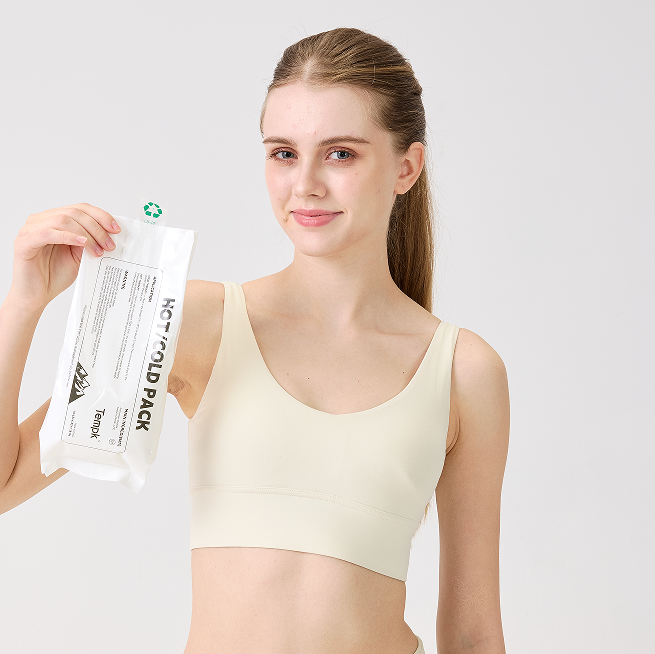
A Better Buying Guide to Cold Gel Accumulators For Canadian Cold-Chain Distribution
cold gel accumulator Canada distributor is best approached as a system decision, not a commodity purchase. In cold chain packaging, a cold gel accumulator is a reusable thermal mass element that stores cold energy and releases it gradually inside an insulated shipper. Buyers in Canada usually search for a distributor when they need stable supply, consistent conditioning guidance, and packaging that can handle both long distances and hard seasonal swings.
The most reliable buyers start with the route, product, and risk profile, then choose the refrigerant format that fits those conditions. An accumulator is still only one part of the system. For pharmaceutical or laboratory routes, written procedures, temperature monitoring, and pack-out control remain essential. That approach usually leads to better temperature control, cleaner handling, and fewer surprises when volume scales.
What the product is—and what it is not
Cold gel accumulators for canadian cold-chain distribution are best thought of as controlled cold sources inside a passive shipper. They are not active refrigeration, they are not universal compliance certificates, and they do not compensate for a poor carton layout. Their value lies in giving you a predictable thermal buffer that can be conditioned, counted, placed, and evaluated as part of a wider packaging system.
That distinction matters because buyers often over-focus on the refrigerant and under-focus on the route. Temperature control is created by the interaction between the cold source, the insulation, the payload, and the handling conditions. Once you view the product that way, supplier questions become clearer and format trade-offs become easier to judge.
How to match the cold source to the route
Start with the payload requirement and the real lane duration, including packing time, carrier dwell, last-mile exposure, and receiving delay. Then look at the insulated system, not just the refrigerant. A thinner pack in a well-fitted insulated carton can outperform a heavier pack in a poor layout. The objective is to hold the right band for long enough with the least unnecessary complexity.
Next, decide how much standardization the operation needs. If the same carton runs repeatedly with a stable product mix, rigid formats become easier to justify because they simplify count and placement. If box sizes or product loads change often, flexible inserts or linked packs may give better overall packaging efficiency. Finally, account for seasonality. Summer heat and winter cold can point to different conditioning states or even different approved pack-outs.
Materials, construction, and thermal behavior
Public product pages in the cold-chain market show that not all gel packs behave the same way. Refrigerated packs are commonly offered with formulations designed around a 0°C melt point, while frozen-distribution products may use suppressed-temperature formulas around -23°C or other lower set points. Some no-sweat formats add a woven or absorbent outer layer to control condensation. Rigid bricks may use a durable plastic shell around a gel or PCM core. Those differences affect freeze time, surface hardness, puncture resistance, moisture behavior, and the rate of heat transfer into the payload.
Geometry matters just as much as chemistry. Flat inserts maximize wall coverage, linked sheets wrap well around irregular contents, and rigid bricks deliver concentrated thermal mass with easier counting on the packing line. None of those formats is universally better. The right choice depends on available box space, the product layout, whether the route is chilled or frozen, and whether your operators need speed, flexibility, or strict pack-count discipline.
Conditioning is another major variable. A pack can be technically correct on paper and still fail in practice if it is under-frozen, over-frozen for the application, or staged too long at ambient before boxing. In many failed pack-outs, the problem is not the gel formula itself but inconsistent freezer conditions, unclear work instructions, or a mismatch between the pack state and the product requirement.
Quality and compliance boundaries
Mixed food, pharmaceutical, and laboratory programs need a documented answer to one basic question: what temperature range must the product actually stay within during transport? Canadian GMP guidance for drug products, for example, stresses written transportation procedures and maintenance of the approved range during transit. That philosophy is useful even outside regulated drug lanes.
A good cold source therefore supports a procedure, not guesswork. If the product is food, you will care about chilled or frozen integrity. If it is a drug or laboratory item, you may also care about written handling instructions, route qualification, and monitoring. In both cases, the pack must be evaluated as part of the system rather than treated as a magic component.
Why total cost of use is a better metric than piece price
A wholesaler quote usually makes the unit pack price visible and leaves the rest hidden. But operators still pay for freezer capacity, line labor, product-space displacement, extra corrugated volume, damaged labels, returns, and customer-service issues caused by poor presentation or temperature drift. That is why a slightly more expensive cold pack can still lower overall cost if it fits the carton better or reduces handling problems.
For the same reason, buyers should compare pack families with the insulated system they intend to use. The best-performing or most sustainable cold source on paper may not be the most economical once carton size, freight cost, and receiving conditions are added to the equation. Good distributors help teams see that broader picture.
Which format usually makes the most sense?
Buyers usually get farther by comparing formats in operational terms instead of asking which refrigerant is 'best' in the abstract. The right choice depends on how the box is packed, how sensitive the product is to direct cold contact, and how standardized the route and carton design really are.
| Format | Best when | Main strength | Main caution |
|---|---|---|---|
| Soft gel accumulator | General chilled parcels | Flexible placement and broad availability | May be harder to standardize in reusable systems |
| Rigid accumulator brick | Repeatable totes and cartons | Stable placement and strong reuse potential | Can take up more space and over-chill contact areas |
| Conditioned room-temperature gel as a heat sink | Winter freeze-protection scenarios | Can help buffer against accidental freezing | Only suitable when the objective is freeze protection, not aggressive cooling |
A useful rule is simple: if the pack-out is highly standardized and the product can tolerate a more rigid layout, bricks and blocks become more attractive. If the product mix changes often or the carton has many irregular gaps, flatter or more flexible formats usually give you better packaging efficiency.
What the local distribution question really means
Canadian lanes can combine long domestic distances with both summer heat and winter freeze risk. That makes conditioning method, insulation pairing, and distributor support especially important.
In practice, the local-distributor issue is often about service reliability: warehouse availability, technical response time, replacement speed, documentation quality, and whether the supplier understands the lanes you actually run. Those factors rarely appear in a basic quotation, but they strongly influence temperature control once the program is live.
A practical supplier checklist
Because the query behind cold gel accumulator Canada distributor clearly carries bulk-buying intent, supplier selection should go beyond basic price and case quantity. A practical shortlist usually comes down to the questions below.
1. Warehouse coverage inside Canada and the practical replenishment time to the regions you serve.
2. Conditioning guidance for both summer cooling and winter freeze protection, because the same product may not be packed the same way in January and July.
3. Durability across repeated freeze-thaw cycles if the accumulator is intended for reuse.
4. Dimension and weight consistency, especially in reusable totes or validated pharmaceutical pack-outs.
5. Documentation support for regulated lanes, including clear preconditioning and handling instructions.
6. Labeling options if you need bilingual or route-specific identifiers in the operation.
7. Return logistics, cleaning expectations, and damage-replacement policy for closed-loop programs.
8. Technical support that considers the full pack-out and route rather than treating the accumulator as a generic commodity.
Notice how many of those questions are really about consistency rather than headline performance. At wholesale scale, stable dimensions, repeatable fill, clear conditioning instructions, and responsive technical support often matter more than impressive but isolated cold-retention claims.
Failure points buyers should not ignore
The most common weak points are silent and procedural: inconsistent freezer temperature, under-conditioned packs, changed film or fill without notice, poor product-to-pack separation, and pack-outs that were never revised for seasonal extremes. Those issues are often misdiagnosed as a general cold-pack failure when the real problem is process control.
Another failure point is documentation mismatch. Procurement may approve a pack based on weight and rough dimensions, while operations really need detailed conditioning instructions, tolerance control, receiving checks, and clarity on where the pack should sit in the carton. A supplier that cannot support those details is harder to scale, even if the sample looked acceptable.
A practical way to review the pack-out before scaling
Imagine a normal shipment in Canadian cold-chain distribution: the product is packed at its intended starting temperature, the refrigerant is conditioned according to instructions, the insulated components are assembled on the line, and the box then sits through real carrier handoffs before final receipt. That simple scenario is more useful than an abstract cold-retention claim because it reveals whether the pack fits the carton cleanly, whether operators can place it consistently, and whether the payload is protected where it is most vulnerable.
Before full rollout, buyers should test more than one realistic condition. Look at a warm-day lane, a routine lane, and any route with an unusual handoff or receiving delay. A wholesaler that supports this kind of practical review usually adds far more value than one that only quotes the next lower case price.
FAQ
What does 'cold gel accumulator' mean in cold chain packaging?
It usually refers to a reusable gel-based thermal mass that stores cold energy and releases it gradually inside an insulated packaging system.
How do Canadian shippers prevent freeze damage in winter?
In some cases they use conditioned gel elements as thermal buffers or heat sinks, together with the right insulation and pack separation, rather than simply adding the coldest possible pack.
Is a Canada-based distributor worth it?
Often yes when service level, replenishment speed, and seasonal technical support are important to your operation.
Final takeaway
For most buyers, the winning choice is not the coldest pack or the thickest brick. It is the refrigerant format that gives the right temperature behavior, the cleanest handling, and the most dependable supply for the lanes you actually run. That is what turns a cold pack purchase into a stable operating standard.
About Tempk
At Tempk, we have focused on temperature-control products since 2011. Our range includes gel ice packs, insulated bags, insulation boxes, and other temperature-controlled packaging for food, pharmaceutical, and other sensitive shipments. We also support custom packaging solutions and publish quality-oriented information around insulation performance, phase-change behavior, and product testing. For teams evaluating temperature-controlled packaging, gel packs, and insulated shipper components, we can help connect the cold source choice with the shipper design, route profile, and handling model.
Next step
If you are reviewing a current lane or planning a new one, ask for guidance based on the required temperature band, transit time, and pack format. For bulk or custom projects, it helps to compare the refrigerant and the insulated shipper together.
Therapeutic Gel Pack Dairy Wholesale: A Practical Buying Guide for Reliable Cold-Chain Performance
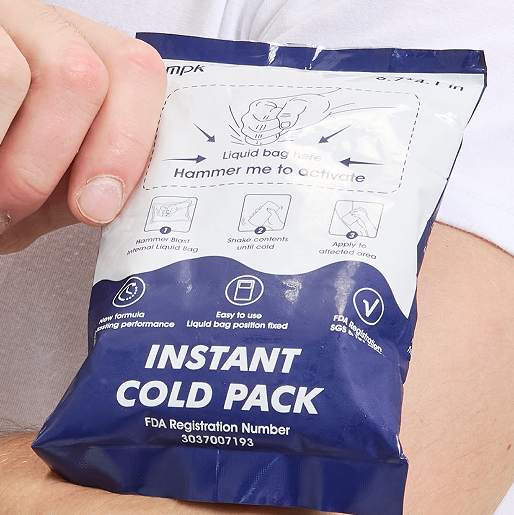
A Better Buying Guide to Therapeutic-Style Gel Packs and Dairy Cold-Chain Refrigerants
therapeutic gel pack dairy wholesale is best approached as a system decision, not a commodity purchase. When buyers ask about a therapeutic gel pack for dairy wholesale, the first step is to confirm whether they truly need a therapy-style reusable pad or a shipping-grade cold-chain refrigerant. The products can look similar, but dairy distribution usually requires better pack geometry, cleaner condensation behavior, more predictable conditioning, and food-contact review.
The most reliable buyers start with the route, product, and risk profile, then choose the refrigerant format that fits those conditions. A therapeutic pack may be adequate in some short, controlled applications around sealed products, but it is not automatically the best choice for wholesale dairy shipping. That approach usually leads to better temperature control, cleaner handling, and fewer surprises when volume scales.
What the product is—and what it is not
Therapeutic-style gel packs and dairy cold-chain refrigerants are best thought of as controlled cold sources inside a passive shipper. They are not active refrigeration, they are not universal compliance certificates, and they do not compensate for a poor carton layout. Their value lies in giving you a predictable thermal buffer that can be conditioned, counted, placed, and evaluated as part of a wider packaging system.
That distinction matters because buyers often over-focus on the refrigerant and under-focus on the route. Temperature control is created by the interaction between the cold source, the insulation, the payload, and the handling conditions. Once you view the product that way, supplier questions become clearer and format trade-offs become easier to judge.
How to match the cold source to the route
Start with the payload requirement and the real lane duration, including packing time, carrier dwell, last-mile exposure, and receiving delay. Then look at the insulated system, not just the refrigerant. A thinner pack in a well-fitted insulated carton can outperform a heavier pack in a poor layout. The objective is to hold the right band for long enough with the least unnecessary complexity.
Next, decide how much standardization the operation needs. If the same carton runs repeatedly with a stable product mix, rigid formats become easier to justify because they simplify count and placement. If box sizes or product loads change often, flexible inserts or linked packs may give better overall packaging efficiency. Finally, account for seasonality. Summer heat and winter cold can point to different conditioning states or even different approved pack-outs.
Materials, construction, and thermal behavior
Public product pages in the cold-chain market show that not all gel packs behave the same way. Refrigerated packs are commonly offered with formulations designed around a 0°C melt point, while frozen-distribution products may use suppressed-temperature formulas around -23°C or other lower set points. Some no-sweat formats add a woven or absorbent outer layer to control condensation. Rigid bricks may use a durable plastic shell around a gel or PCM core. Those differences affect freeze time, surface hardness, puncture resistance, moisture behavior, and the rate of heat transfer into the payload.
Geometry matters just as much as chemistry. Flat inserts maximize wall coverage, linked sheets wrap well around irregular contents, and rigid bricks deliver concentrated thermal mass with easier counting on the packing line. None of those formats is universally better. The right choice depends on available box space, the product layout, whether the route is chilled or frozen, and whether your operators need speed, flexibility, or strict pack-count discipline.
Conditioning is another major variable. A pack can be technically correct on paper and still fail in practice if it is under-frozen, over-frozen for the application, or staged too long at ambient before boxing. In many failed pack-outs, the problem is not the gel formula itself but inconsistent freezer conditions, unclear work instructions, or a mismatch between the pack state and the product requirement.
Quality and compliance boundaries
For food and dairy programs, the cold source has to support the actual safety objective of the shipment. Public guidance for direct-to-consumer food delivery emphasizes insulated packaging paired with frozen gel packs or other suitable coolants, and refrigerated foods generally need to stay in a safe chilled condition rather than drift into the temperature danger zone. That means buyers should evaluate the whole pack-out, not just the refrigerant case.
Material review matters as well. When a pack, liner, or adjacent surface may contact food or a food-contact layer, buyers should request the relevant food-contact information for the destination market. In the United States, food-contact substances are regulated by FDA, and in the EU, packaging that contacts food must meet safety rules intended to prevent harmful migration or changes to the food. Even when the cold pack is not in direct contact with food, those documentation habits usually signal a more disciplined supplier.
Why total cost of use is a better metric than piece price
A wholesaler quote usually makes the unit pack price visible and leaves the rest hidden. But operators still pay for freezer capacity, line labor, product-space displacement, extra corrugated volume, damaged labels, returns, and customer-service issues caused by poor presentation or temperature drift. That is why a slightly more expensive cold pack can still lower overall cost if it fits the carton better or reduces handling problems.
For the same reason, buyers should compare pack families with the insulated system they intend to use. The best-performing or most sustainable cold source on paper may not be the most economical once carton size, freight cost, and receiving conditions are added to the equation. Good distributors help teams see that broader picture.
Which format usually makes the most sense?
Buyers usually get farther by comparing formats in operational terms instead of asking which refrigerant is 'best' in the abstract. The right choice depends on how the box is packed, how sensitive the product is to direct cold contact, and how standardized the route and carton design really are.
| Format | Best when | Main strength | Main caution |
|---|---|---|---|
| Therapy-style soft pack | Small reusable applications and hand-packed orders | Flexible and familiar format | May not be optimized for line efficiency, condensation, or food-contact documentation |
| Food-shipping gel pack | Parcel dairy programs and mixed chilled boxes | Designed for pack-out, transport, and repeat conditioning | May be less comfortable to reuse in direct-contact manual handling applications |
| Rigid dairy brick | Repeatable tote or carton layouts | Clean stacking, easy counting, and stable placement | Less conforming around irregular products and can over-chill if not separated |
A useful rule is simple: if the pack-out is highly standardized and the product can tolerate a more rigid layout, bricks and blocks become more attractive. If the product mix changes often or the carton has many irregular gaps, flatter or more flexible formats usually give you better packaging efficiency.
A practical supplier checklist
Because the query behind therapeutic gel pack dairy wholesale clearly carries bulk-buying intent, supplier selection should go beyond basic price and case quantity. A practical shortlist usually comes down to the questions below.
1. Whether the product is intended for body therapy, cold-chain shipping, or both. Similar appearance does not mean identical performance or regulatory fit.
2. Food-contact suitability and documentation where relevant, especially if the pack can touch primary or secondary dairy packaging surfaces.
3. Target temperature behavior. Dairy usually needs controlled refrigeration, not accidental freezing of cream, yogurt, or soft cheese.
4. Outer film or shell hygiene. Smooth, wipe-clean surfaces may work better in returnable systems, while moisture-absorbing exteriors may help in parcel programs.
5. Dimensional repeatability. Wholesale dairy operations often benefit from packs that fit totes and carton lanes exactly the same way every time.
6. Condensation and leak performance after repeated freeze-thaw cycles, not just on day one sample tests.
7. Case quantity and return economics. A reusable pack only saves money if it survives the route and comes back in workable condition.
8. Production consistency and change control. A silent material or fill change can upset an otherwise stable dairy pack-out.
Notice how many of those questions are really about consistency rather than headline performance. At wholesale scale, stable dimensions, repeatable fill, clear conditioning instructions, and responsive technical support often matter more than impressive but isolated cold-retention claims.
Failure points buyers should not ignore
The most common weak points are silent and procedural: inconsistent freezer temperature, under-conditioned packs, changed film or fill without notice, poor product-to-pack separation, and pack-outs that were never revised for seasonal extremes. Those issues are often misdiagnosed as a general cold-pack failure when the real problem is process control.
Another failure point is documentation mismatch. Procurement may approve a pack based on weight and rough dimensions, while operations really need detailed conditioning instructions, tolerance control, receiving checks, and clarity on where the pack should sit in the carton. A supplier that cannot support those details is harder to scale, even if the sample looked acceptable.
A practical way to review the pack-out before scaling
Imagine a normal shipment in dairy distribution: the product is packed at its intended starting temperature, the refrigerant is conditioned according to instructions, the insulated components are assembled on the line, and the box then sits through real carrier handoffs before final receipt. That simple scenario is more useful than an abstract cold-retention claim because it reveals whether the pack fits the carton cleanly, whether operators can place it consistently, and whether the payload is protected where it is most vulnerable.
Before full rollout, buyers should test more than one realistic condition. Look at a warm-day lane, a routine lane, and any route with an unusual handoff or receiving delay. A wholesaler that supports this kind of practical review usually adds far more value than one that only quotes the next lower case price.
FAQ
Can a therapeutic gel pack be used for dairy shipping?
Sometimes, but only after you confirm the material fit, food-contact considerations where relevant, conditioning behavior, and route performance. Many dairy operations prefer packs designed specifically for shipping.
Should dairy buyers choose soft gel packs or rigid bricks?
Soft packs conform better to mixed loads, while rigid bricks are easier to count and place. The better choice depends on route stability, carton design, and product sensitivity.
Why is condensation such a big issue in dairy shipments?
Because wet cartons, smeared labels, and softened paper components can create handling problems even when the product temperature is still acceptable.
Final takeaway
For most buyers, the winning choice is not the coldest pack or the thickest brick. It is the refrigerant format that gives the right temperature behavior, the cleanest handling, and the most dependable supply for the lanes you actually run. That is what turns a cold pack purchase into a stable operating standard.
About Tempk
At Tempk, we have focused on temperature-control products since 2011. Our range includes gel ice packs, insulated bags, insulation boxes, and other temperature-controlled packaging for food, pharmaceutical, and other sensitive shipments. We also support custom packaging solutions and publish quality-oriented information around insulation performance, phase-change behavior, and product testing. For teams evaluating gel ice packs, insulated bags, and food cold-chain packaging, we can help connect the cold source choice with the shipper design, route profile, and handling model.
Next step
If you are reviewing a current lane or planning a new one, ask for guidance based on the required temperature band, transit time, and pack format. For bulk or custom projects, it helps to compare the refrigerant and the insulated shipper together.