


How to Evaluate a Gel Ice Brick Personal Care Wholesale for Real-World Use
How to Evaluate a Gel Ice Brick Personal Care Wholesale for Real-World Use

How to Evaluate a Gel Ice Brick Personal Care Wholesale for Real-World Use
The best sourcing decision for gel ice brick personal care wholesale begins with a boundary: the gel ice brick is one component of a thermal or therapeutic system. It cannot establish suitability by itself. A defensible purchase connects the payload or intended use, the conditioning method, the surrounding packaging, the route, operator behavior, quality evidence, and the supplier's ability to hold the approved specification.
The failure worth preventing is often not a high unit price. Temperature limits should come from finished-product stability and packaging compatibility work, not from the freezing point of the brick. It is choosing a large brick for perceived cooling power while overlooking usable volume, cold bridges, package scuffing, and the stability limits of the cosmetic formula. This guide shows how to translate those constraints into sample specifications, supplier questions, packout trials, receiving checks, and a controlled path from pilot order to routine supply.
A Decision Rule That Prevents Most Errors
A suitable gel ice brick for rigid packouts for creams, masks, kits, and salon distribution should fit the physical packout, enter the process in a defined condition, remain intact during expected handling, and be backed by specifications that production can reproduce. A rigid ice brick may be operationally stable yet thermally wrong for a product that is sensitive to freezing or local cold contact. It should also be accompanied by enough information for the cross-functional team to judge cleaning, reuse, disposal, traceability, and change risk.
First define four questions. How long and through which exposures must the system operate? What condition must the payload or user experience avoid? Where can the coolant be placed without causing contact damage or a cold spot? What evidence will allow quality and operations teams to approve the same product that procurement is pricing? If one of these questions has no owner, a lower quotation only moves cost into testing, rework, claims, or emergency substitution.
Cosmetic Stability and Presentation Can Pull in Opposite Directions
Temperature limits should come from finished-product stability and packaging compatibility work, not from the freezing point of the brick.
A rigid ice brick may be operationally stable yet thermally wrong for a product that is sensitive to freezing or local cold contact.
For this application, the acceptance decision should be written before samples arrive. Then test normal and credible worst-case handling. Define what would make the product unusable, what evidence is required, and who can approve a deviation. This prevents the sample review from becoming a subjective discussion about whether the pack looks strong or feels cold.
The same discipline improves supplier communication. A shortlisted supplier that asks careful questions is often more useful than one that immediately promises a fixed duration without seeing the payload or container. Instead of asking for the best pack, send a concise application brief and ask the supplier to identify assumptions, limitations, and information gaps.
Start With the Payload and Failure Boundary
For temperature-sensitive personal-care products, the requirement should be written as a system brief. It should also state whether the objective is product safety, quality preservation, a preferred delivery experience, therapeutic comfort, or a documented regulatory condition. It should describe the starting condition of the payload, acceptable limits, payload mass and arrangement, usable internal space, insulation, route duration, expected delays, ambient exposure, and receiving process. These objectives are related, but they are not interchangeable.
A cold pack absorbs heat because energy moves from warmer areas toward colder areas. That is why phase behavior matters. While a formulation changes phase, it can absorb a meaningful amount of energy with a smaller temperature change than would occur through sensible heating alone. Yet the phase point is only one property. Total mass, latent and sensible heat, starting temperature, contact area, insulation heat leak, and air gaps all affect the result. A shortlisted supplier should not reduce this relationship to an unexplained claim about hours of cooling.
Geometry turns material properties into packout behavior. Conformability may improve contact but can also create pressure and uneven thickness. A flexible pouch can conform around temperature-sensitive personal-care products, while a rigid brick can create repeatable spacing and easier inventory control. Rigidity may protect the coolant but consume usable space or create a concentrated cold bridge. Rigid bricks should be restrained and separated from breakable jars, pumps, and decorated cartons; caps and closures need impact protection.
For the final selection, the controlled comparison is therefore not pouch versus brick in isolation. That comparison reveals whether an apparent material advantage survives real geometry and real work instructions. It is candidate packout A versus candidate packout B under the same payload, insulation, preconditioning, loading method, ambient profile, and acceptance criteria.
Build the Packout Around Controlled Variables
The coolant, insulated container, payload, void fill, separators, and loading sequence form one thermal system. A pack count borrowed from another carton is weak evidence because insulation thickness, external surface area, headspace, payload thermal mass, and starting temperature can be different. A rigid ice brick may be operationally stable yet thermally wrong for a product that is sensitive to freezing or local cold contact. Even orientation matters when cold air settles, warm air enters at the lid, or packs move during transport.
Conditioning deserves its own work instruction. A pack that is nominally the same SKU can behave differently if one unit is fully conditioned, another has a warm core, and a third sat on the bench during a shift change. It should define freezer or refrigerator state, arrangement during conditioning, minimum recovery expectations after doors are opened, transfer time to the packing station, and what operators do with partially conditioned or thawing units.
The approval exercise begins with a documented configuration and a representative payload. Air temperature beside a coolant is not necessarily the same as product temperature. Sensors or indicators, when used, should be selected and placed to answer the acceptance question. The test should capture likely warm and cold locations, and it should represent credible ambient exposures and handling events rather than an easy constant room condition.
Results should be recorded with the exact pack lot, conditioning state, payload, insulation, loading diagram, sensor locations, ambient profile, and any deviations. Adding coolant blindly can reduce usable volume, raise freight mass, or create overcooling while leaving the original air gap or lid leak unresolved. If performance fails, change one controlled variable at a time where practical.
Supplier Questions That Change the Decision
| Decision area | What good looks like | Buyer action |
|---|---|---|
| Thermal fit | Match formulation, mass, geometry, and conditioning to the payload and system. | Ask for data, then test the full packout under a representative profile. |
| Physical fit | Confirm usable space, frozen dimensions, contact points, and movement. | Build samples with the actual container, payload, separators, and closure. |
| Integrity | Control films or shells, seams, caps, corners, and filled mass. | Review release checks, tolerances, complaint handling, and retained samples. |
| Operations | Make conditioning, loading, inspection, and retirement repeatable. | Run a packing-line trial with normal operators and realistic time pressure. |
| Documentation | Link each supplied lot to the approved specification. | Confirm lot coding, records, safety information, and change notification. |
| End of life | Distinguish reuse, contents disposal, and outer-package disposal. | Verify claims against formulation evidence and local rules. |
The decision matrix keeps the discussion centered on evidence rather than adjectives. It is the one that can define the offered SKU, explain its limits, reproduce it, and cooperate with the cross-functional team's qualification and receiving process. When comparing a gel ice brick for rigid packouts for creams, masks, kits, and salon distribution, the highest-scoring supplier is not necessarily the one offering the most options.
Use the table twice: first to screen suppliers, then to compare the approved sample with the production proposal. Those differences should be closed before the purchase order becomes the only specification in the relationship. A shortlisted supplier may provide an excellent prototype but quote a production construction, print method, case pack, or site that differs from the evaluated unit.
A Controlled Rollout Plan
Begin with a small, documented sample set. Include normal operators during the trial. Photograph and measure units, record identification, inspect seals and surfaces, condition them using the proposed method, and build the real packout. Packaging that succeeds only when assembled by the engineer who designed it is not ready for routine distribution.
After thermal and handling review, define a golden sample or approved reference and convert the findings into purchase specifications and work instructions. Sampling plans should reflect risk and the cross-functional team's quality system. Receiving inspection can then focus on critical characteristics: identity, case count, visible damage, dimensions, filled mass where appropriate, print or label legibility, lot coding, and selected seal or closure checks.
Operational capacity is part of product fit. Your cross-functional team should model freezer or refrigerator space, conditioning cycle, staging time, labor, backup stock, seasonal peaks, and what happens after a failed delivery or product return. Rigid bricks should be restrained and separated from breakable jars, pumps, and decorated cartons; caps and closures need impact protection. These costs can exceed small differences in unit price.
Once production begins, monitor complaints by failure mode rather than as a single defect rate. That distinction shows whether the corrective action belongs with the coolant supplier, packout design, warehouse process, carrier, or receiving site. Separate leaks, punctures, seal splits, dimensional problems, print damage, inadequate conditioning, packing errors, thermal excursions, and receiving damage.
Approve the System, Then Control Change
Personal-care regulatory obligations and environmental claims vary by market; the pack should support, not complicate, the brand's documented handling and safety approach. Statements such as suitable for all medical shipments, keeps products cold for a fixed number of hours, or environmentally safe everywhere are too broad unless the underlying evidence truly covers the cross-functional team's configuration and market. The most defensible claim language is specific about what has been tested, under which conditions, and by whom.
A shortlisted supplier file may include a controlled specification, drawing, safety information, material declaration, test summaries, quality certificates relevant to the manufacturing system, lot or batch record format, complaint process, and change-control commitment. A general management-system certificate, for example, does not prove thermal performance, and a migration or material report does not qualify a shipping lane. These documents answer different questions.
The final disposal or reuse pathway language needs the same discipline. Approval teams should request material identification and avoid unsupported recyclability claims. The rigid shell and internal gel may require separate disposal decisions. If reuse is proposed, calculate whether units are actually returned, cleaned, inspected, reconditioned, and placed back into service. A durable pack that is never returned may consume more material without delivering the expected reuse benefit. Conversely, a single-use format may reduce reverse transport but create a larger disposal burden.
Post-approval change control protects the work invested in approval. A substitute that looks identical can have different flexibility, freezing behavior, thermal mass, or failure mode. Your cross-functional team should identify changes that require notice or re-evaluation, such as gel formulation, polymer grade, film layer, seal pattern, fill mass, dimensions, manufacturing site, printing method, or case packing.
What Changes When the Program Scales in Personal-Care Markets
Scale adds variability before it adds volume. A national or cross-border program should define which elements are fixed and which may be adapted locally. More sites mean different freezers, shift patterns, storage density, carrier cutoffs, return rates, cleaning methods, and interpretations of the same instruction. The coolant SKU, conditioning state, pack count, loading diagram, and retirement criteria are usually poor candidates for informal substitution.
Distribution geography also changes commercial risk. Approval teams should map the path from manufacturing lot to packing station, including who owns inventory during delays and how damaged cases are quarantined. Import lead time, customs clearance, local inventory, language needs, case labeling, replacement stock, and complaint response can determine whether a technically good product is operationally usable.
A local distributor can add value by holding stock, translating instructions, consolidating demand, and supporting trials. If the distributor repacks, relabels, or stores the product, responsibilities for traceability, storage conditions, damage inspection, and change communication should be explicit. That value should be visible in service definitions and records.
Questions to Put in the Supplier Review
- Are external dimensions and filled mass controlled tightly enough for automated packing?
- How are caps or welds leak-tested?
- What barriers are recommended around glass or decorated primary packs?
- Can color, molding, labeling, and carton packing remain consistent across wholesale lots?
The answers should be specific to the quoted construction. Record unresolved assumptions in the trial plan instead of allowing them to become silent acceptance criteria. If a response refers only to a product family, ask whether every size uses the same formulation, film, seal method, conditioning instruction, and release control.
Price comparisons should use the same delivery terms, case quantity, labeling scope, inspection level, documentation package, and replacement policy. For international supply, also distinguish manufacturing lead time from total replenishment time and define how urgent replacements will be handled. Otherwise, the lowest line-item price may exclude work that another supplier has included.
Frequently Asked Questions
Can a gel ice brick guarantee a fixed number of cooling hours?
Not by itself. Treat a duration claim as meaningful only when the test configuration is comparable with your own. Duration depends on the exact formulation and mass, starting condition, insulation, payload, pack count, placement, ambient profile, and opening or handling events. A representative full-packout evaluation is stronger than a standalone pack claim.
Should the cold pack touch the product directly?
That depends on product sensitivity and package design. Temperature limits should come from finished-product stability and packaging compatibility work, not from the freezing point of the brick. Direct contact can improve local heat transfer, but it can also create freezing, pressure, condensation, abrasion, or presentation damage. Use separators or controlled spacing when needed and include placement in the approved loading diagram.
What should a buyer inspect when bulk units arrive?
Confirm identity, lot code, case count, obvious transit damage, leakage, seal or closure condition, dimensions, filled mass where appropriate, and print or label legibility. Quarantine unexplained changes rather than sending them directly to the conditioning area. Compare selected units with the approved reference.
Does reusable automatically mean more sustainable?
No. If return rates are low or cleaning and transport are intensive, the expected benefit may not appear. Reuse can reduce material demand when packs are returned, cleaned, inspected, reconditioned, and used enough times to justify reverse logistics. Compare realistic program scenarios and document the assumptions.
Final Procurement Decision
The final choice of gel ice brick should survive four reviews: thermal or use-case fit, physical and operational fit, quality evidence, and commercial continuity. A disciplined trial and approval package turn a commodity purchase into a controllable system component. If the proposed unit passes only the quotation review, the sourcing process is incomplete.
About Tempk
Tempk, a brand of Shanghai Tempk Industrial Co., Ltd., supplies gel ice packs and related cold-chain packaging for food, healthcare, sample, retail, and distribution applications. Final suitability should be confirmed against the cross-functional team's payload, route, conditioning process, handling conditions, and required evidence. For rigid packouts for creams, masks, kits, and salon distribution, we can discuss pack dimensions, filled weight, film or shell format, printing, carton packing, and how a candidate coolant may fit an insulated packout.
Next Step
Before requesting production pricing, provide the product requirement, usable packout space, ambient route, operator constraints, and approval evidence you need. Tempk can use that brief to identify gel ice brick samples for a cross-functional review.
How to Evaluate a Gel Freezer Pack Personal Care Wholesaler for Real-World Use

How to Evaluate a Gel Freezer Pack Personal Care Wholesaler for Real-World Use
The best sourcing decision for gel freezer pack personal care wholesaler begins with a boundary: the gel freezer pack is one component of a thermal or therapeutic system. It cannot establish suitability by itself. A defensible purchase connects the payload or intended use, the conditioning method, the surrounding packaging, the route, operator behavior, quality evidence, and the supplier's ability to hold the approved specification.
The failure worth preventing is often not a high unit price. The finished product's stability and packaging studies should determine whether refrigeration, cool support, or only heat buffering is appropriate. It is equating a colder starting pack with better protection even when the product may be sensitive to phase separation, crystallization, pump malfunction, or label damage. This guide shows how to translate those constraints into sample specifications, supplier questions, packout trials, receiving checks, and a controlled path from pilot order to routine supply.
A Decision Rule That Prevents Most Errors
A suitable gel freezer pack for warm-weather shipping, influencer kits, salon supply, and retail replenishment should fit the physical packout, enter the process in a defined condition, remain intact during expected handling, and be backed by specifications that production can reproduce. Freezer conditioning may create colder contact than the cosmetic can tolerate, so barriers and alternative conditioning states may need evaluation. It should also be accompanied by enough information for the cross-functional team to judge cleaning, reuse, disposal, traceability, and change risk.
First define four questions. How long and through which exposures must the system operate? What condition must the payload or user experience avoid? Where can the coolant be placed without causing contact damage or a cold spot? What evidence will allow quality and operations teams to approve the same product that procurement is pricing? If one of these questions has no owner, a lower quotation only moves cost into testing, rework, claims, or emergency substitution.
Cosmetic Stability and Presentation Can Pull in Opposite Directions
The finished product's stability and packaging studies should determine whether refrigeration, cool support, or only heat buffering is appropriate.
Freezer conditioning may create colder contact than the cosmetic can tolerate, so barriers and alternative conditioning states may need evaluation.
For this application, the acceptance decision should be written before samples arrive. Then test normal and credible worst-case handling. Define what would make the product unusable, what evidence is required, and who can approve a deviation. This prevents the sample review from becoming a subjective discussion about whether the pack looks strong or feels cold.
The same discipline improves supplier communication. A shortlisted supplier that asks careful questions is often more useful than one that immediately promises a fixed duration without seeing the payload or container. Instead of asking for the best pack, send a concise application brief and ask the supplier to identify assumptions, limitations, and information gaps.
Start With the Payload and Failure Boundary
For personal-care products and beauty kits, the requirement should be written as a system brief. It should also state whether the objective is product safety, quality preservation, a preferred delivery experience, therapeutic comfort, or a documented regulatory condition. It should describe the starting condition of the payload, acceptable limits, payload mass and arrangement, usable internal space, insulation, route duration, expected delays, ambient exposure, and receiving process. These objectives are related, but they are not interchangeable.
A cold pack absorbs heat because energy moves from warmer areas toward colder areas. That is why phase behavior matters. While a formulation changes phase, it can absorb a meaningful amount of energy with a smaller temperature change than would occur through sensible heating alone. Yet the phase point is only one property. Total mass, latent and sensible heat, starting temperature, contact area, insulation heat leak, and air gaps all affect the result. A shortlisted supplier should not reduce this relationship to an unexplained claim about hours of cooling.
Geometry turns material properties into packout behavior. Conformability may improve contact but can also create pressure and uneven thickness. A flexible pouch can conform around personal-care products and beauty kits, while a rigid brick can create repeatable spacing and easier inventory control. Rigidity may protect the coolant but consume usable space or create a concentrated cold bridge. The pack should fit the void space and remain separated from vulnerable jars, droppers, pumps, and decorative surfaces.
For the final selection, the controlled comparison is therefore not pouch versus brick in isolation. That comparison reveals whether an apparent material advantage survives real geometry and real work instructions. It is candidate packout A versus candidate packout B under the same payload, insulation, preconditioning, loading method, ambient profile, and acceptance criteria.
Build the Packout Around Controlled Variables
The coolant, insulated container, payload, void fill, separators, and loading sequence form one thermal system. A pack count borrowed from another carton is weak evidence because insulation thickness, external surface area, headspace, payload thermal mass, and starting temperature can be different. Freezer conditioning may create colder contact than the cosmetic can tolerate, so barriers and alternative conditioning states may need evaluation. Even orientation matters when cold air settles, warm air enters at the lid, or packs move during transport.
Conditioning deserves its own work instruction. A pack that is nominally the same SKU can behave differently if one unit is fully conditioned, another has a warm core, and a third sat on the bench during a shift change. It should define freezer or refrigerator state, arrangement during conditioning, minimum recovery expectations after doors are opened, transfer time to the packing station, and what operators do with partially conditioned or thawing units.
The approval exercise begins with a documented configuration and a representative payload. Air temperature beside a coolant is not necessarily the same as product temperature. Sensors or indicators, when used, should be selected and placed to answer the acceptance question. The test should capture likely warm and cold locations, and it should represent credible ambient exposures and handling events rather than an easy constant room condition.
Results should be recorded with the exact pack lot, conditioning state, payload, insulation, loading diagram, sensor locations, ambient profile, and any deviations. Adding coolant blindly can reduce usable volume, raise freight mass, or create overcooling while leaving the original air gap or lid leak unresolved. If performance fails, change one controlled variable at a time where practical.
Supplier Questions That Change the Decision
| Decision area | What good looks like | Buyer action |
|---|---|---|
| Thermal fit | Match formulation, mass, geometry, and conditioning to the payload and system. | Ask for data, then test the full packout under a representative profile. |
| Physical fit | Confirm usable space, frozen dimensions, contact points, and movement. | Build samples with the actual container, payload, separators, and closure. |
| Integrity | Control films or shells, seams, caps, corners, and filled mass. | Review release checks, tolerances, complaint handling, and retained samples. |
| Operations | Make conditioning, loading, inspection, and retirement repeatable. | Run a packing-line trial with normal operators and realistic time pressure. |
| Documentation | Link each supplied lot to the approved specification. | Confirm lot coding, records, safety information, and change notification. |
| End of life | Distinguish reuse, contents disposal, and outer-package disposal. | Verify claims against formulation evidence and local rules. |
The decision matrix keeps the discussion centered on evidence rather than adjectives. It is the one that can define the offered SKU, explain its limits, reproduce it, and cooperate with the cross-functional team's qualification and receiving process. When comparing a gel freezer pack for warm-weather shipping, influencer kits, salon supply, and retail replenishment, the highest-scoring supplier is not necessarily the one offering the most options.
Use the table twice: first to screen suppliers, then to compare the approved sample with the production proposal. Those differences should be closed before the purchase order becomes the only specification in the relationship. A shortlisted supplier may provide an excellent prototype but quote a production construction, print method, case pack, or site that differs from the evaluated unit.
A Controlled Rollout Plan
Begin with a small, documented sample set. Include normal operators during the trial. Photograph and measure units, record identification, inspect seals and surfaces, condition them using the proposed method, and build the real packout. Packaging that succeeds only when assembled by the engineer who designed it is not ready for routine distribution.
After thermal and handling review, define a golden sample or approved reference and convert the findings into purchase specifications and work instructions. Sampling plans should reflect risk and the cross-functional team's quality system. Receiving inspection can then focus on critical characteristics: identity, case count, visible damage, dimensions, filled mass where appropriate, print or label legibility, lot coding, and selected seal or closure checks.
Operational capacity is part of product fit. Your cross-functional team should model freezer or refrigerator space, conditioning cycle, staging time, labor, backup stock, seasonal peaks, and what happens after a failed delivery or product return. The pack should fit the void space and remain separated from vulnerable jars, droppers, pumps, and decorative surfaces. These costs can exceed small differences in unit price.
Once production begins, monitor complaints by failure mode rather than as a single defect rate. That distinction shows whether the corrective action belongs with the coolant supplier, packout design, warehouse process, carrier, or receiving site. Separate leaks, punctures, seal splits, dimensional problems, print damage, inadequate conditioning, packing errors, thermal excursions, and receiving damage.
Approve the System, Then Control Change
Wholesalers should align product safety, label claims, storage instructions, and distribution controls; a gel freezer pack is only one part of that system. Statements such as suitable for all medical shipments, keeps products cold for a fixed number of hours, or environmentally safe everywhere are too broad unless the underlying evidence truly covers the cross-functional team's configuration and market. The most defensible claim language is specific about what has been tested, under which conditions, and by whom.
A shortlisted supplier file may include a controlled specification, drawing, safety information, material declaration, test summaries, quality certificates relevant to the manufacturing system, lot or batch record format, complaint process, and change-control commitment. A general management-system certificate, for example, does not prove thermal performance, and a migration or material report does not qualify a shipping lane. These documents answer different questions.
The final disposal or reuse pathway language needs the same discipline. Reusable claims should include a realistic return or household-use pathway. Consumer disposal instructions need formulation evidence and local relevance. If reuse is proposed, calculate whether units are actually returned, cleaned, inspected, reconditioned, and placed back into service. A durable pack that is never returned may consume more material without delivering the expected reuse benefit. Conversely, a single-use format may reduce reverse transport but create a larger disposal burden.
Post-approval change control protects the work invested in approval. A substitute that looks identical can have different flexibility, freezing behavior, thermal mass, or failure mode. Your cross-functional team should identify changes that require notice or re-evaluation, such as gel formulation, polymer grade, film layer, seal pattern, fill mass, dimensions, manufacturing site, printing method, or case packing.
What Changes When the Program Scales in Personal-Care Markets
Scale adds variability before it adds volume. A national or cross-border program should define which elements are fixed and which may be adapted locally. More sites mean different freezers, shift patterns, storage density, carrier cutoffs, return rates, cleaning methods, and interpretations of the same instruction. The coolant SKU, conditioning state, pack count, loading diagram, and retirement criteria are usually poor candidates for informal substitution.
Distribution geography also changes commercial risk. Approval teams should map the path from manufacturing lot to packing station, including who owns inventory during delays and how damaged cases are quarantined. Import lead time, customs clearance, local inventory, language needs, case labeling, replacement stock, and complaint response can determine whether a technically good product is operationally usable.
A local distributor can add value by holding stock, translating instructions, consolidating demand, and supporting trials. If the distributor repacks, relabels, or stores the product, responsibilities for traceability, storage conditions, damage inspection, and change communication should be explicit. That value should be visible in service definitions and records.
Questions to Put in the Supplier Review
- Can we test freezer-conditioned, refrigerated, and alternative pack states?
- Which film surface is least likely to scuff or transfer moisture to cartons?
- How are fill weight and seals controlled across large orders?
- Can instructions be customized without making unverified environmental or performance claims?
The answers should be specific to the quoted construction. Record unresolved assumptions in the trial plan instead of allowing them to become silent acceptance criteria. If a response refers only to a product family, ask whether every size uses the same formulation, film, seal method, conditioning instruction, and release control.
Price comparisons should use the same delivery terms, case quantity, labeling scope, inspection level, documentation package, and replacement policy. For international supply, also distinguish manufacturing lead time from total replenishment time and define how urgent replacements will be handled. Otherwise, the lowest line-item price may exclude work that another supplier has included.
Frequently Asked Questions
Can a gel freezer pack guarantee a fixed number of cooling hours?
Not by itself. Treat a duration claim as meaningful only when the test configuration is comparable with your own. Duration depends on the exact formulation and mass, starting condition, insulation, payload, pack count, placement, ambient profile, and opening or handling events. A representative full-packout evaluation is stronger than a standalone pack claim.
Should the cold pack touch the product directly?
That depends on product sensitivity and package design. The finished product's stability and packaging studies should determine whether refrigeration, cool support, or only heat buffering is appropriate. Direct contact can improve local heat transfer, but it can also create freezing, pressure, condensation, abrasion, or presentation damage. Use separators or controlled spacing when needed and include placement in the approved loading diagram.
What should a buyer inspect when bulk units arrive?
Confirm identity, lot code, case count, obvious transit damage, leakage, seal or closure condition, dimensions, filled mass where appropriate, and print or label legibility. Quarantine unexplained changes rather than sending them directly to the conditioning area. Compare selected units with the approved reference.
Does reusable automatically mean more sustainable?
No. If return rates are low or cleaning and transport are intensive, the expected benefit may not appear. Reuse can reduce material demand when packs are returned, cleaned, inspected, reconditioned, and used enough times to justify reverse logistics. Compare realistic program scenarios and document the assumptions.
Final Procurement Decision
The final choice of gel freezer pack should survive four reviews: thermal or use-case fit, physical and operational fit, quality evidence, and commercial continuity. A disciplined trial and approval package turn a commodity purchase into a controllable system component. If the proposed unit passes only the quotation review, the sourcing process is incomplete.
About Tempk
Tempk, a brand of Shanghai Tempk Industrial Co., Ltd., supplies gel ice packs and related cold-chain packaging for food, healthcare, sample, retail, and distribution applications. Final suitability should be confirmed against the cross-functional team's payload, route, conditioning process, handling conditions, and required evidence. For warm-weather shipping, influencer kits, salon supply, and retail replenishment, we can discuss pack dimensions, filled weight, film or shell format, printing, carton packing, and how a candidate coolant may fit an insulated packout.
Next Step
Before requesting production pricing, provide the product requirement, usable packout space, ambient route, operator constraints, and approval evidence you need. Tempk can use that brief to identify gel freezer pack samples for a cross-functional review.
How to Evaluate a Gel Cooling Battery Temperature Sensitive Supplier for Real-World Use

How to Evaluate a Gel Cooling Battery Temperature Sensitive Supplier for Real-World Use
The best sourcing decision for gel cooling battery temperature sensitive supplier begins with a boundary: the gel cooling battery is one component of a thermal or therapeutic system. It cannot establish suitability by itself. A defensible purchase connects the payload or intended use, the conditioning method, the surrounding packaging, the route, operator behavior, quality evidence, and the supplier's ability to hold the approved specification.
The failure worth preventing is often not a high unit price. The payload specification determines the allowable conditions and therefore the relevant phase range and packout design. It is treating cooling capacity as a label claim independent of starting temperature, phase behavior, payload mass, insulation, placement, and heat leak. This guide shows how to translate those constraints into sample specifications, supplier questions, packout trials, receiving checks, and a controlled path from pilot order to routine supply.
A Decision Rule That Prevents Most Errors
A suitable gel cooling battery for passive thermal packaging, reusable totes, and controlled parcel distribution should fit the physical packout, enter the process in a defined condition, remain intact during expected handling, and be backed by specifications that production can reproduce. The word battery describes stored thermal energy, not a guarantee of duration or a universal temperature range. It should also be accompanied by enough information for the cross-functional team to judge cleaning, reuse, disposal, traceability, and change risk.
First define four questions. How long and through which exposures must the system operate? What condition must the payload or user experience avoid? Where can the coolant be placed without causing contact damage or a cold spot? What evidence will allow quality and operations teams to approve the same product that procurement is pricing? If one of these questions has no owner, a lower quotation only moves cost into testing, rework, claims, or emergency substitution.
Cooling Capacity Cannot Be Read From Size Alone
The payload specification determines the allowable conditions and therefore the relevant phase range and packout design.
The word battery describes stored thermal energy, not a guarantee of duration or a universal temperature range.
For this application, the acceptance decision should be written before samples arrive. Then test normal and credible worst-case handling. Define what would make the product unusable, what evidence is required, and who can approve a deviation. This prevents the sample review from becoming a subjective discussion about whether the pack looks strong or feels cold.
The same discipline improves supplier communication. A shortlisted supplier that asks careful questions is often more useful than one that immediately promises a fixed duration without seeing the payload or container. Instead of asking for the best pack, send a concise application brief and ask the supplier to identify assumptions, limitations, and information gaps.
Start With the Payload and Failure Boundary
For temperature-sensitive products, the requirement should be written as a system brief. It should also state whether the objective is product safety, quality preservation, a preferred delivery experience, therapeutic comfort, or a documented regulatory condition. It should describe the starting condition of the payload, acceptable limits, payload mass and arrangement, usable internal space, insulation, route duration, expected delays, ambient exposure, and receiving process. These objectives are related, but they are not interchangeable.
A cold pack absorbs heat because energy moves from warmer areas toward colder areas. That is why phase behavior matters. While a formulation changes phase, it can absorb a meaningful amount of energy with a smaller temperature change than would occur through sensible heating alone. Yet the phase point is only one property. Total mass, latent and sensible heat, starting temperature, contact area, insulation heat leak, and air gaps all affect the result. A shortlisted supplier should not reduce this relationship to an unexplained claim about hours of cooling.
Geometry turns material properties into packout behavior. Conformability may improve contact but can also create pressure and uneven thickness. A flexible pouch can conform around temperature-sensitive products, while a rigid brick can create repeatable spacing and easier inventory control. Rigidity may protect the coolant but consume usable space or create a concentrated cold bridge. Rigid or semi-rigid batteries need dimensional clearance and restraint; flexible batteries need puncture protection and shape control.
For the final selection, the controlled comparison is therefore not pouch versus brick in isolation. That comparison reveals whether an apparent material advantage survives real geometry and real work instructions. It is candidate packout A versus candidate packout B under the same payload, insulation, preconditioning, loading method, ambient profile, and acceptance criteria.
Build the Packout Around Controlled Variables
The coolant, insulated container, payload, void fill, separators, and loading sequence form one thermal system. A pack count borrowed from another carton is weak evidence because insulation thickness, external surface area, headspace, payload thermal mass, and starting temperature can be different. The word battery describes stored thermal energy, not a guarantee of duration or a universal temperature range. Even orientation matters when cold air settles, warm air enters at the lid, or packs move during transport.
Conditioning deserves its own work instruction. A pack that is nominally the same SKU can behave differently if one unit is fully conditioned, another has a warm core, and a third sat on the bench during a shift change. It should define freezer or refrigerator state, arrangement during conditioning, minimum recovery expectations after doors are opened, transfer time to the packing station, and what operators do with partially conditioned or thawing units.
The approval exercise begins with a documented configuration and a representative payload. Air temperature beside a coolant is not necessarily the same as product temperature. Sensors or indicators, when used, should be selected and placed to answer the acceptance question. The test should capture likely warm and cold locations, and it should represent credible ambient exposures and handling events rather than an easy constant room condition.
Results should be recorded with the exact pack lot, conditioning state, payload, insulation, loading diagram, sensor locations, ambient profile, and any deviations. Adding coolant blindly can reduce usable volume, raise freight mass, or create overcooling while leaving the original air gap or lid leak unresolved. If performance fails, change one controlled variable at a time where practical.
Supplier Questions That Change the Decision
| Decision area | What good looks like | Buyer action |
|---|---|---|
| Thermal fit | Match formulation, mass, geometry, and conditioning to the payload and system. | Ask for data, then test the full packout under a representative profile. |
| Physical fit | Confirm usable space, frozen dimensions, contact points, and movement. | Build samples with the actual container, payload, separators, and closure. |
| Integrity | Control films or shells, seams, caps, corners, and filled mass. | Review release checks, tolerances, complaint handling, and retained samples. |
| Operations | Make conditioning, loading, inspection, and retirement repeatable. | Run a packing-line trial with normal operators and realistic time pressure. |
| Documentation | Link each supplied lot to the approved specification. | Confirm lot coding, records, safety information, and change notification. |
| End of life | Distinguish reuse, contents disposal, and outer-package disposal. | Verify claims against formulation evidence and local rules. |
The decision matrix keeps the discussion centered on evidence rather than adjectives. It is the one that can define the offered SKU, explain its limits, reproduce it, and cooperate with the cross-functional team's qualification and receiving process. When comparing a gel cooling battery for passive thermal packaging, reusable totes, and controlled parcel distribution, the highest-scoring supplier is not necessarily the one offering the most options.
Use the table twice: first to screen suppliers, then to compare the approved sample with the production proposal. Those differences should be closed before the purchase order becomes the only specification in the relationship. A shortlisted supplier may provide an excellent prototype but quote a production construction, print method, case pack, or site that differs from the evaluated unit.
A Controlled Rollout Plan
Begin with a small, documented sample set. Include normal operators during the trial. Photograph and measure units, record identification, inspect seals and surfaces, condition them using the proposed method, and build the real packout. Packaging that succeeds only when assembled by the engineer who designed it is not ready for routine distribution.
After thermal and handling review, define a golden sample or approved reference and convert the findings into purchase specifications and work instructions. Sampling plans should reflect risk and the cross-functional team's quality system. Receiving inspection can then focus on critical characteristics: identity, case count, visible damage, dimensions, filled mass where appropriate, print or label legibility, lot coding, and selected seal or closure checks.
Operational capacity is part of product fit. Your cross-functional team should model freezer or refrigerator space, conditioning cycle, staging time, labor, backup stock, seasonal peaks, and what happens after a failed delivery or product return. Rigid or semi-rigid batteries need dimensional clearance and restraint; flexible batteries need puncture protection and shape control. These costs can exceed small differences in unit price.
Once production begins, monitor complaints by failure mode rather than as a single defect rate. That distinction shows whether the corrective action belongs with the coolant supplier, packout design, warehouse process, carrier, or receiving site. Separate leaks, punctures, seal splits, dimensional problems, print damage, inadequate conditioning, packing errors, thermal excursions, and receiving damage.
Approve the System, Then Control Change
For pharmaceutical uses, a cooling battery should be evaluated as a component within a qualified shipping system with documented conditioning and loading procedures. Statements such as suitable for all medical shipments, keeps products cold for a fixed number of hours, or environmentally safe everywhere are too broad unless the underlying evidence truly covers the cross-functional team's configuration and market. The most defensible claim language is specific about what has been tested, under which conditions, and by whom.
A shortlisted supplier file may include a controlled specification, drawing, safety information, material declaration, test summaries, quality certificates relevant to the manufacturing system, lot or batch record format, complaint process, and change-control commitment. A general management-system certificate, for example, does not prove thermal performance, and a migration or material report does not qualify a shipping lane. These documents answer different questions.
The final disposal or reuse pathway language needs the same discipline. If reuse is proposed, calculate whether units are actually returned, cleaned, inspected, reconditioned, and placed back into service. Material declarations and disposal guidance should cover both coolant and enclosure; the two may follow different end-of-life routes. A durable pack that is never returned may consume more material without delivering the expected reuse benefit. Conversely, a single-use format may reduce reverse transport but create a larger disposal burden.
Post-approval change control protects the work invested in approval. A substitute that looks identical can have different flexibility, freezing behavior, thermal mass, or failure mode. Your cross-functional team should identify changes that require notice or re-evaluation, such as gel formulation, polymer grade, film layer, seal pattern, fill mass, dimensions, manufacturing site, printing method, or case packing.
What Changes When the Program Scales in Global Cold-Chain Markets
Scale adds variability before it adds volume. A national or cross-border program should define which elements are fixed and which may be adapted locally. More sites mean different freezers, shift patterns, storage density, carrier cutoffs, return rates, cleaning methods, and interpretations of the same instruction. The coolant SKU, conditioning state, pack count, loading diagram, and retirement criteria are usually poor candidates for informal substitution.
Distribution geography also changes commercial risk. Approval teams should map the path from manufacturing lot to packing station, including who owns inventory during delays and how damaged cases are quarantined. Import lead time, customs clearance, local inventory, language needs, case labeling, replacement stock, and complaint response can determine whether a technically good product is operationally usable.
A local distributor can add value by holding stock, translating instructions, consolidating demand, and supporting trials. If the distributor repacks, relabels, or stores the product, responsibilities for traceability, storage conditions, damage inspection, and change communication should be explicit. That value should be visible in service definitions and records.
Questions to Put in the Supplier Review
- What enthalpy or phase-change data are available for the exact formulation?
- Which conditioning state is required before packing?
- How is mass, fill level, geometry, and closure integrity controlled?
- Can the supplier provide change control and lot traceability for qualification programs?
The answers should be specific to the quoted construction. Record unresolved assumptions in the trial plan instead of allowing them to become silent acceptance criteria. If a response refers only to a product family, ask whether every size uses the same formulation, film, seal method, conditioning instruction, and release control.
Price comparisons should use the same delivery terms, case quantity, labeling scope, inspection level, documentation package, and replacement policy. For international supply, also distinguish manufacturing lead time from total replenishment time and define how urgent replacements will be handled. Otherwise, the lowest line-item price may exclude work that another supplier has included.
Frequently Asked Questions
Can a gel cooling battery guarantee a fixed number of cooling hours?
Not by itself. Treat a duration claim as meaningful only when the test configuration is comparable with your own. Duration depends on the exact formulation and mass, starting condition, insulation, payload, pack count, placement, ambient profile, and opening or handling events. A representative full-packout evaluation is stronger than a standalone pack claim.
Should the cold pack touch the product directly?
That depends on product sensitivity and package design. The payload specification determines the allowable conditions and therefore the relevant phase range and packout design. Direct contact can improve local heat transfer, but it can also create freezing, pressure, condensation, abrasion, or presentation damage. Use separators or controlled spacing when needed and include placement in the approved loading diagram.
What should a buyer inspect when bulk units arrive?
Confirm identity, lot code, case count, obvious transit damage, leakage, seal or closure condition, dimensions, filled mass where appropriate, and print or label legibility. Quarantine unexplained changes rather than sending them directly to the conditioning area. Compare selected units with the approved reference.
Does reusable automatically mean more sustainable?
No. If return rates are low or cleaning and transport are intensive, the expected benefit may not appear. Reuse can reduce material demand when packs are returned, cleaned, inspected, reconditioned, and used enough times to justify reverse logistics. Compare realistic program scenarios and document the assumptions.
Final Procurement Decision
The final choice of gel cooling battery should survive four reviews: thermal or use-case fit, physical and operational fit, quality evidence, and commercial continuity. A disciplined trial and approval package turn a commodity purchase into a controllable system component. If the proposed unit passes only the quotation review, the sourcing process is incomplete.
About Tempk
Tempk, a brand of Shanghai Tempk Industrial Co., Ltd., supplies gel ice packs and related cold-chain packaging for food, healthcare, sample, retail, and distribution applications. Final suitability should be confirmed against the cross-functional team's payload, route, conditioning process, handling conditions, and required evidence. For passive thermal packaging, reusable totes, and controlled parcel distribution, we can discuss pack dimensions, filled weight, film or shell format, printing, carton packing, and how a candidate coolant may fit an insulated packout.
Next Step
Before requesting production pricing, provide the product requirement, usable packout space, ambient route, operator constraints, and approval evidence you need. Tempk can use that brief to identify gel cooling battery samples for a cross-functional review.
How to Evaluate a Gel Cooling Accumulator United States Distributor for Real-World Use
How to Evaluate a Gel Cooling Accumulator United States Distributor for Real-World Use
The best sourcing decision for gel cooling accumulator United States distributor begins with a boundary: the gel cooling accumulator is one component of a thermal or therapeutic system. It cannot establish suitability by itself. A defensible purchase connects the payload or intended use, the conditioning method, the surrounding packaging, the route, operator behavior, quality evidence, and the supplier's ability to hold the approved specification.
The failure worth preventing is often not a high unit price. The product category may include food, wellness, laboratory, or commercial goods, so the required temperature range must come from the payload owner rather than from the coolant supplier. It is buying a generic size on unit price and discovering that it does not fit the shipper, freezer workflow, or route profile. This guide shows how to translate those constraints into sample specifications, supplier questions, packout trials, receiving checks, and a controlled path from pilot order to routine supply.
A Decision Rule That Prevents Most Errors
A suitable gel cooling accumulator for regional distribution, private-label resale, and repeat parcel packouts should fit the physical packout, enter the process in a defined condition, remain intact during expected handling, and be backed by specifications that production can reproduce. A gel accumulator alone is not a qualified shipper and does not prove that a parcel will remain within any target range. It should also be accompanied by enough information for the cross-functional team to judge cleaning, reuse, disposal, traceability, and change risk.
First define four questions. How long and through which exposures must the system operate? What condition must the payload or user experience avoid? Where can the coolant be placed without causing contact damage or a cold spot? What evidence will allow quality and operations teams to approve the same product that procurement is pricing? If one of these questions has no owner, a lower quotation only moves cost into testing, rework, claims, or emergency substitution.
Flexible Contact Has Benefits and Limits
The product category may include food, wellness, laboratory, or commercial goods, so the required temperature range must come from the payload owner rather than from the coolant supplier.
A gel accumulator alone is not a qualified shipper and does not prove that a parcel will remain within any target range.
For this application, the acceptance decision should be written before samples arrive. Then test normal and credible worst-case handling. Define what would make the product unusable, what evidence is required, and who can approve a deviation. This prevents the sample review from becoming a subjective discussion about whether the pack looks strong or feels cold.
The same discipline improves supplier communication. A shortlisted supplier that asks careful questions is often more useful than one that immediately promises a fixed duration without seeing the payload or container. Instead of asking for the best pack, send a concise application brief and ask the supplier to identify assumptions, limitations, and information gaps.
Start With the Payload and Failure Boundary
For temperature-sensitive parcels, the requirement should be written as a system brief. It should also state whether the objective is product safety, quality preservation, a preferred delivery experience, therapeutic comfort, or a documented regulatory condition. It should describe the starting condition of the payload, acceptable limits, payload mass and arrangement, usable internal space, insulation, route duration, expected delays, ambient exposure, and receiving process. These objectives are related, but they are not interchangeable.
A cold pack absorbs heat because energy moves from warmer areas toward colder areas. That is why phase behavior matters. While a formulation changes phase, it can absorb a meaningful amount of energy with a smaller temperature change than would occur through sensible heating alone. Yet the phase point is only one property. Total mass, latent and sensible heat, starting temperature, contact area, insulation heat leak, and air gaps all affect the result. A shortlisted supplier should not reduce this relationship to an unexplained claim about hours of cooling.
Geometry turns material properties into packout behavior. Conformability may improve contact but can also create pressure and uneven thickness. A flexible pouch can conform around temperature-sensitive parcels, while a rigid brick can create repeatable spacing and easier inventory control. Rigidity may protect the coolant but consume usable space or create a concentrated cold bridge. A distributor must plan pallet, case, and individual-pack handling, because seals that survive parcel use may still be damaged by sharp carton edges or compressed warehouse stacks.
For the final selection, the controlled comparison is therefore not pouch versus brick in isolation. That comparison reveals whether an apparent material advantage survives real geometry and real work instructions. It is candidate packout A versus candidate packout B under the same payload, insulation, preconditioning, loading method, ambient profile, and acceptance criteria.
Build the Packout Around Controlled Variables
The coolant, insulated container, payload, void fill, separators, and loading sequence form one thermal system. A pack count borrowed from another carton is weak evidence because insulation thickness, external surface area, headspace, payload thermal mass, and starting temperature can be different. A gel accumulator alone is not a qualified shipper and does not prove that a parcel will remain within any target range. Even orientation matters when cold air settles, warm air enters at the lid, or packs move during transport.
Conditioning deserves its own work instruction. A pack that is nominally the same SKU can behave differently if one unit is fully conditioned, another has a warm core, and a third sat on the bench during a shift change. It should define freezer or refrigerator state, arrangement during conditioning, minimum recovery expectations after doors are opened, transfer time to the packing station, and what operators do with partially conditioned or thawing units.
The approval exercise begins with a documented configuration and a representative payload. Air temperature beside a coolant is not necessarily the same as product temperature. Sensors or indicators, when used, should be selected and placed to answer the acceptance question. The test should capture likely warm and cold locations, and it should represent credible ambient exposures and handling events rather than an easy constant room condition.
Results should be recorded with the exact pack lot, conditioning state, payload, insulation, loading diagram, sensor locations, ambient profile, and any deviations. Adding coolant blindly can reduce usable volume, raise freight mass, or create overcooling while leaving the original air gap or lid leak unresolved. If performance fails, change one controlled variable at a time where practical.
Supplier Questions That Change the Decision
| Decision area | What good looks like | Buyer action |
|---|---|---|
| Thermal fit | Match formulation, mass, geometry, and conditioning to the payload and system. | Ask for data, then test the full packout under a representative profile. |
| Physical fit | Confirm usable space, frozen dimensions, contact points, and movement. | Build samples with the actual container, payload, separators, and closure. |
| Integrity | Control films or shells, seams, caps, corners, and filled mass. | Review release checks, tolerances, complaint handling, and retained samples. |
| Operations | Make conditioning, loading, inspection, and retirement repeatable. | Run a packing-line trial with normal operators and realistic time pressure. |
| Documentation | Link each supplied lot to the approved specification. | Confirm lot coding, records, safety information, and change notification. |
| End of life | Distinguish reuse, contents disposal, and outer-package disposal. | Verify claims against formulation evidence and local rules. |
The decision matrix keeps the discussion centered on evidence rather than adjectives. It is the one that can define the offered SKU, explain its limits, reproduce it, and cooperate with the cross-functional team's qualification and receiving process. When comparing a gel cooling accumulator for regional distribution, private-label resale, and repeat parcel packouts, the highest-scoring supplier is not necessarily the one offering the most options.
Use the table twice: first to screen suppliers, then to compare the approved sample with the production proposal. Those differences should be closed before the purchase order becomes the only specification in the relationship. A shortlisted supplier may provide an excellent prototype but quote a production construction, print method, case pack, or site that differs from the evaluated unit.
A Controlled Rollout Plan
Begin with a small, documented sample set. Include normal operators during the trial. Photograph and measure units, record identification, inspect seals and surfaces, condition them using the proposed method, and build the real packout. Packaging that succeeds only when assembled by the engineer who designed it is not ready for routine distribution.
After thermal and handling review, define a golden sample or approved reference and convert the findings into purchase specifications and work instructions. Sampling plans should reflect risk and the cross-functional team's quality system. Receiving inspection can then focus on critical characteristics: identity, case count, visible damage, dimensions, filled mass where appropriate, print or label legibility, lot coding, and selected seal or closure checks.
Operational capacity is part of product fit. Your cross-functional team should model freezer or refrigerator space, conditioning cycle, staging time, labor, backup stock, seasonal peaks, and what happens after a failed delivery or product return. A distributor must plan pallet, case, and individual-pack handling, because seals that survive parcel use may still be damaged by sharp carton edges or compressed warehouse stacks. These costs can exceed small differences in unit price.
Once production begins, monitor complaints by failure mode rather than as a single defect rate. That distinction shows whether the corrective action belongs with the coolant supplier, packout design, warehouse process, carrier, or receiving site. Separate leaks, punctures, seal splits, dimensional problems, print damage, inadequate conditioning, packing errors, thermal excursions, and receiving damage.
Approve the System, Then Control Change
For regulated payloads, the cross-functional team's quality team may require lane qualification, change control, traceability, and supporting material documentation. Statements such as suitable for all medical shipments, keeps products cold for a fixed number of hours, or environmentally safe everywhere are too broad unless the underlying evidence truly covers the cross-functional team's configuration and market. The most defensible claim language is specific about what has been tested, under which conditions, and by whom.
A shortlisted supplier file may include a controlled specification, drawing, safety information, material declaration, test summaries, quality certificates relevant to the manufacturing system, lot or batch record format, complaint process, and change-control commitment. A general management-system certificate, for example, does not prove thermal performance, and a migration or material report does not qualify a shipping lane. These documents answer different questions.
The final disposal or reuse pathway language needs the same discipline. If reuse is proposed, calculate whether units are actually returned, cleaned, inspected, reconditioned, and placed back into service. Disposal directions should be based on the formulation safety information and local waste or wastewater rules, not on an unqualified environmental slogan. A durable pack that is never returned may consume more material without delivering the expected reuse benefit. Conversely, a single-use format may reduce reverse transport but create a larger disposal burden.
Post-approval change control protects the work invested in approval. A substitute that looks identical can have different flexibility, freezing behavior, thermal mass, or failure mode. Your cross-functional team should identify changes that require notice or re-evaluation, such as gel formulation, polymer grade, film layer, seal pattern, fill mass, dimensions, manufacturing site, printing method, or case packing.
What Changes When the Program Scales in The United States
Scale adds variability before it adds volume. A national or cross-border program should define which elements are fixed and which may be adapted locally. More sites mean different freezers, shift patterns, storage density, carrier cutoffs, return rates, cleaning methods, and interpretations of the same instruction. The coolant SKU, conditioning state, pack count, loading diagram, and retirement criteria are usually poor candidates for informal substitution.
Distribution geography also changes commercial risk. Approval teams should map the path from manufacturing lot to packing station, including who owns inventory during delays and how damaged cases are quarantined. Import lead time, customs clearance, local inventory, language needs, case labeling, replacement stock, and complaint response can determine whether a technically good product is operationally usable.
A local distributor can add value by holding stock, translating instructions, consolidating demand, and supporting trials. If the distributor repacks, relabels, or stores the product, responsibilities for traceability, storage conditions, damage inspection, and change communication should be explicit. That value should be visible in service definitions and records.
Questions to Put in the Supplier Review
- Can production lots be traced to film and gel inputs?
- Which dimensions, weights, print formats, and carton counts are controlled specifications?
- What change-notification process applies to film, seal pattern, gel formulation, or manufacturing site?
- Can the supplier support pilot quantities before a national rollout?
The answers should be specific to the quoted construction. Record unresolved assumptions in the trial plan instead of allowing them to become silent acceptance criteria. If a response refers only to a product family, ask whether every size uses the same formulation, film, seal method, conditioning instruction, and release control.
Price comparisons should use the same delivery terms, case quantity, labeling scope, inspection level, documentation package, and replacement policy. For international supply, also distinguish manufacturing lead time from total replenishment time and define how urgent replacements will be handled. Otherwise, the lowest line-item price may exclude work that another supplier has included.
Frequently Asked Questions
Can a gel cooling accumulator guarantee a fixed number of cooling hours?
Not by itself. Treat a duration claim as meaningful only when the test configuration is comparable with your own. Duration depends on the exact formulation and mass, starting condition, insulation, payload, pack count, placement, ambient profile, and opening or handling events. A representative full-packout evaluation is stronger than a standalone pack claim.
Should the cold pack touch the product directly?
That depends on product sensitivity and package design. The product category may include food, wellness, laboratory, or commercial goods, so the required temperature range must come from the payload owner rather than from the coolant supplier. Direct contact can improve local heat transfer, but it can also create freezing, pressure, condensation, abrasion, or presentation damage. Use separators or controlled spacing when needed and include placement in the approved loading diagram.
What should a buyer inspect when bulk units arrive?
Confirm identity, lot code, case count, obvious transit damage, leakage, seal or closure condition, dimensions, filled mass where appropriate, and print or label legibility. Quarantine unexplained changes rather than sending them directly to the conditioning area. Compare selected units with the approved reference.
Does reusable automatically mean more sustainable?
No. If return rates are low or cleaning and transport are intensive, the expected benefit may not appear. Reuse can reduce material demand when packs are returned, cleaned, inspected, reconditioned, and used enough times to justify reverse logistics. Compare realistic program scenarios and document the assumptions.
Final Procurement Decision
The final choice of gel cooling accumulator should survive four reviews: thermal or use-case fit, physical and operational fit, quality evidence, and commercial continuity. A disciplined trial and approval package turn a commodity purchase into a controllable system component. If the proposed unit passes only the quotation review, the sourcing process is incomplete.
About Tempk
Tempk, a brand of Shanghai Tempk Industrial Co., Ltd., supplies gel ice packs and related cold-chain packaging for food, healthcare, sample, retail, and distribution applications. Final suitability should be confirmed against the cross-functional team's payload, route, conditioning process, handling conditions, and required evidence. For regional distribution, private-label resale, and repeat parcel packouts, we can discuss pack dimensions, filled weight, film or shell format, printing, carton packing, and how a candidate coolant may fit an insulated packout.
Next Step
Before requesting production pricing, provide the product requirement, usable packout space, ambient route, operator constraints, and approval evidence you need. Tempk can use that brief to identify gel cooling accumulator samples for a cross-functional review.
How to Evaluate a Flexible Gel Pack Beverage Wholesale for Real-World Use

How to Evaluate a Flexible Gel Pack Beverage Wholesale for Real-World Use
The best sourcing decision for flexible gel pack beverage wholesale begins with a boundary: the flexible gel pack is one component of a thermal or therapeutic system. It cannot establish suitability by itself. A defensible purchase connects the payload or intended use, the conditioning method, the surrounding packaging, the route, operator behavior, quality evidence, and the supplier's ability to hold the approved specification.
The failure worth preventing is often not a high unit price. The beverage producer should define whether the shipment is safety-critical, quality-driven, or simply intended to arrive cool, because those objectives require different evidence. It is maximizing direct contact and pack count without checking whether condensation, label damage, bottle breakage, crushing, or unnecessary weight undermines the delivery experience. This guide shows how to translate those constraints into sample specifications, supplier questions, packout trials, receiving checks, and a controlled path from pilot order to routine supply.
A Decision Rule That Prevents Most Errors
A suitable flexible gel pack for direct-to-consumer parcels, event coolers, and local delivery should fit the physical packout, enter the process in a defined condition, remain intact during expected handling, and be backed by specifications that production can reproduce. A cold pack cannot cool a large warm beverage load efficiently if the packout was designed only to maintain already chilled product. It should also be accompanied by enough information for the cross-functional team to judge cleaning, reuse, disposal, traceability, and change risk.
First define four questions. How long and through which exposures must the system operate? What condition must the payload or user experience avoid? Where can the coolant be placed without causing contact damage or a cold spot? What evidence will allow quality and operations teams to approve the same product that procurement is pricing? If one of these questions has no owner, a lower quotation only moves cost into testing, rework, claims, or emergency substitution.
Maintenance Cooling Is Different From Pull-Down Cooling
The beverage producer should define whether the shipment is safety-critical, quality-driven, or simply intended to arrive cool, because those objectives require different evidence.
A cold pack cannot cool a large warm beverage load efficiently if the packout was designed only to maintain already chilled product.
For this application, the acceptance decision should be written before samples arrive. Then test normal and credible worst-case handling. Define what would make the product unusable, what evidence is required, and who can approve a deviation. This prevents the sample review from becoming a subjective discussion about whether the pack looks strong or feels cold.
The same discipline improves supplier communication. A shortlisted supplier that asks careful questions is often more useful than one that immediately promises a fixed duration without seeing the payload or container. Instead of asking for the best pack, send a concise application brief and ask the supplier to identify assumptions, limitations, and information gaps.
Start With the Payload and Failure Boundary
For chilled beverages and beverage kits, the requirement should be written as a system brief. It should also state whether the objective is product safety, quality preservation, a preferred delivery experience, therapeutic comfort, or a documented regulatory condition. It should describe the starting condition of the payload, acceptable limits, payload mass and arrangement, usable internal space, insulation, route duration, expected delays, ambient exposure, and receiving process. These objectives are related, but they are not interchangeable.
A cold pack absorbs heat because energy moves from warmer areas toward colder areas. That is why phase behavior matters. While a formulation changes phase, it can absorb a meaningful amount of energy with a smaller temperature change than would occur through sensible heating alone. Yet the phase point is only one property. Total mass, latent and sensible heat, starting temperature, contact area, insulation heat leak, and air gaps all affect the result. A shortlisted supplier should not reduce this relationship to an unexplained claim about hours of cooling.
Geometry turns material properties into packout behavior. Conformability may improve contact but can also create pressure and uneven thickness. A flexible pouch can conform around chilled beverages and beverage kits, while a rigid brick can create repeatable spacing and easier inventory control. Rigidity may protect the coolant but consume usable space or create a concentrated cold bridge. Flexible packs can wrap curved containers, but they should be restrained so they do not slide, fold sharply, or concentrate pressure on closures and labels.
For the final selection, the controlled comparison is therefore not pouch versus brick in isolation. That comparison reveals whether an apparent material advantage survives real geometry and real work instructions. It is candidate packout A versus candidate packout B under the same payload, insulation, preconditioning, loading method, ambient profile, and acceptance criteria.
Build the Packout Around Controlled Variables
The coolant, insulated container, payload, void fill, separators, and loading sequence form one thermal system. A pack count borrowed from another carton is weak evidence because insulation thickness, external surface area, headspace, payload thermal mass, and starting temperature can be different. A cold pack cannot cool a large warm beverage load efficiently if the packout was designed only to maintain already chilled product. Even orientation matters when cold air settles, warm air enters at the lid, or packs move during transport.
Conditioning deserves its own work instruction. A pack that is nominally the same SKU can behave differently if one unit is fully conditioned, another has a warm core, and a third sat on the bench during a shift change. It should define freezer or refrigerator state, arrangement during conditioning, minimum recovery expectations after doors are opened, transfer time to the packing station, and what operators do with partially conditioned or thawing units.
The approval exercise begins with a documented configuration and a representative payload. Air temperature beside a coolant is not necessarily the same as product temperature. Sensors or indicators, when used, should be selected and placed to answer the acceptance question. The test should capture likely warm and cold locations, and it should represent credible ambient exposures and handling events rather than an easy constant room condition.
Results should be recorded with the exact pack lot, conditioning state, payload, insulation, loading diagram, sensor locations, ambient profile, and any deviations. Adding coolant blindly can reduce usable volume, raise freight mass, or create overcooling while leaving the original air gap or lid leak unresolved. If performance fails, change one controlled variable at a time where practical.
Supplier Questions That Change the Decision
| Decision area | What good looks like | Buyer action |
|---|---|---|
| Thermal fit | Match formulation, mass, geometry, and conditioning to the payload and system. | Ask for data, then test the full packout under a representative profile. |
| Physical fit | Confirm usable space, frozen dimensions, contact points, and movement. | Build samples with the actual container, payload, separators, and closure. |
| Integrity | Control films or shells, seams, caps, corners, and filled mass. | Review release checks, tolerances, complaint handling, and retained samples. |
| Operations | Make conditioning, loading, inspection, and retirement repeatable. | Run a packing-line trial with normal operators and realistic time pressure. |
| Documentation | Link each supplied lot to the approved specification. | Confirm lot coding, records, safety information, and change notification. |
| End of life | Distinguish reuse, contents disposal, and outer-package disposal. | Verify claims against formulation evidence and local rules. |
The decision matrix keeps the discussion centered on evidence rather than adjectives. It is the one that can define the offered SKU, explain its limits, reproduce it, and cooperate with the cross-functional team's qualification and receiving process. When comparing a flexible gel pack for direct-to-consumer parcels, event coolers, and local delivery, the highest-scoring supplier is not necessarily the one offering the most options.
Use the table twice: first to screen suppliers, then to compare the approved sample with the production proposal. Those differences should be closed before the purchase order becomes the only specification in the relationship. A shortlisted supplier may provide an excellent prototype but quote a production construction, print method, case pack, or site that differs from the evaluated unit.
A Controlled Rollout Plan
Begin with a small, documented sample set. Include normal operators during the trial. Photograph and measure units, record identification, inspect seals and surfaces, condition them using the proposed method, and build the real packout. Packaging that succeeds only when assembled by the engineer who designed it is not ready for routine distribution.
After thermal and handling review, define a golden sample or approved reference and convert the findings into purchase specifications and work instructions. Sampling plans should reflect risk and the cross-functional team's quality system. Receiving inspection can then focus on critical characteristics: identity, case count, visible damage, dimensions, filled mass where appropriate, print or label legibility, lot coding, and selected seal or closure checks.
Operational capacity is part of product fit. Your cross-functional team should model freezer or refrigerator space, conditioning cycle, staging time, labor, backup stock, seasonal peaks, and what happens after a failed delivery or product return. Flexible packs can wrap curved containers, but they should be restrained so they do not slide, fold sharply, or concentrate pressure on closures and labels. These costs can exceed small differences in unit price.
Once production begins, monitor complaints by failure mode rather than as a single defect rate. That distinction shows whether the corrective action belongs with the coolant supplier, packout design, warehouse process, carrier, or receiving site. Separate leaks, punctures, seal splits, dimensional problems, print damage, inadequate conditioning, packing errors, thermal excursions, and receiving damage.
Approve the System, Then Control Change
Food-safety requirements vary by beverage and market. The most defensible claim language is specific about what has been tested, under which conditions, and by whom. Gel packs are cold sources, not a substitute for a process designed around the product's hazards and distribution conditions. Statements such as suitable for all medical shipments, keeps products cold for a fixed number of hours, or environmentally safe everywhere are too broad unless the underlying evidence truly covers the cross-functional team's configuration and market.
A shortlisted supplier file may include a controlled specification, drawing, safety information, material declaration, test summaries, quality certificates relevant to the manufacturing system, lot or batch record format, complaint process, and change-control commitment. A general management-system certificate, for example, does not prove thermal performance, and a migration or material report does not qualify a shipping lane. These documents answer different questions.
The final disposal or reuse pathway language needs the same discipline. If reuse is proposed, calculate whether units are actually returned, cleaned, inspected, reconditioned, and placed back into service. Wholesale programs should compare reuse, customer disposal, and reverse-logistics options using real operational data rather than counting a reusable label as an environmental outcome. A durable pack that is never returned may consume more material without delivering the expected reuse benefit. Conversely, a single-use format may reduce reverse transport but create a larger disposal burden.
Post-approval change control protects the work invested in approval. A substitute that looks identical can have different flexibility, freezing behavior, thermal mass, or failure mode. Your cross-functional team should identify changes that require notice or re-evaluation, such as gel formulation, polymer grade, film layer, seal pattern, fill mass, dimensions, manufacturing site, printing method, or case packing.
What Changes When the Program Scales in Food And Beverage Markets
Scale adds variability before it adds volume. A national or cross-border program should define which elements are fixed and which may be adapted locally. More sites mean different freezers, shift patterns, storage density, carrier cutoffs, return rates, cleaning methods, and interpretations of the same instruction. The coolant SKU, conditioning state, pack count, loading diagram, and retirement criteria are usually poor candidates for informal substitution.
Distribution geography also changes commercial risk. Approval teams should map the path from manufacturing lot to packing station, including who owns inventory during delays and how damaged cases are quarantined. Import lead time, customs clearance, local inventory, language needs, case labeling, replacement stock, and complaint response can determine whether a technically good product is operationally usable.
A local distributor can add value by holding stock, translating instructions, consolidating demand, and supporting trials. If the distributor repacks, relabels, or stores the product, responsibilities for traceability, storage conditions, damage inspection, and change communication should be explicit. That value should be visible in service definitions and records.
Questions to Put in the Supplier Review
- How does the pack fit around our actual bottle or can configuration?
- Will the film transfer color, odor, or moisture to retail labels?
- What puncture and seal controls are used?
- Can the supplier pack units in counts that match our fulfillment station workflow?
The answers should be specific to the quoted construction. Record unresolved assumptions in the trial plan instead of allowing them to become silent acceptance criteria. If a response refers only to a product family, ask whether every size uses the same formulation, film, seal method, conditioning instruction, and release control.
Price comparisons should use the same delivery terms, case quantity, labeling scope, inspection level, documentation package, and replacement policy. For international supply, also distinguish manufacturing lead time from total replenishment time and define how urgent replacements will be handled. Otherwise, the lowest line-item price may exclude work that another supplier has included.
Frequently Asked Questions
Can a flexible gel pack guarantee a fixed number of cooling hours?
Not by itself. Treat a duration claim as meaningful only when the test configuration is comparable with your own. Duration depends on the exact formulation and mass, starting condition, insulation, payload, pack count, placement, ambient profile, and opening or handling events. A representative full-packout evaluation is stronger than a standalone pack claim.
Should the cold pack touch the product directly?
That depends on product sensitivity and package design. The beverage producer should define whether the shipment is safety-critical, quality-driven, or simply intended to arrive cool, because those objectives require different evidence. Direct contact can improve local heat transfer, but it can also create freezing, pressure, condensation, abrasion, or presentation damage. Use separators or controlled spacing when needed and include placement in the approved loading diagram.
What should a buyer inspect when bulk units arrive?
Confirm identity, lot code, case count, obvious transit damage, leakage, seal or closure condition, dimensions, filled mass where appropriate, and print or label legibility. Quarantine unexplained changes rather than sending them directly to the conditioning area. Compare selected units with the approved reference.
Does reusable automatically mean more sustainable?
No. If return rates are low or cleaning and transport are intensive, the expected benefit may not appear. Reuse can reduce material demand when packs are returned, cleaned, inspected, reconditioned, and used enough times to justify reverse logistics. Compare realistic program scenarios and document the assumptions.
Final Procurement Decision
The final choice of flexible gel pack should survive four reviews: thermal or use-case fit, physical and operational fit, quality evidence, and commercial continuity. A disciplined trial and approval package turn a commodity purchase into a controllable system component. If the proposed unit passes only the quotation review, the sourcing process is incomplete.
About Tempk
Tempk, a brand of Shanghai Tempk Industrial Co., Ltd., supplies gel ice packs and related cold-chain packaging for food, healthcare, sample, retail, and distribution applications. Final suitability should be confirmed against the cross-functional team's payload, route, conditioning process, handling conditions, and required evidence. For direct-to-consumer parcels, event coolers, and local delivery, we can discuss pack dimensions, filled weight, film or shell format, printing, carton packing, and how a candidate coolant may fit an insulated packout.
Next Step
Before requesting production pricing, provide the product requirement, usable packout space, ambient route, operator constraints, and approval evidence you need. Tempk can use that brief to identify flexible gel pack samples for a cross-functional review.
How to Evaluate a Drain Friendly Gel Pack Personal Care Bulk for Real-World Use

How to Evaluate a Drain Friendly Gel Pack Personal Care Bulk for Real-World Use
The best sourcing decision for drain friendly gel pack personal care bulk begins with a boundary: the drain-friendly gel pack is one component of a thermal or therapeutic system. It cannot establish suitability by itself. A defensible purchase connects the payload or intended use, the conditioning method, the surrounding packaging, the route, operator behavior, quality evidence, and the supplier's ability to hold the approved specification.
The failure worth preventing is often not a high unit price. The finished personal-care product still needs its own stability limits; a drain-friendly coolant does not justify unnecessary refrigeration. It is turning a convenient disposal instruction into a universal environmental claim without checking polymer behavior, treatment-plant acceptance, packaging separation, or local restrictions. This guide shows how to translate those constraints into sample specifications, supplier questions, packout trials, receiving checks, and a controlled path from pilot order to routine supply.
A Decision Rule That Prevents Most Errors
A suitable drain-friendly gel pack for bulk e-commerce shipping with simplified consumer disposal should fit the physical packout, enter the process in a defined condition, remain intact during expected handling, and be backed by specifications that production can reproduce. A soluble or dispersible gel can still be inappropriate for a drain if the quantity, formulation, plumbing condition, or municipal rule does not support discharge. It should also be accompanied by enough information for the cross-functional team to judge cleaning, reuse, disposal, traceability, and change risk.
First define four questions. How long and through which exposures must the system operate? What condition must the payload or user experience avoid? Where can the coolant be placed without causing contact damage or a cold spot? What evidence will allow quality and operations teams to approve the same product that procurement is pricing? If one of these questions has no owner, a lower quotation only moves cost into testing, rework, claims, or emergency substitution.
Drain-Friendly Is a Conditional Instruction, Not a Universal Property
The finished personal-care product still needs its own stability limits; a drain-friendly coolant does not justify unnecessary refrigeration.
A soluble or dispersible gel can still be inappropriate for a drain if the quantity, formulation, plumbing condition, or municipal rule does not support discharge.
For this application, the acceptance decision should be written before samples arrive. Then test normal and credible worst-case handling. Define what would make the product unusable, what evidence is required, and who can approve a deviation. This prevents the sample review from becoming a subjective discussion about whether the pack looks strong or feels cold.
The same discipline improves supplier communication. A shortlisted supplier that asks careful questions is often more useful than one that immediately promises a fixed duration without seeing the payload or container. Instead of asking for the best pack, send a concise application brief and ask the supplier to identify assumptions, limitations, and information gaps.
Start With the Payload and Failure Boundary
For temperature-sensitive personal-care products, the requirement should be written as a system brief. It should also state whether the objective is product safety, quality preservation, a preferred delivery experience, therapeutic comfort, or a documented regulatory condition. It should describe the starting condition of the payload, acceptable limits, payload mass and arrangement, usable internal space, insulation, route duration, expected delays, ambient exposure, and receiving process. These objectives are related, but they are not interchangeable.
A cold pack absorbs heat because energy moves from warmer areas toward colder areas. That is why phase behavior matters. While a formulation changes phase, it can absorb a meaningful amount of energy with a smaller temperature change than would occur through sensible heating alone. Yet the phase point is only one property. Total mass, latent and sensible heat, starting temperature, contact area, insulation heat leak, and air gaps all affect the result. A shortlisted supplier should not reduce this relationship to an unexplained claim about hours of cooling.
Geometry turns material properties into packout behavior. Conformability may improve contact but can also create pressure and uneven thickness. A flexible pouch can conform around temperature-sensitive personal-care products, while a rigid brick can create repeatable spacing and easier inventory control. Rigidity may protect the coolant but consume usable space or create a concentrated cold bridge. Instructions must separate the gel contents from the outer film and explain what to do if the pouch is damaged, contaminated, or only partially thawed.
For the final selection, the controlled comparison is therefore not pouch versus brick in isolation. That comparison reveals whether an apparent material advantage survives real geometry and real work instructions. It is candidate packout A versus candidate packout B under the same payload, insulation, preconditioning, loading method, ambient profile, and acceptance criteria.
Build the Packout Around Controlled Variables
The coolant, insulated container, payload, void fill, separators, and loading sequence form one thermal system. A pack count borrowed from another carton is weak evidence because insulation thickness, external surface area, headspace, payload thermal mass, and starting temperature can be different. A soluble or dispersible gel can still be inappropriate for a drain if the quantity, formulation, plumbing condition, or municipal rule does not support discharge. Even orientation matters when cold air settles, warm air enters at the lid, or packs move during transport.
Conditioning deserves its own work instruction. A pack that is nominally the same SKU can behave differently if one unit is fully conditioned, another has a warm core, and a third sat on the bench during a shift change. It should define freezer or refrigerator state, arrangement during conditioning, minimum recovery expectations after doors are opened, transfer time to the packing station, and what operators do with partially conditioned or thawing units.
The approval exercise begins with a documented configuration and a representative payload. Air temperature beside a coolant is not necessarily the same as product temperature. Sensors or indicators, when used, should be selected and placed to answer the acceptance question. The test should capture likely warm and cold locations, and it should represent credible ambient exposures and handling events rather than an easy constant room condition.
Results should be recorded with the exact pack lot, conditioning state, payload, insulation, loading diagram, sensor locations, ambient profile, and any deviations. Adding coolant blindly can reduce usable volume, raise freight mass, or create overcooling while leaving the original air gap or lid leak unresolved. If performance fails, change one controlled variable at a time where practical.
Supplier Questions That Change the Decision
| Decision area | What good looks like | Buyer action |
|---|---|---|
| Thermal fit | Match formulation, mass, geometry, and conditioning to the payload and system. | Ask for data, then test the full packout under a representative profile. |
| Physical fit | Confirm usable space, frozen dimensions, contact points, and movement. | Build samples with the actual container, payload, separators, and closure. |
| Integrity | Control films or shells, seams, caps, corners, and filled mass. | Review release checks, tolerances, complaint handling, and retained samples. |
| Operations | Make conditioning, loading, inspection, and retirement repeatable. | Run a packing-line trial with normal operators and realistic time pressure. |
| Documentation | Link each supplied lot to the approved specification. | Confirm lot coding, records, safety information, and change notification. |
| End of life | Distinguish reuse, contents disposal, and outer-package disposal. | Verify claims against formulation evidence and local rules. |
The decision matrix keeps the discussion centered on evidence rather than adjectives. It is the one that can define the offered SKU, explain its limits, reproduce it, and cooperate with the cross-functional team's qualification and receiving process. When comparing a drain-friendly gel pack for bulk e-commerce shipping with simplified consumer disposal, the highest-scoring supplier is not necessarily the one offering the most options.
Use the table twice: first to screen suppliers, then to compare the approved sample with the production proposal. Those differences should be closed before the purchase order becomes the only specification in the relationship. A shortlisted supplier may provide an excellent prototype but quote a production construction, print method, case pack, or site that differs from the evaluated unit.
A Controlled Rollout Plan
Begin with a small, documented sample set. Include normal operators during the trial. Photograph and measure units, record identification, inspect seals and surfaces, condition them using the proposed method, and build the real packout. Packaging that succeeds only when assembled by the engineer who designed it is not ready for routine distribution.
After thermal and handling review, define a golden sample or approved reference and convert the findings into purchase specifications and work instructions. Sampling plans should reflect risk and the cross-functional team's quality system. Receiving inspection can then focus on critical characteristics: identity, case count, visible damage, dimensions, filled mass where appropriate, print or label legibility, lot coding, and selected seal or closure checks.
Operational capacity is part of product fit. Your cross-functional team should model freezer or refrigerator space, conditioning cycle, staging time, labor, backup stock, seasonal peaks, and what happens after a failed delivery or product return. Instructions must separate the gel contents from the outer film and explain what to do if the pouch is damaged, contaminated, or only partially thawed. These costs can exceed small differences in unit price.
Once production begins, monitor complaints by failure mode rather than as a single defect rate. That distinction shows whether the corrective action belongs with the coolant supplier, packout design, warehouse process, carrier, or receiving site. Separate leaks, punctures, seal splits, dimensional problems, print damage, inadequate conditioning, packing errors, thermal excursions, and receiving damage.
Approve the System, Then Control Change
Environmental marketing claims may be regulated. The most defensible claim language is specific about what has been tested, under which conditions, and by whom. Procurement and legal teams should review wording against the available test data and the markets where the pack will be distributed. Statements such as suitable for all medical shipments, keeps products cold for a fixed number of hours, or environmentally safe everywhere are too broad unless the underlying evidence truly covers the cross-functional team's configuration and market.
A shortlisted supplier file may include a controlled specification, drawing, safety information, material declaration, test summaries, quality certificates relevant to the manufacturing system, lot or batch record format, complaint process, and change-control commitment. A general management-system certificate, for example, does not prove thermal performance, and a migration or material report does not qualify a shipping lane. These documents answer different questions.
The final disposal or reuse pathway language needs the same discipline. Approval teams should request evidence and confirm local acceptance. Drain compatibility is not the same as biodegradability, compostability, or permission to discharge any volume. If reuse is proposed, calculate whether units are actually returned, cleaned, inspected, reconditioned, and placed back into service. A durable pack that is never returned may consume more material without delivering the expected reuse benefit. Conversely, a single-use format may reduce reverse transport but create a larger disposal burden.
Post-approval change control protects the work invested in approval. A substitute that looks identical can have different flexibility, freezing behavior, thermal mass, or failure mode. Your cross-functional team should identify changes that require notice or re-evaluation, such as gel formulation, polymer grade, film layer, seal pattern, fill mass, dimensions, manufacturing site, printing method, or case packing.
What Changes When the Program Scales in Consumer Markets
Scale adds variability before it adds volume. A national or cross-border program should define which elements are fixed and which may be adapted locally. More sites mean different freezers, shift patterns, storage density, carrier cutoffs, return rates, cleaning methods, and interpretations of the same instruction. The coolant SKU, conditioning state, pack count, loading diagram, and retirement criteria are usually poor candidates for informal substitution.
Distribution geography also changes commercial risk. Approval teams should map the path from manufacturing lot to packing station, including who owns inventory during delays and how damaged cases are quarantined. Import lead time, customs clearance, local inventory, language needs, case labeling, replacement stock, and complaint response can determine whether a technically good product is operationally usable.
A local distributor can add value by holding stock, translating instructions, consolidating demand, and supporting trials. If the distributor repacks, relabels, or stores the product, responsibilities for traceability, storage conditions, damage inspection, and change communication should be explicit. That value should be visible in service definitions and records.
Questions to Put in the Supplier Review
- What exactly makes the formulation drain-friendly?
- Which test method and discharge conditions support the instruction?
- What should consumers do with the outer film?
- How will the supplier notify buyers if the polymer or additive package changes?
The answers should be specific to the quoted construction. Record unresolved assumptions in the trial plan instead of allowing them to become silent acceptance criteria. If a response refers only to a product family, ask whether every size uses the same formulation, film, seal method, conditioning instruction, and release control.
Price comparisons should use the same delivery terms, case quantity, labeling scope, inspection level, documentation package, and replacement policy. For international supply, also distinguish manufacturing lead time from total replenishment time and define how urgent replacements will be handled. Otherwise, the lowest line-item price may exclude work that another supplier has included.
Frequently Asked Questions
Can a drain-friendly gel pack guarantee a fixed number of cooling hours?
Not by itself. Treat a duration claim as meaningful only when the test configuration is comparable with your own. Duration depends on the exact formulation and mass, starting condition, insulation, payload, pack count, placement, ambient profile, and opening or handling events. A representative full-packout evaluation is stronger than a standalone pack claim.
Should the cold pack touch the product directly?
That depends on product sensitivity and package design. The finished personal-care product still needs its own stability limits; a drain-friendly coolant does not justify unnecessary refrigeration. Direct contact can improve local heat transfer, but it can also create freezing, pressure, condensation, abrasion, or presentation damage. Use separators or controlled spacing when needed and include placement in the approved loading diagram.
What should a buyer inspect when bulk units arrive?
Confirm identity, lot code, case count, obvious transit damage, leakage, seal or closure condition, dimensions, filled mass where appropriate, and print or label legibility. Quarantine unexplained changes rather than sending them directly to the conditioning area. Compare selected units with the approved reference.
Does reusable automatically mean more sustainable?
No. If return rates are low or cleaning and transport are intensive, the expected benefit may not appear. Reuse can reduce material demand when packs are returned, cleaned, inspected, reconditioned, and used enough times to justify reverse logistics. Compare realistic program scenarios and document the assumptions.
Final Procurement Decision
The final choice of drain-friendly gel pack should survive four reviews: thermal or use-case fit, physical and operational fit, quality evidence, and commercial continuity. A disciplined trial and approval package turn a commodity purchase into a controllable system component. If the proposed unit passes only the quotation review, the sourcing process is incomplete.
About Tempk
Tempk, a brand of Shanghai Tempk Industrial Co., Ltd., supplies gel ice packs and related cold-chain packaging for food, healthcare, sample, retail, and distribution applications. Final suitability should be confirmed against the cross-functional team's payload, route, conditioning process, handling conditions, and required evidence. For bulk e-commerce shipping with simplified consumer disposal, we can discuss pack dimensions, filled weight, film or shell format, printing, carton packing, and how a candidate coolant may fit an insulated packout.
Next Step
Before requesting production pricing, provide the product requirement, usable packout space, ambient route, operator constraints, and approval evidence you need. Tempk can use that brief to identify drain-friendly gel pack samples for a cross-functional review.
How to Evaluate a Cryotherapy Gel Pack Blood Bulk for Real-World Use
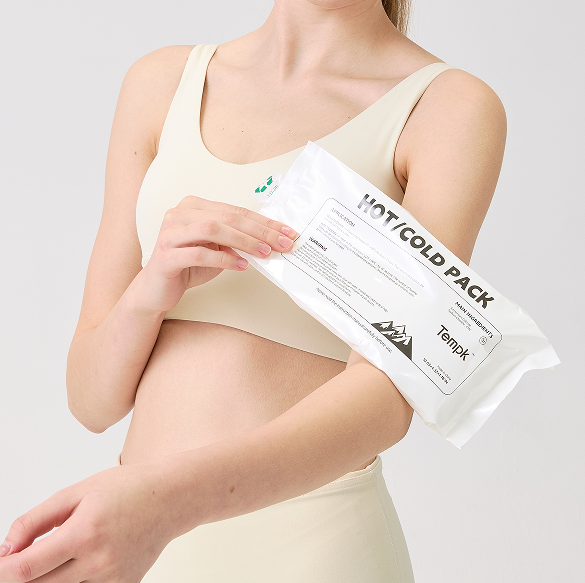
How to Evaluate a Cryotherapy Gel Pack Blood Bulk for Real-World Use
The best sourcing decision for cryotherapy gel pack blood bulk begins with a boundary: the gel pack is one component of a thermal or therapeutic system. It cannot establish suitability by itself. A defensible purchase connects the payload or intended use, the conditioning method, the surrounding packaging, the route, operator behavior, quality evidence, and the supplier's ability to hold the approved specification.
The failure worth preventing is often not a high unit price. Blood components have product-specific storage and transport requirements. It is using a consumer cryotherapy pack for blood transport without a blood-product-specific packout, separation method, temperature monitoring plan, and qualification evidence. The responsible blood service must define them and confirm the correct coolant arrangement. This guide shows how to translate those constraints into sample specifications, supplier questions, packout trials, receiving checks, and a controlled path from pilot order to routine supply.
A Decision Rule That Prevents Most Errors
A suitable gel pack for blood transport packouts and reusable cold-therapy supply programs should fit the physical packout, enter the process in a defined condition, remain intact during expected handling, and be backed by specifications that production can reproduce. A cryotherapy claim does not qualify a product for blood transport, and suitability for blood transport does not automatically make it safe for direct therapeutic use. It should also be accompanied by enough information for the cross-functional team to judge cleaning, reuse, disposal, traceability, and change risk.
First define four questions. How long and through which exposures must the system operate? What condition must the payload or user experience avoid? Where can the coolant be placed without causing contact damage or a cold spot? What evidence will allow quality and operations teams to approve the same product that procurement is pricing? If one of these questions has no owner, a lower quotation only moves cost into testing, rework, claims, or emergency substitution.
Do Not Merge Cryotherapy and Blood-Transport Specifications
Blood components have product-specific storage and transport requirements. The responsible blood service must define them and confirm the correct coolant arrangement.
A cryotherapy claim does not qualify a product for blood transport, and suitability for blood transport does not automatically make it safe for direct therapeutic use.
For this application, the acceptance decision should be written before samples arrive. Then test normal and credible worst-case handling. Define what would make the product unusable, what evidence is required, and who can approve a deviation. This prevents the sample review from becoming a subjective discussion about whether the pack looks strong or feels cold.
The same discipline improves supplier communication. A shortlisted supplier that asks careful questions is often more useful than one that immediately promises a fixed duration without seeing the payload or container. Instead of asking for the best pack, send a concise application brief and ask the supplier to identify assumptions, limitations, and information gaps.
Start With the Payload and Failure Boundary
For blood products or therapy programs, the requirement should be written as a system brief. It should also state whether the objective is product safety, quality preservation, a preferred delivery experience, therapeutic comfort, or a documented regulatory condition. It should describe the starting condition of the payload, acceptable limits, payload mass and arrangement, usable internal space, insulation, route duration, expected delays, ambient exposure, and receiving process. These objectives are related, but they are not interchangeable.
A cold pack absorbs heat because energy moves from warmer areas toward colder areas. That is why phase behavior matters. While a formulation changes phase, it can absorb a meaningful amount of energy with a smaller temperature change than would occur through sensible heating alone. Yet the phase point is only one property. Total mass, latent and sensible heat, starting temperature, contact area, insulation heat leak, and air gaps all affect the result. A shortlisted supplier should not reduce this relationship to an unexplained claim about hours of cooling.
Geometry turns material properties into packout behavior. Conformability may improve contact but can also create pressure and uneven thickness. A flexible pouch can conform around blood products or therapy programs, while a rigid brick can create repeatable spacing and easier inventory control. Rigidity may protect the coolant but consume usable space or create a concentrated cold bridge. WHO blood cold-chain guidance warns against direct contact between blood and frozen ice packs in relevant transport situations; barriers and pack geometry therefore matter.
For the final selection, the controlled comparison is therefore not pouch versus brick in isolation. That comparison reveals whether an apparent material advantage survives real geometry and real work instructions. It is candidate packout A versus candidate packout B under the same payload, insulation, preconditioning, loading method, ambient profile, and acceptance criteria.
Build the Packout Around Controlled Variables
The coolant, insulated container, payload, void fill, separators, and loading sequence form one thermal system. A pack count borrowed from another carton is weak evidence because insulation thickness, external surface area, headspace, payload thermal mass, and starting temperature can be different. A cryotherapy claim does not qualify a product for blood transport, and suitability for blood transport does not automatically make it safe for direct therapeutic use. Even orientation matters when cold air settles, warm air enters at the lid, or packs move during transport.
Conditioning deserves its own work instruction. A pack that is nominally the same SKU can behave differently if one unit is fully conditioned, another has a warm core, and a third sat on the bench during a shift change. It should define freezer or refrigerator state, arrangement during conditioning, minimum recovery expectations after doors are opened, transfer time to the packing station, and what operators do with partially conditioned or thawing units.
The approval exercise begins with a documented configuration and a representative payload. Air temperature beside a coolant is not necessarily the same as product temperature. Sensors or indicators, when used, should be selected and placed to answer the acceptance question. The test should capture likely warm and cold locations, and it should represent credible ambient exposures and handling events rather than an easy constant room condition.
Results should be recorded with the exact pack lot, conditioning state, payload, insulation, loading diagram, sensor locations, ambient profile, and any deviations. Adding coolant blindly can reduce usable volume, raise freight mass, or create overcooling while leaving the original air gap or lid leak unresolved. If performance fails, change one controlled variable at a time where practical.
Supplier Questions That Change the Decision
| Decision area | What good looks like | Buyer action |
|---|---|---|
| Thermal fit | Match formulation, mass, geometry, and conditioning to the payload and system. | Ask for data, then test the full packout under a representative profile. |
| Physical fit | Confirm usable space, frozen dimensions, contact points, and movement. | Build samples with the actual container, payload, separators, and closure. |
| Integrity | Control films or shells, seams, caps, corners, and filled mass. | Review release checks, tolerances, complaint handling, and retained samples. |
| Operations | Make conditioning, loading, inspection, and retirement repeatable. | Run a packing-line trial with normal operators and realistic time pressure. |
| Documentation | Link each supplied lot to the approved specification. | Confirm lot coding, records, safety information, and change notification. |
| End of life | Distinguish reuse, contents disposal, and outer-package disposal. | Verify claims against formulation evidence and local rules. |
The decision matrix keeps the discussion centered on evidence rather than adjectives. It is the one that can define the offered SKU, explain its limits, reproduce it, and cooperate with the cross-functional team's qualification and receiving process. When comparing a gel pack for blood transport packouts and reusable cold-therapy supply programs, the highest-scoring supplier is not necessarily the one offering the most options.
Use the table twice: first to screen suppliers, then to compare the approved sample with the production proposal. Those differences should be closed before the purchase order becomes the only specification in the relationship. A shortlisted supplier may provide an excellent prototype but quote a production construction, print method, case pack, or site that differs from the evaluated unit.
A Controlled Rollout Plan
Begin with a small, documented sample set. Include normal operators during the trial. Photograph and measure units, record identification, inspect seals and surfaces, condition them using the proposed method, and build the real packout. Packaging that succeeds only when assembled by the engineer who designed it is not ready for routine distribution.
After thermal and handling review, define a golden sample or approved reference and convert the findings into purchase specifications and work instructions. Sampling plans should reflect risk and the cross-functional team's quality system. Receiving inspection can then focus on critical characteristics: identity, case count, visible damage, dimensions, filled mass where appropriate, print or label legibility, lot coding, and selected seal or closure checks.
Operational capacity is part of product fit. Your cross-functional team should model freezer or refrigerator space, conditioning cycle, staging time, labor, backup stock, seasonal peaks, and what happens after a failed delivery or product return. WHO blood cold-chain guidance warns against direct contact between blood and frozen ice packs in relevant transport situations; barriers and pack geometry therefore matter. These costs can exceed small differences in unit price.
Once production begins, monitor complaints by failure mode rather than as a single defect rate. That distinction shows whether the corrective action belongs with the coolant supplier, packout design, warehouse process, carrier, or receiving site. Separate leaks, punctures, seal splits, dimensional problems, print damage, inadequate conditioning, packing errors, thermal excursions, and receiving damage.
Approve the System, Then Control Change
Blood transport decisions should follow the blood service's validated procedures and applicable national rules; claims about a pack cannot replace those controls. Statements such as suitable for all medical shipments, keeps products cold for a fixed number of hours, or environmentally safe everywhere are too broad unless the underlying evidence truly covers the cross-functional team's configuration and market. The most defensible claim language is specific about what has been tested, under which conditions, and by whom.
A shortlisted supplier file may include a controlled specification, drawing, safety information, material declaration, test summaries, quality certificates relevant to the manufacturing system, lot or batch record format, complaint process, and change-control commitment. A general management-system certificate, for example, does not prove thermal performance, and a migration or material report does not qualify a shipping lane. These documents answer different questions.
The final disposal or reuse pathway language needs the same discipline. If reuse is proposed, calculate whether units are actually returned, cleaned, inspected, reconditioned, and placed back into service. Any pack exposed to biological contamination may require a different disposal route from an unused commercial coolant, regardless of the gel's ordinary waste classification. A durable pack that is never returned may consume more material without delivering the expected reuse benefit. Conversely, a single-use format may reduce reverse transport but create a larger disposal burden.
Post-approval change control protects the work invested in approval. A substitute that looks identical can have different flexibility, freezing behavior, thermal mass, or failure mode. Your cross-functional team should identify changes that require notice or re-evaluation, such as gel formulation, polymer grade, film layer, seal pattern, fill mass, dimensions, manufacturing site, printing method, or case packing.
What Changes When the Program Scales in Healthcare Markets
Scale adds variability before it adds volume. A national or cross-border program should define which elements are fixed and which may be adapted locally. More sites mean different freezers, shift patterns, storage density, carrier cutoffs, return rates, cleaning methods, and interpretations of the same instruction. The coolant SKU, conditioning state, pack count, loading diagram, and retirement criteria are usually poor candidates for informal substitution.
Distribution geography also changes commercial risk. Approval teams should map the path from manufacturing lot to packing station, including who owns inventory during delays and how damaged cases are quarantined. Import lead time, customs clearance, local inventory, language needs, case labeling, replacement stock, and complaint response can determine whether a technically good product is operationally usable.
A local distributor can add value by holding stock, translating instructions, consolidating demand, and supporting trials. If the distributor repacks, relabels, or stores the product, responsibilities for traceability, storage conditions, damage inspection, and change communication should be explicit. That value should be visible in service definitions and records.
Questions to Put in the Supplier Review
- Is this SKU intended for patient contact, shipping use, or both under separate specifications?
- What barrier and conditioning instructions are available for blood transport evaluation?
- How are leaks, seal strength, and lot traceability controlled?
- Can the supplier keep therapeutic labeling separate from logistics labeling?
The answers should be specific to the quoted construction. Record unresolved assumptions in the trial plan instead of allowing them to become silent acceptance criteria. If a response refers only to a product family, ask whether every size uses the same formulation, film, seal method, conditioning instruction, and release control.
Price comparisons should use the same delivery terms, case quantity, labeling scope, inspection level, documentation package, and replacement policy. For international supply, also distinguish manufacturing lead time from total replenishment time and define how urgent replacements will be handled. Otherwise, the lowest line-item price may exclude work that another supplier has included.
Frequently Asked Questions
Can a gel pack guarantee a fixed number of cooling hours?
Not by itself. Treat a duration claim as meaningful only when the test configuration is comparable with your own. Duration depends on the exact formulation and mass, starting condition, insulation, payload, pack count, placement, ambient profile, and opening or handling events. A representative full-packout evaluation is stronger than a standalone pack claim.
Should the cold pack touch the product directly?
That depends on product sensitivity and package design. Blood components have product-specific storage and transport requirements. Direct contact can improve local heat transfer, but it can also create freezing, pressure, condensation, abrasion, or presentation damage. The responsible blood service must define them and confirm the correct coolant arrangement. Use separators or controlled spacing when needed and include placement in the approved loading diagram.
What should a buyer inspect when bulk units arrive?
Confirm identity, lot code, case count, obvious transit damage, leakage, seal or closure condition, dimensions, filled mass where appropriate, and print or label legibility. Quarantine unexplained changes rather than sending them directly to the conditioning area. Compare selected units with the approved reference.
Does reusable automatically mean more sustainable?
No. If return rates are low or cleaning and transport are intensive, the expected benefit may not appear. Reuse can reduce material demand when packs are returned, cleaned, inspected, reconditioned, and used enough times to justify reverse logistics. Compare realistic program scenarios and document the assumptions.
Final Procurement Decision
The final choice of gel pack should survive four reviews: thermal or use-case fit, physical and operational fit, quality evidence, and commercial continuity. A disciplined trial and approval package turn a commodity purchase into a controllable system component. If the proposed unit passes only the quotation review, the sourcing process is incomplete.
About Tempk
Tempk, a brand of Shanghai Tempk Industrial Co., Ltd., supplies gel ice packs and related cold-chain packaging for food, healthcare, sample, retail, and distribution applications. Final suitability should be confirmed against the cross-functional team's payload, route, conditioning process, handling conditions, and required evidence. For blood transport packouts and reusable cold-therapy supply programs, we can discuss pack dimensions, filled weight, film or shell format, printing, carton packing, and how a candidate coolant may fit an insulated packout.
Next Step
Before requesting production pricing, provide the product requirement, usable packout space, ambient route, operator constraints, and approval evidence you need. Tempk can use that brief to identify gel pack samples for a cross-functional review.
How to Evaluate a Cool Gel Pack Healthcare Distributor for Real-World Use

How to Evaluate a Cool Gel Pack Healthcare Distributor for Real-World Use
The best sourcing decision for cool gel pack healthcare distributor begins with a boundary: the cool gel pack is one component of a thermal or therapeutic system. It cannot establish suitability by itself. A defensible purchase connects the payload or intended use, the conditioning method, the surrounding packaging, the route, operator behavior, quality evidence, and the supplier's ability to hold the approved specification.
The failure worth preventing is often not a high unit price. Each payload owner should define storage and transport conditions. It is using one generic gel-pack specification across medicines, diagnostic materials, care kits, and patient therapy even though the risks and controls differ. The distributor must keep those requirements visible at SKU and packout level. This guide shows how to translate those constraints into sample specifications, supplier questions, packout trials, receiving checks, and a controlled path from pilot order to routine supply.
A Decision Rule That Prevents Most Errors
A suitable cool gel pack for regional healthcare replenishment and temperature-managed parcel delivery should fit the physical packout, enter the process in a defined condition, remain intact during expected handling, and be backed by specifications that production can reproduce. A coolant pack does not monitor temperature, confer compliance, or make an unqualified container suitable for a sensitive healthcare product. It should also be accompanied by enough information for the cross-functional team to judge cleaning, reuse, disposal, traceability, and change risk.
First define four questions. How long and through which exposures must the system operate? What condition must the payload or user experience avoid? Where can the coolant be placed without causing contact damage or a cold spot? What evidence will allow quality and operations teams to approve the same product that procurement is pricing? If one of these questions has no owner, a lower quotation only moves cost into testing, rework, claims, or emergency substitution.
Keep Logistics Cooling Separate From Medical Claims
Each payload owner should define storage and transport conditions. The distributor must keep those requirements visible at SKU and packout level.
A coolant pack does not monitor temperature, confer compliance, or make an unqualified container suitable for a sensitive healthcare product.
For this application, the acceptance decision should be written before samples arrive. Then test normal and credible worst-case handling. Define what would make the product unusable, what evidence is required, and who can approve a deviation. This prevents the sample review from becoming a subjective discussion about whether the pack looks strong or feels cold.
The same discipline improves supplier communication. A shortlisted supplier that asks careful questions is often more useful than one that immediately promises a fixed duration without seeing the payload or container. Instead of asking for the best pack, send a concise application brief and ask the supplier to identify assumptions, limitations, and information gaps.
Start With the Payload and Failure Boundary
For healthcare products, samples, and care kits, the requirement should be written as a system brief. It should also state whether the objective is product safety, quality preservation, a preferred delivery experience, therapeutic comfort, or a documented regulatory condition. It should describe the starting condition of the payload, acceptable limits, payload mass and arrangement, usable internal space, insulation, route duration, expected delays, ambient exposure, and receiving process. These objectives are related, but they are not interchangeable.
A cold pack absorbs heat because energy moves from warmer areas toward colder areas. That is why phase behavior matters. While a formulation changes phase, it can absorb a meaningful amount of energy with a smaller temperature change than would occur through sensible heating alone. Yet the phase point is only one property. Total mass, latent and sensible heat, starting temperature, contact area, insulation heat leak, and air gaps all affect the result. A shortlisted supplier should not reduce this relationship to an unexplained claim about hours of cooling.
Geometry turns material properties into packout behavior. Conformability may improve contact but can also create pressure and uneven thickness. A flexible pouch can conform around healthcare products, samples, and care kits, while a rigid brick can create repeatable spacing and easier inventory control. Rigidity may protect the coolant but consume usable space or create a concentrated cold bridge. Color coding, lot labels, storage zones, and controlled packing instructions can prevent operators from using the wrong pack or conditioning state.
For the final selection, the controlled comparison is therefore not pouch versus brick in isolation. That comparison reveals whether an apparent material advantage survives real geometry and real work instructions. It is candidate packout A versus candidate packout B under the same payload, insulation, preconditioning, loading method, ambient profile, and acceptance criteria.
Build the Packout Around Controlled Variables
The coolant, insulated container, payload, void fill, separators, and loading sequence form one thermal system. A pack count borrowed from another carton is weak evidence because insulation thickness, external surface area, headspace, payload thermal mass, and starting temperature can be different. A coolant pack does not monitor temperature, confer compliance, or make an unqualified container suitable for a sensitive healthcare product. Even orientation matters when cold air settles, warm air enters at the lid, or packs move during transport.
Conditioning deserves its own work instruction. A pack that is nominally the same SKU can behave differently if one unit is fully conditioned, another has a warm core, and a third sat on the bench during a shift change. It should define freezer or refrigerator state, arrangement during conditioning, minimum recovery expectations after doors are opened, transfer time to the packing station, and what operators do with partially conditioned or thawing units.
The approval exercise begins with a documented configuration and a representative payload. Air temperature beside a coolant is not necessarily the same as product temperature. Sensors or indicators, when used, should be selected and placed to answer the acceptance question. The test should capture likely warm and cold locations, and it should represent credible ambient exposures and handling events rather than an easy constant room condition.
Results should be recorded with the exact pack lot, conditioning state, payload, insulation, loading diagram, sensor locations, ambient profile, and any deviations. Adding coolant blindly can reduce usable volume, raise freight mass, or create overcooling while leaving the original air gap or lid leak unresolved. If performance fails, change one controlled variable at a time where practical.
Supplier Questions That Change the Decision
| Decision area | What good looks like | Buyer action |
|---|---|---|
| Thermal fit | Match formulation, mass, geometry, and conditioning to the payload and system. | Ask for data, then test the full packout under a representative profile. |
| Physical fit | Confirm usable space, frozen dimensions, contact points, and movement. | Build samples with the actual container, payload, separators, and closure. |
| Integrity | Control films or shells, seams, caps, corners, and filled mass. | Review release checks, tolerances, complaint handling, and retained samples. |
| Operations | Make conditioning, loading, inspection, and retirement repeatable. | Run a packing-line trial with normal operators and realistic time pressure. |
| Documentation | Link each supplied lot to the approved specification. | Confirm lot coding, records, safety information, and change notification. |
| End of life | Distinguish reuse, contents disposal, and outer-package disposal. | Verify claims against formulation evidence and local rules. |
The decision matrix keeps the discussion centered on evidence rather than adjectives. It is the one that can define the offered SKU, explain its limits, reproduce it, and cooperate with the cross-functional team's qualification and receiving process. When comparing a cool gel pack for regional healthcare replenishment and temperature-managed parcel delivery, the highest-scoring supplier is not necessarily the one offering the most options.
Use the table twice: first to screen suppliers, then to compare the approved sample with the production proposal. Those differences should be closed before the purchase order becomes the only specification in the relationship. A shortlisted supplier may provide an excellent prototype but quote a production construction, print method, case pack, or site that differs from the evaluated unit.
A Controlled Rollout Plan
Begin with a small, documented sample set. Include normal operators during the trial. Photograph and measure units, record identification, inspect seals and surfaces, condition them using the proposed method, and build the real packout. Packaging that succeeds only when assembled by the engineer who designed it is not ready for routine distribution.
After thermal and handling review, define a golden sample or approved reference and convert the findings into purchase specifications and work instructions. Sampling plans should reflect risk and the cross-functional team's quality system. Receiving inspection can then focus on critical characteristics: identity, case count, visible damage, dimensions, filled mass where appropriate, print or label legibility, lot coding, and selected seal or closure checks.
Operational capacity is part of product fit. Your cross-functional team should model freezer or refrigerator space, conditioning cycle, staging time, labor, backup stock, seasonal peaks, and what happens after a failed delivery or product return. Color coding, lot labels, storage zones, and controlled packing instructions can prevent operators from using the wrong pack or conditioning state. These costs can exceed small differences in unit price.
Once production begins, monitor complaints by failure mode rather than as a single defect rate. That distinction shows whether the corrective action belongs with the coolant supplier, packout design, warehouse process, carrier, or receiving site. Separate leaks, punctures, seal splits, dimensional problems, print damage, inadequate conditioning, packing errors, thermal excursions, and receiving damage.
Approve the System, Then Control Change
Applicable quality, transport, and product rules depend on what is being shipped and where. The most defensible claim language is specific about what has been tested, under which conditions, and by whom. A distributor should maintain customer-approved procedures and evidence. Statements such as suitable for all medical shipments, keeps products cold for a fixed number of hours, or environmentally safe everywhere are too broad unless the underlying evidence truly covers the cross-functional team's configuration and market.
A shortlisted supplier file may include a controlled specification, drawing, safety information, material declaration, test summaries, quality certificates relevant to the manufacturing system, lot or batch record format, complaint process, and change-control commitment. A general management-system certificate, for example, does not prove thermal performance, and a migration or material report does not qualify a shipping lane. These documents answer different questions.
The final disposal or reuse pathway language needs the same discipline. If reuse is proposed, calculate whether units are actually returned, cleaned, inspected, reconditioned, and placed back into service. The correct disposal route depends on gel composition and contamination status; ordinary commercial waste assumptions may not apply after healthcare use. A durable pack that is never returned may consume more material without delivering the expected reuse benefit. Conversely, a single-use format may reduce reverse transport but create a larger disposal burden.
Post-approval change control protects the work invested in approval. A substitute that looks identical can have different flexibility, freezing behavior, thermal mass, or failure mode. Your cross-functional team should identify changes that require notice or re-evaluation, such as gel formulation, polymer grade, film layer, seal pattern, fill mass, dimensions, manufacturing site, printing method, or case packing.
What Changes When the Program Scales in Healthcare Markets
Scale adds variability before it adds volume. A national or cross-border program should define which elements are fixed and which may be adapted locally. More sites mean different freezers, shift patterns, storage density, carrier cutoffs, return rates, cleaning methods, and interpretations of the same instruction. The coolant SKU, conditioning state, pack count, loading diagram, and retirement criteria are usually poor candidates for informal substitution.
Distribution geography also changes commercial risk. Approval teams should map the path from manufacturing lot to packing station, including who owns inventory during delays and how damaged cases are quarantined. Import lead time, customs clearance, local inventory, language needs, case labeling, replacement stock, and complaint response can determine whether a technically good product is operationally usable.
A local distributor can add value by holding stock, translating instructions, consolidating demand, and supporting trials. If the distributor repacks, relabels, or stores the product, responsibilities for traceability, storage conditions, damage inspection, and change communication should be explicit. That value should be visible in service definitions and records.
Questions to Put in the Supplier Review
- Can different formulations or conditioning states be visually distinguished?
- What documentation links each lot to the approved specification?
- How does the supplier manage complaints and field leaks?
- Can packout samples be reserved for qualification and change comparisons?
The answers should be specific to the quoted construction. Record unresolved assumptions in the trial plan instead of allowing them to become silent acceptance criteria. If a response refers only to a product family, ask whether every size uses the same formulation, film, seal method, conditioning instruction, and release control.
Price comparisons should use the same delivery terms, case quantity, labeling scope, inspection level, documentation package, and replacement policy. For international supply, also distinguish manufacturing lead time from total replenishment time and define how urgent replacements will be handled. Otherwise, the lowest line-item price may exclude work that another supplier has included.
Frequently Asked Questions
Can a cool gel pack guarantee a fixed number of cooling hours?
Not by itself. Treat a duration claim as meaningful only when the test configuration is comparable with your own. Duration depends on the exact formulation and mass, starting condition, insulation, payload, pack count, placement, ambient profile, and opening or handling events. A representative full-packout evaluation is stronger than a standalone pack claim.
Should the cold pack touch the product directly?
That depends on product sensitivity and package design. Each payload owner should define storage and transport conditions. Direct contact can improve local heat transfer, but it can also create freezing, pressure, condensation, abrasion, or presentation damage. The distributor must keep those requirements visible at SKU and packout level. Use separators or controlled spacing when needed and include placement in the approved loading diagram.
What should a buyer inspect when bulk units arrive?
Confirm identity, lot code, case count, obvious transit damage, leakage, seal or closure condition, dimensions, filled mass where appropriate, and print or label legibility. Quarantine unexplained changes rather than sending them directly to the conditioning area. Compare selected units with the approved reference.
Does reusable automatically mean more sustainable?
No. If return rates are low or cleaning and transport are intensive, the expected benefit may not appear. Reuse can reduce material demand when packs are returned, cleaned, inspected, reconditioned, and used enough times to justify reverse logistics. Compare realistic program scenarios and document the assumptions.
Final Procurement Decision
The final choice of cool gel pack should survive four reviews: thermal or use-case fit, physical and operational fit, quality evidence, and commercial continuity. A disciplined trial and approval package turn a commodity purchase into a controllable system component. If the proposed unit passes only the quotation review, the sourcing process is incomplete.
About Tempk
Tempk, a brand of Shanghai Tempk Industrial Co., Ltd., supplies gel ice packs and related cold-chain packaging for food, healthcare, sample, retail, and distribution applications. Final suitability should be confirmed against the cross-functional team's payload, route, conditioning process, handling conditions, and required evidence. For regional healthcare replenishment and temperature-managed parcel delivery, we can discuss pack dimensions, filled weight, film or shell format, printing, carton packing, and how a candidate coolant may fit an insulated packout.
Next Step
Before requesting production pricing, provide the product requirement, usable packout space, ambient route, operator constraints, and approval evidence you need. Tempk can use that brief to identify cool gel pack samples for a cross-functional review.
How to Evaluate a Cold Gel Pack Cosmetics Wholesale for Real-World Use
How to Evaluate a Cold Gel Pack Cosmetics Wholesale for Real-World Use
The best sourcing decision for cold gel pack cosmetics wholesale begins with a boundary: the cold gel pack is one component of a thermal or therapeutic system. It cannot establish suitability by itself. A defensible purchase connects the payload or intended use, the conditioning method, the surrounding packaging, the route, operator behavior, quality evidence, and the supplier's ability to hold the approved specification.
The failure worth preventing is often not a high unit price. The brand or responsible person should define storage and transport limits from stability work for the finished formula and its primary package. It is assuming that every cosmetic benefits from direct contact with a frozen pack, even when emulsion stability, viscosity, applicator function, or package decoration may be affected. This guide shows how to translate those constraints into sample specifications, supplier questions, packout trials, receiving checks, and a controlled path from pilot order to routine supply.
A Decision Rule That Prevents Most Errors
A suitable cold gel pack for wholesale beauty distribution, subscription boxes, and warm-weather parcel delivery should fit the physical packout, enter the process in a defined condition, remain intact during expected handling, and be backed by specifications that production can reproduce. Cold gel packs cannot repair a formula that was not designed or tested for the distribution environment, and colder is not automatically safer. It should also be accompanied by enough information for the cross-functional team to judge cleaning, reuse, disposal, traceability, and change risk.
First define four questions. How long and through which exposures must the system operate? What condition must the payload or user experience avoid? Where can the coolant be placed without causing contact damage or a cold spot? What evidence will allow quality and operations teams to approve the same product that procurement is pricing? If one of these questions has no owner, a lower quotation only moves cost into testing, rework, claims, or emergency substitution.
Cosmetic Stability and Presentation Can Pull in Opposite Directions
The brand or responsible person should define storage and transport limits from stability work for the finished formula and its primary package.
Cold gel packs cannot repair a formula that was not designed or tested for the distribution environment, and colder is not automatically safer.
For this application, the acceptance decision should be written before samples arrive. Then test normal and credible worst-case handling. Define what would make the product unusable, what evidence is required, and who can approve a deviation. This prevents the sample review from becoming a subjective discussion about whether the pack looks strong or feels cold.
The same discipline improves supplier communication. A shortlisted supplier that asks careful questions is often more useful than one that immediately promises a fixed duration without seeing the payload or container. Instead of asking for the best pack, send a concise application brief and ask the supplier to identify assumptions, limitations, and information gaps.
Start With the Payload and Failure Boundary
For temperature-sensitive cosmetics and personal-care products, the requirement should be written as a system brief. It should also state whether the objective is product safety, quality preservation, a preferred delivery experience, therapeutic comfort, or a documented regulatory condition. It should describe the starting condition of the payload, acceptable limits, payload mass and arrangement, usable internal space, insulation, route duration, expected delays, ambient exposure, and receiving process. These objectives are related, but they are not interchangeable.
A cold pack absorbs heat because energy moves from warmer areas toward colder areas. That is why phase behavior matters. While a formulation changes phase, it can absorb a meaningful amount of energy with a smaller temperature change than would occur through sensible heating alone. Yet the phase point is only one property. Total mass, latent and sensible heat, starting temperature, contact area, insulation heat leak, and air gaps all affect the result. A shortlisted supplier should not reduce this relationship to an unexplained claim about hours of cooling.
Geometry turns material properties into packout behavior. Conformability may improve contact but can also create pressure and uneven thickness. A flexible pouch can conform around temperature-sensitive cosmetics and personal-care products, while a rigid brick can create repeatable spacing and easier inventory control. Rigidity may protect the coolant but consume usable space or create a concentrated cold bridge. Pouches should not crush pumps, glass jars, airless dispensers, or decorative cartons; separators can control contact and protect presentation.
For the final selection, the controlled comparison is therefore not pouch versus brick in isolation. That comparison reveals whether an apparent material advantage survives real geometry and real work instructions. It is candidate packout A versus candidate packout B under the same payload, insulation, preconditioning, loading method, ambient profile, and acceptance criteria.
Build the Packout Around Controlled Variables
The coolant, insulated container, payload, void fill, separators, and loading sequence form one thermal system. A pack count borrowed from another carton is weak evidence because insulation thickness, external surface area, headspace, payload thermal mass, and starting temperature can be different. Cold gel packs cannot repair a formula that was not designed or tested for the distribution environment, and colder is not automatically safer. Even orientation matters when cold air settles, warm air enters at the lid, or packs move during transport.
Conditioning deserves its own work instruction. A pack that is nominally the same SKU can behave differently if one unit is fully conditioned, another has a warm core, and a third sat on the bench during a shift change. It should define freezer or refrigerator state, arrangement during conditioning, minimum recovery expectations after doors are opened, transfer time to the packing station, and what operators do with partially conditioned or thawing units.
The approval exercise begins with a documented configuration and a representative payload. Air temperature beside a coolant is not necessarily the same as product temperature. Sensors or indicators, when used, should be selected and placed to answer the acceptance question. The test should capture likely warm and cold locations, and it should represent credible ambient exposures and handling events rather than an easy constant room condition.
Results should be recorded with the exact pack lot, conditioning state, payload, insulation, loading diagram, sensor locations, ambient profile, and any deviations. Adding coolant blindly can reduce usable volume, raise freight mass, or create overcooling while leaving the original air gap or lid leak unresolved. If performance fails, change one controlled variable at a time where practical.
Supplier Questions That Change the Decision
| Decision area | What good looks like | Buyer action |
|---|---|---|
| Thermal fit | Match formulation, mass, geometry, and conditioning to the payload and system. | Ask for data, then test the full packout under a representative profile. |
| Physical fit | Confirm usable space, frozen dimensions, contact points, and movement. | Build samples with the actual container, payload, separators, and closure. |
| Integrity | Control films or shells, seams, caps, corners, and filled mass. | Review release checks, tolerances, complaint handling, and retained samples. |
| Operations | Make conditioning, loading, inspection, and retirement repeatable. | Run a packing-line trial with normal operators and realistic time pressure. |
| Documentation | Link each supplied lot to the approved specification. | Confirm lot coding, records, safety information, and change notification. |
| End of life | Distinguish reuse, contents disposal, and outer-package disposal. | Verify claims against formulation evidence and local rules. |
The decision matrix keeps the discussion centered on evidence rather than adjectives. It is the one that can define the offered SKU, explain its limits, reproduce it, and cooperate with the cross-functional team's qualification and receiving process. When comparing a cold gel pack for wholesale beauty distribution, subscription boxes, and warm-weather parcel delivery, the highest-scoring supplier is not necessarily the one offering the most options.
Use the table twice: first to screen suppliers, then to compare the approved sample with the production proposal. Those differences should be closed before the purchase order becomes the only specification in the relationship. A shortlisted supplier may provide an excellent prototype but quote a production construction, print method, case pack, or site that differs from the evaluated unit.
A Controlled Rollout Plan
Begin with a small, documented sample set. Include normal operators during the trial. Photograph and measure units, record identification, inspect seals and surfaces, condition them using the proposed method, and build the real packout. Packaging that succeeds only when assembled by the engineer who designed it is not ready for routine distribution.
After thermal and handling review, define a golden sample or approved reference and convert the findings into purchase specifications and work instructions. Sampling plans should reflect risk and the cross-functional team's quality system. Receiving inspection can then focus on critical characteristics: identity, case count, visible damage, dimensions, filled mass where appropriate, print or label legibility, lot coding, and selected seal or closure checks.
Operational capacity is part of product fit. Your cross-functional team should model freezer or refrigerator space, conditioning cycle, staging time, labor, backup stock, seasonal peaks, and what happens after a failed delivery or product return. Pouches should not crush pumps, glass jars, airless dispensers, or decorative cartons; separators can control contact and protect presentation. These costs can exceed small differences in unit price.
Once production begins, monitor complaints by failure mode rather than as a single defect rate. That distinction shows whether the corrective action belongs with the coolant supplier, packout design, warehouse process, carrier, or receiving site. Separate leaks, punctures, seal splits, dimensional problems, print damage, inadequate conditioning, packing errors, thermal excursions, and receiving damage.
Approve the System, Then Control Change
In the United States, cosmetic marketers are responsible for product safety; temperature controls should therefore be tied to the finished product's substantiated stability and handling instructions. Statements such as suitable for all medical shipments, keeps products cold for a fixed number of hours, or environmentally safe everywhere are too broad unless the underlying evidence truly covers the cross-functional team's configuration and market. The most defensible claim language is specific about what has been tested, under which conditions, and by whom.
A shortlisted supplier file may include a controlled specification, drawing, safety information, material declaration, test summaries, quality certificates relevant to the manufacturing system, lot or batch record format, complaint process, and change-control commitment. A general management-system certificate, for example, does not prove thermal performance, and a migration or material report does not qualify a shipping lane. These documents answer different questions.
The final disposal or reuse pathway language needs the same discipline. If reuse is proposed, calculate whether units are actually returned, cleaned, inspected, reconditioned, and placed back into service. A wholesaler should request formulation and packaging disposal information and avoid claiming drainability or biodegradability without evidence and local acceptance. A durable pack that is never returned may consume more material without delivering the expected reuse benefit. Conversely, a single-use format may reduce reverse transport but create a larger disposal burden.
Post-approval change control protects the work invested in approval. A substitute that looks identical can have different flexibility, freezing behavior, thermal mass, or failure mode. Your cross-functional team should identify changes that require notice or re-evaluation, such as gel formulation, polymer grade, film layer, seal pattern, fill mass, dimensions, manufacturing site, printing method, or case packing.
What Changes When the Program Scales in Global Beauty And Personal-Care Markets
Scale adds variability before it adds volume. A national or cross-border program should define which elements are fixed and which may be adapted locally. More sites mean different freezers, shift patterns, storage density, carrier cutoffs, return rates, cleaning methods, and interpretations of the same instruction. The coolant SKU, conditioning state, pack count, loading diagram, and retirement criteria are usually poor candidates for informal substitution.
Distribution geography also changes commercial risk. Approval teams should map the path from manufacturing lot to packing station, including who owns inventory during delays and how damaged cases are quarantined. Import lead time, customs clearance, local inventory, language needs, case labeling, replacement stock, and complaint response can determine whether a technically good product is operationally usable.
A local distributor can add value by holding stock, translating instructions, consolidating demand, and supporting trials. If the distributor repacks, relabels, or stores the product, responsibilities for traceability, storage conditions, damage inspection, and change communication should be explicit. That value should be visible in service definitions and records.
Questions to Put in the Supplier Review
- Which film structure resists puncture from cosmetic cartons and closures?
- Can pack dimensions be matched to the void space without pressing on retail packaging?
- What odor, leakage, and seal tests are used for release?
- Can printed handling text remain legible after freezing and condensation?
The answers should be specific to the quoted construction. Record unresolved assumptions in the trial plan instead of allowing them to become silent acceptance criteria. If a response refers only to a product family, ask whether every size uses the same formulation, film, seal method, conditioning instruction, and release control.
Price comparisons should use the same delivery terms, case quantity, labeling scope, inspection level, documentation package, and replacement policy. For international supply, also distinguish manufacturing lead time from total replenishment time and define how urgent replacements will be handled. Otherwise, the lowest line-item price may exclude work that another supplier has included.
Frequently Asked Questions
Can a cold gel pack guarantee a fixed number of cooling hours?
Not by itself. Treat a duration claim as meaningful only when the test configuration is comparable with your own. Duration depends on the exact formulation and mass, starting condition, insulation, payload, pack count, placement, ambient profile, and opening or handling events. A representative full-packout evaluation is stronger than a standalone pack claim.
Should the cold pack touch the product directly?
That depends on product sensitivity and package design. The brand or responsible person should define storage and transport limits from stability work for the finished formula and its primary package. Direct contact can improve local heat transfer, but it can also create freezing, pressure, condensation, abrasion, or presentation damage. Use separators or controlled spacing when needed and include placement in the approved loading diagram.
What should a buyer inspect when bulk units arrive?
Confirm identity, lot code, case count, obvious transit damage, leakage, seal or closure condition, dimensions, filled mass where appropriate, and print or label legibility. Quarantine unexplained changes rather than sending them directly to the conditioning area. Compare selected units with the approved reference.
Does reusable automatically mean more sustainable?
No. If return rates are low or cleaning and transport are intensive, the expected benefit may not appear. Reuse can reduce material demand when packs are returned, cleaned, inspected, reconditioned, and used enough times to justify reverse logistics. Compare realistic program scenarios and document the assumptions.
Final Procurement Decision
The final choice of cold gel pack should survive four reviews: thermal or use-case fit, physical and operational fit, quality evidence, and commercial continuity. A disciplined trial and approval package turn a commodity purchase into a controllable system component. If the proposed unit passes only the quotation review, the sourcing process is incomplete.
About Tempk
Tempk, a brand of Shanghai Tempk Industrial Co., Ltd., supplies gel ice packs and related cold-chain packaging for food, healthcare, sample, retail, and distribution applications. Final suitability should be confirmed against the cross-functional team's payload, route, conditioning process, handling conditions, and required evidence. For wholesale beauty distribution, subscription boxes, and warm-weather parcel delivery, we can discuss pack dimensions, filled weight, film or shell format, printing, carton packing, and how a candidate coolant may fit an insulated packout.
Next Step
Before requesting production pricing, provide the product requirement, usable packout space, ambient route, operator constraints, and approval evidence you need. Tempk can use that brief to identify cold gel pack samples for a cross-functional review.
How to Evaluate a Cold Chain Gel Pack Medical Wholesaler for Real-World Use

How to Evaluate a Cold Chain Gel Pack Medical Wholesaler for Real-World Use
The best sourcing decision for cold chain gel pack medical wholesaler begins with a boundary: the cold-chain gel pack is one component of a thermal or therapeutic system. It cannot establish suitability by itself. A defensible purchase connects the payload or intended use, the conditioning method, the surrounding packaging, the route, operator behavior, quality evidence, and the supplier's ability to hold the approved specification.
The failure worth preventing is often not a high unit price. The medicinal product owner must define acceptable conditions from approved labeling, stability data, and quality procedures. It is treating a medical-looking pouch as evidence of compliance without checking product stability limits, qualification data, packout instructions, or change control. This guide shows how to translate those constraints into sample specifications, supplier questions, packout trials, receiving checks, and a controlled path from pilot order to routine supply.
A Decision Rule That Prevents Most Errors
A suitable cold-chain gel pack for clinic replenishment, diagnostic supply distribution, and qualified passive shipping systems should fit the physical packout, enter the process in a defined condition, remain intact during expected handling, and be backed by specifications that production can reproduce. A gel pack is a refrigerant component, not a medical authorization, a data logger, or proof that a shipping system is qualified for every lane. It should also be accompanied by enough information for the cross-functional team to judge cleaning, reuse, disposal, traceability, and change risk.
First define four questions. How long and through which exposures must the system operate? What condition must the payload or user experience avoid? Where can the coolant be placed without causing contact damage or a cold spot? What evidence will allow quality and operations teams to approve the same product that procurement is pricing? If one of these questions has no owner, a lower quotation only moves cost into testing, rework, claims, or emergency substitution.
Keep Logistics Cooling Separate From Medical Claims
The medicinal product owner must define acceptable conditions from approved labeling, stability data, and quality procedures.
A gel pack is a refrigerant component, not a medical authorization, a data logger, or proof that a shipping system is qualified for every lane.
For this application, the acceptance decision should be written before samples arrive. Then test normal and credible worst-case handling. Define what would make the product unusable, what evidence is required, and who can approve a deviation. This prevents the sample review from becoming a subjective discussion about whether the pack looks strong or feels cold.
The same discipline improves supplier communication. A shortlisted supplier that asks careful questions is often more useful than one that immediately promises a fixed duration without seeing the payload or container. Instead of asking for the best pack, send a concise application brief and ask the supplier to identify assumptions, limitations, and information gaps.
Start With the Payload and Failure Boundary
For temperature-sensitive medical products, the requirement should be written as a system brief. It should also state whether the objective is product safety, quality preservation, a preferred delivery experience, therapeutic comfort, or a documented regulatory condition. It should describe the starting condition of the payload, acceptable limits, payload mass and arrangement, usable internal space, insulation, route duration, expected delays, ambient exposure, and receiving process. These objectives are related, but they are not interchangeable.
A cold pack absorbs heat because energy moves from warmer areas toward colder areas. That is why phase behavior matters. While a formulation changes phase, it can absorb a meaningful amount of energy with a smaller temperature change than would occur through sensible heating alone. Yet the phase point is only one property. Total mass, latent and sensible heat, starting temperature, contact area, insulation heat leak, and air gaps all affect the result. A shortlisted supplier should not reduce this relationship to an unexplained claim about hours of cooling.
Geometry turns material properties into packout behavior. Conformability may improve contact but can also create pressure and uneven thickness. A flexible pouch can conform around temperature-sensitive medical products, while a rigid brick can create repeatable spacing and easier inventory control. Rigidity may protect the coolant but consume usable space or create a concentrated cold bridge. Pack conditioning, placement, barriers, and loading sequence should be controlled in work instructions so operators do not improvise at the packing bench.
For the final selection, the controlled comparison is therefore not pouch versus brick in isolation. That comparison reveals whether an apparent material advantage survives real geometry and real work instructions. It is candidate packout A versus candidate packout B under the same payload, insulation, preconditioning, loading method, ambient profile, and acceptance criteria.
Build the Packout Around Controlled Variables
The coolant, insulated container, payload, void fill, separators, and loading sequence form one thermal system. A pack count borrowed from another carton is weak evidence because insulation thickness, external surface area, headspace, payload thermal mass, and starting temperature can be different. A gel pack is a refrigerant component, not a medical authorization, a data logger, or proof that a shipping system is qualified for every lane. Even orientation matters when cold air settles, warm air enters at the lid, or packs move during transport.
Conditioning deserves its own work instruction. A pack that is nominally the same SKU can behave differently if one unit is fully conditioned, another has a warm core, and a third sat on the bench during a shift change. It should define freezer or refrigerator state, arrangement during conditioning, minimum recovery expectations after doors are opened, transfer time to the packing station, and what operators do with partially conditioned or thawing units.
The approval exercise begins with a documented configuration and a representative payload. Air temperature beside a coolant is not necessarily the same as product temperature. Sensors or indicators, when used, should be selected and placed to answer the acceptance question. The test should capture likely warm and cold locations, and it should represent credible ambient exposures and handling events rather than an easy constant room condition.
Results should be recorded with the exact pack lot, conditioning state, payload, insulation, loading diagram, sensor locations, ambient profile, and any deviations. Adding coolant blindly can reduce usable volume, raise freight mass, or create overcooling while leaving the original air gap or lid leak unresolved. If performance fails, change one controlled variable at a time where practical.
Supplier Questions That Change the Decision
| Decision area | What good looks like | Buyer action |
|---|---|---|
| Thermal fit | Match formulation, mass, geometry, and conditioning to the payload and system. | Ask for data, then test the full packout under a representative profile. |
| Physical fit | Confirm usable space, frozen dimensions, contact points, and movement. | Build samples with the actual container, payload, separators, and closure. |
| Integrity | Control films or shells, seams, caps, corners, and filled mass. | Review release checks, tolerances, complaint handling, and retained samples. |
| Operations | Make conditioning, loading, inspection, and retirement repeatable. | Run a packing-line trial with normal operators and realistic time pressure. |
| Documentation | Link each supplied lot to the approved specification. | Confirm lot coding, records, safety information, and change notification. |
| End of life | Distinguish reuse, contents disposal, and outer-package disposal. | Verify claims against formulation evidence and local rules. |
The decision matrix keeps the discussion centered on evidence rather than adjectives. It is the one that can define the offered SKU, explain its limits, reproduce it, and cooperate with the cross-functional team's qualification and receiving process. When comparing a cold-chain gel pack for clinic replenishment, diagnostic supply distribution, and qualified passive shipping systems, the highest-scoring supplier is not necessarily the one offering the most options.
Use the table twice: first to screen suppliers, then to compare the approved sample with the production proposal. Those differences should be closed before the purchase order becomes the only specification in the relationship. A shortlisted supplier may provide an excellent prototype but quote a production construction, print method, case pack, or site that differs from the evaluated unit.
A Controlled Rollout Plan
Begin with a small, documented sample set. Include normal operators during the trial. Photograph and measure units, record identification, inspect seals and surfaces, condition them using the proposed method, and build the real packout. Packaging that succeeds only when assembled by the engineer who designed it is not ready for routine distribution.
After thermal and handling review, define a golden sample or approved reference and convert the findings into purchase specifications and work instructions. Sampling plans should reflect risk and the cross-functional team's quality system. Receiving inspection can then focus on critical characteristics: identity, case count, visible damage, dimensions, filled mass where appropriate, print or label legibility, lot coding, and selected seal or closure checks.
Operational capacity is part of product fit. Your cross-functional team should model freezer or refrigerator space, conditioning cycle, staging time, labor, backup stock, seasonal peaks, and what happens after a failed delivery or product return. Pack conditioning, placement, barriers, and loading sequence should be controlled in work instructions so operators do not improvise at the packing bench. These costs can exceed small differences in unit price.
Once production begins, monitor complaints by failure mode rather than as a single defect rate. That distinction shows whether the corrective action belongs with the coolant supplier, packout design, warehouse process, carrier, or receiving site. Separate leaks, punctures, seal splits, dimensional problems, print damage, inadequate conditioning, packing errors, thermal excursions, and receiving damage.
Approve the System, Then Control Change
WHO guidance treats time- and temperature-sensitive pharmaceutical distribution as a system problem involving qualification, route conditions, monitoring, and documented procedures. Statements such as suitable for all medical shipments, keeps products cold for a fixed number of hours, or environmentally safe everywhere are too broad unless the underlying evidence truly covers the cross-functional team's configuration and market. The most defensible claim language is specific about what has been tested, under which conditions, and by whom.
A shortlisted supplier file may include a controlled specification, drawing, safety information, material declaration, test summaries, quality certificates relevant to the manufacturing system, lot or batch record format, complaint process, and change-control commitment. A general management-system certificate, for example, does not prove thermal performance, and a migration or material report does not qualify a shipping lane. These documents answer different questions.
The final disposal or reuse pathway language needs the same discipline. If reuse is proposed, calculate whether units are actually returned, cleaned, inspected, reconditioned, and placed back into service. Disposal must follow the gel formulation information, contamination status, and local healthcare or commercial waste rules. A durable pack that is never returned may consume more material without delivering the expected reuse benefit. Conversely, a single-use format may reduce reverse transport but create a larger disposal burden.
Post-approval change control protects the work invested in approval. A substitute that looks identical can have different flexibility, freezing behavior, thermal mass, or failure mode. Your cross-functional team should identify changes that require notice or re-evaluation, such as gel formulation, polymer grade, film layer, seal pattern, fill mass, dimensions, manufacturing site, printing method, or case packing.
What Changes When the Program Scales in Regulated Healthcare Supply Chains
Scale adds variability before it adds volume. A national or cross-border program should define which elements are fixed and which may be adapted locally. More sites mean different freezers, shift patterns, storage density, carrier cutoffs, return rates, cleaning methods, and interpretations of the same instruction. The coolant SKU, conditioning state, pack count, loading diagram, and retirement criteria are usually poor candidates for informal substitution.
Distribution geography also changes commercial risk. Approval teams should map the path from manufacturing lot to packing station, including who owns inventory during delays and how damaged cases are quarantined. Import lead time, customs clearance, local inventory, language needs, case labeling, replacement stock, and complaint response can determine whether a technically good product is operationally usable.
A local distributor can add value by holding stock, translating instructions, consolidating demand, and supporting trials. If the distributor repacks, relabels, or stores the product, responsibilities for traceability, storage conditions, damage inspection, and change communication should be explicit. That value should be visible in service definitions and records.
Questions to Put in the Supplier Review
- Is the formulation and film specification fixed under change control?
- What lot traceability and certificate documentation are available?
- Can samples be supplied for thermal qualification using our payload and ambient profiles?
- How are seal integrity and net content checked during production?
The answers should be specific to the quoted construction. Record unresolved assumptions in the trial plan instead of allowing them to become silent acceptance criteria. If a response refers only to a product family, ask whether every size uses the same formulation, film, seal method, conditioning instruction, and release control.
Price comparisons should use the same delivery terms, case quantity, labeling scope, inspection level, documentation package, and replacement policy. For international supply, also distinguish manufacturing lead time from total replenishment time and define how urgent replacements will be handled. Otherwise, the lowest line-item price may exclude work that another supplier has included.
Frequently Asked Questions
Can a cold-chain gel pack guarantee a fixed number of cooling hours?
Not by itself. Treat a duration claim as meaningful only when the test configuration is comparable with your own. Duration depends on the exact formulation and mass, starting condition, insulation, payload, pack count, placement, ambient profile, and opening or handling events. A representative full-packout evaluation is stronger than a standalone pack claim.
Should the cold pack touch the product directly?
That depends on product sensitivity and package design. The medicinal product owner must define acceptable conditions from approved labeling, stability data, and quality procedures. Direct contact can improve local heat transfer, but it can also create freezing, pressure, condensation, abrasion, or presentation damage. Use separators or controlled spacing when needed and include placement in the approved loading diagram.
What should a buyer inspect when bulk units arrive?
Confirm identity, lot code, case count, obvious transit damage, leakage, seal or closure condition, dimensions, filled mass where appropriate, and print or label legibility. Quarantine unexplained changes rather than sending them directly to the conditioning area. Compare selected units with the approved reference.
Does reusable automatically mean more sustainable?
No. If return rates are low or cleaning and transport are intensive, the expected benefit may not appear. Reuse can reduce material demand when packs are returned, cleaned, inspected, reconditioned, and used enough times to justify reverse logistics. Compare realistic program scenarios and document the assumptions.
Final Procurement Decision
The final choice of cold-chain gel pack should survive four reviews: thermal or use-case fit, physical and operational fit, quality evidence, and commercial continuity. A disciplined trial and approval package turn a commodity purchase into a controllable system component. If the proposed unit passes only the quotation review, the sourcing process is incomplete.
About Tempk
Tempk, a brand of Shanghai Tempk Industrial Co., Ltd., supplies gel ice packs and related cold-chain packaging for food, healthcare, sample, retail, and distribution applications. Final suitability should be confirmed against the cross-functional team's payload, route, conditioning process, handling conditions, and required evidence. For clinic replenishment, diagnostic supply distribution, and qualified passive shipping systems, we can discuss pack dimensions, filled weight, film or shell format, printing, carton packing, and how a candidate coolant may fit an insulated packout.
Next Step
Before requesting production pricing, provide the product requirement, usable packout space, ambient route, operator constraints, and approval evidence you need. Tempk can use that brief to identify cold-chain gel pack samples for a cross-functional review.