


Gel Cooling Batteries for Chocolate Shipping: A Practical Framework for Better Buying and Better Results
Gel Cooling Batteries for Chocolate Shipping: A Practical Framework for Better Buying and Better Results

Gel Cooling Batteries for Chocolate Shipping: A Practical Framework for Better Buying and Better Results
A gel cooling battery can help protect chocolate, but the best supplier is not the one promising the coldest pack. Chocolate usually needs stable heat control without creating condensation or over-cooling against the product, so buyers should focus on pack format, insulation pairing, and seasonal route design.
That is why the best buyers do not ask only, “How cold is the pack?” They ask how the pack behaves after freezing, how it fits the box, how the product is protected from direct contact, and whether the manufacturer can hold tolerances over time. Those questions matter more than broad marketing language.
A strong decision starts with context. You need to know the required temperature band, the longest realistic transit and dwell window, the sensitivity of the product, and the way your team will actually assemble the shipper. Once those basics are clear, it becomes much easier to decide whether this format is the right answer, whether a different refrigerant is needed, and what kind of supplier support matters most.
What this pack format does in practice
A rigid or semi-rigid gel ‘cooling battery’—in practice, a thermal reservoir or brick used to reduce heat gain in chocolate shipments. Depending on the market, buyers may call it gel cooling battery, cooling brick, and thermal battery. The label changes, but the basic job is the same: the pack is preconditioned in a freezer or cold room, loaded around the payload, and used with insulation to slow down heat transfer. For some programs it is a disposable or one-way component. For others it is part of a reusable loop.
The most important point is that this format should be treated as a thermal component, not as a complete shipping guarantee. It can contribute cold capacity and temperature stability, but it does not replace insulation, proper pack placement, route planning, or receiving checks. That distinction matters in every sector, from boxed chocolates, truffles, and candy bars to more sensitive loads.
In chocolate logistics, the pack is often less about maintaining a very low temperature and more about buffering against brief heat spikes. The target is stable quality, not brute-force cold.
How this format actually works
All passive refrigerants work by absorbing heat from the warmer environment around them. With common water-based gel systems, a large part of the protective effect comes from the energy required to warm and melt the frozen pack. The gel structure holds water in place so the pack is easier to handle than loose ice, and in many designs it also helps the pack keep contact with the wall of the shipper or around the product.
Performance is shaped by more than the fill itself. Film or shell thickness, pack surface area, starting temperature, payload mass, headspace, insulation type, and outside exposure all matter. A thin flexible pouch may wrap a product well but warm faster if there is not enough total refrigerant mass. A rigid brick may retain structure and placement better but can also create unused space if it does not match the carton geometry.
This is also where buyers need to distinguish ordinary water-based gel from phase-change materials selected for a narrower temperature band. Standard water-based gel is often useful for chilled protection because it behaves around the freezing point of water. If a lane needs tighter control above or below that point, a different PCM, dry ice, or an active system may be more appropriate. The right answer depends on the product requirement, not on a generic preference for one refrigerant type.
Where this format fits best
The strongest use cases are the ones where the coolant format matches the operating model. In a structured wholesale program, gel cooling batteries for chocolate shipping can be very effective when shipments follow repeatable pack patterns and when the product profile is understood. That is why buyers often consider it for boxed chocolates, truffles, candy bars, gift assortments, and premium confectionery.
It is not equally strong in every situation. Where products are extremely freeze-sensitive, extremely heat-sensitive, or subject to long uncontrolled transit, the packaging system may need tighter controls than a standard gel-based approach can offer. Likewise, a format that works beautifully in returnable totes may be inefficient in one-way parcel cartons, and a pack that is acceptable for short urban distribution may not survive a multi-day network with high porch exposure.
In practice, the best question is not whether the format is ‘good’ or ‘bad.’ The right question is whether it is fit for your route, your payload, and your packing discipline. That is the frame that prevents both overbuying and under-protecting.
What this format does well, and where it can disappoint
Most procurement problems show up when teams focus only on the upside. A balanced view is more useful because the same feature that helps one program can hurt another. Flexibility can improve contact but slow line handling. A rigid brick can simplify placement but reduce payload volume. Reuse can lower recurring cost but create inspection work.
- Benefit: Rigid cooling batteries are easy to position in gift boxes, insulated liners, and specialty confectionery shippers.
- Benefit: Compared with loose ice, they offer cleaner handling and less free water.
- Benefit: A reusable thermal battery can support seasonal shipping programs and event fulfillment.
- Benefit: Well-placed coolants can reduce heat spikes in last-mile delivery and during short dwell periods.
- Limit: Chocolate does not usually benefit from extreme cold directly against the product surface.
- Limit: In humid conditions, over-cooling can lead to condensation when the product is opened or unpacked.
- Limit: A pack that performs well for milk chocolate may not be ideal for filled chocolates, truffles, or delicate decorations.
- Limit: Warm-weather chocolate shipping is still highly dependent on service level and transit duration.
That trade-off logic is what separates a purchasing decision from a temperature-control strategy. Buyers who understand both sides usually standardize faster and waste less money on failed pilots.
What to compare before you select a pack
The selection process should begin with the route and the payload, not with a stock catalog. Start by defining the target temperature band, the longest realistic time out of controlled storage, the product loading temperature, and the actual inside dimensions of the insulated shipper. Without those basics, even a technically good pack can become the wrong choice.
From there, buyers usually compare stability rather than maximum cold intensity, pack footprint and spacing so chocolate does not touch the coolant directly, condensation control and internal moisture barriers, summer service windows and transit speed, and presentation quality on arrival, not just gross temperature reduction. It also helps to look at the broader packing system: how much freezer space is needed for preconditioning, whether the pack can be counted and placed consistently, how much box cube it consumes, and whether the resulting parcel weight still makes commercial sense.
A useful shortlist is rarely more than two or three options. Beyond that point, teams often create comparison fatigue and lose sight of the route conditions that really determine success.
Why sourcing decisions are changing
Across cold-chain and temperature-sensitive distribution, buyers are under pressure to reduce spoilage without simply throwing more coolant at every box. Freight cost, warehouse energy use, labor, and disposal all push procurement teams toward packaging designs that are easier to standardize and easier to right-size.
For that reason, demand has moved toward clearer product segmentation: flexible packs for irregular geometry, rigid bricks for repeatable layouts, and narrower-temperature PCM options where the product requirement justifies them. Reuse is gaining attention too, but not as a stand-alone virtue. Buyers want reuse only when it works with their actual recovery loop and does not create hidden labor or quality risk.
In this context, sustainability is not only a materials story. It is also a waste-prevention story. reusable batteries can make sense for wholesale, hotel, or retail replenishment loops, smart right-sizing avoids sending unnecessary frozen mass with every box, and reducing melted or bloomed returns may outweigh minor material differences between coolant options. In many programs, the most meaningful environmental improvement comes from reducing product loss and overpacking at the same time.
The details that decide whether the design works
A strong refrigerant can still fail in a weak workflow. Packs need enough time and the right environment to reach their intended starting condition before use. The payload often needs pre-cooling as well. If the product enters the shipper warm, the refrigerant is forced to spend its energy correcting a packing problem instead of protecting the lane.
Placement matters just as much. Many failures come from simple issues such as too much void space, poor top protection, direct contact where a separator should have been used, or inconsistent pack count between shifts. That is why good operations teams write the pack-out as a repeatable build sequence rather than leaving placement to personal judgment.
For chocolate, pack-out should be built around moderation. The goal is to buffer heat and avoid direct over-cooling, which means separators, moisture control, and a clear unpacking experience can matter as much as total coolant mass.
The difference between a catalog claim and a qualified setup
One of the most common buying mistakes is to treat a refrigerant specification as if it were a compliance statement. In reality, the pack is just one element within a packaging system. For food programs, the system has to keep the product within safe receiving conditions. For pharmaceutical and medical lanes, requirements vary by product, route, and quality system, and additional qualification may be needed.
That is why thermal development often references recognized test approaches such as ASTM D3103 for insulated-package thermal performance, ASTM D4332 for conditioning, and ISTA thermal procedures when companies compare or refine passive shipping designs. These standards do not automatically prove your lane is safe. What they do provide is a structured way to compare packaging behavior under defined conditions.
For practical procurement, the question to ask is simple: what evidence do we have that this exact refrigerant, in this exact shipper, with this exact load, can handle our realistic lane? That question is far more useful than broad claims about how many hours a pack can stay cold in the abstract.
What buyers should ask suppliers before ordering in bulk
When the keyword includes wholesale, supplier, or manufacturer intent, this is the section that matters most. Good procurement teams do not simply compare a sample pack on a bench. They ask whether the supplier can reproduce the same performance and physical fit after the first pallet, the tenth pallet, and the inevitable changeover season.
- Ask whether the supplier has recommendations for controlled-cool or ambient-stable pack-outs, not only near-freezing designs.
- Review separator materials so the cooling battery never contacts the chocolate directly.
- Check if several battery sizes are available for different gift-box geometries.
- Ask how the supplier recommends adjusting pack quantity by season and route.
- If appearance matters, request tests that include unpacking behavior and condensation observation.
- Confirm whether reusable formats are realistic for your distribution model or only for B2B replenishment.
- Finally, check suitability for the actual route, product, and handling conditions.
The strongest supplier is usually the one that reduces uncertainty. That may mean better tolerances, clearer conditioning guidance, stronger traceability, or more honest discussion about where the pack is not the right answer.
Where otherwise good programs go wrong
Most failures are not dramatic material defects. They are ordinary process errors that compound over time. The useful thing about them is that they are usually fixable once they are named clearly.
- shipping too late in the week raises weekend dwell risk
- placing the coolant against primary packaging can create cold spots and moisture issues
- fast temperature changes after delivery can trigger condensation
- a one-size-fits-all summer policy usually over- or under-packs some lanes
- approving a bulk order after a sample test that did not reflect the real shipment
- focusing on unit cost while ignoring box weight, freezer cube, or labor impact
- assuming a nominal coolant weight says enough about route performance
- re-using packs without inspection in a workflow that actually needs screening
- changing carton geometry or payload arrangement without rechecking the thermal design
- treating sustainability as a separate topic instead of tying it to spoilage, freight weight, and recovery logistics
- evaluating suppliers on quote speed alone rather than supply continuity and quality communication
If a team can eliminate even two or three of these errors, it usually improves results faster than switching to a more expensive product.
FAQ
Should a chocolate shipment be packed as cold as possible?
Usually no. The goal is stable protection from heat, not direct freezing.
Can a gel cooling battery prevent all melt risk?
No. High ambient heat, delays, and poor insulation can still overwhelm the pack-out.
What is the first thing to test?
Test the hottest realistic route with the exact carton and product arrangement you plan to ship.
Final take
The best buying decision usually comes down to fit. Gel cooling batteries for chocolate shipping makes sense when its temperature behavior, shape, handling workflow, and supplier support match the actual route and product. It becomes a poor choice when teams buy it as a generic commodity and expect it to solve a packaging problem by itself.
Tempk at a Glance
We provide cold chain packaging materials that include gel packs, ice bricks, insulated bags, and carton-box insulation for food and medical applications. For chocolate and confectionery, we can discuss pack formats that moderate heat without turning a quality-sensitive product into an over-cooled, condensation-prone shipment.
Next step
For chocolate, ask for a seasonal pack-out plan that considers heat exposure, product sensitivity, and presentation quality on arrival.
Hospital Gel Cold Therapy Packs: A Practical Framework for Better Buying and Better Use
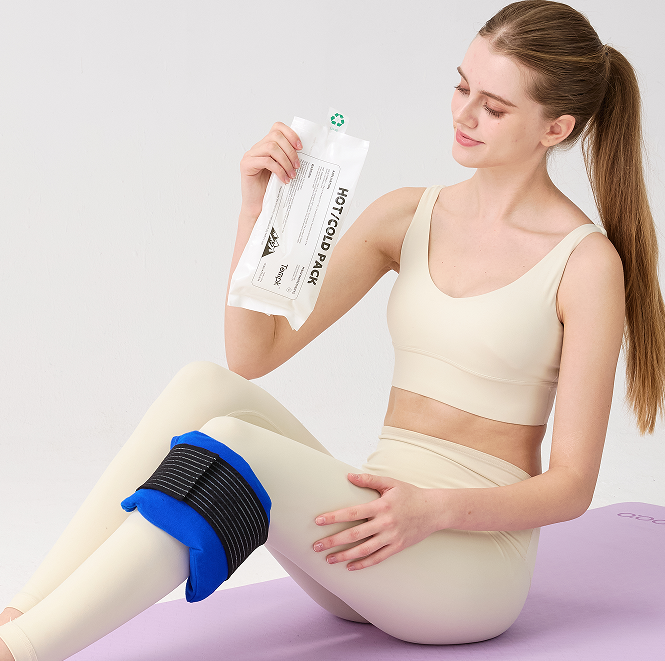
Hospital Gel Cold Therapy Packs: A Practical Framework for Better Buying and Better Use
A hospital gel cold therapy pack should be chosen for patient safety, comfort, cleanability, and procurement consistency—not for shipping performance. The right manufacturer is the one that can deliver reliable pack construction, appropriate size options, clear instructions for use, and practical support for clinical workflows such as storage, cleaning, and case replenishment.
In clinical procurement, the discussion is broader than temperature alone. Teams have to think about skin protection, cleanability, freezer staging, case-pack efficiency, and whether one platform can serve several departments without creating confusion. That makes manufacturer consistency and instructions for use more important than a low price on a box of packs.
A strong decision starts with context. You need to know who will use the pack, how long it needs to stay pliable and comfortable, whether it is reused or assigned to one patient, and how staff will store, clean, and rotate stock. Once those basics are clear, supplier comparison becomes much more straightforward.
What gel cold therapy packs for hospitals really is
A reusable or single-patient gel cold therapy pack used for localized therapeutic cooling in hospitals and clinics. Buyers may see related terms such as gel cold therapy pack, cold therapy compress, and hospital gel pack. In clinical use, the pack is chilled or frozen in advance and then applied with an appropriate cover or barrier for short, controlled treatment periods. Some products are cold-only. Others are dual-use packs that can also be warmed for heat therapy.
That distinction matters because a therapy pack is not simply a colder version of a shipping gel pack. The clinical product has to feel acceptable against the body, remain flexible enough to contour to joints or muscle groups, and come with instructions staff can follow consistently. Surface material, seal design, size, and cover options all influence whether the pack is truly usable in a hospital setting.
Hospitals also evaluate the pack in workflow terms. Is it easy to stage in a freezer? Does it fit standard carts or bins? Can departments share one size, or do they need several shapes? Those questions are part of the product definition, not secondary details.
How this format actually works
For clinical cold therapy, the pack works by drawing heat away from the body for a limited period. The therapeutic goal is not to mimic a shipping freezer. It is to provide localized cooling that can help with swelling, discomfort, and post-procedure recovery while remaining tolerable to the patient when used with an appropriate barrier and timing routine.
Construction influences that experience. A pack that stays pliable after freezing conforms better to knees, shoulders, backs, and other contours. A pack with a stiff seam or brittle outer film may feel awkward and create pressure points. Cover material, thickness, and gel distribution all affect how evenly the cold is delivered.
Dual-use packs add another layer because they must behave acceptably in both freezer and warming use. That can be helpful for hospitals trying to rationalize SKUs, but it also means buyers should review the instructions for use carefully rather than assuming every hot/cold product performs equally well in both modes.
Where this format fits best
Hospital demand is usually strongest in settings where staff need a simple, freezer-ready pack that can be used without a powered machine. Common use cases include post-surgical care, orthopedic recovery, emergency swelling control, rehabilitation, sports medicine, and discharge support. In all of those settings, the pack has to be easy to locate, easy to apply, and easy to understand.
Not every department wants the same product. A physical therapy clinic may want a larger, highly pliable reusable pack for repeated supervised use. A ward may prefer a simpler format that is easy to clean or assign to a patient. Some programs prioritize dual hot/cold versatility, while others standardize around cold-only applications because they want fewer variables.
The best fit therefore depends on workflow and patient population, not only on freezing capability. A hospital should choose the pack that staff can use consistently and safely, with minimal confusion and minimal avoidable waste.
Main advantages and trade-offs
Clinical products are easiest to buy when the trade-offs are stated plainly. A pack can be very cold but too stiff. It can be very durable but awkward on curved anatomy. It can be inexpensive but frustrating if departments need multiple overlays, covers, or replacement cycles. Looking at both strengths and limits helps hospitals avoid false savings.
- Benefit: Gel packs stay more pliable than plain ice and conform better to knees, shoulders, backs, or incision sites.
- Benefit: Many hospital-grade packs can be used for cold therapy and, in some cases, heated for warm therapy.
- Benefit: Sealed packs reduce dripping compared with improvised ice bags.
- Benefit: Standardized therapy packs support nursing, rehab, sports medicine, and discharge use.
- Limit: A shipping refrigerant pack is not automatically suitable for direct patient-contact therapy.
- Limit: Clinical use still requires barrier protection, timing discipline, and patient-specific judgment.
- Limit: Some reusable packs may not fit infection-control preferences for every department.
- Limit: Oversized packs can be uncomfortable, while underfilled packs may fail to contour properly.
The right therapy pack is the one whose advantages matter in your actual department workflow and whose limitations are manageable within your clinical routines.
How to choose the right size, format, and pack strategy
The selection process should begin with the route and the payload, not with a stock catalog. Start by defining the target temperature band, the longest realistic time out of controlled storage, the product loading temperature, and the actual inside dimensions of the insulated shipper. Without those basics, even a technically good pack can become the wrong choice.
From there, buyers usually compare pliability after freezing, outer film or textile comfort and cleanability, single-patient versus reusable workflow, size range for different body areas, and clear instructions for freezer, microwave, and skin barrier use where applicable. It also helps to look at the broader packing system: how much freezer space is needed for preconditioning, whether the pack can be counted and placed consistently, how much box cube it consumes, and whether the resulting parcel weight still makes commercial sense.
In hospital procurement, selection should also reflect department workflow. A rehab unit, an orthopedic ward, and a discharge kit do not necessarily want the same size, surface, or reuse model. SKU rationalization is valuable, but only if it does not undermine clinical usability.
Why sourcing decisions are changing
Hospitals are under pressure to simplify supplies without frustrating clinicians. That is pushing buyers toward packs that are easier to standardize by department, easier to store in common freezers, and less prone to seam failure or comfort complaints. Reuse still matters, but only when the workflow for assignment, cleaning, and replacement is clear.
There is also more scrutiny on total program cost. A cheap pack that tears, stiffens, or performs poorly in daily use creates hidden waste through replacements, stock-outs, and staff workarounds. By contrast, a well-chosen therapy pack can reduce SKU clutter and support more consistent patient care.
In this setting, sustainability is tied closely to service life and operational fit. durable reusable packs may reduce waste where cleaning and reuse are acceptable, a rationalized size range can cut expired or unused stock, and the most sustainable therapy pack is one that survives clinical handling without frequent replacement. Procurement teams increasingly recognize that durability and correct clinical use are part of the sustainability equation.
Why handling rules matter as much as the pack itself
A clinically useful therapy pack is not just well made; it is easy to manage. Hospitals need freezer staging rules, stock rotation, and clear signals showing which packs are ready for use. If packs are buried in overcrowded freezers or mixed with nonclinical items, staff waste time and consistency suffers.
Use rules matter too. Barrier cloths or sleeves, application timing, and patient checks should be part of the product discussion because they shape how safe and acceptable the pack is at the bedside. A manufacturer that provides clear instructions helps reduce the temptation for every unit or department to invent its own method.
For reusable formats, the handoff after use is equally important. Buyers should ask how packs are wiped down, reassigned, or retired when seams fail. Good procurement anticipates the daily handling cycle instead of focusing only on the first use.
Testing, documentation, and the limits of generic performance claims
For hospital therapy packs, the main boundary is intended use. Clinical buyers should not treat parcel-style thermal language as evidence of bedside suitability. The useful questions are whether the pack is designed for direct therapy use, what the instructions say about barriers and application time, how the product is cleaned or assigned, and whether the manufacturer is clear about reuse expectations.
Documentation still matters, but it is different from parcel qualification. Buyers may review labeling, material information, latex status, cleaning guidance, case configuration, and instructions for freezer or microwave use where relevant. Those details help risk, nursing, rehab, and purchasing teams align on how the product should actually be used.
In short, a hospital should evaluate the therapy pack against patient-contact workflow and internal protocol, not against shipping standards. The right supplier is the one whose product information reduces ambiguity for staff.
How to screen suppliers before bulk approval
For hospitals, supplier review should connect procurement with clinical reality. A sample pack may look acceptable in purchasing, but staff will judge it by pliability, comfort, instructions, case format, and whether it fits actual treatment routines. That is why a supplier interview should go beyond catalog dimensions.
- Ask whether the pack is intended for clinical therapy use rather than parcel shipping.
- Review material details, latex status, non-toxic gel information, and cleaning guidance.
- Check if covers, sleeves, or skin-barrier accessories are included or sold separately.
- Confirm size assortment, case counts, and whether one platform can serve several departments.
- Ask how the pack performs after repeated freeze-thaw cycles and whether seams remain flexible.
- Review instructions for use so nursing staff are not forced to invent their own handling routine.
- Finally, check suitability for the real department workflow, patient population, and handling routine.
The strongest hospital supplier is usually the one that makes product use clearer for staff and reduces replacement headaches for procurement.
Where otherwise good programs go wrong
Most failures are not dramatic material defects. They are ordinary process errors that compound over time. The useful thing about them is that they are usually fixable once they are named clearly.
- applying a pack directly to skin for too long
- mixing single-patient and shared-use workflows without clear rules
- buying shipping packs for bedside therapy because they seem similar
- choosing a pack shape that does not match the treated body area
- approving a bulk order after a sample test that did not reflect the real shipment
- focusing on unit cost while ignoring box weight, freezer cube, or labor impact
- assuming a nominal coolant weight says enough about route performance
- re-using packs without inspection in a workflow that actually needs screening
- changing carton geometry or payload arrangement without rechecking the thermal design
- treating sustainability as a separate topic instead of tying it to spoilage, freight weight, and recovery logistics
- evaluating suppliers on quote speed alone rather than supply continuity and quality communication
- approving a bulk purchase after only a brief freezer-room look instead of real user feedback
- choosing on case price while ignoring replacement rate and department fit
If a team can eliminate even two or three of these errors, it usually improves results faster than switching to a more expensive product.
FAQ
Can a hospital buy standard shipping gel packs for therapy use?
That is usually a poor idea. Therapy packs need patient-contact suitability, clear use instructions, and clinical workflow fit.
What matters most to nursing teams?
Pliability, surface comfort, size fit, and easy cleaning or clear single-patient handling rules.
Do hospitals prefer hot/cold packs or cold-only packs?
It depends on the department. Many buyers like dual-use versatility, while others standardize around cold-only applications.
What the best decision usually looks like
The best decision usually comes down to clinical fit. Gel cold therapy packs for hospitals makes sense when its comfort, pliability, instructions, and supply consistency match the real workflow of the hospital departments using it. It becomes a poor choice when teams buy it as a generic frozen pack and hope staff will work around the gaps.
Tempk at a Glance
We manufacture gel packs and related temperature-control products, including hot and cold therapy packs as well as cold-chain ice packs, ice bricks, and insulated packaging. For hospital-oriented therapy projects, we can discuss pack construction, size options, and whether a reusable hot/cold format makes more sense than a shipping-style coolant pack.
Next step
If you are sourcing therapy packs for a hospital, compare clinical use instructions, cleanability, and size assortment before you compare price per unit.
Choosing Freezer Gel Bricks for Meal Kit Shipping for Real Routes, Real Products, and Real Suppliers
Choosing Freezer Gel Bricks for Meal Kit Shipping for Real Routes, Real Products, and Real Suppliers
A freezer gel brick is a common wholesale choice for meal kits because it is easy to place, easy to count, and easy to standardize across high-volume pack lines. The right brick, however, depends on the lane, the carton, and the mix of ingredients—not just on how cold it looks coming out of the freezer.
In practice, buyers are usually trying to solve three questions at once: whether the refrigerant format suits the product, whether it fits the shipping lane, and whether the supplier can deliver the same result batch after batch. That is especially true in meal kit and direct-to-consumer food, where a pack that seems acceptable on a sample bench can fail once you add real payload weight, warehouse timing, and carrier exposure.
A strong decision starts with context. You need to know the required temperature band, the longest realistic transit and dwell window, the sensitivity of the product, and the way your team will actually assemble the shipper. Once those basics are clear, it becomes much easier to decide whether this format is the right answer, whether a different refrigerant is needed, and what kind of supplier support matters most.
What freezer gel bricks for meal kit shipping really is
A molded freezer gel brick used to maintain chilled conditions in insulated meal-kit cartons. Depending on the market, buyers may call it freezer gel brick, meal kit coolant brick, and ice brick. The label changes, but the basic job is the same: the pack is preconditioned in a freezer or cold room, loaded around the payload, and used with insulation to slow down heat transfer. For some programs it is a disposable or one-way component. For others it is part of a reusable loop.
The most important point is that this format should be treated as a thermal component, not as a complete shipping guarantee. It can contribute cold capacity and temperature stability, but it does not replace insulation, proper pack placement, route planning, or receiving checks. That distinction matters in every sector, from proteins, sauces, and cut produce to more sensitive loads.
In meal kit and direct-to-consumer food, that means matching the coolant not only to the product but also to the way the shipment moves. A regional same-day route, an insulated tote loop, and a two-day parcel lane do not ask the same thing from the refrigerant.
What is happening thermally inside the package
All passive refrigerants work by absorbing heat from the warmer environment around them. With common water-based gel systems, a large part of the protective effect comes from the energy required to warm and melt the frozen pack. The gel structure holds water in place so the pack is easier to handle than loose ice, and in many designs it also helps the pack keep contact with the wall of the shipper or around the product.
Performance is shaped by more than the fill itself. Film or shell thickness, pack surface area, starting temperature, payload mass, headspace, insulation type, and outside exposure all matter. A thin flexible pouch may wrap a product well but warm faster if there is not enough total refrigerant mass. A rigid brick may retain structure and placement better but can also create unused space if it does not match the carton geometry.
This is also where buyers need to distinguish ordinary water-based gel from phase-change materials selected for a narrower temperature band. Standard water-based gel is often useful for chilled protection because it behaves around the freezing point of water. If a lane needs tighter control above or below that point, a different PCM, dry ice, or an active system may be more appropriate. The right answer depends on the product requirement, not on a generic preference for one refrigerant type.
Where this format fits best
The strongest use cases are the ones where the coolant format matches the operating model. In a structured wholesale program, freezer gel bricks for meal kit shipping can be very effective when shipments follow repeatable pack patterns and when the product profile is understood. That is why buyers often consider it for proteins, sauces, cut produce, dairy inserts, and prepared meals.
It is not equally strong in every situation. Where products are extremely freeze-sensitive, extremely heat-sensitive, or subject to long uncontrolled transit, the packaging system may need tighter controls than a standard gel-based approach can offer. Likewise, a format that works beautifully in returnable totes may be inefficient in one-way parcel cartons, and a pack that is acceptable for short urban distribution may not survive a multi-day network with high porch exposure.
In practice, the best question is not whether the format is ‘good’ or ‘bad.’ The right question is whether it is fit for your route, your payload, and your packing discipline. That is the frame that prevents both overbuying and under-protecting.
The benefits buyers like—and the limits they need to respect
Most procurement problems show up when teams focus only on the upside. A balanced view is more useful because the same feature that helps one program can hurt another. Flexibility can improve contact but slow line handling. A rigid brick can simplify placement but reduce payload volume. Reuse can lower recurring cost but create inspection work.
- Benefit: Rigid bricks support highly repeatable pack-out instructions for large packing teams.
- Benefit: They work well with top-and-bottom layouts and fixed carton footprints.
- Benefit: Bricks are robust in automated or semi-automated assembly environments.
- Benefit: A consistent brick size helps planners forecast freezer storage, case counts, and line-side replenishment.
- Limit: Meal kits are mixed loads, so one brick pattern may not suit every menu combination.
- Limit: Heavy bricks increase parcel weight and freight spend if overused.
- Limit: Produce and sauces near a freezing surface may need separation or shielding.
- Limit: Dwell time on the doorstep can be just as important as transit time in the carrier network.
That trade-off logic is what separates a purchasing decision from a temperature-control strategy. Buyers who understand both sides usually standardize faster and waste less money on failed pilots.
Selection criteria that matter more than unit price
The selection process should begin with the route and the payload, not with a stock catalog. Start by defining the target temperature band, the longest realistic time out of controlled storage, the product loading temperature, and the actual inside dimensions of the insulated shipper. Without those basics, even a technically good pack can become the wrong choice.
From there, buyers usually compare summer and shoulder-season route design, line-side ease of use and counting accuracy, carton geometry and top-load support, interaction with liners, pads, and protein-positioning rules, and cost-to-performance balance across several service zones. It also helps to look at the broader packing system: how much freezer space is needed for preconditioning, whether the pack can be counted and placed consistently, how much box cube it consumes, and whether the resulting parcel weight still makes commercial sense.
A useful shortlist is rarely more than two or three options. Beyond that point, teams often create comparison fatigue and lose sight of the route conditions that really determine success.
Market shifts, sustainability pressure, and what buyers are prioritizing
Across cold-chain and temperature-sensitive distribution, buyers are under pressure to reduce spoilage without simply throwing more coolant at every box. Freight cost, warehouse energy use, labor, and disposal all push procurement teams toward packaging designs that are easier to standardize and easier to right-size.
For that reason, demand has moved toward clearer product segmentation: flexible packs for irregular geometry, rigid bricks for repeatable layouts, and narrower-temperature PCM options where the product requirement justifies them. Reuse is gaining attention too, but not as a stand-alone virtue. Buyers want reuse only when it works with their actual recovery loop and does not create hidden labor or quality risk.
In this context, sustainability is not only a materials story. It is also a waste-prevention story. repeatable bricks can reduce packing errors and food spoilage, right-sizing can lower shipping weight compared with simply adding more bricks to every box, and closed-loop recovery is rare in consumer meal kits, so disposal and material efficiency still matter. In many programs, the most meaningful environmental improvement comes from reducing product loss and overpacking at the same time.
The details that decide whether the design works
A strong refrigerant can still fail in a weak workflow. Packs need enough time and the right environment to reach their intended starting condition before use. The payload often needs pre-cooling as well. If the product enters the shipper warm, the refrigerant is forced to spend its energy correcting a packing problem instead of protecting the lane.
Placement matters just as much. Many failures come from simple issues such as too much void space, poor top protection, direct contact where a separator should have been used, or inconsistent pack count between shifts. That is why good operations teams write the pack-out as a repeatable build sequence rather than leaving placement to personal judgment.
Meal kits add another wrinkle because the heaviest cold-sensitive components are not always distributed evenly in the box. Proteins, dairy inserts, and produce may need different degrees of shielding. The pack-out should reflect the menu architecture, not just the outer carton size.
Compliance boundaries and what testing can actually tell you
One of the most common buying mistakes is to treat a refrigerant specification as if it were a compliance statement. In reality, the pack is just one element within a packaging system. For food programs, the system has to keep the product within safe receiving conditions. For pharmaceutical and medical lanes, requirements vary by product, route, and quality system, and additional qualification may be needed.
That is why thermal development often references recognized test approaches such as ASTM D3103 for insulated-package thermal performance, ASTM D4332 for conditioning, and ISTA thermal procedures when companies compare or refine passive shipping designs. These standards do not automatically prove your lane is safe. What they do provide is a structured way to compare packaging behavior under defined conditions.
For practical procurement, the question to ask is simple: what evidence do we have that this exact refrigerant, in this exact shipper, with this exact load, can handle our realistic lane? That question is far more useful than broad claims about how many hours a pack can stay cold in the abstract.
A practical supplier checklist before you place a large order
When the keyword includes wholesale, supplier, or manufacturer intent, this is the section that matters most. Good procurement teams do not simply compare a sample pack on a bench. They ask whether the supplier can reproduce the same performance and physical fit after the first pallet, the tenth pallet, and the inevitable changeover season.
- Ask the supplier which brick footprints best fit your actual inside carton dimensions.
- Review how the brick is meant to be oriented: top, bottom, sidewall, or mixed placement.
- Check case pack density and freezer cube requirements for weekly production planning.
- Request guidance on how to separate the brick from leafy greens, sauces, or dairy cups.
- Confirm change-control practices if you are locking a design into a meal-kit SOP.
- Test with your heaviest and lightest menu combinations, not just one sample box.
- Finally, check suitability for the actual route, product, and handling conditions.
The strongest supplier is usually the one that reduces uncertainty. That may mean better tolerances, clearer conditioning guidance, stronger traceability, or more honest discussion about where the pack is not the right answer.
Where otherwise good programs go wrong
Most failures are not dramatic material defects. They are ordinary process errors that compound over time. The useful thing about them is that they are usually fixable once they are named clearly.
- protein packs can warm quickly if they are not placed near the cold source
- excess headspace reduces thermal stability
- porch dwell and failed first delivery can undo a strong pack-out
- teams often overcompensate for summer by adding weight instead of redesigning the layout
- approving a bulk order after a sample test that did not reflect the real shipment
- focusing on unit cost while ignoring box weight, freezer cube, or labor impact
- assuming a nominal coolant weight says enough about route performance
- re-using packs without inspection in a workflow that actually needs screening
- changing carton geometry or payload arrangement without rechecking the thermal design
- treating sustainability as a separate topic instead of tying it to spoilage, freight weight, and recovery logistics
- evaluating suppliers on quote speed alone rather than supply continuity and quality communication
If a team can eliminate even two or three of these errors, it usually improves results faster than switching to a more expensive product.
FAQ
Are rigid bricks better for meal kits than flexible packs?
Often in high-volume standard cartons, yes. Flexible packs still help when the menu mix or box size varies widely.
What fails most often in meal-kit cooling?
Layout mistakes and doorstep dwell time are common failures, even when the refrigerant itself is fine.
Should summer simply mean more bricks?
Not always. Sometimes a different placement pattern, thicker liner, or faster service level is more effective.
What the best decision usually looks like
The best buying decision usually comes down to fit. Freezer gel bricks for meal kit shipping makes sense when its temperature behavior, shape, handling workflow, and supplier support match the actual route and product. It becomes a poor choice when teams buy it as a generic commodity and expect it to solve a packaging problem by itself.
About Tempk
We provide cold chain packaging materials such as gel packs, ice bricks, insulated bags, and insulated carton systems for food and medical logistics. For meal kits, we can help compare brick-style refrigerants and other thermal components so the pack-out protects ingredients while remaining workable for line speed and shipping cost.
Next step
If you are sourcing meal-kit gel bricks in bulk, evaluate the refrigerant together with your carton, liner, pack sequence, and delivery window.
How to Source Freezer Gel Brick for Laboratory Shipping More Carefully

Article 1: PRO
How to Source Freezer Gel Brick for Laboratory Shipping More Carefully
In laboratory logistics, the refrigerant is never just a cold accessory. It is part of a pack-out that has to protect sample integrity, fit the qualified shipper, and stay consistent from one batch to the next. The buying decision usually becomes clearer once you stop asking which pack is ‘best’ in general and start asking which format is best for your actual route and product.
A freezer gel brick can be useful in laboratory shipping when you need a compact, repeatable coolant inside a sample mailer, diagnostic kit shipper, or insulated secondary package. What matters most is not the label on the pack, but whether the pack format matches the required temperature band. Many laboratory items move in the refrigerated range, often around 2-8°C, and a fully frozen water-based brick can create local cold spots if it is placed directly against freeze-sensitive material. That is why laboratory buyers should treat the brick as one engineered component inside a broader shipping system. For most laboratory managers, clinical trial teams, diagnostic distributors, and specimen logistics buyers, the smartest starting point is to define the route, the acceptable temperature range, and the way the pack will sit inside the insulated shipper before comparing any supplier.
What It Is and Why Buyers Use It
In plain terms, a freezer gel brick is a structured coolant block or semi-rigid brick used inside insulated laboratory shippers. In many supply chains it functions as a reusable or disposable refrigerant insert rather than as a standalone shipping system. It may be called a laboratory refrigerant brick, a coolant insert, or another trade name depending on the industry. What matters to the buyer is less the label and more the combination of size, fill mass, phase behavior, film durability, and how the pack fits the insulated container.
The brick shape helps because it gives designers a defined thermal mass and a predictable contact area. That makes pack-out drawings, work instructions, and operator training easier. But geometry alone is not enough. Separation layers, the amount of insulation, the mass of the payload, and the preconditioning time all change the actual product temperature during transit. Laboratory shipments can be refrigerated, frozen, or controlled room temperature, so the right brick depends on the assay, reagent, or specimen stability profile.
In many cases, freezer gel bricks are most useful where teams need a cold source that can be placed repeatably, handled cleanly, and scaled across multiple shipments. Typical payloads include diagnostic specimens, clinical trial samples, temperature-sensitive reagents, kits, and small lab shipments. That does not mean every payload needs the same pack. It means the format can be adapted if the buyer defines the route and product constraints clearly.
How It Works in Real Shipments
Brick formats are popular in lab shippers because they stay where the pack-out design expects them to be, making summer and winter qualification easier to repeat. Most standard gel formats work by storing cold energy during freezer conditioning and then absorbing heat as they thaw. The practical hold time depends on more than the pack alone: insulation quality, product mass, initial product temperature, pack placement, and outside exposure all change the result.
The route risks buyers usually need to plan for include overcooling freeze-sensitive reagents, leaking packs near paperwork or labels, shipping delays, mixed ambient exposure, and poor fit inside small qualified shippers. When the format is well matched to the route, the main benefits are repeatable placement, good fit in small specimen shippers, reduced shift during transit, easy conditioning and handling, and compatible with many EPS or EPP systems.
At the same time, buyers should respect the limits: a frozen water-based gel can be too cold for some 2–8°C products; the brick is only one part of a compliant specimen shipper; summer and winter routes may need different pack quantities or pack conditioning; and dry ice is still required for some frozen sample lanes.
It is also important to separate a protective outer package from a qualified temperature-controlled shipping system. A gel pack or brick can help control temperature, but it does not automatically make the shipment compliant or validated. Requirements may vary by product, route, handling conditions, and the quality procedures of the shipper.
Where It Fits Best – and Where It Does Not
A diagnostic kit sent overnight to a regional lab may be stable with conditioned bricks and a small insulated shipper. A specimen moving through multiple hubs in summer may need more robust insulation or a different refrigerant phase point. A frozen research sample may bypass gel completely and move under a subzero strategy. The right answer changes with the sample and route.
The most common mistake is direct contact between a deeply frozen brick and a freeze-sensitive vial set. The package may arrive feeling cold, yet the product nearest the brick may have crossed its safe range long before delivery. That risk is why experienced buyers look for pack-out instructions, separators, and route testing rather than relying on nominal pack size alone.
When the target range is 2–8°C, a standard frozen gel brick may need separation, tempering, or replacement with a better-matched PCM to avoid freezing the payload.
Practical Format Comparison
| Option | Typical Fit | Advantage | Main Caution |
| Frozen water-based gel brick | General chilled parcels with robust separation | Simple, widely available coolant | Can overcool 2-8°C products if used without conditioning or spacing |
| Conditioned gel brick | Refrigerated diagnostic shipments | Lower risk of direct freeze damage | Handling discipline is needed to keep conditioning consistent |
| PCM pack near 5°C | Sensitive 2-8°C programs | More targeted temperature control | Higher cost and tighter specification control |
| Dry ice | Frozen specimens that must stay deeply frozen | Strong subzero performance | Not suitable for routine refrigerated shipments and requires specific handling controls |
What Buyers Should Check Before Ordering in Bulk
Shortlisting suppliers is easiest when you compare them against the real shipment instead of against general marketing language. The most useful questions are the ones that connect product design, operational handling, and supply reliability.
Before placing a bulk order, buyers should translate the shipping problem into a written packaging brief. That brief should cover the target temperature band, payload type, shipper dimensions, expected transit time, ambient stress, loading sequence, and receiving conditions. Once those points are written down, discussions about MOQ, tooling, warehousing, or price become much more productive because everyone is talking about the same technical target.
- Confirm internal and external dimensions after freezing, not only nominal dimensions at room temperature.
- Ask for fill weight tolerance, usable cold mass, and the target conditioning method before shipment.
- Verify the resin or film structure, seam design, and leak-resistance expectations under real handling stress.
- Check how the pack fits the insulated shipper, including wall coverage, lid interference, and product separation.
- Review stackability, nesting, and return efficiency if the pack will be used in reusable programs or tote loops.
- Ask how labels, barcodes, date coding, or lot traceability are applied and controlled.
- Request evidence that sample quality matches production quality, including any change-control process for materials or dimensions.
- Check MOQ, lead time, and custom options only after the technical fit is clear, so commercial convenience does not override route suitability.
- Ask whether the supplier can support 2–8°C, frozen, and controlled-room-temperature lanes with different refrigerant options.
- Check whether the frozen brick is intended for direct use or should be tempered or separated from payloads.
- Request dimensional tolerances, lot coding, and any validation support data for specimen shippers.
Practical Selection Advice
Unit price is only one part of the economics. A larger or cheaper pack may increase freight cost, reduce product payload, slow packing lines, or create more waste at receiving. By contrast, a better-fitting pack can sometimes lower total cost because it reduces product loss, avoids overpacking, and simplifies handling. Good supplier conversations therefore compare total cost of use, not only the price per pack.
Storage and freezer capacity should also be considered early. A program that looks attractive on paper can become difficult if the pack footprint wastes freezer space, requires long conditioning times, or needs more staging area than the site can support. Operational fit at origin is part of product fit.
Receiving conditions matter more than many buyers expect. If cartons are opened in a hot dock, left on the floor before inspection, or repacked at room temperature, the chosen refrigerant has to compensate for operational variability as well as transit exposure. That is why procurement, operations, and quality teams should review the destination workflow together instead of treating the refrigerant as a purchasing-only decision.
Operational Details That Should Not Be Ignored
Seasonality is another reason not to freeze the specification in place and forget about it. Many routes need a different pack count, conditioning method, or shipper configuration in peak summer than they do in mild weather. A supplier that can support seasonal adjustments without losing consistency is often more valuable than one that sells a single stock pack very cheaply.
Once a pack has been approved, change control becomes crucial. Small differences in film supplier, gel ratio, fill volume, printing layout, or manufacturing line settings can alter dimensions, leak resistance, or packing behavior. Professional suppliers document those changes and communicate them before they affect live shipments.
Contingency planning should be discussed before the first large purchase order. If demand spikes, weather interrupts transport, or a material change requires re-approval, the buyer should know whether backup stock, alternate warehouses, or substitute formats are available. Supply resilience is part of product suitability.
End-of-life handling is part of the buyer experience as well. Receivers may care whether the pack can be reused, how much liquid is left at disposal, and whether drainage or waste handling becomes a nuisance in the receiving area. Those details rarely appear at the top of a quotation sheet, yet they strongly influence supplier satisfaction after rollout.
Sample approval should follow a sequence: bench review, freeze-and-fit check, shipment trial, and then production confirmation. Skipping straight from a room-temperature sample to a large order is risky because some packs behave very differently once frozen, loaded, and exposed to transit stress.
FAQ
Can a frozen gel brick ship any laboratory sample safely?
No. The correct refrigerant depends on the sample type, target range, payload mass, and route. Freeze-sensitive products may need separation, conditioning, or a different phase-change material.
Why do buyers ask for performance data instead of just pack size?
Because hold time on paper means little without the full pack-out. Data is most useful when it shows how the refrigerant performed with insulation, payload, and ambient exposure similar to the real shipment.
What is the biggest packaging mistake in refrigerated laboratory shipping?
Treating a generic cold pack as if it were automatically compliant. Compliance usually depends on the whole packaging system, handling instructions, and the product-specific requirements.
Closing Takeaway
The safest buying decision comes from matching freezer gel brick to the product, the route, and the pack-out rather than buying on pack size alone. If the supplier can give clear dimensions, conditioning guidance, and consistent quality, you are much closer to a repeatable cold-chain program.
About Tempk
At Tempk, we focus on temperature-control packaging for cold-chain shipping. Founded in 2011 as a brand of Shanghai Huizhou Industrial, we offer gel ice packs, PCM options, insulated boxes, and medical cold-chain packaging. Our development work is supported by an R&D center operating with CNAS and ISTA-aligned practices, and our manufacturing network includes ISO-certified facilities in China. That mix helps us support both standard supply and custom pack formats for temperature-sensitive distribution.
Next step: A clear brief on product sensitivity, route duration, and pack-out geometry makes it much easier to choose the right refrigerant format or bulk supply plan.
| Article 2: deep |
How Freezer Gel Brick Actually Performs in Laboratory Shipping
In laboratory logistics, the refrigerant is never just a cold accessory. It is part of a pack-out that has to protect sample integrity, fit the qualified shipper, and stay consistent from one batch to the next. A technical review quickly shows that the pack itself is only one variable inside a larger heat-management problem.
A freezer gel brick can be useful in laboratory shipping when you need a compact, repeatable coolant inside a sample mailer, diagnostic kit shipper, or insulated secondary package. What matters most is not the label on the pack, but whether the pack format matches the required temperature band. Many laboratory items move in the refrigerated range, often around 2-8°C, and a fully frozen water-based brick can create local cold spots if it is placed directly against freeze-sensitive material. That is why laboratory buyers should treat the brick as one engineered component inside a broader shipping system. A technical review should therefore start with the target band, payload mass, and actual pack-out geometry rather than with a catalog photo or a single hold-time claim.
Thermal Behavior Comes First
The brick shape helps because it gives designers a defined thermal mass and a predictable contact area. That makes pack-out drawings, work instructions, and operator training easier. But geometry alone is not enough. Separation layers, the amount of insulation, the mass of the payload, and the preconditioning time all change the actual product temperature during transit. Laboratory shipments can be refrigerated, frozen, or controlled room temperature, so the right brick depends on the assay, reagent, or specimen stability profile.
Brick formats are popular in lab shippers because they stay where the pack-out design expects them to be, making summer and winter qualification easier to repeat. Most standard gel formats work by storing cold energy during freezer conditioning and then absorbing heat as they thaw. The practical hold time depends on more than the pack alone: insulation quality, product mass, initial product temperature, pack placement, and outside exposure all change the result. From an engineering perspective, the buyer is really managing heat flow through the full packaging stack. A thicker wall or better liner may reduce the number of refrigerant packs needed, while a poorly insulated shipper can erase the advantage of a heavier coolant.
Laboratory shipments can be refrigerated, frozen, or controlled room temperature, so the right brick depends on the assay, reagent, or specimen stability profile.
Materials, Shape, and Pack Construction
When buyers compare freezer gel bricks, the material stack deserves more attention than it usually gets. The gel formula determines the broad thermal behavior, but the outer film or shell determines whether the pack survives freezing, flexing, stacking, and repeated handling without leaking. Seam quality matters because frozen packs often become less forgiving under impact. A pack that performs well in a sample freezer but fails after transport vibration is not a technical success. For brick formats, dimensional repeatability after freezing is especially important because the shipper is often packed around that frozen footprint.
In plain terms, a freezer gel brick is a structured coolant block or semi-rigid brick used inside insulated laboratory shippers. In many supply chains it functions as a reusable or disposable refrigerant insert rather than as a standalone shipping system. It may be called a laboratory refrigerant brick, a coolant insert, or another trade name depending on the industry. What matters to the buyer is less the label and more the combination of size, fill mass, phase behavior, film durability, and how the pack fits the insulated container.
Conditioning, Pack-Out, and Heat Flow
Conditioning is another underappreciated variable. Even a well-designed freezer gel brick can perform poorly if operators freeze it for too little time, thaw it inconsistently, or load it into the shipper at the wrong starting temperature. In many operations, the difference between a stable shipment and an avoidable temperature excursion comes down to clear handling instructions: freezer setpoint, minimum conditioning duration, target surface feel, separation materials, and time limits between picking and dispatch. That matters even more in refrigerated healthcare programs, where an overfrozen pack can create the wrong kind of cold.
Ask for data that reflects the full pack-out rather than a standalone refrigerant test. A useful data set usually shows the shipper type, insulation level, payload mass, ambient challenge, pack placement, and test duration. Without that context, two suppliers can make similar hold-time claims while describing completely different test conditions. Serious buyers want to understand the boundary conditions, not just the headline result.
Where product risk is high, buyers should move from screening to qualification in stages: first confirm the physical specification, then trial the pack-out under expected conditions, and only then scale volume. That sequence reduces the chance of locking in a commercial agreement around a refrigerant that looked good in isolation but performs poorly in the finished shipper.
Compliance Boundaries and Risk Control
CDC guidance for refrigerated specimens emphasizes preconditioning the specimen to 2–8°C, using cold packs around the sealed secondary packaging, and avoiding damaged or leaking packs. IATA Packing Instruction 650 requires the packaging system itself to remain intact and clearly marked for Category B shipments when applicable. For temperature-sensitive pharmaceuticals and similar products, route and product requirements still govern; the pack alone does not create compliance. For regulated or quality-sensitive shipments, packaging claims should be read carefully. A coolant pack can support compliance objectives, but it is usually only one part of the documented process. Training, packing instructions, receiving checks, route qualification, and product-specific requirements all influence whether the shipment is actually suitable.
It is also important to separate a protective outer package from a qualified temperature-controlled shipping system. A gel pack or brick can help control temperature, but it does not automatically make the shipment compliant or validated. Requirements may vary by product, route, handling conditions, and the quality procedures of the shipper.
The most common failure modes are familiar: under-conditioned packs, incorrect pack count, direct contact with a freeze-sensitive payload, seam leakage after rough handling, excessive condensation at receiving, and changes in carton fit after the frozen pack expands or shifts. None of those problems are solved by catalog language alone. They are solved by design review, operational discipline, and supplier consistency.
When the target range is 2–8°C, a standard frozen gel brick may need separation, tempering, or replacement with a better-matched PCM to avoid freezing the payload.
What Data-Driven Buyers Ask Suppliers
Shortlisting suppliers is easiest when you compare them against the real shipment instead of against general marketing language. The best buying conversations connect product design, handling reality, and supply reliability in one scorecard rather than treating them as separate decisions.
- Confirm internal and external dimensions after freezing, not only nominal dimensions at room temperature.
- Ask for fill weight tolerance, usable cold mass, and the target conditioning method before shipment.
- Verify the resin or film structure, seam design, and leak-resistance expectations under real handling stress.
- Check how the pack fits the insulated shipper, including wall coverage, lid interference, and product separation.
- Review stackability, nesting, and return efficiency if the pack will be used in reusable programs or tote loops.
- Ask how labels, barcodes, date coding, or lot traceability are applied and controlled.
- Request evidence that sample quality matches production quality, including any change-control process for materials or dimensions.
- Request pack-out or thermal-performance data that reflects your payload mass, shipper type, and realistic ambient profile.
- Clarify what happens if raw materials, gel formulation, film thickness, or manufacturing location changes after approval.
- Ask whether the supplier can support 2–8°C, frozen, and controlled-room-temperature lanes with different refrigerant options.
- Check whether the frozen brick is intended for direct use or should be tempered or separated from payloads.
- Request dimensional tolerances, lot coding, and any validation support data for specimen shippers.
Once a pack has been approved, change control becomes crucial. Small differences in film supplier, gel ratio, fill volume, printing layout, or manufacturing line settings can alter dimensions, leak resistance, or packing behavior. Professional suppliers document those changes and communicate them before they affect live shipments.
Interpreting Performance Claims Carefully
The most common mistake is direct contact between a deeply frozen brick and a freeze-sensitive vial set. The package may arrive feeling cold, yet the product nearest the brick may have crossed its safe range long before delivery. That risk is why experienced buyers look for pack-out instructions, separators, and route testing rather than relying on nominal pack size alone.
Receiving conditions matter more than many buyers expect. If cartons are opened in a hot dock, left on the floor before inspection, or repacked at room temperature, the chosen refrigerant has to compensate for operational variability as well as transit exposure. That is why procurement, operations, and quality teams should review the destination workflow together instead of treating the refrigerant as a purchasing-only decision.
Operational Details That Should Not Be Ignored
Palletization and outer-carton behavior can also influence the right choice. When cartons are tightly stacked, sidewall compression, lid pressure, and reduced airflow may change the way frozen packs sit and thaw. That is another reason to evaluate the refrigerant inside the actual shipping unit rather than as a standalone item.
The strongest programs are usually cross-functional. Procurement may lead the sourcing process, but packaging engineers, operations staff, quality teams, and receiving locations often see different risks. Bringing those views together early helps prevent a technically acceptable pack from becoming an operational frustration.
Contingency planning should be discussed before the first large purchase order. If demand spikes, weather interrupts transport, or a material change requires re-approval, the buyer should know whether backup stock, alternate warehouses, or substitute formats are available. Supply resilience is part of product suitability.
Sample approval should follow a sequence: bench review, freeze-and-fit check, shipment trial, and then production confirmation. Skipping straight from a room-temperature sample to a large order is risky because some packs behave very differently once frozen, loaded, and exposed to transit stress.
FAQ
Can a frozen gel brick ship any laboratory sample safely?
No. The correct refrigerant depends on the sample type, target range, payload mass, and route. Freeze-sensitive products may need separation, conditioning, or a different phase-change material.
Why do buyers ask for performance data instead of just pack size?
Because hold time on paper means little without the full pack-out. Data is most useful when it shows how the refrigerant performed with insulation, payload, and ambient exposure similar to the real shipment.
What is the biggest packaging mistake in refrigerated laboratory shipping?
Treating a generic cold pack as if it were automatically compliant. Compliance usually depends on the whole packaging system, handling instructions, and the product-specific requirements.
Technical Takeaway
From a technical standpoint, the best freezer gel brick is the one whose phase behavior, geometry, materials, and quality controls align with the real shipment. Data, conditioning discipline, and change control usually matter more than broad performance claims.
About Tempk
At Tempk, we focus on temperature-control packaging for cold-chain shipping. Founded in 2011 as a brand of Shanghai Huizhou Industrial, we offer gel ice packs, PCM options, insulated boxes, and medical cold-chain packaging. Our development work is supported by an R&D center operating with CNAS and ISTA-aligned practices, and our manufacturing network includes ISO-certified facilities in China. That mix helps us support both standard supply and custom pack formats for temperature-sensitive distribution.
Next step: If you are comparing options, share your target temperature range, transit time, shipper size, and handling conditions before you place a volume order.
| Article 3: web |
Why Buyers Are Reassessing Freezer Gel Brick in Laboratory Shipping
In laboratory logistics, the refrigerant is never just a cold accessory. It is part of a pack-out that has to protect sample integrity, fit the qualified shipper, and stay consistent from one batch to the next. That practical need is also why the market has shifted toward better sourcing questions instead of generic product comparisons.
A freezer gel brick can be useful in laboratory shipping when you need a compact, repeatable coolant inside a sample mailer, diagnostic kit shipper, or insulated secondary package. What matters most is not the label on the pack, but whether the pack format matches the required temperature band. Many laboratory items move in the refrigerated range, often around 2-8°C, and a fully frozen water-based brick can create local cold spots if it is placed directly against freeze-sensitive material. That is why laboratory buyers should treat the brick as one engineered component inside a broader shipping system. That is also why today’s market conversation has shifted away from buying a generic cold source and toward sourcing a system component that fits the lane, the product, and the receiving workflow.
Why Buyers Are Looking at It Now
Laboratory logistics has also moved toward parcel-friendly formats as decentralized testing, home collection, and multi-site diagnostics expand. That shift has increased interest in refrigerants that fit compact qualified systems instead of generic coolers. Buyers now ask for stability, repeatability, and documentation rather than simply the coldest pack in the catalog. Current buyer conversations in this segment often revolve around decentralized diagnostics and home collection have increased demand for compact parcel-friendly refrigerants; buyers increasingly ask for refrigerants that fit qualified shipping systems instead of generic coolers; and more teams are moving from simple frozen water gels to PCM-based options for narrow temperature windows.
Market strategy now matters more than it did a few years ago because buyers are balancing cost, resilience, and speed of change. Some programs want domestic or regional stock for agility, while others keep a custom format in offshore production and protect service levels with backup inventory. The stronger sourcing plan is the one that supports the product specification through seasonal demand swings and supply disruptions.
Real-World Use Cases in the Current Market
A diagnostic kit sent overnight to a regional lab may be stable with conditioned bricks and a small insulated shipper. A specimen moving through multiple hubs in summer may need more robust insulation or a different refrigerant phase point. A frozen research sample may bypass gel completely and move under a subzero strategy. The right answer changes with the sample and route.
In many cases, freezer gel bricks are most useful where teams need a cold source that can be placed repeatably, handled cleanly, and scaled across multiple shipments. Typical payloads include diagnostic specimens, clinical trial samples, temperature-sensitive reagents, kits, and small lab shipments. That does not mean every payload needs the same pack. It means the format can be adapted if the buyer defines the route and product constraints clearly.
The route risks buyers usually need to plan for include overcooling freeze-sensitive reagents, leaking packs near paperwork or labels, shipping delays, mixed ambient exposure, and poor fit inside small qualified shippers.
How Sourcing Priorities Are Changing
Laboratory logistics has also moved toward parcel-friendly formats as decentralized testing, home collection, and multi-site diagnostics expand. That shift has increased interest in refrigerants that fit compact qualified systems instead of generic coolers. Buyers now ask for stability, repeatability, and documentation rather than simply the coldest pack in the catalog.
On the sustainability and operations side, buyers often value that smaller, route-fit lab shippers can cut gel mass and parcel weight; reusable components make sense in closed laboratory networks; and documentation and disposal instructions matter as much as eco-label claims. In practice, buyers increasingly evaluate total operational impact: freight weight, storage space in the freezer, ease of receiving, waste handling, and the risk of product loss if the route becomes unstable. A more durable or better-targeted pack can sometimes cost more upfront while still lowering the true cost of the shipping program.
Unit price is only one part of the economics. A larger or cheaper pack may increase freight cost, reduce product payload, slow packing lines, or create more waste at receiving. By contrast, a better-fitting pack can sometimes lower total cost because it reduces product loss, avoids overpacking, and simplifies handling. Good supplier conversations therefore compare total cost of use, not only the price per pack.
A Practical Supplier Shortlist
Shortlisting suppliers is easiest when you compare them against the real shipment instead of against general marketing language. The most useful questions are the ones that connect product design, operational handling, and supply reliability.
Before placing a bulk order, buyers should translate the shipping problem into a written packaging brief. That brief should cover the target temperature band, payload type, shipper dimensions, expected transit time, ambient stress, loading sequence, and receiving conditions. Once those points are written down, discussions about MOQ, tooling, warehousing, or price become much more productive because everyone is talking about the same technical target.
- Confirm internal and external dimensions after freezing, not only nominal dimensions at room temperature.
- Ask for fill weight tolerance, usable cold mass, and the target conditioning method before shipment.
- Verify the resin or film structure, seam design, and leak-resistance expectations under real handling stress.
- Check how the pack fits the insulated shipper, including wall coverage, lid interference, and product separation.
- Review stackability, nesting, and return efficiency if the pack will be used in reusable programs or tote loops.
- Ask how labels, barcodes, date coding, or lot traceability are applied and controlled.
- Request evidence that sample quality matches production quality, including any change-control process for materials or dimensions.
- Check MOQ, lead time, and custom options only after the technical fit is clear, so commercial convenience does not override route suitability.
- Ask whether the supplier can support 2–8°C, frozen, and controlled-room-temperature lanes with different refrigerant options.
- Check whether the frozen brick is intended for direct use or should be tempered or separated from payloads.
- Request dimensional tolerances, lot coding, and any validation support data for specimen shippers.
What Smart Buyers Avoid
The most common mistake is direct contact between a deeply frozen brick and a freeze-sensitive vial set. The package may arrive feeling cold, yet the product nearest the brick may have crossed its safe range long before delivery. That risk is why experienced buyers look for pack-out instructions, separators, and route testing rather than relying on nominal pack size alone.
Seasonality is another reason not to freeze the specification in place and forget about it. Many routes need a different pack count, conditioning method, or shipper configuration in peak summer than they do in mild weather. A supplier that can support seasonal adjustments without losing consistency is often more valuable than one that sells a single stock pack very cheaply.
Once a pack has been approved, change control becomes crucial. Small differences in film supplier, gel ratio, fill volume, printing layout, or manufacturing line settings can alter dimensions, leak resistance, or packing behavior. Professional suppliers document those changes and communicate them before they affect live shipments.
Operational Details That Should Not Be Ignored
End-of-life handling is part of the buyer experience as well. Receivers may care whether the pack can be reused, how much liquid is left at disposal, and whether drainage or waste handling becomes a nuisance in the receiving area. Those details rarely appear at the top of a quotation sheet, yet they strongly influence supplier satisfaction after rollout.
Sample approval should follow a sequence: bench review, freeze-and-fit check, shipment trial, and then production confirmation. Skipping straight from a room-temperature sample to a large order is risky because some packs behave very differently once frozen, loaded, and exposed to transit stress.
Receiving conditions matter more than many buyers expect. If cartons are opened in a hot dock, left on the floor before inspection, or repacked at room temperature, the chosen refrigerant has to compensate for operational variability as well as transit exposure. That is why procurement, operations, and quality teams should review the destination workflow together instead of treating the refrigerant as a purchasing-only decision.
Palletization and outer-carton behavior can also influence the right choice. When cartons are tightly stacked, sidewall compression, lid pressure, and reduced airflow may change the way frozen packs sit and thaw. That is another reason to evaluate the refrigerant inside the actual shipping unit rather than as a standalone item.
Contingency planning should be discussed before the first large purchase order. If demand spikes, weather interrupts transport, or a material change requires re-approval, the buyer should know whether backup stock, alternate warehouses, or substitute formats are available. Supply resilience is part of product suitability.
The strongest programs are usually cross-functional. Procurement may lead the sourcing process, but packaging engineers, operations staff, quality teams, and receiving locations often see different risks. Bringing those views together early helps prevent a technically acceptable pack from becoming an operational frustration.
Where product risk is high, buyers should move from screening to qualification in stages: first confirm the physical specification, then trial the pack-out under expected conditions, and only then scale volume. That sequence reduces the chance of locking in a commercial agreement around a refrigerant that looked good in isolation but performs poorly in the finished shipper.
Storage and freezer capacity should also be considered early. A program that looks attractive on paper can become difficult if the pack footprint wastes freezer space, requires long conditioning times, or needs more staging area than the site can support. Operational fit at origin is part of product fit.
Origin workflow should be checked before commercial approval. If operators need to pick frozen packs from multiple freezers, wait for staging, and then build cartons across several benches, the process itself may warm the refrigerant unevenly. A format that is technically correct but operationally awkward often creates variability in live shipments.
Practical Format Comparison
| Option | Typical Fit | Advantage | Main Caution |
| Frozen water-based gel brick | General chilled parcels with robust separation | Simple, widely available coolant | Can overcool 2-8°C products if used without conditioning or spacing |
| Conditioned gel brick | Refrigerated diagnostic shipments | Lower risk of direct freeze damage | Handling discipline is needed to keep conditioning consistent |
| PCM pack near 5°C | Sensitive 2-8°C programs | More targeted temperature control | Higher cost and tighter specification control |
| Dry ice | Frozen specimens that must stay deeply frozen | Strong subzero performance | Not suitable for routine refrigerated shipments and requires specific handling controls |
Market Takeaway
In today’s market, buyers get better results when they treat freezer gel brick as part of a sourcing and operations strategy, not just as a consumable. Route fit, supply resilience, and cleaner end-use handling increasingly shape the purchase decision.
About Tempk
At Tempk, we focus on temperature-control packaging for cold-chain shipping. Founded in 2011 as a brand of Shanghai Huizhou Industrial, we offer gel ice packs, PCM options, insulated boxes, and medical cold-chain packaging. Our development work is supported by an R&D center operating with CNAS and ISTA-aligned practices, and our manufacturing network includes ISO-certified facilities in China. That mix helps us support both standard supply and custom pack formats for temperature-sensitive distribution.
Next step: If you are comparing options, share your target temperature range, transit time, shipper size, and handling conditions before you place a volume order.
| Article 4: Pro Optimized |
A Better Way to Evaluate Freezer Gel Brick for Laboratory Shipping
In laboratory logistics, the refrigerant is never just a cold accessory. It is part of a pack-out that has to protect sample integrity, fit the qualified shipper, and stay consistent from one batch to the next. The most reliable choice usually comes from combining practical route fit, technical discipline, and realistic supplier screening.
A freezer gel brick can be useful in laboratory shipping when you need a compact, repeatable coolant inside a sample mailer, diagnostic kit shipper, or insulated secondary package. What matters most is not the label on the pack, but whether the pack format matches the required temperature band. Many laboratory items move in the refrigerated range, often around 2-8°C, and a fully frozen water-based brick can create local cold spots if it is placed directly against freeze-sensitive material. That is why laboratory buyers should treat the brick as one engineered component inside a broader shipping system. The decision becomes much easier once you separate three questions: what temperature the product really needs, how the route behaves, and how consistently the supplier can reproduce the chosen format.
What the Right Pack Should Actually Do
In plain terms, a freezer gel brick is a structured coolant block or semi-rigid brick used inside insulated laboratory shippers. In many supply chains it functions as a reusable or disposable refrigerant insert rather than as a standalone shipping system. It may be called a laboratory refrigerant brick, a coolant insert, or another trade name depending on the industry. What matters to the buyer is less the label and more the combination of size, fill mass, phase behavior, film durability, and how the pack fits the insulated container.
Brick formats are popular in lab shippers because they stay where the pack-out design expects them to be, making summer and winter qualification easier to repeat. Most standard gel formats work by storing cold energy during freezer conditioning and then absorbing heat as they thaw. The practical hold time depends on more than the pack alone: insulation quality, product mass, initial product temperature, pack placement, and outside exposure all change the result. From an engineering perspective, the buyer is really managing heat flow through the full packaging stack. A thicker wall or better liner may reduce the number of refrigerant packs needed, while a poorly insulated shipper can erase the advantage of a heavier coolant.
The brick shape helps because it gives designers a defined thermal mass and a predictable contact area. That makes pack-out drawings, work instructions, and operator training easier. But geometry alone is not enough. Separation layers, the amount of insulation, the mass of the payload, and the preconditioning time all change the actual product temperature during transit.
Laboratory shipments can be refrigerated, frozen, or controlled room temperature, so the right brick depends on the assay, reagent, or specimen stability profile.
It is also important to separate a protective outer package from a qualified temperature-controlled shipping system. A gel pack or brick can help control temperature, but it does not automatically make the shipment compliant or validated. Requirements may vary by product, route, handling conditions, and the quality procedures of the shipper.
How to Choose for Route, Product, and Handling Reality
In many cases, freezer gel bricks are most useful where teams need a cold source that can be placed repeatably, handled cleanly, and scaled across multiple shipments. Typical payloads include diagnostic specimens, clinical trial samples, temperature-sensitive reagents, kits, and small lab shipments. That does not mean every payload needs the same pack. It means the format can be adapted if the buyer defines the route and product constraints clearly.
The route risks buyers usually need to plan for include overcooling freeze-sensitive reagents, leaking packs near paperwork or labels, shipping delays, mixed ambient exposure, and poor fit inside small qualified shippers.
A diagnostic kit sent overnight to a regional lab may be stable with conditioned bricks and a small insulated shipper. A specimen moving through multiple hubs in summer may need more robust insulation or a different refrigerant phase point. A frozen research sample may bypass gel completely and move under a subzero strategy. The right answer changes with the sample and route.
The most common mistake is direct contact between a deeply frozen brick and a freeze-sensitive vial set. The package may arrive feeling cold, yet the product nearest the brick may have crossed its safe range long before delivery. That risk is why experienced buyers look for pack-out instructions, separators, and route testing rather than relying on nominal pack size alone.
At the same time, buyers should respect the limits: a frozen water-based gel can be too cold for some 2–8°C products; the brick is only one part of a compliant specimen shipper; summer and winter routes may need different pack quantities or pack conditioning; and dry ice is still required for some frozen sample lanes.
Selection Snapshot
| Option | Where It Fits Best | Main Strength | What to Verify |
| Frozen water-based gel brick | General chilled parcels with robust separation | Simple, widely available coolant | Can overcool 2-8°C products if used without conditioning or spacing |
| Conditioned gel brick | Refrigerated diagnostic shipments | Lower risk of direct freeze damage | Handling discipline is needed to keep conditioning consistent |
| PCM pack near 5°C | Sensitive 2-8°C programs | More targeted temperature control | Higher cost and tighter specification control |
| Dry ice | Frozen specimens that must stay deeply frozen | Strong subzero performance | Not suitable for routine refrigerated shipments and requires specific handling controls |
The Supplier Checklist That Actually Matters
Shortlisting suppliers is easiest when you compare them against the real shipment instead of against general marketing language. The best buying conversations connect product design, handling reality, and supply reliability in one scorecard rather than treating them as separate decisions.
Before placing a bulk order, buyers should translate the shipping problem into a written packaging brief. That brief should cover the target temperature band, payload type, shipper dimensions, expected transit time, ambient stress, loading sequence, and receiving conditions. Once those points are written down, discussions about MOQ, tooling, warehousing, or price become much more productive because everyone is talking about the same technical target.
- Confirm internal and external dimensions after freezing, not only nominal dimensions at room temperature.
- Ask for fill weight tolerance, usable cold mass, and the target conditioning method before shipment.
- Verify the resin or film structure, seam design, and leak-resistance expectations under real handling stress.
- Check how the pack fits the insulated shipper, including wall coverage, lid interference, and product separation.
- Review stackability, nesting, and return efficiency if the pack will be used in reusable programs or tote loops.
- Ask how labels, barcodes, date coding, or lot traceability are applied and controlled.
- Request evidence that sample quality matches production quality, including any change-control process for materials or dimensions.
- Request pack-out or thermal-performance data that reflects your payload mass, shipper type, and realistic ambient profile.
- Clarify what happens if raw materials, gel formulation, film thickness, or manufacturing location changes after approval.
- Ask whether the supplier can support 2–8°C, frozen, and controlled-room-temperature lanes with different refrigerant options.
- Check whether the frozen brick is intended for direct use or should be tempered or separated from payloads.
- Request dimensional tolerances, lot coding, and any validation support data for specimen shippers.
Ask for data that reflects the full pack-out rather than a standalone refrigerant test. A useful data set usually shows the shipper type, insulation level, payload mass, ambient challenge, pack placement, and test duration. Without that context, two suppliers can make similar hold-time claims while describing completely different test conditions. Serious buyers want to understand the boundary conditions, not just the headline result.
CDC guidance for refrigerated specimens emphasizes preconditioning the specimen to 2–8°C, using cold packs around the sealed secondary packaging, and avoiding damaged or leaking packs. IATA Packing Instruction 650 requires the packaging system itself to remain intact and clearly marked for Category B shipments when applicable. For temperature-sensitive pharmaceuticals and similar products, route and product requirements still govern; the pack alone does not create compliance. For regulated or quality-sensitive shipments, packaging claims should be read carefully. A coolant pack can support compliance objectives, but it is usually only one part of the documented process. Training, packing instructions, receiving checks, route qualification, and product-specific requirements all influence whether the shipment is actually suitable.
On the sustainability and operations side, buyers often value that smaller, route-fit lab shippers can cut gel mass and parcel weight; reusable components make sense in closed laboratory networks; and documentation and disposal instructions matter as much as eco-label claims. In practice, buyers increasingly evaluate total operational impact: freight weight, storage space in the freezer, ease of receiving, waste handling, and the risk of product loss if the route becomes unstable. A more durable or better-targeted pack can sometimes cost more upfront while still lowering the true cost of the shipping program.
Common Buying Mistakes
When the target range is 2–8°C, a standard frozen gel brick may need separation, tempering, or replacement with a better-matched PCM to avoid freezing the payload.
Once a pack has been approved, change control becomes crucial. Small differences in film supplier, gel ratio, fill volume, printing layout, or manufacturing line settings can alter dimensions, leak resistance, or packing behavior. Professional suppliers document those changes and communicate them before they affect live shipments.
Receiving conditions matter more than many buyers expect. If cartons are opened in a hot dock, left on the floor before inspection, or repacked at room temperature, the chosen refrigerant has to compensate for operational variability as well as transit exposure. That is why procurement, operations, and quality teams should review the destination workflow together instead of treating the refrigerant as a purchasing-only decision.
Unit price is only one part of the economics. A larger or cheaper pack may increase freight cost, reduce product payload, slow packing lines, or create more waste at receiving. By contrast, a better-fitting pack can sometimes lower total cost because it reduces product loss, avoids overpacking, and simplifies handling. Good supplier conversations therefore compare total cost of use, not only the price per pack.
Operational Details That Should Not Be Ignored
Sample approval should follow a sequence: bench review, freeze-and-fit check, shipment trial, and then production confirmation. Skipping straight from a room-temperature sample to a large order is risky because some packs behave very differently once frozen, loaded, and exposed to transit stress.
Where product risk is high, buyers should move from screening to qualification in stages: first confirm the physical specification, then trial the pack-out under expected conditions, and only then scale volume. That sequence reduces the chance of locking in a commercial agreement around a refrigerant that looked good in isolation but performs poorly in the finished shipper.
FAQ
Can a frozen gel brick ship any laboratory sample safely?
No. The correct refrigerant depends on the sample type, target range, payload mass, and route. Freeze-sensitive products may need separation, conditioning, or a different phase-change material.
Why do buyers ask for performance data instead of just pack size?
Because hold time on paper means little without the full pack-out. Data is most useful when it shows how the refrigerant performed with insulation, payload, and ambient exposure similar to the real shipment.
What is the biggest packaging mistake in refrigerated laboratory shipping?
Treating a generic cold pack as if it were automatically compliant. Compliance usually depends on the whole packaging system, handling instructions, and the product-specific requirements.
Final Word
The strongest result usually comes from combining practical pack selection, technical discipline, and realistic supplier screening. That is what turns freezer gel brick from a generic cold source into a dependable part of your distribution process.
About Tempk
At Tempk, we focus on temperature-control packaging for cold-chain shipping. Founded in 2011 as a brand of Shanghai Huizhou Industrial, we offer gel ice packs, PCM options, insulated boxes, and medical cold-chain packaging. Our development work is supported by an R&D center operating with CNAS and ISTA-aligned practices, and our manufacturing network includes ISO-certified facilities in China. That mix helps us support both standard supply and custom pack formats for temperature-sensitive distribution.
Next step: A clear brief on product sensitivity, route duration, and pack-out geometry makes it much easier to choose the right refrigerant format or bulk supply plan.
Freezer Gel Bricks for Dairy Logistics: A More Complete Guide for Procurement and Operations Teams

Freezer Gel Bricks for Dairy Logistics: A More Complete Guide for Procurement and Operations Teams
A dairy freezer gel brick is most useful when you need structure, repeatability, and tough handling performance. Manufacturers are not just selling a cold brick; they are selling dimensional consistency, shell strength, and a pack format that works predictably in a real dairy pack-out.
That is why the best buyers do not ask only, “How cold is the pack?” They ask how the pack behaves after freezing, how it fits the box, how the product is protected from direct contact, and whether the manufacturer can hold tolerances over time. Those questions matter more than broad marketing language.
A strong decision starts with context. You need to know the required temperature band, the longest realistic transit and dwell window, the sensitivity of the product, and the way your team will actually assemble the shipper. Once those basics are clear, it becomes much easier to decide whether this format is the right answer, whether a different refrigerant is needed, and what kind of supplier support matters most.
What freezer gel bricks for dairy logistics really is
A molded freezer gel brick or rigid refrigerant slab used to stabilize chilled dairy shipments and reusable delivery containers. Depending on the market, buyers may call it freezer gel brick, ice brick, and molded gel brick. The label changes, but the basic job is the same: the pack is preconditioned in a freezer or cold room, loaded around the payload, and used with insulation to slow down heat transfer. For some programs it is a disposable or one-way component. For others it is part of a reusable loop.
The most important point is that this format should be treated as a thermal component, not as a complete shipping guarantee. It can contribute cold capacity and temperature stability, but it does not replace insulation, proper pack placement, route planning, or receiving checks. That distinction matters in every sector, from fresh milk, cream, and yogurt to more sensitive loads.
In dairy cold chain, that means matching the coolant not only to the product but also to the way the shipment moves. A regional same-day route, an insulated tote loop, and a two-day parcel lane do not ask the same thing from the refrigerant.
How this format actually works
All passive refrigerants work by absorbing heat from the warmer environment around them. With common water-based gel systems, a large part of the protective effect comes from the energy required to warm and melt the frozen pack. The gel structure holds water in place so the pack is easier to handle than loose ice, and in many designs it also helps the pack keep contact with the wall of the shipper or around the product.
Performance is shaped by more than the fill itself. Film or shell thickness, pack surface area, starting temperature, payload mass, headspace, insulation type, and outside exposure all matter. A thin flexible pouch may wrap a product well but warm faster if there is not enough total refrigerant mass. A rigid brick may retain structure and placement better but can also create unused space if it does not match the carton geometry.
This is also where buyers need to distinguish ordinary water-based gel from phase-change materials selected for a narrower temperature band. Standard water-based gel is often useful for chilled protection because it behaves around the freezing point of water. If a lane needs tighter control above or below that point, a different PCM, dry ice, or an active system may be more appropriate. The right answer depends on the product requirement, not on a generic preference for one refrigerant type.
Common use cases and where buyers see value
The strongest use cases are the ones where the coolant format matches the operating model. In a structured wholesale program, freezer gel bricks for dairy logistics can be very effective when shipments follow repeatable pack patterns and when the product profile is understood. That is why buyers often consider it for fresh milk, cream, yogurt, cheese trays, and dairy ingredients.
It is not equally strong in every situation. Where products are extremely freeze-sensitive, extremely heat-sensitive, or subject to long uncontrolled transit, the packaging system may need tighter controls than a standard gel-based approach can offer. Likewise, a format that works beautifully in returnable totes may be inefficient in one-way parcel cartons, and a pack that is acceptable for short urban distribution may not survive a multi-day network with high porch exposure.
In practice, the best question is not whether the format is ‘good’ or ‘bad.’ The right question is whether it is fit for your route, your payload, and your packing discipline. That is the frame that prevents both overbuying and under-protecting.
Main advantages and trade-offs
Most procurement problems show up when teams focus only on the upside. A balanced view is more useful because the same feature that helps one program can hurt another. Flexibility can improve contact but slow line handling. A rigid brick can simplify placement but reduce payload volume. Reuse can lower recurring cost but create inspection work.
- Benefit: A brick is easy to stage, freeze, stack, and place without guesswork.
- Benefit: The rigid shell can protect the refrigerant from pinch damage in high-volume handling.
- Benefit: Reusable bricks often suit route delivery, depot transfers, and insulated crate programs.
- Benefit: Flat surfaces make it easier to separate product and refrigerant with pads, dividers, or panels.
- Limit: Rigid bricks are less forgiving in small cartons and may waste payload space.
- Limit: If the shell becomes cracked or warped, repeat performance becomes less reliable.
- Limit: Dairy products with delicate texture can suffer if over-cooled at direct contact points.
- Limit: A brick format that is excellent for route milk may be inefficient for mixed-SKU parcel fulfillment.
That trade-off logic is what separates a purchasing decision from a temperature-control strategy. Buyers who understand both sides usually standardize faster and waste less money on failed pilots.
Selection criteria that matter more than unit price
The selection process should begin with the route and the payload, not with a stock catalog. Start by defining the target temperature band, the longest realistic time out of controlled storage, the product loading temperature, and the actual inside dimensions of the insulated shipper. Without those basics, even a technically good pack can become the wrong choice.
From there, buyers usually compare shell resin and resistance to cracking at freezer temperatures, surface geometry and compatibility with separators or partitions, refreeze time and warehouse freezer capacity, return-loop durability and hygiene management, and stable dimensions across repeated cycles. It also helps to look at the broader packing system: how much freezer space is needed for preconditioning, whether the pack can be counted and placed consistently, how much box cube it consumes, and whether the resulting parcel weight still makes commercial sense.
A useful shortlist is rarely more than two or three options. Beyond that point, teams often create comparison fatigue and lose sight of the route conditions that really determine success.
Market shifts, sustainability pressure, and what buyers are prioritizing
Across cold-chain and temperature-sensitive distribution, buyers are under pressure to reduce spoilage without simply throwing more coolant at every box. Freight cost, warehouse energy use, labor, and disposal all push procurement teams toward packaging designs that are easier to standardize and easier to right-size.
For that reason, demand has moved toward clearer product segmentation: flexible packs for irregular geometry, rigid bricks for repeatable layouts, and narrower-temperature PCM options where the product requirement justifies them. Reuse is gaining attention too, but not as a stand-alone virtue. Buyers want reuse only when it works with their actual recovery loop and does not create hidden labor or quality risk.
In this context, sustainability is not only a materials story. It is also a waste-prevention story. durable bricks can support longer reuse cycles in closed distribution loops, right-sized bricks reduce excess coolant mass and unnecessary transport weight, and repeatable pack-outs can lower spoilage and product waste. In many programs, the most meaningful environmental improvement comes from reducing product loss and overpacking at the same time.
Why handling rules matter as much as the pack itself
A strong refrigerant can still fail in a weak workflow. Packs need enough time and the right environment to reach their intended starting condition before use. The payload often needs pre-cooling as well. If the product enters the shipper warm, the refrigerant is forced to spend its energy correcting a packing problem instead of protecting the lane.
Placement matters just as much. Many failures come from simple issues such as too much void space, poor top protection, direct contact where a separator should have been used, or inconsistent pack count between shifts. That is why good operations teams write the pack-out as a repeatable build sequence rather than leaving placement to personal judgment.
When buyers pilot a new format, they should document the whole workflow—not just temperature performance. Time to freeze, ease of counting, freezer cube demand, labor burden, and box-close consistency all affect whether the design can scale.
Testing, documentation, and the limits of generic performance claims
One of the most common buying mistakes is to treat a refrigerant specification as if it were a compliance statement. In reality, the pack is just one element within a packaging system. For food programs, the system has to keep the product within safe receiving conditions. For pharmaceutical and medical lanes, requirements vary by product, route, and quality system, and additional qualification may be needed.
That is why thermal development often references recognized test approaches such as ASTM D3103 for insulated-package thermal performance, ASTM D4332 for conditioning, and ISTA thermal procedures when companies compare or refine passive shipping designs. These standards do not automatically prove your lane is safe. What they do provide is a structured way to compare packaging behavior under defined conditions.
For practical procurement, the question to ask is simple: what evidence do we have that this exact refrigerant, in this exact shipper, with this exact load, can handle our realistic lane? That question is far more useful than broad claims about how many hours a pack can stay cold in the abstract.
A practical supplier checklist before you place a large order
When the keyword includes wholesale, supplier, or manufacturer intent, this is the section that matters most. Good procurement teams do not simply compare a sample pack on a bench. They ask whether the supplier can reproduce the same performance and physical fit after the first pallet, the tenth pallet, and the inevitable changeover season.
- Ask what resin and wall thickness are used in the shell, especially if you expect high reuse counts.
- Review whether the manufacturer offers several brick footprints matched to common dairy cartons or totes.
- Check for lot traceability and replacement compatibility so older and newer bricks can be mixed safely.
- Ask about cap closure, fill integrity, and how the brick performs after repeated drop or compression events.
- Confirm whether cleaning guidance is available for reusable loops.
- Request production samples and test them in your exact dairy shipper before scaling.
- Finally, check suitability for the actual route, product, and handling conditions.
The strongest supplier is usually the one that reduces uncertainty. That may mean better tolerances, clearer conditioning guidance, stronger traceability, or more honest discussion about where the pack is not the right answer.
Where otherwise good programs go wrong
Most failures are not dramatic material defects. They are ordinary process errors that compound over time. The useful thing about them is that they are usually fixable once they are named clearly.
- poor separation between brick and product can create localized freezing
- oversized bricks can crowd the payload and reduce carton efficiency
- a damaged shell can leak unnoticed into a reusable system
- brick weight may increase manual handling strain if the design is not right-sized
- approving a bulk order after a sample test that did not reflect the real shipment
- focusing on unit cost while ignoring box weight, freezer cube, or labor impact
- assuming a nominal coolant weight says enough about route performance
- re-using packs without inspection in a workflow that actually needs screening
- changing carton geometry or payload arrangement without rechecking the thermal design
- treating sustainability as a separate topic instead of tying it to spoilage, freight weight, and recovery logistics
- evaluating suppliers on quote speed alone rather than supply continuity and quality communication
If a team can eliminate even two or three of these errors, it usually improves results faster than switching to a more expensive product.
FAQ
Do freezer gel bricks automatically outperform flexible packs?
Not always. They often win on handling and repeatability, but not every carton benefits from a rigid format.
What is the biggest buying mistake?
Choosing a brick by weight alone instead of matching its footprint to the actual inside dimensions of the package.
Can the same brick serve chilled and frozen dairy?
Sometimes in short runs, but the route profile and product sensitivity still decide whether a different refrigerant is needed.
What the best decision usually looks like
The best buying decision usually comes down to fit. Freezer gel bricks for dairy logistics makes sense when its temperature behavior, shape, handling workflow, and supplier support match the actual route and product. It becomes a poor choice when teams buy it as a generic commodity and expect it to solve a packaging problem by itself.
Tempk at a Glance
We manufacture cold chain packaging products such as gel packs, ice bricks, insulated bags, and insulated box solutions for temperature-sensitive shipments. For dairy operations, we can help you compare flexible and molded refrigerants so the cooling approach fits both the lane and the way your team actually packs, stores, and reuses materials.
Next step
Before selecting a dairy gel brick manufacturer, test the brick inside your real tote or carton and review how it affects both temperature performance and packing speed.
What Buyers Should Know About Cool Gel Pack in U.S. Cold-Chain Programs

Article 1: PRO
What Buyers Should Know About Cool Gel Pack in U.S. Cold-Chain Programs
The advantage of a U.S. gel pack manufacturer is usually not the country label by itself. It is the ability to sample faster, correct problems faster, and hold less buffer inventory while maintaining consistent supply. The buying decision usually becomes clearer once you stop asking which pack is ‘best’ in general and start asking which format is best for your actual route and product.
Buying cold gel packs or cool gel packs wholesale in the United States usually means the buyer wants faster replenishment, easier communication, and lower supply-chain friction. Those are real advantages, but availability alone does not guarantee the pack is right. The correct wholesale source is the one that can supply consistent dimensions, defined conditioning guidance, and dependable lot-to-lot quality for the actual shipment profile. For most U.S. buyers, procurement teams, private-label brands, and temperature-sensitive shippers, the smartest starting point is to define the route, the acceptable temperature range, and the way the pack will sit inside the insulated shipper before comparing any manufacturer.
What It Is and Why Buyers Use It
In plain terms, a cool gel pack is a general-purpose gel refrigerant pack manufactured domestically for parcel, tote, and insulated box programs. In many supply chains it functions as a reusable or disposable refrigerant insert rather than as a standalone shipping system. It may be called a U.S.-made gel pack, a coolant insert, or another trade name depending on the industry. What matters to the buyer is less the label and more the combination of size, fill mass, phase behavior, film durability, and how the pack fits the insulated container.
In U.S. distribution, buyers often work across mixed channels such as parcel, regional LTL, field service, and direct-to-consumer shipments. That makes format discipline important. A flat pack may be ideal for one program while a brick or precision pack is needed for another. Wholesale convenience should support specification control, not replace it. Most buyers should first decide whether they need a standard chilled pack, a no-sweat pack, or a PCM product for a tighter temperature window.
In many cases, cool gel packs are most useful where teams need a cold source that can be placed repeatably, handled cleanly, and scaled across multiple shipments. Typical payloads include food products, pharmaceutical parcels, medical kits, cosmetics, and industrial shipments. That does not mean every payload needs the same pack. It means the format can be adapted if the buyer defines the route and product constraints clearly.
How It Works in Real Shipments
Domestic manufacturing often helps with faster samples, shorter replenishment cycles, and easier engineering changes. Most standard gel formats work by storing cold energy during freezer conditioning and then absorbing heat as they thaw. The practical hold time depends on more than the pack alone: insulation quality, product mass, initial product temperature, pack placement, and outside exposure all change the result.
The route risks buyers usually need to plan for include supplier stockouts during peak seasons, inconsistent case pack or frozen dimensions, using a commodity pack for a narrow temperature band, and overpaying for domestic speed without using the engineering support. When the format is well matched to the route, the main benefits are shorter lead times, easier factory communication, quicker sampling and revisions, simpler replenishment for repeat programs, and strong fit for custom and private-label needs.
At the same time, buyers should respect the limits: domestic production can cost more per unit than offshore options; not every U.S. manufacturer has strong validation support; stock packs may still be generic unless you specify the lane; and country of manufacture does not guarantee performance quality.
Where It Fits Best – and Where It Does Not
A distributor may need a quick-turn stock pack for a seasonal surge. A healthcare program may need regular replenishment to multiple U.S. sites. An e-commerce brand may want domestic stock while refining its final shipper design. Each scenario benefits from wholesale speed, but only if the product specification stays controlled.
A common mistake is to let supply convenience drive the technical choice. The pack that is easiest to buy quickly may still be the wrong thickness, phase behavior, or shape for the route. Experienced buyers treat speed as one selection factor, not the only one.
A U.S. manufacturer can improve responsiveness, but performance still comes from the right gel, film, dimensions, and pack-out logic.
Practical Format Comparison
| Option | Typical Fit | Advantage | Main Caution |
| Stock flat gel pack | Quick-ship parcel programs | Fast access and flexible quantities | May not match the optimized pack-out |
| Stock brick pack | Heavier boxes and structured pack-outs | Repeatable geometry | Can add unnecessary weight if oversized |
| Custom domestic pack | Program-specific designs | Faster iteration and communication | Higher unit cost than some high-volume imports |
| PCM wholesale pack | Higher-value refrigerated routes | Better control of target band | Requires more technical selection and stock planning |
What Buyers Should Check Before Ordering in Bulk
Choosing a manufacturer is less about finding the lowest unit cost and more about confirming that the factory can reproduce the specification you actually need. The most useful questions are the ones that connect product design, operational handling, and supply reliability.
Before placing a bulk order, buyers should translate the shipping problem into a written packaging brief. That brief should cover the target temperature band, payload type, shipper dimensions, expected transit time, ambient stress, loading sequence, and receiving conditions. Once those points are written down, discussions about MOQ, tooling, warehousing, or price become much more productive because everyone is talking about the same technical target.
- Confirm internal and external dimensions after freezing, not only nominal dimensions at room temperature.
- Ask for fill weight tolerance, usable cold mass, and the target conditioning method before shipment.
- Verify the resin or film structure, seam design, and leak-resistance expectations under real handling stress.
- Check how the pack fits the insulated shipper, including wall coverage, lid interference, and product separation.
- Review stackability, nesting, and return efficiency if the pack will be used in reusable programs or tote loops.
- Ask how labels, barcodes, date coding, or lot traceability are applied and controlled.
- Request evidence that sample quality matches production quality, including any change-control process for materials or dimensions.
- Check MOQ, lead time, and custom options only after the technical fit is clear, so commercial convenience does not override route suitability.
- Ask how many standard sizes the manufacturer stocks and what customization is available without full tooling changes.
- Request frozen and thawed dimensions, fill weight tolerance, and any no-sweat or PCM options.
- Check whether the manufacturer can provide pilot quantities before full rollout.
Practical Selection Advice
Unit price is only one part of the economics. A larger or cheaper pack may increase freight cost, reduce product payload, slow packing lines, or create more waste at receiving. By contrast, a better-fitting pack can sometimes lower total cost because it reduces product loss, avoids overpacking, and simplifies handling. Good supplier conversations therefore compare total cost of use, not only the price per pack.
Storage and freezer capacity should also be considered early. A program that looks attractive on paper can become difficult if the pack footprint wastes freezer space, requires long conditioning times, or needs more staging area than the site can support. Operational fit at origin is part of product fit.
Receiving conditions matter more than many buyers expect. If cartons are opened in a hot dock, left on the floor before inspection, or repacked at room temperature, the chosen refrigerant has to compensate for operational variability as well as transit exposure. That is why procurement, operations, and quality teams should review the destination workflow together instead of treating the refrigerant as a purchasing-only decision.
Operational Details That Should Not Be Ignored
Where product risk is high, buyers should move from screening to qualification in stages: first confirm the physical specification, then trial the pack-out under expected conditions, and only then scale volume. That sequence reduces the chance of locking in a commercial agreement around a refrigerant that looked good in isolation but performs poorly in the finished shipper.
End-of-life handling is part of the buyer experience as well. Receivers may care whether the pack can be reused, how much liquid is left at disposal, and whether drainage or waste handling becomes a nuisance in the receiving area. Those details rarely appear at the top of a quotation sheet, yet they strongly influence supplier satisfaction after rollout.
Seasonality is another reason not to freeze the specification in place and forget about it. Many routes need a different pack count, conditioning method, or shipper configuration in peak summer than they do in mild weather. A supplier that can support seasonal adjustments without losing consistency is often more valuable than one that sells a single stock pack very cheaply.
Origin workflow should be checked before commercial approval. If operators need to pick frozen packs from multiple freezers, wait for staging, and then build cartons across several benches, the process itself may warm the refrigerant unevenly. A format that is technically correct but operationally awkward often creates variability in live shipments.
Palletization and outer-carton behavior can also influence the right choice. When cartons are tightly stacked, sidewall compression, lid pressure, and reduced airflow may change the way frozen packs sit and thaw. That is another reason to evaluate the refrigerant inside the actual shipping unit rather than as a standalone item.
The strongest programs are usually cross-functional. Procurement may lead the sourcing process, but packaging engineers, operations staff, quality teams, and receiving locations often see different risks. Bringing those views together early helps prevent a technically acceptable pack from becoming an operational frustration.
Contingency planning should be discussed before the first large purchase order. If demand spikes, weather interrupts transport, or a material change requires re-approval, the buyer should know whether backup stock, alternate warehouses, or substitute formats are available. Supply resilience is part of product suitability.
Sample approval should follow a sequence: bench review, freeze-and-fit check, shipment trial, and then production confirmation. Skipping straight from a room-temperature sample to a large order is risky because some packs behave very differently once frozen, loaded, and exposed to transit stress.
FAQ
Why buy wholesale in the United States?
The main reasons are faster replenishment, easier coordination, and lower inventory risk, especially during trials or seasonal changes.
Does domestic availability mean better performance?
Not by itself. Performance still depends on pack design, conditioning, insulation, and the real route.
What should a buyer test before scaling up?
Test the actual pack-out, including shipper, payload, and worst-case ambient exposure, not just the refrigerant alone.
Closing Takeaway
The safest buying decision comes from matching cool gel pack to the product, the route, and the pack-out rather than buying on pack size alone. If the supplier can give clear dimensions, conditioning guidance, and consistent quality, you are much closer to a repeatable cold-chain program.
About Tempk
At Tempk, we focus on temperature-control packaging for cold-chain shipping. Founded in 2011 as a brand of Shanghai Huizhou Industrial, we offer custom gel packs, ice bricks, insulated boxes, liners, and broader temperature-control packaging manufacturing support. Our development work is supported by an R&D center operating with CNAS and ISTA-aligned practices, and our manufacturing network includes ISO-certified facilities in China. That mix helps us support both standard supply and custom pack formats for temperature-sensitive distribution.
Next step: Before you scale up, align the pack format with your route, payload, and receiving conditions so the recommendation is based on the real shipment rather than a generic catalog line.
| Article 2: deep |
How Cool Gel Pack Actually Performs in U.S. Cold-Chain Programs
The advantage of a U.S. gel pack manufacturer is usually not the country label by itself. It is the ability to sample faster, correct problems faster, and hold less buffer inventory while maintaining consistent supply. A technical review quickly shows that the pack itself is only one variable inside a larger heat-management problem.
Buying cold gel packs or cool gel packs wholesale in the United States usually means the buyer wants faster replenishment, easier communication, and lower supply-chain friction. Those are real advantages, but availability alone does not guarantee the pack is right. The correct wholesale source is the one that can supply consistent dimensions, defined conditioning guidance, and dependable lot-to-lot quality for the actual shipment profile. A technical review should therefore start with the target band, payload mass, and actual pack-out geometry rather than with a catalog photo or a single hold-time claim.
Thermal Behavior Comes First
In U.S. distribution, buyers often work across mixed channels such as parcel, regional LTL, field service, and direct-to-consumer shipments. That makes format discipline important. A flat pack may be ideal for one program while a brick or precision pack is needed for another. Wholesale convenience should support specification control, not replace it. Most buyers should first decide whether they need a standard chilled pack, a no-sweat pack, or a PCM product for a tighter temperature window.
Domestic manufacturing often helps with faster samples, shorter replenishment cycles, and easier engineering changes. Most standard gel formats work by storing cold energy during freezer conditioning and then absorbing heat as they thaw. The practical hold time depends on more than the pack alone: insulation quality, product mass, initial product temperature, pack placement, and outside exposure all change the result. From an engineering perspective, the buyer is really managing heat flow through the full packaging stack. A thicker wall or better liner may reduce the number of refrigerant packs needed, while a poorly insulated shipper can erase the advantage of a heavier coolant.
Most buyers should first decide whether they need a standard chilled pack, a no-sweat pack, or a PCM product for a tighter temperature window.
Materials, Shape, and Pack Construction
When buyers compare cool gel packs, the material stack deserves more attention than it usually gets. The gel formula determines the broad thermal behavior, but the outer film or shell determines whether the pack survives freezing, flexing, stacking, and repeated handling without leaking. Seam quality matters because frozen packs often become less forgiving under impact. A pack that performs well in a sample freezer but fails after transport vibration is not a technical success. For pouch and pillow formats, freeze-flat behavior and corner shape matter because shifting geometry can change wall coverage inside the box.
In plain terms, a cool gel pack is a general-purpose gel refrigerant pack manufactured domestically for parcel, tote, and insulated box programs. In many supply chains it functions as a reusable or disposable refrigerant insert rather than as a standalone shipping system. It may be called a U.S.-made gel pack, a coolant insert, or another trade name depending on the industry. What matters to the buyer is less the label and more the combination of size, fill mass, phase behavior, film durability, and how the pack fits the insulated container.
Conditioning, Pack-Out, and Heat Flow
Conditioning is another underappreciated variable. Even a well-designed cool gel pack can perform poorly if operators freeze it for too little time, thaw it inconsistently, or load it into the shipper at the wrong starting temperature. In many operations, the difference between a stable shipment and an avoidable temperature excursion comes down to clear handling instructions: freezer setpoint, minimum conditioning duration, target surface feel, separation materials, and time limits between picking and dispatch.
Ask for data that reflects the full pack-out rather than a standalone refrigerant test. A useful data set usually shows the shipper type, insulation level, payload mass, ambient challenge, pack placement, and test duration. Without that context, two suppliers can make similar hold-time claims while describing completely different test conditions. Serious buyers want to understand the boundary conditions, not just the headline result.
Where product risk is high, buyers should move from screening to qualification in stages: first confirm the physical specification, then trial the pack-out under expected conditions, and only then scale volume. That sequence reduces the chance of locking in a commercial agreement around a refrigerant that looked good in isolation but performs poorly in the finished shipper.
Compliance Boundaries and Risk Control
Domestic manufacturing helps with access and oversight, but the buyer still needs to qualify the full shipping system. Food, healthcare, laboratory, and cosmetic applications still require end-use-specific diligence. Many U.S. manufacturers can support both standard water-based gels and more specialized PCM formats when needed. For regulated or quality-sensitive shipments, packaging claims should be read carefully. A coolant pack can support compliance objectives, but it is usually only one part of the documented process. Training, packing instructions, receiving checks, route qualification, and product-specific requirements all influence whether the shipment is actually suitable.
A refrigerant component should always be evaluated within the full packaging and handling process.
The most common failure modes are familiar: under-conditioned packs, incorrect pack count, direct contact with a freeze-sensitive payload, seam leakage after rough handling, excessive condensation at receiving, and changes in carton fit after the frozen pack expands or shifts. None of those problems are solved by catalog language alone. They are solved by design review, operational discipline, and supplier consistency.
A U.S. manufacturer can improve responsiveness, but performance still comes from the right gel, film, dimensions, and pack-out logic.
What Data-Driven Buyers Ask Suppliers
Choosing a manufacturer is less about finding the lowest unit cost and more about confirming that the factory can reproduce the specification you actually need. The best buying conversations connect product design, handling reality, and supply reliability in one scorecard rather than treating them as separate decisions.
- Confirm internal and external dimensions after freezing, not only nominal dimensions at room temperature.
- Ask for fill weight tolerance, usable cold mass, and the target conditioning method before shipment.
- Verify the resin or film structure, seam design, and leak-resistance expectations under real handling stress.
- Check how the pack fits the insulated shipper, including wall coverage, lid interference, and product separation.
- Review stackability, nesting, and return efficiency if the pack will be used in reusable programs or tote loops.
- Ask how labels, barcodes, date coding, or lot traceability are applied and controlled.
- Request evidence that sample quality matches production quality, including any change-control process for materials or dimensions.
- Request pack-out or thermal-performance data that reflects your payload mass, shipper type, and realistic ambient profile.
- Clarify what happens if raw materials, gel formulation, film thickness, or manufacturing location changes after approval.
- Ask how many standard sizes the manufacturer stocks and what customization is available without full tooling changes.
- Request frozen and thawed dimensions, fill weight tolerance, and any no-sweat or PCM options.
- Check whether the manufacturer can provide pilot quantities before full rollout.
Once a pack has been approved, change control becomes crucial. Small differences in film supplier, gel ratio, fill volume, printing layout, or manufacturing line settings can alter dimensions, leak resistance, or packing behavior. Professional suppliers document those changes and communicate them before they affect live shipments.
Interpreting Performance Claims Carefully
A common mistake is to let supply convenience drive the technical choice. The pack that is easiest to buy quickly may still be the wrong thickness, phase behavior, or shape for the route. Experienced buyers treat speed as one selection factor, not the only one.
Receiving conditions matter more than many buyers expect. If cartons are opened in a hot dock, left on the floor before inspection, or repacked at room temperature, the chosen refrigerant has to compensate for operational variability as well as transit exposure. That is why procurement, operations, and quality teams should review the destination workflow together instead of treating the refrigerant as a purchasing-only decision.
Operational Details That Should Not Be Ignored
Unit price is only one part of the economics. A larger or cheaper pack may increase freight cost, reduce product payload, slow packing lines, or create more waste at receiving. By contrast, a better-fitting pack can sometimes lower total cost because it reduces product loss, avoids overpacking, and simplifies handling. Good supplier conversations therefore compare total cost of use, not only the price per pack.
Origin workflow should be checked before commercial approval. If operators need to pick frozen packs from multiple freezers, wait for staging, and then build cartons across several benches, the process itself may warm the refrigerant unevenly. A format that is technically correct but operationally awkward often creates variability in live shipments.
Palletization and outer-carton behavior can also influence the right choice. When cartons are tightly stacked, sidewall compression, lid pressure, and reduced airflow may change the way frozen packs sit and thaw. That is another reason to evaluate the refrigerant inside the actual shipping unit rather than as a standalone item.
End-of-life handling is part of the buyer experience as well. Receivers may care whether the pack can be reused, how much liquid is left at disposal, and whether drainage or waste handling becomes a nuisance in the receiving area. Those details rarely appear at the top of a quotation sheet, yet they strongly influence supplier satisfaction after rollout.
Storage and freezer capacity should also be considered early. A program that looks attractive on paper can become difficult if the pack footprint wastes freezer space, requires long conditioning times, or needs more staging area than the site can support. Operational fit at origin is part of product fit.
The strongest programs are usually cross-functional. Procurement may lead the sourcing process, but packaging engineers, operations staff, quality teams, and receiving locations often see different risks. Bringing those views together early helps prevent a technically acceptable pack from becoming an operational frustration.
Contingency planning should be discussed before the first large purchase order. If demand spikes, weather interrupts transport, or a material change requires re-approval, the buyer should know whether backup stock, alternate warehouses, or substitute formats are available. Supply resilience is part of product suitability.
FAQ
Why buy wholesale in the United States?
The main reasons are faster replenishment, easier coordination, and lower inventory risk, especially during trials or seasonal changes.
Does domestic availability mean better performance?
Not by itself. Performance still depends on pack design, conditioning, insulation, and the real route.
What should a buyer test before scaling up?
Test the actual pack-out, including shipper, payload, and worst-case ambient exposure, not just the refrigerant alone.
Technical Takeaway
From a technical standpoint, the best cool gel pack is the one whose phase behavior, geometry, materials, and quality controls align with the real shipment. Data, conditioning discipline, and change control usually matter more than broad performance claims.
About Tempk
At Tempk, we focus on temperature-control packaging for cold-chain shipping. Founded in 2011 as a brand of Shanghai Huizhou Industrial, we offer custom gel packs, ice bricks, insulated boxes, liners, and broader temperature-control packaging manufacturing support. Our development work is supported by an R&D center operating with CNAS and ISTA-aligned practices, and our manufacturing network includes ISO-certified facilities in China. That mix helps us support both standard supply and custom pack formats for temperature-sensitive distribution.
Next step: A clear brief on product sensitivity, route duration, and pack-out geometry makes it much easier to choose the right refrigerant format or bulk supply plan.
| Article 3: web |
Cool Gel Pack in Real-World U.S. Cold-Chain Programs
The advantage of a U.S. gel pack manufacturer is usually not the country label by itself. It is the ability to sample faster, correct problems faster, and hold less buffer inventory while maintaining consistent supply. That practical need is also why the market has shifted toward better sourcing questions instead of generic product comparisons.
Buying cold gel packs or cool gel packs wholesale in the United States usually means the buyer wants faster replenishment, easier communication, and lower supply-chain friction. Those are real advantages, but availability alone does not guarantee the pack is right. The correct wholesale source is the one that can supply consistent dimensions, defined conditioning guidance, and dependable lot-to-lot quality for the actual shipment profile. That is also why today’s market conversation has shifted away from buying a generic cold source and toward sourcing a system component that fits the lane, the product, and the receiving workflow.
Why Buyers Are Looking at It Now
Domestic and domestic-stock programs have become more attractive where teams want shorter lead times, smaller initial orders, or faster design iterations. Many buyers still balance U.S. wholesale supply with offshore production for higher-volume needs, creating a hybrid sourcing model built around risk management rather than one-country loyalty. Current buyer conversations in this segment often revolve around U.S. buyers increasingly mix domestic supply for agility with offshore production for high-volume cost control; demand is shifting toward packs that support real pack-out engineering, not just bulk availability; and regional warehousing and faster replenishment are strong selling points in the U.S. market.
Market strategy now matters more than it did a few years ago because buyers are balancing cost, resilience, and speed of change. Some programs want domestic or regional stock for agility, while others keep a custom format in offshore production and protect service levels with backup inventory. The stronger sourcing plan is the one that supports the product specification through seasonal demand swings and supply disruptions. USA adds its own sourcing logic. Domestic manufacturing can simplify audits, communication, and replenishment planning. Buyers increasingly value agility, smaller pilot runs, and shorter corrective-action cycles in domestic programs.
Real-World Use Cases in the Current Market
A distributor may need a quick-turn stock pack for a seasonal surge. A healthcare program may need regular replenishment to multiple U.S. sites. An e-commerce brand may want domestic stock while refining its final shipper design. Each scenario benefits from wholesale speed, but only if the product specification stays controlled.
In many cases, cool gel packs are most useful where teams need a cold source that can be placed repeatably, handled cleanly, and scaled across multiple shipments. Typical payloads include food products, pharmaceutical parcels, medical kits, cosmetics, and industrial shipments. That does not mean every payload needs the same pack. It means the format can be adapted if the buyer defines the route and product constraints clearly.
The route risks buyers usually need to plan for include supplier stockouts during peak seasons, inconsistent case pack or frozen dimensions, using a commodity pack for a narrow temperature band, and overpaying for domestic speed without using the engineering support.
How Sourcing Priorities Are Changing
Domestic and domestic-stock programs have become more attractive where teams want shorter lead times, smaller initial orders, or faster design iterations. Many buyers still balance U.S. wholesale supply with offshore production for higher-volume needs, creating a hybrid sourcing model built around risk management rather than one-country loyalty.
On the sustainability and operations side, buyers often value that shorter supply chains can reduce emergency freight and dead inventory; domestic engineering support can reduce overspecification and wasted refrigerant mass; and reuse and drain-safe claims still need practical end-user disposal planning. In practice, buyers increasingly evaluate total operational impact: freight weight, storage space in the freezer, ease of receiving, waste handling, and the risk of product loss if the route becomes unstable. A more durable or better-targeted pack can sometimes cost more upfront while still lowering the true cost of the shipping program.
Unit price is only one part of the economics. A larger or cheaper pack may increase freight cost, reduce product payload, slow packing lines, or create more waste at receiving. By contrast, a better-fitting pack can sometimes lower total cost because it reduces product loss, avoids overpacking, and simplifies handling. Good supplier conversations therefore compare total cost of use, not only the price per pack.
USA adds its own sourcing logic. Domestic manufacturing can simplify audits, communication, and replenishment planning. Buyers increasingly value agility, smaller pilot runs, and shorter corrective-action cycles in domestic programs.
A Practical Supplier Shortlist
Choosing a manufacturer is less about finding the lowest unit cost and more about confirming that the factory can reproduce the specification you actually need. The most useful questions are the ones that connect product design, operational handling, and supply reliability.
Before placing a bulk order, buyers should translate the shipping problem into a written packaging brief. That brief should cover the target temperature band, payload type, shipper dimensions, expected transit time, ambient stress, loading sequence, and receiving conditions. Once those points are written down, discussions about MOQ, tooling, warehousing, or price become much more productive because everyone is talking about the same technical target.
- Confirm internal and external dimensions after freezing, not only nominal dimensions at room temperature.
- Ask for fill weight tolerance, usable cold mass, and the target conditioning method before shipment.
- Verify the resin or film structure, seam design, and leak-resistance expectations under real handling stress.
- Check how the pack fits the insulated shipper, including wall coverage, lid interference, and product separation.
- Review stackability, nesting, and return efficiency if the pack will be used in reusable programs or tote loops.
- Ask how labels, barcodes, date coding, or lot traceability are applied and controlled.
- Request evidence that sample quality matches production quality, including any change-control process for materials or dimensions.
- Check MOQ, lead time, and custom options only after the technical fit is clear, so commercial convenience does not override route suitability.
- Ask how many standard sizes the manufacturer stocks and what customization is available without full tooling changes.
- Request frozen and thawed dimensions, fill weight tolerance, and any no-sweat or PCM options.
- Check whether the manufacturer can provide pilot quantities before full rollout.
What Smart Buyers Avoid
A common mistake is to let supply convenience drive the technical choice. The pack that is easiest to buy quickly may still be the wrong thickness, phase behavior, or shape for the route. Experienced buyers treat speed as one selection factor, not the only one.
Seasonality is another reason not to freeze the specification in place and forget about it. Many routes need a different pack count, conditioning method, or shipper configuration in peak summer than they do in mild weather. A supplier that can support seasonal adjustments without losing consistency is often more valuable than one that sells a single stock pack very cheaply.
Once a pack has been approved, change control becomes crucial. Small differences in film supplier, gel ratio, fill volume, printing layout, or manufacturing line settings can alter dimensions, leak resistance, or packing behavior. Professional suppliers document those changes and communicate them before they affect live shipments.
Operational Details That Should Not Be Ignored
Sample approval should follow a sequence: bench review, freeze-and-fit check, shipment trial, and then production confirmation. Skipping straight from a room-temperature sample to a large order is risky because some packs behave very differently once frozen, loaded, and exposed to transit stress.
Storage and freezer capacity should also be considered early. A program that looks attractive on paper can become difficult if the pack footprint wastes freezer space, requires long conditioning times, or needs more staging area than the site can support. Operational fit at origin is part of product fit.
Where product risk is high, buyers should move from screening to qualification in stages: first confirm the physical specification, then trial the pack-out under expected conditions, and only then scale volume. That sequence reduces the chance of locking in a commercial agreement around a refrigerant that looked good in isolation but performs poorly in the finished shipper.
Receiving conditions matter more than many buyers expect. If cartons are opened in a hot dock, left on the floor before inspection, or repacked at room temperature, the chosen refrigerant has to compensate for operational variability as well as transit exposure. That is why procurement, operations, and quality teams should review the destination workflow together instead of treating the refrigerant as a purchasing-only decision.
The strongest programs are usually cross-functional. Procurement may lead the sourcing process, but packaging engineers, operations staff, quality teams, and receiving locations often see different risks. Bringing those views together early helps prevent a technically acceptable pack from becoming an operational frustration.
Origin workflow should be checked before commercial approval. If operators need to pick frozen packs from multiple freezers, wait for staging, and then build cartons across several benches, the process itself may warm the refrigerant unevenly. A format that is technically correct but operationally awkward often creates variability in live shipments.
Palletization and outer-carton behavior can also influence the right choice. When cartons are tightly stacked, sidewall compression, lid pressure, and reduced airflow may change the way frozen packs sit and thaw. That is another reason to evaluate the refrigerant inside the actual shipping unit rather than as a standalone item.
Contingency planning should be discussed before the first large purchase order. If demand spikes, weather interrupts transport, or a material change requires re-approval, the buyer should know whether backup stock, alternate warehouses, or substitute formats are available. Supply resilience is part of product suitability.
End-of-life handling is part of the buyer experience as well. Receivers may care whether the pack can be reused, how much liquid is left at disposal, and whether drainage or waste handling becomes a nuisance in the receiving area. Those details rarely appear at the top of a quotation sheet, yet they strongly influence supplier satisfaction after rollout.
Practical Format Comparison
| Option | Typical Fit | Advantage | Main Caution |
| Stock flat gel pack | Quick-ship parcel programs | Fast access and flexible quantities | May not match the optimized pack-out |
| Stock brick pack | Heavier boxes and structured pack-outs | Repeatable geometry | Can add unnecessary weight if oversized |
| Custom domestic pack | Program-specific designs | Faster iteration and communication | Higher unit cost than some high-volume imports |
| PCM wholesale pack | Higher-value refrigerated routes | Better control of target band | Requires more technical selection and stock planning |
Market Takeaway
In today’s market, buyers get better results when they treat cool gel pack as part of a sourcing and operations strategy, not just as a consumable. Route fit, supply resilience, and cleaner end-use handling increasingly shape the purchase decision.
About Tempk
At Tempk, we focus on temperature-control packaging for cold-chain shipping. Founded in 2011 as a brand of Shanghai Huizhou Industrial, we offer custom gel packs, ice bricks, insulated boxes, liners, and broader temperature-control packaging manufacturing support. Our development work is supported by an R&D center operating with CNAS and ISTA-aligned practices, and our manufacturing network includes ISO-certified facilities in China. That mix helps us support both standard supply and custom pack formats for temperature-sensitive distribution.
Next step: Before you scale up, align the pack format with your route, payload, and receiving conditions so the recommendation is based on the real shipment rather than a generic catalog line.
| Article 4: Pro Optimized |
The Practical Buying Guide to Cool Gel Pack for U.S. Cold-Chain Programs
The advantage of a U.S. gel pack manufacturer is usually not the country label by itself. It is the ability to sample faster, correct problems faster, and hold less buffer inventory while maintaining consistent supply. The most reliable choice usually comes from combining practical route fit, technical discipline, and realistic supplier screening.
Buying cold gel packs or cool gel packs wholesale in the United States usually means the buyer wants faster replenishment, easier communication, and lower supply-chain friction. Those are real advantages, but availability alone does not guarantee the pack is right. The correct wholesale source is the one that can supply consistent dimensions, defined conditioning guidance, and dependable lot-to-lot quality for the actual shipment profile. The decision becomes much easier once you separate three questions: what temperature the product really needs, how the route behaves, and how consistently the supplier can reproduce the chosen format.
What the Right Pack Should Actually Do
In plain terms, a cool gel pack is a general-purpose gel refrigerant pack manufactured domestically for parcel, tote, and insulated box programs. In many supply chains it functions as a reusable or disposable refrigerant insert rather than as a standalone shipping system. It may be called a U.S.-made gel pack, a coolant insert, or another trade name depending on the industry. What matters to the buyer is less the label and more the combination of size, fill mass, phase behavior, film durability, and how the pack fits the insulated container.
Domestic manufacturing often helps with faster samples, shorter replenishment cycles, and easier engineering changes. Most standard gel formats work by storing cold energy during freezer conditioning and then absorbing heat as they thaw. The practical hold time depends on more than the pack alone: insulation quality, product mass, initial product temperature, pack placement, and outside exposure all change the result. From an engineering perspective, the buyer is really managing heat flow through the full packaging stack. A thicker wall or better liner may reduce the number of refrigerant packs needed, while a poorly insulated shipper can erase the advantage of a heavier coolant.
In U.S. distribution, buyers often work across mixed channels such as parcel, regional LTL, field service, and direct-to-consumer shipments. That makes format discipline important. A flat pack may be ideal for one program while a brick or precision pack is needed for another. Wholesale convenience should support specification control, not replace it.
Most buyers should first decide whether they need a standard chilled pack, a no-sweat pack, or a PCM product for a tighter temperature window.
How to Choose for Route, Product, and Handling Reality
In many cases, cool gel packs are most useful where teams need a cold source that can be placed repeatably, handled cleanly, and scaled across multiple shipments. Typical payloads include food products, pharmaceutical parcels, medical kits, cosmetics, and industrial shipments. That does not mean every payload needs the same pack. It means the format can be adapted if the buyer defines the route and product constraints clearly.
The route risks buyers usually need to plan for include supplier stockouts during peak seasons, inconsistent case pack or frozen dimensions, using a commodity pack for a narrow temperature band, and overpaying for domestic speed without using the engineering support.
A distributor may need a quick-turn stock pack for a seasonal surge. A healthcare program may need regular replenishment to multiple U.S. sites. An e-commerce brand may want domestic stock while refining its final shipper design. Each scenario benefits from wholesale speed, but only if the product specification stays controlled.
A common mistake is to let supply convenience drive the technical choice. The pack that is easiest to buy quickly may still be the wrong thickness, phase behavior, or shape for the route. Experienced buyers treat speed as one selection factor, not the only one.
At the same time, buyers should respect the limits: domestic production can cost more per unit than offshore options; not every U.S. manufacturer has strong validation support; stock packs may still be generic unless you specify the lane; and country of manufacture does not guarantee performance quality.
Selection Snapshot
| Option | Where It Fits Best | Main Strength | What to Verify |
| Stock flat gel pack | Quick-ship parcel programs | Fast access and flexible quantities | May not match the optimized pack-out |
| Stock brick pack | Heavier boxes and structured pack-outs | Repeatable geometry | Can add unnecessary weight if oversized |
| Custom domestic pack | Program-specific designs | Faster iteration and communication | Higher unit cost than some high-volume imports |
| PCM wholesale pack | Higher-value refrigerated routes | Better control of target band | Requires more technical selection and stock planning |
The Supplier Checklist That Actually Matters
Choosing a manufacturer is less about finding the lowest unit cost and more about confirming that the factory can reproduce the specification you actually need. The best buying conversations connect product design, handling reality, and supply reliability in one scorecard rather than treating them as separate decisions.
Before placing a bulk order, buyers should translate the shipping problem into a written packaging brief. That brief should cover the target temperature band, payload type, shipper dimensions, expected transit time, ambient stress, loading sequence, and receiving conditions. Once those points are written down, discussions about MOQ, tooling, warehousing, or price become much more productive because everyone is talking about the same technical target.
- Confirm internal and external dimensions after freezing, not only nominal dimensions at room temperature.
- Ask for fill weight tolerance, usable cold mass, and the target conditioning method before shipment.
- Verify the resin or film structure, seam design, and leak-resistance expectations under real handling stress.
- Check how the pack fits the insulated shipper, including wall coverage, lid interference, and product separation.
- Review stackability, nesting, and return efficiency if the pack will be used in reusable programs or tote loops.
- Ask how labels, barcodes, date coding, or lot traceability are applied and controlled.
- Request evidence that sample quality matches production quality, including any change-control process for materials or dimensions.
- Request pack-out or thermal-performance data that reflects your payload mass, shipper type, and realistic ambient profile.
- Clarify what happens if raw materials, gel formulation, film thickness, or manufacturing location changes after approval.
- Ask how many standard sizes the manufacturer stocks and what customization is available without full tooling changes.
- Request frozen and thawed dimensions, fill weight tolerance, and any no-sweat or PCM options.
- Check whether the manufacturer can provide pilot quantities before full rollout.
Ask for data that reflects the full pack-out rather than a standalone refrigerant test. A useful data set usually shows the shipper type, insulation level, payload mass, ambient challenge, pack placement, and test duration. Without that context, two suppliers can make similar hold-time claims while describing completely different test conditions. Serious buyers want to understand the boundary conditions, not just the headline result.
Domestic manufacturing helps with access and oversight, but the buyer still needs to qualify the full shipping system. Food, healthcare, laboratory, and cosmetic applications still require end-use-specific diligence. Many U.S. manufacturers can support both standard water-based gels and more specialized PCM formats when needed. For regulated or quality-sensitive shipments, packaging claims should be read carefully. A coolant pack can support compliance objectives, but it is usually only one part of the documented process. Training, packing instructions, receiving checks, route qualification, and product-specific requirements all influence whether the shipment is actually suitable.
On the sustainability and operations side, buyers often value that shorter supply chains can reduce emergency freight and dead inventory; domestic engineering support can reduce overspecification and wasted refrigerant mass; and reuse and drain-safe claims still need practical end-user disposal planning. In practice, buyers increasingly evaluate total operational impact: freight weight, storage space in the freezer, ease of receiving, waste handling, and the risk of product loss if the route becomes unstable. A more durable or better-targeted pack can sometimes cost more upfront while still lowering the true cost of the shipping program.
Common Buying Mistakes
A U.S. manufacturer can improve responsiveness, but performance still comes from the right gel, film, dimensions, and pack-out logic.
Once a pack has been approved, change control becomes crucial. Small differences in film supplier, gel ratio, fill volume, printing layout, or manufacturing line settings can alter dimensions, leak resistance, or packing behavior. Professional suppliers document those changes and communicate them before they affect live shipments.
Receiving conditions matter more than many buyers expect. If cartons are opened in a hot dock, left on the floor before inspection, or repacked at room temperature, the chosen refrigerant has to compensate for operational variability as well as transit exposure. That is why procurement, operations, and quality teams should review the destination workflow together instead of treating the refrigerant as a purchasing-only decision.
Unit price is only one part of the economics. A larger or cheaper pack may increase freight cost, reduce product payload, slow packing lines, or create more waste at receiving. By contrast, a better-fitting pack can sometimes lower total cost because it reduces product loss, avoids overpacking, and simplifies handling. Good supplier conversations therefore compare total cost of use, not only the price per pack.
Operational Details That Should Not Be Ignored
Sample approval should follow a sequence: bench review, freeze-and-fit check, shipment trial, and then production confirmation. Skipping straight from a room-temperature sample to a large order is risky because some packs behave very differently once frozen, loaded, and exposed to transit stress.
Contingency planning should be discussed before the first large purchase order. If demand spikes, weather interrupts transport, or a material change requires re-approval, the buyer should know whether backup stock, alternate warehouses, or substitute formats are available. Supply resilience is part of product suitability.
Storage and freezer capacity should also be considered early. A program that looks attractive on paper can become difficult if the pack footprint wastes freezer space, requires long conditioning times, or needs more staging area than the site can support. Operational fit at origin is part of product fit.
Origin workflow should be checked before commercial approval. If operators need to pick frozen packs from multiple freezers, wait for staging, and then build cartons across several benches, the process itself may warm the refrigerant unevenly. A format that is technically correct but operationally awkward often creates variability in live shipments.
Palletization and outer-carton behavior can also influence the right choice. When cartons are tightly stacked, sidewall compression, lid pressure, and reduced airflow may change the way frozen packs sit and thaw. That is another reason to evaluate the refrigerant inside the actual shipping unit rather than as a standalone item.
Seasonality is another reason not to freeze the specification in place and forget about it. Many routes need a different pack count, conditioning method, or shipper configuration in peak summer than they do in mild weather. A supplier that can support seasonal adjustments without losing consistency is often more valuable than one that sells a single stock pack very cheaply.
FAQ
Why buy wholesale in the United States?
The main reasons are faster replenishment, easier coordination, and lower inventory risk, especially during trials or seasonal changes.
Does domestic availability mean better performance?
Not by itself. Performance still depends on pack design, conditioning, insulation, and the real route.
What should a buyer test before scaling up?
Test the actual pack-out, including shipper, payload, and worst-case ambient exposure, not just the refrigerant alone.
Final Word
The strongest result usually comes from combining practical pack selection, technical discipline, and realistic supplier screening. That is what turns cool gel pack from a generic cold source into a dependable part of your distribution process.
About Tempk
At Tempk, we focus on temperature-control packaging for cold-chain shipping. Founded in 2011 as a brand of Shanghai Huizhou Industrial, we offer custom gel packs, ice bricks, insulated boxes, liners, and broader temperature-control packaging manufacturing support. Our development work is supported by an R&D center operating with CNAS and ISTA-aligned practices, and our manufacturing network includes ISO-certified facilities in China. That mix helps us support both standard supply and custom pack formats for temperature-sensitive distribution.
Next step: If you are comparing options, share your target temperature range, transit time, shipper size, and handling conditions before you place a volume order.
Cold Gel Packs for Vaccine Transport: A Practical Framework for Better Buying and Better Results

Cold Gel Packs for Vaccine Transport: A Practical Framework for Better Buying and Better Results
When buyers look for a cold gel compress for vaccines, they are really evaluating one component of a larger temperature-controlled transport system. The right manufacturer is the one that can supply a consistent refrigerant pack, clear conditioning instructions, and enough technical support to fit the pack safely into an insulated, monitored vaccine shipper without freezing the payload.
In practice, buyers are usually trying to solve three questions at once: whether the refrigerant format suits the product, whether it fits the shipping lane, and whether the supplier can deliver the same result batch after batch. That is especially true in vaccine cold chain, where a pack that seems acceptable on a sample bench can fail once you add real payload weight, warehouse timing, and carrier exposure.
A strong decision starts with context. You need to know the required temperature band, the longest realistic transit and dwell window, the sensitivity of the product, and the way your team will actually assemble the shipper. Once those basics are clear, it becomes much easier to decide whether this format is the right answer, whether a different refrigerant is needed, and what kind of supplier support matters most.
Where this format fits in a real program
A flexible refrigerant pouch or conditioned cold pack used inside an insulated vaccine transport setup. Depending on the market, buyers may call it cold gel compress, vaccine gel pack, and conditioned coolant pack. The label changes, but the basic job is the same: the pack is preconditioned in a freezer or cold room, loaded around the payload, and used with insulation to slow down heat transfer. For some programs it is a disposable or one-way component. For others it is part of a reusable loop.
The most important point is that this format should be treated as a thermal component, not as a complete shipping guarantee. It can contribute cold capacity and temperature stability, but it does not replace insulation, proper pack placement, route planning, or receiving checks. That distinction matters in every sector, from routine vaccines, outreach clinic stock, and short-haul transfers to more sensitive loads.
In vaccine and biologics work, that distinction becomes critical. A cold pack may help maintain a refrigerated condition, but it does not by itself create a compliant or qualified vaccine transport process. Monitoring, conditioning discipline, and product-specific handling rules still control the outcome.
What is happening thermally inside the package
All passive refrigerants work by absorbing heat from the warmer environment around them. With common water-based gel systems, a large part of the protective effect comes from the energy required to warm and melt the frozen pack. The gel structure holds water in place so the pack is easier to handle than loose ice, and in many designs it also helps the pack keep contact with the wall of the shipper or around the product.
Performance is shaped by more than the fill itself. Film or shell thickness, pack surface area, starting temperature, payload mass, headspace, insulation type, and outside exposure all matter. A thin flexible pouch may wrap a product well but warm faster if there is not enough total refrigerant mass. A rigid brick may retain structure and placement better but can also create unused space if it does not match the carton geometry.
This is also where buyers need to distinguish ordinary water-based gel from phase-change materials selected for a narrower temperature band. Standard water-based gel is often useful for chilled protection because it behaves around the freezing point of water. If a lane needs tighter control above or below that point, a different PCM, dry ice, or an active system may be more appropriate. The right answer depends on the product requirement, not on a generic preference for one refrigerant type.
Where this format fits best
The strongest use cases are the ones where the coolant format matches the operating model. In a structured wholesale program, cold gel packs for vaccine transport can be very effective when shipments follow repeatable pack patterns and when the product profile is understood. That is why buyers often consider it for routine vaccines, outreach clinic stock, short-haul transfers, and temperature-sensitive biologics.
It is not equally strong in every situation. Where products are extremely freeze-sensitive, extremely heat-sensitive, or subject to long uncontrolled transit, the packaging system may need tighter controls than a standard gel-based approach can offer. Likewise, a format that works beautifully in returnable totes may be inefficient in one-way parcel cartons, and a pack that is acceptable for short urban distribution may not survive a multi-day network with high porch exposure.
In practice, the best question is not whether the format is ‘good’ or ‘bad.’ The right question is whether it is fit for your route, your payload, and your packing discipline. That is the frame that prevents both overbuying and under-protecting.
Main advantages and trade-offs
Most procurement problems show up when teams focus only on the upside. A balanced view is more useful because the same feature that helps one program can hurt another. Flexibility can improve contact but slow line handling. A rigid brick can simplify placement but reduce payload volume. Reuse can lower recurring cost but create inspection work.
- Benefit: Flexible conditioned packs can distribute cold around a vaccine carrier more evenly than loose ice.
- Benefit: They are cleaner and easier to standardize than improvised cooling media.
- Benefit: The same basic pack can often support planned transport, emergency transfer, or outreach workflows when paired with the correct insulation and monitoring.
- Benefit: Manufactured packs simplify repeat procurement compared with hand-made or inconsistently filled coolants.
- Limit: A cold gel compress is not, by itself, a qualified vaccine shipper or a compliance claim.
- Limit: Poorly conditioned packs may be too cold and can freeze refrigerated vaccines.
- Limit: Direct contact between vaccine cartons and frozen coolant is risky unless the transport design specifically prevents freeze exposure.
- Limit: Vaccine routes require monitoring, written procedures, and product-specific decision rules that go beyond the pack.
That trade-off logic is what separates a purchasing decision from a temperature-control strategy. Buyers who understand both sides usually standardize faster and waste less money on failed pilots.
How to choose the right size, format, and pack strategy
The selection process should begin with the route and the payload, not with a stock catalog. Start by defining the target temperature band, the longest realistic time out of controlled storage, the product loading temperature, and the actual inside dimensions of the insulated shipper. Without those basics, even a technically good pack can become the wrong choice.
From there, buyers usually compare conditioning instructions and thaw window control, dimensional consistency for validated pack-out patterns, material integrity, leak resistance, and clean handling, lot traceability and change control, and manufacturer support for qualification and documentation. It also helps to look at the broader packing system: how much freezer space is needed for preconditioning, whether the pack can be counted and placed consistently, how much box cube it consumes, and whether the resulting parcel weight still makes commercial sense.
For regulated or quality-sensitive healthcare lanes, the selection step should also include documentation and quality support. A supplier that can provide consistent lots, clear conditioning guidance, and support for route qualification is usually more valuable than one that offers only a lower commodity price.
Why sourcing decisions are changing
Across cold-chain and temperature-sensitive distribution, buyers are under pressure to reduce spoilage without simply throwing more coolant at every box. Freight cost, warehouse energy use, labor, and disposal all push procurement teams toward packaging designs that are easier to standardize and easier to right-size.
For that reason, demand has moved toward clearer product segmentation: flexible packs for irregular geometry, rigid bricks for repeatable layouts, and narrower-temperature PCM options where the product requirement justifies them. Reuse is gaining attention too, but not as a stand-alone virtue. Buyers want reuse only when it works with their actual recovery loop and does not create hidden labor or quality risk.
In this context, sustainability is not only a materials story. It is also a waste-prevention story. reusable coolant packs may make sense in closed loops between hubs and clinics, but reuse must not compromise condition, cleanliness, or consistency, reducing over-cooling can cut waste from damaged product and unnecessary refrigerant mass, and the most sustainable vaccine pack is usually the one that prevents excursions and minimizes rework. In many programs, the most meaningful environmental improvement comes from reducing product loss and overpacking at the same time.
Why handling rules matter as much as the pack itself
A strong refrigerant can still fail in a weak workflow. Packs need enough time and the right environment to reach their intended starting condition before use. The payload often needs pre-cooling as well. If the product enters the shipper warm, the refrigerant is forced to spend its energy correcting a packing problem instead of protecting the lane.
Placement matters just as much. Many failures come from simple issues such as too much void space, poor top protection, direct contact where a separator should have been used, or inconsistent pack count between shifts. That is why good operations teams write the pack-out as a repeatable build sequence rather than leaving placement to personal judgment.
This point is especially important for vaccines. Public-health guidance repeatedly warns against direct exposure of refrigerated vaccines to overly cold sources. Conditioned coolant, insulation layers, and a monitored pack-out are there to prevent freeze damage as well as heat exposure.
Testing, documentation, and the limits of generic performance claims
One of the most common buying mistakes is to treat a refrigerant specification as if it were a compliance statement. In reality, the pack is just one element within a packaging system. For food programs, the system has to keep the product within safe receiving conditions. For pharmaceutical and medical lanes, requirements vary by product, route, and quality system, and additional qualification may be needed.
That is why thermal development often references recognized test approaches such as ASTM D3103 for insulated-package thermal performance, ASTM D4332 for conditioning, and ISTA thermal procedures when companies compare or refine passive shipping designs. These standards do not automatically prove your lane is safe. What they do provide is a structured way to compare packaging behavior under defined conditions.
Vaccine transport raises the bar further. CDC and WHO materials focus on controlled handling, correct conditioning, insulation between the product and the coolant, and temperature monitoring across transport. A cold pack that lacks those supporting controls should not be described as a stand-alone vaccine solution.
A practical supplier checklist before you place a large order
When the keyword includes wholesale, supplier, or manufacturer intent, this is the section that matters most. Good procurement teams do not simply compare a sample pack on a bench. They ask whether the supplier can reproduce the same performance and physical fit after the first pallet, the tenth pallet, and the inevitable changeover season.
- Ask whether the manufacturer provides conditioning guidance for refrigerated vaccine transport rather than generic freezing advice.
- Confirm fill-weight tolerance and dimensional repeatability, because pack placement matters in vaccine carriers.
- Request evidence of material consistency across batches and notice of any formulation or film change.
- Check if the supplier can support pilot testing with your actual insulated container and data logger setup.
- Verify labeling, lot coding, and records retention practices if your quality team needs traceability.
- Review whether the pack is intended for water-based chilled use or for a narrower PCM temperature range.
- Finally, check suitability for the actual route, product, and handling conditions.
The strongest supplier is usually the one that reduces uncertainty. That may mean better tolerances, clearer conditioning guidance, stronger traceability, or more honest discussion about where the pack is not the right answer.
Where otherwise good programs go wrong
Most failures are not dramatic material defects. They are ordinary process errors that compound over time. The useful thing about them is that they are usually fixable once they are named clearly.
- using fully frozen packs without conditioning can freeze vaccines
- letting vials or cartons touch coolant directly can create local cold damage
- transport without a temperature monitor limits decision-making on arrival
- using a pack qualified for one shipper inside a different box may invalidate assumptions
- approving a bulk order after a sample test that did not reflect the real shipment
- focusing on unit cost while ignoring box weight, freezer cube, or labor impact
- assuming a nominal coolant weight says enough about route performance
- re-using packs without inspection in a workflow that actually needs screening
- changing carton geometry or payload arrangement without rechecking the thermal design
- treating sustainability as a separate topic instead of tying it to spoilage, freight weight, and recovery logistics
- evaluating suppliers on quote speed alone rather than supply continuity and quality communication
If a team can eliminate even two or three of these errors, it usually improves results faster than switching to a more expensive product.
FAQ
Can a cold gel compress be used for vaccines?
Yes, but only as part of a designed vaccine transport system with insulation, conditioning rules, and monitoring.
Is colder always safer for vaccines?
No. Some refrigerated vaccines can lose potency if they freeze.
What should a vaccine-pack manufacturer provide?
Clear conditioning guidance, consistent dimensions, lot traceability, and support for pack-out qualification are more useful than generic marketing claims.
Final take
The best buying decision usually comes down to fit. Cold gel packs for vaccine transport makes sense when its temperature behavior, shape, handling workflow, and supplier support match the actual route and product. It becomes a poor choice when teams buy it as a generic commodity and expect it to solve a packaging problem by itself.
How Tempk Supports Cold Chain Shipping
We provide cold chain packaging materials for temperature-sensitive food and medical shipments, including gel packs, ice bricks, insulated containers, and related thermal packaging products. For vaccine-oriented projects, we can discuss pack format, insulation pairing, and route duration so the coolant selection supports a controlled process instead of creating an avoidable freeze risk.
Next step
For vaccine transport, start with the required temperature range and route profile, then match the coolant pack, insulation, and monitoring plan as one system.
How to Source Cold Gel Compress for U.S. Temperature-Sensitive Distribution More Carefully

Article 1: PRO
How to Source Cold Gel Compress for U.S. Temperature-Sensitive Distribution More Carefully
U.S. wholesale buyers often want speed, smaller trial orders, and less import complexity. That makes stock cold gel compress pads attractive, but convenience should not replace route-fit evaluation. The buying decision usually becomes clearer once you stop asking which pack is ‘best’ in general and start asking which format is best for your actual route and product.
Buying cold gel packs or cool gel packs wholesale in the United States usually means the buyer wants faster replenishment, easier communication, and lower supply-chain friction. Those are real advantages, but availability alone does not guarantee the pack is right. The correct wholesale source is the one that can supply consistent dimensions, defined conditioning guidance, and dependable lot-to-lot quality for the actual shipment profile. For most U.S. distributors, brand owners, co-packers, and procurement teams, the smartest starting point is to define the route, the acceptable temperature range, and the way the pack will sit inside the insulated shipper before comparing any wholesale.
What It Is and Why Buyers Use It
In plain terms, a cold gel compress is a flat, flexible cold pad sold in standard or custom sizes for shipping systems that need close surface contact. In many supply chains it functions as a reusable or disposable refrigerant insert rather than as a standalone shipping system. It may be called a flexible coolant pad, a coolant insert, or another trade name depending on the industry. What matters to the buyer is less the label and more the combination of size, fill mass, phase behavior, film durability, and how the pack fits the insulated container.
In U.S. distribution, buyers often work across mixed channels such as parcel, regional LTL, field service, and direct-to-consumer shipments. That makes format discipline important. A flat pack may be ideal for one program while a brick or precision pack is needed for another. Wholesale convenience should support specification control, not replace it. The most important decision is whether the lane needs chilled protection, freeze avoidance, or mere heat buffering.
In many cases, cold gel compress packs are most useful where teams need a cold source that can be placed repeatably, handled cleanly, and scaled across multiple shipments. Typical payloads include food boxes, pharmacy parcels, cosmetic kits, small lab shipments, and direct-to-consumer temperature-sensitive goods. That does not mean every payload needs the same pack. It means the format can be adapted if the buyer defines the route and product constraints clearly.
How It Works in Real Shipments
In U.S. wholesale channels, this format is often chosen because it stores efficiently, fits mailers well, and can be sourced from stock rather than custom tooling. Most standard gel formats work by storing cold energy during freezer conditioning and then absorbing heat as they thaw. The practical hold time depends on more than the pack alone: insulation quality, product mass, initial product temperature, pack placement, and outside exposure all change the result.
The route risks buyers usually need to plan for include summer parcel heat, carton wet-out, inconsistent stock from regional distributors, overcooling on short overnight lanes, and limited fit data from low-cost wholesalers. When the format is well matched to the route, the main benefits are fast replenishment from domestic stock, good fit in small parcels, easy case-pack handling, available from multiple U.S. wholesale channels, and useful for seasonal ramp-ups.
At the same time, buyers should respect the limits: the term compress can be ambiguous; stock sizes may not match every shipper; low-cost wholesale packs may provide little engineering support; and generic water-based gels are not ideal for every temperature band.
Where It Fits Best – and Where It Does Not
A distributor may need a quick-turn stock pack for a seasonal surge. A healthcare program may need regular replenishment to multiple U.S. sites. An e-commerce brand may want domestic stock while refining its final shipper design. Each scenario benefits from wholesale speed, but only if the product specification stays controlled.
A common mistake is to let supply convenience drive the technical choice. The pack that is easiest to buy quickly may still be the wrong thickness, phase behavior, or shape for the route. Experienced buyers treat speed as one selection factor, not the only one.
U.S. availability is valuable, but a quickly available stock pad is still the wrong choice if it does not match your temperature target or carton geometry.
Practical Format Comparison
| Option | Typical Fit | Advantage | Main Caution |
| Stock flat gel pack | Quick-ship parcel programs | Fast access and flexible quantities | May not match the optimized pack-out |
| Stock brick pack | Heavier boxes and structured pack-outs | Repeatable geometry | Can add unnecessary weight if oversized |
| Custom domestic pack | Program-specific designs | Faster iteration and communication | Higher unit cost than some high-volume imports |
| PCM wholesale pack | Higher-value refrigerated routes | Better control of target band | Requires more technical selection and stock planning |
What Buyers Should Check Before Ordering in Bulk
Bulk buying looks simple until replenishment, lot variation, and seasonal demand expose the gaps in the original specification. The most useful questions are the ones that connect product design, operational handling, and supply reliability.
Before placing a bulk order, buyers should translate the shipping problem into a written packaging brief. That brief should cover the target temperature band, payload type, shipper dimensions, expected transit time, ambient stress, loading sequence, and receiving conditions. Once those points are written down, discussions about MOQ, tooling, warehousing, or price become much more productive because everyone is talking about the same technical target.
- Confirm internal and external dimensions after freezing, not only nominal dimensions at room temperature.
- Ask for fill weight tolerance, usable cold mass, and the target conditioning method before shipment.
- Verify the resin or film structure, seam design, and leak-resistance expectations under real handling stress.
- Check how the pack fits the insulated shipper, including wall coverage, lid interference, and product separation.
- Review stackability, nesting, and return efficiency if the pack will be used in reusable programs or tote loops.
- Ask how labels, barcodes, date coding, or lot traceability are applied and controlled.
- Request evidence that sample quality matches production quality, including any change-control process for materials or dimensions.
- Check MOQ, lead time, and custom options only after the technical fit is clear, so commercial convenience does not override route suitability.
- Clarify whether the wholesaler stocks shipping packs, therapy packs, or both.
- Ask whether frozen and unfrozen dimensions are provided for the actual stock SKU.
- Check regional warehouse inventory and backup supply for peak-season demand.
Practical Selection Advice
Unit price is only one part of the economics. A larger or cheaper pack may increase freight cost, reduce product payload, slow packing lines, or create more waste at receiving. By contrast, a better-fitting pack can sometimes lower total cost because it reduces product loss, avoids overpacking, and simplifies handling. Good supplier conversations therefore compare total cost of use, not only the price per pack.
Storage and freezer capacity should also be considered early. A program that looks attractive on paper can become difficult if the pack footprint wastes freezer space, requires long conditioning times, or needs more staging area than the site can support. Operational fit at origin is part of product fit.
Receiving conditions matter more than many buyers expect. If cartons are opened in a hot dock, left on the floor before inspection, or repacked at room temperature, the chosen refrigerant has to compensate for operational variability as well as transit exposure. That is why procurement, operations, and quality teams should review the destination workflow together instead of treating the refrigerant as a purchasing-only decision.
Operational Details That Should Not Be Ignored
Contingency planning should be discussed before the first large purchase order. If demand spikes, weather interrupts transport, or a material change requires re-approval, the buyer should know whether backup stock, alternate warehouses, or substitute formats are available. Supply resilience is part of product suitability.
End-of-life handling is part of the buyer experience as well. Receivers may care whether the pack can be reused, how much liquid is left at disposal, and whether drainage or waste handling becomes a nuisance in the receiving area. Those details rarely appear at the top of a quotation sheet, yet they strongly influence supplier satisfaction after rollout.
Seasonality is another reason not to freeze the specification in place and forget about it. Many routes need a different pack count, conditioning method, or shipper configuration in peak summer than they do in mild weather. A supplier that can support seasonal adjustments without losing consistency is often more valuable than one that sells a single stock pack very cheaply.
The strongest programs are usually cross-functional. Procurement may lead the sourcing process, but packaging engineers, operations staff, quality teams, and receiving locations often see different risks. Bringing those views together early helps prevent a technically acceptable pack from becoming an operational frustration.
Origin workflow should be checked before commercial approval. If operators need to pick frozen packs from multiple freezers, wait for staging, and then build cartons across several benches, the process itself may warm the refrigerant unevenly. A format that is technically correct but operationally awkward often creates variability in live shipments.
Where product risk is high, buyers should move from screening to qualification in stages: first confirm the physical specification, then trial the pack-out under expected conditions, and only then scale volume. That sequence reduces the chance of locking in a commercial agreement around a refrigerant that looked good in isolation but performs poorly in the finished shipper.
Palletization and outer-carton behavior can also influence the right choice. When cartons are tightly stacked, sidewall compression, lid pressure, and reduced airflow may change the way frozen packs sit and thaw. That is another reason to evaluate the refrigerant inside the actual shipping unit rather than as a standalone item.
Sample approval should follow a sequence: bench review, freeze-and-fit check, shipment trial, and then production confirmation. Skipping straight from a room-temperature sample to a large order is risky because some packs behave very differently once frozen, loaded, and exposed to transit stress.
Once a pack has been approved, change control becomes crucial. Small differences in film supplier, gel ratio, fill volume, printing layout, or manufacturing line settings can alter dimensions, leak resistance, or packing behavior. Professional suppliers document those changes and communicate them before they affect live shipments.
FAQ
Why buy wholesale in the United States?
The main reasons are faster replenishment, easier coordination, and lower inventory risk, especially during trials or seasonal changes.
Does domestic availability mean better performance?
Not by itself. Performance still depends on pack design, conditioning, insulation, and the real route.
What should a buyer test before scaling up?
Test the actual pack-out, including shipper, payload, and worst-case ambient exposure, not just the refrigerant alone.
Closing Takeaway
The safest buying decision comes from matching cold gel compress to the product, the route, and the pack-out rather than buying on pack size alone. If the supplier can give clear dimensions, conditioning guidance, and consistent quality, you are much closer to a repeatable cold-chain program.
About Tempk
At Tempk, we focus on temperature-control packaging for cold-chain shipping. Founded in 2011 as a brand of Shanghai Huizhou Industrial, we offer gel packs, ice bricks, insulated boxes, and broader cold-chain packaging for U.S.-bound programs and custom sourcing. Our development work is supported by an R&D center operating with CNAS and ISTA-aligned practices, and our manufacturing network includes ISO-certified facilities in China. That mix helps us support both standard supply and custom pack formats for temperature-sensitive distribution.
Next step: A clear brief on product sensitivity, route duration, and pack-out geometry makes it much easier to choose the right refrigerant format or bulk supply plan.
| Article 2: deep |
Evaluating Cold Gel Compress Beyond the Spec Sheet
U.S. wholesale buyers often want speed, smaller trial orders, and less import complexity. That makes stock cold gel compress pads attractive, but convenience should not replace route-fit evaluation. A technical review quickly shows that the pack itself is only one variable inside a larger heat-management problem.
Buying cold gel packs or cool gel packs wholesale in the United States usually means the buyer wants faster replenishment, easier communication, and lower supply-chain friction. Those are real advantages, but availability alone does not guarantee the pack is right. The correct wholesale source is the one that can supply consistent dimensions, defined conditioning guidance, and dependable lot-to-lot quality for the actual shipment profile. A technical review should therefore start with the target band, payload mass, and actual pack-out geometry rather than with a catalog photo or a single hold-time claim.
Thermal Behavior Comes First
In U.S. distribution, buyers often work across mixed channels such as parcel, regional LTL, field service, and direct-to-consumer shipments. That makes format discipline important. A flat pack may be ideal for one program while a brick or precision pack is needed for another. Wholesale convenience should support specification control, not replace it. The most important decision is whether the lane needs chilled protection, freeze avoidance, or mere heat buffering.
In U.S. wholesale channels, this format is often chosen because it stores efficiently, fits mailers well, and can be sourced from stock rather than custom tooling. Most standard gel formats work by storing cold energy during freezer conditioning and then absorbing heat as they thaw. The practical hold time depends on more than the pack alone: insulation quality, product mass, initial product temperature, pack placement, and outside exposure all change the result. From an engineering perspective, the buyer is really managing heat flow through the full packaging stack. A thicker wall or better liner may reduce the number of refrigerant packs needed, while a poorly insulated shipper can erase the advantage of a heavier coolant.
The most important decision is whether the lane needs chilled protection, freeze avoidance, or mere heat buffering.
Materials, Shape, and Pack Construction
When buyers compare cold gel compress packs, the material stack deserves more attention than it usually gets. The gel formula determines the broad thermal behavior, but the outer film or shell determines whether the pack survives freezing, flexing, stacking, and repeated handling without leaking. Seam quality matters because frozen packs often become less forgiving under impact. A pack that performs well in a sample freezer but fails after transport vibration is not a technical success. For pouch and pillow formats, freeze-flat behavior and corner shape matter because shifting geometry can change wall coverage inside the box.
In plain terms, a cold gel compress is a flat, flexible cold pad sold in standard or custom sizes for shipping systems that need close surface contact. In many supply chains it functions as a reusable or disposable refrigerant insert rather than as a standalone shipping system. It may be called a flexible coolant pad, a coolant insert, or another trade name depending on the industry. What matters to the buyer is less the label and more the combination of size, fill mass, phase behavior, film durability, and how the pack fits the insulated container.
Conditioning, Pack-Out, and Heat Flow
Conditioning is another underappreciated variable. Even a well-designed cold gel compress can perform poorly if operators freeze it for too little time, thaw it inconsistently, or load it into the shipper at the wrong starting temperature. In many operations, the difference between a stable shipment and an avoidable temperature excursion comes down to clear handling instructions: freezer setpoint, minimum conditioning duration, target surface feel, separation materials, and time limits between picking and dispatch.
Ask for data that reflects the full pack-out rather than a standalone refrigerant test. A useful data set usually shows the shipper type, insulation level, payload mass, ambient challenge, pack placement, and test duration. Without that context, two suppliers can make similar hold-time claims while describing completely different test conditions. Serious buyers want to understand the boundary conditions, not just the headline result.
Where product risk is high, buyers should move from screening to qualification in stages: first confirm the physical specification, then trial the pack-out under expected conditions, and only then scale volume. That sequence reduces the chance of locking in a commercial agreement around a refrigerant that looked good in isolation but performs poorly in the finished shipper.
Compliance Boundaries and Risk Control
For U.S. buyers, domestic availability helps, but qualification still depends on the full shipper and route. Depending on end use, food, pharmacy, laboratory, or cosmetic quality requirements may apply. Wholesale access is convenient, but it does not replace testing or specification control. For regulated or quality-sensitive shipments, packaging claims should be read carefully. A coolant pack can support compliance objectives, but it is usually only one part of the documented process. Training, packing instructions, receiving checks, route qualification, and product-specific requirements all influence whether the shipment is actually suitable.
A refrigerant component should always be evaluated within the full packaging and handling process.
The most common failure modes are familiar: under-conditioned packs, incorrect pack count, direct contact with a freeze-sensitive payload, seam leakage after rough handling, excessive condensation at receiving, and changes in carton fit after the frozen pack expands or shifts. None of those problems are solved by catalog language alone. They are solved by design review, operational discipline, and supplier consistency.
U.S. availability is valuable, but a quickly available stock pad is still the wrong choice if it does not match your temperature target or carton geometry.
What Data-Driven Buyers Ask Suppliers
Bulk buying looks simple until replenishment, lot variation, and seasonal demand expose the gaps in the original specification. The best buying conversations connect product design, handling reality, and supply reliability in one scorecard rather than treating them as separate decisions.
- Confirm internal and external dimensions after freezing, not only nominal dimensions at room temperature.
- Ask for fill weight tolerance, usable cold mass, and the target conditioning method before shipment.
- Verify the resin or film structure, seam design, and leak-resistance expectations under real handling stress.
- Check how the pack fits the insulated shipper, including wall coverage, lid interference, and product separation.
- Review stackability, nesting, and return efficiency if the pack will be used in reusable programs or tote loops.
- Ask how labels, barcodes, date coding, or lot traceability are applied and controlled.
- Request evidence that sample quality matches production quality, including any change-control process for materials or dimensions.
- Request pack-out or thermal-performance data that reflects your payload mass, shipper type, and realistic ambient profile.
- Clarify what happens if raw materials, gel formulation, film thickness, or manufacturing location changes after approval.
- Clarify whether the wholesaler stocks shipping packs, therapy packs, or both.
- Ask whether frozen and unfrozen dimensions are provided for the actual stock SKU.
- Check regional warehouse inventory and backup supply for peak-season demand.
Once a pack has been approved, change control becomes crucial. Small differences in film supplier, gel ratio, fill volume, printing layout, or manufacturing line settings can alter dimensions, leak resistance, or packing behavior. Professional suppliers document those changes and communicate them before they affect live shipments.
Interpreting Performance Claims Carefully
A common mistake is to let supply convenience drive the technical choice. The pack that is easiest to buy quickly may still be the wrong thickness, phase behavior, or shape for the route. Experienced buyers treat speed as one selection factor, not the only one.
Receiving conditions matter more than many buyers expect. If cartons are opened in a hot dock, left on the floor before inspection, or repacked at room temperature, the chosen refrigerant has to compensate for operational variability as well as transit exposure. That is why procurement, operations, and quality teams should review the destination workflow together instead of treating the refrigerant as a purchasing-only decision.
Operational Details That Should Not Be Ignored
The strongest programs are usually cross-functional. Procurement may lead the sourcing process, but packaging engineers, operations staff, quality teams, and receiving locations often see different risks. Bringing those views together early helps prevent a technically acceptable pack from becoming an operational frustration.
End-of-life handling is part of the buyer experience as well. Receivers may care whether the pack can be reused, how much liquid is left at disposal, and whether drainage or waste handling becomes a nuisance in the receiving area. Those details rarely appear at the top of a quotation sheet, yet they strongly influence supplier satisfaction after rollout.
Contingency planning should be discussed before the first large purchase order. If demand spikes, weather interrupts transport, or a material change requires re-approval, the buyer should know whether backup stock, alternate warehouses, or substitute formats are available. Supply resilience is part of product suitability.
Unit price is only one part of the economics. A larger or cheaper pack may increase freight cost, reduce product payload, slow packing lines, or create more waste at receiving. By contrast, a better-fitting pack can sometimes lower total cost because it reduces product loss, avoids overpacking, and simplifies handling. Good supplier conversations therefore compare total cost of use, not only the price per pack.
Sample approval should follow a sequence: bench review, freeze-and-fit check, shipment trial, and then production confirmation. Skipping straight from a room-temperature sample to a large order is risky because some packs behave very differently once frozen, loaded, and exposed to transit stress.
Palletization and outer-carton behavior can also influence the right choice. When cartons are tightly stacked, sidewall compression, lid pressure, and reduced airflow may change the way frozen packs sit and thaw. That is another reason to evaluate the refrigerant inside the actual shipping unit rather than as a standalone item.
Seasonality is another reason not to freeze the specification in place and forget about it. Many routes need a different pack count, conditioning method, or shipper configuration in peak summer than they do in mild weather. A supplier that can support seasonal adjustments without losing consistency is often more valuable than one that sells a single stock pack very cheaply.
FAQ
Why buy wholesale in the United States?
The main reasons are faster replenishment, easier coordination, and lower inventory risk, especially during trials or seasonal changes.
Does domestic availability mean better performance?
Not by itself. Performance still depends on pack design, conditioning, insulation, and the real route.
What should a buyer test before scaling up?
Test the actual pack-out, including shipper, payload, and worst-case ambient exposure, not just the refrigerant alone.
Technical Takeaway
From a technical standpoint, the best cold gel compress is the one whose phase behavior, geometry, materials, and quality controls align with the real shipment. Data, conditioning discipline, and change control usually matter more than broad performance claims.
About Tempk
At Tempk, we focus on temperature-control packaging for cold-chain shipping. Founded in 2011 as a brand of Shanghai Huizhou Industrial, we offer gel packs, ice bricks, insulated boxes, and broader cold-chain packaging for U.S.-bound programs and custom sourcing. Our development work is supported by an R&D center operating with CNAS and ISTA-aligned practices, and our manufacturing network includes ISO-certified facilities in China. That mix helps us support both standard supply and custom pack formats for temperature-sensitive distribution.
Next step: Before you scale up, align the pack format with your route, payload, and receiving conditions so the recommendation is based on the real shipment rather than a generic catalog line.
| Article 3: web |
Where Cold Gel Compress Fits in Modern U.S. Temperature-Sensitive Distribution
U.S. wholesale buyers often want speed, smaller trial orders, and less import complexity. That makes stock cold gel compress pads attractive, but convenience should not replace route-fit evaluation. That practical need is also why the market has shifted toward better sourcing questions instead of generic product comparisons.
Buying cold gel packs or cool gel packs wholesale in the United States usually means the buyer wants faster replenishment, easier communication, and lower supply-chain friction. Those are real advantages, but availability alone does not guarantee the pack is right. The correct wholesale source is the one that can supply consistent dimensions, defined conditioning guidance, and dependable lot-to-lot quality for the actual shipment profile. That is also why today’s market conversation has shifted away from buying a generic cold source and toward sourcing a system component that fits the lane, the product, and the receiving workflow.
Why Buyers Are Looking at It Now
Domestic and domestic-stock programs have become more attractive where teams want shorter lead times, smaller initial orders, or faster design iterations. Many buyers still balance U.S. wholesale supply with offshore production for higher-volume needs, creating a hybrid sourcing model built around risk management rather than one-country loyalty. Current buyer conversations in this segment often revolve around more U.S. buyers want stock-based replenishment to reduce safety stock and long offshore lead times; wholesale distributors are competing on faster access and smaller order flexibility; and buyers still reward suppliers that can offer pack-out guidance rather than only selling case quantities.
Market strategy now matters more than it did a few years ago because buyers are balancing cost, resilience, and speed of change. Some programs want domestic or regional stock for agility, while others keep a custom format in offshore production and protect service levels with backup inventory. The stronger sourcing plan is the one that supports the product specification through seasonal demand swings and supply disruptions. USA adds its own sourcing logic. U.S. wholesale supply can shorten replenishment cycles and make trial orders easier. Many buyers now balance domestic stock items for speed with custom production for mature, high-volume SKUs.
Real-World Use Cases in the Current Market
A distributor may need a quick-turn stock pack for a seasonal surge. A healthcare program may need regular replenishment to multiple U.S. sites. An e-commerce brand may want domestic stock while refining its final shipper design. Each scenario benefits from wholesale speed, but only if the product specification stays controlled.
In many cases, cold gel compress packs are most useful where teams need a cold source that can be placed repeatably, handled cleanly, and scaled across multiple shipments. Typical payloads include food boxes, pharmacy parcels, cosmetic kits, small lab shipments, and direct-to-consumer temperature-sensitive goods. That does not mean every payload needs the same pack. It means the format can be adapted if the buyer defines the route and product constraints clearly.
The route risks buyers usually need to plan for include summer parcel heat, carton wet-out, inconsistent stock from regional distributors, overcooling on short overnight lanes, and limited fit data from low-cost wholesalers.
How Sourcing Priorities Are Changing
Domestic and domestic-stock programs have become more attractive where teams want shorter lead times, smaller initial orders, or faster design iterations. Many buyers still balance U.S. wholesale supply with offshore production for higher-volume needs, creating a hybrid sourcing model built around risk management rather than one-country loyalty.
On the sustainability and operations side, buyers often value that domestic sourcing can lower emergency airfreight and inventory waste; stock pads reduce over-ordering when demand is uncertain; and the best environmental outcome still comes from route-fit sizing and fewer spoiled shipments. In practice, buyers increasingly evaluate total operational impact: freight weight, storage space in the freezer, ease of receiving, waste handling, and the risk of product loss if the route becomes unstable. A more durable or better-targeted pack can sometimes cost more upfront while still lowering the true cost of the shipping program.
Unit price is only one part of the economics. A larger or cheaper pack may increase freight cost, reduce product payload, slow packing lines, or create more waste at receiving. By contrast, a better-fitting pack can sometimes lower total cost because it reduces product loss, avoids overpacking, and simplifies handling. Good supplier conversations therefore compare total cost of use, not only the price per pack.
USA adds its own sourcing logic. U.S. wholesale supply can shorten replenishment cycles and make trial orders easier. Many buyers now balance domestic stock items for speed with custom production for mature, high-volume SKUs.
A Practical Supplier Shortlist
Bulk buying looks simple until replenishment, lot variation, and seasonal demand expose the gaps in the original specification. The most useful questions are the ones that connect product design, operational handling, and supply reliability.
Before placing a bulk order, buyers should translate the shipping problem into a written packaging brief. That brief should cover the target temperature band, payload type, shipper dimensions, expected transit time, ambient stress, loading sequence, and receiving conditions. Once those points are written down, discussions about MOQ, tooling, warehousing, or price become much more productive because everyone is talking about the same technical target.
- Confirm internal and external dimensions after freezing, not only nominal dimensions at room temperature.
- Ask for fill weight tolerance, usable cold mass, and the target conditioning method before shipment.
- Verify the resin or film structure, seam design, and leak-resistance expectations under real handling stress.
- Check how the pack fits the insulated shipper, including wall coverage, lid interference, and product separation.
- Review stackability, nesting, and return efficiency if the pack will be used in reusable programs or tote loops.
- Ask how labels, barcodes, date coding, or lot traceability are applied and controlled.
- Request evidence that sample quality matches production quality, including any change-control process for materials or dimensions.
- Check MOQ, lead time, and custom options only after the technical fit is clear, so commercial convenience does not override route suitability.
- Clarify whether the wholesaler stocks shipping packs, therapy packs, or both.
- Ask whether frozen and unfrozen dimensions are provided for the actual stock SKU.
- Check regional warehouse inventory and backup supply for peak-season demand.
What Smart Buyers Avoid
A common mistake is to let supply convenience drive the technical choice. The pack that is easiest to buy quickly may still be the wrong thickness, phase behavior, or shape for the route. Experienced buyers treat speed as one selection factor, not the only one.
Seasonality is another reason not to freeze the specification in place and forget about it. Many routes need a different pack count, conditioning method, or shipper configuration in peak summer than they do in mild weather. A supplier that can support seasonal adjustments without losing consistency is often more valuable than one that sells a single stock pack very cheaply.
Once a pack has been approved, change control becomes crucial. Small differences in film supplier, gel ratio, fill volume, printing layout, or manufacturing line settings can alter dimensions, leak resistance, or packing behavior. Professional suppliers document those changes and communicate them before they affect live shipments.
Operational Details That Should Not Be Ignored
Palletization and outer-carton behavior can also influence the right choice. When cartons are tightly stacked, sidewall compression, lid pressure, and reduced airflow may change the way frozen packs sit and thaw. That is another reason to evaluate the refrigerant inside the actual shipping unit rather than as a standalone item.
Storage and freezer capacity should also be considered early. A program that looks attractive on paper can become difficult if the pack footprint wastes freezer space, requires long conditioning times, or needs more staging area than the site can support. Operational fit at origin is part of product fit.
Origin workflow should be checked before commercial approval. If operators need to pick frozen packs from multiple freezers, wait for staging, and then build cartons across several benches, the process itself may warm the refrigerant unevenly. A format that is technically correct but operationally awkward often creates variability in live shipments.
The strongest programs are usually cross-functional. Procurement may lead the sourcing process, but packaging engineers, operations staff, quality teams, and receiving locations often see different risks. Bringing those views together early helps prevent a technically acceptable pack from becoming an operational frustration.
Contingency planning should be discussed before the first large purchase order. If demand spikes, weather interrupts transport, or a material change requires re-approval, the buyer should know whether backup stock, alternate warehouses, or substitute formats are available. Supply resilience is part of product suitability.
Receiving conditions matter more than many buyers expect. If cartons are opened in a hot dock, left on the floor before inspection, or repacked at room temperature, the chosen refrigerant has to compensate for operational variability as well as transit exposure. That is why procurement, operations, and quality teams should review the destination workflow together instead of treating the refrigerant as a purchasing-only decision.
Sample approval should follow a sequence: bench review, freeze-and-fit check, shipment trial, and then production confirmation. Skipping straight from a room-temperature sample to a large order is risky because some packs behave very differently once frozen, loaded, and exposed to transit stress.
End-of-life handling is part of the buyer experience as well. Receivers may care whether the pack can be reused, how much liquid is left at disposal, and whether drainage or waste handling becomes a nuisance in the receiving area. Those details rarely appear at the top of a quotation sheet, yet they strongly influence supplier satisfaction after rollout.
Where product risk is high, buyers should move from screening to qualification in stages: first confirm the physical specification, then trial the pack-out under expected conditions, and only then scale volume. That sequence reduces the chance of locking in a commercial agreement around a refrigerant that looked good in isolation but performs poorly in the finished shipper.
Practical Format Comparison
| Option | Typical Fit | Advantage | Main Caution |
| Stock flat gel pack | Quick-ship parcel programs | Fast access and flexible quantities | May not match the optimized pack-out |
| Stock brick pack | Heavier boxes and structured pack-outs | Repeatable geometry | Can add unnecessary weight if oversized |
| Custom domestic pack | Program-specific designs | Faster iteration and communication | Higher unit cost than some high-volume imports |
| PCM wholesale pack | Higher-value refrigerated routes | Better control of target band | Requires more technical selection and stock planning |
Market Takeaway
In today’s market, buyers get better results when they treat cold gel compress as part of a sourcing and operations strategy, not just as a consumable. Route fit, supply resilience, and cleaner end-use handling increasingly shape the purchase decision.
About Tempk
At Tempk, we focus on temperature-control packaging for cold-chain shipping. Founded in 2011 as a brand of Shanghai Huizhou Industrial, we offer gel packs, ice bricks, insulated boxes, and broader cold-chain packaging for U.S.-bound programs and custom sourcing. Our development work is supported by an R&D center operating with CNAS and ISTA-aligned practices, and our manufacturing network includes ISO-certified facilities in China. That mix helps us support both standard supply and custom pack formats for temperature-sensitive distribution.
Next step: A clear brief on product sensitivity, route duration, and pack-out geometry makes it much easier to choose the right refrigerant format or bulk supply plan.
| Article 4: Pro Optimized |
A Better Way to Evaluate Cold Gel Compress for U.S. Temperature-Sensitive Distribution
U.S. wholesale buyers often want speed, smaller trial orders, and less import complexity. That makes stock cold gel compress pads attractive, but convenience should not replace route-fit evaluation. The most reliable choice usually comes from combining practical route fit, technical discipline, and realistic supplier screening.
Buying cold gel packs or cool gel packs wholesale in the United States usually means the buyer wants faster replenishment, easier communication, and lower supply-chain friction. Those are real advantages, but availability alone does not guarantee the pack is right. The correct wholesale source is the one that can supply consistent dimensions, defined conditioning guidance, and dependable lot-to-lot quality for the actual shipment profile. The decision becomes much easier once you separate three questions: what temperature the product really needs, how the route behaves, and how consistently the supplier can reproduce the chosen format.
What the Right Pack Should Actually Do
In plain terms, a cold gel compress is a flat, flexible cold pad sold in standard or custom sizes for shipping systems that need close surface contact. In many supply chains it functions as a reusable or disposable refrigerant insert rather than as a standalone shipping system. It may be called a flexible coolant pad, a coolant insert, or another trade name depending on the industry. What matters to the buyer is less the label and more the combination of size, fill mass, phase behavior, film durability, and how the pack fits the insulated container.
In U.S. wholesale channels, this format is often chosen because it stores efficiently, fits mailers well, and can be sourced from stock rather than custom tooling. Most standard gel formats work by storing cold energy during freezer conditioning and then absorbing heat as they thaw. The practical hold time depends on more than the pack alone: insulation quality, product mass, initial product temperature, pack placement, and outside exposure all change the result. From an engineering perspective, the buyer is really managing heat flow through the full packaging stack. A thicker wall or better liner may reduce the number of refrigerant packs needed, while a poorly insulated shipper can erase the advantage of a heavier coolant.
In U.S. distribution, buyers often work across mixed channels such as parcel, regional LTL, field service, and direct-to-consumer shipments. That makes format discipline important. A flat pack may be ideal for one program while a brick or precision pack is needed for another. Wholesale convenience should support specification control, not replace it.
The most important decision is whether the lane needs chilled protection, freeze avoidance, or mere heat buffering.
How to Choose for Route, Product, and Handling Reality
In many cases, cold gel compress packs are most useful where teams need a cold source that can be placed repeatably, handled cleanly, and scaled across multiple shipments. Typical payloads include food boxes, pharmacy parcels, cosmetic kits, small lab shipments, and direct-to-consumer temperature-sensitive goods. That does not mean every payload needs the same pack. It means the format can be adapted if the buyer defines the route and product constraints clearly.
The route risks buyers usually need to plan for include summer parcel heat, carton wet-out, inconsistent stock from regional distributors, overcooling on short overnight lanes, and limited fit data from low-cost wholesalers.
A distributor may need a quick-turn stock pack for a seasonal surge. A healthcare program may need regular replenishment to multiple U.S. sites. An e-commerce brand may want domestic stock while refining its final shipper design. Each scenario benefits from wholesale speed, but only if the product specification stays controlled.
A common mistake is to let supply convenience drive the technical choice. The pack that is easiest to buy quickly may still be the wrong thickness, phase behavior, or shape for the route. Experienced buyers treat speed as one selection factor, not the only one.
At the same time, buyers should respect the limits: the term compress can be ambiguous; stock sizes may not match every shipper; low-cost wholesale packs may provide little engineering support; and generic water-based gels are not ideal for every temperature band.
Selection Snapshot
| Option | Where It Fits Best | Main Strength | What to Verify |
| Stock flat gel pack | Quick-ship parcel programs | Fast access and flexible quantities | May not match the optimized pack-out |
| Stock brick pack | Heavier boxes and structured pack-outs | Repeatable geometry | Can add unnecessary weight if oversized |
| Custom domestic pack | Program-specific designs | Faster iteration and communication | Higher unit cost than some high-volume imports |
| PCM wholesale pack | Higher-value refrigerated routes | Better control of target band | Requires more technical selection and stock planning |
The Supplier Checklist That Actually Matters
Bulk buying looks simple until replenishment, lot variation, and seasonal demand expose the gaps in the original specification. The best buying conversations connect product design, handling reality, and supply reliability in one scorecard rather than treating them as separate decisions.
Before placing a bulk order, buyers should translate the shipping problem into a written packaging brief. That brief should cover the target temperature band, payload type, shipper dimensions, expected transit time, ambient stress, loading sequence, and receiving conditions. Once those points are written down, discussions about MOQ, tooling, warehousing, or price become much more productive because everyone is talking about the same technical target.
- Confirm internal and external dimensions after freezing, not only nominal dimensions at room temperature.
- Ask for fill weight tolerance, usable cold mass, and the target conditioning method before shipment.
- Verify the resin or film structure, seam design, and leak-resistance expectations under real handling stress.
- Check how the pack fits the insulated shipper, including wall coverage, lid interference, and product separation.
- Review stackability, nesting, and return efficiency if the pack will be used in reusable programs or tote loops.
- Ask how labels, barcodes, date coding, or lot traceability are applied and controlled.
- Request evidence that sample quality matches production quality, including any change-control process for materials or dimensions.
- Request pack-out or thermal-performance data that reflects your payload mass, shipper type, and realistic ambient profile.
- Clarify what happens if raw materials, gel formulation, film thickness, or manufacturing location changes after approval.
- Clarify whether the wholesaler stocks shipping packs, therapy packs, or both.
- Ask whether frozen and unfrozen dimensions are provided for the actual stock SKU.
- Check regional warehouse inventory and backup supply for peak-season demand.
Ask for data that reflects the full pack-out rather than a standalone refrigerant test. A useful data set usually shows the shipper type, insulation level, payload mass, ambient challenge, pack placement, and test duration. Without that context, two suppliers can make similar hold-time claims while describing completely different test conditions. Serious buyers want to understand the boundary conditions, not just the headline result.
For U.S. buyers, domestic availability helps, but qualification still depends on the full shipper and route. Depending on end use, food, pharmacy, laboratory, or cosmetic quality requirements may apply. Wholesale access is convenient, but it does not replace testing or specification control. For regulated or quality-sensitive shipments, packaging claims should be read carefully. A coolant pack can support compliance objectives, but it is usually only one part of the documented process. Training, packing instructions, receiving checks, route qualification, and product-specific requirements all influence whether the shipment is actually suitable.
On the sustainability and operations side, buyers often value that domestic sourcing can lower emergency airfreight and inventory waste; stock pads reduce over-ordering when demand is uncertain; and the best environmental outcome still comes from route-fit sizing and fewer spoiled shipments. In practice, buyers increasingly evaluate total operational impact: freight weight, storage space in the freezer, ease of receiving, waste handling, and the risk of product loss if the route becomes unstable. A more durable or better-targeted pack can sometimes cost more upfront while still lowering the true cost of the shipping program.
Common Buying Mistakes
U.S. availability is valuable, but a quickly available stock pad is still the wrong choice if it does not match your temperature target or carton geometry.
Once a pack has been approved, change control becomes crucial. Small differences in film supplier, gel ratio, fill volume, printing layout, or manufacturing line settings can alter dimensions, leak resistance, or packing behavior. Professional suppliers document those changes and communicate them before they affect live shipments.
Receiving conditions matter more than many buyers expect. If cartons are opened in a hot dock, left on the floor before inspection, or repacked at room temperature, the chosen refrigerant has to compensate for operational variability as well as transit exposure. That is why procurement, operations, and quality teams should review the destination workflow together instead of treating the refrigerant as a purchasing-only decision.
Unit price is only one part of the economics. A larger or cheaper pack may increase freight cost, reduce product payload, slow packing lines, or create more waste at receiving. By contrast, a better-fitting pack can sometimes lower total cost because it reduces product loss, avoids overpacking, and simplifies handling. Good supplier conversations therefore compare total cost of use, not only the price per pack.
Operational Details That Should Not Be Ignored
Sample approval should follow a sequence: bench review, freeze-and-fit check, shipment trial, and then production confirmation. Skipping straight from a room-temperature sample to a large order is risky because some packs behave very differently once frozen, loaded, and exposed to transit stress.
Where product risk is high, buyers should move from screening to qualification in stages: first confirm the physical specification, then trial the pack-out under expected conditions, and only then scale volume. That sequence reduces the chance of locking in a commercial agreement around a refrigerant that looked good in isolation but performs poorly in the finished shipper.
End-of-life handling is part of the buyer experience as well. Receivers may care whether the pack can be reused, how much liquid is left at disposal, and whether drainage or waste handling becomes a nuisance in the receiving area. Those details rarely appear at the top of a quotation sheet, yet they strongly influence supplier satisfaction after rollout.
The strongest programs are usually cross-functional. Procurement may lead the sourcing process, but packaging engineers, operations staff, quality teams, and receiving locations often see different risks. Bringing those views together early helps prevent a technically acceptable pack from becoming an operational frustration.
Seasonality is another reason not to freeze the specification in place and forget about it. Many routes need a different pack count, conditioning method, or shipper configuration in peak summer than they do in mild weather. A supplier that can support seasonal adjustments without losing consistency is often more valuable than one that sells a single stock pack very cheaply.
Storage and freezer capacity should also be considered early. A program that looks attractive on paper can become difficult if the pack footprint wastes freezer space, requires long conditioning times, or needs more staging area than the site can support. Operational fit at origin is part of product fit.
FAQ
Why buy wholesale in the United States?
The main reasons are faster replenishment, easier coordination, and lower inventory risk, especially during trials or seasonal changes.
Does domestic availability mean better performance?
Not by itself. Performance still depends on pack design, conditioning, insulation, and the real route.
What should a buyer test before scaling up?
Test the actual pack-out, including shipper, payload, and worst-case ambient exposure, not just the refrigerant alone.
Final Word
The strongest result usually comes from combining practical pack selection, technical discipline, and realistic supplier screening. That is what turns cold gel compress from a generic cold source into a dependable part of your distribution process.
About Tempk
At Tempk, we focus on temperature-control packaging for cold-chain shipping. Founded in 2011 as a brand of Shanghai Huizhou Industrial, we offer gel packs, ice bricks, insulated boxes, and broader cold-chain packaging for U.S.-bound programs and custom sourcing. Our development work is supported by an R&D center operating with CNAS and ISTA-aligned practices, and our manufacturing network includes ISO-certified facilities in China. That mix helps us support both standard supply and custom pack formats for temperature-sensitive distribution.
Next step: A clear brief on product sensitivity, route duration, and pack-out geometry makes it much easier to choose the right refrigerant format or bulk supply plan.
How to Source Cold Gel Compress for Food Shipping More Carefully
Article 1: PRO
How to Source Cold Gel Compress for Food Shipping More Carefully
Buyers using the phrase cold gel compress for food are usually describing a flexible coolant pad, not a therapy product. The real question is whether that pad keeps the right foods cold without soaking the box or creating avoidable freeze damage. The buying decision usually becomes clearer once you stop asking which pack is ‘best’ in general and start asking which format is best for your actual route and product.
A cold gel pack or gel ice pack is usually chosen in food shipping when you want a cleaner, more manageable refrigerant than loose ice and a simpler option than dry ice for many chilled foods. It works well when the goal is to slow warming in insulated cartons, liner mailers, and meal-kit style packs. The key is that food programs vary widely. Some items only need protection from moderate heat, while others must stay reliably chilled, and fully frozen foods often need a colder strategy than standard gel packs can provide on longer routes. For most meal-kit operators, food manufacturers, distributors, and cold-chain packaging buyers, the smartest starting point is to define the route, the acceptable temperature range, and the way the pack will sit inside the insulated shipper before comparing any supplier.
What It Is and Why Buyers Use It
In plain terms, a cold gel compress is a flat, flexible gel format that can lie against cartons, trays, or pouch walls rather than keeping a rigid brick form. In many supply chains it functions as a reusable or disposable refrigerant insert rather than as a standalone shipping system. It may be called a flexible gel coolant, a coolant insert, or another trade name depending on the industry. What matters to the buyer is less the label and more the combination of size, fill mass, phase behavior, film durability, and how the pack fits the insulated container.
Most food gel packs are water-based refrigerants sealed in plastic film. They absorb heat as they thaw and help stabilize temperature swings inside the insulated package. Their performance depends on pack mass, starting temperature, insulation, box size, product load, and ambient exposure. The pack itself is important, but the system around it decides whether the food stays in range. The right temperature depends on the food category: a raw protein parcel, a dairy shipment, and a summer chocolate order do not need the same pack-out.
In many cases, cold gel compress packs are most useful where teams need a cold source that can be placed repeatably, handled cleanly, and scaled across multiple shipments. Typical payloads include ready meals, dairy items, meat and poultry packs, cheese, confections, and grocery deliveries. That does not mean every payload needs the same pack. It means the format can be adapted if the buyer defines the route and product constraints clearly.
How It Works in Real Shipments
The flat format wraps or sits close to irregular food packs, making it useful when contact area matters more than rigid geometry. Most standard gel formats work by storing cold energy during freezer conditioning and then absorbing heat as they thaw. The practical hold time depends on more than the pack alone: insulation quality, product mass, initial product temperature, pack placement, and outside exposure all change the result.
The route risks buyers usually need to plan for include condensation on outer cartons, temperature swings in parcel delivery, product crushing if the pack is too hard or too heavy, food-contact confusion, and underperforming on long warm routes. When the format is well matched to the route, the main benefits are good surface contact, flexible placement in mailers and liners, cost-effective chilled protection, easy to scale from small parcels to multi-pack cartons, and available in no-sweat and custom-printed formats.
At the same time, buyers should respect the limits: the word compress can refer to medical-style packs as well as shipping pads, so specifications must be clear; thin flexible packs can shift as they thaw; not every food item should sit directly against a fully frozen gel pack; and frozen foods may need dry ice or heavier systems.
It is also important to separate a protective outer package from a qualified temperature-controlled shipping system. A gel pack or brick can help control temperature, but it does not automatically make the shipment compliant or validated. Requirements may vary by product, route, handling conditions, and the quality procedures of the shipper.
Where It Fits Best – and Where It Does Not
A refrigerated dessert shipment, a meal-kit box with proteins and produce, and a premium deli sampler may all use gel packs, yet the correct pack-out is not the same. Some buyers need broad wall coverage in a liner mailer. Others need structured brick placement to protect heavier cartons during parcel handling. The common theme is that the pack format must match both product sensitivity and box geometry.
One frequent mistake is assuming colder is always better. Chocolate coatings can bloom, emulsified foods can suffer texture damage, and fresh produce can develop quality issues if direct contact is too cold. A better food program aims for the right temperature range, not the lowest temperature a freezer can create.
Not every food product needs the coldest possible pack. Chocolate, emulsified sauces, and some ready-to-eat foods may need moderated cooling, not direct hard-freeze contact.
Practical Format Comparison
| Option | Typical Fit | Advantage | Main Caution |
| Loose ice | Some local chilled food distribution | Familiar and very cold | Creates meltwater and weakens many cartons |
| Flat gel pack | Meal kits, deli items, and parcel liners | Flexible placement and easy handling | Can move around and may not suit heavier boxes |
| Gel ice brick | Higher-load cartons and repeatable pack geometry | More consistent placement and stackability | Adds weight and may create cold spots without separation |
| Dry ice | Frozen foods and longer frozen routes | Maintains stronger frozen conditions | Operational restrictions and not ideal for many chilled foods |
What Buyers Should Check Before Ordering in Bulk
Shortlisting suppliers is easiest when you compare them against the real shipment instead of against general marketing language. The most useful questions are the ones that connect product design, operational handling, and supply reliability.
Before placing a bulk order, buyers should translate the shipping problem into a written packaging brief. That brief should cover the target temperature band, payload type, shipper dimensions, expected transit time, ambient stress, loading sequence, and receiving conditions. Once those points are written down, discussions about MOQ, tooling, warehousing, or price become much more productive because everyone is talking about the same technical target.
- Confirm internal and external dimensions after freezing, not only nominal dimensions at room temperature.
- Ask for fill weight tolerance, usable cold mass, and the target conditioning method before shipment.
- Verify the resin or film structure, seam design, and leak-resistance expectations under real handling stress.
- Check how the pack fits the insulated shipper, including wall coverage, lid interference, and product separation.
- Review stackability, nesting, and return efficiency if the pack will be used in reusable programs or tote loops.
- Ask how labels, barcodes, date coding, or lot traceability are applied and controlled.
- Request evidence that sample quality matches production quality, including any change-control process for materials or dimensions.
- Check MOQ, lead time, and custom options only after the technical fit is clear, so commercial convenience does not override route suitability.
- Clarify whether the supplier means a shipping coolant pad or a body-therapy gel pack, because the specifications can differ dramatically.
- Ask about no-sweat film if your cartons, sleeves, or printed labels are moisture sensitive.
- Check whether the supplier can propose different pack weights for chilled proteins, dairy, bakery, or heat-sensitive confectionery.
Practical Selection Advice
Unit price is only one part of the economics. A larger or cheaper pack may increase freight cost, reduce product payload, slow packing lines, or create more waste at receiving. By contrast, a better-fitting pack can sometimes lower total cost because it reduces product loss, avoids overpacking, and simplifies handling. Good supplier conversations therefore compare total cost of use, not only the price per pack.
Storage and freezer capacity should also be considered early. A program that looks attractive on paper can become difficult if the pack footprint wastes freezer space, requires long conditioning times, or needs more staging area than the site can support. Operational fit at origin is part of product fit.
Receiving conditions matter more than many buyers expect. If cartons are opened in a hot dock, left on the floor before inspection, or repacked at room temperature, the chosen refrigerant has to compensate for operational variability as well as transit exposure. That is why procurement, operations, and quality teams should review the destination workflow together instead of treating the refrigerant as a purchasing-only decision.
Operational Details That Should Not Be Ignored
The strongest programs are usually cross-functional. Procurement may lead the sourcing process, but packaging engineers, operations staff, quality teams, and receiving locations often see different risks. Bringing those views together early helps prevent a technically acceptable pack from becoming an operational frustration.
Seasonality is another reason not to freeze the specification in place and forget about it. Many routes need a different pack count, conditioning method, or shipper configuration in peak summer than they do in mild weather. A supplier that can support seasonal adjustments without losing consistency is often more valuable than one that sells a single stock pack very cheaply.
Where product risk is high, buyers should move from screening to qualification in stages: first confirm the physical specification, then trial the pack-out under expected conditions, and only then scale volume. That sequence reduces the chance of locking in a commercial agreement around a refrigerant that looked good in isolation but performs poorly in the finished shipper.
Once a pack has been approved, change control becomes crucial. Small differences in film supplier, gel ratio, fill volume, printing layout, or manufacturing line settings can alter dimensions, leak resistance, or packing behavior. Professional suppliers document those changes and communicate them before they affect live shipments.
FAQ
Are gel packs safe for food shipping?
They are widely used around food shipments, but buyers should still verify material suitability, leak resistance, and whether any component could contact food or a food-contact surface.
Do all chilled foods need the same pack format?
No. Bakery items, ready meals, seafood, dairy, and confectionery can react differently to cold exposure and transit time.
When is dry ice better than a gel pack?
Dry ice is often better for products that must remain frozen, especially on longer or warmer routes.
Closing Takeaway
The safest buying decision comes from matching cold gel compress to the product, the route, and the pack-out rather than buying on pack size alone. If the supplier can give clear dimensions, conditioning guidance, and consistent quality, you are much closer to a repeatable cold-chain program.
About Tempk
At Tempk, we focus on temperature-control packaging for cold-chain shipping. Founded in 2011 as a brand of Shanghai Huizhou Industrial, we offer gel ice packs, food shipping bricks, insulated boxes, and liners for chilled food logistics. Our development work is supported by an R&D center operating with CNAS and ISTA-aligned practices, and our manufacturing network includes ISO-certified facilities in China. That mix helps us support both standard supply and custom pack formats for temperature-sensitive distribution.
Next step: Before you scale up, align the pack format with your route, payload, and receiving conditions so the recommendation is based on the real shipment rather than a generic catalog line.
| Article 2: deep |
The Technical Reality Behind Cold Gel Compress in Food Shipping
Buyers using the phrase cold gel compress for food are usually describing a flexible coolant pad, not a therapy product. The real question is whether that pad keeps the right foods cold without soaking the box or creating avoidable freeze damage. A technical review quickly shows that the pack itself is only one variable inside a larger heat-management problem.
A cold gel pack or gel ice pack is usually chosen in food shipping when you want a cleaner, more manageable refrigerant than loose ice and a simpler option than dry ice for many chilled foods. It works well when the goal is to slow warming in insulated cartons, liner mailers, and meal-kit style packs. The key is that food programs vary widely. Some items only need protection from moderate heat, while others must stay reliably chilled, and fully frozen foods often need a colder strategy than standard gel packs can provide on longer routes. A technical review should therefore start with the target band, payload mass, and actual pack-out geometry rather than with a catalog photo or a single hold-time claim.
Thermal Behavior Comes First
Most food gel packs are water-based refrigerants sealed in plastic film. They absorb heat as they thaw and help stabilize temperature swings inside the insulated package. Their performance depends on pack mass, starting temperature, insulation, box size, product load, and ambient exposure. The pack itself is important, but the system around it decides whether the food stays in range. The right temperature depends on the food category: a raw protein parcel, a dairy shipment, and a summer chocolate order do not need the same pack-out.
The flat format wraps or sits close to irregular food packs, making it useful when contact area matters more than rigid geometry. Most standard gel formats work by storing cold energy during freezer conditioning and then absorbing heat as they thaw. The practical hold time depends on more than the pack alone: insulation quality, product mass, initial product temperature, pack placement, and outside exposure all change the result. From an engineering perspective, the buyer is really managing heat flow through the full packaging stack. A thicker wall or better liner may reduce the number of refrigerant packs needed, while a poorly insulated shipper can erase the advantage of a heavier coolant.
The right temperature depends on the food category: a raw protein parcel, a dairy shipment, and a summer chocolate order do not need the same pack-out.
Materials, Shape, and Pack Construction
When buyers compare cold gel compress packs, the material stack deserves more attention than it usually gets. The gel formula determines the broad thermal behavior, but the outer film or shell determines whether the pack survives freezing, flexing, stacking, and repeated handling without leaking. Seam quality matters because frozen packs often become less forgiving under impact. A pack that performs well in a sample freezer but fails after transport vibration is not a technical success. For pouch and pillow formats, freeze-flat behavior and corner shape matter because shifting geometry can change wall coverage inside the box.
In plain terms, a cold gel compress is a flat, flexible gel format that can lie against cartons, trays, or pouch walls rather than keeping a rigid brick form. In many supply chains it functions as a reusable or disposable refrigerant insert rather than as a standalone shipping system. It may be called a flexible gel coolant, a coolant insert, or another trade name depending on the industry. What matters to the buyer is less the label and more the combination of size, fill mass, phase behavior, film durability, and how the pack fits the insulated container.
Conditioning, Pack-Out, and Heat Flow
Conditioning is another underappreciated variable. Even a well-designed cold gel compress can perform poorly if operators freeze it for too little time, thaw it inconsistently, or load it into the shipper at the wrong starting temperature. In many operations, the difference between a stable shipment and an avoidable temperature excursion comes down to clear handling instructions: freezer setpoint, minimum conditioning duration, target surface feel, separation materials, and time limits between picking and dispatch.
Ask for data that reflects the full pack-out rather than a standalone refrigerant test. A useful data set usually shows the shipper type, insulation level, payload mass, ambient challenge, pack placement, and test duration. Without that context, two suppliers can make similar hold-time claims while describing completely different test conditions. Serious buyers want to understand the boundary conditions, not just the headline result.
Where product risk is high, buyers should move from screening to qualification in stages: first confirm the physical specification, then trial the pack-out under expected conditions, and only then scale volume. That sequence reduces the chance of locking in a commercial agreement around a refrigerant that looked good in isolation but performs poorly in the finished shipper.
Compliance Boundaries and Risk Control
FDA food transport guidance is about sanitary control during transport, so refrigerants should be assessed as part of the full food shipping system. For food applications, buyers should verify the suitability of the pack materials for their intended use and how the pack is isolated from direct food contact when needed. FSIS and general mail-order food guidance still point buyers toward sturdy outer packaging, insulation, and an appropriate cold source. For regulated or quality-sensitive shipments, packaging claims should be read carefully. A coolant pack can support compliance objectives, but it is usually only one part of the documented process. Training, packing instructions, receiving checks, route qualification, and product-specific requirements all influence whether the shipment is actually suitable.
It is also important to separate a protective outer package from a qualified temperature-controlled shipping system. A gel pack or brick can help control temperature, but it does not automatically make the shipment compliant or validated. Requirements may vary by product, route, handling conditions, and the quality procedures of the shipper.
The most common failure modes are familiar: under-conditioned packs, incorrect pack count, direct contact with a freeze-sensitive payload, seam leakage after rough handling, excessive condensation at receiving, and changes in carton fit after the frozen pack expands or shifts. None of those problems are solved by catalog language alone. They are solved by design review, operational discipline, and supplier consistency.
Not every food product needs the coldest possible pack. Chocolate, emulsified sauces, and some ready-to-eat foods may need moderated cooling, not direct hard-freeze contact.
What Data-Driven Buyers Ask Suppliers
Shortlisting suppliers is easiest when you compare them against the real shipment instead of against general marketing language. The best buying conversations connect product design, handling reality, and supply reliability in one scorecard rather than treating them as separate decisions.
- Confirm internal and external dimensions after freezing, not only nominal dimensions at room temperature.
- Ask for fill weight tolerance, usable cold mass, and the target conditioning method before shipment.
- Verify the resin or film structure, seam design, and leak-resistance expectations under real handling stress.
- Check how the pack fits the insulated shipper, including wall coverage, lid interference, and product separation.
- Review stackability, nesting, and return efficiency if the pack will be used in reusable programs or tote loops.
- Ask how labels, barcodes, date coding, or lot traceability are applied and controlled.
- Request evidence that sample quality matches production quality, including any change-control process for materials or dimensions.
- Request pack-out or thermal-performance data that reflects your payload mass, shipper type, and realistic ambient profile.
- Clarify what happens if raw materials, gel formulation, film thickness, or manufacturing location changes after approval.
- Clarify whether the supplier means a shipping coolant pad or a body-therapy gel pack, because the specifications can differ dramatically.
- Ask about no-sweat film if your cartons, sleeves, or printed labels are moisture sensitive.
- Check whether the supplier can propose different pack weights for chilled proteins, dairy, bakery, or heat-sensitive confectionery.
Once a pack has been approved, change control becomes crucial. Small differences in film supplier, gel ratio, fill volume, printing layout, or manufacturing line settings can alter dimensions, leak resistance, or packing behavior. Professional suppliers document those changes and communicate them before they affect live shipments.
Interpreting Performance Claims Carefully
One frequent mistake is assuming colder is always better. Chocolate coatings can bloom, emulsified foods can suffer texture damage, and fresh produce can develop quality issues if direct contact is too cold. A better food program aims for the right temperature range, not the lowest temperature a freezer can create.
Receiving conditions matter more than many buyers expect. If cartons are opened in a hot dock, left on the floor before inspection, or repacked at room temperature, the chosen refrigerant has to compensate for operational variability as well as transit exposure. That is why procurement, operations, and quality teams should review the destination workflow together instead of treating the refrigerant as a purchasing-only decision.
Operational Details That Should Not Be Ignored
Seasonality is another reason not to freeze the specification in place and forget about it. Many routes need a different pack count, conditioning method, or shipper configuration in peak summer than they do in mild weather. A supplier that can support seasonal adjustments without losing consistency is often more valuable than one that sells a single stock pack very cheaply.
Storage and freezer capacity should also be considered early. A program that looks attractive on paper can become difficult if the pack footprint wastes freezer space, requires long conditioning times, or needs more staging area than the site can support. Operational fit at origin is part of product fit.
Contingency planning should be discussed before the first large purchase order. If demand spikes, weather interrupts transport, or a material change requires re-approval, the buyer should know whether backup stock, alternate warehouses, or substitute formats are available. Supply resilience is part of product suitability.
Unit price is only one part of the economics. A larger or cheaper pack may increase freight cost, reduce product payload, slow packing lines, or create more waste at receiving. By contrast, a better-fitting pack can sometimes lower total cost because it reduces product loss, avoids overpacking, and simplifies handling. Good supplier conversations therefore compare total cost of use, not only the price per pack.
FAQ
Are gel packs safe for food shipping?
They are widely used around food shipments, but buyers should still verify material suitability, leak resistance, and whether any component could contact food or a food-contact surface.
Do all chilled foods need the same pack format?
No. Bakery items, ready meals, seafood, dairy, and confectionery can react differently to cold exposure and transit time.
When is dry ice better than a gel pack?
Dry ice is often better for products that must remain frozen, especially on longer or warmer routes.
Technical Takeaway
From a technical standpoint, the best cold gel compress is the one whose phase behavior, geometry, materials, and quality controls align with the real shipment. Data, conditioning discipline, and change control usually matter more than broad performance claims.
About Tempk
At Tempk, we focus on temperature-control packaging for cold-chain shipping. Founded in 2011 as a brand of Shanghai Huizhou Industrial, we offer gel ice packs, food shipping bricks, insulated boxes, and liners for chilled food logistics. Our development work is supported by an R&D center operating with CNAS and ISTA-aligned practices, and our manufacturing network includes ISO-certified facilities in China. That mix helps us support both standard supply and custom pack formats for temperature-sensitive distribution.
Next step: If you are comparing options, share your target temperature range, transit time, shipper size, and handling conditions before you place a volume order.
| Article 3: web |
Why Buyers Are Reassessing Cold Gel Compress in Food Shipping
Buyers using the phrase cold gel compress for food are usually describing a flexible coolant pad, not a therapy product. The real question is whether that pad keeps the right foods cold without soaking the box or creating avoidable freeze damage. That practical need is also why the market has shifted toward better sourcing questions instead of generic product comparisons.
A cold gel pack or gel ice pack is usually chosen in food shipping when you want a cleaner, more manageable refrigerant than loose ice and a simpler option than dry ice for many chilled foods. It works well when the goal is to slow warming in insulated cartons, liner mailers, and meal-kit style packs. The key is that food programs vary widely. Some items only need protection from moderate heat, while others must stay reliably chilled, and fully frozen foods often need a colder strategy than standard gel packs can provide on longer routes. That is also why today’s market conversation has shifted away from buying a generic cold source and toward sourcing a system component that fits the lane, the product, and the receiving workflow.
Why Buyers Are Looking at It Now
Food e-commerce has changed buyer expectations. Procurement teams now care about presentation, leakage risk, carton appearance, and receiving convenience, not just basic cold retention. That is why no-sweat films, flatter formats, and route-specific pack-outs receive more attention than they did when cold shipping was mostly a wholesale back-of-house activity. Current buyer conversations in this segment often revolve around food e-commerce has increased demand for flatter packs that fit liner mailers and branded cartons; buyers are asking for less messy packs that protect packaging presentation as well as temperature; and suppliers that can engineer system-level pack-outs are winning over catalog-only sellers.
Market strategy now matters more than it did a few years ago because buyers are balancing cost, resilience, and speed of change. Some programs want domestic or regional stock for agility, while others keep a custom format in offshore production and protect service levels with backup inventory. The stronger sourcing plan is the one that supports the product specification through seasonal demand swings and supply disruptions.
Real-World Use Cases in the Current Market
A refrigerated dessert shipment, a meal-kit box with proteins and produce, and a premium deli sampler may all use gel packs, yet the correct pack-out is not the same. Some buyers need broad wall coverage in a liner mailer. Others need structured brick placement to protect heavier cartons during parcel handling. The common theme is that the pack format must match both product sensitivity and box geometry.
In many cases, cold gel compress packs are most useful where teams need a cold source that can be placed repeatably, handled cleanly, and scaled across multiple shipments. Typical payloads include ready meals, dairy items, meat and poultry packs, cheese, confections, and grocery deliveries. That does not mean every payload needs the same pack. It means the format can be adapted if the buyer defines the route and product constraints clearly.
The route risks buyers usually need to plan for include condensation on outer cartons, temperature swings in parcel delivery, product crushing if the pack is too hard or too heavy, food-contact confusion, and underperforming on long warm routes.
How Sourcing Priorities Are Changing
Food e-commerce has changed buyer expectations. Procurement teams now care about presentation, leakage risk, carton appearance, and receiving convenience, not just basic cold retention. That is why no-sweat films, flatter formats, and route-specific pack-outs receive more attention than they did when cold shipping was mostly a wholesale back-of-house activity.
On the sustainability and operations side, buyers often value that right-sized flexible packs can reduce freight weight; some buyers prefer drain-safe or lower-disposal-burden gel options; and reusable pads can work in local closed loops but not always in one-way parcel programs. In practice, buyers increasingly evaluate total operational impact: freight weight, storage space in the freezer, ease of receiving, waste handling, and the risk of product loss if the route becomes unstable. A more durable or better-targeted pack can sometimes cost more upfront while still lowering the true cost of the shipping program.
Unit price is only one part of the economics. A larger or cheaper pack may increase freight cost, reduce product payload, slow packing lines, or create more waste at receiving. By contrast, a better-fitting pack can sometimes lower total cost because it reduces product loss, avoids overpacking, and simplifies handling. Good supplier conversations therefore compare total cost of use, not only the price per pack.
A Practical Supplier Shortlist
Shortlisting suppliers is easiest when you compare them against the real shipment instead of against general marketing language. The most useful questions are the ones that connect product design, operational handling, and supply reliability.
Before placing a bulk order, buyers should translate the shipping problem into a written packaging brief. That brief should cover the target temperature band, payload type, shipper dimensions, expected transit time, ambient stress, loading sequence, and receiving conditions. Once those points are written down, discussions about MOQ, tooling, warehousing, or price become much more productive because everyone is talking about the same technical target.
- Confirm internal and external dimensions after freezing, not only nominal dimensions at room temperature.
- Ask for fill weight tolerance, usable cold mass, and the target conditioning method before shipment.
- Verify the resin or film structure, seam design, and leak-resistance expectations under real handling stress.
- Check how the pack fits the insulated shipper, including wall coverage, lid interference, and product separation.
- Review stackability, nesting, and return efficiency if the pack will be used in reusable programs or tote loops.
- Ask how labels, barcodes, date coding, or lot traceability are applied and controlled.
- Request evidence that sample quality matches production quality, including any change-control process for materials or dimensions.
- Check MOQ, lead time, and custom options only after the technical fit is clear, so commercial convenience does not override route suitability.
- Clarify whether the supplier means a shipping coolant pad or a body-therapy gel pack, because the specifications can differ dramatically.
- Ask about no-sweat film if your cartons, sleeves, or printed labels are moisture sensitive.
- Check whether the supplier can propose different pack weights for chilled proteins, dairy, bakery, or heat-sensitive confectionery.
What Smart Buyers Avoid
One frequent mistake is assuming colder is always better. Chocolate coatings can bloom, emulsified foods can suffer texture damage, and fresh produce can develop quality issues if direct contact is too cold. A better food program aims for the right temperature range, not the lowest temperature a freezer can create.
Seasonality is another reason not to freeze the specification in place and forget about it. Many routes need a different pack count, conditioning method, or shipper configuration in peak summer than they do in mild weather. A supplier that can support seasonal adjustments without losing consistency is often more valuable than one that sells a single stock pack very cheaply.
Once a pack has been approved, change control becomes crucial. Small differences in film supplier, gel ratio, fill volume, printing layout, or manufacturing line settings can alter dimensions, leak resistance, or packing behavior. Professional suppliers document those changes and communicate them before they affect live shipments.
Operational Details That Should Not Be Ignored
The strongest programs are usually cross-functional. Procurement may lead the sourcing process, but packaging engineers, operations staff, quality teams, and receiving locations often see different risks. Bringing those views together early helps prevent a technically acceptable pack from becoming an operational frustration.
Contingency planning should be discussed before the first large purchase order. If demand spikes, weather interrupts transport, or a material change requires re-approval, the buyer should know whether backup stock, alternate warehouses, or substitute formats are available. Supply resilience is part of product suitability.
Palletization and outer-carton behavior can also influence the right choice. When cartons are tightly stacked, sidewall compression, lid pressure, and reduced airflow may change the way frozen packs sit and thaw. That is another reason to evaluate the refrigerant inside the actual shipping unit rather than as a standalone item.
Sample approval should follow a sequence: bench review, freeze-and-fit check, shipment trial, and then production confirmation. Skipping straight from a room-temperature sample to a large order is risky because some packs behave very differently once frozen, loaded, and exposed to transit stress.
End-of-life handling is part of the buyer experience as well. Receivers may care whether the pack can be reused, how much liquid is left at disposal, and whether drainage or waste handling becomes a nuisance in the receiving area. Those details rarely appear at the top of a quotation sheet, yet they strongly influence supplier satisfaction after rollout.
Storage and freezer capacity should also be considered early. A program that looks attractive on paper can become difficult if the pack footprint wastes freezer space, requires long conditioning times, or needs more staging area than the site can support. Operational fit at origin is part of product fit.
Origin workflow should be checked before commercial approval. If operators need to pick frozen packs from multiple freezers, wait for staging, and then build cartons across several benches, the process itself may warm the refrigerant unevenly. A format that is technically correct but operationally awkward often creates variability in live shipments.
Receiving conditions matter more than many buyers expect. If cartons are opened in a hot dock, left on the floor before inspection, or repacked at room temperature, the chosen refrigerant has to compensate for operational variability as well as transit exposure. That is why procurement, operations, and quality teams should review the destination workflow together instead of treating the refrigerant as a purchasing-only decision.
Where product risk is high, buyers should move from screening to qualification in stages: first confirm the physical specification, then trial the pack-out under expected conditions, and only then scale volume. That sequence reduces the chance of locking in a commercial agreement around a refrigerant that looked good in isolation but performs poorly in the finished shipper.
Practical Format Comparison
| Option | Typical Fit | Advantage | Main Caution |
| Loose ice | Some local chilled food distribution | Familiar and very cold | Creates meltwater and weakens many cartons |
| Flat gel pack | Meal kits, deli items, and parcel liners | Flexible placement and easy handling | Can move around and may not suit heavier boxes |
| Gel ice brick | Higher-load cartons and repeatable pack geometry | More consistent placement and stackability | Adds weight and may create cold spots without separation |
| Dry ice | Frozen foods and longer frozen routes | Maintains stronger frozen conditions | Operational restrictions and not ideal for many chilled foods |
Market Takeaway
In today’s market, buyers get better results when they treat cold gel compress as part of a sourcing and operations strategy, not just as a consumable. Route fit, supply resilience, and cleaner end-use handling increasingly shape the purchase decision.
About Tempk
At Tempk, we focus on temperature-control packaging for cold-chain shipping. Founded in 2011 as a brand of Shanghai Huizhou Industrial, we offer gel ice packs, food shipping bricks, insulated boxes, and liners for chilled food logistics. Our development work is supported by an R&D center operating with CNAS and ISTA-aligned practices, and our manufacturing network includes ISO-certified facilities in China. That mix helps us support both standard supply and custom pack formats for temperature-sensitive distribution.
Next step: Before you scale up, align the pack format with your route, payload, and receiving conditions so the recommendation is based on the real shipment rather than a generic catalog line.
| Article 4: Pro Optimized |
The Practical Buying Guide to Cold Gel Compress for Food Shipping
Buyers using the phrase cold gel compress for food are usually describing a flexible coolant pad, not a therapy product. The real question is whether that pad keeps the right foods cold without soaking the box or creating avoidable freeze damage. The most reliable choice usually comes from combining practical route fit, technical discipline, and realistic supplier screening.
A cold gel pack or gel ice pack is usually chosen in food shipping when you want a cleaner, more manageable refrigerant than loose ice and a simpler option than dry ice for many chilled foods. It works well when the goal is to slow warming in insulated cartons, liner mailers, and meal-kit style packs. The key is that food programs vary widely. Some items only need protection from moderate heat, while others must stay reliably chilled, and fully frozen foods often need a colder strategy than standard gel packs can provide on longer routes. The decision becomes much easier once you separate three questions: what temperature the product really needs, how the route behaves, and how consistently the supplier can reproduce the chosen format.
What the Right Pack Should Actually Do
In plain terms, a cold gel compress is a flat, flexible gel format that can lie against cartons, trays, or pouch walls rather than keeping a rigid brick form. In many supply chains it functions as a reusable or disposable refrigerant insert rather than as a standalone shipping system. It may be called a flexible gel coolant, a coolant insert, or another trade name depending on the industry. What matters to the buyer is less the label and more the combination of size, fill mass, phase behavior, film durability, and how the pack fits the insulated container.
The flat format wraps or sits close to irregular food packs, making it useful when contact area matters more than rigid geometry. Most standard gel formats work by storing cold energy during freezer conditioning and then absorbing heat as they thaw. The practical hold time depends on more than the pack alone: insulation quality, product mass, initial product temperature, pack placement, and outside exposure all change the result. From an engineering perspective, the buyer is really managing heat flow through the full packaging stack. A thicker wall or better liner may reduce the number of refrigerant packs needed, while a poorly insulated shipper can erase the advantage of a heavier coolant.
Most food gel packs are water-based refrigerants sealed in plastic film. They absorb heat as they thaw and help stabilize temperature swings inside the insulated package. Their performance depends on pack mass, starting temperature, insulation, box size, product load, and ambient exposure. The pack itself is important, but the system around it decides whether the food stays in range.
The right temperature depends on the food category: a raw protein parcel, a dairy shipment, and a summer chocolate order do not need the same pack-out.
It is also important to separate a protective outer package from a qualified temperature-controlled shipping system. A gel pack or brick can help control temperature, but it does not automatically make the shipment compliant or validated. Requirements may vary by product, route, handling conditions, and the quality procedures of the shipper.
How to Choose for Route, Product, and Handling Reality
In many cases, cold gel compress packs are most useful where teams need a cold source that can be placed repeatably, handled cleanly, and scaled across multiple shipments. Typical payloads include ready meals, dairy items, meat and poultry packs, cheese, confections, and grocery deliveries. That does not mean every payload needs the same pack. It means the format can be adapted if the buyer defines the route and product constraints clearly.
The route risks buyers usually need to plan for include condensation on outer cartons, temperature swings in parcel delivery, product crushing if the pack is too hard or too heavy, food-contact confusion, and underperforming on long warm routes.
A refrigerated dessert shipment, a meal-kit box with proteins and produce, and a premium deli sampler may all use gel packs, yet the correct pack-out is not the same. Some buyers need broad wall coverage in a liner mailer. Others need structured brick placement to protect heavier cartons during parcel handling. The common theme is that the pack format must match both product sensitivity and box geometry.
One frequent mistake is assuming colder is always better. Chocolate coatings can bloom, emulsified foods can suffer texture damage, and fresh produce can develop quality issues if direct contact is too cold. A better food program aims for the right temperature range, not the lowest temperature a freezer can create.
At the same time, buyers should respect the limits: the word compress can refer to medical-style packs as well as shipping pads, so specifications must be clear; thin flexible packs can shift as they thaw; not every food item should sit directly against a fully frozen gel pack; and frozen foods may need dry ice or heavier systems.
Selection Snapshot
| Option | Where It Fits Best | Main Strength | What to Verify |
| Loose ice | Some local chilled food distribution | Familiar and very cold | Creates meltwater and weakens many cartons |
| Flat gel pack | Meal kits, deli items, and parcel liners | Flexible placement and easy handling | Can move around and may not suit heavier boxes |
| Gel ice brick | Higher-load cartons and repeatable pack geometry | More consistent placement and stackability | Adds weight and may create cold spots without separation |
| Dry ice | Frozen foods and longer frozen routes | Maintains stronger frozen conditions | Operational restrictions and not ideal for many chilled foods |
The Supplier Checklist That Actually Matters
Shortlisting suppliers is easiest when you compare them against the real shipment instead of against general marketing language. The best buying conversations connect product design, handling reality, and supply reliability in one scorecard rather than treating them as separate decisions.
Before placing a bulk order, buyers should translate the shipping problem into a written packaging brief. That brief should cover the target temperature band, payload type, shipper dimensions, expected transit time, ambient stress, loading sequence, and receiving conditions. Once those points are written down, discussions about MOQ, tooling, warehousing, or price become much more productive because everyone is talking about the same technical target.
- Confirm internal and external dimensions after freezing, not only nominal dimensions at room temperature.
- Ask for fill weight tolerance, usable cold mass, and the target conditioning method before shipment.
- Verify the resin or film structure, seam design, and leak-resistance expectations under real handling stress.
- Check how the pack fits the insulated shipper, including wall coverage, lid interference, and product separation.
- Review stackability, nesting, and return efficiency if the pack will be used in reusable programs or tote loops.
- Ask how labels, barcodes, date coding, or lot traceability are applied and controlled.
- Request evidence that sample quality matches production quality, including any change-control process for materials or dimensions.
- Request pack-out or thermal-performance data that reflects your payload mass, shipper type, and realistic ambient profile.
- Clarify what happens if raw materials, gel formulation, film thickness, or manufacturing location changes after approval.
- Clarify whether the supplier means a shipping coolant pad or a body-therapy gel pack, because the specifications can differ dramatically.
- Ask about no-sweat film if your cartons, sleeves, or printed labels are moisture sensitive.
- Check whether the supplier can propose different pack weights for chilled proteins, dairy, bakery, or heat-sensitive confectionery.
Ask for data that reflects the full pack-out rather than a standalone refrigerant test. A useful data set usually shows the shipper type, insulation level, payload mass, ambient challenge, pack placement, and test duration. Without that context, two suppliers can make similar hold-time claims while describing completely different test conditions. Serious buyers want to understand the boundary conditions, not just the headline result.
FDA food transport guidance is about sanitary control during transport, so refrigerants should be assessed as part of the full food shipping system. For food applications, buyers should verify the suitability of the pack materials for their intended use and how the pack is isolated from direct food contact when needed. FSIS and general mail-order food guidance still point buyers toward sturdy outer packaging, insulation, and an appropriate cold source. For regulated or quality-sensitive shipments, packaging claims should be read carefully. A coolant pack can support compliance objectives, but it is usually only one part of the documented process. Training, packing instructions, receiving checks, route qualification, and product-specific requirements all influence whether the shipment is actually suitable.
On the sustainability and operations side, buyers often value that right-sized flexible packs can reduce freight weight; some buyers prefer drain-safe or lower-disposal-burden gel options; and reusable pads can work in local closed loops but not always in one-way parcel programs. In practice, buyers increasingly evaluate total operational impact: freight weight, storage space in the freezer, ease of receiving, waste handling, and the risk of product loss if the route becomes unstable. A more durable or better-targeted pack can sometimes cost more upfront while still lowering the true cost of the shipping program.
Common Buying Mistakes
Not every food product needs the coldest possible pack. Chocolate, emulsified sauces, and some ready-to-eat foods may need moderated cooling, not direct hard-freeze contact.
Once a pack has been approved, change control becomes crucial. Small differences in film supplier, gel ratio, fill volume, printing layout, or manufacturing line settings can alter dimensions, leak resistance, or packing behavior. Professional suppliers document those changes and communicate them before they affect live shipments.
Receiving conditions matter more than many buyers expect. If cartons are opened in a hot dock, left on the floor before inspection, or repacked at room temperature, the chosen refrigerant has to compensate for operational variability as well as transit exposure. That is why procurement, operations, and quality teams should review the destination workflow together instead of treating the refrigerant as a purchasing-only decision.
Unit price is only one part of the economics. A larger or cheaper pack may increase freight cost, reduce product payload, slow packing lines, or create more waste at receiving. By contrast, a better-fitting pack can sometimes lower total cost because it reduces product loss, avoids overpacking, and simplifies handling. Good supplier conversations therefore compare total cost of use, not only the price per pack.
Operational Details That Should Not Be Ignored
End-of-life handling is part of the buyer experience as well. Receivers may care whether the pack can be reused, how much liquid is left at disposal, and whether drainage or waste handling becomes a nuisance in the receiving area. Those details rarely appear at the top of a quotation sheet, yet they strongly influence supplier satisfaction after rollout.
The strongest programs are usually cross-functional. Procurement may lead the sourcing process, but packaging engineers, operations staff, quality teams, and receiving locations often see different risks. Bringing those views together early helps prevent a technically acceptable pack from becoming an operational frustration.
FAQ
Are gel packs safe for food shipping?
They are widely used around food shipments, but buyers should still verify material suitability, leak resistance, and whether any component could contact food or a food-contact surface.
Do all chilled foods need the same pack format?
No. Bakery items, ready meals, seafood, dairy, and confectionery can react differently to cold exposure and transit time.
When is dry ice better than a gel pack?
Dry ice is often better for products that must remain frozen, especially on longer or warmer routes.
Final Word
The strongest result usually comes from combining practical pack selection, technical discipline, and realistic supplier screening. That is what turns cold gel compress from a generic cold source into a dependable part of your distribution process.
About Tempk
At Tempk, we focus on temperature-control packaging for cold-chain shipping. Founded in 2011 as a brand of Shanghai Huizhou Industrial, we offer gel ice packs, food shipping bricks, insulated boxes, and liners for chilled food logistics. Our development work is supported by an R&D center operating with CNAS and ISTA-aligned practices, and our manufacturing network includes ISO-certified facilities in China. That mix helps us support both standard supply and custom pack formats for temperature-sensitive distribution.
Next step: If you are comparing options, share your target temperature range, transit time, shipper size, and handling conditions before you place a volume order.
What Buyers Should Know About Blue Gel Pack in Cosmetics Shipping
Article 1: PRO
What Buyers Should Know About Blue Gel Pack in Cosmetics Shipping
In beauty logistics, a blue gel pack is usually a packaging component, not a magic answer. Buyers care about whether it controls summer heat, avoids wet cartons, and protects formulas that can separate, sweat, or lose texture. The buying decision usually becomes clearer once you stop asking which pack is ‘best’ in general and start asking which format is best for your actual route and product.
A blue gel pack supplier for cosmetics is valuable when the shipment needs help resisting heat spikes, not when every product requires true refrigerated distribution. Many beauty products are temperature sensitive because texture, separation, fragrance stability, or active ingredients can degrade in heat. That does not mean they should all be pressed against a deeply frozen pack. For cosmetics, the best supplier is usually the one that understands presentation, leakage control, and right-sized thermal protection rather than simply offering the coldest pack available. For most beauty brands, skincare fulfillment teams, cosmetic distributors, and packaging buyers, the smartest starting point is to define the route, the acceptable temperature range, and the way the pack will sit inside the insulated shipper before comparing any supplier.
What It Is and Why Buyers Use It
In plain terms, a blue gel pack is a flexible coolant pack that uses a colored gel, often blue for visual identification, merchandising, or operational differentiation. In many supply chains it functions as a reusable or disposable refrigerant insert rather than as a standalone shipping system. It may be called a cosmetic shipping gel pack, a coolant insert, or another trade name depending on the industry. What matters to the buyer is less the label and more the combination of size, fill mass, phase behavior, film durability, and how the pack fits the insulated container.
The color of the gel does not determine performance. Blue packs are common because the dye helps identify the refrigerant and supports a clean retail look, but the real variables are fill mass, phase behavior, film durability, and pack geometry inside the carton or mailer. For cosmetics, the important issue is often stability against heat spikes and freeze damage rather than maintaining an extreme low temperature.
In many cases, blue gel packs are most useful where teams need a cold source that can be placed repeatably, handled cleanly, and scaled across multiple shipments. Typical payloads include serums, cream-based skincare, masks, sample kits, and small-batch beauty launches. That does not mean every payload needs the same pack. It means the format can be adapted if the buyer defines the route and product constraints clearly.
How It Works in Real Shipments
For cosmetics, the pack often needs to protect both the formula and the presentation of the shipment, so flexible size options and no-sweat films matter more than the gel color itself. Most standard gel formats work by storing cold energy during freezer conditioning and then absorbing heat as they thaw. The practical hold time depends on more than the pack alone: insulation quality, product mass, initial product temperature, pack placement, and outside exposure all change the result.
The route risks buyers usually need to plan for include summer heat exposure, texture separation in creams and emulsions, sweating that stains cartons or inserts, overcooling products that are not intended to freeze, and customer-facing unboxing damage. When the format is well matched to the route, the main benefits are helps limit heat spikes in parcel delivery, works well with branded kit mailers, color coding can help warehouse picking or product differentiation, available in compact sizes for small beauty boxes, and supports seasonal protection strategies.
At the same time, buyers should respect the limits: blue color does not equal better thermal performance; not every cosmetic requires cold-chain shipping; some formulas are damaged by freezing or condensation; and presentation-sensitive shipments may need no-sweat or buffered pack placement.
Where It Fits Best – and Where It Does Not
A vitamin serum in midsummer, a face mask gift set, and a wax-based balm do not react to temperature in the same way. Some need only moderate protection from hot delivery vans. Others need stronger buffering because separation or texture change would be visible to the customer. That is why cosmetic buyers often build pack strategies around product family, season, and packaging presentation.
The common mistake is to treat all cosmetic temperature risk as a refrigeration problem. In many cases, the goal is controlled moderation rather than deep cold. A right-sized cool pack can protect product integrity without creating condensation, carton distortion, or customer confusion about whether the product should be stored in a refrigerator.
Many cosmetic products are heat sensitive, but they are not necessarily refrigerated products. The pack should prevent overheating without pushing the formula into freezing stress.
Practical Format Comparison
| Option | Typical Fit | Advantage | Main Caution |
| Small flat gel pack | Single-item or premium cosmetic mailers | Low visual impact and flexible placement | Limited hold time in larger boxes |
| Medium brick pack | Multi-unit cartons and summer routes | More thermal mass and repeatable placement | May overcool some products on direct contact |
| No-sweat cosmetic cool pack | Brand-sensitive presentations | Cleaner unboxing and label protection | Verify actual condensation performance |
| PCM cool pack | Higher-value heat-sensitive formulations | More controlled temperature range | Higher cost and more technical selection |
What Buyers Should Check Before Ordering in Bulk
Shortlisting suppliers is easiest when you compare them against the real shipment instead of against general marketing language. The most useful questions are the ones that connect product design, operational handling, and supply reliability.
Before placing a bulk order, buyers should translate the shipping problem into a written packaging brief. That brief should cover the target temperature band, payload type, shipper dimensions, expected transit time, ambient stress, loading sequence, and receiving conditions. Once those points are written down, discussions about MOQ, tooling, warehousing, or price become much more productive because everyone is talking about the same technical target.
- Confirm internal and external dimensions after freezing, not only nominal dimensions at room temperature.
- Ask for fill weight tolerance, usable cold mass, and the target conditioning method before shipment.
- Verify the resin or film structure, seam design, and leak-resistance expectations under real handling stress.
- Check how the pack fits the insulated shipper, including wall coverage, lid interference, and product separation.
- Review stackability, nesting, and return efficiency if the pack will be used in reusable programs or tote loops.
- Ask how labels, barcodes, date coding, or lot traceability are applied and controlled.
- Request evidence that sample quality matches production quality, including any change-control process for materials or dimensions.
- Check MOQ, lead time, and custom options only after the technical fit is clear, so commercial convenience does not override route suitability.
- Ask whether the supplier offers no-sweat films to protect cartons, inserts, and labels.
- Clarify whether the blue color is for identification only or part of a custom branding program.
- Check whether the supplier can recommend moderated-chill or PCM options if freezing is a concern.
Practical Selection Advice
Unit price is only one part of the economics. A larger or cheaper pack may increase freight cost, reduce product payload, slow packing lines, or create more waste at receiving. By contrast, a better-fitting pack can sometimes lower total cost because it reduces product loss, avoids overpacking, and simplifies handling. Good supplier conversations therefore compare total cost of use, not only the price per pack.
Storage and freezer capacity should also be considered early. A program that looks attractive on paper can become difficult if the pack footprint wastes freezer space, requires long conditioning times, or needs more staging area than the site can support. Operational fit at origin is part of product fit.
Receiving conditions matter more than many buyers expect. If cartons are opened in a hot dock, left on the floor before inspection, or repacked at room temperature, the chosen refrigerant has to compensate for operational variability as well as transit exposure. That is why procurement, operations, and quality teams should review the destination workflow together instead of treating the refrigerant as a purchasing-only decision.
Operational Details That Should Not Be Ignored
Contingency planning should be discussed before the first large purchase order. If demand spikes, weather interrupts transport, or a material change requires re-approval, the buyer should know whether backup stock, alternate warehouses, or substitute formats are available. Supply resilience is part of product suitability.
Once a pack has been approved, change control becomes crucial. Small differences in film supplier, gel ratio, fill volume, printing layout, or manufacturing line settings can alter dimensions, leak resistance, or packing behavior. Professional suppliers document those changes and communicate them before they affect live shipments.
Where product risk is high, buyers should move from screening to qualification in stages: first confirm the physical specification, then trial the pack-out under expected conditions, and only then scale volume. That sequence reduces the chance of locking in a commercial agreement around a refrigerant that looked good in isolation but performs poorly in the finished shipper.
The strongest programs are usually cross-functional. Procurement may lead the sourcing process, but packaging engineers, operations staff, quality teams, and receiving locations often see different risks. Bringing those views together early helps prevent a technically acceptable pack from becoming an operational frustration.
Seasonality is another reason not to freeze the specification in place and forget about it. Many routes need a different pack count, conditioning method, or shipper configuration in peak summer than they do in mild weather. A supplier that can support seasonal adjustments without losing consistency is often more valuable than one that sells a single stock pack very cheaply.
Origin workflow should be checked before commercial approval. If operators need to pick frozen packs from multiple freezers, wait for staging, and then build cartons across several benches, the process itself may warm the refrigerant unevenly. A format that is technically correct but operationally awkward often creates variability in live shipments.
Palletization and outer-carton behavior can also influence the right choice. When cartons are tightly stacked, sidewall compression, lid pressure, and reduced airflow may change the way frozen packs sit and thaw. That is another reason to evaluate the refrigerant inside the actual shipping unit rather than as a standalone item.
FAQ
Do cosmetics need refrigerated packs?
Some do, many simply need protection from excessive heat. The right pack depends on the product formula, acceptable temperature range, and transit duration.
Why are no-sweat packs popular in beauty shipping?
Because they can reduce moisture on labels, cartons, and insert cards, which matters in premium presentation.
Can one pack work year-round?
Sometimes for stable regional routes, but many brands use seasonal pack-out adjustments.
Closing Takeaway
The safest buying decision comes from matching blue gel pack to the product, the route, and the pack-out rather than buying on pack size alone. If the supplier can give clear dimensions, conditioning guidance, and consistent quality, you are much closer to a repeatable cold-chain program.
About Tempk
At Tempk, we focus on temperature-control packaging for cold-chain shipping. Founded in 2011 as a brand of Shanghai Huizhou Industrial, we offer gel packs and insulated packaging for food, bio-pharma, and other temperature-sensitive items, with custom cold-chain formats. Our development work is supported by an R&D center operating with CNAS and ISTA-aligned practices, and our manufacturing network includes ISO-certified facilities in China. That mix helps us support both standard supply and custom pack formats for temperature-sensitive distribution.
Next step: A clear brief on product sensitivity, route duration, and pack-out geometry makes it much easier to choose the right refrigerant format or bulk supply plan.
| Article 2: deep |
Evaluating Blue Gel Pack Beyond the Spec Sheet
In beauty logistics, a blue gel pack is usually a packaging component, not a magic answer. Buyers care about whether it controls summer heat, avoids wet cartons, and protects formulas that can separate, sweat, or lose texture. A technical review quickly shows that the pack itself is only one variable inside a larger heat-management problem.
A blue gel pack supplier for cosmetics is valuable when the shipment needs help resisting heat spikes, not when every product requires true refrigerated distribution. Many beauty products are temperature sensitive because texture, separation, fragrance stability, or active ingredients can degrade in heat. That does not mean they should all be pressed against a deeply frozen pack. For cosmetics, the best supplier is usually the one that understands presentation, leakage control, and right-sized thermal protection rather than simply offering the coldest pack available. A technical review should therefore start with the target band, payload mass, and actual pack-out geometry rather than with a catalog photo or a single hold-time claim.
Thermal Behavior Comes First
The color of the gel does not determine performance. Blue packs are common because the dye helps identify the refrigerant and supports a clean retail look, but the real variables are fill mass, phase behavior, film durability, and pack geometry inside the carton or mailer. For cosmetics, the important issue is often stability against heat spikes and freeze damage rather than maintaining an extreme low temperature.
For cosmetics, the pack often needs to protect both the formula and the presentation of the shipment, so flexible size options and no-sweat films matter more than the gel color itself. Most standard gel formats work by storing cold energy during freezer conditioning and then absorbing heat as they thaw. The practical hold time depends on more than the pack alone: insulation quality, product mass, initial product temperature, pack placement, and outside exposure all change the result. From an engineering perspective, the buyer is really managing heat flow through the full packaging stack. A thicker wall or better liner may reduce the number of refrigerant packs needed, while a poorly insulated shipper can erase the advantage of a heavier coolant.
For cosmetics, the important issue is often stability against heat spikes and freeze damage rather than maintaining an extreme low temperature.
Materials, Shape, and Pack Construction
When buyers compare blue gel packs, the material stack deserves more attention than it usually gets. The gel formula determines the broad thermal behavior, but the outer film or shell determines whether the pack survives freezing, flexing, stacking, and repeated handling without leaking. Seam quality matters because frozen packs often become less forgiving under impact. A pack that performs well in a sample freezer but fails after transport vibration is not a technical success. For pouch and pillow formats, freeze-flat behavior and corner shape matter because shifting geometry can change wall coverage inside the box.
In plain terms, a blue gel pack is a flexible coolant pack that uses a colored gel, often blue for visual identification, merchandising, or operational differentiation. In many supply chains it functions as a reusable or disposable refrigerant insert rather than as a standalone shipping system. It may be called a cosmetic shipping gel pack, a coolant insert, or another trade name depending on the industry. What matters to the buyer is less the label and more the combination of size, fill mass, phase behavior, film durability, and how the pack fits the insulated container.
Conditioning, Pack-Out, and Heat Flow
Conditioning is another underappreciated variable. Even a well-designed blue gel pack can perform poorly if operators freeze it for too little time, thaw it inconsistently, or load it into the shipper at the wrong starting temperature. In many operations, the difference between a stable shipment and an avoidable temperature excursion comes down to clear handling instructions: freezer setpoint, minimum conditioning duration, target surface feel, separation materials, and time limits between picking and dispatch.
Ask for data that reflects the full pack-out rather than a standalone refrigerant test. A useful data set usually shows the shipper type, insulation level, payload mass, ambient challenge, pack placement, and test duration. Without that context, two suppliers can make similar hold-time claims while describing completely different test conditions. Serious buyers want to understand the boundary conditions, not just the headline result.
Where product risk is high, buyers should move from screening to qualification in stages: first confirm the physical specification, then trial the pack-out under expected conditions, and only then scale volume. That sequence reduces the chance of locking in a commercial agreement around a refrigerant that looked good in isolation but performs poorly in the finished shipper.
Compliance Boundaries and Risk Control
Cosmetics logistics is usually driven by product quality, stability, and good manufacturing practice rather than a universal cold-chain regulation. Heat-sensitive actives, emulsions, and premium packaging may all influence refrigerant choice, but the exact temperature window depends on the formulation. Supplier claims should be checked against your own stability expectations and transit profile. For regulated or quality-sensitive shipments, packaging claims should be read carefully. A coolant pack can support compliance objectives, but it is usually only one part of the documented process. Training, packing instructions, receiving checks, route qualification, and product-specific requirements all influence whether the shipment is actually suitable.
A refrigerant component should always be evaluated within the full packaging and handling process.
The most common failure modes are familiar: under-conditioned packs, incorrect pack count, direct contact with a freeze-sensitive payload, seam leakage after rough handling, excessive condensation at receiving, and changes in carton fit after the frozen pack expands or shifts. None of those problems are solved by catalog language alone. They are solved by design review, operational discipline, and supplier consistency.
Many cosmetic products are heat sensitive, but they are not necessarily refrigerated products. The pack should prevent overheating without pushing the formula into freezing stress.
What Data-Driven Buyers Ask Suppliers
Shortlisting suppliers is easiest when you compare them against the real shipment instead of against general marketing language. The best buying conversations connect product design, handling reality, and supply reliability in one scorecard rather than treating them as separate decisions.
- Confirm internal and external dimensions after freezing, not only nominal dimensions at room temperature.
- Ask for fill weight tolerance, usable cold mass, and the target conditioning method before shipment.
- Verify the resin or film structure, seam design, and leak-resistance expectations under real handling stress.
- Check how the pack fits the insulated shipper, including wall coverage, lid interference, and product separation.
- Review stackability, nesting, and return efficiency if the pack will be used in reusable programs or tote loops.
- Ask how labels, barcodes, date coding, or lot traceability are applied and controlled.
- Request evidence that sample quality matches production quality, including any change-control process for materials or dimensions.
- Request pack-out or thermal-performance data that reflects your payload mass, shipper type, and realistic ambient profile.
- Clarify what happens if raw materials, gel formulation, film thickness, or manufacturing location changes after approval.
- Ask whether the supplier offers no-sweat films to protect cartons, inserts, and labels.
- Clarify whether the blue color is for identification only or part of a custom branding program.
- Check whether the supplier can recommend moderated-chill or PCM options if freezing is a concern.
Once a pack has been approved, change control becomes crucial. Small differences in film supplier, gel ratio, fill volume, printing layout, or manufacturing line settings can alter dimensions, leak resistance, or packing behavior. Professional suppliers document those changes and communicate them before they affect live shipments.
Interpreting Performance Claims Carefully
The common mistake is to treat all cosmetic temperature risk as a refrigeration problem. In many cases, the goal is controlled moderation rather than deep cold. A right-sized cool pack can protect product integrity without creating condensation, carton distortion, or customer confusion about whether the product should be stored in a refrigerator.
Receiving conditions matter more than many buyers expect. If cartons are opened in a hot dock, left on the floor before inspection, or repacked at room temperature, the chosen refrigerant has to compensate for operational variability as well as transit exposure. That is why procurement, operations, and quality teams should review the destination workflow together instead of treating the refrigerant as a purchasing-only decision.
Operational Details That Should Not Be Ignored
Contingency planning should be discussed before the first large purchase order. If demand spikes, weather interrupts transport, or a material change requires re-approval, the buyer should know whether backup stock, alternate warehouses, or substitute formats are available. Supply resilience is part of product suitability.
Sample approval should follow a sequence: bench review, freeze-and-fit check, shipment trial, and then production confirmation. Skipping straight from a room-temperature sample to a large order is risky because some packs behave very differently once frozen, loaded, and exposed to transit stress.
Unit price is only one part of the economics. A larger or cheaper pack may increase freight cost, reduce product payload, slow packing lines, or create more waste at receiving. By contrast, a better-fitting pack can sometimes lower total cost because it reduces product loss, avoids overpacking, and simplifies handling. Good supplier conversations therefore compare total cost of use, not only the price per pack.
End-of-life handling is part of the buyer experience as well. Receivers may care whether the pack can be reused, how much liquid is left at disposal, and whether drainage or waste handling becomes a nuisance in the receiving area. Those details rarely appear at the top of a quotation sheet, yet they strongly influence supplier satisfaction after rollout.
Palletization and outer-carton behavior can also influence the right choice. When cartons are tightly stacked, sidewall compression, lid pressure, and reduced airflow may change the way frozen packs sit and thaw. That is another reason to evaluate the refrigerant inside the actual shipping unit rather than as a standalone item.
Storage and freezer capacity should also be considered early. A program that looks attractive on paper can become difficult if the pack footprint wastes freezer space, requires long conditioning times, or needs more staging area than the site can support. Operational fit at origin is part of product fit.
The strongest programs are usually cross-functional. Procurement may lead the sourcing process, but packaging engineers, operations staff, quality teams, and receiving locations often see different risks. Bringing those views together early helps prevent a technically acceptable pack from becoming an operational frustration.
FAQ
Do cosmetics need refrigerated packs?
Some do, many simply need protection from excessive heat. The right pack depends on the product formula, acceptable temperature range, and transit duration.
Why are no-sweat packs popular in beauty shipping?
Because they can reduce moisture on labels, cartons, and insert cards, which matters in premium presentation.
Can one pack work year-round?
Sometimes for stable regional routes, but many brands use seasonal pack-out adjustments.
Technical Takeaway
From a technical standpoint, the best blue gel pack is the one whose phase behavior, geometry, materials, and quality controls align with the real shipment. Data, conditioning discipline, and change control usually matter more than broad performance claims.
About Tempk
At Tempk, we focus on temperature-control packaging for cold-chain shipping. Founded in 2011 as a brand of Shanghai Huizhou Industrial, we offer gel packs and insulated packaging for food, bio-pharma, and other temperature-sensitive items, with custom cold-chain formats. Our development work is supported by an R&D center operating with CNAS and ISTA-aligned practices, and our manufacturing network includes ISO-certified facilities in China. That mix helps us support both standard supply and custom pack formats for temperature-sensitive distribution.
Next step: If you are comparing options, share your target temperature range, transit time, shipper size, and handling conditions before you place a volume order.
| Article 3: web |
Why Buyers Are Reassessing Blue Gel Pack in Cosmetics Shipping
In beauty logistics, a blue gel pack is usually a packaging component, not a magic answer. Buyers care about whether it controls summer heat, avoids wet cartons, and protects formulas that can separate, sweat, or lose texture. That practical need is also why the market has shifted toward better sourcing questions instead of generic product comparisons.
A blue gel pack supplier for cosmetics is valuable when the shipment needs help resisting heat spikes, not when every product requires true refrigerated distribution. Many beauty products are temperature sensitive because texture, separation, fragrance stability, or active ingredients can degrade in heat. That does not mean they should all be pressed against a deeply frozen pack. For cosmetics, the best supplier is usually the one that understands presentation, leakage control, and right-sized thermal protection rather than simply offering the coldest pack available. That is also why today’s market conversation has shifted away from buying a generic cold source and toward sourcing a system component that fits the lane, the product, and the receiving workflow.
Why Buyers Are Looking at It Now
As prestige beauty and direct-to-consumer fulfillment grow, cosmetic brands care more about the opening experience. A leaking or heavily sweating pack can undermine premium packaging even when the product temperature survives the route. That has pushed more buyers toward no-sweat films, flatter packs, and carefully sized inserts for premium cartons. Current buyer conversations in this segment often revolve around beauty e-commerce has raised demand for smaller, presentation-friendly protective coolants; buyers increasingly want low-mess packs that work in premium mailers; and heat protection is often more relevant than true cold-chain shipping for skincare and cosmetics.
Market strategy now matters more than it did a few years ago because buyers are balancing cost, resilience, and speed of change. Some programs want domestic or regional stock for agility, while others keep a custom format in offshore production and protect service levels with backup inventory. The stronger sourcing plan is the one that supports the product specification through seasonal demand swings and supply disruptions.
Real-World Use Cases in the Current Market
A vitamin serum in midsummer, a face mask gift set, and a wax-based balm do not react to temperature in the same way. Some need only moderate protection from hot delivery vans. Others need stronger buffering because separation or texture change would be visible to the customer. That is why cosmetic buyers often build pack strategies around product family, season, and packaging presentation.
In many cases, blue gel packs are most useful where teams need a cold source that can be placed repeatably, handled cleanly, and scaled across multiple shipments. Typical payloads include serums, cream-based skincare, masks, sample kits, and small-batch beauty launches. That does not mean every payload needs the same pack. It means the format can be adapted if the buyer defines the route and product constraints clearly.
The route risks buyers usually need to plan for include summer heat exposure, texture separation in creams and emulsions, sweating that stains cartons or inserts, overcooling products that are not intended to freeze, and customer-facing unboxing damage.
How Sourcing Priorities Are Changing
As prestige beauty and direct-to-consumer fulfillment grow, cosmetic brands care more about the opening experience. A leaking or heavily sweating pack can undermine premium packaging even when the product temperature survives the route. That has pushed more buyers toward no-sweat films, flatter packs, and carefully sized inserts for premium cartons.
On the sustainability and operations side, buyers often value that right-sizing the pack avoids unnecessary freight and waste; cleaner moisture control reduces damaged presentation materials; and reusable or lower-disposal-burden packs are attractive where returns or local redistribution exist. In practice, buyers increasingly evaluate total operational impact: freight weight, storage space in the freezer, ease of receiving, waste handling, and the risk of product loss if the route becomes unstable. A more durable or better-targeted pack can sometimes cost more upfront while still lowering the true cost of the shipping program.
Unit price is only one part of the economics. A larger or cheaper pack may increase freight cost, reduce product payload, slow packing lines, or create more waste at receiving. By contrast, a better-fitting pack can sometimes lower total cost because it reduces product loss, avoids overpacking, and simplifies handling. Good supplier conversations therefore compare total cost of use, not only the price per pack.
A Practical Supplier Shortlist
Shortlisting suppliers is easiest when you compare them against the real shipment instead of against general marketing language. The most useful questions are the ones that connect product design, operational handling, and supply reliability.
Before placing a bulk order, buyers should translate the shipping problem into a written packaging brief. That brief should cover the target temperature band, payload type, shipper dimensions, expected transit time, ambient stress, loading sequence, and receiving conditions. Once those points are written down, discussions about MOQ, tooling, warehousing, or price become much more productive because everyone is talking about the same technical target.
- Confirm internal and external dimensions after freezing, not only nominal dimensions at room temperature.
- Ask for fill weight tolerance, usable cold mass, and the target conditioning method before shipment.
- Verify the resin or film structure, seam design, and leak-resistance expectations under real handling stress.
- Check how the pack fits the insulated shipper, including wall coverage, lid interference, and product separation.
- Review stackability, nesting, and return efficiency if the pack will be used in reusable programs or tote loops.
- Ask how labels, barcodes, date coding, or lot traceability are applied and controlled.
- Request evidence that sample quality matches production quality, including any change-control process for materials or dimensions.
- Check MOQ, lead time, and custom options only after the technical fit is clear, so commercial convenience does not override route suitability.
- Ask whether the supplier offers no-sweat films to protect cartons, inserts, and labels.
- Clarify whether the blue color is for identification only or part of a custom branding program.
- Check whether the supplier can recommend moderated-chill or PCM options if freezing is a concern.
What Smart Buyers Avoid
The common mistake is to treat all cosmetic temperature risk as a refrigeration problem. In many cases, the goal is controlled moderation rather than deep cold. A right-sized cool pack can protect product integrity without creating condensation, carton distortion, or customer confusion about whether the product should be stored in a refrigerator.
Seasonality is another reason not to freeze the specification in place and forget about it. Many routes need a different pack count, conditioning method, or shipper configuration in peak summer than they do in mild weather. A supplier that can support seasonal adjustments without losing consistency is often more valuable than one that sells a single stock pack very cheaply.
Once a pack has been approved, change control becomes crucial. Small differences in film supplier, gel ratio, fill volume, printing layout, or manufacturing line settings can alter dimensions, leak resistance, or packing behavior. Professional suppliers document those changes and communicate them before they affect live shipments.
Operational Details That Should Not Be Ignored
Palletization and outer-carton behavior can also influence the right choice. When cartons are tightly stacked, sidewall compression, lid pressure, and reduced airflow may change the way frozen packs sit and thaw. That is another reason to evaluate the refrigerant inside the actual shipping unit rather than as a standalone item.
Storage and freezer capacity should also be considered early. A program that looks attractive on paper can become difficult if the pack footprint wastes freezer space, requires long conditioning times, or needs more staging area than the site can support. Operational fit at origin is part of product fit.
The strongest programs are usually cross-functional. Procurement may lead the sourcing process, but packaging engineers, operations staff, quality teams, and receiving locations often see different risks. Bringing those views together early helps prevent a technically acceptable pack from becoming an operational frustration.
Where product risk is high, buyers should move from screening to qualification in stages: first confirm the physical specification, then trial the pack-out under expected conditions, and only then scale volume. That sequence reduces the chance of locking in a commercial agreement around a refrigerant that looked good in isolation but performs poorly in the finished shipper.
End-of-life handling is part of the buyer experience as well. Receivers may care whether the pack can be reused, how much liquid is left at disposal, and whether drainage or waste handling becomes a nuisance in the receiving area. Those details rarely appear at the top of a quotation sheet, yet they strongly influence supplier satisfaction after rollout.
Origin workflow should be checked before commercial approval. If operators need to pick frozen packs from multiple freezers, wait for staging, and then build cartons across several benches, the process itself may warm the refrigerant unevenly. A format that is technically correct but operationally awkward often creates variability in live shipments.
Contingency planning should be discussed before the first large purchase order. If demand spikes, weather interrupts transport, or a material change requires re-approval, the buyer should know whether backup stock, alternate warehouses, or substitute formats are available. Supply resilience is part of product suitability.
Receiving conditions matter more than many buyers expect. If cartons are opened in a hot dock, left on the floor before inspection, or repacked at room temperature, the chosen refrigerant has to compensate for operational variability as well as transit exposure. That is why procurement, operations, and quality teams should review the destination workflow together instead of treating the refrigerant as a purchasing-only decision.
Sample approval should follow a sequence: bench review, freeze-and-fit check, shipment trial, and then production confirmation. Skipping straight from a room-temperature sample to a large order is risky because some packs behave very differently once frozen, loaded, and exposed to transit stress.
Practical Format Comparison
| Option | Typical Fit | Advantage | Main Caution |
| Small flat gel pack | Single-item or premium cosmetic mailers | Low visual impact and flexible placement | Limited hold time in larger boxes |
| Medium brick pack | Multi-unit cartons and summer routes | More thermal mass and repeatable placement | May overcool some products on direct contact |
| No-sweat cosmetic cool pack | Brand-sensitive presentations | Cleaner unboxing and label protection | Verify actual condensation performance |
| PCM cool pack | Higher-value heat-sensitive formulations | More controlled temperature range | Higher cost and more technical selection |
Market Takeaway
In today’s market, buyers get better results when they treat blue gel pack as part of a sourcing and operations strategy, not just as a consumable. Route fit, supply resilience, and cleaner end-use handling increasingly shape the purchase decision.
About Tempk
At Tempk, we focus on temperature-control packaging for cold-chain shipping. Founded in 2011 as a brand of Shanghai Huizhou Industrial, we offer gel packs and insulated packaging for food, bio-pharma, and other temperature-sensitive items, with custom cold-chain formats. Our development work is supported by an R&D center operating with CNAS and ISTA-aligned practices, and our manufacturing network includes ISO-certified facilities in China. That mix helps us support both standard supply and custom pack formats for temperature-sensitive distribution.
Next step: Before you scale up, align the pack format with your route, payload, and receiving conditions so the recommendation is based on the real shipment rather than a generic catalog line.
| Article 4: Pro Optimized |
The Practical Buying Guide to Blue Gel Pack for Cosmetics Shipping
In beauty logistics, a blue gel pack is usually a packaging component, not a magic answer. Buyers care about whether it controls summer heat, avoids wet cartons, and protects formulas that can separate, sweat, or lose texture. The most reliable choice usually comes from combining practical route fit, technical discipline, and realistic supplier screening.
A blue gel pack supplier for cosmetics is valuable when the shipment needs help resisting heat spikes, not when every product requires true refrigerated distribution. Many beauty products are temperature sensitive because texture, separation, fragrance stability, or active ingredients can degrade in heat. That does not mean they should all be pressed against a deeply frozen pack. For cosmetics, the best supplier is usually the one that understands presentation, leakage control, and right-sized thermal protection rather than simply offering the coldest pack available. The decision becomes much easier once you separate three questions: what temperature the product really needs, how the route behaves, and how consistently the supplier can reproduce the chosen format.
What the Right Pack Should Actually Do
In plain terms, a blue gel pack is a flexible coolant pack that uses a colored gel, often blue for visual identification, merchandising, or operational differentiation. In many supply chains it functions as a reusable or disposable refrigerant insert rather than as a standalone shipping system. It may be called a cosmetic shipping gel pack, a coolant insert, or another trade name depending on the industry. What matters to the buyer is less the label and more the combination of size, fill mass, phase behavior, film durability, and how the pack fits the insulated container.
For cosmetics, the pack often needs to protect both the formula and the presentation of the shipment, so flexible size options and no-sweat films matter more than the gel color itself. Most standard gel formats work by storing cold energy during freezer conditioning and then absorbing heat as they thaw. The practical hold time depends on more than the pack alone: insulation quality, product mass, initial product temperature, pack placement, and outside exposure all change the result. From an engineering perspective, the buyer is really managing heat flow through the full packaging stack. A thicker wall or better liner may reduce the number of refrigerant packs needed, while a poorly insulated shipper can erase the advantage of a heavier coolant.
The color of the gel does not determine performance. Blue packs are common because the dye helps identify the refrigerant and supports a clean retail look, but the real variables are fill mass, phase behavior, film durability, and pack geometry inside the carton or mailer.
For cosmetics, the important issue is often stability against heat spikes and freeze damage rather than maintaining an extreme low temperature.
How to Choose for Route, Product, and Handling Reality
In many cases, blue gel packs are most useful where teams need a cold source that can be placed repeatably, handled cleanly, and scaled across multiple shipments. Typical payloads include serums, cream-based skincare, masks, sample kits, and small-batch beauty launches. That does not mean every payload needs the same pack. It means the format can be adapted if the buyer defines the route and product constraints clearly.
The route risks buyers usually need to plan for include summer heat exposure, texture separation in creams and emulsions, sweating that stains cartons or inserts, overcooling products that are not intended to freeze, and customer-facing unboxing damage.
A vitamin serum in midsummer, a face mask gift set, and a wax-based balm do not react to temperature in the same way. Some need only moderate protection from hot delivery vans. Others need stronger buffering because separation or texture change would be visible to the customer. That is why cosmetic buyers often build pack strategies around product family, season, and packaging presentation.
The common mistake is to treat all cosmetic temperature risk as a refrigeration problem. In many cases, the goal is controlled moderation rather than deep cold. A right-sized cool pack can protect product integrity without creating condensation, carton distortion, or customer confusion about whether the product should be stored in a refrigerator.
At the same time, buyers should respect the limits: blue color does not equal better thermal performance; not every cosmetic requires cold-chain shipping; some formulas are damaged by freezing or condensation; and presentation-sensitive shipments may need no-sweat or buffered pack placement.
Selection Snapshot
| Option | Where It Fits Best | Main Strength | What to Verify |
| Small flat gel pack | Single-item or premium cosmetic mailers | Low visual impact and flexible placement | Limited hold time in larger boxes |
| Medium brick pack | Multi-unit cartons and summer routes | More thermal mass and repeatable placement | May overcool some products on direct contact |
| No-sweat cosmetic cool pack | Brand-sensitive presentations | Cleaner unboxing and label protection | Verify actual condensation performance |
| PCM cool pack | Higher-value heat-sensitive formulations | More controlled temperature range | Higher cost and more technical selection |
The Supplier Checklist That Actually Matters
Shortlisting suppliers is easiest when you compare them against the real shipment instead of against general marketing language. The best buying conversations connect product design, handling reality, and supply reliability in one scorecard rather than treating them as separate decisions.
Before placing a bulk order, buyers should translate the shipping problem into a written packaging brief. That brief should cover the target temperature band, payload type, shipper dimensions, expected transit time, ambient stress, loading sequence, and receiving conditions. Once those points are written down, discussions about MOQ, tooling, warehousing, or price become much more productive because everyone is talking about the same technical target.
- Confirm internal and external dimensions after freezing, not only nominal dimensions at room temperature.
- Ask for fill weight tolerance, usable cold mass, and the target conditioning method before shipment.
- Verify the resin or film structure, seam design, and leak-resistance expectations under real handling stress.
- Check how the pack fits the insulated shipper, including wall coverage, lid interference, and product separation.
- Review stackability, nesting, and return efficiency if the pack will be used in reusable programs or tote loops.
- Ask how labels, barcodes, date coding, or lot traceability are applied and controlled.
- Request evidence that sample quality matches production quality, including any change-control process for materials or dimensions.
- Request pack-out or thermal-performance data that reflects your payload mass, shipper type, and realistic ambient profile.
- Clarify what happens if raw materials, gel formulation, film thickness, or manufacturing location changes after approval.
- Ask whether the supplier offers no-sweat films to protect cartons, inserts, and labels.
- Clarify whether the blue color is for identification only or part of a custom branding program.
- Check whether the supplier can recommend moderated-chill or PCM options if freezing is a concern.
Ask for data that reflects the full pack-out rather than a standalone refrigerant test. A useful data set usually shows the shipper type, insulation level, payload mass, ambient challenge, pack placement, and test duration. Without that context, two suppliers can make similar hold-time claims while describing completely different test conditions. Serious buyers want to understand the boundary conditions, not just the headline result.
Cosmetics logistics is usually driven by product quality, stability, and good manufacturing practice rather than a universal cold-chain regulation. Heat-sensitive actives, emulsions, and premium packaging may all influence refrigerant choice, but the exact temperature window depends on the formulation. Supplier claims should be checked against your own stability expectations and transit profile. For regulated or quality-sensitive shipments, packaging claims should be read carefully. A coolant pack can support compliance objectives, but it is usually only one part of the documented process. Training, packing instructions, receiving checks, route qualification, and product-specific requirements all influence whether the shipment is actually suitable.
On the sustainability and operations side, buyers often value that right-sizing the pack avoids unnecessary freight and waste; cleaner moisture control reduces damaged presentation materials; and reusable or lower-disposal-burden packs are attractive where returns or local redistribution exist. In practice, buyers increasingly evaluate total operational impact: freight weight, storage space in the freezer, ease of receiving, waste handling, and the risk of product loss if the route becomes unstable. A more durable or better-targeted pack can sometimes cost more upfront while still lowering the true cost of the shipping program.
Common Buying Mistakes
Many cosmetic products are heat sensitive, but they are not necessarily refrigerated products. The pack should prevent overheating without pushing the formula into freezing stress.
Once a pack has been approved, change control becomes crucial. Small differences in film supplier, gel ratio, fill volume, printing layout, or manufacturing line settings can alter dimensions, leak resistance, or packing behavior. Professional suppliers document those changes and communicate them before they affect live shipments.
Receiving conditions matter more than many buyers expect. If cartons are opened in a hot dock, left on the floor before inspection, or repacked at room temperature, the chosen refrigerant has to compensate for operational variability as well as transit exposure. That is why procurement, operations, and quality teams should review the destination workflow together instead of treating the refrigerant as a purchasing-only decision.
Unit price is only one part of the economics. A larger or cheaper pack may increase freight cost, reduce product payload, slow packing lines, or create more waste at receiving. By contrast, a better-fitting pack can sometimes lower total cost because it reduces product loss, avoids overpacking, and simplifies handling. Good supplier conversations therefore compare total cost of use, not only the price per pack.
Operational Details That Should Not Be Ignored
Palletization and outer-carton behavior can also influence the right choice. When cartons are tightly stacked, sidewall compression, lid pressure, and reduced airflow may change the way frozen packs sit and thaw. That is another reason to evaluate the refrigerant inside the actual shipping unit rather than as a standalone item.
End-of-life handling is part of the buyer experience as well. Receivers may care whether the pack can be reused, how much liquid is left at disposal, and whether drainage or waste handling becomes a nuisance in the receiving area. Those details rarely appear at the top of a quotation sheet, yet they strongly influence supplier satisfaction after rollout.
The strongest programs are usually cross-functional. Procurement may lead the sourcing process, but packaging engineers, operations staff, quality teams, and receiving locations often see different risks. Bringing those views together early helps prevent a technically acceptable pack from becoming an operational frustration.
Where product risk is high, buyers should move from screening to qualification in stages: first confirm the physical specification, then trial the pack-out under expected conditions, and only then scale volume. That sequence reduces the chance of locking in a commercial agreement around a refrigerant that looked good in isolation but performs poorly in the finished shipper.
Seasonality is another reason not to freeze the specification in place and forget about it. Many routes need a different pack count, conditioning method, or shipper configuration in peak summer than they do in mild weather. A supplier that can support seasonal adjustments without losing consistency is often more valuable than one that sells a single stock pack very cheaply.
FAQ
Do cosmetics need refrigerated packs?
Some do, many simply need protection from excessive heat. The right pack depends on the product formula, acceptable temperature range, and transit duration.
Why are no-sweat packs popular in beauty shipping?
Because they can reduce moisture on labels, cartons, and insert cards, which matters in premium presentation.
Can one pack work year-round?
Sometimes for stable regional routes, but many brands use seasonal pack-out adjustments.
Final Word
The strongest result usually comes from combining practical pack selection, technical discipline, and realistic supplier screening. That is what turns blue gel pack from a generic cold source into a dependable part of your distribution process.
About Tempk
At Tempk, we focus on temperature-control packaging for cold-chain shipping. Founded in 2011 as a brand of Shanghai Huizhou Industrial, we offer gel packs and insulated packaging for food, bio-pharma, and other temperature-sensitive items, with custom cold-chain formats. Our development work is supported by an R&D center operating with CNAS and ISTA-aligned practices, and our manufacturing network includes ISO-certified facilities in China. That mix helps us support both standard supply and custom pack formats for temperature-sensitive distribution.
Next step: If you are comparing options, share your target temperature range, transit time, shipper size, and handling conditions before you place a volume order.